1. Search Result
Search Result
Results for "

30S ribosomal subunit

" in MedChemExpress (MCE) Product Catalog:

28

Inhibitors & Agonists

6

Natural
Products

1

Recombinant Proteins

1

Oligonucleotides

Cat. No. Product Name Target Research Areas Chemical Structure
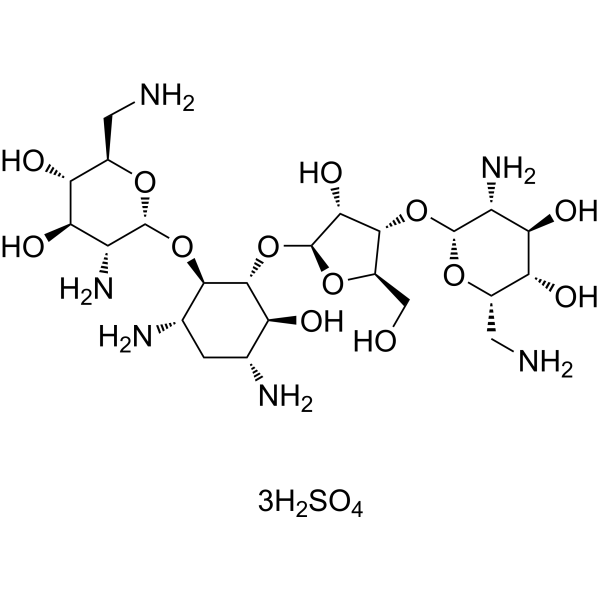
  • HY-B0470
    Neomycin sulfate
    Maximum Cited Publications
    68 Publications Verification

    Environmental Pollutants Antibiotic Phospholipase Bacterial Infection Metabolic Disease Cancer
    Neomycin sulfate, an aminoglycoside antibiotic, exerts antibacterial activity through irreversible binding of the nuclear 30S ribosomal subunit, thereby blocking bacterial protein synthesis. Neomycin sulfate is a known phospholipase C (PLC) inhibitor. Neomycin sulfate potently inhibits both the nuclear translocation of angiogenin and angiogenin-induced cell proliferation and angiogenesis. Neomycin sulfate inhibits IP3-mediated Ca 2+ release, MgATP-dependent Ca 2+ uptake, and electrical excitation-evoked skeletal muscle Ca 2+ transients. Neomycin sulfate depletes gut microbiota in specific mouse models, causes hearing impairment, and kidney damage with prolonged exposure. Neomycin sulfate can be used for the research of cancer .
    Neomycin sulfate
  • HY-B0509B
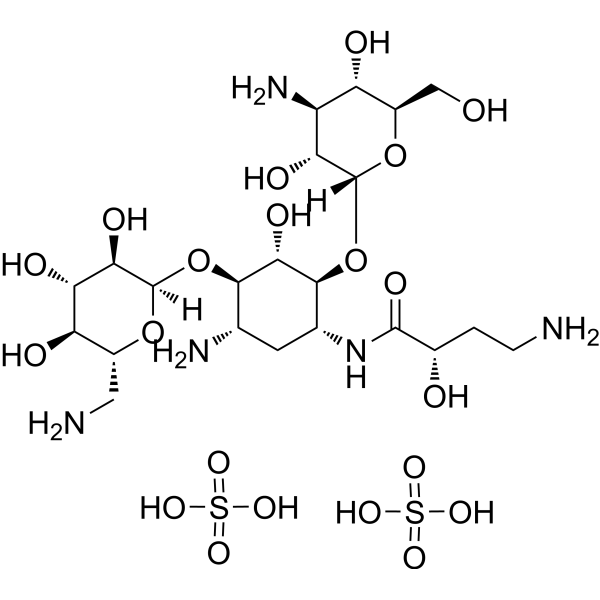
    Amikacin disulfate
    25+ Cited Publications

    BAY 41-6551 disulfate

    Bacterial Antibiotic Infection Cancer
    Amikacin disulfate (BAY 41-6551 dissulfate) is an aminoglycoside antibiotic and a semisynthetic analog of kanamycin. Amikacin disulfate is bactericidal, acting directly on the 30S and 50S bacerial ribosomal subunits to inhibit protein synthesis. Amikacin disulfate is very active against most Gram-negative bacteria including gentamicin- and tobramycin-resistant strains. Amikacin disulfate also inhibits the infections caused by susceptible Nocardia and nontuberculous mycobacteria .
    Amikacin disulfate
  • HY-B1228
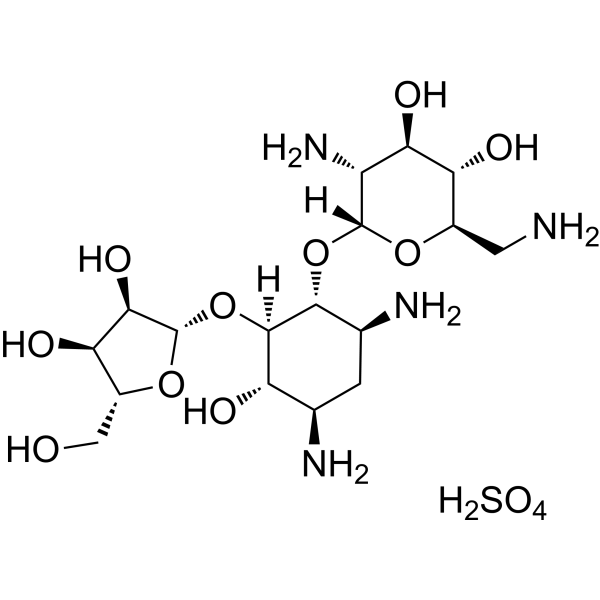
    Ribostamycin sulfate
    1 Publications Verification

    Vistamycin sulfate

    Antibiotic PDI Infection
    Ribostamycin sulfate (Vistamycin sulfate) is a broad-spectrum aminoglycoside Antibiotic with bactericidal activity against Gram-positive cocci, Gram-negative cocci, bacilli, and drug-resistant strains. Ribostamycin sulfate also acts as an inhibitor of protein disulfide isomerase (PDI), with a binding constant KD of 319 μM for bovine PDI. Ribostamycin sulfate targets bacterial 16S ribosomal RNA and the 30S ribosomal subunit, causing translational misreading and thereby inhibiting bacterial protein synthesis. Ribostamycin sulfate disrupts the integrity of bacterial cell membranes, induces membrane pore formation, and leads to bacterial death. Ribostamycin sulfate can be used in studies related to bacterial infections .
    Ribostamycin sulfate
  • HY-17560
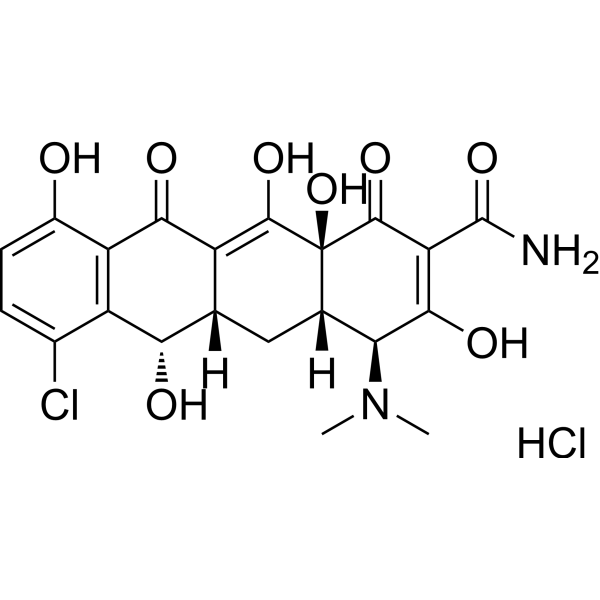
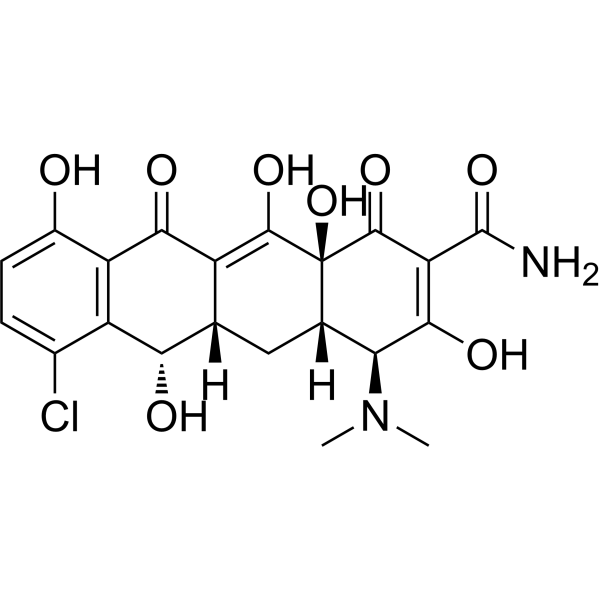
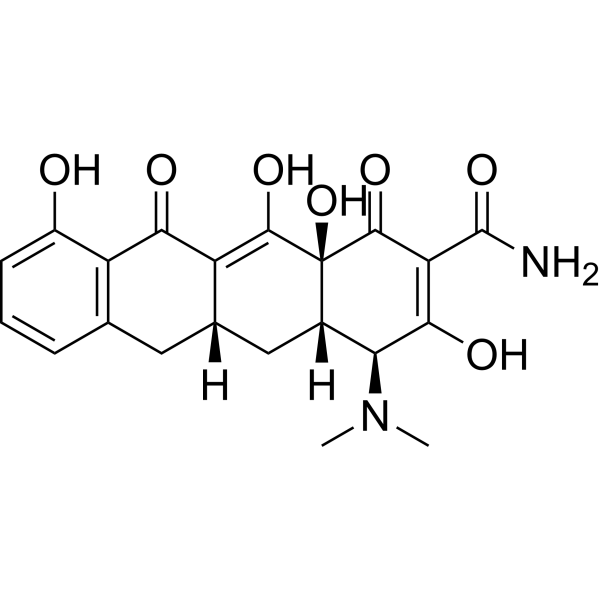
    Demeclocycline hydrochloride
    5 Publications Verification

    Antibiotic Bacterial Infection Inflammation/Immunology Cancer
    Demeclocycline hydrochloride is an orally active tetracycline antibiotic that inhibits the binding of aminoacyl tRNA by binding to the 30S ribosomal subunit, thereby affecting protein synthesis. Demeclocycline hydrochloride exhibits antibacterial activity against a broad spectrum of bacterial infections .
    Demeclocycline hydrochloride
  • HY-107813
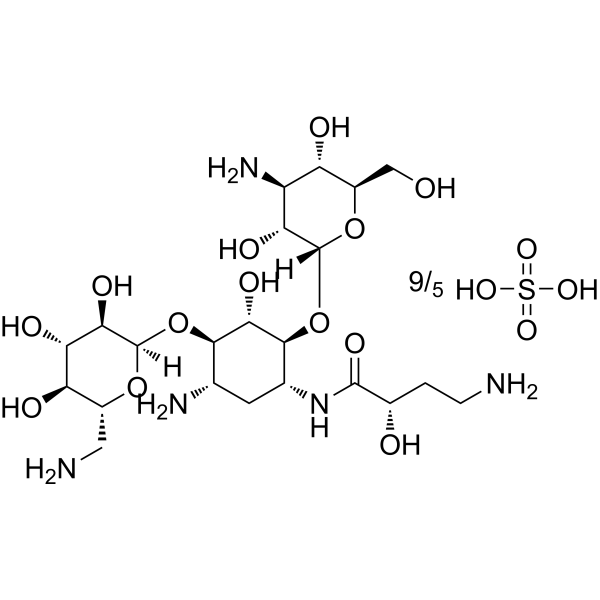
    Amikacin sulfate
    25+ Cited Publications

    BAY 41-6551 sulfate

    Bacterial Antibiotic Infection Cancer
    Amikacin sulfate (BAY 41-6551 sulfate) is an aminoglycoside antibiotic and a semisynthetic analog of kanamycin. Amikacin sulfate is bactericidal, acting directly on the 30S and 50S bacerial ribosomal subunits to inhibit protein synthesis. Amikacin sulfate is very active against most Gram-negative bacteria including gentamicin- and tobramycin-resistant strains. Amikacin sulfate also inhibits the infections caused by susceptible Nocardia and nontuberculous mycobacteria .
    Amikacin sulfate
  • HY-17466

    Bonomycin; 6-Demethyl-6-deoxytetracycline

    Bacterial Antibiotic Metabolic Disease Inflammation/Immunology
    Sancycline (6-Demethyl-6-deoxytetracycline) acts by reversibly binding to the 30 S ribosomal subunit and inhibiting protein translation by blocking entry of aminoacyl-tRNA into the ribosome a site similar to tetracycline (HY-A0107). Sancycline, four linearly fused six-membered rings with four stereocenters, is a rare semi-synthetic tetracycline (HY-A0107) prepared by hydrogenolysis of the chloro and benzylic hydroxy moieties of Declomycin .
    Sancycline
  • HY-14865
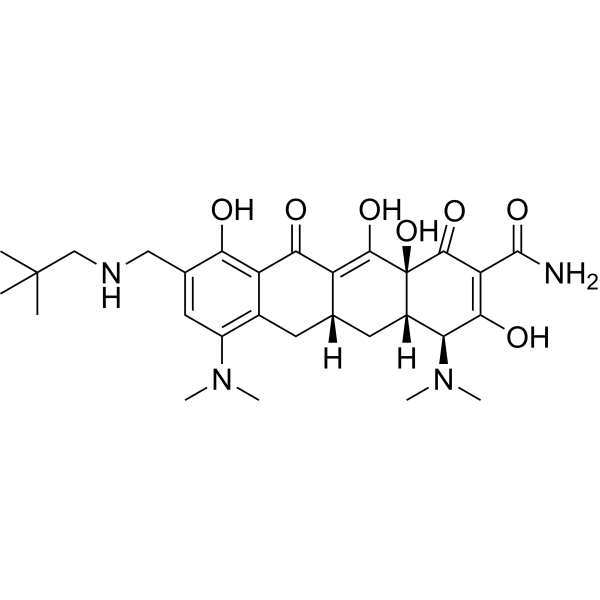
    Omadacycline
    30+ Cited Publications

    PTK 0796; Amadacycline

    Bacterial Antibiotic Infection
    Omadacycline (PTK 0796), a first-in-class orally active aminomethylcycline antibacterial, is a member of the tetracycline class of antibiotics. Omadacycline acts through the inhibition of bacterial protein synthesis by binding to the 30S ribosomal subunit. Omadacycline possesses broad-spectrum antibacterial activity against aerobic and anaerobic Gram-positive and Gram-negative bacteria, as well as atypical bacteria. Omadacycline can be used for the research of acute bacterial skin and skin-structure infections, community-acquired pneumonia, and urinary tract infections .
    Omadacycline
  • HY-14865B
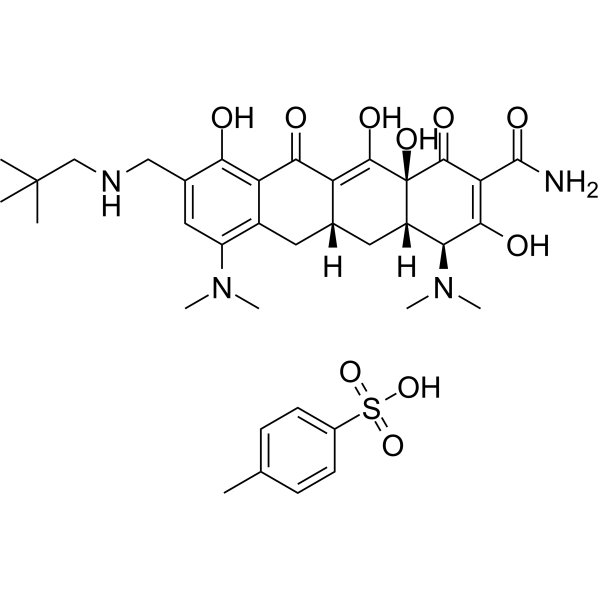
    Omadacycline tosylate
    30+ Cited Publications

    PTK 0796 tosylate; Amadacycline tosylate

    Bacterial Antibiotic Infection
    Omadacycline (PTK 0796) tosylate, a first-in-class orally active aminomethylcycline antibacterial, is a member of the tetracycline class of antibiotics. Omadacycline tosylate acts through the inhibition of bacterial protein synthesis by binding to the 30S ribosomal subunit. Omadacycline tosylate possesses broad-spectrum antibacterial activity against aerobic and anaerobic Gram-positive and Gram-negative bacteria, as well as atypical bacteria. Omadacycline tosylate can be used for the research of acute bacterial skin and skin-structure infections, community-acquired pneumonia, and urinary tract infections .
    Omadacycline tosylate
  • HY-150520

    Antibiotic Phospholipase Infection Cancer
    Neomycin, an aminoglycoside antibiotic, exerts antibacterial activity through irreversible binding of the nuclear 30S ribosomal subunit, thereby blocking bacterial protein synthesis. Neomycin is a known phospholipase C (PLC) inhibitor. Neomycin potently inhibits both the nuclear translocation of angiogenin and angiogenin-induced cell proliferation and angiogenesis. Neomycin inhibits IP3-mediated Ca 2+ release, MgATP-dependent Ca 2+ uptake, and electrical excitation-evoked skeletal muscle Ca 2+ transients. Neomycin depletes gut microbiota in specific mouse models, causes hearing impairment, and kidney damage with prolonged exposure. Neomycin can be used for the research of cancer .
    Neomycin
  • HY-121268
    Demeclocycline
    5 Publications Verification

    Antibiotic Bacterial Infection Inflammation/Immunology Cancer
    Demeclocycline is an orally active tetracycline antibiotic. Demeclocycline impairs protein synthesis by binding to the 30S ribosomal subunit to inhibit binding of aminoacyl tRNA. Demeclocycline shows anti-bacterial activitise to a wide variety of bacterial infections .
    Demeclocycline
  • HY-B0509
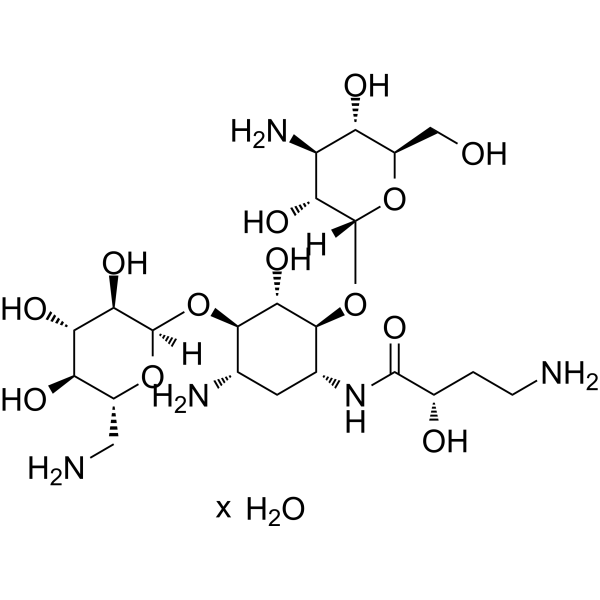
    Amikacin hydrate
    25+ Cited Publications

    BAY 41-6551 hydrate

    Bacterial Antibiotic Infection Cancer
    Amikacin hydrate (BAY 41-6551 hydrate) is an aminoglycoside antibiotic and a semisynthetic analog of kanamycin. Amikacin hydrate is bactericidal, acting directly on the 30S and 50S bacerial ribosomal subunits to inhibit protein synthesis. Amikacin hydrate is very active against most Gram-negative bacteria including gentamicin- and tobramycin-resistant strains. Amikacin hydrate also inhibits the infections caused by susceptible Nocardia and nontuberculous mycobacteria .
    Amikacin hydrate
  • HY-14865C
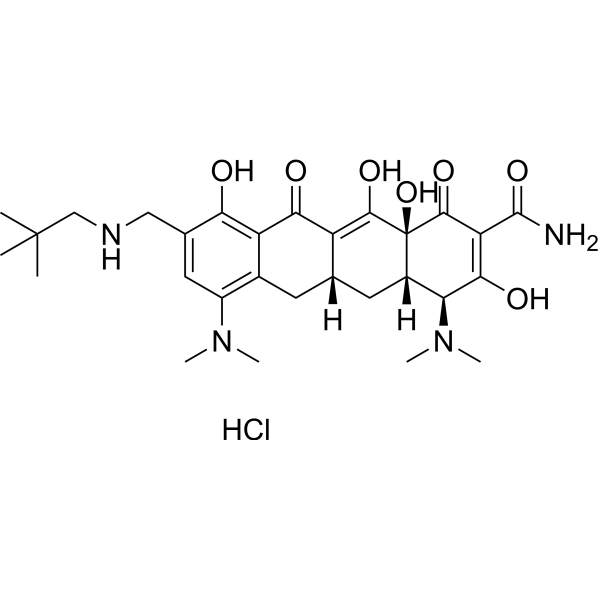
    Omadacycline hydrochloride
    30+ Cited Publications

    PTK0796 hydrochloride; Amadacycline hydrochloride

    Bacterial Antibiotic Infection
    Omadacycline (PTK 0796) hydrochloride, a first-in-class orally active aminomethylcycline antibacterial, is a member of the tetracycline class of antibiotics. Omadacycline hydrochloride acts through the inhibition of bacterial protein synthesis by binding to the 30S ribosomal subunit. Omadacycline hydrochloride possesses broad-spectrum antibacterial activity against aerobic and anaerobic Gram-positive and Gram-negative bacteria, as well as atypical bacteria. Omadacycline hydrochloride can be used for the research of acute bacterial skin and skin-structure infections, community-acquired pneumonia, and urinary tract infections .
    Omadacycline hydrochloride
  • HY-18398

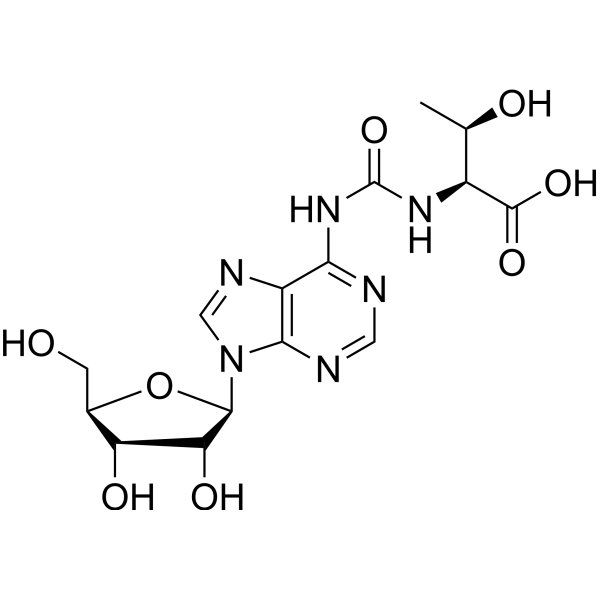
    N6-(N-Threonylcarbonyl)adenosine

    Nucleoside Antimetabolite/Analog Others
    N6-Threonylcarbamoyladenosine (N6-(N-Threonylcarbonyl) adenosine) is a ubiquitous nucleoside that modifies tRNA .
    N6-Threonylcarbamoyladenosine
  • HY-B0470R

    Reference Standards Bacterial Antibiotic Phospholipase Infection Cancer
    Neomycin (sulfate) (Standard) is the analytical standard of Neomycin (sulfate). This product is intended for research and analytical applications. Neomycin sulfate, an aminoglycoside antibiotic, exerts antibacterial activity through irreversible binding of the nuclear 30S ribosomal subunit, thereby blocking bacterial protein synthesis. Neomycin sulfate is a known phospholipase C (PLC) inhibitor. Neomycin sulfate potently inhibits both nuclear translocation of angiogenin and angiogenin-induced cell proliferation and angiogenesis .
    Neomycin sulfate (Standard)
  • HY-B0956A

    Aminosidine

    Bacterial Parasite Endogenous Metabolite Infection
    Paromomycin (Aminosidine) is an orally active broad-spectrum aminoglycoside aminocyclitol. Paromomycin is produced by Streptomyces riomosus var. Paromomycinus. Paromomycin binding induces local conformational changes in the 16S rRNA A-site. Paromomycin exhibits inhibitory activity against C. parvum. Paromomycin can be used in research related to leishmaniasis, amoebiasis and cryptosporidiosis .
    Paromomycin
  • HY-119201

    Bacterial Infection
    PNU-140457 is an antibacterial agent targeting 30S ribosomal subunit. PNU-140457 is promising for research of bacterial Infections .
    PNU-140457
  • HY-14865BR

    PTK 0796 tosylate (Standard); Amadacycline tosylate (Standard)

    Reference Standards Bacterial Antibiotic Infection
    Omadacycline (tosylate) (Standard) is the analytical standard of Omadacycline (tosylate). This product is intended for research and analytical applications. Omadacycline (PTK 0796) tosylate, a first-in-class orally active aminomethylcycline antibacterial, is a member of the tetracycline class of antibiotics. Omadacycline tosylate acts through the inhibition of bacterial protein synthesis by binding to the 30S ribosomal subunit. Omadacycline tosylate possesses broad-spectrum antibacterial activity against aerobic and anaerobic Gram-positive and Gram-negative bacteria, as well as atypical bacteria. Omadacycline tosylate can be used for the research of acute bacterial skin and skin-structure infections, community-acquired pneumonia, and urinary tract infections .
    Omadacycline tosylate (Standard)
  • HY-121268A

    Antibiotic Bacterial Infection Inflammation/Immunology Cancer
    Demeclocycline calcium is an orally active tetracycline antibiotic that inhibits the binding of aminoacyl tRNA by binding to the 30S ribosomal subunit, thereby affecting protein synthesis. Demeclocycline calcium exhibits antibacterial activity against a broad spectrum of bacterial infections .
    Demeclocycline calcium
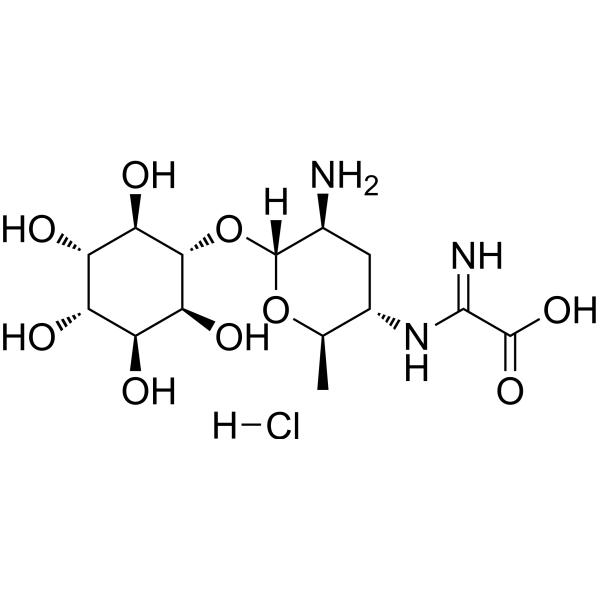
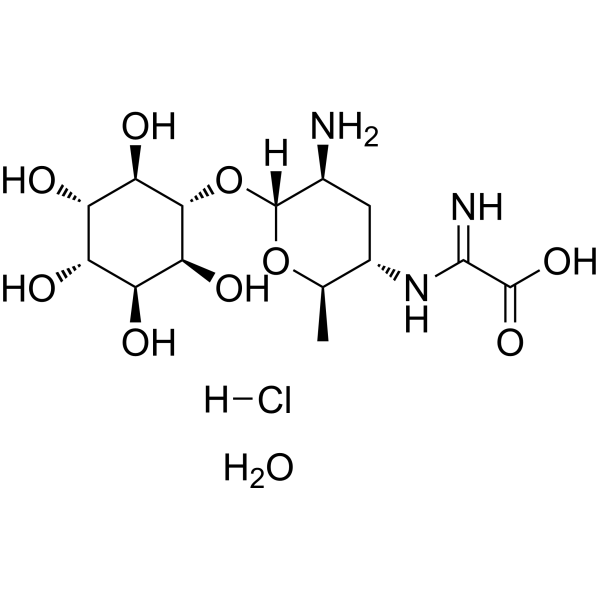
  • HY-122350

    SF-2052 sulfate

    Antibiotic Infection
    Dactimicin sulfate (SF-2052 sulfate) is an antibiotic produced by Dactylosporangium matsuzakiense and belongs to the fortimicin antibiotic family. Dactimicin sulfate is an aminoglycoside antibiotic containing a carboximido group and inhibits protein synthesis by binding to the 30S ribosomal subunit of bacteria. Dactimicin sulfate can be used in research on infections caused by sensitive bacteria .
    Dactimicin sulfate
  • HY-121268R

    Reference Standards Antibiotic Bacterial Infection Inflammation/Immunology Cancer
    Demeclocycline (Standard) is the analytical standard of Demeclocycline (HY-121268). This product is intended for research and analytical applications. Demeclocycline is an orally active tetracycline antibiotic. Demeclocycline impairs protein synthesis by binding to the 30S ribosomal subunit to inhibit binding of aminoacyl tRNA. Demeclocycline shows anti-bacterial activitise to a wide variety of bacterial infections .
    Demeclocycline (Standard)
  • HY-17560R

    Reference Standards Antibiotic Bacterial Infection Inflammation/Immunology Cancer
    Demeclocycline hydrochloride (Standard) is the analytical standard of Demeclocycline hydrochloride (HY-17560). This product is intended for research and analytical applications. Demeclocycline hydrochloride is an orally active tetracycline antibiotic that inhibits the binding of aminoacyl tRNA by binding to the 30S ribosomal subunit, thereby affecting protein synthesis. Demeclocycline hydrochloride exhibits antibacterial activity against a broad spectrum of bacterial infections .
    Demeclocycline hydrochloride (Standard)
  • HY-17466A

    Bonomycin hydrochloride; 6-Demethyl-6-deoxytetracycline hydrochloride

    Antibiotic Bacterial Metabolic Disease Inflammation/Immunology
    Sancycline (6-Demethyl-6-deoxytetracycline) hydrochloride acts by reversibly binding to the 30 S ribosomal subunit and inhibiting protein translation by blocking entry of aminoacyl-tRNA into the ribosome a site similar to tetracycline (HY-A0107). Sancycline hydrochloride, four linearly fused six-membered rings with four stereocenters, is a rare semi-synthetic tetracycline (HY-A0107) prepared by hydrogenolysis of the chloro and benzylic hydroxy moieties of Declomycin .
    Sancycline hydrochloride
  • HY-131688R

    PARP Caspase Reference Standards Inflammation/Immunology
    Neomycin (sulfate) (Standard) is the analytical standard of Neomycin (sulfate). This product is intended for research and analytical applications. Neomycin sulfate, an aminoglycoside antibiotic, exerts antibacterial activity through irreversible binding of the nuclear 30S ribosomal subunit, thereby blocking bacterial protein synthesis. Neomycin sulfate is a known phospholipase C (PLC) inhibitor. Neomycin sulfate potently inhibits both nuclear translocation of angiogenin and angiogenin-induced cell proliferation and angiogenesis .
    2-Chlorohexadecanoic acid (Standard)
  • HY-14865A

    PTK 0796 mesylate; Amadacycline mesylate

    Bacterial Antibiotic Infection
    Omadacycline (PTK 0796) mesylate, a first-in-class orally active aminomethylcycline antibacterial, is a member of the tetracycline class of antibiotics. Omadacycline mesylate acts through the inhibition of bacterial protein synthesis by binding to the 30S ribosomal subunit. Omadacycline mesylate possesses broad-spectrum antibacterial activity against aerobic and anaerobic Gram-positive and Gram-negative bacteria, as well as atypical bacteria. Omadacycline mesylate can be used for the research of acute bacterial skin and skin-structure infections, community-acquired pneumonia, and urinary tract infections .
    Omadacycline mesylate
  • HY-B0509BR

    BAY 41-6551 disulfate (Standard)

    Reference Standards Bacterial Antibiotic Infection Cancer
    Amikacin (disulfate) (Standard) is the analytical standard of Amikacin (disulfate). This product is intended for research and analytical applications. Amikacin disulfate (BAY 41-6551 dissulfate) is an aminoglycoside antibiotic and a semisynthetic analog of kanamycin. Amikacin disulfate is bactericidal, acting directly on the 30S and 50S bacerial ribosomal subunits to inhibit protein synthesis. Amikacin disulfate is very active against most Gram-negative bacteria including gentamicin-and tobramycin-resistant strains. Amikacin disulfate also inhibits the infections caused by susceptible Nocardia and nontuberculous mycobacteria .
    Amikacin disulfate (Standard)
  • HY-14865CR

    PTK0796 hydrochloride (Standard); Amadacycline hydrochloride (Standard)

    Reference Standards Bacterial Antibiotic Infection
    Omadacycline (hydrochloride) (Standard) is the analytical standard of Omadacycline (hydrochloride). This product is intended for research and analytical applications. Omadacycline (PTK 0796) hydrochloride, a first-in-class orally active aminomethylcycline antibacterial, is a member of the tetracycline class of antibiotics. Omadacycline hydrochloride acts through the inhibition of bacterial protein synthesis by binding to the 30S ribosomal subunit. Omadacycline hydrochloride possesses broad-spectrum antibacterial activity against aerobic and anaerobic Gram-positive and Gram-negative bacteria, as well as atypical bacteria. Omadacycline hydrochloride can be used for the research of acute bacterial skin and skin-structure infections, community-acquired pneumonia, and urinary tract infections[1][2][3][4].
    Omadacycline hydrochloride (Standard)
  • HY-14865R

    PTK 0796 (Standard); Amadacycline (Standard)

    Reference Standards Bacterial Antibiotic Infection
    Omadacycline (Standard) is the analytical standard of Omadacycline. This product is intended for research and analytical applications. Omadacycline (PTK 0796), a first-in-class orally active aminomethylcycline antibacterial, is a member of the tetracycline class of antibiotics. Omadacycline acts through the inhibition of bacterial protein synthesis by binding to the 30S ribosomal subunit. Omadacycline possesses broad-spectrum antibacterial activity against aerobic and anaerobic Gram-positive and Gram-negative bacteria, as well as atypical bacteria. Omadacycline can be used for the research of acute bacterial skin and skin-structure infections, community-acquired pneumonia, and urinary tract infections .
    Omadacycline (Standard)
  • HY-17466R

    Bonomycin (Standard); 6-Demethyl-6-deoxytetracycline (Standard)

    Reference Standards Bacterial Antibiotic Metabolic Disease Inflammation/Immunology
    Sancycline (Standard) is the analytical standard of Sancycline. This product is intended for research and analytical applications. Sancycline (6-Demethyl-6-deoxytetracycline) acts by reversibly binding to the 30 S ribosomal subunit and inhibiting protein translation by blocking entry of aminoacyl-tRNA into the ribosome a site similar to tetracycline (HY-A0107). Sancycline, four linearly fused six-membered rings with four stereocenters, is a rare semi-synthetic tetracycline (HY-A0107) prepared by hydrogenolysis of the chloro and benzylic hydroxy moieties of Declomycin[1][2][3].
    Sancycline (Standard)

Inquiry Online

Your information is safe with us. * Required Fields.

Salutation


Country or Region *

Applicant Name *


Organization Name *

Department *


Email Address *


Product Name *

Cat. No.


Requested quantity *

Phone Number *


Remarks

Inquiry Online

Inquiry Information

Product Name:
Cat. No.:
Quantity:
MCE Japan Authorized Agent:

