76 Results for "

4-methylumbelliferyl-

" in MedChemExpress (MCE) Product Catalog:
Products (76)

76 Results for "4-methylumbelliferyl-" in MCE Product Catalog:

2
2 Cited Publications
Cat. No.: HY-120166
CAS No.: 214491-43-7
Purity:  99.05%
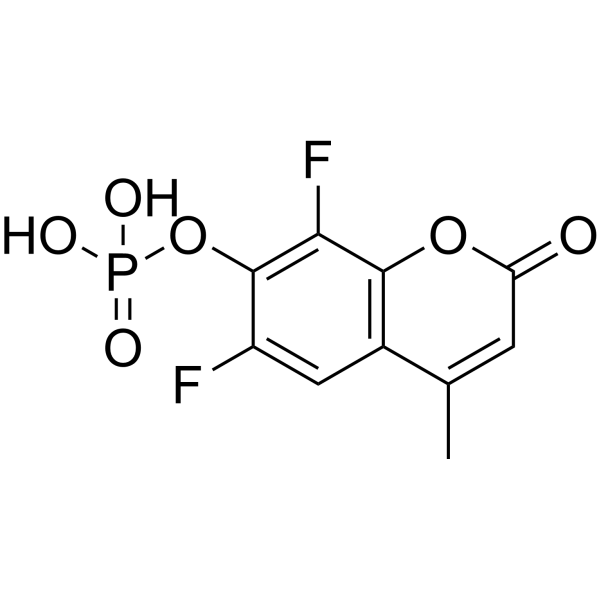
Synonyms: 6,8-Difluoro-4-methylumbelliferyl phosphate
Target:  

Phosphatase

Research Areas:  

Others

DiFMUP is a fluorogenic substrate, and has been widely used for the continuous detection of phosphatase activities. DiFMUP is hydrolysis by a phosphatase results in the release of Xuorescent DIFMU, which can be easily followed in continuous mode by a Xuorescence reader .
loading...
    loading...
1
1 Cited Publications
Cat. No.: HY-D0994
CAS No.: 3368-04-5
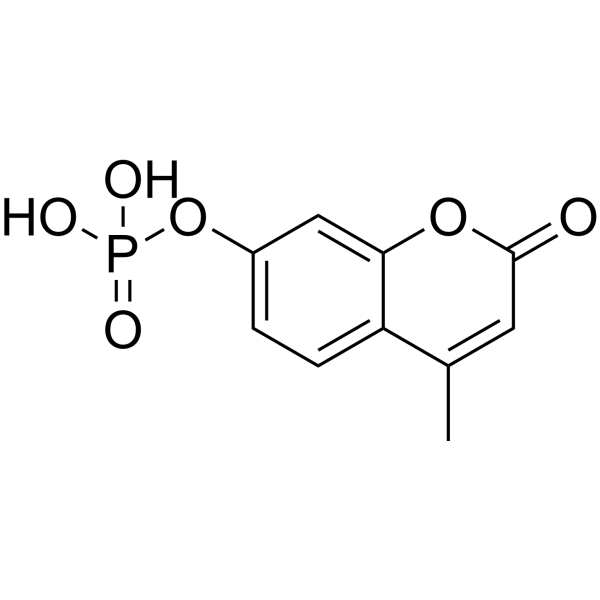
Synonyms: 4-MUP; MUP
4-Methylumbelliferyl phosphate (4-MUP), an anionic organophosphate, is a acid and alkaline phosphatase fluorogenic substrate. 4-Methylumbelliferyl phosphate is also a nerve agent simulant .
loading...
    loading...
1
1 Cited Publications
Cat. No.: HY-134124
CAS No.: 92614-59-0
Purity:  95.8%
Research Areas:  

Metabolic Disease

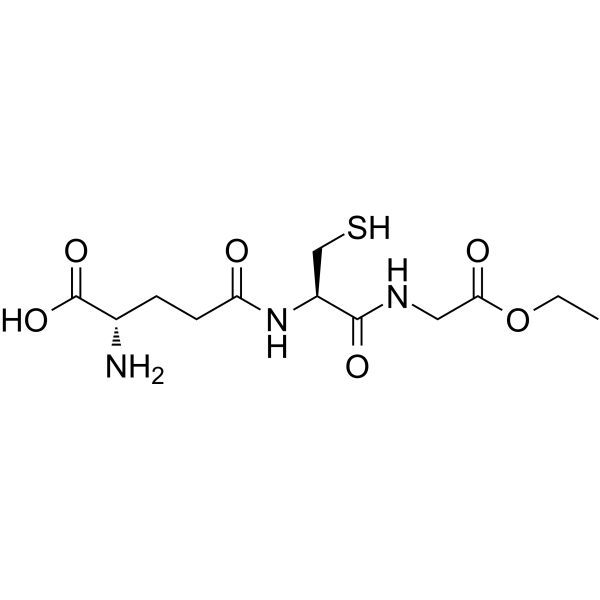
Glutathione ethyl ester is a cell-permeable GSH donor and provides an efficient supply of GSH to the oocyte. Glutathione ethyl ester shows positive effect on the in vitro production of embryos by enhancement of the antioxidative defense .
loading...
    loading...
1
1 Cited Publications
Cat. No.: HY-D0935A
CAS No.: 881005-91-0
Synonyms: MUG
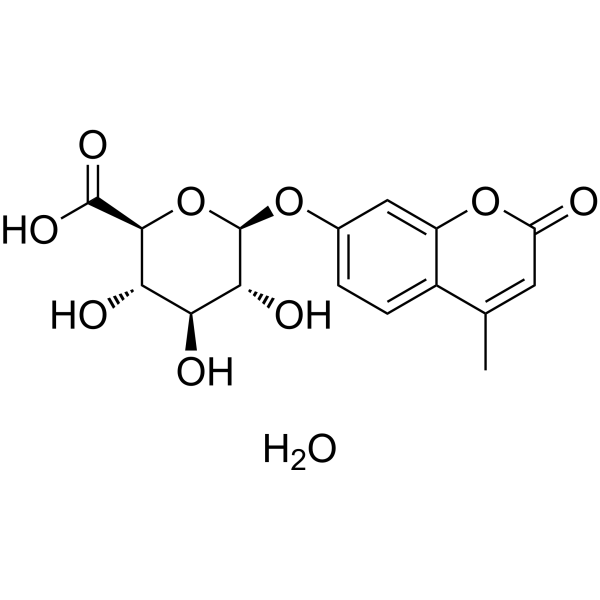
4-Methylumbelliferyl-β-D-glucuronide hydrate is a fluorogenic substrat (λex=362 nm, λem=445 nm). 4-Methylumbelliferyl-β-D-glucuronide hydrate has potential applications in detecting the activity of β-glucuronidase and the number of Escherichia coli .
loading...
    loading...
1
1 Cited Publications
Cat. No.: HY-137853
CAS No.: 37067-30-4
Purity:  99.96%
Target:  

Fluorescent Dye

Research Areas:  

Others

4-Methylumbelliferyl-2-acetamido-2-deoxy-β-D-Glucopyranoside is a fluorogenic substrate for N-acetyl-β-D-glucosaminidase .
loading...
    loading...
1
1 Cited Publications
Cat. No.: HY-A0248A
CAS No.: 4135-11-9
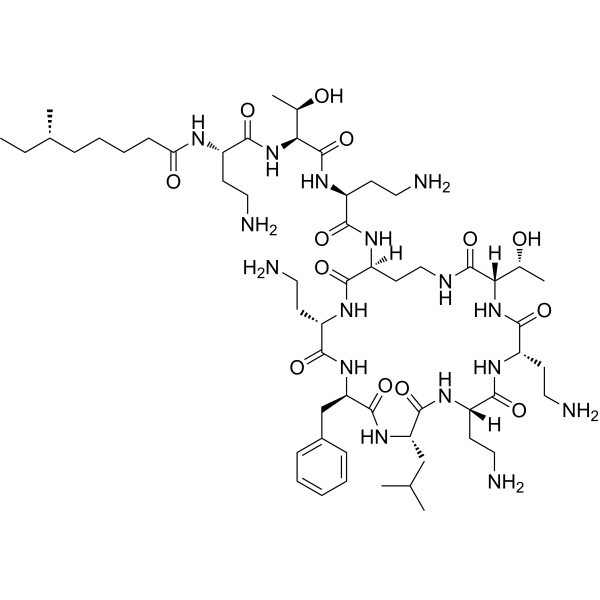
Polymyxin B1 is a potent antimicrobial lipopeptide first derived from Bacilus polymyxa. Polymyxin B1 is the major component in Polymyxin B (HY-A0248). Polymyxin B1 can induce lysis of bacterial cells through interaction with their membranes. Polymyxin B1 has the potential for multidrug-resistant Gram-negative bacterial infections treatment .
loading...
    loading...
1
1 Cited Publications
Cat. No.: HY-137845
CAS No.: 6160-78-7
Purity:  99.06%
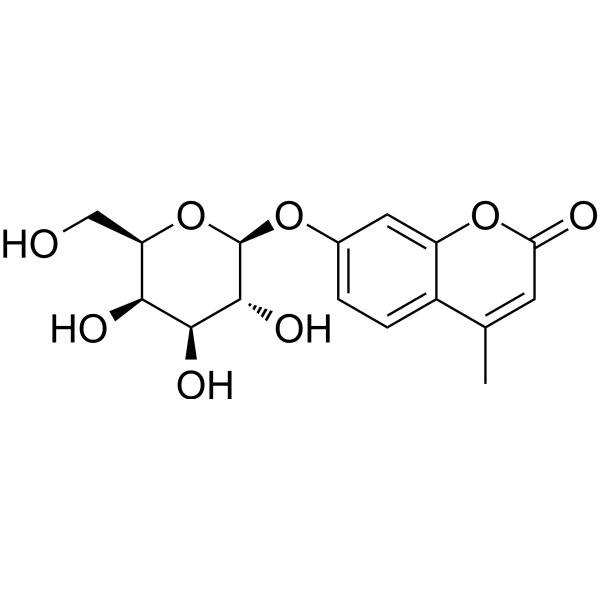
4-Methylumbelliferyl β-D-galactopyranoside is a fluorescent substrate for β-galactosidase which, when cleaved, produces a water-soluble blue fluorescent coumarin fluorophore that can be detected using a fluoroenzymeter or fluorometer .
loading...
    loading...
1
1 Cited Publications
Cat. No.: HY-P1108
CAS No.: 681260-70-8
Target:  

CRFR

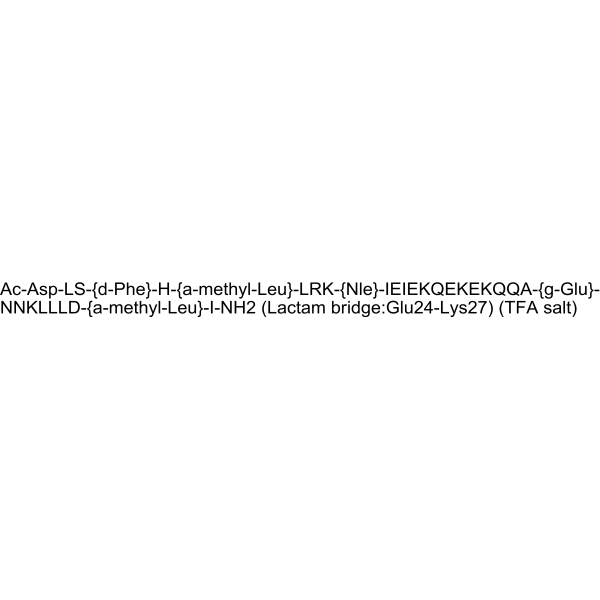
Astressin 2B is a blood-brain barrier-impermeable, highly selective CRFR2 antagonist (rCRFR2, IC50=0.57 nM). Astressin 2B blocks the protective effects mediated by CRFR2, thereby exacerbating indomethacin (HY-14397)-induced hemorrhagic intestinal injury in rats. Astressin 2B reverses the protective effects of Urocortin 1 against intestinal hypermotility, bacterial invasion and upregulation of inflammatory mediators. Astressin 2B also blocks the anxiogenic effect of Urocortin 2 and attenuates stress-induced anxiety-related behaviors. In the Clostridioides difficile toxin A (C. difficile toxin A)-mediated enteritis model, Astressin 2B mimics the phenotype of CRFR2-deficient mice, significantly exacerbating intestinal epithelial damage, edema, neutrophil migration and the expression of multiple proinflammatory cytokines. Astressin 2B is an important tool molecule for investigating the intestinal protective mechanisms of CRFR2 [4] .
loading...
    loading...
1
1 Cited Publications
Cat. No.: HY-P1108A
Target:  

CRFR

Astressin 2B TFA is a blood-brain barrier-impermeable, highly selective CRFR2 antagonist (rCRFR2, IC50=0.57 nM). Astressin 2B TFA blocks the protective effects mediated by CRFR2, thereby exacerbating indomethacin (HY-14397)-induced hemorrhagic intestinal injury in rats. Astressin 2B TFA reverses the protective effects of Urocortin 1 against intestinal hypermotility, bacterial invasion and upregulation of inflammatory mediators. Astressin 2B TFA also blocks the anxiogenic effect of Urocortin 2 and attenuates stress-induced anxiety-related behaviors. In the Clostridioides difficile toxin A (C. difficile toxin A)-mediated enteritis model, Astressin 2B TFA mimics the phenotype of CRFR2-deficient mice, significantly exacerbating intestinal epithelial damage, edema, neutrophil migration and the expression of multiple proinflammatory cytokines. Astressin 2B TFA is an important tool molecule for investigating the intestinal protective mechanisms of CRFR2 [4] .
loading...
    loading...
1
1 Cited Publications
Cat. No.: HY-D0935
CAS No.: 6160-80-1
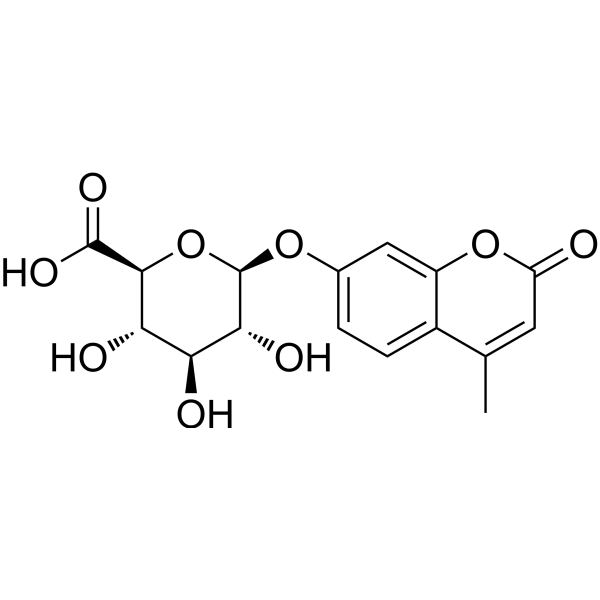
4-Methylumbelliferyl-β-D-glucuronide is a fluorogenic substrat (λex=362 nm, λem=445 nm). 4-Methylumbelliferyl-β-D-glucuronide has potential applications in detecting the activity of β-glucuronidase and the number of Escherichia coli .
loading...
    loading...
1
1 Cited Publications
Cat. No.: HY-D1633A
CAS No.: 206443-06-3
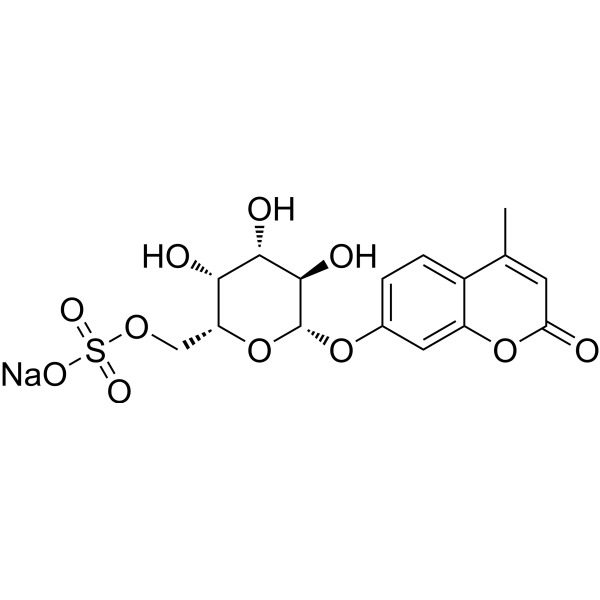
4-Methylumbelliferyl-β-D-galactopyranoside 6-sulfate sodium is a fluorescent dye. 4-Methylumbelliferyl-β-D-galactopyranoside 6-sulfate sodium undergoes desulphation by galactose-6-sulphate sulphatase to form 4-methylumbelliferyl-β-D-galactopyranoside, which is cleaved by β-galactosidase to release fluorescent 4-methylumbelliferone. 4-Methylumbelliferyl-β-D-galactopyranoside 6-sulfate sodium interacts with N-acetylgalactosamine-6-sulfate sulfatase (GALNS) via hydrogen bonds, electrostatic interactions, and steric interactions. 4-Methylumbelliferyl-β-D-galactopyranoside 6-sulfate sodium serves as a substrate in assays measuring galactose-6-sulphate sulphatase and GALNS activity. 4-Methylumbelliferyl-β-D-galactopyranoside 6-sulfate sodium can be used for the research of Morquio disease type A (mucopolysaccharidosis IV A) .
loading...
    loading...
Cat. No.: HY-123633
CAS No.: 18997-57-4
Purity:  99.87%
Target:  

Glycosidase

Research Areas:  

Others

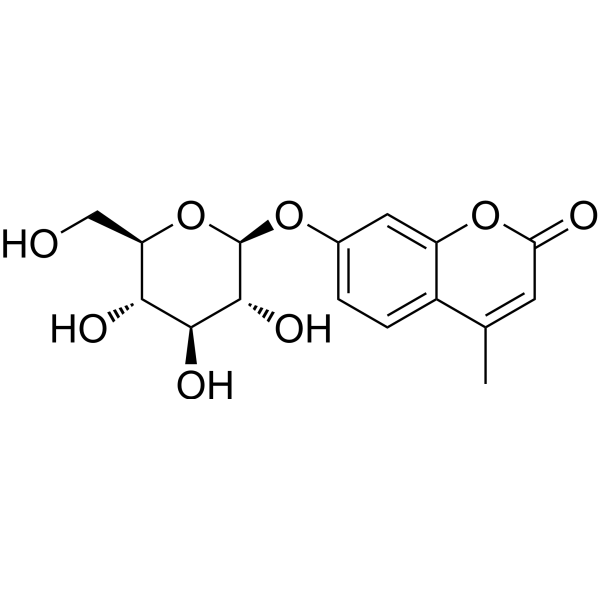
4-Methylumbelliferyl β-D-Glucopyranoside, a β-D-glucoside, is a fluorogenic substrate for β-glucosidase, utilizes to assay β-glucosidase activity . 4-Methylumbelliferyl β-D-Glucopyranoside releases the highly fluorescent 4-methylumbelliferyl (4-MU), which has an emission maximum at 445-454 nm. The excitation maximum for 4-MU is pH-dependent: 330, 370, and 385 nm at pH 4.6, 7.4, and 10.4, respectively .
loading...
    loading...
Cat. No.: HY-118135
CAS No.: 38597-12-5
Purity:  99.76%
Synonyms: 4MU-α-Gal
Target:  

Fluorescent Dye

Research Areas:  

Others

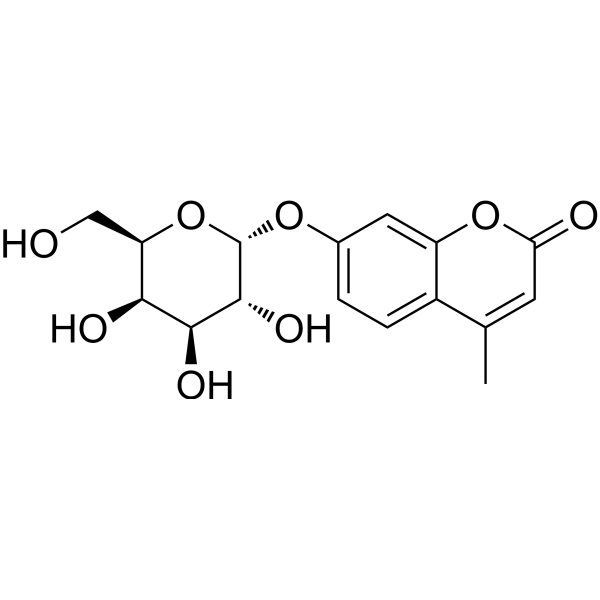
4-Methylumbelliferyl-α-D-galactopyranoside (4MU-α-Gal), a substrate for α-galactosidase A (GLA), is a blue pro-fluorogenic substrate. 4-Methylumbelliferyl-α-D-galactopyranoside forms two products, galactose and fluorescent 4MU, upon cleavage by GLA .
loading...
    loading...
Cat. No.: HY-P10272
CAS No.: 1628323-80-7
Synonyms: PTG-300
Target:  

Ferroportin

Research Areas:  

Others

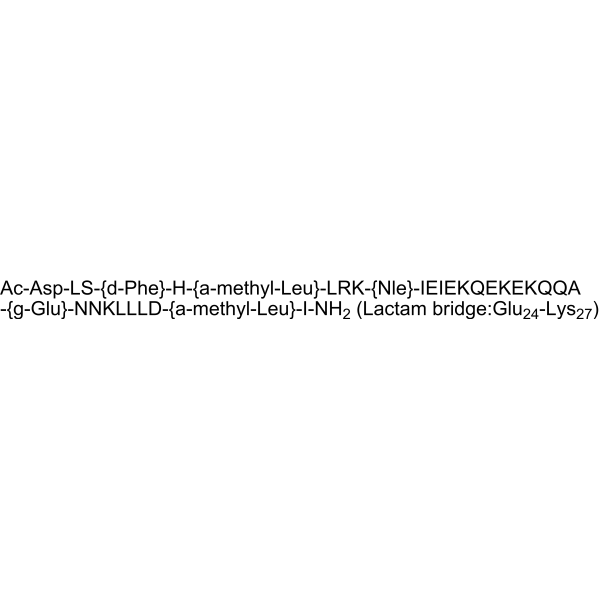
Rusfertide is a peptide mimetic of natural hepcidin, which targets and degrades ferroportin, reduces serum iron and transferrin-saturation, and thus regulates the production of red blood cells. Rusfertide ameliorates the polycythemia vera, β-thalassemia and hereditary hemochromatosis .
loading...
    loading...
Cat. No.: HY-117095
CAS No.: 18323-58-5
Purity:  99.68%
Target:  

Fluorescent Dye

Research Areas:  

Metabolic Disease

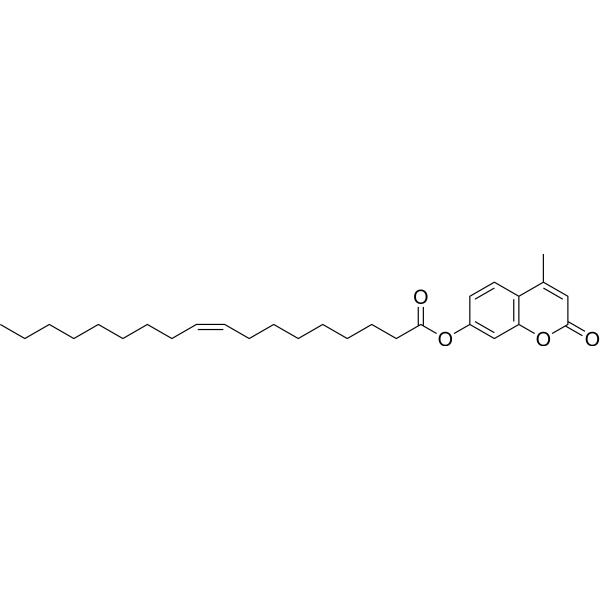
4-Methylumbelliferyl oleate is a fluorogenic substrate for acid and alkaline lipases. 4-Methylumbelliferyl oleate is cleaved by lipases, liberating 4-Methylumbelliferyl (Ex/Em=320/450 nm) .
loading...
    loading...
Cat. No.: HY-137824
CAS No.: 6734-33-4
Purity:  99.70%
Synonyms: 4-methylumbelliferyl-β-D-xyloside
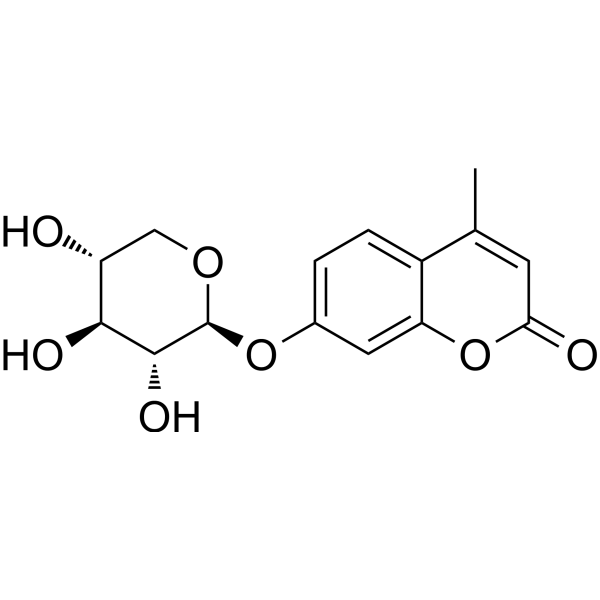
4-Methylumbelliferyl-β-D-xylopyranoside (4-Methylumbelliferyl-β-D-xyloside) is an enzymatically hydrolyzable β-D-xylopyranoside substrate. The enzymatic hydrolysis of 4-Methylumbelliferyl-β-D-xylopyranoside is mediated by the stereochemistry-retaining β-D-xylosidase GSXynB2 via a two-step catalytic process (xylosylation followed by dexylosidation). 4-Methylumbelliferyl-β-D-xylopyranoside serves as a substrate for the β-xylosidase of Trichoderma reesei QM 9414, and its enzymatic hydrolysis process is limited by the dexylosidation step.
loading...
    loading...
Cat. No.: HY-137873
CAS No.: 17833-43-1
Purity:  99.99%
Synonyms: 4-methylumbelliferyl-α-D-Glucose; 4-methylumbelliferyl-α-D-Glucoside; 4-MU-α-D-Glucopyranoside
Research Areas:  

Others

4-Methylumbelliferyl-α-D-Glucopyranoside (4-Methylumbelliferyl-α-D-Glucose) is a fluorescent substrate for α-glucosidase, which releases the fluorescent moiety 4-methylumbelliferyl (4-MU) upon cleavage. 4-MU has pH-dependent fluorescence excitation activity, with excitation wavelengths of 320 nm at low pH (1.97-6.72) and 360 nm at high pH (7.12-10.3), respectively. The emission wavelength of 4-Methylumbelliferyl-α-D-Glucopyranoside increases with decreasing pH, ranging from 445-455 nm. 4-Methylumbelliferyl-α-D-Glucopyranoside can be used as a biomarker for Fabry and Pompe diseases to quantify α-glucosidase activity in infant blood spot samples.
loading...
    loading...
Cat. No.: HY-137855
CAS No.: 15220-11-8
Purity:  99.29%
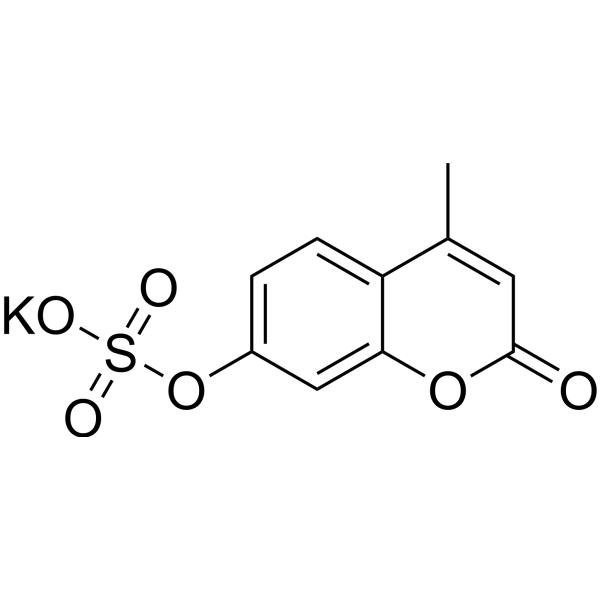
4-Methylumbelliferyl sulfate (potassium), a fluorescent substrate, is commonly used to detect sulfatase activity in biochemical and biomedical research. It consists of a sulfate group attached to a fluorescent molecule, which can be cleaved by sulfatase enzymes. Upon cleavage, 4-Methylumbelliferyl sulfate releases a highly fluorescent product that can be detected using fluorescence microscopy or spectroscopy. The use of 4-Methylumbelliferyl sulfate as a substrate for sulfatase enzymes allows accurate detection and quantification of these enzymes in a variety of biological samples.
loading...
    loading...
Cat. No.: HY-137333
CAS No.: 72626-61-0
Purity:  99.43%
Target:  

Fluorescent Dye

Research Areas:  

Others

4-Methylumbelliferyl β-D-cellobioside is a substrate of Cellulase (HY-B2220). 4-Methylumbelliferyl β-D-cellobioside can be hydrolyzed and produces fluorescent 4-methylumbelliferone, which can be used to study the kinetics of cellulases .
loading...
    loading...
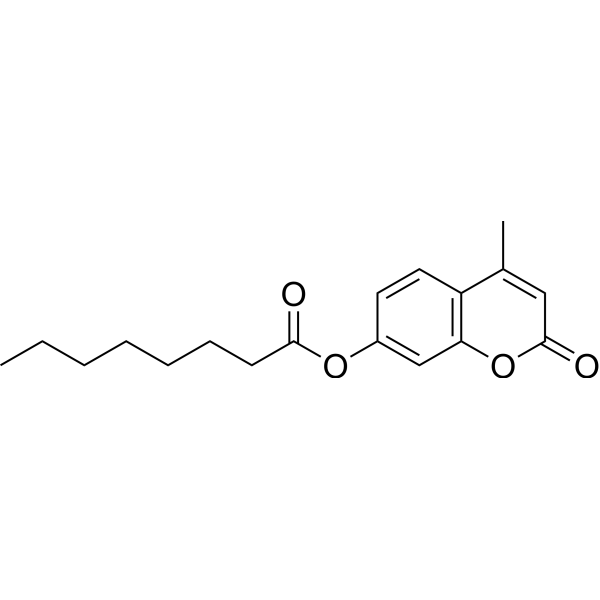
Cat. No.: HY-W099648
CAS No.: 20671-66-3
Target:  

Lipase

Research Areas:  

Others

4-Methylumbelliferyl octanoate is a octoate. 4-Methylumbelliferyl octanoate can be used as a s ubstrate of hog pancreatic lipase .
loading...
    loading...

