

33 Results for "

5-Methylcytosine

" in MedChemExpress (MCE) Product Catalog:
Products (33)

33 Results for "5-Methylcytosine" in MCE Product Catalog:

2
2 Cited Publications
Cat. No.: HY-W008091
CAS No.: 554-01-8
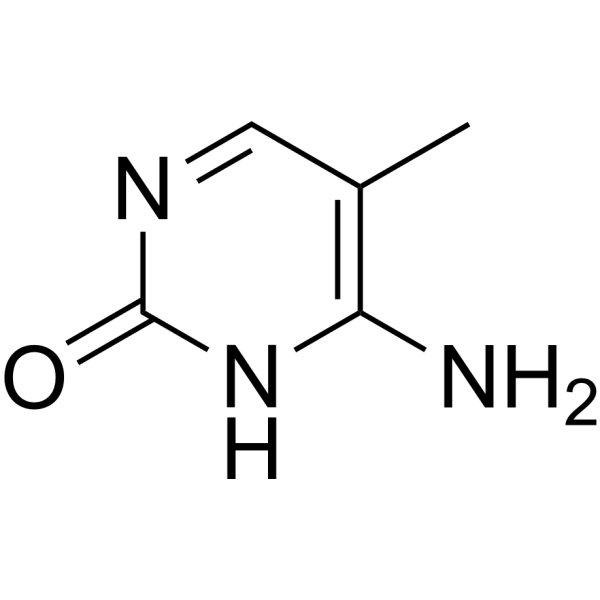
5-Methylcytosine is a well-characterized DNA modification in prokaryotes and eukaryotes. 5-Methylcytosine forms symmetrical methylation on CpG dinucleotides in DNA, stabilizes tRNA/rRNA structure in RNA, and affects mRNA translation. 5-Methylcytosine can be oxidized to generate 5hmC, 5fC, and 5caC. 5-Methylcytosine can be used in epigenetics, developmental biology, and the study of diseases such as colorectal cancer and hepatocellular carcinoma .
loading...
    loading...
2
2 Cited Publications
Cat. No.: HY-W008091R
CAS No.: 554-01-8
5-Methylcytosine (Standard) is the analytical standard of 5-Methylcytosine (HY-W008091). This product is intended for research and analytical applications. 5-Methylcytosine is a well-characterized DNA modification in prokaryotes and eukaryotes. 5-Methylcytosine forms symmetrical methylation on CpG dinucleotides in DNA, stabilizes tRNA/rRNA structure in RNA, and affects mRNA translation. 5-Methylcytosine can be oxidized to generate 5hmC, 5fC, and 5caC. 5-Methylcytosine can be used in epigenetics, developmental biology, and the study of diseases such as colorectal cancer and hepatocellular carcinoma .
loading...
    loading...
2
2 Cited Publications
Cat. No.: HY-W008091A
CAS No.: 58366-64-6
Research Areas:  

Cancer

5-Methylcytosine hydrochloride is a well-characterized DNA modification in prokaryotes and eukaryotes. 5-Methylcytosine hydrochloride forms symmetrical methylation on CpG dinucleotides in DNA, stabilizes tRNA/rRNA structure in RNA, and affects mRNA translation. 5-Methylcytosine hydrochloride can be oxidized to generate 5hmC, 5fC, and 5caC. 5-Methylcytosine hydrochloride can be used in epigenetics, developmental biology, and the study of diseases such as colorectal cancer and hepatocellular carcinoma .
loading...
    loading...
1
1 Cited Publications
Cat. No.: HY-134124
CAS No.: 92614-59-0
Purity:  95.8%
Research Areas:  

Metabolic Disease

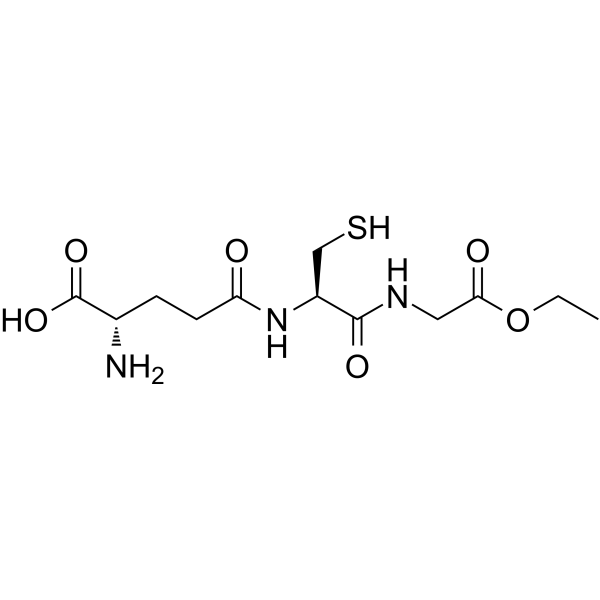
Glutathione ethyl ester is a cell-permeable GSH donor and provides an efficient supply of GSH to the oocyte. Glutathione ethyl ester shows positive effect on the in vitro production of embryos by enhancement of the antioxidative defense .
loading...
    loading...
1
1 Cited Publications
Cat. No.: HY-A0248A
CAS No.: 4135-11-9
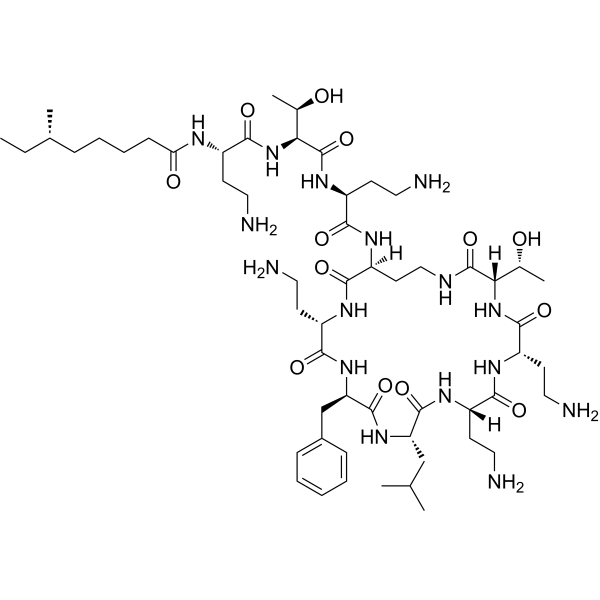
Polymyxin B1 is a potent antimicrobial lipopeptide first derived from Bacilus polymyxa. Polymyxin B1 is the major component in Polymyxin B (HY-A0248). Polymyxin B1 can induce lysis of bacterial cells through interaction with their membranes. Polymyxin B1 has the potential for multidrug-resistant Gram-negative bacterial infections treatment .
loading...
    loading...
1
1 Cited Publications
Cat. No.: HY-P1108
CAS No.: 681260-70-8
Target:  

CRFR

Astressin 2B is a blood-brain barrier-impermeable, highly selective CRFR2 antagonist (rCRFR2, IC50=0.57 nM). Astressin 2B blocks the protective effects mediated by CRFR2, thereby exacerbating indomethacin (HY-14397)-induced hemorrhagic intestinal injury in rats. Astressin 2B reverses the protective effects of Urocortin 1 against intestinal hypermotility, bacterial invasion and upregulation of inflammatory mediators. Astressin 2B also blocks the anxiogenic effect of Urocortin 2 and attenuates stress-induced anxiety-related behaviors. In the Clostridioides difficile toxin A (C. difficile toxin A)-mediated enteritis model, Astressin 2B mimics the phenotype of CRFR2-deficient mice, significantly exacerbating intestinal epithelial damage, edema, neutrophil migration and the expression of multiple proinflammatory cytokines. Astressin 2B is an important tool molecule for investigating the intestinal protective mechanisms of CRFR2 [5] .
loading...
    loading...
1
1 Cited Publications
Cat. No.: HY-P1108A
Target:  

CRFR

Astressin 2B TFA is a blood-brain barrier-impermeable, highly selective CRFR2 antagonist (rCRFR2, IC50=0.57 nM). Astressin 2B TFA blocks the protective effects mediated by CRFR2, thereby exacerbating indomethacin (HY-14397)-induced hemorrhagic intestinal injury in rats. Astressin 2B TFA reverses the protective effects of Urocortin 1 against intestinal hypermotility, bacterial invasion and upregulation of inflammatory mediators. Astressin 2B TFA also blocks the anxiogenic effect of Urocortin 2 and attenuates stress-induced anxiety-related behaviors. In the Clostridioides difficile toxin A (C. difficile toxin A)-mediated enteritis model, Astressin 2B TFA mimics the phenotype of CRFR2-deficient mice, significantly exacerbating intestinal epithelial damage, edema, neutrophil migration and the expression of multiple proinflammatory cytokines. Astressin 2B TFA is an important tool molecule for investigating the intestinal protective mechanisms of CRFR2 [5] .
loading...
    loading...
Cat. No.: HY-113038B
CAS No.: 2889-31-8
Purity:  ≥98.0%
Synonyms: 2-Hydroxyglutarate; 2-Hydroxyglutaric acid; 2-Hydroxypentanedioic acid
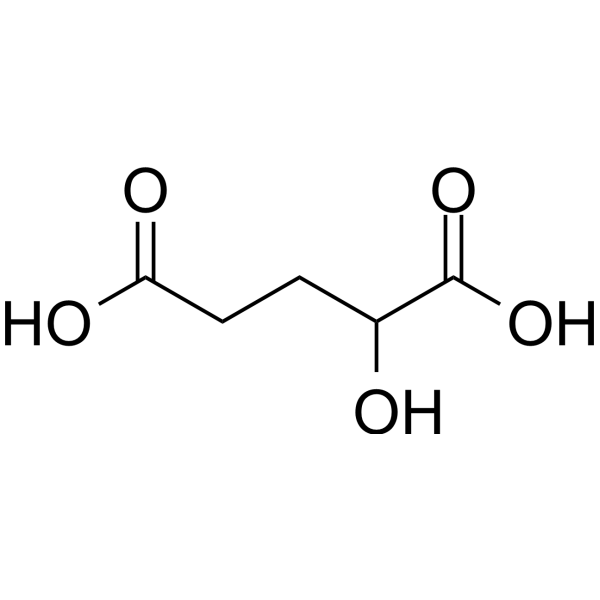
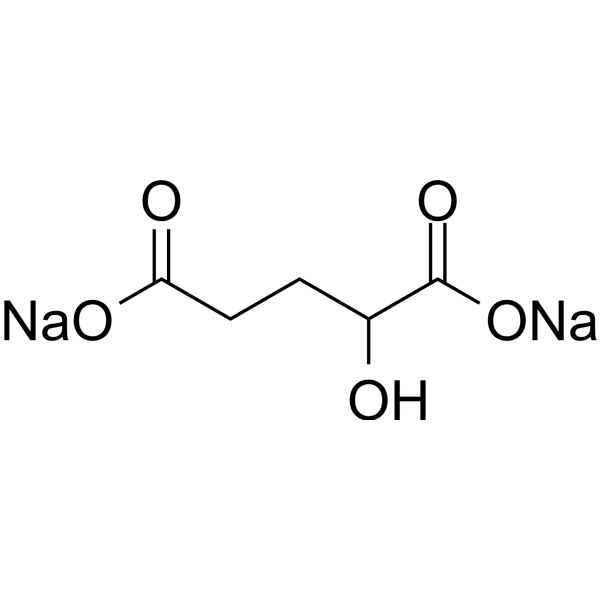
α-Hydroxyglutaric acid (2-Hydroxyglutarate) is an α-hydroxy acid form of glutaric acid. α-Hydroxyglutaric acid is a competitive inhibitor of multiple α-ketoglutarate-dependent dioxygenases, including histone demethylases and the TET family of 5-methlycytosine (5mC) hydroxylases .
loading...
    loading...
Cat. No.: HY-P10272
CAS No.: 1628323-80-7
Synonyms: PTG-300
Target:  

Ferroportin

Research Areas:  

Others

Rusfertide is a peptide mimetic of natural hepcidin, which targets and degrades ferroportin, reduces serum iron and transferrin-saturation, and thus regulates the production of red blood cells. Rusfertide ameliorates the polycythemia vera, β-thalassemia and hereditary hemochromatosis .
loading...
    loading...
Cat. No.: HY-113038A
CAS No.: 40951-21-1
Purity:  ≥98.0%
Synonyms: 2-Hydroxyglutarate disodium; 2-Hydroxyglutaric acid disodium; 2-Hydroxypentanedioic acid disodium
α-Hydroxyglutaric acid (2-Hydroxyglutarate) disodium is an α-hydroxy acid form of glutaric acid. α-Hydroxyglutaric acid disodium is a competitive inhibitor of multiple α-ketoglutarate-dependent dioxygenases, including histone demethylases and the TET family of 5-methlycytosine (5mC) hydroxylases .
loading...
    loading...
Cat. No.: HY-W008091S
CAS No.: 1219795-15-9
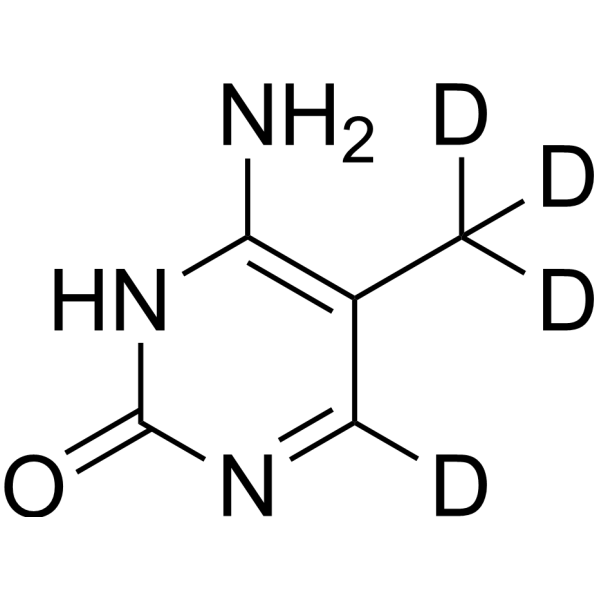
5-Methylcytosine-d4 is the deuterium labeled 5-Methylcytosine (HY-W008091). 5-Methylcytosine is a well-characterized DNA modification in prokaryotes and eukaryotes. 5-Methylcytosine forms symmetrical methylation on CpG dinucleotides in DNA, stabilizes tRNA/rRNA structure in RNA, and affects mRNA translation. 5-Methylcytosine can be oxidized to generate 5hmC, 5fC, and 5caC. 5-Methylcytosine can be used in epigenetics, developmental biology, and the study of diseases such as colorectal cancer and hepatocellular carcinoma .
loading...
    loading...
Cat. No.: HY-W018324
CAS No.: 1123-95-1
Synonyms: 5hmC
5-Hydroxymethylcytosine (5hmC) is an oxidized forms of 5-methylcytosine (5mC) in mammalian DNA. 5-Hydroxymethylcytosine is produced from 5mC in an enzymatic pathway involving three 5mC oxidases, Ten-eleven translocation (TET)1, TET2, and TET3. The conversion of 5mC into 5hmC can be the first step in a pathway leading towards DNA demethylation. 5-Hydroxymethylcytosine is associated with gene transcription and frequently used as a mark to investigate dynamic DNA methylation conversion during mammalian development. 5-Hydroxymethylcytosine can be used for the study of non-small cell lung cancer (NSCLC), neurodegenerative diseases (Alzheimer’s, Parkinson’s) and hematological malignancies (acute myeloid leukemia, myelodysplastic syndromes) .
loading...
    loading...
Cat. No.: HY-126181
CAS No.: 4425-59-6
Target:  

Endogenous Metabolite

Research Areas:  

Others

5-Formylcytosine is a modified base, which is oxidized from 5-methylcytosine. 5-Formylcytosine is a intermediate of in the active DNA demethylation .
loading...
    loading...
Cat. No.: HY-W777859
CAS No.: 1246815-59-7
Synonyms: 5-Methylcytosine hydrochloride-13C,15N2
5-Methyl cytosine- 13C, 15N2 hydrochloride (5-Methylcytosine hydrochloride- 13C, 15N2) is the 13C- and 15N-labeled 5-Methylcytosine hydrochloride (HY-W008091A). 5-Methylcytosine hydrochloride plays a crucial role in regulating gene expression, facilitating genomic imprinting, and suppressing transposable elements, while also being intricately linked to translational fidelity and tRNA recognition.
loading...
    loading...
Cat. No.: HY-P10143
CAS No.: 99828-55-4
Synonyms: Ac-Pro-Leu-Gly-[(S)-2-mercapto-4-methyl-pentanoyl]-Leu-Gly-OEt
Target:  

MMP

Research Areas:  

Others

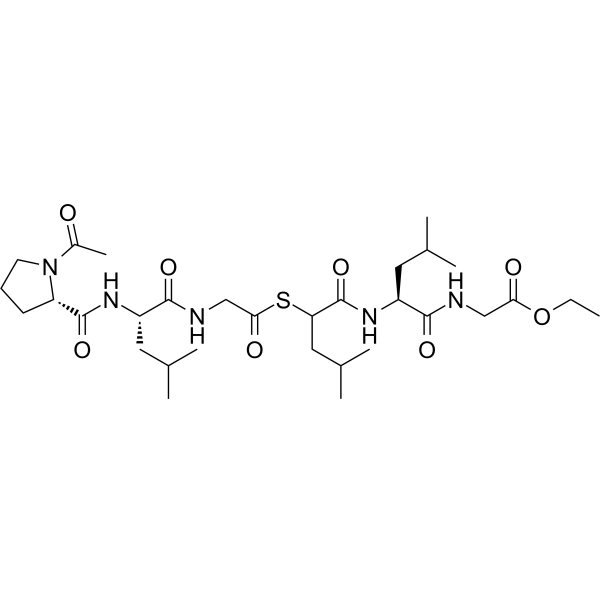
MMP-2/MMP-9 Substrate (Ac-Pro-Leu-Gly-[(S)-2-mercapto-4-methyl-pentanoyl]-Leu-Gly-OEt) is a synthetic chromogenic polypeptide substrate whose core structure mimics the cleavage sites of MMP-2 and MMP-9 (gelatinase A and B) in collagen. After being hydrolyzed by collagenase, MMP-2/MMP-9 Substrate reacts with 4,4'-dithiodipyridine or Ellman's Reagent via its thiol fragment to produce a product with ultraviolet absorption properties .
loading...
    loading...
Cat. No.: HY-A0248AS
Polymyxin B1-d7 TFA is the deuterium labeled Polymyxin B1 TFA (HY-A0248A). Polymyxin B1 is a potent antimicrobial lipopeptide first derived from Bacilus polymyxa. Polymyxin B1 is the major component in Polymyxin B (HY-A0248). Polymyxin B1 can induce lysis of bacterial cells through interaction with their membranes. Polymyxin B1 has the potential for multidrug-resistant Gram-negative bacterial infections treatment .
loading...
    loading...
Cat. No.: HY-P10563
CAS No.: 2580150-96-3
Synonyms: BHV-1100
Target:  

CD38 IFNAR

Research Areas:  

Cancer

Noraramtide (BHV-1100) is an antibody-recruiting molecule. Noraramtide binds to CD38 and recruits natural killer (NK) cells to mediate antibody-dependent cellular cytotoxicity. Noraramtide enhances the capacity of autologous cytokine-induced memory-like (CIML) NK cells to produce IFNγ and CD107a, thereby improving their cytotoxicity against multiple myeloma cells. Noraramtide can be used in the research of multiple myeloma .
loading...
    loading...
Inactive ASO (in vivo) sodium
0 Images
CCTATAGGACTATCCAGGAA
Cat. No.: HY-153734
Purity:  92.18%
Inactive ASO (in vivo) sodium is an inactive Antisense Oligonucleotide. ASO is a class of oligonucleotide molecules, usually composed of 20-30 bases, used to interfere with or regulate gene expression. Inactive ASO (in vivo) sodium is not targeted in the rodent genome and can be used as a negative control for Tofersen. Inactive ASO (in vivo) sodium contains thiophosphate skeleton modification and MOE modification. Cytosine in Inactive ASO (in vivo) is 5' methylcytosine. See References for the location of chemical modifications
loading...
    loading...
Cat. No.: HY-P3066
CAS No.: 77453-01-1
Synonyms: d(CH2)5Tyr(Et)VAVP
Target:  

Vasopressin Receptor

Research Areas:  

Metabolic Disease

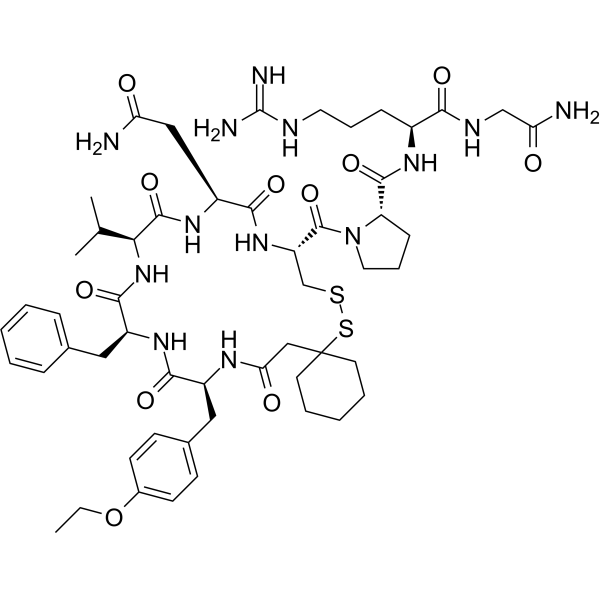
SKF 100398 (d(CH2)5Tyr(Et)VAVP), an arginine vasopressin (AVP) analogue, is a specific antagonist of the antidiuretic effect of exogenous and endogenous AVP .
loading...
    loading...
Cat. No.: HY-152360
CAS No.: 18492-10-9
Research Areas:  

Cancer

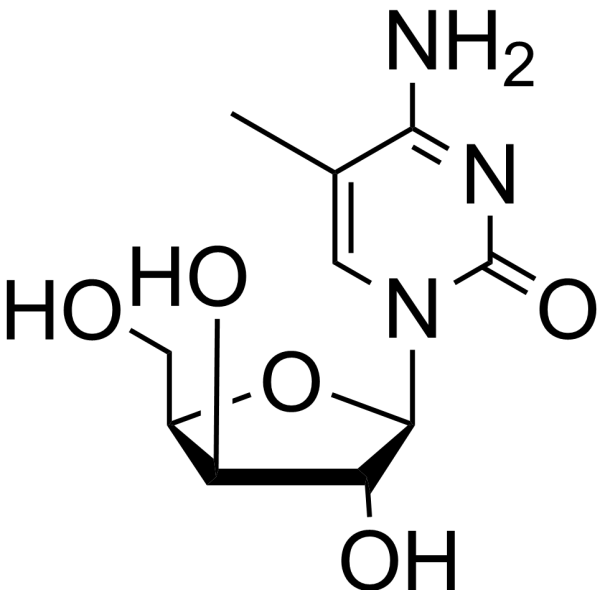
1-(β-D-Xylofuranosyl)-5-methylcytosine is a cytidine analog. Cytidine analogs have a mechanism of inhibiting DNA methyltransferases (such as Zebularine, HY-13420), and have potential anti-metabolic and anti-tumor activities .
loading...
    loading...

