18 Results for "

ALO

" in MedChemExpress (MCE) Product Catalog:
Products (18)

18 Results for "ALO" in MCE Product Catalog:

3
3 Cited Publications
Cat. No.: HY-12720A
CAS No.: 73218-79-8
Purity:  98.96%
Synonyms: ALO 2145
Target:  

Adrenergic Receptor

Research Areas:  

Neurological Disease

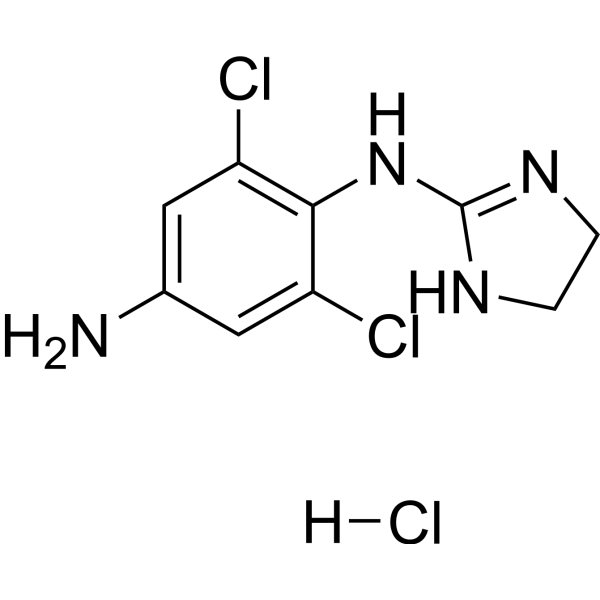
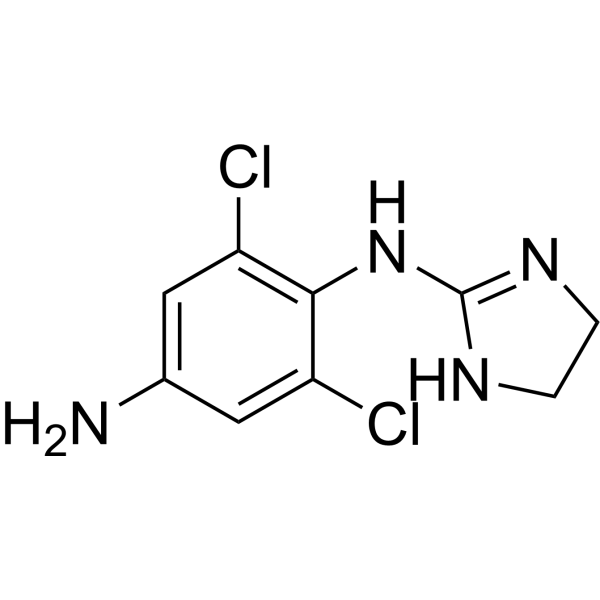
Apraclonidine hydrochloride (ALO 2145), a selective α2 and weak α1 receptor agonist activity, effectively lowers intraocular pressure (IOP) in human eyes. Apraclonidine hydrochloride is a topical ophthalmic solution and has the ability to elevate the eye lid .
loading...
    loading...
2
2 Cited Publications
Cat. No.: HY-120295
CAS No.: 195529-54-5
Purity:  99.51%
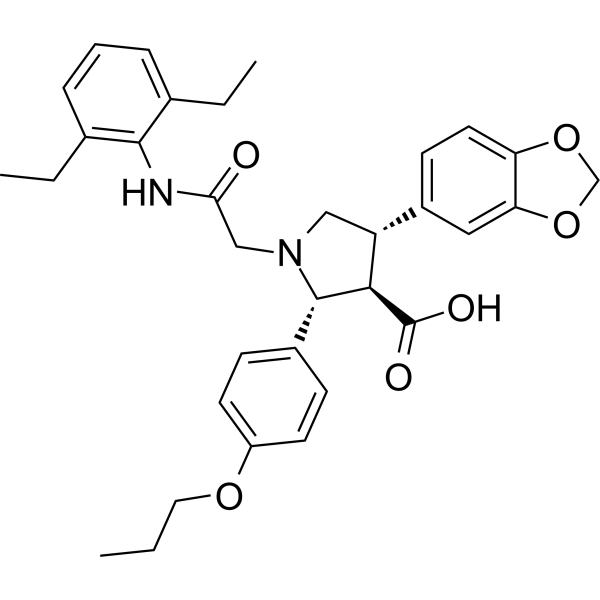
A-192621, a chemical probe, is a potent, nonpeptide, orally active and selective endothelin B (ETB) receptor antagonist with an IC50 of 4.5 nM and a Ki of 8.8 nM. The selectivity of A-192621 is 636-fold higher than ETA (IC50 of 4280 nM and Ki of 5600 nM). A-192621 promotes apoptosis in PASMCs. A-192621 alos causes elevation of arterial blood pressure and an elevation in the plasma ET-1 level .
loading...
    loading...
Cat. No.: HY-B0426A
CAS No.: 140462-76-6
Synonyms: ALO4943A; KW4679
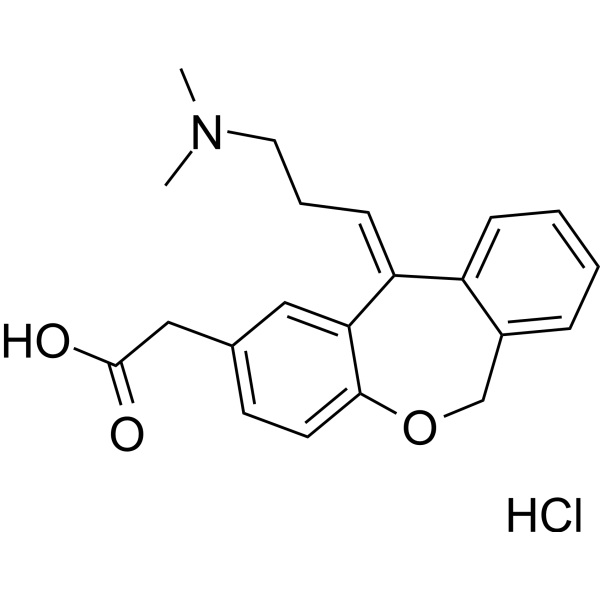
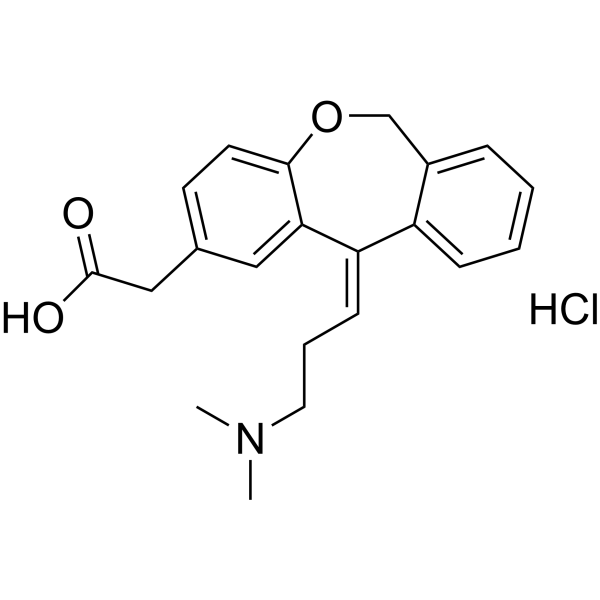
Olopatadine hydrochloride (ALO4943A; KW4679) is an orally active histamine H1 receptor antagonist and mast cell stabilizer. Olopatadine hydrochloride exerts antiallergic effects by blocking histamine H1 receptor-mediated activities. Olopatadine hydrochloride inhibits exocytosis, chemokine release, F-actin polymerization, CXCL10-induced calcium influx, and T cell chemotactic activity. Olopatadine hydrochloride also reduces the expression levels of CXCR3 on the surface of CD4 + and CD8 + T cells. Olopatadine hydrochloride inhibits scratching behavior, improves dermatitis scores, and suppresses intraepidermal neurite outgrowth. Olopatadine hydrochloride simultaneously decreases the levels of inflammatory markers, growth factors, histamine, and specific IgE, while increasing the expression of ErbB3A/HER3A. Olopatadine hydrochloride can be used in research related to seasonal pollinosis, chronic rhinitis, urticaria, allergic conjunctivitis, alopecia areata, and atopic dermatitis .
loading...
    loading...
Cat. No.: HY-161619
CAS No.: 2258606-34-5
RMC-113 is a PIP4K2C and PIKfyve inhibitor with the Ki vaules of 46 nM and 370 nM. RMC-113 reverses SARS-CoV-2-induced impairment of autophagic flux. RMC-113 shows antiviral activity .
loading...
    loading...
Cat. No.: HY-B1288
CAS No.: 5987-82-6
Synonyms: Benoxinate hydrochloride
Target:  

Sodium Channel

Research Areas:  

Neurological Disease

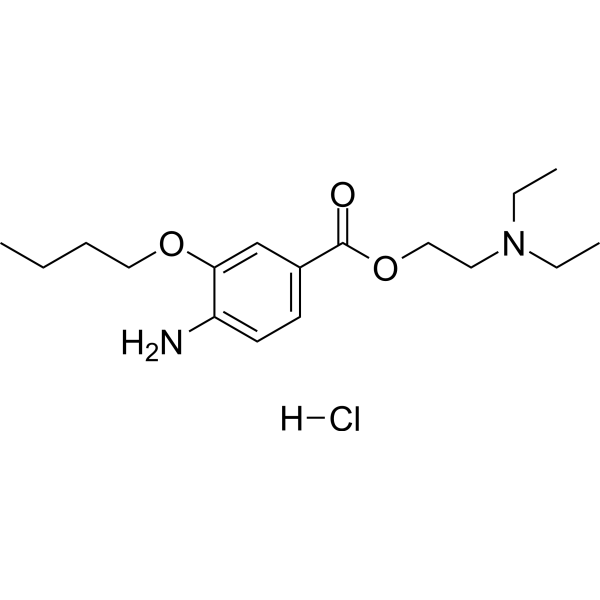
Oxybuprocaine hydrochloride (Benoxinate hydrochloride) reversibly blocks sodium channels and prevents propagation of painful nerve impulses in the cornea, conjunctiva, and sclera. Oxybuprocaine hydrochloride is used especially in ophthalmology and otolaryngology .
loading...
    loading...
Cat. No.: HY-154823
CAS No.: 2759897-35-1
Purity:  99.23%
Target:  

Glycosidase

Research Areas:  

Metabolic Disease

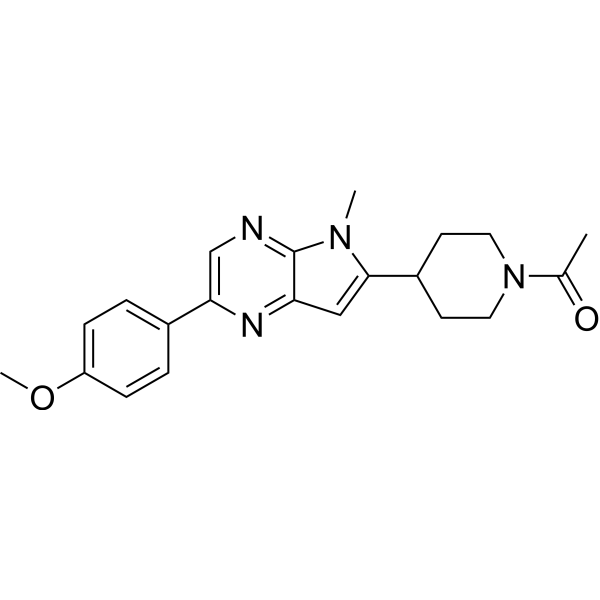
Gcase activator 2 (compound 14), a pyrrolo[2,3-b]pyrazine, is alos a β-Glucocerebrosidase (GCase) activator (EC50=3.8 μM). Gcase activator 2 induces GCase dimerizatio (both K-type and V-type). And Gcase activator 2 has low metabolic clearance in human and mouse .
loading...
    loading...
Cat. No.: HY-W062109
CAS No.: 113806-05-6
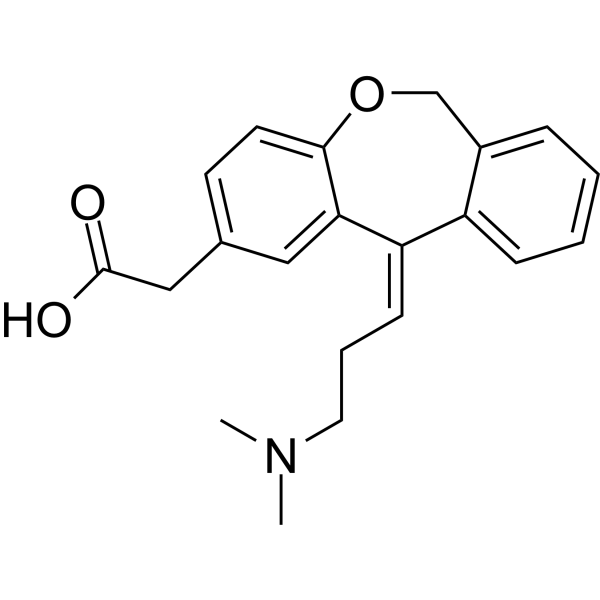
Olopatadine (ALO4943A; KW4679) is an orally active histamine H1 receptor antagonist and mast cell stabilizer. Olopatadine exerts antiallergic effects by blocking histamine H1 receptor-mediated activities. Olopatadine inhibits exocytosis, chemokine release, F-actin polymerization, CXCL10-induced calcium influx, and T cell chemotactic activity. Olopatadine also reduces the expression levels of CXCR3 on the surface of CD4 + and CD8 + T cells. Olopatadine inhibits scratching behavior, improves dermatitis scores, and suppresses intraepidermal neurite outgrowth. Olopatadine simultaneously decreases the levels of inflammatory markers, growth factors, histamine, and specific IgE, while increasing the expression of ErbB3A/HER3A. Olopatadine can be used in research related to seasonal pollinosis, chronic rhinitis, urticaria, allergic conjunctivitis, alopecia areata, and atopic dermatitis .
loading...
    loading...
Cat. No.: HY-W062109S
CAS No.: 1231979-85-3
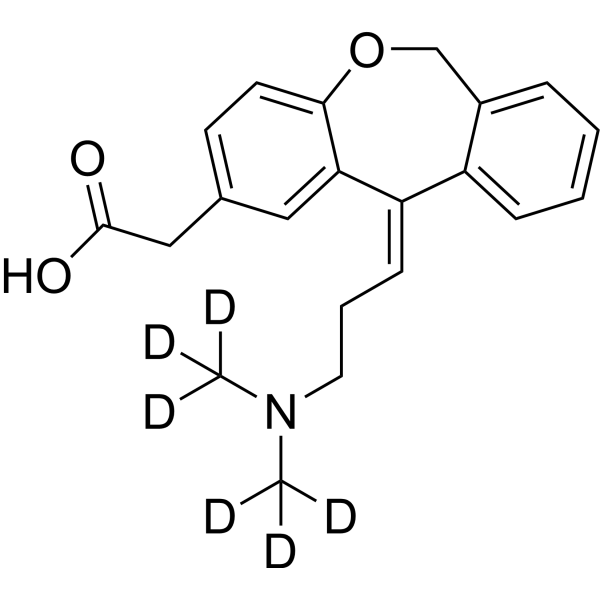
Olopatadine-d6 is the deuterium labeled Olopatadine. Olopatadine hydrochloride (ALO4943A; KW4679) is an orally active histamine H1 receptor antagonist and mast cell stabilizer. Olopatadine hydrochloride exerts antiallergic effects by blocking histamine H1 receptor-mediated activities. Olopatadine hydrochloride inhibits exocytosis, chemokine release, F-actin polymerization, CXCL10-induced calcium influx, and T cell chemotactic activity. Olopatadine hydrochloride also reduces the expression levels of CXCR3 on the surface of CD4 + and CD8 + T cells. Olopatadine hydrochloride inhibits scratching behavior, improves dermatitis scores, and suppresses intraepidermal neurite outgrowth. Olopatadine hydrochloride simultaneously decreases the levels of inflammatory markers, growth factors, histamine, and specific IgE, while increasing the expression of ErbB3A/HER3A. Olopatadine hydrochloride can be used in research related to seasonal pollinosis, chronic rhinitis, urticaria, allergic conjunctivitis, alopecia areata, and atopic dermatitis .
loading...
    loading...
Cat. No.: HY-12720
CAS No.: 66711-21-5
Synonyms: ALO 2145 free base
Target:  

Adrenergic Receptor

Research Areas:  

Infection Neurological Disease

Apraclonidine (ALO 2145 (free base)), a selective α2 and weak α1 receptor agonist activity, effectively low intraocular pressure (IOP) in human eyes. Apraclonidine hydrochloride is a topical ophthalmic solution .
loading...
    loading...
Cat. No.: HY-B0426AR
CAS No.: 140462-76-6
Synonyms: ALO4943A (Standard); KW4679 (Standard)
Olopatadine (hydrochloride) (Standard) is the analytical standard of Olopatadine (hydrochloride). This product is intended for research and analytical applications. Olopatadine hydrochloride (ALO4943A; KW4679) is an orally active histamine H1 receptor antagonist and mast cell stabilizer. Olopatadine hydrochloride exerts antiallergic effects by blocking histamine H1 receptor-mediated activities. Olopatadine hydrochloride inhibits exocytosis, chemokine release, F-actin polymerization, CXCL10-induced calcium influx, and T cell chemotactic activity. Olopatadine hydrochloride also reduces the expression levels of CXCR3 on the surface of CD4 + and CD8 + T cells. Olopatadine hydrochloride inhibits scratching behavior, improves dermatitis scores, and suppresses intraepidermal neurite outgrowth. Olopatadine hydrochloride simultaneously decreases the levels of inflammatory markers, growth factors, histamine, and specific IgE, while increasing the expression of ErbB3A/HER3A. Olopatadine hydrochloride can be used in research related to seasonal pollinosis, chronic rhinitis, urticaria, allergic conjunctivitis, alopecia areata, and atopic dermatitis .
loading...
    loading...
Cat. No.: HY-B0426AS
CAS No.: 1331635-21-2
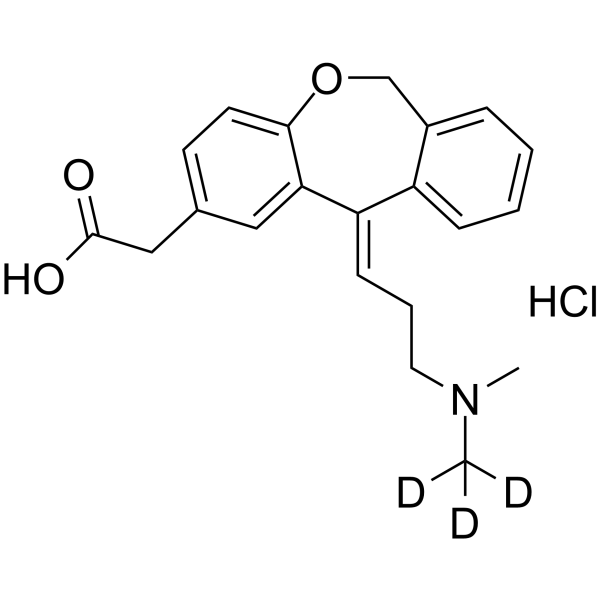
Olopatadine-d3 hydrochloride (ALO4943A-d3) is the deuterium labeled Olopatadine hydrochloride. Olopatadine hydrochloride (ALO4943A; KW4679) is an orally active histamine H1 receptor antagonist and mast cell stabilizer. Olopatadine hydrochloride exerts antiallergic effects by blocking histamine H1 receptor-mediated activities. Olopatadine hydrochloride inhibits exocytosis, chemokine release, F-actin polymerization, CXCL10-induced calcium influx, and T cell chemotactic activity. Olopatadine hydrochloride also reduces the expression levels of CXCR3 on the surface of CD4 + and CD8 + T cells. Olopatadine hydrochloride inhibits scratching behavior, improves dermatitis scores, and suppresses intraepidermal neurite outgrowth. Olopatadine hydrochloride simultaneously decreases the levels of inflammatory markers, growth factors, histamine, and specific IgE, while increasing the expression of ErbB3A/HER3A. Olopatadine hydrochloride can be used in research related to seasonal pollinosis, chronic rhinitis, urticaria, allergic conjunctivitis, alopecia areata, and atopic dermatitis .
loading...
    loading...
Cat. No.: HY-119842
CAS No.: 97677-19-5
Synonyms: AL1567
Target:  

Aldose Reductase

Research Areas:  

Endocrinology

ALO1567 (AL1567) is an orally available aldose reductase inhibitor with an IC50 of 27 nM for rat lens aldose reductase. ALO1567 can be used in the research of diabetes .
loading...
    loading...
Cat. No.: HY-12720B
CAS No.: 73217-88-6
Synonyms: ALO 2145 dihydrochloride
Target:  

Adrenergic Receptor

Research Areas:  

Neurological Disease

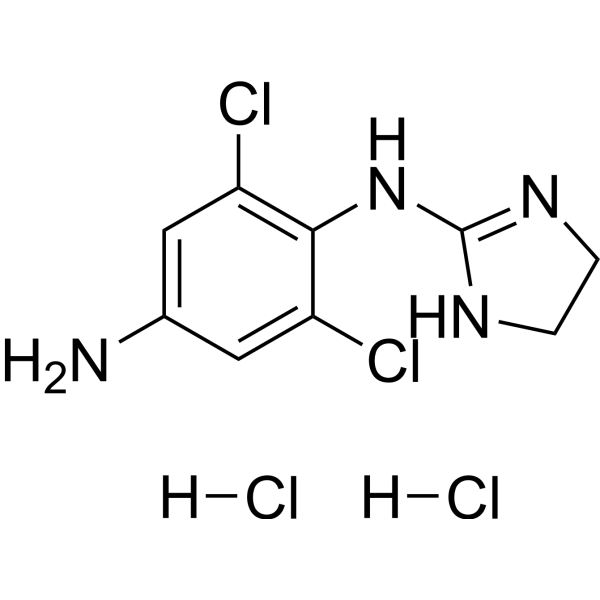
Apraclonidine (ALO 2145) dihydrochloride, a selective α2 and weak α1 receptor agonist activity, effectively low intraocular pressure (IOP) in eyes. Apraclonidine dihydrochloride is a topical ophthalmic solution .
loading...
    loading...
Cat. No.: HY-12720AR
CAS No.: 73218-79-8
Synonyms: ALO 2145 (Standard)
Apraclonidine (hydrochloride) (Standard) is the analytical standard of Apraclonidine (hydrochloride). This product is intended for research and analytical applications. Apraclonidine hydrochloride (ALO 2145), a selective α2 and weak α1 receptor agonist activity, effectively lowers intraocular pressure (IOP) in human eyes. Apraclonidine hydrochloride is a topical ophthalmic solution and has the ability to elevate the eye lid .
loading...
    loading...
Cat. No.: HY-B0426AS2
Synonyms: ALO4943A-d6 hydrochloride; KW4679-d6 hydrochloride
Olopatadine-d6 (ALO4943A-d6; KW4679-d6) hydrochloride is deuterium-labeled Olopatadine (hydrochloride) (HY-B0426A). Olopatadine hydrochloride (ALO4943A; KW4679) is an orally active histamine H1 receptor antagonist and mast cell stabilizer. Olopatadine hydrochloride exerts antiallergic effects by blocking histamine H1 receptor-mediated activities. Olopatadine hydrochloride inhibits exocytosis, chemokine release, F-actin polymerization, CXCL10-induced calcium influx, and T cell chemotactic activity. Olopatadine hydrochloride also reduces the expression levels of CXCR3 on the surface of CD4 + and CD8 + T cells. Olopatadine hydrochloride inhibits scratching behavior, improves dermatitis scores, and suppresses intraepidermal neurite outgrowth. Olopatadine hydrochloride simultaneously decreases the levels of inflammatory markers, growth factors, histamine, and specific IgE, while increasing the expression of ErbB3A/HER3A. Olopatadine hydrochloride can be used in research related to seasonal pollinosis, chronic rhinitis, urticaria, allergic conjunctivitis, alopecia areata, and atopic dermatitis .
loading...
    loading...
Cat. No.: HY-133214
CAS No.: 146929-33-1
Target:  

Adrenergic Receptor

Research Areas:  

Cardiovascular Disease

Cyclazosin hydrochloride is an α1B-adrenergic receptor antagonist. Cyclazosin hydrochloride has high specificity for α-adrenergic receptors, with pKi values of 9.23-9.57 and 8.18-8.41 for O/1A (O/la) and OflB (alb) adrenergic receptors, respectively. However, Cyclazosin hydrochloride cannot distinguish between cloned alb and alo adrenergic receptors, which have pKi values of 9.23 and 9.28, respectively .
loading...
    loading...
Cat. No.: HY-B1288R
CAS No.: 5987-82-6
Synonyms: Benoxinate hydrochloride (Standard)
Research Areas:  

Neurological Disease

Oxybuprocaine (hydrochloride) (Standard) is the analytical standard of Oxybuprocaine (hydrochloride). This product is intended for research and analytical applications. Oxybuprocaine hydrochloride (Benoxinate hydrochloride) reversibly blocks sodium channels and prevents propagation of painful nerve impulses in the cornea, conjunctiva, and sclera. Oxybuprocaine hydrochloride is used especially in ophthalmology and otolaryngology .
loading...
    loading...
Cat. No.: HY-P810041
Synonyms: ALO17, C17orf27, KIAA1554, KIAA1618, MYSTR, RNF213, E3 ubiquitin-protein ligase RNF213, ALK lymphoma oligomerization partner on chromosome 17, E3 ubiquitin-lipopolysaccharide ligase RNF213, Mysterin, RING finger protein 213

Host:  

Mouse

Application:  

WB, IP, ELISA

Reactivity:  

human

loading...
    loading...
  • 1

