



Search Result
Results for "
AMD
" in MedChemExpress (MCE) Product Catalog:
3
Isotope-Labeled Compounds
| Cat. No. |
Product Name |
Target |
Research Areas |
Chemical Structure |
-
- HY-10046
-
Plerixafor
Maximum Cited Publications
102 Publications Verification
AMD 3100; JM3100; SID791
|
CXCR
HIV
|
Infection
Inflammation/Immunology
Endocrinology
Cancer
|
|
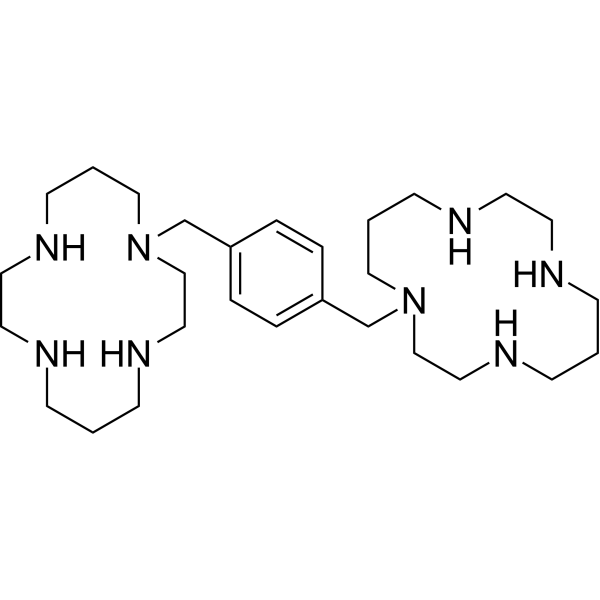
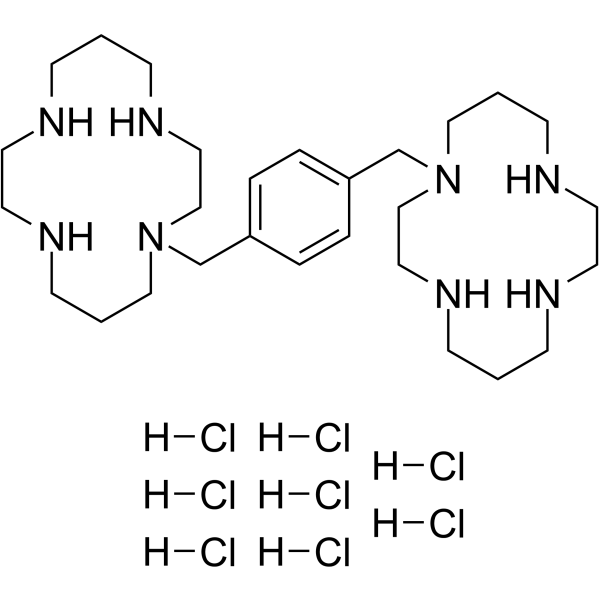
Plerixafor (AMD 3100) is a selective CXCR4 antagonist with an IC50 of 44 nM. Plerixafor, an immunostimulant and a hematopoietic stem cell (HSC) mobilizer, is an allosteric agonist of CXCR7. Plerixafor inhibits HIV-1 and HIV-2 replication with an EC50 of 1-10 nM .
|
-
-
- HY-50912
-
-
-
- HY-108801A
-
|
|
VEGFR
|
Cardiovascular Disease
Metabolic Disease
Cancer
|
|
Aflibercept (VEGF Trap) is a soluble decoy VEGFR constructed by fusing the Ig domains of VEGFR1 and VEGFR2 with the Fc region of human IgG1. Aflibercept inhibits VEGF signaling by reducing VEGF-regulated processes. Aflibercept can be used for thr research of age-related macular degeneration (AMD) and cardiovascular disease .
|
-
-
- HY-P3252A
-
|
|
Complement System
|
Inflammation/Immunology
|
|
Pegcetacoplan acetate is a pegylated complement C3/C3b inhibitor. Pegcetacoplan acetate acts by specifically binding to and inhibiting C3 and C3b, thereby suppressing the complement cascade at its proximal stage. Pegcetacoplan is not a known inhibitor or inducer of CYP450 isoenzymes. Pegcetacoplan acetate can be used for the research of complement-mediated diseases, including paroxysmal nocturnal hemoglobinuria (PNH) and age-related macular degeneration (AMD) .
|
-
-
- HY-108801
-
|
VEGF Trap; VEGF-TRAPR1R2; VEGF-trapR1
|
VEGFR
|
Cardiovascular Disease
Metabolic Disease
Cancer
|
|
Aflibercept (VEGF Trap) is a soluble decoy VEGFR constructed by fusing the Ig domains of VEGFR1 and VEGFR2 with the Fc region of human IgG1. Aflibercept inhibits VEGF signaling by reducing VEGF-regulated processes. Aflibercept can be used for thr research of age-related macular degeneration (AMD) and cardiovascular disease .
|
-
-
- HY-P9951A
-
|
RG-6321 (anti-VEGF)
|
VEGFR
|
Cardiovascular Disease
|
|
Ranibizumab (RG-6321) (anti-VEGF) is a humanized anti-VEGF monoclonal antibody fragment and can recognize all VEGF-A isoforms (VEGF110, VEGF121, and VEGF165) . Ranibizumab (anti-VEGF) slows vision loss in vivo and is used for wet age-related macular degeneration (AMD) research .
|
-
-
- HY-128973
-
|
|
Reactive Oxygen Species (ROS)
|
Cancer
|
|
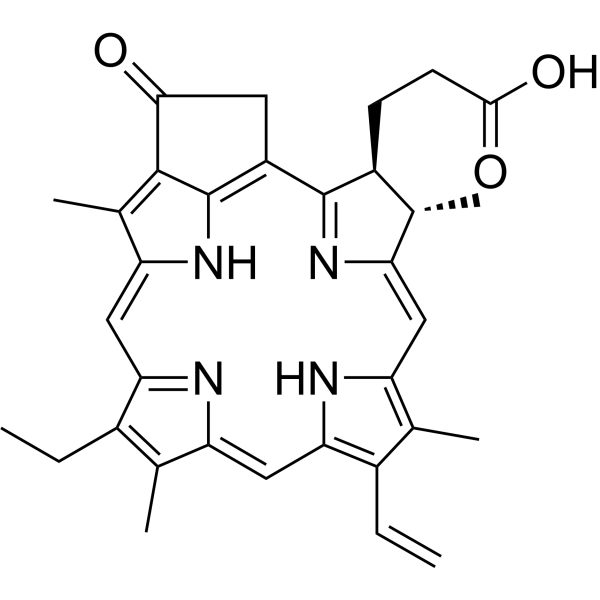
Pyropheophorbide-a (Ppa) is a photosensitizer used in photodynamic therapy (PDT) for tumors. Pyropheophorbide-a exhibits phototoxic effects on tumor cells, such as cervical cancer cells, and also has anti-lipogenesis activity. Pyropheophorbide-a shows potential for research in the fields of cancer and age-related macular degeneration (AMD). Pyropheophorbide-a derivatives also demonstrate inhibitory activity against tumor cells .
|
-
-
- HY-147080
-
|
ARC1905
|
Complement System
|
Others
|
|
Avacincaptad pegol (ARC1905) sodium is a 40KDa PEG-conjugated aptamer. Avacincaptad pegol sodium targets complement factor 5 (C5), inhibits the cleavage of C5 into C5a and C5b, limits inflammatory stimulation and complement membrane attack complex (MAC), and is used to study age-related macular degeneration (AMD). Avacincaptad pegol sodium limits irregular cell apoptosis by targeting downstream factors in the complement cascade while preserving the early steps of the complement system .
|
-
-
- HY-50101A
-
|
AMD-070 trihydrochloride; AMD-11070 trihydrochloride
|
CXCR
HIV
|
Infection
Endocrinology
Cancer
|
|
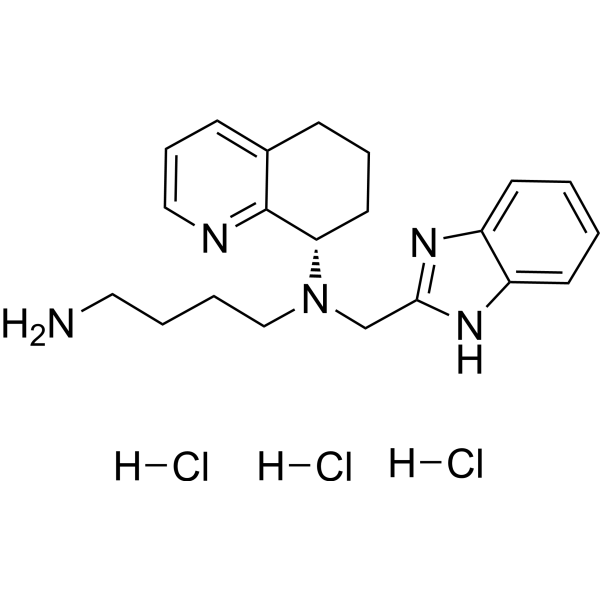
Mavorixafor trihydrochloride (AMD-070 trihydrochloride) is a potent, selective and orally available CXCR4 antagonist, with an IC50 value of 13 nM against CXCR4 125I-SDF binding, and also inhibits the replication of T-tropic HIV-1 (NL4.3 strain) in MT-4 cells and PBMCs with an IC50 of 1 and 9 nM, respectively.Mavorixafor trihydrochloride can be used for the study of WHIM syndrome .
|
-
-
- HY-50101
-
|
AMD-070; AMD-11070
|
CXCR
HIV
|
Infection
Endocrinology
Cancer
|
|
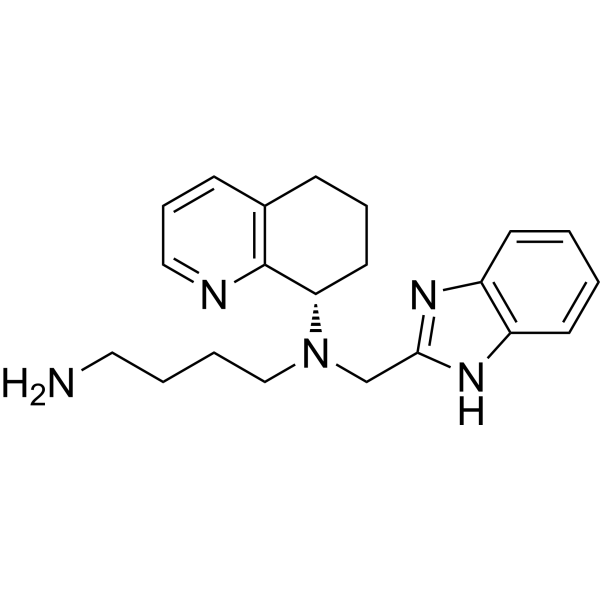
Mavorixafor (AMD-070) is a potent, selective and orally available CXCR4 antagonist, with an IC50 value of 13 nM against CXCR4 125I-SDF binding, and also inhibits the replication of T-tropic HIV-1 (NL4.3 strain) in MT-4 cells and PBMCs with an IC50 of 1 and 9 nM, respectively. Mavorixafor can be used for the study of WHIM syndrome .
|
-
-
- HY-P99116
-
|
RG7716; RO-6867461
|
VEGFR
|
Cardiovascular Disease
Metabolic Disease
Inflammation/Immunology
|
|
Faricimab, an overall good safety and tolerability profile, is a bispecific antibody targeting Angiopoietin-2 (Ang-2) and vascular endothelial growth factor-A (VEGF-A). Faricimab prevents retinal vascular leakage, cell death and inflammation in retinal ischemia/reperfusion (I/R) injury and sCNV mouse models. Faricimab demonstrates statistically superior visual acuity gains versus Ranibizumab (HY-P9951). Faricimab can be used for retinal diseases, such as age-related macular degeneration (w-AMD), diabetic macular edema (DME) and macular edema following retinal vein occlusion (RVO) .
|
-
-
- HY-163690
-
|
|
Ser/Thr Protease
|
Neurological Disease
Inflammation/Immunology
|
|
HTRA1-IN-1 is a potent and selective high temperature requirement A serine peptid 1 (HTRA1) inhibitor with an IC50 of 13 nM. HTRA1-IN-1 can be used for the research of HTRA1-related diseases, such as age-related macular degeneration (AMD), osteoarthritis, and rheumatoid arthritis .
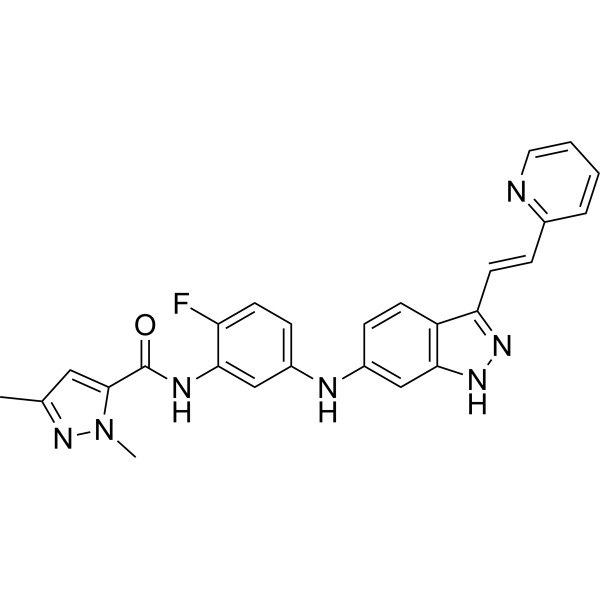
|
-
-
- HY-150069
-
|
|
Bcl-2 Family
Apoptosis
|
Metabolic Disease
|
|
UBX1325 is an Bcl-xL inhibitor that promotes apoptosis in senescent cells. UBX1325 is a potent anti-aging agent that can be used in studies of age-related eye diseases such as diabetic macular oedema (DME), age-related macular degeneration (AMD) and diabetic retinopathy (DR) .
|
-
-
- HY-112256
-
|
|
Androgen Receptor
|
Inflammation/Immunology
|
|
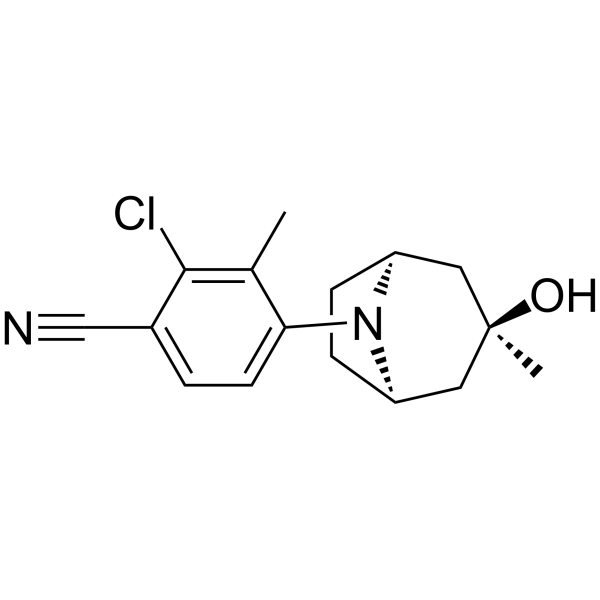
ACP-105 is an orally available, selective amd potent androgen receptor modulator (SARM), with pEC50s of 9.0 and 9.3 for AR wild type and T877A mutant, respectively.
|
-
-
- HY-111793
-
|
|
CXCR
|
Neurological Disease
|
|
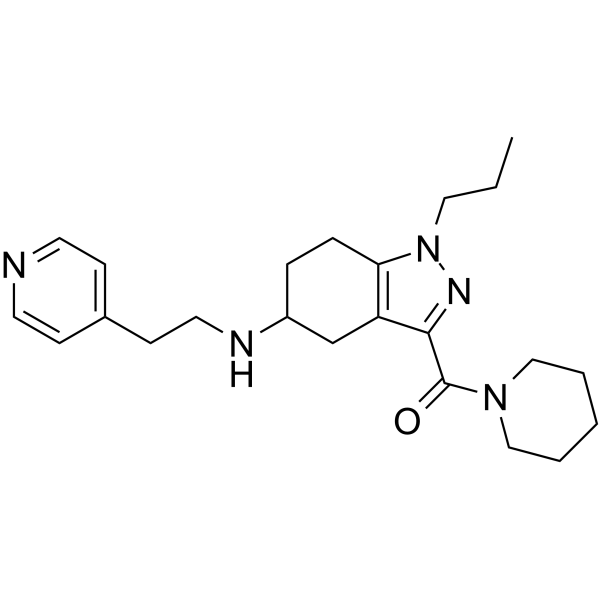
NUCC-390 is a novel and selective small-molecule CXCR4 receptor agonist. NUCC-390 induces internalization of CXCR4 receptors and acts in an opposite way of AMD3100 (HY-10046) . NUCC-390 promotes nerve recovery of function after neurodegeneration in vivo .
|
-
-
- HY-50101C
-
|
AMD-070 hydrochloride; AMD-11070 hydrochloride
|
CXCR
HIV
|
Infection
Cancer
|
|
Mavorixafor (AMD-070) hydrochloride is a potent, selective and orally available CXCR4 antagonist, with an IC50 value of 13 nM against CXCR4 125I-SDF binding. Mavorixafor hydrochloride also inhibits the replication of T-tropic HIV-1 (NL4.3 strain) in MT-4 cells and PBMCs with an IC50 of 1 nM and 9 nM, respectively. Mavorixafor hydrochloride can be used for the study of WHIM syndrome .
|
-
-
- HY-15971A
-
|
GENZ-644494
|
CXCR
HIV
|
Infection
Endocrinology
|
|
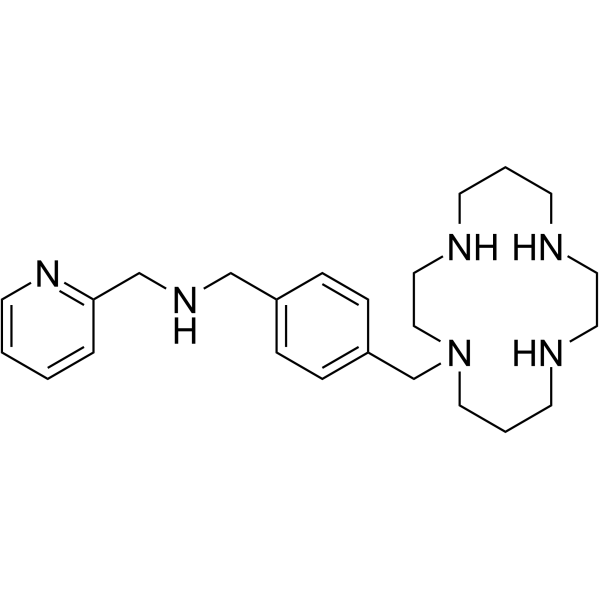
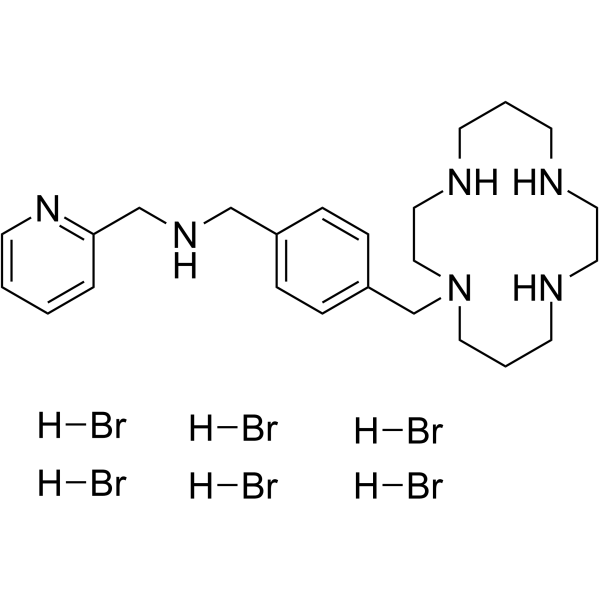
AMD 3465 (GENZ-644494) is a potent antagonist of CXCR4, inhibits binding of 12G5 mAb and CXCL12 AF647 to CXCR4, with IC50s of 0.75 nM and 18 nM in SupT1 cells; AMD 3465 also potently inhibits the replication of X4 HIV strains (IC50: 1-10 nM), but has no effect on CCR5-using (R5) viruses.
|
-
-
- HY-P99629
-
|
FHTR 2163; RG 6147; RO 7171009
|
Ser/Thr Protease
|
Neurological Disease
|
|
Galegenimab (FHTR 2163) is a humanized monoclonal antibody Fab fragment targeting the HtrA1 trimer. Galegenimab is used in research on age-related macular degeneration (AMD) .
|
-
-
- HY-19720A
-
|
ACU-4429 hydrochloride
|
RPE65
|
Metabolic Disease
|
|
Emixustat (ACU-4429) hydrochloride is an orally active RPE65 inhibitor with an IC50 value of 4.4 nM. Emixustat hydrochloride is also a visual cycle modulator, capable of regulating visual cycle activity by inhibiting retinol isomerization, and holds potential for studying vision disorders such as age-related macular degeneration (AMD) .
|
-
-
- HY-148457
-
|
Izervay
|
Complement System
|
Infection
Neurological Disease
Inflammation/Immunology
|
|
Avacincaptad pegol (Izervay) is a selective inhibitor targeting complement component C5, and is a pegylated ribonucleic acid aptamer. Avacincaptad pegol inhibits the cleavage of C5 into pro-inflammatory C5a and C5b, which forms the membrane attack complex (C5b-9), thereby reducing inflammatory cell recruitment and retinal cell damage. Avacincaptad pegol can slow the growth of geographic atrophy (GA) lesions and reduce the risk of persistent vision loss. Avacincaptad pegol can be used in research of geographic atrophy associated with age-related macular degeneration (AMD) and has been approved by the FDA .
|
-
-
- HY-15971
-
|
GENZ-644494 hexahydrobromide
|
CXCR
HIV
|
Infection
Endocrinology
|
|
AMD 3465 hexahydrobromide (GENZ-644494 hexahydrobromide) is a potent antagonist of CXCR4, inhibits binding of 12G5 mAb and CXCL12 AF647 to CXCR4, with IC50s of 0.75 nM and 18 nM in SupT1 cells; AMD 3465 also potently inhibits the replication of X4 HIV strains (IC50: 1-10 nM), but has no effect on CCR5-using (R5) viruses.
|
-
-
- HY-109561
-
|
EYE001; NX1838
|
VEGFR
|
Metabolic Disease
Inflammation/Immunology
|
|
Pegaptanib sodium is an RNA aptamer with polyethylene glycol modifications, which is directed against vascular endothelial growth factor (VEGF)-165. Pegaptanib could be used for the study of neovascular age-related macular degeneration (AMD) .
|
-
-
- HY-19720
-
|
ACU-4429
|
RPE65
|
Metabolic Disease
|
|
Emixustat is an orally active RPE65 inhibitor with an IC50 value of 4.4 nM. Emixustat is also a visual cycle modulator, capable of regulating visual cycle activity by inhibiting retinol isomerization, and holds potential for studying vision disorders such as age-related macular degeneration (AMD) .
|
-
-
- HY-111793A
-
|
|
CXCR
|
Neurological Disease
|
|
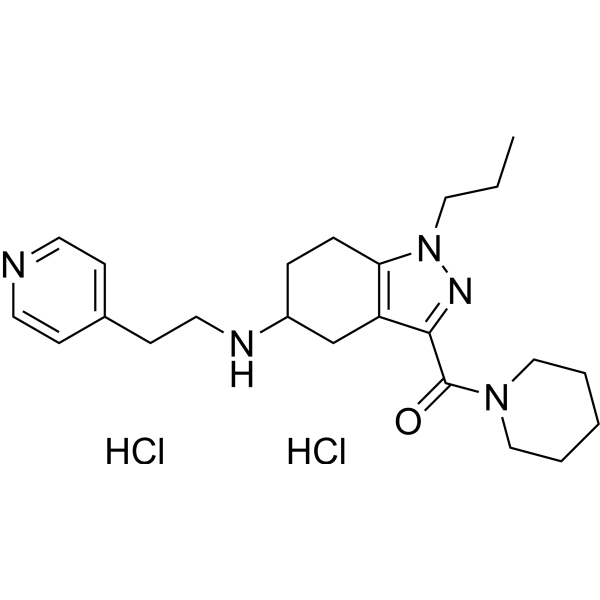
NUCC-390 dihydrochloride is a novel and selective small-molecule CXCR4 receptor agonist. NUCC-390 dihydrochloride induces internalization of CXCR4 receptors and acts in an opposite way of AMD3100 (HY-10046) . NUCC-390 dihydrochloride promotes nerve recovery of function after neurodegeneration in vivo .
|
-
-
- HY-110117
-
|
|
Integrin
Interleukin Related
|
Inflammation/Immunology
|
|
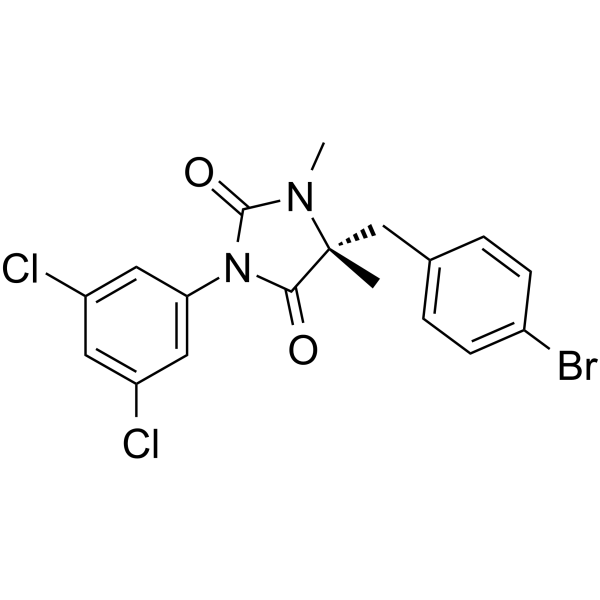
BIRT 377 is a potent amd orally bioavailable inhibitor of the interaction between intercellular adhesion molecule-1 (ICAM-1) and lymphocyte function-associated antigen-1 (LFA-1). BIRT 377 also inhibits the production of IL-2 in vivo. BIRT 377 can be used for researching inflammatory and immune disorders .
|
-
-
- HY-D0179
-
|
|
Biochemical Assay Reagents
|
Infection
Cardiovascular Disease
|
|
Cyclam is a metal chelator that forms metal complexes with a variety of metal ions. Cyclam metal complexes exhibits anti-HIV (such as AMD3100), nitric oxide (NO) releasing and scavenging (such as Zn(II)-Cyclam and Ru(II)-Cyclam), and SOD mimetic (such as Mn(III)-Cyclam and Zn(II)-Cyclam) activities .
|
-
-
- HY-131468
-
|
AMD473; ZD0473
|
DNA/RNA Synthesis
|
Cancer
|
|
Picoplatin (AMD473) is a platinum-based antineoplastic agent. Picoplatin is specifically to circumvent thiol-mediated drug resistance by sterically hindering its reaction with glutathione (GSH) while still retaining the ability to form cytotoxic lesions with DNA .
|
-
-
- HY-P99576
-
|
OG1953
|
VEGFR
|
Others
|
|
Tarcocimab (OG1953) is a humanized anti-VEGFA monoclonal antibody (IgG1 type). Tarcocimab is available for research in retinal vein occlusion (RVO) and wet age-related macular degeneration (AMD).
|
-
-
- HY-P99298
-
|
RG 7417; TNX 234; Anti-CFD Recombinant Antibody
|
Complement System
|
Inflammation/Immunology
|
|
Lampalizumab (RG 7417) is a humanised monoclonal antibody targeting complement Factor D in the alternative complement pathway. Lampalizumab binds an exosite and sterically blocks Factor B access to the active site. Lampalizumab can be used for age-related macular degeneration (AMD) research .
|
-
-
- HY-N0679S
-
|
ALK-001; Retinol acetate-d3; Vitamin A acetate-d3
|
Isotope-Labeled Compounds
|
Metabolic Disease
|
|
Retinyl acetate-d3 (ALK-001) is a deuterated Vitamin A. Retinyl acetate-d3 can be used for research of geographic atrophy (GA) secondary to age-related macular degeneration (AMD) .
|
-
-
- HY-P1930A
-
|
|
Integrin
|
Inflammation/Immunology
|
|
Risuteganib hydrochloride is a synthetic RGD (arginyl-glycyl-aspartic acid)-class peptide. Risuteganib hydrochloride is an anti-integrin that downregulates oxidative stress and restores homeostasis, and targets three integrin receptors that are implicated in dry age-related macular degeneration (AMD) in order to restore homeostasis in the retina .
|
-
-
- HY-153484A
-
|
|
VEGFR
Small Interfering RNA (siRNA)
|
Others
|
|
Bevasiranib sodium is a siRNA designed to silence the genes that produce vascular endothelial growth factor (VEGF). It is widely accepted that vascular endothelial growth factor (VEGF) is a key component in the pathogenesis of choroidal neo-vascularization (CNV), which is a precursor to wet age-related macular degeneration (wet AMD).
|
-
-
- HY-132126
-
|
|
SRPK
|
Others
|
|
SPHINX is a selective SRPK1 inhibitor with an IC50 value of 0.58 μM. SPHINX effectively reduces Choroidal Neovascularization (CNV) in vivo. SPHINX can be used for the research of (age-related macular degenaration) AMD .
|
-
-
- HY-15492
-
|
AG-013958
|
VEGFR
|
Cardiovascular Disease
|
|
AG-13958 (AG-013958), a potent VEGFR tyrosine kinase inhibitor, is used for treatment of choroidal neovascularization associated with age-related macular degeneration (AMD) .
|
-
-
- HY-N5118
-
|
(-)-Chimonanthine
|
Tyrosinase
|
Cancer
|
|
Chimonanthine is an alkaloid of Chimonanthus praecox, inhibits tyrosinase and tyrosine-related protein-1 mRNA expression, amd inhibits melanogenesis .
|
-
-
- HY-10046S
-
-
-
- HY-153560
-
|
|
Phospholipase
|
Neurological Disease
|
|
Lp-PLA2-IN-14 (Compound 19) is an Lp-PLA2 inhibitor with a pIC50 of 8.4 against rhLp-PLA2. Lp-PLA2-IN-14 can be used for the research of neurodegenerative related diseases, such as Alzheimer Disease (AD), glaucoma, age-related macular degeneration (AMD) or cardiovascular diseases including atherosclerosis and the like .
|
-
-
- HY-15971AR
-
|
GENZ-644494 (Standard)
|
CXCR
HIV
Reference Standards
|
Infection
Endocrinology
|
|
AMD 3465 (Standard) is the analytical standard of AMD 3465. This product is intended for research and analytical applications. AMD 3465 (GENZ-644494) is a potent antagonist of CXCR4, inhibits binding of 12G5 mAb and CXCL12AF647 to CXCR4, with IC50s of 0.75 nM and 18 nM in SupT1 cells; AMD 3465 also potently inhibits the replication of X4 HIV strains (IC50: 1-10 nM), but has no effect on CCR5-using (R5) viruses.
|
-
-
- HY-15971R
-
|
GENZ-644494 hexahydrobromide (Standard)
|
CXCR
HIV
Reference Standards
|
Infection
Endocrinology
|
|
AMD 3465 (hexahydrobromide) (Standard) is the analytical standard of AMD 3465 (hexahydrobromide). This product is intended for research and analytical applications. AMD 3465 hexahydrobromide (GENZ-644494 hexahydrobromide) is a potent antagonist of CXCR4, inhibits binding of 12G5 mAb and CXCL12AF647 to CXCR4, with IC50s of 0.75 nM and 18 nM in SupT1 cells; AMD 3465 also potently inhibits the replication of X4 HIV strains (IC50: 1-10 nM), but has no effect on CCR5-using (R5) viruses.
|
-
-
- HY-10046R
-
|
AMD 3100 (Standard); JM3100 (Standard); SID791 (Standard)
|
Reference Standards
CXCR
HIV
|
Infection
Inflammation/Immunology
Endocrinology
Cancer
|
|
Plerixafor (Standard) is the analytical standard of Plerixafor. This product is intended for research and analytical applications. Plerixafor (AMD 3100) is a selective CXCR4 antagonist with an IC50 of 44 nM. Plerixafor, an immunostimulant and a hematopoietic stem cell (HSC) mobilizer, is an allosteric agonist of CXCR7. Plerixafor inhibits HIV-1 and HIV-2 replication with an EC50 of 1-10 nM .
|
-
-
- HY-50912R
-
|
AMD3100 octahydrochloride (Standard); JM3100 octahydrochloride (Standard); SID791 octahydrochloride (Standard)
|
CXCR
HIV
Virus Protease
Reference Standards
|
Inflammation/Immunology
Endocrinology
Cancer
|
|
Plerixafor (octahydrochloride) (Standard) is the analytical standard of Plerixafor (octahydrochloride). This product is intended for research and analytical applications. Plerixafor octahydrochloride (AMD3100 octahydrochloride) is a selective CXCR4 antagonist with an IC50 of 44 nM.
|
-
-
- HY-RS00644
-
|
|
Small Interfering RNA (siRNA)
|
Others
|
|
AMD1 Human Pre-designed siRNA Set A contains three designed siRNAs for AMD1 gene (Human), as well as a negative control, a positive control, and a FAM-labeled negative control.
|
-
AMD1 Human Pre-designed siRNA Set A
-
- HY-P1930
-
|
|
Integrin
|
Inflammation/Immunology
|
|
Risuteganib is a synthetic RGD (arginyl-glycyl-aspartic acid)-class peptide. Risuteganib is an anti-integrin that downregulates oxidative stress and restores homeostasis, and targets three integrin receptors that are implicated in dry age-related macular degeneration (AMD) in order to restore homeostasis in the retina .
|
-
-
- HY-153484
-
|
|
VEGFR
Small Interfering RNA (siRNA)
|
Others
|
|
Bevasiranib is a siRNA designed to silence the genes that produce vascular endothelial growth factor (VEGF). It is widely accepted that vascular endothelial growth factor (VEGF) is a key component in the pathogenesis of choroidal neo-vascularization (CNV), which is a precursor to wet age-related macular degeneration (wet AMD).
|
-
-
- HY-18694
-
|
|
MMP
|
Inflammation/Immunology
|
|
CGS 27023A is a non-peptidic and orally active MMP inhibitor with the Ki values of 43, 33, 20 and 8 nM for MMP-3, MMP-1, MMP-2 amd MMP-9, respectively. CGS 27023A prevents cartilage degradation in stromelysin-induced rabbit cartilage degradation model. CGS 27023A can be used for study of arthritis .
|
-
-
- HY-164682
-
|
|
HIV
CXCR
|
Infection
|
|
AMD 3329 octahydrobromide is a potent and selective anti-HIV-1 and HIV-2 compound with activity to inhibit viral replication. AMD 3329 blocks viral invasion by binding to the chemokine receptor CXCR4. AMD 3329 exhibits EC50 values as low as 0.8 and 1.6 nM when inhibiting HIV-1 and HIV-2 replication, showing better antiviral efficacy than AMD3100. AMD 3329 significantly inhibits the binding of specific CXCR4 monoclonal antibodies and the Ca(2+) flux induced by SDF-1alpha. AMD 3329 is also able to effectively interfere with virus-induced syncytium formation, with an EC50 value of 12 nM .
|
-
-
- HY-158317
-
|
|
CXCR
Biochemical Assay Reagents
|
Others
|
|
SFB-AMD3465 is an AMD3465 (HY-15971A) derivative. SFB-AMD3465 is utilized as positron emission tomography (PET) tracer for CXCR4, when labeled with radioactive Fluorine .
|
-
-
- HY-167945
-
|
|
HIV
CXCR
|
Infection
|
|
AMD-3329 is a potent and selective anti-HIV-1 and HIV-2 agent, exhibiting activity by inhibiting virus replication through binding to the chemokine receptor CXCR4, which serves as a co-receptor for the entry of X4 viruses.
|
-
-
- HY-178284
-
|
|
Complement System
|
Inflammation/Immunology
|
|
Factor B-IN-7 (Compound (I)) is a selective Factor B inhibitor. Factor B-IN-7 inhibits Factor B-C3b interaction to suppress complement hyperactivation. Factor B-IN-7 is promising for research of paroxysmal nocturnal hemoglobinuria (PNH), C3 glomerulopathy, and age-related macular degeneration (AMD) associated with complement-mediated diseases .
|
-
-
- HY-163403
-
|
|
VEGFR
|
Cardiovascular Disease
Cancer
|
|
VEGFR-2-IN-43 (compound 16) is an orally active inhibitor of VEGFR2, with an IC50 of 39.91 μM. VEGFR-2-IN-43 can be used for wet age-related macular degeneration (w-AMD) disease research .
|
-
- HY-153183
-
|
|
Phospholipase
|
Cardiovascular Disease
Neurological Disease
|
|
Lp-PLA2-IN-12 (compound 19) is an Lp-PLA2 inhibitor. Lp-PLA2-IN-12 can be used for the study of neurodegenerative related diseases such as Alzheimer's disease (AD), glaucoma, age-related macular degeneration (AMD), or cardiovascular disease including atherosclerosis .
|
-
- HY-18694A
-
|
|
MMP
|
Inflammation/Immunology
|
|
CGS 27023A free base is a non-peptidic and orally active MMP inhibitor with the Ki values of 43, 33, 20 and 8 nM for MMP-3, MMP-1, MMP-2 amd MMP-9, respectively. CGS 27023A free base prevents cartilage degradation in stromelysin-induced rabbit cartilage degradation model. CGS 27023A free base can be used for study of arthritis .
|
-
- HY-128973R
-
|
|
Reactive Oxygen Species (ROS)
Reference Standards
|
Cancer
|
|
Pyropheophorbide-a (Standard) is the analytical standard of Pyropheophorbide-a. This product is intended for research and analytical applications. Pyropheophorbide-a (Ppa) is a photosensitizer used in photodynamic therapy (PDT) for tumors. Pyropheophorbide-a exhibits phototoxic effects on tumor cells, such as cervical cancer cells, and also has anti-lipogenesis activity. Pyropheophorbide-a shows potential for research in the fields of cancer and age-related macular degeneration (AMD). Pyropheophorbide-a derivatives also demonstrate inhibitory activity against tumor cells .
|
-
- HY-142778
-
|
|
Phospholipase
|
Neurological Disease
Metabolic Disease
|
|
Lp-PLA2-IN-10 is a potent inhibitor of lipoprotein-associated phospholipase A2 (Lp-PLA2). Lp-PLA2 previously known as platelet- activating factor acetylhydrolase (PAF-AH), is a phospholipase A2 enzyme involved in hydrolysis of lipoprotein lipids or phospholipids. Lp-PLA2-IN-10 has the potential for the research of neurodegenerative-related diseases such as Alzheimer's disease (AD), glaucoma, age-related macular degeneration (AMD), or cardiovascular diseases including atherosclerosis (extracted from patent WO2022001881A1, compound 4) .
|
-
- HY-RS18124
-
|
|
Small Interfering RNA (siRNA)
|
Others
|
|
Amd1 Mouse Pre-designed siRNA Set A contains three designed siRNAs for Amd1 gene (Mouse), as well as a negative control, a positive control, and a FAM-labeled negative control.
|
-
Amd1 Mouse Pre-designed siRNA Set A
- HY-RS24598
-
|
|
Small Interfering RNA (siRNA)
|
Others
|
|
Amd1 Rat Pre-designed siRNA Set A contains three designed siRNAs for Amd1 gene (Rat), as well as a negative control, a positive control, and a FAM-labeled negative control.
|
-
Amd1 Rat Pre-designed siRNA Set A
- HY-15492A
-
|
AG-013958 monohydrochloride
|
VEGFR
|
Cardiovascular Disease
|
|
AG-13958 monohydrochloride, a potent VEGFR tyrosine kinase inhibitor, is used for treatment of choroidal neovascularization associated with age-related macular degeneration (AMD) .
|
-
- HY-180196
-
|
|
EGFR
Bcl-2 Family
CDK
Atg8/LC3
Apoptosis
Autophagy
|
Cancer
|
|
EGFR-IN-187 (Compound 4d) is a selective EGFR inhibitor with an IC50 of 25.41 μM. EGFR-IN-187 can cause cancer cells S amd G2/M phase arrest and induce apoptosis and autophagy. EGFR-IN-187 upregulates CCNE1, Bax, LC3B-II and P27 expression and downregulates CCNA1 and Bcl-2 levels. EGFR-IN-187 can be used for the research of cancer, such as lung cancer .
|
-
- HY-P3252AS
-
|
|
Isotope-Labeled Compounds
Complement System
|
Inflammation/Immunology
|
|
Pegcetacoplan- 13C3, 15N TFA is the 13C- and 15N-labeled Pegcetacoplan TFA. Pegcetacoplan is a pegylated complement C3/C3b inhibitor. Pegcetacoplan acts by specifically binding to and inhibiting C3 and C3b, thereby suppressing the complement cascade at its proximal stage. Pegcetacoplan is not a known inhibitor or inducer of CYP450 isoenzymes. Pegcetacoplan can be used for the research of complement-mediated diseases, including paroxysmal nocturnal hemoglobinuria (PNH) and age-related macular degeneration (AMD).
|
-
| Cat. No. |
Product Name |
Target |
Research Area |
-
- HY-P3252A
-
|
|
Complement System
|
Inflammation/Immunology
|
|
Pegcetacoplan acetate is a pegylated complement C3/C3b inhibitor. Pegcetacoplan acetate acts by specifically binding to and inhibiting C3 and C3b, thereby suppressing the complement cascade at its proximal stage. Pegcetacoplan is not a known inhibitor or inducer of CYP450 isoenzymes. Pegcetacoplan acetate can be used for the research of complement-mediated diseases, including paroxysmal nocturnal hemoglobinuria (PNH) and age-related macular degeneration (AMD) .
|
-
- HY-16959
-
|
|
Peptides
|
Others
|
|
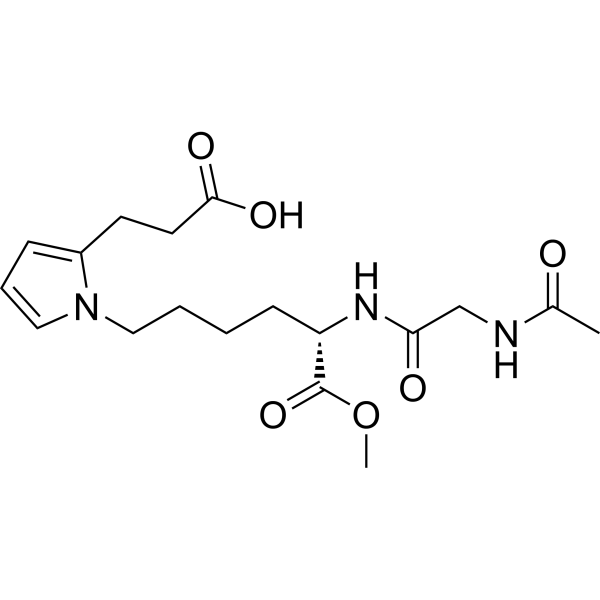
CEP dipeptide 1 is a CEP dipeptide with potent angiogenic activity; mediators of age-related macular degeneration (AMD).
|
-
- HY-P1930A
-
|
|
Integrin
|
Inflammation/Immunology
|
|
Risuteganib hydrochloride is a synthetic RGD (arginyl-glycyl-aspartic acid)-class peptide. Risuteganib hydrochloride is an anti-integrin that downregulates oxidative stress and restores homeostasis, and targets three integrin receptors that are implicated in dry age-related macular degeneration (AMD) in order to restore homeostasis in the retina .
|
-
- HY-P1930
-
|
|
Integrin
|
Inflammation/Immunology
|
|
Risuteganib is a synthetic RGD (arginyl-glycyl-aspartic acid)-class peptide. Risuteganib is an anti-integrin that downregulates oxidative stress and restores homeostasis, and targets three integrin receptors that are implicated in dry age-related macular degeneration (AMD) in order to restore homeostasis in the retina .
|
-
- HY-P3252AS
-
|
|
Isotope-Labeled Compounds
Complement System
|
Inflammation/Immunology
|
|
Pegcetacoplan- 13C3, 15N TFA is the 13C- and 15N-labeled Pegcetacoplan TFA. Pegcetacoplan is a pegylated complement C3/C3b inhibitor. Pegcetacoplan acts by specifically binding to and inhibiting C3 and C3b, thereby suppressing the complement cascade at its proximal stage. Pegcetacoplan is not a known inhibitor or inducer of CYP450 isoenzymes. Pegcetacoplan can be used for the research of complement-mediated diseases, including paroxysmal nocturnal hemoglobinuria (PNH) and age-related macular degeneration (AMD).
|
| Cat. No. |
Product Name |
Target |
Research Area |
Image |
-
- HY-108801A
-
|
|
VEGFR
|
Cardiovascular Disease
Metabolic Disease
Cancer
|
|
Aflibercept (VEGF Trap) is a soluble decoy VEGFR constructed by fusing the Ig domains of VEGFR1 and VEGFR2 with the Fc region of human IgG1. Aflibercept inhibits VEGF signaling by reducing VEGF-regulated processes. Aflibercept can be used for thr research of age-related macular degeneration (AMD) and cardiovascular disease .
|
-
(5)
-
- HY-108801
-
|
VEGF Trap; VEGF-TRAPR1R2; VEGF-trapR1
|
VEGFR
|
Cardiovascular Disease
Metabolic Disease
Cancer
|
|
Aflibercept (VEGF Trap) is a soluble decoy VEGFR constructed by fusing the Ig domains of VEGFR1 and VEGFR2 with the Fc region of human IgG1. Aflibercept inhibits VEGF signaling by reducing VEGF-regulated processes. Aflibercept can be used for thr research of age-related macular degeneration (AMD) and cardiovascular disease .
|
-
(5)
-
- HY-P9951A
-
|
RG-6321 (anti-VEGF)
|
VEGFR
|
Cardiovascular Disease
|
|
Ranibizumab (RG-6321) (anti-VEGF) is a humanized anti-VEGF monoclonal antibody fragment and can recognize all VEGF-A isoforms (VEGF110, VEGF121, and VEGF165) . Ranibizumab (anti-VEGF) slows vision loss in vivo and is used for wet age-related macular degeneration (AMD) research .
|
-
(5)
-
- HY-P99116
-
|
RG7716; RO-6867461
|
VEGFR
|
Cardiovascular Disease
Metabolic Disease
Inflammation/Immunology
|
|
Faricimab, an overall good safety and tolerability profile, is a bispecific antibody targeting Angiopoietin-2 (Ang-2) and vascular endothelial growth factor-A (VEGF-A). Faricimab prevents retinal vascular leakage, cell death and inflammation in retinal ischemia/reperfusion (I/R) injury and sCNV mouse models. Faricimab demonstrates statistically superior visual acuity gains versus Ranibizumab (HY-P9951). Faricimab can be used for retinal diseases, such as age-related macular degeneration (w-AMD), diabetic macular edema (DME) and macular edema following retinal vein occlusion (RVO) .
|
-
(5)
-
- HY-P99629
-
|
FHTR 2163; RG 6147; RO 7171009
|
Ser/Thr Protease
|
Neurological Disease
|
|
Galegenimab (FHTR 2163) is a humanized monoclonal antibody Fab fragment targeting the HtrA1 trimer. Galegenimab is used in research on age-related macular degeneration (AMD) .
|
-
(5)
-
- HY-P99576
-
|
OG1953
|
VEGFR
|
Others
|
|
Tarcocimab (OG1953) is a humanized anti-VEGFA monoclonal antibody (IgG1 type). Tarcocimab is available for research in retinal vein occlusion (RVO) and wet age-related macular degeneration (AMD).
|
-
(5)
-
- HY-P99298
-
|
RG 7417; TNX 234; Anti-CFD Recombinant Antibody
|
Complement System
|
Inflammation/Immunology
|
|
Lampalizumab (RG 7417) is a humanised monoclonal antibody targeting complement Factor D in the alternative complement pathway. Lampalizumab binds an exosite and sterically blocks Factor B access to the active site. Lampalizumab can be used for age-related macular degeneration (AMD) research .
|
-
(5)
| Cat. No. |
Product Name |
Category |
Target |
Chemical Structure |
| Cat. No. |
Product Name |
Chemical Structure |
-
- HY-N0679S
-
|
|
|
Retinyl acetate-d3 (ALK-001) is a deuterated Vitamin A. Retinyl acetate-d3 can be used for research of geographic atrophy (GA) secondary to age-related macular degeneration (AMD) .
|
-
-
- HY-10046S
-
|
|
|
Plerixafor-d4 is the deuterium labeled Plerixafor. Plerixafor (AMD 3100) is a selective CXCR4 antagonist with an IC50 of 44 nM. Plerixafor, an immunostimulant and a hematopoietic stem cell (HSC) mobilizer, is an allosteric agonist of CXCR7. Plerixafor inhibits HIV-1 and HIV-2 replication with an EC50 of 1-10 nM .
|
-
-
- HY-P3252AS
-
|
|
|
Pegcetacoplan- 13C3, 15N TFA is the 13C- and 15N-labeled Pegcetacoplan TFA. Pegcetacoplan is a pegylated complement C3/C3b inhibitor. Pegcetacoplan acts by specifically binding to and inhibiting C3 and C3b, thereby suppressing the complement cascade at its proximal stage. Pegcetacoplan is not a known inhibitor or inducer of CYP450 isoenzymes. Pegcetacoplan can be used for the research of complement-mediated diseases, including paroxysmal nocturnal hemoglobinuria (PNH) and age-related macular degeneration (AMD).
|
-
| Cat. No. |
Product Name |
|
Classification |
-
- HY-147080
-
|
ARC1905
|
|
Aptamers
|
|
Avacincaptad pegol (ARC1905) sodium is a 40KDa PEG-conjugated aptamer. Avacincaptad pegol sodium targets complement factor 5 (C5), inhibits the cleavage of C5 into C5a and C5b, limits inflammatory stimulation and complement membrane attack complex (MAC), and is used to study age-related macular degeneration (AMD). Avacincaptad pegol sodium limits irregular cell apoptosis by targeting downstream factors in the complement cascade while preserving the early steps of the complement system .
|
-
- HY-148457
-
|
Izervay
|
|
Aptamers
|
|
Avacincaptad pegol (Izervay) is a selective inhibitor targeting complement component C5, and is a pegylated ribonucleic acid aptamer. Avacincaptad pegol inhibits the cleavage of C5 into pro-inflammatory C5a and C5b, which forms the membrane attack complex (C5b-9), thereby reducing inflammatory cell recruitment and retinal cell damage. Avacincaptad pegol can slow the growth of geographic atrophy (GA) lesions and reduce the risk of persistent vision loss. Avacincaptad pegol can be used in research of geographic atrophy associated with age-related macular degeneration (AMD) and has been approved by the FDA .
|
-
- HY-109561
-
|
EYE001; NX1838
|
|
Aptamers
|
|
Pegaptanib sodium is an RNA aptamer with polyethylene glycol modifications, which is directed against vascular endothelial growth factor (VEGF)-165. Pegaptanib could be used for the study of neovascular age-related macular degeneration (AMD) .
|
-
- HY-153484A
-
|
|
|
siRNAs
siRNA drugs
|
|
Bevasiranib sodium is a siRNA designed to silence the genes that produce vascular endothelial growth factor (VEGF). It is widely accepted that vascular endothelial growth factor (VEGF) is a key component in the pathogenesis of choroidal neo-vascularization (CNV), which is a precursor to wet age-related macular degeneration (wet AMD).
|
-
- HY-RS00644
-
|
|
|
siRNAs
Human Pre-designed siRNA Sets
|
|
AMD1 Human Pre-designed siRNA Set A contains three designed siRNAs for AMD1 gene (Human), as well as a negative control, a positive control, and a FAM-labeled negative control.
|
-
- HY-153484
-
|
|
|
siRNAs
siRNA drugs
|
|
Bevasiranib is a siRNA designed to silence the genes that produce vascular endothelial growth factor (VEGF). It is widely accepted that vascular endothelial growth factor (VEGF) is a key component in the pathogenesis of choroidal neo-vascularization (CNV), which is a precursor to wet age-related macular degeneration (wet AMD).
|
-
- HY-RS18124
-
|
|
|
siRNAs
Mouse Pre-designed siRNA Sets
|
|
Amd1 Mouse Pre-designed siRNA Set A contains three designed siRNAs for Amd1 gene (Mouse), as well as a negative control, a positive control, and a FAM-labeled negative control.
|
-
- HY-RS24598
-
|
|
|
siRNAs
Rat Pre-designed siRNA Sets
|
|
Amd1 Rat Pre-designed siRNA Set A contains three designed siRNAs for Amd1 gene (Rat), as well as a negative control, a positive control, and a FAM-labeled negative control.
|
Your information is safe with us. * Required Fields.
Inquiry Information
- Product Name:
- Cat. No.:
- Quantity:
- MCE Japan Authorized Agent:

