21 Results for "

ATR pathway

" in MedChemExpress (MCE) Product Catalog:
Products (21)

21 Results for "ATR pathway" in MCE Product Catalog:

19
19 Publications Verification
Cat. No.: HY-B0097
CAS No.: 50-91-9
Synonyms: 5-Fluorouracil 2'-deoxyriboside
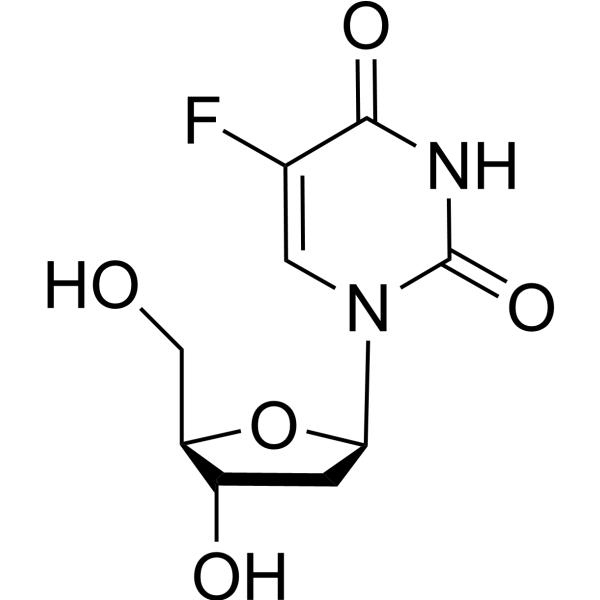
Floxuridine (5-Fluorouracil 2'-deoxyriboside) is a pyrimidine analog and known as an oncology antimetabolite. Floxuridine inhibits Poly(ADP-Ribose) polymerase and induces DNA damage by activating the ATM and ATR checkpoint signaling pathways in vitro. Floxuridine is a extreamly potent inhibitor for S. aureus infection and induces cell apoptosis . Floxuridine has antiviral effects against HSV and CMV .
loading...
    loading...
4
4 Cited Publications
Cat. No.: HY-150617
CAS No.: 2495096-26-7
Purity:  99.94%
Synonyms: M4076; ATM Inhibitor-5
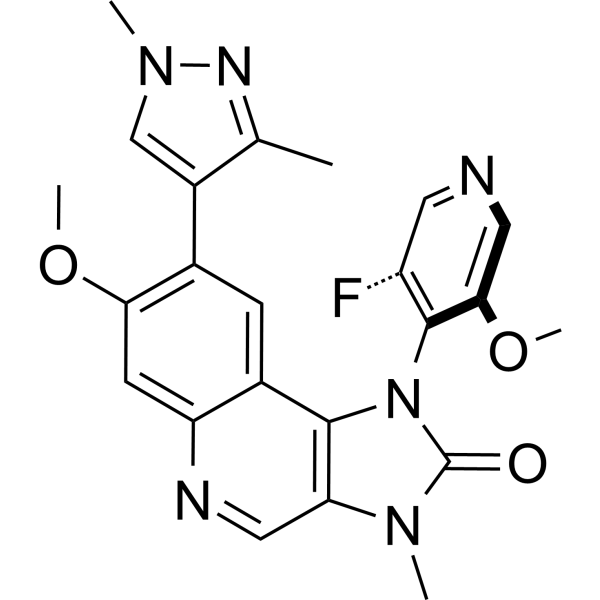
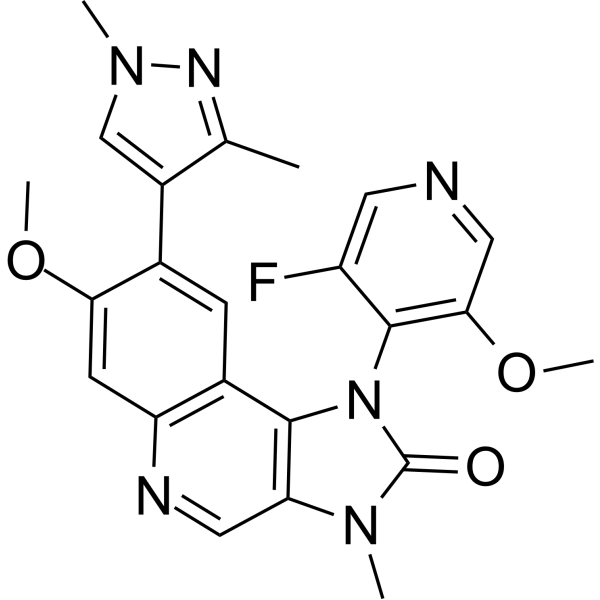
Lartesertib (M4076) is an inhibitor of the serine/threonine protein kinase ATM with high potency. Lartesertib can inhibit the growth of multiple hematopoietic cell lines. Additionally, when combined with the ATR inhibitor Tuvusertib (HY-111451), Lartesertib can promote the death of tumor cells, activate the immune signaling pathway, and exhibit anti-tumor activity .
loading...
    loading...
3
3 Cited Publications
Cat. No.: HY-N6954
CAS No.: 76996-27-5
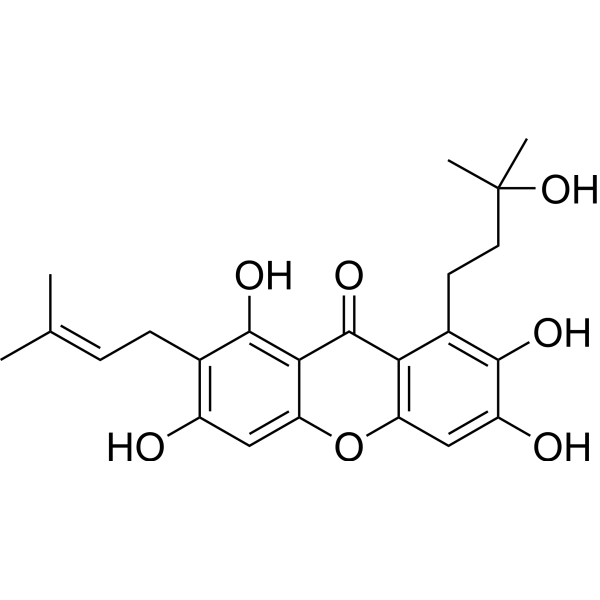
Garcinone C, a xanthone derivative, is a natural compound extracted from Garcinia oblongifolia that is used as an anti-inflammatory, astringency and granulation-promoting medicine, and has potential cytotoxic effects on certain cancers. Garcinone C stimulates the expression levels of ATR and 4E-BP1, arrests the cell cycle, inhibits cell viability of the human Nasopharyngeal carcinoma (NPC) cell lines CNE1, CNE2, HK1 and HONE1 in a time‑ and dose‑dependent manner through inhibition of Hedgehog signaling pathway. Garcinone C is orally active .
loading...
    loading...
2
2 Cited Publications
Cat. No.: HY-B0255
CAS No.: 142340-99-6
Synonyms: GS 0840
Research Areas:  

Infection Cancer

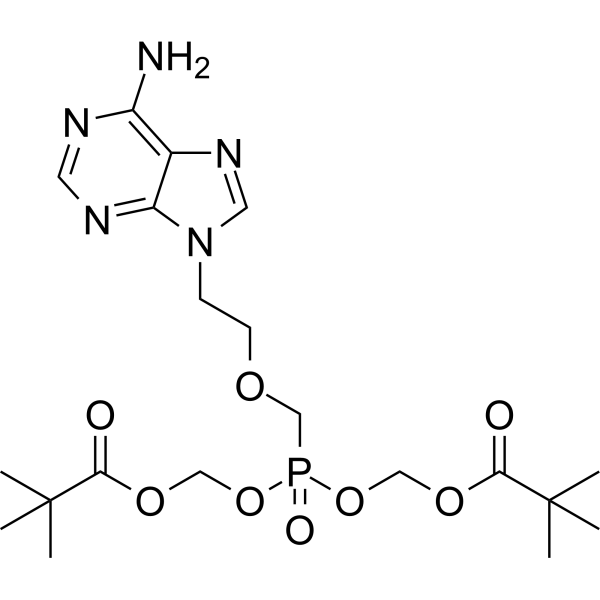
Adefovir dipivoxil is an orally active adenosine analog and Adefovir prodrug. Adefovir dipivoxil inhibits DNA synthesis, activates the ATR signaling pathway, and disrupts the KCTD12-CDK1 interaction. Adefovir dipivoxil has antiviral activity against PRV, HBV, and orthopoxviruses. Adefovir dipivoxil has inhibitory effects on both lamivudine-resistant and wild-type strains. Adefovir dipivoxil has antitumor activity against lung and colon cancer .
loading...
    loading...
Cat. No.: HY-171124
Synonyms: AZD9592
Tilatamig samrotecan (AZD9592) is an anti-EGFR/c-MET antibody-drug conjugate (ADC). Tilatamig samrotecan consists of an anti-EGFR/c-MET antibody with the drug-linker conjugate being AZ14170133 (HY-145399) (a topoisomerase I (TOP1i) inhibitor payload). Tilatamig samrotecan induces multiple DNA damage response pathway markers (like ATM, ATR, γH2AX). Tilatamig samrotecan selectively binds to EGFR and c-MET, delivering the cytotoxic payload. Tilatamig samrotecan exerts anti-tumor activity in vivo. Tilatamig samrotecan can be used for non-small cell lung cancer (NSCLC) and head and neck squamous cell carcinoma (HNSCC) research .
loading...
    loading...
Cat. No.: HY-N7046
CAS No.: 142797-34-0
Synonyms: Silibinin B
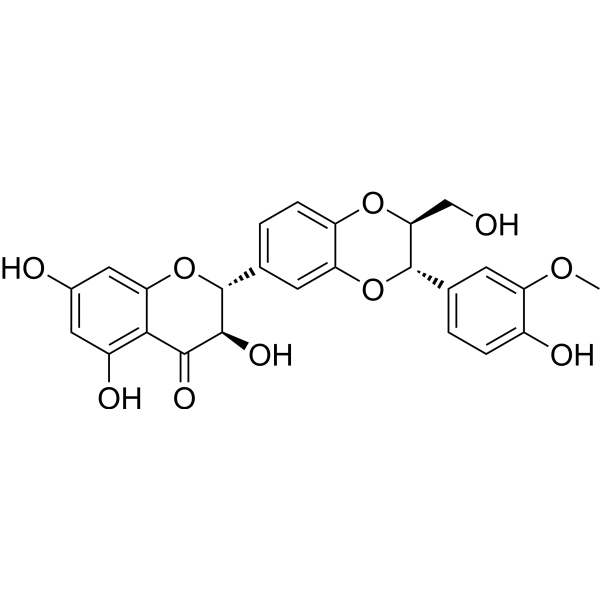
Silybin B (Silibinin B) is an orally active amyloid-β aggregation inhibitor and ATR pathway activator that can cross the blood-brain barrier. Silybin B inhibits Aβ fibril formation and promotes amorphous aggregate formation, while activating the ATR-mediated DNA damage repair pathway and inhibiting JNK/p38 MAPK signaling. Silybin B can reduce Cisplatin (HY-17394)-induced neuronal DNA damage and apoptosis. Silybin B has anti-oxidative stress, cell cycle regulation and neuroprotective activities. Silybin B is mainly used in the study of Alzheimer's disease and Cisplatin chemotherapy-related neurotoxicity .
loading...
    loading...
Cat. No.: HY-118921
CAS No.: 3484-37-5
Ovatodiolide is a compound that can be isolated from Anisomeles indica. Ovatodiolide has anti-bacterial and anti-inflammatory properties. Ovatodiolide also has anti-cancer activity that induces cell cycle G2/M arrest and apoptosis via a ROS-dependent ATM/ATR signaling pathways .
loading...
    loading...
Cat. No.: HY-B0097R
CAS No.: 50-91-9
Synonyms: 5-Fluorouracil 2'-deoxyriboside (Standard)
Floxuridine (Standard) is the analytical standard of Floxuridine. This product is intended for research and analytical applications. Floxuridine (5-Fluorouracil 2'-deoxyriboside) is a pyrimidine analog and known as an oncology antimetabolite. Floxuridine inhibits Poly(ADP-Ribose) polymerase and induces DNA damage by activating the ATM and ATR checkpoint signaling pathways in vitro. Floxuridine is a extreamly potent inhibitor for S. aureus infection and induces cell apoptosis . Floxuridine has antiviral effects against HSV and CMV .
loading...
    loading...
Cat. No.: HY-106055
CAS No.: 74817-61-1
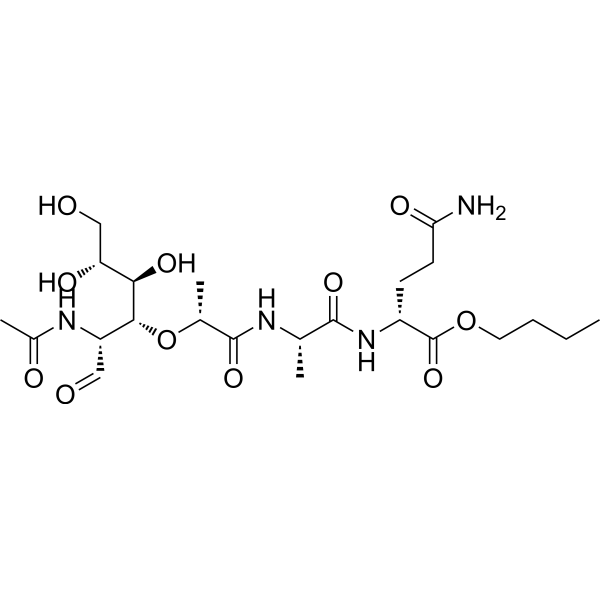
Murabutide is an immunomodulator and also a NOD2 receptor agonist . Murabutide enhances the signal transduction of ATR and NOD2, mediates the activation of the DDR pathway, and thereby repairs radiation-induced DNA double-strand breaks. Murabutide inhibits radiation-induced cell apoptosis and protects cells and mice from radiation-induced toxic damage. Murabutide induces the expression and DNA-binding activity of Oct-1 in macrophages, thereby inhibiting the transcription and replication of HIV-1. Murabutide reduces the expression levels of CD4 and CCR5 on the surface of macrophages, and induces the secretion of β-chemokines, TNF-α and IL-6. Murabutide enhances non-specific viral resistance and targets reticuloendothelial cells. Murabutide can be used in research related to radiation-induced damage and human immunodeficiency virus type 1 infection .
loading...
    loading...
Cat. No.: HY-147566
CAS No.: 2765785-88-2
Target:  

ATM/ATR

Research Areas:  

Cancer

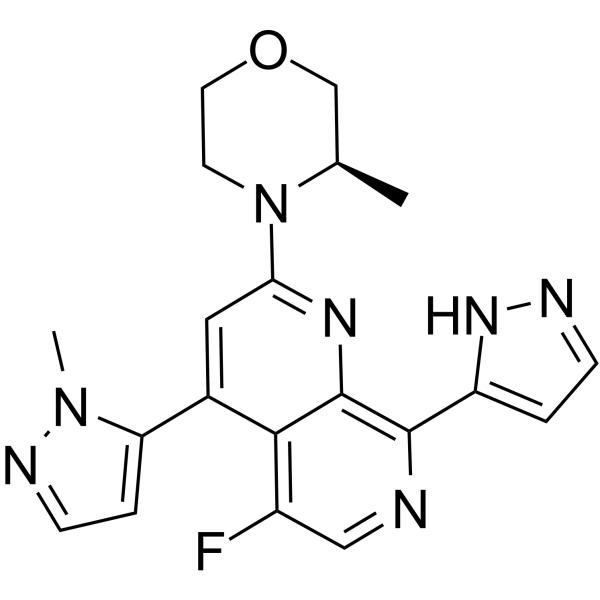
ATR-IN-14 (compound 1) is a potent ATR kinase inhibitor. ATR-IN-14 inhibits ATR signaling pathways downstream CHKI protein phosphorylation, with inhibition of 98.03% at 25 nM. ATR-IN-14 shows good anticancer activity in LoVo cells, with an IC50 of 64 nM .
loading...
    loading...
Cat. No.: HY-142924
CAS No.: 2672511-20-3
Target:  

ATM/ATR

Research Areas:  

Cancer

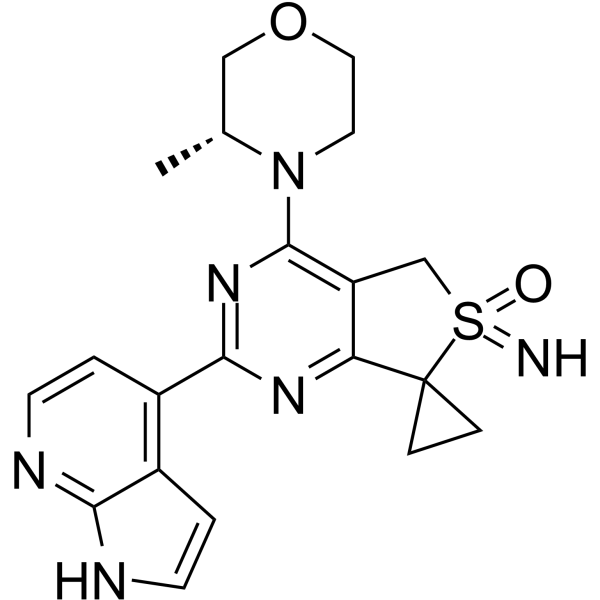
ATR-IN-8 is a potent inhibitor of ATR. ATR is a key enzyme in the homologous recombination repair pathway and belongs to the PIKK family. ATR-IN-8 has the potential for the research of cancer diseases (extracted from patent WO2021143821A1, compound 3) .
loading...
    loading...
Cat. No.: HY-150617A
CAS No.: 2020089-41-0
Synonyms: (Rac)-M4076; (Rac)-ATM Inhibitor-5
(Rac)-Lartesertib ((Rac)-M4076) is an isoform of Lartesertib (HY-150617). Lartesertib (M4076) is an inhibitor of the serine/threonine protein kinase ATM with high potency. Lartesertib can inhibit the growth of multiple hematopoietic cell lines. Additionally, when combined with the ATR inhibitor Tuvusertib (HY-111451), Lartesertib can promote the death of tumor cells, activate the immune signaling pathway, and exhibit anti-tumor activity .
loading...
    loading...
Cat. No.: HY-B0255R
CAS No.: 142340-99-6
Synonyms: GS 0840 (Standard)
Adefovir dipivoxil (Standard) is the analytical standard of Adefovir dipivoxil. This product is intended for research and analytical applications. Adefovir dipivoxil is an orally active adenosine analog and Adefovir prodrug. Adefovir dipivoxil inhibits DNA synthesis, activates the ATR signaling pathway, and disrupts the KCTD12-CDK1 interaction. Adefovir dipivoxil has antiviral activity against PRV, HBV, and orthopoxviruses. Adefovir dipivoxil has inhibitory effects on both lamivudine-resistant and wild-type strains. Adefovir dipivoxil has antitumor activity against lung and colon cancer .
loading...
    loading...
Cat. No.: HY-W766548
Synonyms: 5-Fluorouracil 2'-deoxyriboside-13C,15N2
Floxuridine- 13C, 15N2 (5-Fluorouracil 2'-deoxyriboside- 13C, 15N2) is the 13C- and 15N-labeled labeled Floxuridine (HY-B0097). Floxuridine (5-Fluorouracil 2'-deoxyriboside) is a pyrimidine analog and known as an oncology antimetabolite. Floxuridine inhibits Poly(ADP-Ribose) polymerase and induces DNA damage by activating the ATM and ATR checkpoint signaling pathways in vitro. Floxuridine is a extreamly potent inhibitor for S. aureus infection and induces cell apoptosis . Floxuridine has antiviral effects against HSV and CMV .
loading...
    loading...
Cat. No.: HY-N7046R
CAS No.: 142797-34-0
Synonyms: Silibinin B (Standard)
Silybin (Silibinin B) (Standard) is the analytical standard of Silybin B (HY-N7046). This product is intended for research and analytical applications. Silybin B (Silibinin B) is an orally active amyloid-β aggregation inhibitor and ATR pathway activator, that can cross the blood-brain barrier. Silybin B inhibits Aβ fibril formation and promotes amorphous aggregate formation, while activating the ATR-mediated DNA damage repair pathway and inhibiting JNK/p38 MAPK signaling. Silybin B can reduce Cisplatin (HY-17394)-induced neuronal DNA damage and apoptosis. Silybin B has anti-oxidative stress, cell cycle regulation and neuroprotective activities. Silybin B is mainly used in the study of Alzheimer's disease and Cisplatin chemotherapy-related neurotoxicity .
loading...
    loading...
Cat. No.: HY-N7046S
Synonyms: Silibinin B-d3
Silybin B-d3 (Silibinin B-d3) is a deuterated Silybin B (HY-N7046). Silybin B (Silibinin B) is an orally active amyloid-β aggregation inhibitor and ATR pathway activator, that can cross the blood-brain barrier. Silybin B inhibits Aβ fibril formation and promotes amorphous aggregate formation, while activating the ATR-mediated DNA damage repair pathway and inhibiting JNK/p38 MAPK signaling. Silybin B can reduce Cisplatin (HY-17394)-induced neuronal DNA damage and apoptosis. Silybin B has anti-oxidative stress, cell cycle regulation and neuroprotective activities. Silybin B is mainly used in the study of Alzheimer's disease and Cisplatin chemotherapy-related neurotoxicity .
loading...
    loading...
Cat. No.: HY-N6954R
CAS No.: 76996-27-5
Garcinone C (Standard) is the analytical standard of Garcinone C. This product is intended for research and analytical applications. Garcinone C, a xanthone derivative, is a natural compound extracted from Garcinia oblongifolia that is used as an anti-inflammatory, astringency and granulation-promoting medicine, and has potential cytotoxic effects on certain cancers. Garcinone C stimulates the expression levels of ATR and 4E-BP1, arrests the cell cycle, inhibits cell viability of the human Nasopharyngeal carcinoma (NPC) cell lines CNE1, CNE2, HK1 and HONE1 in a time‑ and dose‑dependent manner through inhibition of Hedgehog signaling pathway. Garcinone C is orally active .
loading...
    loading...
Cat. No.: HY-119225
CAS No.: 67427-51-4
Research Areas:  

Cancer

CBP-93872 is a G2 checkpoint inhibitor and a chemosensitizer. CBP-93872 specifically inhibits DNA double-strand break (DSB)-dependent, Nbs1-mediated ATR activation, without directly inhibiting ATR kinase activity or affecting ATR activation induced by other types of DNA damage; meanwhile, it suppresses the pathway between ATM and ATR activation, thereby reducing the autophosphorylation of ATR and the subsequent phosphorylation of Chk1. CBP-93872 does not inhibit DNA end resection at DSB sites. CBP-93872 induces cell death and enhances the cytotoxic effects of platinum-containing compounds and pyrimidine antimetabolites on cancer cells. CBP-93872 can be used in related research on p53-mutant cancers, colorectal cancer, and pancreatic cancer .
loading...
    loading...
Cat. No.: HY-153658
CAS No.: 1613196-89-6
Research Areas:  

Cancer

ATR-IN-27 (Compound I-G-12) is an ATR inhibitor with a Ki value greater than 0.01 μM but less than 1 μM. ATR-IN-27 sensitizes colorectal cancer cells to Cisplatin (HY-17394) .
loading...
    loading...
Cat. No.: HY-L264
1,544 compounds

DNA damage response (DDR) is a fundamental mechanism for maintaining genomic stability. When DNA damage occurs, such as single- or double-strand breaks or replication fork stalling, cells rely on key proteins including ATM, ATR, PARP, and DNA-PK to sense the damage and transmit signals, thereby regulating DNA repair, cell-cycle arrest, and cell death. Inhibition of specific DNA repair or checkpoint pathways can prevent tumor cells from effectively repairing accumulated DNA damage, ultimately leading to tumor cell death.

MCE DNA Damage Repair Inhibitor Library contains 1,544 compounds, focusing on key nodes involved in DNA damage response and DNA repair. The library covers multiple DNA repair and cell-cycle checkpoint pathways, providing a systematic compound screening tool for research on precision oncology, synthetic lethality, drug resistance mechanisms, and chemo- or radiosensitization.

