20 Results for "

Actin Cytoskeleton Inhibitors

" in MedChemExpress (MCE) Product Catalog:
Products (20)

20 Results for "Actin Cytoskeleton Inhibitors" in MCE Product Catalog:

11
11 Publications Verification
Cat. No.: HY-16931
CAS No.: 340316-62-3
Target:  

Arp2/3 Complex

Research Areas:  

Cancer

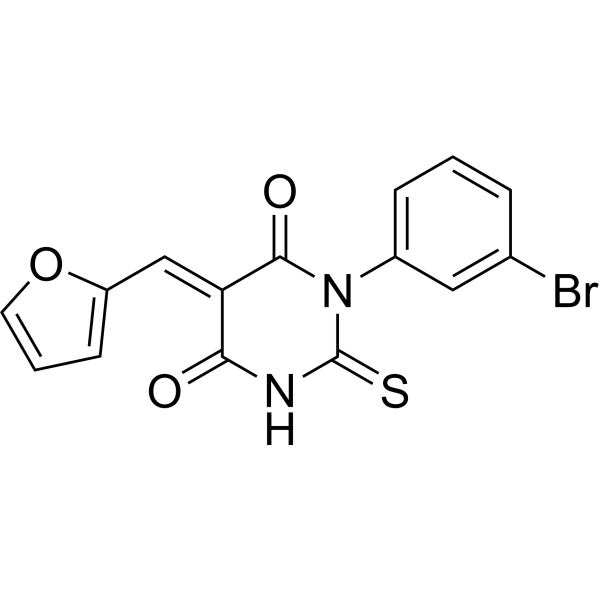
SMIFH2 is a formin specific inhibitor. SMIFH2 inhibits actin polymerization by Formins and affects the actin cytoskeleton .
loading...
    loading...
2
2 Cited Publications
Cat. No.: HY-N6727
CAS No.: 67-99-2
Synonyms: Aspergillin
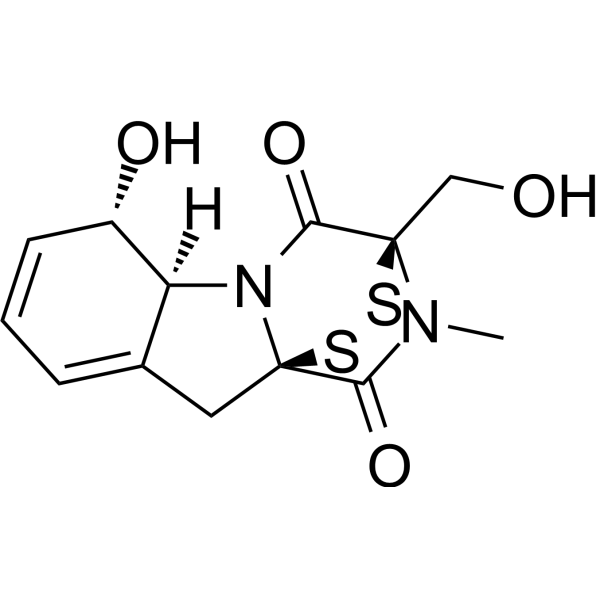
Gliotoxin is a secondary metabolite, the most abundant mycotoxin secreted by A. fumigatus, inhibits the phagocytosis of macrophages and the immune functions of other immune cells . Gliotoxin inhibits inducible NF-κB activity by preventing IκB degradation, which consequently induces host-cell apoptosis . Gliotoxin activates PKA and increases intracellular cAMP concentration; modulates actin cytoskeleton rearrangement to facilitate A. fumigatus internalization into lung epithelial cells . Gliotoxin is a potent NOTCH2 transactivation inhibitor, can effectively induce apoptosis of chronic lymphocytic leukemia (CLL) cells .
loading...
    loading...
2
2 Cited Publications
Cat. No.: HY-136808
CAS No.: 919010-46-1
Purity:  99.17%
Research Areas:  

Cancer

Pfn1-IN-1 (compound C1) is a Pfn1 inhibitor that inhibits the angiogenic capacity of endothelial cells (EC). Pfn1 is a regulator of the actin cytoskeleton, inducing actin polymerization and essential cellular activities. Pfn1-IN-1 inhibits Pfn1-Actin interaction and Actin polymerization.
loading...
    loading...
1
1 Cited Publications
Cat. No.: HY-N1988
CAS No.: 58546-34-2
Synonyms: Hemslecin A
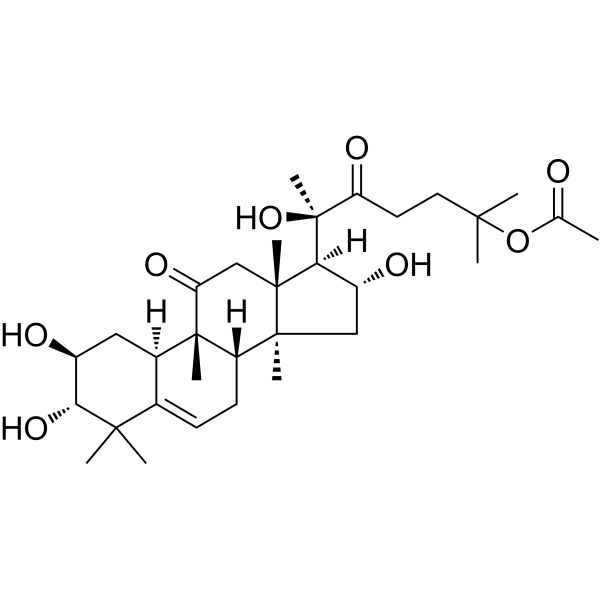
Cucurbitacin IIa (Hemslecin A) is an orally active, blood-brain barrier-permeable EGFR inhibitor with an IC50 of 1.455 nM against human EGFR. Cucurbitacin IIa induces caspase-3-dependent apoptosis, downregulates survivin expression, enhances autophagy levels, disrupts the actin cytoskeleton via actin aggregation, arrests the cell cycle at the G2/M phase, and exerts anti-inflammatory activity by inhibiting the EGFR-MAPK signaling pathway. Cucurbitacin IIa can be used in the research of inflammation-related diseases, depression, and cancers such as non-small cell lung cancer .
loading...
    loading...
1
1 Cited Publications
Cat. No.: HY-P2031
CAS No.: 26645-35-2
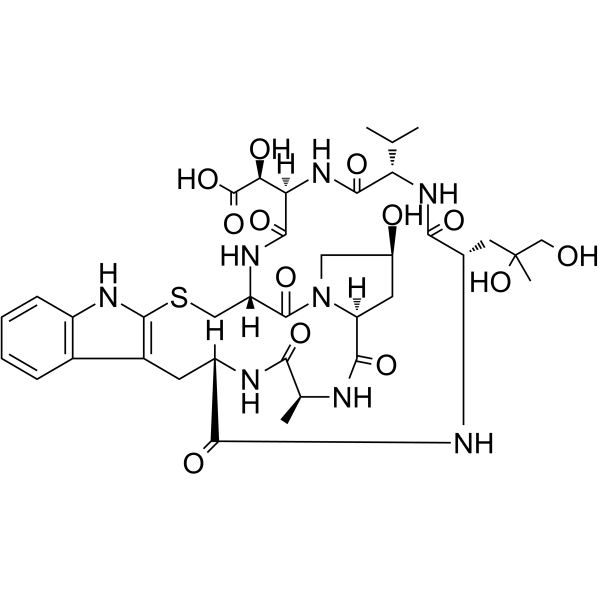
Phallacidin is a natural bicyclic heptapeptide derived from the poisonous mushroom Amanita phalloides. Phallacidin binds to filamentous actin specifically with high affinity, with a Kd of 20 nM. After binding to F-actin, Phallacidin strongly inhibits its depolymerization, stabilizes microfilament structures, and prevents their disruption by drugs such as cytochalasins. When conjugated with a fluorophore, Phallacidin serves as a specific fluorescent probe for F-actin, which is used to clearly visualize the distribution of actin in the cytoskeleton (e.g., stress fibers, cortical peripheral bands) under fluorescence microscopy .
loading...
    loading...
Cat. No.: HY-N6588
CAS No.: 86632-03-3
Synonyms: 3,4,5-triCQA
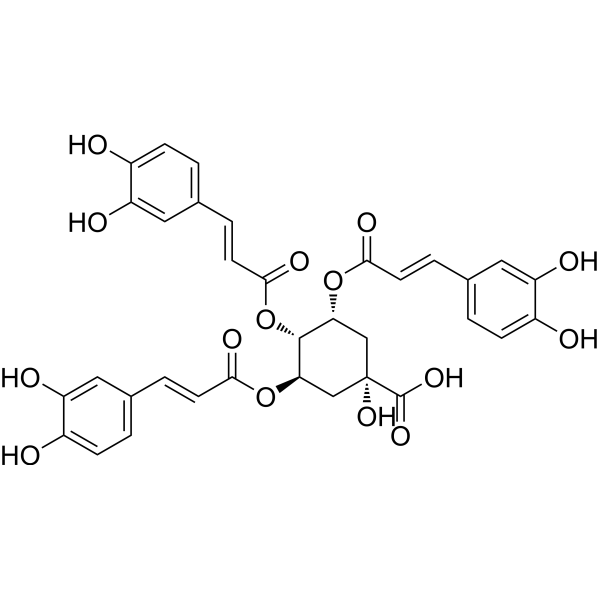
3,4,5-Tricaffeoylquinic acid (3,4,5-triCQA) inhibits tumor necrosis factor-α-stimulated production of inflammatory mediators in keratinocytes via suppression of Akt- and NF-κB-pathways. 3,4,5-Tricaffeoylquinic acid induces cell cycle arrest at G0/G1, actin cytoskeleton organization, chromatin remodeling, neuronal differentiation, and bone morphogenetic protein signaling in human neural stem cells. 3,4,5-Tricaffeoylquinic acid has the potential for the research of aging-associated diseases .
loading...
    loading...
Cat. No.: HY-P1189
CAS No.: 154303-05-6
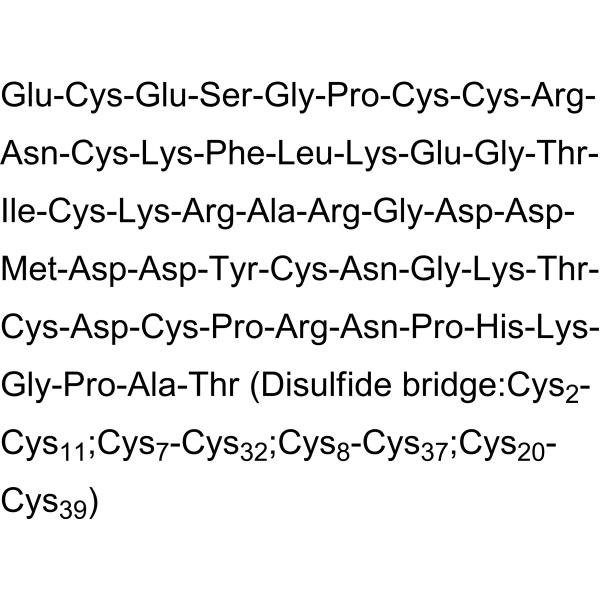
Echistatin is a naturally derived RGD-containing snake venom peptide. Echistatin exhibits an IC50 of 0.6 nM against mouse αvβ3 integrin, and acts as an antagonist against αvβ3, αII3, α5β1 integrins, pp125 FAK and paxillin. Echistatin reduces the phosphorylation of pp125 FAK and paxillin, inhibits the autophosphorylation and kinase activity of pp125 FAK, and weakens its binding to pp60src and paxillin. Echistatin disrupts the actin cytoskeleton and focal adhesions, induces melanoma cell detachment from fibronectin, and regulates cell adhesion and motility. Echistatin inhibits osteoclast maturation and migration, bone resorption, platelet aggregation, bone loss, as well as adhesion and metastasis of Lewis lung cancer cells; it also increases the number of osteoclasts and bone coverage area in mice with secondary hyperparathyroidism. Echistatin can be used in research related to melanoma, lung cancer and secondary hyperparathyroidism .
loading...
    loading...
Cat. No.: HY-131900
CAS No.: 84477-87-2
Purity:  99.96%
Target:  

PKC PKA PKG Arp2/3 Complex

Research Areas:  

Others

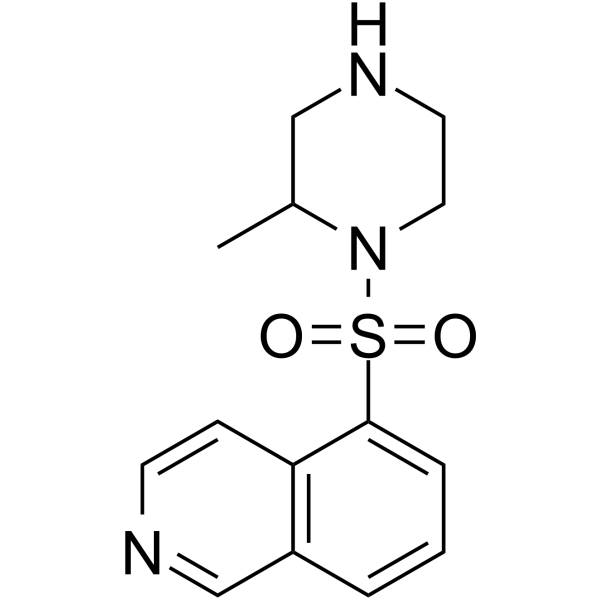
Protein kinase inhibitor H-7 is a selective inhibitor of PKC and cyclic nucleotide-dependent protein kinases, with a Ki value of 6.0 μM for rabbit protein kinase C, a Ki value of 3.0 μM for rabbit cAMP-dependent protein kinase, and a Ki value of 5.8 μM for porcine cGMP-dependent protein kinase. Protein kinase inhibitor H-7 has no effect on Ca 2+-calmodulin-dependent enzymes. Protein kinase inhibitor H-7 regulates the Actin cytoskeleton, inhibits contractility, disrupts stress fibers, induces protrusive activity, stabilizes intercellular junctions, and triggers rapid and reversible cytoskeletal reorganization. Protein kinase inhibitor H-7 serves as a research tool for elucidating the functions of protein kinase C-mediated signaling systems .
loading...
    loading...
Cat. No.: HY-P1189A
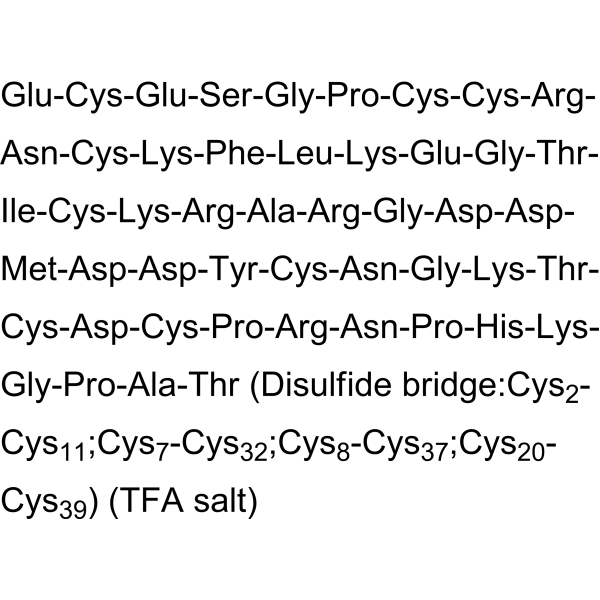
Echistatin TFA is a naturally derived RGD-containing snake venom peptide. Echistatin TFA exhibits an IC50 of 0.6 nM against mouse αvβ3 integrin, and acts as an antagonist against αvβ3, αII3, α5β1 integrins, pp125 FAK and paxillin. Echistatin TFA reduces the phosphorylation of pp125 FAK and paxillin, inhibits the autophosphorylation and kinase activity of pp125 FAK, and weakens its binding to pp60src and paxillin. Echistatin TFA disrupts the actin cytoskeleton and focal adhesions, induces melanoma cell detachment from fibronectin, and regulates cell adhesion and motility. Echistatin TFA inhibits osteoclast maturation and migration, bone resorption, platelet aggregation, bone loss, as well as adhesion and metastasis of Lewis lung cancer cells; it also increases the number of osteoclasts and bone coverage area in mice with secondary hyperparathyroidism. Echistatin TFA can be used in research related to melanoma, lung cancer and secondary hyperparathyroidism .
loading...
    loading...
Cat. No.: HY-135562
CAS No.: 38462-04-3
Target:  

Parasite Antibiotic

Research Areas:  

Infection Cancer

Ascofuranone is an orally active inhibitor of Trypanosoma brucei brucei (TAO) with a Ki value of 2.38 nM. Ascofuranone inhibits IGF-1-induced cancer cell migration, invasion, motility and actin cytoskeleton formation, and exerts anti-tumor effects. Ascofuranone can be used in research related to tumor metastasis, African trypanosomiasis, bacterial infections, lung cancer and hepatocellular carcinoma .
loading...
    loading...
Cat. No.: HY-P5455
Target:  

LIM Kinase (LIMK)

Research Areas:  

Others

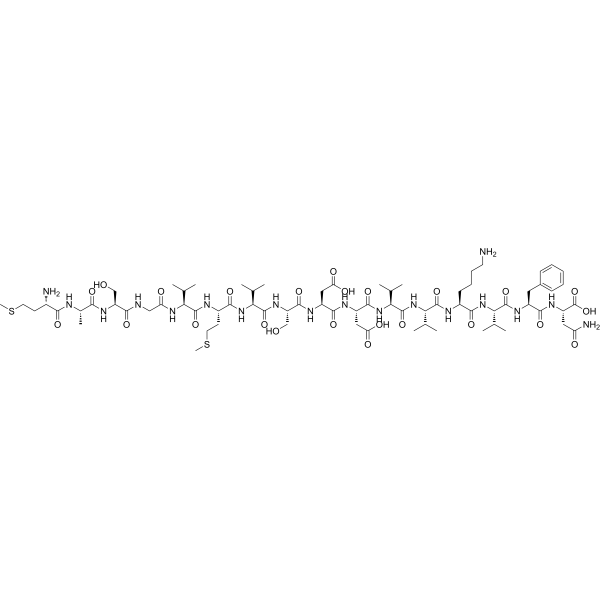
S3 Fragment is a biological active peptide. (This peptide contains the unique amino-terminal phosphorylation site of Xenopus ADF/cofilin, the LIM kinase (LIMK) phosphorylation site. LIMK1 is a key regulator of the actin cytoskeleton through its phosphorylation of ADF/cofilin at serine-3 for inactivation. This peptide is a fragment of the S3 peptide containing the serine-3 sequence of ADF/cofilin that has been widely used as an effective competitive inhibitor of LIMK1.)
loading...
    loading...
Cat. No.: HY-174229
Target:  

LIM Kinase (LIMK)

Research Areas:  

Neurological Disease Cancer

SM311 (Compound 10), a chemical probe, is a potent selective irreversible LIMK1 inhibitor (EC50=0.045 μM, >30-fold selective over LIMK2). SM311 blocks cofilin phosphorylation and actin cytoskeleton regulation. SM311 is promising for research of neurodegenerative diseases like Fragile X syndrome (FXS) and Alzheimer’s disease, as well as tumor invasion .
loading...
    loading...
Cat. No.: HY-115507
CAS No.: 1332290-68-2
NMac1 is an orally active Nm23/NDPK activator. NMac1 directly binds to Nm23-H1 and activates the NDPK activity of recombinant Nm23-H1 with an EC50 of 10.7 uM. NMac1 induces AMPK activation and inhibits mTOR and ERK, leading to mitochondrial OXPHOS dysregulation and suppressing mitochondrial ROS production, which in turn induces mitochondrial dysfunction in MDA-MB-231 cells. NMac1 inhibits Complex I activity and suppresses changes in morphology and actin cytoskeleton organization following Rac1 activation in MDA-MB-231 cells. NMac1 inhibits tumor invasion, migration and metastasis. NMac1 is useful for studying metastatic tumors, such as breast cancer. NMac1 can be isolated from the ginger cassumunar Roxb .
loading...
    loading...
Cat. No.: HY-162798
Target:  

ROCK

Research Areas:  

Cancer

ROCK2-IN-9 (compound 7u) is a selective ROCK2 inhibitor (IC50=36.8 nM) with anticancer activity. ROCK2-IN-9 inhibits cancer cell migration and invasion by regulating multiple cellular activities of the actin cytoskeleton. ROCK2-IN-9 can be used in breast cancer research .
loading...
    loading...
Cat. No.: HY-P10993
CAS No.: 1407967-57-0
Target:  

Bcl-2 Family

Research Areas:  

Cancer

CT20p is an anticancer peptide based on the C hydrophobic terminus of Bax. CT20p has a unique cytotoxic effect independent of full-length Bax, and can act on mitochondria, leading to fusion-like aggregation and mitochondrial membrane hyperpolarization. CT20p can reduce α5β1 integrin levels and inhibit F-actin polymerization, thereby destroying the cytoskeleton and preventing cell attachment. CT20p can be used in the study of breast cancer .
loading...
    loading...
Cat. No.: HY-N1988R
CAS No.: 58546-34-2
Synonyms: Hemslecin A (Standard)
Cucurbitacin IIa (Hemslecin A) (Standard) is the analytical standard for Cucurbitacin IIa (HY-N1988). This product is used for research and analytical applications. Cucurbitacin IIa is an orally active, blood-brain barrier-penetrating EGFR inhibitor with an IC50 of 1.455 nM for human EGFR. Cucurbitacin IIa induces caspase-3 dependent cell apoptosis, downregulates survivin expression, enhances autophagy levels, disrupts the actin cytoskeleton through actin aggregation, blocks the cell cycle at the G2/M phase, and inhibits the EGFR-MAPK signaling pathway to exert anti-inflammatory activity. Cucurbitacin IIa can be used in research on inflammatory-related diseases, depression, and non-small cell lung cancer and other cancers.
loading...
    loading...
Cat. No.: HY-184235
Target:  

Actin

Research Areas:  

Cancer

β-actin-IN-1 is a selective and covalent β-actin polymerization inhibitor. β-actin-IN-1 targets Cys272 of β-actin and shows selectivity over α-actin and γ-actin. β-actin-IN-1 inhibits β-actin polymerization and disrupts the actin cytoskeleton in cancer cells, leading to cell migration inhibition as well as cell death. β-actin-IN-1 can be used for the study of osteosarcoma .
loading...
    loading...
Cat. No.: HY-N20711
CAS No.: 1428417-60-0
Usenamine A is an orally active natural dibenzofuran compound with multiple biological activities such as anti-inflammatory and anticancer effects. Usenamine A inhibits the AKT/mTOR/STAT3/ID1 signaling axis and induces ubiquitin-proteasome degradation of ID1. Usenamine A targets the TNF-TNFR2 complex, inhibits RGS2, and interferes with Myosin-9/actin cytoskeleton remodeling. Usenamine A induces apoptosis, autophagy and ROS-mediated endoplasmic reticulum stress in cancer cells, inhibits cancer cell proliferation and invasion, and reduces the production of pro-inflammatory cytokines. Usenamine A alleviates arthritis-related symptoms. Usenamine A can be used in studies related to liver cancer, non-small cell lung cancer, rheumatoid arthritis and ankylosing spondylitis .
loading...
    loading...
Cat. No.: HY-124595
CAS No.: 1254363-89-7
MPT0B098 is a microtubule inhibitor with a Ki of 0.8 μM and an IC50 of 0.8 μM. MPT0B098 inhibits tubulin polymerization, blocks HuR nuclear-cytoplasmic translocation to decrease HIF-1α mRNA stability, suppresses HIF-1α, TGF-β/Smad, JAK2/STAT3 and FAK/actin cytoskeleton signaling pathways, upregulates SOCS3 to reinforce the inhibition of JAK2/STAT3 cascade, and induces apoptosis. MPT0B098 can be used for research on multiple malignancies including head and neck squamous cell carcinoma and human non-small cell lung cancer .
loading...
    loading...
Cat. No.: HY-183393
CAS No.: 1798292-13-3
Target:  

mTOR Fungal

Research Areas:  

Infection

NVP-BHS345 is an ATP-competitive TORC1/TORC2 inhibitor with an IC50 of 1 μM for both targets in yeast. NVP-BHS345 acutely inhibits TORC1/TORC2 kinase activity, even in genetically engineered TOR1 M2282T Saccharomyces cerevisiae strains. NVP-BHS345 also reduces the phosphorylation levels of Ser-232/Ser-233 sites in Sch9, Ypk1/Ypk2 and Rps6, and induces hyperphosphorylation of Slt2 and activation of the cell wall integrity pathway. NVP-BHS345 causes depolarization of the actin cytoskeleton, blocks fluid-phase endocytosis, prevents the accumulation of vacuolar lipophilic dyes, and regulates the phosphorylation levels of Ent1, Pan1, Prk1, Akl1 and other cellular proteins .
loading...
    loading...
  • 1

