


94 Results for "

Akt kinase activity

" in MedChemExpress (MCE) Product Catalog:
Products (94)

94 Results for "Akt kinase activity" in MCE Product Catalog:

316
316 Publications Verification
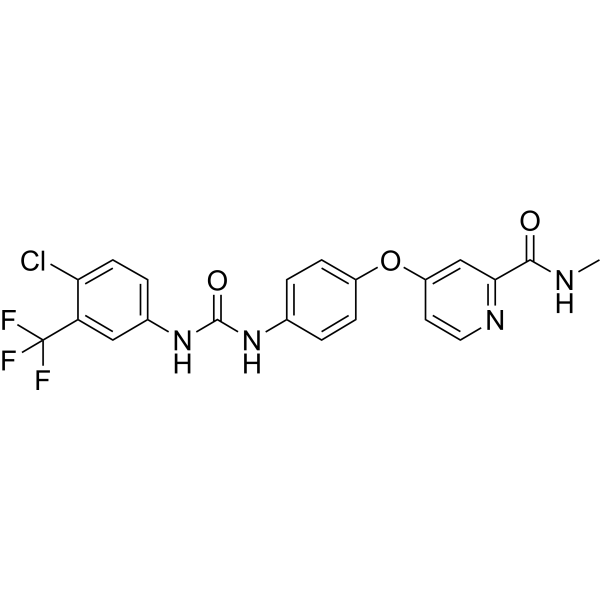
Cat. No.: HY-10201
CAS No.: 284461-73-0
Purity:  99.92%
Synonyms: Bay 43-9006
Sorafenib (Bay 43-9006) is a potent oral active multikinase inhibitor. Sorafenib blocks autophosphorylation and activity of receptor tyrosine kinases (VEGFR-2, VEGFR-3) and RAF family kinases, thereby suppressing the RAF/MEK/ERK and PI3K/Akt pathways, inhibiting STAT3 phosphorylation, and selectively inhibiting the MAPK pathway in cancer cells. Sorafenib induces cell cycle arrest, autophagy, apoptosis, and PARP cleavage, reduces Bcl-2, Bcl-XL, cyclin D1 levels, and activates Bak and Bax. Sorafenib inhibits tumor growth and metastasis in mouse and rat models. Sorafenib can be used for cancer research, such as colon, breast, non-small-cell lung cancer (NSCLC), ovarian, pancreatic, melanoma, colorectal and hepatocellular carcinoma .
loading...
    loading...
316
316 Publications Verification
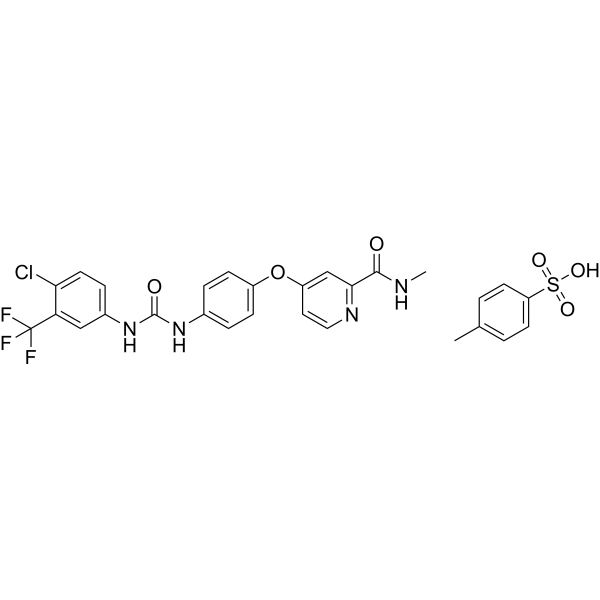
Cat. No.: HY-10201A
CAS No.: 475207-59-1
Purity:  99.75%
Synonyms: Bay 43-9006 tosylate
Sorafenib (Bay 43-9006) tosylate is a potent oral active multikinase inhibitor. Sorafenib blocks autophosphorylation and activity of receptor tyrosine kinases (VEGFR-2, VEGFR-3) and RAF family kinases, thereby suppressing the RAF/MEK/ERK and PI3K/Akt pathways, inhibiting STAT3 phosphorylation, and selectively inhibiting the MAPK pathway in cancer cells. Sorafenib tosylate induces cell cycle arrest, autophagy, apoptosis, and PARP cleavage, reduces Bcl-2, Bcl-XL, cyclin D1 levels, and activates Bak and Bax. Sorafenib tosylate inhibits tumor growth and metastasis in mouse and rat models. Sorafenib tosylate can be used for cancer research, such as colon, breast, non-small-cell lung cancer (NSCLC), ovarian, pancreatic, melanoma, colorectal and hepatocellular carcinoma .
loading...
    loading...
77
77 Cited Publications
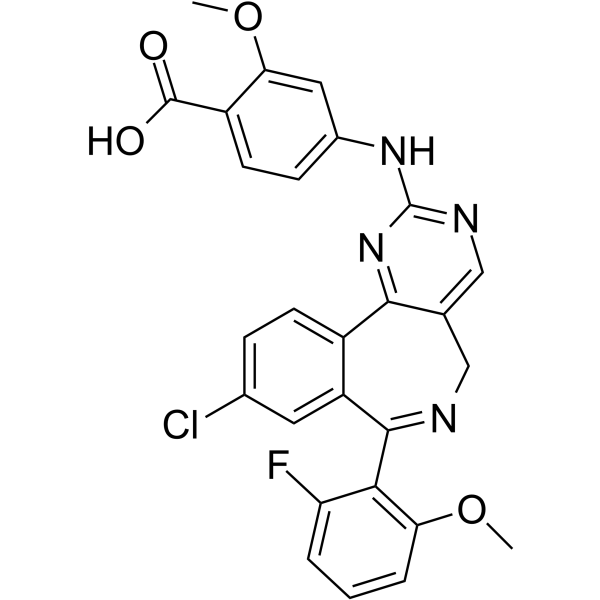
Cat. No.: HY-10971
CAS No.: 1028486-01-2
Purity:  99.36%
Synonyms: MLN 8237
Research Areas:  

Cancer

Alisertib (MLN 8237) is an orally active and selective Aurora A kinase inhibitor (IC50=1.2 nM), which binds to Aurora A kinase resulting in mitotic spindle abnormalities, mitotic accumulation. Alisertib (MLN 8237) induces apoptosis and autophagy through targeting the AKT/mTOR/AMPK/p38 pathway in leukemic cells. Antitumor activity .
loading...
    loading...
42
42 Cited Publications
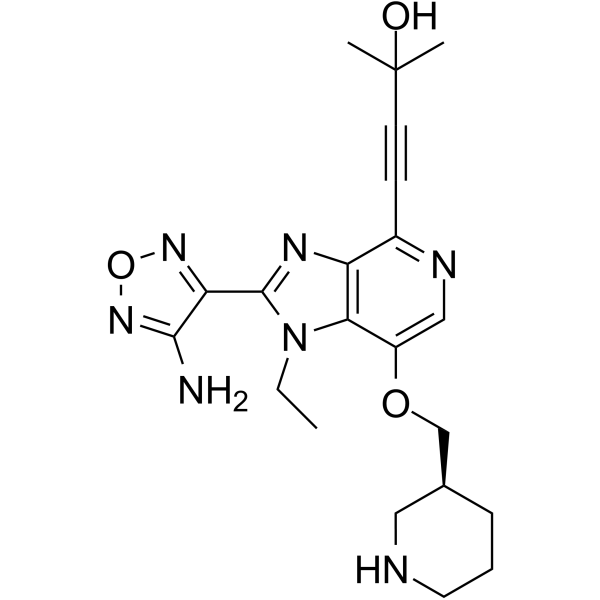
Cat. No.: HY-10249
CAS No.: 937174-76-0
Purity:  98.47%
Target:  

Akt AMPK Autophagy

Research Areas:  

Cancer

GSK-690693 is an ATP-competitive pan-Akt inhibitor with IC50s of 2 nM, 13 nM, 9 nM for Akt1, Akt2 and Akt3, respectively. GSK-690693 is also an AMPK inhibitor, affects Unc-51-like autophagy activating kinase 1 (ULK1) activity and robustly inhibits STING-dependent IRF3 activation .
loading...
    loading...
28
28 Cited Publications
Cat. No.: HY-13404
CAS No.: 1029712-80-8
Purity:  99.75%
Synonyms: INC280; INCB28060
Target:  

c-Met/HGFR Apoptosis

Research Areas:  

Cancer

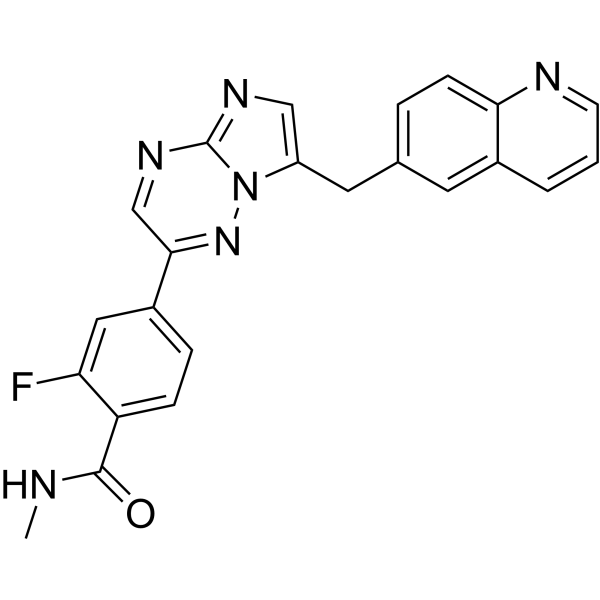
Capmatinib (INC280; INCB28060) is a potent, orally active, selective, and ATP competitive c-Met kinase inhibitor (IC50=0.13 nM). Capmatinib can inhibit phosphorylation of c-MET as well as c-MET pathway downstream effectors such as ERK1/2, AKT, FAK, GAB1, and STAT3/5. Capmatinib potently inhibits c-MET-dependent tumor cell proliferation and migration and effectively induces apoptosis. Antitumor activity. Capmatinib is largely metabolized by CYP3A4 and aldehyde oxidase .
loading...
    loading...
28
28 Cited Publications
Cat. No.: HY-13404C
CAS No.: 1865733-40-9
Purity:  99.78%
Synonyms: INC280 dihydrochloride hydrate; INCB-28060 dihydrochloride hydrate
Target:  

c-Met/HGFR Apoptosis

Research Areas:  

Cancer

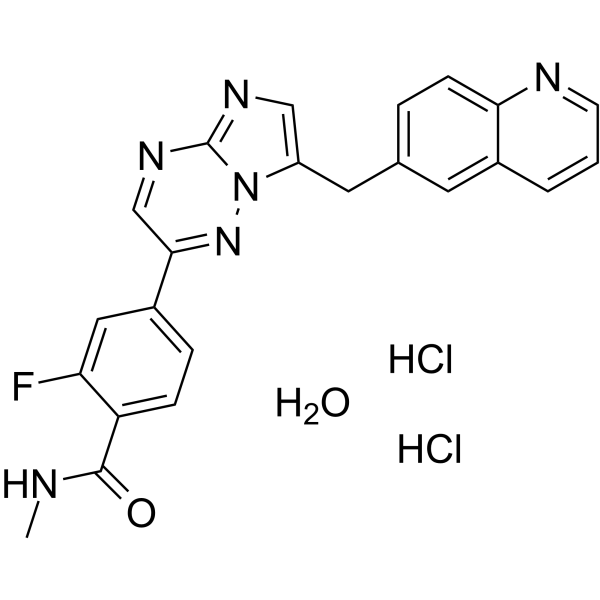
Capmatinib (INC280; INCB28060) dihydrochloride hydrate is a potent, orally active, selective, and ATP competitive c-Met kinase inhibitor (IC50=0.13 nM). Capmatinib dihydrochloride hydrate can inhibit phosphorylation of c-MET as well as c-MET pathway downstream effectors such as ERK1/2, AKT, FAK, GAB1, and STAT3/5. Capmatinib dihydrochloride hydrate potently inhibits c-MET-dependent tumor cell proliferation and migration and effectively induces apoptosis. Antitumor activity. Capmatinib dihydrochloride hydrate is largely metabolized by CYP3A4 and aldehyde oxidase .
loading...
    loading...
28
28 Cited Publications
Cat. No.: HY-13404A
CAS No.: 1197376-85-4
Synonyms: INC280 dihydrochloride; INCB28060 dihydrochloride
Target:  

c-Met/HGFR Apoptosis

Research Areas:  

Cancer

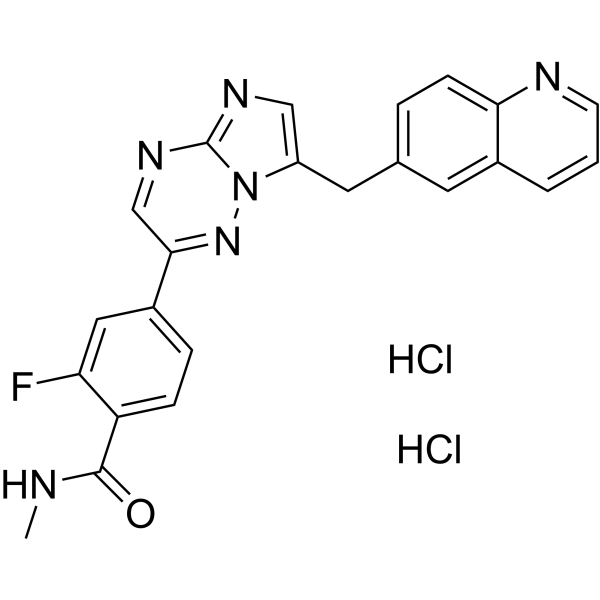
Capmatinib (INC280; INCB28060) dihydrochloride is a potent, orally active, selective, and ATP competitive c-Met kinase inhibitor (IC50=0.13 nM). Capmatinib dihydrochloride can inhibit phosphorylation of c-MET as well as c-MET pathway downstream effectors such as ERK1/2, AKT, FAK, GAB1, and STAT3/5. Capmatinib dihydrochloride potently inhibits c-MET-dependent tumor cell proliferation and migration and effectively induces apoptosis. Antitumor activity. Capmatinib dihydrochloride is largely metabolized by CYP3A4 and aldehyde oxidase .
loading...
    loading...
28
28 Cited Publications
Cat. No.: HY-13404B
CAS No.: 1029714-89-3
Purity:  99.60%
Synonyms: INC280 hydrochloride; INCB-28060 hydrochloride
Target:  

c-Met/HGFR Apoptosis

Research Areas:  

Cancer

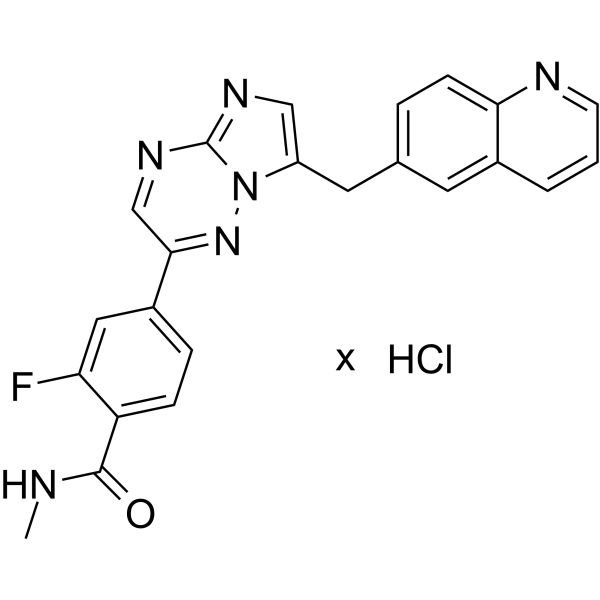
Capmatinib (INC280; INCB28060) hydrochloride is a potent, orally active, selective, and ATP competitive c-Met kinase inhibitor (IC50=0.13 nM). Capmatinib hydrochloride can inhibit phosphorylation of c-MET as well as c-MET pathway downstream effectors such as ERK1/2, AKT, FAK, GAB1, and STAT3/5. Capmatinib hydrochloride potently inhibits c-MET-dependent tumor cell proliferation and migration and effectively induces apoptosis. Antitumor activity. Capmatinib hydrochloride is largely metabolized by CYP3A4 and aldehyde oxidase .
loading...
    loading...
18
18 Cited Publications
Cat. No.: HY-10249A
CAS No.: 842148-40-7
Purity:  99.92%
Target:  

Akt

Research Areas:  

Cancer

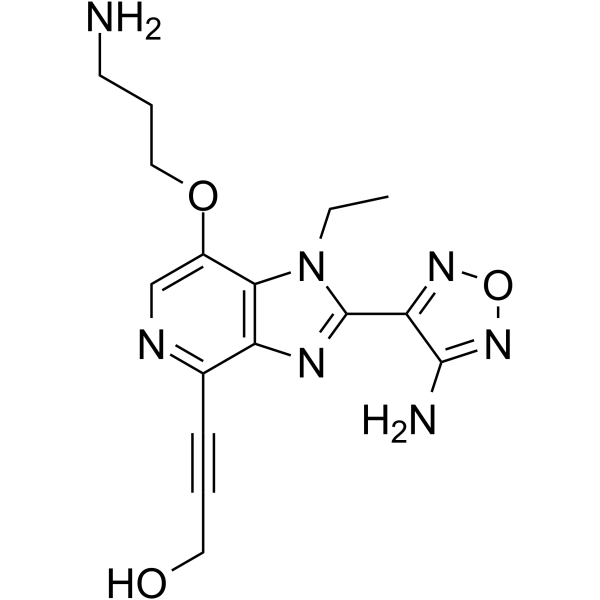
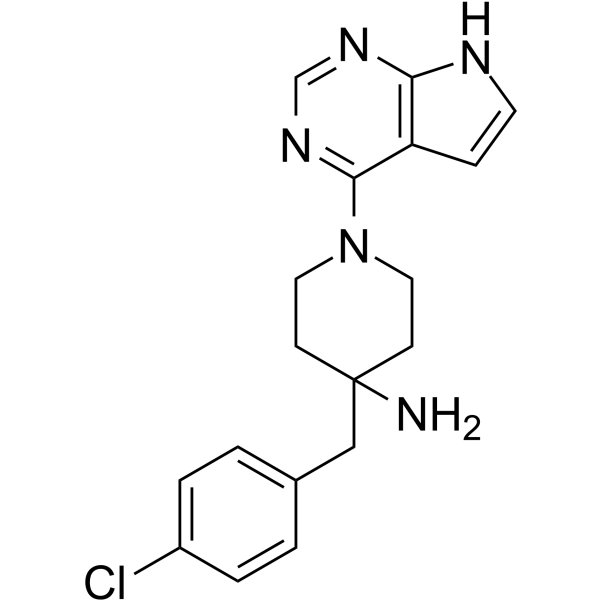
AKT Kinase Inhibitor is an Akt kinase inhibitor with anti-tumor activity .
loading...
    loading...
18
18 Cited Publications
Cat. No.: HY-10249D
CAS No.: 3026697-00-4
Purity:  99.39%
Target:  

Akt

Research Areas:  

Cancer

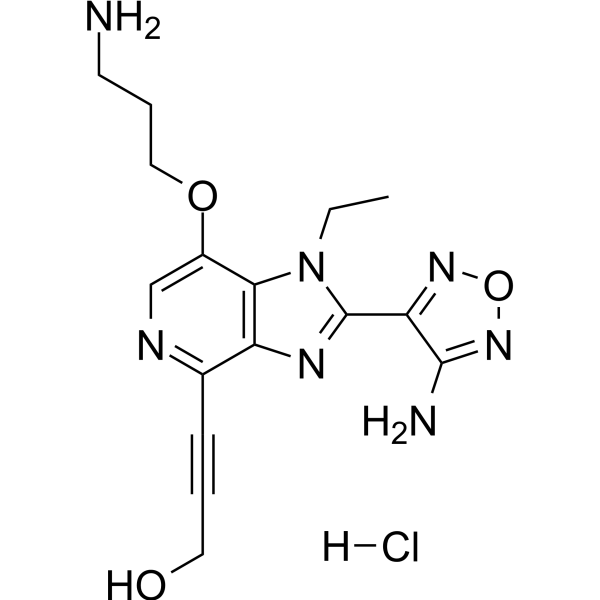
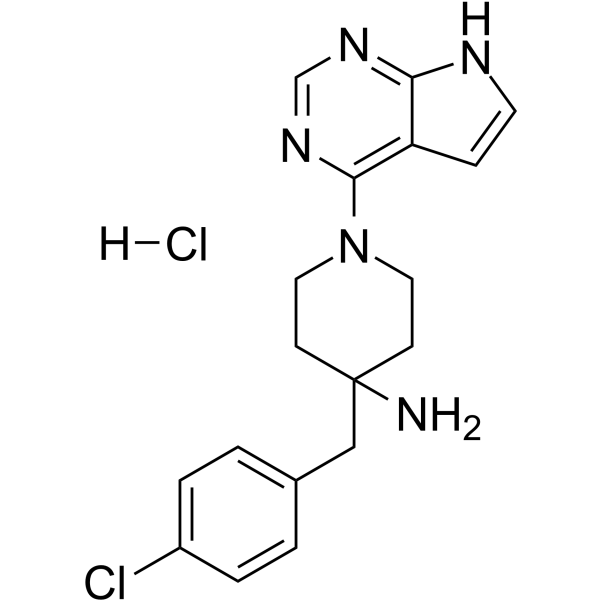
AKT Kinase Inhibitor hydrochloride is an Akt kinase inhibitor with anti-tumor activity . AKT Kinase Inhibitor (hydrochloride) is a click chemistry reagent, it contains an Alkyne group and can undergo copper-catalyzed azide-alkyne cycloaddition (CuAAc) with molecules containing Azide groups.
loading...
    loading...
10
10 Cited Publications
Cat. No.: HY-N0281
CAS No.: 486-35-1
Synonyms: 7,8-Dihydroxycoumarin
Daphnetin (7,8-dihydroxycoumarin), one coumarin derivative can be found in plants of the Genus Daphne, is a potent, oral active protein kinase inhibitor, with IC50s of 7.67 μM, 9.33 μM and 25.01 μM for EGFR, PKA and PKC in vitro, respectively. Daphnetin triggers ROS-induced cell apoptosis and induces cytoprotective autophagy by modulating the AMPK/Akt/mTOR pathway. Daphnetin has anti-inflammation activitity and inhibits TNF-α, IL-1β, ROS, and MDA production. Daphnetin has schizontocidal activity against malaria parasites. Daphnetin can be used for rheumatoid arthritis , cancer and anti-malarian research .
loading...
    loading...
7
7 Cited Publications
Cat. No.: HY-13260
CAS No.: 885499-61-6
Purity:  98.34%
Target:  

Akt Autophagy Apoptosis

Research Areas:  

Cancer

CCT128930 is a ATP-competitive and selective inhibitor of AKT (IC50=6 nM for AKT2). CCT128930 has 28-fold selectivity over the closely related PKA kinase (IC50=168 nM) through the targeting of Met282 of AKT (Met173 of PKA-AKT chimera), as well as 20-fold selectivity over p70S6K (IC50=120 nM). Antitumor activity.
loading...
    loading...
7
7 Cited Publications
Cat. No.: HY-13260A
CAS No.: 2453324-32-6
Purity:  98.97%
Target:  

Akt Autophagy Apoptosis

Research Areas:  

Cancer

CCT128930 hydrochloride is a potent and selective inhibitor of AKT (IC50=6 nM). CCT128930 hydrochloride has 28-fold selectivity over the closely related PKA kinase (IC50=168 nM) through the targeting of Met282 of AKT (Met173 of PKA-AKT chimera), as well as 20-fold selectivity over p70S6K (IC50=120 nM). CCT128930 hydrochloride induces cell cycle arrest, DNA damage, and autophagy. Antitumor activity .
loading...
    loading...
6
6 Cited Publications
Cat. No.: HY-100932
CAS No.: 105637-50-1
Purity:  99.86%
Target:  

Myosin

Research Areas:  

Cancer

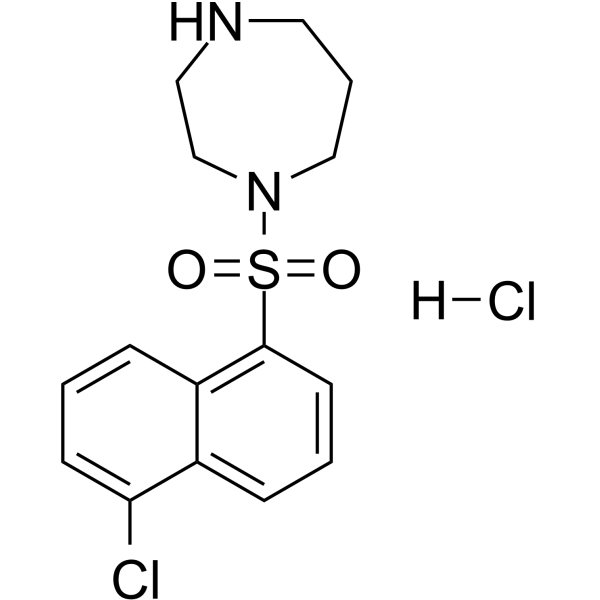
ML-9 is a selective and potent inhibitor of Akt kinase, inhibits myosin light-chain kinase (MLCK) and stromal interaction molecule 1 (STIM1) activity . ML-9 inhibits inhibits MLCK, PKA and PKC activity with Ki values of 4, 32 and 54 μM, respectively . ML-9 induces autophagy by stimulating autophagosome formation and inhibiting their degradation .
loading...
    loading...
4
4 Cited Publications
Cat. No.: HY-N0699
CAS No.: 2034-69-7
Synonyms: Dephnoretin; Thymelol
Daphnoretin (Dephnoretin; Thymelol) is a protein kinase C (PKC) activator that inhibits the expression of hepatitis B virus (HBV) surface antigen (HBsAg) and exhibits antiviral activity. Daphnoretin exerts its antitumor effects by inhibiting the activation of the PI3K/AKT signaling pathway and triggers the mitochondrial apoptosis pathway. Daphnoretin alleviates chondrocyte apoptosis and inflammatory responses by inhibiting endoplasmic reticulum stress and activation of the NLRP3 inflammasome. Daphnoretin regulates the differentiation and maturation of dendritic cells, inhibits their immunostimulatory function by downregulating the phosphorylation level of JNK, and thus exerts a protective effect in skin graft rejection .
loading...
    loading...
3
3 Cited Publications
Cat. No.: HY-109061
CAS No.: 1903008-80-9
Purity:  99.87%
Synonyms: YH25448; GNS-1480
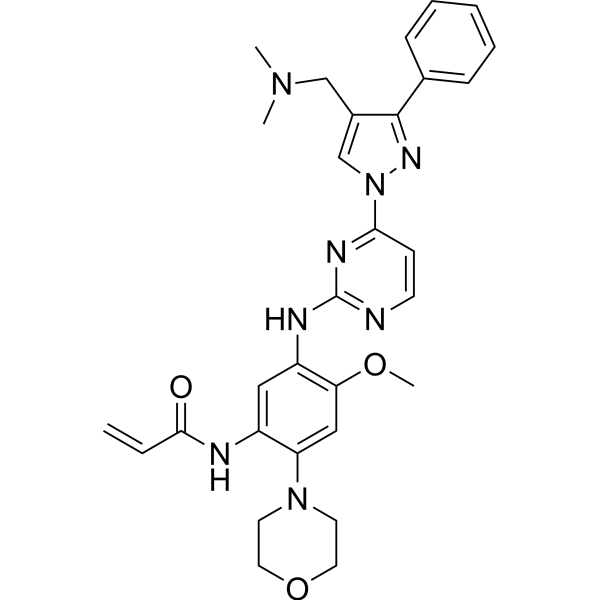
Lazertinib (YH25448; GNS-1480) is an orally active, blood-brain barrier permeable third-generation EGFR tyrosine kinase inhibitor, as well as an ABCB1/ABCG2 inhibitor and a TRPA1 activator. Lazertinib exhibits IC50 values of 0.4 mM and 0.2 mM against human ABCB1 and ABCG2, respectively. By inhibiting mutant EGFR signaling, EGFR phosphorylation and the downstream ERK/AKT pathway, as well as upregulating surface expression of EGFR/MET, Lazertinib induces cell cycle arrest, apoptosis, spontaneous calcium responses, hyperexcitability of dorsal root ganglion (DRG) neurons, and TRPA1-dependent pain-like behaviors. Lazertinib competitively binds to the substrate-binding sites of ABCB1/ABCG2, stimulates their ATPase activity without altering their expression or plasma membrane localization, thereby enhancing ADCC activity, acting as a chemosensitizer, and reversing ABCB1-mediated multidrug resistance. It exerts antitumor activity as a single agent or in combination with other drugs. Lazertinib is applicable to research related to non-small cell lung cancer, multidrug-resistant cancers, and paresthesia .
loading...
    loading...
3
3 Cited Publications
Cat. No.: HY-109061B
CAS No.: 2247995-37-3
Synonyms: YH25448 mesylate; GNS-1480 mesylate
Research Areas:  

Cancer

Lazertinib (YH25448; GNS-1480) mesylate is an orally active, blood-brain barrier permeable third-generation EGFR tyrosine kinase inhibitor, as well as an ABCB1/ABCG2 inhibitor and a TRPA1 activator. Lazertinib mesylate exhibits IC50 values of 0.4 mM and 0.2 mM against human ABCB1 and ABCG2, respectively. By inhibiting mutant EGFR signaling, EGFR phosphorylation and the downstream ERK/AKT pathway, as well as upregulating surface expression of EGFR/MET, Lazertinib mesylate induces cell cycle arrest, apoptosis, spontaneous calcium responses, hyperexcitability of dorsal root ganglion (DRG) neurons, and TRPA1-dependent pain-like behaviors. Lazertinib mesylate competitively binds to the substrate-binding sites of ABCB1/ABCG2, stimulates their ATPase activity without altering their expression or plasma membrane localization, thereby enhancing ADCC activity, acting as a chemosensitizer, and reversing ABCB1-mediated multidrug resistance. It exerts antitumor activity as a single agent or in combination with other drugs. Lazertinib mesylate is applicable to research related to non-small cell lung cancer, multidrug-resistant cancers, and paresthesia .
loading...
    loading...
2
2 Cited Publications
Cat. No.: HY-116035
CAS No.: 25990-37-8
Purity:  99.79%
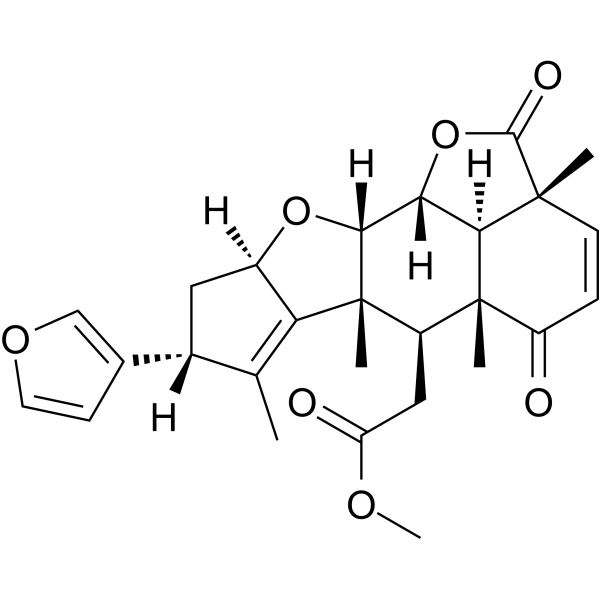
Nimbolide is a triterpene compound that can be isolated from neem (Azadirachta indica), possesses anticancer and antiproliferative activity. Nimbolide induces tumor cell apoptosis by inhibiting NF-κB and CDK4/CDK6 kinase. Nimbolide suppresses the Wnt, PI3K-Akt, MAPK and JAK-STAT signaling pathways .
loading...
    loading...
2
2 Cited Publications
Cat. No.: HY-12017
CAS No.: 956905-27-4
Purity:  99.85%
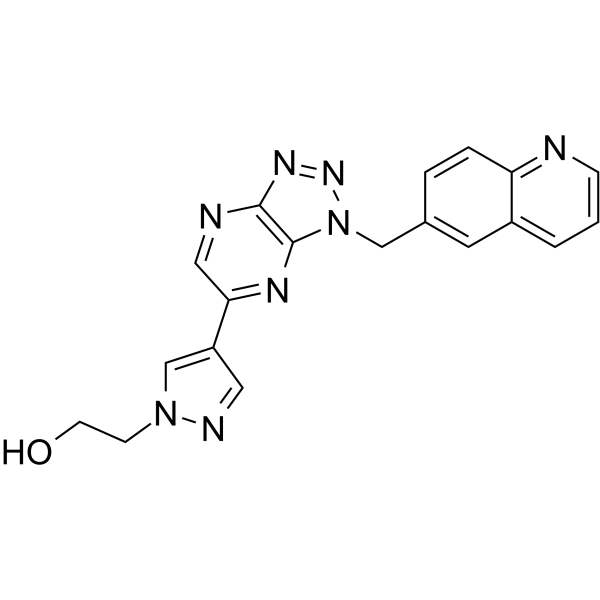
PF-04217903 is an orally active, highly selective ATP-competitive c-Met kinase inhibitor with a Ki value of 4.8 nM and a Kd value of 4.5 nM. PF-04217903 blocks c-Met and HGF signaling pathways, inhibits MET phosphorylation, and blocks downstream MAPK, PI3K/AKT and PLCγ1 pathways. PF-04217903 suppresses tumor proliferation, survival, migration, invasion, angiogenesis and metastasis, induces apoptosis, and enhances efferocytosis, Annexin A1 expression and resolution of inflammation. PF-04217903 retains activity against several c-Met mutants (M1131T, V1220I, H1094R). PF-04217903 increases the incidence of subarachnoid hemorrhage and reduces survival rate without altering aneurysm formation, and also prevents lymph node metastasis induced by VEGF inhibition. PF-04217903 is applicable to research related to tumors (pancreas, stomach, lung, brain, colon, breast, kidney, melanoma, etc.), intracranial aneurysms and inflammatory diseases (gouty arthritis, neutrophilic pleuritis) .
loading...
    loading...
2
2 Cited Publications
Cat. No.: HY-P99463
CAS No.: 2268717-61-7
Synonyms: AVB-500; AVB-S6-500

Research Areas:  

Cancer

Batiraxcept (AVB-500; AVB-S6-500) is a selective, soluble AXL receptor and GAS6 inhibitor that targets the GAS6-AXL signaling axis. Batiraxcept is orally inactive and does not cross the blood-brain barrier. Batiraxcept competitively binds to GAS6 ((KD <1 nM), preventing its interaction with the AXL receptor tyrosine kinase, thereby inhibiting downstream PI3K/AKT and MAPK signaling pathways, reducing tumor cell glycolysis, angiogenesis, and metastatic potential. Batiraxcept has demonstrated antitumor activity in preclinical models of endometrial, cholangiocarcinoma, and ovarian cancer by inhibiting tumor growth, invasion, and metastasis .
loading...
    loading...

