22 Results for "

Alternaria alternata

" in MedChemExpress (MCE) Product Catalog:
Products (22)

22 Results for "Alternaria alternata" in MCE Product Catalog:

1
1 Cited Publications
Cat. No.: HY-119976
CAS No.: 188425-85-6
Purity:  99.29%
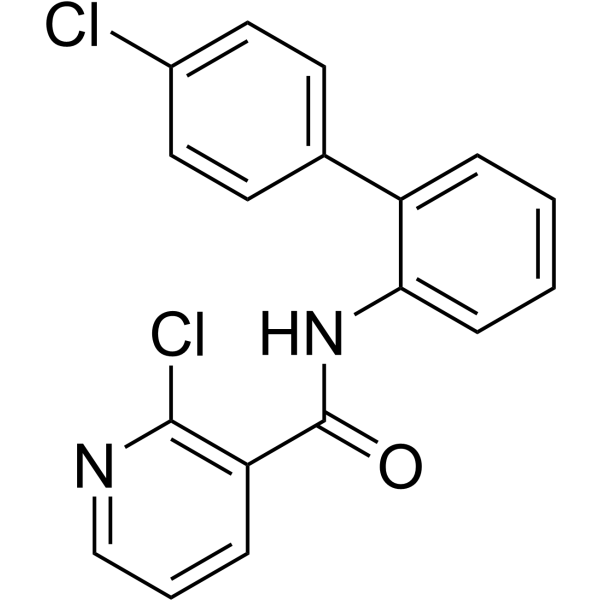
Boscalid is a succinate dehydrogenase (SDHI) inhibitor with antifungal activity. Boscalid binds to the ubiquinone-binding site of fungal mitochondrial complex II, blocks ATP production and aerobic respiration, exhibits good control efficacy against a variety of plant fungal diseases including gray mold, sclerotinia rot and powdery mildew, and is widely used for disease control in agriculture. Boscalid induces apoptosis, altered lipid metabolism, mitochondrial dysfunction, respiratory impairment, oxidative stress, ROS accumulation and neurodevelopmental disorders in zebrafish. Boscalid reduces foraging ability, shortens median death time and causes chronic toxicity in exposed honeybees. Boscalid also possesses genotoxicity, cytotoxicity, elevated mitochondrial superoxide levels and early-stage apoptosis .
loading...
    loading...
1
1 Cited Publications
Cat. No.: HY-23155
CAS No.: 2257-09-2
Synonyms: 2-PE ITC
Target:  

Fungal

Research Areas:  

Infection

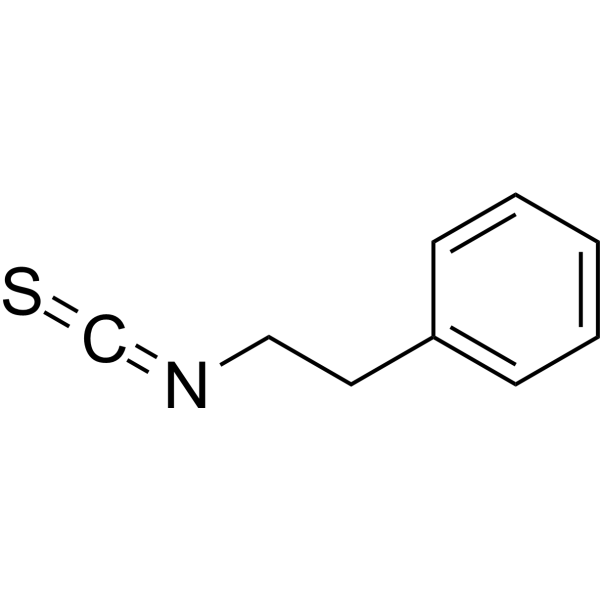
2-Phenylethyl isothiocyanate is a potent antifungal agent. 2-Phenylethyl isothiocyanate significantly inhibited spore germination and mycelial growth of Alternaria alternata, with a MIC (minimum inhibitory concentration) of 1.22 mM. The antifungal effect of 2-Phenylethyl isothiocyanate against Alternaria alternate might be via reduction in toxin content and breakdown of cell membrane integrity .
loading...
    loading...
1
1 Cited Publications
Cat. No.: HY-N6783
CAS No.: 11052-72-5
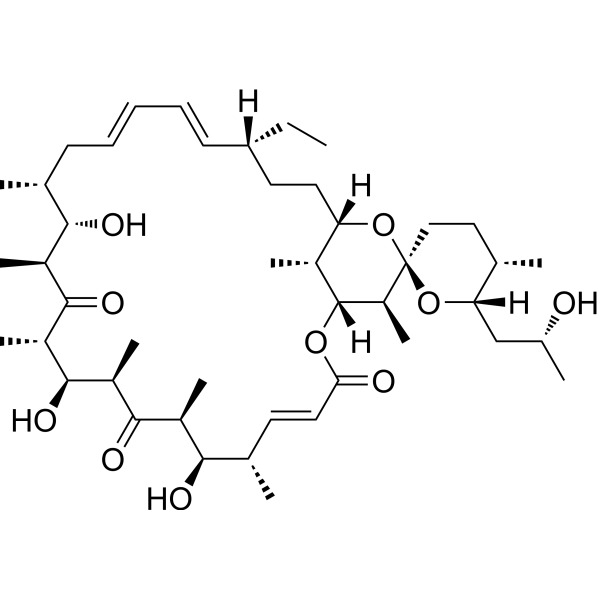
Oligomycin C is a macrolide antibiotic produced by Streptomyces strains. Oligomycin C exhibits a strong activity against Aspergillus niger, Alternaria alternata, Botrytis cinerea and Phytophthora capsici but no activity toward bacteria .
loading...
    loading...
Cat. No.: HY-P1940
CAS No.: 4549-02-4
Synonyms: Cyclo(Tyr-Pro)
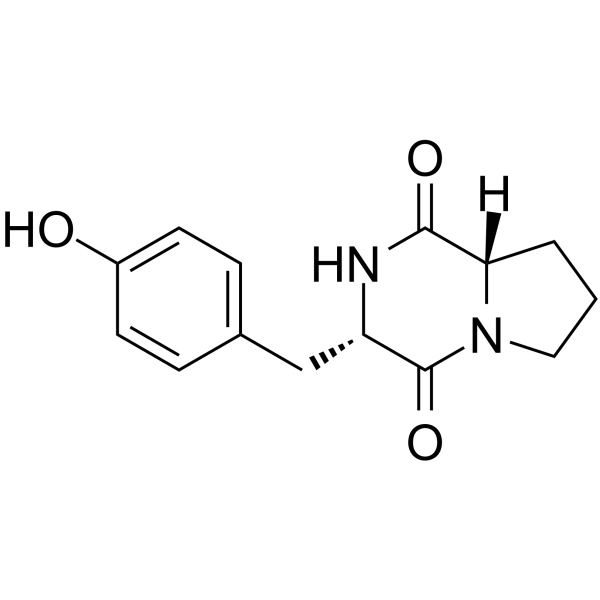
Maculosin (Cyclo (Tyr-Pro)) is a host-specific phytotoxin for spotted knapweed from Alternaria alternata. Maculosin is a quorum-sensing molecule involved in cell-cell communication. Maculosin also acts as a signaling molecule regulating virulence gene expression. Maculosin shows antimicrobial, antifungal, antioxidant and anti-cancer properties .Maculosin (Cyclo (Tyr-Pro)) is a host-specific phytotoxin for spotted knapweed from Alternaria alternata. Maculosin is a quorum-sensing molecule involved in cell-cell communication. Maculosin also acts as a signaling molecule regulating virulence gene expression. Maculosin shows antimicrobial, antifungal, antioxidant and anti-cancer properties .
loading...
    loading...
Cat. No.: HY-23155S
CAS No.: 912627-98-6
Synonyms: 2-PE ITC-d5
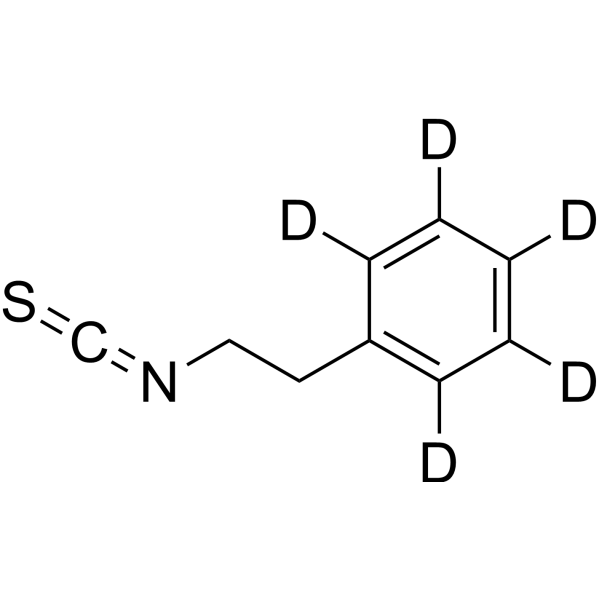
2-Phenylethyl isothiocyanate-d5 isothiocyanate-d5 is the deuterium labeled 2-Phenylethyl isothiocyanate[1]. 2-Phenylethyl isothiocyanate is a potent antifungal agent. 2-Phenylethyl isothiocyanate significantly inhibited spore germination and mycelial growth of Alternaria alternata, with a MIC (minimum inhibitory concentration) of 1.22 mM. The antifungal effect of 2-Phenylethyl isothiocyanate against Alternaria alternata might be via reduction in toxin content and breakdown of cell membrane integrity[2][3].
loading...
    loading...
Cat. No.: HY-W142437
CAS No.: 571-58-4
1,4-Dimethylnaphthalene acts as a sprout inhibitor, Antifungal agent and sporulation inhibitor. 1,4-Dimethylnaphthalene can be isolated from dormant potatoes. 1,4-Dimethylnaphthalene induces the expression of cell cycle regulators associated with G1-to-S phase transition arrest, reduces oxidative stress levels, downregulates specific transcripts including germin-like proteins and MYB transcription factors, and modulates transcripts regulated by ABI1/ABI2/ABI3 without altering endogenous ABA levels. 1,4-Dimethylnaphthalene inhibits postharvest sprouting of potato tubers. 1,4-Dimethylnaphthalene can be used in studies related to fungal infections .
loading...
    loading...
Cat. No.: HY-W007980
CAS No.: 4771-50-0
Target:  

Fungal

Research Areas:  

Infection

Antifungal agent 98 (compound 2) is an antifungal agent. Antifungal agent 98 (100 μg/mL) shows insecticidal activity against Bipolaris sorokinianum, Fusarium oxysporium f. sp.vasinfectum, Pyricularia oryzae, Alternaria Brassicae and Alternaria alternata with a death rate of 41.5%, 40.0%, 23.4, 36.8%, and 35.0% .
loading...
    loading...
Cat. No.: HY-23155R
CAS No.: 2257-09-2
Synonyms: 2-PE ITC (Standard)
Research Areas:  

Infection

2-Phenylethyl isothiocyanate (Standard) is the analytical standard of 2-Phenylethyl isothiocyanate. This product is intended for research and analytical applications. 2-Phenylethyl isothiocyanate is a potent antifungal agent. 2-Phenylethyl isothiocyanate significantly inhibited spore germination and mycelial growth of Alternaria alternata, with a MIC (minimum inhibitory concentration) of 1.22 mM. The antifungal effect of 2-Phenylethyl isothiocyanate against Alternaria alternate might be via reduction in toxin content and breakdown of cell membrane integrity .
loading...
    loading...
Cat. No.: HY-N9714
CAS No.: 959417-17-5
Target:  

Others

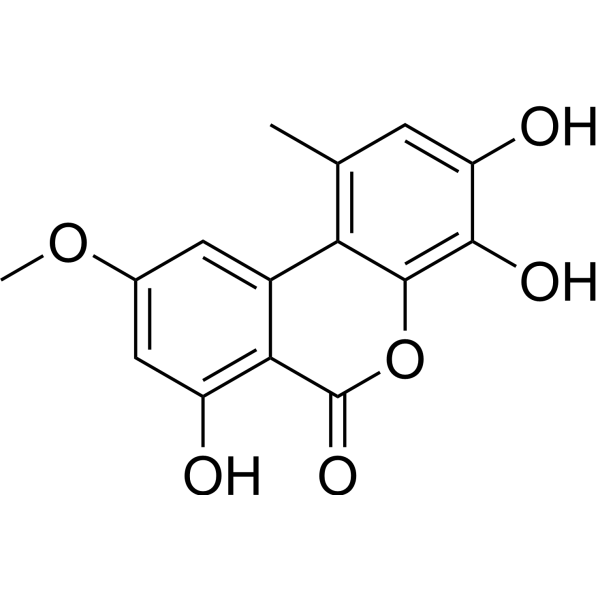
4-Hydroxyalternariol-9-methyl ether can be isolated from an endolichenic fungal strain Nigrospora sphaerica (No.83-1-1-2), endolichenic fungal strains Alternaria alternata (No.58-8-4-1) and Phialophora sp. (No.96-1-8-1) .
loading...
    loading...
Cat. No.: HY-168470
CAS No.: 3062972-37-3
Target:  

Fungal

Research Areas:  

Infection

Antifungal agent 125 (compound 4H) is a potent inhibitor of succinate dehydrogenase (SDH), with the IC50 of 3.59 μg/mL. Antifungal agent 125 exhibits fungicidal activity against Alternaria alternata .
loading...
    loading...
Cat. No.: HY-186299
CAS No.: 3577-13-7
β-Sitosteryl linoleate is an antifungal agent with a MIC of 500 μg/mL against Alternaria alternata. β-Sitosteryl linoleate disrupts the mycelia of A. alternata and causes leakage of cellular contents. β-Sitosteryl linoleate can be used in studies on A. alternata-related fungal infections, Alternaria brown spot and the mechanisms of phytopathogenic fungi, as well as in GC/MS analytical studies of steryl esters .
loading...
    loading...
Cat. No.: HY-122191
CAS No.: 85146-10-7
AK-Toxin II is a phytotoxic metabolite that can be isolated from culture broth of alternaria alternata Japanese pear pathotype. AK-Toxin II induces characteristic veinal necrosis and rapid K + loss on susceptible pear leaves .
loading...
    loading...
Cat. No.: HY-N12033
CAS No.: 93780-84-8
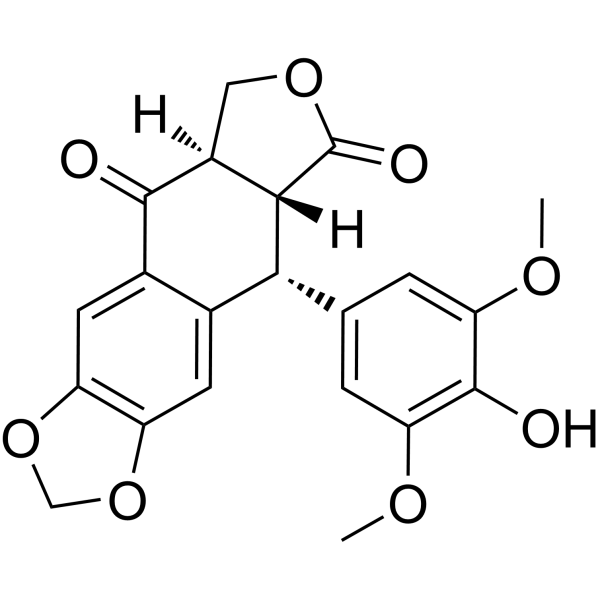
4'-Demethylpodophyllotoxone is an intermediate product of the biotransformation of Alternaria alternata S-f6. After 4'-Demethylpodophyllotoxone is modified with 4-(2,3,5,6-tetramethylpyrazine-1) (4-TMP), the resulting novel compound can strongly inhibit the growth of human gastric cancer cell line (BGC-823) .
loading...
    loading...
Cat. No.: HY-N10126
CAS No.: 3051861-47-0
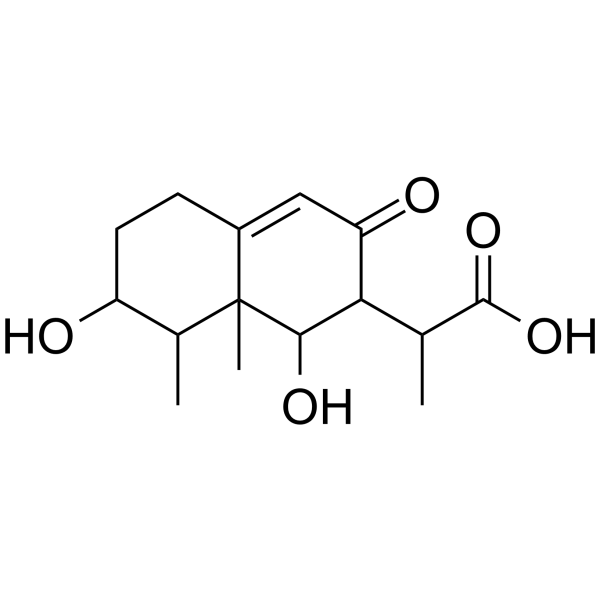
(3ξ,4ξ,5ξ,6ξ,7ξ,11ξ)-3,6-Dihydroxy-8-oxo-9-eremophilene-12-oic acid is a new phytotoxin of Alternaria alternata ssp. tenuissima isolates associated with fruit spots on apple.
loading...
    loading...
Cat. No.: HY-174388
CAS No.: 3080992-04-4
Research Areas:  

Infection

Antifungal agent 134 (Compound B13) is an antifungal agent with EC50s of 3.24, 1.89, 1.70, 0.36, 4.27, and 1.50 μg/mL for Botrytis cinerea, Alternaria solani, Fusarium graminearum, Rhizoctonia solani, Colletotrichum orbiculare, and Alternaria alternata, respectively. Antifungal agent 134 can disrupt the cell membrane and mitochondria of the hyphae, leading to significant ROS accumulation. Antifungal agent 134 also has significant herbicidal activities against field weeds, such as Amaranthus retroflexus L and Abutilon theophrasti Medicus. Antifungal agent 134 can be used for crop diseases and field weeds research .
loading...
    loading...
Cat. No.: HY-N9553
CAS No.: 91868-93-8
Alternarian acid is a polyketide compound found in the endophytic fungus Alternaria alternata MT-47, an endophytic fungus isolated from the medicinal plant of Huperzia serrata. Alternarian acid shows little inhibitory activity against thrombin-activated platelets, acetylcholinesterase, or butyrylcholinesterase .
loading...
    loading...
Cat. No.: HY-119416
CAS No.: 21763-71-3
Sequoiaflavone is a biflavonoid compound with multiple activities. Sequoiaflavone suppresses hepatic CYP1A1/(7-Ethoxycoumarin O-deethylase) ECOD, prevents 1-42 fibrillization (IC50 = 0.29 μM) and disaggregates amyloid fibrils (EC50 = 2.04 μM), inhibits Alternaria alternata and inhibits human recombinant PDE5A1 overexpressed in COS-7 cells (IC50 = 19.9 μM) to exert NO-independent vasodilation. Sequoiaflavone can be used in Alzheimer's disease, peripheral circulatory disorder, and antifungal research .
loading...
    loading...
Cat. No.: HY-N7519
CAS No.: 103462-06-2
5-(12Z-Heptadecenyl)-resorcinol serves as the main component of Antifungal mixtures. 5-(12Z-Heptadecenyl)-resorcinol can be isolated from mango peels. Antifungal mixtures composed of 5-(12Z-Heptadecenyl)-resorcinol exhibit activity against Alternaria alternata. 5-(12Z-Heptadecenyl)-resorcinol can be used in studies related to mango fruit black spot disease .
loading...
    loading...
Cat. No.: HY-N16428
CAS No.: 2152-59-2
Synonyms: NSC 356436
Neoaspergillic acid (NSC 356436) (Compound 2) is a microbial secondary metabolite. Neoaspergillic acid can be isolated from the endophytic fungus Aspergillus sp. SPH2. Neoaspergillic acid has potent antifungal activity against Alternaria alternata, Botrytis cinerea and Fusarium oxysporum. Neoaspergillic acid appears during the exponential phase of fungal growth. Neoaspergillic acid also antitumor and antibacterial effects .
loading...
    loading...
Cat. No.: HY-184420
CAS No.: 1822599-86-9
Antimicrobial agent-51 is an antifungal agent that increases ROS levels, reduces mitochondrial membrane potential, alters hyphal morphology, and impairs cell membrane integrity. Antimicrobial agent-51 inhibits succinate dehydrogenase (SDH) with an IC50 of 0.76 μg/mL against Colletotrichum gloeosporioides. Antimicrobial agent-51 exhibits control efficacy against Alternaria solani on tomato fruits and shows low toxicity to plant and mammalian cells. Antimicrobial agent-51 can be used for the research of plant fungal diseases .
loading...
    loading...

