Search Result
Results for "
Aluminum potassium
" in MedChemExpress (MCE) Product Catalog:
11
Biochemical Assay Reagents
1
Isotope-Labeled Compounds
| Cat. No. |
Product Name |
Target |
Research Areas |
Chemical Structure |
-
- HY-B1521
-
-
-
- HY-Y0498
-
|
|
Environmental Pollutants
Biochemical Assay Reagents
|
Others
|
|
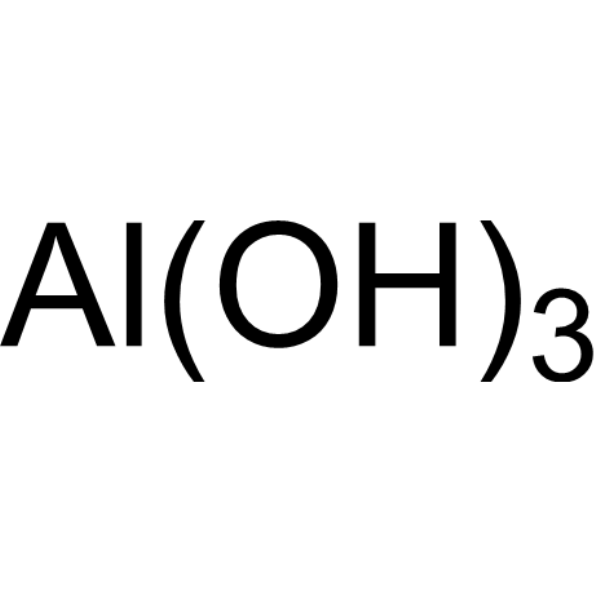
Aluminum oxide is a nanoparticulate carrier and adjuvant.Aluminum oxide elicits antibody production against non-immunogenic haptens when coupled to them in mice and rabbits. Aluminum oxide functions in eliciting antibodies from non-immunogenic haptens .
|
-
-
- HY-B0644
-
|
Sucrose octasulfate-Aluminum complex
|
Bacterial
|
Infection
Inflammation/Immunology
Cancer
|
|
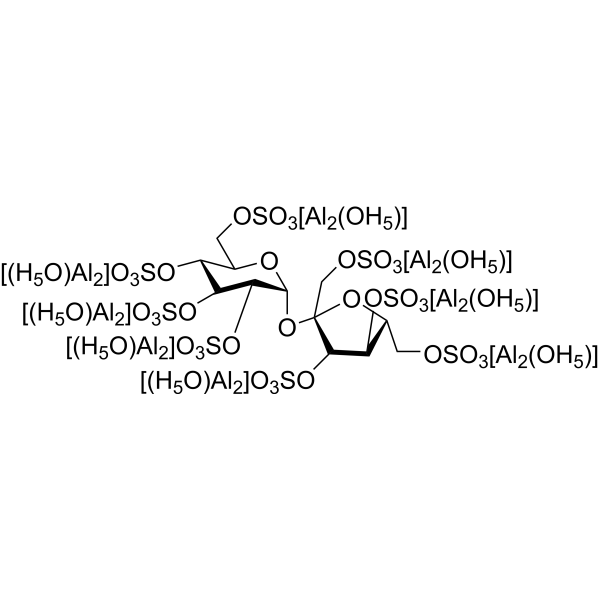
Sucralfate (Sucrose octasulfate-aluminum complex) is a potent and orally active gastroprotectant with no systemic effects. Sucralfate inhibits peptic activity and binds to negatively charged subepithelial proteins exposed during mucosal injury, forming a viscous layer that protects the vascular bed and proliferative zone. Sucralfate is used for prevention and research of several gastrointestinal diseases in vivo .
|
-
-
- HY-W116335A
-
|
|
Environmental Pollutants
Biochemical Assay Reagents
|
Inflammation/Immunology
|
|
Dried aluminum hydroxide gel, United States Pharmacopeia (USP) Reference Standard is a commonly used antacid with remarkable compound adhesion and release activity. Dried aluminum hydroxide gel, United States Pharmacopeia (USP) Reference Standard can effectively neutralize gastric acid and relieve stomach discomfort. Dried aluminum hydroxide gel, United States Pharmacopeia (USP) Reference Standard is also often used as an adjuvant in vaccines to enhance immune responses. Dried aluminum hydroxide gel, United States Pharmacopeia (USP) Reference Standard can improve the stability and bioavailability of compounds in preparations .
|
-
-
- HY-P1934
-
|
Cyclo(phenylalanylprolyl); A-64863
|
HCV
Bacterial
Antibiotic
Reactive Oxygen Species (ROS)
|
Infection
|
|
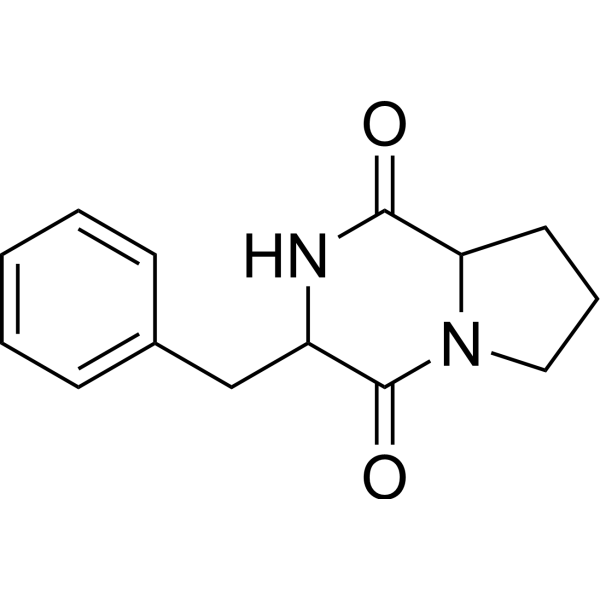
Cyclo(Phe-Pro) (Cyclo(phenylalanylprolyl)) is a quorum-sensing molecule of Vibrio vulnificus that specifically interacts with RIG-I, inhibiting RIG-I polyubiquitination, suppressing IRF-3 activation, and reducing type I interferon production. Cyclo(Phe-Pro) enhances susceptibility to HCV and influenza virus and also alleviates plant aluminum toxicity stress. The mechanism of Cyclo(Phe-Pro) involves the regulation of host immune signaling pathways, bacterial virulence gene expression, and plant antioxidant systems, making it a promising candidate for research in viral infections, bacterial virulence regulation, and agricultural stress resistance .
|
-
-
- HY-153205
-
|
|
Biochemical Assay Reagents
|
Inflammation/Immunology
|
|
Aluminum hydroxide adjuvant is a vaccine aluminum adjuvant. The aluminum content is 9-11 mg/mL. Aluminum hydroxide adjuvant induces the differentiation of macrophages into a new type of mature, specialized antigen-presenting cells in vitro . It has a strong adsorption capacity for negatively charged antigens, a significant sustained-release effect, no stress response, high safety, and can effectively induce immune responses in the body. It is suitable for various veterinary vaccines, including inactivated vaccines or gene-engineered subunit vaccines for bacterial and viral diseases of livestock and poultry. It is suitable for various veterinary vaccines, including inactivated vaccines or gene-engineered subunit vaccines for bacterial and viral diseases of livestock and poultry.
|
-
-
- HY-A0271
-
|
DihydroxyAluminum Aminoacetate
|
Biochemical Assay Reagents
|
Inflammation/Immunology
|
|
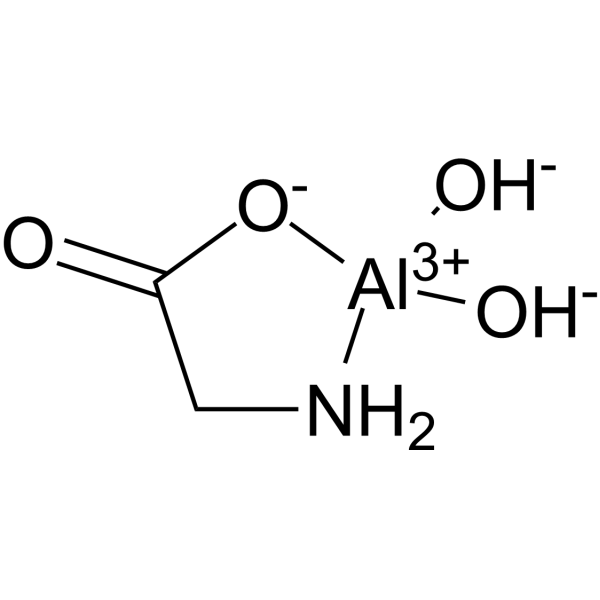
Aluminum Glycinate (Dihydroxyaluminum Aminoacetate) is an organo-metallic compound and an antacid. Aluminum Glycinate can be used for the research of indigestion, acid reflux and ulcers .
|
-
-
- HY-137296
-
|
|
Fluorescent Dye
|
Others
|
|
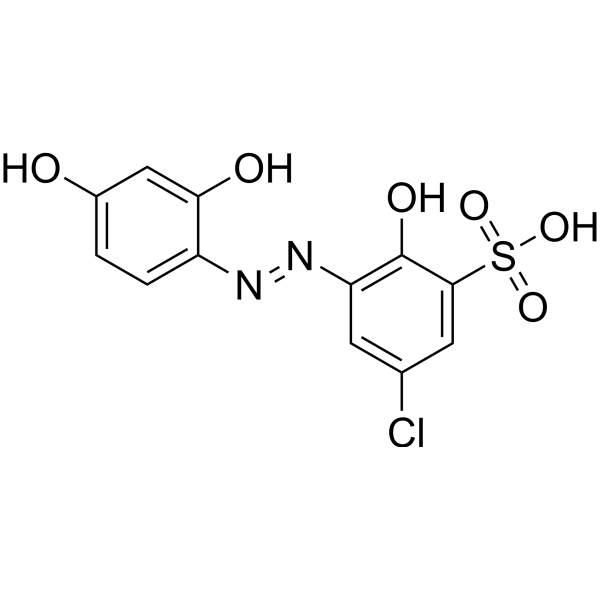
Lumogallion is a highly sensitive fluorescent reagent for the detection of aluminum, gallium and other metals. Lumogallion has an excitation wavelength of 490 nm and an emission spectrum in the range of 520 nm to 650 nm, with a peak near 580 nm .
|
-
-
- HY-D0943
-
|
Kernechtrot
|
Fluorescent Dye
Photosensitizer
|
Others
|
|
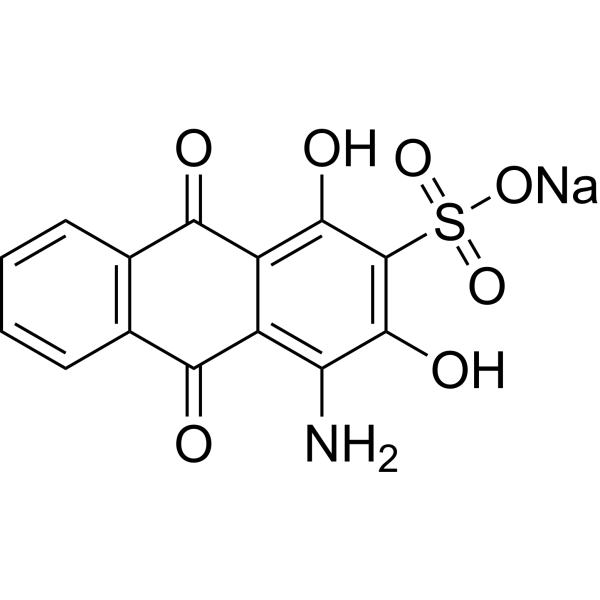
Nuclear Fast Red, an anthraquinone dye, is commonly used in conjunction with an excess of aluminum ions as a red nuclear counterstain. Nuclear fast red has been used as a histochemical and colorimetric reagent for calcium . Nuclear fast red as highly sensitive "off/on" fluorescent probe for detecting guanine .
|
-
-
- HY-164294
-
|
|
Photosensitizer
|
Cancer
|
|
Aluminum phthalocyanine disulfonate is a potential photosensitizer used for the research of Sonodynamic therapy (SDT) .
|
-
-
- HY-W075766
-
|
Nickel difluoride
|
Biochemical Assay Reagents
|
Others
|
|
Nickel(II) fluoride (Nickel difluoride) is a fluorinating agent and catalyst suitable for surface treatment of aluminum profiles and the production of inks, fluorescent lamps, and organic synthesis. Nickel(II) fluoride is a kind of biological materials or organic compounds that are widely used in life science research .
|
-
-
- HY-W134301
-
|
potassium alum
|
Biochemical Assay Reagents
|
Infection
|
|
Aluminum potassium sulfate (Potassium alum) is an egg white adjuvant. Aluminum potassium sulfate acts as a mordant to help dyes bind to tissue components, enhancing the staining effect and stability during staining. Aluminum potassium sulfate can induce allergic reactions in mice. Aluminum potassium sulfate can be used in research for bacterial and tissue staining .
|
-
-
- HY-159747
-
|
|
Toll-like Receptor (TLR)
|
Inflammation/Immunology
|
|
Aluminum hydroxide adjuvant (aluminum : 4~6 mg/mL) is a micron level water-based aluminum hydroxide adjuvant. The aluminum content is 4 - 6 mg/ml. It has a strong adsorption capacity for negatively charged antigens, a significant sustained-release effect, no stress response, high safety, and can effectively induce immune responses in the body. It is suitable for various veterinary vaccines, including inactivated vaccines or gene-engineered subunit vaccines for bacterial and viral diseases of livestock and poultry.
|
-
-
- HY-129959
-
|
AlClPc
|
Environmental Pollutants
Parasite
MOFs
|
Infection
|
|
Aluminum phthalocyanine chloride is a photosensitizer that effectively inhibits the parasite Leishmania amazonensis (the causative agent of cutaneous leishmaniasis) by light-mediated cytolysis. Aluminum phthalocyanine chloride causes parasite morphology and cytolysis of isolated amasilians, while higher photosensitizer concentrations and light intensities are required to induce lysis of mammalian cells. Aluminum phthalocyanine chloride lyses parasites within infected J774 macrophages and can be used to further investigate the study of leishmaniasis .
|
-
-
- HY-B2241A
-
|
Aluminum potassium sulfate dodecahydrate, for cell culture
|
Biochemical Assay Reagents
|
Inflammation/Immunology
|
|
Potassiumalum, for cell culture (Aluminum potassium sulfate dodecahydrate, for cell culture) is an egg white adjuvant. Potassiumalum, for cell culture acts as a mordant to help dyes bind to tissue components, enhancing the staining effect and stability during staining. Potassiumalum, for cell culture can induce allergic reactions in mice. Potassium alum, for cell culture can be used in research for bacterial and tissue staining .
|
-
-
- HY-W010488
-
|
|
Biochemical Assay Reagents
|
Others
|
|
Dithiooxamide (Rubeanic Acid) is a selective chelating agent and sulfur-containing analog of Oxamide. Dithiooxamide forms stable chelates with various metal ions (such as lead, iron, cadmium, manganese, and aluminum), which can be separated, enriched, and detected by adsorption on solid adsorbents or electrode surfaces .
|
-
-
- HY-W106012
-
-
-
- HY-136425
-
|
Fosetyl-Al
|
Fungal
|
Infection
|
|
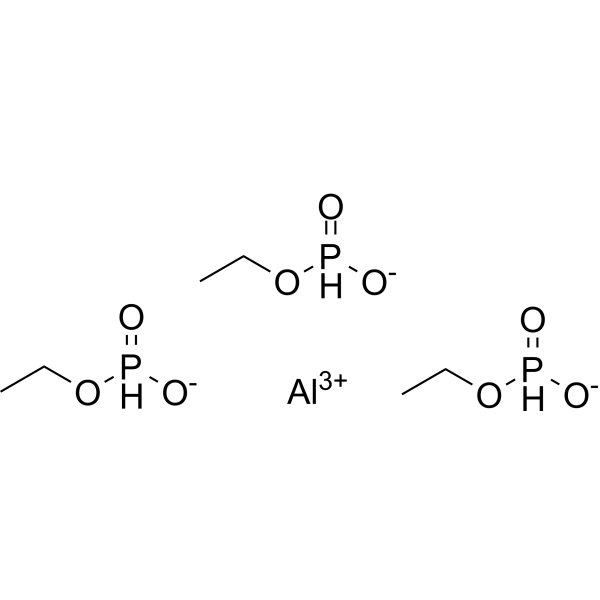
Fosetyl-aluminum (Fosetyl-Al) is an active ingredient in many fungicides against downy mildew. Fosetyl-aluminum is used to control many diseases caused by Phytophthora spp. on agricultural and horticultural crops .
|
-
-
- HY-B2175
-
|
Aluminum diacetylsalicylate
|
Biochemical Assay Reagents
|
Inflammation/Immunology
|
|
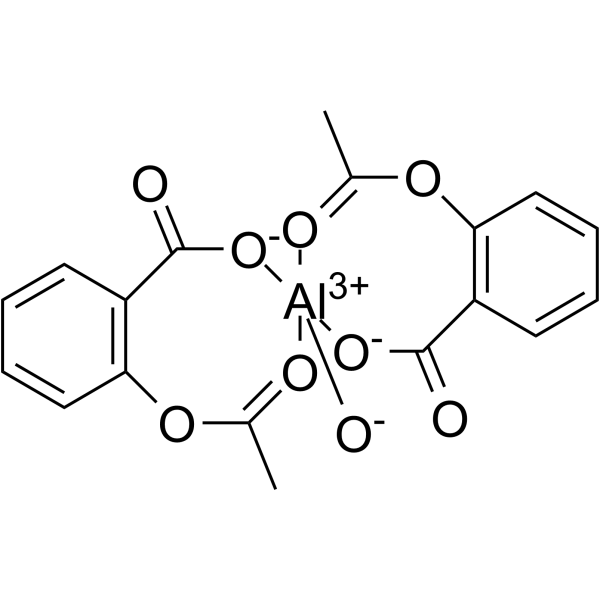
Aspirin Aluminum is a novel intermolecular compound which can inhibit gastrointestinal mucosal disorders induced by NSAIDs (non-steroidal anti-inflammatory agents) extracted from patent WO 2010064441 A1.
|
-
-
- HY-W093286
-
|
|
Biochemical Assay Reagents
|
Others
|
|
Aluminum fluoride trihydrate is a kind of biological materials or organic compounds that are widely used in life science research .
|
-
-
- HY-164576
-
|
NODA-Bz-SCN
|
Radionuclide-Drug Conjugates (RDCs)
|
Cancer
|
|
NCS-MP-NODA (NODA-Bz-SCN) is a bifunctional chelator that can be used to bind to the labeled peptide DK222 with high specificity for PD-L1. The corresponding fluorinated radioactive is synthesized by the aluminum fluoride method, and NCS-MP-NODA targets DK222 to obtain the radioactive analog [18/19F]DK222. [18F]DK222 can quantify PD-L1 in vivo via PET tracking in xenograft models of multiple cancer types.
|
-
-
- HY-160197
-
|
|
NOD-like Receptor (NLR)
|
Others
|
|
Aluminum phosphate adjuvant is a safe and effective adjuvant that activates immune system and immune system-related pathways in monocytes .
|
-
-
- HY-Y0569H
-
|
|
Biochemical Assay Reagents
|
Others
|
|
Magnesium D-gluconate hydrate, 98% is a strong chelating agent that chelates calcium, iron, aluminum, copper, and other heavy metal anions.
|
-
-
- HY-W012278
-
|
Tetraphene
|
Environmental Pollutants
Aryl Hydrocarbon Receptor
|
Others
|
|
Benz[a]anthracene (Tetraphene) (Compound 92) is a ligand for the aryl hydrocarbon receptor (AhR) with a pIC50 of 7.319. Benz[a]anthracene is a polycyclic aromatic hydrocarbon (PAH) that can be detected in spruce needles near aluminum smelters .
|
-
-
- HY-Y0188
-
|
|
Biochemical Assay Reagents
Drug Intermediate
|
Others
|
|
3-Bromobenzoic acid is an important intermediate that can be used in the synthesis of other active compounds. 3-Bromobenzoic acid can react with a variety of electrophiles to generate a variety of 2-substituted-3-bromobenzoic acid derivatives. 3-Bromobenzoic acid is also an effective corrosion inhibitor for aluminum in alkalized Persian Gulf seawater and NaOH solution .
|
-
-
- HY-131134S
-
|
Fosetyl-Al-d15
|
Fungal
Isotope-Labeled Compounds
|
Infection
|
|
Fosetyl-aluminum-d15 (Fosetyl-Al-d15) is the deuterium labeled Fosetyl-aluminum. Fosetyl-aluminum (Fosetyl-Al) is an active ingredient in many fungicides against downy mildew. Fosetyl-aluminum is used to control many diseases caused by Phytophthora spp. on agricultural and horticultural crops .
|
-
-
- HY-B0560A
-
|
|
Biochemical Assay Reagents
|
|
|
Ammonium aluminum sulfate dodecahydrate is a biomolecule precipitation agent that can change the solubility of proteins by interacting with water molecules, thereby effectively purifying proteins.
|
-
-
- HY-154703
-
|
|
Biochemical Assay Reagents
|
Others
|
|
Aluminum magnesium silicate can be used as an excipient, such as adsorbent, stabilizer, suspending agent, disintegrant for tablet and capsule, binder for tablet, thickener. Pharmaceutical excipients, or pharmaceutical auxiliaries, refer to other chemical substances used in the pharmaceutical process other than pharmaceutical ingredients. Pharmaceutical excipients generally refer to inactive ingredients in pharmaceutical preparations, which can improve the stability, solubility and processability of pharmaceutical preparations. Pharmaceutical excipients also affect the absorption, distribution, metabolism, and elimination (ADME) processes of co-administered drugs .
|
-
-
- HY-D0613
-
|
|
Fluorescent Dye
|
|
|
Acid Red 337 is an acid dye that can be decolorized when aluminum sulfate is used as a coagulant.
|
-
-
- HY-D0398
-
|
|
Fluorescent Dye
|
|
|
Acid red 42 is an acid dye that can be decolorized when aluminum sulfate is used as a coagulant.
|
-
-
- HY-D0660
-
|
|
Fluorescent Dye
|
|
|
Acid red 131 is an acid dye that can be decolorized when aluminum sulfate is used as a coagulant.
|
-
-
- HY-N0151
-
-
-
- HY-N0621R
-
|
|
Reference Standards
Others
|
Cancer
|
|
Morin (Standard) is the analytical standard of Morin. This product is intended for research and analytical applications. Morin, a plant-derived flavonoid, possesses low antioxidant activity. Morin is a fluorescing chelating agent used in aluminum speciation .
|
-
-
- HY-W242709
-
|
|
Biochemical Assay Reagents
|
Others
|
|
4-Chloroquinolin-8-ol (compound 1) is an Alq3-derived aluminum ligand. Alq3 is an organometallic molecule widely used as electron transport layer and light-emitting layer in organic LEDs, and also as a host for fluorescent and phosphorescent dyes .
|
-
-
- HY-W133900
-
-
-
- HY-B2143
-
|
|
Environmental Pollutants
Biochemical Assay Reagents
Bacterial
|
Infection
|
|
Montmorillonite is composed of two layers of co-top connected silicon oxygen tetrahedral sheet and one layer of co-edge connected aluminum (magnesium) oxygen (hydroxide) octahedral sheet, which consists of a 2:1 structure containing water of crystal. Montmorillonite can be used for large-scale industrial decontamination and can effectively remove harmful ions in sewage. Montmorillonite can also be used as a carrier of ionic antibacterial agents because of its exchangeable hydrated cations, which can adsorb bacteria .
|
-
-
- HY-B2195
-
|
|
Adrenergic Receptor
|
Metabolic Disease
|
|
Aidioxa has the ability to improve delayed gastric emptying in rats. It can partially improve delayed gastric emptying caused by clonidine or restraint stress. The allyltoin part of Aidioxa restores gastric emptying activity by antagonizing α-2 adrenergic receptors. Its aluminum hydroxide part is involved in restoring gastric compliance. Aidioxa can improve both delayed gastric emptying and impaired gastric compliance, both of which play an important role in functional dyspepsia (FD). Aidioxa is a candidate agent for inhibiting FD.
|
-
-
- HY-136425R
-
|
Fosetyl-Al (Standard)
|
Reference Standards
Fungal
|
Infection
|
|
Fosetyl-aluminum (Standard) is the analytical standard of Fosetyl-aluminum. This product is intended for research and analytical applications. Fosetyl-aluminum (Fosetyl-Al) is an active ingredient in many fungicides against downy mildew. Fosetyl-aluminum is used to control many diseases caused by Phytophthora spp. on agricultural and horticultural crops .
|
-
-
- HY-B0644R
-
|
Sucrose octasulfate-Aluminum complex (Standard)
|
Reference Standards
Bacterial
|
Infection
Inflammation/Immunology
Cancer
|
|
Sucralfate (Standard) is the analytical standard of Sucralfate. This product is intended for research and analytical applications. Sucralfate (Sucrose octasulfate-aluminum complex) is a potent and orally active gastroprotectant with no systemic effects. Sucralfate inhibits peptic activity and binds to negatively charged subepithelial proteins exposed during mucosal injury, forming a viscous layer that protects the vascular bed and proliferative zone. Sucralfate is used for prevention and research of several gastrointestinal diseases in vivo .
|
-
-
- HY-D0745
-
|
|
Fluorescent Dye
|
|
|
Acid red 405 is an acid dye that can be decolorized when aluminum sulfate is used as a coagulant.
|
-
-
- HY-D1209
-
|
|
Fluorescent Dye
|
|
|
Acid Red 35 is an acid dye that can be decolorized when aluminum sulfate is used as a coagulant.
|
-
-
- HY-P5334A
-
|
|
Tau Protein
|
Neurological Disease
|
|
AADvac 1 TFA is an active tau peptide vaccine for Alzheimer's disease research. AADvac 1 TFA is composed of a regulatory peptide 294KDNIKHVPGGGS 305 that drives tau oligomerization conjugated to Aplysia hemocyanin (KLH) and formulated with aluminum hydroxide .
|
-
-
- HY-162725
-
|
|
Toll-like Receptor (TLR)
|
Infection
Inflammation/Immunology
|
|
TLR7 agonist 24 (Compound 21) is an agonist for TLR7 with EC50 of 3.72 μM. TLR7 agonist 24 can be used as a vaccine adjuvant when combined with Aluminum Hydroxide (HY-B1521), that enhances the immune response against SARS-CoV-2 and hepatitis B antigens .
|
-
-
- HY-107864A
-
|
Tetraiodofluorescein Aluminum
|
Fluorescent Dye
|
Infection
|
|
Erythrosine B aluminum is a visibly red dye with colorimetric and fluorescent properties that serves as an important dye for many Gram-positive and -negative bacteria. Erythrosine B aluminum can be used for live/dead determination in both colorimetric and fluorescence-based assays for low, medium and high-throughput experimentation .
|
-
-
- HY-157065
-
-
-
- HY-W584219
-
-
-
- HY-B1521B
-
|
|
Biochemical Assay Reagents
|
Others
|
|
Aluminum hydroxide (0.1 μm) is a nano-sized aluminum hydroxide flame retardant with a particle size of approximately 100 nm. Aluminum hydroxide (0.1 μm) can be used in flame-retardant composite materials and improves mechanical properties and processing flowability.
|
-
-
- HY-B1521A
-
|
|
Biochemical Assay Reagents
|
Others
|
|
Aluminum hydroxide (0.03 μm) is a nano-sized aluminum hydroxide flame retardant with a particle size of approximately 30 nm. Aluminum hydroxide (0.03 μm) can be used in flame-retardant composite materials and improves mechanical properties and processing flowability.
|
-
-
- HY-27819
-
-
-
- HY-164294A
-
|
|
Photosensitizer
|
Others
|
|
Aluminum phthalocyanine disulfonate disodium is a potential photosensitizer used for the research of Sonodynamic therapy (SDT) .
|
-
- HY-W998821
-
|
|
MOFs
|
Others
|
|
((5-Carboxylatofuran-2-carbonyl)oxy)(hydroxy)aluminum(iii) is a metal-organic framework (MOF).
|
-
- HY-W243977
-
|
(E)-((3-Carboxylatoacryloyl)oxy)(hydroxy)Aluminum(III)
|
MOFs
|
Others
|
|
Al-Fum((E)-((3-Carboxylatoacryloyl)oxy)(hydroxy)aluminum(III)) is a metal-organic framework (MOF).
|
-
- HY-28448
-
|
|
MOFs
|
Others
|
|
((5-Carboxylato-1H-pyrazole-3-carbonyl)oxy)(hydroxy)aluminum(III) is a metal-organic framework (MOF).
|
-
- HY-W543355
-
|
|
MOFs
|
Others
|
|
Aluminum,hydroxy[1H-pyrazole-3,5-dicarboxylato(2-)-κO3]- is a metal-organic framework (MOF).
|
-
- HY-W243975
-
|
((2-Amino-4-carboxylatobenzoyl)oxy)(hydroxy)Aluminum(III); NH2-MIL-53(Al)
|
MOFs
|
Others
|
|
MIL-53(Al)-NH2 (((2-Amino-4-carboxylatobenzoyl)oxy)(hydroxy)aluminum(III)) is a metal-organic framework (MOF).
|
-
- HY-W243971
-
|
Aluminum, [[1,1′-biphenyl]-4,4′-dicarboxylato(2-)-κO4]hydroxy-, compd. with N,N-dimethylformamide, hydrate (10:18:35); DUT-5(Al)
|
MOFs
|
Others
|
|
DUT-5 (Aluminum, [[1,1′-biphenyl]-4,4′-dicarboxylato(2-)-κO4]hydroxy-, compd. with N,N-dimethylformamide, hydrate (10:18:35)) is a metal-organic framework (MOF).
|
-
- HY-B1520
-
|
Aluminum clofibrate
|
PPAR
|
Cancer
|
|
Aluminium clofibrate is an orally active peroxisome proliferator. Aluminium clofibrate increases peroxisomal β-oxidation enzyme activities, elevates catalase. Aluminium clofibrate can be used in the research of cancer .
|
-
- HY-W249569
-
|
Aluminum, triaquapentakis[μ-[1,3,5-benzenetricarboxylato(3-)-κO1:κO1′]][μ6-[1,3,5-benzenetricarboxylato(3-)-κO1:κO1′:κO3:κO3′:κO5:κO5′]]deca-μ-hydroxydodecahydroxy-μ3-oxotetradeca-, tetracosahydrate
|
MOFs
|
Others
|
|
MIL-96(Al)(Aluminum, triaquapentakis[μ-[1,3,5-benzenetricarboxylato(3-)-κO1:κO1′]][μ6-[1,3,5-benzenetricarboxylato(3-)-κO1:κO1′:κO3:κO3′:κO5:κO5′]]deca-μ-hydroxydodecahydroxy-μ3-oxotetradeca-, tetracosahydrate) is a metal-organic framework (MOF).
|
-
- HY-P992043
-
|
ANK-101
|
Interleukin Related
PD-1/PD-L1
|
Inflammation/Immunology
Cancer
|
|
Tolododekin alfa (ANK-101) is a drug conjugate that anchors and combines IL-12 with Aluminum Hydroxide (HY-B1521). Tolododekin alfa promotes the recruitment of effector CD8 + T cells to tumor sites, enhances the production of γ-interferon, upregulates the expression of PD-L1, and induces sustained pro-inflammatory gene expression in mouse tumor models. Tolododekin alfa can be used for research related to advanced solid tumors .
|
-
- HY-W019888
-
|
Ferrofloc
|
Environmental Pollutants
|
Others
|
|
Iron (II) chloride (Ferrofloc) is an active radical polymerization initiator, which is a transition metal chloride composed of Fe 2+ and Cl − ions. The ion association constant logKFeCl2 of Iron (II) chloride is −0.89. In acidic aqueous solutions, Iron (II) chloride forms solvated Fe 2++2Cl − ions as well as FeCl ++Cl − ion pairs. Without the addition of aluminum compounds, Iron (II) chloride drives the living radical polymerization of methyl methacrylate by generating transient radical growing species through homolytic reversible cleavage of the carbon-halogen end groups of organic halide initiators .
|
-
| Cat. No. |
Product Name |
Type |
-
- HY-137296
-
|
|
Fluorescent Dyes
|
|
Lumogallion is a highly sensitive fluorescent reagent for the detection of aluminum, gallium and other metals. Lumogallion has an excitation wavelength of 490 nm and an emission spectrum in the range of 520 nm to 650 nm, with a peak near 580 nm .
|
-
- HY-D0943
-
|
Kernechtrot
|
Fluorescent Dyes
|
|
Nuclear Fast Red, an anthraquinone dye, is commonly used in conjunction with an excess of aluminum ions as a red nuclear counterstain. Nuclear fast red has been used as a histochemical and colorimetric reagent for calcium . Nuclear fast red as highly sensitive "off/on" fluorescent probe for detecting guanine .
|
-
- HY-129959
-
|
AlClPc
|
Fluorescent Dyes
|
|
Aluminum phthalocyanine chloride is a photosensitizer that effectively inhibits the parasite Leishmania amazonensis (the causative agent of cutaneous leishmaniasis) by light-mediated cytolysis. Aluminum phthalocyanine chloride causes parasite morphology and cytolysis of isolated amasilians, while higher photosensitizer concentrations and light intensities are required to induce lysis of mammalian cells. Aluminum phthalocyanine chloride lyses parasites within infected J774 macrophages and can be used to further investigate the study of leishmaniasis .
|
-
- HY-D0613
-
|
|
Fluorescent Dyes
|
|
Acid Red 337 is an acid dye that can be decolorized when aluminum sulfate is used as a coagulant.
|
-
- HY-D0398
-
|
|
Fluorescent Dyes
|
|
Acid red 42 is an acid dye that can be decolorized when aluminum sulfate is used as a coagulant.
|
-
- HY-D0660
-
|
|
Fluorescent Dyes
|
|
Acid red 131 is an acid dye that can be decolorized when aluminum sulfate is used as a coagulant.
|
-
- HY-D0745
-
|
|
Fluorescent Dyes
|
|
Acid red 405 is an acid dye that can be decolorized when aluminum sulfate is used as a coagulant.
|
-
- HY-D1209
-
|
|
Fluorescent Dyes
|
|
Acid Red 35 is an acid dye that can be decolorized when aluminum sulfate is used as a coagulant.
|
| Cat. No. |
Product Name |
Type |
-
- HY-W075766
-
|
Nickel difluoride
|
Biochemical Assay Reagents
|
|
Nickel(II) fluoride (Nickel difluoride) is a fluorinating agent and catalyst suitable for surface treatment of aluminum profiles and the production of inks, fluorescent lamps, and organic synthesis. Nickel(II) fluoride is a kind of biological materials or organic compounds that are widely used in life science research .
|
-
- HY-B2241A
-
|
Aluminum potassium sulfate dodecahydrate, for cell culture
|
Biochemical Assay Reagents
|
|
Potassiumalum, for cell culture (Aluminum potassium sulfate dodecahydrate, for cell culture) is an egg white adjuvant. Potassiumalum, for cell culture acts as a mordant to help dyes bind to tissue components, enhancing the staining effect and stability during staining. Potassiumalum, for cell culture can induce allergic reactions in mice. Potassium alum, for cell culture can be used in research for bacterial and tissue staining .
|
-
- HY-W010488
-
|
|
Biochemical Assay Reagents
|
|
Dithiooxamide (Rubeanic Acid) is a selective chelating agent and sulfur-containing analog of Oxamide. Dithiooxamide forms stable chelates with various metal ions (such as lead, iron, cadmium, manganese, and aluminum), which can be separated, enriched, and detected by adsorption on solid adsorbents or electrode surfaces .
|
-
- HY-W106012
-
-
- HY-W093286
-
|
|
Biochemical Assay Reagents
|
|
Aluminum fluoride trihydrate is a kind of biological materials or organic compounds that are widely used in life science research .
|
-
- HY-Y0569H
-
|
|
Biochemical Assay Reagents
|
|
Magnesium D-gluconate hydrate, 98% is a strong chelating agent that chelates calcium, iron, aluminum, copper, and other heavy metal anions.
|
-
- HY-Y0188
-
|
|
Biochemical Assay Reagents
|
|
3-Bromobenzoic acid is an important intermediate that can be used in the synthesis of other active compounds. 3-Bromobenzoic acid can react with a variety of electrophiles to generate a variety of 2-substituted-3-bromobenzoic acid derivatives. 3-Bromobenzoic acid is also an effective corrosion inhibitor for aluminum in alkalized Persian Gulf seawater and NaOH solution .
|
-
- HY-B0560A
-
|
|
Biochemical Assay Reagents
|
|
Ammonium aluminum sulfate dodecahydrate is a biomolecule precipitation agent that can change the solubility of proteins by interacting with water molecules, thereby effectively purifying proteins.
|
-
- HY-W133900
-
|
Octadecanoate Aluminum
|
Biochemical Assay Reagents
|
|
Aluminum stearate (Octadecanoate aluminum) is a thickener that can be used in cosmetics .
|
-
- HY-B1521B
-
|
|
Biochemical Assay Reagents
|
|
Aluminum hydroxide (0.1 μm) is a nano-sized aluminum hydroxide flame retardant with a particle size of approximately 100 nm. Aluminum hydroxide (0.1 μm) can be used in flame-retardant composite materials and improves mechanical properties and processing flowability.
|
-
- HY-B1521A
-
|
|
Biochemical Assay Reagents
|
|
Aluminum hydroxide (0.03 μm) is a nano-sized aluminum hydroxide flame retardant with a particle size of approximately 30 nm. Aluminum hydroxide (0.03 μm) can be used in flame-retardant composite materials and improves mechanical properties and processing flowability.
|
| Cat. No. |
Product Name |
Target |
Research Area |
-
- HY-P1934
-
|
Cyclo(phenylalanylprolyl); A-64863
|
HCV
Bacterial
Antibiotic
Reactive Oxygen Species (ROS)
|
Infection
|
|
Cyclo(Phe-Pro) (Cyclo(phenylalanylprolyl)) is a quorum-sensing molecule of Vibrio vulnificus that specifically interacts with RIG-I, inhibiting RIG-I polyubiquitination, suppressing IRF-3 activation, and reducing type I interferon production. Cyclo(Phe-Pro) enhances susceptibility to HCV and influenza virus and also alleviates plant aluminum toxicity stress. The mechanism of Cyclo(Phe-Pro) involves the regulation of host immune signaling pathways, bacterial virulence gene expression, and plant antioxidant systems, making it a promising candidate for research in viral infections, bacterial virulence regulation, and agricultural stress resistance .
|
-
- HY-P5334
-
|
|
Peptides
|
Neurological Disease
|
|
AADvac 1 is an active tau peptide vaccine for Alzheimer's disease research. AADvac 1 is composed of a regulatory peptide 294KDNIKHVPGGGS 305 that drives tau oligomerization conjugated to Aplysia hemocyanin (KLH) and formulated with aluminum hydroxide .
|
-
- HY-P5334A
-
|
|
Tau Protein
|
Neurological Disease
|
|
AADvac 1 TFA is an active tau peptide vaccine for Alzheimer's disease research. AADvac 1 TFA is composed of a regulatory peptide 294KDNIKHVPGGGS 305 that drives tau oligomerization conjugated to Aplysia hemocyanin (KLH) and formulated with aluminum hydroxide .
|
| Cat. No. |
Product Name |
Target |
Research Area |
Image |
-
- HY-P992043
-
|
ANK-101
|
Interleukin Related
PD-1/PD-L1
|
Inflammation/Immunology
Cancer
|
|
Tolododekin alfa (ANK-101) is a drug conjugate that anchors and combines IL-12 with Aluminum Hydroxide (HY-B1521). Tolododekin alfa promotes the recruitment of effector CD8 + T cells to tumor sites, enhances the production of γ-interferon, upregulates the expression of PD-L1, and induces sustained pro-inflammatory gene expression in mouse tumor models. Tolododekin alfa can be used for research related to advanced solid tumors .
|
-
(5)
| Cat. No. |
Product Name |
Category |
Target |
Chemical Structure |
| Cat. No. |
Product Name |
Chemical Structure |
-
- HY-131134S
-
|
|
|
Fosetyl-aluminum-d15 (Fosetyl-Al-d15) is the deuterium labeled Fosetyl-aluminum. Fosetyl-aluminum (Fosetyl-Al) is an active ingredient in many fungicides against downy mildew. Fosetyl-aluminum is used to control many diseases caused by Phytophthora spp. on agricultural and horticultural crops .
|
-
| Cat. No. |
Product Name |
|
Classification |
-
- HY-153205
-
|
|
|
Adjuvant
|
|
Aluminum hydroxide adjuvant is a vaccine aluminum adjuvant. The aluminum content is 9-11 mg/mL. Aluminum hydroxide adjuvant induces the differentiation of macrophages into a new type of mature, specialized antigen-presenting cells in vitro . It has a strong adsorption capacity for negatively charged antigens, a significant sustained-release effect, no stress response, high safety, and can effectively induce immune responses in the body. It is suitable for various veterinary vaccines, including inactivated vaccines or gene-engineered subunit vaccines for bacterial and viral diseases of livestock and poultry. It is suitable for various veterinary vaccines, including inactivated vaccines or gene-engineered subunit vaccines for bacterial and viral diseases of livestock and poultry.
|
-
- HY-159747
-
|
|
|
Adjuvant
|
|
Aluminum hydroxide adjuvant (aluminum : 4~6 mg/mL) is a micron level water-based aluminum hydroxide adjuvant. The aluminum content is 4 - 6 mg/ml. It has a strong adsorption capacity for negatively charged antigens, a significant sustained-release effect, no stress response, high safety, and can effectively induce immune responses in the body. It is suitable for various veterinary vaccines, including inactivated vaccines or gene-engineered subunit vaccines for bacterial and viral diseases of livestock and poultry.
|
-
- HY-160197
-
|
|
|
Adjuvant
|
|
Aluminum phosphate adjuvant is a safe and effective adjuvant that activates immune system and immune system-related pathways in monocytes .
|
-
- HY-154703
-
|
|
|
Thickeners
Binders
Disintegrants
|
|
Aluminum magnesium silicate can be used as an excipient, such as adsorbent, stabilizer, suspending agent, disintegrant for tablet and capsule, binder for tablet, thickener. Pharmaceutical excipients, or pharmaceutical auxiliaries, refer to other chemical substances used in the pharmaceutical process other than pharmaceutical ingredients. Pharmaceutical excipients generally refer to inactive ingredients in pharmaceutical preparations, which can improve the stability, solubility and processability of pharmaceutical preparations. Pharmaceutical excipients also affect the absorption, distribution, metabolism, and elimination (ADME) processes of co-administered drugs .
|
Your information is safe with us. * Required Fields.
Inquiry Information
- Product Name:
- Cat. No.:
- Quantity:
- MCE Japan Authorized Agent:

