1. Search Result
Search Result
Results for "

Anti-arrhythmic

" in MedChemExpress (MCE) Product Catalog:

331

Inhibitors & Agonists

1

Biochemical Assay Reagents

2

Peptides

36

Natural
Products

42

Isotope-Labeled Compounds

Cat. No. Product Name Target Research Areas Chemical Structure
  • HY-N0728
    α-Linolenic acid
    10+ Cited Publications

    ALA free base; C18:3 (9Z,12Z,15Z) free base; C18:3 n-3 free base

    Environmental Pollutants Akt PI3K Cardiovascular Disease Cancer
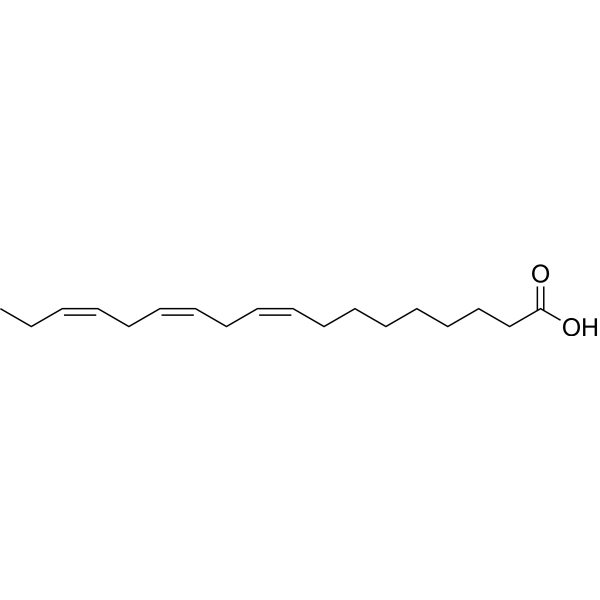
    α-Linolenic acid (ALA (free base); C18:3 (9Z,12Z,15Z) (free base); C18:3 n-3 (free base)) is an essential fatty acid that cannot be synthesized by humans. α-Linolenic acid can affect the process of thrombotic through the modulation of PI3K/Akt signaling. α-Linolenic acid possess the anti-arrhythmic properties and is related to cardiovascular disease and cancer .
    α-Linolenic acid
  • HY-15551
    E-4031
    5+ Cited Publications

    Potassium Channel Cardiovascular Disease
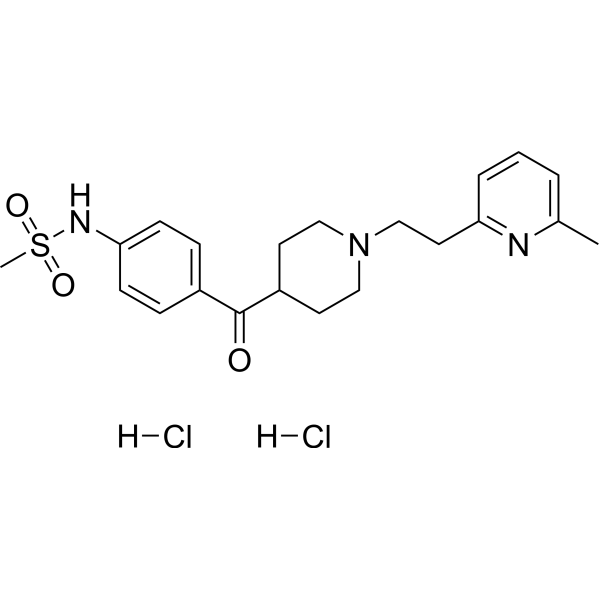
    E-4031 is a selective hERG potassium channel blocker for use in class III anti-arrhythmic studies .
    E-4031
  • HY-B1517
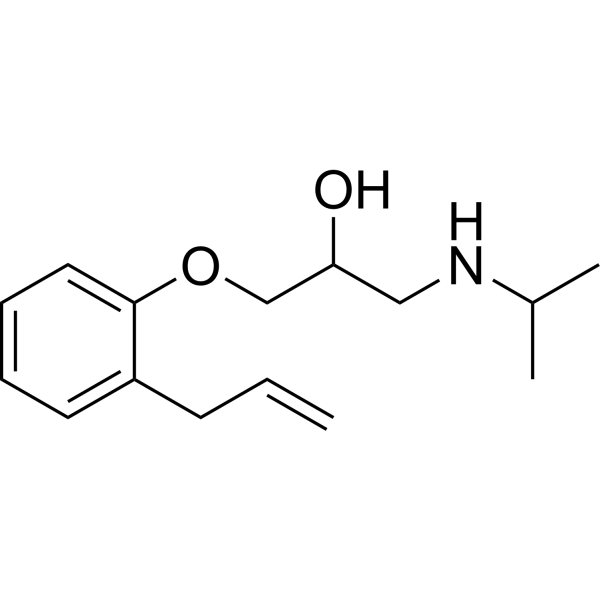
    Alprenolol
    5+ Cited Publications

    (RS)-Alprenolol; dl-Alprenolol

    5-HT Receptor Cardiovascular Disease Cancer
    Alprenolol ((RS)-Alprenolol; dl-Alprenolol) is an orally active non-selective β-adrenoceptor antagonist and an antagonist of 5-HT1A and 5-HT1B receptors. Alprenolol is used as an anti-hypertensive, anti-anginal and anti-arrhythmic agent .
    Alprenolol
  • HY-B1517A
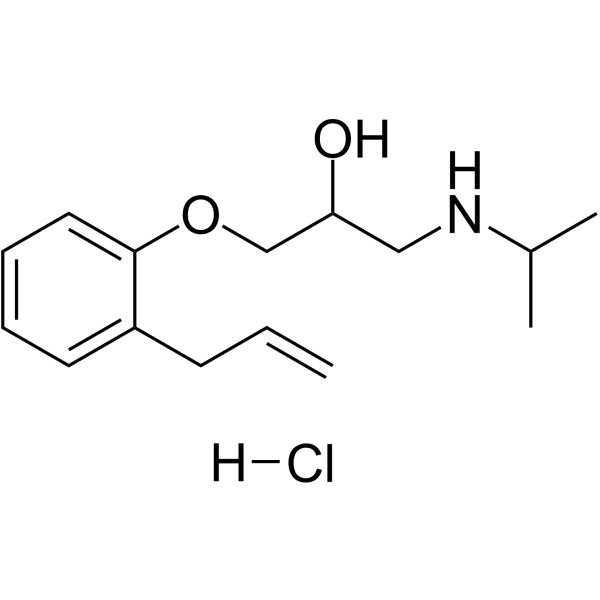
    Alprenolol hydrochloride
    5+ Cited Publications

    (RS)-Alprenolol hydrochloride; dl-Alprenolol hydrochloride

    5-HT Receptor Cardiovascular Disease Cancer
    Alprenolol ((RS)-Alprenolol; dl-Alprenolol) hydrochloride is an orally active non-selective β-adrenoceptor antagonist and an antagonist of 5-HT1A and 5-HT1B receptors. Alprenolol hydrochloride is used as an anti-hypertensive, anti-anginal and anti-arrhythmic agent .
    Alprenolol hydrochloride
  • HY-B0432A
    Propafenone hydrochloride
    2 Publications Verification

    SA-79 hydrochloride

    Sodium Channel Cardiovascular Disease
    Propafenone (hydrochloride) (SA-79 (hydrochloride)) is a class of anti-arrhythmic medication, which treats illnesses associated with rapid heart beats such as atrial and ventricular arrhythmias.
    Propafenone hydrochloride
  • HY-N0728S3

    Isotope-Labeled Compounds PI3K Akt Cardiovascular Disease Cancer
    α-Linolenic acid- 13C18 is the 13C labeled α-Linolenic acid. α-Linolenic acid, isolated from seed oils, is an essential fatty acid that cannot be synthesized by humans. α-Linolenic acid can affect the process of thrombotic through the modulation of PI3K/Akt signaling. α-Linolenic acid possess the anti-arrhythmic properties and is related to cardiovascular disease and cancer .
    α-Linolenic acid-13C18
  • HY-N0596
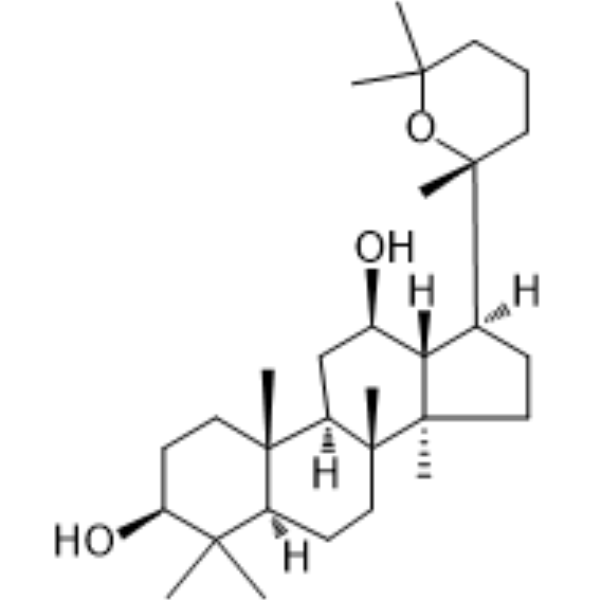
    Panaxadiol
    4 Publications Verification

    20(R)-Panaxadiol

    PD-1/PD-L1 HIF/HIF Prolyl-Hydroxylase STAT Cancer
    Panaxadiol (20(R)-Panaxadiol) is an orally active HIF-1α/STAT3 inhibitor. Panaxadiol can suppress HIF-1α and STAT3 then lead to downregulation of programmed cell death-ligand 1 (PD-L1) expression. Panaxadiol shows anticancer, cardioprotective, anti-arrhythmic, and antioxidative activities .
    Panaxadiol
  • HY-B0551

    Potassium Channel Neurological Disease
    Doxapram is a respiratory stimulant. Doxapram increases breathing rate and depth by acting on the brain's respiratory centers and peripheral chemoreceptors. Doxapram inhibits TASK-1, TASK-3, TASK-1/TASK-3 heterodimeric channel function with EC50s of 410 nM, 37 μM, 9 μM, respectively. Doxapram inhibits the Ca²⁺-activated potassium current (IC50 ≈ 13 μM) and Ca²⁺-independent potassium current (IC50 ≈ 20 μM) in type I cells of the carotid body. Doxapram significantly prolongs the effective refractory period of the atrium and has an anti-arrhythmic effect. Doxapram can be used for the study of respiratory depression such as post-anesthesia respiratory depression, chronic obstructive pulmonary disease and apnea of prematurity .
    Doxapram
  • HY-B0551A

    Potassium Channel Neurological Disease
    Doxapram hydrochloride hydrate is a respiratory stimulant. Doxapram hydrochloride hydrate increases breathing rate and depth by acting on the brain's respiratory centers and peripheral chemoreceptors. Doxapram hydrochloride hydrate inhibits TASK-1, TASK-3, TASK-1/TASK-3 heterodimeric channel function with EC50s of 410 nM, 37 μM, 9 μM, respectively. Doxapram hydrochloride hydrate inhibits the Ca²⁺-activated potassium current (IC50 ≈ 13 μM) and Ca²⁺-independent potassium current (IC50 ≈ 20 μM) in type I cells of the carotid body. Doxapram hydrochloride hydrate significantly prolongs the effective refractory period of the atrium and has an anti-arrhythmic effect. Doxapram hydrochloride hydrate can be used for the study of respiratory depression such as post-anesthesia respiratory depression, chronic obstructive pulmonary disease and apnea of prematurity .
    Doxapram hydrochloride hydrate
  • HY-B1167

    Cardiorythmine; (+)-Ajmaline

    Sodium Channel Cardiovascular Disease
    Ajmaline (Cardiorythmine) is a sodium channel blocking, class 1A anti-arrhythmic agent. Ajmaline blocks HERG currents with an IC50 of 1 μM in HEK cells and 42.3 μM in Xenopus oocytes. Ajmaline can be used for the research of the ventricular tachyarrhythmia .
    Ajmaline
  • HY-106225
    Rotigaptide
    1 Publications Verification

    ZP123

    Gap Junction Protein Cardiovascular Disease
    Rotigaptide (ZP123) is a novel and specific modulator of connexin 43 (Cx43). Rotigaptide prevents the uncoupling of Cx43-mediated gap junction communication and normalizes cell-to-cell communication during acute metabolic stress. Rotigaptide is a potent antiarrhythmic peptide (AAP) with improved stability and has the potential for the investigation of cardiac arrhythmias-specifically atrial fibrillation .
    Rotigaptide
  • HY-10913A
    Danegaptide Hydrochloride
    1 Publications Verification

    GAP-134 Hydrochloride; ZP 1609 Hydrochloride

    Gap Junction Protein Cardiovascular Disease
    Danegaptide Hydrochloride (GAP-134 Hydrochloride) is a potent, selective and orally active gap-junction modifier with an antiarrhythmic effect .
    Danegaptide Hydrochloride
  • HY-A0082

    Difenidol hydrochloride

    mAChR Sodium Channel Neurological Disease
    Diphenidol hydrochloride (Difenidol hydrochloride) is a non-selective muscarinic M1-M4 receptor antagonist, has anti-arrhythmic activity. Diphenidol hydrochloride is also a potent non-specific blocker of voltage-gated ion channels (Na +, K +, and Ca 2+) in neuronal cells. Diphenidol hydrochloride can be used in the study of antivertigo and antinausea .
    Diphenidol hydrochloride
  • HY-B1194

    (±)-Tetramisole hydrochloride; DL-Tetramisole hydrochloride; R-829

    Potassium Channel Parasite PKA Infection Cardiovascular Disease
    Tetramisole hydrochloride is an orally active, selective inward rectifier potassium channel agonist with an EC50 of approximately 30 μM for the Kir2.1 subunit. Tetramisole hydrochloride is also an anti-nematode agent that blocks neuromuscular transmission by non-competitive depolarization. Tetramisole hydrochloride promotes the forward transport of Kir2.1 channels, hyperpolarizes the resting potential (RP), shortens the action potential duration (APD), inhibits intracellular calcium overload and the PKA signaling pathway, and exerts anti-arrhythmic and anti-myocardial remodeling activities. Tetramisole hydrochloride can be used in cardiac electrophysiology research and research related to myocardial ischemia and heart failure .
    Tetramisole hydrochloride
  • HY-B1067

    Phenazoline hydrochloride

    Histamine Receptor HBV Neurological Disease Endocrinology
    Antazoline hydrochloride is a histamine H1 receptor antagonist with anticholinergic and antiviral properties. Antazoline hydrochloride can prevent histamine from acting on target cells through a reversible competition effect on histamine receptor sites of these cells. Antazoline hydrochloride can exert an antiallegic effect and prevent the occurrence of physiological reactions from the effect of blocking as well as inhibiting H1 receptor. Antazoline hydrochloride can effectively reduce HBV DNA in the extracellular supernatant in a dose-dependent manner, with EC50 of 2.910 μmol/L in HepAD38 cells. Antazoline hydrochloride also has a significant inhibitory effect on HBV DNA in the extracellular supernatant of Huh7 cells (EC50 = 2.349 μmol/L). Antazoline hydrochloride has anti-arrhythmic effect in acute myocardial infarctions. Antazoline hydrochloride can be studied in research for cardiovascular diseases, and HBV .
    Antazoline hydrochloride
  • HY-150123

    Drug Metabolite Cardiovascular Disease
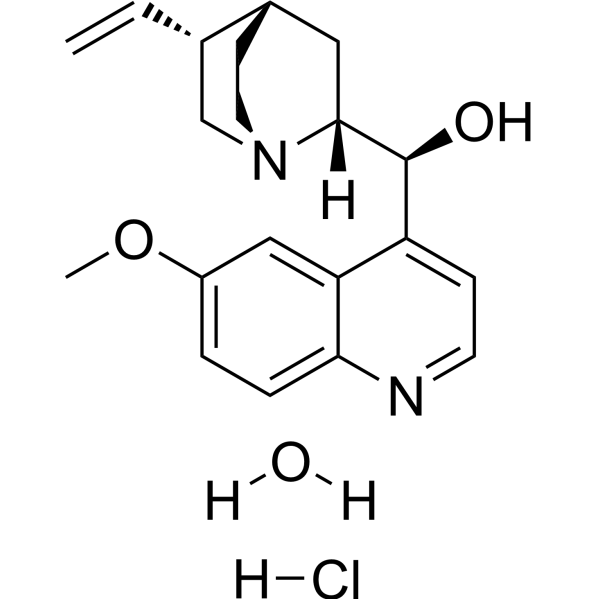
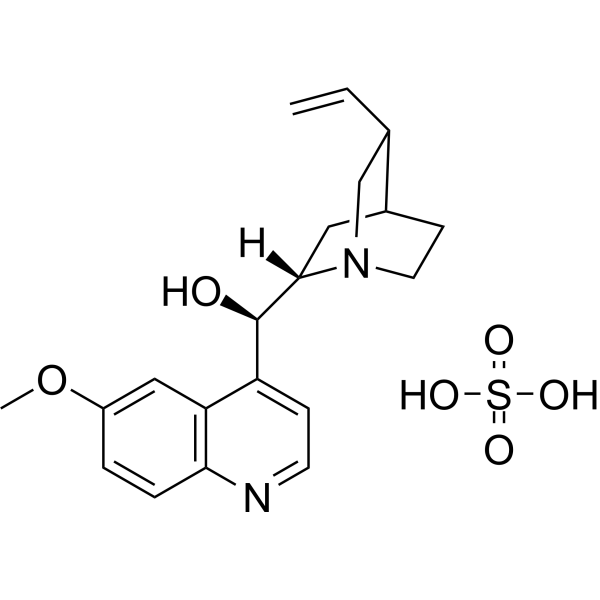
    Quinidine methiodide is a metabolite of Quinidine. Quinidine is an antiarrhythmic agent .
    Quinidine methiodide
  • HY-B1109
    N-Acetylprocainamide
    1 Publications Verification

    Acecainide; NAPA

    Potassium Channel Drug Metabolite Cardiovascular Disease
    N-Acetylprocainamide is a class III antiarrhythmic, which blocks K + channels.
    N-Acetylprocainamide
  • HY-N0728S

    Isotope-Labeled Compounds PI3K Akt Cardiovascular Disease Cancer
    α-Linolenic acid-d5 is the deuterium labeled α-Linolenic acid. α-Linolenic acid, isolated from seed oils, is an essential fatty acid that cannot be synthesized by humans. α-Linolenic acid can affect the process of thrombotic through the modulation of PI3K/Akt signaling. α-Linolenic acid possess the anti-arrhythmic properties and is related to cardiovascular disease and cancer .
    α-Linolenic acid-d5
  • HY-106612

    U-K52046; Albanoquil

    Adrenergic Receptor Cardiovascular Disease
    Abanoquil (U-K52046), an potent and selective α-1 adrenoceptor antagonist, is an anti-arrhythmic agent. Abanoquil can be used for erectile dysfunction research .
    Abanoquil
  • HY-N0728R
    α-Linolenic acid (Standard)
    10+ Cited Publications

    Reference Standards PI3K Akt Cardiovascular Disease Cancer
    α-Linolenic acid (Standard) is the analytical standard of α-Linolenic acid. This product is intended for research and analytical applications. α-Linolenic acid, isolated from Perilla frutescens, is an essential fatty acid that cannot be synthesized by humans. α-Linolenic acid can affect the process of thrombotic through the modulation of PI3K/Akt signaling. α-Linolenic acid possess the anti-arrhythmic properties and is related to cardiovascular disease and cancer .
    α-Linolenic acid (Standard)
  • HY-A0236

    Sodium Channel Potassium Channel Calcium Channel Calmodulin Cardiovascular Disease
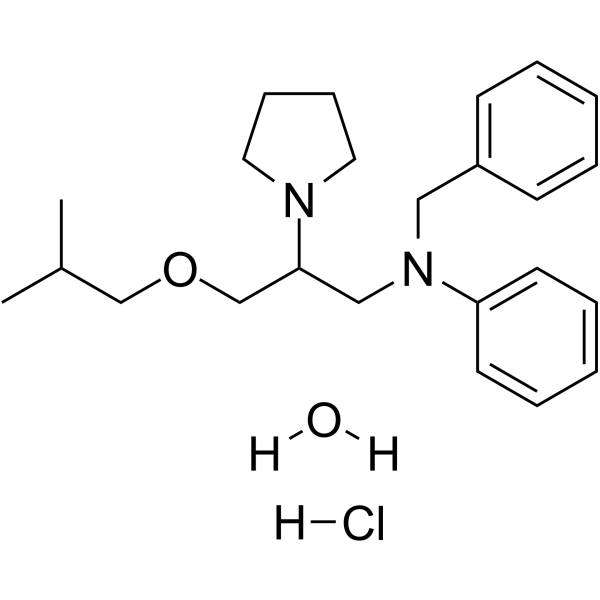
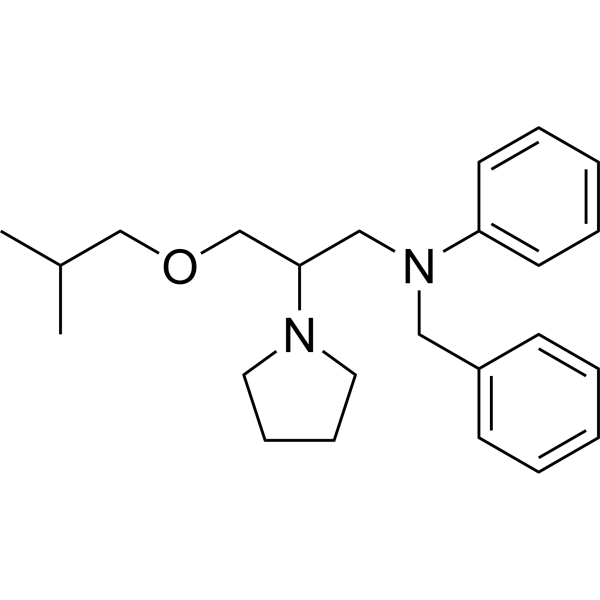
    Aprindine is an Ib-class anti-arrhythmic agent. Aprindine mainly exerts its effect by blocking sodium channels (INa), thereby reducing the excitability and conduction velocity of cardiac muscle cells. Aprindine significantly inhibits delayed potassium currents, which helps to prolong the atrial effective refractory period (AERP) and inhibit the occurrence of atrial fibrillation. Aprindine can also regulate intracellular calcium ion concentration by inhibiting Na +/Ca 2+ exchange current (INCX), thereby further stabilizing cardiac electrical activity. Aprindine can be used for the study of atrial fibrillation (AF) and ventricular arrhythmias .
    Aprindine
  • HY-W004283R

    Reference Standards Endogenous Metabolite JAK STAT PPAR p38 MAPK JNK ERK Caspase Apoptosis Metabolic Disease Cancer
    α-Linolenic acid (Standard) is the analytical standard of α-Linolenic acid. This product is intended for research and analytical applications. α-Linolenic acid, isolated from Perilla frutescens, is an essential fatty acid that cannot be synthesized by humans. α-Linolenic acid can affect the process of thrombotic through the modulation of PI3K/Akt signaling. α-Linolenic acid possess the anti-arrhythmic properties and is related to cardiovascular disease and cancer .
    Pentadecanoic acid (Standard)
  • HY-101723

    BMY 40327; MJ 14030

    Drug Metabolite Cardiovascular Disease
    Modecainide is a major metabolite of Encainide, which is an antiarrhythmic agent.
    Modecainide
  • HY-101245

    SUN-1165; Pilzicainidehydrochloride

    Sodium Channel Cardiovascular Disease
    Pilsicainide hydrochloride (SUN-1165) is an orally active sodium channel blocker and potent class Ic antiarrhythmic agent .
    Pilsicainide hydrochloride
  • HY-N0728A
    α-Linolenic acid sodium
    10+ Cited Publications

    ALA; C18:3 (9Z,12Z,15Z); C18:3 n-3

    Environmental Pollutants Akt PI3K Cardiovascular Disease Cancer
    α-Linolenic acid sodium (ALA; C18:3 (9Z,12Z,15Z); C18:3 n-3) is an essential fatty acid that cannot be synthesized by humans. α-Linolenic acid sodium can affect the process of thrombotic through the modulation of PI3K/Akt signaling. α-Linolenic acid sodium possess the anti-arrhythmic properties and is related to cardiovascular disease and cancer .
    α-Linolenic acid sodium
  • HY-A0236A

    Sodium Channel Potassium Channel Calcium Channel Calmodulin Cardiovascular Disease
    Aprindine hydrochloride is an Ib-class anti-arrhythmic agent. Aprindine hydrochloride mainly exerts its effect by blocking sodium channels (INa), thereby reducing the excitability and conduction velocity of cardiac muscle cells. Aprindine hydrochloride significantly inhibits delayed potassium currents, which helps to prolong the atrial effective refractory period (AERP) and inhibit the occurrence of atrial fibrillation. Aprindine hydrochloride can also regulate intracellular calcium ion concentration by inhibiting Na +/Ca 2+ exchange current (INCX), thereby further stabilizing cardiac electrical activity. Aprindine hydrochloride can be used for the study of atrial fibrillation (AF) and ventricular arrhythmias .
    Aprindine hydrochloride
  • HY-B1067A

    Phenazoline

    Histamine Receptor Neurological Disease Endocrinology
    Antazoline (Phenazoline) is a histamine H1 receptor antagonist with anticholinergic and antiviral properties. Antazoline can prevent histamine from acting on target cells through a reversible competition effect on histamine receptor sites of these cells. Antazoline can exert an antiallegic effect and prevent the occurrence of physiological reactions from the effect of blocking as well as inhibiting H1 receptor. Antazoline can effectively reduce HBV DNA in the extracellular supernatant in a dose-dependent manner, with EC50 of 2.910 μmol/L in HepAD38 cells. Antazoline also has a significant inhibitory effect on HBV DNA in the extracellular supernatant of Huh7 cells (EC50 = 2.349 μmol/L). Antazoline has anti-arrhythmic effect in acute myocardial infarctions. Antazoline can be studied in research for cardiovascular diseases, and HBV .
    Antazoline
  • HY-10913

    GAP-134; ZP 1609

    Gap Junction Protein Cardiovascular Disease
    Danegaptide (GAP-134) is a potent, selective and orally active gap-junction modifier with an antiarrhythmic effect .
    Danegaptide
  • HY-15551R

    Potassium Channel Reference Standards Cardiovascular Disease
    E-4031 (Standard) is the analytical standard of E-4031. This product is intended for research and analytical applications. E-4031 is a selective hERG potassium channel blocker for use in class III anti-arrhythmic studies .
    E-4031 (Standard)
  • HY-105454

    Wy-42362

    Sodium Channel Cardiovascular Disease
    Recainam (Wy-42362) is an orally active anti-arrhythmic agent with Class I electrophysiological properties. Recainam suppresses complex ventricular arrhythmias. Racainam exhibits a good pharmacokinetic character in Sprague Dawley rats .
    Recainam
  • HY-B0432AS4

    Sodium Channel Cardiovascular Disease
    Propafenone-(phenyl-dd5) (hydrochloride) is the deuterium labeled Propafenone hydrochloride[1]. Propafenone hydrochloride is a class of anti-arrhythmic medication, which treats illnesses associated with rapid heart beats such as atrial and ventricular arrhythmias[2].
    Propafenone-(phenyl-d5) hydrochloride
  • HY-B1517AR

    (RS)-Alprenolol hydrochloride (Standard); dl-Alprenolol hydrochloride (Standard)

    Reference Standards 5-HT Receptor Cancer
    Alprenolol (hydrochloride) (Standard) is the analytical standard of Alprenolol (hydrochloride). This product is intended for research and analytical applications. Alprenolol ((RS)-Alprenolol; dl-Alprenolol) hydrochloride is an orally active non-selective β-adrenoceptor antagonist and an antagonist of 5-HT1A and 5-HT1B receptors. Alprenolol hydrochloride is used as an anti-hypertensive, anti-anginal and anti-arrhythmic agent .
    Alprenolol hydrochloride (Standard)
  • HY-106718

    Sodium Channel Cardiovascular Disease
    Barucainide is an Ib-class anti-arrhythmic agent (moderately blocking sodium channel). Barucainide exhibits concentration-dependent inhibitory effects on the maximum upstroke velocity (Vmax) of Purkinje fibers and ventricular muscle in dogs. Barucainide significantly shortens the action potential duration (APD). Barucainide significantly inhibits the pacemaker activity frequency of atrial tissue in rabbits and the enhanced automaticity of Purkinje fibers under normal resting potential in response to isoproterenol. Barucainide cannot inhibit the abnormal automaticity emission frequency of canine Purkinje fibers induced by barium. Barucainide can be used for research on arrhythmias .
    Barucainide
  • HY-100572
    Nicainoprol
    1 Publications Verification

    RU-42924

    Sodium Channel Cardiovascular Disease
    Nicainoprol is a fast-sodium-channel blocking agent, which is a potent antiarrhythmic agent.
    Nicainoprol
  • HY-101668

    RS-100302

    5-HT Receptor Cardiovascular Disease
    Sulamserod is a 5-HT4 receptor antagonist, with antiarrhythmic activities.
    Sulamserod
  • HY-133715

    SUN 1165 free base; Pilzicainide

    Sodium Channel Cardiovascular Disease
    Pilsicainide (SUN 1165 free acid) is a potent sodium channel blocker and potent class Ic antiarrhythmic agent .
    Pilsicainide
  • HY-B1517B

    5-HT Receptor Cardiovascular Disease Cancer
    Alprenolol benzoate is an orally active non-selective β-adrenoceptor antagonist and an antagonist of 5-HT1A and 5-HT1B receptors. Alprenolol benzoate is used as an anti-hypertensive, anti-anginal and anti-arrhythmic agent .
    Alprenolol benzoate
  • HY-U00149

    Others Cardiovascular Disease
    Drobuline hydrochloride is an anti-arrhythmic agent with cardiac depressant.
    Drobuline hydrochloride
  • HY-B0432AS2

    Isotope-Labeled Compounds Sodium Channel Cardiovascular Disease
    Propafenone-d5 (hydrochloride) is the deuterium labeled Propafenone hydrochloride. Propafenone (SA-79) hydrochloride is a class of anti-arrhythmic medication, which treats illnesses associated with rapid heart beats such as atrial and ventricular arrhythmias[1].
    Propafenone-d5 hydrochloride
  • HY-A0270

    mAChR Sodium Channel Neurological Disease
    Diphenidol is a non-selective muscarinic M1-M4 receptor antagonist, has anti-arrhythmic activity. Diphenidol is also a potent non-specific blocker of voltage-gated ion channels (Na +, K +, and Ca 2+) in neuronal cells. Diphenidol can be used in the study of antivertigo and antinausea .
    Diphenidol
  • HY-120730

    Others Cardiovascular Disease
    DA 1686 is a potent and orally active anti-arrhythmic agent .
    DA 1686
  • HY-16213

    CRE 319

    Calcium Channel Cardiovascular Disease
    FURNIDIPINE, an orally active cardio-protective agent, possesses anti-arrhythmic and antihypertensive effects .
    FURNIDIPINE
  • HY-15551A

    Potassium Channel Cardiovascular Disease
    E-4031 free base is a selective hERG potassium channel blocker for use in class III anti-arrhythmic studies .
    E-4031 free base
  • HY-122423

    N-Deethylamiodarone; LB 33020

    Apoptosis Drug Metabolite Cardiovascular Disease Cancer
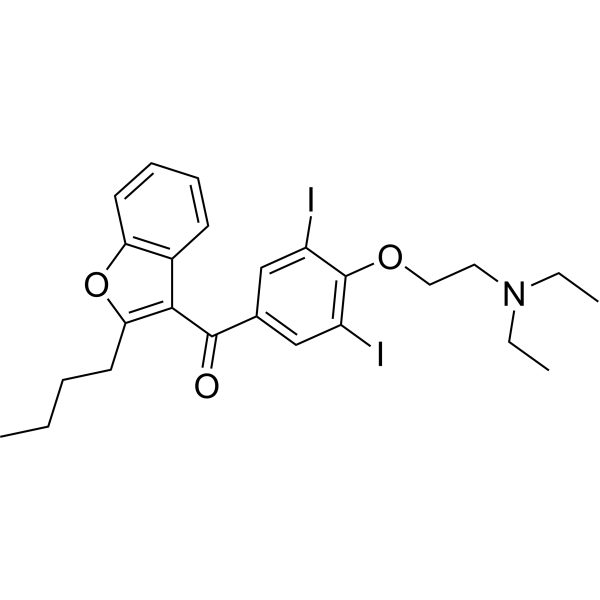
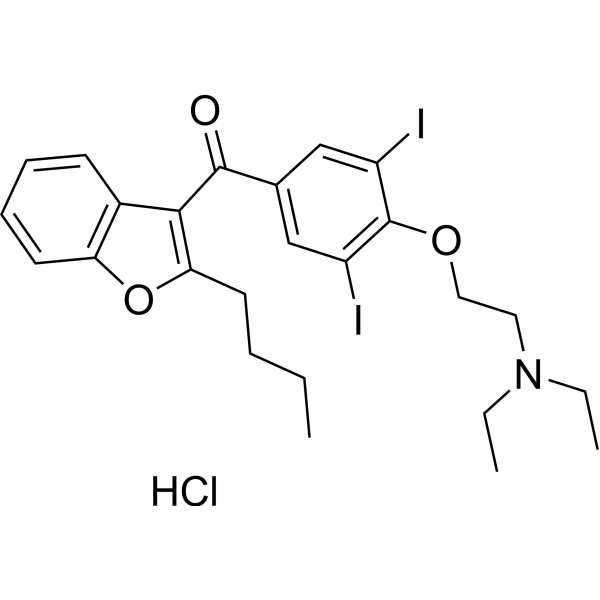
    Desethylamiodarone (N-Deethylamiodarone) is the major metabolite of antiarrhythmic compound Amiodarone (HY-14187). Desethylamiodarone has antiarrhythmic activity. Desethylamiodaron also induces cancer cell apoptosis .
    Desethylamiodarone
  • HY-U00274

    TR 2985

    Drug Derivative Cardiovascular Disease
    Ropitoin (TR 2985) is a novel antiarrhythmic agent.
    Ropitoin
  • HY-U00232

    SC40230

    Sodium Channel Cardiovascular Disease
    Bidisomide (SC40230) is a class I antiarrhythmic agent.
    Bidisomide
  • HY-131987

    Sodium Channel Cardiovascular Disease
    Ethacizine is an antiarrhythmic agent with inhibitory activity on sodium channels .
    Ethacizine
  • HY-W990281

    Restacorin

    Sodium Channel Cardiovascular Disease
    B-GYKI-38233 hydrochloride (Restacorin) is a sodium channel blocker used in antiarrhythmic research .
    B-GYKI-38233 hydrochloride
  • HY-B0232S

    UK 68789 d4

    Potassium Channel Cardiovascular Disease
    Dofetilide-d4 is a deuterium labeled Dofetilide. Dofetilide is a class III antiarrhythmic agent.
    Dofetilide-d4
  • HY-100635S

    Isotope-Labeled Compounds Adrenergic Receptor Cardiovascular Disease Endocrinology
    Diacetolol-d7 is a deuterium labeled Diacetolol. Diacetolol is the major metabolite of Acebutolol. Diacetolol is a β-adrenoceptor blocking and anti-arrhythmic agent .
    Diacetolol-d7

Inquiry Online

Your information is safe with us. * Required Fields.

Salutation


Country or Region *

Applicant Name *


Organization Name *

Department *


Email Address *


Product Name *

Cat. No.


Requested quantity *

Phone Number *


Remarks

Inquiry Online

Inquiry Information

Product Name:
Cat. No.:
Quantity:
MCE Japan Authorized Agent:

