1. Search Result
Search Result
Results for "

Antiemetic

" in MedChemExpress (MCE) Product Catalog:

109

Inhibitors & Agonists

1

Screening Libraries

7

Natural
Products

21

Isotope-Labeled Compounds

Cat. No. Product Name Target Research Areas Chemical Structure
  • HY-B0002B
    Ondansetron
    Maximum Cited Publications
    10 Publications Verification

    GR 38032; SN 307

    5-HT Receptor Neurological Disease
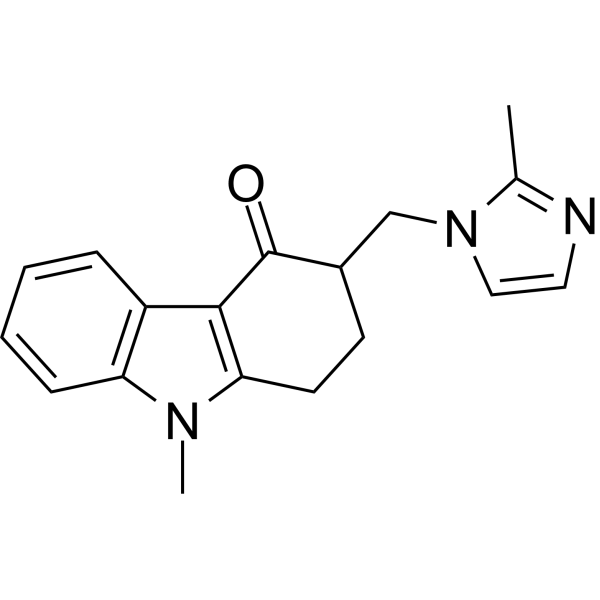
    Ondansetron (GR 38032; SN 307) is a highly selective 5-HT3 receptor antagonist with an IC50 value of 103 pM. Ondansetron exerts its antiemetic effect by antagonizing 5-HT receptors located in localized neurons in the peripheral and central nervous systems. Ondansetron can inhibit nausea and vomiting induced by chemotherapy and radiotherapy .
    Ondansetron
  • HY-B0411
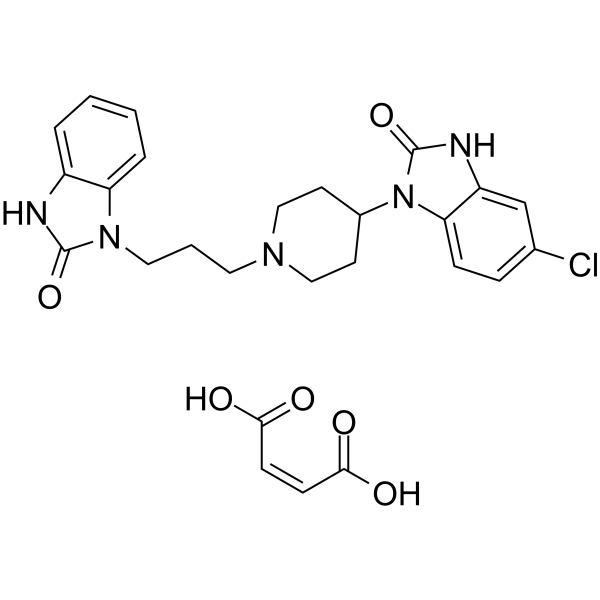
    Domperidone
    5+ Cited Publications

    R33812

    Dopamine Receptor Neurological Disease
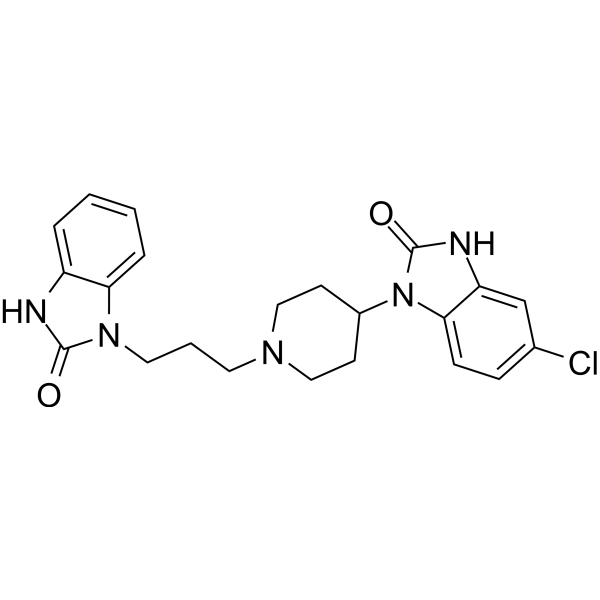
    Domperidone (R33812) is an orally active and selective dopamine-2 receptor antagonist. Domperidone acts as an antiemetic and a prokinetic agent through its effects on the chemoreceptor trigger zone and motor function of the stomach and small intestine .
    Domperidone
  • HY-16346
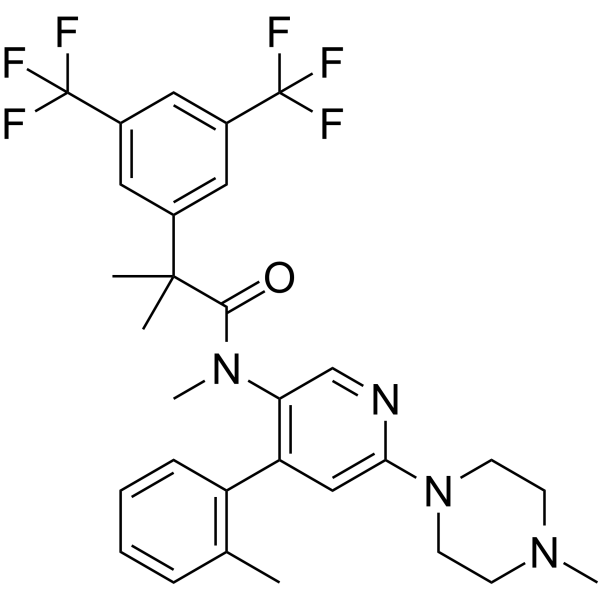
    Netupitant
    4 Publications Verification

    CID 6451149

    Neurokinin Receptor Neurological Disease Endocrinology Cancer
    Netupitant (CID-6451149) is a highly potent, selective and orally active neurokinin-1 (NK1) receptor antagonist with a Ki of 0.95 nM for hNK1 in CHO cells. Netupitant has antiemetic affect .
    Netupitant
  • HY-B0781
    Promethazine hydrochloride
    1 Publications Verification

    Histamine Receptor mAChR Adrenergic Receptor Neurological Disease Endocrinology
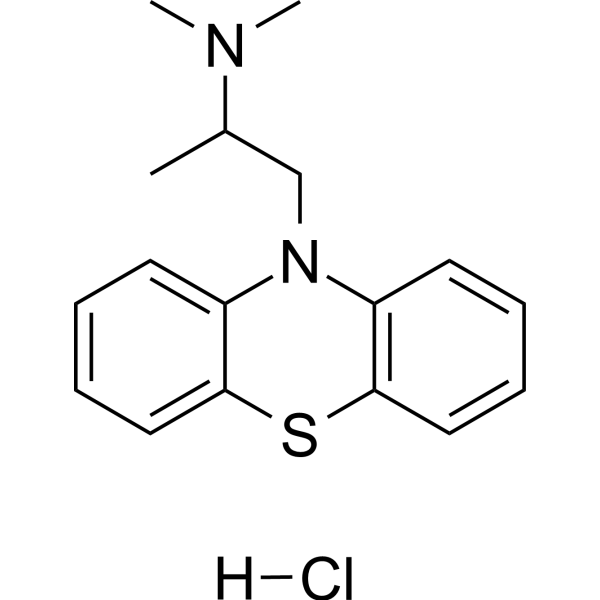
    Promethazine hydrochloride is an orally active phenothiazine derivative with antihistaminic (H1), sedative, antiemetic, anticholinergic, and antimotion sickness properties. Promethazine hydrochloride is a potent H1 receptor antagonist and a mAChR antagonist. It also has a certain affinity for 5-HT2A and 5-HT2C receptors .
    Promethazine hydrochloride
  • HY-14751

    SCH619734

    Neurokinin Receptor Neurological Disease
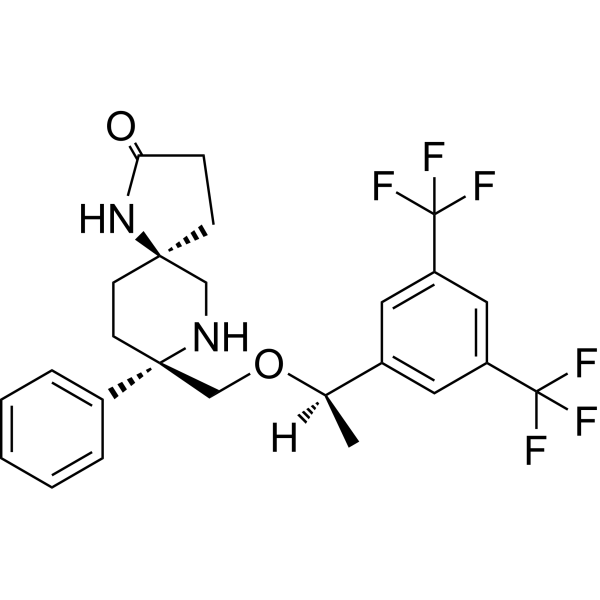
    Rolapitant (SCH619734) is a potent, selective, long-acting and orally active neurokinin 1 (NK1) receptor antagonist with a Ki of 0.66 nM. Rolapitant does not interact with CYP3A4. Rolapitant shows potent anti-emetic activity in a ferret emesis model .
    Rolapitant
  • HY-B0002
    Ondansetron hydrochloride
    Maximum Cited Publications
    10 Publications Verification

    GR 38032 hydrochloride; SN 307 hydrochloride

    5-HT Receptor Neurological Disease
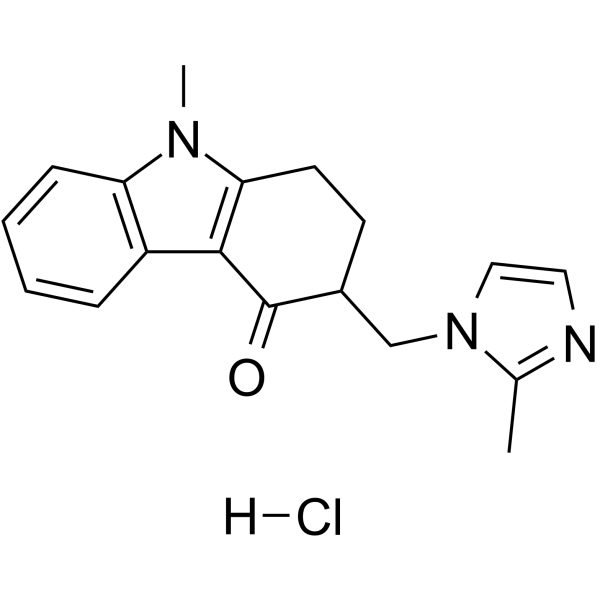
    Ondansetron (GR 38032; SN 307) hydrochloride is a highly selective 5-HT3 receptor antagonist with an IC50 value of 103 pM. Ondansetron hydrochloride exerts its antiemetic effect by antagonizing 5-HT receptors located in localized neurons in the peripheral and central nervous systems. Ondansetron hydrochloride can inhibit nausea and vomiting induced by chemotherapy and radiotherapy .
    Ondansetron hydrochloride
  • HY-B0750

    MDL-73147

    5-HT Receptor Cancer
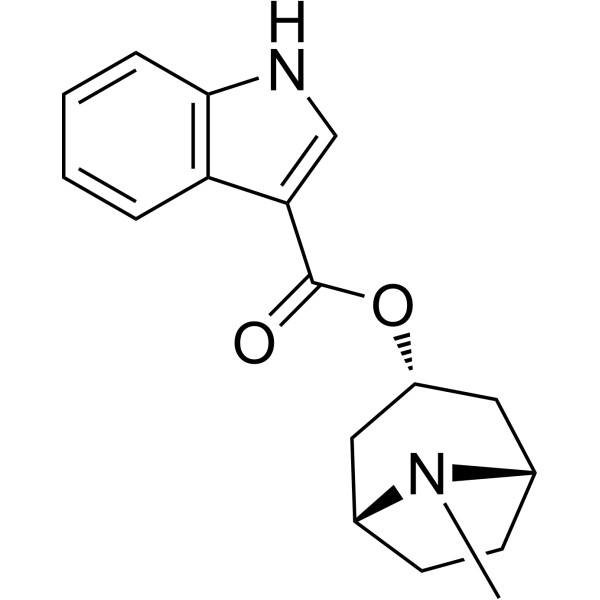
    Dolasetron (MDL-73147) is a serotonin 5-HT3 receptor antagonist. Dolasetron acts as an antiemetics agent and can be used for the research of chemotherapy-induced nausea and vomiting in cancer .
    Dolasetron
  • HY-B0002A
    Ondansetron hydrochloride dihydrate
    Maximum Cited Publications
    10 Publications Verification

    GR 38032 hydrochloride dihydrate; SN 307 hydrochloride dihydrate

    5-HT Receptor Neurological Disease
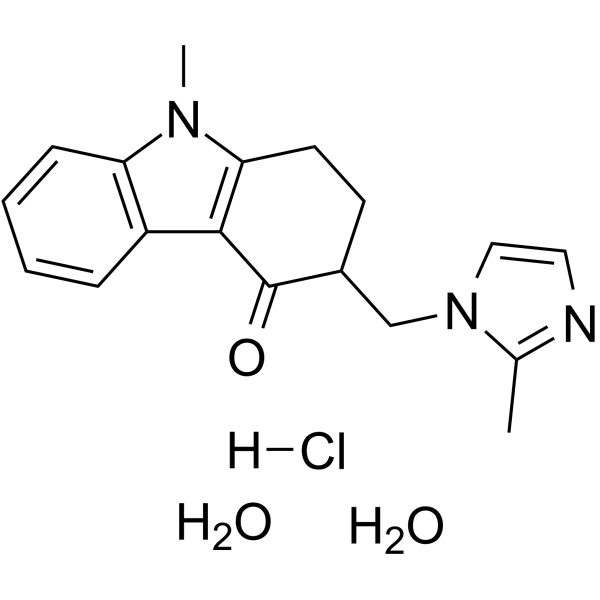
    Ondansetron (GR 38032; SN 307) hydrochloride dehydrate is a highly selective 5-HT3 receptor antagonist with an IC50 value of 103 pM. Ondansetron hydrochloride dehydrate exerts its antiemetic effect by antagonizing 5-HT receptors located in localized neurons in the peripheral and central nervous systems. Ondansetron hydrochloride dehydrate can inhibit nausea and vomiting induced by chemotherapy and radiotherapy .
    Ondansetron hydrochloride dihydrate
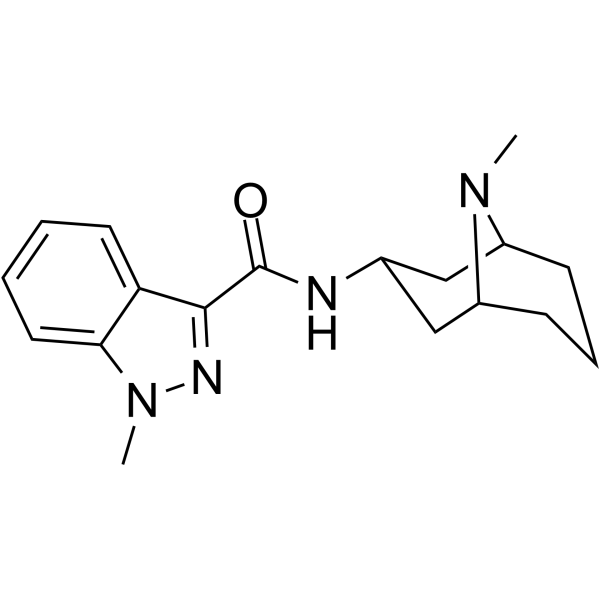
  • HY-B0071

    BRL 43694

    5-HT Receptor Neurological Disease
    Granisetron (BRL 43694) is a serotonin 5-HT3 receptor antagonist used as an antiemetic to treat nausea and vomiting following chemotherapy.
    Granisetron
  • HY-12752A

    Trimeprazine hemitartrate

    Histamine Receptor Influenza Virus Neurological Disease Inflammation/Immunology Cancer
    Alimemazine hemitartrate (Trimeprazine hemitartrate) is an antagonist of the histamine (HA) receptor that can be taken orally and also acts as a partial agonist at other GPCR receptors. Alimemazine hemitartrate has effects that include anti-serotonin, antispasmodic, antihistamine, sedation, hypnotic, antiviral, and anti-nausea properties. Alimemazine hemitartrate promotes the growth of pancreatic β-cells in mice and improves diabetes in mice .
    Alimemazine hemitartrate
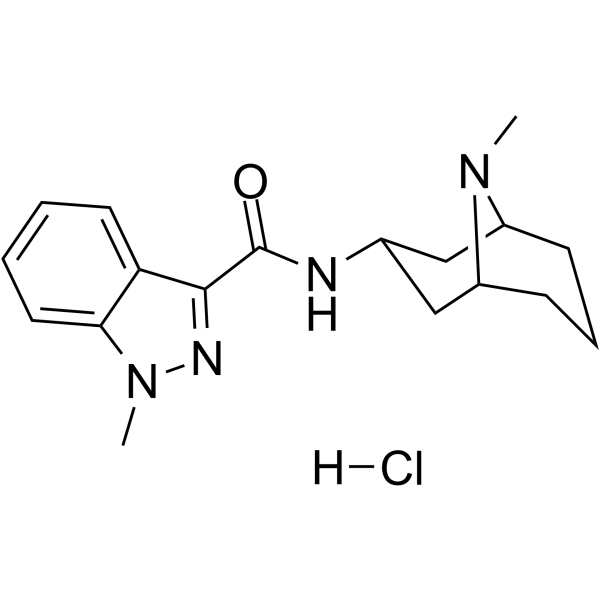
  • HY-B0071A

    BRL 43694A

    5-HT Receptor Neurological Disease Cancer
    Granisetron (Hydrochloride) (BRL 43694A) is a serotonin 5-HT3 receptor antagonist used as an antiemetic to treat nausea and vomiting following chemotherapy.
    Granisetron Hydrochloride
  • HY-A0082

    Difenidol hydrochloride

    mAChR Sodium Channel Neurological Disease
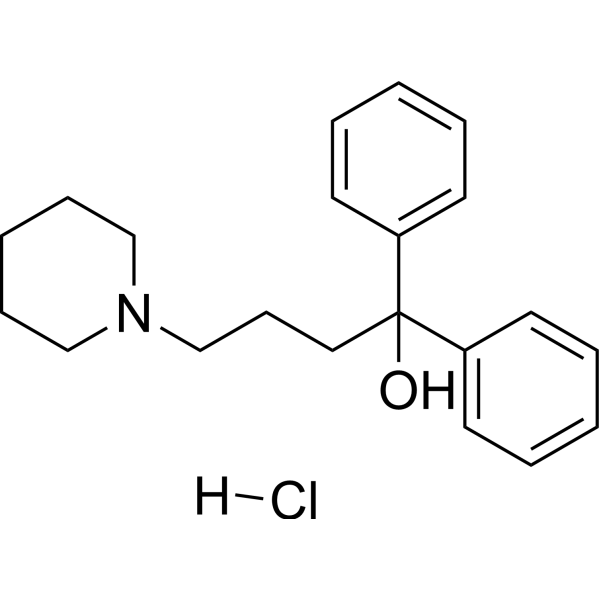
    Diphenidol hydrochloride (Difenidol hydrochloride) is a non-selective muscarinic M1-M4 receptor antagonist, has anti-arrhythmic activity. Diphenidol hydrochloride is also a potent non-specific blocker of voltage-gated ion channels (Na +, K +, and Ca 2+) in neuronal cells. Diphenidol hydrochloride can be used in the study of antivertigo and antinausea .
    Diphenidol hydrochloride
  • HY-B1794
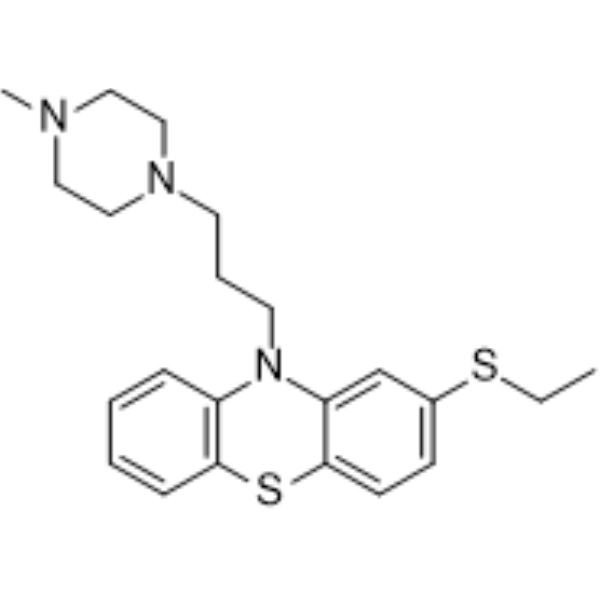
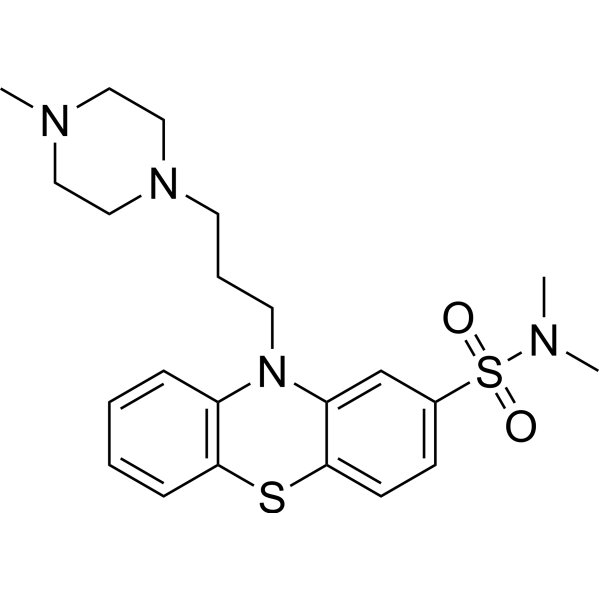
    Thiethylperazine
    3 Publications Verification

    Dopamine Receptor Histamine Receptor Bacterial Amyloid-β Infection Neurological Disease
    Thiethylperazine, a phenothiazine derivate, is an orally active and potent dopamine D2-receptor and histamine H1-receptor antagonist. Thiethylperazine is also a selective ABCC1activator that reduces amyloid-β (Aβ) load in mice. Thiethylperazine has anti-emetic, antipsychotic and antimicrobial effects .
    Thiethylperazine
  • HY-12751A

    Ro 2-9578

    Dopamine Receptor Influenza Virus Others
    Trimethobenzamide hydrochloride is a blocker of the D2 receptor. Trimethobenzamide is an antiemetic used to prevent nausea and vomiting.
    Trimethobenzamide hydrochloride
  • HY-16436

    SCH619734 hydrochloride hydrate

    Neurokinin Receptor Neurological Disease Cancer
    Rolapitant hydrochloride hydrate (SCH619734 hydrochloride hydrate) is a potent, selective, long-acting and orally active neurokinin 1 (NK1) receptor antagonist with a Ki of 0.66 nM. Rolapitant hydrochloride hydrate does not interact with CYP3A4. Rolapitant hydrochloride hydrate shows potent anti-emetic activity in a ferret emesis model .
    Rolapitant hydrochloride hydrate
  • HY-A0125A

    Dopamine Receptor Neurological Disease Cancer
    Alizapride is a potent antiemetic, acting as a dopamine receptor antagonist. Alizapride also used in human digestive disorders .
    Alizapride hydrochloride
  • HY-N0558

    Others Inflammation/Immunology
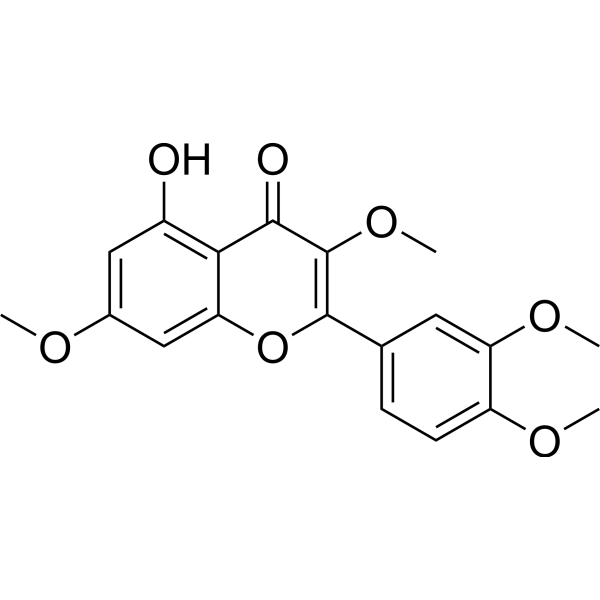
    Alnustone, a non-phenolic diarylheptanoid found in herbs and spices, is a constituent of Alpiniae Katsumada. Alnustone displays anti-emetic and anti-inflammatory activities .
    Alnustone
  • HY-B1613A
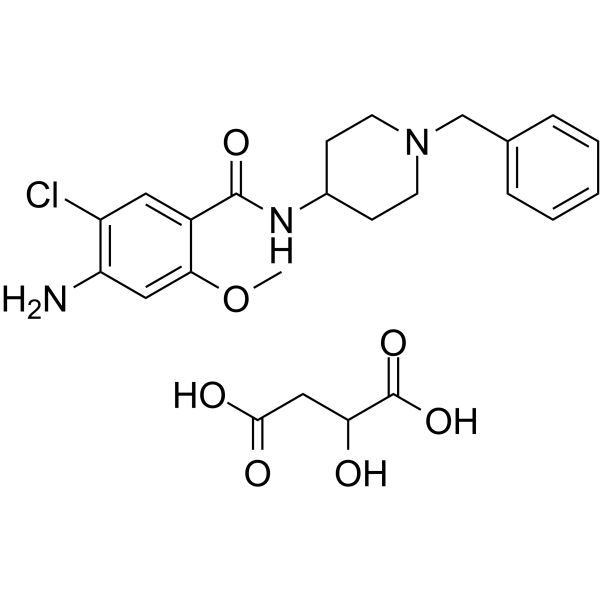
    Clebopride malate
    1 Publications Verification

    Dopamine Receptor Adrenergic Receptor Metabolic Disease
    Clebopride malate is an orally active dopamine Receptor antagonist. Clebopride malate acts on dopamine D2 receptors and has antiemetic and prokinetic effects. Clebopride malate can be used in the study of functional gastrointestinal disorders .
    Clebopride malate
  • HY-103137
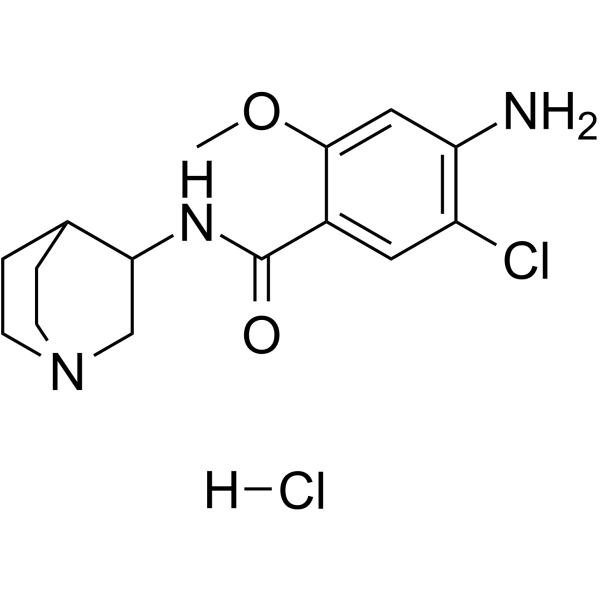
    Zacopride hydrochloride
    1 Publications Verification

    5-HT Receptor Cardiovascular Disease Neurological Disease
    Zacopride hydrochloride is an orally active 5-HT3 receptor (Ki of 0.38 nM) antagonist and 5-HT4 receptor (Ki of 373 nM) agonist. Zacopride hydrochloride exhibits multiple activities, such as regulating gastrointestinal motility, affecting cardiac function, and exerting anxiolytic and antiemetic effects. Zacopride hydrochloride is currently mainly used in the research of gastrointestinal diseases, cardiovascular diseases, and psychiatric diseases such as anxiety .
    Zacopride hydrochloride
  • HY-14405A

    GW679769B

    Neurokinin Receptor Cytochrome P450 Neurological Disease Cancer
    Casopitant mesylate (GW679769B) is a potent, selective, brain permeable and orally active neurokinin 1 (NK1) receptor antagonist. Casopitant mesylate is a second in the class of antiemetics that acts to antagonise the emetogenic effect of Substance P (HY-P0201). Casopitant mesylate is also a substrate and a weak-to-moderate inhibitor of CYP3A4. Casopitant mesylate can be used for chemotherapy-induced nausea and vomiting (CINV) and postoperative nausea and vomiting (PONV) .
    Casopitant mesylate
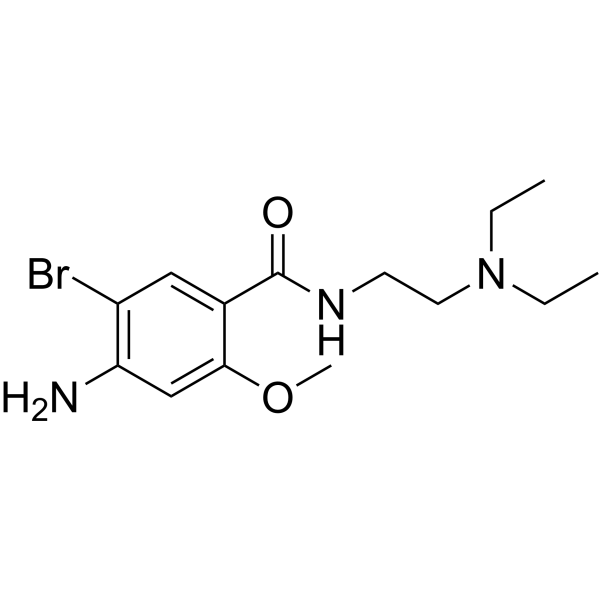
  • HY-B1164
    Bromopride
    2 Publications Verification

    Dopamine Receptor Neurological Disease
    Bromopride is a selective, irreversible, competitive, and orally effective dopamine D2 receptor antagonist. Bromopride can pass through the blood-brain barrier, inhibit the vomiting center, and enhance gastrointestinal motility, exerting antiemetic and gastrointestinal motility effects. Bromopride antagonizes dopamine-mediated vomiting reflexes and promotes gastrointestinal smooth muscle contraction, and has no adverse effects on abdominal wall healing in rats with postoperative abdominal infection. Bromopride can be used for the study of digestive system diseases (such as gastric hypomotility, nausea and vomiting) .
    Bromopride
  • HY-A0151
    Thioproperazine
    2 Publications Verification

    RP 7843; SKF 5883; Thioperazine

    Dopamine Receptor Neurological Disease
    Thioproperazine (RP 7843) is an orally active antipsychotic agent with calming, antiemetic activity. Thioproperazine is effective in promoting the release of dopamine in rat striatum. Thioproperazine can be used in studies of schizophrenia and bipolar disorder .
    Thioproperazine
  • HY-B0411A
    Domperidone monomaleate
    5+ Cited Publications

    R33812 monomaleate

    Dopamine Receptor Neurological Disease
    Domperidone (R33812) monomaleate is an orally active and selective dopamine-2 receptor antagonist. Domperidone monomaleate acts as an antiemetic and a prokinetic agent through its effects on the chemoreceptor trigger zone and motor function of the stomach and small intestine .
    Domperidone monomaleate
  • HY-107349

    Spasmopriv

    Calcium Channel Neurological Disease
    Fenoverine (Spasmopriv) is an orally active and powerful anti-spasmodic drug. Fenoverine reduces calcium ion influx by suppressing voltage dependent calcium channels. Fenoverine has antiemetic, analgesic, and antidiarrheal effects. Fenoverine induces rhabdomyolysis. Fenoverine can be used to study smooth muscle overexcitation related conditions such as gastrointestinal spasms .
    Fenoverine
  • HY-121907

    Drug Intermediate Others
    N-Palmitoyl L-alanine is an organogelator. The granisetron organogel prepared based on N-Palmitoyl L-alanine has good biocompatibility and can effectively exert an antiemetic effect .
    N-Palmitoyl L-alanine
  • HY-101709

    BRL-46470

    5-HT Receptor Neurological Disease
    Ricasetron (BRL-46470) is a selective and orally active 5-HT3 receptor antagonist. Ricasetron displays little or no affinity for a variety of other neurotransmitter receptors. Ricasetron has anxiolytic and antiemetic effects .
    Ricasetron
  • HY-B0002BS

    GR 38032-d5; SN 307-d5

    5-HT Receptor Isotope-Labeled Compounds Neurological Disease
    Ondansetron-d5 is the deuterium labeled Ondansetron (HY-B0002B). Ondansetron (GR 38032; SN 307) is a highly selective 5-HT3 receptor antagonist with an IC50 value of 103 pM. Ondansetron exerts its antiemetic effect by antagonizing 5-HT receptors located in localized neurons in the peripheral and central nervous systems. Ondansetron can inhibit nausea and vomiting induced by chemotherapy and radiotherapy .
    Ondansetron-d5
  • HY-109543A

    5-HT Receptor Neurological Disease
    Indisetron dihydrochloride is a 5-HT3 receptor antagonist with anti-emetic activity.
    Indisetron dihydrochloride
  • HY-12752

    Trimeprazine

    Histamine Receptor Neurological Disease Inflammation/Immunology Cancer
    Alimemazine is a phenothiazine derivative that is generally used as an antipruritic agent and also a hemagglutinin (HA)-receptor antagonist.Alimemazine (Trimeprazine) is also acts as a partial agonist against the histamine H1 receptor (H1R) and other GPCRs. Alimemazine displays antiserotonin, antispasmodic, and antiemetic properties .
    Alimemazine
  • HY-178269

    Drug Metabolite Neurokinin Receptor Neurological Disease
    SCH-720881 is the active metabolite of Rolapitant (HY-14751). Rolapitant (SCH619734) is a potent, selective, long-acting and orally active neurokinin 1 (NK1) receptor antagonist with a Ki of 0.66 nM. Rolapitant does not interact with CYP3A4. Rolapitant shows potent anti-emetic activity in a ferret emesis model .
    SCH-720881
  • HY-A0125

    Dopamine Receptor Neurological Disease
    Alizapride is a potent antiemetic, acting as a dopamine receptor antagonist. Alizapride also used in human digestive disorders .
    Alizapride
  • HY-U00006

    Biochemical Assay Reagents Neurological Disease
    Duoperone is a neuroleptic agent and also a antiemetic agent in animal models.
    Duoperone
  • HY-A0270

    mAChR Sodium Channel Neurological Disease
    Diphenidol is a non-selective muscarinic M1-M4 receptor antagonist, has anti-arrhythmic activity. Diphenidol is also a potent non-specific blocker of voltage-gated ion channels (Na +, K +, and Ca 2+) in neuronal cells. Diphenidol can be used in the study of antivertigo and antinausea .
    Diphenidol
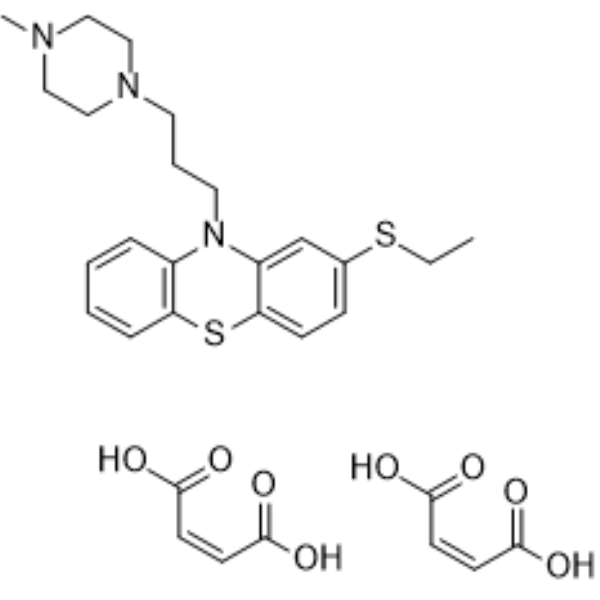
  • HY-B1794A
    Thiethylperazine dimaleate
    3 Publications Verification

    Dopamine Receptor Histamine Receptor Bacterial Amyloid-β Infection Neurological Disease
    Thiethylperazine dimaleate, a phenothiazine derivate, is an orally active and potent dopamine D2-receptor and histamine H1-receptor antagonist. Thiethylperazine dimaleate is also a selective ABCC1activator that reduces amyloid-β (Aβ) load in mice. Thiethylperazine dimaleate has anti-emetic, antipsychotic and antimicrobial effects .
    Thiethylperazine dimaleate
  • HY-105196

    5-HT Receptor Neurological Disease
    DAT-582 is a serotonin 3 (5-HT3) receptor antagonist that has an antiemetic effect .
    DAT-582
  • HY-137088

    Others Neurological Disease
    Imiclopazine is a phenothiazine derivative with with psychomotor stabilizing properties, antiaggressive and antiemetic effects .
    Imiclopazine
  • HY-133086

    5-HT Receptor nAChR Neurological Disease Cancer
    Hydrodolasetron is a metabolite of Dolasetron (HY-B0750). Hydrodolasetron is more potent than Dolasetron in inhibiting nAChR. Hydrodolasetron is a 5-HT(3A)R blocker with an IC50 of 0.29 nM. Hydrodolasetron has antiemetic activity .
    Hydrodolasetron
  • HY-106807

    SL 81.0385

    5-HT Receptor Neurological Disease
    Litoxetine (SL 81.0385) is a selective 5-HT uptake inhibitor. Litoxetine is a 5-HT3 receptor antagonist with a Ki of 85 nM for cerebral 5-HT3 receptors. Litoxetine is an antidepressant and has antiemetic properties .
    Litoxetine
  • HY-118499

    RIV-2093

    Drug Derivative Endocrinology
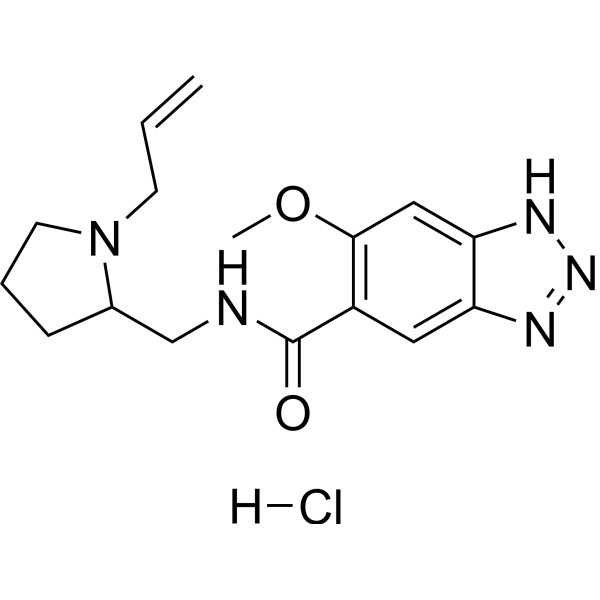
    Alpiropride (RIV-2093) is a metoclopramide (HY-17382) analog that is effective in reducing the gastrointestinal side effects of cancer chemotherapy drugs. In animal studies, alpiropride showed a stronger antiemetic effect than metoclopramide .
    Alpiropride
  • HY-124515

    Histamine Receptor mAChR Neurological Disease
    Dihexyverine hydrochloride is a compound belonging to the amino alcohol ester class. Dihexyverine hydrochloride possesses anticholinergic, smooth muscle relaxant, antihistaminic, and antiemetic effects. Dihexyverine hydrochloride can also shorten the duration of labor. Dihexyverine hydrochloride can be used in research related to gastrointestinal spasms, obstetrics, and other fields .
    Dihexyverine hydrochloride
  • HY-16346R

    CID 6451149 (Standard)

    Reference Standards Neurokinin Receptor Neurological Disease Endocrinology
    Netupitant (Standard) is the analytical standard of Netupitant. This product is intended for research and analytical applications. Netupitant (CID-6451149) is a highly potent, selective and orally active neurokinin-1 (NK1) receptor antagonist with a Ki of 0.95 nM for hNK1 in CHO cells. Netupitant has antiemetic affect .
    Netupitant (Standard)
  • HY-19692

    DA 6215; U98079A

    5-HT Receptor Neurological Disease
    Itasetron (DA 6215) is a selective 5-HT3 receptor antagonist. Itasetron improves spatial learning and memory abilities in the aged rat. Itasetron has potent antiemetic properties. Itasetron is used for age-related memory degeneration in rodents .
    Itasetron
  • HY-B0002BR

    GR 38032 (Standard); SN 307 (Standard)

    Reference Standards 5-HT Receptor Neurological Disease Cancer
    Ondansetron (Standard) is the analytical standard of Ondansetron (HY-B0002B). This product is intended for research and analytical applications. Ondansetron (GR 38032; SN 307) is a highly selective 5-HT3 receptor antagonist with an IC50 value of 103 pM. Ondansetron exerts its antiemetic effect by antagonizing 5-HT receptors located in localized neurons in the peripheral and central nervous systems. Ondansetron can inhibit nausea and vomiting induced by chemotherapy and radiotherapy .
    Ondansetron (Standard)
  • HY-118317

    5-HT Receptor Cardiovascular Disease Neurological Disease
    Zacopride is an orally active 5-HT3 receptor (Ki of 0.38 nM) antagonist and 5-HT4 receptor (Ki of 373 nM) agonist. Zacopride exhibits multiple activities, such as regulating gastrointestinal motility, affecting cardiac function, and exerting anxiolytic and antiemetic effects. Zacopride is currently mainly used in the research of gastrointestinal diseases, cardiovascular diseases, and psychiatric diseases such as anxiety .
    Zacopride
  • HY-B0411AR

    R33812 monomaleate (Standard)

    Reference Standards Dopamine Receptor Neurological Disease
    Domperidone (monomaleate) (Standard) is the analytical standard of Domperidone (monomaleate). This product is intended for research and analytical applications. Domperidone (R33812) monomaleate is an orally active and selective dopamine-2 receptor antagonist. Domperidone monomaleate acts as an antiemetic and a prokinetic agent through its effects on the chemoreceptor trigger zone and motor function of the stomach and small intestine .
    Domperidone monomaleate (Standard)
  • HY-B0411R

    R33812 (Standard)

    Reference Standards Dopamine Receptor Neurological Disease
    Domperidone (Standard) is the analytical standard of Domperidone. This product is intended for research and analytical applications. Domperidone (R33812) is an orally active and selective dopamine-2 receptor antagonist. Domperidone acts as an antiemetic and a prokinetic agent through its effects on the chemoreceptor trigger zone and motor function of the stomach and small intestine .
    Domperidone (Standard)
  • HY-126161

    BRL-4664

    Cannabinoid Receptor Neurological Disease Cancer
    Nonabine (BRL-4664) is an orally active chromenol derivative and Cannabinoid-like antiemetic. Nonabine controls nausea and vomiting induced by cancer chemotherapy regimens. Nonabine can be used in the research of lymphoma and chemotherapy-induced nausea and vomiting .
    Nonabine
  • HY-B0781R

    Reference Standards Histamine Receptor mAChR Adrenergic Receptor Neurological Disease Endocrinology
    Promethazine (hydrochloride) (Standard) is the analytical standard of Promethazine (hydrochloride). This product is intended for research and analytical applications. Promethazine hydrochloride is an orally active phenothiazine derivative with antihistaminic (H1), sedative, antiemetic, anticholinergic, and antimotion sickness properties. Promethazine hydrochloride is a potent H1 receptor antagonist and a mAChR antagonist. It also has a certain affinity for 5-HT2A and 5-HT2C receptors .
    Promethazine hydrochloride (Standard)
  • HY-N9093

    Others Inflammation/Immunology Cancer
    (3R,5R)-3,5-Diacetoxy-1-(3,4-dihydroxyphenyl)-7-(4-hydroxyphenyl)heptane, a diarylheptanoid from the rhizomes of Curcuma kwangsiensis, possesses a variety of biological and pharmacological activities including antioxidant, antihepa totoxic, anti-inflammatory, antiproliferative, antiemetic, and antitumor activities .
    (3R,5R)-3,5-Diacetoxy-1-(3,4-dihydroxyphenyl)-7-(4-hydroxyphenyl)heptane
  • HY-U00010

    AHR-5531

    Others Metabolic Disease
    Dazopride is an antiemetic agent.
    Dazopride

Inquiry Online

Your information is safe with us. * Required Fields.

Salutation


Country or Region *

Applicant Name *


Organization Name *

Department *


Email Address *


Product Name *

Cat. No.


Requested quantity *

Phone Number *


Remarks

Inquiry Online

Inquiry Information

Product Name:
Cat. No.:
Quantity:
MCE Japan Authorized Agent:

