1. Search Result
Search Result
Results for "

Blood-brain-barrier

" in MedChemExpress (MCE) Product Catalog:

1594

Inhibitors & Agonists

5

Bibliotecas de Screening

31

Fluorescent Dyes

21

Biochemical Assay Reagents

84

Peptides

12

Inhibitory Antibodies

175

Natural
Products

138

Isotope-Labeled Compounds

8

Click Chemistry

12

Oligonucleotides

3

GMP Molecules

Cat. No. Nombre del producto Target Áreas de investigación Chemical Structure
  • HY-128868A
    FITC-Dextran (MW 4000)
    Maximum Cited Publications
    90 Publications Verification

    Fluorescent Dye Others
    FITC-Dextran (MW 4000) is a fluorescent probe for fluorescein isothiocyanate (FITC) dextran (Ex=495 nm; Em=525 nm). FITC-Dextran (MW 4000) can be used as a marker to reveal heat shock-induced cell damage and to study the early and late stages of apoptosis. FITC-Dextran (MW 4000) can also be used for cell permeability studies, such as blood-brain barrier permeability and determination of the extent of blood-brain barrier disruption .
    FITC-Dextran (MW 4000)
  • HY-B0318
    Metronidazole
    60+ Cited Publications

    Environmental Pollutants Antibiotic Bacterial Apoptosis Parasite Infection Inflammation/Immunology Cancer
    Metronidazole is an orally active nitroimidazole antibiotic. Metronidazole can cross blood brain barrier. Metronidazole can be used for the research of anaerobic infections .
    Metronidazole
  • HY-128868
    FITC-Dextran (MW 10000)
    Maximum Cited Publications
    90 Publications Verification

    Fluorescent Dye Others
    FITC-Dextran (MW 10000) is a fluorescent probe for fluorescein isothiocyanate (FITC) dextran (Ex=495 nm; Em=525 nm). FITC-Dextran (MW 10000) can be used as a marker to reveal heat shock-induced cell damage and to study the early and late stages of apoptosis. FITC-Dextran (MW 10000) can also be used for cell permeability studies, such as blood-brain barrier permeability and determination of the extent of blood-brain barrier disruption .
    FITC-Dextran (MW 10000)
  • HY-128868D
    FITC-Dextran (MW 40000)
    10+ Cited Publications

    Fluorescent Dye Others
    FITC-Dextran (MW 40000) is a fluorescent probe for fluorescein isothiocyanate (FITC) dextran (Ex=495 nm; Em=525 nm). FITC-Dextran (MW 40000) can be used as a marker to reveal heat shock-induced cell damage and to study the early and late stages of apoptosis. FITC-Dextran (MW 40000) can also be used for cell permeability studies, such as blood-brain barrier permeability and determination of the extent of blood-brain barrier disruption .
    FITC-Dextran (MW 40000)
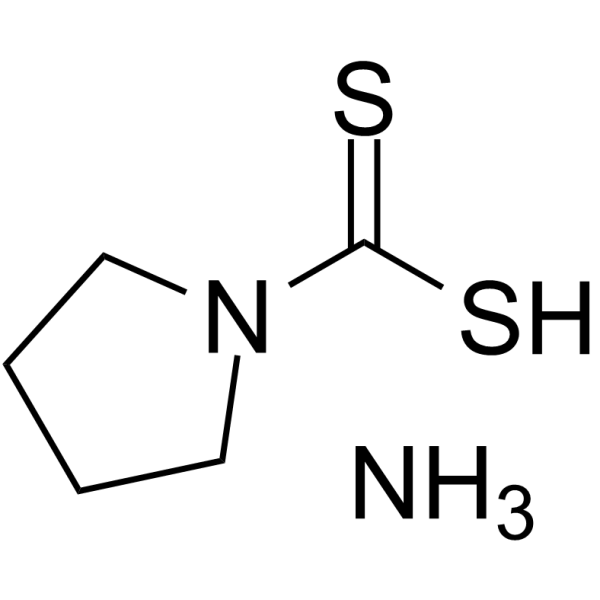
  • HY-18738

    Ammonium pyrrolidinedithiocarbamate; PDTC ammonium; APDC

    NF-κB Inflammation/Immunology Cancer
    Pyrrolidinedithiocarbamate ammonium (Ammonium pyrrolidinedithiocarbamate) is a selective and blood-brain barrier (BBB) permeable NF-κB inhibitor.
    Pyrrolidinedithiocarbamate ammonium
  • HY-N0318
    Salvianolic acid A
    10+ Cited Publications

    MMP Inflammation/Immunology
    Salvianolic acid A could protect the blood brain barrier through matrix metallopeptidase 9 (MMP-9) inhibition and anti-inflammation.
    Salvianolic acid A
  • HY-10260
    Vandetanib
    25+ Cited Publications

    ZD6474

    VEGFR Autophagy Apoptosis Neurological Disease Inflammation/Immunology Cancer
    Vandetanib (D6474) is a potent, orally active, and blood-brain-barrier penetrate inhibitor of VEGFR2/KDR tyrosine kinase activity (IC50=40 nM). Vandetanib also has activity versus the tyrosine kinase activity of VEGFR3/FLT4 (IC50=110 nM) and EGFR/HER1 (IC50=500 nM) .
    Vandetanib
  • HY-101855

    Anle138b

    Amyloid-β Neurological Disease
    Emrusolmin (Anle138b), an oligomeric aggregation inhibitor, blocks the formation of pathological aggregates of prion protein (PrPSc) and of α-synuclein (α-syn). Emrusolmin strongly inhibits oligomer accumulation, neuronal degeneration, and disease progression in vivo. Emrusolmin has low toxicity and an excellent oral bioavailability and blood-brain-barrier penetration. Emrusolmin blocks Aβ channels and rescues disease phenotypes in a mouse model for amyloid pathology .
    Emrusolmin
  • HY-B0007
    Baclofen
    10+ Cited Publications

    GABA Receptor Neurological Disease
    Baclofen, a lipophilic derivative of γ-aminobutyric acid (GABA), is an orally active, selective metabotropic GABAB receptor (GABABR) agonist with blood-brain barrier permeability. Baclofen mimics the action of GABA and produces slow presynaptic inhibition through the GABAB receptor. Baclofen has high blood brain barrier penetrance. Baclofen has the potential for muscle spasticity research .
    Baclofen
  • HY-110256
    N-Acetylcysteine amide
    10+ Cited Publications

    Reactive Oxygen Species (ROS) Neurological Disease Inflammation/Immunology
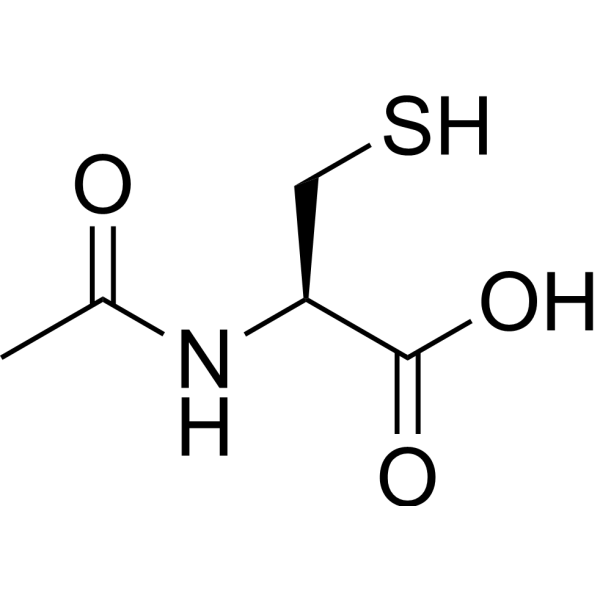
    N-Acetylcysteine amide is a cell membranes and blood brain barrier permeant thiol antioxidant and neuroprotective agent, reduces ROS production.
    N-Acetylcysteine amide
  • HY-B0454
    Miconazole
    5+ Cited Publications

    R18134

    Fungal Bacterial Antibiotic Infection
    Miconazole (R18134) is an imidazole antifungal agent that can pass through the blood-brain barrier. Miconazole also has antibacterial effects .
    Miconazole
  • HY-17423
    Abacavir
    5 Publications Verification

    HIV Reverse Transcriptase Telomerase Apoptosis Infection Cancer
    Abacavir is an orally active and competitive nucleoside reverse transcriptase inhibitor. Abacavir can inhibits the replication of HIV. Abacavir shows anticancer activity in prostate cancer cell lines. Abacavir can trespass the blood-brain-barrier and suppresses telomerase activity .
    Abacavir
  • HY-Y1787
    Dimethyl malonate
    5+ Cited Publications

    Apoptosis Neurological Disease
    Dimethyl malonate is a competitive inhibitor of succinate dehydrogenase (SDH). Dimethyl malonate is able to cross the blood-brain barrier and hydrolyse to malonate. Dimethyl malonate reduces neuronal apoptosis .
    Dimethyl malonate
  • HY-12947
    GNE-3511
    5+ Cited Publications

    MAP3K Neurological Disease
    GNE-3511 is an orally active bioavailable and brain-penetrant dual leucine zipper kinase (DLK) inhibitor with a Ki of 0.5 nM. GNE-3511 can cross the blood-brain-barrier and can be used for the research of neurodegenerative diseases .
    GNE-3511
  • HY-P9967

    BIIB037

    Amyloid-β Neurological Disease
    Aducanumab (BIIB037) is a human monoclonal antibody that selectively targets aggregated amyloid-beta (Aβ). Aducanumab shows blood-brain-barrier penetration, and can be used for Alzheimer's disease (AD) research .
    Aducanumab
  • HY-17001A
    Flupirtine
    1 Publications Verification

    D 9998

    Potassium Channel iGluR GABA Receptor Neurological Disease Inflammation/Immunology
    Flupirtine (D 9998) is an orally active, blood-brain barrier-crossing non-opioid analgesic and neuroprotective agent. Flupirtine is a neuronal potassium channel opener (Kv7 activator), a NMDA receptor antagonist and a GABA receptor activator. Flupirtine stabilizes blood-brain-barrier integrity, reduces oxidative stress and brain leukocyte infiltration, enhances angioneurogenesis, suppresses calcium influx, stabilizes neuronal resting membrane potential, and counteracts focal cerebral ischemia. Flupirtine exhibits analgesic, muscle relaxant properties, protects neurons from excitotoxic, ischemic, or cytokine-mediated death. Flupirtine functions as a non-opioid analgesic without antipyretic or antiphlogistic properties, shows no relevant affinity to opiate receptor. Flupirtine can be used for the research of focal cerebral ischemia, pain, Alzheimer’s disease, or multiple sclerosis .
    Flupirtine
  • HY-100347A
    SRI-011381 hydrochloride
    55+ Cited Publications

    TGF-beta/Smad Neurological Disease
    SRI-011381 hydrochloride is an orally active TGF-β signaling agonist, exhibits neuroprotective effects, with blood-brain barrier permeability .
    SRI-011381 hydrochloride
  • HY-148419
    Ralometostat
    2 Publications Verification

    TNG908

    Histone Methyltransferase Cancer
    TNG908 is a MTAP synergistic PRMT5 inhibitor. TNG908 crosses the blood-brain barrier and is orally active. TNG908 could be used in cancer research .
    Ralometostat
  • HY-136964

    Biochemical Assay Reagents Neurological Disease
    Sulfo-NHS-Biotin sodium is a low-molecular-weight (MW 443.4 Da) tracer. Sulfo-NHS-Biotin sodium can used to assess blood-brain barrier permeability .
    Sulfo-NHS-Biotin sodium
  • HY-17423A
    Abacavir sulfate
    5 Publications Verification

    Abacavir Hemisulfate; ABC sulfate

    Reverse Transcriptase HIV Telomerase Apoptosis Infection Cancer
    Abacavir sulfate (Abacavir Hemisulfate) is a competitive, orally active nucleoside reverse transcriptase inhibitor. Abacavir sulfate can inhibits the replication of HIV. Abacavir sulfate shows anticancer activity in prostate cancer cell lines. Abacavir sulfate can trespass the blood-brain-barrier and suppresses telomerase activity .
    Abacavir sulfate
  • HY-17001
    Flupirtine Maleate
    1 Publications Verification

    D 9998 Maleate

    Potassium Channel iGluR GABA Receptor Neurological Disease Inflammation/Immunology
    Flupirtine (D 9998) Maleate is an orally active, blood-brain barrier-crossing non-opioid analgesic and neuroprotective agent. Flupirtine Maleate is a neuronal potassium channel opener (Kv7 activator), a NMDA receptor antagonist and a GABA receptor activator. Flupirtine Maleate stabilizes blood-brain-barrier integrity, reduces oxidative stress and brain leukocyte infiltration, enhances angioneurogenesis, suppresses calcium influx, stabilizes neuronal resting membrane potential, and counteracts focal cerebral ischemia. Flupirtine Maleate exhibits analgesic, muscle relaxant properties, protects neurons from excitotoxic, ischemic, or cytokine-mediated death. Flupirtine Maleate functions as a non-opioid analgesic without antipyretic or antiphlogistic properties, shows no relevant affinity to opiate receptor. Flupirtine Maleate can be used for the research of focal cerebral ischemia, pain, Alzheimer’s disease, or multiple sclerosis .
    Flupirtine Maleate
  • HY-171306

    Liposome Others
    MK16 is a lipid material that can be used to construct blood-brain barrier penetrable lipid nanoparticles for mRNA delivery. MK16 facilitates blood-brain barrier crossing via γ-secretase-mediated and caveolae-mediated transcytosis. MK16 can be used for drug delivery research .
    MK16
  • HY-119624

    PIKfyve Cancer
    MOMIPP, a macropinocytosis inducer, is a PIKfyve inhibitor. MOMIPP penetrates the blood-brain barrier (BBB) .
    MOMIPP
  • HY-117632
    Elcubragistat
    2 Publications Verification

    ABX-1431

    MAGL Neurological Disease
    Elcubragistat (ABX-1431) is a highly effective, selective, orally active, and blood-brain barrier-permeable monoacylglycerol lipase (MAGL) inhibitor, with an IC50 value of 14 nM .
    Elcubragistat
  • HY-B0454A
    Miconazole nitrate
    5+ Cited Publications

    R18134 nitrate

    Fungal Bacterial Antibiotic Infection Neurological Disease
    Miconazole nitrate (R18134 nitrate) is an imidazole antifungal agent that can pass through the blood-brain barrier. Miconazole nitrate also has antibacterial effects .
    Miconazole nitrate
  • HY-175715

    Mitochondrial Metabolism Neurological Disease
    NRG1271 is an orally active mitochondrial permeability transition pore (mPTP) inhibitor with blood-brain barrier penetration. NRG1271 can be used for the study of Neurological Disease .
    NRG1271
  • HY-16531
    YF-2
    2 Publications Verification

    Histone Acetyltransferase Neurological Disease Cancer
    YF-2 is a highly selective, blood-brain-barrier permeable histone acetyltransferase activator, acetylates H3 in the hippocampus, with EC50s of 2.75 μM, 29.04 μM and 49.31 μM for CBP, PCAF, and GCN5, respectively, shows no effect on HDAC. Anti-cancer and anti-Alzheimer's disease .
    YF-2
  • HY-17555

    Centrophenoxine hydrochloride

    nAChR iGluR Neurological Disease
    Meclofenoxate (Centrophenoxine) hydrochloride is an ester synthesized from DMAE and pCPA, capable of crossing the blood-brain barrier, and can stimulate memory and enhance cognition .
    Meclofenoxate hydrochloride
  • HY-124569

    iGluR Neurological Disease
    NAB-14 is a potent, selective, orally active and non-competitive GluN2C/2D antagonists with an IC50 of 580 nM for GluN1/GluN2D. NAB-14 shows >800-fold selective for recombinant GluN2C and GluN2D over GluN2A and GluN2B. NAB-14 can cross the blood-brain-barrier .
    NAB-14
  • HY-115475
    SW-100
    4 Publications Verification

    HDAC Neurological Disease
    SW-100, a selective histone deacetylase 6 (HDAC6) inhibitor with an IC50 of 2.3 nM, shows at least 1000-fold selectivity for HDAC6 relative to all other HDAC isozymes. SW-100 displays a significantly improved ability to cross the blood-brain-barrier .
    SW-100
  • HY-122489

    Drug Metabolite Neurological Disease
    DL-Laudanosine, an Atracurium and Cisatracurium metabolite, crosses the blood–brain barrier and may cause excitement and seizure activity .
    DL-Laudanosine
  • HY-154959

    Ras Cancer
    AZD4747 is a selective, blood-brain barrier-permeable mutant GTPase KRAS G12C inhibitor. AZD4747 has the potential to study cancer .
    AZD4747
  • HY-107982

    mGluR Neurological Disease
    VU6005649 is a blood-brain-barrier penetrant mGlu7/8 receptor agonist with EC50s of 0.65 μM and 2.6 μM for mGlu7 receptor and mGlu8 receptor, respectively.
    VU6005649
  • HY-16531A
    YF-2 hydrochloride
    2 Publications Verification

    Histone Acetyltransferase Neurological Disease Cancer
    YF-2 hydrochloride is a highly selective, blood-brain-barrier permeable histone acetyltransferase activator, acetylates H3 in the hippocampus, with EC50s of 2.75 μM, 29.04 μM and 49.31 μM for CBP, PCAF, and GCN5, respectively, shows no effect on HDAC. Anti-cancer and anti-Alzheimer's disease .
    YF-2 hydrochloride
  • HY-19945
    DAA-1106
    1 Publications Verification

    GABA Receptor Neurological Disease
    DAA1106 is a peripheral benzodiazepine receptor (PBR) agonist that is permeable to the blood-brain barrier, but has no affinity for GABAA receptors.
    DAA-1106
  • HY-12763
    GNE-317
    2 Publications Verification

    PI3K mTOR Cancer
    GNE-317 is a PI3K/mTOR inhibitor, is able to cross the blood-brain barrier (BBB).
    GNE-317
  • HY-P2314

    Transferrin Receptor Cancer
    HAIYPRH hydrochloride, a targeting ligand, can specially bind to transferrin receptor (TfR). HAIYPRH hydrochloride can mediate the transport of nanocarriers across the blood-brain barrier .
    HAIYPRH hydrochloride
  • HY-B0716

    5-HT Receptor Adrenergic Receptor Cardiovascular Disease Neurological Disease Metabolic Disease
    Urapidil is an α1 adrenoreceptor antagonist and a 5-HT1A receptor agonist that can cross the blood-brain barrier .
    Urapidil
  • HY-112305

    ATM/ATR Cancer
    AZ32 is an orally bioavailable and blood-brain barrier-penetrating ATM inhibitor with an IC50 of <6.2 nM for ATM enzyme, and an IC50 of 0.31 μM for ATM in cell.
    AZ32
  • HY-120332

    KH176 hydrochloride

    Reactive Oxygen Species (ROS) Metabolic Disease
    Sonlicromanol (KH176) hydrochloride, a chemical entity derivative of Trolox, is a blood-brain barrier permeable ROS-redox modulator. Sonlicromanol (KH176) hydrochloride is used in the study for mitochondrial disorders .
    Sonlicromanol hydrochloride
  • HY-18292

    Amyloid-β Neurological Disease
    ARN2966 is a potent, orally active and cross the blood-brain barrier amyloid precursor protein (APP) translation modulator.
    ARN2966
  • HY-126899

    Microtubule/Tubulin Cancer
    TPI-287, a blood-brain barrier-permeable microtubule stabilizer, can significantly reduce metastatic colonization of breast cancer in the brain .
    TPI-287
  • HY-14503

    DWK-1339

    Amyloid-β Neurological Disease
    MDR-1339 (DWK-1339) is an orally active and blood-brain-barrier-permeable Aβ-aggregation inhibitor, used in the research of Alzheimer's disease.
    MDR-1339
  • HY-153175

    RET Neurological Disease
    BT44 is a selective RET activator. BT44 can penetrate through the blood-brain barrier and can be used for the research of neurodegenerative disorders and diabetes mellitus .
    BT44
  • HY-134228

    Biochemical Assay Reagents Cancer
    4-Hydroperoxyifosfamide is an anticancer agent that can penetrate the blood-brain barrier (BBB) .
    4-Hydroperoxyifosfamide
  • HY-137279
    Naloxone methiodide
    1 Publications Verification

    Opioid Receptor Inflammation/Immunology
    Naloxone methiodide is a peripherally restricted, nonselective, and competitive opioid receptor antagonist. Naloxone methiodide does not penetrate the blood-brain barrier .
    Naloxone methiodide
  • HY-101373A

    SKF 95282 dimaleate

    Histamine Receptor Neurological Disease
    Zolantidine dimaleate (SKF 95282 dimaleate) is a potent, selective and cross the blood-brain barrier histamine H2 antagonist. Zolantidine dimaleate induces antinociception .
    Zolantidine dimaleate
  • HY-151391

    Biochemical Assay Reagents Neurological Disease
    LPA5 antagonist 1 (Compound 66) is a potent and selective lysophosphatidic acid receptor 5 (LPA5) antagonist (IC50=32 nM). LPA5 antagonist 1 shows high blood-brain-barrier permeability and anti-nociceptive activity. LPA5 antagonist 1 can be used in inflammatory and neuropathic pain research . LPA5 antagonist 1 is a click chemistry reagent, it contains an Alkyne group and can undergo copper-catalyzed azide-alkyne cycloaddition (CuAAc) with molecules containing Azide groups.
    LPA5 antagonist 1
  • HY-N9343

    Bacterial Fungal Parasite Infection Inflammation/Immunology
    Kulactone, a natural bioflavonoid and an inhibitor against jRdRp, possesses antifungal, antibacterial and antiplasmodial activities. Kulactone exhibit no crossing through Blood Brain Barrier (BBB) .
    Kulactone
  • HY-110230

    D 9998-d4 hydrochloride

    Isotope-Labeled Compounds Potassium Channel iGluR GABA Receptor Neurological Disease Inflammation/Immunology
    Flupirtine-d4 (D 9998-d4) hydrochloride is the deuterium labeled Flupirtine hydrochloride (HY-W709349). Flupirtine hydrochloride is an orally active, blood-brain barrier-crossing non-opioid analgesic and neuroprotective agent. Flupirtine hydrochloride is a neuronal potassium channel opener (Kv7 activator), a NMDA receptor antagonist and a GABA receptor activator. Flupirtine hydrochloride stabilizes blood-brain-barrier integrity, reduces oxidative stress and brain leukocyte infiltration, enhances angioneurogenesis, suppresses calcium influx, stabilizes neuronal resting membrane potential, and counteracts focal cerebral ischemia. Flupirtine hydrochloride exhibits analgesic, muscle relaxant properties, protects neurons from excitotoxic, ischemic, or cytokine-mediated death. Flupirtine hydrochloride functions as a non-opioid analgesic without antipyretic or antiphlogistic properties, shows no relevant affinity to opiate receptor. Flupirtine hydrochloride can be used for the research of focal cerebral ischemia, pain, Alzheimer’s disease, or multiple sclerosis .
    Flupirtine-d4 hydrochloride

Consulta en línea

Your information is safe with us. * Required Fields.

Saludo


Country or Region *

Nombre del solicitante *


Nombre de la Organizaciòn *

Department *


Direcciòn del E-mail *


Nombre del producto *

Cat. No.


Requested quantity *

Número de teléfono *


Observaciones

Consulta en línea

Inquiry Information

Nombre del producto:
Cat. No.:
Cantidad:
MCE Japan Authorized Agent:

