5 Results for "

Bradykinin (1-5)

" in MedChemExpress (MCE) Product Catalog:
Products (5)

5 Results for "Bradykinin (1-5)" in MCE Product Catalog:

Cat. No.: HY-P1488
CAS No.: 23815-89-6
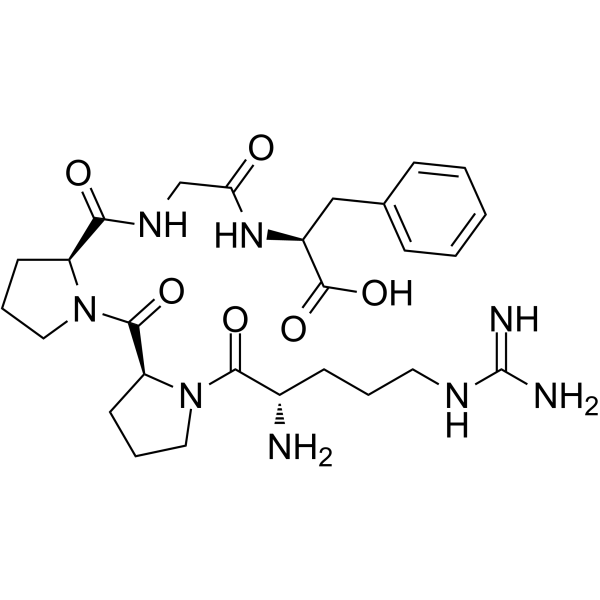
Bradykinin (1-5) is a metabolite of Bradykinin (HY-P0206) and a PAR inhibitor that inhibits thrombin-induced platelet aggregation by preventing protease-activated receptor (Protease Activated Receptor) cleavage and inhibiting Thrombin (MW 37kDa) (HY-114164). Bradykinin (1-5) is used in research on thrombosis, carrageenan-induced pleurisy, nasal allergy, and hereditary angioedema .
loading...
    loading...
Cat. No.: HY-164704
CAS No.: 277333-45-6
Target:  

Neprilysin

Research Areas:  

Cardiovascular Disease

JA2 is an inhibitor of metalloendopeptidase 24.15 that can potentiate the hypotensive response to bradykinin in rat .
loading...
    loading...
Cat. No.: HY-15791
CAS No.: 167838-64-4
Synonyms: FK-3657
Target:  

Bradykinin Receptor

Research Areas:  

Inflammation/Immunology

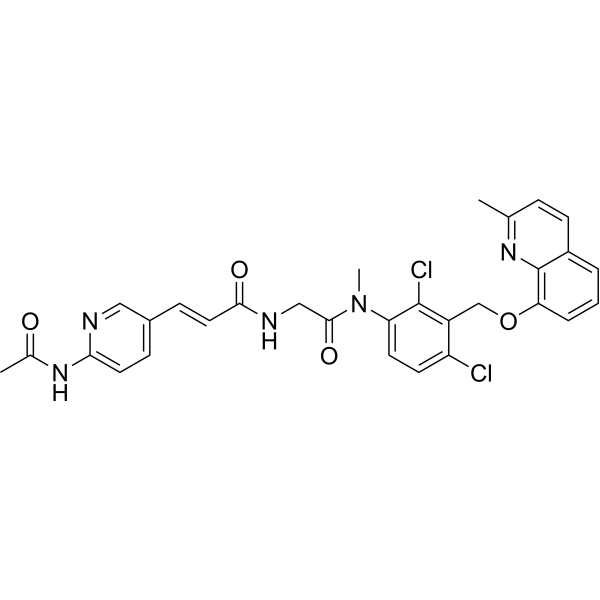
FR173657 is an orally active bradykinin B2 receptor antagonist (IC50: 0.56, 1.5, 2.9 nM for pig, rat, human B2 receptor respectively). FR173657 (p.o.) inhibits BK-induced bronchoconstriction in guinea-pigs (ED50: 0.075 mg/kg). FR173657 (p.o.) also inhibits Carrageenin-induced paw oedema in mice (ED50: 6.8 mg/kg). FR173657 can be used for research of inflammatory disease .
loading...
    loading...
Cat. No.: HY-P1488A
Bradykinin (1-5) TFA is a metabolite of Bradykinin (HY-P0206) and a PAR inhibitor that inhibits thrombin-induced platelet aggregation by preventing protease-activated receptor (Protease Activated Receptor) cleavage and inhibiting Thrombin (MW 37kDa) (HY-114164). Bradykinin (1-5) TFA is used in research on thrombosis, carrageenan-induced pleurisy, nasal allergy, and hereditary angioedema .
loading...
    loading...
Cat. No.: HY-P0206S1
RPP-(Gly-1 13C2, 15N)-FSPFR TFA is 13C- and 15N-labeled Bradykinin (HY-P0206). Bradykinin is an effective endothelium-dependent vasodilator that can lower blood pressure. Bradykinin can induce contraction of bronchial and intestinal non-vascular smooth muscle, increase vascular permeability, and participate in the mechanism of pain .
loading...
    loading...

