Search Result
Results for "
Bradykinin Receptor
" in MedChemExpress (MCE) Product Catalog:
1
Isotope-Labeled Compounds
| Cat. No. |
Product Name |
Target |
Research Areas |
Chemical Structure |
-
- HY-17446
-
Icatibant
Maximum Cited Publications
12 Publications Verification
HOE 140
|
Bradykinin Receptor
|
Endocrinology
|
|
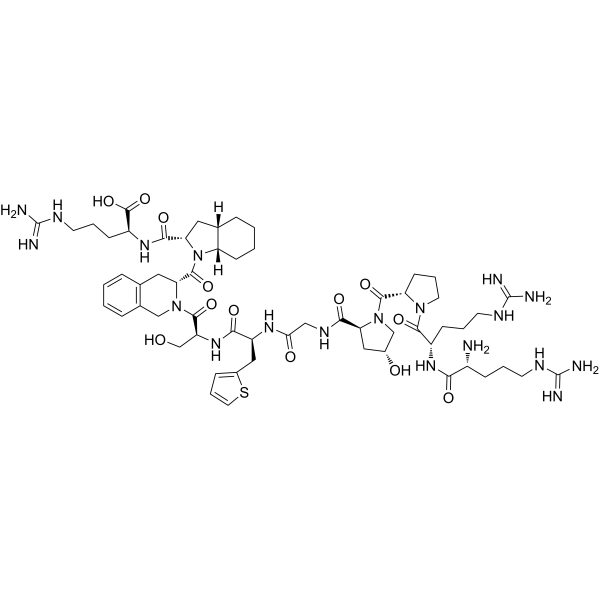
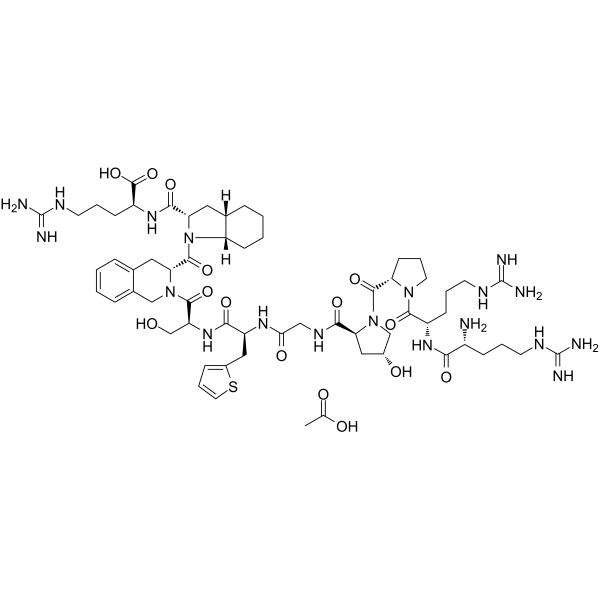
Icatibant (HOE-140) is a potent and specific peptide antagonist of bradykinin B2 receptor with IC50 and Ki of 1.07 nM and 0.798 nM respectively .
|
-
-
- HY-13716
-
|
(S,R)-Noscapine
|
Opioid Receptor
Apoptosis
|
Neurological Disease
Inflammation/Immunology
Cancer
|
|
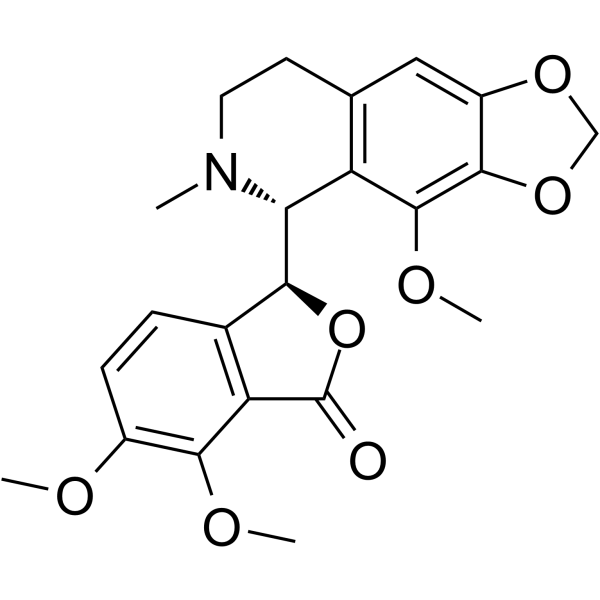
Noscapine ((S,R)-Noscapine) is an orally active phthalideisoquinoline alkaloid with potent antitussive. Noscapine exerts its antitussive effects by activating sigma opioid receptors and is a non-competitive Bradykinin inhibitor. Noscapine disrupts microtubule dynamics, induces mitotic arrest and apoptosis. Noscapine possesses anticancer, neuroprotective, anti-inflammatory activities, and can cross the blood-brain barrier .
|
-
-
- HY-108896
-
|
HOE 140 acetate
|
Bradykinin Receptor
|
Inflammation/Immunology
|
|
Icatibant acetate (HOE-140 acetate) is a potent and specific peptide antagonist of bradykinin B2 receptor with an IC50 and Ki of 1.07 nM and 0.798 nM respectively .
|
-
-
- HY-103290
-
|
|
Bradykinin Receptor
|
Others
|
|
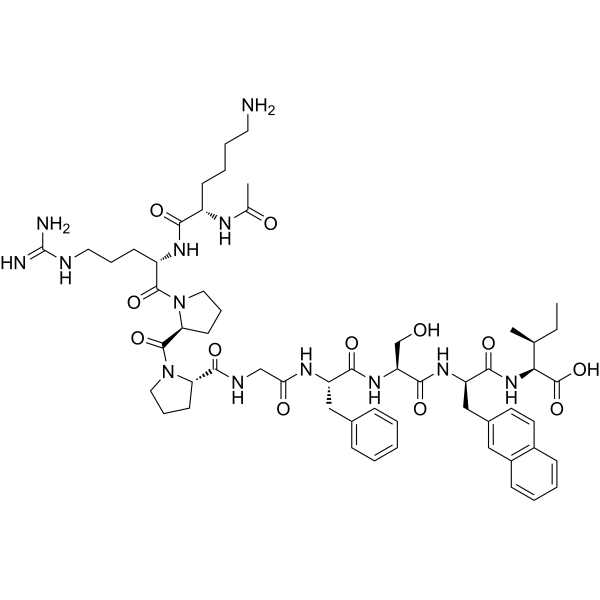
R715 is a selective bradykinin B1 receptor antagonist. R715 significantly attenuates the hyperalgesic effect developed in Streptozotocin(HY-13753)-diabetic mice .
|
-
-
- HY-P0298A
-
-
-
- HY-105155
-
|
RMP 7
|
Bradykinin Receptor
|
Cancer
|
|
Lobradimil (RMP 7), a synthetic bradykinin analog, is a potent and selective bradykinin B2 receptor agonist (Ki: 0.54 nM). Lobradimil increases the permeability of the BBB. Lobradimil can be used in the research of brain tumors .
|
-
-
- HY-15043
-
|
|
Bradykinin Receptor
|
Inflammation/Immunology
Endocrinology
|
|
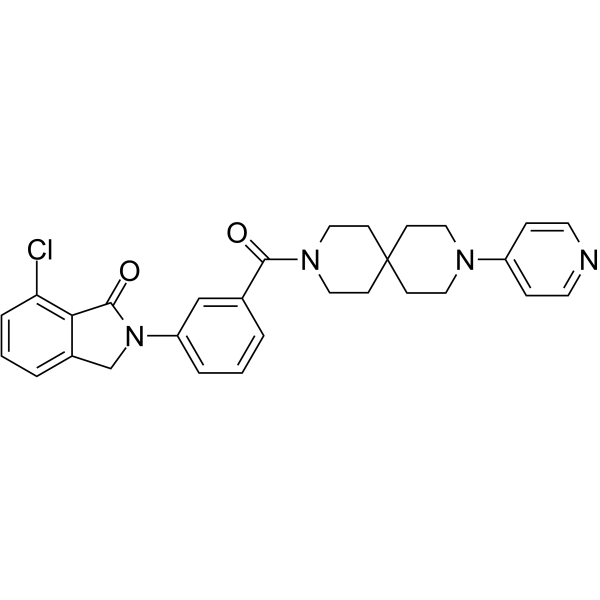
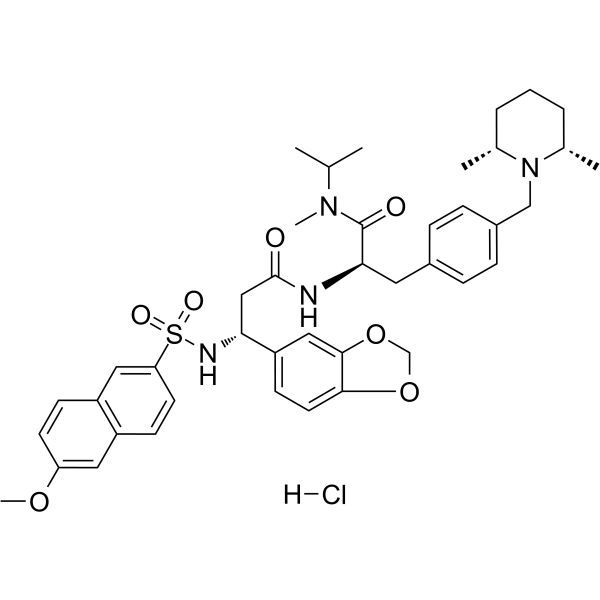
ELN-441958 is a potent, neutral, competitive and selective bradykinin B1 receptor antagonist with a Ki of 0.26 nM against native human bradykinin B1 receptor. ELN-441958 has high oral bioavailability, and has low CNS exposure in the mouse .
|
-
-
- HY-W704574
-
|
|
Carboxypeptidase
Bradykinin Receptor
Interleukin Related
|
Cardiovascular Disease
Metabolic Disease
|
|
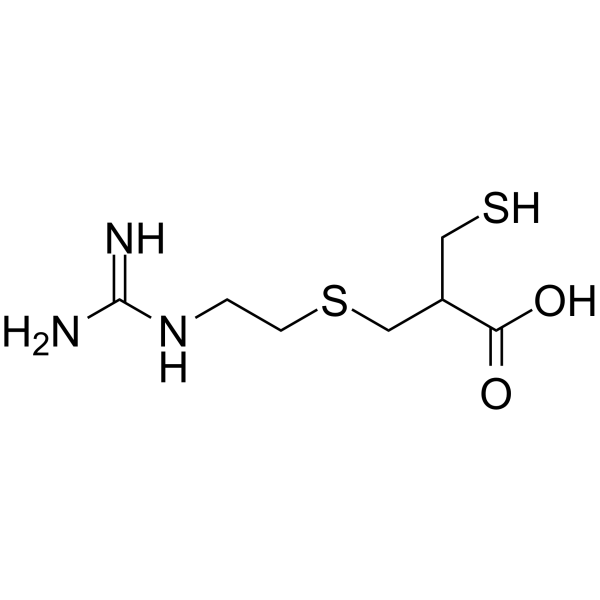
Mergetpa is a reversible Arg-carboxypeptidase inhibitor with high affinity. Mergetpa reduces B1R. Mergetpa blocks the overexpression of IL-1β protein and mRNA in glucose-fed rats. Mergetpa significantly increases the expression of IL-1β protein in the renal cortex. Mergetpa is used to block the conversion of kinins and B2 receptor antagonists into metabolites lacking the C-terminal arginine. Mergetpa inhibits the time-dependent enhancement of the response of isolated rabbit aorta to bradykinin. Mergetpa preserves the chemotactic activity of full-length SDF-1α on cells. Mergetpa reverses hyperglycemia, excessive weight gain, elevated levels of oxidative stress markers and overexpression of inflammatory markers in glucose-fed rats .
|
-
-
- HY-15039
-
|
|
Bradykinin Receptor
|
Metabolic Disease
Inflammation/Immunology
Endocrinology
|
|
SSR240612 is a potent, and orally active specific non-peptide bradykinin B1 receptor antagonist, with Kis of 0.48 nM and 0.73 nM for B1 kinin receptors of human fibroblast MRC5 and HEK cells expressing human B1 receptors, 481 nM and 358 nM for B2 receptors of guinea pig ileum membranes and CHO cells expressing human B1 receptor, respectively.
|
-
-
- HY-13716A
-
|
(S,R)-Noscapine hydrochloride
|
Opioid Receptor
Apoptosis
|
Neurological Disease
Inflammation/Immunology
Cancer
|
|
Noscapine ((S,R)-Noscapine) hydrochloride is an orally active phthalideisoquinoline alkaloid with potent antitussive. Noscapine hydrochloride exerts its antitussive effects by activating sigma opioid receptors and is a non-competitive Bradykinin inhibitor. Noscapine hydrochloride disrupts microtubule dynamics, induces mitotic arrest and apoptosis. Noscapine hydrochloride possesses anticancer, neuroprotective, anti-inflammatory activities, and can crosse the blood-brain barrier .
|
-
-
- HY-168906
-
|
|
Bradykinin Receptor
PI3K
Akt
TNF Receptor
ERK
|
Neurological Disease
Inflammation/Immunology
|
|
BI-113823 is an orally active, blood-brain barrier-permeable bradykinin B1 receptor antagonist, with a Ki value of 5.3 nM for human receptors and 13.3 nM for rat receptors. BI-113823 reduces inflammation-induced mechanical hyperalgesia, as well as the mechanical sensitivity of peripheral afferent nerves and spinal nociceptive-specific neurons. BI-113823 alleviates liver fibrosis and portal hypertension, and improves survival in chronic liver disease models. BI-113823 inhibits the activities of monocytes, neutrophils and hepatic stellate cells, as well as the PI3K/Akt signaling pathway. BI-113823 can be used in research related to inflammatory pain, liver fibrosis and portal hypertension .
|
-
-
- HY-18060
-
|
TC-5619
|
nAChR
|
Neurological Disease
|
|
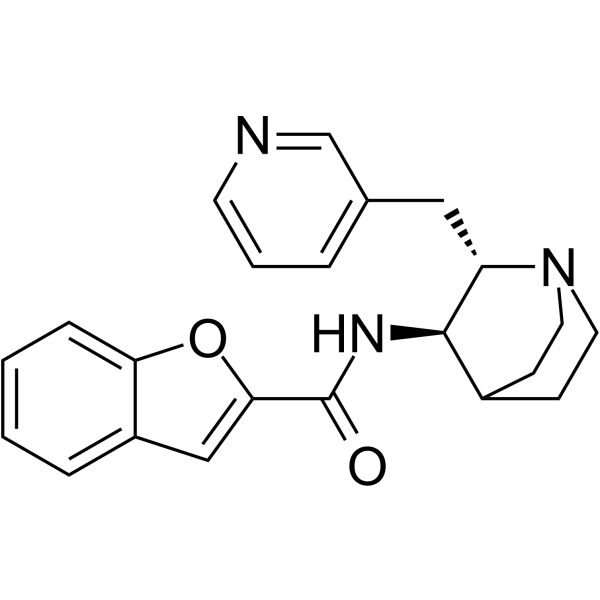
Bradanicline (TC-5619) is an orally active agonist of α7 nAChR with moderate blood-brain barrier penetration. Bradanicline exhibits high affinity and subtype selectivity for human α7 nAChR. Bradanicline possesses antitussive activity that depends on sustained receptor binding and activation. Bradanicline requires systemic administration to dose-dependently inhibit cough induced by citric acid, bradykinin and inhaled nicotine. Bradanicline is well tolerated in preclinical studies and is widely used in research related to chronic refractory cough .
|
-
-
- HY-121156A
-
|
LF 16-0687 hydrochloride; XY-2405 hydrochloride
|
Bradykinin Receptor
|
Neurological Disease
|
|
Anatibant (LF 16-0687; XY-2405) hydrochloride is a selective non-peptide bradykinin B2 receptor antagonist. Anatibant hydrochloride binds to the human, rat and guinea-pig recombinant B2 receptor with Ki values of 0.67 nM, 1.74 nM and 1.37 nM, respectively. Anatibant hydrochloride crosses the blood-brain barrier (BBB). Anatibant hydrochloride can be used in research on brain damage diseases .
|
-
-
- HY-139787A
-
|
ISIS-721744; IONIS-PKK-LRX
|
Kallikrein
|
Cardiovascular Disease
Inflammation/Immunology
|
|
Donidalorsen (ISIS-721744; IONIS-PKK-LRX) sodium is an antisense oligonucleotide targeting prekallikrein (PKK). Donidalorsen sodium inhibits kallikrein activity and reduces the production of Bradykinin (HY-P0206) by specifically binding to and degrading PKK mRNA in the liver. Donidalorsen sodium can be used in the research of hereditary angioedema .
|
-
-
- HY-P4676
-
|
|
Bradykinin Receptor
|
Inflammation/Immunology
|
|
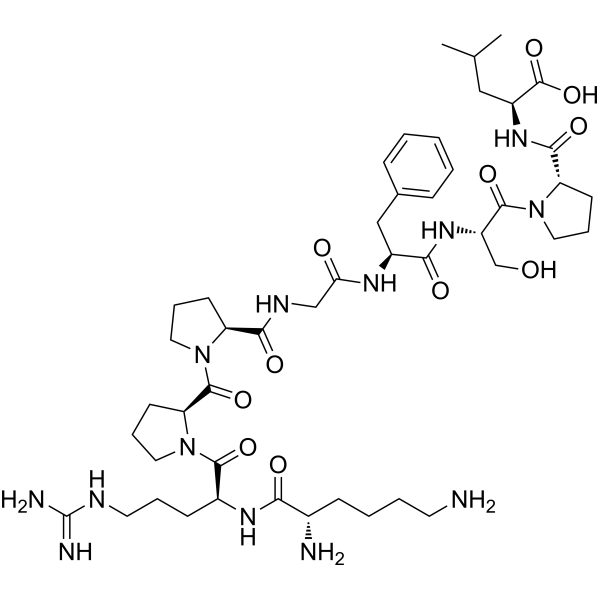
Lys-(Des-Arg9,Leu8)-Bradykinin is a selective bradykinin B1 receptor (BDKRB1) antagonist. Lys-(Des-Arg9,Leu8)-Bradykinin inhibits local inflammatory edema. Lys-(Des-Arg9,Leu8)-Bradykinin induces the production of systemic acute-phase proteins. Lys-(Des-Arg9,Leu8)-Bradykinin is applicable to research related to peptidoglycan-polysaccharide-induced acute arthritis .
|
-
-
- HY-103291
-
|
|
Bradykinin Receptor
|
Inflammation/Immunology
Endocrinology
|
|
Sar-[D-Phe8]-des-Arg9-Bradykinin is a agonist of B1 receptor. Sar-[D-Phe8]-des-Arg9-Bradykinin selectively amplifies the contractile response when incubation with human recombinant interleukin-1 β (IL-1 β) in rabbit aortic rings .
|
-
-
- HY-P3751
-
-
-
- HY-103293A
-
|
Kallidin (380-389) (human, porcine, bovine) TFA
|
Bradykinin Receptor
|
Cardiovascular Disease
Neurological Disease
Inflammation/Immunology
|
|
Lys-Bradykinin TFA is the TFA salt form of Lys-Bradykinin (HY-103293). Lys-Bradykinin TFA is a ligand for kallidin and bradykinin receptor, which can be generated by kininogen protein through enzymatic cleavage by the protease kallikrein. Lys-Bradykinin TFA serves as a vasodilator, which widens blood vessels and increases blood flow. Lys-Bradykinin TFA stimulates net Na+ influx, and contributes to DNA synthesis. Lys-Bradykinin TFA involves in vascular regulation, inflammation and pain sensation .
|
-
-
- HY-147273
-
-
-
- HY-P3209
-
-
-
- HY-P0298
-
-
-
- HY-103295A
-
|
|
Bradykinin Receptor
|
Metabolic Disease
Inflammation/Immunology
|
|
Lys-[Des-Arg9]Bradykinin TFA, a naturally occurring kinin, is a potent and highly selective bradykinin B1 receptor agonist with a Ki of 0.12 nM, 1.7 nM and 0.23 nM for human, mouse and rabbit B1 receptors, respectively. Lys-[Des-Arg9]Bradykinin TFA has low inhibitory activity on B2 receptors .
|
-
-
- HY-P5518A
-
-
-
- HY-15791
-
|
FK-3657
|
Bradykinin Receptor
|
Inflammation/Immunology
|
|
FR173657 is an orally active bradykinin B2 receptor antagonist (IC50: 0.56, 1.5, 2.9 nM for pig, rat, human B2 receptor respectively). FR173657 (p.o.) inhibits BK-induced bronchoconstriction in guinea-pigs (ED50: 0.075 mg/kg). FR173657 (p.o.) also inhibits Carrageenin-induced paw oedema in mice (ED50: 6.8 mg/kg). FR173657 can be used for research of inflammatory disease .
|
-
-
- HY-133829
-
|
|
Angiotensin-converting Enzyme (ACE)
NO Synthase
Reactive Oxygen Species (ROS)
|
Cardiovascular Disease
|
|
Zofenoprilat is an angiotensin-converting enzyme (ACE) inhibitor with an IC50 of 1.7 nM. Zofenoprilat exerts cardioprotective and renoprotective effects by inhibiting angiotensin II expression and lowering blood pressure. Zofenoprilat promotes NO production and reduces endothelin-1 (ET-1) expression. Zofenoprilat decreases TNFα-induced ROS production and protects vascular endothelial function. Zofenoprilat regulates oxidative stress-related molecules and possesses antioxidant activity. Zofenoprilat can be used in studies related to hypertension and congestive heart failure .
|
-
-
- HY-121156
-
|
LF 16-0687; XY-2405
|
Bradykinin Receptor
|
Neurological Disease
|
|
Anatibant (LF 16-0687; XY-2405) is a selective non-peptide bradykinin B2 receptor antagonist. Anatibant binds to the human, rat and guinea-pig recombinant B2 receptor with Ki values of 0.67 nM, 1.74 nM and 1.37 nM, respectively. Anatibant crosses the blood-brain barrier (BBB). Anatibant can be used in research on brain damage diseases .
|
-
-
- HY-103295
-
|
|
Bradykinin Receptor
|
Metabolic Disease
Inflammation/Immunology
|
|
Lys-[Des-Arg9]Bradykinin, a naturally occurring kinin, is a potent and highly selective bradykinin B1 receptor agonist with a Ki of 0.12 nM, 1.7 nM and 0.23 nM for human, mouse and rabbit B1 receptors, respectively. Lys-[Des-Arg9]Bradykinin has low inhibitory activity on B2 receptors .
|
-
-
- HY-103293
-
|
Kallidin (380-389) (human, porcine, bovine)
|
Bradykinin Receptor
|
Cardiovascular Disease
Neurological Disease
Inflammation/Immunology
|
|
Lys-Bradykinin, a kind of kallidin and bradykinin receptor ligand, can be generated by kininogen protein through enzymatic cleavage by the protease kallikrein. Lys-Bradykinin, also a vasodilator, can widen blood vessels and increase blood flow. ys-Bradykinin stimulates net Na+ influx, and also the DNA synthesis. Lys-Bradykinin involves in vascular regulation, inflammation and pain sensation .
|
-
-
- HY-101368A
-
|
|
Bradykinin Receptor
mAChR
|
Neurological Disease
|
|
WIN 64338 hydrochloride is a potent, selective, nonpeptide competitive antagonist of bradykinin B2 receptor. WIN 64338 hydrochloride inhibits [ 3H]-Bradykinin binding to the bradykinin B2 receptor on human IMR-90 cells with a Ki of 64 nM. WIN 64338 hydrochloride also can inhibits [ 3H]Quinuclidinyl benzilate binding to the rat brain muscarinic receptor (Ki=350 nM) .
|
-
-
- HY-P1685
-
|
|
Bombesin Receptor
|
Cardiovascular Disease
Endocrinology
|
|
Ranatensin is a undecapeptide and a Bombesin Receptor angonist, can be isolated from amphibian skin, such as the frog, Rana pipiens. Ranatensin could maintain the dynamic balance of animal blood pressure, without cross-tachyphylaxis with Angiotensin amide (HY-P2212),Bradykinin (HY-P0206), or Norepinephrine (HY-13715) .
|
-
-
- HY-106277A
-
|
MEN16132
|
Bradykinin Receptor
|
Metabolic Disease
|
|
Fasitibant chloride hydrochloride (MEN16132) is a potent, selective, high affinity, and long-lasting nonpeptide bradykinin B2 (BK2) receptor antagonist. Fasitibant chloride hydrochloride has proinflammatory effects and can be used for the research of osteoarthritis and rheumatoid arthritis .
|
-
-
- HY-17446R
-
|
HOE 140 (Standard)
|
Reference Standards
Bradykinin Receptor
|
Endocrinology
|
|
Icatibant (Standard) is the analytical standard of Icatibant. This product is intended for research and analytical applications. Icatibant (HOE-140) is a potent and specific peptide antagonist of bradykinin B2 receptor with IC50 and Ki of 1.07 nM and 0.798 nM respectively .
|
-
-
- HY-108896R
-
|
HOE 140 acetate (Standard)
|
Bradykinin Receptor
Reference Standards
|
Inflammation/Immunology
|
|
Icatibant (acetate) (Standard) is the analytical standard of Icatibant (acetate). This product is intended for research and analytical applications. Icatibant acetate (HOE-140 acetate) is a potent and specific peptide antagonist of bradykinin B2 receptor with an IC50 and Ki of 1.07 nM and 0.798 nM respectively .
|
-
-
- HY-158262
-
|
|
Bradykinin Receptor
|
Neurological Disease
|
|
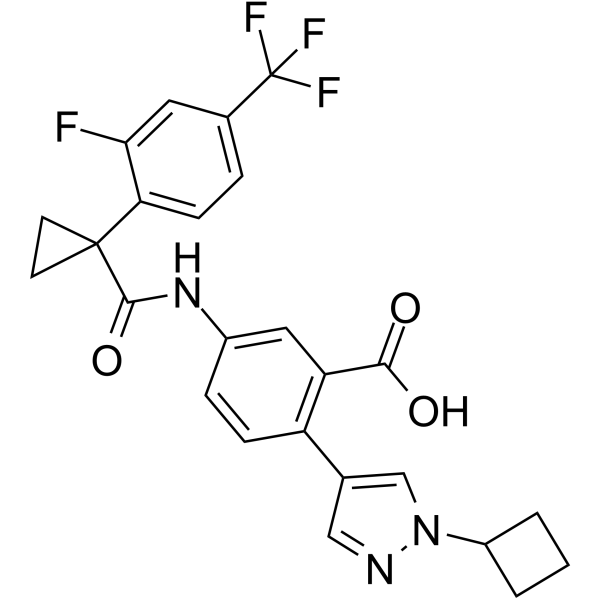
Bradykinin B1 receptor antagonist 1 (compound 6B) is a potent and cross the blood-brain barrier bradykinin B1 antagonist. Bradykinin B1 receptor antagonist 1 has the potential for the research of pain .
|
-
-
- HY-10382
-
|
|
Angiotensin Receptor
|
Cardiovascular Disease
|
|
EXP-6803 is a specific nonpeptide angiotensin II receptor antagonist with antihypertensive activity. EXP-6803 inhibits the contractile response to angiotensin II with a pA2 value of 7.20. EXP-6803 effectively blocks responses to angiotensin I and II while not affecting responses to bradykinin or acetylcholine in guinea pig ileum. EXP-6803 can be used for hypertension research .
|
-
-
- HY-101368
-
-
-
- HY-123376
-
-
-
- HY-14886
-
|
MEN16132 free base
|
Bradykinin Receptor
|
Cardiovascular Disease
Neurological Disease
|
|
Fasitibant chloride (MEN16132 free base) is a potent and selective nonpeptide bradykinin B2 receptor (B2R) antagonist. Fasitibant chloride reduces joint pain and diminishes joint oedema in Carrageenan-induced arthritis rat model .
|
-
-
- HY-P3061
-
|
|
Bradykinin Receptor
|
Cardiovascular Disease
Endocrinology
|
|
[Hyp3]-Bradykinin, naturally occurring peptide hormone, is a bradykinin receptor agonist. [Hyp3]-Bradykinin interacts with B2-bradykinin receptors and stimulates inositol phosphate production in cultured human fibroblasts .
|
-
-
- HY-103292
-
|
|
Bradykinin Receptor
|
Cardiovascular Disease
|
|
[Phe8Ψ(CH-NH)Arg9]-Bradykinin is a selective Bradykinin receptor B2 agonist (not cleaved by protein kinase I/II). [Phe8Ψ(CH-NH)Arg9]-Bradykinin has potential for the research of hypertension .
|
-
-
- HY-103293B
-
|
Kallidin (380-389) (human, porcine, bovine) tetraacetate
|
Bradykinin Receptor
|
Cardiovascular Disease
Neurological Disease
Inflammation/Immunology
|
|
Lys-Bradykinin (Kallidin (380-389) (human, porcine, bovine)) tetraacetate, a kind of kallidin and bradykinin receptor ligand, can be generated by kininogen protein through enzymatic cleavage by the protease kallikrein. Lys-Bradykinin tetraacetate, also a vasodilator, can widen blood vessels and increase blood flow. ys-Bradykinin stimulates net Na+ influx, and also the DNA synthesis. Lys-Bradykinin tetraacetate involves in vascular regulation, inflammation and pain sensation .
|
-
-
- HY-103296
-
-
-
- HY-15042A
-
-
-
- HY-P3232
-
-
-
- HY-P5518
-
-
-
- HY-P2118
-
-
-
- HY-P2109
-
|
|
Bradykinin Receptor
|
Inflammation/Immunology
|
|
JMV-1645 is a potent and selective B1 bradykinin receptor antagonist with a Ki value of 0.023 nM on the human cloned B1 receptor. JMV-1645 can be utilized in trauma and infection research .
|
-
-
- HY-100301
-
|
|
Bradykinin Receptor
|
Inflammation/Immunology
Endocrinology
|
|
FR167344 free base is an orally active, nonpeptide bradykinin receptor B2 antagonist. FR167344 free base shows a high affinity binding to the B2 receptor with an IC50 value of 65 nM and no binding affinity for the B1 receptor.
|
-
-
- HY-P1721
-
|
|
Bradykinin Receptor
|
Cardiovascular Disease
|
|
NPC 17731 is a new bradykinin (BK) receptor antagonist. NPC 17731 antagonized both the contractile and relaxant responses caused by BK in longitudinal smooth muscle with IC50 of 23 and 29 nM, respectively .
|
-
-
- HY-103289
-
|
|
Bradykinin Receptor
|
Metabolic Disease
Inflammation/Immunology
|
|
MEN 11270, a cyclic decapeptide, is a B2 kinin receptor antagonist. MEN 11270 bound with high-affinity to the B2 kinin receptor constitutively expressed by WI38 human fibroblasts, inhibiting 3H-bradykinin (BK) with a pKi value of 10.3 .
|
-
- HY-106277
-
|
|
Bradykinin Receptor
|
Metabolic Disease
|
|
Fasitibant (free base) is a potent, selective, high affinity, and long-lasting nonpeptide bradykinin B2 (BK2) receptor antagonist. Fasitibant (free base) has proinflammatory effects and can be used for the research of osteoarthritis and rheumatoid arthritis .
|
-
- HY-121550
-
|
|
Angiotensin-converting Enzyme (ACE)
|
Cardiovascular Disease
|
|
ME3221 is an angiotensin AT1 receptor antagonist that effectively antagonizes the pressor response to angiotensin II in rats and marmosets without affecting the hypotensive response to bradykinin. It demonstrates potent antihypertensive effects in renal hypertensive rats and spontaneously hypertensive rats (SHR). ME3221's repeated administration in SHR results in sustained and stable hypotensive effects without affecting heart rate, indicating its potential for studying both renal and essential hypertension .
|
-
- HY-13716R
-
|
(S,R)-Noscapine (Standard)
|
Reference Standards
Opioid Receptor
Apoptosis
|
Neurological Disease
Inflammation/Immunology
Cancer
|
|
Noscapine (Standard) is the analytical standard of Noscapine. This product is intended for research and analytical applications. Noscapine ((S,R)-Noscapine) is an orally active phthalideisoquinoline alkaloid with potent antitussive. Noscapine exerts its antitussive effects by activating sigma opioid receptors and is a non-competitive Bradykinin inhibitor. Noscapine disrupts microtubule dynamics, induces mitotic arrest and apoptosis. Noscapine possesses anticancer, neuroprotective, anti-inflammatory activities, and can cross the blood-brain barrier [4] .
|
-
- HY-13716S
-
|
|
Isotope-Labeled Compounds
Apoptosis
Opioid Receptor
|
Cancer
|
|
Noscapine- 13C,d3 is a 13C- labeled and deuterated labeled Noscapine . Noscapine ((S,R)-Noscapine) is an orally active phthalideisoquinoline alkaloid with potent antitussive. Noscapine exerts its antitussive effects by activating sigma opioid receptors and is a non-competitive Bradykinin inhibitor. Noscapine disrupts microtubule dynamics, induces mitotic arrest and apoptosis. Noscapine possesses anticancer, neuroprotective, anti-inflammatory activities, and can cross the blood-brain barrier .
|
-
- HY-18060A
-
|
TC-5619 hydrochloride
|
nAChR
|
Neurological Disease
|
|
Bradanicline (TC-5619) tosylate is an orally active agonist of α7 nAChR with moderate blood-brain barrier penetration. Bradanicline hydrochloride exhibits high affinity and subtype selectivity for human α7 nAChR. Bradanicline hydrochloride possesses antitussive activity that depends on sustained receptor binding and activation. Bradanicline hydrochloride requires systemic administration to dose-dependently inhibit cough induced by citric acid, bradykinin and inhaled nicotine. Bradanicline hydrochloride is well tolerated in preclinical studies and is widely used in research related to chronic refractory cough .
|
-
- HY-15042
-
|
|
Bradykinin Receptor
|
Metabolic Disease
|
|
MK 0686, a potent bradykinin B1 receptor antagonist, demonstrates autoinduction of metabolism in rhesus monkeys after oral administration. It undergoes significant biotransformation primarily via oxidation pathways, leading to the formation of metabolites like M11 and M13 in rhesus liver microsomes. This metabolic induction is mediated by CYP2C75, as evidenced by increased mRNA expression, protein levels, and catalytic activity of this enzyme in hepatocytes and liver microsomes from MK 0686-treated animals. The autoinduction phenomenon suggests that MK 0686 enhances its own metabolism by upregulating CYP2C75, potentially influencing its systemic exposure and pharmacokinetics over time .
|
-
- HY-P1650
-
|
B 9870
|
Bradykinin Receptor
ERK
|
Cancer
|
|
Breceptin (B 9870) is an antagonist of the bradykinin B1/B2 receptor (B1/B2R). Breceptin exhibits an irreversible antagonist effect on B2R, inhibiting the vasodilation induced by Bradykinin (HY-P0206) in the rabbit carotid vein contraction experiment. B-9870 shows partial agonist properties in HEK 293 cells with high expression of B2R, and can activate ERK1/2 phosphorylation, calcium ion mobilization, arachidonic acid release, and receptor internalization. Breceptin can be used in research to inhibit breast cancer and non-small cell lung cancer .
|
-
- HY-118945
-
|
|
Prostaglandin Receptor
Bradykinin Receptor
|
Cardiovascular Disease
Metabolic Disease
Inflammation/Immunology
|
|
FR191413 is a selective bradykinin B2 receptor agonist that stimulates prostaglandin E2 production in WI-38 cells and activates BK B2 receptor-mediated pathways such as vasodilation and organ protection. FR191413 competitively binds to [ 3H]-BK in guinea pig ileum (GPI) membranes and CHO cells transfected with the human BK B2 receptor, with IC50 values of 20.0 nM and 2.60 nM, respectively. FR191413 can be used in research related to cardiovascular diseases and diabetes, including hypertension, myocardial hypertrophy, myocardial infarction, arrhythmias, and diabetic nephropathy .
|
-
- HY-18060B
-
|
TC-5619 tosylate
|
nAChR
|
Inflammation/Immunology
|
|
Bradanicline (TC-5619) tosylate is an orally active agonist of α7 nAChR with moderate blood-brain barrier penetration. Bradanicline tosylate exhibits high affinity and subtype selectivity for human α7 nAChR. Bradanicline tosylate possesses antitussive activity that depends on sustained receptor binding and activation. Bradanicline tosylate requires systemic administration to dose-dependently inhibit cough induced by citric acid, bradykinin and inhaled nicotine. Bradanicline tosylate is well tolerated in preclinical studies and is widely used in research related to chronic refractory cough .
|
-
- HY-P4676A
-
|
|
Bradykinin Receptor
|
Inflammation/Immunology
|
|
Lys-(Des-Arg9,Leu8)-Bradykinin TFA is a selective bradykinin B1 receptor (BDKRB1) antagonist. Lys-(Des-Arg9,Leu8)-Bradykinin TFA inhibits local inflammatory edema. Lys-(Des-Arg9,Leu8)-Bradykinin TFA induces the production of systemic acute-phase proteins. Lys-(Des-Arg9,Leu8)-Bradykinin TFA is applicable to research related to peptidoglycan-polysaccharide-induced acute arthritis .
|
-
- HY-103294
-
|
|
Endogenous Metabolite
|
Others
|
|
R892 is a selective and efficient bradyKinin B1 receptor antagonist with significant antagonistic activity. The pA2 values of R892 in human and rabbit B1 receptors are 8.8 and 8.6 respectively, indicating its strong anti-activity at these receptors. R892 exhibits selectivity with ID50 values of 2.8 nM and >600 nM for B1 and B2 receptors, respectively, and has no endogenous agonist activity. R892 is resistant to aminopeptidase and kininase II (ACE) degradation and exhibits metabolic stability .
|
-
- HY-P0216A
-
|
|
Angiotensin Receptor
|
Cardiovascular Disease
|
|
A-779 TFA is a selective angiotensin-(1-7) (Ang-(1-7)) antagonist. A-779 TFA blocks Arachidonic acid release, bradykinin potentiation effects and hypotensive action. A-779 TFA exerts diuretic effects in non-pregnant rats, antidiuretic effects in late-pregnant rats, and also inhibits feed intake and water consumption in late-pregnant rats. A-779 TFA attenuates the regulatory effects of prostacyclin, nitric oxide and thromboxane A2 associated with angiotensin-(1-7). A-779 TFA can be used in studies related to hypertension .
|
-
| Cat. No. |
Product Name |
Target |
Research Area |
-
- HY-17446
-
Icatibant
Maximum Cited Publications
12 Publications Verification
HOE 140
|
Bradykinin Receptor
|
Endocrinology
|
|
Icatibant (HOE-140) is a potent and specific peptide antagonist of bradykinin B2 receptor with IC50 and Ki of 1.07 nM and 0.798 nM respectively .
|
-
- HY-108896
-
|
HOE 140 acetate
|
Bradykinin Receptor
|
Inflammation/Immunology
|
|
Icatibant acetate (HOE-140 acetate) is a potent and specific peptide antagonist of bradykinin B2 receptor with an IC50 and Ki of 1.07 nM and 0.798 nM respectively .
|
-
- HY-103290
-
|
|
Bradykinin Receptor
|
Others
|
|
R715 is a selective bradykinin B1 receptor antagonist. R715 significantly attenuates the hyperalgesic effect developed in Streptozotocin(HY-13753)-diabetic mice .
|
-
- HY-P0298A
-
-
- HY-105155
-
|
RMP 7
|
Bradykinin Receptor
|
Cancer
|
|
Lobradimil (RMP 7), a synthetic bradykinin analog, is a potent and selective bradykinin B2 receptor agonist (Ki: 0.54 nM). Lobradimil increases the permeability of the BBB. Lobradimil can be used in the research of brain tumors .
|
-
- HY-P4676
-
|
|
Bradykinin Receptor
|
Inflammation/Immunology
|
|
Lys-(Des-Arg9,Leu8)-Bradykinin is a selective bradykinin B1 receptor (BDKRB1) antagonist. Lys-(Des-Arg9,Leu8)-Bradykinin inhibits local inflammatory edema. Lys-(Des-Arg9,Leu8)-Bradykinin induces the production of systemic acute-phase proteins. Lys-(Des-Arg9,Leu8)-Bradykinin is applicable to research related to peptidoglycan-polysaccharide-induced acute arthritis .
|
-
- HY-103291
-
|
|
Bradykinin Receptor
|
Inflammation/Immunology
Endocrinology
|
|
Sar-[D-Phe8]-des-Arg9-Bradykinin is a agonist of B1 receptor. Sar-[D-Phe8]-des-Arg9-Bradykinin selectively amplifies the contractile response when incubation with human recombinant interleukin-1 β (IL-1 β) in rabbit aortic rings .
|
-
- HY-P3751
-
-
- HY-103293A
-
|
Kallidin (380-389) (human, porcine, bovine) TFA
|
Bradykinin Receptor
|
Cardiovascular Disease
Neurological Disease
Inflammation/Immunology
|
|
Lys-Bradykinin TFA is the TFA salt form of Lys-Bradykinin (HY-103293). Lys-Bradykinin TFA is a ligand for kallidin and bradykinin receptor, which can be generated by kininogen protein through enzymatic cleavage by the protease kallikrein. Lys-Bradykinin TFA serves as a vasodilator, which widens blood vessels and increases blood flow. Lys-Bradykinin TFA stimulates net Na+ influx, and contributes to DNA synthesis. Lys-Bradykinin TFA involves in vascular regulation, inflammation and pain sensation .
|
-
- HY-P3209
-
-
- HY-P0298
-
-
- HY-103295A
-
|
|
Bradykinin Receptor
|
Metabolic Disease
Inflammation/Immunology
|
|
Lys-[Des-Arg9]Bradykinin TFA, a naturally occurring kinin, is a potent and highly selective bradykinin B1 receptor agonist with a Ki of 0.12 nM, 1.7 nM and 0.23 nM for human, mouse and rabbit B1 receptors, respectively. Lys-[Des-Arg9]Bradykinin TFA has low inhibitory activity on B2 receptors .
|
-
- HY-P5518A
-
-
- HY-103295
-
|
|
Bradykinin Receptor
|
Metabolic Disease
Inflammation/Immunology
|
|
Lys-[Des-Arg9]Bradykinin, a naturally occurring kinin, is a potent and highly selective bradykinin B1 receptor agonist with a Ki of 0.12 nM, 1.7 nM and 0.23 nM for human, mouse and rabbit B1 receptors, respectively. Lys-[Des-Arg9]Bradykinin has low inhibitory activity on B2 receptors .
|
-
- HY-103293
-
|
Kallidin (380-389) (human, porcine, bovine)
|
Bradykinin Receptor
|
Cardiovascular Disease
Neurological Disease
Inflammation/Immunology
|
|
Lys-Bradykinin, a kind of kallidin and bradykinin receptor ligand, can be generated by kininogen protein through enzymatic cleavage by the protease kallikrein. Lys-Bradykinin, also a vasodilator, can widen blood vessels and increase blood flow. ys-Bradykinin stimulates net Na+ influx, and also the DNA synthesis. Lys-Bradykinin involves in vascular regulation, inflammation and pain sensation .
|
-
- HY-P1685
-
|
|
Bombesin Receptor
|
Cardiovascular Disease
Endocrinology
|
|
Ranatensin is a undecapeptide and a Bombesin Receptor angonist, can be isolated from amphibian skin, such as the frog, Rana pipiens. Ranatensin could maintain the dynamic balance of animal blood pressure, without cross-tachyphylaxis with Angiotensin amide (HY-P2212),Bradykinin (HY-P0206), or Norepinephrine (HY-13715) .
|
-
- HY-17446R
-
|
HOE 140 (Standard)
|
Reference Standards
Bradykinin Receptor
|
Endocrinology
|
|
Icatibant (Standard) is the analytical standard of Icatibant. This product is intended for research and analytical applications. Icatibant (HOE-140) is a potent and specific peptide antagonist of bradykinin B2 receptor with IC50 and Ki of 1.07 nM and 0.798 nM respectively .
|
-
- HY-108896R
-
|
HOE 140 acetate (Standard)
|
Bradykinin Receptor
Reference Standards
|
Inflammation/Immunology
|
|
Icatibant (acetate) (Standard) is the analytical standard of Icatibant (acetate). This product is intended for research and analytical applications. Icatibant acetate (HOE-140 acetate) is a potent and specific peptide antagonist of bradykinin B2 receptor with an IC50 and Ki of 1.07 nM and 0.798 nM respectively .
|
-
- HY-P3061
-
|
|
Bradykinin Receptor
|
Cardiovascular Disease
Endocrinology
|
|
[Hyp3]-Bradykinin, naturally occurring peptide hormone, is a bradykinin receptor agonist. [Hyp3]-Bradykinin interacts with B2-bradykinin receptors and stimulates inositol phosphate production in cultured human fibroblasts .
|
-
- HY-103292
-
|
|
Bradykinin Receptor
|
Cardiovascular Disease
|
|
[Phe8Ψ(CH-NH)Arg9]-Bradykinin is a selective Bradykinin receptor B2 agonist (not cleaved by protein kinase I/II). [Phe8Ψ(CH-NH)Arg9]-Bradykinin has potential for the research of hypertension .
|
-
- HY-103293B
-
|
Kallidin (380-389) (human, porcine, bovine) tetraacetate
|
Bradykinin Receptor
|
Cardiovascular Disease
Neurological Disease
Inflammation/Immunology
|
|
Lys-Bradykinin (Kallidin (380-389) (human, porcine, bovine)) tetraacetate, a kind of kallidin and bradykinin receptor ligand, can be generated by kininogen protein through enzymatic cleavage by the protease kallikrein. Lys-Bradykinin tetraacetate, also a vasodilator, can widen blood vessels and increase blood flow. ys-Bradykinin stimulates net Na+ influx, and also the DNA synthesis. Lys-Bradykinin tetraacetate involves in vascular regulation, inflammation and pain sensation .
|
-
- HY-P3232
-
-
- HY-P5518
-
-
- HY-P2118
-
-
- HY-P2109
-
|
|
Bradykinin Receptor
|
Inflammation/Immunology
|
|
JMV-1645 is a potent and selective B1 bradykinin receptor antagonist with a Ki value of 0.023 nM on the human cloned B1 receptor. JMV-1645 can be utilized in trauma and infection research .
|
-
- HY-P1721
-
|
|
Bradykinin Receptor
|
Cardiovascular Disease
|
|
NPC 17731 is a new bradykinin (BK) receptor antagonist. NPC 17731 antagonized both the contractile and relaxant responses caused by BK in longitudinal smooth muscle with IC50 of 23 and 29 nM, respectively .
|
-
- HY-103289
-
|
|
Bradykinin Receptor
|
Metabolic Disease
Inflammation/Immunology
|
|
MEN 11270, a cyclic decapeptide, is a B2 kinin receptor antagonist. MEN 11270 bound with high-affinity to the B2 kinin receptor constitutively expressed by WI38 human fibroblasts, inhibiting 3H-bradykinin (BK) with a pKi value of 10.3 .
|
-
- HY-P5493
-
|
|
Peptides
|
Others
|
|
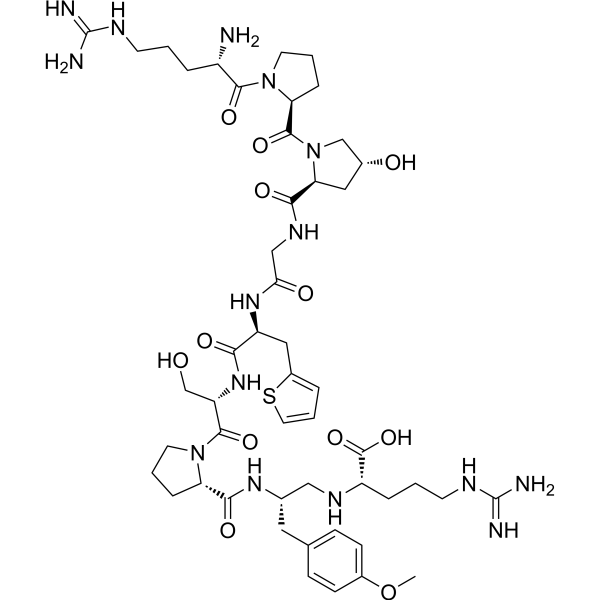
D-Arg-[Hyp3,Thi5,8,D-Phe7]-Bradykinin is a biological active peptide. (inhibited bradykinin-induced contractions concentration dependently; bradykinin B2 receptor antagonist)
|
-
- HY-P4676A
-
|
|
Bradykinin Receptor
|
Inflammation/Immunology
|
|
Lys-(Des-Arg9,Leu8)-Bradykinin TFA is a selective bradykinin B1 receptor (BDKRB1) antagonist. Lys-(Des-Arg9,Leu8)-Bradykinin TFA inhibits local inflammatory edema. Lys-(Des-Arg9,Leu8)-Bradykinin TFA induces the production of systemic acute-phase proteins. Lys-(Des-Arg9,Leu8)-Bradykinin TFA is applicable to research related to peptidoglycan-polysaccharide-induced acute arthritis .
|
-
- HY-103294
-
|
|
Endogenous Metabolite
|
Others
|
|
R892 is a selective and efficient bradyKinin B1 receptor antagonist with significant antagonistic activity. The pA2 values of R892 in human and rabbit B1 receptors are 8.8 and 8.6 respectively, indicating its strong anti-activity at these receptors. R892 exhibits selectivity with ID50 values of 2.8 nM and >600 nM for B1 and B2 receptors, respectively, and has no endogenous agonist activity. R892 is resistant to aminopeptidase and kininase II (ACE) degradation and exhibits metabolic stability .
|
-
- HY-P0216A
-
|
|
Angiotensin Receptor
|
Cardiovascular Disease
|
|
A-779 TFA is a selective angiotensin-(1-7) (Ang-(1-7)) antagonist. A-779 TFA blocks Arachidonic acid release, bradykinin potentiation effects and hypotensive action. A-779 TFA exerts diuretic effects in non-pregnant rats, antidiuretic effects in late-pregnant rats, and also inhibits feed intake and water consumption in late-pregnant rats. A-779 TFA attenuates the regulatory effects of prostacyclin, nitric oxide and thromboxane A2 associated with angiotensin-(1-7). A-779 TFA can be used in studies related to hypertension .
|
| Cat. No. |
Product Name |
Category |
Target |
Chemical Structure |
| Cat. No. |
Product Name |
Chemical Structure |
-
- HY-13716S
-
|
|
|
Noscapine- 13C,d3 is a 13C- labeled and deuterated labeled Noscapine . Noscapine ((S,R)-Noscapine) is an orally active phthalideisoquinoline alkaloid with potent antitussive. Noscapine exerts its antitussive effects by activating sigma opioid receptors and is a non-competitive Bradykinin inhibitor. Noscapine disrupts microtubule dynamics, induces mitotic arrest and apoptosis. Noscapine possesses anticancer, neuroprotective, anti-inflammatory activities, and can cross the blood-brain barrier .
|
-
| Cat. No. |
Product Name |
|
Classification |
-
- HY-139787A
-
|
ISIS-721744; IONIS-PKK-LRX
|
|
Antisense Oligonucleotides
|
|
Donidalorsen (ISIS-721744; IONIS-PKK-LRX) sodium is an antisense oligonucleotide targeting prekallikrein (PKK). Donidalorsen sodium inhibits kallikrein activity and reduces the production of Bradykinin (HY-P0206) by specifically binding to and degrading PKK mRNA in the liver. Donidalorsen sodium can be used in the research of hereditary angioedema .
|
Your information is safe with us. * Required Fields.
Inquiry Information
- Product Name:
- Cat. No.:
- Quantity:
- MCE Japan Authorized Agent: