22 Results for "

Bupivacaine

" in MedChemExpress (MCE) Product Catalog:
Products (22)

22 Results for "Bupivacaine" in MCE Product Catalog:

4
4 Cited Publications
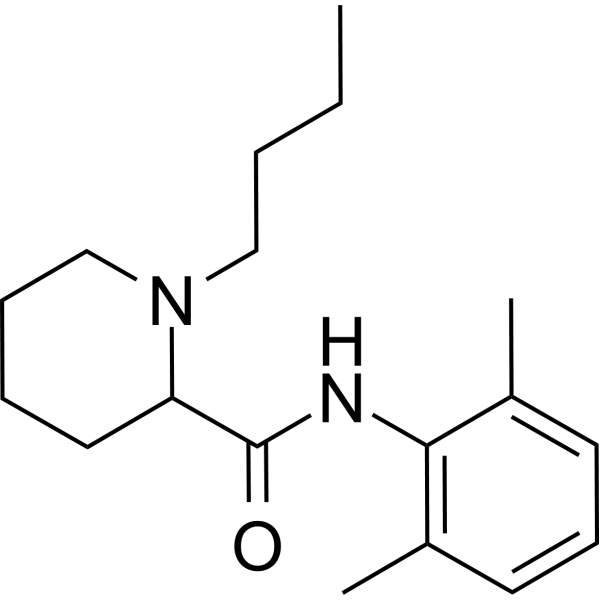
Cat. No.: HY-B0405
CAS No.: 38396-39-3
Bupivacaine is a NMDA receptor inhibitor. Bupivacaine can block sodium, L-calcium, and potassium channels.Bupivacaine potently blocks SCN5A channels with the IC50 of 69.5 μM. Bupivacaine can be used for the research of chronic pain .
loading...
    loading...
4
4 Cited Publications
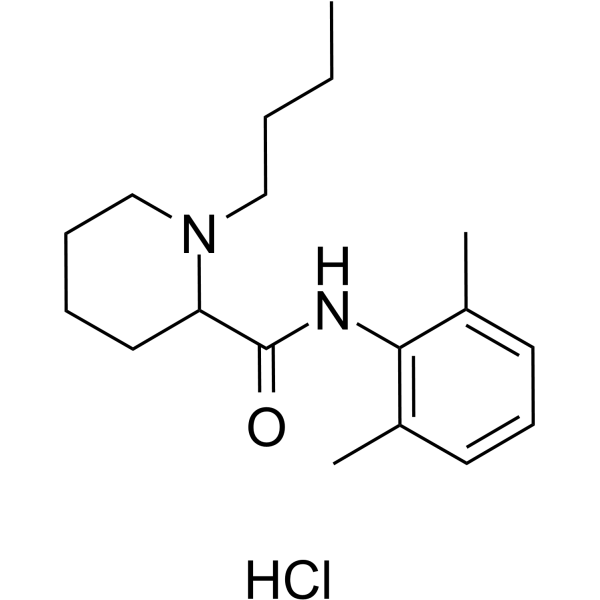
Cat. No.: HY-B0405A
CAS No.: 18010-40-7
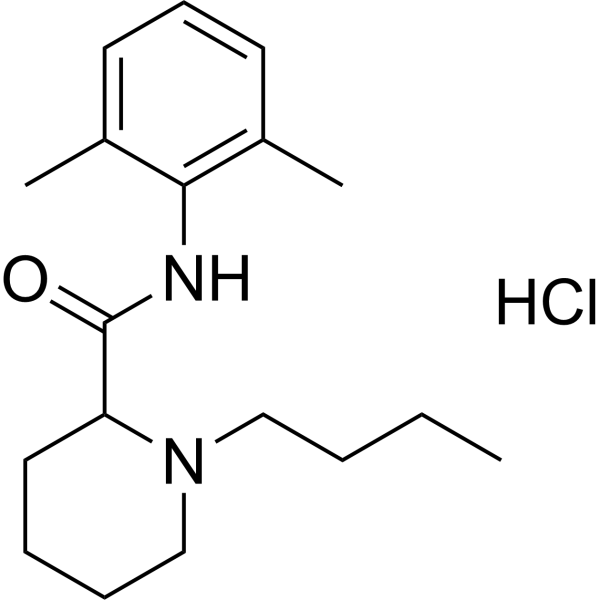
Bupivacaine hydrochloride is a NMDA receptor inhibitor.Bupivacaine can block sodium, L-calcium, and potassium channels.Bupivacaine potently blocks SCN5A channels with the IC50 of 69.5 μM. Bupivacaine hydrochloride can be used for the research of chronic pain .
loading...
    loading...
2
2 Cited Publications
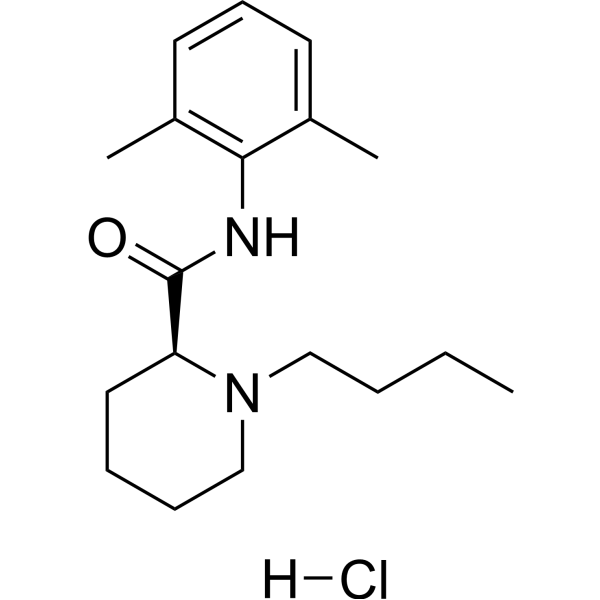
Cat. No.: HY-B0653A
CAS No.: 27262-48-2
Synonyms: (S)-(-)-Bupivacaine monohydrochloride
Levobupivacaine hydrochloride ((S)-(-)-Bupivacaine monohydrochloride) is a long-acting amide local agent that can suppress or relieve pain. Levobupivacaine hydrochloride exerts agent that can suppress or relieve pain. and analgesic effects through reversible blockade of neuronal sodium channel. Levobupivacaine hydrochloride can inhibit impulse transmission and conduction in cardiovascular and other tissues, possessing certain cardiac and CNS toxicity. Levobupivacaine hydrochloride is metabolized by hepatic cytochrome P450 (CYP450) enzymes in vivo. Levobupivacaine hydrochloride can also induce ferroptosis by miR-489-3p/SLC7A11 signaling in gastric cancer .
loading...
    loading...
2
2 Cited Publications
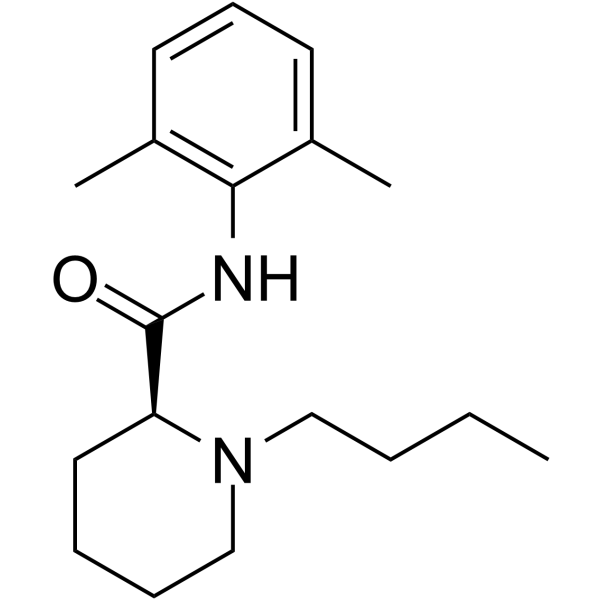
Cat. No.: HY-B0653
CAS No.: 27262-47-1
Synonyms: (S)-(-)-Bupivacaine
Research Areas:  

Neurological Disease Cancer

Levobupivacaine ((S)-(-)-Bupivacaine) is a long-acting amide local agent that can suppress or relieve pain. Levobupivacaine exerts agent that can suppress or relieve pain. and analgesic effects through reversible blockade of neuronal sodium channel. Levobupivacaine can inhibit impulse transmission and conduction in cardiovascular and other tissues, possessing certain cardiac and CNS toxicity. Levobupivacaine is metabolized by hepatic cytochrome P450 (CYP450) enzymes in vivo. Levobupivacaine can also induce ferroptosis by miR-489-3p/SLC7A11 signaling in gastric cancer .
loading...
    loading...
1
1 Cited Publications
Cat. No.: HY-121192
CAS No.: 56365-38-9
Purity:  99.27%
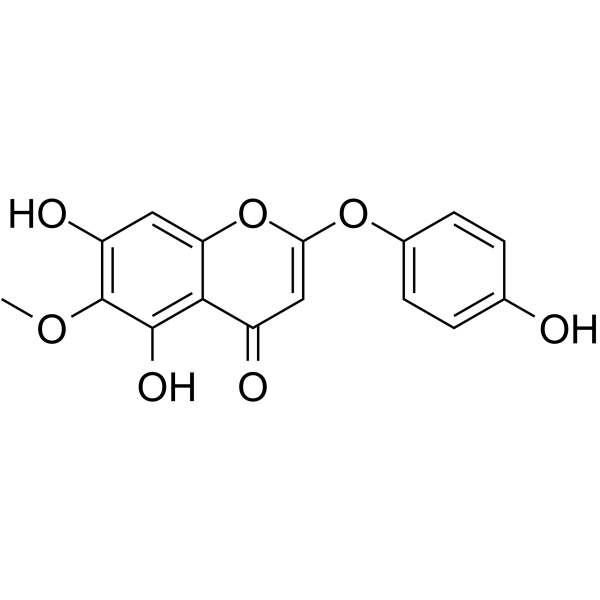
Capillarisin, as a constituent from Artemisiae Capillaris herba, is found to exert anti-inflammatory and antioxidant properties. Capillarisin can be used for the research of asthma-mediated complications and can be a potential neuroprotectant against bupivacaine-induced neurotoxicity .
loading...
    loading...
Cat. No.: HY-B0405AR
CAS No.: 18010-40-7
Bupivacaine (hydrochloride) (Standard) is the analytical standard of Bupivacaine (hydrochloride). This product is intended for research and analytical applications. Bupivacaine hydrochloride is a NMDA receptor inhibitor.Bupivacaine can block sodium, L-calcium, and potassium channels.Bupivacaine potently blocks SCN5A channels with the IC50 of 69.5 μM. Bupivacaine hydrochloride can be used for the research of chronic pain .
loading...
    loading...
Cat. No.: HY-B0405S
CAS No.: 474668-57-0
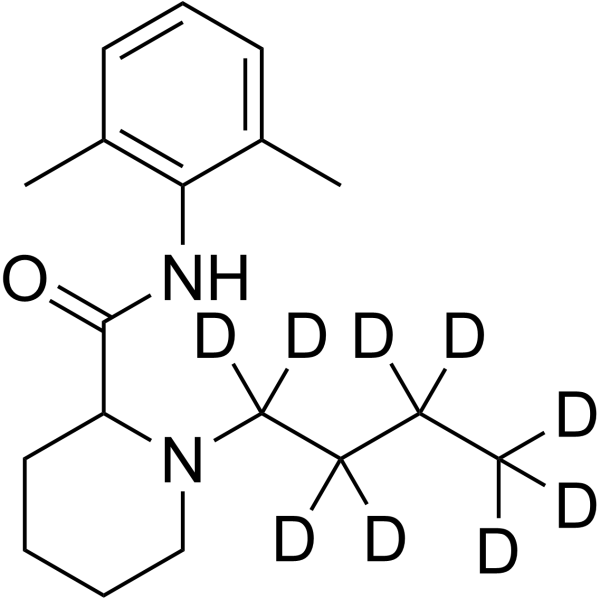
Bupivacaine-d99 is a deuterium labeled Bupivacaine. Bupivacaine is a NMDA receptor inhibitor.Bupivacaine can block sodium, L-calcium, and potassium channels.Bupivacaine potently blocks SCN5A channels with the IC50 of 69.5 μM. Bupivacaine can be used for the research of chronic pain .
loading...
    loading...
Cat. No.: HY-B1288A
CAS No.: 99-43-4
Synonyms: Benoxinate; Novesinol; Oxybucaine
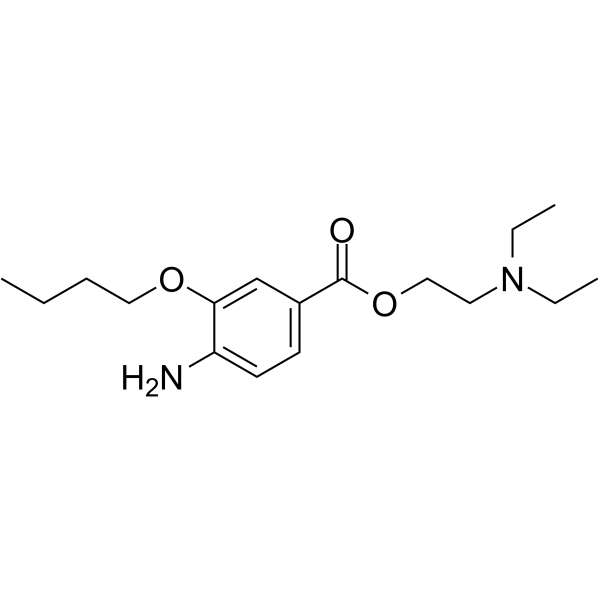
Oxybuprocaine is a short-acting ester anesthetic. Oxybuprocaine binds to sodium channels and reversibly stabilizes neuronal membranes. Oxybuprocaine has cutaneous analgesic properties. Oxybuprocaine is less potent than Bupivacaine (HY-B0405) at producing central nervous system and cardiovascular toxicity. Oxybuprocaine can be used in ophthalmology and otolaryngology .
loading...
    loading...
Cat. No.: HY-W328520
CAS No.: 1037184-07-8
Target:  

Drug Intermediate

Research Areas:  

Others

2,6-Dichloro-N-(2,6-dimethylphenyl)hexanamide is a Bupivacaine (HY-B0405) impurity.
loading...
    loading...
Cat. No.: HY-Z6848
CAS No.: 27262-46-0
Target:  

Sodium Channel

Research Areas:  

Neurological Disease

(R)-(+)-Bupivacaine hydrochloride is a voltage-gated sodium channel inhibitor. (R)-(+)-Bupivacaine hydrochloride can selectively block the voltage-gated sodium channels on nerve cell membranes, inhibit the influx of sodium ions, and thus prevent the generation and conduction of nerve impulses, exerting local anesthetic activity. (R)-(+)-Bupivacaine hydrochloride can be used in research of acute pains .
loading...
    loading...
Cat. No.: HY-W415121
CAS No.: 73360-54-0
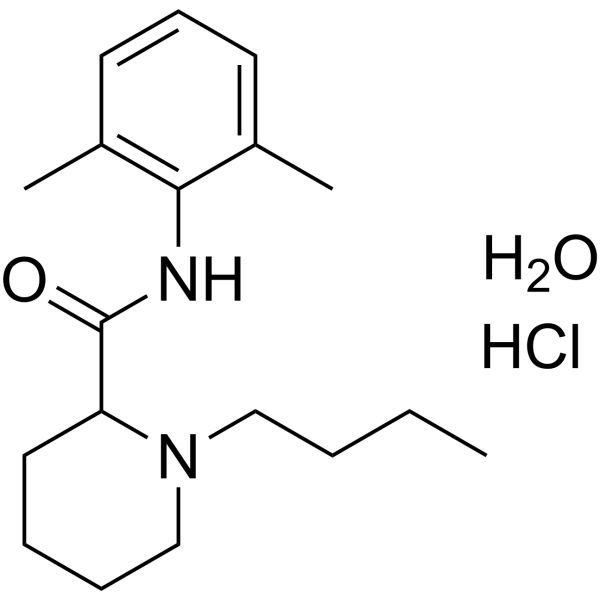
Bupivacaine hydrochloride monohydrate is a NMDA receptor inhibitor. Bupivacaine hydrochloride monohydrate can block sodium, L-calcium, and potassium channels. Bupivacaine hydrochloride monohydrate potently blocks SCN5A channels with the IC50 of 69.5 μM. Bupivacaine hydrochloride monohydrate can be used for the research of chronic pain .
loading...
    loading...
Cat. No.: HY-W045132
CAS No.: 15883-20-2
Synonyms: DesbutylBupivacaine
Target:  

Drug Metabolite

Research Areas:  

Neurological Disease

N-Desbutyl Bupivacaine (compound 100) is a metabolite of Bupivacaine (HY-B0405), an NMDA receptor inhibitor and SCN5A antagonist .
loading...
    loading...
Cat. No.: HY-B0405R
CAS No.: 38396-39-3
Bupivacaine (Standard) is the analytical standard of Bupivacaine. This product is intended for research and analytical applications. Bupivacaine is a NMDA receptor inhibitor. Bupivacaine can block sodium, L-calcium, and potassium channels.Bupivacaine potently blocks SCN5A channels with the IC50 of 69.5 μM. Bupivacaine can be used for the research of chronic pain .
loading...
    loading...
Cat. No.: HY-W415121R
CAS No.: 73360-54-0
Bupivacaine (hydrochloride monohydrate) (Standard) is the analytical standard of Bupivacaine (hydrochloride monohydrate). This product is intended for research and analytical applications. Bupivacaine hydrochloride monohydrate is a NMDA receptor inhibitor. Bupivacaine hydrochloride monohydrate can block sodium, L-calcium, and potassium channels. Bupivacaine hydrochloride monohydrate potently blocks SCN5A channels with the IC50 of 69.5 μM. Bupivacaine hydrochloride monohydrate can be used for the research of chronic pain .
loading...
    loading...
Cat. No.: HY-B1682AR
CAS No.: 121961-22-6
Research Areas:  

Infection

Bupivacaine (hydrochloride monohydrate) (Standard) is the analytical standard of Bupivacaine (hydrochloride monohydrate). This product is intended for research and analytical applications. Bupivacaine hydrochloride monohydrate is a NMDA receptor inhibitor. Bupivacaine hydrochloride monohydrate can block sodium, L-calcium, and potassium channels. Bupivacaine hydrochloride monohydrate potently blocks SCN5A channels with the IC50 of 69.5 μM. Bupivacaine hydrochloride monohydrate can be used for the research of chronic pain .
loading...
    loading...
Cat. No.: HY-185388
Synonyms: Liposomal Bupivacaine
Bupivacaine liposome is a liposome-encapsulated form of Bupivacaine (HY-B0405). Bupivacaine is an NMDA receptor inhibitor. During the action potential, Bupivacaine blocks sodium channels, thereby inhibiting the generation and conduction of nerve impulses induced by painful stimuli. Bupivacaine liposome reduces the release rate of Bupivacaine, thus achieving a long-lasting pain relief effect.
loading...
    loading...
Cat. No.: HY-Z7977
CAS No.: 1797894-80-4
Target:  

Drug Intermediate

Research Areas:  

Others

1-(2,6-Dimethylphenyl)-6,7-dihydro-1H-azepin-2(5H)-one is a Bupivacaine (HY-B0405) impurity.
loading...
    loading...
Cat. No.: HY-W702016
CAS No.: 1286973-34-9
Bupivacaine-d9 hydrochloride is the deuterium labeled Bupivacaine hydrochloride (HY-B0405A). Bupivacaine hydrochloride is a NMDA receptor inhibitor.Bupivacaine can block sodium, L-calcium, and potassium channels.Bupivacaine potently blocks SCN5A channels with the IC50 of 69.5 μM. Bupivacaine hydrochloride can be used for the research of chronic pain .
loading...
    loading...
Cat. No.: HY-W585873
CAS No.: 1796927-05-3
Target:  

Drug Metabolite

Research Areas:  

Metabolic Disease

Bupivacaine N-oxide hydrochloride is a metabolite of Bupivacaine (HY-B0405). Bupivacaine is a NMDA receptor inhibitor. Bupivacaine can block sodium, L-calcium, and potassium channels.Bupivacaine potently blocks SCN5A channels with the IC50 of 69.5 μM. Bupivacaine can be used for the research of chronic pain.
loading...
    loading...
Cat. No.: HY-W703386
CAS No.: 1346598-03-5
Bupivacaine-d9 N-Oxide is the deuterium labeled Bupivacaine N-Oxide.
loading...
    loading...

