1. Search Result
Search Result
Results for "

Caspase-3-IN-3

" in MedChemExpress (MCE) Product Catalog:

20

Inhibitors & Agonists

1

Fluorescent Dyes

6

Peptides

7

Natural
Products

Cat. No. Product Name Target Research Areas Chemical Structure
  • HY-125848

    Apoptosis AMPK PPAR p38 MAPK PI3K Akt GSK-3 Reactive Oxygen Species (ROS) SOD Caspase Neurological Disease Metabolic Disease Inflammation/Immunology Cancer
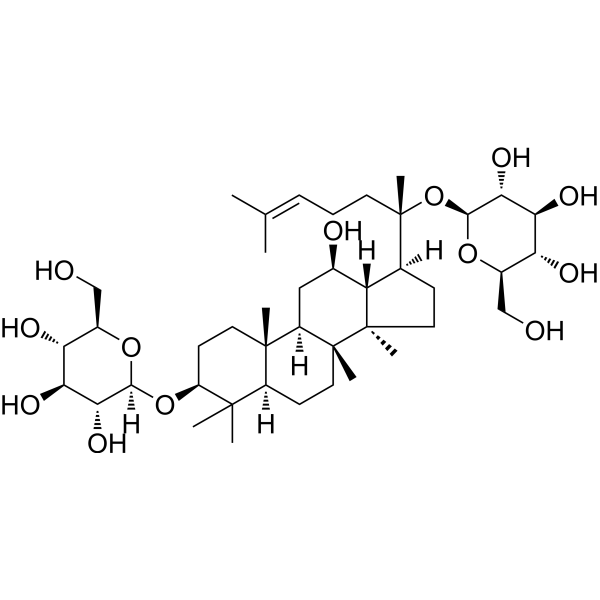
    Ginsenoside F2 is an orally active bioactive compound that participates in the regulation of metabolism and inflammation. Ginsenoside F2 promotes the phosphorylation of AMPK and ACC, binds to PPARγ, inhibits the phosphorylation of MAPK, activates the PI3K/AKT/GSK-3β pathway, reduces GLRX expression, and regulates lipid metabolism. Ginsenoside F2 reduces ROS production and MDA levels, restores SOD activity in cells, and alleviates oxidative stress. Ginsenoside F2 induces cell apoptosis (Apoptosis) and increases the number of cleaved caspase-3-positive cells. Ginsenoside F2 reduces body weight gain, adipose tissue weight and serum lipid levels in obese mice, and activates the hepatic AMPK signaling pathway and the expression of antioxidant enzymes. Ginsenoside F2 alleviates atopic dermatitis in mice by inhibiting inflammation and reshaping the gut microbiota . Ginsenoside F2 is applicable to research related to insulin resistance, obesity, atopic dermatitis, liver cancer, glioblastoma and glioma .
    Ginsenoside F2
  • HY-N1988
    Cucurbitacin IIa
    1 Publications Verification

    HemslecIN A

    Survivin Apoptosis EGFR Caspase p38 MAPK Autophagy MEK Raf ERK STAT CaMK Inflammation/Immunology Cancer
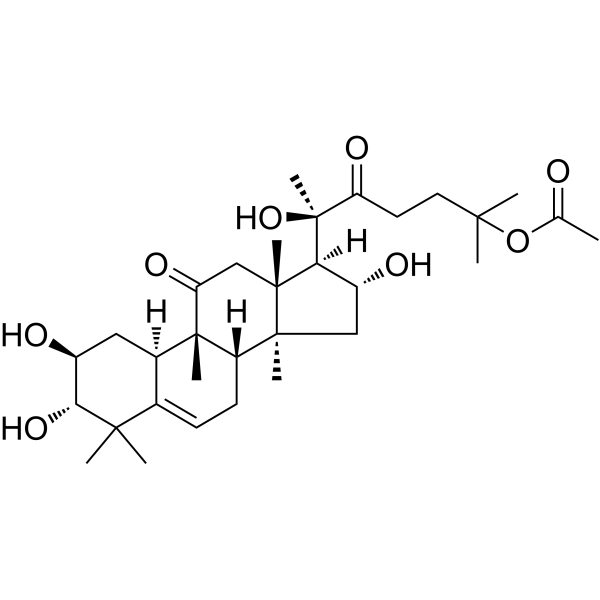
    Cucurbitacin IIa (Hemslecin A) is an orally active, blood-brain barrier-permeable EGFR inhibitor with an IC50 of 1.455 nM against human EGFR. Cucurbitacin IIa induces caspase-3-dependent apoptosis, downregulates survivin expression, enhances autophagy levels, disrupts the actin cytoskeleton via actin aggregation, arrests the cell cycle at the G2/M phase, and exerts anti-inflammatory activity by inhibiting the EGFR-MAPK signaling pathway. Cucurbitacin IIa can be used in the research of inflammation-related diseases, depression, and cancers such as non-small cell lung cancer .
    Cucurbitacin IIa
  • HY-N2877
    Annonacin
    1 Publications Verification

    Potassium Channel Sodium Channel Na+/K+ ATPase Calcium Channel Apoptosis Neurological Disease Cancer
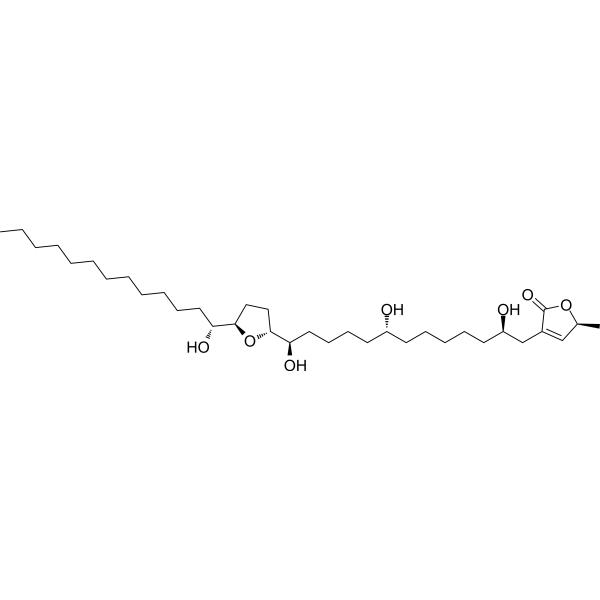
    Annonacin is an acetylgenin that is toxic by inhibiting the pathway of the mitochondrial complex. Annonacin increases tau phosphorylation in R406W +/+ mice. Annonacin acts as an inhibitor of the sodium/potassium and sarcoplasmic reticulum (SERCA) ATPase pumps. Annonacin has significant killing effect on ovarian cancer cell, cervical cancer cell, breast cancer cell, bladder cancer cell and skin cancer cell. Annonacin induces apoptosis through Bax and Caspase-3-related pathways .
    Annonacin
  • HY-P1986

    Caspase Cancer
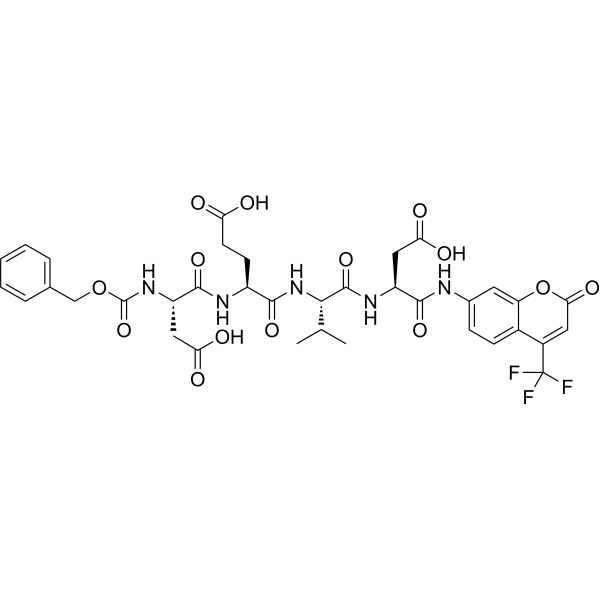
    Z-DEVD-AFC is a cell-permeant substrate for caspase-3, which causes a shift in fluorescence uponcleavage of the AFC fluorophore. Z-DEVD-AFC can be used to detect caspase-3-like enzymes activity .
    Z-DEVD-AFC
  • HY-B0842
    Thiophanate-Methyl
    3 Publications Verification

    Environmental Pollutants Fungal Apoptosis Bcl-2 Family Caspase TNF Receptor SOD Reactive Oxygen Species (ROS) Infection
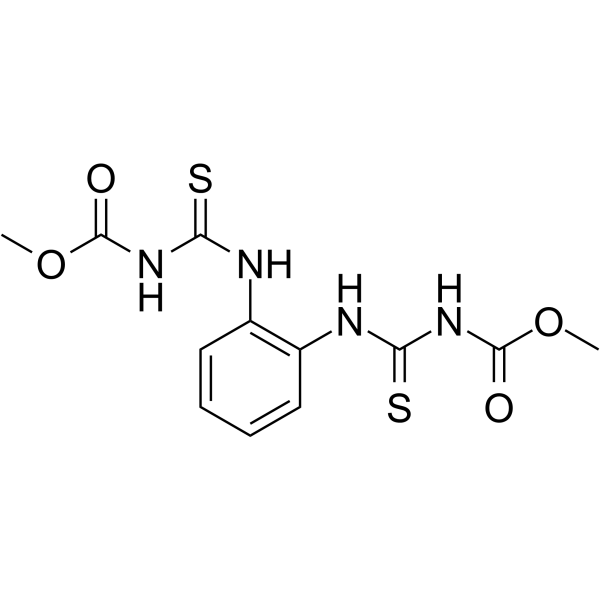
    Thiophanate-Methyl is a pesticide residue and fungicide. Thiophanate-Methyl induces hepatotoxicity via caspase-3-mediated apoptosis and oxidative stress, thereby causing metabolic imbalance in the liver of zebrafish. Thiophanate-Methyl impairs the rhizobacteria-mediated defense response of cucumber against fusarium wilt .
    Thiophanate-Methyl
  • HY-N12445
    Quercetin-3'-O-glucoside
    1 Publications Verification

    Topoisomerase Caspase Apoptosis SOD Metabolic Disease Inflammation/Immunology Cancer
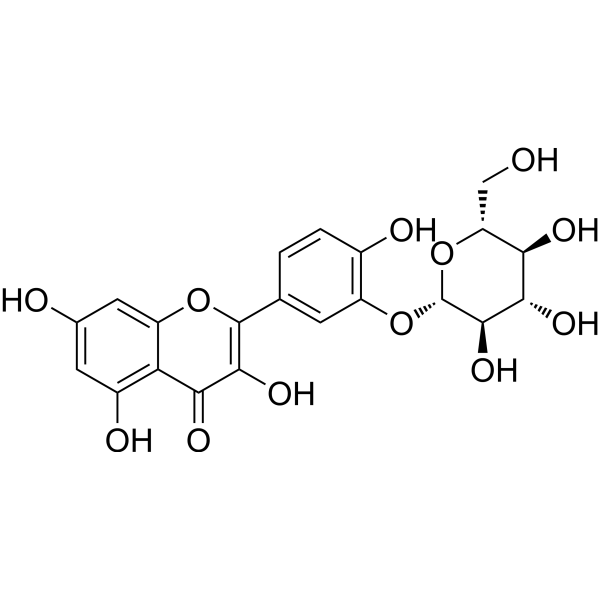
    Quercetin-3'-O-glucoside is an orally active flavonoid glycoside. Quercetin-3'-O-glucoside reduces liver glucose-6-phosphatase activity, alters serum insulin and glucose levels, and regulates the activities of antioxidant enzymes in the liver and kidney. Quercetin-3'-O-glucoside inhibits DNA topoisomerase II, induces S-phase cell cycle arrest and caspase-3-mediated apoptosis in hepatocellular carcinoma cells. Quercetin-3'-O-glucoside selectively inhibits EGFR-mediated signaling pathways targeting AKT, ERK1/2, FAK and MEK1/2. Quercetin-3'-O-glucoside inhibits growth factor-induced migration and invasion in pancreatic cancer cells. Quercetin-3'-O-glucoside exerts free radical scavenging effects. Quercetin-3'-O-glucoside is applicable to research related to pancreatic cancer, diabetes, hepatocellular carcinoma and malignant tumors .
    Quercetin-3'-O-glucoside
  • HY-P10939A

    Caspase Pyroptosis Inflammation/Immunology Cancer
    Ac-DMLD-CMK TFA is a caspase 3 inhibitor and a GSDME inhibitor. Ac-DMLD-CMK TFA binds directly to the catalytic domain of caspase-3, blocks caspase-3-mediated cleavage of GSDME, inhibits the activation of caspase 3 and Gsdme in the caspase 3-Gsdme signaling pathway, and reduces the levels of pyroptosis and apoptosis as well as the expression of LDH, IL-6, IL-1β and IL-18. Ac-DMLD-CMK TFA alleviates renal function deterioration, renal tubular epithelial cell injury, inflammatory cytokine secretion, pulmonary structural damage, and chemotherapy-induced nephrotoxicity .
    Ac-DMLD-CMK TFA
  • HY-N12461

    Bacterial Caspase Apoptosis Infection
    Cucurbitacin F is a tetracyclic protostane-type triterpenoid with low toxicity, antibacterial and anti-inflammatory activities, and is also a related compound of Cucurbitacin B (HY-N0416). Cucurbitacin F widely exists in plants such as Cucurbitaceae plants, Quisqualis indica and Sorbaria sorbifolia. Cucurbitacin F acts as an actin aggregator and reduces cell viability in a dose-dependent manner. Cucurbitacin F induces apoptosis by triggering G2/M phase cell cycle arrest and activating the caspase-3-dependent apoptosis .
    Cucurbitacin F
  • HY-P10939

    Caspase Pyroptosis Inflammation/Immunology Cancer
    Ac-DmLD-CMK is a caspase 3 inhibitor and a GSDME inhibitor. Ac-DmLD-CMK binds directly to the catalytic domain of caspase-3, blocks caspase-3-mediated cleavage of GSDME, inhibits the activation of caspase 3 and Gsdme in the caspase 3-Gsdme signaling pathway, and reduces the levels of pyroptosis and apoptosis as well as the expression of LDH, IL-6, IL-1β and IL-18. Ac-DmLD-CMK alleviates renal function deterioration, renal tubular epithelial cell injury, inflammatory cytokine secretion, pulmonary structural damage, and chemotherapy-induced nephrotoxicity .
    Ac-DMLD-CMK
  • HY-172786

    Caspase Apoptosis Metabolic Disease
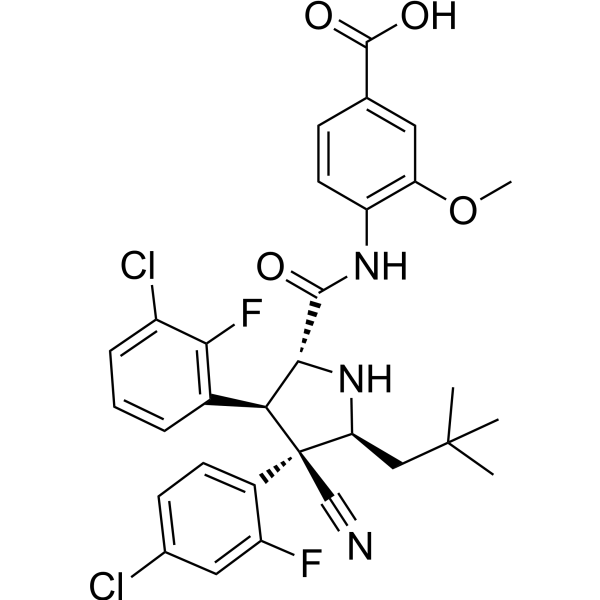
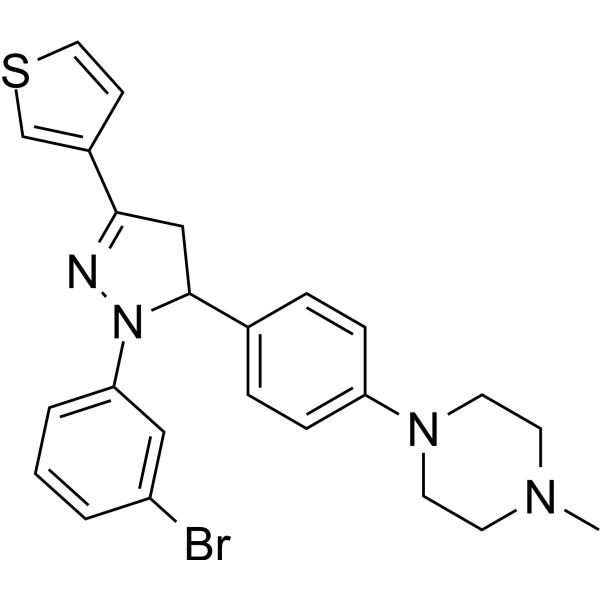
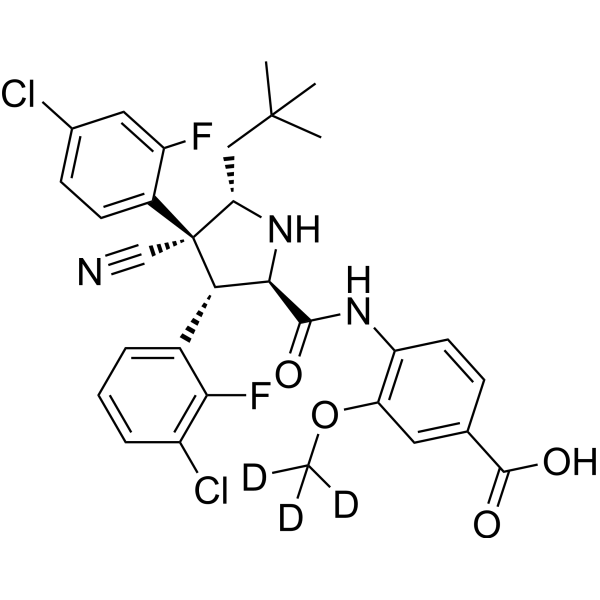
    Caspase-3-IN-3 (compound 7) is a caspase 3 inhibitor. Caspase-3-IN-3 increases cellular ATP levels, inhibits caspase-3 activity, decreases nitrite production, suppresses cytokine-induced apoptosis, and restores Glucose (HY-B0389)-stimulated insulin secretion .
    Caspase-3-IN-3
  • HY-155390

    Caspase Apoptosis Cancer
    Caspase-3 activator 3 (compound 2h) induces apoptosis in HL-60 and K562 cells via significant caspase 3 activation. Caspase-3 activator 3 shows antileukemic acticity against HL-60 and K562 cells, with IC50 values of 42.89 and 33.61 μM, respectively .
    Caspase-3 activator 3
  • HY-P2615

    Fluorescent Dye Cancer
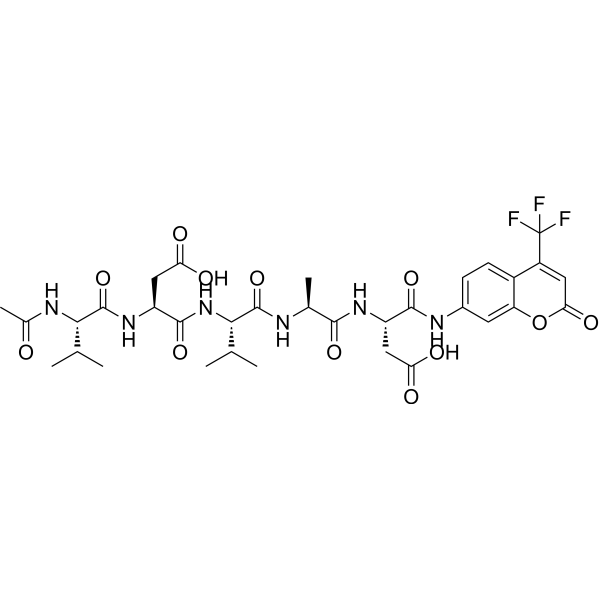
    Ac-VDVAD-AFC is a caspase-specific fluorescent substrate. Ac-VDVAD-AFC can measure caspase-3-like activity and caspase-2 activity and can be used for the research of tumor and cancer .
    Ac-VDVAD-AFC
  • HY-N15380

    PARP Reactive Oxygen Species (ROS) Caspase Apoptosis Pyroptosis Cancer
    4,4′-Secalonic acid D (Compound 12) is a PARP1 inhibitor. 4,4′-Secalonic acid D induces the accumulation of ROS and DNA damage, activates the caspase-3/GSDME pathway, and triggers apoptosis and pyroptosis of tumor cells by inhibiting PARP1. 4,4′-Secalonic acid D has anti-tumor activity .
    4,4′-Secalonic acid D
  • HY-P2615A
    Ac-VDVAD-AFC TFA
    2 Publications Verification

    Fluorescent Dye Cancer
    Ac-VDVAD-AFC TFA is a caspase-specific fluorescent substrate. Ac-VDVAD-AFC TFA can measure caspase-3-like activity and caspase-2 activity and can be used for the research of tumor and cancer .
    Ac-VDVAD-AFC TFA
  • HY-N8464

    Bacterial Cancer
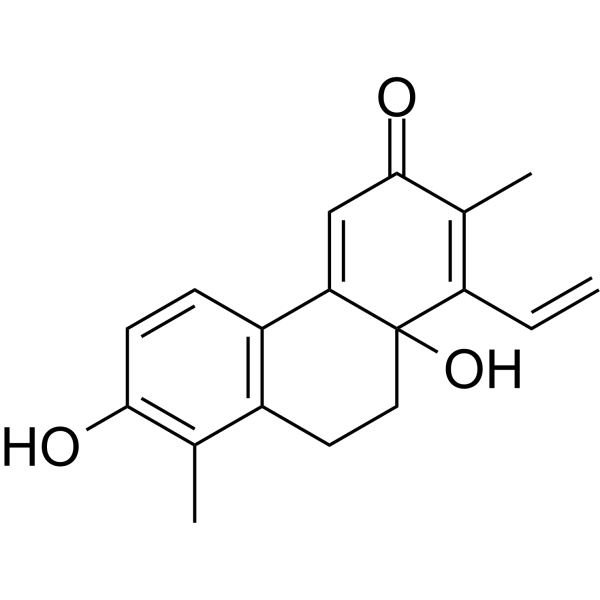
    Juncuenin D induces caspase-3-mediated cytotoxicity in HT22 cells. Juncuenin D also has anti-bacterial activity against MRSA strains. Juncuenin D can be isolated from J. effusus .
    Juncuenin D
  • HY-118988

    PPAR Apoptosis Cancer
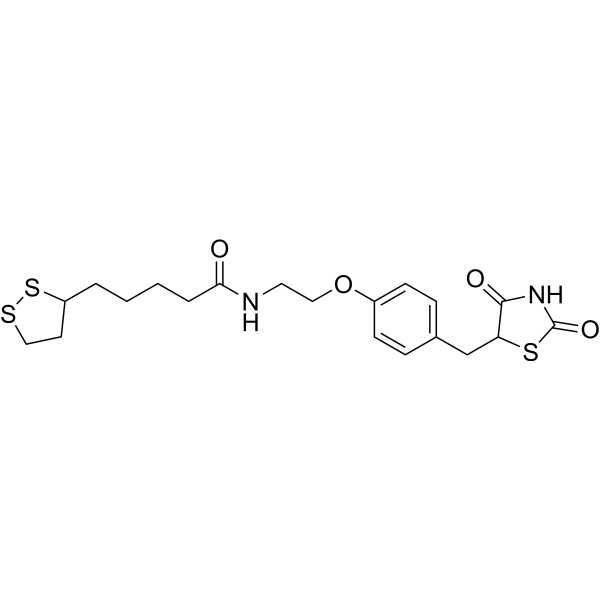
    CAY10506 is a PPARγ ligand that can induce cell death and ROS production in a PPARγ-dependent manner in vitro. CAY10506 exhibits radiosensitizing effects, enhancing γ-radiations-induced apoptosis and caspase-3-mediated poly (ADP-ribose) polymerase (PARP) cleavage. CAY10506 can be used in cancer research .
    CAY10506
  • HY-175039

    FAK Apoptosis Reactive Oxygen Species (ROS) Caspase Cancer
    FAK-IN-28 is an orally active FAK inhibitor (IC50 = 0.4 nM). FAK-IN-28 exhibits dual antiproliferative and anti-metastatic properties. FAK-IN-28 triggers caspase-3-dependent apoptosis via ROS elevation. FAK-IN-28 inhibits tumor growth without causing weight loss or hepatotoxicity. FAK-IN-28 is useful in the study of FAK-driven malignancies, such as colon cancer, cervical cancer, triple-negative breast cancer, and melanoma .
    FAK-IN-28
  • HY-180839

    DNA Alkylator/Crosslinker Caspase Apoptosis Mitochondrial Metabolism Reactive Oxygen Species (ROS) Cancer
    anti-TNBC agent-14 (Compound 4l) is a selective anti-TNBC agent. anti-TNBC agent-14 is a potent and selective DNA-binding agent. anti-TNBC agent-14 induces caspase-3-dependent Apoptosis, mitochondrial ROS generation .
    anti-TNBC agent-14
  • HY-P11865

    Caspase Apoptosis Cancer
    Ac-ATS010-KE is a selective polypeptide inhibitor of caspase-3. Ac-ATS010-KE protects cells from FasL-induced apoptosis. The unmethylated form of Ac-ATS010-KE exhibits better cell viability than the fully methylated form. Ac-ATS010-KE can be used in research on cancers such as colorectal cancer and the development of caspase-3-targeted molecular probes .
    Ac-ATS010-KE
  • HY-185101

    Drug-Linker Conjugates for ADC Cancer
    MC-AcLys-GDEVD-PABC-Exatecan (MC-AcLys-GDEVD-PABC-DX8951) is a agent-linker conjugate for ADC. MC-AcLys-GDEVD-PABC-Exatecan is a DX8951 (a DNA topoisomerase I inhibitor) derivative with a novel caspase-3 cleavable peptide linker MC-AcLys-GDEVD-PABC linker. MC-AcLys-GDEVD-PABC-Exatecan can be used to prepare DX8951 antibody conjugate (ADC), and it exhibites significant bystander effect mediated by the caspase-3-triggered extracellular cleavage of the linker, enhancing payload release into the tumor microenvironment.
    MC-AcLys-GDEVD-PABC-Exatecan

Inquiry Online

Your information is safe with us. * Required Fields.

Salutation


Country or Region *

Applicant Name *


Organization Name *

Department *


Email Address *


Product Name *

Cat. No.


Requested quantity *

Phone Number *


Remarks

Inquiry Online

Inquiry Information

Product Name:
Cat. No.:
Quantity:
MCE Japan Authorized Agent:

