



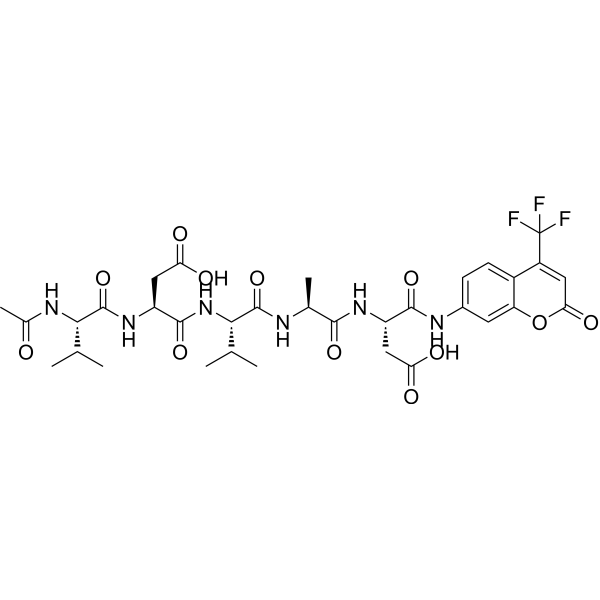
Ac-VDVAD-AFC
Based on 2 publication(s) in Google Scholar
Ac-VDVAD-AFC is a caspase-specific fluorescent substrate. Ac-VDVAD-AFC can measure caspase-3-like activity and caspase-2 activity and can be used for the research of tumor and cancer.
Nur für Forschungszwecke. Wir verkaufen nicht an Patienten.
- CAS. Nr.: 210344-94-8
- Formel: C33H41F3N6O12
- Molecular Weight:770.71
-
Speicherung:
Please store the product under the recommended conditions in the Certificate of Analysis.

To place orders, for customer services and technical support, please contact: MedChemExpress USA
Tel: 609-228-6898 E-mail: [email protected] [email protected]


-
 Biologische Aktivität
-
Chemical Information
- Protokoll
- Reinheit & Dokumentation
- Verweise
-
 Help & FAQs


-
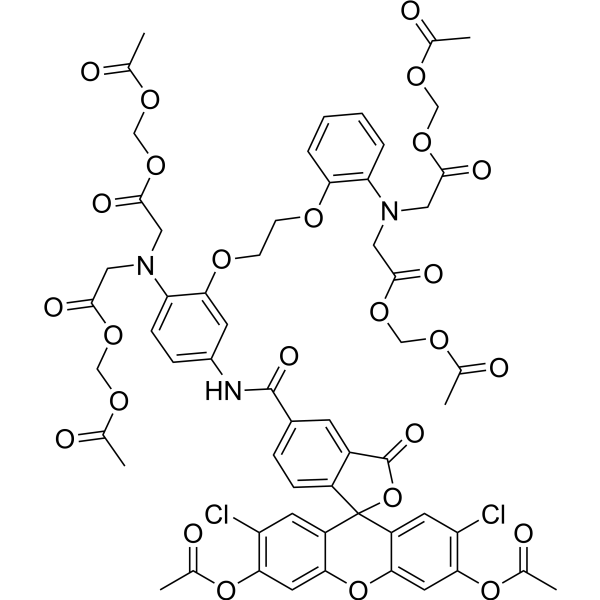
HY-D1176
Calcium Green 1AMCalcium Indicator -
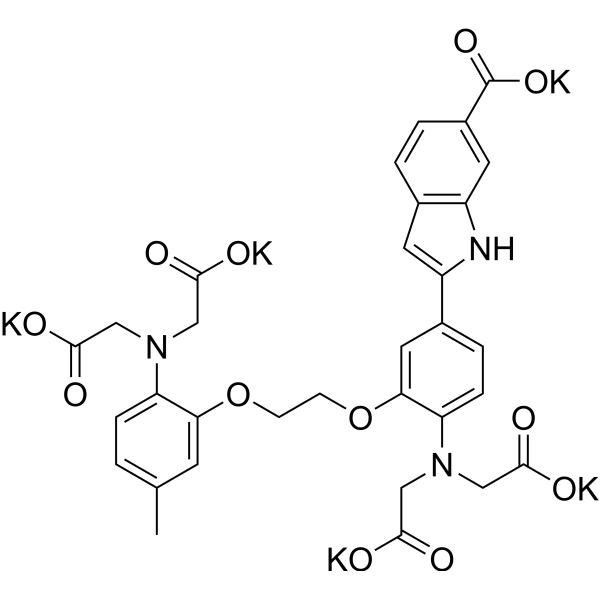
HY-D0121A
INDO 1 pentapotassiumCa2+ Indicator -
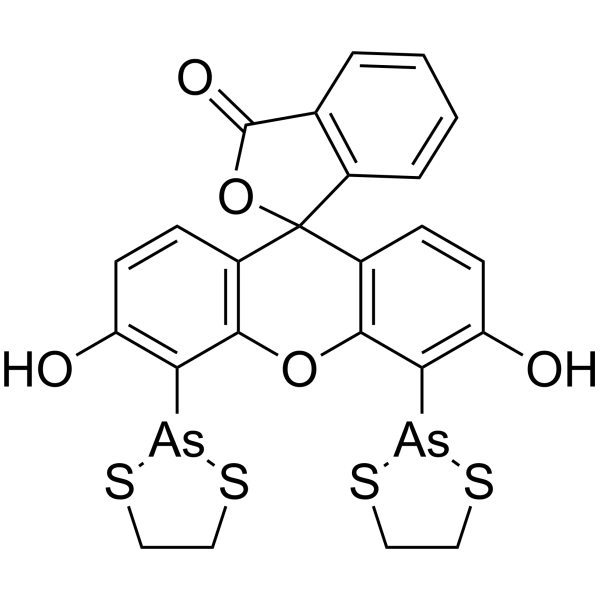
HY-130412
FlAsH-EDT2Protein Labeling Reagent -
HY-116583
Resorufin butyrateFluorogenic Substrate -
HY-P3110
Ac-DNLD-AMCFluorescent Dye -
HY-130575
Fura-FF AMFluorochrome -
HY-D1447
Fluo-3FF pentapotassiumFluorochrome -
HY-129547
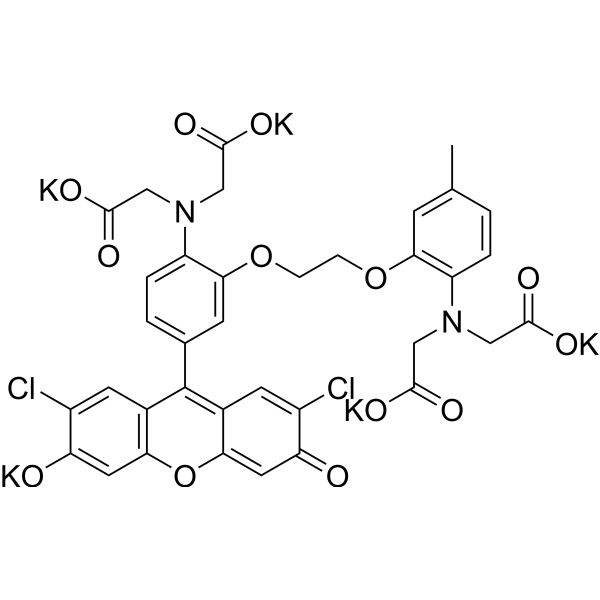
Fluo-3 pentapotassiumFluorochrome -
HY-112526
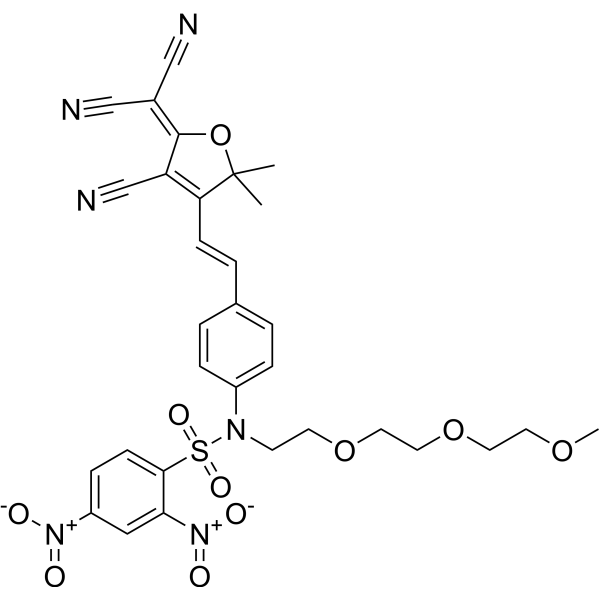
Thiofluor 623Fluorescent Probe
Publications Citing Use of MedChemExpress (MCE) Ac-VDVAD-AFC
More

Biologische Aktivität
Beschreibung
In Vitro
Guide (Following is our recommended protocol. This protocol only provides a guideline, and should be modified according to your specific needs).
Labeling of Cells[1]:
1. Culture cells in in a 6 well plate at a density of 3×10⁵ cells per well or in a 96 well plate at a density of 3×10⁴ cells per well. Incubate the cells according to your normal protocol.
2. 2 μM arsenic or cotreated with 2 μM arsenic and 25 μM quercetin to treate A549 cells for 24 h.
3. 50 μL of cell lysate is made up to 200 μL buffer containing HEPES 20 mM, 40 μM DEVD‐AMC, or Ac‐VDVAD‐AFC, and 2mM dithiothreitol.
4. 40 μM fluorescent substrate Ac-VDVAD-AFC is used to measure Caspase-2 activity for 4 days.
5. Fluorescence is measured at 460 and 505 nm wavelengths, respectively (The activity was calculated as arbitrary fluorescence units per min per mg protein).
MedChemExpress (MCE) has not independently confirmed the accuracy of these methods. They are for reference only. Further protocols information, click here.


Chemical Information
-
CAS. Nr. 210344-94-8
-
Molecular Weight 770.71
-
Formel C33H41F3N6O12
-
Versand
Room temperature in continental US; may vary elsewhere.
-
Speicherung
Please store the product under the recommended conditions in the Certificate of Analysis.


Publications (2)
-
Journal Impact Factor
-
Most Recent
-
Genes (Basel)
Characterization of the Apoptotic and Antimicrobial Activities of Two Initiator Caspases of Sea Cucumber Apostichopus japonicus. [Abstract]2024 Apr 25;15(5):540. PMID: 38790170 -

Protokoll
-
Apoptosis Solutions
Apoptosis is a regulated, generally non-lytic cell-death pathway that removes unwanted, damaged, infected, or abnormal cells through coordinated morphological changes, caspase activation, DNA fragmentation, and membrane remodeling. The intrinsic apoptosis pathway is controlled mainly by mitochondrial outer membrane permeabilization, BCL-2 family proteins, cytochrome c release, apoptosome formation, caspase-9 activation, and downstream executioner caspase-3/7 activation. The extrinsic apoptosis pathway is initiated by death receptors such as Fas, TNFR, and TRAIL receptors, which recruit adaptor proteins and activate caspase-8 before engaging executioner caspases or mitochondrial amplification through BID cleavage. Apoptosis is linked to many phenotypes, including cancer cell killing, tissue homeostasis, immune regulation, neurodegeneration, infection response, and treatment-induced cytotoxicity; unresolved questions include how apoptosis interacts with necroptosis, pyroptosis, ferroptos


Reinheit & Dokumentation
Verweise

Calculators
Konzentration (Stammlösung) × Volumen (Stammlösung) = Konzentration (Ziellösung) × Volumen (Ziellösung)


Ac-VDVAD-AFC Related Classifications
HY-P2615 Related Classifications
 Powered by Bioz