
14 Results for "

D-Luciferin sodium salt

" in MedChemExpress (MCE) Product Catalog:
Products (14)

14 Results for "D-Luciferin sodium salt" in MCE Product Catalog:

142
142 Publications Verification
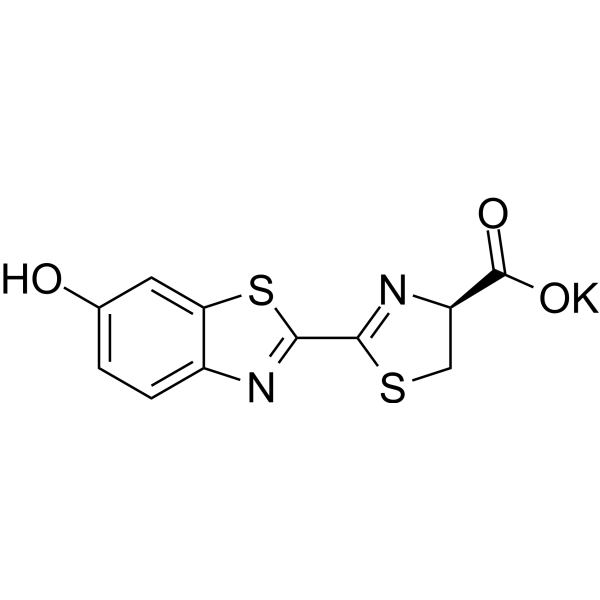
Cat. No.: HY-12591B
CAS No.: 115144-35-9
Purity:  99.97%
Synonyms: D-(-)-Luciferin potassium; Firefly Luciferin potassium; Beetle Luciferin potassium
D-luciferin potassium is the natural substrate of the enzyme luciferase (Luc) that catalyzes the production of the typical yellowgreen light of fireflies. The 560 nm chemiluminescence from this reaction peaks within seconds, with light output that is proportional to luciferase concentration when the substrate luciferin is present in excess. The luciferase (luc) gene is a popular reporter gene for research and agent screening. Chemiluminescent techniques are virtually background-free, making the luc reporter gene ideal for detecting low-level gene expression. As little as 0.02 pg of luciferase can be reliably measured in a standard scintillation counter. In addition to its role as a reporter of gene expression, luciferase is commonly used in an extremely sensitive assay for ATP . We offer the firefly luciferase (HY-P1004A), luciferin free acid (HY-12591A), as well as its water-soluble sodium salts (HY-12591) and potassium salts (HY-12591B) .
loading...
    loading...
142
142 Publications Verification
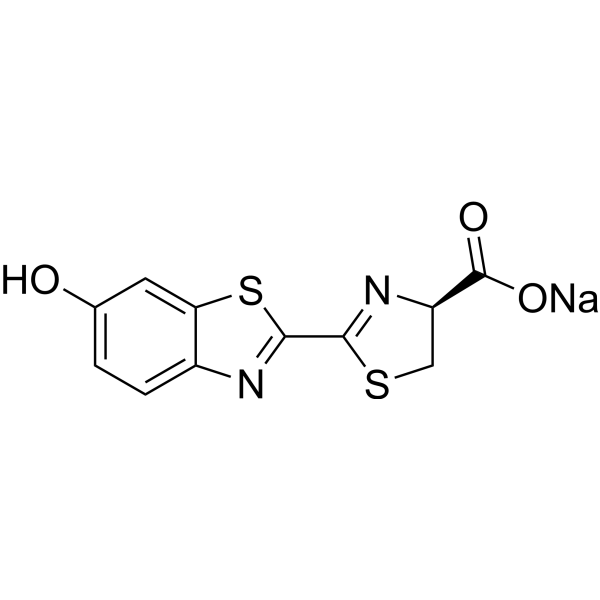
Cat. No.: HY-12591
CAS No.: 103404-75-7
Purity:  99.92%
Synonyms: D-(-)-Luciferin sodium; Firefly Luciferin sodium; Beetle Luciferin sodium
D-luciferin sodium is the natural substrate of the enzyme luciferase (Luc) that catalyzes the production of the typical yellowgreen light of fireflies. The 560 nm chemiluminescence from this reaction peaks within seconds, with light output that is proportional to luciferase concentration when the substrate luciferin is present in excess. The luciferase (luc) gene is a popular reporter gene for research and agent screening. Chemiluminescent techniques are virtually background-free, making the luc reporter gene ideal for detecting low-level gene expression. As little as 0.02 pg of luciferase can be reliably measured in a standard scintillation counter. In addition to its role as a reporter of gene expression, luciferase is commonly used in an extremely sensitive assay for ATP . We of er the firefly luciferase (HY-P1004A), luciferin free acid (HY-12591A), as well as its water-soluble sodium salts (HY-12591) and potassium salts (HY-12591B) .
loading...
    loading...
142
142 Publications Verification
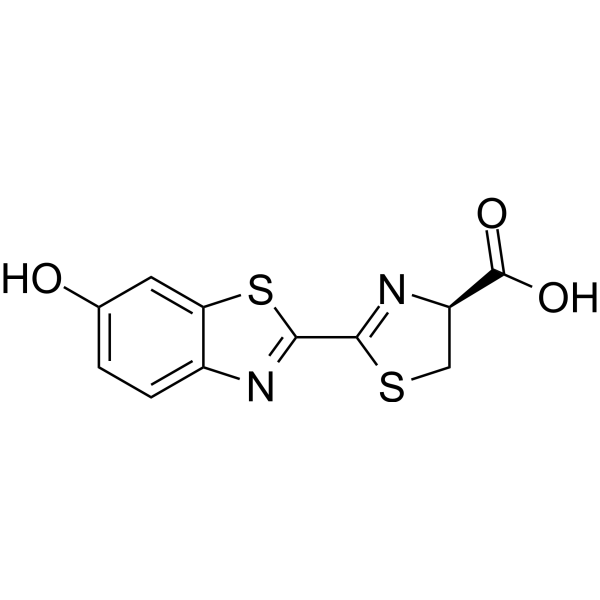
Cat. No.: HY-12591A
CAS No.: 2591-17-5
Purity:  99.54%
Synonyms: D-(-)-Luciferin; Firefly Luciferin; Beetle Luciferin
D-luciferin is the natural substrate of the enzyme luciferase (Luc) that catalyzes the production of the typical yellowgreen light of fireflies. The 560 nm chemiluminescence from this reaction peaks within seconds, with light output that is proportional to luciferase concentration when the substrate luciferin is present in excess. The luciferase (luc) gene is a popular reporter gene for research and agent screening. Chemiluminescent techniques are virtually background-free, making the luc reporter gene ideal for detecting low-level gene expression. As little as 0.02 pg of luciferase can be reliably measured in a standard scintillation counter. In addition to its role as a reporter of gene expression, luciferase is commonly used in an extremely sensitive assay for ATP . We of er the firefly luciferase (HY-P1004A), luciferin free acid (HY-12591A), as well as its water-soluble sodium salts (HY-12591) and potassium salts (HY-12591B) .
loading...
    loading...
7
7 Cited Publications
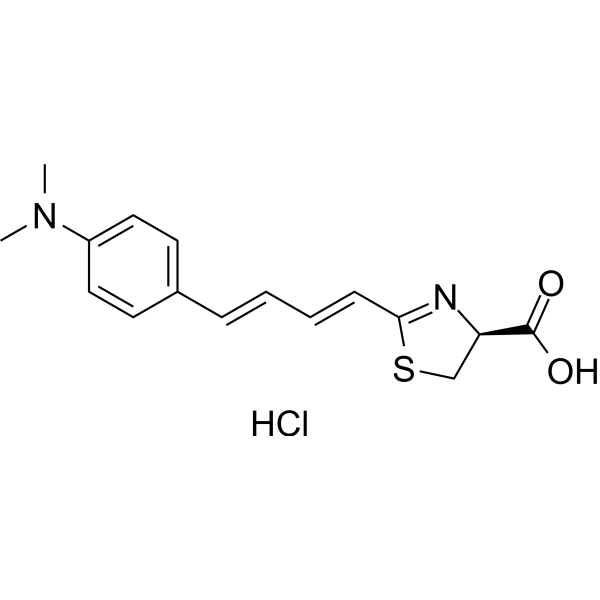
Cat. No.: HY-112641A
CAS No.: 2558205-28-8
Purity:  99.92%
AkaLumine hydrochloride is a D-luciferin (HY-12591A) analogue with a Km of 2.06 μM for recombinant firefly luciferase (Fluc) protein. AkaLumine hydrochloride emits near-infrared (NIR) light (λmax=677 nm) in reactions with native Fluc. AkaLumine hydrochloride has high tissue-penetration and increases detection sensitivity from deep-tissue targets .
loading...
    loading...
1
1 Cited Publications
Cat. No.: HY-P1004A
CAS No.: 61970-00-1
Target:  

Fluorescent Dye

Research Areas:  

Others

Luciferase, firefly is the light-emitting enzyme responsible for the bioluminescence of fireflies and click beetles. Luciferase, firefly catalytic substrate is D-luciferin (HY-12591B) .
loading...
    loading...
Cat. No.: HY-126994
CAS No.: 161055-47-6
Purity:  98.01%
Target:  

Fluorescent Dye

Research Areas:  

Others

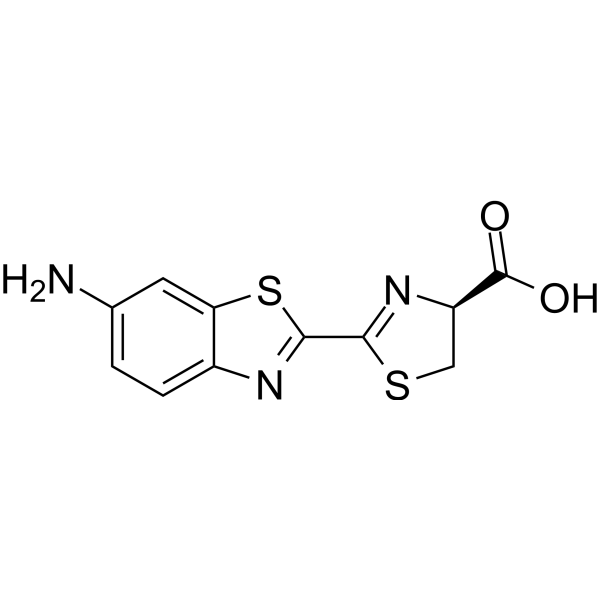
6’-Amino-D-luciferin is a derivative of D-luciferin (HY-12591A) with an amino group replacing the 6-hydroxyl group. 6’-Amino-D-luciferin is a natural substrate of luciferase (Luc) and can be used for IVIS imaging in cell/animal experiments[1][2][3].
loading...
    loading...
Cat. No.: HY-155945
CAS No.: 2765796-41-4
Purity:  98.70%
Research Areas:  

Others

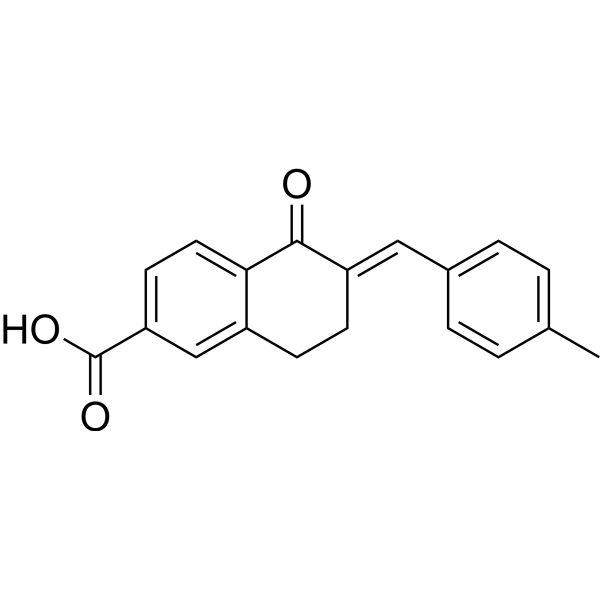
Firefly luciferase-IN-1 is a cell-permeable firefly luciferase inhibitor with an IC50 of 0.25 nM and a Ki of 1.72 nM. Firefly luciferase-IN-1 reversibly binds to the D-luciferin-occupied pocket of Fluc, competing with D-luciferin. Firefly luciferase-IN-1 effectively blocks Fluc/D-Luciferin (HY-12591A)-induced bioluminescence .
loading...
    loading...
Cat. No.: HY-115749
CAS No.: 24404-90-8
Purity:  99.93%
Synonyms: 6′-MethoxyLuciferin
Target:  

Fluorescent Dye

Research Areas:  

Others

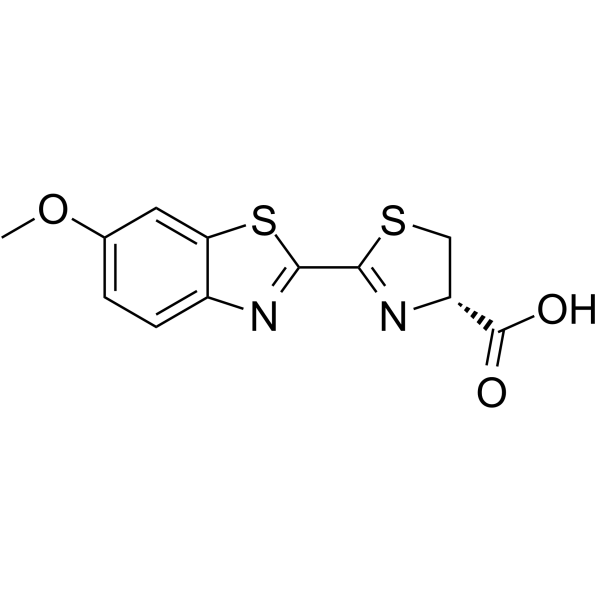
D-Luciferin 6′-methyl ether (6′-Methoxyluciferin; compound 19a) is a potent luciferase from the North American firefly Photinus pyralis (PpyLuc) inhibitor with an IC50 of 0.1 µM. D-Luciferin 6′-methyl ether, a D-luciferin analog, shows non-specific interactions at ATP- and luciferin-binding sites of the PpyLuc active site .
loading...
    loading...
Cat. No.: HY-D1343
CAS No.: 223920-67-0
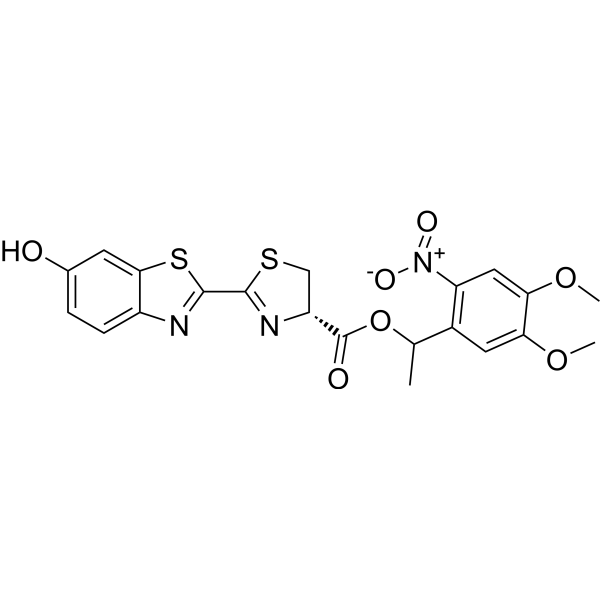
DMNPE-caged D-luciferin is a heterocyclic luminescent compound that is a natural ligand for luciferase, an enzyme used to detect cell activity. Its reaction requires ATP and emits yellow-green light with a peak wavelength of about 530 nm. The luciferin in the DMNPE cage easily crosses the cell membrane.
loading...
    loading...
Cat. No.: HY-148843
CAS No.: 145613-12-3
Target:  

Fluorescent Dye

Research Areas:  

Others

D-Luciferin phosphate trisodium is a synthetic and bioluminescent substrate for firefly luciferase. D-Luciferin phosphate trisodium is dephosphorylated in the presence of alkaline phosphatase, releasing the free D-fluorescein. D-Luciferin phosphate trisodium is mainly used for highly sensitive detection of phosphatase .
loading...
    loading...
Cat. No.: HY-169740
CAS No.: 34500-31-7
Target:  

Fluorescent Dye

Research Areas:  

Others

L-Luciferin is a competitive inhibitor of firefly Luciferin and can be used as an alternative substrate for light production, increasing the concentration of the enzyme or L-luciferin reduces the amount of light produced compared to D-Luciferin catalysis .
loading...
    loading...
Cat. No.: HY-D1904
CAS No.: 3022-11-5
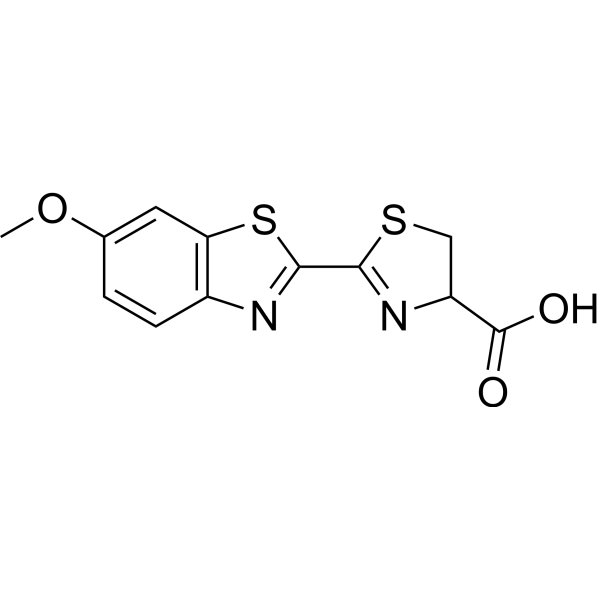
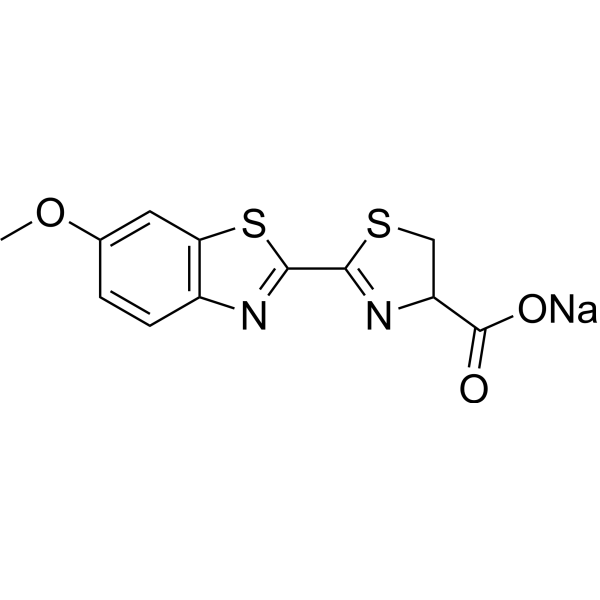
D-Luciferin 6'-methyl ether sodium salt is a firefly luciferase inhibitor. D-Luciferin 6'-methyl ether sodium salt is a cofactor in Luc-catalyzed synthesis of dinucleoside polyphosphates .
loading...
    loading...
Cat. No.: HY-115749A
CAS No.: 646450-23-9
Synonyms: (Rac)-6′-MethoxyLuciferin sodium
D-Luciferin 6′-methyl ether (6′-Methoxyluciferin; compound 19a) sodium is a potent luciferase from the North American firefly Photinus pyralis (PpyLuc) inhibitor with an IC50 of 0.1 μM. D-Luciferin 6′-methyl ether, a D-luciferin analog, shows non-specific interactions at ATP- and luciferin-binding sites of the PpyLuc active site .
loading...
    loading...
Cat. No.: HY-112641
CAS No.: 1176235-08-7
AkaLumine is a D-luciferin (HY-12591A) analogue with a Km of 2.06 μM for recombinant firefly luciferase (Fluc) protein. AkaLumine emits near-infrared (NIR) light (λmax=677 nm) in reactions with native Fluc. AkaLumine has high tissue-penetration and increases detection sensitivity from deep-tissue targets .
loading...
    loading...
  • 1

