72 Results for "

DDB

" in MedChemExpress (MCE) Product Catalog:
Products (72)

72 Results for "DDB" in MCE Product Catalog:

26
26 Publications Verification
Cat. No.: HY-14658
CAS No.: 50-35-1
Pureté:  99.98%
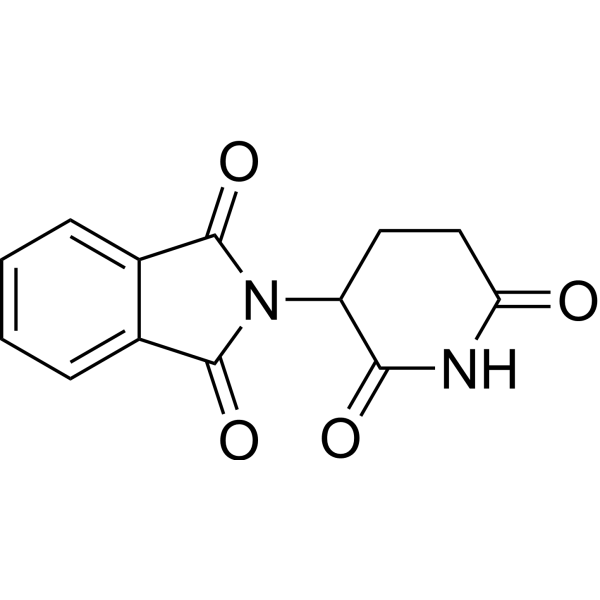
Thalidomide inhibits cereblon (CRBN), a part of the cullin-4 E3 ubiquitin ligase complex CUL4-RBX1-DDB1, with a Kd of ∼250 nM, and has immunomodulatory, anti-inflammatory and anti-angiogenic cancer properties. Thalidomide can work as molecular glue to potentiate substrate.
loading...
    loading...
5
5 Cited Publications
Cat. No.: HY-14571
CAS No.: 289483-69-8
Pureté:  99.06%
Synonyms: ER68203-00
Domaines de recherche:  

Infection Metabolic Disease Cancer

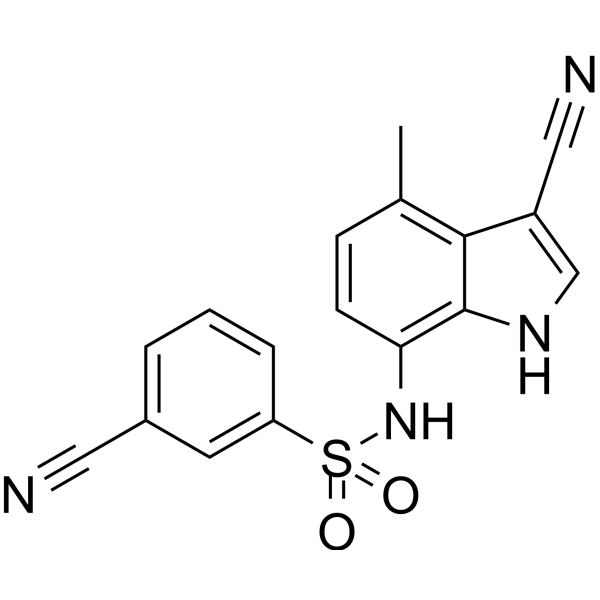
E7820 (ER68203-00), an orally active aromatic sulfonamide derivative, is a molecular glue that induces the targeted degradation of splicing factor RBM39 by recruiting the E3 ubiquitin ligase CUL4-RBX1-DDB1-DCAF15 (CRL4 DCAF15). E7820 is an angiogenesis inhibitor suppressing an expression of integrin alpha2 subunit on endothelium. E7820 inhibits rat aorta angiogenesis with an IC50 of 0.11 μg/ml. E7820 modulates α-1, α-2, α-3, and α-5 integrin mRNA expression. E7820 can be used for the study of acute myeloid leukemia (AML) .
loading...
    loading...
2
2 Cited Publications
Cat. No.: HY-W018791
CAS No.: 73536-69-3
Synonyms: DDB
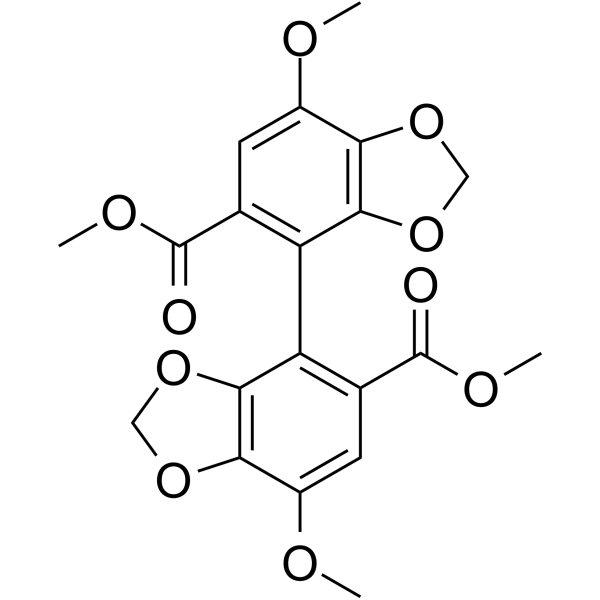
Bifendate (DDB), extracted from Schisandrae chinensis, is an orally active anti-HBV agent against chronic hepatitis B. Bifendate inhibits ATG5-dependent autophagy and attenuates oleic acid-induced lipid accumulation with anti-oxidant properties in vitro. Bifendate can decrease alanine transaminase (ALT) level in mice. Bifendate attenuates hepatic steatosis in cholesterol/bile salt- and high-fat diet-induced hypercholesterolemia in mice. Bifendate potently increases the activity of cytochrome proteins (CYPs) and reverse P-gp-mediated multi-drug resistance (MDR) .
loading...
    loading...
2
2 Cited Publications
Cat. No.: HY-115568
CAS No.: 2140289-17-2
Pureté:  98.34%
Domaines de recherche:  

Cancer

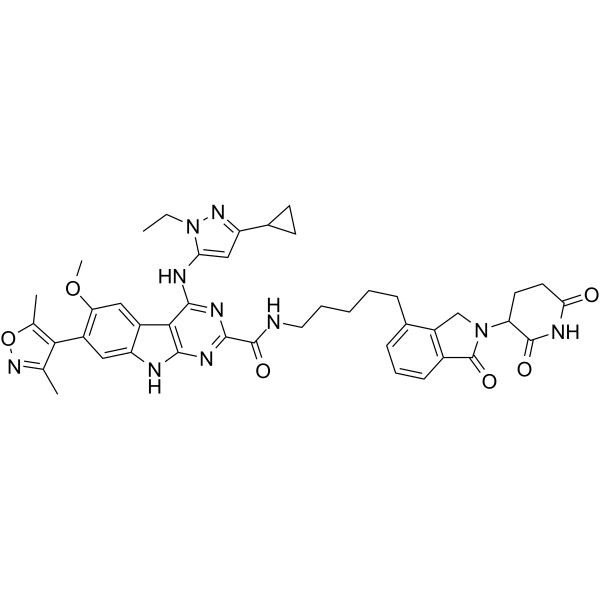
BETd-246 is a BRD2/3/4 PROTAC degrader targeting the BET family. BETd-246 induces ubiquitination and proteasomal degradation of BRD2, BRD3 and BRD4 by recruiting the CUL4-RBX1-DDB1-CRBN E3 ubiquitin ligase complex; it also inhibits TRAT1 expression and depletes BET proteins. BETd-246 suppresses cancer cell proliferation and invasion, disrupts the cell cycle and induces apoptosis. BETd-246 is applicable to research related to triple-negative breast cancer and T-cell acute lymphoblastic leukemia .
loading...
    loading...
1
1 Cited Publications
Cat. No.: HY-144981
CAS No.: 1226443-41-9
Pureté:  98.10%
Target:  

CDK Molecular Glues

Domaines de recherche:  

Cancer

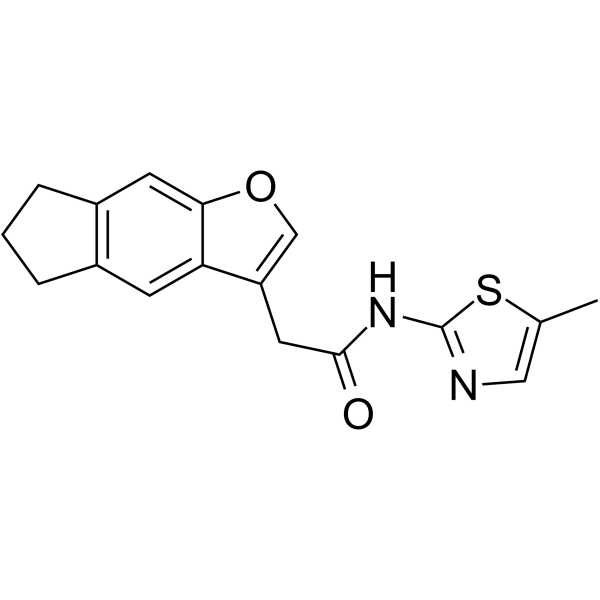
HQ461 is a molecular glue that promotes CDK12-DDB1 interaction to trigger cyclin K degradation. HQ461-mediated degradation of cyclin K impairs CDK12 function, resulting in decreased CDK12 substrate phosphorylation, downregulation of DNA damage response genes, and cell death .
loading...
    loading...
Cat. No.: HY-172113
Target:  

PROTACs YAP c-Myc Apoptosis

Domaines de recherche:  

Cancer

H122 is a PROTAC degrader for TEAD that degrades TEAD1 with a DC50 of 3 nM. H122 exhibits good affinity to TEAD2, TEAD3, and TEAD4 with Ki values of 2.0, 3.6 and 1.6 nM, respectively. H122 relies on binding to TEAD1 and CRBN, functional E3 ligase activity, and a functional proteasome for degradation.H122 induces degradation of TEAD3 and forms a ternary complex with TEAD4 and CRBN/DDB1 to mediate degradation.H122 downregulates expression of Myc target genes. H122 exhibits antitumor efficacy in MSTO-211H mouse xenograft models.H122 can be used for the research of malignant mesothelioma .
loading...
    loading...
Cat. No.: HY-163944
CAS No.: 3081311-94-3
Domaines de recherche:  

Cancer

LL-K12-18 is a CDK12 kinase inhibitor and a dual-site molecular glue. LL-K12-18 inhibits human CDK12 with an IC50 value of 283.9 nM, and selectively degrades cyclin K via the ubiquitin-proteasome system by stabilizing the CDK12-DDB1 complex. LL-K12-18 downregulates DNA damage response genes, reduces the phosphorylation level of CTD Ser2 in RNA polymerase II, and modulates biomarkers such as ATM, RAD51, γ-H2AX and cleaved PARP, thereby effectively inducing apoptosis and inhibiting proliferation of breast cancer cells. LL-K12-18 exhibits high target selectivity and serves as a research tool for studies on triple-negative breast cancer .
loading...
    loading...
Cat. No.: HY-159098
dWIZ-1 is an orally active molecular glue and chemical probe targeting the WIZ transcription factor, which based on an IMiD backbone, binding to human WIZ with an affinity of 3.5 μM. dWIZ-1 recruits WIZ to the cereblon-DDB1 complex via its ZF7 domain, thereby triggering proteasome-dependent degradation of WIZ. dWIZ-1 significantly induces fetal hemoglobin expression in erythroblasts while reducing the level of inhibitory H3K9 dimethylation at WIZ binding sites such as the β-globin locus. Meanwhile, dWIZ-1 does not affect the proliferation and differentiation of erythroblasts, and no cytotoxicity is observed in in vitro cells or cynomolgus monkey models. dWIZ-1 serves as a critical tool molecule for investigating the mechanism and underlying pathways of sickle cell disease .
loading...
    loading...
Cat. No.: HY-129610
CAS No.: 2384184-40-9
Pureté:  99.25%
Target:  

PROTACs FKBP

Domaines de recherche:  

Cancer

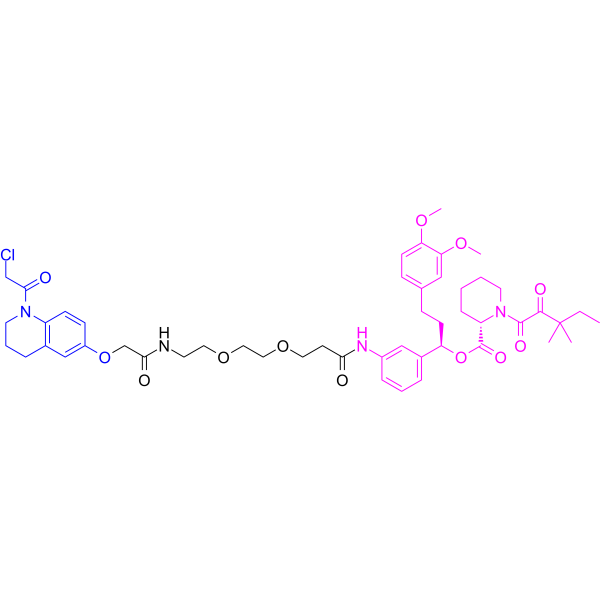
KB02-SLF is a nuclear FKBP12 covalent PROTAC degrader. KB02-SLF covalently modifies cysteine residues in DCAF16, forms a ternary complex with nuclear FKBP12, and mediates degradation via the CUL4-DDB1 E3 ubiquitin ligase pathway. KB02-SLF promotes polyubiquitination and proteasomal degradation of nucleus-localized FKBP12. KB02-SLF can be used in breast cancer research .
loading...
    loading...
Cat. No.: HY-W181530
CAS No.: 790245-61-3
Domaines de recherche:  

Cancer

NCT02 is a molecular glue degrader based on the E3 ubiquitin ligase DDB1 that targets CDK12 and its binding partner CCNK. NCT02 triggers the ubiquitination and proteasomal degradation of CCNK, thereby downregulating CDK12 protein levels and inhibiting its downstream signaling pathways. NCT02 can induce tumor cell apoptosis, arrest the cell cycle, and selectively inhibit the proliferation of colorectal cancer cells carrying TP53 defects or belonging to the consensus molecular subtype CMS4. NCT02 has the potential to inhibit tumor growth in in vitro and in vivo models .
loading...
    loading...
Cat. No.: HY-145125
CAS No.: 2882065-25-8
Pureté:  98.84%
Domaines de recherche:  

Neurological Disease Cancer

SJ995973 is a BRD4 PROTAC degrader with DC50 values of 0.87 nM (12 h) and 0.16 nM (24 h), respectively. SJ995973 induces the formation of a ternary complex between purified BRD4 and CRBN-DDB1 proteins, with an IC50 of 17 nM against CRBN. SJ995973 inhibits the viability of human acute myeloid leukemia cells. SJ995973 can be used in studies related to acute myeloid leukemia and medulloblastoma .
loading...
    loading...
Cat. No.: HY-161166
Target:  

Others

Domaines de recherche:  

Others

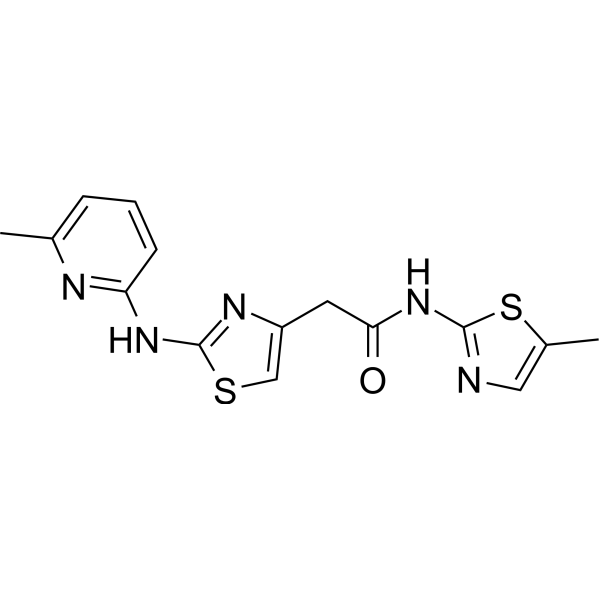
MM-02-57 is a covalent DDB1 CUL4A adaptor protein recruiter .
loading...
    loading...
Cat. No.: HY-14658R
CAS No.: 50-35-1
Thalidomide (Standard) is the analytical standard of Thalidomide. This product is intended for research and analytical applications. Thalidomide inhibits cereblon (CRBN), a part of the cullin-4 E3 ubiquitin ligase complex CUL4-RBX1-DDB1, with a Kd of ∼250 nM, and has immunomodulatory, anti-inflammatory and anti-angiogenic cancer properties. Thalidomide can work as molecular glue to potentiate substrate.
loading...
    loading...
Cat. No.: HY-161633
CAS No.: 3034244-71-5
Target:  

PROTACs EGFR FAK

Domaines de recherche:  

Cancer

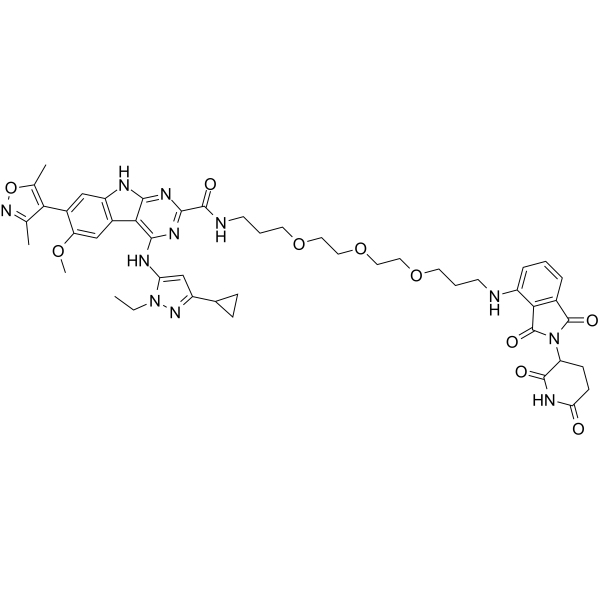
PROTAC EGFR degrader 11 (Compound B71) is a PROTAC degrader for epidermal growth factor receptor (EGFR), with DC50 <100 nM. PROTAC EGFR degrader 11 binds CRBN-DDB1 with a Ki of 36 nM. PROTAC EGFR degrader 11 degrades EGFR, focal adhesion kinase (FAK), and RSK1, inhibits the proliferation of BaF3 wild type and EGFR mutants, with IC50 <100 nM.
loading...
    loading...
Cat. No.: HY-122653A
Pureté:  98.02%
Target:  

PROTACs

Domaines de recherche:  

Cancer

CCT367766 formic is a potent and the third generation heterobifunctional and Cereblon-based pirin targeting protein degradation probe (PDP, or PROTAC), depletes pirin protein expression at low concentration. CCT367766 formic exhibits a moderate affinity for the CRBN-DDB1 complex with an IC50 value of 490 nM. CCT367766 formic reveals a good affinity for the recombinant pirin and CRBN with Kd values of 55 nM and 120 nM, respectively. CCT367766 formic provides a potential chemical tool to study a largely unexplored protein .
loading...
    loading...
Cat. No.: HY-177742
CAS No.: 2251753-65-6
Domaines de recherche:  

Cancer

LXH-3-71 is a PHGDH degrader. LXH-3-71 acts as a molecular glue to enhance the interaction of the PHGDH-DDB1-CRL E3 ligase complex, triggering ubiquitination and proteasomal degradation of PHGDH. LXH-3-71 regulates the stemness of colorectal cancer cells and inhibits tumor proliferation and colony formation. LXH-3-71 can be used in the research of colorectal cancer .
loading...
    loading...
Cat. No.: HY-14658S
CAS No.: 1219177-18-0
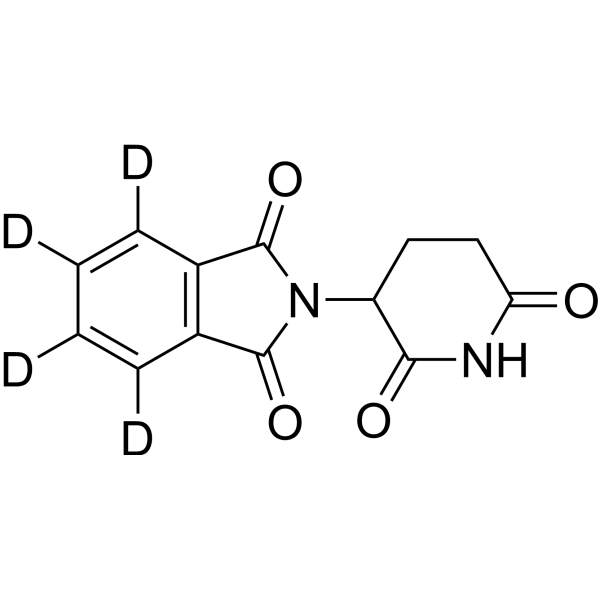
Thalidomide-d4 is a deuterium labeled Thalidomide. Thalidomide inhibits cereblon (CRBN), a part of the cullin-4 E3 ubiquitin ligase complex CUL4-RBX1-DDB1, with a Kd of ~250 nM, and has immunomodulatory, anti-inflammatory and anti-angiogenic cancer properties .
loading...
    loading...
Cat. No.: HY-150641
CAS No.: 3031561-92-6
Domaines de recherche:  

Cancer

CDK-IN-9 (compound 24) is a potent CDK inhibitor, also as a molecular glue inducing an interaction between CDK12 and DDB1, with an IC50 values of 4 nM for CDK2/E. CDK-IN-9 leads to polyubiquitination of cyclin K and its subsequent degradation. CDK-IN-9 induce apoptosis through dephosphorylation of retinoblastoma protein and RNA polymerase II .
loading...
    loading...
Cat. No.: HY-170900
SJ44236 is a BET PROTAC degrader with activity against BRD2, BRD3 and BRD4 (DC50 = 127 pM). SJ44236 induces ubiquitination and proteasomal degradation by forming a ternary complex with BET proteins and CRBN-DDB1. SJ44236 downregulates c-Myc, upregulates p53 and reduces cancer cell viability. SJ44236 can be used for the research of leukemia and medulloblastoma .
loading...
    loading...
Cat. No.: HY-W018791R
CAS No.: 73536-69-3
Synonyms: DDB (Standard)
Bifendate (DDB), extracted from Schisandrae chinensis, is an orally active anti-HBV agent against chronic hepatitis B. Bifendate inhibits ATG5-dependent autophagy and attenuates oleic acid-induced lipid accumulation with anti-oxidant properties in vitro. Bifendate can decrease alanine transaminase (ALT) level in mice. Bifendate attenuates hepatic steatosis in cholesterol/bile salt- and high-fat diet-induced hypercholesterolemia in mice. Bifendate potently increases the activity of cytochrome proteins (CYPs) and reverse P-gp-mediated multi-drug resistance (MDR) .
loading...
    loading...

