


From 11:00 pm to 12:00 pm EST ( 8:00 pm to 9:00 pm PST ) on January 6th, the website will be under maintenance. We are sorry for the inconvenience. Please arrange your schedule properly.
Lipopolysaccharides, from E. coli O55:B5 (LPS, from Escherichia coli (O55:B5)) are endotoxins and TLR4 activators extracted from Escherichia coli(E.coli O55:B5) and are classified as S (smooth) type LPS. Lipopolysaccharides, from E. coli O55:B5 possess the typical three-part structure: O-antigen, core oligosaccharide, and lipid A. Lipopolysaccharides, from E. coli O55:B5 activate TLR-4 in immune cells, exhibit high pyrogenicity, and demonstrate dose and serotype specificity. Lipopolysaccharides, from E. coli O55:B5 can be widely used to induce cellular inflammation and establish animal models related to inflammation .
It is recommended to prepare a solution with concentration ≥2 mg/mL. Vortex thoroughly for more than 10 minutes. Due to the adsorption characteristics of LPS, silanized container or low adsorption centrifuge tubes should be used for aliquoting and storage, and mix thoroughly before use.
Lipopolysaccharides, from E. coli O111:B4 (LPS, from Escherichia coli (O111:B4)) are endotoxins and TLR4 activators extracted from Escherichia coli(E.coli O111:B4) and are classified as S (smooth) type LPS. Lipopolysaccharides (LPS), from E. coli O111:B4 possess the typical three-part structure: O-antigen, R3-type core oligosaccharide, and lipid A. Lipopolysaccharides (LPS), from E. coli O111:B4 activate TLR-4 in immune cells and can cause significant gastric diseases. Lipopolysaccharides (LPS), from E. coli O111:B4 can be used to induce cellular inflammation and establish animal models related to inflammation .
It is recommended to prepare a solution with concentration ≥2 mg/mL. Vortex thoroughly for more than 10 minutes. Due to the adsorption characteristics of LPS, silanized container or low adsorption centrifuge tubes should be used for aliquoting and storage, and mix thoroughly before use.
β-Galactosidase, E. coli (EC 3.2.1.23; GAL) is a glycoside hydrolase that hydrolyzes the β-glycosidic bonds formed between galactose and its organic moieties. β-Galactosidase, E. coli can hydrolyze lactose to form glucose and galactose, and enter glycolysis; it can also catalyze the transgalactosylation of lactose into allolactose; allolactose can be cracked into monosaccharides .
Lipopolysaccharides, from E. coli (Escherichia coli) O26:B6 are lipopolysaccharide endotoxins and TLR-4 activators derived from E. coli, classified as S-type LPS, which can activate pathogen-associated molecular patterns (PAMP) of the immune system and induce cellular secretion of migrasomes. Lipopolysaccharides, from E. coli O26:B6 exhibit a typical three-part structure: O-antigen, core oligosaccharide, and lipid A, and can be recognized by the core-specific monoclonal antibody MAb J8-4C10. Lipopolysaccharides, from E. coli O26:B6 can promote an increase in pro-inflammatory cytokines in plasma, thereby triggering hypothalamic-pituitary-adrenal (HPA) activation and leading to adrenal oxidative damage. The pathogenic effects of Lipopolysaccharides, from E. coli O26:B6 can be used to construct various models, such as cellular inflammation models, sepsis, acute lung injury models, adrenal dysfunction models, and bladder infection models, etc .
It is recommended to prepare a solution with concentration ≥2 mg/mL. Vortex thoroughly for more than 10 minutes. Due to the adsorption characteristics of LPS, silanized container or low adsorption centrifuge tubes should be used for aliquoting and storage, and mix thoroughly before use.
Vedaprofen (Quadrisol) is a COX-1 selective nonsteroidal anti-inflammatory agent (NSAID) for serum TxB2 and exudate PGE2 inhibition . Vedaprofen is a Escherichia coli(E.coli) sliding clamp (SC) inhibitor with the IC50 of 222 μM .
Penicillin amidase, E. coli (Immobilized) (PGA) is an amidohydrolase commonly used in industrial biocatalysis. Penicillin amidase, E. coli (Immobilized) serves as a starting material in the synthesis of semi-synthetic penicillins. Penicillin amidase, E. coli (Immobilized) promotes the production of semi-synthetic β-lactam antibiotics, participates in peptide synthesis, and catalyzes the formation of chiral compounds. Penicillin amidase, E. coli (Immobilized) is regulated by temperature and phenylacetic acid in E. coli. In free E. coli, it participates in the assimilation of aromatic compounds as a carbon source. Penicillin amidase, E. coli (Immobilized) is hypothesized to act as a scavenging enzyme for phenylacetyl-containing compounds in microbial metabolism and is associated with bacterial quorum sensing .
Lipopolysaccharides, from E. coli O127:B8 (LPS, from Escherichia coli (O127:B8)) are endotoxins and TLR4 activators extracted from Escherichia coli(E.coli O127:B8) and are classified as S (smooth) type LPS. Lipopolysaccharides, from E. coli O127:B8 possess the typical three-part structure: O-antigen, R3-type core oligosaccharide, and lipid A. Lipopolysaccharides, from E. coli O127:B8 activate TLR-4 in immune cells, can induce inflammatory responses and ileal contractility, and can be used to construct intestinal inflammation models .
It is recommended to prepare a solution with concentration ≥2 mg/mL. Vortex thoroughly for more than 10 minutes. Due to the adsorption characteristics of LPS, silanized container or low adsorption centrifuge tubes should be used for aliquoting and storage, and mix thoroughly before use.
X-Gluc cyclohexanamine is a dye reagent for the detection of β-glucuronidase (GUS), an enzyme produced by E. coli. X-Gluc cyclohexanamine can be used to detect E. coli contamination in food, water and the urinary tract (GUS as a specific detection indicator). X-Gluc cyclohexanamine is also widely used in molecular biology experiments to label and detect the expression of target genes (reacts with the GUS gene, appears blue) .
Glycerol-3-phosphate oxidase, E. coli (GPO) is a key intermediate in glycerol metabolism. Glycerol-3-phosphate oxidase, E. coli is the skeleton of phospholipids in membrane lipids, and also a substrate in the respiratory chain. Glycerol-3-phosphate oxidase, E. coli produces electrons through oxidation. Glycerol-3-phosphate oxidase, E. coli is an enzyme with important functions in the field of biochemistry, and is widely used in medical testing and scientific research .
L-Lactate dehydrogenase, E.coli is a redox enzyme. L-Lactate dehydrogenase, E.coli catalyzes the reduction of pyruvate to L-lactate by NADH in vivo with absolute enantiospecificity .
X-Gluc sodium is a dye reagent for the detection of β-glucuronidase (GUS), an enzyme produced by E. coli. X-Gluc sodium can be used to detect E. coli contamination in food, water and the urinary tract (GUS as a specific detection indicator). X-Gluc sodium is also widely used in molecular biology experiments to label and detect the expression of target genes (reacts with the GUS gene, appears blue) .
E. coli Extract Polar is a polar lipid extract of Escherichia coli containing phosphatidylethanolamine, phosphatidylglycerol, and cardiolipin for reconstitution of membrane proteins.
Lipopolysaccharides, from E. coli O128:B12 (LPS, from Escherichia coli (O128:B12)) are endotoxins and TLR4 activators extracted from Escherichia coli(E.coli O128:B12) and are classified as S (smooth) type LPS. Lipopolysaccharides, from E. coli O128:B12 possess the typical three-part structure: O-antigen, R3-type core oligosaccharide, and lipid A. Lipopolysaccharides, from E. coli O128:B12 activate TLR-4 in immune cells, can be used to construct animal models of neonatal brain inflammation, and may influence preterm birth in neonates .
It is recommended to prepare a solution with concentration ≥2 mg/mL. Vortex thoroughly for more than 10 minutes. Due to the adsorption characteristics of LPS, silanized container or low adsorption centrifuge tubes should be used for aliquoting and storage, and mix thoroughly before use.
β1-4 Galactosidase, E. coli is a highly specific exoglycosidase that catalyzes the hydrolysis of terminal, non-reducing β1-4 linked galactose residues from oligosaccharides .
Biotin-Lipopolysaccharide, from E.coli O111:B4 (Biotin-LPS, from Escherichia coli (O111:B4)) is a biotin-conjugated Lipopolysaccharide (LPS) (HY-D1056A1) that can be coupled with streptavidin protein. Biotin-Lipopolysaccharide, from E.coli O111:B4 can be used to identify Lipopolysaccharide ligands. Lipopolysaccharides, from E. coli O111:B4 (LPS, from Escherichia coli (O111:B4)) are endotoxins and TLR4 activators extracted from Escherichia coli(E.coli O111:B4) and are classified as S (smooth) type LPS. Lipopolysaccharides, from E. coli O111:B4 possess the typical three-part structure: O-antigen, R3-type core oligosaccharide, and lipid A. Lipopolysaccharides, from E. coli O111:B4 activate TLR-4 in immune cells and can cause significant gastric diseases. Lipopolysaccharides, from E. coli O111:B4 can also induce M1-type polarization in mouse macrophages .
It is recommended to prepare a solution with concentration ≥2 mg/mL. Vortex thoroughly for more than 10 minutes. Due to the adsorption characteristics of LPS, silanized container or low adsorption centrifuge tubes should be used for aliquoting and storage, and mix thoroughly before use.
KR-12 (human) is an active segment of LL-37 (HY-P4744). KR-12 (human) exhibits antimicrobial activity against gram-negative bacteria. KR-12 (human) inhibits E. coli K-12 with a MIC of 66 μM. KR-12 human can be used for the research of infection, such as E. coli infection .
Tridecanoic acid (N-Tridecanoic acid) is a medium-chain saturated fatty acid and inhibitor with no antibacterial activity against enterohemorrhagic E. coli (EHEC). When used in combination with Ciprofloxacin (HY-B0356) or Ampicillin (HY-B0522), Tridecanoic acid suppresses persister formation in exponentially growing E. coli and EHEC, but exerts no inhibitory effect on persister formation induced by Kanamycin (HY-16566) or in stationary-phase cells. Tridecanoic acid inhibits biofilm formation in EHEC. It can be used in the research of bacterial infections .
Carboxyaminoimidazole ribotide (CAIR) is a metabolite of E. coli. Carboxyaminoimidazole ribotide can be used to detect distinctive features of E. coli PurE active site and synthesis fungal de novo purine .
RJPXD33 is the inhibitor for LpxD and LpxA with IC50 of 3.5 μM and 19 μM. RJPXD33 RJPXD33 inhibits LpxD and LpxA in E. coli with Kd of 6 μM and 20 μM .
UDP-3-O-acyl-GlcNAc (UDP-3-O-(3-hydroxytetradecanoyl)-N-acetylglucosamine) disodium is an E. coli metabolite that is involved in 3-deoxy-D-manno-octulosonate (KDO) biosynthesis pathway .
ML328 is a selective inhibitor of bacterial AddAB and RecBCD helicase-nucleases with IC50 values of 26 and 5.1 μM, respectively. ML328 is a gyrase inhibitor. ML328 strongly inhibits the growth of E. coli in the presence of phage. ML328 can be used for the research of bacterial infection .
Keratanase II,bacillus circulans,expressed in E.coli has transglycosylation activity. Keratanase II,bacillus circulans,expressed in E.coli efficiently catalyzes the transglycosylation of α(2→3)-sialylated 6,6′-di-sulfo-LacNAc with two kinds of glycosyl acceptors, 6-sulfo-Lewis X and 6,6'-di-sulfo-LacNAc derivatives, providing Sialyl sulfo-hexasaccharide and Sialyl sulfo-pentasaccharide .
Fluorescein-CM2 is a fluorogenic molecule that can be used to rapidly screen esterase cut sites for protein-protein interaction-dependent (PPI-dependent) esterase activity in E. coli .
Diazaborine is an inhibitor for enoyl-acyl carrier protein (enoyl ACP) in an NAD+-dependent manner. Diazaborine exhibits antibacterial activity, MIC for E. coli and K. pneumoniae is 25 and 3.12 μg/mL .
2',4'-Dihydroxychalcone, in combination with nalidixic acid (HY-B0398), exhibits synergistic effects against E. coli by reducing membrane permeability .
X-Gluc Dicyclohexylamine is a dye reagent for the detection of β-glucuronidase, an enzyme produced by Escherichia coli. X-Gluc sodium can be used to detect E. coli contamination in food, water and the urinary tract. X-Gluc sodium is also widely used in molecular biology experiments to label and detect the expression of target genes (GUS reporter system) .
LpxC-IN-10 (Compound A) is a high selectivity inhibitor of LpxC. LpxC-IN-10 exhibits MIC values of 0.5 μg/mL against E. coli and K. pneumoniae. LpxC-IN-10 (Compound A) can be used for the research of bacterial infection . LpxC-IN-10 is a click chemistry reagent, it contains an Alkyne group and can undergo copper-catalyzed azide-alkyne cycloaddition (CuAAc) with molecules containing Azide groups.
BDM91270 (compound 29) is an E. coliAcrAB-TolC efflux pump inhibitor with an EC90 of 0.6 μM for wild-type E. coliAcrB. BDM91270 can be used in the study of Escherichia coli drug resistance .
Anilazine is a fungicide and inhibit the growth of Rhizobium sp. and E. coli. Anilazine inhibits glucose oxidation and succinate oxidation and also inhibits in vitro succinic dehydrogenase activity .
Globomycin derivative G2A (Compound G2A) is an inhibitor for lipoprotein signal peptidase II (LspA), with an IC50 of 604 nM. Globomycin derivative G2A inhibits E. coli, P. aeruginosa and A. baumannii, with MIC ranging from 12.5 to 32 μg/mL .
Lipopolysaccharides, from E. coli (Escherichia coli) K-235 are lipopolysaccharide endotoxins and TLR-4 activators derived from E. coli, classified as S-type LPS, which can activate pathogen-associated molecular patterns (PAMP) of the immune system and induce cellular secretion of migrasomes. Lipopolysaccharides, from E. coli K-235 exhibit a typical three-part structure: O-antigen (O-antigen), core oligosaccharide (core oligosaccharide), and lipid A (Lipid A). Lipopolysaccharides, from E. coli K-235 have a mitogenic effect on C57BL/10ScN spleen cells. Additionally, LPS purified using butanol and deoxycholic acid methods stimulates spleen cells in C57BL/10ScCR and C3H/HeJ mice .
It is recommended to prepare a solution with concentration ≥2 mg/mL. Vortex thoroughly for more than 10 minutes. Due to the adsorption characteristics of LPS, silanized container or low adsorption centrifuge tubes should be used for aliquoting and storage, and mix thoroughly before use.
hLF (28-34) (Human lactoferrin (28-34)) is a loop region of human lactoferrin (hLF) that is essential for the high-affinity binding of LPS. hLF (28-34) is a key site responsible for its high-affinity binding to E. coli 055B5 lipopolysaccharide. hLF (28-34) can be used for antibacterial research .
ADG-2e is a potent antibacterial agent with MICs of 16, 4, 2, and 2 μg/mL for E. coli [KCTC 1682], P. aeruginosa [KCTC 1637], B.subtilis [KCTC 3068], and S. aureus [KCTC 1621], respectively. ADG-2e shows anti-metastatic activity against breast cancer cells .
5'-O-(4,4'-Dimethoxytrityl)-2'-deoxyuridine (5'-O-DMT-dU) is a competitive inhibitor of E. colidUTP nucleotidohydrolase (dUTPase), with the Ki higher than 1000 μM. 5'-O-(4,4'-Dimethoxytrityl)-2'-deoxyuridine can be used in machine-assisted DNA synthesis by synthesizing nucleosidic phosphoramidite blocks .
E.coli Gyrase B-IN-1 (Compound 10g) is a E.coli Gyrase B inhibitor with antibacterial activities. E.coli Gyrase B-IN-1 has potent inhibitory activity against E. coli, with a MIC value of 0.12 mM. E.coli Gyrase B-IN-1 is promising for research of antimicrobial agents .
Galactose 1-dehydrogenase, E.coli is a dehydrogenase expressed in E. coli. Galactose 1-dehydrogenase, E.coli catalyzes the oxidation of L-arabinose and D-galactose using NADP +/NAD + as cofactors. Galactose 1-dehydrogenase, E.coli can be used in diagnostic tests to determine total galactose content and can also serve as a biocatalyst for producing galacturonate .
E. coli Extract Total is an extract of Escherichia coli (ATCC 11303) grown in culture at 37°C and at the 3/4 logarithmic growth phase, which can be used to prepare unilamellar vesicles.
E.coli tRNA adenosine deaminase is derived from E.coli and is an adenine deaminase that can deaminate adenine in single-stranded RNA (ssRNA, mainly the loop region within tRNA) or double-stranded RNA (dsRNA), but has no deamination activity on DNA. E.coli tRNA adenosine deaminase is a protein-modified mutant of adenine deaminase, which can efficiently deaminate adenine in ssDNA and can be applied to adenine base editors (ABE) and RNA m6A methylation sequencing .
E. coli DNA ligase is a NAD +-dependent DNA ligase that catalyzes the formation of a phosphodiester bond between the complementary 3′-OH and 5′-P ends of dsDNA .
5-Hydroxycytidine is the RNA modified nucleoside that can be found in the 23S rRNA of bacteria E. coli. 5-Hydroxycytidine modifies at the C2501 site, exhibits a higher modification level in stationary cells. 5-Hydroxycytidine exhibits a higher modification level in radiation resistant Radius than in E. coli .
Antibacterial agent 50 (example 47) is an antibacterial agent with MIC values of 32 mcg/mL, 64 mcg/mL, and 128 mcg/mL against E. coli strains NCTC 13351, M 50 and 7 MP, respectively (WO2013030733A1) .
Antibacterial agent 32 (example 43) is an antibacterial agent with MIC values of 1 mcg/mL, 2 mcg/mL, and 8 mcg/mL against E. coli strains NCTC 13351, M 50 and 7 MP, respectively (WO2013030733A1) .
Antibacterial agent 51 (example 45) is an antibacterial agent with MIC values of 4 mcg/mL, 8 mcg/mL, and 8 mcg/mL against E. coli strains NCTC 13351, M 50 and 7 MP, respectively (WO2013030733A1) .
Epitaraxerol (compound 6) is a natural product isolated from the leaves of E. neriifolia. Epitaraxerol shows moderate antifungal activity against C. albicans and low antimicrobial activity against T. mentagrophytes, A. niger, S. aureus, E. coli, P. aeruginosa, and B. subtilis .
DWC 751 is a cephalosporin antibiotic. DWC 751 exhibits activity against most Gram-positive bacteria, such as methicillin-sensitive Staphylococcus aureus and S. pneumoniae, as well as Gram-negative bacteria including E. coli and E. cloacae. DWC 751 can be used in the research of infectious diseases .
Anilazine (Standard) is the analytical standard of Anilazine. This product is intended for research and analytical applications. Anilazine is a fungicide and inhibit the growth of Rhizobium sp. and E. coli. Anilazine inhibits glucose oxidation and succinate oxidation and also inhibits in vitro succinic dehydrogenase activity .
Betulinic aldehyde oxime (Compound 31) is a betulin (HY-N0083) derivative that has antimicrobial properties against E. aerogenes, E. coli, E. faecalis, P. aeruginosa, S. aureus, and C. albicans. Betulinic aldehyde oxime displays cytotoxicity towards hepatocytes, with an IC50 of 25 μM .
Ianthelliformisamine B diTFA is a bromotyrosine-derived antibacterial agent. Ianthelliformisamine B diTFA is against E. coli and S. aureus strains with MICs of 14.5 μM and 144.7 μM .
Antibacterial agent (compound 8b) is a potent antibacterial agent. Antibacterial agent shows robust antibacterial efect on E. coli and S. aureus with IC50s of 64 and 32 µg/mL, respectively .
KPC-2-IN-1, boronic acid derivative, is a potent KPC-2 inhibitor with Ki of 0.032 μM. KPC-2-IN-1 enhances the activity of cefotaxime in KPC-2 expressing E. coli. KPC-2-IN-1 exhibits well tolerated in human HEK-293 cells, which can be used for the study of E. coli resistance to β-lactam antibiotics .
6'-Hydroxy-3,4,2',3',4'-pentamethoxychalcone (Compound 5) has antibacterial activity, with a MIC value of 10 μg/mL for E. coli and S. epidermis. 6'-Hydroxy-3,4,2',3',4'-pentamethoxychalcone can be isolated from Piper obliquum .
Antibiofilm agent-7 (Compound 9) exhibits potent antibiofilm activity with IC50 of 60, 133.32, and 19.67 µg/mL against S. aureus, E. coli, and methicillin-resistant S. aureus (MRSA), respectively. Antibiofilm agent-7 has antibacterial activity for S. aureus, E. coli, C. albicans, and MRSA, with MIC values of 4.88, 78.13, 9.77 and 39.06 µg/mL, respectively .
Vedaprofen (Standard) is the analytical standard of Vedaprofen. This product is intended for research and analytical applications. Vedaprofen (Quadrisol) is a COX-1 selective nonsteroidal anti-inflammatory agent (NSAID) for serum TxB2 and exudate PGE2 inhibition . Vedaprofen is a Escherichia coli (E. coli) sliding clamp (SC) inhibitor with the IC50 of 222 μM .
Antibacterial agent 241 is a histidine kinase (HK) inhibitor, with IC50 values of 14 μM and 238 μM for CckA and PhoQ, respectively. Antibacterial agent 241 shows moderate antibacterial activity against E. coli DC2, Bacillus cereus, and Bacillus subtilis, with a MIC range of 12-74 μg/mL .
Orotidine 5′-monophosphate is a pyrimidine ribonucleoside and plays a role as an endogenous metabolite of human, E. coli or mouse. Orotidine 5′-monophosphate is an intermediate in the biosynthesis of?uridine monophosphate (UMP). Orotidine 5′-monophosphate can be used for the study of mechanism of orotidine 5′-monophosphate decarboxylase .
c(R3W4V) is an antimicrobial peptide. c(R3W4V) has a relatively stable transmembrane structure. c(R3W4V) has IC50 values of 0.27 μM, 0.46 μM, and 0.05 μM for E. coli, S. aureus, and B. subtilis, respectively .
Elongation factor P-IN-2 is a potent inhibitor elongation factor P (EFP). Elongation factor P-IN-2 is a β-lysine derivative compound. Elongation factor P-IN-2 affects the proliferation rates of E. coli .
Elongation factor P-IN-1 is a potent inhibitor elongation factor P (EFP). Elongation factor P-IN-1 is a β-lysine derivative compound. Elongation factor P-IN-1 affects the proliferation rates of E. coli .
Anti-inflammatory agent 84 (Compound 4D) is a derivative of Coumarin (HY-N0709) with antimicrobial and anti-inflammatory activities. Anti-inflammatory agent 84 inhibits E. coli, Candida albicans, Staphylococcus aureus and methicillin-resistant S. aureus (MRSA), with MIC of 312, 156, 19 and 316 μg/mL, respectively. Anti-inflammatory agent 84 inhibits biofilm formation of S. aureus, E. coli and MRSA, with IC50 of 185, 321 and 99 μM, respectively. Anti-inflammatory agent 84 inhibits nitric oxide production in Lipopolysaccharide (HY-D1056)-stimulated RAW264.7 macrophage cell .
Topoisomerase IV, E. coli (EC 5.99.1.) is prepared by overexpressing the parC and parE subunits in E. coli. Topoisomerase IV is supplied as a heterotetramer complex in Dilution buffer.
Thioredoxin Reductase, E. coli (EC 1.8.1.9) is an E. coli-derived thioredoxin reductase (TrxR) that, compared to mammalian TrxR, lacks the redox active site-the C-terminal -Cys-SeCys-.
Biotinylated luciferase, E. coli (EC 1.13.12.7) is an enzyme that catalyzes production of light from luciferin in the presence of Mg2+-ATP and oxygen. The reaction of Biotinylated luciferase, E. coli (EC 1.13.12.7) with luciferin, ATP, and O2 results in the emission of light.
Taurine Dioxygenase, E. coli (EC 1.14.11.17) is a Fe(II) and α-ketoglutaric aciddependent dioxygenase, which enables E.coli to use taurine as a sulfur source. Taurine Dioxygenase catalyzes the conversion of the amino acid taurine (2-aminoethane-1-sulfonic acid) to sulfite and aminoacetaldehyde.
Lactate Dehydrogenase, Human (E. coli) is a recombinant human lactate dehydrogenase (LDH) protein—a redox enzyme that catalyzes the reversible interconversion between lactate and pyruvate. Lactate Dehydrogenase, Human (E. coli) is primarily utilized in life science research, the diagnosis of tissue injury, and as an enzymatic marker.
Carbonic anhydrase, E. coli (EC 4.2.1.1) catalyzes the rapid interconversion of carbon dioxide and water to bicarbonate and protons (or vice versa) , a reversible reaction that occurs relatively slowly in the absence of a catalyst.
Pyranose Oxidase, E. coli (EC 1.1.3.10) catalyzes the oxidation of aldopyranoses at position C-2 to yield the corresponding 2-ketoaldoses. Pyranose Oxidase is a homotetrameric protein that contains covalently bound flavin adenine dinucleotide (FAD).
6-phospho-D-gluconate dehydrogenase, E. coli (EC 1.1.1.44) is an oxidoreductase that acts on the CH-OH group of a donor molecule and uses NAD+ or NADP+ as an acceptor. The two substrates of 6-phospho-D-gluconate dehydrogenase, E. coli (EC 1.1.1.44) are 6-phospho-D-gluconate and NADP+, while its three products are D-ribulose-5-phosphate, CO2, and NADPH.
Alanine aminotransferase, Human (E.coli) is a pyridoxal enzyme that catalyzes the reversible interconversion of L-alanine and 2-oxoglutalate to pyruvate and L-glutamate .
N-Carbamoylsarcosine Amidase, E. coli, belongs to the hydrolase family. This family of enzymes acts on carbon-nitrogen bonds other than peptide bonds, particularly the carbon-nitrogen bonds in linear amides, and participates in the metabolism of arginine and proline. The two substrates of N-Carbamoylsarcosine Amidase, E. coli, are N-carbamoylsarcosine and H2O, while its three products are sarcosine, CO2, and NH3.ions to the healing immune response.
β-Galactosidase Mutein, E. coli is a hydrolase enzyme that catalyzes the hydrolysis of β-galactosides into monosaccharides. Substrates of different β-galactosidases include ganglioside GM1, lactosylceramides, lactose, and various glycoproteins.
β-Phosphoglucomutase, E. coli (EC 5.4.2.6), belongs to the isomerase family and catalyzes the conversion of β-D-glucose-1-phosphate to β-D-glucose-6-phosphate. β-Phosphoglucomutase is involved in the metabolism of starch and sucrose.
Phosphoglucose isomerase, E.coli (EC 5.3.1.9) is an enzyme crucial for the interconversion of D-glucose 6-phosphate and D-fructose 6-phosphate. Phosphoglucose isomerase is responsible for the second step of glycolysis and is involved in glucogenesis.
3-Deoxy-D-manno-octulosonate Aldolase, E. coli (EC 4.1.2.23) belongs to the aldehyde lyase family and is capable of cleaving carbon-carbon bonds. 3-Deoxy-D-manno-octulosonate Aldolase, E. coli (EC 4.1.2.23) has one substrate: 3-deoxy-D-mannooctulose, and two products: pyruvate and D-arabinose.
EG36 is a selective E. coliDnaK inhibitor that inhibits DnaK ATPase activity at a concentration of 100 μM. EG36 directly binds to the nucleotide-binding domain (NBD) of E. coli DnaK by disrupting the DnaK-DnaJ interaction. EG36 can be used for research on bacterial infectious diseases .
BDM91531 is a AcrB inhibitor with an EC50 of 0.16 μM against E. coli. BDM91531 acts as an antibiotic potentiator to restore the sensitivity of wild-type Escherichia coli to multiple AcrB substrate antibiotics. BDM91531 exhibits antibacterial activity. BDM91531 can be used in the research of bacterial infections .
Antifungal agent 147 (compound 2) is a lipophilic antibacterial agent with dark toxicity. Antifungal agent 147 shows a phototoxic effect on S. aureus and E. coli. Antifungal agent 147 can penetrate the bacterial cell membrane and disturb its structure, leading to dark toxicity. Antifungal agent 147 can be used for bacteria infection research .
Cyclo(L-Ser-L-Val) is a cyclic dipeptide (diketopiperazine) that lacks growth-promoting activity for E. coli in SAPI-serum medium .Cyclo(L-Ser-L-Val) can be chemically synthesized as a precursor to cyclo(ΔAla-L-Val) .
Antimicrobial agent-30 (Compound T10) is an antimicrobial agent, with MIC values of 18.7-21.0 µg/mL for S. aureus, S. epidermidis, E. coli, P. aeruginosa, A. niger, and A. fumigatus .
AcdK is a non-natural amino acid and a precursor of allysine. AcdK allows site-specific incorporation into target proteins in E. coli via the amber suppression strategy. AcdK enables site-specific lysine dimethylation or monomethylation modification of target proteins. AcdK can synthesize site-specific lysine-methylated variants of histone H3 and p53, which is applicable for investigating the substrate specificity and catalytic function of epigenetic enzymes .
MraY-IN-3 (12a) is a potent bacterial translocase MraY inhibitor with an IC50 value of 140 µM. MraY-IN-3 acts on E. coli K12, B. subtilis W23 and P. fluorescens Pf-5 with the MIC50 values of 7 µg/mL, 12 µg/mL, and 46 µg/mL, respectively .
DNA ligase-IN-2 (compound 2) is a potent LigA inhibitor and inhibits the DNA-independent autoadenylation activity of both full-length LigA and a truncated enzyme, LigA:AD (IC50=29 nM). DNA ligase-IN-2 effectively inhibits the growth of Staphylococcus aureus in vitro, with MIC valuse of 1, 1, and >64 μg/mL for S. aureus ATCC 29213, S. aureus ATCC 700699 and E. coli ATCC 25922, respectively .
FabI-IN-1 is a FabI (enoyl-acyl carrier protein reductase) inhibitor with a Ki of 0.32 μM against E. coli FabI. FabI-IN-1 inhibits exhibits activity against Gram-negative bacteria including Escherichia coli(MIC = 6.25 μM) and Klebsiella pneumoniae. FabI-IN-1 rescues Galleria mellonella larvae from lethal Escherichia coli infection. FabI-IN-1 exerts a synergistic effect with Colistin (HY-113678) against Escherichia coli. FabI-IN-1 can be used for the research of gram-negative bacterial infection .
Antimicrobial agent-1 (compound 6C) possesses potent activity against TolC mutant E. coli with an MIC value of 2 μg/mL. Antimicrobial agent-1 and Colistin exhibit synergistic activity against Gram-negative bacteria. Antimicrobial agent-1 has no cytotoxicity on mammalian cell lines, with MICs > 128 μg/mL in Caco-2 and Vero cell lines .
Angustifoline hydrochloride, an alkaloid, can be isolated from Lupinus angustifolius L. alkaloid extract. Angustifoline hydrochloride exhibits antimicrobial activity. Angustifoline hydrochloride could have bacteriostatic effects against S. aureus, B. subtilis, E. coli, P. aeruginosa and B. thuringiensis .
AMC-GlcNAc (compound 1) is a potent fluorogenic probe for detection and characterization of β-hexosaminidase enzyme activity. AMC-GlcNAc enables continuous monitoring by turn-on fluorescence and fluorescence signal is constant over a wide pH range (Ex=325 nm, Em=390 nm). AMC-GlcNAc enables ratiometric fluorescence detection with high sensitivity and low background, which can be used to screen for recombinant dispersin B activity in E. coli cell lysate .
4-Epianhydrotetracycline hydrochloride is a major intermediate product of Tetracycline (HY-A0107). 4-Epianhydrotetracycline hydrochloride shows lethal effects and induces cell apoptosis of zebrafish embryos. 4-Epianhydrotetracycline hydrochloride inhibits Shewanella, E. coli and P. aeruginosa with MIC values of 2, 1 and 64 mg/L, respectively .
3-Bromo-1H-pyrrole-2,5-dione (compound 2c) is a 3-substituted pyrrole-2,5-dione compound with antibacterial activity. 3-Bromo-1H-pyrrole-2,5-dione inhibits pathogenic strains of S. aureus ATCC 25923, E. coli ATCC 25922, P. aeruginosa ATCC 27853, with MIC values of 32 μg/mL, 32 μg/mL, and 64 μg/mL, respectively .
TrmD-IN-1 (compound 8h) is a selective Staphylococcus aureus tRNA m1 G37 methyltransferase (TrmD) inhibitor with a KD of 2.48 μM and an IC50 of 1.16 μM. TrmD-IN-1 exhibits selectivity over E. coli (KD > 30 μM) and H. influenzaeTrmD (KD > 30 μM) and Trm5 (IC50 > 30 μM) .
UNC10201652 is a potent Loop 1 (L1)-specific gut bacterial β-glucuronidase (GUSs) inhibitor with an IC50 value of 0.117 μM for E. coli GUS. UNC10201652 can block SN-38 glucuronide (HY-126373) processing only in individuals whose fecal gut microbiota is highly abundant in L1 GUS enzymes .
Galbinic acid (α-Acetylsalazinic acid), a lichen acid, shows antibacterial activities against the Gram-positive bacteria B. cereus, B. subtilis, and S. aureus (MICs=62.5, 62.5, 250 μg/ml, respectively). Galbinic acid inhibits the Gram-negative bacterium E. coli (MIC=125 μg/ml) .
Tetralin (1,2,3,4-Tetrahydronaphthalene) is an Antibacterial agent. Tetralin inhibits the growth of E. coli and Arthrobacter strain T2. Tetralin serves as a probe molecule for cracking and hydrotreating the light cycle oil .
MAC13772 is a BioA inhibitor with an IC50 of 0.28 μM against E. coli and an IC50 of 0.269 μM against A. baumannii. MAC13772 inhibits bacterial growth by targeting the biotin biosynthesis pathway. MAC13772 can be used in studies related to bacterial infections .
PF-04753299 is a potent and selective UDP-3-O-(R-3-hydroxymyristol)-N-acetylglucosamine deacetylase (LpxC) inhibitor. PF-04753299 is bactericidal for the gonococcal isolates. PF-04753299 inhibits E. coli, P. aeruginosa and K. pneumoniae strains with MIC90 values of 2 μg/ml, 4 μg/ml and 16 μg/ml, respectively. PF-04753299 is used for the study of gram-negative bacteria infection .
Anticancer agent 34 (compound 9), a sulfonylurea derivative, is a potent antimicrobial and anticancer agent. Anticancer agent 34 inhibits the microbial growth of B. mycoides, E. coli, and C. albicans with a MIC between 0.156 and 0.039 mg/ml. Anticancer agent 34 inhibits A549, PC3 cell growth with IC50s of 8.4 µg/ml, 7.8 µg/ml, respectively .
Anticancer agent 36 (compound 11), a sulfonylurea derivative, is a potent antimicrobial and anticancer agent. Anticancer agent 36 inhibits the microbial growth of B. mycoides, E. coli, and C. albicans with a MIC between 0.156 and 0.039 mg/L. Anticancer agent 36 inhibits A549, PC3 cell growth with IC50s of 19.7 µg/mL, 11.9 µg/mL, respectively .
Type II topoisomerase inhibitor 1 is a potent and selective E. coliDNA gyrase inhibitor (IC50: 1.7 nM), and forms hydrogen bonds with Asp73 residue. Type II topoisomerase inhibitor 1 inhibits topoisomerase IV activity (IC50: 0.98 μM). Type II topoisomerase inhibitor 1 can be used in the research of antibacterial area .
4-Epianhydrotetracycline hydrochloride (Standard) is the analytical standard of 4-Epianhydrotetracycline hydrochloride. This product is intended for research and analytical applications. 4-Epianhydrotetracycline hydrochloride is a major intermediate product of Tetracycline (HY-A0107). 4-Epianhydrotetracycline hydrochloride shows lethal effects and induces cell apoptosis of zebrafish embryos. 4-Epianhydrotetracycline hydrochloride inhibits Shewanella, E. coli and P. aeruginosa with MIC values of 2, 1 and 64 mg/L, respectively .
Antibacterial agent 189 (compound 3a) is a potent antimicrobial agent. Antibacterial agent 189 offers high binding energy against the target OMPA/exo-1,3-beta-glucanase proteins. Antibacterial agent 189 exhibits the potent antimicrobial activities against E. coli, P. aeruginosa, S. aureus, B. subtilis, C. Albicans and A. flavus. Antibacterial agent 189 shows high binding energy against target SMO and SUFU/GLI-1 proteins .
FtsZ-IN-12 (Compound 16e) is the inhibitor for filamentous temperature-sensitive mutant Z (FtsZ) that promotes the polymerization of FtsZ protein, inhibits its GTPase activity, thereby interfering with bacterial cell division process. FtsZ-IN-12 exhibits boardspectrum antibacterial activity that inhibits B. subtilis ATCC9372, B. pumilus CMCC63202, S. aureus ATCC25923, E. coli BW25113 and A. baumannii ATCC19606 with MIC of 0.062-1 μg/mL. FtsZ-IN-12 inhibits the formation of bacterial biofilms and exhibits a clearing effect on mature biofilms. FtsZ-IN-12 exhibits bactericidal activity without hemolytic toxicity to mammalian red blood cells (15 mg/kg) .
IMP-1700 is a potent DNA damage potentiator and antibacterial agent. IMP-1700 inhibits the bacterial SOS response to DNA damage. IMP-1700 potently sensitizes MRSA to Ciprofloxacin (HY-B0356) with an EC50 of 5.9 nM. IMP-1700 inhibits the growth of E. coli K-12 BW25113, S. aureus SH1000 and MRSA USA300 JE2 .
Anti-Mouse IL-12 p75 Antibody (R2-9A5) is a rat-derived IgG2b κ type antibody inhibitor, targeting to mouse IL-12 p75. Anti-Mouse IL-12 p75 Antibody (R2-9A5) can neutralize IL-12. Anti-Mouse IL-12 p75 Antibody (R2-9A5) can be used for the researches of infection and cancer, such as E. coli infection and MCA205 sarcoma .
DNA Gyrase-IN-11 (Compound 23Be) is an inhibitor for protein synthesis (IC50 is 0.74 μM) and DNA replication. DNA Gyrase-IN-11 inhibits DNA gyrase, that inhibits E. coli DNA supercoiling with IC50 of 11.9 μM. DNA Gyrase-IN-11 exhibits antibacterial efficacy, that inhibits Streptococcus pneumoniae, Streptococcus pyogenes, Haemophilus influenzae and Staphylococcus aureus, with MICs of 0.008-0.25 μg/mL .
BB-3497 is a potent, orally active and selective peptide deformylase (PDF) inhibitor. BB-3497 is highly selective for PDF (IC50 = 7 nM for E. coli PDF.Ni) over the other mammalian metalloenzymes (MMP-1/2/3/7 and enkephalinase). BB-3497 exhibits potent activity against gram-positive bacteria and some gram-negative pathogens. BB-3497 protects mice from infection in systemic models of Staphylococeus aureus. BB-3497 can be used for anti-bacterial infection research .
DNA gyrase/Topo IV-IN-2 (Compound AK19) is an antibacterial agent with IC50 values of 0.783 μM and 7.136 μM against E. coliDNA gyrase and topoisomerase IV, respectively. DNA gyrase/Topo IV-IN-2 exhibits broad-spectrum antibacterial efficacy against both Gram-positive and Gram-negative pathogens. DNA gyrase/Topo IV-IN-2 can inhibit the biofilms of B. subtilis and MRSA, with an MIC of 1.9 μM against both B. subtilis and MRSA. DNA gyrase/Topo IV-IN-2 can be used in research related to anti-drug-resistant bacterial drugs .
SF2312 ammonium is a phosphonate Antibiotic and Enolase inhibitor, with an IC50 of 18.4 nM against E. coli enolase. SF2312 ammonium reduces intracellular ATP levels and inhibits glycolytic flux. SF2312 ammonium exhibits activity against both Gram-positive and Gram-negative bacteria, and exerts synergistic effects against E. coli when combined with Fosfomycin (HY-B1075A). SF2312 ammonium shows selective toxicity toward gliomas with ENO1 gene knockout. SF2312 ammonium can be used in research related to bacterial infections and gliomas .
PD-L1/LpxC-IN-1 (Conpound 12b) is the inhibitor for PD-L1 and LpxC with IC50 of 5.2 μM and 0.081 μM. PD-L1/LpxC-IN-1 inhibits the biosynthesis of bacterial lipopolysaccharide, causes the lysis and death of bacterial cells. PD-L1/LpxC-IN-1 inhibits Gram-negative bacteria, MIC for K. pneumoniae ATCC 13883, E. coli ATCC 8739, S. typhimurium ATCC 14028 and P. aeruginosa ATCC 9027 is 0.25-0.5 μg/mL. PD-L1/LpxC-IN-1 downregulates the expression of inflammatory factors IL-2 and IFN-γ, upregulates the expression of CD4+ and CD8+ cells, thereby activating the immune system and inhibiting excessive inflammatory responses. PD-L1/LpxC-IN-1 exhibits antibacterial activity in K. pneumoniae ATCC 13883 infected mouse models .
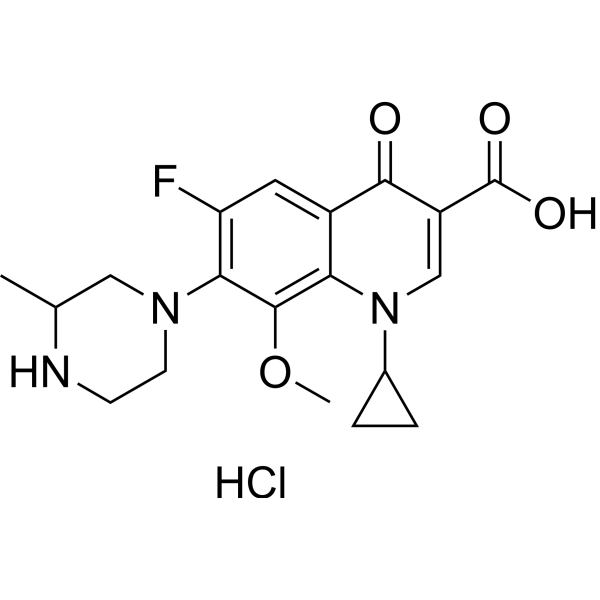
Gatifloxacin hydrochloride (AM-1155; BMS-206584; PD135432) is a potent fluoroquinolone antibiotic with broad-spectrum antibacterial activity. Gatifloxacin hydrochloride inhibits bacterial type II topoisomerases (IC50=13.8 μg/ml for S. aureus topoisomerase IV) and E. coliDNA gyrase (IC50 = 0.109 μg/ml) . Gatifloxacin hydrochloride can be used to treat bacterial conjunctivitis in vivo.
Gatifloxacin mesylate (AM-1155; BMS-206584; PD135432) is a potent fluoroquinolone antibiotic with broad-spectrum antibacterial activity. Gatifloxacin mesylate inhibits bacterial type II topoisomerases (IC50=13.8 μg/ml for S. aureus topoisomerase IV) and E. coliDNA gyrase (IC50 = 0.109 μg/ml) . Gatifloxacin mesylate can be used to treat bacterial conjunctivitis in vivo.
Gatifloxacin sesquihydrate (AM-1155; BMS-206584; PD135432) is a potent fluoroquinolone antibiotic with broad-spectrum antibacterial activity. Gatifloxacin sesquihydrate inhibits bacterial type II topoisomerases (IC50=13.8 μg/ml for S. aureus topoisomerase IV) and E. coliDNA gyrase (IC50 = 0.109 μg/ml) . Gatifloxacin sesquihydrate can be used to treat bacterial conjunctivitis in vivo.
Antibacterial agent 338 (Compound 65) is an antibacterial agent and GyrB inhibitor, with an IC50 of 12.60 nM against GyrB from E. coli. Antibacterial agent 338 binds to the ATP-binding domain of E. coliGyrB, thereby inhibiting the ATPase activity of GyrB. Antibacterial agent 338 exhibits broad-spectrum antibacterial activity against multidrug-resistant Gram-negative bacteria. Antibacterial agent 338 reduces bacterial load in a neutropenic mouse thigh infection model. Antibacterial agent 338 can be used for the research of Acinetobacter baumannii infection .
Sodium new houttuyfonate (SNH) is a partially reversible NDM-1 inhibitor with an IC50 of 14.2 μM. Sodium new houttuyfonate is an inhibitor against renin and angiotensin I converting enzyme (ACE). Sodium new houttuyfonate can recover the antibacterial activity of Meropenem (HY-13678) against E. coli BL21/pET15b-blaNDM-1 .
Gatifloxacin (AM-1155; BMS-206584; PD135432) is a potent fluoroquinolone antibiotic that can cross the blood-brain barrier, with broad-spectrum antibacterial activity. Gatifloxacin inhibits bacterial type II topoisomerases (IC50=13.8 μg/ml for S. aureus topoisomerase IV) and E. coliDNA gyrase (IC50=0.109 μg/ml) . Gatifloxacin can be used to treat bacterial conjunctivitis in vivo.
2-(p-Tolyl) propanoic acid (2-(4-methylphenyl) propionic acid) acts as an Antimicrobial agent intermediate. 2-(p-Tolyl) propanoic acid inhibits COX-1 and COX-2 enzymes, with IC50 values of 38.23 μM and 64.30 μM, respectively. 2-(p-Tolyl) propanoic acid is applicable to research on E. coli, Enterococcus faecalis, Listeria monocytogenes, and Staphylococcus aureus .
Gatifloxacin (hydrochloride) (Standard) is the analytical standard of Gatifloxacin (hydrochloride). This product is intended for research and analytical applications. Gatifloxacin hydrochloride (AM-1155; BMS-206584; PD135432) is a potent fluoroquinolone antibiotic with broad-spectrum antibacterial activity. Gatifloxacin hydrochloride inhibits bacterial type II topoisomerases (IC50=13.8 μg/ml for S. aureus topoisomerase IV) and E. coli DNA gyrase (IC50 = 0.109 μg/ml)[1]. Gatifloxacin hydrochloride can be used to treat bacterial conjunctivitis in vivo.
Gatifloxacin (Standard) is the analytical standard of Gatifloxacin. This product is intended for research and analytical applications. Gatifloxacin (AM-1155; BMS-206584; PD135432) is a potent fluoroquinolone antibiotic with broad-spectrum antibacterial activity. Gatifloxacin inhibits bacterial type II topoisomerases (IC50=13.8 μg/ml for S. aureus topoisomerase IV) and E. coliDNA gyrase (IC50=0.109 μg/ml) . Gatifloxacin can be used to treat bacterial conjunctivitis in vivo.
Gatifloxacin (sesquihydrate) (Standard) is the analytical standard of Gatifloxacin (sesquihydrate). This product is intended for research and analytical applications. Gatifloxacin sesquihydrate (AM-1155; BMS-206584; PD135432) is a potent fluoroquinolone antibiotic with broad-spectrum antibacterial activity. Gatifloxacin sesquihydrate inhibits bacterial type II topoisomerases (IC50=13.8 μg/ml for S. aureus topoisomerase IV) and E. coli DNA gyrase (IC50 = 0.109 μg/ml) . Gatifloxacin sesquihydrate can be used to treat bacterial conjunctivitis?in vivo.
Valanimycin is an antibiotic, which inhibits Escherichia coli (BE1121) through interaction with DNA. Valanimycin exhibits cytotoxicity to mouse leukemia L1210, P388/S (doxorubicin (HY-15142A)-sensitive), and P388/ADR (doxorubicin-resistant), with IC50 of 0.79, 2.65, and 1.44 μg/mL, respectively. Valanimycin exhibits antitumor efficacy against ehrlich ascites tumors or L1210 in mice .
c[Arg-Arg-Arg-Arg-Nal-Nal-Nal] (Compound 9C) shows broad-spectrum activity against drug-resistant Gram-positive and Gram-negative bacteria, with MICs of 3.1, 3,1, 12.5, and 25 μg/mL for MRSA (ATCC BAA-1556), S. aureus (ATCC 29213), P. aeruginosa (ATCC 27883), and E. coli (ATCC 25922), respectively .
[BMIM]Cl (1-butyl-3-methylimidazolium chloride) is an alkyl-imidazolium chloride compound and a persistent aquatic pollutant. [BMIM]Cl exhibits antimicrobial activity against S. aureus (MIC = 25 mM), E. coli(MIC = 50 mM), and P. aeruginosa (MIC = 100 mM). It possesses moderate membrane permeability and cytotoxicity, directly affecting microorganisms and mammalian cells at high concentrations, but can inhibit the function of complex ecosystems (e.g., anaerobic digestion) even at environmentally relevant low concentrations by disrupting microbial community structures. [BMIM]Cl can be used in research related to bacterial infections .
c[Arg-Arg-Arg-Arg-Dip-Dip-Dip] (Compound 8C) shows broad-spectrum activity against drug-resistant Gram-positive and Gram-negative bacteria, with MICs of 3.1, 3,1, 12.5, and 12.5 μg/mL for MRSA (ATCC BAA-1556), S. aureus (ATCC 29213), P. aeruginosa (ATCC 27883), and E. coli (ATCC 25922), respectively .
SMT-738 is a bacterial bactericide. SMT-738 targets the small molecules responsible for lipoprotein transport in Enterobacteriaceae, causing abnormal lipoprotein localization and bacterial cell death. SMT-738 inhibits the growth of E. coli and K. pneumoniae. SMT-738 reduces bacterial loads in mouse models of urinary tract infection, bloodstream infection, and pulmonary infection caused by Enterobacterales. SMT-738 can be used in the research of Enterobacteriaceae infections, urinary tract infections, bloodstream infections, and pneumonia .
BRITE-338733 is an inhibitor of E. coliRecA ATPase activity (IC50: 4.7 μM). BRITE-338733 also inhibits the ATP hydrolysis activity of RSC chromatin remodeling enzyme by binding to its ATP-binding pocket and DNA (IC50: 0.316 μM). BRITE-338733 exhibits cytotoxicity against MCF-7 and MDA-MB-231 breast cancer cells. BRITE-338733 can be used in studies on antibacterial adjuvants and anticancer research .
ecMetAP-IN-1 is an inhibitor of E. coli methionine aminopeptidase (ecMetAP) with an IC50 of 2.086 μM. ecMetAP-IN-1 is applicable to research related to bacterial infections caused by E. coli .
E-4441 is an orally active Antibacterial agent. E-4441 exerts broad-spectrum in vitro antibacterial activity against Gram-positive bacteria and aerobic bacteria. E-4441 exhibits protective effects against Staphylococcus aureus, Escherichia coli, and Pseudomonas aeruginosa infections. E-4441 can be used in the research of systemic bacterial infections (Staphylococcus aureus, Escherichia coli, and Pseudomonas aeruginosa infections) .
Acetyl-CoA Carboxylase-IN-1 is a potent acetyl-CoA carboxylase (ACC) inhibitor with an IC50 value of <5 nM. Acetyl-CoA Carboxylase-IN-1 has antibacterial activity .
Deoxyadenosine diphosphate sodium is a nucleoside diphosphate, in which the nucleoside is deoxyadenosine. Deoxyadenosine diphosphate sodium participates in DNA synthesis and repair. Deoxyadenosine diphosphate sodium acts as the inhibitor of polynucleotide phosphorylase, interfers with the polymerization of ADP and CDP .
Soulattrolide is a non-nucleoside HIV-1 reverse transcriptase (RT)inhibitor with IC50 values of 0.34 µM for HIV-1 RT, 69.5 µM for E. coliRNase H, and >495 µM for human DNA polymerase β, and can be found in Calophyllum teysmannii latex. Soulattrolide can be used for the research of HIV-1 infection, pain, inflammation, and Mycobacterium tuberculosis infection .
EcGUS-IN-1 (Compound E-9) is a non-competitive β-glucuronidase inhibitor, with an IC50 of 2.68 μM and a Ki value of 1.64 μM. EcGUS-IN-1 can improve gastrointestinal adverse events (GIAE) caused by Escherichia coli infection by inhibiting E. coliβ-glucuronidase activity .
Rupesin E is a natural product that can be isolated from Patrinia rupestris. Rupesin E has significant antibacterial activity against Escherichia coli .
Isoforsythiaside is an antioxidant and antibacterial phenylethanoid glycoside with MICs of 40.83, 40.83, and 81.66 μg/mL for Escherichia coli(E. coli), Pseudomonas aeruginosa(PAO), and Staphylococcus aureus (SA), respectively .
Alkaline Phosphatase (Apase), Escherichia coli is an alkaline phosphatase from Escherichia coli, and is one of the most active alkaline phosphatases. Alkaline phosphatase, Escherichia coli is an orally active membrane-bound glycoprotein that catalyzes the hydrolysis of phosphate monoesters at alkaline pH. Alkaline phosphatase, Escherichia coli reduces myeloperoxidase activity and bacterial translocation. Alkaline phosphatase, Escherichia coli improves survival rate of mice infected with E. coli. Alkaline phosphatase, Escherichia coli improves TNBS-induced colon inflammation .
ient S. Tm and hyperpermeable Escherichia coli. The potencies against WT strains of E. coli, Acinetobacter baumannii, and Burkholderia cenocepacia are also improved considerably (up to >128-fold) with the outer-membrane permeabi
NSC156565 is a Pycsar immune system inhibitor and phage infection potentiator. NSC156565 blocks PycTM cytotoxic effects via prevention of 3′,5′-cCMP-mediated activation or inhibition of activated effector membrane-perturbing activity. NSC156565 enables bacteriophage Bas34 to overcome Pycsar-mediated resistance, facilitating productive phage infection and replication .
Antibacterial agent 97 (hit compound) is a potent antibacterial agent. Antibacterial agent 97 shows antibacterial activities with MIC of 16 and 16 µg/mL for Escherichia coli (E. coli) and Staphylococcus aureus (S. aureus), respectively .
JB-95 acetate, a β-hairpin macrocyclic peptide, exhibits potent antimicrobial activity against Escherichia coli. JB-95 acetate can selectively disrupt the outer membrane but not the inner membrane of E. coli .
JB-95, a β-hairpin macrocyclic peptide, exhibits potent antimicrobial activity against Escherichia coli. JB-95 can selectively disrupt the outer membrane but not the inner membrane of E. coli .
Antibacterial agent 295 is nitrofuran derivative. Antibacterial agent 295 is an antibiotic with anti-bacterial effects to S. aureus and E.coli. Antibacterial agent 295 showes an MIC of 0.78 μM in S. aureus USA300 and 1.6 μM in E.coli K12. Antibacterial agent 295 can be used for the research of infection .
Clorobiocin is an antibacterial agent with an IC50 of 0.21 μM against the B subunit of E. coli DNA gyrase. Clorobiocin targets the mLaC protein of Gram-negative bacteria. Clorobiocin potently inhibits bacterial DNA replication. Clorobiocin can be used in studies on Gram-negative bacterial infections, such as Acinetobacter baumannii and E. coli infections .
Majoranaquinone exhibits a high antibacterial effect against 4 Staphylococcus, 1 Moraxella, and 1 Enterococcus strains. Majoranaquinone shows substantial efflux pump inhibitory activity in Escherichia coliATCC 25922 strain. Majoranaquinone is found to be an effective biofilm formation inhibitor on E.coli, ATCC 25922 and E. coli K-12 AG100 bacteria .
MsbA-IN-5 (compound 40) is a potent and highly selective MsbA inhibitor with an IC50 value of 2 nM. MsbA-IN-5 has inhibitory activity against Escherichia coli, Klebsiella pneumoniae, and Enterobacter cloacae with MICs of 12 μM, 12 μM and 25 μM, respectively. MsbA-IN-5 can be used for researching anti-Gram-negative bacteria .
Anti-MRSA agent 7 (Compound 12) is a potent antibacterial agent. Anti-MRSA agent 7 inhibits S. aureus DNA gyrase, E. coli DNA gyrase, S. aureus topo IV and E. coli topo IV with IC50s of 0.185, 0.365, 0.341 and 0.059 μM, respectively .
Cyclamidomycin (Desdanine) is an acrylamide antibiotic with antibacterial activity. Cyclamidomycin inhibits nucleoside diphosphate kinase and pyruvate kinase (in E. coli) and oxidative phosphorylation in rat liver mitochondria. Cyclamidomycin is active against S. aureus, M. flavus, S. lutea, B. subtilis, E. coli, S. flexneri, S. typhosa, P. vulgaris, and K. pneumoniae (MICs=3.12-25 mg/ml) .
Ferrous gluconate is a highly water-soluble iron-containing agent with high bioavailability and bactericidal activity. As a non-heme iron, Ferrous gluconate is used for meat product fortification and improvement of iron deficiency anemia. Ferrous gluconate induces ferroptosis in E. coli through Fe2+ infiltration, reactive oxygen species burst, lipid peroxidation and direct interaction with DNA. Ferrous gluconate also downregulates the SOS responsive transcriptional repressor LexA. In addition, Ferrous gluconate regulates multiple key pathways in E. coli such as fatty acid metabolism, iron-sulfur cluster assembly and pyruvate metabolism, and is applied in studies related to *E. coli* infection and iron deficiency anemia .
8-Oxo-dGTP (8-Oxo-Deoxyguanosine triphosphate) is an oxidized guanine nucleotide formed by ROS-mediated oxidative modification of dGTP, and it also serves as a key substrate for 8-oxo-dGTP pyrophosphohydrolases (such as hMTH1 and E. coliMutT). 8-Oxo-dGTP acts as a DNA mutagen, inserts into nascent DNA and pairs with adenine and cytosine, inducing A:T to C:G transversion mutations. Furthermore, 8-Oxo-dGTP causes oxidative DNA base modification, strand breakage and S-phase arrest, and ultimately triggers AIF-mediated apoptosis and promotes spontaneous carcinogenesis in mth1-deficient mice. Accumulation of 8-Oxo-dGTP in cells induces genomic instability, but it exhibits a tumor-suppressive effect that reduces tumor incidence in mouse models instead. 8-Oxo-dGTP is widely used in studies related to spontaneous carcinogenesis, Parkinson's disease, Alzheimer's disease, heart failure and tumor mechanisms .
DfrA1-IN-1 (Compound DC6) is an orally active DfrA1 inhibitor with strong binding ability to DfrA1. DfrA1-IN-1 can be used in research related to trimethoprim-resistant bacterial infections .
Penicillin G (potassium) (Standard) is the analytical standard of Penicillin G (potassium). This product is intended for research and analytical applications. Penicillin G potassium is a fast-acting penicillin family antibiotic. Penicillin G potassium can be used for the research of bacterial infections that affect the blood, heart, lungs, joints, and genital areas .
MRV03-037 is a selective colibactin-activated peptidase (ClbP) inhibitor that blocks the genotoxic effect of Colibactin (HY-145930) on eukaryotic cells. MRV03-037 prevents gut bacterial genotoxin production .
BDM91514 improves antibiotic potency through AcrB inhibition. BDM91514 prevents the growth of E. coliBW25113 (EC90: 8 μM) in the presence of 8 μg/mL Pyridomycin. BDM91514 has suitable plasma and microsomal stability .
ARP (Aldehyde reactive probe) is an aldehyde-reactive probe . ARP specifically labels AP sites in DNA with biotin residues . ARP detects abasic sites induced by RNA oxidation . ARP is suitable for studies involving the quantification of AP sites, or the detection of other aldehyde-containing DNA damages and abasic sites induced by RNA oxidation .
Tryptone Soya Agar is a general-purpose culture medium for the isolation and cultivation of fastidious and non-fastidious microorganisms or the maintenance of stock culture.
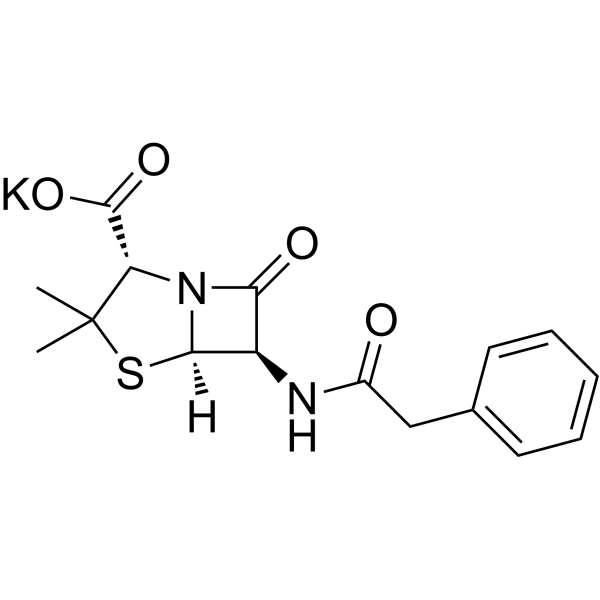
Penicillin G potassium is a fast-acting penicillin family antibiotic. Penicillin G potassium can be used for the research of bacterial infections that affect the blood, heart, lungs, joints, and genital areas .
Deoxynivalenol (Standard) is the analytical standard of Deoxynivalenol. This product is intended for research and analytical applications. Deoxynivalenol, an orally active mycotoxin of the trichothecenes family, crosses the intestinal mucosa by a paracellular pathway through the tight junctions. The Deoxynivalenol transport is not affected by P-glycoprotein (PgP) or multidrug resistance-associated proteins (MRPs) inhibitors .
Aldehyde reactive probe TFA is an aldehyde reactive probe. Aldehyde reactive probe TFA specifically labels the AP site in DNA with biotin residues. Aldehyde reactive probe TFA can detect RNA oxidation-induced debasement sites. Aldehyde reactive probe TFA can be used to quantify AP sites or detect other aldehyde-containing DNA damage and RNA oxidation-induced debasement sites .
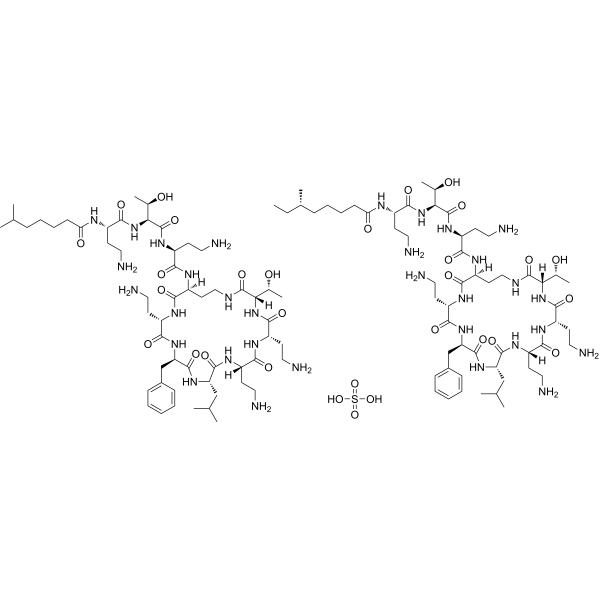
Polymyxin B Sulfate is an antibiotic. Polymyxin B Sulfate inhibits Gram-negative infections by binding to the LPS of the bacterial wall with high affinity. Polymyxin B Sulfate neutralizes the effect of endotoxin. Polymyxin B Sulfate induces bacterial death by increasing its permeability. Polymyxin B Sulfate is used in endotoxemia research .
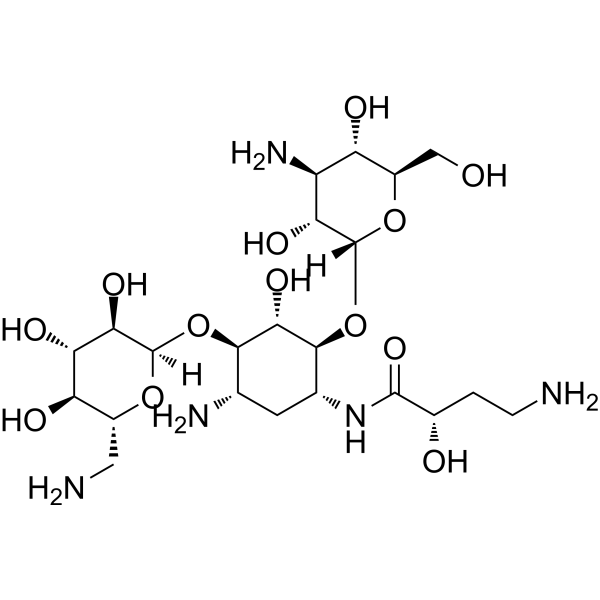
3''-Deamino-3''-hydroxykanamycin B (NK-1012-1) is a kanamycin antibiotic. 3''-Deamino-3''-hydroxykanamycin B can be produced by S. tenebrarius. 3''-Deamino-3''-hydroxykanamycin B is effective against E. coli ATCC 25922 and E. coli CCARM 1A020, with MIC values of 128 μg/mL .
Topoisomerase IV, Pseudomonas aeruginosa (EC 5.99.1.) is prepared by overexpressing the subunits in E. coli. Topoisomerase IV is supplied as a heterotetramer complex in Dilution buffer.
Topoisomerase IV, Acinetobacter baumannii (EC 5.99.1.) is prepared by overexpressing the subunits in E. coli. Topoisomerase IV is supplied as a heterotetramer complex in Dilution buffer.
Eicosane is an alkane with anti-microbial effects. Eicosane inhibits the growth of B. subtilis, E. coli and P. aeruginosa. Eicosane is used to form candles .
Ferrous gluconate (Standard) is the analytical standard of Ferrous gluconate. This product is intended for research and analytical applications. Ferrous gluconate is a highly water-soluble iron-containing agent with high bioavailability and bactericidal activity. As a non-heme iron, Ferrous gluconate is used for meat product fortification and improvement of iron deficiency anemia. Ferrous gluconate induces ferroptosis in E. coli through Fe2+ infiltration, reactive oxygen species burst, lipid peroxidation and direct interaction with DNA. Ferrous gluconate also downregulates the SOS responsive transcriptional repressor LexA. In addition, Ferrous gluconate regulates multiple key pathways in E. coli such as fatty acid metabolism, iron-sulfur cluster assembly and pyruvate metabolism, and is applied in studies related to *E. coli* infection and iron deficiency anemia .
2,3,-Dihydroxybenzoylserine (2,3-Dihydroxy-N-benzoylserine) is a conjugate of 2,3-dihydroxybenzoic acid and serine. 2,3,-Dihydroxybenzoylserine can be isolated from the culture of E.coli. 2,3,-Dihydroxybenzoylserine is a growth factor with growth-promoting activity in multiple aromatic auxotrophs such as E.coli KI2, strain AB2830. 2,3,-Dihydroxybenzoylserine is a degradation product of biological active compounds .
Antibacterial agent 287 (Compound 26), a derivative of Deoxynybomycin (HY-116926), is an antibacterial agent. Antibacterial agent 287 has potent antibacterial activity against a variety of Gram-negative bacterium with MICs of 0.5, 0.5 and 0.06 μg/mL for WT S. aureus, WT E. coli and E. coli ΔtolC, respectively. Antibacterial agent 287 can be used for multidrug-resistant (MDR) bacterium infections research .
LY173013 is an antibacterial agent with a broad spectrum antibacterial activity. LY173013 binds to PBP 3 of E.coli and can be utilized in antibacterial research .
Vedaprofen-d3 is the deuterium labeled Vedaprofen. Vedaprofen (Quadrisol) is a COX-1 selective nonsteroidal anti-inflammatory agent (NSAID) for serum TxB2 and exudate PGE2 inhibition . Vedaprofen is a Escherichia coli (E. coli) sliding clamp (SC) inhibitor with the IC50 of 222 μM .
Anti-virulence factor-IN-2 (compound C7) is an inhibitor targeting the virulence factor KpsM in Escherichia coli. kpsM mediates the translocation of capsular polysaccharides to the cell surface, allowing kpsM-positive E. coli to escape the phagocytosis of the scavenger receptor Marco on liver Kupffer cells, leading to bacterial dissemination. kpsM-positive E. coli exacerbates ethanol-induced liver disease. Anti-virulence factor-IN-2 can inhibit the ethanol-induced liver disease model caused by kpsM-dependent capsid in mice and has anti-infective activity. Anti-virulence factor-IN-2 can be used for the study of alcoholic hepatitis .
Sorbitol-6-phosphate 2-dehydrogenase, escherichia coli is a dehydrogenase produced by E. coli. Sorbitol-6-phosphate 2-dehydrogenase, escherichia coli can catalyze the conversion between D-sorbitol 6-phosphate and D-fructose 6-phosphate, with the oxidation of D-sorbitol 6-phosphate happening at a rate 10 times faster than the reduction of D-fructose 6-phosphate, and it plays a role in various cellular processes .
Antimicrobial-IN-1 (compound 17) exhibits strong antibacterial activity against S. aureus and E. coli, with the inhibition zone diameter of 18 , 16 mm/mg, respectively .
Antibacterial agent 261 (compound 43) is a potent inhibitor of peptidomimetic peptide deformylase (PDF), with IC50 of 2.5 and 10.6 nM for S. aureus and E. coli, respectively .
LCI peptide is an antimicrobial peptide with antibacterial activity. LCI peptide is active against plant pathogens, Xanthomonas and Pseudomonas, including E. coli, Gentamicin-resistant MRSA and Xoo .
Isopropyl benzoate is a class of esters consisting of a benzene ring and an isopropyl group attached to a carboxylic acid group. Isopropyl benzoate can be used as an inducer to biosynthesize phloroglucinol in E. coli .
MsbA-IN-3 (compound 31) is a potent and highly selective MsbA inhibitor with an IC50 value of 2 nM. MsbA-IN-3 has inhibitory activity against Escherichia coli with a MIC of 35 μM .
Dehydroacetic acid (Biocide 470F) is a pyrone derivative. Dehydroacetic acid has antibacterial, antifungal and phytotoxic activities. Dehydroacetic acid can be added to cosmetics, food and beverages for preservation and other purposes. Dehydroacetic acid can also be used to synthesize various heterocycles and cycloaddition products .
MsbA-IN-4 (compound 32) is a potent and highly selective MsbA inhibitor with an IC50 value of 3 nM. MsbA-IN-4 has inhibitory activity against Escherichia coli with a MIC of 12 μM .
Antibacterial agent 311 (Compound 4f) is an antibacterial agent. Antibacterial agent 311 exhibits antibacterial activities against P. aeruginosa, S. aureus, E. coli, K. pneumonia, E. CTXM1, E. NDM1 with MICs of 0.8, 1, 1, 1, 0.7, 0.7 mg/mL .
Distinctin is an antimicrobial peptide. Distinctin can be isolated from frog skin. Distinctin has antibacterial activity against E. faecalis, P. aeruginosa, S. aureus and E. coli (MIC: 14.5, 28.0, 28.0, 14.5 μM) .
ME-1228 is an antibacterial agent and sulfur-containing analogue of OCP 9-176. ME 1228 is generally twofold more active than OCP 9-176 against Escherichia coli, Klebsiella pneumoniae, Klebsiella oxytoca, Providencia stuartii, Proteus vulgaris, and Serratia marcescens. ME-1228 has antibacterial activity against E. coli UB 1005, P. aeruginosa K779K, and P. aeruginosaE4, with MICs of 0.25, 0.25, and 1 μg/mL, respectively .
KT2 is a cationic amphipathic antibacterial peptide. KT2 can completely kill cells of E. coli O157:H7. KT2 has potent anti-biofilm activity and prevents biofilm formation of E. coli O157:H7. KT2 significantly binds to bacterial surface LPS and interacts with the lipids of liposomes with great penetration capability into bacterial cells, followed by bond to DNA and other cytoplasmic membrane .
β-Glucuronidase-IN-1 is a potent, selective, uncompetitive, and orally active E. colibacterial β-glucuronidase inhibitor, exhibiting an IC50 and a Ki of 283 nM and 164 nM, respectively .
LMW peptide is an antimicrobial peptide. LMW peptide is active against Gram-positive and Gram-negative bacterial, such as B. subtilis, L. monocytogenes, E. coli, P. aeruginosa, V. cholera .
GmhA-IN-1 (compound 17) is an inhibitor of GmhA with an IC50 value of 2.4 nM. GmhA-IN-1 enhances the activity of erythromycin and rifampicin on wild-type E. coli .
Trimethylacetaldehyde (Pivalic aldehyde) is an analog of Betaine aldehyde. Trimethylacetaldehyde has a significant enzyme inhibitory activity towards betaine aldehyde dehydrogenase. Trimethylacetaldehyde can be used for osmoprotectants of E.coli research .
MUT056399 (Fab-001) is a highly potent inhibitor of the FabI enzyme of both S. aureus and E. coli with 50% inhibitory concentration IC50s of 12 nM and 58 nM, respectively.
Retapamulin (SB-275833) is a topical antibiotic that binds Staphylococcus aureus and E. coli ribosomes with a Kd of 3 nM. Retapamulin can be used in researches of atopic dermatitis and prostate cancer .
RNAP-IN-1 is a ribonucleic acid polymerase (RNAP) inhibitor, with an IC50 of 0.95 μM against E. coliRNAP. RNAP-IN-1 can be used in studies of bacterial infections .
Antibacterial agent 135 (example 7) is a potent antibacterial agent. Antibacterial agent 135 can inhibit P. aeruginosa, A. baumannii, E. coli, and K. pneumoniae, with MIC>64 μg/mL .
XT-4 is an antimicrobial peptide derived from skin secretions of Xenopus tropicalis. XT-4 has strong activity against E.coli, the vaule of MIC is 18 μM .
Benzisothiazolone is an isothiazolone fungicide. Benzisothiazolone has growth inhibiting activity against E. coli ATCC 8739 and saccharornyces pombe NCYC 1354. Benzisothiazolone can be used in the study of growth inhibition model .
Antibacterial agent 113 (compound 3) is a potent antibacterial agent. Antibacterial agent 113 shows antibacterial activity against P.aeruginosa, S.mutans, B.subtilis, E.coli, E.faecalis, S.typhimuriumand, and S.aureus microorganisms, with MIC values all of 156.25 μM .
Octyl β-D-thioglucopyranoside is a non-ionic detergent that can be used in the field of membrane biochemistry. Octyl β-D-thioglucopyranoside has the ability to solubilize E. coli membrane proteins .
Cytosolic 5'-nucleotidase II, Huamn (EC 3.1.3.5) is a pure and active protein cloned by RT-PCR amplification of mRNA extracted from human hepatoma cells and expressed in E.coli.
Pterin is a Pteridine with antibacterial activity, which is found in C. croceus. Pterin reduces the proliferation and biofilm production in E. coli, P. aeruginosa, and S. mutans. Pterin is promising for research of cancers and infections .
5-Aza-7-deazaguanine is a substrate for wild-type (WT) E. colipurine nucleoside phosphorylase and its Ser90Ala mutant in the synthesis of base-modified nucleosides .
Citrocin is a potent bacterial RNA polymerase (RNAP) inhibitor. Citrocin shows significant inhibitory activity against Escherichia coli RNAP with an MIC range of 16-125 μM. Citrocin specifically binds to and inhibits RNA polymerase to block bacterial transcription and enters cells mainly through inner membrane protein SbmA. Citrocin is promising for research of Gram-negative bacterial infections, such as enterohemorrhagic E. coli .
L18-MDP is a derivative of muramyl dipeptide, an antibacterial agent. L18-MDP has antibacterial activity and has potential applications in bacterial and fungal infections .
Antibacterial agent 104 (Compound 7) is a potent antibacterial agent. Antibacterial agent 104 displays excellent antibacterial activity in vitro and good efficacy in vivo against MRSA .
Penicillin G is a potent penicillinantibiotic. Penicillin G can be used for bacterial infection. Penicillin G has potent activity against all Gram-positive bacteria and Gram-negative cocci .
Transthyretin-IN-4 (Compound B26) is a bivalent inhibitor of transthyretin (TTR) amyloidosis (bIC50: 0.09 µM, pIC50: 1.4 µM). Transthyretin-IN-4 is used in the study of fatal heart failure with preserved ejection fraction (HFpEF) and fatal arrhythmias .
ROS inducer 9 (compound 4e) is an antibacterial agent with a MIC value of 0.25 μg/mL against E. coli. ROS inducer 9 kills bacteria by inhibiting GSH activity and increasing ROS levels. ROS inducer 9 shows low toxicity to erythrocytes and RAW 264.7 cells .
Antimicrobial agent-35 (Compound c9) exhibits antibacterial agent, that inhibits S. aureus, E. coli, E. faecalis, and S. maltophilia with MIC of 0.5-2 μg/mL. Antimicrobial agent-35 exhibits cytotoxicity against HT-22 with IC50 of 130.4 μg/mL .
Imidazole-4-pyruvic acid is derived from histidine catalyzed by histidine transaminase. Imidazole-4-pyruvic acid can be used as a precursor for selective His-labeling in E.coli overexpressed proteins .
XT-2 peptide is an antimicrobial peptide derived from skin secretions of Xenopus tropicalis. XT-2 peptide has strong activity against E.coli, the vaule of MIC is 8 μM .
Antibacterial agent 103 (compound 7) has highly antibacterial activity against kinds of Gram-positive and -negative bacteria. Antibacterial agent 103 can be used for researching inhibition of resistance bacterial strains .
BWC0977 is an antibacterial agent that inhibits bacterial DNA replication via inhibition of DNA gyrase and topoisomerase IV. BWC0977 exhibits a minimum inhibitory concentration (MIC90) of 0.03-2 µg/mL against MDR (Multi-Drug Resistant) Gram-negative bacteria .
MF 961 is a quinolone biocide. The MIC50 values of MF 961 against E. coli, Klebsiella sp., Enterobacter sp., Citrobacter sp., Citrobacter sp., and Shlgella sp. are all in the range of 0-25 mg/L .
Poly diallyldimethylammonium chloride is a cationic antimicrobial polymer with quaternary ammonium side chains, and it exhibits microbicidal activity. Poly diallyldimethylammonium (chloride) can be used in studies of bacterial and fungal infections (E. coli, S. aureus, C. albicans infections) .
4-Chlorosalicylic acid is a pharmaceutical intermediate. Inhibits monophenolase and diphenolase activity with IC50s of 1.89 mM and 1.10 mM. Potent antimicrobial activity. Against E. coli with the MIC of 250 μg/mL and with the MBC of 500 μg/mL.
DNA Gyrase-IN-3 (Compound 28) is a bacterial DNA gyrase B inhibitor with IC50s of 5.41-15.64 µM for E. coli DNA gyrase. Anti-tubercular and antibacterial activity .
Im5, an antimicrobial peptide, has antibacterial (MIC: 10, 2.5-5, 0.5-1 μM for E. coli, S. aureus, B. subtilis respectively) and hemolytic activity (EC50: 28 μM) .
Nonacosane (Standard) is the analytical standard of Nonacosane. This product is intended for research and analytical applications. Nonacosane, isolated from Baphia massaiensis, exhibits weak activities against E. coli, B. subtilis, P. aeruginosa and S. aureus .
L-Cystine monohydrochloride is an amino acid. L-Cystine is converted to L-Cysteine in the body. Moreover, L-Cystine/L-Cysteine conversion system is a channel on the cell membrane, which can maintain the internal REDOX homeostasis of E. coli .
2-Phenylphenol sodium is a phenolic disinfectant and toxic agent with bactericidal, fungicidal and growth-inhibiting activities. 2-Phenylphenol sodium serves as a post-harvest agricultural fungicide and food preservative. At specific concentrations, 2-Phenylphenol sodium inhibits the growth of E. coli strains, while at high concentrations, 2-Phenylphenol sodium completely blocks their proliferation. 2-Phenylphenol sodium acts as a substrate for biocatalytic conversion, and is converted to 3-phenylcatechol by 2-hydroxybiphenyl 3-monooxygenase in recombinant E. coli. 2-Phenylphenol sodium also undergoes electrochemical oxidation in phosphate buffer solution .
NDM-1-IN-10 (Compound CS-23) is an irreversible and covalent New Delhi metallo-β-lactamase-1 (NDM-1) inhibitor with an IC50 of 36 nM. NDM-1-IN-10 shows a synergistic effect with Meropenem (HY-13678) against NDM-1-expressing E. coli ( MIC of 0.25 μg/mL for E. coli BL21/pET15b-blaNDM-1). NDM-1-IN-10 can be used for bacterial infections research .
DL-Glyceraldehyde 3-phosphate is an intermediate in several metabolic pathways, including glycolysis and gluconeogenesis. DL-Glyceraldehyde 3-phosphate is a potent inhibitor of the growth of E. coli. DL-Glyceraldehyde 3-phosphate is a competitive inhibitor of the acyltransferase .
Antimicrobial agent-31 (compound 4a) is a potent antimicrobial agent. Antimicrobial agent-31 inhibits Salmonella enterica serovar Typhimurium and E.coli with MIC values of 19.24, 11.31 µg/mL, respectively .
4-Chloroguaiaco (4-Chloro-2-methoxyphenol) is a phenol derivative, with antimicrobial activity. 4-Chloroguaiaco shows inhibition against S. aureus and E. coli with MICs of both 110 μg/mL .
LB Broth Base, powder (Luria-Bertani Base) is generally used to maintain the growth of E. coli. The composition of 1 liter of LB medium is: 10 g peptone, 5 g yeast extract and 10 g NaCl .
Moxifloxacin prodrug-1 TFA (Compound 1e) is a Moxifloxacin (HY-66011A) prodrug and antibacterial agent. Moxifloxacin prodrug-1 TFA exhibits comparable potent activity as Moxifloxacin against E. coli, S. aureus, K. pneumoniae, A. baumannii, and P. aeruginosa. Moxifloxacin prodrug-1 TFA inhibits Mtb .
Angustifoline, an alkaloid, can be isolated from Lupinus angustifolius L. alkaloid extract. Angustifoline exhibits antimicrobial activity. Angustifoline could have bacteriostatic effects against S. aureus, B. subtilis, E. coli, P. aeruginosa and B. thuringiensis .
Metioprim is a competitive inhibitor of bacterial Dihydrofolate reductase (DHFR). Metioprim has inhibitory activity against anaerobic bacteria. Metioprim shows synergistic activity in combination with DDS (HY-B0688) against E. coli. and various mycobacteria .
Mitogenic Pentapeptide (Tripalmitoyl pentapeptide) is an effective activator of B lymphocyte mitogen and polyclonal. Mitogen Pentapeptide is a synthetic N-terminal analog of E. coli outer membrane lipoproteins. Mitogenic Pentapeptide can be used for the study of immune adjuvants .
Ilicicolin F is a fungal metabolite that has been found in Fusarium and has diverse biological activities. It inhibits T. vivax alternative oxidase and the E. coli ubiquinol oxidase cytochrome bo (IC50s=0.43 and 0.37 μM, respectively) but not the E. coli ubiquinol oxidase cytochrome bd (IC50=85 μM).2 Ilicicolin F is active against the fungi A. fumigatus and C. albicans (MICs=1.66-3.33 and 6.66-13.33 μg/mL, respectively). It is cytotoxic to HeLa cells with an EC50 value of 0.003 μg/mL.
Anilazine (Standard) is the analytical standard of Anilazine. This product is intended for research and analytical applications. Anilazine is a fungicide and inhibit the growth of Rhizobium sp. and E. coli. Anilazine inhibits glucose oxidation and succinate oxidation and also inhibits in vitro succinic dehydrogenase activity .
Vitexilactone is a diterpenoid that can be isolated from the leaves of Vitex negundo L. Vitexilactone shows antimicrobial activity towards E. coli. Vitexilactone induces cell apoptosis and inhibits cell cycle of cancer cells. Vitexilactone can be used for the research of cancer .
3-Hydroxybutyryl-CoA is a metabolite which can be found in mouse or E.coli, et al. 3-Hydroxybutyryl-CoA has a 3-hydroxybutanoyl as the S-acyl component, and is an intermediate in the fermentation of butyric acid, and in the metabolism of lysine and tryptophan .
FabH-IN-2 (25), an antimicrobial agent, exhibits remarkable potential as an agent with an MIC range of 1.25-3.13 μg/mL against the tested bacterial strains and an IC50 of 2.0 μM against E. coli-derived FabH .
2-Phenylethyl propionate is an aromatic compound with sweet, fruity and floral notes, which acts as an insect attractant. 2-Phenylethyl propionate is widely used in cosmetics such as perfumes, shampoos and soaps, as well as non-cosmetic products including detergents and household cleaners. 2-Phenylethyl propionate has been granted GRAS (Generally Recognized As Safe) certification by the U.S. Food and Drug Administration .
Monocaprylin (Glyceryl monocaprylate), a monoglyceride of caprylic acid, exhibits an excellent antibacterial activity. Monocaprylin inhibits a variety of foodborne pathogenic and spoilage microorganisms and has the potential for an alternative food preservative research .
DNA Gyrase-IN-5 (Compound 8I-w) is a potent DNA gyrase inhibitor with an IC50 of 0.10 μM. DNA Gyrase-IN-5 shows antibacterial activities against wild type and drug-resistant strains .
Lyngbyatoxin B is a complex compound in a versatile biosynthetic pathway from the marine cyanobacterium Moorea producens. By heterologously expressing the lyngbyatoxin biosynthetic pathway in Escherichia coli, lyngbyatoxin A (25.6 mg/L) and its precursor indolactam-V (150 mg/L) were successfully produced. This approach confirmed the biosynthetic route of lyngbyatoxin and laid a chemical foundation for future pathway engineering. In addition, the successful production of lyngbyatoxin A in E. coli opens the possibility for heterologous expression and characterization of other cyanobacterial natural products.
KU13 is an inhibitor of nontuberculous mycobacteria (NTM). The minimum inhibitory concentrations (MIC) of KU13 against Mycobacterium and E. coli are 0.032-8 μg/mL and 2 μg/mL, respectively. KU13 can be used for research in the field of anti-infection .
UDP-3-O-acyl-GlcNAc (UDP-3-O-(3-hydroxytetradecanoyl)-N-acetylglucosamine) is an E. coli metabolite that is involved in 3-deoxy-D-manno-octulosonate (KDO) biosynthesis pathway .
Glycosyltransferase-IN-1 (compound 5m) is a potent glycosyltransferase inhibitor, with an IC50 of 82.8 μM. Glycosyltransferase-IN-1 shows antibacterial activity, with MIC values of 6 μg/mL for MSSA, MRSA, B. subtilis and 12 μg/mL for E. coli .
Cardanol diene is a phenol found in cashew nut shell liquid that inhibits tyrosinase with an IC50 value of 52.5 μM in vitro.1 Cardanol diene is also used to synthesize cardanol-metal complexes that inhibit uropathogenic E. coli biofilm formation.
XT-1 is an antimicrobial peptide derived from skin secretions of Xenopus tropicalis. XT-1 has strong activity against S.aureus,E.coli and C.albicans, the vaule of MIC are 5, 6, 50 μM , respectively .
Antibacterial agent 143 (Compound 5a) is an antibacterial agent with MICs of 25, 25, 50 and 50 μg/mL against B. subtilis ATCC6633, S. aureus ATCC6538, P. aeruginosa ATCC13525 and E. coli ATCC35218, respectively .
Tricosane (Standard) (N-Tricosane (Standard)) is the analytical standard of Tricosane (HY-W130307). This product is intended for research and analytical applications. Tricosane (N-Tricosane) is a straight-chain alkane. Tricosane exhibits a certain degree of antibacterial activity against E. coli.
Ganglioside GD1a modulates toxic and inflammatory effects of E. coli lipopolysaccharide by preventing TLR4 translocation into lipid rafts. Ganglioside GD1a significantly reduces the effect of LPS on the decrease of cell survival and on stimulation of reactive oxygen species production .
Manumycin E has anti-Gram-positive bacteria and Escherichia coli effects, but the effect is very weak against other anti-Gram-negative bacteria, and has no effect on fungi. Manumycin E inhibits RAS Faraday base transfer and has weak cytotoxic activity against human cloned cancer cell lines HCT-116 (IC50 is 15.6 μg/mL) .
N-Formylfortimicin A (SF-1854) is an aminoglycoside antibiotic with broad-spectrum antibacterial activity. It primarily acts on bacterial ribosomes to inhibit protein synthesis and exhibits notable inhibitory effects against various Gram-positive and Gram-negative bacteria (e.g., E. coli with a MIC of 12.5-50 μg/mL), making it a potential candidate for research on bacterial infection-related diseases .
L-640876 is a broad-spectrum and orally active lactam antimicrobial agent. L-640876 showa MIC90 of 0.125 pg/mL for the E. coli strains, 2 /mg/mL for the S.choleraerai strains and 4 pg/mL for the S. typhinwrium strains .
MCF is an antimicrobial peptide derived from bee venom. MCF has activity against E.coli W 160-37, S.aureus 8530 and B.subtilis, the MIC values are 35-45 μg/ml, 25-35 μg/ml and 15-25 μg/ml .
Cetefloxacin (E 4868) is a board-spectrum antibacterial antibiotic, MIC of 0.007-8 µg/ml. Cetefloxacin exhibits good pharmacokinetic characters in mice. Cetefloxacin exhibits protective effects against Escherichia coli, Pseudomonas aeruginosa, Staphylococcus aureus, and Streptococcus pneumoniae in mice .
LasR-IN-1 (compound 9g) is a potent LasR inhibitor. LasR-IN-1 has good efficacy toward E. coli. LasR-IN-1 shows anti-bacterial activity, with a MIC of 28.13 μM against P. aeruginosa .
Cardanol triene is a phenol found in cashew nut shell liquid that reversibly inhibits tyrosinase with an IC50 value of 40.5 μM in vitro. A mixture of cardanol mono-, di-, and triene is used to synthesize cardanol-metal complexes that inhibit uropathogenic E. coli biofilm formation.
UDP-3-O-acyl-GlcNAc (UDP-3-O-(3-hydroxytetradecanoyl)-N-acetylglucosamine) Tris is an E. coli metabolite that is involved in 3-deoxy-D-manno-octulosonate (KDO) biosynthesis pathway .
NDH-1 inhibitor-1 (compound 27) is a potent NDH-1 inhibitor with pI50 values of <4, 5.40, 6.15 µM for Bovine SMP (submitochondrial particles), Potato SMP and E. coli, respectively .
2',3'-Dehydrosalannol is a potent antibacterial agent. 2',3'-Dehydrosalannol shows antibacterial activity against K. pneumonia ATCC 13883, P. aeruginosa ATCC 27853, S. aureus ATCC 25922, E. coli ATCC 11775, and E. faecalis ATCC 10541, with MIC values of 0.78, 1.56, 1.56, 6.25, and 25 μg/mL, respectively .
Aminoacyl tRNA synthetase-IN-1 (Standard) is the analytical standard of Aminoacyl tRNA synthetase-IN-1 (HY-108939). This product is intended for research and analytical applications. Aminoacyl tRNA synthetase-IN-1 is a bacterial aminoacyl tRNA synthetase (aaRS) inhibitor. Aminoacyl tRNA synthetase-IN-1 has inhibitory activity against S. aureus, E. faecalis and E.coli .
Aditoprime (Aditoprim) is a selective bacterial dihydrofolate reductase (DHFR) inhibitor with IC50s of 47 and 520 nM for E.coli and L.casei DHFR, respectively. Aditoprime inhibits the transformation of dihydrofolic acid to tetrahydrofolic acid. Aditoprime has a broad-spectrum antibacterial activity and excellent pharmacokinetics .
Glutamate oxidase (L-Glutamate oxidase) is a biochemical reagent that can be used as a biological material or organic compound for life science related research. Glutamate oxidase is expressed in E. Coli. Glutamate oxidase can be used to produce α-ketoglutaric acid from l-glutamic acid .
M4284 is a selective and orally active biphenyl mannoside FimH antagonist. M4284 has activities against different UPEC (Urinary tract infections (UTI) caused by uropathogenic E. coli) strains in different host genetic backgrounds and gut microbial community contexts .
Tigecycline (GAR-936) is a broad-spectrum glycylcycline antibiotic. The mean inhibitory concentration (MIC) of Tigecycline for E. coli (MG1655 strain) is approximately 125 ng/mL . MIC50 and MIC90 are 1 and 2 mg/L for Acinetobacter baumannii (A. baumannii), respectively .
Tigecycline hydrochloride (GAR-936 hydrochloride) is a broad-spectrum glycylcycline antibiotic. The mean inhibitory concentration (MIC) of Tigecycline for E. coli (MG1655 strain) is approximately 125 ng/mL . MIC50 and MIC90 are 1 and 2 mg/L for Acinetobacter baumannii (A. baumannii), respectively .
Tigecycline (GAR-936) hydrate is a broad-spectrum glycylcycline antibiotic. The mean inhibitory concentration (MIC) of Tigecycline hydrate for E. coli (MG1655 strain) is approximately 125 ng/mL . MIC50 and MIC90 are 1 and 2 mg/L for Acinetobacter baumannii (A. baumannii), respectively .
Aditoprime (Standard) is a selective bacterial dihydrofolate reductase (DHFR) inhibitor with IC50s of 47 and 520 nM for E.coli and L.casei DHFR, respectively. Aditoprime inhibits the transformation of dihydrofolic acid to tetrahydrofolic acid. Aditoprime has a broad-spectrum antibacterial activity and excellent pharmacokinetics .
Maximin 45 is an antimicrobial peptide. Maximin 41 has antibacterial activity against S. aureus, E. coli, B. subtilis (MIC: 4.7, 9.4, 75 μg/mL). Maximin 45 has hemolytic activities against human and rabbit red cells .
Tigecycline mesylate (GAR-936 mesylate) is a broad-spectrum glycylcycline antibiotic. The mean inhibitory concentration (MIC) of Tigecycline for E. coli (MG1655 strain) is approximately 125 ng/mL . MIC50 and MIC90 are 1 and 2 mg/L for Acinetobacter baumannii (A. baumannii), respectively .
3-Aminobiphenyl is a chemical isomer of 4-ABP. 3-Aminobiphenyl can inhibit the growth of human intestinal bacteria Bifidobacterium infantis ATCC 15697, B. bifidium ATCC 11863, Clostridium perfringens ATCC 13124, Escherichia coli ATCC 25922, E. coli ATCC 35218, Enterobacter cloacae ATCC 13047 and Salmonella typhimurium TA98, TA100, YG1041. 3-Aminobiphenyl can be used as a biomarker of exposure to aromatic amines from cigarette smoke .
Salicyl alcohol (2-Hydroxybenzyl alcohol; Saligenin) is a phenolic alcohol-type topical anesthetic and strong sensitizer with antiseptic, antibacterial and antipyretic activities. Salicyl alcohol serves as a precursor for salicin synthesis. Salicyl alcohol induces contact dermatitis and eczematous skin reactions, and is a well-known allergen identified in phenolic resins. Salicyl alcohol is isolated from the barks of European aspen (Populus tremula), rowan (Sorbus aucuparia) and willow (Salix spp.). Salicyl alcohol is used in studies related to allergic contact dermatitis .
2′-Deoxy-2′-fluoroadenosine is a fluorinated deoxyadenosine with antitumor and antiviral activity, able to interfere with viral or cancer cell replication by being incorporated into DNA. 2′-Deoxy-2′-fluoroadenosine can be used for the synthesis of 2′-Deoxy-2′-fluoro-modified oligonucleotides hybridized with RNA. 2′-Deoxy-2′-fluoroadenosine can be cleaved efficiently by E. coli purine nucleoside phosphorylase (PNP) to the toxic agent 2-fluoroadenine (FAde). 2′-Deoxy-2′-fluoroadenosine shows excellent in vivo activity against tumors expressing E. coli PNP .
Antibacterial agent 319 is an antibacterial and antitumor agent. Antibacterial agent 319 exhibits activity against E. coli and S. aureus. Antibacterial agent 319 also inhibits the growth of melanoma cells. Antibacterial agent 319 can be used in research on tumor bacterial infections such as melanoma .
2-Bromo-2'-methoxyacetophenone is an irreversible inhibitor for MurA, that inhibits MurA in E. coli with an IC50 of 0.38 μM. 2-Bromo-2'-methoxyacetophenone can be used in antibacterial research for blocking bacterial cell wall synthesis .
Benzisothiazolone (Standard) is the analytical standard of Benzisothiazolone. This product is intended for research and analytical applications. Benzisothiazolone is an isothiazolone fungicide. Benzisothiazolone has growth inhibiting activity against E. coli ATCC 8739 and saccharornyces pombe NCYC 1354. Benzisothiazolone can be used in the study of growth inhibition model .
2-Amino-8-oxononanoic acid is an amino acid, incorporation into proteins in E.coli in genetic. 2-Amino-8-oxononanoic acid is efficient in labeling of proteins with different probes with a site-specific manner under a mild condition close to the physiological pH .
Retapamulin (Standard) is the analytical standard of Retapamulin. This product is intended for research and analytical applications. Retapamulin (SB-275833) is a topical antibiotic that binds Staphylococcus aureus and E. coli ribosomes with a Kd of 3 nM. Retapamulin can be used in researches of atopic dermatitis and prostate cancer[1][2][8].
DNA Gyrase/DHFR-IN-1 is a dual inhibitor of bacterial DNA gyrase and DHFR, with IC50s of 182 μM and 3.90 μM for E. coli DNA gyrase and DHFR respectively. DNA Gyrase/DHFR-IN-1 has bactericidal and antifungal activity .
Aldolase A, Human (EC 4.1.2.13) is a glycolytic enzyme that catalyzes the reversible conversion of fructose-1,6-bisphosphate to glyceraldehyde 3-phosphate and dihydroxyacetone phosphate. Aldolase A, Human (EC 4.1.2.13) , fused to His-tag at N-terminus, was expressed in E.coli.
Florfenicol-propanoate-piperidin (Compound 1) is the derivative of Florfenicol (HY-B1374). Florfenicol-propanoate-piperidin exhibits antibacterial activity, inhibits E. coli ATCC25922, Salmonella CICC110420, S. aureus ATCC29213, B. subtilis CMCC(B)63501, E. faecalis ATCC29212, S. suis CVCC606, and Haemophilus parasuis with MIC of 2-8 μM .
(E)-2,6-Di-tert-butyl-4-(4-(diethylamino)styryl)pyrylium (trifluoromethanesulfonate) (Compound 4a) is a Gram-negative outer membrane permeabilizer with synergistic antibacterial activity through the blockage on LptA/LptC interaction via targeting Met47 in LptA. (E)-2,6-Di-tert-butyl-4-(4-(diethylamino)styryl)pyrylium (trifluoromethanesulfonate) potentiates pol B against both wild-typed and MDR A. baumannii and E. coli strains. (E)-2,6-Di-tert-butyl-4-(4-(diethylamino)styryl)pyrylium (trifluoromethanesulfonate) can be used as antibiotic adjuvants against MDR Gram-negative bacteria .
PhoPS is the photocaged inhibitor for β-lactamase. PhoPS is activated upon light irradiation, and active β-lactamase inhibitor Sulbactam (HY-B0334) is released. PhoPS inhibits the synthesis of bacterial cell wall and the formation of E. coli biofilm, exhibits antimicrobial activity .
Tigecycline tetramesylate (GAR-936 tetramesylate) is a broad-spectrum glycylcycline antibiotic. The mean inhibitory concentration (MIC) of Tigecycline for E. coli (MG1655 strain) is approximately 125 ng/mL . MIC50 and MIC90 are 1 and 2 mg/L for Acinetobacter baumannii (A. baumannii), respectively .
T4 lysozyme is derived from a recombinant E.coli strain and can lyse bacterial cell walls. T4 lysozyme acts on the peptidoglycan of bacterial cell walls and hydrolyzes the β-1,4 bond between N-acetylmuramic acid and N-acetylglucosamine .
trans-trans-Muconic acid (Standard) is the analytical standard of trans-trans-Muconic acid. This product is intended for research and analytical applications. trans-trans-Muconic acid is a urinary metabolite of benzene and has been used as a biomarker of exposure to benzene in human. trans-trans-Muconic acid is mutagenic in an E. coli assay .
Orbifloxacin is an orally administrable Antibiotic. Orbifloxacin disrupts the replication and proliferation of Bacterial DNA, inhibits bacterial growth and exerts bactericidal activity. Orbifloxacin inhibits the growth of canine-derived E. coli and Pseudomonas aeruginosa isolates. Orbifloxacin is used in research related to bacterial infections .
Bac8c is an antimicrobial peptide with strong antibacterial activity against Gram-negative and Gram-positive bacteria. The MIC of Bac8c against S. aureus, MRSA, S. epidermidis, E. coli, and P. aeruginosa are 2, 8, 4, 4, and 4 μg/mL, respectively .
DNA Gyrase-IN-2 (Compound 22a) is a bacterial DNA gyrase B inhibitor with IC50s of 3.29-10.49 and 4.41-5.61 µM for E. coli DNA gyrase and M. tuberculosis DNA gyrase. Anti-tubercular and antibacterial activity .
3-Amino-5-bromopyridine is an intermediate and antibacterial agent. 3-Amino-5-bromopyridine inhibits the growth of S. aureus and E. coli. 3-Amino-5-bromopyridine can be used in K-ABP synthesis .
Antimicrobial agent-9 (Compound 16) is an antimicrobial agent with an MIC range of 4-8 μg/mL against gram-positive and gram-negative bacteria. Antimicrobial agent-9 also shows anti-inflammatory activity .
Polymyxin B is an antibiotic. Polymyxin B inhibits Gram-negative infections by binding to the LPS of the bacterial wall with high affinity. Polymyxin B neutralizes the effect of endotoxin. Polymyxin B induces bacterial death by increasing its permeability. Polymyxin B is used in endotoxemia research .
21-Hydroxypregnenolone is a CYP17 inhibitor. 21-Hydroxypregnenolone competitively inhibits CYP17-mediated 17α-hydroxylation activity of progesterone, with a Ki value of 36.4 μM .
(3E,7E)-Homofarnesol is a C16 isoprenoid alcohol and non-natural substrate for squalene-hopene cyclases. (3E,7E)-Homofarnesol undergoes cyclization to form ambroxan .
Aniline-MPB-amino-C3-PBD is a cytotoxic agent comprised non-alkylating group. Aniline-MPB-amino-C3-PBD is a sequence-selective DNA minor-groove binding agent. Aniline-MPB-amino-C3-PBD acts as the payload for ADCs. Antimicrobial activity .
Antimicrobial agent-6 (Compound 11) is an antimicrobial agent with a MIC range of 4-8 μg/mL against gram-positive and gram-negative bacteria. Antimicrobial agent-6 also shows anti-inflammatory activity .
3′-Deoxyuridine is a 3'-deoxynucleoside analog and a 2',3'-dideoxynucleoside. 3′-Deoxyuridine does not inhibit the replication of HCV-like RNA templates or luciferase levels in human cells at the tested concentrations. 3′-Deoxyuridine serves as a substrate for microbial dideoxyribosylation reactions to generate various 2',3'-dideoxynucleosides, but cannot be converted into 2',3'-dideoxycytidine by resting E. coli AJ 2595 cells. 3′-Deoxyuridine can be formed by the deamination of 3'-deoxycytidine by E. coli BM-11 cytidine deaminase, and can also undergo phosphorolytic cleavage to produce uracil and the corresponding pentose phosphate. 3′-Deoxyuridine has been used in research related to HCV and other relevant fields .
ME-1036 (CP-5609) is a carbapenem antibiotic. ME-1036 against resistant Gram-positive organisms, including Methicillin-resistant Staphylococcus aureus (MRSA), and vancomycin-resistant Enterococci (VRE), and ESBL-producing E. coli and K. pneumoniae but is not effective against P. aeruginosa .
BDM88855 hydrochloride is an allosteric inhibitor for the homolog AcrB protein. BDM88855 hydrochloride can boost the antibacterial effect of a panel of antibiotics (eg: Oxacillin (HY-B0925A), Linezolid (HY-10394), Novobiocin (HY-B0425), etc.) on wild-type E. coli .
LA-Bac8c is a Lipoic acid modified antimicrobial peptide with enhanced antimicrobial properties. LA-Bac8c inhibits S. aureus, MRSA, S. epidermidis, E. coli, and P. aeruginosa with MICs of 1, 4, 8, 8, and 8 μg/mL .
BDM88855 is an allosteric inhibitor for the homolog AcrB protein. BDM88855 can boost the antibacterial effect of a panel of antibiotics (eg: Oxacillin (HY-B0925A), Linezolid (HY-10394), Novobiocin (HY-B0425), etc.) on wild-type E. coli .
3-Indolyl-β-D-glucuronide, a chromogenic substrate for β-D-glucuronidase, employs in the detection and enumeration of E. coli, yielding a blue precipitate upon cleavage. 3-Indolyl-β-D-glucuronide in? patients' plasma act as a new indicator of renal failure .
CHIR-090 is a potent, slow, tight-binding inhibitor of the LpxC deacetylase. It binds to E. coliLpxC with a Ki of 4.0 nM. CHIR-090 is a click chemistry reagent, it contains an Alkyne group and can undergo copper-catalyzed azide-alkyne cycloaddition (CuAAc) with molecules containing Azide groups.
MDP1, a Melittin-derived peptide, alters the integrity of both Gram-positive and Gram-negative bacterial membranes and kills the bacteria via membrane damages. MDP1 has a high-antibacterial activity against multidrug resistant (MDR) and reference strains of S. aureus, E. coli, and P. aeruginosa .
MDP1 acetate, a Melittin-derived peptide, alters the integrity of both Gram-positive and Gram-negative bacterial membranes and kills the bacteria via membrane damages. MDP1 acetate has a high-antibacterial activity against multidrug resistant (MDR) and reference strains of S. aureus, E. coli, and P. aeruginosa .
Protease (Fab Cleaving) is a serine protease expressed recombinantly in E.coli with a 6×His tag at the C-terminus. Protease (Fab Cleaving) specifically digests human IgG1 at a single site above the hinge, generating intact Fab and Fc fragments within two hours without reducing conditions.
LDKA is a helical membrane-active antibacterial peptide. LDKA forms an ensemble of pores of different sizes. LDKA has antibacterial activity against both Gram-positive (S. aureus) and Gram-negative (E.coli and P. aeruginosa) bacteria in a nutrient-rich medium, with MICs in the 10-70 μM range .
G907 is a selective antagonist of ATP-binding cassette (ABC) transporter MsbA with anti-microbial activity. G907 inhibits E. coli MsbA with an IC50 value of 18 nM. G907 traps MsbA in an inward-facing, lipopolysaccharide-bound conformation by wedging into an architecturally conserved transmembrane pocket .
4-(tert-Butyl)-benzhydroxamic Acid is a PqsR antagonist with IC50s of 12.5 μM and 23.6 μM for E. coli and P. aeruginosa, respectively. 4-(tert-Butyl)-benzhydroxamic Acid reduces the production of the virulence factor pyocyanin in P. aeruginosa with an IC50 of 87.2 μM .
N2-Methylguanosine is a commonly modified nucleoside in rRNA and tRNA, with specific distributions in both E. coli rRNA and eukaryotic tRNA. N2-Methylguanosine can be found in urine. N2-Methylguanosine affects the structure and stability of RNA .
L-573655 is a reversible inhibitor of UDP-3-O-[R-3-hydroxymyristoyl]-GlcNAc deacetylase with an IC50 value of 8.5 μM. L-573655 possesses antibacterial activity against a wild-type strain of E. coli. with MIC values of 200-400 μg/mL .
Antitubercular agent-45 (Compound 5g) is an antifungal and antitubercular agent. Antitubercular agent-45 inhibits S. aureus, MRSA, B. subtilis, E. coli, C. albicans with MIC values of 6.4, 10.8, 6.1, 8.4 , 8.1 μM respectively .
D13-9001 is a potent AcrB (AcrAB-TolC efflux pump subunit) and MexB (MexAB-OprM efflux pump subunit) inhibitor with the KD values of 1.15 μM and 3.57 μM in E. coli and P. aeruginosa, respectively . D13-9001 exhibits antibiotic activities .
Maximin 68 is an antimicrobial peptide. Maximin 68 has antibacterial activity against C. albicans, S. aureus, E. coli, B. subtilis (MIC: 18.8, 9.4, 37.5, 9.4 μg/mL). Maximin 68 has hemolytic activities against human and rabbit red cells .
MsbA-IN-1 is a highly potent MsbA inhibitor with IC50 of 4 nM. MsbA-IN-1 has activity against wild-type E. coli with MIC of 79 μM. MsbA-IN-1 possesses sufficient permeability across the fully intact outer membrane of Gram-negative bacteria to inhibit MsbA .
N,N'-Diacetylchitobiose is a dimer of β(1,4) linked N-acetyl-D glucosamine. N,N'-Diacetylchitobiose is the hydrolysate of chitin and can be used as alternative carbon source by E.coli. N,N'-Diacetylchitobiose also reverses myocardial depression .
(R)-Gyramide A hydrochloride is a bacterial DNA gyrase inhibitor that disrupts supercoiling activity with an IC50 value of 3.3 µM. (R)-Gyramide A hydrochloride demonstrates antibacterial activity against E. coli, P. aeruginosa, and S. enterica (MICs of 10-80 µM). (R)-Gyramide A hydrochloride does not affect the closely related enzyme topoisomerase IV.
3-Chlorogentisyl alcohol is a potent E. coliβ-glucuronidase inhibitor with an IC50 value of 0.74 μM, an Ki value of 0.58 μM. 3-Chlorogentisyl alcohol shows antiproliferative activity. 3-Chlorogentisyl alcohol has the potential for the research of anti-cancer and anti-inflammatory therapies .
Streptavidin is a ~60 kDa homotetramer. Streptavidin binds four molecules of biotin with the highest affinity. The binding affinity of biotin to streptavidin is one of the highest reported for a non-covalent interaction to date, with a KD ~0.01 pM . Streptavidin has an immunosuppressive role . This product is a Streptavidin protein recombinantly expressed in an E. coli expression system.
Tigecycline-d9 is deuterium labeled Tigecycline. Tigecycline (GAR-936) is a broad-spectrum glycylcycline antibiotic. The mean inhibitory concentration (MIC) of Tigecycline for E. coli (MG1655 strain) is approximately 125 ng/mL . MIC50 and MIC90 are 1 and 2 mg/L for Acinetobacter baumannii (A. baumannii), respectively .
PP113 is an antimicrobial peptide is active against Gram-negative and Gram-positive bacteria, E.coli (MIC: 73.3 uM), B. subtilis (MIC: 23.3 uM), S. aureus (MIC: 13 uM), S. lutea (MIC: 16.7 uM), and B. pumilu (MIC: 23.3 uM) .
Chorismic acid is a precursor for the biosynthesis of aromatic amino acids and vitamins, as well as a key metabolite in tRNA modification. Chorismic acid is a critical metabolite for the synthesis of cmo 5U. Deficiency of Chorismic acid inhibits the formation of cmo 5U and mcmo 5U. Chorismic acid can be used in studies of S. typhimurium and E. coli infections .\n
CysHHC10 is a synthetic antimicrobial peptide (AMP), and exhibits strong anti-microbial properties against both Gram-positive and Gram-negative bacteria. The MIC values of CysHHC10 against E. coli, P. aeruginosa, S. aureus and S. epidermidis are 10.1 mM, 20.2 mM, 2.5 mM and 1.3 mM, respectively .
N-Didesmethyladitoprim is a metabolite of Aditoprime (HY-139743). Aditoprime is a selective bacterial dihydrofolate reductase (DHFR) inhibitor with IC50s of 47 and 520 nM for E.coli and L.casei DHFR , respectively. Aditoprime inhibits the transformation of dihydrofolic acid to tetrahydrofolic acid. Aditoprime has a broad-spectrum antibacterial activity and excellent pharmacokinetics .
RFQF4 is a nanonet-forming peptide and antibacterial agent. RFQF4 exhibits excellent bacterial capture capability coupled with moderate antibacterial activity. RFQF4 shows bactericidal activity against E. coli, S. typhimurium, S. aureus, L. monocytogenes, and S. epidermidis (IC50: 4.89-21.85 μM) .
Saccharocarcin A is an antibiotic originally isolated from S. aerocolonigenes subsp. antibiotica. It is active against M. luteus, S. aureus, E. coli, P. aeruginosa, and C. albicans in a disc assay. Saccharocarcin A inhibits C. trachomatis infection by 88% without inducing cytotoxicity in McCoy cells when used at a concentration of 0.5 μg/mL.
Bamethan (hemisulfate) (Standard) is the analytical standard of Bamethan (hemisulfate). This product is intended for research and analytical applications. Bamethan (DL-Bamethane) hemisulfate is a vasodilator that exhibits significant activity in enhancing blood flow and reducing vascular resistance. Bamethan hemisulfate plays a crucial role in the treatment of cardiovascular conditions by improving oxygen delivery to tissues. Bamethan hemisulfate also aids in the management of hypertension through its relaxing effects on blood vessels.
Temafloxacin (TMFX) is an orally active quinolone broad-spectrum antibacterial agent. Temafloxacin is well tolerated in lower respiratory and genitourinary tract infections .
Nitrofurantoin sodium is a potent and orally active antibacterial agent. Nitrofurantoin sodium acts as an antibiotic. Nitrofurantoin sodium can be used for the study of urinary tract infections (UTIs), including cystitis and kidney infections .
Azazerine (CI-337) is a competitive inhibitor of glutamine amidotransferase. Azaserine is an antibiotic, it shows antibacterial activities. Azazerine shows anti-tumor activities and it may also act as a tumor inducer. Azazerine can be used for the research of cancer and infection .
Nitrofurantoin is a potent and orally active broad-spectrum beta-lactamase antimicrobial agent. Nitrofurantoin acts as an antibiotic and can be used for the study of urinary tract infections (UTIs), including cystitis and kidney infections .
Temafloxacin (Standard) is the analytical standard of Temafloxacin. This product is intended for research and analytical applications. Temafloxacin (TMFX) is an orally active quinolone broad-spectrum antibacterial agent. Temafloxacin is well tolerated in lower respiratory and genitourinary tract infections .
Temafloxacin (TMFX) hydrochloride is an orally active quinolone broad-spectrum antibacterial agent. Temafloxacin hydrochloride is well tolerated in lower respiratory and genitourinary tract infections .
Psicofuramine a nucleoside antibiotic and has the inhibition of xanthosine 5'-phosphate aminase. Psicofuranine also specifically inhibits GMP synthase, and interrupts parasite growth. Psicofuranine exhibits a dose-dependent inhibition of P. falciparum growth .
Nitrofurantoin (Standard) is the analytical standard of Nitrofurantoin. This product is intended for research and analytical applications. Nitrofurantoin is a potent and orally active broad-spectrum beta-lactamase antimicrobial agent. Nitrofurantoin acts as an antibiotic and can be used for the study of urinary tract infections (UTIs), including cystitis and kidney infections .
HPA3NT3-A2 is an analogue of the HP (2-20) peptide, antimicrobial peptide. HPA3NT3-A2 shows antimicrobial activities against multi-reagent resistant bacteria strains .
Neospiramycin I is a macrolide antibiotic and a derivative of Spiramycin I (HY-N7141). Neospiramycin I is effective against the macrolide-sensitive KB210 strain of S. aureus, but ineffective against the macrolide-resistant KB224 strain, with minimum inhibitory concentrations (MIC) of 3.12 and greater than 100 µg/mL, respectively; it is also effective against B. cereus, B. subtilis, M. luteus, E. coli, and K. pneumoniae, with respective MIC values of 1.56, 3.12, 3.12, 0.2, 50, and 12.5 µg/mL. Neospiramycin I binds to the ribosomes of E. coli, with an inhibitory concentration 50 (IC50) of 1.2 µM. It protects mice from death in a type III S. pneumoniae infection model, with an effective dose 50 (ED50) of 399.8 mg/kg .
Ro 09-1428 is a broad-spectrum parenteral cephalosporin. Ro 09-1428 has potent antibacterial activities against Pseudomonas aeruginosa and Acinetobacter caloaceticus, with MIC90s of 0.39 and 6.25 μg/mL, respectively, better than Ceftazidime (HY-B0593). Additionally, Ro 09-1428 shows high activity against Escherichia coli, Kkbsielia pneumoniae, Proteus mirabilis, P. aeruginosa, staphylococci, and more. Ro 09-1428 preferentially attacks PBP 3 for target in E. coli and P. aeruginosa, which is promising for research of septicemias and serious P. aeruginosa infections .
Phthalylsulfathiazole (N4-Phthalylsulfathiazole) is an orally active sulfonamide intestinal antibacterial agent. Phthalylsulfathiazole has low toxicity and excellent bacteriostatic efficacy. Phthalylsulfathiazole inhibits E. coli, streptococci, staphylococci, and total fecal bacteria. Phthalylsulfathiazole can be used in research related to intestinal infections such as colon infection, bacillary dysentery, and ulcerative colitis .
4 '-DTMP is a DHFR inhibitor with Ki of 5.1 nM (DHFR WT) and 34.3 nM (DHFR L28R), respectively. 4 '-DTMP carries a polar modification that induces additional local interactions with the enzyme. In particular, the hairpin structure on the M20 ring is related to the internal communication of the DHFR. 4 '-DTMP has potential inhibition of E.coli .
MRL-494, an antibacterial agent, is a inhibitor of β-barrel assembly machine A (BamA) impervious to efflux and the outer membrane permeability barrier. MRL-494 can inhibits Gram-positive (MIC of 12.5 μM for Staphylococcus aureus COL) and Gram-negative (MIC of 25 μM for E. coli JCM158) bacterias .
ML121 is a selective and potent VIM-2 inhibitor with an IC50 of 54 nM and a Ki of 148 nM. ML121 shows inactive in IMP-1 and TEM-1 beta-lactamase assays. ML121 can potentiate the antibiotic activity of Imipenem (HY-B1369A) in VIM-2 transformed E.coli .
4-Chlorosalicylic acid (Standard) is the analytical standard of 4-Chlorosalicylic acid. This product is intended for research and analytical applications. 4-Chlorosalicylic acid is a pharmaceutical intermediate. Inhibits monophenolase and diphenolase activity with IC50s of 1.89 mM and 1.10 mM. Potent antimicrobial activity. Against E. coli with the MIC of 250 μg/mL and with the MBC of 500 μg/mL.
3-Hydroxypropionic acid (30% in water) is a 3-hydroxy isomer of Lactic acid with varying amounts of 3,3'-Oxydipropanoic Acid. 3-Hydroxypropionic acid (30% in water) is an important building block in the synthesis of many industrially chemicals. 3-Hydroxypropionic acid (30% in water) can be produced by recombinant E. coli containing GabD4 .
Orbifloxacin (Standard) is the analytical standard of Orbifloxacin. This product is intended for research and analytical applications. Orbifloxacin is an orally administrable Antibiotic. Orbifloxacin disrupts the replication and proliferation of Bacterial DNA, inhibits bacterial growth and exerts bactericidal activity. Orbifloxacin inhibits the growth of canine-derived E. coli and Pseudomonas aeruginosa isolates. Orbifloxacin is used in research related to bacterial infections.
4-Chlorosalicylic acid (Standard) is the analytical standard of 4-Chlorosalicylic acid. This product is intended for research and analytical applications. 4-Chlorosalicylic acid is a pharmaceutical intermediate. Inhibits monophenolase and diphenolase activity with IC50s of 1.89 mM and 1.10 mM. Potent antimicrobial activity. Against E. coli with the MIC of 250 μg/mL and with the MBC of 500 μg/mL.
MRL-494 hydrochloride, an antibacterial agent, is a inhibitor of β-barrel assembly machine A (BamA) impervious to efflux and the outer membrane permeability barrier. MRL-494 hydrochloride can inhibits Gram-positive (MIC of 12.5 μM for Staphylococcus aureus COL) and Gram-negative (MIC of 25 μM for E. coli JCM158) bacterias .
CysHHC10 TFA is a synthetic antimicrobial peptide (AMP), and exhibits strong anti-microbial properties against both Gram-positive and Gram-negative bacteria. The MIC values of CysHHC10 TFA against E. coli, P. aeruginosa, S. aureus and S. epidermidis are 10.1 mM, 20.2 mM, 2.5 mM and 1.3 mM, respectively .
p-Nitrophenyl α-L-arabinopyranoside is a biochemical reagent. p-Nitrophenyl α-L-arabinopyranoside can be hydrolyzed by recombinant BgaA (rBgaA, isolated from E. coli BL21 (DE3) strain harboring pEBGA29). p-Nitrophenyl α-L-arabinopyranoside has potential application in enzyme activity detection .
PP13 is an antimicrobial peptide, and is active against Gram-negative and Gram-positive bacteria E.coli (MIC: 16.7 uM), B. subtilis (MIC: 13.3 uM), S. aureus (MIC: 23.3 uM), S. lutea (MIC: 8.0 uM), and B. pumilu (MIC: 9.0 uM) .
Antibacterial agent 332 is an inhibitor of DsbA from Escherichia coli (EcDsbA). Antibacterial agent 332 reduces the swarming motility of Escherichia coli without affecting bacterial growth. Antibacterial agent 332 can be used in the research of bacterial infections caused by Escherichia coli .
DNA gyrase/Topo IV-IN-3 is an inhibitor of Escherichia coliDNA gyrase and Topoisomerase IV, with IC50 values of 1.75 μM and 3.47 μM, respectively. DNA gyrase/Topo IV-IN-3 acts as a biofilm inhibitor and exhibits antibacterial activity against both Gram-negative and Gram-positive bacteria. DNA gyrase/Topo IV-IN-3 can be used in studies related to bacterial infections .
Alkaline phosphatase (Apase), Human (HEK293) is an orally active membrane-bound glycoprotein that catalyzes the hydrolysis of phosphate monoesters at alkaline pH. Alkaline phosphatase reduces myeloperoxidase activity and bacterial translocation. Alkaline phosphatase improves survival rate of mice infected with E. coli. Alkaline phosphatase improves TNBS-induced colon inflammation .
AC Antibody affinity resin is AC commonly used packing. AC Antibody affinity resin has highly cross-linked agarose matrix with 85 μm of average particle size. AC Antibody affinity resin has alkali-resistant protein A derivative (E. coli) ligand. AC Antibody affinity resin can be used for antibody affinity chromatography .
Mycosporine glycine (Mycosporine-Gly) is a potent singlet oxygen quencher. Mycosporine glycine can effectively suppress various detrimental effects of the Type-II photosensitization in biological systems, such as inactivation of mitochondrial electron transport, lipid peroxidation of microsomes, hemolysis of erythrocytes and growth inhibition of E.coli. Mycosporine glycine can be used for protecting marine organisms against sunlight damage .
8-Br-GTP (tetrasodium) (8-Bromoguanosine-5'-triphosphate (tetrasodium)) is a derivative of the energy substrate – GTP, for protein synthesis and gluconeogenesis. 8-Br-GTP (tetrasodium) inhibits the E. coli GTPase FtsZ with a Ki of 31.8 μM. 8-Br-GTP (tetrasodium) promotes the assembly of porcine brain microtubules .
Tigecycline (Standard) is the analytical standard of Tigecycline. This product is intended for research and analytical applications. Tigecycline (GAR-936) is a broad-spectrum glycylcycline antibiotic. The mean inhibitory concentration (MIC) of Tigecycline for E. coli (MG1655 strain) is approximately 125 ng/mL . MIC50 and MIC90 are 1 and 2 mg/L for Acinetobacter baumannii (A. baumannii), respectively .
TPU-0037A is an antibiotic and a congener of lydicamycin. It inhibits the growth of Gram-positive bacteria, including methicillin-resistant S. aureus (MRSA), B. subtilis, and M. luteus (MICs=1.56-12.5 μg/mL), but not Gram-negative E. coli, P. mirabilis, P. vulgaris, or P. aeruginosa strains (MICs=>50 μg/mL).
Leucomycin A13 is a macrolide antibiotic and a component of the leucomycin complex originally isolated from S. kitasatoensis. It is active against B. subtilis, S. aureus, M. luteus, and E. coli with MIC values of 0.16, 0.16, 0.08 and >10 μg/mL, respectively. It binds to ribosomes with an IC50 value of 1.2 μM in a radioligand binding assay.
Mal-Cz is a maltose-derived fluorescence-on imaging probe for the detection of E. coli and Staphylococcus aureus . It contains an Azide group and can undergo copper-catalyzed azide-alkyne cycloaddition reaction (CuAAc) with molecules containing Alkyne groups. It can also undergo strain-promoted alkyne-azide cycloaddition (SPAAC) reactions with molecules containing DBCO or BCN groups.
Dyclonine (hydrochloride) (Standard) is the analytical standard of Dyclonine (hydrochloride). This product is intended for research and analytical applications. Dyclonine (Dyclocaine) hydrochloride is an orally effective ALDH covalent inhibitor (crosses blood-brain barrier), with an IC50 of 35 μM for ALDH2 and 76 μM for ALDH3A1. Dyclonine hydrochloride has sensitizing activities for targeted cancer cells and antibacterial. Dyclonine hydrochloride is also a local agent that can suppress or relieve pain. that blocks the transmission of various nerve impulses or stimuli and inhibits the sensation of touch and pain .
Dyclonine (Dyclocaine) hydrochloride is an orally effective ALDH covalent inhibitor (crosses blood-brain barrier), with an IC50 of 35 μM for ALDH2 and 76 μM for ALDH3A1. Dyclonine hydrochloride has sensitizing activities for targeted cancer cells and antibacterial. Dyclonine hydrochloride is also a local agent that can suppress or relieve pain. that blocks the transmission of various nerve impulses or stimuli and inhibits the sensation of touch and pain .
Amikacin (Standard) is the analytical standard of Amikacin. This product is intended for research and analytical applications. Amikacin (BAY 41-6551), a semisynthetic analog of kanamycin, is very active against most gram-negative bacteria including gentamicin- and tobramycin-resistant strains. Amikacin (BAY 41-6551) is ototoxic and nephrotoxic .
Obafluorin is a β-lactone antibiotic. Obafluorin inhibits threonyl-tRNA synthetase (PfThrRS) with an IC50 of 4.3 nM. Obafluorin inhibits the aminoacylation activity of EcThrRS and ObaO. Obafluorin exhibits Fe 3+-enhanced antibacterial activity. Obafluorin can be used in studies related to infections caused by bacterial and parasites such as Plasmodium .
MurA-IN-2 (compound 37), a chloroacetamide fragment containing a primary aliphatic amine, is a potent MurA inhibitor with an IC50 value of 39 μM. MurA-IN-2 has antibacterial activity and inhibits the bacterial cell wall synthesis .
Amikacin (BAY 41-6551) is a semisynthetic kanamycin analog that is active against most Gram-negative bacteria, including gentamicin- and tobramycin-resistant strains. Significant inhibitory effect. Amikacin is ototoxic and nephrotoxic. Amikacin can be used in bacteriostatic, anti-cancer and analgesic studies .
Orthosporin ((+)-Orthosporin), a phytotoxic isocoumarin compound, is a microbial secondary metabolite. Orthosporin can be isolated from the endophytic fungus Lasiodiplodia tbeobromae. Orthosporin has potent antibacterial activity against B. subtilis, E. coli and P. aeruginosa. Orthosporin also has antioxidant activity against DPPH radical and antiviral activities with inhibition of HIV-1 reverse transcriptase activity .
2'-Deoxy-2'-fluoroadenosine-5'-O-triphosphate sodium (2'-fluoro dATP) is a fluorinated derivative of ATP (HY-B2176). 2'-Deoxy-2'-fluoroadenosine-5'-O-triphosphate sodium is a substrate and an inhibitor for E.coli DNA-dependent RNA polymerase, with a Ki of 200 µM .
Lipofermata is a fatty acid transport protein 2 (FATP2) inhibitor. Lipofermata shows fatty acid transport inhibition with an IC50 of 4.84 μM in Caco-2 cells. Lipofermata, an analog of spiro-indoline-thadiazole, shows zinc-specific suppression of antibacterial activity. Lipofermata perturbs zinc homeostasis in E. coli K-12 with a MIC of 16 μM .
Recombinant APOBEC3A (A3A) Protein is a single-domain cytosine deaminase with antiviral activity that deaminates cytosine to uracil, thereby specifically detecting DNA methylation levels. Recombinant APOBEC3A (A3A) Protein is recombinantly expressed in E.coli and is suitable for bisulfite-free 5-hydroxymethylcytosine whole-genome sequencing (such as ACE-Seq), cytosine deamination, etc .
NSC727447 is an inhibitor of ribonuclease H (Rnase H) of HIV-1 and HIV-2. NSC727447 has little activity against E. coli RNase H, but great selectivity over human Rnase H, with IC50s value of 2.0 μM, 2.5 μM, 100 μM, 10.6 μM, respectively .
PreQ1-biotin is a biotin conjugated preQ1 substrate. PreQ1-biotin is used for RNA-TAG (transglycosylation at guanosine) and DNA-TAG. PreQ1-biotin can be used for affinity tagging and pull-down of specific RNAs that have been modified selectively by E. coli tRNA guanine transglycosylase (TGT) .
LB Nutrient Agar is a nutritionally rich medium originally developed for growth and maintenance of E. coli strains. LB Nutrient Agar is the most widely used medium for the growth of bacteria. The composition of 1 liter of LB Nutrient Agar contains:10.0 g tryptone, 5.0 g yeast, 10.0 g sodium chloride, and 15.0 g agar .
Glycol chitosan is a chitosan derivative with ethylene glycol branches. Glycol chitosan enhances membrane permeability and leadkage in Glycine max Harosoy 63W cells. Glycol chitosan is biocompatible and biodegradable . Glycol chitosan inhibits E. coli, S. aureus and S. enteritidis growths with MIC values of 4 μg/mL, 32 μg/mL and <0.5 μg/mL, respectively .
GGsTop (Nahlsgen) is a potent, non-toxic, highly selective and irreversible γ-GGT inhibitor, with a Ki of 170 μM for Human GGT. GGsTop shows a pKa of 9.71, also exhibits Kons of 150 and 51 M -1 s -1 against E.coli GGT and human GGT, respectively. GGsTop protects hepatic ischemia-reperfusion injury in rat model .
Bovine tracheal antimicrobial peptide is a kind of comes from the tracheal mucosa of antimicrobial peptides. Bovine tracheal antimicrobial peptide has activity against E.coli D31, K.pneumoniae 13883, S.aureus 25923, P.aeruginosa 27853 and C.albicans 14053, MIC value 12-25, 12-25, 25-50, 25-50, 6-12 μg/ml, respectively .
LpxC-IN-5 is a potent non-hydroxamate LpxC (UDP-3-O-acyl-N-acetylglucosamine deacetylase) inhibitor with an IC50 of 20 nM. LpxC-IN-5 shows antibacterial activity against E. coli ATCC25922, P. aeruginosa ATCC27853, K. pneumoniae ATCC13883 and P. aeruginosa 5567 with MIC of 16, 4, 64, and 4 μg/mL, respectively .
Pachybasin is a major metabolite from culture broth of endophytic coelomyceteous AFKR-18 fungus. Pachybasin showes antimicrobial activities against E. coli, B. subtilis, M. luteus, S. cerevisiae, C. albicans, A. niger, and A. flavus, with MIC values of 64.0 μg/mL, and against S. aureus and F. oxysporum with MIC values of 32.0 and 16.0 μg/mL respectively .
NHS-PEG2000-Mannose is an NHS-PEG-Mannose containing PEG2000. NHS-PEG-Mannose is a D-mannose derivative and linker. NHS-PEG-Mannose can bind to phage coat proteins via amino-carboxyl reaction to form mannose-modified phage (Man-phage) .
N-Myristoyl-D-asparagine is a key metabolic marker in the biosynthesis and maturation of colibactin. N-Myristoyl-D-asparagine acts as a biomarker for detecting colibactin. N-Myristoyl-D-asparagine exhibits mild growth inhibitory activity against Bacillus subtilis NCIB 3610 .
CyLip-10 is a microbial-derived cyclic-lipid antimicrobial peptide. CyLip-10 has broad-spectrum antimicrobial efficacy, low hemolytic activity, and excellent stability. CyLip-10 can disrupt membrane integrity, inhibit biofilm formation and induce membrane permeabilization and bacterial cell death. CyLip-10 reduces bacterial load, promotes wound healing, and alleviates inflammatory responses in a mouse Methicillin (HY-121544)-resistant Staphylococcus aureus skin wound infection model. CyLip-10 can be used for the bacterial infection .
Fmoc-Glu-OMe is a glutamic acid derivative. Fmoc-Glu-OMe exhibits significant antibacterial activity and excellent gelation properties in silver nitrate (AgNO3) solution. Fmoc-Glu-OMe promotes wound healing in rat models and eliminates bacteria in MRSA-infected rat wound models. Fmoc-Glu-OMe can be used in studies related to wound infections and MRSA-infected wounds .
Benzyldodecyldimethylammonium chloride dihydrate is a quaternary ammonium compound (QAC) and can be used as a biocide to target antibiotic-resistant bacteria, such as methicillin-resistant Staphylococcus aureus (MRSA), multidrug-resistant (MDR) P. aeruginosa et. al. Benzyldodecyldimethylammonium chloride dihydrate, an antimicrobial agent, bacteriostatic or bactericidal properties depending on the concentration.
KIKIKPWWWPKIKIK-NH2 is a β-turn antimicrobial peptide. KIKIKPWWWPKIKIK-NH2 can inhibit bacterial biofilm formation and bind to lipopolysaccharid. KIKIKPWWWPKIKIK-NH2 shows wound-healing ability in mice bacteria-infected full-thickness wound models. KIKIKPWWWPKIKIK-NH2 can be used for the research of bacterial infection .
D-Captopril is a NDM-1 inhibitor and a competitive BlaB inhibitor, with an IC50 value of 21.8 µM against NDM-1 and a Ki of 70-100 µM against BlaB. D-Captopril synergistically reduces the minimum inhibitory concentration of Meropenem (HY-13678) against NDM-1-expressing bacteria. D-Captopril binds to BcII via its thiolate sulfur atom and carboxylate group, altering metal ion occupancy and modulating Cd 2+ binding affinity. D-Captopril can be used in the research of neonatal meningitis, sepsis and bacterial infections .
Cyclo(CKLIIF) TFA is an inhibitor of HIF-1α and HIF-2α. The KD values of Cyclo(CKLIIF) TFA for the PAS-B domains of HIF1-α and HIF2-α are 2.6 μM and 2.2 μM, respectively. Cyclo(CKLIIF) TFA disrupts the protein-protein interaction between HIF-1α and HIF-1β. Cyclo(CKLIIF) TFA can be used in cancer research .
2-Amino-8-oxononanoic acid (hydrochloride) is the hydrochloride form of 2-Amino-8-oxononanoic acid. 2-Amino-8-oxononanoic acid is an amino acid, incorporation into proteins in E.coli in genetic. 2-Amino-8-oxononanoic acid is efficient in labeling of proteins with different probes with a site-specific manner under a mild condition close to the physiological pH .
CHIR-090 (Standard) is the analytical standard of CHIR-090. This product is intended for research and analytical applications. CHIR-090 is a potent, slow, tight-binding inhibitor of the LpxC deacetylase. It binds to E. coli LpxC with a Ki of 4.0 nM. CHIR-090 is a click chemistry reagent, it contains an Alkyne group and can undergo copper-catalyzed azide-alkyne cycloaddition (CuAAc) with molecules containing Azide groups.
Alkaline phosphatase, Bovine intestine (Apase) is an orally active membrane-bound glycoprotein that catalyzes the hydrolysis of phosphate monoesters at alkaline pH. Alkaline phosphatase, Bovine intestine reduces myeloperoxidase activity and bacterial translocation. Alkaline phosphatase, Bovine intestine improves survival rate of mice infected with E. coli. Alkaline phosphatase, Bovine intestine improves TNBS-induced colon inflammation .
Bauer-7-ene-3β,16α-diol, a triterpenoid, is a natural product that can be isolated from dried flower buds of Tussilago farfara L. or Petasites tricholobus (Compositae). Bauer-7-ene-3β,16α-diol shows medium antibacterial activity against E. coli .
Althiomycin is a polyketide synthase-derived thiazole antibiotic originally isolated from S. althioticus. It is active against Gram-positive bacteria, including S. aureus, S. epidermidis, and S. pyogenes (MICs=25, 25, and 3.1 μg/mL, respectively).2 Althiomycin inhibits protein synthesis in E. coli when used at concentrations of 1 and 10 μg/mL but not in isolated rabbit reticulocytes at 100 μg/mL.
Maleic Acid (Standard) is the analytical standard of Maleic Acid. This product is intended for research and analytical applications. Maleic Acid is a Glutamate Decarboxylase (GAD) inhibitor of E. coli and L. monocytogenes.
IC50 & Target: GAD .
In Vitro: The MICs of WT 10403S for the acids (e.g., Maleic Acid) are 34 mM, 25 mM, 31 mM and 30 mM which correspond to pH values prior to growth of 4.84, 5.14, 5.32 and 5.02 respectively. Of all compounds tested, Maleic Acid is the least inhibitory despite acting at a lower pH (4.84). The most acid resistant (10403S) and the weakest (EGD-e) strain are challenged with 8.6 mM and 4.3 mM of each organic acid at pH 3 and 3.3 respectively. On both strains, Maleic Acid is the most bactericidal .
D-PheTrAP is a bisubstrate analog inhibitor of 1-Deoxy-d-xylulose 5-phosphate synthase (DXPS). D-PheTrAP inhibits Escherichia coli DXPS (EcDXPS) and Pseudomonas aeruginosa DXPS (PaDXPS) with IC50 values of 0.52 μM, 2.1 μM, 2.4 μM, and 1.7 μM for wild-type (WT) EcDXPS, EcA426E, WT PaDXPS, and PaE431A, respectively .
Antiangiogenic agent 8 (Compound 3m) is an antibacterial agent with anti-angiogenic activity. The MIC values of Antiangiogenic agent 8 against E. coli, P. aeruginosa, B. subtilis, S. aureus, and C. glabrata are 16, 8, 4, 16, and 8 μg/mL, respectively, with MBC ranging from 32 to 64 μg/mL. Antiangiogenic agent 8 holds promise for applications in anti-infective therapy and cardiovascular disease research .
N,N'-Diacetylchitobiose (Standard) is the analytical standard of N,N'-Diacetylchitobiose. This product is intended for research and analytical applications. N,N'-Diacetylchitobiose is a dimer of β(1,4) linked N-acetyl-D glucosamine. N,N'-Diacetylchitobiose is the hydrolysate of chitin and can be used as alternative carbon source by E. coli. N,N'-Diacetylchitobiose also reverses myocardial depression .
ZM-804 is a cationic α-helix antimicrobial peptide. ZM-804 targets bacterial cell membranes. ZM-804 demonstrates antimicrobial activity and prevents the infection of tomato plants by Pst DC3000. ZM-804 inhibits the growth of B. subtilis and E. coli (the same MICs of 41.10 μg/mL). ZM-804 exhibits low hemolytic activity .
Dimethyl methylene blue zinc chloride double salt (DMMB) is a cationic dye. Dimethyl methylene blue zinc chloride double salt competitively binds to the active site of the PANI-Benz-Ag nanocomposite with endotoxin, releasing DMMB and increasing the fluorescence intensity. Dimethyl methylene blue zinc chloride double salt can be used as a fluorescent probe for the detection of bacteria (such as E. Coli) endotoxin . Dimethyl methylene blue zinc chloride double salt can be used for the quantification of sulfated glycosaminoglycans .
Framycetin (Neomycin B), an aminoglycoside antibiotic, is a potent RNase P cleavage activity inhibitor with a Ki of 35 μM. Framycetin competes for specific divalent metal ion binding sites in RNase P RNA. Framycetin inhibits hammerhead ribozyme with a Ki of 13.5 μM. Framycetin, a 5″-azido neomycin B precursor, binds the Drosha site in miR-525 and is used for hepatic encephalopathy and enteropathogenic E. coli infections .
Biclotymol is an antimicrobial agent against gram-positive cocci. Biclotymol inhibits Streptococcus pneumoniae and Haemophilus influenzae, with MIC of 150 and 150 μM. Biclotymol exhibits anti-inflammatory and analgesic activity and ameliorates the otolaryngology infection and throat sore .
Sulfamethoxypyridazine is an orally active and brain-penetrant sulfonamide antibiotic. Sulfamethoxypyridazine exhibits antibacterial activity and inhibits growth of susceptible bacterial strains. Sulfamethoxypyridazine can be used for the research of pyelonephritis, urinary tract infections, and dermatitis herpetiformis .
5-[(2-Nitrophenyl)methylene]-2,4-thiazolidinedione (Compound 4) has antimicrobial, anti-diabetic and antioxidant activities. 5-[(2-Nitrophenyl)methylene]-2,4-thiazolidinedione inhibits B. subtilis, S. aureus, K. pneumonia, E. coli, and S. typhi with MICs of 4.5-9.9 μΜ/mL, and inhibits A. niger and C. albicans with MICs of 4.99 μΜ/mL .
N-Nitrosovancomycin is an antibacterial agent and an N-terminal nitrosated derivative of vancomycin. N-Nitrosovancomycin exhibits antibacterial activity against Gram-positive bacteria in vitro, but shows no activity against Gram-negative E. coli. The modified N-terminal amino group of N-Nitrosovancomycin cannot be protonated, yet the compound still retains in vitro antibacterial activity. N-Nitrosovancomycin can be used in studies related to Gram-positive bacterial infections .
WEN05-03 is a EscN ATPase inhibitor. WEN05-03 blocks the active site of EscN ATPase and competitively inhibits its ATP hydrolysis activity. WEN05-03 completely blocks actin cluster formation, reduces actin pedestal formation, and decreases the toxicity of infected mammalian cells. WEN05-03 can be used in studies related to enteropathogenic E. coli (EPEC) infection .
Levine Eosin-Methylene Blue Agar Medium (Levine EMB Agar) is a weakly selective medium for the isolation of intestinal pathogens, especially E. coli. The composition of 1 liter of Levine Eosin-Methylene Blue Agar Medium: 10.0 g Peptone, 10.0 g lactose, 2.0 g dipotassium hydrogen phosphate, 15.0 g agar, 0.4 g eosin, 0.065 g methylene blue .
N2-Methylguanosine-d3 is deuterium labeled N2-Methylguanosine (HY-111647). N2-Methylguanosine is a commonly modified nucleoside in rRNA and tRNA, with specific distributions in both E. coli rRNA and eukaryotic tRNA. N2-Methylguanosine can be found in urine. N2-Methylguanosine affects the structure and stability of RNA .
MBL-IN-3 (compound 72922413) is a New Delhi metallo-β-lactamase-1 (NDM-1) inhibitor(IC50=54±4 μM). MBL-IN-3 is identified and shown to lower minimum inhibitory concentrations (MICs) of Meropenem (HY-13678) for a panel of E. coli and K. pneumoniae clinical isolates expressing NDM-1. MBL-IN-3 can be used for antibiotic sensitizer research .
Gatifloxacin-d3 (hydrochloride) is the deuterium labeled Gatifloxacin (hydrochloride). Gatifloxacin hydrochloride (AM-1155; BMS-206584; PD135432) is a potent fluoroquinolone antibiotic with broad-spectrum antibacterial activity. Gatifloxacin hydrochloride inhibits bacterial type II topoisomerases (IC50=13.8 μg/ml for S. aureus topoisomerase IV) and E. coli DNA gyrase (IC50 = 0.109 μg/ml). Gatifloxacin hydrochloride can be used to treat bacterial conjunctivitis in vivo.
DNA gyrase B-IN-2 (Compound E) is a 2-aminobenzothiazole-based DNA gyrase B inhibitor with promising activity against ESKAPE bacterial pathogens. DNA gyrase B-IN-2 showed low nanomolar inhibition of DNA gyrase (IC50 < 10 nM) and broad-spectrum antibacterial activity against pathogens belonging to the ESKAPE group, with the minimum inhibitory concentration < 0.03 μg/mL for most Gram-positive strains and 4–16 μg/mL against Gram-negative E. coli, Acinetobacter baumannii, Pseudomonas aeruginosa, and Klebsiella pneumoniae.DNA gyrase B-IN-2 can be used for the research of infection .
Fluorescein Di-β-D-Glucuronide is an orally active fluorescent probe substrate and an indicator of β-glucuronidase (βG) activity in intestinal bacteria. Fluorescein Di-β-D-Glucuronide can be used for non-invasive time-lapse optical imaging of βG activity in intestinal bacteria in nude mice. Fluorescein Di-β-D-Glucuronide supports the quantitative analysis of bacterial βG enzyme activity and inhibition .
Reltecimod (AB-103) is a T-cell-specific surface glycoprotein CD28 (TP44) antagonist. Reltecimod has beneficial effects against different bacterial infections, their exotoxins and endotoxins, and ionizing radiation. Reltecimod modulates the inflammatory response by targeting and attenuating the critical CD28/B7-2 co-stimulatory pathway, without inhibiting it. Reltecimod can be used to research necrotizing soft-tissue infections (NSTIs) .
Reltecimod (AB-103) TFA is a T-cell-specific surface glycoprotein CD28 (TP44) antagonist. Reltecimod TFA has beneficial effects against different bacterial infections, their exotoxins and endotoxins, and ionizing radiation. Reltecimod TFA modulates the inflammatory response by targeting and attenuating the critical CD28/B7-2 co-stimulatory pathway, without inhibiting it. Reltecimod TFA can be used to research necrotizing soft-tissue infections (NSTIs) .
B26 peptoid is a ptoid antibiotic. B26 peptoid exhibits excellent broad-spectrum activity and high selectivity toward a panel of Gram-positive and Gram-negative bacterial strains. B26 peptoid disrupts bacterial membranes and has bactericidal activity. B26 peptoid shows low propensity for bacterial drug resistance. B26 peptoid can be used for the research of bacterial infection .
14-epi-Berkeleylactone F (Compound 8) is a C-14 epimer of Berkeleylactone F (HY-N8386). 14-epi-Berkeleylactone F can be isolated from Penicillium turbatum NRRL 5630. 14-epi-Berkeleylactone F has no significant biological activity against bacterium (Staphylococcus aureus, Bacillus subtilis and E. coli), fungi Candida albicans, the parasite Giardia duodenalis and NS-1 murine myeloma cells .
Platensimycin is an antibiotic produced by S. platensis that inhibits gram-positive bacteria by selectively inhibiting cellular lipid biosynthesis (IC50=0.1 μM). Platensimycin targets the β-ketoacyl-acyl-carrier-protein synthase I/II, FabF/B, an enzyme that participates in the biosynthesis of fatty acids (IC50s=48 nM and 160 nM for S.aureus and E.coli enzymes, respectively). Platensimycin is a promising agent for overcoming antibiotic resistance.
4,5-Dichloro-3H-1,2-dithiol-3-one (Dichloro-1,2-dithiacyclopentenone) is an E. coli FabH inhibitor (IC50: 2.9 µM). 4,5-Dichloro-3H-1,2-dithiol-3-one can be used as a slimicide in the manufacture of food-contact paper and paperboard .
ND-011992 is a reversible, selective quinazoline-type inhibitor targeting quinone reductases and quinol oxidases. ND-011992 inhibits respiratory complex I and bo3 oxidase in addition to bd-I and bd-II oxidases in E. coli strain BL21*Δcyo with the IC50 of 0.12, 2.47, 0.63 and 1.3 μM, respectively. ND-011992 can be used for tuberculosis study .
N-ε-propargyloxycarbonyl-L-lysine (H-L-Lys(Poc)-OH) is a lysine-based unnatural amino acid (UAA). N-ε-propargyloxycarbonyl-L-lysine is widely used for bio-conjugation of fluorescent probes in diverse organisms from E. coli to mammalian cells even in animals . N-ε-propargyloxycarbonyl-L-lysine is a click chemistry reagent, it contains an Alkyne group and can undergo copper-catalyzed azide-alkyne cycloaddition (CuAAc) with molecules containing Azide groups.
N2-Methylguanosine (Standard) is the analytical standard of N2-Methylguanosine (HY-111647). This product is intended for research and analytical applications. N2-Methylguanosine is a commonly modified nucleoside in rRNA and tRNA, with specific distributions in both E. coli rRNA and eukaryotic tRNA. N2-Methylguanosine can be found in urine. N2-Methylguanosine affects the structure and stability of RNA .
Framycetin sulfate (Neomycin B sulfate), an aminoglycoside antibiotic, is a potent RNase P cleavage activity inhibitor with a Ki of 35 μM. Framycetin sulfate competes for specific divalent metal ion binding sites in RNase P RNA. Framycetin sulfate inhibits hammerhead ribozyme with a Ki of 13.5 μM. Framycetin sulfate, a 5″-azido neomycin B precursor, binds the Drosha site in miR-525 and is used for hepatic encephalopathy and enteropathogenic E. coli infections .
Alkaline Phosphatase (Apase), microorganism is an alkaline phosphatase from microorganism, and is one of the most active alkaline phosphatases. Alkaline phosphatase, microorganism is an orally active membrane-bound glycoprotein that catalyzes the hydrolysis of phosphate monoesters at alkaline pH. Alkaline phosphatase, microorganism reduces myeloperoxidase activity and bacterial translocation. Alkaline phosphatase, microorganism improves survival rate of mice infected with E. coli. Alkaline phosphatase, microorganism improves TNBS-induced colon inflammation .
PNGase F (Lyophilized) is a glycosidase expressed by recombinant E. coli. PNGase F (Lyophilized) can selectively hydrolyze all N-glycans linked to Asn in proteins except those containing α1-3 fucosidic bonds. The cleavage site is the glycosidic bond between Asn and the innermost GIcNAc, which releases sugar molecules linked to asparagine from glycoproteins and converts asparagine to aspartic acid. The cleaved glycoforms include high mannose, hybrid and complex oligosaccharides .
4,5-Dichloro-3H-1,2-dithiol-3-one (Dichloro-1,2-dithiacyclopentenone) is an E. coliFabH inhibitor (IC50: 2.9 µM). 4,5-Dichloro-3H-1,2-dithiol-3-one can be used as a slimicide in the manufacture of food-contact paper and paperboard .
Enopeptin A, originally isolated from a culture broth of Streptomyces sp. RK-1051, is a depsipeptide antibiotic that contains two unusual amino acids (N-methylalanine and 4-methylproline) and features a pentaenone side chain. It is effective against Gram-positive bacteria, including methicillin-resistant S. aureus (MIC=25 μg/mL), and Gram-negative bacteria, including mutant forms of E. coli and P. aeruginosa (MICs=200 μg/mL); however, it is not inhibitory to fungi.
2-Deethoxy-2-hydroxyphantomolin, Germacranolide, is an Antifungal and Antibacterial agent. 2-Deethoxy-2-hydroxyphantomolin can be isolated from Elephantopus tomentosus Linn and E. mollis. 2-Deethoxy-2-hydroxyphantomolin is moderately active against Candida albicans (14 mm clearing zone) and slightly active against Escherichia coli (12 mm), Pseudomonas aeruginosa (12 mm), Bacillus subtilis (14 mm), and Trichophyton mentagrophytes (13 mm) .
Antibacterial agent 303 (compound 3) is an antibacterial agent exhibiting potent antibacterial activity against MDR strains, with MICs of 10 and 100 µg/mL against Pseudomonas aeruginosa MDR1 and Staphylococcus aureus MDR strains, respectively. Antibacterial agent 303 displays strong binding affinities to E. coli DNA gyrase and Candida albicans lanosterol 14α-demethylase. Antibacterial agent 303 can be used for drug-resistant infections research .
N-ε-propargyloxycarbonyl-L-lysine (H-L-Lys(Poc)-OH) hydrochloride is a lysine-based unnatural amino acid (UAA). N-ε-propargyloxycarbonyl-L-lysine is widely used for bio-conjugation of fluorescent probes in diverse organisms from E. coli to mammalian cells even in animals . N-ε-propargyloxycarbonyl-L-lysine (hydrochloride) is a click chemistry reagent, it contains an Alkyne group and can undergo copper-catalyzed azide-alkyne cycloaddition (CuAAc) with molecules containing Azide groups.
WLBU2 is a engineered cationic antimicrobial peptide (eCAP) that overcomes the environmental sensitivity of natural antimicrobial peptides (AMPs). WLBU2 exhibits rapid bactericidal effect, with the MIC values of ≤ 10 μM against both Gram-negative and Gram-positive bacteria including MRSA, vancomycin-resistant enterococci, K. pneumoniae, E.aerogenes, E. cloacae, Escherichia coli, et, al. WLBU2 prevents P. aeruginosa biofilm growth and retains its activity in an environment rich in mucus, low pH and high salt concentrations without negative effects on human airway epithelial cells. WLBU2 can be used for the studies of cystic fibrosis (CF) and Pseudomonas aeruginosa infections .
WLBU2 acetate is a engineered cationic antimicrobial peptide (eCAP) that overcomes the environmental sensitivity of natural antimicrobial peptides (AMPs). WLBU2 acetate exhibits rapid bactericidal effect, with the MIC values of ≤ 10 μM against both Gram-negative and Gram-positive bacteria including MRSA, vancomycin-resistant enterococci, K. pneumoniae, E.aerogenes, E. cloacae, Escherichia coli, et, al. WLBU2 acetate prevents P. aeruginosa biofilm growth and retains its activity in an environment rich in mucus, low pH and high salt concentrations without negative effects on human airway epithelial cells. WLBU2 acetate can be used for the studies of cystic fibrosis (CF) and Pseudomonas aeruginosa infections .
Protegrin-1 is an orally active antibacterial peptide. Protegrin-1 activates ERK, COX2, NFκB, inhibits Apoptosis, and NO production. Protegrin-1 has antibacterial activity against S. aureus, E. faecium, E. coli, P. aeruginosa and K. Pneumoniae, with MBC values between 10 and 20 µM. Protegrin-1 has antiviral activity against dengue NS2B-NS3. Protegrin-1 has anti-inflammatory activity. Protegrin-1 is used in the study of inflammatory diseases and infections .
2-Hydroxyphenylacetic acid is a metabolite of Phenylalanine and Tyrosine, as well as a product of the biotransformation of Phenylacetonitrile by marine fungi. 2-Hydroxyphenylacetic acid acts as a potential biomarker for food. 2-Hydroxyphenylacetic acid slightly induces the expression of green fluorescent protein. 2-Hydroxyphenylacetic acid is used in the research of phenylketonuria and related hyperphenylalaninemia .
O-Glycoprotease is an O-glycoprotein-specific endoprotease that catalyzes the hydrolysis of peptide bonds directly adjacent to the O-polymer in native mucin-type O-glycosylated proteins. O-Glycoprotease sequence is from Akkermansia muciniphila, recombinantly expressed in E.coli, with a 6×His tag at the C-terminus.
The enzyme maintains high activity between pH 5.5-7.5 and is resistant to 1M NaCl, but is highly sensitive to EDTA (0.5 mM EDTA) and can be inhibited by Zn 2+.
Phthalylsulfathiazole (N4-Phthalylsulfathiazole) Standard is the analytical standard of Phthalylsulfathiazole (HY-B1407). This product is intended for research and analytical applications. Phthalylsulfathiazole (N4-Phthalylsulfathiazole) is an orally active sulfonamide intestinal antibacterial agent. Phthalylsulfathiazole has low toxicity and excellent bacteriostatic efficacy. Phthalylsulfathiazole inhibits E. coli, streptococci, staphylococci, and total fecal bacteria. Phthalylsulfathiazole can be used in research related to intestinal infections such as colon infection, bacillary dysentery, and ulcerative colitis.
AcrB-IN-6 is an effective AcrB inhibitor. AcrB-IN-6 The compound inhibits the function of bacterial multidrug efflux pumps, thereby significantly enhancing the antibacterial activity of various antibiotics. AcrB-IN-6 achieves 32-fold MIC reductions in wild-type E. coli BW25113. AcrB-IN-6 exhibits excellent synergistic antibacterial effects, low cytotoxicity and hemolytic properties. AcrB-IN-6 can be used for researching anti-resistant bacteria .
NDM-1-IN-11 is a potent covalent NDM-1 inhibitor with an IC50 of 1.12 μM, which acts by forming a Se-S bond with the enzyme. NDM-1-IN-11 effectively suppresses the growth of NDM-1-producing E. coli in both in vivo and in vitro models when combined with Meropenem (HY-13678). NDM-1-IN-11 can be used for addressing NDM-1 driven bacterial resistance .
2-Amino-5-methyl-5-hexenoic acid ((S)-2-Amino-5-methylhex-5-enoic acid) is a Methionine analog that competes with methionine and resulting in inhibition of cell growth. 2-Amino-5-methyl-5-hexenoic acid inhibits protein synthesis but not DNA or RNA synthesis in S. typhimurium TA1535 and E. coli K-12 .
X
Thiamine triphosphoric acid ester (Thiamine triphosphate) is a neuroactive compound and a triphosphate derivative of vitamin thiamine. Thiamine triphosphoric acid ester exists in microorganisms, animal organs and plants. In E. coli, Thiamine triphosphoric acid ester is transiently produced under amino acid deficiency, while in mammalian cells, it is continuously produced at a low rate. Thiamine triphosphoric acid ester can be synthesized by two distinct enzymes (cytosolic AK1 and FoF1-ATP synthase in brain mitochondria). Thiamine triphosphoric acid ester plays a fundamental role in cellular metabolism or cellular signal transduction .
GGsTop (Standard) is the analytical standard of GGsTop. This product is intended for research and analytical applications. GGsTop (Nahlsgen) is a potent, non-toxic, highly selective and irreversible γ-GGT inhibitor, with a Ki of 170 μM for Human GGT. GGsTop shows a pKa of 9.71, also exhibits Kons of 150 and 51 M-1 s-1 against E.coli GGT and human GGT, respectively. GGsTop protects hepatic ischemia-reperfusion injury in rat model .
Thiazoplanomicin (Compound 1) is a thiazolyl peptide antibiotic. Thiazoplanomicin can be isolated from the leaf-litter actinomycete Actinoplanes sp. MM794L-181F6. Thiazoplanomicin has potent antimicrobial activities against gonococcal strains (especially drug-resistant strains) and Gram-positive bacterium with MICs of 31.2-125 and 0.5-15.6 ng/mL, respectively. Thiazoplanomicin has no antibacterial activity against E.coli. Thiazoplanomicin can be used for bacterial infections research .
Linearmycin A is a polyene antibiotic that has been found in Streptomyces. It is active against the bacteria S. aureus and E. coli (MICs=3.1 and 1.6 μg/disc, respectively), the fungi S. cerevisiae and C. albicans (MICs=0.1 and 1.6 μg/disc, respectively), and the plant pathogenic fungus A. niger in disc assays (MIC=0.2 μg/disc). Linearmycin A induces lysis and degradation of B. subtilis as a component of Streptomyces Mg1 extract.
Gatifloxacin-d4 (AM-1155-d4) is the deuterium labeled Gatifloxacin (HY-10581). Gatifloxacin (AM-1155; BMS-206584; PD135432) is a potent fluoroquinolone antibiotic with broad-spectrum antibacterial activity. Gatifloxacin inhibits bacterial type II topoisomerases (IC50 = 13.8 μg/mL for S. aureus topoisomerase IV) and E.coli DNA gyrase (IC50 = 0.109 μg/mL) . Gatifloxacin can be used for the study of bacterial conjunctivitis in vivo.
Hexoprenaline is an orally active and selective β-adrenergic receptor agonist. Hexoprenaline can dilate the bronchi. Hexoprenaline can activate adenylate cyclase and increases 14C-Aminopyrine uptake. Hexoprenaline exhibits anti-infection and anti-inflammmation effect. Hexoprenaline can increase placental weight and blood flow. Hexoprenaline can be used for the researches of inflammation, immunology, infection, endocrinology and neurological disease, such as asthma, chronic bronchitis, sepsis and intoxication of organophosphorus compounds .
AChE/BChE-IN-29 is an AChE/BChE inhibitor. AChE/BChE-IN-29 exhibits balanced dual cholinesterase inhibitory activity with IC50 values of 2.1 μM for Electrophorus electricus AChE (eeAChE) and 6.3 μM for equine serum butyrylcholinesterase (eqBChE). AChE/BChE-IN-29 effectively inhibits amyloid-β (Aβ42) aggregation and tau protein aggregation in E. coli cell models. AChE/BChE-IN-29 can be used for the study of Alzheimer’s disease (AD) .
Triclosan is a broad-spectrum antibacterial agent that inhibits bacterial fatty acid synthesis at the enoyl-acyl carrier protein reductase (FabI) step. Triclosan inhibits E. coli enoyl-acyl carrier protein reductase (FabI) and FabI containing a glycine-to-valine substitution at position 93 (FabIG93V) with IC50s of 2 µM and 10 µM, respectively. Triclosan causes apoptotic effect in cultured rat neural stem cells (NSC). Triclosan exacerbates colitis and colitis-associated colorectal tumorigenesis in animal models .
Framycetin-d2 (Neomycin B-d2) is the deuterium labeled Framycetin (HY-17624). Framycetin (Neomycin B), an aminoglycoside antibiotic, is a potent RNase P cleavage activity inhibitor with a Ki of 35 μM. Framycetin competes for specific divalent metal ion binding sites in RNase P RNA. Framycetin inhibits hammerhead ribozyme with a Ki of 13.5 μM. Framycetin, a 5″-azido neomycin B precursor, binds the Drosha site in miR-525 and is used for hepatic encephalopathy and enteropathogenic E. coli infections.
Alkaline Phosphatase (Apase), Chicken Intestine is an alkaline phosphatase from Chicken Intestine, and is one of the most active alkaline phosphatases. Alkaline phosphatase, Chicken Intestine is an orally active membrane-bound glycoprotein that catalyzes the hydrolysis of phosphate monoesters at alkaline pH. Alkaline phosphatase, Chicken Intestine reduces myeloperoxidase activity and bacterial translocation. Alkaline phosphatase, Chicken Intestine improves survival rate of mice infected with E. coli. Alkaline phosphatase, Chicken Intestine improves TNBS-induced colon inflammation .
Anti-CD32/FcγRIIA Antibody (IV.3) is a kind of mouse IgG2b chimeric antibody inhibitor, targeting to human CD32/FcγRIIA. Anti-CD32/FcγRIIA Antibody (IV.3) can block Fc receptor IIA. Anti-CD32/FcγRIIA Antibody (IV.3) can be used for the researches of inflammation and infection, such as arthritis and E. coli infection .
Pazufloxacin mesylate is an orally active fluoroquinolone antimicrobial agent. Pazufloxacin mesylate inhibits DNA gyrase with IC50 values of 0.88 μg/mL (E.coli) and 1.9 μg/mL (P. aeruginosa). Pazufloxacin mesylate exhibits broad-spectrum antimicrobial activity, with MIC90 values ranging from 0.025 to 100 μg/mL against Gram-positive and Gram-negative bacteria, non-fermenting bacteria, Legionella spp., and anaerobic bacteria. Pazufloxacin mesylate is indicated for research on systemic infections, lung infections, urinary tract infections, and Legionella pneumonia .
Pazufloxacin is an orally active fluoroquinolone antimicrobial agent. Pazufloxacin inhibits DNA gyrase with IC50 values of 0.88 μg/mL (E.coli) and 1.9 μg/mL (P. aeruginosa). Pazufloxacin exhibits broad-spectrum antimicrobial activity, with MIC90 values ranging from 0.025 to 100 μg/mL against Gram-positive and Gram-negative bacteria, non-fermenting bacteria, Legionella spp., and anaerobic bacteria. Pazufloxacin is indicated for research on systemic infections, lung infections, urinary tract infections, and Legionella pneumonia .
Alkaline Phosphatase (Apase), Calf intestinal is an alkaline phosphatase from Calf intestinal, and is one of the most active alkaline phosphatases. Alkaline Phosphatase, Calf intestinal is an orally active membrane-bound glycoprotein that catalyzes the hydrolysis of phosphate monoesters at alkaline pH. Alkaline Phosphatase, Calf intestinal reduces myeloperoxidase activity and bacterial translocation. Alkaline Phosphatase, Calf intestinal improves survival rate of mice infected with E. coli. Alkaline Phosphatase, Calf intestinal improves TNBS-induced colon inflammation .
Framycetin (sulfate) (Standard) is the analytical standard of Framycetin (sulfate). This product is intended for research and analytical applications. Framycetin sulfate (Neomycin B sulfate), an aminoglycoside antibiotic, is a potent RNase P cleavage activity inhibitor with a Ki of 35 μM. Framycetin sulfate competes for specific divalent metal ion binding sites in RNase P RNA. Framycetin sulfate inhibits hammerhead ribozyme with a Ki of 13.5 μM. Framycetin sulfate, a 5″-azido neomycin B precursor, binds the Drosha site in miR-525 and is used for hepatic encephalopathy and enteropathogenic E. coli infections .
(–)-Mycousnine is a microbial metabolite and derivative of Usnic Acid (HY-N0656) originally isolated from M. nawae that has antibacterial and antifungal activities. It is active against the Gram-positive bacteria B. subtilis, K. rhizophila, and S. aureus (MICs=4, 8, and 4 g/ml, respectively) but not the Gram-negative bacteria E. coli, S. typhimurium, and K. pneumoniae (MICs=>128 g/ml for all).2 (–)-Mycousnine is also active against the fungi T. mentagrophytes, T. rubrum, and C. albicans (MICs=25, 25, and 100 μg/mL, respectively).
ABT-255 hydrochloride is an orally active anti-bacterial agent. ABT-255 hydrochloride exhibits potent in vitro potency (MIC = 0.016-0.031 μg/mL) against drug-susceptible and Rifampin (HY-B0272)- or Ethambutol (HY-B0535)-resistant Mycobacterium tuberculosis. ABT-255 hydrochloride shows efficacy against S. aureus, S. pneumoniae and E. coli and reduces viable counts of drug-resistant Mycobacterium tuberculosis in CF-1 mice. ABT-255 hydrochloride can be used for the study of pulmonary tuberculosis .
CAP 3 is a cholic acid-peptide conjugate (CAP) antimicrobial agent. CAP 3 effectively inhibits Gram-negative bacteria, with MIC99 (minimum inhibitory concentration for 99% bacterial killing) values of 8 μM, 16 μM, and 16 μM against E. coli, Klebsiella pneumoniae and Acinetobacter baumannii, respectively. CAP 3 exerts its antibacterial effects by disrupting the structural integrity of the bacterial lipopolysaccharide (LPS) outer membrane. CAP 3 rapidly kills bacteria, inhibits biofilm formation, and effectively combats drug-resistant strains and persistent bacterial infections .
PIK-124 is a thiazolidinone-based PI3Kγ-biased PI3K inhibitor, with an IC50 of 3 nM against PI3Kγ. PIK-124 exhibits cross-reactivity with PI3Kα (IC50 = 23 nM), PI3Kδ (IC50 = 340 nM), PI3KC2α (IC50 = 140 nM) and PI3KC2β (IC50 = 370 nM). PIK-124 is applicable to breast cancer-related research .
Lipid X is a 2,3-diacylglucosamine-1-phosphate that serves as the monosaccharide precursor of lipid A, possessing both LPS antagonist and weak agonist activities. Lipid X exerts protective effects by inhibiting tumor necrosis factor production, monocyte procoagulant activity, and neutrophil priming. Lipid X may induce transient pulmonary hypertension, neutropenia, and mild pyrogenic effects in laboratory animals. Lipid X has low toxicity and no in vitro antibacterial activity, but it significantly reduces mortality following Gram-negative bacterial infection and endotoxin exposure. Lipid X tends to accumulate in liver tissue, binds to circulating cellular components, and can be converted to lipid Y through transesterification. Lipid X can be used in research on Gram-negative bacterial sepsis, endotoxemia, and associated pulmonary hypertension .
4-Aminophenyl-β-D-galactopyranoside, 98% is a highly efficient substrate for β-galactosidase. It is specifically hydrolyzed by this enzyme to release galactose and electroactive p-aminophenol. 4-Aminophenyl-β-D-galactopyranoside, 98% is widely used in colorimetric and electrochemical assays for detecting β-galactosidase activity and determining enzyme kinetics, such as in biosensing fields including cellular senescence, pathogen and contaminant detection. In addition, since β-galactosidase is often overexpressed in primary ovarian cancer, 4-Aminophenyl-β-D-galactopyranoside, 98% can also be applied to related research on primary ovarian cancer .
Bisabolene (mixture of isomers) (Bisabolene) is a sesquiterpenoid plant natural product and also a hydrocarbon precursor for various industry-relevant chemicals. Bisabolene (mixture of isomers) serves as an important precursor for the production of industry-relevant chemicals such as biofuels, bioplastics, pharmaceuticals and cosmetics .
LY214352 is an antifungal agent that targets dihydroorotate dehydrogenase (DHO-DH). LY214352 exhibits antifungal activity against Aspergillus nidulans and agriculturally important ascomycete fungi. LY214352 can be used in studies related to grape gray mold, apple scab, and fungal infections caused by ascomycetes .
Antimicrobial agent-46 is a inhibitor of Salmonella typhimurium serine acetyltransferase (StSAT) with an IC50 of 48.6 μM. Antimicrobial agent-46 inhibits bacterial growth in minimal medium lacking cysteine (LB 20%). Antimicrobial agent-46 exerts its effect by targeting the cysteine biosynthesis pathway, which is crucial for bacterial persistence and adaptability. Antimicrobial agent-46 exhibits antibacterial activity against the Gram-negative bacterium Escherichia coli. Antimicrobial agent-46 can be used in infection-related research .
Emestrin is a mycotoxin originally isolated from E. striata that has antimicrobial, immunomodulatory, and cytotoxic activities. It is active against the fungi C. albicans and C. neoformans, as well as the bacteria E. coli, S. aureus, and methicillin-resistant S. aureus (MRSA; IC50s=3.94, 0.6, 2.21, 4.55, and 2.21 μg/mL, respectively).2 Emestrin is a chemokine (C-C motif) receptor 2 (CCR2) antagonist (IC50=5.4 μM in a radioligand binding assay using isolated human monocytes).3 Emestrin (0.1 μg/mL) induces apoptosis in HL-60 cells. It induces heart, thymus, and liver tissue necrosis in mice when administered at doses ranging from 18 to 30 mg/kg.
Antibacterial agent 307 is an antibacterial agent. Antibacterial agent 307 shows MICs of 1-4 μg/mL against Gram-positive bacteria, moderate activity against Gram-negative bacteria, low hemolytic toxicity, and excellent plasma stability. Antibacterial agent 307 compromises bacterial membrane integrity via increased permeability and depolarization, induces endogenous ROS accumulation, causes cytoplasmic protein and nucleic acid leakage, and drives rapid bacterial cell death. Antibacterial agent 307 can be used for the research of bacterial infection .
Triclosan- 13C6 is 13C labeled Triclosan. Triclosan is a broad-spectrum antibacterial agent that inhibits bacterial fatty acid synthesis at the enoyl-acyl carrier protein reductase (FabI) step. Triclosan inhibits E. coli enoyl-acyl carrier protein reductase (FabI) and FabI containing a glycine-to-valine substitution at position 93 (FabIG93V) with IC50s of 2 μM and 10 μM, respectively. Triclosan causes apoptotic effect in cultured rat neural stem cells (NSC). Triclosan exacerbates colitis and colitis-associated colorectal tumorigenesis in animal models .
Protease (O-glycan Cleaving) is recombinantly expressed from E.coli and contains a His tag. Protease (O-glycan Cleaving) is an O-glycan-dependent protease that digests proteins carrying mucin-type O-glycans, including sialylated substrates, glycosylated Ser and Thr residues at the N terminus. Protease (O-glycan Cleaving) digests a variety of O-glycan structures, including sialylated glycosylated core 1 and core 2 structures and Tn antigen. Protease (O-glycan Cleaving) does not digest terminally modified serine or threonine residues, nor does it digest N-glycosylation sites on glycoproteins.
Antibacterial agent 282 (Compound CP7), a seleno-Ciprofloxacin (HY-B0356) derivative, is an Antibacterial agent. Antibacterial agent 282 has significant antibacterial activity against gram-positive bacterium and gram-negative bacterium with MICs of 0.1-1.56 and 0.1-3.13 μg/mL, respectively (MBCs of 0.2-1.56 and 0.39-12.5 μg/mL). Antibacterial agent 282 potently disrupts and prevents biofilms formation of P. aeruginosa. Antibacterial agent 282 shows significant inhibitory activity towards the DNA gyrase from E. coli .
Triclosan (Standard) is the analytical standard of Triclosan. This product is intended for research and analytical applications. Triclosan is a broad-spectrum antibacterial agent that inhibits bacterial fatty acid synthesis at the enoyl-acyl carrier protein reductase (FabI) step. Triclosan inhibits E. coli enoyl-acyl carrier protein reductase (FabI) and FabI containing a glycine-to-valine substitution at position 93 (FabIG93V) with IC50s of 2 µM and 10 µM, respectively. Triclosan causes apoptotic effect in cultured rat neural stem cells (NSC). Triclosan exacerbates colitis and colitis-associated colorectal tumorigenesis in animal models .
DHFR-IN-27 (Compound LA4) is an orally active DHFR inhibitor and antimalarial agent, with a Ki value of 1.71 nM against TgDHFR. DHFR-IN-27 reduces the parasitic load of Toxoplasma gondii in infected mice and prolongs the survival time of infected mice. DHFR-IN-27 exerts Antiparasitic effects against Toxoplasma gondii. DHFR-IN-27 can be used in the research of toxoplasmosis .
6-O-Methyl Guanosine is a Ribonucleoside. Replacement of the conserved G5, G8 or G12 residues in hammerhead ribozymes with 6-O-Methyl Guanosine reduces kcat without altering Km. 6-O-Methyl Guanosine exerts position-dependent regulatory effects on ribosomal velocity and fidelity. When 6-O-Methyl Guanosine is located at the first or third position of a codon, it decreases the accuracy of tRNA selection. When 6-O-Methyl Guanosine is located at the second position of a codon, it slows down the peptide bond formation rate of cognate aminoacyl-tRNA but does not change the reaction rate of near-cognate aminoacyl-tRNA .
Photoactive NTR probe (Compound 1) is a covalent crosslinker and Fluorescent indicator targeting Nitroreductase. The Photoactive NTR probe undergoes a sequential activation process: it is first activated via nitroreductase-mediated nitro-to-amino conversion, and then forms a fluorescent product upon photoactivation. The Photoactive NTR probe can form covalent adducts with the side chains of cysteine, tyrosine, lysine and histidine in adjacent proteins to reduce fluorophore diffusion. The Photoactive NTR probe enables super-resolution (STORM) imaging of active mitochondrial nitroreductase microdomains in living cells .
Cefetamet pivoxyl (Ro 15-8075 free base) is an orally active cephalosporin Antibiotic and a prodrug of Cefetamet (HY-A0111). After ingestion, Cefetamet pivoxyl is hydrolyzed by gastrointestinal esterases to form Cefetamet. Cefetamet pivoxyl is primarily active against aerobic Gram-negative bacteria (such as Enterobacteriaceae, *Neisseria*, *Haemophilus*) and some Gram-positive bacteria (such as non-enterococcal streptococci). Cefetamet pivoxyl exhibits potent in vivo antibacterial activity against strains of Gram-positive bacteria (S. pyogenes) and Gram-negative bacteria (E.coli,K. pneumoniae, S. marcescens, P. vulgaris, P. mirabilis, H. influenzae) .
ABT-255 free base is an orally active anti-bacterial agent. ABT-255 free base exhibits potent in vitro potency (MIC = 0.016-0.031 μg/mL) against drug-susceptible and Rifampin (HY-B0272)- or Ethambutol (HY-B0535)-resistant Mycobacterium tuberculosis. ABT-255 free base shows efficacy against S. aureus, S. pneumoniae and E. coli and reduces viable counts of drug-resistant Mycobacterium tuberculosis in CF-1 mice. ABT-255 free base can be used for the study of pulmonary tuberculosis .
Triclosan- 13C12 is 13C labeled Triclosan (HY-B1119). Triclosan is a broad-spectrum antibacterial agent that inhibits bacterial fatty acid synthesis at the enoyl-acyl carrier protein reductase (FabI) step. Triclosan inhibits E. coli enoyl-acyl carrier protein reductase (FabI) and FabI containing a glycine-to-valine substitution at position 93 (FabIG93V) with IC50s of 2 μM and 10 μM, respectively. Triclosan causes apoptotic effect in cultured rat neural stem cells (NSC). Triclosan exacerbates colitis and colitis-associated colorectal tumorigenesis in animal models .
4-Demethoxy-7,9-di-epi-daunorubicin, a derivative of Daunorubicin (HY-13062A), is an anthracycline antibiotics. 4-Demethoxy-7,9-di-epi-daunorubicin can bind to calf thymus DNA and forms a complex with the stacked DNA base pairs. 4-Demethoxy-7,9-di-epi-daunorubicin can inhibit prokaryotic nucleic acid polymerases, including E. coliDNA polymerase I and RNA polymerase. 4-Demethoxy-7,9-di-epi-daunorubicin can be used for researches of cancer and infection .
Deoxyguanosine triphosphate (dGTP) trisodium,100 mM Solution,PCR Grade is one of the raw materials used by DNA polymerases to synthesize long DNA strands during DNA replication. Deoxyguanosine triphosphate trisodium,100 mM Solution,PCR Grade is used in polymerase chain reaction (PCR) for DNA amplification. This product is supplied in the form of an aqueous solution .
VKT-17-P4-23 is a blood-brain barrier-permeable DksA inhibitor. DksA is a highly conserved transcriptional regulator in Gram-negative bacteria, with a Kd of 124 μM. Through the DksA-regulated, SPI-2-dependent survival pathway, VKT-17-P4-23 exhibits antibacterial activity against both planktonic and intracellular pathogens such as Salmonella, and also effectively combats persistent bacteria that are difficult to eliminate. VKT-17-P4-23 can be used in studies of Salmonella infection .
Sarafloxacin (A-56620) is a fluoroquinolone Antibacterial agent. Sarafloxacin inhibits the growth of Staphylococcus aureus, Enterobacteriaceae, and both aminoglycoside-sensitive and aminoglycoside-resistant strains of Pseudomonas aeruginosa .
RhlR agonist-1 is a N-acylated L-homoserine lactone and is a selective quorum sensing receptor RhlR agonist. RhlR agonist-1 can be used for the research of bacterial infections .
7-Coumaryl triflate is a type 17β-HSD1 inhibitor of 17β-hydroxysteroid dehydrogenase. Its IC50 is 360 nM and Ki is 173 nM. 7-Coumaryl triflate shows selectivity for 17β-HSD2 and has no detectable affinity for ERα or ERβ. 7-Coumaryl triflate can be used in related research on hormone-dependent breast cancer .
CCG-120304 is a TonB system inhibitor and bacteriostatic agent. CCG-120304 inhibits TonB-dependent functions. CCG-120304 is applicable to research related to urinary tract infections .
Pazufloxacin (mesylate) (Standard) is the analytical standard of Pazufloxacin mesylate (HY-B0724A). This product is intended for research and analytical applications. Pazufloxacin mesylate is an orally active fluoroquinolone antimicrobial agent. Pazufloxacin mesylate inhibits DNA gyrase with IC50 values of 0.88 μg/mL (E.coli) and 1.9 μg/mL (P. aeruginosa). Pazufloxacin mesylate exhibits broad-spectrum antimicrobial activity, with MIC90 values ranging from 0.025 to 100 μg/mL against Gram-positive and Gram-negative bacteria, non-fermenting bacteria, Legionella spp., and anaerobic bacteria. Pazufloxacin mesylate is indicated for research on systemic infections, lung infections, urinary tract infections, and Legionella pneumonia .
AM-112 is a β-lactamase (β-lactamase) inhibitor and antibacterial agent, with IC50 values ranging from 0.0002 μg/mL to 0.67 μg/mL against class A, C, and D β-lactamase. By inhibiting PBP2, the penicillin-binding protein of E. coli, and protecting Ceftazidime (HY-B0593) from enzymatic hydrolysis, AM-112 significantly enhances the antibacterial efficacy of Ceftazidime against Gram-negative bacteria, enterococci, and staphylococci. AM-112 exhibits favorable pharmacokinetic properties and acid-base stability. AM-112 can be used for the research of bacterial infections .
MBL-IN-6 (Compound 6d) is a Metallo-β-lactamase (MBL) inhibitor with Kis of 2.6 and 0.08 μM for NDM-1 and VIM-2, respectively. MBL-IN-6 has a synergistic activities with Imipenem (HY-B1369A) on MBL-producing clinical isolates (such as E. coli SI-M001, K. pneumonia T2301 and S. marcescens SI-1591) with MICs of 2-64 μg/mL. MBL-IN-6 does not have off-target effects without ACE-1 inhibition activity. MBL-IN-6 can be used for antimicrobial resistance research .
Pazufloxacin-d4 is deuterium labeled Pazufloxacin (HY-B0724B). Pazufloxacin is an orally active fluoroquinolone antimicrobial agent. Pazufloxacin inhibits DNA gyrase with IC50 values of 0.88 μg/mL (E.coli) and 1.9 μg/mL (P. aeruginosa). Pazufloxacin exhibits broad-spectrum antimicrobial activity, with MIC90 values ranging from 0.025 to 100 μg/mL against Gram-positive and Gram-negative bacteria, non-fermenting bacteria, Legionella spp., and anaerobic bacteria. Pazufloxacin is indicated for research on systemic infections, lung infections, urinary tract infections, and Legionella pneumonia .
Azithromycin-amide-C3-amide-quinoxaline (Compound 5f) is an Azithromycin (HY-17506) derivative and antibacterial agent. Azithromycin-amide-C3-amide-quinoxaline inhibits topoisoisomerase I with an IC50 of 120.7 μM. Azithromycin-amide-C3-amide-quinoxaline interacts with 70S E. coli ribosome with a Kd of 0.8 nM. Azithromycin-amide-C3-amide-quinoxaline inhibits bacterial translation with an IC50 of 0.7 μM. Azithromycin-amide-C3-amide-quinoxaline shows antibacterial potency against S. pneumonia ATCC 49619, S. aureus ATCC 29213, E. faecalis ATCC 29212 with MICs of 0.06 μg/mL, 2 μg/mL, 0.5 μg/mL, respectively. Azithromycin-amide-C3-amide-quinoxaline exhibits anticancer activity against prostate cancer, colon cancer .
N2W2 is a tryptophan- and lysine-rich β-hairpin antimicrobial peptide. N2W2 exhibits potent antimicrobial activity but also high toxicity. N2W2 is highly susceptible to trypsin or chymotrypsin. N2W2 can be used for the research of bacterial infection .
Antibacterial agent 334 is an antimicrobial peptide with in vitro activity against both Gram-negative and Gram-positive bacteria. Antibacterial agent 334 disrupts bacterial membrane integrity, induces membrane depolarization, impairs bacterial physiological processes without causing immediate bacterial lysis, and reduces the formation of Staphylococcus aureus biofilms. Antibacterial agent 334 can be used in studies related to Staphylococcus aureus infections .
GDP-D-mannose disodium consists of GDP-α-D-mannose (HY-N7389B) and GDP-β-D-mannose. GDP-α-D-mannose serves as a donor substrate for mannosyltransferases and acts as a precursor of GDP-β-L-fucose. GDP-α-D-mannose exerts competitive inhibition on GTP (with a Ki value of 14.7 μM) and non-competitive inhibition on mannose-1-P (with a Ki value of 115 μM). GDP-D-mannose disodium is metabolized to GDP-L-fucose (HY-134433) via GMDS (Gmd) and TSTA3 (WcaG) .
Urease/thymidine phosphorylase-IN-1 (compound 8) is a urease and thymidine phosphorylase inhibitor with a urease IC50 of 8.20 μM, thymidine phosphorylase IC50 of 9.29 μM. Urease/thymidine phosphorylase-IN-1 can be used for the research of helicobacter pylori infection, proteus mirabilis infection, cancer .
Biocytin hydrazide is a long-chain biotin-containing hydrazide, serving as a biotin-derived active coupling reagent, selective labeling agent and biotinylating reagent. Biocytin hydrazide targets aldehyde, carboxyl, amino and guanidino groups to biotinylate glycoconjugates, K99 lectin, peptides and proteins through its hydrazide moiety, and achieves nonradioactive detection of sialic acid- and galactose-containing glycoconjugates via the avidin–biotin system .
H-L-Lys(Norbornene-methoxycarbonyl)-OH is a Norbornene (HY-W013021)-derivatized lysine that can be click-functionalized. H-L-Lys(Norbornene-methoxycarbonyl)-OH can be used for the mild and selective modification of proteins in a copper-free click reaction .
Desferritriacetylfusigen is a desferrisideramine antibiotic found in Aspergillus deflectus and bacterial growth inhibitor. Desferritriacetylfusigen induces strong iron deficiency in sensitive bacteria to block growth, with activity abolished by iron (III) addition. Desferritriacetylfusigen exhibits medium-dependent bacterial growth inhibition, with no or weak activity against yeasts and fungi. can be used for research on bacterial infection .
TMA-IN-1 (Compound 7) is a highly potent, orally active and selective TMA Lyase inhibitor with an estimated Kd value of 3.2 μM. TMA-IN-1 reduces Trimethylamine oxide (TMAO) levels. TMA-IN-1 can be used for the research of heart failure .
Thermostable T7 RNA Polymerase is a thermostable version of T7 RNA Polymerase (HY-E70090). Compared with T7 RNA Polymerase, it has high temperature resistance and stable activity. T7 RNA polymerase is a polymerase expressed by Escherichia coli from the RNA polymerase gene of T7 bacteriophage. T7 RNA polymerase is highly specific and involved in in vitro transcription (IVT) of mRNA. In the presence of Mg 2+, T7 RNA polymerase only uses the single-stranded or double-stranded DNA containing the T7 promoter sequence as a template, and uses NTP as a substrate to synthesize RNA complementary to the single-stranded DNA downstream of the promoter .
L-Gulose is a rare L-aldohexose in nature, and serves as a key structural unit for the synthesis of a variety of important active compounds (e.g., vitamin C) .
Tetrahydroxydiboron acts as a hydrogel initiator and bioadhesion promoter, with broad-spectrum antibacterial activity, ROS scavenging capacity and osteogenic induction properties. Tetrahydroxydiboron initiates rapid gelation by generating free radicals through reactions with vinyl monomers and dissolved oxygen, and overcomes oxygen inhibition without deoxygenation or external triggers. Tetrahydroxydiboron achieves strong bioadhesion through interaction with carboxymethyl chitosan. Tetrahydroxydiboron can be used in the research of periodontitis and related inflammatory diseases .
Dephospho-CoA is a key intermediate in the biosynthesis of coenzyme A (CoA), which is catalyzed to form CoA by GTP-dependent Dephospho-CoA kinase (DPCK). Dephospho-CoA completes the final synthetic step of CoA via phosphorylation and participates in energy metabolism and cellular signal transduction. Dephospho-CoA can be used in studies involving cancer (e.g., regulation of cell proliferation) and metabolic diseases (e.g., mitochondrial dysfunction) .
2-Aminoheptane (Tuaminoheptane) is a norepinephrine transporter inhibitor. 2-Aminoheptane binds to norepinephrine transporter via ionic and hydrophobic interactions to block norepinephrine uptake. 2-Aminoheptane deactivates ω-TAmla enzyme, reduces recombinant whole cell stability, and acts as an amino group donor substrate for ω-TA and ω-TAmla enzymes. 2-Aminoheptane can be used in research on depression and Alzheimer's disease .
PDE4B-IN-7 is a PDE-4B inhibitor with an IC50 of 160 nM. PDE4B-IN-7 can form a firm and stable binding with the active site of PDE-4B. PDE4B-IN-7 inhibits acetylcholine-induced bronchospasm in guinea pigs. PDE4B-IN-7 exerts activity against susceptible Gram-positive and Gram-negative bacterial strains. PDE4B-IN-7 can be used for the researches of asthma and bacterial agent .
β-Carboline 1-carboxylic acid is a β-carboline alkaloid with anti-inflammatory, antifibrotic, antitumor and antibacterial activities. β-Carboline 1-carboxylic acid is the cAMP phosphodiesterase (IC50: 96 µM) and indoleamine 2, 3-dioxygenase (IDO) inhibitor. β-Carboline 1-carboxylic acid is cytotoxic to tumor cells. β-Carboline 1-carboxylic acid inhibits inflammation through the NF-κb/p65 pathway and can reverse epithelial-mesenchymal transition (EMT). In addition, β-Carboline 1-carboxylic acid has strong inhibitory activity against S. aureus (IC50: 47.70 μg/mL) and E. coli (IC50: 19.17 μg/mL) .
Demethoxyhexahydrocurcumin is a Curcumin (HY-N0005) biotransformation metabolite and diarylheptanoid with antioxidant and antimicrobial activities.Demethoxyhexahydrocurcumin scavenges free radicals, inhibits cancer cell viability, and suppresses microbial growth. Demethoxyhexahydrocurcumin can be used for the research of colorectal cancer .
L-Balenine is an orally active Pin1 inhibitor and intracellular pH buffer. L-Balenine enhances the phagocytic activity of macrophages, and promotes the expression of pro-inflammatory and anti-inflammatory cytokines during muscle degeneration. L-Balenine also upregulates the expression of myogenic marker genes associated with regeneration, thereby effectively driving skeletal muscle regeneration. L-Balenine can be widely used in studies related to skeletal muscle injury and its repair mechanisms .
DNA Gyrase/ribosomes-IN-1 is a bacterial ribosome and DNA gyrase inhibitor, with IC50 values of 1.11 μM and 3.31 μM, respectively. DNA Gyrase/ribosomes-IN-1 also inhibits CYP3A4, with an IC50 of 18.5 μM, and exhibits stability in mouse plasma and liver microsomes. DNA Gyrase/ribosomes-IN-1 inhibits bacterial protein synthesis by interacting with ribosomal RNA and associated sites. DNA Gyrase/ribosomes-IN-1 suppresses bacterial DNA replication by interacting with the gyrase complex. DNA Gyrase/ribosomes-IN-1 restores activity against macrolide-resistant, erm-mediated Gram-positive pathogens and enhances activity against Gram-negative bacteria such as Haemophilus influenzae and Moraxella catarrhalis. DNA Gyrase/ribosomes-IN-1 can be used in research on community-acquired bacterial pneumonia .
Imiprothrin is an inducer that induces CYP1A2 and metallothionein 1a, with significant genotoxicity and cytotoxicity. In rat hepatocytes, Imiprothrin initiates detoxification responses by triggering the overexpression of these two genes. Imiprothrin induces chromosomal aberrations and micronucleus formation in rat bone marrow cells, and causes DNA damage in hepatocytes. Imiprothrin triggers oxidative stress in rats, leading to lipid peroxidation, excessive reactive oxygen species production and redox imbalance, which in turn impairs liver and kidney functions and causes tissue damage. Imiprothrin inhibits weight gain in mice, and even causes high mortality in female mice at high doses. However, it shows no carcinogenicity in rat experiments; among relevant indicators, aspartate aminotransferase and total protein are identified as sensitive toxicity biomarkers .
D-Xylulose 5-phosphate sodium is a pentose phosphate ester and an essential intermediate metabolite in the pentose phosphate pathway (PPP) and the non-oxidative phase of the pentose phosphate pathway. D-xylulose-5-phosphate sodium can be efficiently synthesized through the phosphorylation of D-xylulose catalyzed by D-xylulokinase (XKS1 from Saccharomyces cerevisiae), with ATP regeneration facilitated by the phosphoenolpyruvate (PEP)/pyruvate kinase (PK) system .
CyLip-20 is a cyclic lipopeptide antimicrobial peptide that targets Gram-positive and Gram-negative bacteria. CyLip-20 exhibits low hemolytic activity and mild in vivo toxicity. CyLip-20 disrupts the integrity of bacterial outer membrane, inner membrane and cytoplasmic membrane by binding to bacterial lipopolysaccharide (LPS), triggering membrane permeabilization, depolarization and leakage of intracellular contents, and inhibits bacterial biofilm formation. In animal models, CyLip-20 reduces the bacterial load in skin wounds of mice infected with MRSA, promotes wound healing, decreases the levels of inflammatory cytokines and reduces inflammatory cell infiltration. CyLip-20 can be used in research related to MRSA skin wound infections .
PA2-GNU7 is an antimicrobial peptide (AMP). PA2-GNU7 exhibits potent antimicrobial activity with minimal inhibitory concentration (MIC) against P. aeruginosa, E. coli, S. typhimurium, S. aureus, and C. albicans are 2 μM, 1 μM, 2 μM, 2 μM, and 8 μM, respectively. PA2-GNU7 rapidly and selectively kills Pseudomonas aeruginosa without affecting other commensal bacteria. PA2-GNU7 significantly improves survival of mice infected with P. aeruginosa. PA2-GNU7 can be used for the research and development of therapeutic agents against MDR Pseudomonas aeruginosa infections .
Soy PE (LPI) is the most abundant phospholipid in prokaryotes and the second most abundant found in the membrane of mammalian, plant, and yeast cells, comprising approximately 25% of total mammalian phospholipids. In the brain, phosphatidylethanolamine comprises almost half of the total phospholipids. It is synthesized mainly through the cytidine diphosphate-ethanolamine and phosphatidylserine decarboxylation pathways, which occur in the endoplasmic reticulum (ER) and mitochondrial membranes, respectively. It is a precursor in the synthesis of phosphatidylcholine and arachidonoyl ethanolamide and is a source of ethanolamine used in various cellular functions. In E.coli, phosphatidylethanolamine deficiency prevents proper assembly of lactose permease, suggesting a role as a lipid chaperone. It is a cofactor in the propagation of prions in vitro and can convert recombinant mammalian proteins into infectious molecules even in the absence of RNA. This product contains phosphatidylethanolamine molecular species with variable fatty acyl chain lengths at the sn-1 and sn-2 positions .
Silver (I) sulfide is a biochemical reagent. Silver (I) sulfide nanoparticles exert Antibacterial effects against a variety of resistant bacteria, including Gram-positive and Gram-negative bacteria. Silver (I) sulfide can be used in the research of bacterial infections, such as infections caused by Staphylococcus aureus, Streptococcus agalactiae, Escherichia coli and Pseudomonas species .
ACE is a low-background, photostable fluorophore with nanomolar binding affinity for the Okra RNA aptamer. ACE enables clear visualization of mRNA in live bacteria and mammalian cells, including tracking the trafficking of mRNA to stress granules and dual-color super-resolution imaging of RNA in live cells. (Ex=488 nm, Em=555 nm) .
Mucinase StcE is a zinc metalloproteinase belonging to the M66 family, which is secreted by enterohemorrhagic Escherichia colivia the type II general secretion pathway. Mucinase StcE specifically recognizes and cleaves the 'T*XT' motif in mucin-type glycoproteins with α-O-glycans (such as MUC2, Mucin 7, Glycoprotein 340, CD45, CD43, C1 Esterase Inhibitor (HY-P991629), etc.). By degrading the mucus layer to reduce its viscosity, inhibiting complement cascade activation, and localizing complement regulatory factors to the cell membrane, Mucinase StcE helps bacteria penetrate the mucosal barrier, adhere to host cells, and evade immune clearance. Mucinase StcE can serve as a mucin-specific proteolytic tool for research on mucinous carcinomas derived from the colon, esophagus, and salivary glands .
PBP10 is a decapeptide. PBP10 selectively binds to lipoteichoic acid (LTA), lipopolysaccharide (LPS) and phosphatidylinositol-4,5-bisphosphate (PIP2). PBP10 penetrates cell membranes and possesses bactericidal, anti-inflammatory, cell motility-inhibiting and actin assembly-regulating activities. PBP10 is applicable to relevant research on bacterial infections, microbe-induced inflammation, skin and soft tissue infections, as well as sepsis .
Tritrpticin is a porcine-derived antimicrobial peptide with properties such as membrane disruption and hemolysis. Tritrpticin disrupts the cell membranes of bacteria, fungi and Jurkat T cell leukemia cells and induces their death. Tritrpticin also enhances the efficacy of Metronidazole (HY-B0318) against *Trichomonas vaginalis*, reduces plasma endotoxin and inflammatory cytokine levels, restricts bacterial growth in blood and visceral tissues, decreases the mortality rate of septic shock in rats and enhances the therapeutic effect of ertapenem. Tritrpticin exhibits selective cytotoxicity against Jurkat T cell leukemia cells, while showing low toxicity to normal peripheral blood mononuclear cells and red blood cells, and can serve as a template for antimicrobial peptide design. Tritrpticin can be applied to research related to bacterial infections, fungal infections, trichomoniasis, septic shock and leukemia .
TMR-DN (TAMRA-2,4-dinitroaniline) is a bright orange fluorescent probe that binds to the SRB-2 aptamer, with a Kd value of 35 nM for the SRB-2 aptamer. TMR-DN exhibits low background fluorescence, enabling wash-free live-cell RNA imaging .
5-Amino-2'-deoxyuridine is a thymidine analogue and substrate for chemical reaction. 5-Amino-2'-deoxyuridine can be use in the preparation of labeled probes for DNA microarray analysis .
Pap12-6-10 is an MD-2 ligand that binds to the hydrophobic pocket of MD-2 to inhibit the dimerization of the TLR4/MD-2 complex and downstream inflammatory signal transduction. Pap12-6-10 also binds to LPS to permeabilize bacterial cell membranes and induce oxidative stress, leading to bacterial death. Pap12-6-10 regulates LPS-induced inflammatory responses through the TLR4 signaling pathway and exhibits antibacterial activity against multidrug-resistant Gram-negative bacteria. Pap12-6-10 shows low tendency to induce drug resistance and low preclinical cytotoxicity, and it prevents organ damage in a mouse model of sepsis. Pap12-6-10 can be used for research related to Gram-negative sepsis and carbapenem-resistant Acinetobacter baumannii infections .
SA1103064 is a potent antibiotic with antibacterial activity against multiple resistant bacterial strains. SA1103064 binds to the bacterial ribosome's nascent peptide exit tunnel. SA1103064 can be used for the research of bacterial infections .
Ambigol C is an ambigol, Antibacterial agent and Antimalarial agent. Ambigol C is isolated from Fischerella ambigua 108b. Ambigol C exhibits selective antibacterial activity against Gram-positive Staphylococcus aureus strains (including MRSA) with MIC values of 0.98-3.91 μg/mL. Ambigol C also shows potent antibacterial activity against B. megaterium, and possesses weak antimalarial and trypanocidal effects. Ambigol C can be used in the research of bacterial infections, plasmodial infections and trypanosomal infections .
Benzo-17R-RvD2 (Benzo-17R-Resolvin D2) is a benzo-containing analog of RvD2 (HY-121636). Benzo-17R-RvD2 enhances human macrophage efferocytosis, limits neutrophil infiltration, reduces TNF-α, and increases IL-1 receptor antagonist in peritonitis. Benzo-17R-RvD2 promotes E. coli killing by human leukocytes and reduces neutrophil swarm area without compromising anti-Candida activity. Benzo-17R-RvD2 activates the human-RvD2 receptor with an EC50 ∼1.5 nM. Benzo-17R-RvD2 can be used in research on inflammation-associated diseases such as cardiovascular disease, cancer, neuroinflammation, pain, and muscle regeneration .
(2R,3R)-Butane-2,3-diol is a non-covalent, reversible agonist targeting lanthanum (La 3+)-sensitive calcium channels in bacteria (e.g., Escherichia coli) with an EC50 of approximately 25 mM. (2R,3R)-Butane-2,3-diol binds to calcium channel proteins or related complexes, induces channel opening, promotes extracellular calcium influx, and triggers intracellular calcium transients, which may regulate bacterial physiological activities such as growth, metabolism, and signal transduction. (2R,3R)-Butane-2,3-diol mediates bacterial-host cell signaling interactions and affects the metabolic balance of intestinal microorganisms, and can be used to study lactose intolerance and other related diseases .
Temporin-Sha is an antibacterial peptide with extensive biological activity. Temporin-Sha exhibits broad-spectrum antibacterial activity (e.g., against L. ivanovii, MIC = 6.25 μM), and is effective against Gram-negative bacteria (such as Escherichia coli, MIC = 10 μM), including drug-resistant strains (such as Methicillin (HY-121544)-resistant Staphylococcus aureus). Temporin-Sha also has inhibitory effects on Candida albicans (MIC = 25 μM), Saccharomyces cerevisiae (MIC = 12 μM), the pre-flagellated and non-flagellated forms of Leishmania infantum (IC50 = 5-20 μM), and Trypanosoma cruzi (IC50 = 17 μM). Temporin-Sha exhibits antiviral activity against HSV-1 and has anti-cancer effects (cytotoxicity against breast cancer cells MCF-7 and lung cancer cells H460, etc.) .
PreQ1-DBCO is a strained cyclooctyne commonly used in click chemistry. PreQ1-DBCO undergoes TGT-catalyzed guanine base exchange in DNA oligonucleotide stem-loops to replace guanine. PreQ1-DBCO functionalizes custom DNA oligonucleotide sequences. DBCO-modified DNA oligonucleotides are conjugated with azide peptides via strain-promoted azide-alkyne click chemistry (SPAAC). PreQ1-DBCO can be used in studies of hemophilia B (Christmas disease) .
Sodium pyrophosphate decahydrate is a phosphate donor and mild chelating agent. Sodium pyrophosphate decahydrate serves as a phosphate source for Pseudomonas aeruginosa acid phosphatase and its Q6 variant, enabling phosphorylation of L‑ascorbic acid to L‑ascorbate‑2‑phosphate. Sodium pyrophosphate decahydrate facilitates 99mTc labeling of human polyclonal IgG. Sodium pyrophosphate decahydrate can be used in research on musculoskeletal infections .
β-1,3-1,4-glucanase (Endo-β-1,3-1,4-glucanase) is a glycoside hydrolase family 16 enzyme (some members belong to subfamily 25). β-1,3-1,4-glucanase shows high substrate specificity toward mixed‑linked β‑glucans and cleaves β‑1,4 glycosidic bonds adjacent to β‑1,3 linkages in an endo‑type pattern. β-1,3-1,4-glucanase can be used in industrial enzyme applications and monogastric animal feed supplementation .
GMBS is a heterobifunctional crosslinker targeting primary amines and sulfhydryl groups. GMBS can be used for chemical crosslinking of proteins and crosslinking mass spectrometry (CXMS) to study protein folding and map interfaces between interacting proteins .
GFP11 is a protein fusion tag consisting of 16 amino acids. When GFP11 and GFP1-10 are sufficiently close in physical space, they undergo spontaneous, irreversible complementation to reassemble into an intact, functional GFP protein that emits green fluorescence. GFP11 can be used to form a split GFP system for high-throughput biotechnology and flow cytometry applications .
ADP-Hep (ADP-heptose) is a precursor for lipopolysaccharide assembly in Gram-negative bacteria. ADP-Hep is used in studies of Escherichia coli infection .
Actinine is a metabolic and pro-atherogenic intermediate with oral activity. Actinine acts as a substrate for the yeaW/X microbial enzyme complex to generate trimethylamine (TMA). Actinine accelerates atherosclerosis development in a gut microbe-dependent manner. Actinine can be used for the research of atherosclerosis .
Piperitenone oxide is an orally active monoterpene ketone. Piperitenone oxide can be isolated from the essential oils of plants belonging to Mentha x villosa and Ziziphora clinopodioides. Piperitenone oxide induces differentiation. Piperitenone oxide induces chromosome breakage damage, aneuploidy damage and DNA single-strand breaks. Piperitenone oxide reduces ET-1 levels. Piperitenone oxide exerts antihypertensive effects. Piperitenone oxide can be used in studies related to colon cancer .
Allitol (Allodulcitol) is an orally active rare sugar alcohol found in Itea virginica L, Tylopilus plumbeoviolaceus.Allitol has anti-obesity and hypoglycaemic activities. Allitol reduces carcass and total body fat mass, increases cecal weight, surface area, and short-chain fatty acid production, and upregulates cecal microbial enzymes linked to butyrate metabolism. Allitol can be used for the researches of obesity and diabetes .
AMXT-1501 is a Bacterial agent and polyamine transport system inhibitor. AMXT-1501 targets membrane phospholipids and exhibits antibacterial activity against a variety of Gram-positive and Gram-negative multidrug-resistant bacteria . AMXT-1501 inhibits capsular biosynthesis in Streptococcus pneumoniae. AMXT-1501 targets ornithine decarboxylase and polyamines to inhibit the proliferation of neuroblastoma cells . AMXT-1501 in combination with DFMO (HY-B0744) induces Apoptosis in neuroblastoma cells. AMXT-1501 is applicable to research related to multidrug-resistant bacterial infections, pneumococcal infections, Streptococcus pneumoniae infections, and neuroblastoma .
Rolitetracycline is a highly soluble, broad-spectrum antibiotic derived from tetracycline. Rolitetracycline binds to and stabilizes bovine serum albumin, and also inhibits HIV-1 integrase, blocks Aβ fibril formation and suppresses dengue virus proliferation. Rolitetracycline mediates the inhibition of Aβ fibrils via a specific three-dimensional pharmacophore conformation, and exerts bacteriostatic and bactericidal activities. Rolitetracycline acts synergistically with Penicillin G (HY-N7139) or Cephalothin (HY-B1275A) to alter the effects on microbial growth. Rolitetracycline serves as an important tool compound for the study of bacterial infections (urinary tract infections, sepsis), HIV-1 and dengue virus infections, as well as Alzheimer's disease .
8-Oxo-dGTP (8-Oxo-Deoxyguanosine triphosphate) trisodium solution (100mM) is an oxidized guanine nucleotide formed by ROS-mediated oxidative modification of dGTP, and it also serves as a key substrate for 8-oxo-dGTP pyrophosphohydrolases (such as hMTH1 and E. coliMutT). 8-Oxo-dGTP trisodium solution (100mM) acts as a DNA mutagen, inserts into nascent DNA and pairs with adenine and cytosine, inducing A:T to C:G transversion mutations. Furthermore, 8-Oxo-dGTP trisodium solution (100mM) causes oxidative DNA base modification, strand breakage and S-phase arrest, and ultimately triggers AIF-mediated apoptosis and promotes spontaneous carcinogenesis in mth1-deficient mice. Accumulation of 8-Oxo-dGTP trisodium solution (100mM) in cells induces genomic instability, but it exhibits a tumor-suppressive effect that reduces tumor incidence in mouse models instead. 8-Oxo-dGTP trisodium solution (100mM) is widely used in studies related to spontaneous carcinogenesis, Parkinson's disease, Alzheimer's disease, heart failure and tumor mechanisms .
(2R,3R)-Butane-2,3-diol (Standard) is the analytical standard of (2R,3R)-Butane-2,3-diol (HY-W015954). This product is intended for research and analytical applications. (2R,3R)-Butane-2,3-diol is a non-covalent, reversible agonist targeting lanthanum (La 3+)-sensitive calcium channels in bacteria (e.g., Escherichia coli) with an EC50 of approximately 25 mM. (2R,3R)-Butane-2,3-diol binds to calcium channel proteins or related complexes, induces channel opening, promotes extracellular calcium influx, and triggers intracellular calcium transients, which may regulate bacterial physiological activities such as growth, metabolism, and signal transduction. (2R,3R)-Butane-2,3-diol mediates bacterial-host cell signaling interactions and affects the metabolic balance of intestinal microorganisms, and can be used to study lactose intolerance and other related diseases .
Antibacterial agent 336 is an antibacterical agent with broad-spectrum inhibitory activity against Gram-negative and Gram-positive bacteria. Antibacterial agent 336 binds tightly via its pyridine group to the carboxyl group, Lys-465 residue, and Leu-480 residue of the MsbA protein, interfering with bacterial outer membrane synthesis, and exerts concentration-dependent bactericidal activity against bacterial. Antibacterial agent 336 has low cytotoxicity to normal human liver cells. Antibacterial agent 336 can be used for the research of bacterial infections .
trans-AzoTAB is a photoresponsive potassium/sodium/calcium channel modulator and DNA-binding agent. trans-AzoTAB undergoes trans-cis isomerization driven by light, with variable polarity and DNA affinity. trans-AzoTAB also enhances voltage-gated potassium currents and inhibits sodium and calcium currents in cardiomyocytes, thereby reducing spontaneous electrical activity and excitation conduction velocity. In addition, trans-AzoTAB induces compaction and frozen conformation of λ-phage DNA, and non-sequence-dependently inhibits transcription and translation processes in the dark; its activity can be reversed and restored by visible light after activation with ultraviolet irradiation. trans-AzoTAB can serve as a probe for two-photon optical regulation of myocardial excitability, and is used to construct photoresponsive interfacial polymer structures .
Dimethyl methylene blue zinc chloride double salt (DMMB) is a cationic dye. Dimethyl methylene blue zinc chloride double salt competitively binds to the active site of the PANI-Benz-Ag nanocomposite with endotoxin, releasing DMMB and increasing the fluorescence intensity. Dimethyl methylene blue zinc chloride double salt can be used as a fluorescent probe for the detection of bacteria (such as E. Coli) endotoxin . Dimethyl methylene blue zinc chloride double salt can be used for the quantification of sulfated glycosaminoglycans .
X-Gluc sodium is a dye reagent for the detection of β-glucuronidase (GUS), an enzyme produced by E. coli. X-Gluc sodium can be used to detect E. coli contamination in food, water and the urinary tract (GUS as a specific detection indicator). X-Gluc sodium is also widely used in molecular biology experiments to label and detect the expression of target genes (reacts with the GUS gene, appears blue) .
ACE is a low-background, photostable fluorophore with nanomolar binding affinity for the Okra RNA aptamer. ACE enables clear visualization of mRNA in live bacteria and mammalian cells, including tracking the trafficking of mRNA to stress granules and dual-color super-resolution imaging of RNA in live cells. (Ex=488 nm, Em=555 nm) .
Fluorescein-CM2 is a fluorogenic molecule that can be used to rapidly screen esterase cut sites for protein-protein interaction-dependent (PPI-dependent) esterase activity in E. coli .
X-Gluc Dicyclohexylamine is a dye reagent for the detection of β-glucuronidase, an enzyme produced by Escherichia coli. X-Gluc sodium can be used to detect E. coli contamination in food, water and the urinary tract. X-Gluc sodium is also widely used in molecular biology experiments to label and detect the expression of target genes (GUS reporter system) .
Fluorescein Di-β-D-Glucuronide is an orally active fluorescent probe substrate and an indicator of β-glucuronidase (βG) activity in intestinal bacteria. Fluorescein Di-β-D-Glucuronide can be used for non-invasive time-lapse optical imaging of βG activity in intestinal bacteria in nude mice. Fluorescein Di-β-D-Glucuronide supports the quantitative analysis of bacterial βG enzyme activity and inhibition .
AMC-GlcNAc (compound 1) is a potent fluorogenic probe for detection and characterization of β-hexosaminidase enzyme activity. AMC-GlcNAc enables continuous monitoring by turn-on fluorescence and fluorescence signal is constant over a wide pH range (Ex=325 nm, Em=390 nm). AMC-GlcNAc enables ratiometric fluorescence detection with high sensitivity and low background, which can be used to screen for recombinant dispersin B activity in E. coli cell lysate .
Mal-Cz is a maltose-derived fluorescence-on imaging probe for the detection of E. coli and Staphylococcus aureus . It contains an Azide group and can undergo copper-catalyzed azide-alkyne cycloaddition reaction (CuAAc) with molecules containing Alkyne groups. It can also undergo strain-promoted alkyne-azide cycloaddition (SPAAC) reactions with molecules containing DBCO or BCN groups.
Photoactive NTR probe (Compound 1) is a covalent crosslinker and Fluorescent indicator targeting Nitroreductase. The Photoactive NTR probe undergoes a sequential activation process: it is first activated via nitroreductase-mediated nitro-to-amino conversion, and then forms a fluorescent product upon photoactivation. The Photoactive NTR probe can form covalent adducts with the side chains of cysteine, tyrosine, lysine and histidine in adjacent proteins to reduce fluorophore diffusion. The Photoactive NTR probe enables super-resolution (STORM) imaging of active mitochondrial nitroreductase microdomains in living cells .
TMR-DN (TAMRA-2,4-dinitroaniline) is a bright orange fluorescent probe that binds to the SRB-2 aptamer, with a Kd value of 35 nM for the SRB-2 aptamer. TMR-DN exhibits low background fluorescence, enabling wash-free live-cell RNA imaging .
Lipopolysaccharides, from E. coli O55:B5 (LPS, from Escherichia coli (O55:B5)) are endotoxins and TLR4 activators extracted from Escherichia coli(E.coli O55:B5) and are classified as S (smooth) type LPS. Lipopolysaccharides, from E. coli O55:B5 possess the typical three-part structure: O-antigen, core oligosaccharide, and lipid A. Lipopolysaccharides, from E. coli O55:B5 activate TLR-4 in immune cells, exhibit high pyrogenicity, and demonstrate dose and serotype specificity. Lipopolysaccharides, from E. coli O55:B5 can be widely used to induce cellular inflammation and establish animal models related to inflammation .
It is recommended to prepare a solution with concentration ≥2 mg/mL. Vortex thoroughly for more than 10 minutes. Due to the adsorption characteristics of LPS, silanized container or low adsorption centrifuge tubes should be used for aliquoting and storage, and mix thoroughly before use.
Streptavidin is a ~60 kDa homotetramer. Streptavidin binds four molecules of biotin with the highest affinity. The binding affinity of biotin to streptavidin is one of the highest reported for a non-covalent interaction to date, with a KD ~0.01 pM . Streptavidin has an immunosuppressive role . This product is a Streptavidin protein recombinantly expressed in an E. coli expression system.
Lipopolysaccharides, from E. coli O111:B4 (LPS, from Escherichia coli (O111:B4)) are endotoxins and TLR4 activators extracted from Escherichia coli(E.coli O111:B4) and are classified as S (smooth) type LPS. Lipopolysaccharides (LPS), from E. coli O111:B4 possess the typical three-part structure: O-antigen, R3-type core oligosaccharide, and lipid A. Lipopolysaccharides (LPS), from E. coli O111:B4 activate TLR-4 in immune cells and can cause significant gastric diseases. Lipopolysaccharides (LPS), from E. coli O111:B4 can be used to induce cellular inflammation and establish animal models related to inflammation .
It is recommended to prepare a solution with concentration ≥2 mg/mL. Vortex thoroughly for more than 10 minutes. Due to the adsorption characteristics of LPS, silanized container or low adsorption centrifuge tubes should be used for aliquoting and storage, and mix thoroughly before use.
Glycol chitosan is a chitosan derivative with ethylene glycol branches. Glycol chitosan enhances membrane permeability and leadkage in Glycine max Harosoy 63W cells. Glycol chitosan is biocompatible and biodegradable . Glycol chitosan inhibits E. coli, S. aureus and S. enteritidis growths with MIC values of 4 μg/mL, 32 μg/mL and <0.5 μg/mL, respectively .
Lipopolysaccharides, from E. coli (Escherichia coli) O26:B6 are lipopolysaccharide endotoxins and TLR-4 activators derived from E. coli, classified as S-type LPS, which can activate pathogen-associated molecular patterns (PAMP) of the immune system and induce cellular secretion of migrasomes. Lipopolysaccharides, from E. coli O26:B6 exhibit a typical three-part structure: O-antigen, core oligosaccharide, and lipid A, and can be recognized by the core-specific monoclonal antibody MAb J8-4C10. Lipopolysaccharides, from E. coli O26:B6 can promote an increase in pro-inflammatory cytokines in plasma, thereby triggering hypothalamic-pituitary-adrenal (HPA) activation and leading to adrenal oxidative damage. The pathogenic effects of Lipopolysaccharides, from E. coli O26:B6 can be used to construct various models, such as cellular inflammation models, sepsis, acute lung injury models, adrenal dysfunction models, and bladder infection models, etc .
It is recommended to prepare a solution with concentration ≥2 mg/mL. Vortex thoroughly for more than 10 minutes. Due to the adsorption characteristics of LPS, silanized container or low adsorption centrifuge tubes should be used for aliquoting and storage, and mix thoroughly before use.
Lipopolysaccharides, from E. coli O127:B8 (LPS, from Escherichia coli (O127:B8)) are endotoxins and TLR4 activators extracted from Escherichia coli(E.coli O127:B8) and are classified as S (smooth) type LPS. Lipopolysaccharides, from E. coli O127:B8 possess the typical three-part structure: O-antigen, R3-type core oligosaccharide, and lipid A. Lipopolysaccharides, from E. coli O127:B8 activate TLR-4 in immune cells, can induce inflammatory responses and ileal contractility, and can be used to construct intestinal inflammation models .
It is recommended to prepare a solution with concentration ≥2 mg/mL. Vortex thoroughly for more than 10 minutes. Due to the adsorption characteristics of LPS, silanized container or low adsorption centrifuge tubes should be used for aliquoting and storage, and mix thoroughly before use.
LB Broth Base, powder (Luria-Bertani Base) is generally used to maintain the growth of E. coli. The composition of 1 liter of LB medium is: 10 g peptone, 5 g yeast extract and 10 g NaCl .
Tetrahydroxydiboron acts as a hydrogel initiator and bioadhesion promoter, with broad-spectrum antibacterial activity, ROS scavenging capacity and osteogenic induction properties. Tetrahydroxydiboron initiates rapid gelation by generating free radicals through reactions with vinyl monomers and dissolved oxygen, and overcomes oxygen inhibition without deoxygenation or external triggers. Tetrahydroxydiboron achieves strong bioadhesion through interaction with carboxymethyl chitosan. Tetrahydroxydiboron can be used in the research of periodontitis and related inflammatory diseases .
Sodium pyrophosphate decahydrate is a phosphate donor and mild chelating agent. Sodium pyrophosphate decahydrate serves as a phosphate source for Pseudomonas aeruginosa acid phosphatase and its Q6 variant, enabling phosphorylation of L‑ascorbic acid to L‑ascorbate‑2‑phosphate. Sodium pyrophosphate decahydrate facilitates 99mTc labeling of human polyclonal IgG. Sodium pyrophosphate decahydrate can be used in research on musculoskeletal infections .
E. coli Extract Polar is a polar lipid extract of Escherichia coli containing phosphatidylethanolamine, phosphatidylglycerol, and cardiolipin for reconstitution of membrane proteins.
4-Aminophenyl-β-D-galactopyranoside, 98% is a highly efficient substrate for β-galactosidase. It is specifically hydrolyzed by this enzyme to release galactose and electroactive p-aminophenol. 4-Aminophenyl-β-D-galactopyranoside, 98% is widely used in colorimetric and electrochemical assays for detecting β-galactosidase activity and determining enzyme kinetics, such as in biosensing fields including cellular senescence, pathogen and contaminant detection. In addition, since β-galactosidase is often overexpressed in primary ovarian cancer, 4-Aminophenyl-β-D-galactopyranoside, 98% can also be applied to related research on primary ovarian cancer .
Lipopolysaccharides, from E. coli O128:B12 (LPS, from Escherichia coli (O128:B12)) are endotoxins and TLR4 activators extracted from Escherichia coli(E.coli O128:B12) and are classified as S (smooth) type LPS. Lipopolysaccharides, from E. coli O128:B12 possess the typical three-part structure: O-antigen, R3-type core oligosaccharide, and lipid A. Lipopolysaccharides, from E. coli O128:B12 activate TLR-4 in immune cells, can be used to construct animal models of neonatal brain inflammation, and may influence preterm birth in neonates .
It is recommended to prepare a solution with concentration ≥2 mg/mL. Vortex thoroughly for more than 10 minutes. Due to the adsorption characteristics of LPS, silanized container or low adsorption centrifuge tubes should be used for aliquoting and storage, and mix thoroughly before use.
Biotin-Lipopolysaccharide, from E.coli O111:B4 (Biotin-LPS, from Escherichia coli (O111:B4)) is a biotin-conjugated Lipopolysaccharide (LPS) (HY-D1056A1) that can be coupled with streptavidin protein. Biotin-Lipopolysaccharide, from E.coli O111:B4 can be used to identify Lipopolysaccharide ligands. Lipopolysaccharides, from E. coli O111:B4 (LPS, from Escherichia coli (O111:B4)) are endotoxins and TLR4 activators extracted from Escherichia coli(E.coli O111:B4) and are classified as S (smooth) type LPS. Lipopolysaccharides, from E. coli O111:B4 possess the typical three-part structure: O-antigen, R3-type core oligosaccharide, and lipid A. Lipopolysaccharides, from E. coli O111:B4 activate TLR-4 in immune cells and can cause significant gastric diseases. Lipopolysaccharides, from E. coli O111:B4 can also induce M1-type polarization in mouse macrophages .
It is recommended to prepare a solution with concentration ≥2 mg/mL. Vortex thoroughly for more than 10 minutes. Due to the adsorption characteristics of LPS, silanized container or low adsorption centrifuge tubes should be used for aliquoting and storage, and mix thoroughly before use.
Tryptone Soya Agar is a general-purpose culture medium for the isolation and cultivation of fastidious and non-fastidious microorganisms or the maintenance of stock culture.
ARP (Aldehyde reactive probe) is an aldehyde-reactive probe . ARP specifically labels AP sites in DNA with biotin residues . ARP detects abasic sites induced by RNA oxidation . ARP is suitable for studies involving the quantification of AP sites, or the detection of other aldehyde-containing DNA damages and abasic sites induced by RNA oxidation .
3-Amino-5-bromopyridine is an intermediate and antibacterial agent. 3-Amino-5-bromopyridine inhibits the growth of S. aureus and E. coli. 3-Amino-5-bromopyridine can be used in K-ABP synthesis .
Deoxyguanosine triphosphate (dGTP) trisodium,100 mM Solution,PCR Grade is one of the raw materials used by DNA polymerases to synthesize long DNA strands during DNA replication. Deoxyguanosine triphosphate trisodium,100 mM Solution,PCR Grade is used in polymerase chain reaction (PCR) for DNA amplification. This product is supplied in the form of an aqueous solution .
Isopropyl benzoate is a class of esters consisting of a benzene ring and an isopropyl group attached to a carboxylic acid group. Isopropyl benzoate can be used as an inducer to biosynthesize phloroglucinol in E. coli .
Octyl β-D-thioglucopyranoside is a non-ionic detergent that can be used in the field of membrane biochemistry. Octyl β-D-thioglucopyranoside has the ability to solubilize E. coli membrane proteins .
Lipopolysaccharides, from E. coli (Escherichia coli) K-235 are lipopolysaccharide endotoxins and TLR-4 activators derived from E. coli, classified as S-type LPS, which can activate pathogen-associated molecular patterns (PAMP) of the immune system and induce cellular secretion of migrasomes. Lipopolysaccharides, from E. coli K-235 exhibit a typical three-part structure: O-antigen (O-antigen), core oligosaccharide (core oligosaccharide), and lipid A (Lipid A). Lipopolysaccharides, from E. coli K-235 have a mitogenic effect on C57BL/10ScN spleen cells. Additionally, LPS purified using butanol and deoxycholic acid methods stimulates spleen cells in C57BL/10ScCR and C3H/HeJ mice .
It is recommended to prepare a solution with concentration ≥2 mg/mL. Vortex thoroughly for more than 10 minutes. Due to the adsorption characteristics of LPS, silanized container or low adsorption centrifuge tubes should be used for aliquoting and storage, and mix thoroughly before use.
5'-O-(4,4'-Dimethoxytrityl)-2'-deoxyuridine (5'-O-DMT-dU) is a competitive inhibitor of E. colidUTP nucleotidohydrolase (dUTPase), with the Ki higher than 1000 μM. 5'-O-(4,4'-Dimethoxytrityl)-2'-deoxyuridine can be used in machine-assisted DNA synthesis by synthesizing nucleosidic phosphoramidite blocks .
LB Nutrient Agar is a nutritionally rich medium originally developed for growth and maintenance of E. coli strains. LB Nutrient Agar is the most widely used medium for the growth of bacteria. The composition of 1 liter of LB Nutrient Agar contains:10.0 g tryptone, 5.0 g yeast, 10.0 g sodium chloride, and 15.0 g agar .
4,5-Dichloro-3H-1,2-dithiol-3-one (Dichloro-1,2-dithiacyclopentenone) is an E. coliFabH inhibitor (IC50: 2.9 µM). 4,5-Dichloro-3H-1,2-dithiol-3-one can be used as a slimicide in the manufacture of food-contact paper and paperboard .
E. coli Extract Total is an extract of Escherichia coli (ATCC 11303) grown in culture at 37°C and at the 3/4 logarithmic growth phase, which can be used to prepare unilamellar vesicles.
L-Cystine monohydrochloride is an amino acid. L-Cystine is converted to L-Cysteine in the body. Moreover, L-Cystine/L-Cysteine conversion system is a channel on the cell membrane, which can maintain the internal REDOX homeostasis of E. coli .
p-Nitrophenyl α-L-arabinopyranoside is a biochemical reagent. p-Nitrophenyl α-L-arabinopyranoside can be hydrolyzed by recombinant BgaA (rBgaA, isolated from E. coli BL21 (DE3) strain harboring pEBGA29). p-Nitrophenyl α-L-arabinopyranoside has potential application in enzyme activity detection .
Levine Eosin-Methylene Blue Agar Medium (Levine EMB Agar) is a weakly selective medium for the isolation of intestinal pathogens, especially E. coli. The composition of 1 liter of Levine Eosin-Methylene Blue Agar Medium: 10.0 g Peptone, 10.0 g lactose, 2.0 g dipotassium hydrogen phosphate, 15.0 g agar, 0.4 g eosin, 0.065 g methylene blue .
4,5-Dichloro-3H-1,2-dithiol-3-one (Dichloro-1,2-dithiacyclopentenone) is an E. coli FabH inhibitor (IC50: 2.9 µM). 4,5-Dichloro-3H-1,2-dithiol-3-one can be used as a slimicide in the manufacture of food-contact paper and paperboard .
Polymyxin B Sulfate is an antibiotic. Polymyxin B Sulfate inhibits Gram-negative infections by binding to the LPS of the bacterial wall with high affinity. Polymyxin B Sulfate neutralizes the effect of endotoxin. Polymyxin B Sulfate induces bacterial death by increasing its permeability. Polymyxin B Sulfate is used in endotoxemia research .
L18-MDP is a derivative of muramyl dipeptide, an antibacterial agent. L18-MDP has antibacterial activity and has potential applications in bacterial and fungal infections .
Reltecimod (AB-103) is a T-cell-specific surface glycoprotein CD28 (TP44) antagonist. Reltecimod has beneficial effects against different bacterial infections, their exotoxins and endotoxins, and ionizing radiation. Reltecimod modulates the inflammatory response by targeting and attenuating the critical CD28/B7-2 co-stimulatory pathway, without inhibiting it. Reltecimod can be used to research necrotizing soft-tissue infections (NSTIs) .
Protegrin-1 is an orally active antibacterial peptide. Protegrin-1 activates ERK, COX2, NFκB, inhibits Apoptosis, and NO production. Protegrin-1 has antibacterial activity against S. aureus, E. faecium, E. coli, P. aeruginosa and K. Pneumoniae, with MBC values between 10 and 20 µM. Protegrin-1 has antiviral activity against dengue NS2B-NS3. Protegrin-1 has anti-inflammatory activity. Protegrin-1 is used in the study of inflammatory diseases and infections .
GFP11 is a protein fusion tag consisting of 16 amino acids. When GFP11 and GFP1-10 are sufficiently close in physical space, they undergo spontaneous, irreversible complementation to reassemble into an intact, functional GFP protein that emits green fluorescence. GFP11 can be used to form a split GFP system for high-throughput biotechnology and flow cytometry applications .
Fmoc-Glu-OMe is a glutamic acid derivative. Fmoc-Glu-OMe exhibits significant antibacterial activity and excellent gelation properties in silver nitrate (AgNO3) solution. Fmoc-Glu-OMe promotes wound healing in rat models and eliminates bacteria in MRSA-infected rat wound models. Fmoc-Glu-OMe can be used in studies related to wound infections and MRSA-infected wounds .
PBP10 is a decapeptide. PBP10 selectively binds to lipoteichoic acid (LTA), lipopolysaccharide (LPS) and phosphatidylinositol-4,5-bisphosphate (PIP2). PBP10 penetrates cell membranes and possesses bactericidal, anti-inflammatory, cell motility-inhibiting and actin assembly-regulating activities. PBP10 is applicable to relevant research on bacterial infections, microbe-induced inflammation, skin and soft tissue infections, as well as sepsis .
KR-12 (human) is an active segment of LL-37 (HY-P4744). KR-12 (human) exhibits antimicrobial activity against gram-negative bacteria. KR-12 (human) inhibits E. coli K-12 with a MIC of 66 μM. KR-12 human can be used for the research of infection, such as E. coli infection .
RJPXD33 is the inhibitor for LpxD and LpxA with IC50 of 3.5 μM and 19 μM. RJPXD33 RJPXD33 inhibits LpxD and LpxA in E. coli with Kd of 6 μM and 20 μM .
Cyclo(CKLIIF) TFA is an inhibitor of HIF-1α and HIF-2α. The KD values of Cyclo(CKLIIF) TFA for the PAS-B domains of HIF1-α and HIF2-α are 2.6 μM and 2.2 μM, respectively. Cyclo(CKLIIF) TFA disrupts the protein-protein interaction between HIF-1α and HIF-1β. Cyclo(CKLIIF) TFA can be used in cancer research .
WLBU2 is a engineered cationic antimicrobial peptide (eCAP) that overcomes the environmental sensitivity of natural antimicrobial peptides (AMPs). WLBU2 exhibits rapid bactericidal effect, with the MIC values of ≤ 10 μM against both Gram-negative and Gram-positive bacteria including MRSA, vancomycin-resistant enterococci, K. pneumoniae, E.aerogenes, E. cloacae, Escherichia coli, et, al. WLBU2 prevents P. aeruginosa biofilm growth and retains its activity in an environment rich in mucus, low pH and high salt concentrations without negative effects on human airway epithelial cells. WLBU2 can be used for the studies of cystic fibrosis (CF) and Pseudomonas aeruginosa infections .
DL-α-(Difluoromethyl)arginine is an potent, enzyme-activated and irreversible arginine decarboxylases inhibitor. DL-α-(Difluoromethyl)arginine blocks the arginine decarboxylase activity of E.coli and Pseudomonas aeruginosa in vivo .
MDP1 acetate, a Melittin-derived peptide, alters the integrity of both Gram-positive and Gram-negative bacterial membranes and kills the bacteria via membrane damages. MDP1 acetate has a high-antibacterial activity against multidrug resistant (MDR) and reference strains of S. aureus, E. coli, and P. aeruginosa .
JB-95, a β-hairpin macrocyclic peptide, exhibits potent antimicrobial activity against Escherichia coli. JB-95 can selectively disrupt the outer membrane but not the inner membrane of E. coli .
LCI peptide is an antimicrobial peptide with antibacterial activity. LCI peptide is active against plant pathogens, Xanthomonas and Pseudomonas, including E. coli, Gentamicin-resistant MRSA and Xoo .
LA-Bac8c is a Lipoic acid modified antimicrobial peptide with enhanced antimicrobial properties. LA-Bac8c inhibits S. aureus, MRSA, S. epidermidis, E. coli, and P. aeruginosa with MICs of 1, 4, 8, 8, and 8 μg/mL .
Tritrpticin is a porcine-derived antimicrobial peptide with properties such as membrane disruption and hemolysis. Tritrpticin disrupts the cell membranes of bacteria, fungi and Jurkat T cell leukemia cells and induces their death. Tritrpticin also enhances the efficacy of Metronidazole (HY-B0318) against *Trichomonas vaginalis*, reduces plasma endotoxin and inflammatory cytokine levels, restricts bacterial growth in blood and visceral tissues, decreases the mortality rate of septic shock in rats and enhances the therapeutic effect of ertapenem. Tritrpticin exhibits selective cytotoxicity against Jurkat T cell leukemia cells, while showing low toxicity to normal peripheral blood mononuclear cells and red blood cells, and can serve as a template for antimicrobial peptide design. Tritrpticin can be applied to research related to bacterial infections, fungal infections, trichomoniasis, septic shock and leukemia .
Globomycin derivative G2A (Compound G2A) is an inhibitor for lipoprotein signal peptidase II (LspA), with an IC50 of 604 nM. Globomycin derivative G2A inhibits E. coli, P. aeruginosa and A. baumannii, with MIC ranging from 12.5 to 32 μg/mL .
Citrocin is a potent bacterial RNA polymerase (RNAP) inhibitor. Citrocin shows significant inhibitory activity against Escherichia coli RNAP with an MIC range of 16-125 μM. Citrocin specifically binds to and inhibits RNA polymerase to block bacterial transcription and enters cells mainly through inner membrane protein SbmA. Citrocin is promising for research of Gram-negative bacterial infections, such as enterohemorrhagic E. coli .
Mitogenic Pentapeptide (Tripalmitoyl pentapeptide) is an effective activator of B lymphocyte mitogen and polyclonal. Mitogen Pentapeptide is a synthetic N-terminal analog of E. coli outer membrane lipoproteins. Mitogenic Pentapeptide can be used for the study of immune adjuvants .
CysHHC10 is a synthetic antimicrobial peptide (AMP), and exhibits strong anti-microbial properties against both Gram-positive and Gram-negative bacteria. The MIC values of CysHHC10 against E. coli, P. aeruginosa, S. aureus and S. epidermidis are 10.1 mM, 20.2 mM, 2.5 mM and 1.3 mM, respectively .
hLF (28-34) (Human lactoferrin (28-34)) is a loop region of human lactoferrin (hLF) that is essential for the high-affinity binding of LPS. hLF (28-34) is a key site responsible for its high-affinity binding to E. coli 055B5 lipopolysaccharide. hLF (28-34) can be used for antibacterial research .
Bac8c is an antimicrobial peptide with strong antibacterial activity against Gram-negative and Gram-positive bacteria. The MIC of Bac8c against S. aureus, MRSA, S. epidermidis, E. coli, and P. aeruginosa are 2, 8, 4, 4, and 4 μg/mL, respectively .
Thiazoplanomicin (Compound 1) is a thiazolyl peptide antibiotic. Thiazoplanomicin can be isolated from the leaf-litter actinomycete Actinoplanes sp. MM794L-181F6. Thiazoplanomicin has potent antimicrobial activities against gonococcal strains (especially drug-resistant strains) and Gram-positive bacterium with MICs of 31.2-125 and 0.5-15.6 ng/mL, respectively. Thiazoplanomicin has no antibacterial activity against E.coli. Thiazoplanomicin can be used for bacterial infections research .
PA2-GNU7 is an antimicrobial peptide (AMP). PA2-GNU7 exhibits potent antimicrobial activity with minimal inhibitory concentration (MIC) against P. aeruginosa, E. coli, S. typhimurium, S. aureus, and C. albicans are 2 μM, 1 μM, 2 μM, 2 μM, and 8 μM, respectively. PA2-GNU7 rapidly and selectively kills Pseudomonas aeruginosa without affecting other commensal bacteria. PA2-GNU7 significantly improves survival of mice infected with P. aeruginosa. PA2-GNU7 can be used for the research and development of therapeutic agents against MDR Pseudomonas aeruginosa infections .
Temporin-Sha is an antibacterial peptide with extensive biological activity. Temporin-Sha exhibits broad-spectrum antibacterial activity (e.g., against L. ivanovii, MIC = 6.25 μM), and is effective against Gram-negative bacteria (such as Escherichia coli, MIC = 10 μM), including drug-resistant strains (such as Methicillin (HY-121544)-resistant Staphylococcus aureus). Temporin-Sha also has inhibitory effects on Candida albicans (MIC = 25 μM), Saccharomyces cerevisiae (MIC = 12 μM), the pre-flagellated and non-flagellated forms of Leishmania infantum (IC50 = 5-20 μM), and Trypanosoma cruzi (IC50 = 17 μM). Temporin-Sha exhibits antiviral activity against HSV-1 and has anti-cancer effects (cytotoxicity against breast cancer cells MCF-7 and lung cancer cells H460, etc.) .
c(R3W4V) is an antimicrobial peptide. c(R3W4V) has a relatively stable transmembrane structure. c(R3W4V) has IC50 values of 0.27 μM, 0.46 μM, and 0.05 μM for E. coli, S. aureus, and B. subtilis, respectively .
c[Arg-Arg-Arg-Arg-Nal-Nal-Nal] (Compound 9C) shows broad-spectrum activity against drug-resistant Gram-positive and Gram-negative bacteria, with MICs of 3.1, 3,1, 12.5, and 25 μg/mL for MRSA (ATCC BAA-1556), S. aureus (ATCC 29213), P. aeruginosa (ATCC 27883), and E. coli (ATCC 25922), respectively .
c[Arg-Arg-Arg-Arg-Dip-Dip-Dip] (Compound 8C) shows broad-spectrum activity against drug-resistant Gram-positive and Gram-negative bacteria, with MICs of 3.1, 3,1, 12.5, and 12.5 μg/mL for MRSA (ATCC BAA-1556), S. aureus (ATCC 29213), P. aeruginosa (ATCC 27883), and E. coli (ATCC 25922), respectively .
JB-95 acetate, a β-hairpin macrocyclic peptide, exhibits potent antimicrobial activity against Escherichia coli. JB-95 acetate can selectively disrupt the outer membrane but not the inner membrane of E. coli .
Distinctin is an antimicrobial peptide. Distinctin can be isolated from frog skin. Distinctin has antibacterial activity against E. faecalis, P. aeruginosa, S. aureus and E. coli (MIC: 14.5, 28.0, 28.0, 14.5 μM) .
KT2 is a cationic amphipathic antibacterial peptide. KT2 can completely kill cells of E. coli O157:H7. KT2 has potent anti-biofilm activity and prevents biofilm formation of E. coli O157:H7. KT2 significantly binds to bacterial surface LPS and interacts with the lipids of liposomes with great penetration capability into bacterial cells, followed by bond to DNA and other cytoplasmic membrane .
LMW peptide is an antimicrobial peptide. LMW peptide is active against Gram-positive and Gram-negative bacterial, such as B. subtilis, L. monocytogenes, E. coli, P. aeruginosa, V. cholera .
XT-4 is an antimicrobial peptide derived from skin secretions of Xenopus tropicalis. XT-4 has strong activity against E.coli, the vaule of MIC is 18 μM .
XT-2 peptide is an antimicrobial peptide derived from skin secretions of Xenopus tropicalis. XT-2 peptide has strong activity against E.coli, the vaule of MIC is 8 μM .
Im5, an antimicrobial peptide, has antibacterial (MIC: 10, 2.5-5, 0.5-1 μM for E. coli, S. aureus, B. subtilis respectively) and hemolytic activity (EC50: 28 μM) .
XT-1 is an antimicrobial peptide derived from skin secretions of Xenopus tropicalis. XT-1 has strong activity against S.aureus,E.coli and C.albicans, the vaule of MIC are 5, 6, 50 μM , respectively .
MCF is an antimicrobial peptide derived from bee venom. MCF has activity against E.coli W 160-37, S.aureus 8530 and B.subtilis, the MIC values are 35-45 μg/ml, 25-35 μg/ml and 15-25 μg/ml .
Bombinin-BO1 is an antimicrobial peptide derived from toad Bombina orientalis skin secretions. Bombinin-BO1 is active against E. coli, S. aureus and Candida albicans, the MIC values are 64, 64, 128 mg/L, respectively .
Maximin 45 is an antimicrobial peptide. Maximin 41 has antibacterial activity against S. aureus, E. coli, B. subtilis (MIC: 4.7, 9.4, 75 μg/mL). Maximin 45 has hemolytic activities against human and rabbit red cells .
MDP1, a Melittin-derived peptide, alters the integrity of both Gram-positive and Gram-negative bacterial membranes and kills the bacteria via membrane damages. MDP1 has a high-antibacterial activity against multidrug resistant (MDR) and reference strains of S. aureus, E. coli, and P. aeruginosa .
LDKA is a helical membrane-active antibacterial peptide. LDKA forms an ensemble of pores of different sizes. LDKA has antibacterial activity against both Gram-positive (S. aureus) and Gram-negative (E.coli and P. aeruginosa) bacteria in a nutrient-rich medium, with MICs in the 10-70 μM range .
Maximin 68 is an antimicrobial peptide. Maximin 68 has antibacterial activity against C. albicans, S. aureus, E. coli, B. subtilis (MIC: 18.8, 9.4, 37.5, 9.4 μg/mL). Maximin 68 has hemolytic activities against human and rabbit red cells .
PP113 is an antimicrobial peptide is active against Gram-negative and Gram-positive bacteria, E.coli (MIC: 73.3 uM), B. subtilis (MIC: 23.3 uM), S. aureus (MIC: 13 uM), S. lutea (MIC: 16.7 uM), and B. pumilu (MIC: 23.3 uM) .
CysHHC10 TFA is a synthetic antimicrobial peptide (AMP), and exhibits strong anti-microbial properties against both Gram-positive and Gram-negative bacteria. The MIC values of CysHHC10 TFA against E. coli, P. aeruginosa, S. aureus and S. epidermidis are 10.1 mM, 20.2 mM, 2.5 mM and 1.3 mM, respectively .
PP13 is an antimicrobial peptide, and is active against Gram-negative and Gram-positive bacteria E.coli (MIC: 16.7 uM), B. subtilis (MIC: 13.3 uM), S. aureus (MIC: 23.3 uM), S. lutea (MIC: 8.0 uM), and B. pumilu (MIC: 9.0 uM) .
Bovine tracheal antimicrobial peptide is a kind of comes from the tracheal mucosa of antimicrobial peptides. Bovine tracheal antimicrobial peptide has activity against E.coli D31, K.pneumoniae 13883, S.aureus 25923, P.aeruginosa 27853 and C.albicans 14053, MIC value 12-25, 12-25, 25-50, 25-50, 6-12 μg/ml, respectively .
Reltecimod (AB-103) TFA is a T-cell-specific surface glycoprotein CD28 (TP44) antagonist. Reltecimod TFA has beneficial effects against different bacterial infections, their exotoxins and endotoxins, and ionizing radiation. Reltecimod TFA modulates the inflammatory response by targeting and attenuating the critical CD28/B7-2 co-stimulatory pathway, without inhibiting it. Reltecimod TFA can be used to research necrotizing soft-tissue infections (NSTIs) .
RFQF4 is a nanonet-forming peptide and antibacterial agent. RFQF4 exhibits excellent bacterial capture capability coupled with moderate antibacterial activity. RFQF4 shows bactericidal activity against E. coli, S. typhimurium, S. aureus, L. monocytogenes, and S. epidermidis (IC50: 4.89-21.85 μM) .
HPA3NT3-A2 is an analogue of the HP (2-20) peptide, antimicrobial peptide. HPA3NT3-A2 shows antimicrobial activities against multi-reagent resistant bacteria strains .
CyLip-10 is a microbial-derived cyclic-lipid antimicrobial peptide. CyLip-10 has broad-spectrum antimicrobial efficacy, low hemolytic activity, and excellent stability. CyLip-10 can disrupt membrane integrity, inhibit biofilm formation and induce membrane permeabilization and bacterial cell death. CyLip-10 reduces bacterial load, promotes wound healing, and alleviates inflammatory responses in a mouse Methicillin (HY-121544)-resistant Staphylococcus aureus skin wound infection model. CyLip-10 can be used for the bacterial infection .
KIKIKPWWWPKIKIK-NH2 is a β-turn antimicrobial peptide. KIKIKPWWWPKIKIK-NH2 can inhibit bacterial biofilm formation and bind to lipopolysaccharid. KIKIKPWWWPKIKIK-NH2 shows wound-healing ability in mice bacteria-infected full-thickness wound models. KIKIKPWWWPKIKIK-NH2 can be used for the research of bacterial infection .
ZM-804 is a cationic α-helix antimicrobial peptide. ZM-804 targets bacterial cell membranes. ZM-804 demonstrates antimicrobial activity and prevents the infection of tomato plants by Pst DC3000. ZM-804 inhibits the growth of B. subtilis and E. coli (the same MICs of 41.10 μg/mL). ZM-804 exhibits low hemolytic activity .
B26 peptoid is a ptoid antibiotic. B26 peptoid exhibits excellent broad-spectrum activity and high selectivity toward a panel of Gram-positive and Gram-negative bacterial strains. B26 peptoid disrupts bacterial membranes and has bactericidal activity. B26 peptoid shows low propensity for bacterial drug resistance. B26 peptoid can be used for the research of bacterial infection .
WLBU2 acetate is a engineered cationic antimicrobial peptide (eCAP) that overcomes the environmental sensitivity of natural antimicrobial peptides (AMPs). WLBU2 acetate exhibits rapid bactericidal effect, with the MIC values of ≤ 10 μM against both Gram-negative and Gram-positive bacteria including MRSA, vancomycin-resistant enterococci, K. pneumoniae, E.aerogenes, E. cloacae, Escherichia coli, et, al. WLBU2 acetate prevents P. aeruginosa biofilm growth and retains its activity in an environment rich in mucus, low pH and high salt concentrations without negative effects on human airway epithelial cells. WLBU2 acetate can be used for the studies of cystic fibrosis (CF) and Pseudomonas aeruginosa infections .
N2W2 is a tryptophan- and lysine-rich β-hairpin antimicrobial peptide. N2W2 exhibits potent antimicrobial activity but also high toxicity. N2W2 is highly susceptible to trypsin or chymotrypsin. N2W2 can be used for the research of bacterial infection .
CyLip-20 is a cyclic lipopeptide antimicrobial peptide that targets Gram-positive and Gram-negative bacteria. CyLip-20 exhibits low hemolytic activity and mild in vivo toxicity. CyLip-20 disrupts the integrity of bacterial outer membrane, inner membrane and cytoplasmic membrane by binding to bacterial lipopolysaccharide (LPS), triggering membrane permeabilization, depolarization and leakage of intracellular contents, and inhibits bacterial biofilm formation. In animal models, CyLip-20 reduces the bacterial load in skin wounds of mice infected with MRSA, promotes wound healing, decreases the levels of inflammatory cytokines and reduces inflammatory cell infiltration. CyLip-20 can be used in research related to MRSA skin wound infections .
Pap12-6-10 is an MD-2 ligand that binds to the hydrophobic pocket of MD-2 to inhibit the dimerization of the TLR4/MD-2 complex and downstream inflammatory signal transduction. Pap12-6-10 also binds to LPS to permeabilize bacterial cell membranes and induce oxidative stress, leading to bacterial death. Pap12-6-10 regulates LPS-induced inflammatory responses through the TLR4 signaling pathway and exhibits antibacterial activity against multidrug-resistant Gram-negative bacteria. Pap12-6-10 shows low tendency to induce drug resistance and low preclinical cytotoxicity, and it prevents organ damage in a mouse model of sepsis. Pap12-6-10 can be used for research related to Gram-negative sepsis and carbapenem-resistant Acinetobacter baumannii infections .
Bst DNA Polymerase large fragment is a part of Bacillus stearothermophilus DNA polymerase, which is derived from E. coli strain. It is expressed in E. coli and purified and isolated multiple times.
This enzyme is a DNA ligase cloned from Thermus aquaticus HB8. It is expressed in E. coli using genetic recombination technology and purified and isolated multiple times.
MCE Ni-NTA 6FF Prepacked Column is ideal for high performance purification of polyhistidine-tagged proteins expressed in E.coli, yeast, insect and mammalian expression systems.
RNase Inhibitor is a 50 kDa recombinant protein expressed in E.coli, and can specifically inhibit RNase A, B and C. The 10 KU volume is defined as the base specification. All larger sizes correspond to incremental volumes of this base.
MCE Glutathione Magnetic Agarose Beads have high protein-binding capacity and stability, making it ideal for high performance purification of GST-tagged fusion proteins expressed in E. coli, yeast, insect and mammalian expression systems.
Phi29 DNA polymerase is a protein-engineered Phi29 DNA polymerase expressed in E. coli and then purified and isolated multiple times. Compared with wild-type Phi29 DNA polymerase, it has higher amplification efficiency and sensitivity, and can greatly shorten the reaction time.
MCE Bacterial Protein Extraction Reagent integrates both lysozyme and nuclease activities and is specifically formulated for E. coli lysis. It efficiently disrupts the peptidoglycan layer under mild conditions to rapidly release intracellular proteins. Simultaneously, the incorporated nucleases degrade genomic DNA/RNA, significantly reducing lysate viscosity and minimizing nucleic-acid interference, thereby preserving the native conformation and functional integrity of target proteins to the greatest extent.
Anti-CD32/FcγRIIA Antibody (IV.3) is a kind of mouse IgG2b chimeric antibody inhibitor, targeting to human CD32/FcγRIIA. Anti-CD32/FcγRIIA Antibody (IV.3) can block Fc receptor IIA. Anti-CD32/FcγRIIA Antibody (IV.3) can be used for the researches of inflammation and infection, such as arthritis and E. coli infection .
Anti-Mouse IL-12 p75 Antibody (R2-9A5) is a rat-derived IgG2b κ type antibody inhibitor, targeting to mouse IL-12 p75. Anti-Mouse IL-12 p75 Antibody (R2-9A5) can neutralize IL-12. Anti-Mouse IL-12 p75 Antibody (R2-9A5) can be used for the researches of infection and cancer, such as E. coli infection and MCA205 sarcoma .
Lipopolysaccharides, from E. coli O55:B5 (LPS, from Escherichia coli (O55:B5)) are endotoxins and TLR4 activators extracted from Escherichia coli(E.coli O55:B5) and are classified as S (smooth) type LPS. Lipopolysaccharides, from E. coli O55:B5 possess the typical three-part structure: O-antigen, core oligosaccharide, and lipid A. Lipopolysaccharides, from E. coli O55:B5 activate TLR-4 in immune cells, exhibit high pyrogenicity, and demonstrate dose and serotype specificity. Lipopolysaccharides, from E. coli O55:B5 can be widely used to induce cellular inflammation and establish animal models related to inflammation .
It is recommended to prepare a solution with concentration ≥2 mg/mL. Vortex thoroughly for more than 10 minutes. Due to the adsorption characteristics of LPS, silanized container or low adsorption centrifuge tubes should be used for aliquoting and storage, and mix thoroughly before use.
Polymyxin B Sulfate is an antibiotic. Polymyxin B Sulfate inhibits Gram-negative infections by binding to the LPS of the bacterial wall with high affinity. Polymyxin B Sulfate neutralizes the effect of endotoxin. Polymyxin B Sulfate induces bacterial death by increasing its permeability. Polymyxin B Sulfate is used in endotoxemia research .
Tigecycline (GAR-936) is a broad-spectrum glycylcycline antibiotic. The mean inhibitory concentration (MIC) of Tigecycline for E. coli (MG1655 strain) is approximately 125 ng/mL . MIC50 and MIC90 are 1 and 2 mg/L for Acinetobacter baumannii (A. baumannii), respectively .
Penicillin G potassium is a fast-acting penicillin family antibiotic. Penicillin G potassium can be used for the research of bacterial infections that affect the blood, heart, lungs, joints, and genital areas .
Alkaline phosphatase, Bovine intestine (Apase) is an orally active membrane-bound glycoprotein that catalyzes the hydrolysis of phosphate monoesters at alkaline pH. Alkaline phosphatase, Bovine intestine reduces myeloperoxidase activity and bacterial translocation. Alkaline phosphatase, Bovine intestine improves survival rate of mice infected with E. coli. Alkaline phosphatase, Bovine intestine improves TNBS-induced colon inflammation .
DL-Glyceraldehyde 3-phosphate is an intermediate in several metabolic pathways, including glycolysis and gluconeogenesis. DL-Glyceraldehyde 3-phosphate is a potent inhibitor of the growth of E. coli. DL-Glyceraldehyde 3-phosphate is a competitive inhibitor of the acyltransferase .
Isoforsythiaside is an antioxidant and antibacterial phenylethanoid glycoside with MICs of 40.83, 40.83, and 81.66 μg/mL for Escherichia coli(E. coli), Pseudomonas aeruginosa(PAO), and Staphylococcus aureus (SA), respectively .
(2R,3R)-Butane-2,3-diol is a non-covalent, reversible agonist targeting lanthanum (La 3+)-sensitive calcium channels in bacteria (e.g., Escherichia coli) with an EC50 of approximately 25 mM. (2R,3R)-Butane-2,3-diol binds to calcium channel proteins or related complexes, induces channel opening, promotes extracellular calcium influx, and triggers intracellular calcium transients, which may regulate bacterial physiological activities such as growth, metabolism, and signal transduction. (2R,3R)-Butane-2,3-diol mediates bacterial-host cell signaling interactions and affects the metabolic balance of intestinal microorganisms, and can be used to study lactose intolerance and other related diseases .
Actinine is a metabolic and pro-atherogenic intermediate with oral activity. Actinine acts as a substrate for the yeaW/X microbial enzyme complex to generate trimethylamine (TMA). Actinine accelerates atherosclerosis development in a gut microbe-dependent manner. Actinine can be used for the research of atherosclerosis .
Salicyl alcohol (2-Hydroxybenzyl alcohol; Saligenin) is a phenolic alcohol-type topical anesthetic and strong sensitizer with antiseptic, antibacterial and antipyretic activities. Salicyl alcohol serves as a precursor for salicin synthesis. Salicyl alcohol induces contact dermatitis and eczematous skin reactions, and is a well-known allergen identified in phenolic resins. Salicyl alcohol is isolated from the barks of European aspen (Populus tremula), rowan (Sorbus aucuparia) and willow (Salix spp.). Salicyl alcohol is used in studies related to allergic contact dermatitis .
N,N'-Diacetylchitobiose is a dimer of β(1,4) linked N-acetyl-D glucosamine. N,N'-Diacetylchitobiose is the hydrolysate of chitin and can be used as alternative carbon source by E.coli. N,N'-Diacetylchitobiose also reverses myocardial depression .
2-Hydroxyphenylacetic acid is a metabolite of Phenylalanine and Tyrosine, as well as a product of the biotransformation of Phenylacetonitrile by marine fungi. 2-Hydroxyphenylacetic acid acts as a potential biomarker for food. 2-Hydroxyphenylacetic acid slightly induces the expression of green fluorescent protein. 2-Hydroxyphenylacetic acid is used in the research of phenylketonuria and related hyperphenylalaninemia .
Dephospho-CoA is a key intermediate in the biosynthesis of coenzyme A (CoA), which is catalyzed to form CoA by GTP-dependent Dephospho-CoA kinase (DPCK). Dephospho-CoA completes the final synthetic step of CoA via phosphorylation and participates in energy metabolism and cellular signal transduction. Dephospho-CoA can be used in studies involving cancer (e.g., regulation of cell proliferation) and metabolic diseases (e.g., mitochondrial dysfunction) .
Allitol (Allodulcitol) is an orally active rare sugar alcohol found in Itea virginica L, Tylopilus plumbeoviolaceus.Allitol has anti-obesity and hypoglycaemic activities. Allitol reduces carcass and total body fat mass, increases cecal weight, surface area, and short-chain fatty acid production, and upregulates cecal microbial enzymes linked to butyrate metabolism. Allitol can be used for the researches of obesity and diabetes .
Tridecanoic acid (N-Tridecanoic acid) is a medium-chain saturated fatty acid and inhibitor with no antibacterial activity against enterohemorrhagic E. coli (EHEC). When used in combination with Ciprofloxacin (HY-B0356) or Ampicillin (HY-B0522), Tridecanoic acid suppresses persister formation in exponentially growing E. coli and EHEC, but exerts no inhibitory effect on persister formation induced by Kanamycin (HY-16566) or in stationary-phase cells. Tridecanoic acid inhibits biofilm formation in EHEC. It can be used in the research of bacterial infections .
Bisabolene (mixture of isomers) (Bisabolene) is a sesquiterpenoid plant natural product and also a hydrocarbon precursor for various industry-relevant chemicals. Bisabolene (mixture of isomers) serves as an important precursor for the production of industry-relevant chemicals such as biofuels, bioplastics, pharmaceuticals and cosmetics .
GDP-D-mannose disodium consists of GDP-α-D-mannose (HY-N7389B) and GDP-β-D-mannose. GDP-α-D-mannose serves as a donor substrate for mannosyltransferases and acts as a precursor of GDP-β-L-fucose. GDP-α-D-mannose exerts competitive inhibition on GTP (with a Ki value of 14.7 μM) and non-competitive inhibition on mannose-1-P (with a Ki value of 115 μM). GDP-D-mannose disodium is metabolized to GDP-L-fucose (HY-134433) via GMDS (Gmd) and TSTA3 (WcaG) .
L-Gulose is a rare L-aldohexose in nature, and serves as a key structural unit for the synthesis of a variety of important active compounds (e.g., vitamin C) .
Carboxyaminoimidazole ribotide (CAIR) is a metabolite of E. coli. Carboxyaminoimidazole ribotide can be used to detect distinctive features of E. coli PurE active site and synthesis fungal de novo purine .
UDP-3-O-acyl-GlcNAc (UDP-3-O-(3-hydroxytetradecanoyl)-N-acetylglucosamine) disodium is an E. coli metabolite that is involved in 3-deoxy-D-manno-octulosonate (KDO) biosynthesis pathway .
8-Oxo-dGTP (8-Oxo-Deoxyguanosine triphosphate) is an oxidized guanine nucleotide formed by ROS-mediated oxidative modification of dGTP, and it also serves as a key substrate for 8-oxo-dGTP pyrophosphohydrolases (such as hMTH1 and E. coliMutT). 8-Oxo-dGTP acts as a DNA mutagen, inserts into nascent DNA and pairs with adenine and cytosine, inducing A:T to C:G transversion mutations. Furthermore, 8-Oxo-dGTP causes oxidative DNA base modification, strand breakage and S-phase arrest, and ultimately triggers AIF-mediated apoptosis and promotes spontaneous carcinogenesis in mth1-deficient mice. Accumulation of 8-Oxo-dGTP in cells induces genomic instability, but it exhibits a tumor-suppressive effect that reduces tumor incidence in mouse models instead. 8-Oxo-dGTP is widely used in studies related to spontaneous carcinogenesis, Parkinson's disease, Alzheimer's disease, heart failure and tumor mechanisms .
Angustifoline, an alkaloid, can be isolated from Lupinus angustifolius L. alkaloid extract. Angustifoline exhibits antimicrobial activity. Angustifoline could have bacteriostatic effects against S. aureus, B. subtilis, E. coli, P. aeruginosa and B. thuringiensis .
Vitexilactone is a diterpenoid that can be isolated from the leaves of Vitex negundo L. Vitexilactone shows antimicrobial activity towards E. coli. Vitexilactone induces cell apoptosis and inhibits cell cycle of cancer cells. Vitexilactone can be used for the research of cancer .
UDP-3-O-acyl-GlcNAc (UDP-3-O-(3-hydroxytetradecanoyl)-N-acetylglucosamine) Tris is an E. coli metabolite that is involved in 3-deoxy-D-manno-octulosonate (KDO) biosynthesis pathway .
21-Hydroxypregnenolone is a CYP17 inhibitor. 21-Hydroxypregnenolone competitively inhibits CYP17-mediated 17α-hydroxylation activity of progesterone, with a Ki value of 36.4 μM .
Sodium new houttuyfonate (SNH) is a partially reversible NDM-1 inhibitor with an IC50 of 14.2 μM. Sodium new houttuyfonate is an inhibitor against renin and angiotensin I converting enzyme (ACE). Sodium new houttuyfonate can recover the antibacterial activity of Meropenem (HY-13678) against E. coli BL21/pET15b-blaNDM-1 .
Penicillin G (potassium) (Standard) is the analytical standard of Penicillin G (potassium). This product is intended for research and analytical applications. Penicillin G potassium is a fast-acting penicillin family antibiotic. Penicillin G potassium can be used for the research of bacterial infections that affect the blood, heart, lungs, joints, and genital areas .
Chorismic acid is a precursor for the biosynthesis of aromatic amino acids and vitamins, as well as a key metabolite in tRNA modification. Chorismic acid is a critical metabolite for the synthesis of cmo 5U. Deficiency of Chorismic acid inhibits the formation of cmo 5U and mcmo 5U. Chorismic acid can be used in studies of S. typhimurium and E. coli infections .\n
Eicosane is an alkane with anti-microbial effects. Eicosane inhibits the growth of B. subtilis, E. coli and P. aeruginosa. Eicosane is used to form candles .
3-Hydroxybutyryl-CoA is a metabolite which can be found in mouse or E.coli, et al. 3-Hydroxybutyryl-CoA has a 3-hydroxybutanoyl as the S-acyl component, and is an intermediate in the fermentation of butyric acid, and in the metabolism of lysine and tryptophan .
3-Indolyl-β-D-glucuronide, a chromogenic substrate for β-D-glucuronidase, employs in the detection and enumeration of E. coli, yielding a blue precipitate upon cleavage. 3-Indolyl-β-D-glucuronide in? patients' plasma act as a new indicator of renal failure .
Orthosporin ((+)-Orthosporin), a phytotoxic isocoumarin compound, is a microbial secondary metabolite. Orthosporin can be isolated from the endophytic fungus Lasiodiplodia tbeobromae. Orthosporin has potent antibacterial activity against B. subtilis, E. coli and P. aeruginosa. Orthosporin also has antioxidant activity against DPPH radical and antiviral activities with inhibition of HIV-1 reverse transcriptase activity .
14-epi-Berkeleylactone F (Compound 8) is a C-14 epimer of Berkeleylactone F (HY-N8386). 14-epi-Berkeleylactone F can be isolated from Penicillium turbatum NRRL 5630. 14-epi-Berkeleylactone F has no significant biological activity against bacterium (Staphylococcus aureus, Bacillus subtilis and E. coli), fungi Candida albicans, the parasite Giardia duodenalis and NS-1 murine myeloma cells .
(2R,3R)-Butane-2,3-diol (Standard) is the analytical standard of (2R,3R)-Butane-2,3-diol (HY-W015954). This product is intended for research and analytical applications. (2R,3R)-Butane-2,3-diol is a non-covalent, reversible agonist targeting lanthanum (La 3+)-sensitive calcium channels in bacteria (e.g., Escherichia coli) with an EC50 of approximately 25 mM. (2R,3R)-Butane-2,3-diol binds to calcium channel proteins or related complexes, induces channel opening, promotes extracellular calcium influx, and triggers intracellular calcium transients, which may regulate bacterial physiological activities such as growth, metabolism, and signal transduction. (2R,3R)-Butane-2,3-diol mediates bacterial-host cell signaling interactions and affects the metabolic balance of intestinal microorganisms, and can be used to study lactose intolerance and other related diseases .
UDP-3-O-acyl-GlcNAc (UDP-3-O-(3-hydroxytetradecanoyl)-N-acetylglucosamine) is an E. coli metabolite that is involved in 3-deoxy-D-manno-octulosonate (KDO) biosynthesis pathway .
Tigecycline (Standard) is the analytical standard of Tigecycline. This product is intended for research and analytical applications. Tigecycline (GAR-936) is a broad-spectrum glycylcycline antibiotic. The mean inhibitory concentration (MIC) of Tigecycline for E. coli (MG1655 strain) is approximately 125 ng/mL . MIC50 and MIC90 are 1 and 2 mg/L for Acinetobacter baumannii (A. baumannii), respectively .
Pachybasin is a major metabolite from culture broth of endophytic coelomyceteous AFKR-18 fungus. Pachybasin showes antimicrobial activities against E. coli, B. subtilis, M. luteus, S. cerevisiae, C. albicans, A. niger, and A. flavus, with MIC values of 64.0 μg/mL, and against S. aureus and F. oxysporum with MIC values of 32.0 and 16.0 μg/mL respectively .
Maleic Acid (Standard) is the analytical standard of Maleic Acid. This product is intended for research and analytical applications. Maleic Acid is a Glutamate Decarboxylase (GAD) inhibitor of E. coli and L. monocytogenes.
IC50 & Target: GAD .
In Vitro: The MICs of WT 10403S for the acids (e.g., Maleic Acid) are 34 mM, 25 mM, 31 mM and 30 mM which correspond to pH values prior to growth of 4.84, 5.14, 5.32 and 5.02 respectively. Of all compounds tested, Maleic Acid is the least inhibitory despite acting at a lower pH (4.84). The most acid resistant (10403S) and the weakest (EGD-e) strain are challenged with 8.6 mM and 4.3 mM of each organic acid at pH 3 and 3.3 respectively. On both strains, Maleic Acid is the most bactericidal .
Epitaraxerol (compound 6) is a natural product isolated from the leaves of E. neriifolia. Epitaraxerol shows moderate antifungal activity against C. albicans and low antimicrobial activity against T. mentagrophytes, A. niger, S. aureus, E. coli, P. aeruginosa, and B. subtilis .
Betulinic aldehyde oxime (Compound 31) is a betulin (HY-N0083) derivative that has antimicrobial properties against E. aerogenes, E. coli, E. faecalis, P. aeruginosa, S. aureus, and C. albicans. Betulinic aldehyde oxime displays cytotoxicity towards hepatocytes, with an IC50 of 25 μM .
Ianthelliformisamine B diTFA is a bromotyrosine-derived antibacterial agent. Ianthelliformisamine B diTFA is against E. coli and S. aureus strains with MICs of 14.5 μM and 144.7 μM .
6'-Hydroxy-3,4,2',3',4'-pentamethoxychalcone (Compound 5) has antibacterial activity, with a MIC value of 10 μg/mL for E. coli and S. epidermis. 6'-Hydroxy-3,4,2',3',4'-pentamethoxychalcone can be isolated from Piper obliquum .
Orotidine 5′-monophosphate is a pyrimidine ribonucleoside and plays a role as an endogenous metabolite of human, E. coli or mouse. Orotidine 5′-monophosphate is an intermediate in the biosynthesis of?uridine monophosphate (UMP). Orotidine 5′-monophosphate can be used for the study of mechanism of orotidine 5′-monophosphate decarboxylase .
Angustifoline hydrochloride, an alkaloid, can be isolated from Lupinus angustifolius L. alkaloid extract. Angustifoline hydrochloride exhibits antimicrobial activity. Angustifoline hydrochloride could have bacteriostatic effects against S. aureus, B. subtilis, E. coli, P. aeruginosa and B. thuringiensis .
Galbinic acid (α-Acetylsalazinic acid), a lichen acid, shows antibacterial activities against the Gram-positive bacteria B. cereus, B. subtilis, and S. aureus (MICs=62.5, 62.5, 250 μg/ml, respectively). Galbinic acid inhibits the Gram-negative bacterium E. coli (MIC=125 μg/ml) .
Valanimycin is an antibiotic, which inhibits Escherichia coli (BE1121) through interaction with DNA. Valanimycin exhibits cytotoxicity to mouse leukemia L1210, P388/S (doxorubicin (HY-15142A)-sensitive), and P388/ADR (doxorubicin-resistant), with IC50 of 0.79, 2.65, and 1.44 μg/mL, respectively. Valanimycin exhibits antitumor efficacy against ehrlich ascites tumors or L1210 in mice .
Rupesin E is a natural product that can be isolated from Patrinia rupestris. Rupesin E has significant antibacterial activity against Escherichia coli .
Majoranaquinone exhibits a high antibacterial effect against 4 Staphylococcus, 1 Moraxella, and 1 Enterococcus strains. Majoranaquinone shows substantial efflux pump inhibitory activity in Escherichia coliATCC 25922 strain. Majoranaquinone is found to be an effective biofilm formation inhibitor on E.coli, ATCC 25922 and E. coli K-12 AG100 bacteria .
Cyclamidomycin (Desdanine) is an acrylamide antibiotic with antibacterial activity. Cyclamidomycin inhibits nucleoside diphosphate kinase and pyruvate kinase (in E. coli) and oxidative phosphorylation in rat liver mitochondria. Cyclamidomycin is active against S. aureus, M. flavus, S. lutea, B. subtilis, E. coli, S. flexneri, S. typhosa, P. vulgaris, and K. pneumoniae (MICs=3.12-25 mg/ml) .
Deoxynivalenol (Standard) is the analytical standard of Deoxynivalenol. This product is intended for research and analytical applications. Deoxynivalenol, an orally active mycotoxin of the trichothecenes family, crosses the intestinal mucosa by a paracellular pathway through the tight junctions. The Deoxynivalenol transport is not affected by P-glycoprotein (PgP) or multidrug resistance-associated proteins (MRPs) inhibitors .
2,3,-Dihydroxybenzoylserine (2,3-Dihydroxy-N-benzoylserine) is a conjugate of 2,3-dihydroxybenzoic acid and serine. 2,3,-Dihydroxybenzoylserine can be isolated from the culture of E.coli. 2,3,-Dihydroxybenzoylserine is a growth factor with growth-promoting activity in multiple aromatic auxotrophs such as E.coli KI2, strain AB2830. 2,3,-Dihydroxybenzoylserine is a degradation product of biological active compounds .
Nonacosane (Standard) is the analytical standard of Nonacosane. This product is intended for research and analytical applications. Nonacosane, isolated from Baphia massaiensis, exhibits weak activities against E. coli, B. subtilis, P. aeruginosa and S. aureus .
Anilazine (Standard) is the analytical standard of Anilazine. This product is intended for research and analytical applications. Anilazine is a fungicide and inhibit the growth of Rhizobium sp. and E. coli. Anilazine inhibits glucose oxidation and succinate oxidation and also inhibits in vitro succinic dehydrogenase activity .
Lyngbyatoxin B is a complex compound in a versatile biosynthetic pathway from the marine cyanobacterium Moorea producens. By heterologously expressing the lyngbyatoxin biosynthetic pathway in Escherichia coli, lyngbyatoxin A (25.6 mg/L) and its precursor indolactam-V (150 mg/L) were successfully produced. This approach confirmed the biosynthetic route of lyngbyatoxin and laid a chemical foundation for future pathway engineering. In addition, the successful production of lyngbyatoxin A in E. coli opens the possibility for heterologous expression and characterization of other cyanobacterial natural products.
N-Formylfortimicin A (SF-1854) is an aminoglycoside antibiotic with broad-spectrum antibacterial activity. It primarily acts on bacterial ribosomes to inhibit protein synthesis and exhibits notable inhibitory effects against various Gram-positive and Gram-negative bacteria (e.g., E. coli with a MIC of 12.5-50 μg/mL), making it a potential candidate for research on bacterial infection-related diseases .
2',3'-Dehydrosalannol is a potent antibacterial agent. 2',3'-Dehydrosalannol shows antibacterial activity against K. pneumonia ATCC 13883, P. aeruginosa ATCC 27853, S. aureus ATCC 25922, E. coli ATCC 11775, and E. faecalis ATCC 10541, with MIC values of 0.78, 1.56, 1.56, 6.25, and 25 μg/mL, respectively .
Maximin 45 is an antimicrobial peptide. Maximin 41 has antibacterial activity against S. aureus, E. coli, B. subtilis (MIC: 4.7, 9.4, 75 μg/mL). Maximin 45 has hemolytic activities against human and rabbit red cells .
trans-trans-Muconic acid (Standard) is the analytical standard of trans-trans-Muconic acid. This product is intended for research and analytical applications. trans-trans-Muconic acid is a urinary metabolite of benzene and has been used as a biomarker of exposure to benzene in human. trans-trans-Muconic acid is mutagenic in an E. coli assay .
N,N'-Diacetylchitobiose (Standard) is the analytical standard of N,N'-Diacetylchitobiose. This product is intended for research and analytical applications. N,N'-Diacetylchitobiose is a dimer of β(1,4) linked N-acetyl-D glucosamine. N,N'-Diacetylchitobiose is the hydrolysate of chitin and can be used as alternative carbon source by E. coli. N,N'-Diacetylchitobiose also reverses myocardial depression .
N2-Methylguanosine (Standard) is the analytical standard of N2-Methylguanosine (HY-111647). This product is intended for research and analytical applications. N2-Methylguanosine is a commonly modified nucleoside in rRNA and tRNA, with specific distributions in both E. coli rRNA and eukaryotic tRNA. N2-Methylguanosine can be found in urine. N2-Methylguanosine affects the structure and stability of RNA .
Linearmycin A is a polyene antibiotic that has been found in Streptomyces. It is active against the bacteria S. aureus and E. coli (MICs=3.1 and 1.6 μg/disc, respectively), the fungi S. cerevisiae and C. albicans (MICs=0.1 and 1.6 μg/disc, respectively), and the plant pathogenic fungus A. niger in disc assays (MIC=0.2 μg/disc). Linearmycin A induces lysis and degradation of B. subtilis as a component of Streptomyces Mg1 extract.
Emestrin is a mycotoxin originally isolated from E. striata that has antimicrobial, immunomodulatory, and cytotoxic activities. It is active against the fungi C. albicans and C. neoformans, as well as the bacteria E. coli, S. aureus, and methicillin-resistant S. aureus (MRSA; IC50s=3.94, 0.6, 2.21, 4.55, and 2.21 μg/mL, respectively).2 Emestrin is a chemokine (C-C motif) receptor 2 (CCR2) antagonist (IC50=5.4 μM in a radioligand binding assay using isolated human monocytes).3 Emestrin (0.1 μg/mL) induces apoptosis in HL-60 cells. It induces heart, thymus, and liver tissue necrosis in mice when administered at doses ranging from 18 to 30 mg/kg.
Soulattrolide is a non-nucleoside HIV-1 reverse transcriptase (RT)inhibitor with IC50 values of 0.34 µM for HIV-1 RT, 69.5 µM for E. coliRNase H, and >495 µM for human DNA polymerase β, and can be found in Calophyllum teysmannii latex. Soulattrolide can be used for the research of HIV-1 infection, pain, inflammation, and Mycobacterium tuberculosis infection .
Imidazole-4-pyruvic acid is derived from histidine catalyzed by histidine transaminase. Imidazole-4-pyruvic acid can be used as a precursor for selective His-labeling in E.coli overexpressed proteins .
Manumycin E has anti-Gram-positive bacteria and Escherichia coli effects, but the effect is very weak against other anti-Gram-negative bacteria, and has no effect on fungi. Manumycin E inhibits RAS Faraday base transfer and has weak cytotoxic activity against human cloned cancer cell lines HCT-116 (IC50 is 15.6 μg/mL) .
(3E,7E)-Homofarnesol is a C16 isoprenoid alcohol and non-natural substrate for squalene-hopene cyclases. (3E,7E)-Homofarnesol undergoes cyclization to form ambroxan .
Mycosporine glycine (Mycosporine-Gly) is a potent singlet oxygen quencher. Mycosporine glycine can effectively suppress various detrimental effects of the Type-II photosensitization in biological systems, such as inactivation of mitochondrial electron transport, lipid peroxidation of microsomes, hemolysis of erythrocytes and growth inhibition of E.coli. Mycosporine glycine can be used for protecting marine organisms against sunlight damage .
N-Myristoyl-D-asparagine is a key metabolic marker in the biosynthesis and maturation of colibactin. N-Myristoyl-D-asparagine acts as a biomarker for detecting colibactin. N-Myristoyl-D-asparagine exhibits mild growth inhibitory activity against Bacillus subtilis NCIB 3610 .
2-Deethoxy-2-hydroxyphantomolin, Germacranolide, is an Antifungal and Antibacterial agent. 2-Deethoxy-2-hydroxyphantomolin can be isolated from Elephantopus tomentosus Linn and E. mollis. 2-Deethoxy-2-hydroxyphantomolin is moderately active against Candida albicans (14 mm clearing zone) and slightly active against Escherichia coli (12 mm), Pseudomonas aeruginosa (12 mm), Bacillus subtilis (14 mm), and Trichophyton mentagrophytes (13 mm) .
Desferritriacetylfusigen is a desferrisideramine antibiotic found in Aspergillus deflectus and bacterial growth inhibitor. Desferritriacetylfusigen induces strong iron deficiency in sensitive bacteria to block growth, with activity abolished by iron (III) addition. Desferritriacetylfusigen exhibits medium-dependent bacterial growth inhibition, with no or weak activity against yeasts and fungi. can be used for research on bacterial infection .
Demethoxyhexahydrocurcumin is a Curcumin (HY-N0005) biotransformation metabolite and diarylheptanoid with antioxidant and antimicrobial activities.Demethoxyhexahydrocurcumin scavenges free radicals, inhibits cancer cell viability, and suppresses microbial growth. Demethoxyhexahydrocurcumin can be used for the research of colorectal cancer .
L-Balenine is an orally active Pin1 inhibitor and intracellular pH buffer. L-Balenine enhances the phagocytic activity of macrophages, and promotes the expression of pro-inflammatory and anti-inflammatory cytokines during muscle degeneration. L-Balenine also upregulates the expression of myogenic marker genes associated with regeneration, thereby effectively driving skeletal muscle regeneration. L-Balenine can be widely used in studies related to skeletal muscle injury and its repair mechanisms .
Ambigol C is an ambigol, Antibacterial agent and Antimalarial agent. Ambigol C is isolated from Fischerella ambigua 108b. Ambigol C exhibits selective antibacterial activity against Gram-positive Staphylococcus aureus strains (including MRSA) with MIC values of 0.98-3.91 μg/mL. Ambigol C also shows potent antibacterial activity against B. megaterium, and possesses weak antimalarial and trypanocidal effects. Ambigol C can be used in the research of bacterial infections, plasmodial infections and trypanosomal infections .
Ecotin, a bacterial protein inhibitor, regulates serine proteases like trypsin and subtilisin. Ecotin's unique surface loop forms a stable complex, influencing enzymatic activity. Ecotin Protein, E. coli (His) is the recombinant E. coli-derived Ecotin protein, expressed by E. coli , with C-His labeled tag.
ENDO VIII Protein, crucial in genetic recombination, DNA repair, and replication, performs essential activities like pairing and strand-transfer. It contributes to maintaining genomic integrity and forms intricate molecular networks by interacting with dda and gene 32 proteins. As a member of the RecA family, ENDO VIII Protein underscores its significance in broader cellular mechanisms related to DNA dynamics and genome stability. ENDO VIII Protein, E. coli (His) is the recombinant E. coli-derived ENDO VIII protein, expressed by E. coli , with N-6*His labeled tag. ENDO VIII Protein, E. coli (His), has molecular weight of ~44 kDa.
EXO I Protein, documented with high processivity, degrades single-stranded DNA (ssDNA). It also acts as a DNA deoxyribophosphodiesterase, releasing deoxyribose-phosphate moieties post-cleavage at apurinic/apyrimidinic (AP) sites by AP endonuclease or AP lyase. EXO I's dual functionality in ssDNA degradation and deoxyribose-phosphate removal at AP sites underscores its crucial role in DNA repair processes, maintaining genome integrity. EXO I Protein, E. coli (His) is the recombinant E. coli-derived EXO I protein, expressed by E. coli , with N-6*His labeled tag. EXO I Protein, E. coli (His), has molecular weight of ~54.5 kDa.
FPG is a key base excision repair enzyme that recognizes and eliminates damaged bases, especially oxidized purines such as 8-oxoG. It acts on a variety of pathologies, including guanidinohydantoin: C, spiroiminodiahydantoin: C, thymine glycol: G, 5,6-dihydrouracil: G, and 5-hydroxy Uracil: G. FPG Protein, E.coli (His) is the recombinant E. coli-derived FPG protein, expressed by E. coli , with His tag. FPG Protein, E.coli (His), has molecular weight of ~30.3 kDa.
UDG Protein, an uracil-DNA glycosylase, plays a pivotal role in DNA repair by excising uracil residues, addressing misincorporation or deamination-induced uracil. This activity is crucial for genomic integrity, preventing mutagenesis. UDG's precision in recognizing and excising uracil underscores its significance in cellular DNA repair mechanisms and fidelity. UDG Protein, E.coli (His) is the recombinant E. coli-derived UDG protein, expressed by E. coli , with His labeled tag. UDG Protein, E.coli (His), has molecular weight of ~25.7 kDa.
Colicin-E1, a channel-forming colicin, serves as a transmembrane toxin inducing cytoplasmic membrane depolarization and cellular energy dissipation. It is part of a broader class of polypeptide toxins synthesized by and active against Escherichia coli and related bacterial strains. Colicin-E1 Protein, E.coli (Cell-Free, His, Myc) is the recombinant E. coli-derived Colicin-E1 protein, expressed by E. coli Cell-free , with N-10*His, C-Myc labeled tag. The total length of Colicin-E1 Protein, E.coli (Cell-Free, His, Myc) is 522 a.a., with molecular weight of 64.3 kDa.
Colicin-E1, a channel-forming colicin, serves as a transmembrane toxin inducing cytoplasmic membrane depolarization and cellular energy dissipation. It is part of a broader class of polypeptide toxins synthesized by and active against Escherichia coli and related bacterial strains. Colicin-E1 Protein, E.coli (305a.a, His, Myc) is the recombinant E. coli-derived Colicin-E1 protein, expressed by E. coli, with N-10*His, C-Myc labeled tag.
The ssPA protein specifically forms an equimolar complex with RNA polymerase holoenzyme (RNAP), thereby distinguishing its interaction preference from the core enzyme. ssPA is primarily synthesized during amino acid starvation and accounts for more than 50% of the total protein produced under these conditions. ssPA Protein, E. coli (His) is the recombinant E. coli-derived ssPA protein, expressed by E. coli , with N-His labeled tag.
The TrpA protein, especially its α subunit, plays a crucial role in catalyzing the aldol cleavage of indole glycerol phosphate to produce indole and glyceraldehyde 3-phosphate. This enzymatic activity highlights the importance of TrpA in the tryptophan biosynthetic pathway, providing an essential component of cellular processes. TrpA Protein, E.coli is the recombinant E. coli-derived TrpA protein, expressed by E. coli , with tag free.
The TrpA protein, especially its α subunit, plays a crucial role in catalyzing the aldol cleavage of indole glycerol phosphate to produce indole and glyceraldehyde 3-phosphate. This enzymatic activity highlights the importance of TrpA in the tryptophan biosynthetic pathway, providing an essential component of cellular processes. Tryptophan Synthase Protein, E.coli (His) is a recombinant protein dimer complex containing E. coli-derived Tryptophan Synthase protein, expressed by E. coli , with N-6*His labeled tag. Tryptophan Synthase Protein, E.coli (His), has molecular weight of 28 & 40-50 kDa, respectively.
The TrpB protein, especially its β subunit, plays a crucial role in the synthesis of L-tryptophan from indole and L-serine. This enzyme function involves converting precursor molecules into the essential amino acid L-tryptophan, thereby facilitating its biosynthetic pathway. TrpB Protein, E.coli (His) is the recombinant E. coli-derived TrpB protein, expressed by E. coli , with N-6*His labeled tag.
Thermostable xylanase Protein, E.coli (His) is the recombinant E. coli-derived Thermostable xylanase protein, expressed by E. coli, with N-6*His labeled tag.
The hflC protein cooperates with HflK to centrally regulate the stability of the phage lambda cII protein and affect the lysogenization frequency. HflC and HflK cooperate to form HflKC, which inhibits the SecY degradation activity of FtsH and may contribute to overall membrane protein quality control. hflC Protein, E.coli is the recombinant E. coli-derived hflC protein, expressed by E. coli , with tag free.
Lon protease is an ATP-dependent serine protease that selectively degrades mutant proteins, short-lived regulators, and specific antitoxins and is critical for cellular homeostasis. It is essential for survival during DNA damage and stress-induced changes by gradually degrading polypeptides into 5-10 amino acid fragments. Lon Protease Protein, E. coli (His) is the recombinant E. coli-derived Lon Protease protein, expressed by E. coli , with C-His labeled tag.
The acnB protein coordinates short-chain fatty acid catabolism through the TCA pathway and 2-methylcitric acid cycle I, demonstrating catalytic versatility. It is involved in the reversible isomerization of citric acid to isocitrate and the hydration of 2-methyl-cis-aconitic acid. acnB Protein, E. coli is the recombinant Virus-derived acnB protein, expressed by E. coli , with tag free.
DNA helicase II/uvrD Protein, E.coli encodes an 82-kDa protein with both ATPase and helicase activities. DNA helicase II/uvrD Protein, E.coli unwinds DNA duplexes with 3' to 5' polarity with respect to the bound strand and initiates unwinding most effectively when a single-stranded region is present. DNA helicase II/uvrD Protein, E.coli is involved in methyl-directed mismatch repair and nucleotide excision repair of DNA DNA helicase II/uvrD Protein, E.coli is the recombinant E. coli-derived DNA helicase II/uvrD protein, expressed by E. coli , with tag free.
ClpB protein is a key component in the stress-induced multichaperone system, which cooperates with DnaK, DnaJ and GrpE to promote cell recovery from heat-induced injury. Upstream of DnaK, ClpB processes protein aggregates and upon binding stimulates their ATPase activity. clpB Protein, E.coli (K476C) is the recombinant E. coli-derived clpB protein, expressed by E. coli , with tag free.
The hflC protein cooperates with HflK to centrally regulate the stability of the phage lambda cII protein and affect the lysogenization frequency. HflC and HflK cooperate to form HflKC, which inhibits the SecY degradation activity of FtsH and may contribute to overall membrane protein quality control. hflC Protein, E.coli (His) is the recombinant E. coli-derived hflC protein, expressed by E. coli , with N-6*His labeled tag.
GLO1/Glyoxalase I Protein catalyzes the conversion of hemimercaptal to S-lactoylglutathione, detoxifying cytotoxic methylglyoxal produced in glycolysis. Beyond detoxification, GLO1 regulates NF-kappa-B transcriptional activity in TNF-induced pathways, indicating its role in inflammation. Additionally, GLO1 is crucial for normal osteoclastogenesis, emphasizing its broader involvement in cellular processes. IIdD Protein, E.coli (His) is the recombinant E. coli-derived IIdD protein, expressed by E. coli , with N-His labeled tag.
ClpB protein is a key component in the stress-induced multichaperone system, which cooperates with DnaK, DnaJ and GrpE to promote cell recovery from heat-induced injury. Upstream of DnaK, ClpB processes protein aggregates and upon binding stimulates their ATPase activity. clpB Protein, E.coli (K476C, His) is the recombinant E. coli-derived clpB protein, expressed by E. coli , with N-6*His labeled tag.
Thioredoxin/TXN Protein, E.coli (His) is a hydrogen carrier protein and exists widely in organism. Thioredoxin suppression disbalances insulin responsiveness in chicken cardiomyocytes through PI3K/Akt pathway inhibition.
FtsZ is an essential cell division protein that plays a central role in coordinating the formation of the contractile Z ring at the site of expected cell division. Precise regulation of the components of this ring is a key determinant, affecting the timing and location of cell division. FtsZ Protein, E.coli (His-SUMO) is the recombinant E. coli-derived FtsZ protein, expressed by E. coli , with N-SUMO, N-6*His labeled tag.
The NrdD protein plays a key role in cellular processes by catalyzing the conversion of ribonucleotides into deoxyribonucleotides, an essential component required for DNA synthesis and repair. Various studies have demonstrated that NrdD contributes to the maintenance and replication of genetic material by promoting the conversion of ribonucleotides into their deoxyribonucleotide counterparts through its enzymatic activity. NrdD Protein, E.coli (His) is the recombinant E. coli-derived NrdD protein, expressed by E. coli , with N-His labeled tag.
YebF protein, existing as a monomer in solution, interacts with OmpF/OmpC at the periplasmic face of the membrane, indicating a role in bacterial membrane-related processes. Its monomeric state emphasizes independent structure, prompting further investigation into the molecular mechanisms and functional impact of its interactions with OmpF/OmpC in the bacterial membrane. YebF Protein, E.coli (Myc, His) is the recombinant E. coli-derived YebF protein, expressed by E. coli , with N-His, C-Myc labeled tag.
LolA Protein translocates lipoproteins from bacterial inner to outer membranes, forming a complex dependent on the absence of aspartate after the N-terminal cysteine. Aspartate signals lipoproteins to stay in the inner membrane. LolA, as a monomer, efficiently moves lipoproteins between bacterial membrane compartments. LolA Protein, E.coli (P.pastoris, His) is the recombinant E. coli-derived LolA protein, expressed by P. pastoris , with N-His labeled tag.
The patZ protein catalyzes the acetylation of lysine residues in a variety of target proteins, including RNase R and RNase II, during exponential phase. patZ Protein, E.coli is the recombinant E. coli-derived patZ protein, expressed by E. coli , with tag free.
RecR protein potentially plays a vital role in DNA repair, especially in RecBC-independent recombinational processes. It collaborates with RecF and RecO, suggesting its involvement in cooperative interactions within the cellular machinery dedicated to DNA repair. Further investigation is needed to elucidate RecR's precise functions and molecular interactions in maintaining genomic integrity through DNA repair. RecR Protein, E.coli (His-SUMO) is the recombinant E. coli-derived RecR protein, expressed by E. coli , with N-SUMO, N-6*His labeled tag.
The Sorcin/SRI protein is a calcium-binding regulator that complexly regulates excitation-contraction coupling in the heart and plays a critical role in maintaining calcium homeostasis within the sarcoplasmic reticulum. As a homodimer, Sorcin/SRI affects the activity of the RYR2 calcium channel, helping to precisely control calcium dynamics in cardiomyocytes. Sorcin/SRI Protein, Human (E.coli, GST) is the recombinant human-derived Sorcin/SRI protein, expressed by E. coli , with N-GST labeled tag.
NlpD, a vital bacterial protein, activates the cell wall hydrolase AmiC. Its crucial role in septal murein cleavage ensures proper daughter cell separation during division. NlpD's concerted action with AmiC maintains bacterial cell wall integrity, contributing to successful cell division progression. NlpD Protein, E.coli (His-SUMO) is the recombinant E. coli-derived NlpD protein, expressed by E. coli , with N-His, N-SUMO labeled tag.
TetR protein acts as a repressor of the tetracycline resistance element and utilizes the helix-turn-helix structure of its N-terminal region for DNA binding. Tetracycline binding induces a conformational change in TetR that reduces its affinity to the tetA promoter operator site. TetR Protein, E.coli (His) is the recombinant E.coli-derived TetR, expressed by E. coli, with N-6*His labeled tag.
LacI, the lactose operon repressor, regulates lactose metabolism by binding to the operator region and repressing gene transcription. The presence of the inducer, allolactose, alters its binding affinity, derepressing the operon. As a homotetramer, LacI finely tunes lactose metabolism, orchestrating regulatory mechanisms in response to the cellular environment. LacI WT Protein, E.coli (His-SUMO) is the recombinant E. coli-derived LacI protein, expressed by E. coli , with N-His, N-SUMO labeled tag.
Enoyl-ACP Reductase Protein is a member of the Short chain Dehydrogenase Reductase (SDR) superfamily.It is a key enzyme of the type II fatty acid synthesis (FAS) system.Enoyl-ACP Reductase catalyzes the reduction of a carbon-carbon double bond in an enoyl moiety that is covalently linked to an acyl carrier protein (ACP).And it is involved in the elongation cycle of fatty acid which are used in the lipid metabolism and in the biotin biosynthesis.Enoyl-ACP Reductase Protein, E.coli (His) is the recombinant E.coli-derived Enoyl-ACP Reductase protein, expressed by E.coli , with N-His labeled tag.
Ribonuclease R (RNase R) is a 3'-5' exoribonuclease crucial for structured RNA maturation, degrading rRNAs, tRNAs, and SsrA/tmRNA. It modulates ompA mRNA stability in the stationary phase, exhibiting processive activity and helicase function. RNase R, along with PNPase, ensures rRNA quality during steady-state growth and contributes to virulence gene expression in E. coli. Ribonuclease R (rnr) protein, E.coli (His) is the recombinant E. coli-derived Ribonuclease R, expressed by E. coli , with N-6*His labeled tag.
Exopolyphosphatase/PPX protein, a key enzyme, degrades inorganic polyphosphates (polyP) by catalyzing the processive release of orthophosphate. This activity is crucial for regulating cellular polyP levels and is implicated in various biological processes. The protein's role in polyP degradation contributes to maintaining phosphate homeostasis and is integral to the intricate network of cellular processes involving polyP. Exopolyphosphatase/PPX Protein, E.coli (His) is the recombinant E. coli-derived Exopolyphosphatase/PPX protein, expressed by E. coli , with N-6*His labeled tag.
TetR protein acts as a repressor of the tetracycline resistance element and utilizes the helix-turn-helix structure of its N-terminal region for DNA binding. Tetracycline binding induces a conformational change in TetR that reduces its affinity to the tetA promoter operator site. TetR Protein, E.coli (His-SUMO) is the recombinant E. coli-derived TetR protein, expressed by E. coli , with N-SUMO, N-6*His labeled tag.
LacI, the lactose operon repressor, regulates lactose metabolism by binding to the operator region and repressing gene transcription. The presence of the inducer, allolactose, alters its binding affinity, derepressing the operon. As a homotetramer, LacI finely tunes lactose metabolism, orchestrating regulatory mechanisms in response to the cellular environment. LacI WT Protein, E.coli (His) is the recombinant E. coli-derived LacI WT protein, expressed by E. coli , with N-10*His labeled tag.
CS6 fimbrial subunit B (cssB) is a component of E.coli CS6 operon. CssB is a structural subunit which binds to cell surface sulfatide and is a key factor for binding to host cells. CssB is also required for stabilization of CssA, maximal adhesion of E.coli to epithelial cells and CS6 assembly. CS6 fimbrial subunit B/cssB Protein, E.coli (His-SUMO) is the recombinant E. coli-derived CS6 fimbrial subunit B/cssB protein, expressed by E. coli , with N-His, N-SUMO labeled tag.
The patZ protein catalyzes the acetylation of lysine residues in a variety of target proteins, including RNase R and RNase II, during exponential phase. patZ Protein, E.coli (His, Strep) is the recombinant E. coli-derived patZ protein, expressed by E. coli , with N-Strep, N-6*His labeled tag.
The HSP70/DnaK protein is a molecular chaperone that primarily responds to stress, especially heat shock. It plays a crucial role in helping proteins fold correctly and prevent misfolding or aggregation during cellular stress. HSP70/DnaK Protein, E. coli (P.pastoris, His) is the recombinant E. coli-derived HSP70/DnaK protein, expressed by P. pastoris , with N-6*His labeled tag.
CDTB Protein, integral to the tripartite complex for Cytolethal Distending Toxin (CDT) activity, features DNA-nicking endonuclease action, likely causing DNA damage. This damage prompts G2/M cell cycle arrest, chromatin fragmentation, cell distention, and nucleus enlargement. Collaborating with CdtA and CdtC, CDTB forms a crucial unit for CDT's cytotoxic effects, showcasing its multifaceted role in cellular responses to CDT intoxication. CDTB Protein, E.coli (Myc, His-SUMO) is the recombinant E. coli-derived CDTB protein, expressed by E. coli , with N-His, C-Myc, N-SUMO labeled tag.
LDCC protein is also called lysine decarboxylase. As an enzyme that can catalyze the decarboxylation of lysine, it plays a key role in the utilization of lysine. This enzymatic activity enables LDCC to remove carboxyl groups from lysine, thereby generating cadaverine, a biogenic amine. LDCC Protein, E.coli (His) is the recombinant E. coli-derived LDCC protein, expressed by E. coli , with C-6*His labeled tag.
The ygiS protein may be an important component of the deoxycholate transport system and play an important role in cellular responses to bile acid detergents, especially deoxycholate. Its absence leads to increased levels of intracellular deoxycholic acid, resulting in decreased cell growth. ygiS Protein, E.coli (His-SUMO) is the recombinant E. coli-derived ygiS protein, expressed by E. coli , with N-His, N-SUMO labeled tag.
PhoP protein is an important component of the PhoP/PhoQ two-component regulatory system, adapting to low Mg(2+) environments and controlling acid-tolerant gene expression. Under low periplasmic Mg(2+), PhoQ phosphorylates PhoP, activating PhoP-activated genes (PAG) and repressing PhoP-repressed genes (PRG). PhoP Protein, E.coli (P.pastoris, Myc, His) is the recombinant E. coli-derived PhoP protein, expressed by P. pastoris , with N-His, C-Myc labeled tag.
The NAD(P)H-flavin reductase protein plays a key role in cellular redox processes by catalyzing the reduction of soluble flavins using reduced pyridine nucleotides. This enzyme activity reflects its ability to transfer electrons from NAD(P)H to flavin, participating in important intracellular redox reactions. NAD (P) H-flavin reductase Protein, E.coli (His) is the recombinant E. coli-derived NAD(P)H-flavin reductase protein, expressed by E. coli , with N-His labeled tag.
Beta-galactosidase/GLB1 protein is a hydrolase with catalytic activity and binding sites of Mg2+, Mn2+ and Na+. Beta-galactosidase/GLB1 protein can be used for research in genetics, molecular biology, and other life sciences. Beta-galactosidase/GLB1 Protein, E.coli is the recombinant E. coli-derived Beta-galactosidase/GLB1 protein, expressed by E. coli , with tag free.
LacI, the lactose operon repressor, regulates lactose metabolism by binding to the operator region and repressing gene transcription. The presence of the inducer, allolactose, alters its binding affinity, derepressing the operon. As a homotetramer, LacI finely tunes lactose metabolism, orchestrating regulatory mechanisms in response to the cellular environment. LacI Protein, E.coli (Q360QC, His) is the recombinant E. coli-derived LacI protein, expressed by E. coli , with N-10*His labeled tag and Q360QC mutation.
RecO protein, a crucial participant in DNA repair and the RecF pathway, operates as a monomer, contributing to the intricate choreography of DNA repair mechanisms and facilitating recombination. Its monomeric form underscores its singular involvement, highlighting its significance in orchestrating cellular responses to DNA damage and recombination. RecO Protein, E.coli (His-SUMO) is the recombinant E. coli-derived RecO protein, expressed by E. coli , with N-SUMO, N-6*His labeled tag.
Trigger protein is essential for protein export, acting as chaperone and peptidyl prolyl cis-trans isomerase. In its chaperone role, it keeps nascent polypeptides in an open conformation, facilitating correct protein folding. Trigger factor Protein, E.coli (P.pastoris, His) is the recombinant E. coli-derived Trigger factor protein, expressed by P. pastoris , with N-His labeled tag.
Outer membrane protein F (OmpF) facilitates the formation of pores, enabling the passive diffusion of small molecules across the bacterial outer membrane. Beyond its role in membrane permeability, OmpF serves as a crucial receptor for the bacteriophage T2 and is considered the primary receptor for colicin E5, playing a probable role in the mechanisms associated with these interactions. Outer membrane porin F/OmpF Protein, E.coli (His, Myc) is the recombinant E. coli-derived Outer membrane protein F/OmpF protein, expressed by E. coli , with C-Myc, N-10*His labeled tag.
Propionate kinase, also known as TdcD protein, plays a key role in cellular metabolism by catalyzing the conversion of propionyl phosphate and ADP into propionate and ATP. This enzymatic process is an integral part of the metabolic pathways associated with propionate utilization, facilitating the conversion of propionyl phosphate into propionate, a compound essential for various cellular functions. Propionate kinase/TdcD Protein, E.coli (Myc, His) is the recombinant E. coli-derived Propionate kinase/TdcD protein, expressed by E. coli , with N-His, C-Myc labeled tag.
Outer membrane protein X/OmpX protein is an important member of the outer membrane OOP (TC 1.B.6) superfamily, specifically belonging to the OmpX family. It plays a vital role in cellular processes and shares common structural and functional features among the OmpX family. Outer membrane protein X/OmpX Protein, E.coli (Myc, His) is the recombinant E. coli-derived Outer membrane protein X/OmpX protein, expressed by E. coli , with N-His, C-Myc labeled tag.
RecF/UvrF Protein is crucial in DNA metabolism, essential for DNA replication and inducing the SOS response. Its preference for binding to single-stranded DNA underscores its role in DNA maintenance. RecF also displays an affinity for ATP binding, emphasizing its involvement in regulating DNA-related functions. RecF/UvrF Protein, E.coli (His-SUMO) is the recombinant E. coli-derived RecF/UvrF protein, expressed by E. coli , with N-SUMO, N-6*His labeled tag.
SPEA is a key enzyme in cellular metabolism responsible for the biosynthesis of agmatine from arginine. This catalytic process involves the conversion of arginine to agmatine, thereby forming a complex network of biochemical pathways within the cell. SPEA Protein, E.coli (His) is the recombinant E. coli-derived SPEA protein, expressed by E. coli , with N-His labeled tag.
The SPEB protein plays a central role in cellular processes as it catalyzes the formation of putrescine from agmatine. This enzyme activity is essential for the biosynthesis of putrescine, a polyamine with important functions in cell growth, proliferation, and various physiological processes. SPEB Protein, E.coli (His-SUMO) is the recombinant E. coli-derived SPEB protein, expressed by E. coli , with N-6*His, N-SUMO labeled tag.
IL-17A protein is an important effector cytokine that activates the NF-kappa-B and MAPkinase pathways through the IL17RA-IL17RC receptor complex to protect host tissues from microbial threats. As a key Th17 cytokine, IL-17A mediates neutrophil activation, chemotaxis, and contributes to germinal center formation. IL-17A Protein, Mouse (E. coli) is the recombinant mouse-derived IL-17A protein, expressed by E. coli , with tag free.
TalB protein, or transaldolase, is pivotal in balancing metabolites in the pentose-phosphate pathway. This enzymatic role is crucial for cellular metabolism, facilitating the interconversion of key sugar phosphates and maintaining metabolite equilibrium. TalB's activity is integral to diverse cellular processes, highlighting its role in supporting dynamic metabolic pathway interplay and cellular homeostasis. TalB Protein, E.coli (Myc, His) is the recombinant E. coli-derived TalB protein, expressed by E. coli , with N-His, C-Myc labeled tag.
YTFE protein is a diiron-containing molecule that is crucially involved in the repair of iron-sulfur clusters under oxidative and nitrosative stress conditions. As a homodimer, YTFE plays a key role in mitigating damage to iron-sulfur clusters, a process necessary to maintain the integrity and function of various proteins within cells. YTFE Protein, E.coli (GST) is the recombinant E. coli-derived YTFE protein, expressed by E. coli , with N-GST labeled tag.
The birA protein has the dual role of biotin ligase and biotin operon repressor. In the presence of ATP, it activates biotin to form the BirA-biotinyl-5'-adenylate complex. birA Protein, E. coli (His) is the recombinant E. coli-derived birA protein, expressed by E. coli , with N-6*His labeled tag.
The beta-glucuronidase/GUSB protein displays activity with PNPG and 4-methylumbelliferyl-glucuronide. It scavenges glucuronate from various xenobiotic and endobiotic glucuronides in the GI tract, utilizing diverse carbon sources. As part of the GI microbiome, it can reactivate glucuronide drug conjugates, potentially harming the GI tract. Beta-glucuronidase/GUSB Protein, E.coli (N-His, solution) is the recombinant E. coli-derived Beta-glucuronidase/GUSB protein, expressed by E. coli , with N-6*His labeled tag.
Thioredoxin-1/TRXA Protein participates in diverse redox reactions, facilitating reversible oxidation of its active center dithiol to form a disulfide bond and catalyzing critical dithiol-disulfide exchanges. Operating as a monomer, Thioredoxin-1 exhibits versatility in redox functions and interacts with bacteriophage T3 DNA polymerase, suggesting broader involvement in molecular processes beyond its primary redox activities. Thioredoxin-1/TRXA Protein, E.coli (His) is the recombinant E. coli-derived Thioredoxin-1/TRXA protein, expressed by E. coli , with N-His labeled tag.
Exopolyphosphatase/PPX proteins are dedicated to inorganic polyphosphate (polyP) degradation, expertly releasing orthophosphate from polyphosphate termini in a sustained manner. It shows a strong preference for long-chain polyphosphates, with moderate affinity for shorter sizes (approximately 15 residues). Exopolyphosphatase/PPX Protein, E.coli (His-SUMO) is the recombinant E. coli-derived Exopolyphosphatase/PPX protein, expressed by E. coli , with N-His, N-SUMO labeled tag.
The GltI/YbeJ protein is a key component of the ABC transporter complex GltIJKL and is essential for active transport of glutamate and aspartate. As the solute-binding protein in the complex, GltI binds glutamate and aspartate. GltI/YbeJ Protein, E.coli (His-SUMO) is the recombinant E. coli-derived GltI/YbeJ protein, expressed by E. coli , with N-His, N-SUMO labeled tag.
The GyrB protein negatively supercoils DNA, making it more accessible to topoisomerase 4. gyrB Protein, E.coli is the recombinant E. coli-derived gyrB protein, expressed by E. coli , with tag free.
Beta-ketoacyl-ACP reductase Protein, E.coli (His, Myc) is the recombinant E.coli-derived Beta-ketoacyl-ACP reductase, expressed by E. coli, with N-10*His, C-Myc labeled tag.
The GyrB protein negatively supercoils DNA, making it more accessible to topoisomerase 4. gyrB Protein, E.coli (Y5S, N198D, His) is the recombinant E. coli-derived gyrB protein, expressed by E. coli , with N-6*His labeled tag.
BamA is a key member of the outer membrane protein assembly complex (Bam), which concentrates the assembly of β-barrel proteins into the outer membrane. Together with BamD, BamA forms the core mechanism of this process, which relies on the coordinated action of all five subunits. BamA Protein, E.coli (Myc, His) is the recombinant E. coli-derived BamA protein, expressed by E. coli , with N-10*His, C-Myc labeled tag.
Outer membrane protein A (OmpA) ensures the structural integrity of the bacterial cell wall and cooperates with TolR to stabilize the peptidoglycan layer. As a porin, OmpA controls the permeability of small solutes. Outer membrane protein A/OmpA Protein, E.coli (His-SUMO) is the recombinant E. coli-derived Outer membrane protein A/OmpA protein, expressed by E. coli , with N-SUMO, N-6*His labeled tag.
RuvA protein is a core component of the RuvA-RuvB-RuvC complex and plays a key role in gene recombination and DNA repair, especially in the processing of Holliday junction (HJ) DNA. RuvA cooperates with RuvB to promote HJ branch migration, binds to HJ cruciform DNA and imparts an open structure. RuvA Protein, E.coli (His-SUMO) is the recombinant E. coli-derived RuvA protein, expressed by E. coli , with N-SUMO, N-6*His labeled tag.
RuvB protein is an important component of the RuvABC complex and plays a key role in recombinant DNA repair, especially for UV-induced damage. It helps rescue stalled DNA replication forks through replication fork reversal (RFR). RuvB Protein, E.coli (His-SUMO) is the recombinant E. coli-derived RuvB protein, expressed by E. coli , with N-SUMO, N-6*His labeled tag.
The TsaE protein is essential for the generation of the threonylcarbamoyl group at adenosine position 37 (t(6)A37) in the tRNA that decodes the adenine start codon. It may facilitate the transfer of the threoncarbamoyl moiety from threoncarbamoyl-AMP (TC-AMP) to the N6 group of A37, acting synergistically with TsaD and TsaB. TsaE Protein, E.coli is the recombinant E. coli-derived TsaE protein, expressed by E. coli , with tag free.
DNA-binding protein HU-alpha, a histone-like DNA-binding protein, wraps DNA, offering stabilization and preventing denaturation in challenging conditions. Comprising alpha and beta chains in a heterodimer, it demonstrates versatile DNA binding and protective functions. DNA-binding protein HU-alpha Protein, E.coli (His-SUMO) is the recombinant E. coli-derived DNA-binding protein HU-alpha protein, expressed by E. coli , with N-SUMO, N-6*His labeled tag.
The PpsA protein plays a crucial role in cellular metabolism by catalyzing the conversion of pyruvate to phosphoenolpyruvate, a key step in glycolysis and gluconeogenesis. This enzyme activity is the basis for the interconversion of metabolic intermediates and contributes to the regulation of intracellular energy production and utilization. PpsA Protein, E.coli (His-SUMO) is the recombinant E. coli-derived PpsA protein, expressed by E. coli , with N-His, N-SUMO labeled tag.
The FkpA protein plays a central role in cellular processes, acting as a key catalyst in the complex dance of protein folding. Its catalytic efficiency is excellent in promoting the cis-trans isomerization of proline-imine peptide bonds, thus accelerating the overall folding of proteins. FkpA Protein, E.coli (His-SUMO) ) is the recombinant E. coli-derived FkpA protein, expressed by E. coli , with N-His, N-SUMO labeled tag.
The MBP/MalE protein is an important element in the ABC transporter complex MalEFGK and is dedicated to the active import of maltose and maltodextrin. This multifunctional protein displays binding affinity for maltose and higher maltodextrins such as maltotriose. MBP/MalE Protein, E.coli (Myc, His) is the recombinant E. coli-derived MBP/MalE protein, expressed by E. coli , with C-Myc, N-10*His labeled tag.
Lipoic acid protein ligase A (LplA) is a key enzyme involved in the activation and transfer of lipoic acid, an important cofactor, to the lipoyl domain of lipoic acid-dependent enzymes. LplA catalyzes the ATP-dependent activation of exogenous lipoic acid, converting it to lipoyl-AMP as an intermediate. Lipoate-protein ligase A/LplA Protein, E.coli (His-SUMO) is the recombinant E. coli-derived Lipoate-protein ligase A/LplA protein, expressed by E. coli , with N-SUMO, N-6*His labeled tag.
FimH Protein, pivotal in regulating length, mediates adhesion for type 1 fimbriae without being essential for fimbriae production. Positioned laterally in the fimbriae structure, FimH primarily binds to D-mannose. FimH integration into fimbriae involves collaborative action with FimF and FimG, emphasizing the coordinated molecular interplay essential for type 1 fimbriae assembly and function. FimH Protein, E.coli (P.pastoris, His) is the recombinant Virus-derived FimH protein, expressed by P. pastoris , with N-6*His labeled tag.
GhrA is an enzyme involved in cellular metabolism and plays a crucial role in catalyzing the NADPH-dependent reduction of glyoxylate to glycolate and hydroxypyruvate to glycerate. This enzymatic activity contributes to the conversion of important metabolites and contributes to metabolic pathways related to glyoxylate detoxification and maintenance of cellular homeostasis. GhrA Protein, E.coli (His-SUMO) is the recombinant E. coli-derived GhrA protein, expressed by E. coli , with N-His, N-SUMO labeled tag.
HtpG protein, a molecular chaperone, functions with ATPase activity and homodimerizes, demonstrating unique oligomerization at 65 degrees Celsius. HtpG Protein, E.coli is the recombinant E. coli-derived HtpG protein, expressed by E. coli , with tag free.
The transcription terminator Rho protein plays a key role in promoting transcription termination through a mechanism that binds to nascent RNA, activates Rho's RNA-dependent ATPase activity, and subsequently releases mRNA from the DNA template. As an RNA-dependent NTPase, Rho utilizes all four ribonucleoside triphosphates as substrates, highlighting its versatility in nucleotide interactions during termination. Transcription termination factor Rho Protein, E.coli (His) is the recombinant E. coli-derived Transcription termination factor Rho protein, expressed by E. coli , with N-6*His labeled tag.
Hygromycin-B kinase/HPH Proteinas, an aminoglycoside phosphotransferase, phosphorylates and inactivates antibiotic substrates, including hygromycin and related compounds. This selective enzymatic activity highlights its specificity within the aminoglycoside class, regulating antibiotic function and potentially influencing microbial resistance mechanisms. Hygromycin-B kinase/HPH Protein, E.coli (P. pastoris, His) is the recombinant E. coli-derived Hygromycin-B kinase/HPH protein, expressed by P. pastoris , with N-6*His labeled tag.
Type 1A pilins, also known as fimA proteins, promote bacterial colonization by forming pili, or fimbriae (polar filaments extending from the surface of bacteria, reaching 0.5-1.5 microns in length and 100-300 per cell) . These pili play a crucial role in promoting bacterial adhesion to the epithelium of specific host organs. Type-1A pilin/fimA Protein, E.coli (His-SUMO) is the recombinant E. coli-derived Type-1A pilin/fimA protein, expressed by E. coli , with N-His, N-SUMO labeled tag.
Hygromycin-B kinase/HPH Proteinas, an aminoglycoside phosphotransferase, phosphorylates and inactivates antibiotic substrates, including hygromycin and related compounds. This selective enzymatic activity highlights its specificity within the aminoglycoside class, regulating antibiotic function and potentially influencing microbial resistance mechanisms. Hygromycin-B kinase/HPH Protein, E.coli (His-SUMO) is the recombinant E. coli-derived Hygromycin-B kinase/HPH protein, expressed by E. coli , with N-His, N-SUMO labeled tag.
RuvC protein is an important component of the RuvA-RuvB-RuvC complex and is essential for the processing of Holliday junctions in gene recombination and DNA repair. As an endonuclease, RuvC resolves Holliday junctions by generating symmetric single-stranded nicks that rely on a central homology core. RuvC Protein, E.coli (His-SUMO) is the recombinant E. coli-derived RuvC protein, expressed by E. coli , with N-SUMO, N-6*His labeled tag.
LUXS proteins are critical for the synthesis of bacterially secreted autoinducer 2 (AI-2), which promotes communication between cell density and environmental metabolism. LUXS is critical for quorum sensing and catalyzes S-ribosylhomocysteine (RHC) to homocysteine (HC) and 4,5-dihydroxy-2,3-pentanedione (DPD) , revealing its enzymatic role in AI-2 production. LUXS Protein, E.coli (His) is the recombinant E. coli-derived LUXS protein, expressed by E. coli , with N-6*His labeled tag.
The MCR-1 protein may catalyze the addition of a phosphoethanolamine moiety to lipid A, which is associated with polymyxin resistance. This modification observed in E. coli expressing MCR-1 increased the minimum inhibitory concentration (MIC) of colistin and polymyxin B. MCR-1 Protein, E.coli (Cell-Free, His-SUMO) is the recombinant E. coli-derived MCR-1 protein, expressed by E. coli Cell-free , with labeled tag.
The PPIase A protein plays a central role in complex protein folding, utilizing its peptidyl-prolyl cis-trans isomerase (PPIase) activity to accelerate dynamic conformational changes that are critical for proper protein maturation. PPIase A specifically catalyzes the cis-trans isomerization of proline imide peptide bonds, effectively promoting protein folding. PPIase A Protein, E.coli (His-SUMO) is the recombinant E. coli-derived PPIase A protein, expressed by E. coli , with N-His, N-SUMO labeled tag.
The MCR-1 protein may catalyze the addition of a phosphoethanolamine moiety to lipid A, which is associated with polymyxin resistance. This modification observed in E. coli expressing MCR-1 increased the minimum inhibitory concentration (MIC) of colistin and polymyxin B. MCR-1 protein, E.coli (364a.a, His-SUMO) is the recombinant E. coli-derived MCR-1 protein, expressed by E. coli , with N-His, N-SUMO labeled tag.
30S Ribosomal Protein S4, E.coli (E. coli, His) is a recombinant E. coli 30S Ribosomal Protein S4 expressed in E. coli with a His tag at the N-terminus. Ribosomal protein S4 plays a central role in the biogenesis of the small ribosomal subunit.
Protease 7/OmpT protein is a multifunctional enzyme that can cleave a variety of substrates, such as T7 RNA polymerase, ferric enterobactin receptor protein (FEP), and the antimicrobial peptide protamine. Its unique specificity for paired basic residues suggests a preference for specific amino acid configurations. Protease 7/OmpT Protein, E.coli (His) is the recombinant E. coli-derived Protease 7/OmpT protein, expressed by E. coli , with N-6*His labeled tag.
Cytosine deaminase (CodA) protein plays a key role in the pyrimidine salvage pathway by catalyzing the hydrolytic deamination of cytosine to uracil. This enzyme activity enables cells to efficiently utilize cytosine for pyrimidine nucleotide synthesis. Cytosine deaminase/CodA Protein, E.coli (His-SUMO) is the recombinant E. coli-derived Cytosine deaminase/CodA protein, expressed by E. coli , with N-His, N-SUMO labeled tag.
Gamma-GCS protein is a key enzyme in sulfur metabolism and initiates glutathione synthesis by catalyzing the incorporation of L-cysteine and L-glutamic acid. This important molecule critical for cellular antioxidant defense is synthesized through a critical 1/2 step facilitated by γ-GCS. Gamma-GCS Protein, E.coli (His-SUMO) is the recombinant E. coli-derived Gamma-GCS protein, expressed by E. coli , with N-His, N-SUMO labeled tag.
Outer membrane porin C/OmpC Protein facilitates substance transport across the bacterial outer membrane, forming homotrimeric pores for passive diffusion of small molecules, crucial for maintaining cell envelope permeability. Outer membrane porin C/OmpC Protein, E.coli (Myc, His-SUMO) is the recombinant E. coli-derived Outer membrane porin C/OmpC protein, expressed by E. coli , with N-His, C-Myc, N-SUMO labeled tag.
Protease 7, or OmpT, displays unique proteolytic capabilities, cleaving diverse substrates like T7 RNA polymerase, ferric enterobactin receptor protein (FEP), and protamine. With specificity for paired basic residues, it selectively targets substrates with such motifs, highlighting its pivotal role in diverse biological processes and protein regulation. Protease 7/OmpT Protein, E.coli (His-SUMO) is the recombinant E. coli-derived Protease 7/OmpT protein, expressed by E. coli , with N-His, N-SUMO labeled tag.
Outer membrane porin C (OmpC) functions as a channel, creating pores that facilitate passive diffusion of small molecules across the bacterial outer membrane. In the context of microbial infection, OmpC plays a role in supporting the entry of colicin E5 even in the absence of its primary receptor OmpF. Outer membrane porin C/OmpC Protein, E.coli (His-SUMO) is the recombinant E. coli-derived Outer membrane porin C/OmpC protein, expressed by E. coli , with N-His, N-SUMO labeled tag.
Beta-lactamase CTX-M-1/Bla protein is a broad-spectrum beta-lactamase that greatly contributes to antibiotic resistance by hydrolyzing penicillins and cephalosporins (including third-generation drugs). Beta-lactamase CTX-M-1/Bla Protein, E.coli (His) is the recombinant E. coli-derived Beta-lactamase CTX-M-1/Bla protein, expressed by E. coli , with N-His labeled tag.
MetC protein is a multifunctional enzyme that catalyzes the cleavage of cystathionine to homocysteine, pyruvate, and ammonia, which is essential for methionine biosynthesis. It also acts as a cysteine desulfurase, converting cysteine into sulfide. MetC Protein, E.coli (His) is the recombinant E. coli-derived MetC protein, expressed by E. coli , with N-His labeled tag.
The MutT protein maintains the genome by hydrolyzing 8-oxo-deoxyguanosine triphosphate (8-oxo-dGTP) and 8-oxo-guanosine triphosphate (8-oxo-GTP) to their corresponding monophosphates. Integrity plays a key role. This prevents misincorporation of 8-oxoGua into DNA and RNA, ensuring the fidelity of the nucleotide library. MutT Protein, E.coli (His-SUMO) is the recombinant E. coli-derived MutT protein, expressed by E. coli , with N-His, N-SUMO labeled tag.
Dxr/DXP Reductoisomerase is pivotal in isoprenoid biosynthesis, catalyzing the rearrangement and reduction of DXP to yield MEP. This step is critical in forming isoprenoid precursors, essential for cellular processes and metabolite synthesis. The enzyme's activity emphasizes its significance in regulating isoprenoid biosynthesis and cellular functions. Dxr/DXP reductoisomerase Protein, E.coli (Myc, His) is the recombinant E. coli-derived Dxr/DXP reductoisomerase protein, expressed by E. coli , with C-Myc, N-10*His labeled tag.
LpxC protein serves as a key enzyme in lipid A biosynthesis by catalyzing the hydrolysis of UDP-3-O-myristoyl-N-acetylglucosamine, marking a key and crucial step in this important pathway. Through this enzymatic process, LpxC promotes the conversion of its substrate into UDP-3-O-myristoylglucosamine and acetate, making a significant contribution to lipid A biosynthesis. LpxC Protein, E.coli (His) is the recombinant E. coli-derived LpxC protein, expressed by E. coli , with N-His labeled tag.
The β-lactamase TEM/Bla proteome is dominant in Enterobacteriaceae and hydrolyzes β-lactam bonds in β-lactam antibiotics, thereby conferring resistance to penicillins and cephalosporins. TEM-3 and TEM-4 hydrolyze cefotaxime and ceftazidime, TEM-5 targets ceftazidime, and TEM-6 includes aztreonam. Beta-lactamase TEM/Bla Protein, E.coli (P.pastoris, His) is the recombinant E. coli-derived Beta-lactamase TEM/Bla protein, expressed by P. pastoris , with N-6*His labeled tag.
ISCU is an important mitochondrial scaffolding protein in the ISC assembly complex and forms the structural basis of [2Fe-2S] cluster assembly. ISCU relies on FXN to centrally receive persulfide during de novo synthesis initiated by the cysteine desulfurase complex (NFS1:LYRM4:NDUFAB1). ISCU Protein, Human (sf9, His) is the recombinant human-derived ISCU protein, expressed by sf9 insect cells , with N-6*His labeled tag.
Tigecycline-d9 is deuterium labeled Tigecycline. Tigecycline (GAR-936) is a broad-spectrum glycylcycline antibiotic. The mean inhibitory concentration (MIC) of Tigecycline for E. coli (MG1655 strain) is approximately 125 ng/mL . MIC50 and MIC90 are 1 and 2 mg/L for Acinetobacter baumannii (A. baumannii), respectively .
Triclosan- 13C12 is 13C labeled Triclosan (HY-B1119). Triclosan is a broad-spectrum antibacterial agent that inhibits bacterial fatty acid synthesis at the enoyl-acyl carrier protein reductase (FabI) step. Triclosan inhibits E. coli enoyl-acyl carrier protein reductase (FabI) and FabI containing a glycine-to-valine substitution at position 93 (FabIG93V) with IC50s of 2 μM and 10 μM, respectively. Triclosan causes apoptotic effect in cultured rat neural stem cells (NSC). Triclosan exacerbates colitis and colitis-associated colorectal tumorigenesis in animal models .
Triclosan- 13C6 is 13C labeled Triclosan. Triclosan is a broad-spectrum antibacterial agent that inhibits bacterial fatty acid synthesis at the enoyl-acyl carrier protein reductase (FabI) step. Triclosan inhibits E. coli enoyl-acyl carrier protein reductase (FabI) and FabI containing a glycine-to-valine substitution at position 93 (FabIG93V) with IC50s of 2 μM and 10 μM, respectively. Triclosan causes apoptotic effect in cultured rat neural stem cells (NSC). Triclosan exacerbates colitis and colitis-associated colorectal tumorigenesis in animal models .
Pazufloxacin-d4 is deuterium labeled Pazufloxacin (HY-B0724B). Pazufloxacin is an orally active fluoroquinolone antimicrobial agent. Pazufloxacin inhibits DNA gyrase with IC50 values of 0.88 μg/mL (E.coli) and 1.9 μg/mL (P. aeruginosa). Pazufloxacin exhibits broad-spectrum antimicrobial activity, with MIC90 values ranging from 0.025 to 100 μg/mL against Gram-positive and Gram-negative bacteria, non-fermenting bacteria, Legionella spp., and anaerobic bacteria. Pazufloxacin is indicated for research on systemic infections, lung infections, urinary tract infections, and Legionella pneumonia .
Vedaprofen-d3 is the deuterium labeled Vedaprofen. Vedaprofen (Quadrisol) is a COX-1 selective nonsteroidal anti-inflammatory agent (NSAID) for serum TxB2 and exudate PGE2 inhibition . Vedaprofen is a Escherichia coli (E. coli) sliding clamp (SC) inhibitor with the IC50 of 222 μM .
N2-Methylguanosine-d3 is deuterium labeled N2-Methylguanosine (HY-111647). N2-Methylguanosine is a commonly modified nucleoside in rRNA and tRNA, with specific distributions in both E. coli rRNA and eukaryotic tRNA. N2-Methylguanosine can be found in urine. N2-Methylguanosine affects the structure and stability of RNA .
Gatifloxacin-d3 (hydrochloride) is the deuterium labeled Gatifloxacin (hydrochloride). Gatifloxacin hydrochloride (AM-1155; BMS-206584; PD135432) is a potent fluoroquinolone antibiotic with broad-spectrum antibacterial activity. Gatifloxacin hydrochloride inhibits bacterial type II topoisomerases (IC50=13.8 μg/ml for S. aureus topoisomerase IV) and E. coli DNA gyrase (IC50 = 0.109 μg/ml). Gatifloxacin hydrochloride can be used to treat bacterial conjunctivitis in vivo.
Gatifloxacin-d4 (AM-1155-d4) is the deuterium labeled Gatifloxacin (HY-10581). Gatifloxacin (AM-1155; BMS-206584; PD135432) is a potent fluoroquinolone antibiotic with broad-spectrum antibacterial activity. Gatifloxacin inhibits bacterial type II topoisomerases (IC50 = 13.8 μg/mL for S. aureus topoisomerase IV) and E.coli DNA gyrase (IC50 = 0.109 μg/mL) . Gatifloxacin can be used for the study of bacterial conjunctivitis in vivo.
Framycetin-d2 (Neomycin B-d2) is the deuterium labeled Framycetin (HY-17624). Framycetin (Neomycin B), an aminoglycoside antibiotic, is a potent RNase P cleavage activity inhibitor with a Ki of 35 μM. Framycetin competes for specific divalent metal ion binding sites in RNase P RNA. Framycetin inhibits hammerhead ribozyme with a Ki of 13.5 μM. Framycetin, a 5″-azido neomycin B precursor, binds the Drosha site in miR-525 and is used for hepatic encephalopathy and enteropathogenic E. coli infections.
High temperature requirement protein A2; HTRA 2; HtrA like serine protease; HtrA serine peptidase 2; HtrA; E.coli; homolog of; 2; HtrA2; HTRA2_HUMAN; mitochondrial; Omi stress regulated endoprotease; Omi stress-regulated endoprotease; PARK 13; PARK13; Pr
WB, IP
Human
HtrA2/Omi Antibody (YA726) is a Mouse-derived and non-conjugated IgG1 monoclonal antibody, targeting to HtrA2/Omi.
High temperature requirement protein A2; HTRA 2; HtrA like serine protease; HtrA serine peptidase 2; HtrA; E.coli; homolog of; 2; HtrA2; HTRA2_HUMAN; mitochondrial; Omi stress regulated endoprotease; Omi stress-regulated endoprotease; PARK 13; PARK13; Pr
WB, IP
Human
HtrA2/Omi Antibody (YA726) is a Mouse-derived and non-conjugated IgG1 monoclonal antibody, targeting to HtrA2/Omi.
High temperature requirement protein A2; HTRA 2; HtrA like serine protease; HtrA serine peptidase 2; HtrA, E.coli, homolog of, 2; HtrA2; HTRA2_HUMAN; mitochondrial; Omi stress regulated endoprotease; Omi stress-regulated endoprotease; PARK 13; PARK13; Protease serin
WB
Human
HtrA2/Omi Antibody (YA5287) is a Mouse-derived and non-conjugated monoclonal antibody, targeting to HtrA2/Omi.
N-ε-propargyloxycarbonyl-L-lysine (H-L-Lys(Poc)-OH) hydrochloride is a lysine-based unnatural amino acid (UAA). N-ε-propargyloxycarbonyl-L-lysine is widely used for bio-conjugation of fluorescent probes in diverse organisms from E. coli to mammalian cells even in animals . N-ε-propargyloxycarbonyl-L-lysine (hydrochloride) is a click chemistry reagent, it contains an Alkyne group and can undergo copper-catalyzed azide-alkyne cycloaddition (CuAAc) with molecules containing Azide groups.
N-ε-propargyloxycarbonyl-L-lysine (H-L-Lys(Poc)-OH) is a lysine-based unnatural amino acid (UAA). N-ε-propargyloxycarbonyl-L-lysine is widely used for bio-conjugation of fluorescent probes in diverse organisms from E. coli to mammalian cells even in animals . N-ε-propargyloxycarbonyl-L-lysine is a click chemistry reagent, it contains an Alkyne group and can undergo copper-catalyzed azide-alkyne cycloaddition (CuAAc) with molecules containing Azide groups.
H-L-Lys(Norbornene-methoxycarbonyl)-OH is a Norbornene (HY-W013021)-derivatized lysine that can be click-functionalized. H-L-Lys(Norbornene-methoxycarbonyl)-OH can be used for the mild and selective modification of proteins in a copper-free click reaction .
Mal-Cz is a maltose-derived fluorescence-on imaging probe for the detection of E. coli and Staphylococcus aureus . It contains an Azide group and can undergo copper-catalyzed azide-alkyne cycloaddition reaction (CuAAc) with molecules containing Alkyne groups. It can also undergo strain-promoted alkyne-azide cycloaddition (SPAAC) reactions with molecules containing DBCO or BCN groups.
AcdK is a non-natural amino acid and a precursor of allysine. AcdK allows site-specific incorporation into target proteins in E. coli via the amber suppression strategy. AcdK enables site-specific lysine dimethylation or monomethylation modification of target proteins. AcdK can synthesize site-specific lysine-methylated variants of histone H3 and p53, which is applicable for investigating the substrate specificity and catalytic function of epigenetic enzymes .
Imiprothrin is an inducer that induces CYP1A2 and metallothionein 1a, with significant genotoxicity and cytotoxicity. In rat hepatocytes, Imiprothrin initiates detoxification responses by triggering the overexpression of these two genes. Imiprothrin induces chromosomal aberrations and micronucleus formation in rat bone marrow cells, and causes DNA damage in hepatocytes. Imiprothrin triggers oxidative stress in rats, leading to lipid peroxidation, excessive reactive oxygen species production and redox imbalance, which in turn impairs liver and kidney functions and causes tissue damage. Imiprothrin inhibits weight gain in mice, and even causes high mortality in female mice at high doses. However, it shows no carcinogenicity in rat experiments; among relevant indicators, aspartate aminotransferase and total protein are identified as sensitive toxicity biomarkers .
Glycol chitosan is a chitosan derivative with ethylene glycol branches. Glycol chitosan enhances membrane permeability and leadkage in Glycine max Harosoy 63W cells. Glycol chitosan is biocompatible and biodegradable . Glycol chitosan inhibits E. coli, S. aureus and S. enteritidis growths with MIC values of 4 μg/mL, 32 μg/mL and <0.5 μg/mL, respectively .
2′-Deoxy-2′-fluoroadenosine is a fluorinated deoxyadenosine with antitumor and antiviral activity, able to interfere with viral or cancer cell replication by being incorporated into DNA. 2′-Deoxy-2′-fluoroadenosine can be used for the synthesis of 2′-Deoxy-2′-fluoro-modified oligonucleotides hybridized with RNA. 2′-Deoxy-2′-fluoroadenosine can be cleaved efficiently by E. coli purine nucleoside phosphorylase (PNP) to the toxic agent 2-fluoroadenine (FAde). 2′-Deoxy-2′-fluoroadenosine shows excellent in vivo activity against tumors expressing E. coli PNP .
N2-Methylguanosine is a commonly modified nucleoside in rRNA and tRNA, with specific distributions in both E. coli rRNA and eukaryotic tRNA. N2-Methylguanosine can be found in urine. N2-Methylguanosine affects the structure and stability of RNA .
6-O-Methyl Guanosine is a Ribonucleoside. Replacement of the conserved G5, G8 or G12 residues in hammerhead ribozymes with 6-O-Methyl Guanosine reduces kcat without altering Km. 6-O-Methyl Guanosine exerts position-dependent regulatory effects on ribosomal velocity and fidelity. When 6-O-Methyl Guanosine is located at the first or third position of a codon, it decreases the accuracy of tRNA selection. When 6-O-Methyl Guanosine is located at the second position of a codon, it slows down the peptide bond formation rate of cognate aminoacyl-tRNA but does not change the reaction rate of near-cognate aminoacyl-tRNA .
5-Aza-7-deazaguanine is a substrate for wild-type (WT) E. colipurine nucleoside phosphorylase and its Ser90Ala mutant in the synthesis of base-modified nucleosides .
5'-O-(4,4'-Dimethoxytrityl)-2'-deoxyuridine (5'-O-DMT-dU) is a competitive inhibitor of E. colidUTP nucleotidohydrolase (dUTPase), with the Ki higher than 1000 μM. 5'-O-(4,4'-Dimethoxytrityl)-2'-deoxyuridine can be used in machine-assisted DNA synthesis by synthesizing nucleosidic phosphoramidite blocks .
5-Hydroxycytidine is the RNA modified nucleoside that can be found in the 23S rRNA of bacteria E. coli. 5-Hydroxycytidine modifies at the C2501 site, exhibits a higher modification level in stationary cells. 5-Hydroxycytidine exhibits a higher modification level in radiation resistant Radius than in E. coli .
8-Oxo-dGTP (8-Oxo-Deoxyguanosine triphosphate) trisodium solution (100mM) is an oxidized guanine nucleotide formed by ROS-mediated oxidative modification of dGTP, and it also serves as a key substrate for 8-oxo-dGTP pyrophosphohydrolases (such as hMTH1 and E. coliMutT). 8-Oxo-dGTP trisodium solution (100mM) acts as a DNA mutagen, inserts into nascent DNA and pairs with adenine and cytosine, inducing A:T to C:G transversion mutations. Furthermore, 8-Oxo-dGTP trisodium solution (100mM) causes oxidative DNA base modification, strand breakage and S-phase arrest, and ultimately triggers AIF-mediated apoptosis and promotes spontaneous carcinogenesis in mth1-deficient mice. Accumulation of 8-Oxo-dGTP trisodium solution (100mM) in cells induces genomic instability, but it exhibits a tumor-suppressive effect that reduces tumor incidence in mouse models instead. 8-Oxo-dGTP trisodium solution (100mM) is widely used in studies related to spontaneous carcinogenesis, Parkinson's disease, Alzheimer's disease, heart failure and tumor mechanisms .
Inquiry Online
Your information is safe with us. * Required Fields.
Western blot analysis of extracts from THP-1(lane 2(20μg), Jurkat (lane 3(20μg) and NIH3T3(lane 4(20μg) using FOXO1A (HY-P80132) Rabbit mAb. Proteins were transferred
to a PVDF membrane and blocked with 5% non-fat milk in TBST for 2 hour at room temperature. The primary antibody (1/1000) and Loading control antibody (Beta Actin, HY-P80438, 1/10000) was
used in 5% non-fat milk in TBST at 4°C overnight. Goat Anti-Mouse/Rabbit IgG-HRP Secondary Antibody (1/10000) was used for 1 hour at room temperature.
Western blot analysis of extracts from THP-1(lane 2(20μg), Jurkat (lane 3(20μg) and NIH3T3(lane 4(20μg) using FOXO1A (HY-P80132) Rabbit mAb. Proteins were transferred
to a PVDF membrane and blocked with 5% non-fat milk in TBST for 2 hour at room temperature. The primary antibody (1/1000) and Loading control antibody (Beta Actin, HY-P80438, 1/10000) was
used in 5% non-fat milk in TBST at 4°C overnight. Goat Anti-Mouse/Rabbit IgG-HRP Secondary Antibody (1/10000) was used for 1 hour at room temperature.
Western blot analysis of extracts from THP-1(lane 2(20μg), Jurkat (lane 3(20μg) and NIH3T3(lane 4(20μg) using FOXO1A (HY-P80132) Rabbit mAb. Proteins were transferred
to a PVDF membrane and blocked with 5% non-fat milk in TBST for 2 hour at room temperature. The primary antibody (1/1000) and Loading control antibody (Beta Actin, HY-P80438, 1/10000) was
used in 5% non-fat milk in TBST at 4°C overnight. Goat Anti-Mouse/Rabbit IgG-HRP Secondary Antibody (1/10000) was used for 1 hour at room temperature.
Western blot analysis of extracts from THP-1(lane 2(20μg), Jurkat (lane 3(20μg) and NIH3T3(lane 4(20μg) using FOXO1A (HY-P80132) Rabbit mAb. Proteins were transferred
to a PVDF membrane and blocked with 5% non-fat milk in TBST for 2 hour at room temperature. The primary antibody (1/1000) and Loading control antibody (Beta Actin, HY-P80438, 1/10000) was
MedchemExpress Validation 03
Western blot analysis of extracts from THP-1(lane 2(20μg), Jurkat (lane 3(20μg) and NIH3T3(lane 4(20μg) using FOXO1A (HY-P80132) Rabbit mAb. Proteins were transferred
MedchemExpress Validation 04
Western blot analysis of extracts from THP-1(lane 2(20μg), Jurkat (lane 3(20μg) and NIH3T3(lane 4(20μg) using FOXO1A (HY-P80132) Rabbit mAb. Proteins were transferred
to a PVDF membrane and blocked with 5% non-fat milk in TBST for 2 hour at room temperature. The primary antibody (1/1000) and Loading control antibody (Beta Actin, HY-P80438, 1/10000) was
used in 5% non-fat milk in TBST at 4°C overnight. Goat Anti-Mouse/Rabbit IgG-HRP Secondary Antibody (1/10000) was used for 1 hour at room temperature.
MedchemExpress Validation
Western blot analysis of extracts from THP-1(lane 2(20μg), Jurkat (lane 3(20μg) and NIH3T3(lane 4(20μg) using FOXO1A (HY-P80132) Rabbit mAb. Proteins were transferred
to a PVDF membrane and blocked with 5% non-fat milk in TBST for 2 hour at room temperature. The primary antibody (1/1000) and Loading control antibody (Beta Actin, HY-P80438, 1/10000) was
used in 5% non-fat milk in TBST at 4°C overnight. Goat Anti-Mouse/Rabbit IgG-HRP Secondary Antibody (1/10000) was used for 1 hour at room temperature.
Western blot analysis of extracts from THP-1(lane 2(20μg), Jurkat (lane 3(20μg) and NIH3T3(lane 4(20μg) using FOXO1A (HY-P80132) Rabbit mAb. Proteins were transferred
to a PVDF membrane and blocked with 5% non-fat milk in TBST for 2 hour at room temperature. The primary antibody (1/1000) and Loading control antibody (Beta Actin, HY-P80438, 1/10000) was
used in 5% non-fat milk in TBST at 4°C overnight. Goat Anti-Mouse/Rabbit IgG-HRP Secondary Antibody (1/10000) was used for 1 hour at room temperature.
MedchemExpress Validation
Western blot analysis of extracts from THP-1(lane 2(20μg), Jurkat (lane 3(20μg) and NIH3T3(lane 4(20μg) using FOXO1A (HY-P80132) Rabbit mAb. Proteins were transferred
to a PVDF membrane and blocked with 5% non-fat milk in TBST for 2 hour at room temperature. The primary antibody (1/1000) and Loading control antibody (Beta Actin, HY-P80438, 1/10000) was
used in 5% non-fat milk in TBST at 4°C overnight. Goat Anti-Mouse/Rabbit IgG-HRP Secondary Antibody (1/10000) was used for 1 hour at room temperature.
MedchemExpress Validation
Western blot analysis of extracts from THP-1(lane 2(20μg), Jurkat (lane 3(20μg) and NIH3T3(lane 4(20μg) using FOXO1A (HY-P80132) Rabbit mAb. Proteins were transferred
to a PVDF membrane and blocked with 5% non-fat milk in TBST for 2 hour at room temperature. The primary antibody (1/1000) and Loading control antibody (Beta Actin, HY-P80438, 1/10000) was
used in 5% non-fat milk in TBST at 4°C overnight. Goat Anti-Mouse/Rabbit IgG-HRP Secondary Antibody (1/10000) was used for 1 hour at room temperature.
MedchemExpress Validation
Western blot analysis of extracts from THP-1(lane 2(20μg), Jurkat (lane 3(20μg) and NIH3T3(lane 4(20μg) using FOXO1A (HY-P80132) Rabbit mAb. Proteins were transferred
to a PVDF membrane and blocked with 5% non-fat milk in TBST for 2 hour at room temperature. The primary antibody (1/1000) and Loading control antibody (Beta Actin, HY-P80438, 1/10000) was
used in 5% non-fat milk in TBST at 4°C overnight. Goat Anti-Mouse/Rabbit IgG-HRP Secondary Antibody (1/10000) was used for 1 hour at room temperature.
MedchemExpress Validation
Western blot analysis of extracts from THP-1(lane 2(20μg), Jurkat (lane 3(20μg) and NIH3T3(lane 4(20μg) using FOXO1A (HY-P80132) Rabbit mAb. Proteins were transferred
to a PVDF membrane and blocked with 5% non-fat milk in TBST for 2 hour at room temperature. The primary antibody (1/1000) and Loading control antibody (Beta Actin, HY-P80438, 1/10000) was
used in 5% non-fat milk in TBST at 4°C overnight. Goat Anti-Mouse/Rabbit IgG-HRP Secondary Antibody (1/10000) was used for 1 hour at room temperature.
MedchemExpress Validation
Western blot analysis of extracts from THP-1(lane 2(20μg), Jurkat (lane 3(20μg) and NIH3T3(lane 4(20μg) using FOXO1A (HY-P80132) Rabbit mAb. Proteins were transferred
to a PVDF membrane and blocked with 5% non-fat milk in TBST for 2 hour at room temperature. The primary antibody (1/1000) and Loading control antibody (Beta Actin, HY-P80438, 1/10000) was
used in 5% non-fat milk in TBST at 4°C overnight. Goat Anti-Mouse/Rabbit IgG-HRP Secondary Antibody (1/10000) was used for 1 hour at room temperature.
MedchemExpress Validation
Western blot analysis of extracts from THP-1(lane 2(20μg), Jurkat (lane 3(20μg) and NIH3T3(lane 4(20μg) using FOXO1A (HY-P80132) Rabbit mAb. Proteins were transferred
to a PVDF membrane and blocked with 5% non-fat milk in TBST for 2 hour at room temperature. The primary antibody (1/1000) and Loading control antibody (Beta Actin, HY-P80438, 1/10000) was
used in 5% non-fat milk in TBST at 4°C overnight. Goat Anti-Mouse/Rabbit IgG-HRP Secondary Antibody (1/10000) was used for 1 hour at room temperature.
MedChemExpress values your privacy and your trust is important to us. We use cookies to enhance your website experience. Some cookies are necessary to run the website.
Privacy and Cookie Policy

