Search Result
Results for "
Gastric ulceration
" in MedChemExpress (MCE) Product Catalog:
4
Biochemical Assay Reagents
7
Isotope-Labeled Compounds
| Cat. No. |
Product Name |
Target |
Research Areas |
Chemical Structure |
-
- HY-103377
-
|
|
CRFR
|
Inflammation/Immunology
Endocrinology
|
|
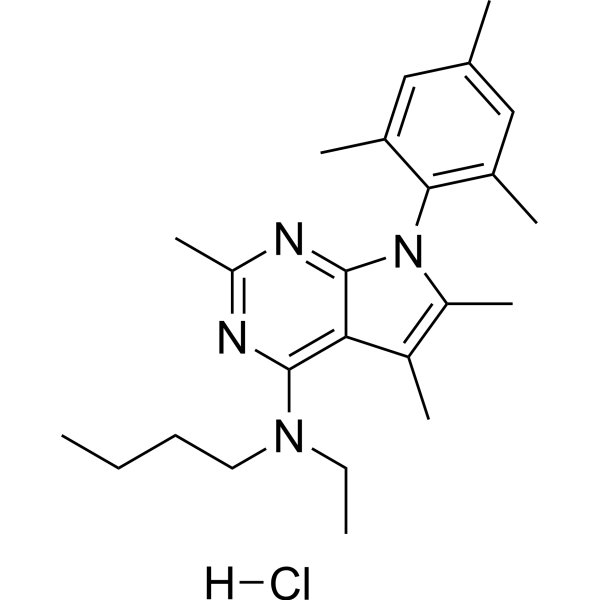
Antalarmin (hydrochloride) is an oral active non-peptide corticotropin-releasing hormone receptor 1 (CRHR1) antagonist with a Ki of 1 nM. Antalarmin hydrochloride suppresses CRH-induced ACTH secretion and blocks CRH and novelty induced anxiety-like behavior in animal models. Antalarmin hydrochloride produces anti-inflammatory effects in arthritis models, and suppresses stress-induced gastric ulceration related to irritable bowel syndrome .
|
-
-
- HY-B0656
-
|
LY307640
|
Proton Pump
Apoptosis
Bacterial
|
Inflammation/Immunology
Cancer
|
|
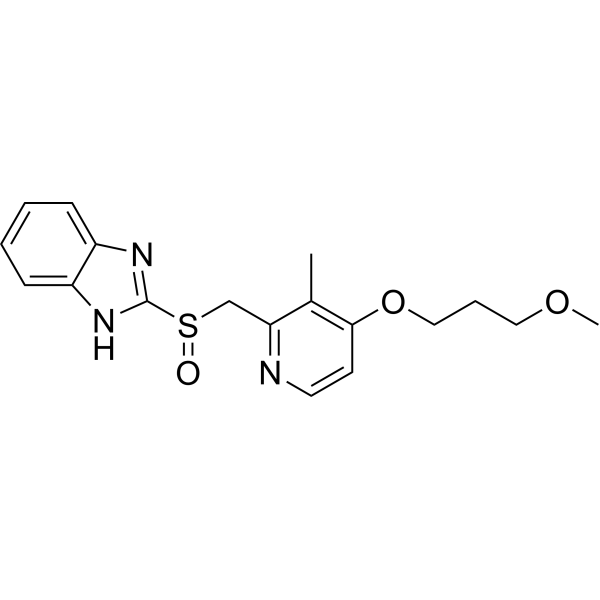
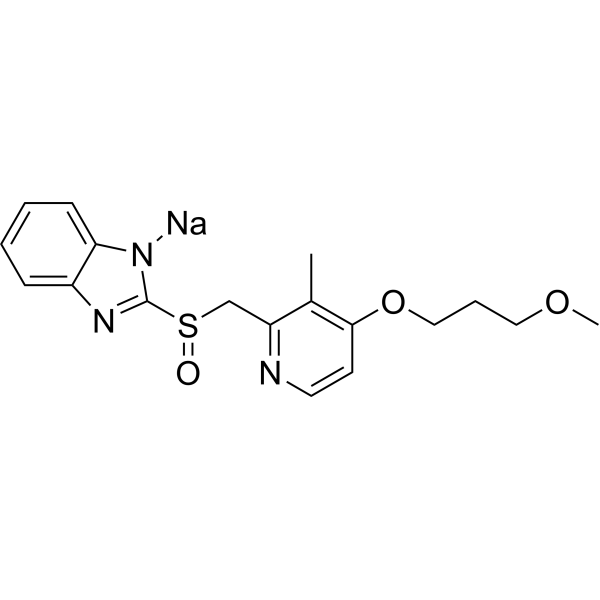
Rabeprazole (LY307640) is a second-generation proton pump inhibitor (PPI) that irreversibly inactivates gastric H +/K +-ATPase. Rabeprazole induces apoptosis. Rabeprazole acts as an uridine nucleoside ribohydrolase (UNH) inhibitor with an IC50 of 0.3 μM. Rabeprazole can be used for the research of gastric ulcerations and gastroesophageal reflux .
|
-
-
- HY-B0656A
-
|
LY307640 sodium
|
Proton Pump
Apoptosis
Bacterial
|
Inflammation/Immunology
Cancer
|
|
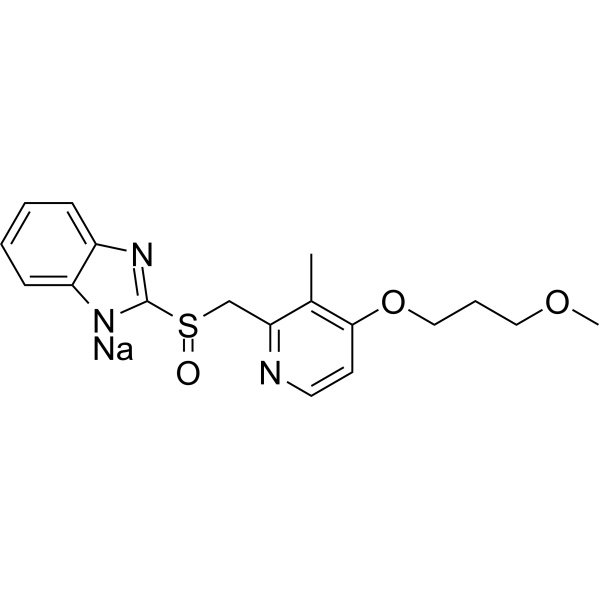
Rabeprazole sodium (LY307640 sodium) is a second-generation proton pump inhibitor (PPI) that irreversibly inactivates gastric H +/K +-ATPase. Rabeprazole sodium induces apoptosis. Rabeprazole sodium acts as an uridine nucleoside ribohydrolase (UNH) inhibitor with an IC50 of 0.3 μM. Rabeprazole sodium can be used for the research of gastric ulcerations and gastroesophageal reflux .
|
-
-
- HY-Y1325H
-
|
|
Environmental Pollutants
Fungal
Endogenous Metabolite
Caspase
PPAR
AMPK
Reactive Oxygen Species (ROS)
|
Neurological Disease
Metabolic Disease
Inflammation/Immunology
Cancer
|
|
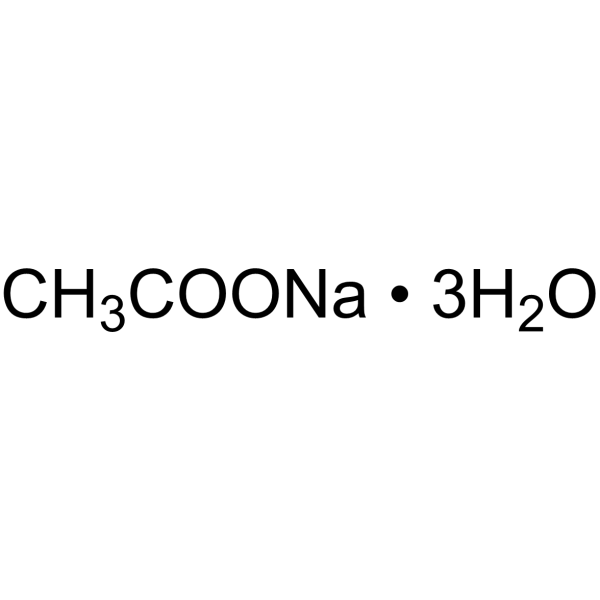
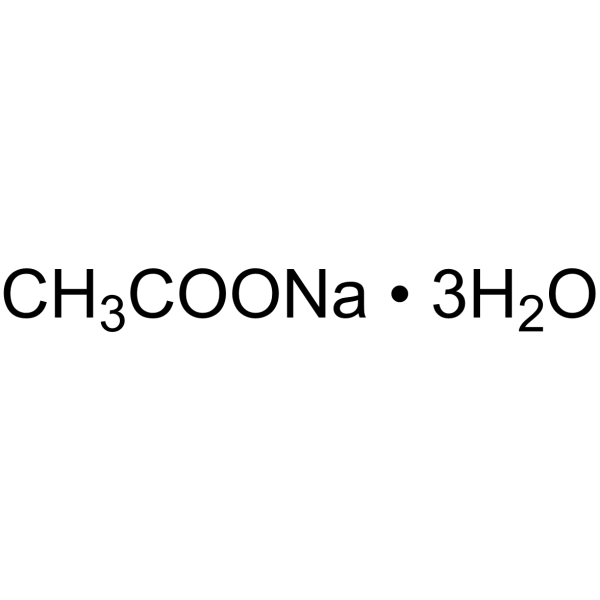
Sodium acetate trihydrate is a carboxylic acid and short-chain fatty acid (SCFAs). Sodium acetate trihydrate activates AMPK, increases ROS, cleaved caspase 9, PPARα, downregulates SREBP-1c, ChREBP expression. Sodium acetate trihydrate exhibits antifungal activity against Saccharomyces cerevisiae W303-1A. Sodium acetate trihydrate regulates energy metabolism. Sodium acetate trihydrate has anticancer activity against gastric cancer. Sodium acetate trihydrate induces writhing reaction and ulcerative colitis. Sodium acetate trihydrate can be used in the researches for gastric cancer, ulcerative colitis, hepatic steatosis, and pain .
|
-
-
- HY-Y0319G
-
|
|
Endogenous Metabolite
AMPK
Reactive Oxygen Species (ROS)
Caspase
Fungal
PPAR
|
Infection
Neurological Disease
Metabolic Disease
Inflammation/Immunology
Cancer
|
|
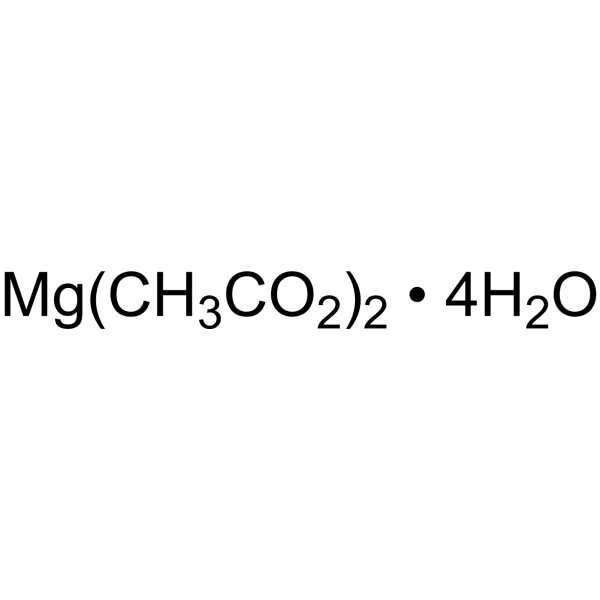
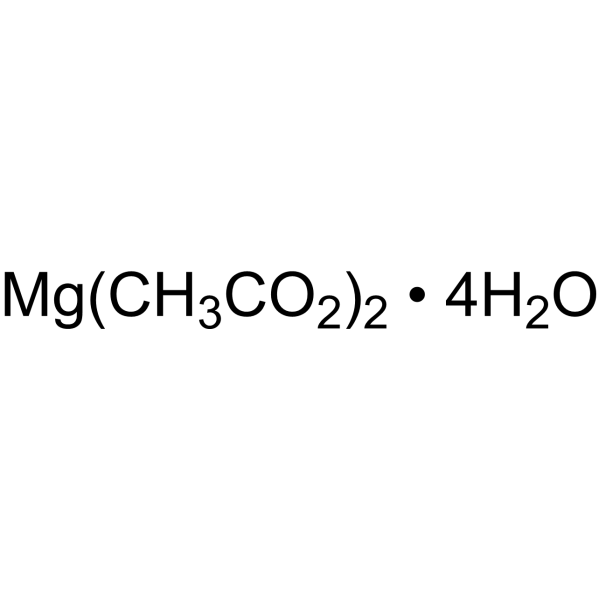
Magnesium acetate tetrahydrate is a carboxylic acid and short-chain fatty acid (SCFAs). Magnesium acetate tetrahydrate activates AMPK, increases ROS, cleaved caspase 9, PPARα, downregulates SREBP-1c, ChREBP expression. Magnesium acetate tetrahydrate exhibits antifungal activity against Saccharomyces cerevisiae W303-1A. Magnesium acetate tetrahydrate regulates energy metabolism. Magnesium acetate tetrahydrate has anticancer activity against gastric cancer. Magnesium acetate tetrahydrate induces writhing reaction and ulcerative colitis. Magnesium acetate tetrahydrate can be used in the researches for gastric cancer, ulcerative colitis, hepatic steatosis, and pain .
|
-
-
- HY-W013331
-
|
2-Deoxyartemisinin
|
TNF Receptor
|
Neurological Disease
Inflammation/Immunology
|
|
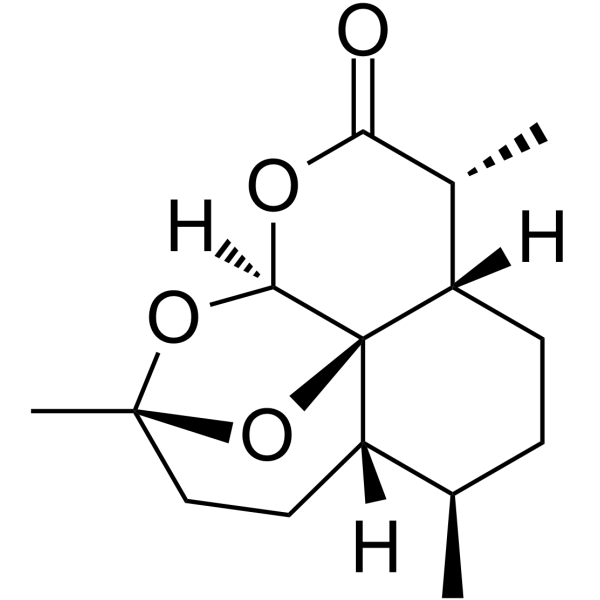
Deoxyartemisinin (2-Deoxyartemisinin) is an orally active anti-inflammatory and analgesic agent. Deoxyartemisinin selectively reduces the level of the pro-inflammatory cytokine TNF-α. Deoxyartemisinin alleviates neuropathic pain, inflammatory pain, and croton oil-induced ear edema.\nDeoxyartemisinin exerts an analgesic effect against thermal stimulation. Deoxyartemisinin has anti-ulcer activity. Deoxyartemisinin can be used in research related to inflammatory diseases, pain, and gastric ulcers .
|
-
-
- HY-W006398S
-
|
Anhydrous sodium acetate-d3
|
Isotope-Labeled Compounds
|
Neurological Disease
Inflammation/Immunology
Cancer
|
|
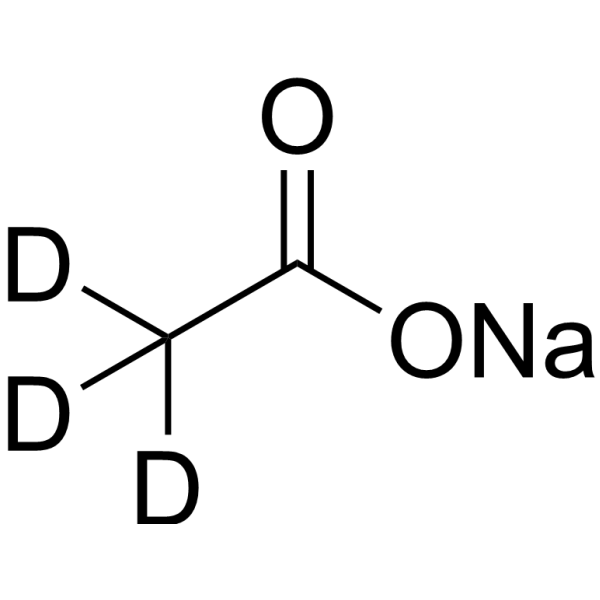
Acetic acid-d3 sodium is the deuterium labeled Acetic acid (HY-Y0319) . Acetic acid is a carboxylic acid and short-chain fatty acid (SCFAs). Acetic acid activates AMPK, increases ROS, cleaved caspase 9, PPARα, downregulates SREBP-1c, ChREBP expression. Acetic acid exhibits antifungal activity against Saccharomyces cerevisiae W303-1A. Acetic acid regulates energy metabolism. Acetic acid has anticancer activity against gastric cancer. Acetic acid induces writhing reaction and ulcerative colitis. Acetic acid can be used in the researches for gastric cancer, ulcerative colitis, hepatic steatosis, and pain.
|
-
-
- HY-Y0319D
-
|
|
Endogenous Metabolite
AMPK
Reactive Oxygen Species (ROS)
Caspase
Fungal
PPAR
|
Infection
Neurological Disease
Metabolic Disease
Inflammation/Immunology
Cancer
|
|
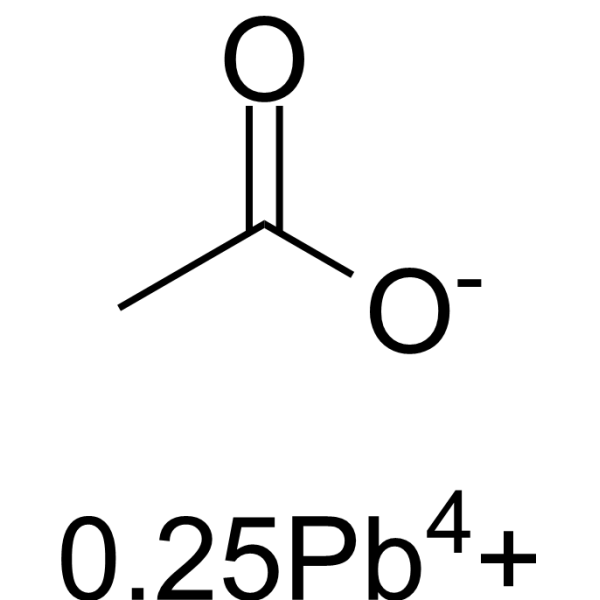
Acetic acid lead is a carboxylic acid and short-chain fatty acid (SCFAs). Magnesium acetate tetrahydrate activates AMPK, increases ROS, cleaved caspase 9, PPARα, downregulates SREBP-1c, ChREBP expression. Acetic acid lead exhibits antifungal activity against Saccharomyces cerevisiae W303-1A. Acetic acid lead regulates energy metabolism. Acetic acid lead has anticancer activity against gastric cancer. Acetic acid lead induces writhing reaction and ulcerative colitis. Acetic acid lead can be used in the researches for gastric cancer, ulcerative colitis, hepatic steatosis, and pain .
|
-
-
- HY-B0656AS
-
|
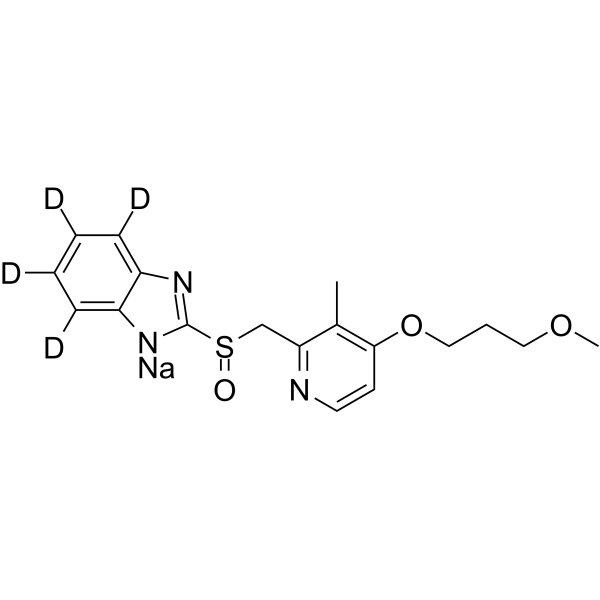
LY307640-d4 sodium
|
Isotope-Labeled Compounds
Proton Pump
Apoptosis
|
Inflammation/Immunology
Cancer
|
|
Rabeprazole-d4 (sodium) is the deuterium labeled Rabeprazole sodium. Rabeprazole sodium (LY307640 sodium) is a second-generation proton pump inhibitor (PPI) that irreversibly inactivates gastric H+/K+-ATPase. Rabeprazole sodium induces apoptosis. Rabeprazole sodium acts as an uridine nucleoside ribohydrolase (UNH) inhibitor with an IC50 of 0.3 μM. Rabeprazole sodium can be used for the research of gastric ulcerations and gastroesophageal reflux .
|
-
-
- HY-Y0817R
-
|
Anhydrous sodium acetate (Standard)
|
Reference Standards
|
Cancer
|
|
Acetic acid sodium (Standard) (Anhydrous sodium acetate (Standard) is the analytical standard of Anhydrous sodium acetate. This product is intended for research and analytical applications. Acetic acid is a carboxylic acid and short-chain fatty acid (SCFAs). Acetic acid activates AMPK, increases ROS, cleaved caspase 9, PPARα, downregulates SREBP-1c, ChREBP expression. Acetic acid exhibits antifungal activity against Saccharomyces cerevisiae W303-1A. Acetic acid regulates energy metabolism. Acetic acid has anticancer activity against gastric cancer. Acetic acid induces writhing reaction and ulcerative colitis. Acetic acid can be used in the researches for gastric cancer, ulcerative colitis, hepatic steatosis, and pain .
|
-
-
- HY-Y0319G1
-
|
|
Biochemical Assay Reagents
|
Others
|
|
Magnesium acetate tetrahydrate, for molecular biology is a carboxylic acid and short-chain fatty acid (SCFAs). Magnesium acetate tetrahydrate, for molecular biology activates AMPK, increases ROS, cleaved caspase 9, PPARα, downregulates SREBP-1c, ChREBP expression. Magnesium acetate tetrahydrate, for molecular biology exhibits antifungal activity against Saccharomyces cerevisiae W303-1A. Magnesium acetate tetrahydrate, for molecular biology regulates energy metabolism. Magnesium acetate tetrahydrate, for molecular biology has anticancer activity against gastric cancer. Magnesium acetate tetrahydrate, for molecular biology induces writhing reaction and ulcerative colitis. Magnesium acetate tetrahydrate, for molecular biology can be used in the researches for gastric cancer, ulcerative colitis, hepatic steatosis, and pain .
|
-
-
- HY-106054
-
|
|
Prostaglandin Receptor
|
Metabolic Disease
Inflammation/Immunology
|
|
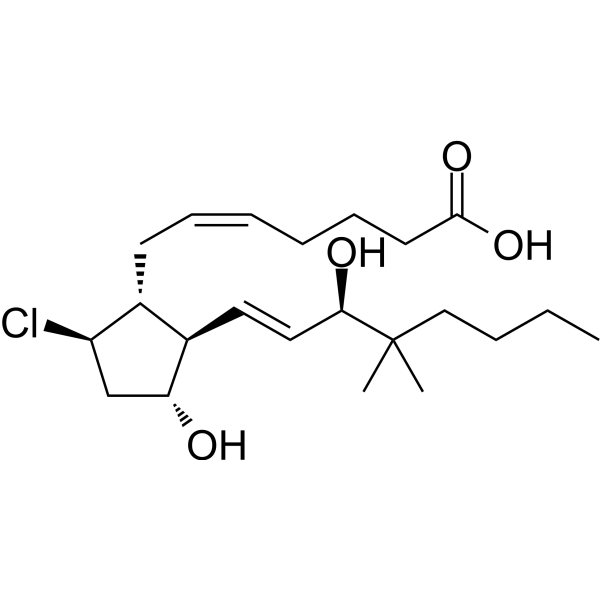
Nocloprost, a prostaglandin E2 (PGE2) analog, is an orally active EP1- and EP3-receptor agonist. Nocloprost inhibits evoked [ 3H]ACh release. Nocloprost has gastroprotective and ulcer-healing properties. Nocloprost accelerates the healing of chronic gastric ulcerations and enhances mucosal growth in rats .
|
-
-
- HY-B0656S
-
|
LY307640-d4
|
Isotope-Labeled Compounds
Proton Pump
Apoptosis
|
Inflammation/Immunology
Cancer
|
|
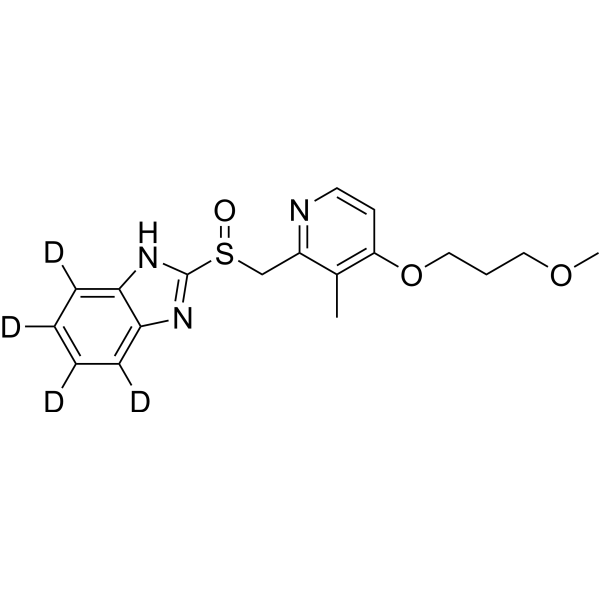
Rabeprazole-d4 is a deuterium labeled Rabeprazole. Rabeprazole is a second-generation proton pump inhibitor (PPI) that irreversibly inactivates gastric H+/K+-ATPase. Rabeprazole induces apoptosis. Rabeprazole acts as an uridine nucleoside ribohydrolase (UNH) inhibitor with an IC50 of 0.3 μM. Rabeprazole can be used for the research of gastric ulcerations and gastroesophageal reflux .
|
-
-
- HY-B0656AR
-
|
LY307640 sodium (Standard)
|
Reference Standards
Proton Pump
Apoptosis
Bacterial
|
Inflammation/Immunology
Cancer
|
|
Rabeprazole (sodium) (Standard) is the analytical standard of Rabeprazole (sodium). This product is intended for research and analytical applications. Rabeprazole sodium (LY307640 sodium) is a second-generation proton pump inhibitor (PPI) that irreversibly inactivates gastric H +/K +-ATPase. Rabeprazole sodium induces apoptosis. Rabeprazole sodium acts as an uridine nucleoside ribohydrolase (UNH) inhibitor with an IC50 of 0.3 μM. Rabeprazole sodium can be used for the research of gastric ulcerations and gastroesophageal reflux .
|
-
-
- HY-B0656AS2
-
|
LY307640-d4 potassium
|
Apoptosis
Bacterial
Proton Pump
Isotope-Labeled Compounds
|
Inflammation/Immunology
Cancer
|
|
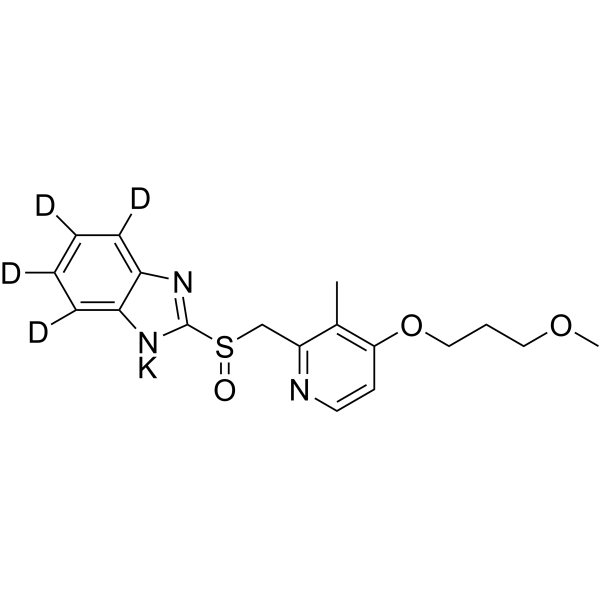
Rabeprazole-d4 potassium is deuterated labeled Rabeprazole potassium. Rabeprazole (LY307640) is a second-generation proton pump inhibitor (PPI) that irreversibly inactivates gastric H+/K+-ATPase. Rabeprazole induces apoptosis. Rabeprazole acts as an uridine nucleoside ribohydrolase (UNH) inhibitor with an b>IC50 of 0.3 μM. Rabeprazole can be used for the research of gastric ulcerations and gastroesophageal reflux .
|
-
-
- HY-B0656R
-
|
LY307640 (Standard)
|
Reference Standards
Proton Pump
Apoptosis
Bacterial
|
Inflammation/Immunology
Cancer
|
|
Rabeprazole (Standard) is the analytical standard of Rabeprazole. This product is intended for research and analytical applications. Rabeprazole (LY307640) is a second-generation proton pump inhibitor (PPI) that irreversibly inactivates gastric H +/K +-ATPase. Rabeprazole induces apoptosis. Rabeprazole acts as an uridine nucleoside ribohydrolase (UNH) inhibitor with an IC50 of 0.3 μM. Rabeprazole can be used for the research of gastric ulcerations and gastroesophageal reflux .
|
-
-
- HY-17481A
-
|
|
COX
|
Inflammation/Immunology
|
|
Bumadizone calcium is the calcium salt of Bumadizone (HY-17481). Bumadizone calcium is a non-steroidal anti-inflammatory drug, that exhibits potential in ameliorating chronic inflammatory diseases. Bumadizone calcium is irritant to the gastric lining, which leads to gastric bleeding and ulceration .
|
-
-
- HY-B0954A
-
|
|
mAChR
|
Endocrinology
|
|
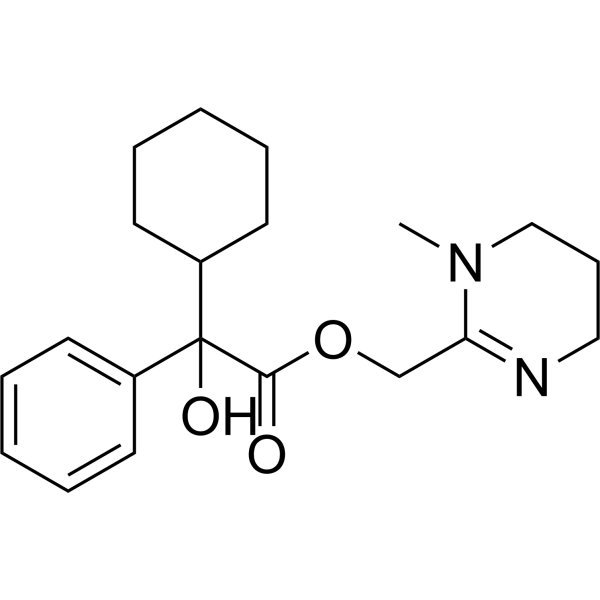
Oxyphencyclimine is an orally active muscarinic receptor (mAChR) antagonist. Oxyphencyclimine is effective in reducing ulceration index and increasing pepsin activity in rat gastric ulcer model. Oxyphencyclimine can be used in studies of peptic ulcer disease and gastrointestinal spasm .
|
-
-
- HY-B0656S1
-
|
LY307640-13C,d3
|
Isotope-Labeled Compounds
Proton Pump
Bacterial
Apoptosis
|
Cancer
|
|
Rabeprazole-13C,d3 is a deuterated labeled Rabeprazole . Rabeprazole (LY307640) is a second-generation proton pump inhibitor (PPI) that irreversibly inactivates gastric H +/K +-ATPase. Rabeprazole induces apoptosis. Rabeprazole acts as an uridine nucleoside ribohydrolase (UNH) inhibitor with an IC50 of 0.3 μM. Rabeprazole can be used for the research of gastric ulcerations and gastroesophageal reflux .
|
-
-
- HY-B0656AS1
-
|
LY307640-d3 sodium
|
Isotope-Labeled Compounds
Proton Pump
Apoptosis
|
Inflammation/Immunology
Cancer
|
|
Rabeprazole-d3 sodium the deuterium labeled Rabeprazole sodium (HY-B0656A). Rabeprazole sodium (LY307640 sodium) is a second-generation proton pump inhibitor (PPI) that irreversibly inactivates gastric H+/K+-ATPase. Rabeprazole sodium induces apoptosis. Rabeprazole sodium acts as an uridine nucleoside ribohydrolase (UNH) inhibitor with an b>IC50 of 0.3 μM. Rabeprazole sodium can be used for the research of gastric ulcerations and gastroesophageal reflux .
|
-
-
- HY-B0656AS3
-
|
LY307640-13C,d3 sodium
|
Isotope-Labeled Compounds
Apoptosis
Bacterial
Proton Pump
|
Inflammation/Immunology
Cancer
|
|
Rabeprazole- 13C,d3 (sodium) (LY307640- 13C,d3 (sodium)) is 13C labeled Rabeprazole (sodium). Rabeprazole sodium (LY307640 sodium) is a second-generation proton pump inhibitor (PPI) that irreversibly inactivates gastric H +/K +-ATPase. Rabeprazole sodium induces apoptosis. Rabeprazole sodium acts as an uridine nucleoside ribohydrolase (UNH) inhibitor with an IC50 of 0.3 μM. Rabeprazole sodium can be used for the research of gastric ulcerations and gastroesophageal reflux .
|
-
-
- HY-103377R
-
|
|
Reference Standards
CRFR
|
Inflammation/Immunology
Endocrinology
|
|
Antalarmin (hydrochloride) (Standard) is the analytical standard of Antalarmin (hydrochloride). This product is intended for research and analytical applications. Antalarmin (hydrochloride) is an oral active non-peptide corticotropin-releasing hormone receptor 1 (CRHR1) antagonist with a Ki of 1 nM. Antalarmin hydrochloride suppresses CRH-induced ACTH secretion and blocks CRH and novelty induced anxiety-like behavior in animal models. Antalarmin hydrochloride produces anti-inflammatory effects in arthritis models, and suppresses stress-induced gastric ulceration related to irritable bowel syndrome .
|
-
-
- HY-182625
-
|
|
Platelet-activating Factor Receptor (PAFR)
|
Others
Inflammation/Immunology
|
|
GS-1160-180 is a PAF receptor antagonist. GS-1160-180 competes with PAF for receptor binding, with no activity against collagen or adenosine diphosphate-induced platelet aggregation. GS-1160-180 can be used for research on asthma, anaphylactic shock, gastric ulceration, and transplant rejection .
|
-
| Cat. No. |
Product Name |
Type |
-
- HY-Y1325H
-
|
|
Biochemical Assay Reagents
|
|
Sodium acetate trihydrate is a carboxylic acid and short-chain fatty acid (SCFAs). Sodium acetate trihydrate activates AMPK, increases ROS, cleaved caspase 9, PPARα, downregulates SREBP-1c, ChREBP expression. Sodium acetate trihydrate exhibits antifungal activity against Saccharomyces cerevisiae W303-1A. Sodium acetate trihydrate regulates energy metabolism. Sodium acetate trihydrate has anticancer activity against gastric cancer. Sodium acetate trihydrate induces writhing reaction and ulcerative colitis. Sodium acetate trihydrate can be used in the researches for gastric cancer, ulcerative colitis, hepatic steatosis, and pain .
|
-
- HY-Y0319G
-
|
|
Biochemical Assay Reagents
|
|
Magnesium acetate tetrahydrate is a carboxylic acid and short-chain fatty acid (SCFAs). Magnesium acetate tetrahydrate activates AMPK, increases ROS, cleaved caspase 9, PPARα, downregulates SREBP-1c, ChREBP expression. Magnesium acetate tetrahydrate exhibits antifungal activity against Saccharomyces cerevisiae W303-1A. Magnesium acetate tetrahydrate regulates energy metabolism. Magnesium acetate tetrahydrate has anticancer activity against gastric cancer. Magnesium acetate tetrahydrate induces writhing reaction and ulcerative colitis. Magnesium acetate tetrahydrate can be used in the researches for gastric cancer, ulcerative colitis, hepatic steatosis, and pain .
|
-
- HY-Y0319D
-
|
|
Biochemical Assay Reagents
|
|
Acetic acid lead is a carboxylic acid and short-chain fatty acid (SCFAs). Magnesium acetate tetrahydrate activates AMPK, increases ROS, cleaved caspase 9, PPARα, downregulates SREBP-1c, ChREBP expression. Acetic acid lead exhibits antifungal activity against Saccharomyces cerevisiae W303-1A. Acetic acid lead regulates energy metabolism. Acetic acid lead has anticancer activity against gastric cancer. Acetic acid lead induces writhing reaction and ulcerative colitis. Acetic acid lead can be used in the researches for gastric cancer, ulcerative colitis, hepatic steatosis, and pain .
|
-
- HY-Y0319G1
-
|
|
Biochemical Assay Reagents
|
|
Magnesium acetate tetrahydrate, for molecular biology is a carboxylic acid and short-chain fatty acid (SCFAs). Magnesium acetate tetrahydrate, for molecular biology activates AMPK, increases ROS, cleaved caspase 9, PPARα, downregulates SREBP-1c, ChREBP expression. Magnesium acetate tetrahydrate, for molecular biology exhibits antifungal activity against Saccharomyces cerevisiae W303-1A. Magnesium acetate tetrahydrate, for molecular biology regulates energy metabolism. Magnesium acetate tetrahydrate, for molecular biology has anticancer activity against gastric cancer. Magnesium acetate tetrahydrate, for molecular biology induces writhing reaction and ulcerative colitis. Magnesium acetate tetrahydrate, for molecular biology can be used in the researches for gastric cancer, ulcerative colitis, hepatic steatosis, and pain .
|
| Cat. No. |
Product Name |
Category |
Target |
Chemical Structure |
-
- HY-Y0319D
-
|
|
Structural Classification
Classification of Application Fields
Ketones, Aldehydes, Acids
Other Diseases
Endogenous metabolite
Disease Research Fields
Source Classification
|
Endogenous Metabolite
AMPK
Reactive Oxygen Species (ROS)
Caspase
Fungal
PPAR
|
|
Acetic acid lead is a carboxylic acid and short-chain fatty acid (SCFAs). Magnesium acetate tetrahydrate activates AMPK, increases ROS, cleaved caspase 9, PPARα, downregulates SREBP-1c, ChREBP expression. Acetic acid lead exhibits antifungal activity against Saccharomyces cerevisiae W303-1A. Acetic acid lead regulates energy metabolism. Acetic acid lead has anticancer activity against gastric cancer. Acetic acid lead induces writhing reaction and ulcerative colitis. Acetic acid lead can be used in the researches for gastric cancer, ulcerative colitis, hepatic steatosis, and pain .
|
-
| Cat. No. |
Product Name |
Chemical Structure |
-
- HY-W006398S
-
|
|
|
Acetic acid-d3 sodium is the deuterium labeled Acetic acid (HY-Y0319) . Acetic acid is a carboxylic acid and short-chain fatty acid (SCFAs). Acetic acid activates AMPK, increases ROS, cleaved caspase 9, PPARα, downregulates SREBP-1c, ChREBP expression. Acetic acid exhibits antifungal activity against Saccharomyces cerevisiae W303-1A. Acetic acid regulates energy metabolism. Acetic acid has anticancer activity against gastric cancer. Acetic acid induces writhing reaction and ulcerative colitis. Acetic acid can be used in the researches for gastric cancer, ulcerative colitis, hepatic steatosis, and pain.
|
-
-
- HY-B0656AS
-
|
|
|
Rabeprazole-d4 (sodium) is the deuterium labeled Rabeprazole sodium. Rabeprazole sodium (LY307640 sodium) is a second-generation proton pump inhibitor (PPI) that irreversibly inactivates gastric H+/K+-ATPase. Rabeprazole sodium induces apoptosis. Rabeprazole sodium acts as an uridine nucleoside ribohydrolase (UNH) inhibitor with an IC50 of 0.3 μM. Rabeprazole sodium can be used for the research of gastric ulcerations and gastroesophageal reflux .
|
-
-
- HY-B0656S
-
|
|
|
Rabeprazole-d4 is a deuterium labeled Rabeprazole. Rabeprazole is a second-generation proton pump inhibitor (PPI) that irreversibly inactivates gastric H+/K+-ATPase. Rabeprazole induces apoptosis. Rabeprazole acts as an uridine nucleoside ribohydrolase (UNH) inhibitor with an IC50 of 0.3 μM. Rabeprazole can be used for the research of gastric ulcerations and gastroesophageal reflux .
|
-
-
- HY-B0656AS2
-
|
|
|
Rabeprazole-d4 potassium is deuterated labeled Rabeprazole potassium. Rabeprazole (LY307640) is a second-generation proton pump inhibitor (PPI) that irreversibly inactivates gastric H+/K+-ATPase. Rabeprazole induces apoptosis. Rabeprazole acts as an uridine nucleoside ribohydrolase (UNH) inhibitor with an b>IC50 of 0.3 μM. Rabeprazole can be used for the research of gastric ulcerations and gastroesophageal reflux .
|
-
-
- HY-B0656S1
-
|
|
|
Rabeprazole-13C,d3 is a deuterated labeled Rabeprazole . Rabeprazole (LY307640) is a second-generation proton pump inhibitor (PPI) that irreversibly inactivates gastric H +/K +-ATPase. Rabeprazole induces apoptosis. Rabeprazole acts as an uridine nucleoside ribohydrolase (UNH) inhibitor with an IC50 of 0.3 μM. Rabeprazole can be used for the research of gastric ulcerations and gastroesophageal reflux .
|
-
-
- HY-B0656AS1
-
|
|
|
Rabeprazole-d3 sodium the deuterium labeled Rabeprazole sodium (HY-B0656A). Rabeprazole sodium (LY307640 sodium) is a second-generation proton pump inhibitor (PPI) that irreversibly inactivates gastric H+/K+-ATPase. Rabeprazole sodium induces apoptosis. Rabeprazole sodium acts as an uridine nucleoside ribohydrolase (UNH) inhibitor with an b>IC50 of 0.3 μM. Rabeprazole sodium can be used for the research of gastric ulcerations and gastroesophageal reflux .
|
-
-
- HY-B0656AS3
-
|
|
|
Rabeprazole- 13C,d3 (sodium) (LY307640- 13C,d3 (sodium)) is 13C labeled Rabeprazole (sodium). Rabeprazole sodium (LY307640 sodium) is a second-generation proton pump inhibitor (PPI) that irreversibly inactivates gastric H +/K +-ATPase. Rabeprazole sodium induces apoptosis. Rabeprazole sodium acts as an uridine nucleoside ribohydrolase (UNH) inhibitor with an IC50 of 0.3 μM. Rabeprazole sodium can be used for the research of gastric ulcerations and gastroesophageal reflux .
|
-
Your information is safe with us. * Required Fields.
Inquiry Information
- Product Name:
- Cat. No.:
- Quantity:
- MCE Japan Authorized Agent:

