1. Search Result
Search Result
Results for "

Growth inhibition

" in MedChemExpress (MCE) Product Catalog:

418

Inhibitors & Agonists

2

Screening Libraries

3

Fluorescent Dyes

7

Biochemical Assay Reagents

9

Peptides

15

Inhibitory Antibodies

57

Natural
Products

32

Isotope-Labeled Compounds

7

Click Chemistry

8

Oligonucleotides

1

GMP Molecules

Cat. No. Product Name Target Research Areas Chemical Structure
  • HY-16399
    Pladienolide B
    5 Publications Verification

    Apoptosis SF3B1 Cancer
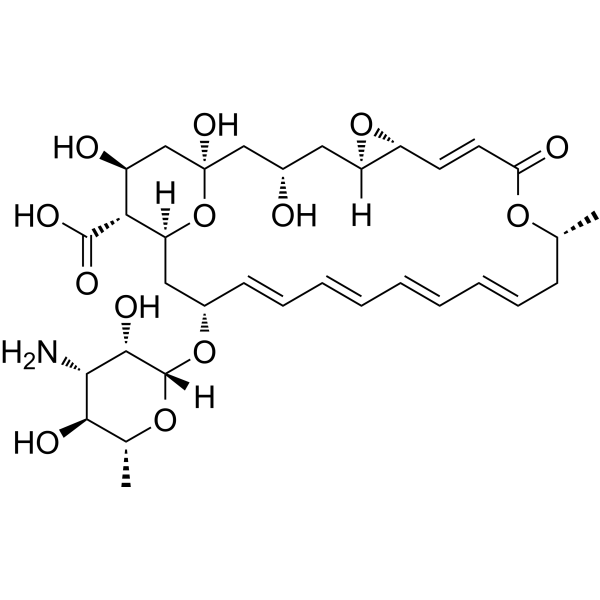
    Pladienolide B is a potent cancer cell growth inhibitor that targets the SF3B1 subunit of the spliceosome. Pladienolide B exerts antitumor activities mediated through the inhibition of pre-mRNA splicing. Pladienolide B induces apoptosis .
    Pladienolide B
  • HY-139664
    GSK-3685032
    10+ Cited Publications

    DNA Methyltransferase Cancer
    GSK-3685032 is a non-time-dependent, noncovalently, first-in-class reversible DNMT1-selective inhibitor, with an IC50 of 0.036 μM. GSK-3685032 induces robust loss of DNA methylation, transcriptional activation, and cancer cell growth inhibition .
    GSK-3685032
  • HY-N0282
    Demecolcine
    5+ Cited Publications

    Microtubule/Tubulin Apoptosis Inflammation/Immunology Cancer
    Demecolcine is a potent mitotic inhibitor with an IC50 value of 2.4 μM for inhibition of tubulin polymerization. Colcemid (Demecolcine) can interact with tubulin dimers to induce anti-mitotic action and inhibit microtubule growth. Colcemid (Demecolcine) can be used for inflammatory disorders and cancer research .
    Demecolcine
  • HY-B0133
    Natamycin
    5+ Cited Publications

    Pimaricin

    Environmental Pollutants Antibiotic Endogenous Metabolite Fungal Bacterial Infection
    Natamycin (Pimaricin) is a macrolide antibiotic agent produced by several Streptomyces strains. Natamycin inhibits the growth of fungi via inhibition of amino acid and glucose transport across the plasma membrane. Natamycin is a food preservative, an antifungal agent in agriculture, and is widely used for fungal keratitis research .
    Natamycin
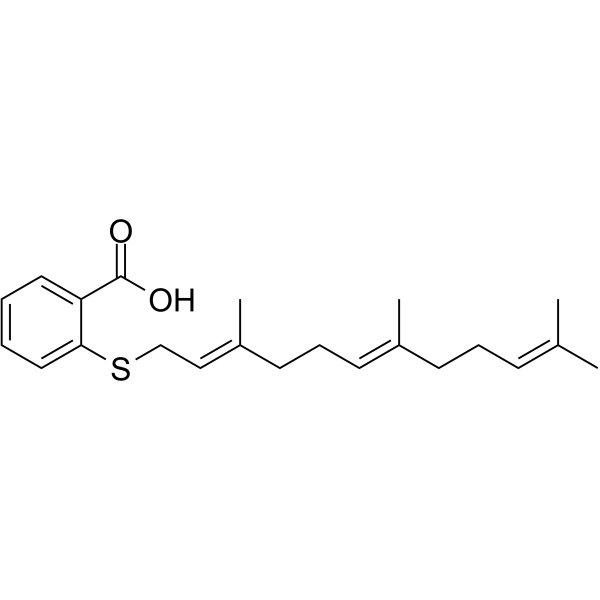
  • HY-14754
    Salirasib
    10+ Cited Publications

    S-Farnesylthiosalicylic acid; Farnesyl Thiosalicylic Acid; FTS

    Ras Autophagy Cancer
    Salirasib is a Ras inhibitor that inhibits specifically both oncogenically activated Ras and growth factor receptor-mediated Ras activation, resulting in the inhibition of Ras-dependent tumor growth.
    Salirasib
  • HY-P99590
    Sotatercept
    2 Publications Verification

    ACE-011; MK-7962

    TGF-β Receptor Cardiovascular Disease Inflammation/Immunology Cancer
    Sotatercept (ACE-011) is a soluble activin receptor 2A (ACVR2A) type IgG Fc fusion protein. Sotatercept combines activin and growth differentiation factor to try to restore the balance between growth promotion and growth inhibition signal pathways. Sotatercept has potential application in pulmonary arterial hypertension, anemia, bone loss, erythropoiesis, multiple myeloma (MM) osteolytic lesions .
    Sotatercept
  • HY-113679

    Telomerase Metabolic Disease Endocrinology
    Ceramides Mixture is an endogenous ceramide and consists of hydroxy and non-hydroxy fatty acid-containing ceramides. Ceramides Mixture is a main lipid component of the permeability barrier in epidermis. Ceramides Mixture is involved in the regulation of growth inhibition, cell cycle arrest, and modulation of telomerase activity .
    Ceramides Mixture
  • HY-13007
    PF-3758309
    5+ Cited Publications

    PF-03758309

    PAK Apoptosis Cancer
    PF-3758309 (PF-03758309) is a potent, orally available, and reversible ATP-competitive inhibitor of PAK4 (Kd= 2.7 nM; Ki=18.7 nM). PF-3758309 has the expected cellular functions of a PAK4 inhibitor: inhibition of anchorage-independent growth, induction of apoptosis, cytoskeletal remodeling, and inhibition of proliferation .
    PF-3758309
  • HY-108431
    MN58b
    1 Publications Verification

    Apoptosis Cancer
    MN58b is a selective choline kinase α (CHKα) inhibitor, and results in inhibition of phosphocholine synthesis. MN58b reduces cell growth through the induction of apoptosis, and also has antitumoral activity .
    MN58b
  • HY-P99192

    LY2875358

    c-Met/HGFR Cancer
    Emibetuzumab (LY2875358) is a humanized bivalent MET antibody (IgG4 type). Emibetuzumab shows high neutralization and internalization activities, resulting in inhibition of both HGF-dependent and HGF-independent MET pathway activation and tumor growth. Emibetuzumab can be used in study of cancer .
    Emibetuzumab
  • HY-N0671
    Rhapontin
    2 Publications Verification

    Rhaponiticin

    Apoptosis Cardiovascular Disease Metabolic Disease Inflammation/Immunology Cancer
    Rhapontin (Rhaponiticin) is an orally aactive SIRT1 agonist and AMPK activator with anti-inflammatory and anti-fibrotic activities. Rhapontin inhibits NLRP3 inflammasome activation by activating SIRT1 and inhibits TGF-β/Smad signaling via the AMPK pathway. Rhapontin reduces intestinal and lung inflammation, inhibits fibroblast differentiation and extracellular matrix deposition, and enhances tight junction protein expression to repair epithelial barriers. Rhapontin can be used in the study of inflammatory bowel diseases (such as ulcerative colitis) and pulmonary fibrosis .
    Rhapontin
  • HY-142006A

    (±)-JA-L-Ile

    Phytohormone Others
    (±)-Jasmonic-L-isoleucine ((±)-JA-L-Ile) is a mixture of (±)-Jasmonic acid (HY-122464) and isoleucine isomers. (±)-Jasmonic-L-isoleucine is a phytohormone that participates in the jasmonic acid signaling pathway. (±)-Jasmonic-L-isoleucine regulates biological processes in plants, including defense responses, growth and development, and stress tolerance .
    (±)-Jasmonic-L-isoleucine
  • HY-U00177
    GDP366
    2 Publications Verification

    Survivin Cancer
    GDP366, a dual inhibitor of survivin and Op18, induces cell growth inhibition, cellular senescence and mitotic catastrophe in human cancer cells.
    GDP366
  • HY-135549
    Fluxapyroxad
    1 Publications Verification

    Environmental Pollutants Antibiotic Cytochrome P450 Fungal Succinate Dehydrogenase Infection Inflammation/Immunology
    Fluxapyroxad is a synthetic broad-spectrum fungicide for the control of fungal diseases. Fluxapyroxad inhibits succinate dehydrogenase in complex II of the mitochondrial respiratory chain, resulting in inhibition of spore germination, germ tubes and mycelia growth within the fungus target species .
    Fluxapyroxad
  • HY-156715

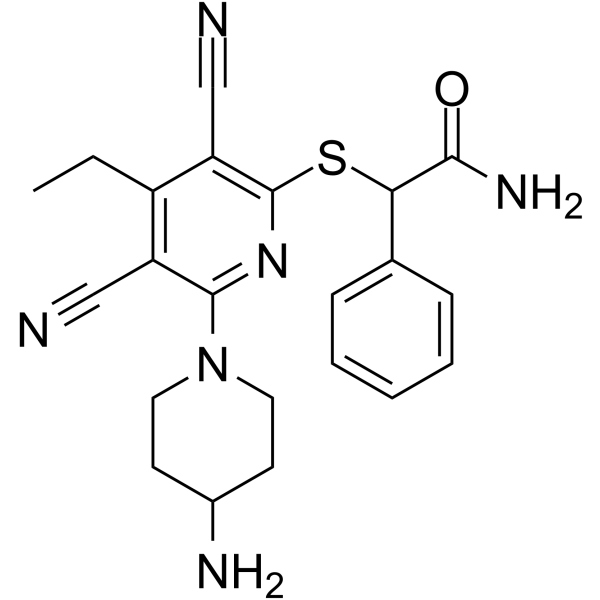
    MASTL Cancer
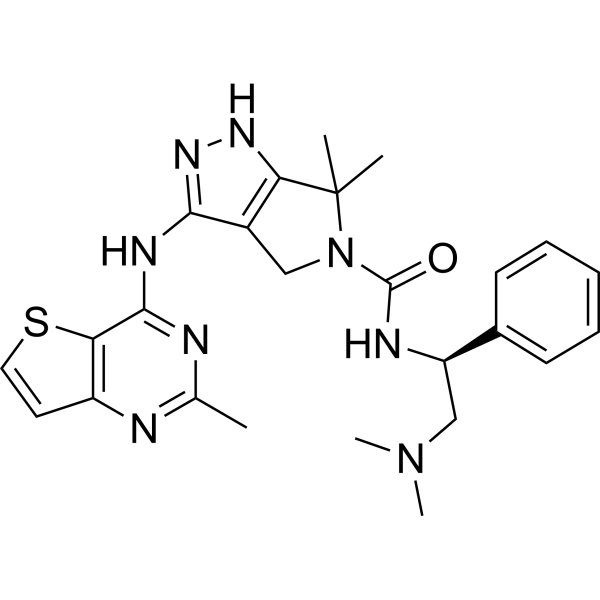
    MASTL-IN-1 is a selective and orally active MASTL inhibitor with a Ki <0.03 nM. MASTL-IN-1 inhibits phosphorylation of ENSA and inhibits proliferation in cancer cells. MASTL-IN-1 induces tumor growth inhibition and stasis in pancreatic cancer xenograft models .
    MASTL-IN-1
  • HY-N3225

    NAMPT Sirtuin Microtubule/Tubulin Apoptosis Autophagy PDGFR NF-κB AMPK Cardiovascular Disease Neurological Disease Metabolic Disease Inflammation/Immunology Cancer
    Myricanol is a diarylheptanoid and a Nampt activator. Myricanol exerts anti-inflammatory effects and alleviates glucocorticoid-induced muscle atrophy by increasing Sirtuin 1 (SIRT1) and PRDX5 activities while regulating inflammatory factors. Myricanol exhibits growth inhibition and induces apoptosis in human lung adenocarcinoma A549 cells. Myricanol promotes autophagy-mediated clearance of microtubule-associated protein tau to exert neuroprotective effects. Myricanol protects cardiovascular function by inhibiting PDGFRβ and NF-κB signaling pathways. Myricanol activates mitochondrial transcription factor A (TFAM) expression to exert anti-renal fibrosis effects. Myricanol improves insulin resistance through AMPK activation .
    Myricanol
  • HY-W004599
    Bicinchoninic acid
    5+ Cited Publications

    Herbicide Others
    Bicinchoninic acid (compound 8) is an AHAS inhibitor, in an in vivo bioassay targeting the root growth inhibition of rapeseed, at a concentration of 100 μg/mL, it exhibited very low activity, with only a 1.4% root length inhibition rate .
    Bicinchoninic acid
  • HY-18634
    NSC319726
    3 Publications Verification

    ZMC1

    MDM-2/p53 Cancer
    NSC319726 (ZMC1) is a mutant p53R175 reactivator; inhibits growth of fibroblasts expressing the p53R175 mutation (IC50 = 8 nM); shows no inhibition for p53 wild-type cells.
    NSC319726
  • HY-N1513

    AP-1 NF-κB Cancer
    Ganoderic acid H is a lanostane-type triterpene isolated from Ganoderma lucidum. Ganoderic acid H suppresses growth and invasive behavior of breast cancer cells through the inhibition of transcription factors AP-1 and NF-kappaB signaling .
    Ganoderic acid H
  • HY-116506

    RAR/RXR Reactive Oxygen Species (ROS) Apoptosis Autophagy Cancer
    Bigelovin, a sesquiterpene lactone isolated from Inula hupehensis, is a selective retinoid X receptor α agonist. Bigelovin suppresses tumor growth through inducing apoptosis and autophagy via the inhibition of mTOR pathway regulated by ROS generation .
    Bigelovin
  • HY-10949

    E1/E2/E3 Enzyme Cancer
    SMER3, a Rapamycin enhancer, is a selective Skp1-Cullin-F-box (SCF) Met30 ubiquitin ligase inhibitor. SMER3 enhances Rapamycin's growth inhibitory effect by inhibition of SCF Met30 .
    SMER3
  • HY-151931

    Jasmonyl-ACC

    Phytohormone Metabolic Disease
    JA-ACC (Jasmonyl-ACC) is a derivative of 1-aminocyclopropane-1-carboxylic acid (ACC). ACC is the direct precursor of the plant hormone ethylene. JA-ACC inhibits root growth in Arabidopsis and the inhibition is independent of jasmonic acid (JA) signaling .
    JA-ACC
  • HY-108530

    RAR/RXR Cancer
    MM11253 is a potent and selective RARγ antagonist with an IC50 of 44 nM. MM11253 has lower inhibition of RARα, RARβ and RXRα. MM11253 blocks the growth inhibitory effects of RARγ-selective agonists .
    MM11253
  • HY-14792B
    Inolitazone dihydrochloride
    5 Publications Verification

    Efatutazone dihydrochloride; CS-7017 dihydrochloride; RS5444 dihydrochloride

    PPAR Cancer
    Inolitazone dihydrochloride (Efatutazone dihydrochloride) is a novel high-affinity PPARγ agonist that is dependent upon PPARγ for its biological activity with IC50 of 0.8 nM for growth inhibition.
    Inolitazone dihydrochloride
  • HY-W017401
    Benzisothiazolone
    1 Publications Verification

    BIT

    Environmental Pollutants Bacterial Infection Cancer
    Benzisothiazolone is an isothiazolone fungicide. Benzisothiazolone has growth inhibiting activity against E. coli ATCC 8739 and saccharornyces pombe NCYC 1354. Benzisothiazolone can be used in the study of growth inhibition model .
    Benzisothiazolone
  • HY-176707

    Parasite Infection
    GSK2181306A is a pan-FIKK inhibitor with an EC50 value of 0.16 μM for parasite growth inhibition. GSK2181306A can be used to study Plasmodium infection .
    GS​​K2181306A
  • HY-N7583

    Parasite Infection
    Norcaesalpinin E, a C-17-norcassane-type diterpene found in Caesalpinia crista, is a Plasmodium falciparum growth inhibitor with an IC50 of 90 nM. Norcaesalpinin E induces dose-dependent growth inhibition of Plasmodium falciparum. Norcaesalpinin E can be used for the research of malaria .
    Norcaesalpinin E
  • HY-119737
    Chlorsulfuron
    1 Publications Verification

    Environmental Pollutants Acetolactate Synthase (ALS) Metabolic Disease
    Chlorsulfuron blocks the biosynthesis of the amino acids valine and isoleucine in plants. Chlorsulfuron completely alleviates herbicide-induced growth inhibition. The site of action of Chlorsulfuron is the enzyme acetolactate synthase .
    Chlorsulfuron
  • HY-13603
    Crolibulin
    1 Publications Verification

    EPC2407

    Microtubule/Tubulin Apoptosis Cardiovascular Disease Cancer
    Crolibulin (EPC2407) is a tubulin polymerization inhibitor, with potent apoptosis induction and cell growth inhibition. Crolibulin has anti-tumor activity. Crolibulin also has cardiovascular toxicity and neurotoxicity .
    Crolibulin
  • HY-P99818

    ACE-031

    TGF-β Receptor Metabolic Disease
    Ramatercept (ACE-031) is a soluble ActRIIB receptor and can be used as a soluble activin receptor 2 (ACVR2) antagonist. Ramatercept inhibits the signal pathway of muscle growth inhibition and has potential application in muscle atrophy .
    Ramatercept
  • HY-46568

    CDK Cancer
    CDK7/12-IN-1 is a selective CDK7/12 inhibitor with IC50s of 3 and 277 nM for CDK7 and CDK 12, respectively. CDK7 and CDK12 inhibition is an effective strategy to inhibit tumour growth .
    CDK7/12-IN-1
  • HY-B2049

    Environmental Pollutants Insecticide Infection
    Triflumuron is a potent chitin synthesis inhibitor. Triflumuron shows the efficacy in emergence inhibition (EI) against Culex quinquefasciatus and Aedes albopictus, with EI50 values of 5.28 and 1.59 μg/L, respectively. Triflumuron can be used as an insecticide. Triflumuron represents a potential tool for the control of disease vectors in public health .
    Triflumuron
  • HY-P99215

    Anti-EGFL7; RG 7414

    VEGFR Cancer
    Parsatuzumab (Anti-EGFL7; RG 7414) is a humanized monoclonal antibody, acts as an immunomodulator and binds to EGFL7. Parsatuzumab selectively blocks the interaction between EGFL7 and endothelial cells, potentially inhibiting vascular regrowth and reducing vascular endothelial growth factor (VEGF) inhibition .
    Parsatuzumab
  • HY-128425A
    N-Carbamoyl-L-aspartic acid
    1 Publications Verification

    L-Ureidosuccinic acid

    Fungal Infection
    N-Carbamoyl-L-aspartic acid (L-Ureidosuccinic acid) is an important pyrimidine metabolic precursor and intermediate metabolite. N-Carbamoyl-L-aspartic acid reverses the growth inhibition of Ura + strains induced by 2-thiouracil (with growth rate increasing linearly with its concentration), but fails to support the growth of uracil-requiring Ura - strains. N-Carbamoyl-L-aspartic acid inhibits the cell growth of *Saccharomyces cerevisiae* by suppressing the purine biosynthetic pathway at a pre-step of 5-aminoimidazole nucleotide synthesis. The growth inhibitory effect of N-Carbamoyl-L-aspartic acid on yeast can be alleviated by purines, and the sensitivity of strains is closely related to the activity level of dihydroorotase .
    N-Carbamoyl-L-aspartic acid
  • HY-P11341

    Kisspeptin Receptor Endocrinology
    Kisspeptin antagonist p271 is a Kisspeptin antagonist with cell-penetrating ability. Kisspeptin antagonist p271 can block the binding of endogenous Kisspeptin to GPR54 on pituitary somatotropes, thereby relieving the inhibition of growth hormone secretion. Kisspeptin antagonist p271 can specifically and significantly stimulate growth hormone secretion, while inhibiting luteinizing hormone without affecting prolactin or cortisol. Kisspeptin antagonist p271 can be used in the research of diseases related to insufficient growth hormone secretion .
    Kisspeptin antagonist p271
  • HY-B1735

    Prostaglandin Receptor Cardiovascular Disease
    Picotamide is a combined inhibitor of thromboxane A2 (TxA2) synthase and receptor. Picotamide has antiplatelet activity. Picotamide promotes the reduction of microalbuminuria and the inhibition of growth of carotid plaques in diabetes. Picotamide can be used for researching acute or chronic cardiovascular diseases .
    Picotamide
  • HY-116392H
    D,L-erythro-PDMP hydrochloride
    1 Publications Verification

    Glucosylceramide Synthase (GCS) Others
    D,L-erythro-PDMP hydrochloride is an erythro isomer of PDMP. D,L-erythro-PDMP hydrochloride causes growth inhibition of cultured rabbit skin fibroblasts. PDMP is an effective inhibitor of UDP-glucose:ceramide glucosyltransferase .
    D,L-erythro-PDMP hydrochloride
  • HY-150308

    PPAR Cancer
    SR10221, a noncovalent inverse agonist of PPARγ, represses downstream PPARγ target genes leading to growth inhibition in bladder cancer cell lines .
    SR10221
  • HY-130326

    Ru(η6-p-cymene)Cl2(pta)

    Apoptosis Caspase Cardiovascular Disease Cancer
    RAPTA-C (Ru(η6-p-cymene)Cl2(pta)) acts as an anti-cancer and anti-angiogenic agent. RAPTA-C exhibits anti-metastatic, anti-angiogenic, and anti-tumoral activities through protein and histone-deoxyribonucleic acid alterations. RAPTA-C exhibits cell growth inhibition by triggering G(2)/M phase arrest in cancer cells. RAPTA-C also enhances the levels of p53 and triggers the mitochondrial Apoptotic pathway, resulting in cytochrome C release and caspase-9 activation. RAPTA-C reduces the growth of tumors with the inhibition of angiogenesis in a ovarian carcinoma model .
    RAPTA-C
  • HY-14792

    Efatutazone; CS-7017; RS5444

    PPAR Cancer
    Inolitazone a novel high-affinity PPARγ agonist that is dependent upon PPARγ for its biological activity with IC50 of 0.8 nM for growth inhibition.
    Inolitazone
  • HY-153626

    Bacterial Antibiotic Infection Inflammation/Immunology
    Chlamydia pneumoniae-IN-1 (compound 55), a benzimidazole, shows high activity against the bacterium. Chlamydia pneumoniae-IN-1 has 99% inhibition of C. pneumoniae Growth at 10 μM, and has 95% inhibition effect on the viability of the host cells at 10 μM. Chlamydia pneumoniae-IN-1 inhibits the growth of the CV-6 strain with a MIC of 12.6 μM. Chlamydia pneumoniae-IN-1 has antichlamydial efficiency .
    Chlamydia pneumoniae-IN-1
  • HY-W103792

    HDAC Cancer
    4-Phenylcinnamic acid is a weak HDAC2 inhiibitor (IC50 > 5 μM). 4-Phenylcinnamic acid has weak cell growth inhibition against tumor cells .
    4-Phenylcinnamic acid
  • HY-W335972

    Phosphatase Others
    N-Lauryldiethanolamine is an antistatic agent with a strong inhibitory effect on cell growth at 30 μM, showing some lysosomotropic behavior. N-Lauryldiethanolamine is toxic at a concentration of ≥10 μM in the osteogenesis inhibition assay .
    N-Lauryldiethanolamine
  • HY-114228
    PROTAC BET degrader-2
    2 Publications Verification

    PROTACs Epigenetic Reader Domain Cancer
    PROTAC BET degrader-2 is a PROTAC connected by ligands for Cereblon and BET with an IC50 value of 9.6 nM in cell growth inhibition in the RS4;11 cells and capable of achieving tumor regression.
    PROTAC BET degrader-2
  • HY-N7082R

    Parasite Reference Standards Bacterial Infection
    D-Arabinopyranose (Standard) is the analytical standard of D-Arabinopyranose. This product is intended for research and analytical applications. D-Arabinopyranose, a monosaccharide, shows strong growth inhibition against the Caenorhabditis elegans with an IC50 of 7.5 mM[1].
    D-Arabinopyranose (Standard)
  • HY-170786

    IRX4647F

    RAR/RXR Cancer
    IRX5010 (IRX4647F), an analogue of IRX4647, is a highly selective RARγ nuclear receptor agonist. IRX5010 demonstrates inhibition of in vivo growth of EMT-6 triple negative breast cancer .
    IRX5010
  • HY-P10603

    Antibiotic Bacterial Infection
    SP1 is an α-peptide encoded by the mating pheromone MFα1 gene in Candida albicans, which can induce cell growth arrest at the mating type locus MTLa in Candida albicans. SP1 can be used in the study of the prevention and treatment of Candida albicans infection .
    SP1
  • HY-P10229

    Phytohormone Others
    RALF1 peptide, a polypeptide found in plant kingdom (as well as in fungi and bacteria), is a FERONIA (FER) modulator. RALF1 peptide mediates rapid net H + influx across the plasma membrane, apoplast alkalinization, rapid reversible root growth inhibition, and non-transcriptional regulation.RALF1 peptide up-regulates auxin biosynthesis genes, activates canonical TIR1/AFB auxin signaling, and mediates sustained root growth inhibition. RALF1 peptide can be used for research on the regulation of plant growth and development .
    RALF1 peptide
  • HY-N2105

    L-Dicentrine

    Fungal Bacterial Infection
    (-)-Dicentrine is an aporphine alkaloid that can be isolated from the stem bark of Talauma arcabucoana. (-)-Dicentrine shows moderate growth inhibition against Staphylococcus aureus and Candida albicans .
    (-)-Dicentrine
  • HY-W021040R

    CGA-173506 (Standard)

    Reference Standards Fungal Infection
    Fludioxonil (Standard) is the analytical standard of Fludioxonil. This product is intended for research and analytical applications. Fludioxonil, a phenylpyrrole fungicide, has a strong inhibition on mycelia growth of S. sclerotiorum .
    Fludioxonil (Standard)

Inquiry Online

Your information is safe with us. * Required Fields.

Salutation


Country or Region *

Applicant Name *


Organization Name *

Department *


Email Address *


Product Name *

Cat. No.


Requested quantity *

Phone Number *


Remarks

Inquiry Online

Inquiry Information

Product Name:
Cat. No.:
Quantity:
MCE Japan Authorized Agent:

