22 Results for "

HCT 116 mouse xenograft model

" in MedChemExpress (MCE) Product Catalog:
Products (22)

22 Results for "HCT 116 mouse xenograft model" in MCE Product Catalog:

Cat. No.: HY-143904
CAS No.: 2953426-43-0
Purity:  98.01%
Target:  

PROTACs Mps1

Research Areas:  

Cancer

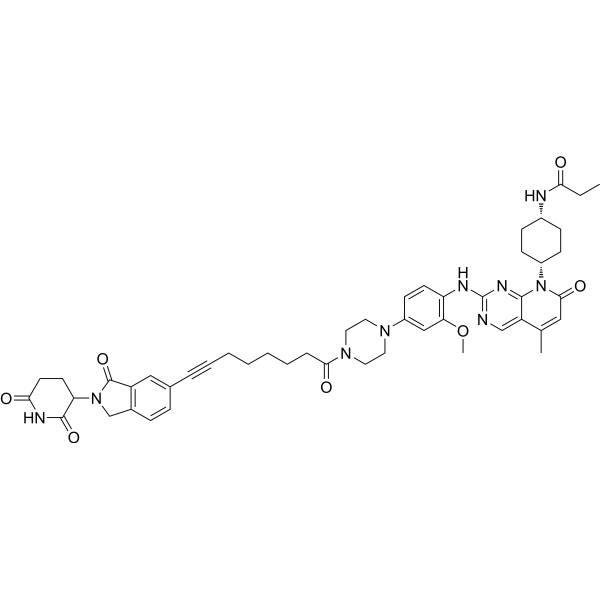
PROTAC TTK degrader-1 is a PROTAC degrader targeting Threonine Tyrosine Kinase (TTK), with a DC50 of 5.8 nM in HCT-116 cells and 1.7 nM in COLO-205 cells. PROTAC TTK degrader-1 induces the formation of a ternary complex with TTK and the CRBN E3 ubiquitin ligase, triggering proteasome-mediated degradation. PROTAC TTK degrader-1 exhibits activity against colon cancer cells and shows anti-tumor activity in a colon cancer xenograft mouse model. It can be used in colon cancer-related research .
loading...
    loading...
Cat. No.: HY-169779
CAS No.: 2376297-69-5
Target:  

p62

Research Areas:  

Cancer

PTX80 is an antagonist of p62 with an IC50 value of 31.18 nM. PTX80 reduces tumor volume in an HCT116 colorectal cancer mouse xenograft model .
loading...
    loading...
Cat. No.: HY-N13009
CAS No.: 2744300-63-6
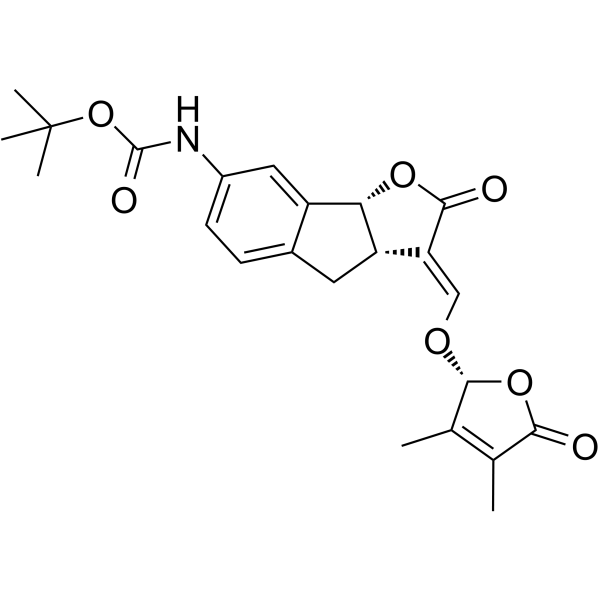
MO-2097 is a RAF-1/HIF-1α inhibitor. MO-2097 induces RAF-1 destabilization, leading to a reduction in EMT-associated transcription factors and mesenchymal markers. MO-2097 inhibits HIF-1a protein expression mediated by hnRNPA2B1 under hypoxic and mimetic hypoxia. MO-2097 induces mitochondrial ROS, which leads to apoptosis in cells. MO-2097 effectively suppresses colorectal cancer metastasis by inhibiting the RAF/MEK/ERK signaling pathway. MO-2097 attenuates tumor growth in a xenograft HCT116 cell mouse model. MO-2097 can be used for the study of colorectal cancer .
loading...
    loading...
Cat. No.: HY-150636
CAS No.: 3031485-19-2
Purity:  99.18%
Target:  

Autophagy Apoptosis

Research Areas:  

Cancer

Autophagy-IN-1 is a potent autophagy/mitophagy inhibitor, acts by selectively increasing the autophagic flux while blocking the autophagosome-lysosome fusion in cancer cells. Autophagy-IN-1 can induce apoptosis and cell cycle arrest. Autophagy-IN-1 significantly inhibits tumor growth in an HCT116 xenograft mouse model and with low toxicity. Autophagy-IN-1 can be used for researching colorectal cancer .
loading...
    loading...
Cat. No.: HY-176404
CAS No.: 2640292-52-8
Target:  

HSP

Research Areas:  

Cancer

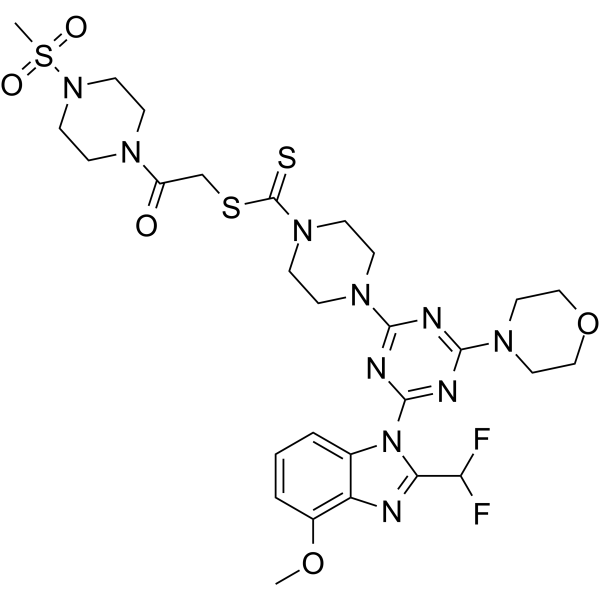
DDO-6691 is a heat shock protein 90 (HSP90) inhibitor. DDO-6691 has antiproliferative effects on a variety of tumor cells, with HCT-116 colon cancer cells being the most sensitive (IC50: 1.08 μM). DDO-6691 exhibits potent tumor growth inhibition in the HCT-116 xenograft mouse model .
loading...
    loading...
Cat. No.: HY-155313
Research Areas:  

Cancer

β-Glucuronide-NB-bis[N(Me)-methyl ester]-MMAE (compound 20) is auristatins-glucuronide conjugate. Antitumor agent-122 shows in vitro antiproliferative activities against β-glucuronidase pretreated and untreated cancer cells with an IC50 value of 5.7 nM - 9.7 nM. Antitumor agent-122 shows potent antitumor efficacy in HCT-116 xenograft mouse model without inducing side effects .
loading...
    loading...
Cat. No.: HY-178960
Research Areas:  

Cancer

Tubulin-IN-59 (Compound 8g) is an orally active Tubulin inhibitor. Tubulin-IN-59 exhibits potent anti-proliferative activity against HCT116 colorectal cancer, HeLa cervical cancer, and HepG2 liver cancer cell lines, with its IC₅₀ value ranging from 16 to 35 nM. Tubulin-IN-59 arrests HeLa cells in the G2/M phase and induces cell apoptosis. Tubulin-IN-59 demonstrates significant anti-tumor activity in the HT29 human colon cancer mouse xenograft model. Tubulin-IN-59 can be used for the study of colorectal cancer and cervical cancer .
loading...
    loading...
Cat. No.: HY-172217
CAS No.: 2982511-19-1
Research Areas:  

Cancer

DNMT1-IN-5 (Compound 55) is the inhibitor for DNMT that inhibits DNMT1 and DNMT3A with IC50 of 2.42 μM and 14.4 μM. DNMT1-IN-5 exhibits antiproliferative activity in a variety of cancer cell lines (IC50s for TMD-8, DOHH2, MOLM-13, THP-1, RPIM-8226 and HCT116 are 0.19-2.37 μM), arrests the cell cycle at G2/M phase, and induces apoptosis in TMD-8 and DOHH2 cells. DNMT1-IN-5 exhibits antitumor efficacy in TMD-8 xenograft mouse models .
loading...
    loading...
Cat. No.: HY-139062
CAS No.: 486991-52-0
Synonyms: C6 Ceramide (d18:1/6:0) Urea; Cer(d18:1/6:0) Urea; D-erythro-Urea-C6-Ceramide
Research Areas:  

Cancer

C6 Urea Ceramide (Cer(d18:1/6:0) Urea) is an inhibitor of neutral ceramidase. C6 Urea Ceramide increases total ceramide levels in wild-type mouse embryonic fibroblasts (MEFs) and HT-29 colon cancer cells. C6 Urea Ceramide (5-10 μM) inhibits proliferation of HT-29 cells and induces apoptosis and autophagy, but is not toxic to non-cancerous cells. C6 Urea Ceramide decreases total and phosphorylated β-catenin levels in HT-29 and HCT116 cells, and induces colocalization of β-catenin with the 20S proteasome. C6 Urea Ceramide (1.25, 2.5, and 5 mg/kg) reduced tumor growth and increased C16, C18, C20, and C24 ceramide levels in tumor tissues in the HT-29 mouse xenograft model.
loading...
    loading...
Cat. No.: HY-P10914
CAS No.: 1426227-11-3
Target:  

MDM-2/p53 Autophagy

Research Areas:  

Inflammation/Immunology Cancer

D-CopA3 is the inhibitor for MDM2 and the activator for p53 signaling pathway. D-CopA3 exhibits cytotoxicity in colorectal cancer cells HCT-116, LoVo, and RKO (IC50=15-18 μM), induces JNK/Beclin-1 mediated autophagy. D-CopA3 downregulates the expression of cell cycle inhibitory protein p21Cip1/Waf1, enhances the mucosal barrier function and reduces penetration of inflammatory mediators. D-CopA3 exhibits anti-inflammtory activity in mouse C. difficile toxin A-induced acute enteritis models and DSS (HY-116282)-induced chronic colitis models. D-CopA3 exhibits antitumor efficacy in mouse HCT-116 xenograft models .
loading...
    loading...
Cat. No.: HY-P991328

Target:  

Notch

Research Areas:  

Cancer

MAb604.107 is a human monoclonal antibody (mAb) targeting NOTCH1. MAb604.107 inhibits the proliferation and CD34/CD44 expression of primary T-ALL cells. MAb604.107 has anti-tumor activity in four tumor xenograft mouse models: MDA-MB-231, HCC-1806, BT-474, and HCT-116. MAb604.107 can be used in T acute lymphoblastic leukemia research .
loading...
    loading...
Cat. No.: HY-173274
CAS No.: 3056259-55-0
Target:  

Molecular Glues

Research Areas:  

Cancer

CB039 is a RBM39 molecular glue degrader with an IC50 of 36.7 nM against HCT-116 cells. CB039 induces RBM39 degradation in a dose- and time-dependent manner. This process depends on the Cullin-RING E3 ubiquitin ligase complex (CRL) and proteasome, and promotes the recruitment of RBM39 to the DCAF15-DDB1 complex with an IC50 of 594 nM. CB039 causes abnormal RNA splicing, reduces CEP192 protein levels, induces G2/M phase cell cycle arrest and mitotic spindle disorder. CB039 can be used in studies on RBM39-targeted protein degradation and colorectal cancer-related mechanisms .
loading...
    loading...
Cat. No.: HY-149427
CAS No.: 2966861-50-5
Target:  

PI3K

Research Areas:  

Cancer

PI3Kα-IN-12 (compound 13) is a highly selective PI3Kα inhibitor (IC50: 1.2 nM). PI3Kα-IN-12 inhibits HCT-116 and U87-MG with IC50s values of 0.83 and 1.25 μM, respectively. PI3Kα-IN-12 (40 mg/kg; IP) causes tumor regression in a U87-MG cell line xenograft mouse model .
loading...
    loading...
Cat. No.: HY-143905
CAS No.: 2953426-48-5
Target:  

PROTACs Mps1

Research Areas:  

Cancer

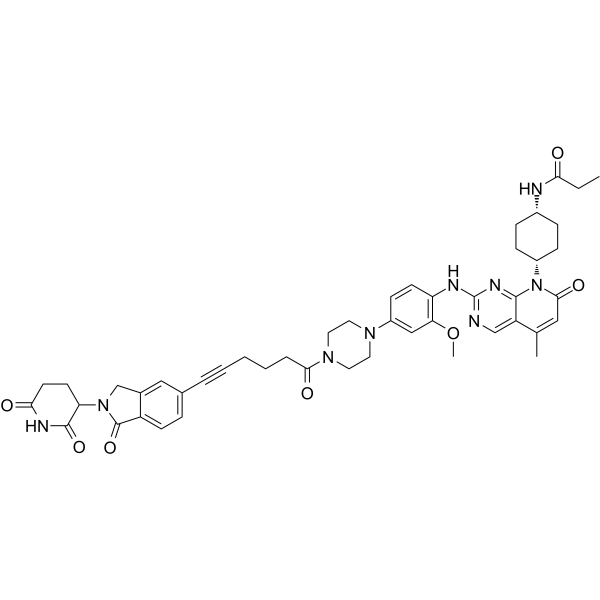
PROTAC TTK degrader-2 is a threonine tyrosine kinase (TTK) PROTAC degrader with a DC50 of 3.1 nM in COLO-205 cells. PROTAC TTK degrader-2 induces proteasome-mediated degradation of TTK. It inhibits the proliferation of colorectal cancer cells. In colorectal cancer xenograft mouse models, PROTAC TTK degrader-2 mediates target degradation and exerts anticancer activity. PROTAC TTK degrader-2 can be used in colorectal cancer-related research .
loading...
    loading...
Cat. No.: HY-139815
CAS No.: 1314556-93-8
Target:  

HDAC

Research Areas:  

Cancer

ZYJ-34c is an orally active and potent histone deacetylase inhibitor (HDACi) with IC50s of 0.056 μM and 0.146 μM for HDAC6 and HDAC8, respectively. ZYJ-34c causes G1 phase arrest in low concentration. ZYJ-34c has antiproliferative activities. ZYJ-34c exhibits antitumor potency in MDA-MB-231 and HCT116 xenograft models and possesses antimetastatic potential in a mouse hepatoma-22 (H22) pulmonary metastasis model .
loading...
    loading...
Cat. No.: HY-162873
Target:  

MEK Raf

Research Areas:  

Cancer

MEK/RAF-IN-1 (Compound 16b) is an inhibitor of both MEK and RAF. It shows potent inhibition with IC50 values of 28 nM for MEK1, and 3 nM each for BRAF and BRAFV600E. MEK/RAF-IN-1 demonstrates significant antitumor activity, effectively inhibiting cell proliferation in vitro against MIA PaCa-2 (G12C KRAS), HCT116 (G13D KRAS), and C26 (G12D KRAS) cells. Additionally, it inhibits tumor growth in xenograft mouse models of colorectal cancer .
loading...
    loading...
Cat. No.: HY-179374
CAS No.: 2727102-12-5
Research Areas:  

Cancer

Aurora kinase/HDAC-IN-1 is an orally active dual Aurora kinase and HDAC inhibitor that inhibits Aurora A (IC50 = 116 nM), Aurora B (IC50 = 225 nM), HDAC1 (IC50 = 164 nM), and HDAC2 (IC50 = 346 nM).Aurora kinase/HDAC-IN-1 promotes histone H3 acetylation, inhibits Aurora A phosphorylation and downstream signaling, and induces apoptosis via G2/M cell-cycle arrest. Aurora kinase/HDAC-IN-1 exhibits potent antiproliferative activity in colorectal cancer cells, with an IC50 value of 30.2 nM in HCT-116 cells.Aurora kinase/HDAC-IN-1 significantly suppresses tumor growth in an HCT-116 colorectal cancer xenograft mouse model .
loading...
    loading...
Cat. No.: HY-179622
CAS No.: 3106086-17-0
Research Areas:  

Cancer

ZS34 is a potent, orally active, and selective MAT2A inhibitor with an IC50 of 13.7 nM, displaying minimal hERG and UGT1A1 liabilities. ZS34 selectively suppresses the growth of methylthioadenosine phosphorylase (MTAP)-deficient cancer cells by inhibiting SAM synthesis, reducing SDMA levels, and inducing DNA damage. ZS34 exhibits antitumor efficacy in a HCT116 MTAP -/- xenograft mouse model. ZS34 can be used for the research of MTAP-deficient cancer .
loading...
    loading...
Cat. No.: HY-179430
Target:  

Mps1

Research Areas:  

Cancer

TTK-IN-5 is an orally active covalent threonine tyrosine kinase (TTK) inhibitor with selectivity (IC50 = 8.918 nM). TTK-IN-5 exhibits anti-proliferative potencies against MDA-MB-231, A2780, HCT116, HCC1569 and MKN1 cell lines (IC50 values of 0.113 μM, 0.476 μM, 3.136 μM, 3.649 μM, and 1.856 μM, respectively). TTK-IN-5 potently suppresses tumor growth without notable toxicity in A2780 and MDA-MB-231 xenograft mouse models. TTK-IN-5 can be used for the research of cancer such as breast cancer and ovarian cancer .
loading...
    loading...
Cat. No.: HY-181284
CAS No.: 2563902-57-6
BYBC‑1 is a selective G4‑RNA‑targeting ligand with high affinity forKRAS and NRAS G4‑RNAs (Kd = 0.05-0.28 μM). BYBC‑1 stabilizes G4‑RNA structures in KRAS and NRAS mRNA, blocks thePI3K/AKT and MAPK/ERK pathways, activates the DNA damage response (DDR), suppresses energy metabolism, and induces S‑phase arrest and apoptosis. BYBC‑1 exhibits high selectivity over non‑malignant fibroblasts and significantly inhibits the growth of HCT‑116 xenograft tumors in vivo. BYBC‑1 can be used for the study of colorectal cancer .
loading...
    loading...