




219 Results for "

IL-1 receptor

" in MedChemExpress (MCE) Product Catalog:
Products (219)

219 Results for "IL-1 receptor" in MCE Product Catalog:

56
56 Publications Verification
Cat. No.: HY-108841
CAS No.: 143090-92-0
Purity:  99.40%
Synonyms: Kineret; Anakinra
Raleukin (Kineret) is a recombinant, nonglycosylated human interleukin-1 receptor (IL-1R) antagonist. Raleukin significantly reduces neutrophil accumulation in blood vessels and brain infarct volume as well as improves motor coordination performance in ischemic stroke mice model. Anakinra can be used to study chronic inflammatory disorders like rheumatoid arthritis and cardiovascular recurrence post-myocardial infarction .
loading...
    loading...
23
23 Cited Publications
Cat. No.: HY-P70311
Purity:  ≥ 95%, as determined by reducing SDS-PAGE.
Synonyms: Interleukin-18 receptor 1; IL-18R1; CDw218a; IL1RRP; IL-18R-alpha; CD218a
Species:  
Rat;Mouse;Human
Source:  
HEK293
loading...
    loading...
16
16 Cited Publications
Cat. No.: HY-19744
CAS No.: 2437475-16-4
Target:  

MyD88

Research Areas:  

Inflammation/Immunology

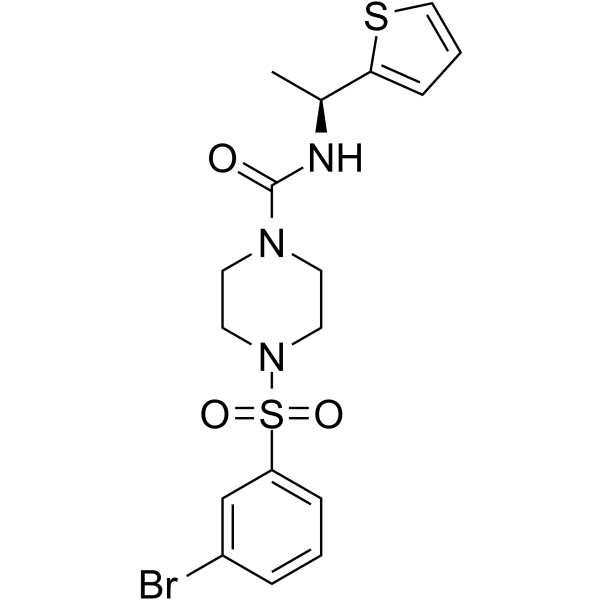
T6167923 is a selective inhibitor of MyD88-dependent signaling pathways. T6167923 directly binds to Toll/IL1 receptor (TIR) domain of MyD88 and disrupts MyD88 homodimeric formation. T6167923 inhibits NF-κB driven Staphylococcus enterotoxin AP (SEAP) activity, and improves anti-inflammatory activity with IC50s of 2.7 μM, 2.9 μM, 2.66 μM and 2.66 μM for IFN-γ, IL-1β, IL-6 and TNF-α, respectively .
loading...
    loading...
10
10 Cited Publications
Cat. No.: HY-N2037
CAS No.: 5843-65-2
Synonyms: Norcoclaurine; Demethyl-Coclaurine
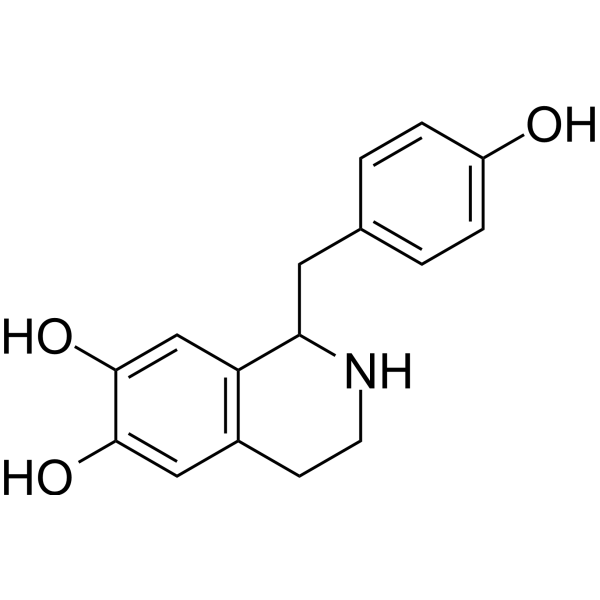
Higenamine (Norcoclaurine), a β2-AR agonist with antioxidant capability, is a key component of the Chinese herb aconite root that prescribes for treating symptoms of heart failure in the oriental Asian countries. Higenamine is also a α1-adrenergic receptor antagonist with hypotensive effect. is a selective LSD1 inhibitor (IC50=1.47 μM) that can be isolated from aconite. Higenamine hydrochloride has anti-inflammatory and antibacterial activity. Higenamine protects myocyte Apoptosis and ischemia/reperfusion (I/R) injury through selective activation of beta2-adrenergic receptor (β2-AR). Higenamine also reduces I/R-induced myocardial infarction in mice. Higenamine can attenuate IL-1β-induced Apoptosis through ROS-mediated PI3K/Akt signaling pathway. Higenamine protects brain cells from oxygen deprivation. Higenamine can promote bone formation in osteoporosis through the SMAD2/3 pathway. Higenamine can be used to study cancer, inflammation, cardiorenal syndrome and other diseases .
loading...
    loading...
9
9 Cited Publications
Cat. No.: HY-P72566
Purity:  ≥ 95%, as determined by reducing SDS-PAGE.
Synonyms: IL1RN; IL-1ra; Interleukin 1 receptor Antagonist; Intracellular Interleukin-1 receptor Antagonist (IcIL-1ra); ICIL-1RA; Intracellular Interleukin-1 receptor Antagonist; IL-1RN; Intracellular IL-1 receptor Antagonist Type II; IL1RA; Type II Interleukin-1 R
Species:  
Mouse
Source:  
E. coli
loading...
    loading...
8
8 Cited Publications
Cat. No.: HY-P3211
CAS No.: 2014384-91-7
Synonyms: LR12
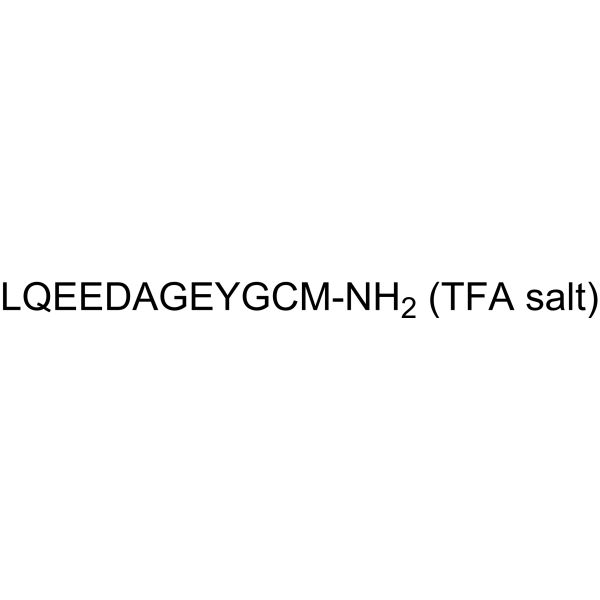
Nangibotide (LR12) is a synthetic peptide and TREM-1 receptor inhibitor. Nangibotide inhibits NF-κB and NLRP3 inflammasome activation and reduces the release of pro-inflammatory factors (such as IL-1β, IL-8). Nangibotide inhibits Apoptosis. Nangibotide reduces excessive inflammatory responses and protects tissues (liver, lung) from damage. Nangibotide can be used in the researches for myocardial ischemia-reperfusion injury, septic shock, acute lung injury, osteoarthritis, and acute liver failure .
loading...
    loading...
8
8 Cited Publications
Cat. No.: HY-P3211A
Synonyms: LR12 TFA
Nangibotide TFA (LR12 TFA) is a synthetic peptide and TREM-1 receptor inhibitor. Nangibotide TFA inhibits NF-κB and NLRP3 inflammasome activation and reduces the release of pro-inflammatory factors (such as IL-1β, IL-8). Nangibotide TFA inhibits Apoptosis. Nangibotide TFA reduces excessive inflammatory responses and protects tissues (liver, lung) from damage. Nangibotide TFA can be used in the researches for myocardial ischemia-reperfusion injury, septic shock, acute lung injury, osteoarthritis, and acute liver failure .
loading...
    loading...
6
6 Cited Publications
Cat. No.: HY-P1110
CAS No.: 185413-30-3
Target:  

Interleukin Related

Research Areas:  

Inflammation/Immunology

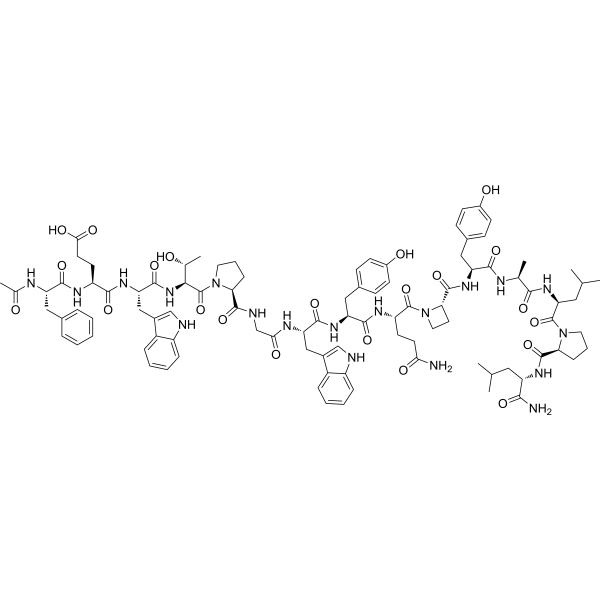
AF12198 is a potent, selective and specific peptide antagonist for human type I interleukin-1 receptor (IL1-R1) (IC50=8 nM) but not the human type II receptor (IC50=6.7 µM) or the murine type I receptor (IC50>200 µM). AF12198 inhibits IL-1-induced IL-8 production (IC50=25 nM) and IL-1-induced intercellular adhesion molecule-1 (ICAM-1) expression (IC50=9 nM) in vitro. AF12198 has anti-inflammatory activities and blocks responses to IL-1 in vivo .
loading...
    loading...
5
5 Cited Publications
Cat. No.: HY-P7029
Purity:  ≥ 95%, as determined by reducing SDS-PAGE.
Synonyms: IL1RN; IL-1ra; Interleukin 1 receptor Antagonist; Intracellular Interleukin-1 receptor Antagonist (IcIL-1ra); ICIL-1RA; Intracellular Interleukin-1 receptor Antagonist; IL-1RN; Intracellular IL-1 receptor Antagonist Type II; IL1RA; Type II Interleukin-1 R
Species:  
Human
Source:  
E. coli
loading...
    loading...
3
3 Cited Publications
Cat. No.: HY-W011400
CAS No.: 566914-00-9
Target:  

MyD88

Research Areas:  

Inflammation/Immunology

TLR1 (compound 4a) is a low molecular weight, cell-penetrating Toll/IL-1 receptor/resistance (TIR) domain/BB-Loop mimic. TLR1 inhibits IL-1 receptor-mediated responses .
loading...
    loading...
3
3 Cited Publications
Cat. No.: HY-N1431
CAS No.: 4429-63-4
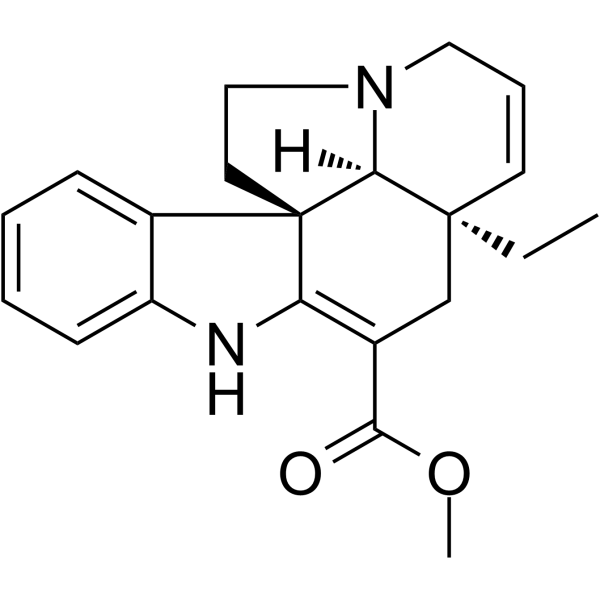
Tabersonine is a selective, orally active NLRP3 inhibitor. Tabersonine directly binds to the NACHT domain of NLRP3, inhibiting its ATPase activity and oligomerization, thereby blocking ASC spot formation and caspase-1 activation, and reducing the release of pro-inflammatory cytokines such as IL-1β. Tabersonine also inhibits K63-linked ubiquitination of TRAF6, blocking NF-κB, PI3K/Akt, and p38 MAPK signaling pathways. Tabersonine can inhibit inflammatory responses, induce apoptosis of liver cancer cells through mitochondrial pathways and death receptor pathways, reduce mitochondrial membrane potential, promote cytochrome c release, and activate caspase proteins. Tabersonine is mainly used in the study of NLRP3-driven inflammatory diseases (such as acute lung injury, sepsis, peritonitis) and tumors such as liver cancer .
loading...
    loading...
3
3 Cited Publications
Cat. No.: HY-N1431A
CAS No.: 29479-00-3
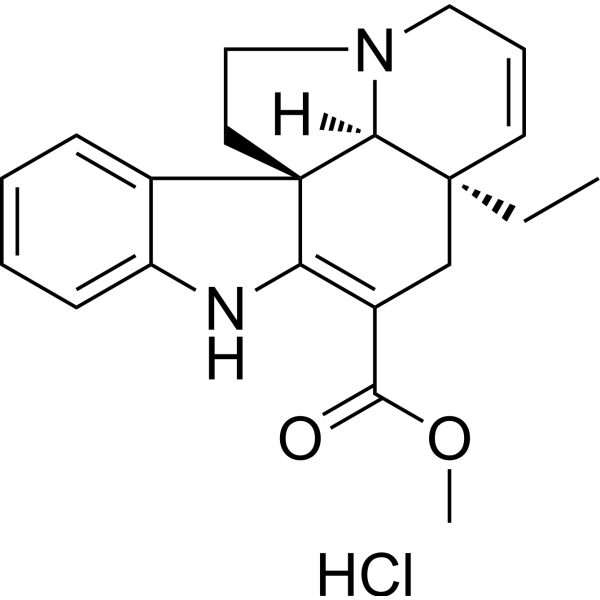
Tabersonine hydrochloride is a selective, orally active NLRP3 inhibitor. Tabersonine hydrochloride directly binds to the NACHT domain of NLRP3, inhibiting its ATPase activity and oligomerization, thereby blocking ASC spot formation and caspase-1 activation, and reducing the release of pro-inflammatory cytokines such as IL-1β. Tabersonine hydrochloride also inhibits K63-linked ubiquitination of TRAF6, blocking NF-κB, PI3K/Akt, and p38 MAPK signaling pathways. Tabersonine hydrochloride can inhibit inflammatory responses, induce apoptosis of liver cancer cells through mitochondrial pathways and death receptor pathways, reduce mitochondrial membrane potential, promote cytochrome c release, and activate caspase proteins. Tabersonine hydrochloride is mainly used in the study of NLRP3-driven inflammatory diseases (such as acute lung injury, sepsis, peritonitis) and tumors such as liver cancer .
loading...
    loading...
3
3 Cited Publications
Cat. No.: HY-P99444
CAS No.: 2173054-79-8
Synonyms: MSTT 1041A; RG 6149
Astegolimab (MSTT 1041A; RG 6149) is a human IgG2 monoclonal antibody. Astegolimab blocks IL-33 signaling by targeting the IL-33 receptor ST2. Astegolimab reduces p53 expression, mitigates IL33-upregulated SASP factors such as IL1α, IL6 and MCP1. Astegolimab mitigates IL33-increased p-p65/p65 ratio. Astegolimab blocks CM-induced neutrophil extracellular trap (NET) formation. Astegolimab is used in chronic obstructive pulmonary disease (COPD) and myocardial research .
loading...
    loading...
2
2 Cited Publications
Cat. No.: HY-P99171
CAS No.: 1129435-60-4

Target:  

Interleukin Related

Research Areas:  

Inflammation/Immunology Cancer

Gevokizumab is a potent anti-IL-1β antibody, negatively modulates IL-1β signaling through an allosteric mechanism. Gevokizumab selectively decreases the binding affinity of IL-1β for the IL-1 receptor type I (IL-1RI) signaling receptor instead of IL-1 counter-regulatory decoy receptor (IL-1 receptor type II) .
loading...
    loading...
2
2 Cited Publications
Cat. No.: HY-P99008
CAS No.: 2417175-94-9
Synonyms: IC14
Atibuclimab (IC14), is a chimeric monoclonal antibody directed against CD14 and is composed of murine variable and human IgG4 Fc regions. Atibuclimab attenuates Lipopolysaccharides (HY-D1056) (LPS)-induced symptoms and strongly inhibits LPS-induced proinflammatory cytokine release, while only delaying the release of the anti-inflammatory cytokines soluble TNF receptor type I and IL-1 receptor antagonist. Atibuclimab can be used for the research of amyotrophic lateral sclerosis, sepsis, community-acquired pneumonia, or acute lung injury .
loading...
    loading...
2
2 Cited Publications
Cat. No.: HY-P7029A
Purity:  ≥ 95%, as determined by reducing SDS-PAGE.
Synonyms: IL1RN; IL-1ra; Interleukin 1 receptor Antagonist; Intracellular Interleukin-1 receptor Antagonist (IcIL-1ra); ICIL-1RA; Intracellular Interleukin-1 receptor Antagonist; IL-1RN; Intracellular IL-1 receptor Antagonist Type II; IL1RA; Type II Interleukin-1 R
Species:  
Human
Source:  
HEK293
loading...
    loading...
2
2 Cited Publications
Cat. No.: HY-13954
CAS No.: 870061-27-1
Purity:  98.08%
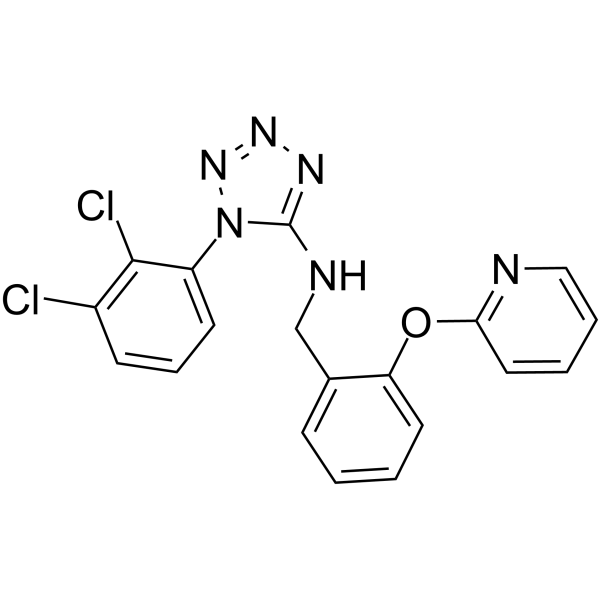
A 839977 is a P2X7 selective antagonist; it blocks BzATP-evoked calcium influx at recombinant human, rat and mouse P2X7 receptors (IC50 values are 20 nM, 42 nM and 150 nM respectively) and reduces inflammatory and neuropathic pain in animal models; the antihyperalgesic effects of P2X7 receptor blockade are mediated by blocking the release of IL-1beta .
loading...
    loading...
2
2 Cited Publications
Cat. No.: HY-P72570
Purity:  ≥ 95%, as determined by reducing SDS-PAGE.
Synonyms: IL1F10; MGC119832; Interleukin 1 FamILy Member 10; MGC119833; IL-1HY2; MGC11983; IL1-Theta; IL1HY2; IL-1F10; Interleukin-1 receptor Antagonist-Like FIL1 Theta; FKSG75; Interleukin 1 FamILy, Member 10 (Theta); IL-38; Interleukin 1 FamILy Member 10 (Theta)
Species:  
Human
Source:  
E. coli
loading...
    loading...
2
2 Cited Publications
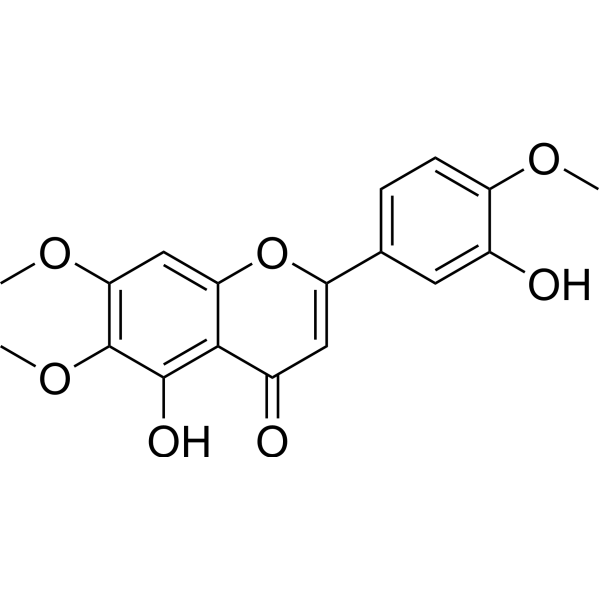
Cat. No.: HY-N2374
CAS No.: 855-96-9
Eupatorin is an orally active flavonoid with antiproliferative and vasodilatory properties. Eupatorin downregulates the expression levels of NF-κB, MMP9, IL-1β and TNF-α. Eupatorin induces apoptosis, G2/M phase cell cycle arrest, and reactive oxygen species (ROS) production. Eupatorin modulates the activities of muscarinic receptors and β-adrenergic receptors; inhibits sarcoplasmic reticulum calcium release and calcium channels; and activates the NO/sGC/cGMP pathway, indomethacin-sensitive pathway, and potassium channel pathway. Eupatorin exerts cytotoxic effects on cancer cell lines, and is metabolized by CYP1A1 and CYP1 family enzymes to form metabolites with antiproliferative activity. Eupatorin can be used in research related to breast cancer, hypertension, and leukemia .
loading...
    loading...
2
2 Cited Publications
Cat. No.: HY-P7223
Purity:  ≥ 95%, as determined by reducing SDS-PAGE.
Synonyms: IL6R; IL-6R 1; Interleukin 6 receptor; IL-6RA; Gp80; Interleukin 6 receptor Subunit Alpha; Interleukin-6 receptor Subunit Alpha; IL-6R Subunit Alpha; Membrane Glycoprotein 80; IL-6R-Alpha; IL-1Ra; IL-6R-1; IL6RA; IL6QTL; IL-6R; IL6RQ; CD126; HIES5; IL-6 R
Species:  
Human
Source:  
CHO
loading...
    loading...

