
1. Search Result
Search Result
Results for "

Myocardial ischemia

" in MedChemExpress (MCE) Product Catalog:

170

Inhibitors & Agonists

1

Screening Libraries

2

Fluorescent Dyes

3

Biochemical Assay Reagents

16

Peptides

4

Inhibitory Antibodies

30

Natural
Products

7

Isotope-Labeled Compounds

3

Oligonucleotides

1

GMP Molecules

Cat. No. Product Name Target Research Areas Chemical Structure
  • HY-17369B
    Tirofiban
    5+ Cited Publications

    L700462; MK383

    Integrin Cardiovascular Disease
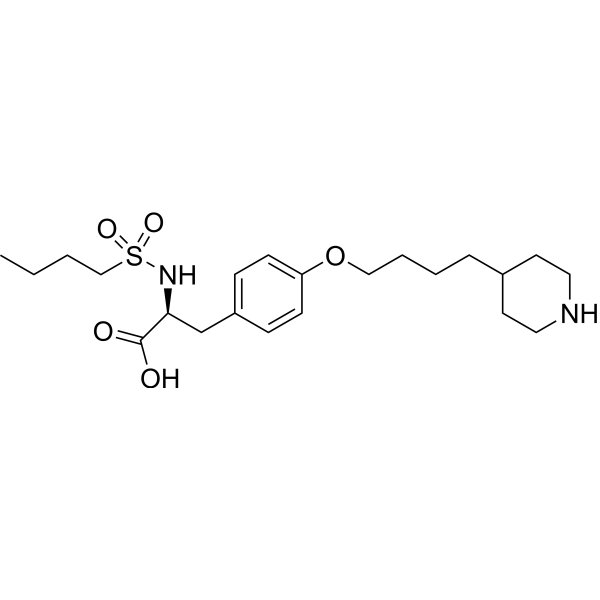
    Tirofiban (L700462) is a selective and reversible platelet integrin receptor (Gp IIb/IIIa) antagonist that inhibits fibrinogen binding to this receptor and has antithrombotic activity. Tirofiban induces proliferation and migration on endothelial cell by inducing production of VEGF. Tirofiban can significantly reduces myocardial no-reflow and ischemia-reperfusion injury by alleviating myocardial microvascular structural and endothelial dysfunction in the ischemic area .
    Tirofiban
  • HY-139397
    TJ-M2010-5
    30+ Cited Publications

    MyD88 Cardiovascular Disease
    TJ-M2010-5 is a MyD88 inhibitor that binds to the TIR domain of MyD88 to interfere with its homodimerization, and the TLR/MyD88 signal pathway . TJ-M2010-5 can be used for the research of myocardial ischemia/reperfusion injury (MIRI) .
    TJ-M2010-5
  • HY-17369

    L700462 hydrochloride monohydrate; MK383 hydrochloride monohydrate

    Integrin Cardiovascular Disease
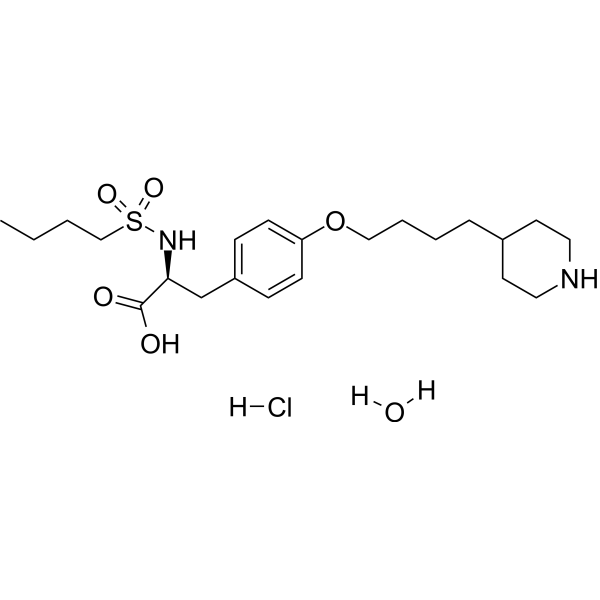
    Tirofiban (L700462) hydrochloride monohydrate is a selective and reversible platelet integrin receptor (Gp IIb/IIIa) antagonist that inhibits fibrinogen binding to this receptor and has antithrombotic activity. Tirofiban hydrochloride monohydrate induces proliferation and migration on endothelial cell by inducing production of VEGF. Tirofiban hydrochloride monohydrate can significantly reduces myocardial no-reflow and ischemia-reperfusion injury by alleviating myocardial microvascular structural and endothelial dysfunction in the ischemic area .
    Tirofiban hydrochloride monohydrate
  • HY-103171
    BAY 60-6583
    5+ Cited Publications

    Adenosine Receptor Cardiovascular Disease Inflammation/Immunology
    BAY 60-6583 is a potent and high-affinity agonist of adenosine A2B receptor (EC50=3 nM) over A1, A2A, and A3 receptors. BAY 60-6583 binds to mouse, rabbit, and dog A2BAR with Ki values of 750 nM, 340 nM and 330 nM, respectively. BAY 60-6583 has a cardioprotective effect in a myocardial ischemia model .
    BAY 60-6583
  • HY-18100A
    PRE-084 hydrochloride
    10+ Cited Publications

    Sigma Receptor Akt NO Synthase Cardiovascular Disease Neurological Disease
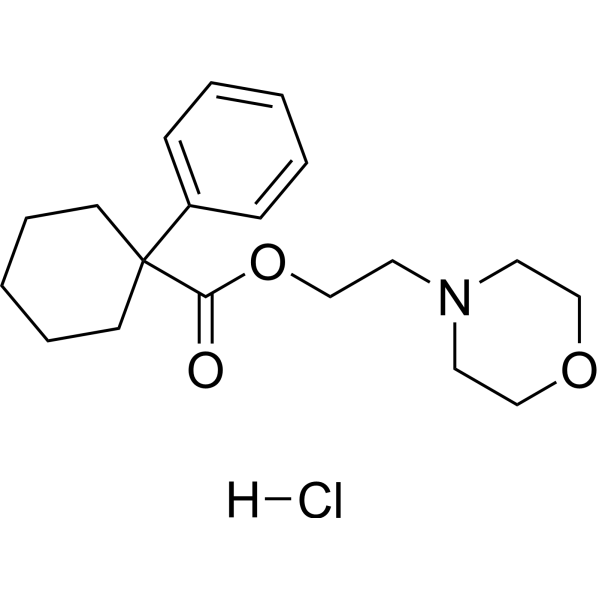
    PRE-084 hydrochloride is a highly selective σ1 receptor (S1R) agonist, with an IC50 of 44 nM. PRE-084 hydrochloride exhibits good neuroprotective effects, can improve motor function and motor neuron survival in mice. PRE-084 hydrochloride also can ameliorate myocardial ischemia-reperfusion injury in rats by activating the Akt-eNOS pathway .
    PRE-084 hydrochloride
  • HY-17355A
    Dexpramipexole dihydrochloride
    2 Publications Verification

    (R)-Pramipexole dihydrochloride; R-(+)-Pramipexole dihydrochloride; KNS-760704 dihydrochloride

    ATP Synthase Sodium Channel Glutathione Peroxidase NOD-like Receptor (NLR) Mitophagy Ferroptosis PINK1/Parkin Autophagy Apoptosis Reactive Oxygen Species (ROS) Cardiovascular Disease Neurological Disease Inflammation/Immunology
    Dexpramipexole ((R)-Pramipexole) dihydrochloride is an orally active, blood-brain barrier permeable mitochondrial protective agent. Dexpramipexole dihydrochloride upregulates the expression of Parkin, PINK1, GPX4 and FSP1; binds to mitochondrial F1/Fo-ATP synthase; blocks the Nav1.8 sodium channel; and inhibits the activation of the NLRP3 inflammasome. Dexpramipexole dihydrochloride induces mitophagy, inhibits ferroptosis, pyroptosis, apoptosis, neuroinflammation and eosinophilopoiesis; maintains mitochondrial function and redox homeostasis; reduces reactive oxygen species production; and decreases myocardial infarct size. Dexpramipexole dihydrochloride is applicable to studies on eosinophilic asthma, myocardial ischemia/reperfusion injury, sepsis-associated encephalopathy, analgesia, and more .
    Dexpramipexole dihydrochloride
  • HY-125792
    Nexinhib20
    1 Publications Verification

    Reactive Oxygen Species (ROS) Ras Integrin Cardiovascular Disease Inflammation/Immunology
    Nexinhib20 is an inhibitor that targets the interactions of Rab27a-JFC1 (IC50: 2.6 μM) and Rac-1-GTP. Nexinhib20 can inhibit neutrophil exocytosis, adhesion, and β2 integrin activation, and has anti-inflammatory activity. Nexinhib20 can be used in the research of diseases such as systemic inflammation and myocardial ischemia-reperfusion injury .
    Nexinhib20
  • HY-153999A

    BT200 sodium

    Integrin Apoptosis Cardiovascular Disease Inflammation/Immunology
    Rondaptivon pegol (BT200) sodium is an aptamer targeting von Willebrand factor (VWF), with an EC50 of 33 nM in humans. Rondaptivon pegol sodium effectively alleviates acute myocardial ischemia-reperfusion injury in mice by inhibiting VWF activity, reducing microvascular obstruction, inflammatory responses and cardiomyocyte apoptosis (apoptosis). Rondaptivon pegol sodium inhibits the binding of VWF to platelet glycoprotein GPIb, thereby preventing arterial thrombosis in cynomolgus monkeys. Rondaptivon pegol sodium can be used in research related to arterial thrombosis, stroke, myocardial infarction and myocardial ischemia-reperfusion injury .
    Rondaptivon pegol sodium
  • HY-B1194

    (±)-Tetramisole hydrochloride; DL-Tetramisole hydrochloride; R-829

    Potassium Channel Parasite PKA Infection Cardiovascular Disease
    Tetramisole hydrochloride is an orally active, selective inward rectifier potassium channel agonist with an EC50 of approximately 30 μM for the Kir2.1 subunit. Tetramisole hydrochloride is also an anti-nematode agent that blocks neuromuscular transmission by non-competitive depolarization. Tetramisole hydrochloride promotes the forward transport of Kir2.1 channels, hyperpolarizes the resting potential (RP), shortens the action potential duration (APD), inhibits intracellular calcium overload and the PKA signaling pathway, and exerts anti-arrhythmic and anti-myocardial remodeling activities. Tetramisole hydrochloride can be used in cardiac electrophysiology research and research related to myocardial ischemia and heart failure .
    Tetramisole hydrochloride
  • HY-B0419
    Manidipine
    3 Publications Verification

    Calcium Channel Interleukin Related Cardiovascular Disease Neurological Disease Endocrinology
    Manidipine is an orally active calcium channel antagonist. Manidipine regulates the expression of cytokines (IL-1β, IL-6). Manidipine has a hypotensive effect. Manidipine can be used in the study of cardiovascular diseases (such as hypertension, myocardial ischemia-reperfusion injury, ventricular hypertrophy), kidney diseases (such as glomerular diseases), and epilepsy .
    Manidipine
  • HY-173572

    Sirtuin Autophagy Cardiovascular Disease
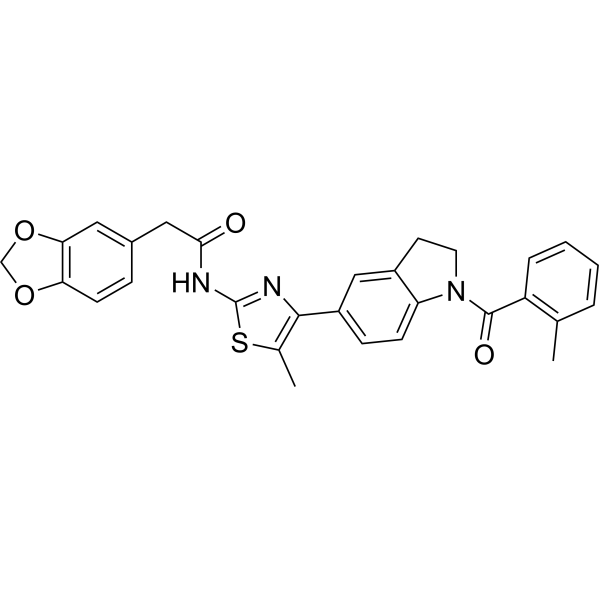
    SKLB-11A is a selective, orally active and allosteric SIRT3 (sirtuin 3) agonist with a Kd value of 4.7 μM. SKLB-11A is highly selective for other members of the SIRT family. SKLB-11A activates autophagy-related signaling pathways, prevents mitochondrial dysfunction, improves cardiac function in Doxorubicin (HY-15142A)-induced cardiotoxicity and myocardial ischemia/reperfusion models .
    SKLB-11A
  • HY-116442

    Xanthine Oxidase Cardiovascular Disease Inflammation/Immunology
    Azapropazone is an orally active nonsteroidal anti-inflammatory agent. Azapropazone inhibits Xanthine oxidase activity with an IC50 of 70-140 μg/mL. Azapropazone exerts significant cardiomyocyte protective effects on dogs with ischemia-reperfusion injury . Azapropazone reduces arthritis. Azapropazone inhibits Adrenaline-induced platelet aggregation. Azapropazone can be used for the research of myocardial ischemia and reperfusion injury, adjuvant arthritis, and gouty arthritis .
    Azapropazone
  • HY-108972

    Prostaglandin Receptor Metabolic Disease
    SQ 29548 is a selective thromboxane-prostanoid (TP) receptor antagonist .
    SQ 29548
  • HY-103445

    Elastase Cardiovascular Disease
    SSR69071 is a potent, orally active and selective inhibitor of neutrophil elastase. SSR69071 reduces myocardial infarct size following ischemia-reperfusion injury . SSR69071 displays a higher affinity for human elastase (Ki=0.0168 nM) than for rat (Ki=3 nM), mouse (Ki=1.8 nM), and rabbit (Ki= 58 nM) elastases .
    SSR69071
  • HY-P6442

    Chemerin Receptor Syk ERK Src p38 MAPK P-selectin Cardiovascular Disease Neurological Disease Inflammation/Immunology
    Chemerin15 is an anti-inflammatory peptide derived from Chemerin. Chemerin15 binds to ChemR23. Chemerin15 inhibits TNFα-induced activation of Syk, ERK and Src kinases. Chemerin15 increases the expression of p-p38 mRNA and protein. Chemerin15 mediates phagocytosis, resolution of inflammation, CD62L shedding and downregulation of PSGL-1 expression in macrophages and microglia. Chemerin15 inhibits neutrophil-mediated vascular inflammation and myocardial ischemia-reperfusion injury via ChemR23. Chemerin15 enhances microglial phagocytosis, thereby alleviating cerebral ischemia-reperfusion injury .
    Chemerin15
  • HY-W011082

    NOD-like Receptor (NLR) Cardiovascular Disease
    NLRP3-IN-2, an intermediate substrate in the synthesis of glyburide, inhibits the formation of the NLRP3 inflammasome in cardiomyocytes and limits the infarct size following myocardial ischemia/reperfusion in the mouse, without affecting glucose metabolism .
    NLRP3-IN-2
  • HY-136744
    Caspase-9 Inhibitor III
    1 Publications Verification

    Ac-LEHD-cmk

    Caspase Cardiovascular Disease
    Caspase-9 Inhibitor III (Ac-LEHD-cmk) is a caspase-9 inhibitor. Caspase-9 Inhibitor III exhibits protective effects on ischemia-reperfusion-induced myocardial injury .
    Caspase-9 Inhibitor III
  • HY-145237
    BM213
    3 Publications Verification

    Complement System Apoptosis Reactive Oxygen Species (ROS) Cancer
    BM213 is a selective C5aR agonist, with an EC50 of 59 nM. BM213 specifically activates the C5a-C5aR1 axis, which in turn promotes neutrophil extracellular trap (NET) formation and exacerbates inflammatory responses. BM213 significantly induces ventricular dilationin, promotes myocardial ROS production, and induces cardiomyocyte apoptosis in rats. BM213 can be used for the study of myocardial ischemia/reperfusion (I/R) injury .
    BM213
  • HY-17355B
    Dexpramipexole
    2 Publications Verification

    (R)-Pramipexole; R-(+)-Pramipexole; KNS-760704

    PINK1/Parkin Glutathione Peroxidase Sodium Channel ATP Synthase NOD-like Receptor (NLR) Mitophagy Ferroptosis Autophagy Apoptosis Reactive Oxygen Species (ROS) Cardiovascular Disease Neurological Disease Inflammation/Immunology
    Dexpramipexole ((R)-Pramipexole) is an orally active, blood-brain barrier permeable mitochondrial protective agent. Dexpramipexole upregulates the expression of Parkin, PINK1, GPX4 and FSP1; binds to mitochondrial F1/Fo-ATP synthase; blocks the Nav1.8 sodium channel; and inhibits the activation of the NLRP3 inflammasome. Dexpramipexole induces mitophagy, inhibits ferroptosis, pyroptosis, apoptosis, neuroinflammation and eosinophilopoiesis; maintains mitochondrial function and redox homeostasis; reduces reactive oxygen species production; and decreases myocardial infarct size. Dexpramipexole is applicable to studies on eosinophilic asthma, myocardial ischemia/reperfusion injury, sepsis-associated encephalopathy, analgesia, and more .
    Dexpramipexole
  • HY-106262B
    Delcasertib hydrochloride
    3 Publications Verification

    KAI-9803 hydrochloride; BMS-875944 hydrochloride

    PKC Cardiovascular Disease Inflammation/Immunology
    Delcasertib (KAI-9803) hydrochloride is a potent and selective δ-protein kinase C (δPKC) inhibitor. Delcasertib (KAI-9803) hydrochloride could ameliorate injury associated with ischemia and reperfusion in animal models of acute myocardial infarction (MI) .
    Delcasertib hydrochloride
  • HY-164304

    Pyroptosis Interleukin Related NOD-like Receptor (NLR) Cardiovascular Disease Inflammation/Immunology
    INF 195 is an NLRP3 inhibitor. INF 195 can inhibit NLRP3 driven macrophage pyroptosis and IL-1β release, with an EC50 value of 0.15 μM. INF 195 can reduce the infarct size of isolated mouse hearts at low doses, effectively preventing myocardial ischemia/reperfusion injury .
    INF 195
  • HY-105218A
    Ifetroban sodium
    1 Publications Verification

    BMS-180291 sodium

    Prostaglandin Receptor Cardiovascular Disease Endocrinology Cancer
    Ifetroban (BMS-180291) sodium is an orally active antagonist of thromboxane A2 (TXA2) or prostaglandin H2 (PGH2) receptor. Ifetroban sodium shows antiplatelet activity, and inhibits tumor cell migration without affecting cell proliferation. Ifetroban sodium can be used for myocardial ischemia, hypertension, stroke, thrombosis, cardiomyopathy research .
    Ifetroban sodium
  • HY-105218
    Ifetroban
    1 Publications Verification

    BMS-180291

    Prostaglandin Receptor Cardiovascular Disease Endocrinology Cancer
    Ifetroban (BMS-180291) is an orally active antagonist of thromboxane A2 (TXA2) or prostaglandin H2 (PGH2) receptor. Ifetroban shows antiplatelet activity, and inhibits tumor cell migration without affecting cell proliferation. Ifetroban can be used for myocardial ischemia, hypertension, stroke, thrombosis, cardiomyopathy research .
    Ifetroban
  • HY-176716

    Aldehyde Dehydrogenase (ALDH) Cardiovascular Disease
    ALDH2 activator 1 (Compound Z17) is an allosteric aldehyde dehydrogenase 2 (ALDH2) agonist. ALDH2 activator 1 enhances cardiac function and reduces myocardial necrosis in a mouse model of myocardial ischemia-reperfusion. ALDH2 activator 1 is promising for research of cardiovascular diseases such as myocardial infarction (MI) .
    ALDH2 activator 1
  • HY-E70008

    Sirtuin Inflammation/Immunology
    Lumbokinase attenuates myocardial ischemia-reperfusion (I-R) injury through the activation of Sirt1 signaling, and thus enhances autophagic flux and reduces I-R-induced oxidative damage, inflammation and apoptosis .
    Lumbokinase
  • HY-W009512

    RS-94287

    Drug Metabolite Cardiovascular Disease
    CVT-2738 is an orally active metabolite of Ranolazine (HY-B0280). CVT-2738 has a protective effect against Isoprenaline (HY-108353)-induced myocardial ischemia in mice. CVT-2738 can be used in myocardial ischemia research .
    CVT-2738
  • HY-153999

    BT200

    Integrin Apoptosis Cardiovascular Disease Inflammation/Immunology
    Rondaptivon pegol (BT200) is an aptamer targeting von Willebrand factor (VWF), with an EC50 of 33 nM in humans. Rondaptivon pegol effectively alleviates acute myocardial ischemia-reperfusion injury in mice by inhibiting VWF activity, reducing microvascular obstruction, inflammatory responses and cardiomyocyte apoptosis (apoptosis). Rondaptivon pegol inhibits the binding of VWF to platelet glycoprotein GPIb, thereby preventing arterial thrombosis in cynomolgus monkeys. Rondaptivon pegol can be used in research related to arterial thrombosis, stroke, myocardial infarction and myocardial ischemia-reperfusion injury .
    Rondaptivon pegol
  • HY-106262

    KAI-9803; BMS-875944

    PKC Cardiovascular Disease Inflammation/Immunology
    Delcasertib (KAI-9803) is a potent and selective δ-protein kinase C (δPKC) inhibitor. Delcasertib (KAI-9803) could ameliorate injury associated with ischemia and reperfusion in animal models of acute myocardial infarction (MI) .
    Delcasertib
  • HY-106865

    Dopamine Receptor Adrenergic Receptor Cardiovascular Disease
    Mivazerol is a selective α2-adrenoceptor agonist. Mivazerol decreases the spontaneous release of serotonin (5-HT) and significantly inhibits the immobilization stress-induced enhancement of norepinephrine (NE), dopamine (DA) and dihydroxyphenylacetic acid (DOPAC). Mivazerol inhibits intrathecal release of glutamate evoked by halothane withdrawal in rats, and exerts neuroprotective effects in forebrain ischemia rats. Mivazerol can be used for myocardial ischemia research .
    Mivazerol
  • HY-110315

    Apoptosis MDM-2/p53 Epigenetic Reader Domain Cardiovascular Disease
    Ischemin sodium is a CBP bromodomain inhibitor that inhibits p53 interaction with CBP and transcriptional activity in cells. Ischemin sodium salt inhibits p53-induced p21 activation with an IC50 value of 5 µM. Ischemin sodium salt also prevents apoptosis in ischemic cardiomyocytes. Ischemin sodium salt can be used in the study of cardiovascular diseases (such as myocardial ischemia) .
    Ischemin sodium
  • HY-76144

    4-Aminothiobenzamide

    Biochemical Assay Reagents Cardiovascular Disease
    3-Aminobenzothioamide is a small H2S donor. 3-Aminobenzothioamide has the potential for the research of myocardial ischemia-reperfusion injury .
    4-Aminobenzothioamide
  • HY-114671

    CG-4203

    Prostaglandin Receptor Cardiovascular Disease
    Taprostene (CG-4203) is a synthetic, chemically stable analogue of Prostacyclin (PGI2). Taprostene exhibits endothelium and myocardial protecting actions after acute myocardial ischemia and reperfusion in cats. Taprostene enhances cytoprotective actions, while minimizing unwanted hemodynamic effects .
    Taprostene
  • HY-175640

    Pyroptosis Reactive Oxygen Species (ROS) Interleukin Related Caspase Cardiovascular Disease
    Troponin-IN-1 is a troponin inhibitor. Troponin-IN-1 protects OGD/R-injured H9c2 cardiomyocytes by reducing LDH leakage, pyroptosis and ROS accumulation. Troponin-IN-1 inhibits NO production and IL-1β/TNF-α/IL-18 release in LPS (HY-D1056)-induced RAW264.7 cells. Troponin-IN-1 acts via caspase-1/GSDMD/IL-18 pathway. Troponin-IN-1 reduces myocardial infarct size in LAD-induced myocardial ischemia/reperfusion (MI/R) male rats. Troponin-IN-1 can be used for the study of myocardial ischemia/reperfusion (MI/R) injury .
    Troponin-IN-1
  • HY-177249

    Arp2/3 Complex Cardiovascular Disease
    Salvianolic acid A derivative-1 (Compound SAA-30) is a orally active derivative of Salvianolic acid A (HY-N0318). Salvianolic acid A derivative-1 binds to transgelin with a KD of 2.39 μM. Salvianolic acid A derivative-1 promotes cell contractions by facilitating the aggregation of actin. Salvianolic acid A derivative-1 can be used for prevention of myocardial ischemia or other diseases associated with IR tissue injuries .
    Salvianolic acid A derivative-1
  • HY-122005

    NO Synthase Inflammation/Immunology
    AVE-9488 is an eNOS enhancer with the activity of protecting the heart from ischemia-reperfusion injury. AVE-9488 can upregulate eNOS expression, increase NO production, reduce myocardial ischemia-reperfusion injury, and reduce the level of reactive oxygen species .
    AVE-9488
  • HY-N16650

    Lactate Dehydrogenase Cardiovascular Disease
    Bisadinrone A is a sesquiterpene found in Curcuma longa. Bisadinrone A can inhibit LDH release and shows significant anti-myocardial ischemia-reperfusion injury activity. Bisadinrone A can be used for the research of cardiovascular disease, such as ischemic heart disease .
    Bisadinrone A
  • HY-106150

    EMD-96785

    Na+/H+ Exchanger (NHE) Others
    Eniporide (EMD 96785) is a Na(+)/H(+) exchange (NHE) inhibitor. Eniporide specifically inhibits the NHE-1 isoform. Eniporide improves cardiac performance inhibition associated with myocardial ischemia/reperfusion in animals, and limits infarct size in experimental models. Eniporide regulates cardiac performance and high-energy phosphate content in clinically relevant pig models of CPB and cardiac arrest .
    Eniporide
  • HY-18100

    Sigma Receptor Akt NO Synthase Cardiovascular Disease Neurological Disease
    PRE-084 is a highly selective σ1 receptor (S1R) agonist, with an IC50 of 44 nM. PRE-084 exhibits good neuroprotective effects, can improve motor function and motor neuron survival in mice. PRE-084 also can ameliorate myocardial ischemia-reperfusion injury in rats by activating the Akt-eNOS pathway .
    PRE-084
  • HY-10915

    Adenosine Receptor Cardiovascular Disease
    LUF6096, a potent allosteric enhancer of the adenosine A3 receptor, is able to allosterically enhance agonist binding. LUF6096 shows low orthosteric affinity for any of the adenosine receptors. LUF6096 shows protective effects in myocardial ischemia/reperfusion injury .
    LUF6096
  • HY-110315A

    Epigenetic Reader Domain Apoptosis MDM-2/p53 Cardiovascular Disease
    Ischemin is a CBP bromodomain inhibitor that inhibits p53 interaction with CBP and transcriptional activity in cells. Ischemin inhibits p53-induced p21 activation with an IC50 value of 5 µM. Ischemin also prevents apoptosis in ischemic cardiomyocytes. Ischemin can be used in the study of cardiovascular diseases (such as myocardial ischemia) .
    Ischemin
  • HY-P11124

    Apoptosis PKC Keap1-Nrf2 Heme Oxygenase (HO) Drug Derivative Neurological Disease
    MGF24 is a modified protease-resistant MGF derivative. MGF24 protects dopaminergic neurons from 6-Hydroxydopamine (6-OHDA) (HY-113028)-induced apoptosis by inducing Heme oxygenase-1 (HO-1). MGF24 activates PKC-ε, which in turn activates Nrf2, up-regulating HO-1. MGF24 has neuroprotective activity and reduces myocardial infarct size in sheep models of myocardial ischemia. MGF24 can be used for neurological diseases like stroke, nerve injury and amyotrophic lateral sclerosis research .
    MGF24
  • HY-N2638

    Apoptosis Cardiovascular Disease
    Ilexsaponin A, isolated from the root of Ilex pubescens, attenuates ischemia-reperfusion-induced myocardial injury through anti-apoptotic pathway. Ilexsaponin A can reduce myocardial infarct size, lower the serum levels of LDH, AST and CK-MB, increase cellular viability and inhibit apoptosis in hypoxia/reoxygenation cardiomyocytes .
    Ilexsaponin A
  • HY-17369A

    L700462 hydrochloride; MK383 hydrochloride

    Integrin Cardiovascular Disease
    Tirofiban (L700462) hydrochloride is a selective and reversible platelet integrin receptor (Gp IIb/IIIa) antagonist that inhibits fibrinogen binding to this receptor and has antithrombotic activity. Tirofiban hydrochloride induces proliferation and migration on endothelial cell by inducing production of VEGF. Tirofiban hydrochloride can significantly reduces myocardial no-reflow and ischemia-reperfusion injury by alleviating myocardial microvascular structural and endothelial dysfunction in the ischemic area .
    Tirofiban hydrochloride
  • HY-106058

    Cathepsin Apoptosis Cardiovascular Disease Cancer
    NCO-700 is a dual cathepsin B and calcium-activated neutral protease (CANP) inhibitor with IC50 values of 0.8 and 46 μM, respectively. NCO-700 reduces the degradation of myocardial fibrin by inhibiting protease activity. NCO-700 also has inhibitory effects on hormone-independent tumor cells, such as prostate cancer cells, and induces apoptosis. NCO-700 can be used to study myocardial ischemia and refractory hormone-independent tumors .
    NCO-700
  • HY-17369BR

    L700462 (Standard); MK383 (Standard)

    Reference Standards Integrin Cardiovascular Disease
    Tirofiban (Standard) is the analytical standard of Tirofiban. This product is intended for research and analytical applications. Tirofiban (L700462) is a selective and reversible platelet integrin receptor (Gp IIb/IIIa) antagonist that inhibits fibrinogen binding to this receptor and has antithrombotic activity. Tirofiban induces proliferation and migration on endothelial cell by inducing production of VEGF. Tirofiban can significantly reduces myocardial no-reflow and ischemia-reperfusion injury by alleviating myocardial microvascular structural and endothelial dysfunction in the ischemic area .
    Tirofiban (Standard)
  • HY-105362

    Endothelin Receptor Cardiovascular Disease
    PD 155080 is a selective endothelin A receptor (ETA receptor) antagonist. PD 155080 reduces coronary resistance in the isolated rat heart model. PD 155080 improves myocardial systolic function and diastolic function in the ischemia/reperfusion model. PD 155080 can be used for the study of cardiovascular diseases .
    PD 155080
  • HY-172959

    Mitochondrial Metabolism Cardiovascular Disease
    mPTP-IN-1 (Compound 14e) is a mitochondrial permeability transition pore (mPTP) inhibitor. mPTP-IN-1 blocks calcium-induced mPTP opening by targeting the C subunit of ATP synthase. mPTP-IN-1 can be used to study myocardial ischemia/reperfusion injury (IRI) .
    mPTP-IN-1
  • HY-A0113

    Ro 31-3113

    Angiotensin-converting Enzyme (ACE) Cardiovascular Disease
    Cilazaprilat is an inhibitor of angiotensin-converting enzyme (ACE; IC50=0.7 nM for the rat enzyme) and an active metabolite of Cilazapril (HY-A0043). It decreases creatine kinase release in primary neonatal rat cardiac myocytes in an in vitro model of ischemia-reperfusion injury induced by hypoxia and reoxygenation when used at a concentration of 10 μM.3 Intra-arterial administration of cilazaprilat (3 μg/kg per minute) increases coronary blood flow and fractional shortening in a dog model of coronary hypoperfusion-induced myocardial ischemia.
    Cilazaprilat
  • HY-P99886

    h5G1. 1-SC

    Complement System Apoptosis Cardiovascular Disease Neurological Disease
    Pexelizumab (h5G1. 1-SC) is a humanized scFv monoclonal antibody directed against the C5 complement component. Pexelizumab inhibits apoptosis and leukocyte infiltration. Pexelizumab can be used for the research of cerebral IR injury and myocardial infarction .
    Pexelizumab
  • HY-W009512R

    RS-94287 (Standard)

    Drug Metabolite Reference Standards Cardiovascular Disease
    CVT-2738 (Standard) is the analytical standard of CVT-2738. This product is intended for research and analytical applications. CVT-2738 is an orally active metabolite of Ranolazine (HY-B0280). CVT-2738 has a protective effect against isoprenaline (HY-108353)-induced myocardial ischemia in mice. CVT-2738 can be used in myocardial ischemia research .
    CVT-2738 (Standard)

Inquiry Online

Your information is safe with us. * Required Fields.

Salutation


Country or Region *

Applicant Name *


Organization Name *

Department *


Email Address *


Product Name *

Cat. No.


Requested quantity *

Phone Number *


Remarks

Inquiry Online

Inquiry Information

Product Name:
Cat. No.:
Quantity:
MCE Japan Authorized Agent:

