


1. Search Result
Search Result
Results for "

N-terminal residue

" in MedChemExpress (MCE) Product Catalog:

26

Inhibitors & Agonists

1

Biochemical Assay Reagents

12

Peptides

1

Inhibitory Antibodies

3

Natural
Products

Targets Recommended:
Cat. No. Product Name Target Research Areas Chemical Structure
  • HY-10587
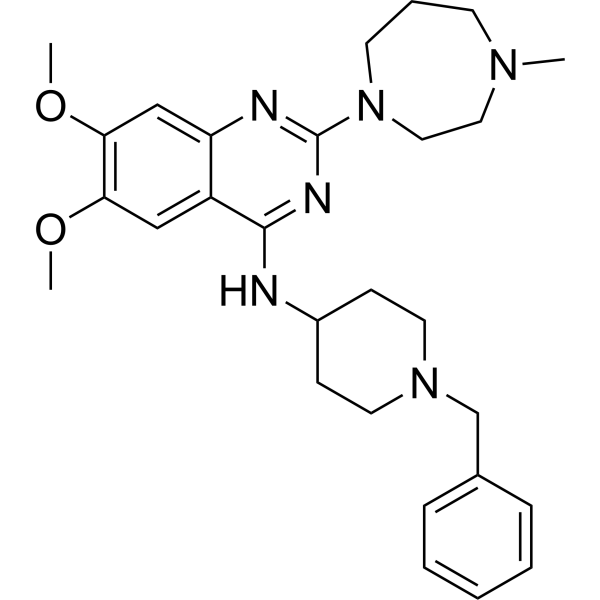
    BIX-01294
    Maximum Cited Publications
    27 Publications Verification

    Histone Methyltransferase Autophagy Cancer
    BIX-01294 is a reversible and highly selective G9a and GLP Histone Methyltransferase inhibitor, with IC50s of of 1.7 μM and 0.9 μM, respectively. BIX-01294 inhibits G9a/GLP by competing for binding with the amino acids N-terminal of the substrate lysine residue. BIX-01294, a (1H-1,4-diazepin-1-yl)-quinazolin-4-yl amine derivative, induces necroptosis and autophagy. BIX-01294 has antitumor activity in recurrent tumor cells .
    BIX-01294
  • HY-114365
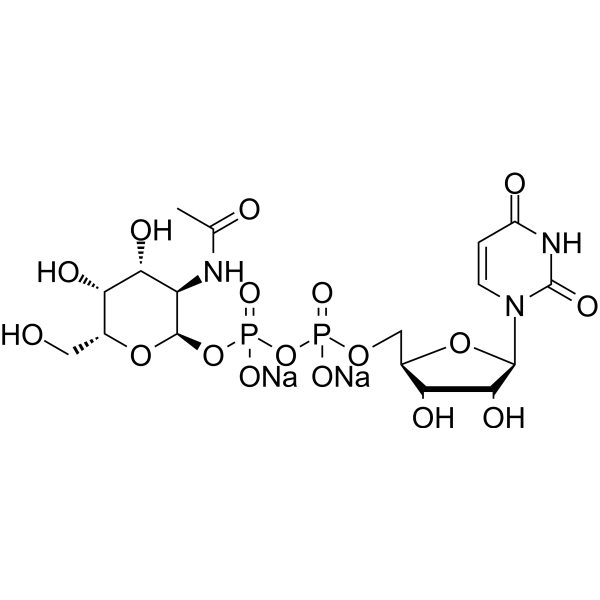
    UDP-GalNAc disodium
    1 Publications Verification

    UDP-N-acetyl-D-galactosamine disodium

    Endogenous Metabolite Metabolic Disease Cancer
    UDP-GalNAc (UDP-N-acetyl-D-galactosamine) disodium is a sugar nucleotide and a substrate for EpsC115. EpsC115 is a mutant with N-terminal residues 1-115 deleted from the exopolymeric substance (EPS). UDP-GalNAc disodium is a donor substrate for many N-acetylgalactosaminyltransferases, which transfer GalNAc from nucleotide sugars to sugar or peptide acceptors. UDP-GalNAc disodium provides a sugar group donor for glycosylation reactions. UDP-GalNAc disodium can be used in cancer research, such as colorectal and breast cancer .
    UDP-GalNAc disodium
  • HY-106723A
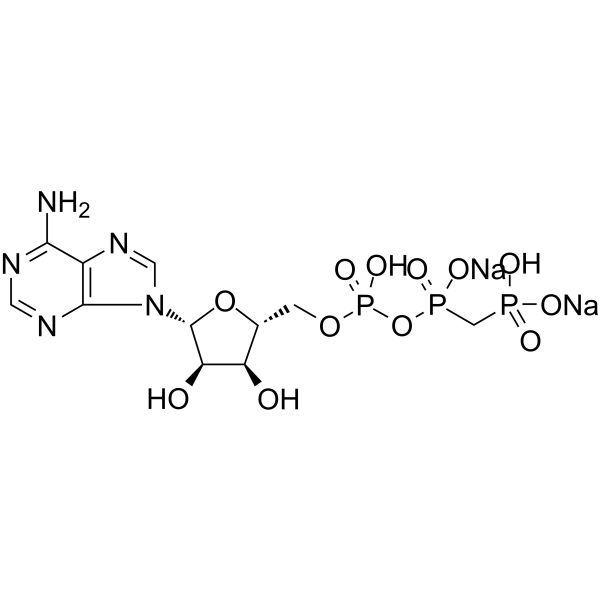
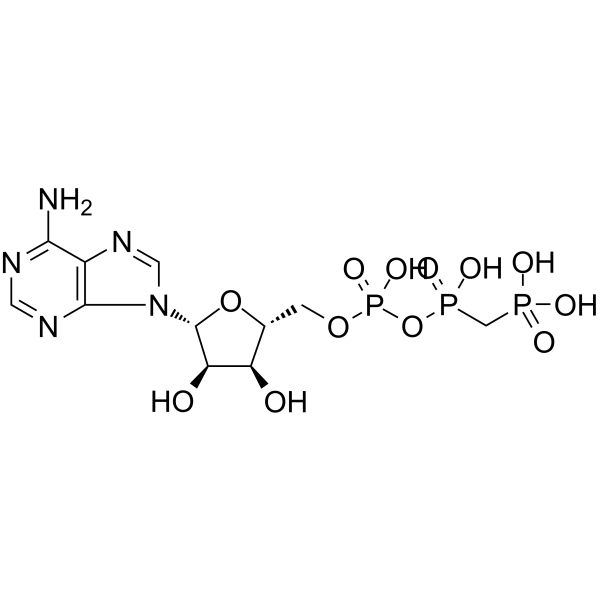
    AMP-PCP disodium
    2 Publications Verification

    HSP Cancer
    AMP-PCP disodium is an ATP analogue and can bind to Hsp90 N-terminal domain with a Kd value of 3.8 μM. AMP-PCP disodium binding favors the formation of the active homodimer of Hsp90 .
    AMP-PCP disodium
  • HY-E70196

    Asp-N

    MMP Others
    Endoproteinase Asp-N (MS grade) is a metalloprotease that can specifically cleave the N-terminal side of aspartyl and cysteic acid residues .
    Endoproteinase Asp-N (MS grade)
  • HY-134222A

    N-Acetyl-L-serine

    Endogenous Metabolite Complement System Others
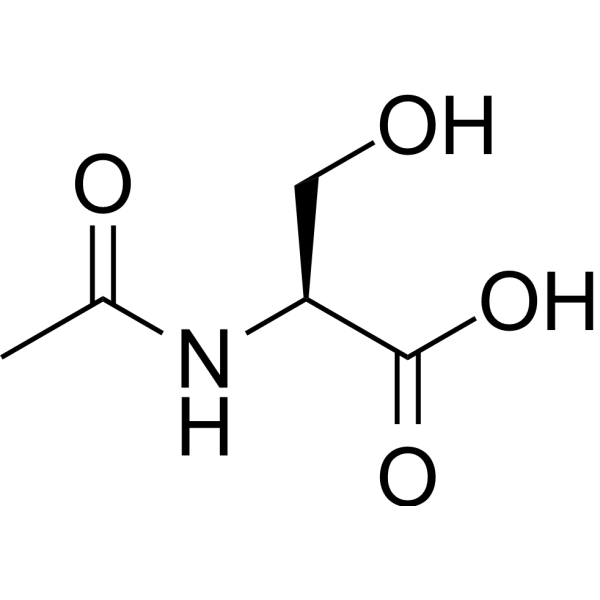
    N-Acetylserine (N-Acetyl-L-serine) is a complement pathway modulator targeting activated third complement protein (C3b) and an amino-terminal residue (an N-terminal acetylation modification group). N-Acetylserine reacts with the exposed thioester group of C3b via its hydroxyl group, thereby blocking the covalent binding of glycerol to this thioester group. N-Acetylserine widely exists in soluble proteins of mammalian cells (accounting for approximately 80% of such proteins). N-Acetylserine has a blocking property that prevents direct Edman sequencing of proteins; deblocking is achievable through trifluoroacetic acid-catalyzed N→O acetyl migration followed by β-elimination. N-Acetylserine is suitable for sequencing of proteins with N-terminal acetylserine modification .
    N-Acetylserine
  • HY-P99399

    RG 6100; RO7105705; MTAU-9937A

    Tau Protein Neurological Disease
    Semorinemab (RG 6100) is an anti-Tau humanized IgG4 monoclonal antibody, targets the N-terminal portion of the Tau protein (amino acid residues 6-23). Semorinemab binds with human Tau with a Kd value of 3.8 nM. Semorinemab can be used for the research of Alzheimer's Disease .
    Semorinemab
  • HY-P4371

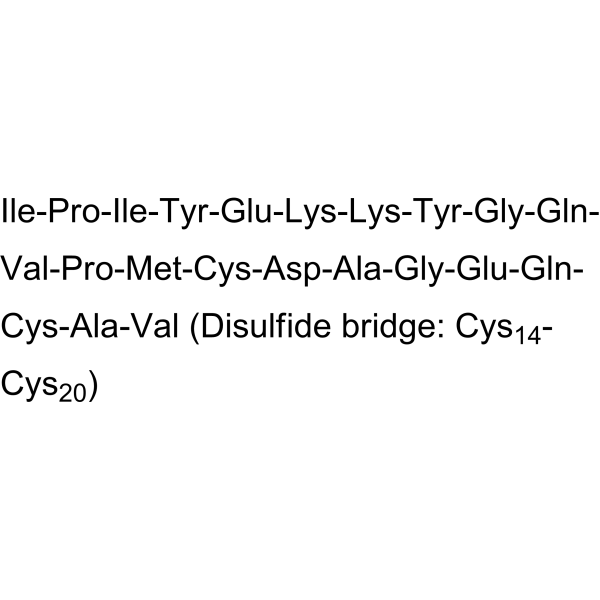
    Biochemical Assay Reagents Inflammation/Immunology
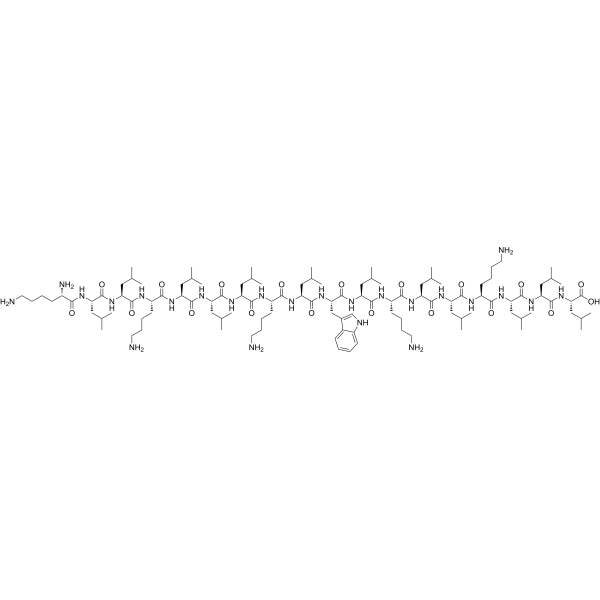
    Hel 13-5 is a monomeric, lipophilic, basic amphipathic α-helical synthetic peptide composed of 18 amino acid residues. Hel 13-5 is designed as a substitute for proteins in artificial pulmonary surfactants, and it mimics the interaction between the N-terminal fragment of human pulmonary surfactant protein B and lipids. Hel 13-5 can bind to phospholipids for the development of pulmonary surfactant model systems. Hel 13-5 can be used in studies related to respiratory distress syndrome .
    Hel 13-5
  • HY-108239
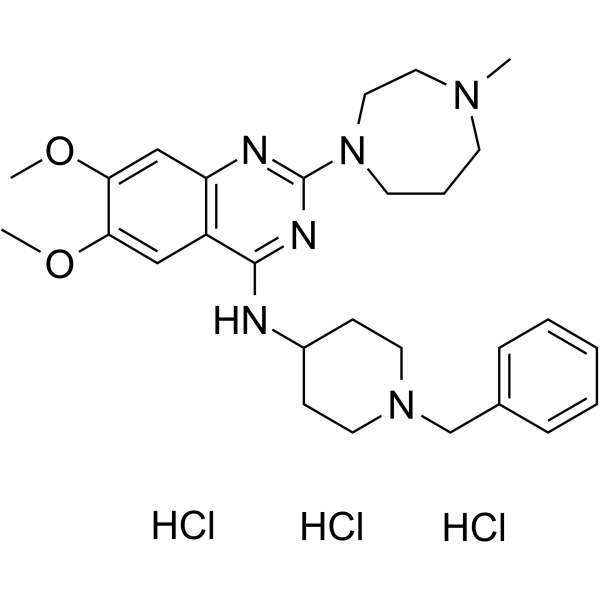
    BIX-01294 trihydrochloride
    Maximum Cited Publications
    27 Publications Verification

    Histone Methyltransferase Autophagy Cancer
    BIX-01294 trihydrochloride is a reversible and highly selective G9a and GLP Histone Methyltransferase inhibitor, with IC50s of of 1.7 μM and 0.9 μM, respectively. BIX-01294 trihydrochloride inhibits G9a/GLP by competing for binding with the amino acids N-terminal of the substrate lysine residue. BIX-01294 trihydrochloride, a (1H-1,4-diazepin-1-yl)-quinazolin-4-yl amine derivative, induces necroptosis and autophagy. BIX-01294 trihydrochloride has antitumor activity in recurrent tumor cells .
    BIX-01294 trihydrochloride
  • HY-P1228

    GCGR Metabolic Disease
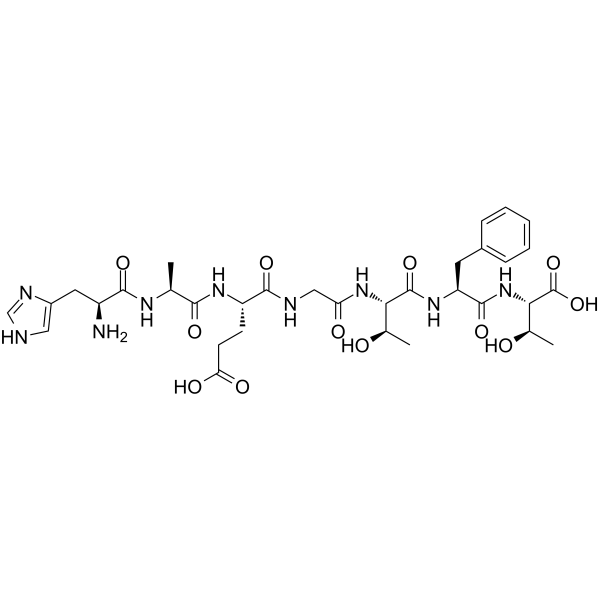
    HAEGTFT is the first N-terminal 1-7 residues of GLP-1 peptide.
    HAEGTFT
  • HY-106723

    HSP Cancer
    AMP-PCP is an ATP analogue and can bind to Hsp90 N-terminal domain with a Kd value of 3.8 μM. AMP-PCP binding favors the formation of the active homodimer of Hsp90 .
    AMP-PCP
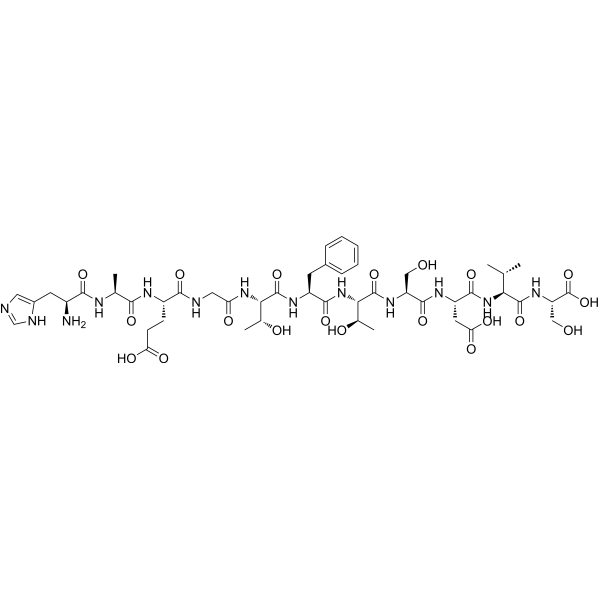
  • HY-P1224

    GCGR Metabolic Disease
    HAEGTFTSDVS is the first N-terminal 1-11 residues of GLP-1 peptide.
    HAEGTFTSDVS
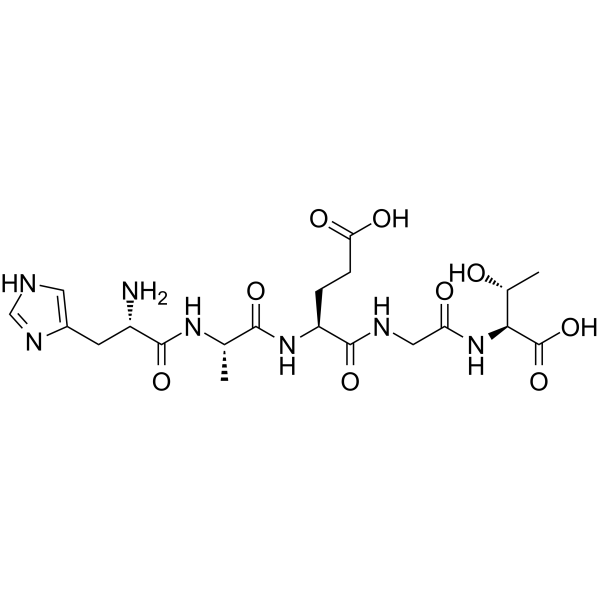
  • HY-P1230

    Dipeptidyl Peptidase GLP Receptor Metabolic Disease
    HAEGT is the first N-terminal 1-5 residues of glucagon like peptide-1 (GLP-1) peptide, and the sequence is His-Ala-Glu-Gly-Thr. HAEGT acts as a competitive substrate for probing prime substrate binding sites of human dipeptidyl peptidase-IV (DPP-IV) 1, in which the N-terminal His-Ala is catalyzed cleavage by DPP-IV. HAEGT can be used in the research of diabetes, obesity .
    HAEGT
  • HY-P3692

    Neuropeptide Y Receptor Neurological Disease
    CART (55-76), rat is a neuropeptide (55-76 residues of the CART peptide) and constitutes the N-terminal fragments of CART (55-102). CART (55-76), rat is a rat satiety factor with potent appetite-suppressing activity and is closely associated with leptin and neuropeptide Y. CART (55-76), rat can induce anxiety and stress-related behavior .
    CART (55-76), rat
  • HY-125564

    Aminopeptidase Others
    Acetyltrialanine is a peptide containing three amino acid residues in which the N-terminal amino acid is acetylated and used as a substrate for Nα-acetyl alanine aminopeptidase in order to study the activity and properties of the enzyme. Acetyltrialanine can be used in the study of protein degradation and N-terminal regulation .
    Acetyltrialanine
  • HY-P1225

    GCGR Metabolic Disease
    {Val1}-Exendin-3/4 is the first N-terminal 1-28 residues of Exendin-4 peptide.
    {Val1}-Exendin-3/4
  • HY-E70128

    Others Others
    Leucyl aminopeptidase, Porcine is a metallopeptidase that cleave N-terminal residues from proteins and peptides. Leucyl aminopeptidase serves as transcriptional repressors to control pyrimidine, alginate and cholera toxin biosynthesis, as well as mediate site-specific recombination events in plasmids and phages .
    Leucyl aminopeptidase, Porcine
  • HY-E70691

    CDK Cancer
    CLK1 is one of the dual specificity kinases and is the founding member of the 'LAMMER' family of kinases. CLK1 activity is positively regulated by phosphorylation on either tyrosine residues or serine/threonine residues, and is negatively regulated by steric constraints mediated by the N-terminal domain, as well as, by phosphorylation on a subset of serine/threonine residues within the catalytic domain. CLK1 Recombinant Human Active Protein Kinase is a recombinant CLK1 protein that can be used to study CLK1-related functions .
    CLK1 Recombinant Human Active Protein Kinase
  • HY-P1854

    Amyloid-β Neurological Disease
    β-Amyloid (1-9), an N-terminal fragment of beta amyloid, consists of amino acid residues 1 to 9. β-Amyloid (1-9) contains a B cell epitope, but it does not include T cell epitopes. Omission of residues 1 to 9 from the full-length Alzheimer'sβ-Amyloid peptide 1 to 40 does not prevent the peptide from forming amyloid fibrils or eliminate fibril polymorphism .
    β-Amyloid (1-9)
  • HY-P2551

    Amyloid-β Neurological Disease
    Biotin-β-Amyloid (17-40) is a N-terminal-labelled biotinylated amyloid-β(1-40) peptide. β-Amyloid (17-40) is a 24-residue fragment of the Aβ protein via post-translational processing of amyloid precursor protein (APP) .
    Biotin-β-Amyloid (17-40)
  • HY-E70934

    Aminopeptidase Metabolic Disease
    Aminopeptidase I, Streptomyces griseus (EC 3.4.11.22), exhibits broad substrate specificity, capable of removing the N-terminal residues of most proteins, except when the penultimate residue is an imino acid. Aminopeptidase I contains two Zn 2+ binding sites.
    Aminopeptidase I, Streptomyces griseus
  • HY-P11765

    Adrenergic Receptor Others
    RESA peptide is a substrate peptide of β-adrenergic receptor kinase (βARK). RESA peptide serves as a substrate for βARK-mediated phosphorylation, and its N-terminal acidic residues enhance phosphorylation efficiency and substrate binding capacity .
    RESA peptide
  • HY-P5423D

    Exosomes Others
    Ahx-GALA-Cys is a GALA peptide (HY-P5423) derivative with an N-terminal 6-aminohexanoic acid (Ahx) linker and a C-terminal cysteine residue. Ahx-GALA-Cys possesses strong covalent coupling capacity, which can be used to conjugate fluorophores and targeting ligands for investigating the surface functionalization of small extracellular vesicles (sEV) and lysosomal escape .
    Ahx-GALA-Cys
  • HY-10587R

    Reference Standards Histone Methyltransferase Autophagy Cancer
    BIX-01294 (Standard) is the analytical standard of BIX-01294 (HY-10587). This product is intended for research and analytical applications. BIX-01294 is a reversible and highly selective G9a and GLP Histone Methyltransferase inhibitor, with IC50s of of 1.7 μM and 0.9 μM, respectively. BIX-01294 inhibits G9a/GLP by competing for binding with the amino acids N-terminal of the substrate lysine residue. BIX-01294, a (1H-1,4-diazepin-1-yl)-quinazolin-4-yl amine derivative, induces necroptosis and autophagy. BIX-01294 has antitumor activity in recurrent tumor cells .
    BIX-01294 (Standard)
  • HY-108239R

    Reference Standards Histone Methyltransferase Autophagy Cancer
    BIX-01294 trihydrochloride (Standard) is the analytical standard of BIX-01294 (trihydrochloride) (HY-108239). This product is intended for research and analytical applications. BIX-01294 trihydrochloride is a reversible and highly selective G9a and GLP Histone Methyltransferase inhibitor, with IC50s of of 1.7 μM and 0.9 μM, respectively. BIX-01294 trihydrochloride inhibits G9a/GLP by competing for binding with the amino acids N-terminal of the substrate lysine residue. BIX-01294 trihydrochloride, a (1H-1,4-diazepin-1-yl)-quinazolin-4-yl amine derivative, induces necroptosis and autophagy. BIX-01294 trihydrochloride has antitumor activity in recurrent tumor cells .
    BIX-01294 trihydrochloride (Standard)
  • HY-138169

    Drug Derivative Biochemical Assay Reagents Others
    Fmoc-Dap (Mtt)-OH is an Fmoc-protected derivative of 2,3-diaminopropionic acid (HY-113379). Fmoc-Dap (Mtt)-OH is applicable for polypeptide synthesis .
    Fmoc-Dap(Mtt)-OH
  • HY-177192

    DMPS

    Biochemical Assay Reagents Others
    1,2-Dimyristoyl-sn-glycero-3-phosphoserine (DMPS) is an anionic, negatively charged phosphatidylserine phospholipid. 1,2-Dimyristoyl-sn-glycero-3-phosphoserine acts as an internal standard for liquid chromatography/mass spectrometry analyses .
    1,2-Dimyristoyl-sn-glycero-3-phosphoserine

Inquiry Online

Your information is safe with us. * Required Fields.

Salutation


Country or Region *

Applicant Name *


Organization Name *

Department *


Email Address *


Product Name *

Cat. No.


Requested quantity *

Phone Number *


Remarks

Inquiry Online

Inquiry Information

Product Name:
Cat. No.:
Quantity:
MCE Japan Authorized Agent:

