16 Results for "

NAD+ depletion

" in MedChemExpress (MCE) Product Catalog:
Products (16)

16 Results for "NAD+ depletion" in MCE Product Catalog:

67
67 Publications Verification
Cat. No.: HY-50876
CAS No.: 658084-64-1
Synonyms: FK866; APO866
Research Areas:  

Cancer

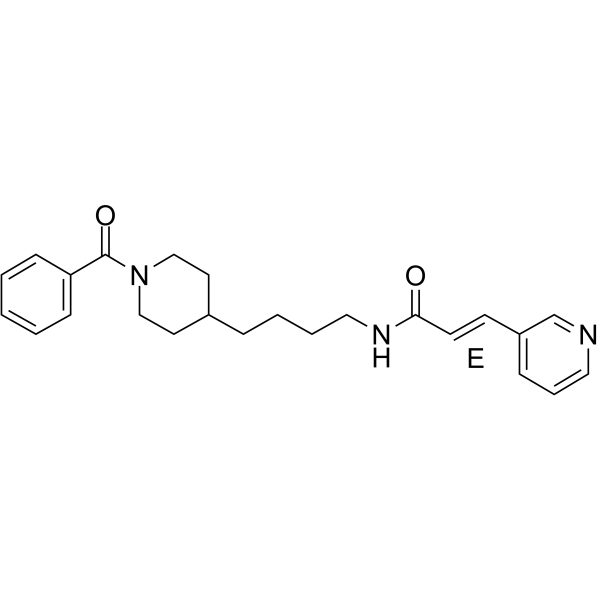
Daporinad (FK866) is a non-competitive inhibitor of nicotinamide phosphoribosyltransferase (Nampt), with a Ki value of 0.3 nM. Daporinad depletes NAD+ and ATP levels, inhibits mTORC1 and MAPK/ERK pathways, and activates TFEB to induce autophagy. Daporinad causes the depletion of the endoplasmic reticulum Ca²⁺ pool, ultimately weakening the mitogen-induced Ca²⁺ signal and the activation and function of T cells. Daporinad induces cell cycle arrest and apoptosis, and inhibits cell proliferation. Daporinad can be used for the study of myeloma, liver cancer, and immunosuppression .
loading...
    loading...
2
2 Cited Publications
Cat. No.: HY-12628
CAS No.: 1362151-42-5
Purity:  99.89%
Target:  

NAMPT

Research Areas:  

Cancer

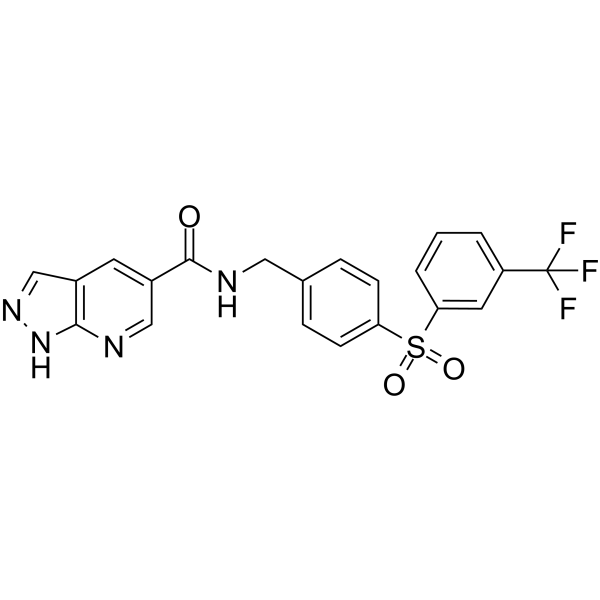
GNE-618 is a potent, orally active nicotinamide phosphoribosyl transferase (NAMPT) inhibitor with an IC50 of 6 nM. GNE-618 depletes NAD levels and induces tumor cell death. Anti-tumor activity .
loading...
    loading...
1
1 Cited Publications
Cat. No.: HY-W614507
CAS No.: 19132-12-8
Research Areas:  

Metabolic Disease Cancer

Dihydronicotinamide riboside is a potent NAD + concentration enhancer. Dihydronicotinamide riboside modulates targets BAX, PUMA, NQO2, and IκB kinase. Dihydronicotinamide riboside mediates apoptosis, induces pro-oxidant activity, mitochondrial dysfunction, metabolic dysregulation, redox modulation, and pro-inflammatory M1 phenotype induction. Dihydronicotinamide riboside increases intracellular and mitochondrial NAD + levels, maintains cell survival against NAD +-depleting genotoxins. Dihydronicotinamide riboside can be used for the research of hepatocellular carcinoma .
loading...
    loading...
1
1 Cited Publications
Cat. No.: HY-170620
Target:  

PROTACs PARP

Research Areas:  

Cancer

PARP1 PROTAC 180055 is a PARP1 PROTAC degrader that recruits VHL, with DC50 values of 180 nM and 240 nM in T47D and MDA-MB-231 cells, respectively. PARP1 PROTAC 180055 selectively kills BRCA-mutant tumor cells by inducing PARP1 ubiquitination and proteasomal degradation, thereby blocking PARylation, NAD + depletion and DNA trapping. PARP1 PROTAC 180055 can be used in the research of breast cancer, ovarian cancer, colorectal cancer, acute T-lymphoblastic leukemia, prostate cancer and osteosarcoma .
loading...
    loading...
1
1 Cited Publications
Cat. No.: HY-14374
CAS No.: 1202580-59-3
Purity:  ≥99.0%
Synonyms: CAY10618
Target:  

NAMPT Autophagy

Research Areas:  

Inflammation/Immunology Cancer

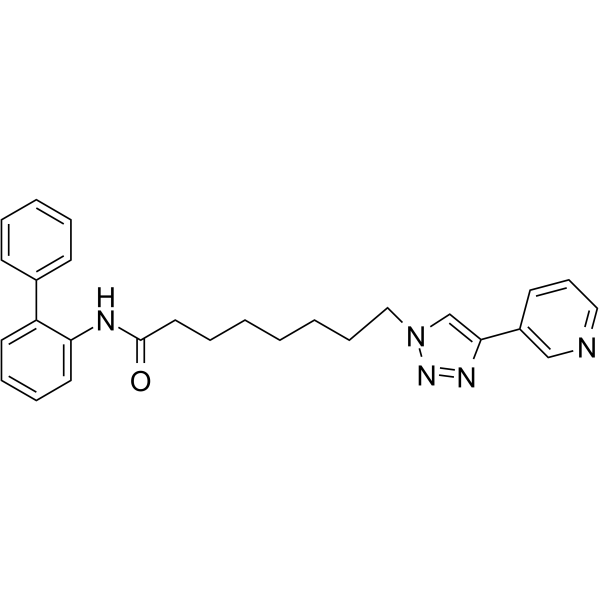
GPP78 (CAY10618) is a potent Nampt inhibitor with an IC50 of 3.0 nM for nicotinamide adenine dinucleotide (NAD) depletion. GPP78 is cytotoxic to neuroblastoma cell line SH-SY5Y cells with an IC50 of 3.8 nM by inducing autophagy. GPP78 has anti-cancer and anti-inflammatory effects .
loading...
    loading...
Cat. No.: HY-178159
CAS No.: 2244341-81-7
Target:  

RNA MTase

Research Areas:  

Inflammation/Immunology

SA91-0178 is a METTL1 inhibitor. SA91-0178 inhibits m 7G methylation of RNA, reduces SARM1 stability, mitigates NAD + depletion and metabolic reprogramming in macrophages. SA91-0178 demonstrates excellent protective efficacy against multiple organ injury in cecal ligation and puncture (CLP)-induced and ischemia/reperfusion (I/R)-induced mice. SA91-0178 can be used for the study of systemic inflammatory diseases .
loading...
    loading...
Cat. No.: HY-173679
CAS No.: 2569517-30-0
Research Areas:  

Infection Cancer

RBN012811 is a highly selective PROTAC-based PARP14 degrader. RBN012811 forms a ternary complex with cereblon by binding to the NAD + site of PARP14, and mediates the specific degradation of PARP14 via the ubiquitin-proteasome pathway (IC50=10 nM). RBN012811 effectively depletes endogenous PARP14 in various cell lines and primary human macrophages, thereby downregulating IL-10 production and IFN-β mRNA levels, increasing phosphorylated STAT1 levels to enhance inflammatory signaling, and inhibiting interferon-induced ADPr condensate formation. RBN012811 also modulates viral replication, exhibiting increased HSV1 replication while reducing VSV replication. RBN012811 has important application value in research related to cancer and viral infections .
loading...
    loading...
Cat. No.: HY-125147
CAS No.: 1375557-33-7
Target:  

NAMPT

Research Areas:  

Cancer

A-1293201 is a substrate-independent NAMPT inhibitor with antitumor activity. A-1293201 effectively reduces the total cellular NAD +/NADH (NADt) level, subsequently leading to ATP depletion and cancer cell death. In addition, A-1293201 can effectively overcome the acquired resistance mechanism of the NAMPT Y18 mutant to CHS-828 (HY-10079) .
loading...
    loading...
Cat. No.: HY-110319
CAS No.: 1785666-54-7
Synonyms: (E/Z)-FK866 hydrochloride; (E/Z)-APO866 hydrochloride
Target:  

NAMPT Apoptosis

Research Areas:  

Inflammation/Immunology Cancer

(E/Z)-Daporinad hydrochloride ((E/Z)-FK866 hydrochloride) is a potent inhibitor of nicotinamide phosphoribose transferase (NAMPT). (E/Z)-Daporinad hydrochloride induces apoptosis by specifically inhibiting NAMPT to gradually deplete intracellular NAD +. (E/Z)-Daporinad hydrochloride can be used in the study of cancer biology and inflammatory diseases .
loading...
    loading...
Cat. No.: HY-50876A
CAS No.: 2727965-45-7
Synonyms: FK866 hydrochloride; APO866 hydrochloride
Daporinad (FK866) hydrochloride is a non-competitive inhibitor of nicotinamide phosphoribosyltransferase (Nampt), with a Ki value of 0.3 nM. Daporinad hydrochloride depletes NAD+ and ATP levels, inhibits mTORC1 and MAPK/ERK pathways, and activates TFEB to induce autophagy. Daporinad hydrochloride causes the depletion of the endoplasmic reticulum Ca²⁺ pool, ultimately weakening the mitogen-induced Ca²⁺ signal and the activation and function of T cells. Daporinad hydrochloride induces cell cycle arrest and apoptosis, and inhibits cell proliferation. Daporinad hydrochloride can be used for the study of myeloma, liver cancer, and immunosuppression .
loading...
    loading...
Cat. No.: HY-181578
CAS No.: 3077970-78-3
Target:  

NAMPT Apoptosis

Research Areas:  

Cancer

Nampt-IN-17 is an selective orally active NAMPT inhibitor with a human NAMPT IC50 of 17 nM and Ki of 25.9 nM. Nampt-IN-17 depletes intracellular NAD + and ATP, disrupts mitochondrial membrane potential, suppresses cell proliferation, self-renewal, invasion, and migration, induces cell-cycle arrest and apoptosis. Nampt-IN-17 exhibits selective activity against NAPRT-deficient gastric cancer cells. Nampt-IN-17 can be used for the research of NAPRT-deficient gastric cancer .
loading...
    loading...
Cat. No.: HY-184246
CAS No.: 2791469-19-5
Target:  

NAMPT

Research Areas:  

Neurological Disease

SR-34831 is a NAMPT activator, NAD level stabilizer and neuroprotective agent. SR-34831 enhances the enzymatic activity of human NAMPT, prevents intracellular NAD depletion, and counteracts neuronal death induced by toxic misfolded prion proteins. SR-34831 exhibits metabolic stability in human liver microsomes and can be used for the research of protein misfolding neurodegenerative diseases .
loading...
    loading...
Cat. No.: HY-184247
CAS No.: 2791469-14-0
Target:  

NAMPT

SR-32685 is a NAMPT activator and neuroprotective agent. SR-32685 enhances the enzymatic activity of hNAMPT, prevents intracellular NAD depletion, and protects neurons from death induced by toxic misfolded prion proteins. SR-32685 can be used in the research of protein misfolding neurodegenerative diseases and metabolic diseases .
loading...
    loading...
Cat. No.: HY-50876R
CAS No.: 658084-64-1
Synonyms: FK866 (Standard); APO866 (Standard)
Daporinad (Standard) is the analytical standard of Daporinad (HY-50876). This product is intended for research and analytical applications. Daporinad (FK866) is a non-competitive inhibitor of nicotinamide phosphoribosyltransferase (Nampt), with a Ki value of 0.3 nM. Daporinad depletes NAD+ and ATP levels, inhibits mTORC1 and MAPK/ERK pathways, and activates TFEB to induce autophagy. Daporinad causes the depletion of the endoplasmic reticulum Ca²⁺ pool, ultimately weakening the mitogen-induced Ca²⁺ signal and the activation and function of T cells. Daporinad induces cell cycle arrest and apoptosis, and inhibits cell proliferation. Daporinad can be used for the study of myeloma, liver cancer, and immunosuppression .
loading...
    loading...
Cat. No.: HY-184396
GR2-128 is a dual inhibitor targeting MLK3 and NAMPT with IC50 values of 84 nM and 14 nM, respectively. GR2-128 inhibits downstream JNK/c‑Jun signaling and reduces NAD + levels. GR2-128 exhibits antiproliferative and pro-apoptotic activities in triple-negative breast cancer cells without significant toxicity to normal cells. GR2-128 suppresses tumor growth, reduces macrophage and neutrophil infiltration, and increases tumor T-cell markers in a syngeneic mouse model, and can be used for triple-negative breast cancer research .
loading...
    loading...
Cat. No.: HY-184918
CAS No.: 3097045-01-4
Target:  

PD-1/PD-L1 NAMPT

Research Areas:  

Cancer

NAMPT/PD-1/PD-L1-IN-1 is a potent the PD-1/PD-L1 interaction and NAMPT dual inhibitor with IC50s of 7.5 nM and 18.8 nM, respectively. NAMPT/PD-1/PD-L1-IN-1 enhances T cell-mediated tumor cell killing, promotes T cell proliferation and CD8 + T cell proportion and depletes intracellular NAD + biosynthesis. NAMPT/PD-1/PD-L1-IN-1 suppresses tumor progression in a mouse LLC xenograft model by disrupting tumor metabolism and activating the tumor immune microenvironment. NAMPT/PD-1/PD-L1-IN-1 can be used in research on tumor immunotherapy for non-small cell lung cancer .
loading...
    loading...
  • 1

