
23 Results for "

Primary sclerosing cholangitis

" in MedChemExpress (MCE) Product Catalog:
Products (23)

23 Results for "Primary sclerosing cholangitis" in MCE Product Catalog:

11
11 Publications Verification
Cat. No.: HY-109083
CAS No.: 1418274-28-8
Purity:  99.10%
Synonyms: GS-9674
Target:  

FXR Autophagy

Research Areas:  

Inflammation/Immunology

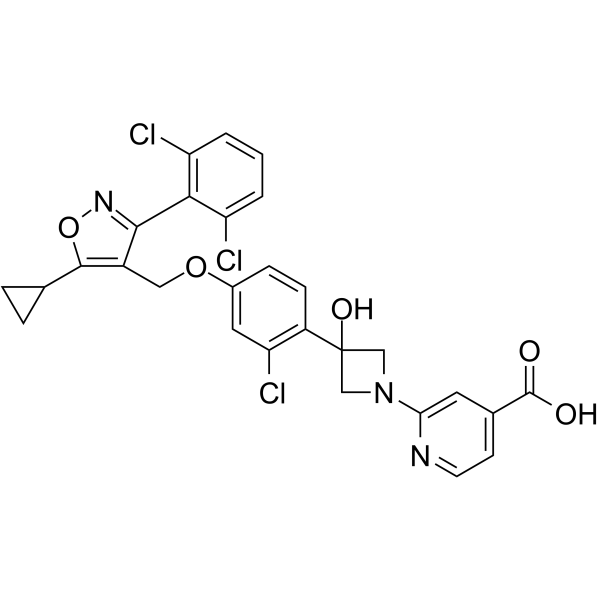
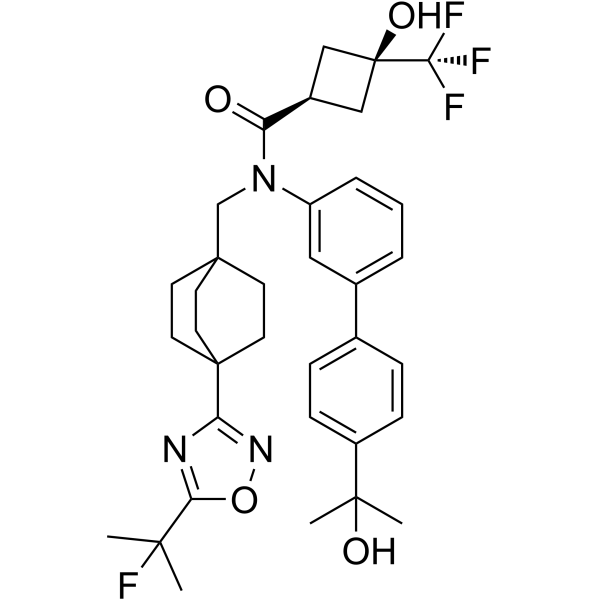
Cilofexor (GS-9674) is a potent, selective and orally active nonsteroidal FXR agonist with an EC50 of 43 nM. Cilofexor has anti-inflammatory and antifibrotic effects. Cilofexor has the potential for primary sclerosing cholangitis (PSC) and nonalcoholic steatohepatitis (NASH) research .
loading...
    loading...
9
9 Cited Publications
Cat. No.: HY-N2334
CAS No.: 640-79-9
Synonyms: Chenodeoxycholylglycine
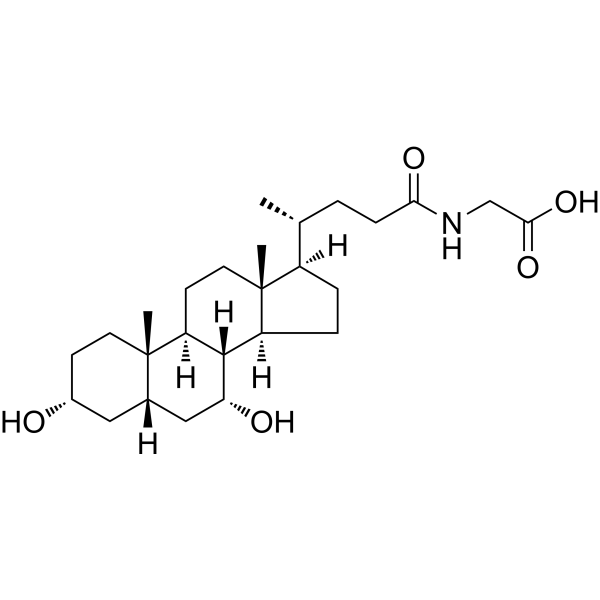
Glycochenodeoxycholic acid (Chenodeoxycholylglycine) is a relatively toxic bile salt generated in the liver from chenodeoxycholic acid and glycine. Glycochenodeoxycholic acid inhibits Autophagosome formation and impairs lysosomal function by inhibiting lysosomal proteolysis and increasing lysosomal pH in human normal liver cells, leading to the Apoptosis of human hepatocyte cells. Glycochenodeoxycholic acid induces stemness and chemoresistance via activating STAT3 signaling pathway in hepatocellular carcinoma cells (HCC). Glycochenodeoxycholic acid is promising for research in the field of cholestasis desease, hepatocellular carcinoma and primary sclerosing cholangitis (PSC) .
loading...
    loading...
9
9 Cited Publications
Cat. No.: HY-N2334A
CAS No.: 16564-43-5
Synonyms: Chenodeoxycholylglycine sodium salt; Sodium glycochenodeoxycholate
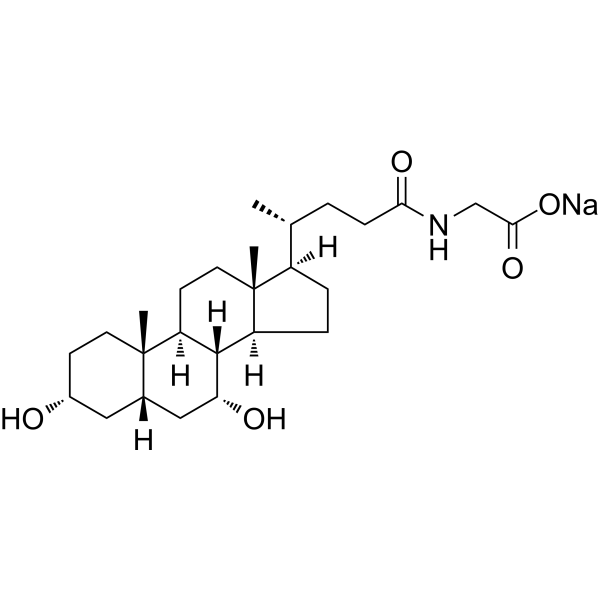
Glycochenodeoxycholic acid sodium salt (Sodium glycochenodeoxycholate) is a relatively toxic bile salt generated in the liver from chenodeoxycholic acid and glycine. Glycochenodeoxycholic acid sodium salt inhibits Autophagosome formation and impairs lysosomal function by inhibiting lysosomal proteolysis and increasing lysosomal pH in human normal liver cells, leading to the Apoptosis of human hepatocyte cells. Glycochenodeoxycholic acid sodium salt induces stemness and chemoresistance via activating STAT3 signaling pathway in hepatocellular carcinoma cells (HCC). Glycochenodeoxycholic acid sodium salt is promising for research in the field of cholestasis desease, hepatocellular carcinoma and primary sclerosing cholangitis (PSC) .
loading...
    loading...
3
3 Cited Publications
Cat. No.: HY-116374
CAS No.: 474-74-8
Purity:  99.90%
Synonyms: Lithocholylglycine
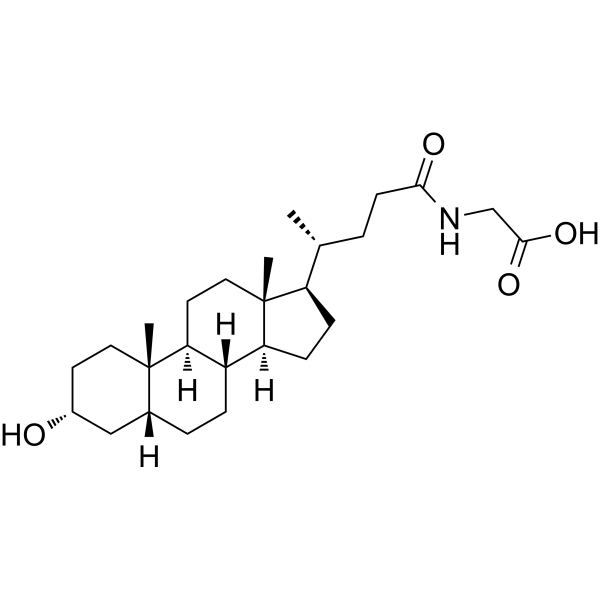
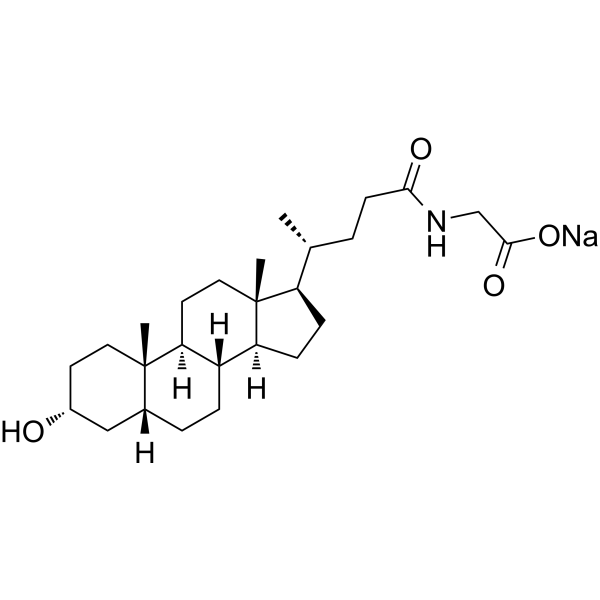
Glycolithocholic acid (Lithocholylglycine), an endogenous metabolite, is a glycine-conjugated secondary bile acid. Glycolithocholic acid can be used to diagnose ulcerative colitis (UC), non-alcoholic steatohepatitis (NASH) and primary sclerosing cholangitis (PSC) .
loading...
    loading...
3
3 Cited Publications
Cat. No.: HY-116374A
CAS No.: 24404-83-9
Purity:  ≥98.0%
Synonyms: Lithocholylglycine sodium
Target:  

Endogenous Metabolite

Research Areas:  

Metabolic Disease

Glycolithocholic acid (Lithocholylglycine) sodium is the sodium salt of Glycolithocholic acid. Glycolithocholic acid is a glycine-conjugated secondary bile acid. Glycolithocholic acid can be used to diagnose ulcerative colitis (UC), non-alcoholic steatohepatitis (NASH) and primary sclerosing cholangitis (PSC) .
loading...
    loading...
Cat. No.: HY-P990116

Target:  

Osteopontin

Research Areas:  

Inflammation/Immunology

Anti-Mouse osteopontin/SPP1 Antibody (103D6) is a mouse-derived anti-mouse osteopontin/SPP1 IgG2c κ type antibody inhibitor. Anti-Mouse osteopontin/SPP1 Antibody (103D6) increases cytotoxic T lymphocyte lytic activity and suppresses colon tumor growth. Anti-Mouse osteopontin/SPP1 Antibody (103D6) ameliorates liver injury in common bile duct ligation (CBDL)-induced primary sclerosing cholangitis mice models .
loading...
    loading...
Cat. No.: HY-160929
CAS No.: 2765593-43-7
Synonyms: CS-0159
Target:  

FXR

Research Areas:  

Inflammation/Immunology

Linafexor (CS-0159) is a FXR agonist and bile acid homeostasis modulator. Linafexor exerts its effects by activating FXR, a regulator of liver function. Linafexor is applicable to research related to primary sclerosing cholangitis (PSC). Linafexor is also suitable for research in the field of metabolic dysfunction-associated steatohepatitis (MASH) .
loading...
    loading...
Cat. No.: HY-P99047
CAS No.: 1318075-13-6
Synonyms: AB 0024; GS 6624
Simtuzumab (AB 0024; GS 6624) is a monoclonal antibody directed against Lysyl oxidase like-2 (LOXL2). Simtuzumab non-competitively blocks collagen cross-linking, reduces LOXL2 protein expression and attenuates extracellular matrix changes. Simtuzumab reduces myocardial fibrosis and prevents cardiac dysfunction. Simtuzumab lowers Myh7 and Nppa gene expression, reduces contraction heterogeneity, and cuts COL1A1 deposition. Simtuzumab can be used for the research of LMNA mutation-induced dilated cardiomyopathy, idiopathic pulmonary fibrosis, and primary sclerosing cholangitis .
loading...
    loading...
Cat. No.: HY-148795
CAS No.: 2460667-52-9
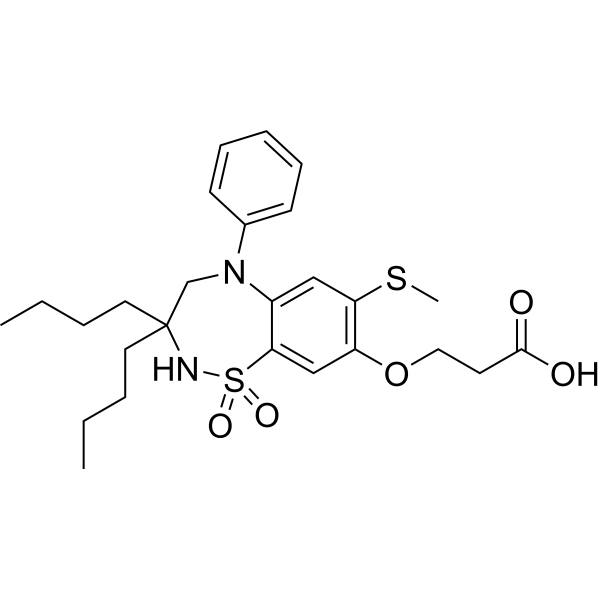
Ritivixibat is an apical sodium-dependent bile acid transporter (ASBT/IBAT) inhibitor. Ritivixibat blocks ASBT/IBAT function, thereby reducing bile acid reabsorption, regulating bile acid homeostasis and alleviating liver injury. Ritivixibat protects cholangiocytes from damage caused by cytotoxic bile acids. Ritivixibat is applicable to research related to primary sclerosing cholangitis .
loading...
    loading...
Cat. No.: HY-N2334AR
CAS No.: 16564-43-5
Synonyms: Chenodeoxycholylglycine sodium salt (Standard); Sodium glycochenodeoxycholate (Standard)
Glycochenodeoxycholic acid sodium salt (Standard) is the analytical standard of Glycochenodeoxycholic acid sodium salt. This product is intended for research and analytical applications. Glycochenodeoxycholic acid sodium salt (Sodium glycochenodeoxycholate) is a relatively toxic bile salt generated in the liver from chenodeoxycholic acid and glycine. Glycochenodeoxycholic acid sodium salt inhibits Autophagosome formation and impairs lysosomal function by inhibiting lysosomal proteolysis and increasing lysosomal pH in human normal liver cells, leading to the Apoptosis of human hepatocyte cells. Glycochenodeoxycholic acid sodium salt induces stemness and chemoresistance via activating STAT3 signaling pathway in hepatocellular carcinoma cells (HCC). Glycochenodeoxycholic acid sodium salt is promising for research in the field of cholestasis desease, hepatocellular carcinoma and primary sclerosing cholangitis (PSC) .
loading...
    loading...
Cat. No.: HY-N2334R
CAS No.: 640-79-9
Synonyms: Chenodeoxycholylglycine (Standard)
Glycochenodeoxycholic acid (Standard) is the analytical standard of Glycochenodeoxycholic acid. This product is intended for research and analytical applications. Glycochenodeoxycholic acid (Chenodeoxycholylglycine) is a relatively toxic bile salt generated in the liver from chenodeoxycholic acid and glycine. Glycochenodeoxycholic acid inhibits Autophagosome formation and impairs lysosomal function by inhibiting lysosomal proteolysis and increasing lysosomal pH in human normal liver cells, leading to the Apoptosis of human hepatocyte cells. Glycochenodeoxycholic acid induces stemness and chemoresistance via activating STAT3 signaling pathway in hepatocellular carcinoma cells (HCC). Glycochenodeoxycholic acid is promising for research in the field of cholestasis desease, hepatocellular carcinoma and primary sclerosing cholangitis (PSC)[1][2][3][4].
loading...
    loading...
Cat. No.: HY-116374S
CAS No.: 2044276-16-4
Purity:  98.38%
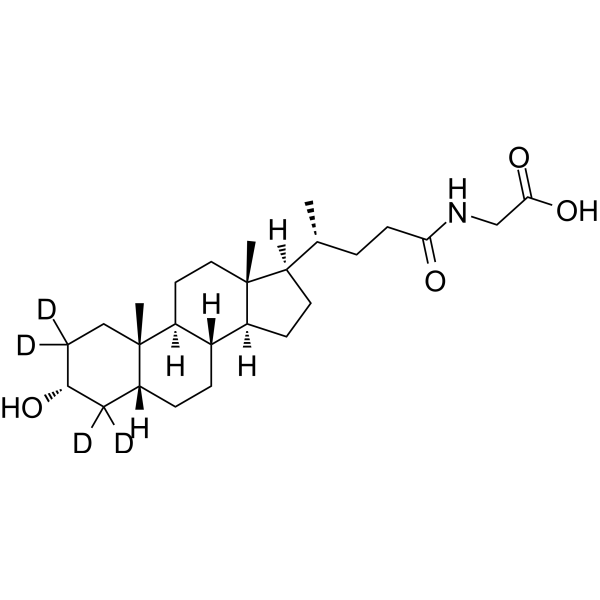
Glycolithocholic acid-d4 is the deuterium labeled Glycolithocholic acid. Glycolithocholic acid, an endogenous metabolite, is a glycine-conjugated secondary bile acid and can be used to diagnose ulcerative colitis (UC), non-alcoholic steatohepatitis (NASH) and primary sclerosing cholangitis (PSC) .
loading...
    loading...
Cat. No.: HY-116374R
CAS No.: 474-74-8
Synonyms: Lithocholylglycine (Standard)
Glycolithocholic acid (Standard) is the analytical standard of Glycolithocholic acid. This product is intended for research and analytical applications. Glycolithocholic acid (Lithocholylglycine), an endogenous metabolite, is a glycine-conjugated secondary bile acid. Glycolithocholic acid can be used to diagnose ulcerative colitis (UC), non-alcoholic steatohepatitis (NASH) and primary sclerosing cholangitis (PSC) .
loading...
    loading...
Cat. No.: HY-137561A
CAS No.: 2775365-40-5
Synonyms: PLN-74809 hydrochloride
Target:  

Integrin

Research Areas:  

Inflammation/Immunology

Bexotegrast hydrochloride (PLN-74809 hydrochloride) is a small molecule dual selective inhibitor with activity targeting αVβ1 and αVβ6. Bexotegrast hydrochloride is used for idiopathic pulmonary fibrosis (IPF) and primary sclerosing cholangitis (PSC). Bexotegrast hydrochloride inhibits the activation of TGF-β1 by blocking the function of these integrins, thereby preventing the growth of fibrous tissue in the lungs and bile ducts .
loading...
    loading...
Cat. No.: HY-150787
CAS No.: 2477873-64-4
Target:  

FXR Cytochrome P450

Research Areas:  

Metabolic Disease

BMS-986339 is an orally active, potent FXR agonist. BMS-986339 forms H-bond with His298 and ASN287 residues. BMS-986339 can be used in the research of primary biliary cirrhosis (PBC), primary sclerosing cholangitis (PSC), and nonalcoholic steatohepatitis (NASH), anti-fibrosis .
loading...
    loading...
Cat. No.: HY-W750488
Synonyms: Lithocholylglycine-d5
Glycolithocholic acid-d5 (Lithocholylglycine-d5) is the deuterium labeled Glycolithocholic acid (HY-116374). Glycolithocholic acid (Lithocholylglycine), an endogenous metabolite, is a glycine-conjugated secondary bile acid. Glycolithocholic acid can be used to diagnose ulcerative colitis (UC), non-alcoholic steatohepatitis (NASH) and primary sclerosing cholangitis (PSC) .
loading...
    loading...
Cat. No.: HY-109083A
CAS No.: 2253764-93-9
Synonyms: GS-9674 tromethamine
Target:  

Autophagy FXR

Research Areas:  

Metabolic Disease

Cilofexor tromethamine (GS-9674 tromethamine) is a nonsteroidal farnesene oxide receptor agonist with activity in improving markers of cholestasis and liver injury. Cilofexor tromethamine was shown to be well tolerated in patients without cirrhosis and resulted in significant improvements in liver biochemical parameters and cholestatic markers. Cilofexor tromethamine offers a potential inhibitory option for the management of primary sclerosing cholangitis .
loading...
    loading...
Cat. No.: HY-138813R
Synonyms: SU-12662 hydrochloride (Standard)
Research Areas:  

Cancer

Glycochenodeoxycholic acid sodium salt (Standard) is the analytical standard of Glycochenodeoxycholic acid sodium salt. This product is intended for research and analytical applications. Glycochenodeoxycholic acid sodium salt (Sodium glycochenodeoxycholate) is a relatively toxic bile salt generated in the liver from chenodeoxycholic acid and glycine. Glycochenodeoxycholic acid sodium salt inhibits Autophagosome formation and impairs lysosomal function by inhibiting lysosomal proteolysis and increasing lysosomal pH in human normal liver cells, leading to the Apoptosis of human hepatocyte cells. Glycochenodeoxycholic acid sodium salt induces stemness and chemoresistance via activating STAT3 signaling pathway in hepatocellular carcinoma cells (HCC). Glycochenodeoxycholic acid sodium salt is promising for research in the field of cholestasis desease, hepatocellular carcinoma and primary sclerosing cholangitis (PSC) .
loading...
    loading...
Cat. No.: HY-189393
CAS No.: 3089177-97-6
Target:  

P-glycoprotein

Research Areas:  

Inflammation/Immunology

RTY-406 is an orally active ABCB4/MDR3 and ABCB11/BSEP positive modulator. RTY-406 increases ABCB4/MDR3 and ABCB11/BSEP protein levels and functional output, elevates biliary phospholipid levels, enhances bile acid efflux, increases bile flow and micelle formation, reduces hepatic bile acids, and promotes cholesterol-to-bile-acid conversion. RTY-406 does not induce hepatocellular injury, maintains normal serum alanine transaminase and aspartate aminotransferase levels, and shows a favorable safety profile in cynomolgus monkeys. RTY-406 can be used for the research of primary sclerosing cholangitis and cholestasis .
loading...
    loading...
Cat. No.: HY-180131
CAS No.: 1312993-34-2
Synonyms: ASB17061
Target:  

Proteasome

Research Areas:  

Inflammation/Immunology

INVA8001 (ASB17061) is a highly selective and orally active chymase inhibitor with IC50 values for human chymase and mouse mast cell proteinase 4 (mMCP-4) of 0.02 and 0.03 μM, respectively. INVA8001 exhibits IC50 values for bovine α-chymotrypsin and human cathesin G of 3.4 and 32.1 μM, respectively, and it shows over 1000-fold selectivity for other related serine proteases. INVA8001 inhibits mast cells in a mouse primary sclerosing cholangitis (PSC) model, improves bile duct pathology, and alleviates bile stasis, demonstrating anti-inflammatory and anti-fibrotic effects .
loading...
    loading...

