



Glycolithocholic acid sodium
Based on 3 publication(s) in Google Scholar
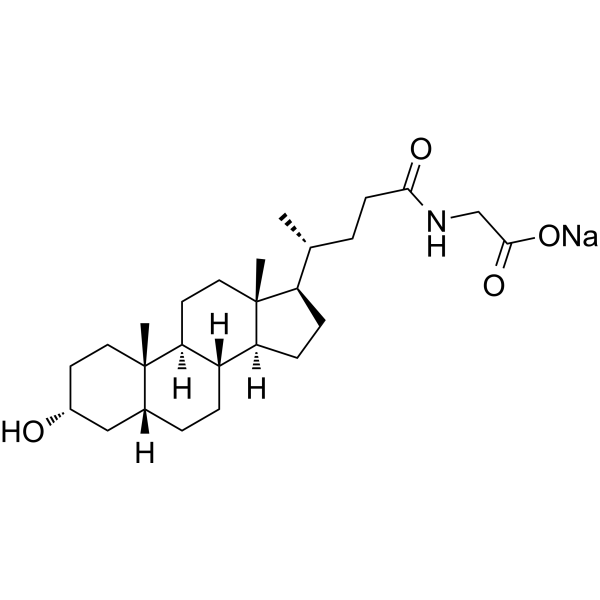
Glycolithocholic acid (Lithocholylglycine) sodium is the sodium salt of Glycolithocholic acid. Glycolithocholic acid is a glycine-conjugated secondary bile acid. Glycolithocholic acid can be used to diagnose ulcerative colitis (UC), non-alcoholic steatohepatitis (NASH) and primary sclerosing cholangitis (PSC).
For research use only. We do not sell to patients.
- Purity : 98.0%
- CAS No.: 24404-83-9
- Formula: C26H42NNaO4
- Molecular Weight:455.61
-
Storage:Powder -20°C, 3 years , 4°C, 2 years ; In solvent -80°C, 6 months , -20°C, 1 month

To place orders, for customer services and technical support, please contact: MedChemExpress USA
Tel: 609-228-6898 E-mail: [email protected] [email protected]


-
 Biological Activity
-
Chemical Information
-
Solvent & Solubility
- Protocols
- Purity & Documentation
- References
-
 Help & FAQs


-
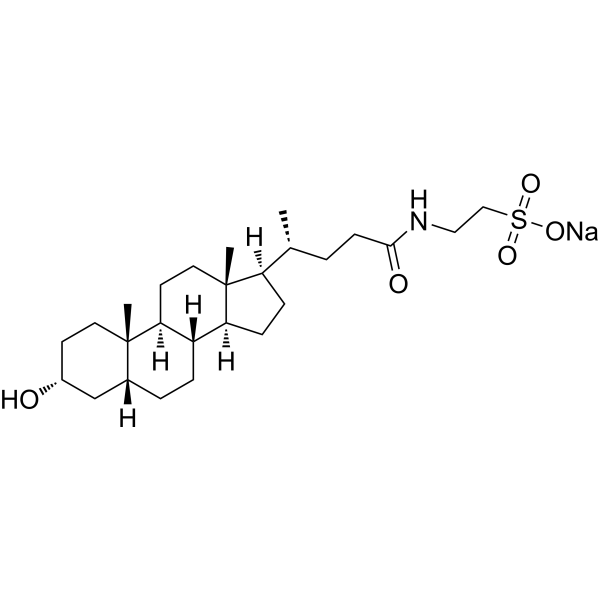
HY-113308A
Taurolithocholic acid sodium saltCholestatic Agent -
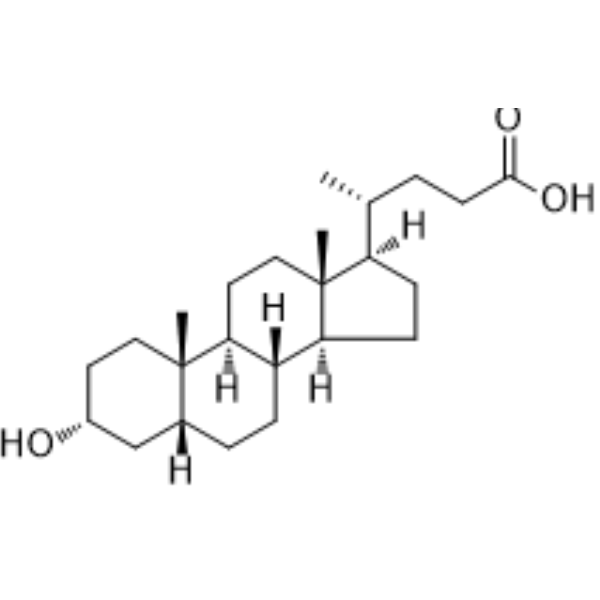
HY-B0172
Lithocholic acidAutophagy Inducer -
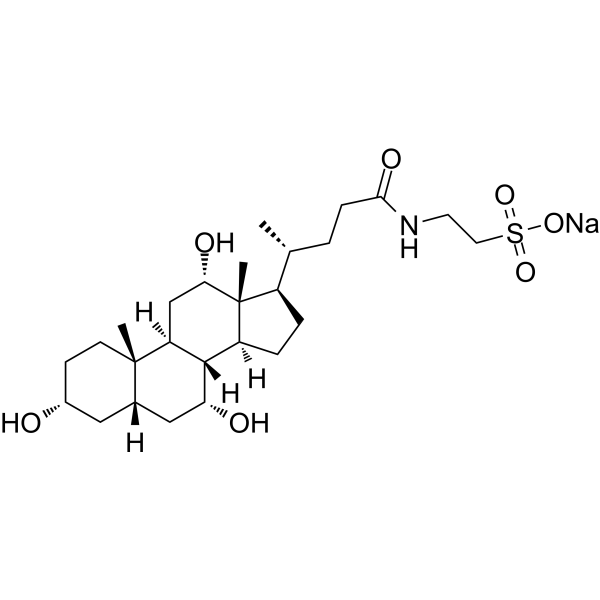
HY-N0545
Taurocholic acid sodiumImmunoregulation Agent -
HY-113238A
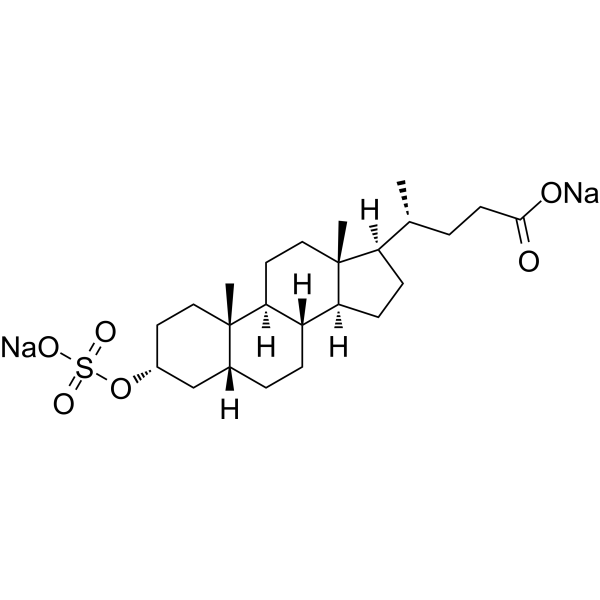
Lithocholic acid 3-sulfate disodiumGPR39 Agonist -
HY-128853
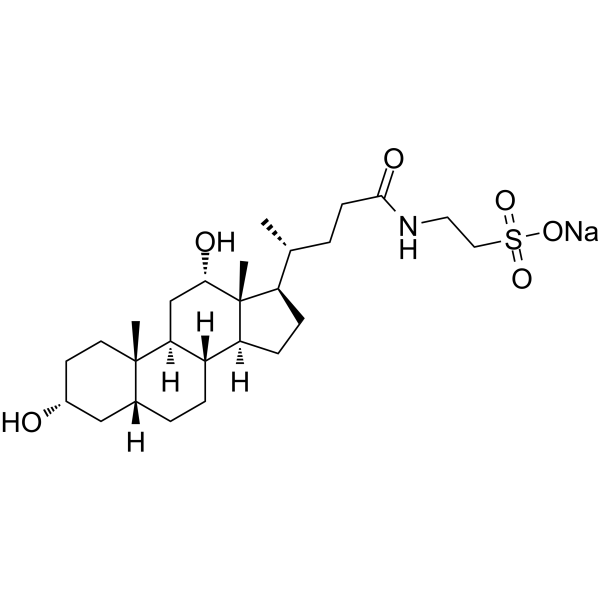
Taurodeoxycholate sodiumAnti-inflammatory Agent -
HY-122141
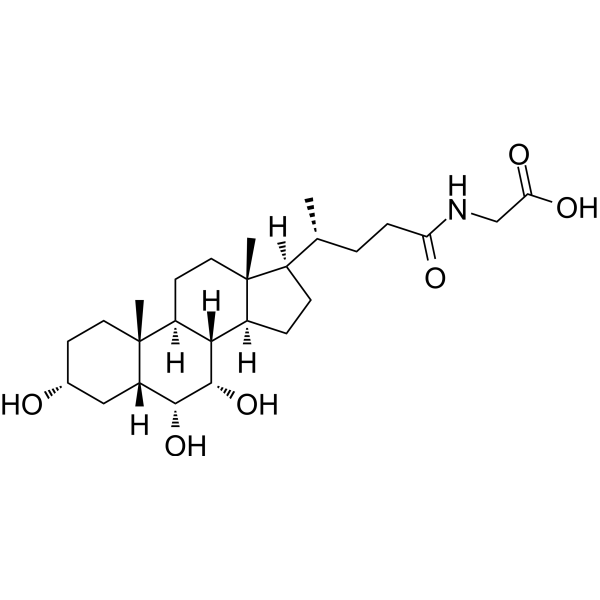
Glycohyocholic acidConjugated Bile Acid -
HY-114360A
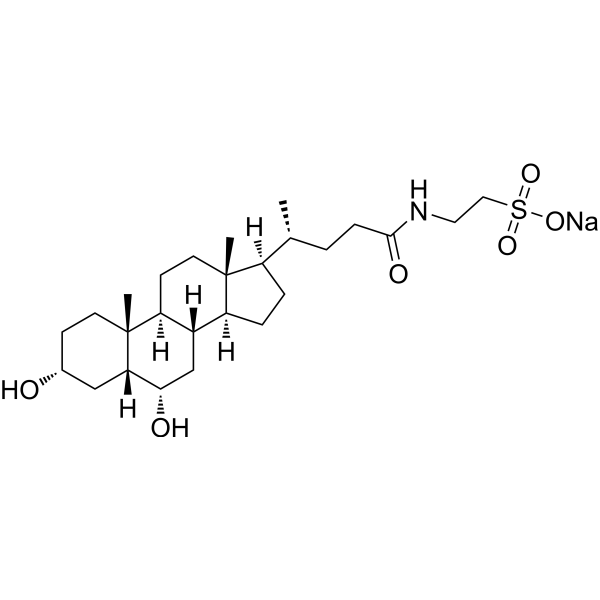
Taurohyodeoxycholic acid sodiumAnti-inflammatory Agent -
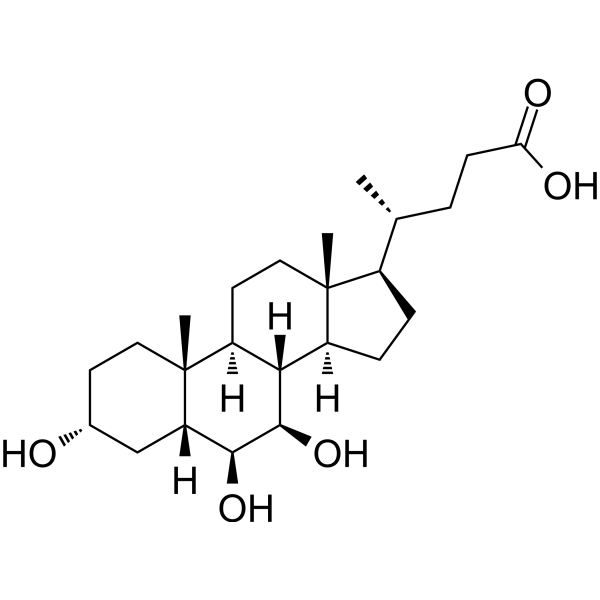
HY-133707
β-Muricholic acidBiliary Cholesterol-Desaturating Agent -
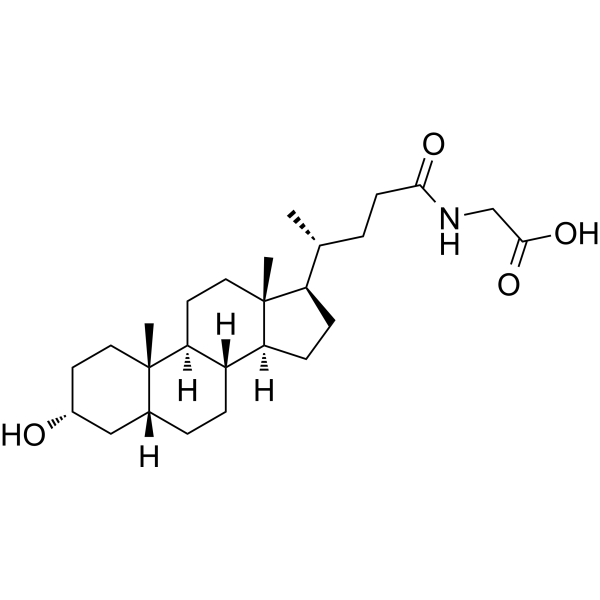
HY-116374
Glycolithocholic acidSecondary Bile Acid -
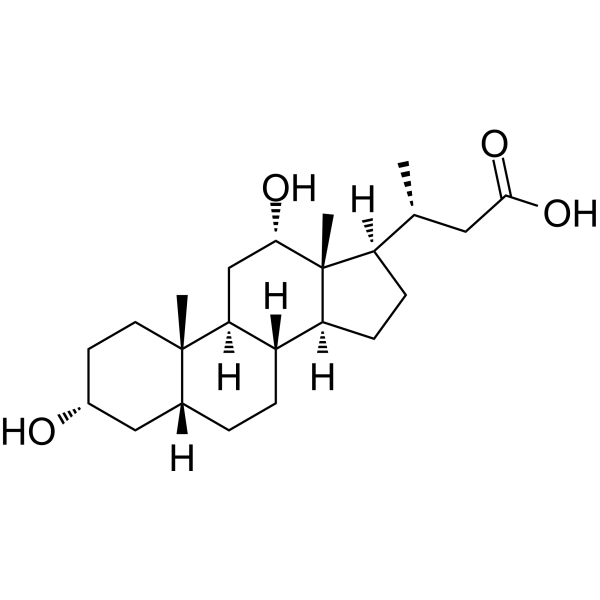
HY-N8268
Nordeoxycholic acidHydrophobic Bile Acid Metabolite -

HY-133707R
β-Muricholic acid (Standard)Biliary Cholesterol-Desaturating Agent -
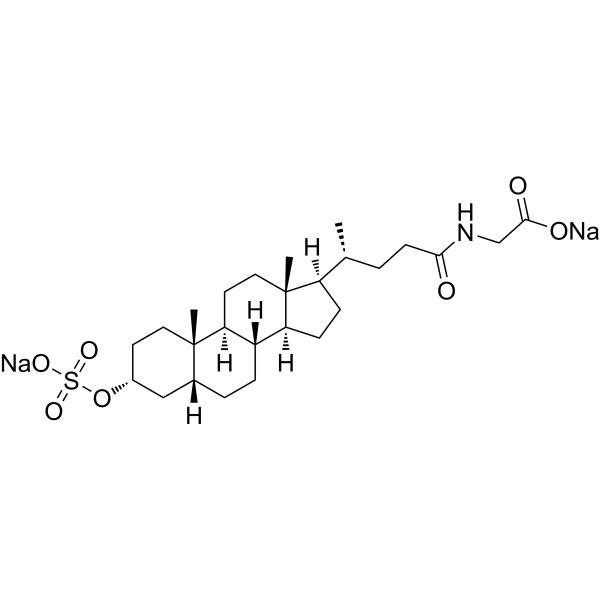
HY-W587430
Glycolithocholic acid 3-sulfate disodiumGPR39 Agonist
Publications Citing Use of MedChemExpress (MCE) Glycolithocholic acid sodium
More Customer Validation & Images

-
RT-PCR
All Endogenous Metabolite Isoforms
More

Biological Activity
Description


Chemical Information
-
CAS No. 24404-83-9
-
Appearance Solid
-
Molecular Weight 455.61
-
Formula C26H42NNaO4
-
Color White to off-white
-
SMILES
O=C(O[Na])CNC(CC[C@@H](C)[C@H]1CC[C@@]2([H])[C@]3([H])CC[C@]4([H])C[C@H](O)CC[C@]4(C)[C@@]3([H])CC[C@]12C)=O
-
Synonyms
Lithocholylglycine sodium
-
Shipping
Room temperature in continental US; may vary elsewhere.
-
Storage
Powder -20°C 3 years 4°C 2 years In solvent -80°C 6 months -20°C 1 month


Publications (3)
-
Journal Impact Factor
-
Most Recent
-
Adv Sci (Weinh)
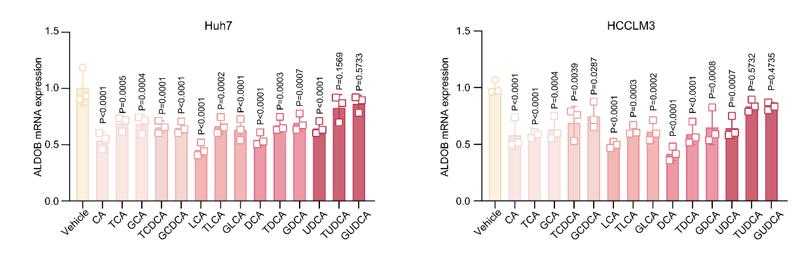
Targeting FDFT1 Reduces Cholesterol and Bile Acid Production and Delays Hepatocellular Carcinoma Progression Through the HNF4A/ALDOB/AKT1 Axis. [Abstract]2025 Mar;12(12):e2411719. PMID: 39899681
Glycolithocholic acid sodium purchased from MedChemExpress. Usage Cited in: Adv Sci (Weinh). 2025 Mar;12(12):e2411719. [Abstract]
The mRNA levels of ALDOB in Huh7 or HCCLM3 cells treated with various bile acids (100 μM, 24 h). All data are presented as mean ± SD. Data were analyzed by one-way ANOVA with Bonferroni multiple-comparison correction. CA, cholic acid; TCA, taurocholic acid; GCA, glycocholic acid; TCDCA, taurochenodeoxycholic acid; GCDCA, glycochenodeoxycholic acid; LCA, lithocholic acid; TLCA, taurolithocholic acid; GLCA, glycolithocholic acid; DCA, deoxycholic acid; TDCA, taurodeoxycholic acid; GDCA, glycodeoxycholic acid; UDCA, ursodeoxycholic acid; TUDCA, tauroursodeoxycholic acid; GUDCA, glycoursodeoxycholic acid.
-
Cell Rep
Multilevel regulation of c-di-GMP biosynthesis by cAMP signaling increases Shigella sonnei fitness and pathogenicity in response to bile salts. [Abstract]2025 Sep 17;44(10):116306. PMID: 40966079 -


Solvent & Solubility
In Vitro:
DMSO : 25 mg/mL (54.87 mM; ultrasonic and warming and heat to 60°C; Hygroscopic DMSO has a significant impact on the solubility of product, please use newly opened DMSO)
H2O : < 0.1 mg/mL (insoluble)
Please refer to the solubility information to select the appropriate solvent. Once prepared, please aliquot and store the solution to prevent product inactivation from repeated freeze-thaw cycles.
Storage method and period of stock solution: -80°C, 6 months; -20°C, 1 month. When stored at -80°C, please use it within 6 months. When stored at -20°C, please use it within 1 month.
Please refer to the solubility information to select the appropriate solvent. Once prepared, please aliquot and store the solution to prevent product inactivation from repeated freeze-thaw cycles.
Storage method and period of stock solution: -80°C, 6 months; -20°C, 1 month. When stored at -80°C, please use it within 6 months. When stored at -20°C, please use it within 1 month.
Concentration (start) × Volume (start) = Concentration (final) × Volume (final)

Protocols
-
DSS-Induced Colitis
Dextran sulfate sodium (DSS)-induced colitis is generated by administering DSS in mouse drinking water, producing epithelial injury, barrier disruption, weight loss, diarrhea, fecal blood, colon shortening, histologic mucosal damage, and inflammatory mediator changes; the model is mainly used to study acute or chronic intestinal inflammation resembling selected features of ulcerative colitis. DSS injury is interpreted through clinical and tissue readouts rather than a single molecular endpoint: daily body weight, stool consistency, and bleeding are combined into a disease activity index, while colon length, histology, cytokines, myeloperoxidase activity, intestinal permeability, and tight-junction markers provide complementary measures of inflammation and barrier damage.
-
TNBS-Induced Colitis
TNBS-induced colitis is produced by intrarectal delivery of 2,4,6-trinitrobenzene sulfonic acid in ethanol, where ethanol disrupts the mucosal barrier and TNBS haptenates colonic proteins, generating immune-mediated colonic inflammation with weight loss, diarrhea, ulceration, transmural injury, inflammatory-cell infiltration, and cytokine responses. The model is used as an experimental intestinal inflammation model with Crohn’s disease–like features, especially when Th1-type responses, IL-12–dependent inflammation, chronic relapsing inflammation, or fibrosis-related endpoints are studied.


Purity & Documentation
-
Data Sheet (272 KB)
-
SDS (252 KB)
- English - EN (252 KB)
- Français - FR (252 KB)
- Deutsch - DE (252 KB)
- Norwegian - NO (252 KB)
- Español - ES (252 KB)
- Swedish - SV (252 KB)
- Italian - IT (252 KB)
- Korean - KR (252 KB)
- Portuguese - PT (252 KB)
-
Handling Instructions (2659 KB)
References
[1]. Tanno N, et, al. Biliary lipid composition in heterozygous familial hypercholesterolemia and influence of treatment with probucol. Dig Dis Sci. 1994 Jul;39(7):1586-91. [Content Brief]
[2]. Ang ZH, et, al. Altered profiles of fecal bile acids correlate with gut microbiota and inflammatory responses in patients with ulcerative colitis. World J Gastroenterol. 2021 Jun 28;27(24):3609-3629. [Content Brief]


Complete Stock Solution Preparation Table
Please refer to the solubility information to select the appropriate solvent. Once prepared, please aliquot and store the solution to prevent product inactivation from repeated freeze-thaw cycles.
Storage method and period of stock solution: -80°C, 6 months; -20°C, 1 month. When stored at -80°C, please use it within 6 months. When stored at -20°C, please use it within 1 month.
| Optional Solvent | Concentration Solvent Mass | 1 mg | 5 mg | 10 mg | 25 mg |
|---|---|---|---|---|---|
| DMSO | 1 mM | 2.1949 mL | 10.9743 mL | 21.9486 mL | 54.8715 mL |
| 5 mM | 0.4390 mL | 2.1949 mL | 4.3897 mL | 10.9743 mL | |
| 10 mM | 0.2195 mL | 1.0974 mL | 2.1949 mL | 5.4871 mL | |
| 15 mM | 0.1463 mL | 0.7316 mL | 1.4632 mL | 3.6581 mL | |
| 20 mM | 0.1097 mL | 0.5487 mL | 1.0974 mL | 2.7436 mL | |
| 25 mM | 0.0878 mL | 0.4390 mL | 0.8779 mL | 2.1949 mL | |
| 30 mM | 0.0732 mL | 0.3658 mL | 0.7316 mL | 1.8290 mL | |
| 40 mM | 0.0549 mL | 0.2744 mL | 0.5487 mL | 1.3718 mL | |
| 50 mM | 0.0439 mL | 0.2195 mL | 0.4390 mL | 1.0974 mL |


Glycolithocholic acid sodium Related Classifications
HY-116374A Related Classifications
 Powered by Bioz