1. Search Result
Search Result
Results for "

Pseudomonas syringae

" in MedChemExpress (MCE) Product Catalog:

19

Inhibitors & Agonists

1

Biochemical Assay Reagents

2

Peptides

9

Natural
Products

Cat. No. Product Name Target Research Areas Chemical Structure
  • HY-160238

    Corynebactin

    Bacterial Fungal Infection
    Bacillibactin (Corynebactin) is a cyclic tricatecholate siderophore. Bacillibactin’s primary function is to facilitate bacterial iron acquisition by chelating iron ions (Fe 3+) from the environment, thereby aiding bacterial survival under iron-limited conditions. Bacillibactin exhibits direct antimicrobial activity, such as inhibition of the growth of the producing bacteria Pseudomonas aeruginosa and Aeromonas veronae, as well as plant pathogens such as Pseudomonas syringae.Bacillibactin can be used in antibacterial and antifungal research .
    Bacillibactin
  • HY-W012595

    Benzalacetone

    Environmental Pollutants Antibiotic Endogenous Metabolite Phospholipase Bacterial Tyrosinase Infection Metabolic Disease Inflammation/Immunology
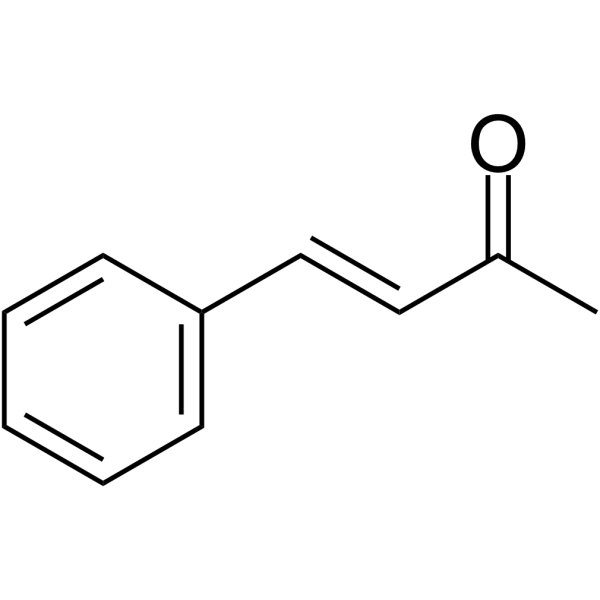
    Benzylideneacetone (Benzalacetone) is an orally active antibiotic, tyrosinase inhibitor, phospholipase A2 inhibitor, and immunosuppressant. Benzylideneacetone has antibacterial activity against some gram-negative plant-pathogenic bacteria. Benzylideneacetone can also be used in the synthesis of chemicals and drugs, and as a flavoring additive for some foods .
    Benzylideneacetone
  • HY-P2717

    Caspase Infection
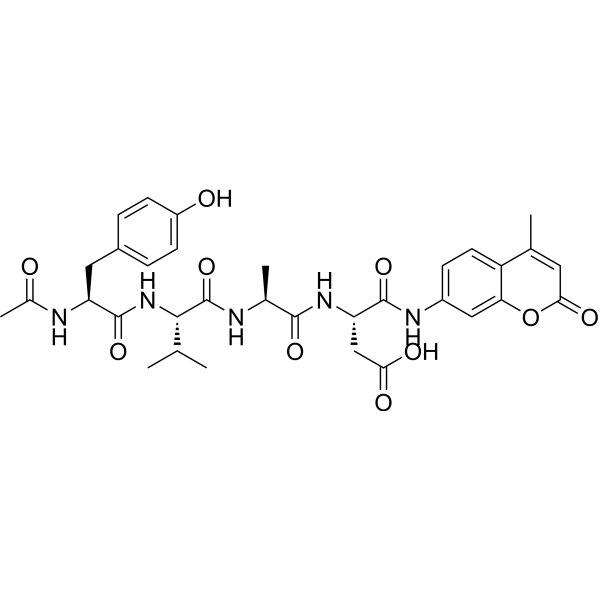
    Ac-YVAD-AMC is an inhibitor for caspase. Ac-YVAD-AMC inhibits bacteria-induced cell death of hypersensitive response (HR) cells .
    Ac-YVAD-AMC
  • HY-W585952

    SA-2-O-β-D-glucoside

    Drug Metabolite Infection
    Salicylic acid 2-O-β-D-glucoside (SA-2-O-β-D-glucoside) is the glucose-conjugated product of Salicylic Acid (HY-B0167) in plants. Salicylic acid 2-O-β-D-glucoside belongs to an inactive storage form. Salicylic acid 2-O-β-D-glucoside can be used in studies of plant pathogen infection .
    Salicylic acid 2-O-β-D-glucoside
  • HY-130323

    Bacterial Infection
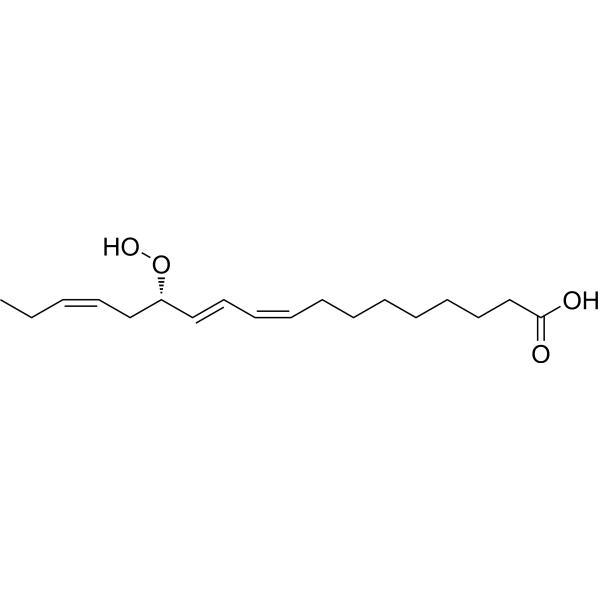
    13-HPOT is a linolenic acid hydroperoxide and an antibacterial agent. 13-HPOT interacts with lipid representatives of bacterial inner membranes. 13-HPOT exerts dose-dependent in vitro antibacterial activity against Pectobacterium carotovorum, Pseudomonas syringae pv. syringae DC3000, and Xanthomonas translucens pv. translucens .
    13-HPOT
  • HY-N15314

    MDM-2/p53 Akt Apoptosis Cancer
    Syringolin A is a plant elicitor that can be produced by the plant pathogen Pseudomonas syringae pv. syringae. Syringolin A exhibits anti-proliferative activity against a variety of cancer cells (IC50 for SK-N-SH, LAN-1, SKOV3 is 20-25 µM), induces apoptosis in SK-N-SH through upregulation of p53 expression and downregulation of Akt/PKB proteins .
    Syringolin A
  • HY-40156

    Bacterial Reactive Oxygen Species (ROS) Apoptosis Infection
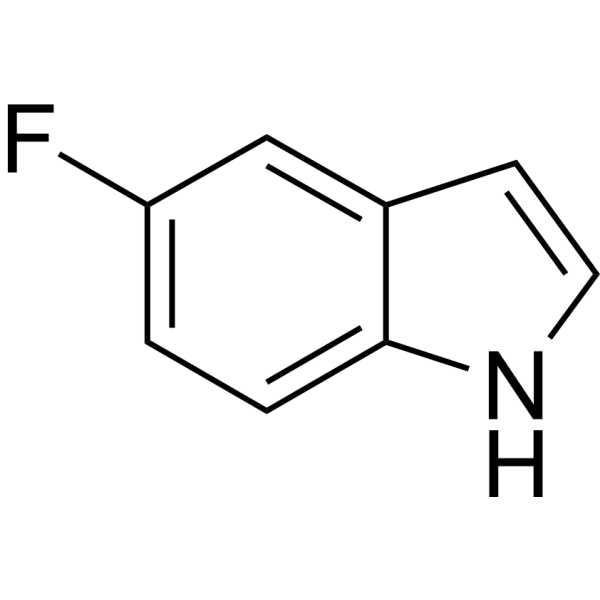
    5-Fluoroindole is an orally active fluorinated indole derivative and antibacterial agent. 5-Fluoroindole induces ROS accumulation and triggers Apoptosis. 5-Fluoroindole inhibits the growth of pan-susceptible Mycobacterium tuberculosis (Mtb) H37Rv strains. 5-Fluoroindole has significant bactericidal activity against Pseudomonas syringae pv. actinidiae (Psa) with an EC50 of 15.34 μg/mL. 5-Fluoroindole introduces fluorine labeling for protein research. 5-Fluoroindole can be used in the study of tuberculosis and kiwifruit bacterial canker .
    5-Fluoroindole
  • HY-155644

    Bacterial Reactive Oxygen Species (ROS) Infection
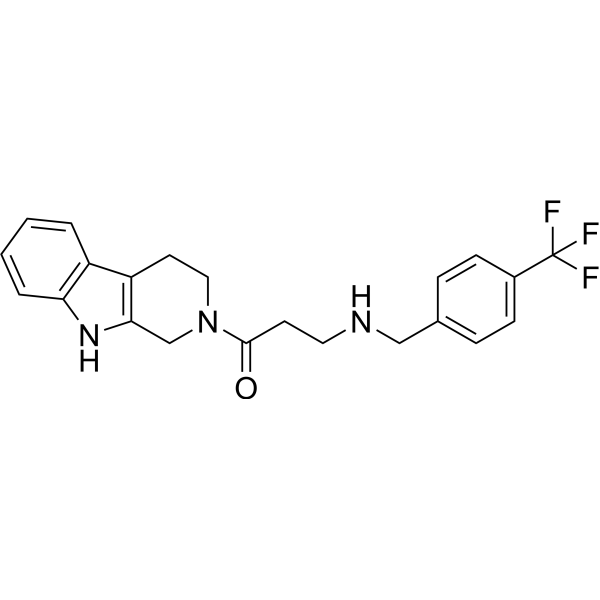
    ROS inducer 1 (compound I29) is a fungicide, with EC50 against Xanthomonas axonopodis pv. citri (Xac), Xanthomonas oryzae pv. oryzae (Xoo), and Pseudomonas syringae pv. actinidiae (Psa) of 5.73, 6.62 and 9.05 μg/mL. ROS inducer 1 can effectively induce the production of ROS in Xanthomonas cells and inhibit rice bacterial blight. ROS inducer 1 has the potential to study bacterial infection in crops .
    ROS inducer 1
  • HY-119609

    Bacterial Cholinesterase (ChE) β-glucuronidase Infection
    Ilicicolin C exhibits antibacterial activity against Pseudomonas syringae with IC50 of 28.5 µg/mL. Ilicicolin C exhibits weak inhibitory activities against acetylcholinesterase (AChE) and β-glucuronidase with IC50 of 30-43 µg/mL. Ilicicolin C exhibits weak cytoxicity in human lung fibroblasts with IC50 of 64-120 µg/mL. Ilicicolin C affects seed germination and root tip growth of lettuce .
    Ilicicolin C
  • HY-155662

    Reactive Oxygen Species (ROS) Infection
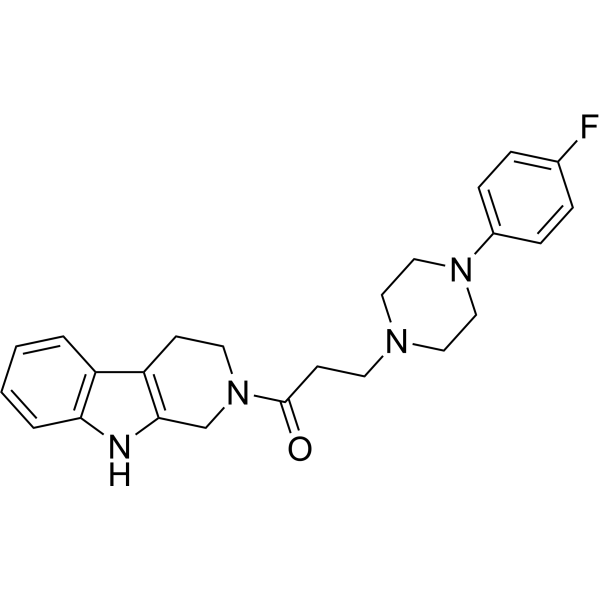
    ROS inducer 3 (Compound I6) is a ROS inducer. ROS inducer 3 has excellent in vitro bioactivity with an EC50 of 2.86 μg/mL. ROS inducer 3 has significant protective activity for preventing Pseudomonas syringae pv. actinidiae. ROS inducer 2, as a bactericidal agent, can be used for the research of intractable plant bacterial diseases .
    ROS inducer 3
  • HY-149169

    Bacterial Inflammation/Immunology
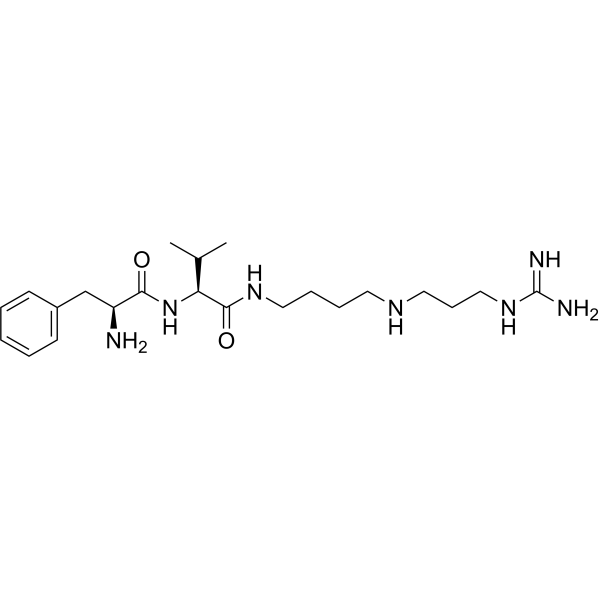
    Phevamine A is a small molecule bacterial phytotoxin that can be isolated from Pseudomonas syringae. Phevamine promotes bacterial growth by suppressing plant immune responses .
    Phevamine A
  • HY-N10280

    Bacterial Endogenous Metabolite Infection
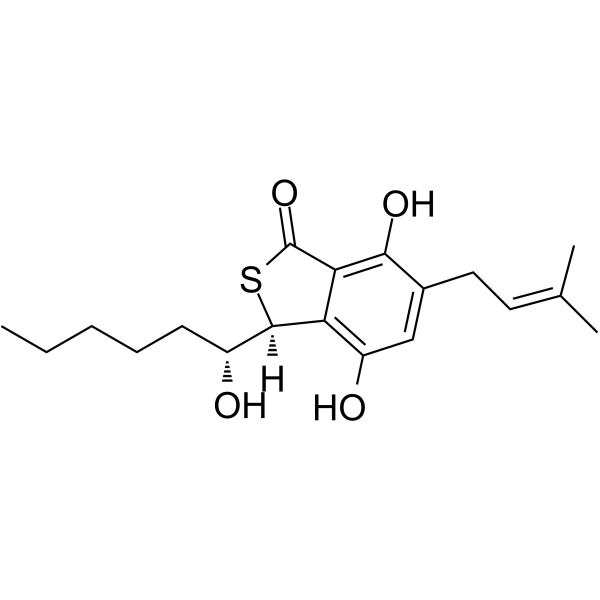
    Asperglaucin A represents an unusual phthalide-like derivative. Asperglaucin A exhibits potent antibacterial activities against two plant pathogens Pseudomonas syringae pv actinidae (Psa) and Bacillus cereus, with an MIC value of 6.25 μM .
    Asperglaucin A
  • HY-P10779

    Bacterial Inflammation/Immunology
    flg22Pst is a peptide that can be derived Pseudomonas syringae pv. tabaci and serves as an effective elicitor for the plant immune system. flg22Pst can induce callose deposition in plants, trigger plant immune responses, and thereby assist plants in defending against pathogen invasion .
    flg22Pst
  • HY-N10281

    Bacterial Infection
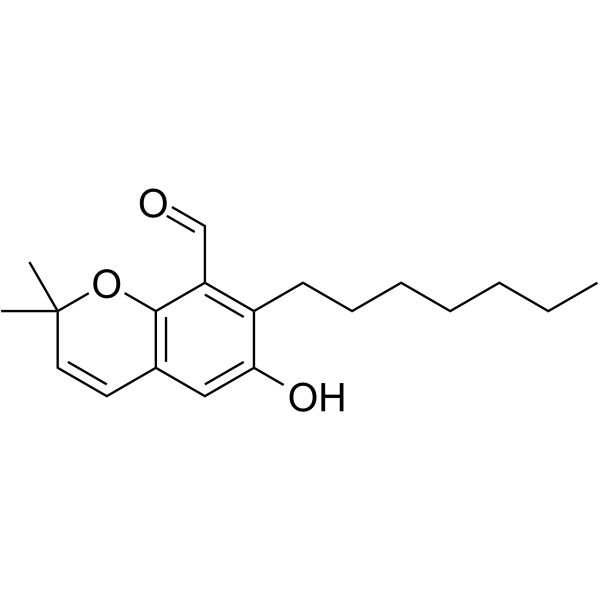
    Asperglaucin B is an alkylated salicylaldehyde derivative from the fungus Aspergillus chevalieri SQ-8, with antibacterial activities. Asperglaucin B displays potent antibacterial activities against two plant pathogens Pseudomonas syringae pv actinidae (Psa) and Bacillus cereus, with an MIC value of 6.25 μM .
    Asperglaucin B
  • HY-125048

    229-B; Streptothricin D

    Bacterial Infection
    Racemomycin B (229-B; Streptothricin D), the main component from Streptomyces lavendulae OP-2, is a streptothricin antibiotic containing three β-lysine groups. RM-B exhibits antimicrobial activity against plant pathogenic microorganisms and effectively inhibits the growth of Brassica rapa L. roots at 50 ppm. RM-B showed a minimum inhibitory concentration (MIC) of 0.4 μg/ml against Pseudomonas syringae pv. tabaci IFO-3508 and a MIC range of 0.1-2.0 μg/ml against six strains of Fusarium oxysporum, showing stronger antimicrobial activity than RM-A and RM-C. The biological activity of racemomycin compounds increases with the increase in the number of β-lysine groups.
    Racemomycin B
  • HY-N18435

    Bacterial Reactive Oxygen Species (ROS) Infection
    Komaroidine is a bactericidal agent. Komaroidine induces reactive oxygen species (ROS) bursts in bacterial cells, disrupts antioxidant enzyme function and redox homeostasis, increases membrane permeability, and triggers bacterial apoptosis. Komaroidine suppresses bacterial burden within infected plant tissues.Komaroidine exhibits broad-spectrum antibacterial activity against phytopathogenic bacteria including Xanthomonas oryzae pv. oryzae, Xanthomonas axonopodis pv. citri, and Pseudomonas syringae pv. actinidiae. Komaroidine can be used for the research of rice bacterial leaf blight .
    Komaroidine
  • HY-W077690

    Bacterial Infection
    3-(2-Hydroxyethyl)quinazoline-2,4(1H,3H)-dione is an metal chelating agent and anti-bacterial agent. 3-(2-Hydroxyethyl)quinazoline-2,4(1H,3H)-dione shows inhibitory activity against gram-positive and gram-negative bacterial strains .
    3-(2-Hydroxyethyl)quinazoline-2,4(1H,3H)-dione
  • HY-N19923

    SARS-CoV Bacterial Virus Protease Infection
    Tercatain is a COVID-19 main protease inhibitor with antibacterial activity. Tercatain exhibits antibacterial activity against Ralstonia solanacearum. Tercatain can be used for the research of COVID-19, and bacterial infections .
    Tercatain
  • HY-183705

    Fungal Mitochondrial Metabolism ATP Synthase Infection
    Antimicrobial agent-50 is an anti-oomycete and Fungicidal agent. Antimicrobial agent-50 inhibits the activity of Mitochondrial respiratory chain complex III with an IC50 of 6.05 mg/L. Antimicrobial agent-50 inhibits ATP synthesis. Antimicrobial agent-50 exhibits protective activity against Phytophthora capsici in vivo. Antimicrobial agent-50 potently inhibits mycelial growth of Gaeumannomyces graminis, Rhizoctonia solani and Phytophthora capsici, with EC50 values of 2.97 mg/L, 1.86 mg/L and 0.74 mg/L, respectively .
    Antimicrobial agent-50

Inquiry Online

Your information is safe with us. * Required Fields.

Salutation


Country or Region *

Applicant Name *


Organization Name *

Department *


Email Address *


Product Name *

Cat. No.


Requested quantity *

Phone Number *


Remarks

Inquiry Online

Inquiry Information

Product Name:
Cat. No.:
Quantity:
MCE Japan Authorized Agent:

