1. Search Result
Search Result
Results for "

Staphylococcus faecalis

" in MedChemExpress (MCE) Product Catalog:

61

Inhibitors & Agonists

1

Biochemical Assay Reagents

30

Natural
Products

Cat. No. Product Name Target Research Areas Chemical Structure
  • HY-B1256A
    Cefuroxime
    Maximum Cited Publications
    10 Publications Verification

    Kefurox

    Beta-lactamase Bacterial Antibiotic Infection Cancer
    Cefuroxime is an orally active second-generation cephalosporin antibiotic with increased stability to β-lactamase. Cefuroxime has a broad spectrum activity against Gram-positive and Gram-negative bacteria .
    Cefuroxime
  • HY-124617
    AMXT-1501
    Maximum Cited Publications
    10 Publications Verification

    Apoptosis Bacterial Infection Cancer
    AMXT-1501 is a Bacterial agent and polyamine transport system inhibitor. AMXT-1501 targets membrane phospholipids and exhibits antibacterial activity against a variety of Gram-positive and Gram-negative multidrug-resistant bacteria . AMXT-1501 inhibits capsular biosynthesis in Streptococcus pneumoniae . AMXT-1501 targets ornithine decarboxylase and polyamines to inhibit the proliferation of neuroblastoma cells . AMXT-1501 in combination with DFMO (HY-B0744) induces Apoptosis in neuroblastoma cells. AMXT-1501 is applicable to research related to multidrug-resistant bacterial infections, pneumococcal infections, Streptococcus pneumoniae infections, and neuroblastoma .
    AMXT-1501
  • HY-B1256
    Cefuroxime sodium
    Maximum Cited Publications
    10 Publications Verification

    Beta-lactamase Bacterial Antibiotic Infection Cancer
    Cefuroxime sodium is an orally active second-generation cephalosporin antibiotic with increased stability to β-lactamase. Cefuroxime sodium has a broad spectrum activity against Gram-positive and Gram-negative bacteria .
    Cefuroxime sodium
  • HY-126387

    Bacterial Antibiotic Penicillin-binding protein (PBP) Infection
    Moenomycin complex is a class of antibacterial agents and PBP inhibitors, with Kd values ranging from 94 nM to 1690 nM against various bacterial PBPs. Moenomycin complex inhibits bacterial growth by blocking the transglycosylase activity of class A penicillin-binding proteins (PBPs). Moenomycin complex is used in the research of bacterial infections .
    Moenomycin complex
  • HY-N0656A
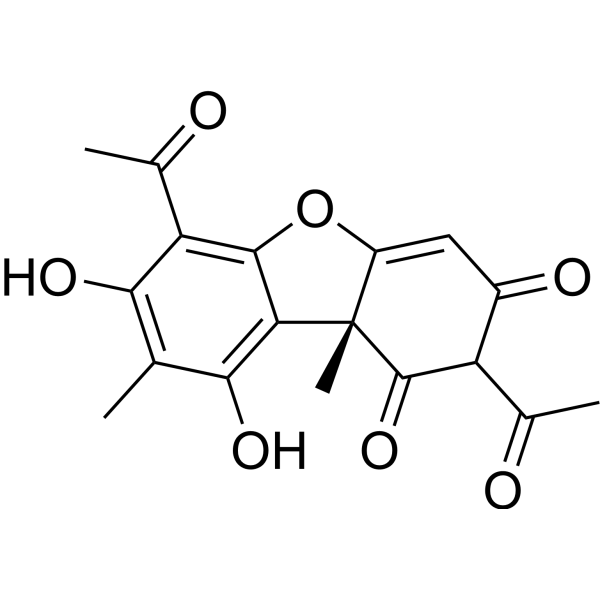
    (+)-Usnic acid
    2 Publications Verification

    mTOR Bacterial Autophagy Infection Inflammation/Immunology Cancer
    (+)-Usnic acid is isolated from isolated from lichens, binds at the ATP-binding pocket of mTOR, and inhibits mTORC1/2 activity. (+)-Usnic acid inhibits the phosphorylation of mTOR downstream effectors: Akt (Ser473), 4EBP1, S6K, induces autophay, with anti-cancer and anti-inflammatory activity. (+)-Usnic acid possesses antimicrobial activity against a number of planktonic gram-positive bacteria, including Staphylococcus aureus, Enterococcus faecalis, and Enterococcus faecium .
    (+)-Usnic acid
  • HY-N10264

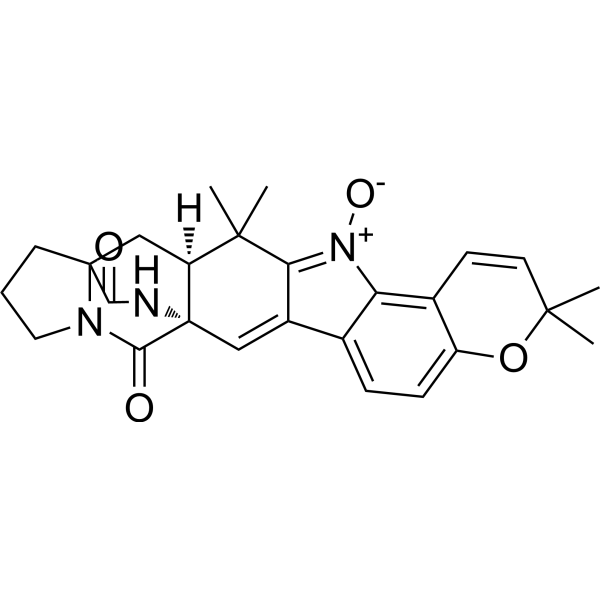
    (+)-Avrainvillamide; CJ-17,665

    Antibiotic Infection Cancer
    Avrainvillamide ((+)-Avrainvillamide) is a naturally occurring alkaloid with antiproliferative effects, binds to the nuclear chaperone nucleophosmin, a proposed oncogenic protein that is overexpressed in many different human tumors. Avrainvillamide affects cell biology both by directly binding NPM1 and Crm1 as well as by inhibiting the association of these proteins with certain native cellular partners. Avrainvillamide, an antibiotic, inhibits growth of multi-agent resistant Staphylococcus aureus, Streptococcus pyogenes, and Enterococcus faecalis, with MICs of 12.5, 12.5 and 25 μg/ml, respectively .
    Avrainvillamide
  • HY-108939

    IleSA

    Bacterial Aminoacyl-tRNA Synthetase Infection
    Aminoacyl tRNA synthetase-IN-1 (IleSA) is an inhibitor of bacterial aminoacyl-tRNA synthetase (aaRS). Aminoacyl tRNA synthetase-IN-1 is applicable to studies on bacterial infections .
    Aminoacyl tRNA synthetase-IN-1
  • HY-B0771A

    SCE-2787 hydrochloride

    Antibiotic Bacterial Penicillin-binding protein (PBP) Infection
    Cefozopran (SCE-2787) hydrochloride is a potent antibiotic with broad-spectrum antibacterial activity. Cefozopran hydrochloride binds PBPs, induces cell wall destruction, cell elongation, filamentation, irregular septa formation, and bactericidal, bacteriolytic activity. Cefozopran hydrochloride reduces bacterial counts and eradicates bacteria in mouse respiratory, urinary, and thigh muscle infections. Cefozopran hydrochloride can be used for the research of bacterial infections .
    Cefozopran hydrochloride
  • HY-N13668

    Antibiotic Bacterial Infection
    Rhodomyrtone is an antibiotic that can be found in the leaves of Rhodomyrtus tomentosa. Rhodomyrtone kills Gram-positive bacterial cells without causing bacteriolysis. Rhodomyrtone exhibits activity against a variety of Gram-positive bacteria, including Bacillus cereus, Bacillus subtilis, Enterococcus faecalis, Staphylococcus epidermidis, Streptococcus gordonii, Streptococcus pneumoniae, Streptococcus pyogenes and Streptococcus salivarius. Rhodomyrtone is applicable to studies related to bacterial infections .
    Rhodomyrtone
  • HY-129434A
    4aα,7α,7aα-Nepetalactone
    1 Publications Verification

    Bacterial Infection
    4aα,7α,7aα-Nepetalactone exhibits antibacterial activity, and inhibits Escherichia coli, Pseudomonas aeruginosa, Staphylococcus aureus, Salmonella typhi and Enterococcus faecalis.
    4aα,7α,7aα-Nepetalactone
  • HY-N7652

    Bacterial Interleukin Related Infection Inflammation/Immunology Cancer
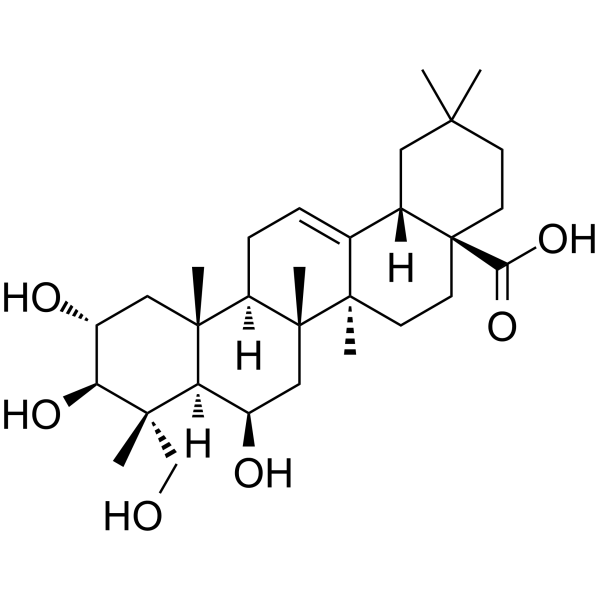
    Terminolic acid is a pentacyclic triterpene glycoside and antibacterial agent. Terminolic acid can be isolated from Combretum racemosum. Terminolic acid inhibits proinflammatory cytokines by binding to the receptor active sites of IL-1β and IL-6. Terminolic acid reduces IL-8. Terminolic acid has antibacterial activity against Staphylococcus aureus, Escherichia coli and Enterococcus faecalis with MICs ranging from 64 to 256 μg/mL. Terminolic acid is used in colon cancer research .
    Terminolic acid
  • HY-N0129

    Environmental Pollutants Bacterial Infection
    Sclareolide is isolated from the flower of Perilla frutescens with antibacterial and cytotoxic activities .
    Sclareolide
  • HY-B0771

    SCE-2787

    Antibiotic Bacterial Penicillin-binding protein (PBP) Infection
    Cefozopran (SCE-2787) is a potent antibiotic with broad-spectrum antibacterial activity. Cefozopran binds PBPs, induces cell wall destruction, cell elongation, filamentation, irregular septa formation, and bactericidal, bacteriolytic activity. Cefozopran reduces bacterial counts and eradicates bacteria in mouse respiratory, urinary, and thigh muscle infections. Cefozopran can be used for the research of bacterial infections .
    Cefozopran
  • HY-143326

    Bacterial Infection
    Antibacterial agent 83 (compound 17h) displays potent antibacterial activity against various vancomycin-resistant Enterococcus faecalis (VRE) and methicillin-resistant Staphylococcus aureus (MRSA). Antibacterial agent 83 can significantly reduce the biofilm formation of MRSA and exhibited promising selectivity. Antibacterial agent 83 is metabolically stable in human liver microsomes .
    Antibacterial agent 83
  • HY-W145053

    Sodium chloro(4-methylbenzenesulfonyl)azanide hydrate

    Factor Xa Bacterial Infection
    ChloraMine-T hydrate (Sodium chloro(4-methylbenzenesulfonyl)azanide (hydrate)) is a common reagent in various synthetic processes. It has been used as a reagent in aminohydroxylation and allylic amination reactions, a nitrogen source in aziridination reactions of alkenes and alkenes, and deprotection of sulfur groups in sulfur-containing compounds. It has been used as a reagent in the synthesis of factor Xa inhibitors. ChloraMine-T hydrate (Sodium chloro(4-methylbenzenesulfonyl)azanide (hydrate)) (0.2% w/v) is also an antimicrobial agent that kills Staphylococcus epidermidis, Staphylococcus aureus, Enterococcus faecalis, Escherichia coli, Proteus mirabilis, and Enterococcus cloacae.
    ChloraMine-T hydrate
  • HY-W923644

    Aegelinol; (-)-Smyrinol

    Bacterial Infection
    (-)-Decursinol (Aegelinol; (-)-Smyrinol) is a natural pyranocoumarin compound tant can be isolated from the roots of Apiaceae plants such as Ferulago campestris. (-)-Decursinol inhibits both Gram-positive bacteria (Staphylococcus aureus ATCC 13709, Enterococcus faecalis ATCC 14428) and Gram-negative bacteria (Salmonella typhii ATCC 19430, Enterobacter cloacae ATCC 10699, Enterobacter aerogenes ATCC 13048) with minimum inhibitory concentrations (MIC) ranging from 16 to 64 μg/mL. (-)-Decursinol possesses antioxidant activity. (-)-Decursinol can be used for the study of bacterial infections .
    (-)-Decursinol
  • HY-125569

    Fungal Antibiotic Infection
    Leucomycin A5 has antifungal activity, with the MIC for Staphylococcus pyogenes pen S, Staphylococcus pyogenes pen R, and Staphylococcus faecalis being 0.8, 3.2, and 0.8 μg/mL, respectively .
    Leucomycin A5
  • HY-178952

    Bacterial Infection
    Anti-infective agent 12 (Compound A09) is a competitive inhibitor of type I signal peptidease (SPase I), with an IC50 of 4.475 μM and a Kd of 16.3 μM. Anti-infective agent 12 has the ability to disrupt bacterial membranes and remove biofilms. Anti-infective agent 12 exhibits potent bactericidal activity against Gram-positive bacteria, with MIC values of 4, 4, 8, and 8 μg/mL for Staphylococcus aureus, Enterococcus faecalis, Enterococcus faecium, and Streptococcus suis, respectively. Anti-infective agent 12 remains effective against multi-drug resistant strains, but has weaker activity against Gram-negative bacteria (such as Escherichia coli and Salmonella), with MIC values > 64 μg/mL. Anti-infective agent 12 has low hemolytic activity and shows significant efficacy in mouse skin infection models .
    Anti-infective agent 12
  • HY-105213

    MC-352

    Antibiotic Bacterial Infection
    YM-17K (MC-352) is a macrolide antibiotic. YM-17K exhibits antimicrobial activity against Gram-positive bacteria, Gram-negative bacteria, and anaerobic bacteria. YM-17K exhibits stable activity in serum and is less affected by pH values .
    YM-17K
  • HY-130596

    Antibiotic Bacterial Infection Cancer
    DC-86-M is an antibiotic, which can be isolated from Streptomyces luteogriseus. DC-86-M exhibits antibacterial activities against Bacillus subtilis, Staphylococcus aureus, Enterococcus faecalis, Vibrio anguillarum, and Proteus vulgaris, with MIC <1 μg/mL. DC-86-M exhibits antitumor activity against mouse sarcoma 180 with LD50 of 25 mg/kg .
    DC-86-M
  • HY-N14416

    Antibiotic Bacterial Infection
    Parvodicin A is a glycopeptide antibiotic. Parvodicin A has inhibitory effect on Staphylococcus aureus, Staphylococcus furfur, Staphylococcus hemolyticus and Enterococcus faecalis .
    Parvodicin A
  • HY-N5181

    Antibiotic Bacterial Infection
    Parvodicin C3 is a glycopeptide antibiotic. Parvodicin C3 has inhibitory effect on Staphylococcus aureus, Staphylococcus furfur, Staphylococcus hemolyticus and Enterococcus faecalis .
    Parvodicin C3
  • HY-N15040

    Antibiotic Bacterial Infection
    Parvodicin C4 is a glycopeptide antibiotic. Parvodicin C4 has inhibitory effect on Staphylococcus aureus, Staphylococcus furfur, Staphylococcus hemolyticus and Enterococcus faecalis .
    Parvodicin C4
  • HY-N14420

    Antibiotic Bacterial Infection
    Parvodicin B2 is a glycopeptide antibiotic. Parvodicin B2 has inhibitory effect on Staphylococcus aureus, Staphylococcus furfur, Staphylococcus hemolyticus and Enterococcus faecalis. Parvodicin B2 acts by inhibiting the synthesis of bacterial cell wall .
    Parvodicin B2
  • HY-N14418

    Antibiotic Bacterial Infection
    Parvodicin B1 is a glycopeptide antibiotic. Parvodicin B1 has inhibitory effect on Staphylococcus aureus, Staphylococcus furfur, Staphylococcus hemolyticus and Enterococcus faecalis. Parvodicin B1 acts by inhibiting the synthesis of bacterial cell wall .
    Parvodicin B1
  • HY-129166

    Bacterial Infection
    UCM53, a FtsZ inhibitor, is an antibacterial agent. UCM53 can inhibit the growth of clinical isolates of antibiotic-resistant Staphylococcus aureus and Enterococcus faecalis
    UCM53
  • HY-W007161

    Bacterial Infection
    8-Desmethoxy-8-fluoro Moxifloxacin (Compound 07) is an antibacterial agent, and has bactericidal activity against Escherichia coli, Pseudomonas aeruginosa, Staphylococcus aureus, Enterococcus faecalis .
    8-Desmethoxy-8-fluoro Moxifloxacin
  • HY-N5195

    Nocathiacine II

    Bacterial Infection
    Nocathiacin II (Nocathiacine II) is highly resistant to Gram-positive bacteria, including methicillin-resistant Staphylococcus aureus (MRSA), penicillin-resistant Streptococcus pneumoniae (PRSP) and multidrug resistant Enterococcus faecalis (MREF) .
    Nocathiacin II
  • HY-N5184

    Nocathiacine III

    Bacterial Infection
    Nocathiacin III (Nocathiacine III) is highly resistant to Gram-positive bacteria, including methicillin-resistant Staphylococcus aureus (MRSA), penicillin-resistant Streptococcus pneumoniae (PRSP) and multidrug resistant Enterococcus faecalis (MREF) .
    Nocathiacin Ⅲ
  • HY-N14899

    Bacterial Infection
    Oxasetin has medium activity against Gram-positive bacteria, including Methicillin-resistant Staphylococcus aureus and Vancomycin-resistant Enterococcus faecalis (MIC is 16 μg/mL). Oxasetin has no activity against Gram-negative bacteria and fungi .
    Oxasetin
  • HY-176750

    Bacterial Infection
    HMRZ-62 is an antibacterial agent. HMRZ-62 exhibits antibacterial activity against Methicillin (HY-121544)-resistant Staphylococcus aureus (MRSA) and Vancomycin (HY-B0671)-resistant Enterococcus faecalis (VRE) .
    HMRZ-62
  • HY-N7505

    Bacterial Infection
    Norchelerythrine is an alkaloid isolated from the roots of Zanthoxylum capense with antibacterial activity against gram-positive and gram-negative bacteria. Norchelerythrine exhibits inhibitory activity against Staphylococcus aureus, Pseudomonas aeruginosa, and Enterococcus faecalis and Escherichia coli with MIC values >50 µg/mL .
    Norchelerythrine
  • HY-N6846

    Bacterial Infection
    10-Isobutyryloxy-8,9-epoxythymol isobutyrate is a major constituent of Inula helenium and Inula royleana root cultures. 10-Isobutyryloxy-8,9-epoxythymol isobutyrate shows moderate antimicrobial activity against Staphylococcus aureus FDA 209 P, Staphylococcus aureus, Enterococcus faecalis, Candida albicans and Pseudomonas aeruginosa with MICs of 50, 250, 250, 250, and 1000 μg/mL, respectively .
    10-​Isobutyryloxy-​8,​9-​epoxythymol isobutyrate
  • HY-172109

    DNA/RNA Synthesis Infection
    DNA Gyrase-IN-15 (Compound 11) is an antimicrobial agent and inhibitor of DHPS and DNA gyrase, with IC50s of 1.73 and 0.07 µM, respectively. DNA Gyrase-IN-15 shows antimicrobial activity against Enterococcus faecalis (MIC of 15.62 µg/mL), Acinetobacter baumannii, Enterobacter species (MIC of 7.81 µg/mL), Pseudomonas aeruginosa, Klebsiella pneumoniae and Staphylococcus aureus. DNA Gyrase-IN-15 also shows antibiofilm activity against Enterococcus faecalis .
    DNA Gyrase-IN-15
  • HY-161263

    Bacterial Infection
    Antibacterial agent 182 (compound 8c) is an antibacterial agent that shows antibacterial activity against various Gram-positive bacteria, particularly against Vancomycin-resistant Enterococcus faecalis (MIC ≤0.125 μg/mL). Antibacterial agent 182 inhibits biofilm formation of Staphylococcus aureus and Pseudomonas aeruginosa at sub-MIC doses .
    Antibacterial agent 182
  • HY-N7188

    Bacterial Infection
    CJ-21,058 is a potent SecA inhibitor with an IC50 value of 15 µg/mL. CJ-21,058 inhibits ATP-dependent translocation of precursor proteins across a bacterial cell membrane. CJ-21,058 shows antibacterial activity against Gram-positive bacteria .
    CJ-21,058
  • HY-173192

    Bacterial Infection
    Antibacterial agent 272 (Compound Z22) is a potential antimicrobial agent targeting DNA and the DNA-topoisomerase II (DNA-Topo II) complex, exhibiting MIC values of 1 μg/mL against Staphylococcus aureus 25923 and 29213, 2 μg/mL against Staphylococcus epidermidis 12228, 2-4 μg/mL against Enterococcus faecalis, and 4 μg/mL against Pseudomonas aeruginosa 9027 and 27853, demonstrating potent antibacterial activity. This compound functions by intercalating with DNA base pairs to disrupt normal bacterial DNA function, making it suitable for research on bacterial infectious diseases .
    Antibacterial agent 272
  • HY-N10561

    Bacterial Infection
    Wychimicin A is a spirotetronate polyketide, can be isolated from the rare actinomycete Actinocrispum wychmicini strain MI503-AF4. Wychimicin A shows strong antibacterial activity against methicillin-resistant Staphylococcus. aureus (IC50=0.125-0.5 μg/mL) and Enterococcus. faecalis/faecium (IC50=0.125-0.25 μg/mL) .
    Wychimicin A
  • HY-N10560

    Bacterial Infection
    Wychimicin C is a spirotetronate polyketide, can be isolated from the rare actinomycete Actinocrispum wychmicini strain MI503-AF4. Wychimicin C shows strong antibacterial activity against methicillin-resistant Staphylococcus. aureus (IC50=0.125-0.5 μg/mL) and Enterococcus. faecalis/faecium (IC50=0.125-0.25 μg/mL) .
    Wychimicin C
  • HY-N0129R

    Reference Standards Bacterial Infection
    Sclareolide (Standard) is the analytical standard of Sclareolide. This product is intended for research and analytical applications. Sclareolide is isolated from the flower of Perilla frutescens with antibacterial and cytotoxic activities[1].
    Sclareolide (Standard)
  • HY-125388

    Antibiotic Bacterial Infection
    Martinomycin is an antibiotic, which inhibits Staphylococcus spp., Streptococcus spp. and Enterococcus spp., with MICs ranging from 0.06 to 0.5 μg/mL .
    Martinomycin
  • HY-N0656AR

    Reference Standards mTOR Bacterial Autophagy Cancer
    (+)-Usnic acid (Standard) is the analytical standard of (+)-Usnic acid. This product is intended for research and analytical applications. (+)-Usnic acid is isolated from isolated from lichens, binds at the ATP-binding pocket of mTOR, and inhibits mTORC1/2 activity. (+)-Usnic acid inhibits the phosphorylation of mTOR downstream effectors: Akt (Ser473), 4EBP1, S6K, induces autophay, with anti-cancer activity . (+)-Usnic acid possesses antimicrobial activity against a number of planktonic gram-positive bacteria, including Staphylococcus aureus, Enterococcus faecalis, and Enterococcus faecium .
    (+)-Usnic acid (Standard)
  • HY-170367

    Bacterial Infection
    Antimicrobial agent-35 (Compound c9) exhibits antibacterial agent, that inhibits S. aureus, E. coli, E. faecalis, and S. maltophilia with MIC of 0.5-2 μg/mL. Antimicrobial agent-35 exhibits cytotoxicity against HT-22 with IC50 of 130.4 μg/mL .
    Antimicrobial agent-35
  • HY-B1256AR

    Kefurox (Standard)

    Beta-lactamase Reference Standards Bacterial Antibiotic Infection Cancer
    Cefuroxime (Standard) is the analytical standard of Cefuroxime. This product is intended for research and analytical applications. Cefuroxime is an orally active second-generation cephalosporin antibiotic with increased stability to β-lactamase. Cefuroxime has a broad spectrum activity against Gram-positive and Gram-negative bacteria .
    Cefuroxime (Standard)
  • HY-N16665

    Bacterial Infection Inflammation/Immunology
    6α,11,12-Trihydroxy-7β,20-epoxy-8,11,13-abietatriene (Compound 6) is a diterpenoid found in Premna obtusifolia with antibacterial activity. 6α,11,12-Trihydroxy-7β,20-epoxy-8,11,13-abietatriene can significantly inhibit the release of the inflammatory mediator NO, with an IC50 value of 29.1 μM. 6α,11,12-Trihydroxy-7β,20-epoxy-8,11,13-abietatriene can be used for the researches of infection and inflammation .
    6α,11,12-Trihydroxy-7β,20-epoxy-8,11,13-abietatriene
  • HY-B1256R

    Beta-lactamase Reference Standards Bacterial Antibiotic Infection
    Cefuroxime (sodium) (Standard) is the analytical standard of Cefuroxime (sodium). This product is intended for research and analytical applications. Cefuroxime sodium is an orally active second-generation cephalosporin antibiotic with increased stability to β-lactamase. Cefuroxime sodium has a broad spectrum activity against Gram-positive and Gram-negative bacteria .
    Cefuroxime sodium (Standard)
  • HY-10391

    Bacterial Infection
    E3709 is an antibacterial agent. E3709 exhibits significant inhibitory activity against Gram-positive bacteria, including Staphylococcus aureus (MRSA), Enterococcus faecalis, streptococci, Clostridia, and diphtheroids. E3709 can be used for research related to Gram-positive bacterial infections .
    E-3709
  • HY-181686

    Bacterial Reactive Oxygen Species (ROS) Infection
    Antibacterial agent 326 is a bactericide that inhibits the growth of various bacterial strains. Antibacterial agent 326 inhibits biofilm formation in Escherichia coli, disrupts bacterial cell membranes, induces oxidative stress and lipid peroxidation in Escherichia coli, increases ROS levels, and reduces GSH activity. Antibacterial agent 326 can be used in studies of bacterial infections, including those caused by Escherichia coli, Staphylococcus aureus, Enterococcus faecalis, Listeria spp., Bacillus subtilis, Serratia marcescens, Salmonella enteritidis and Acinetobacter calcoaceticus .
    Antibacterial agent 326
  • HY-W039699

    2-(4-Methylphenyl)propionic acid

    COX Bacterial Drug Intermediate Infection
    2-(p-Tolyl) propanoic acid (2-(4-methylphenyl) propionic acid) acts as an Antimicrobial agent intermediate. 2-(p-Tolyl) propanoic acid inhibits COX-1 and COX-2 enzymes, with IC50 values of 38.23 μM and 64.30 μM, respectively. 2-(p-Tolyl) propanoic acid is applicable to research on E. coli, Enterococcus faecalis, Listeria monocytogenes, and Staphylococcus aureus .
    2-(p-Tolyl)propanoic acid
  • HY-182798

    Bacterial Reactive Oxygen Species (ROS) Infection
    Antibacterial agent 337 is an antibacterial agent. Antibacterial agent 337 specifically interacts with PG in bacterial cell membranes, triggering membrane disruption, membrane depolarization, increased permeability, cytoplasmic leakage, ROS accumulation and rapid bacterial death. Antibacterial agent 337 inhibits biofilm formation and disrupts mature biofilms. Antibacterial agent 337 exhibits potent in vivo antibacterial efficacy in a mouse model of Staphylococcus aureus skin abscess. Antibacterial agent 337 can be used in studies of Gram-positive bacterial infections, including methicillin-resistant Staphylococcus aureus infections, vancomycin-resistant Enterococcus faecalis infections and bacterial biofilm infections .
    Antibacterial agent 337

Inquiry Online

Your information is safe with us. * Required Fields.

Salutation


Country or Region *

Applicant Name *


Organization Name *

Department *


Email Address *


Product Name *

Cat. No.


Requested quantity *

Phone Number *


Remarks

Inquiry Online

Inquiry Information

Product Name:
Cat. No.:
Quantity:
MCE Japan Authorized Agent:

