29 Results for "

TEAD1 inhibitor

" in MedChemExpress (MCE) Product Catalog:
Products (29)

29 Results for "TEAD1 inhibitor" in MCE Product Catalog:

5
5 Cited Publications
Cat. No.: HY-134955
CAS No.: 2290608-13-6
Purity:  99.64%
Target:  

YAP

Research Areas:  

Cancer

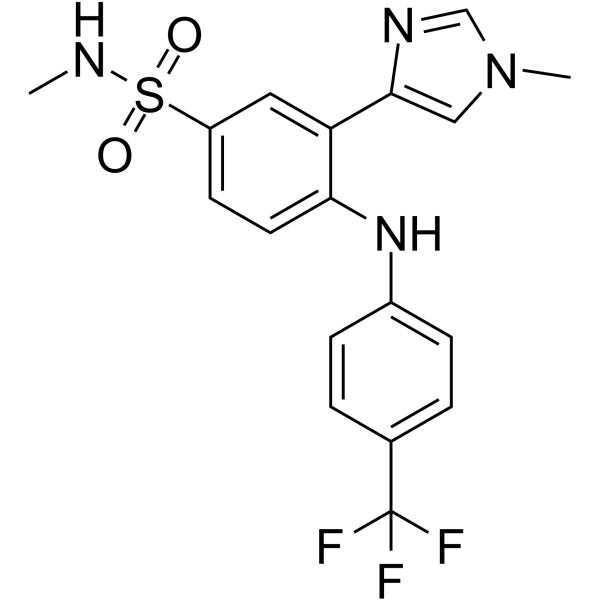
VT103, an analog of VT101, is an orally active and selective TEAD1 protein palmitoylation inhibitor. VT103 inhibits YAP/TAZ-TEAD promoted gene transcription, blocks TEAD auto-palmitoylation, and disrupts interaction between YAP/TAZ and TEAD. VT103 can be used for the research of cancer .
loading...
    loading...
3
3 Cited Publications
Cat. No.: HY-134956
CAS No.: 2417718-25-1
Purity:  99.94%
Target:  

YAP

Research Areas:  

Cancer

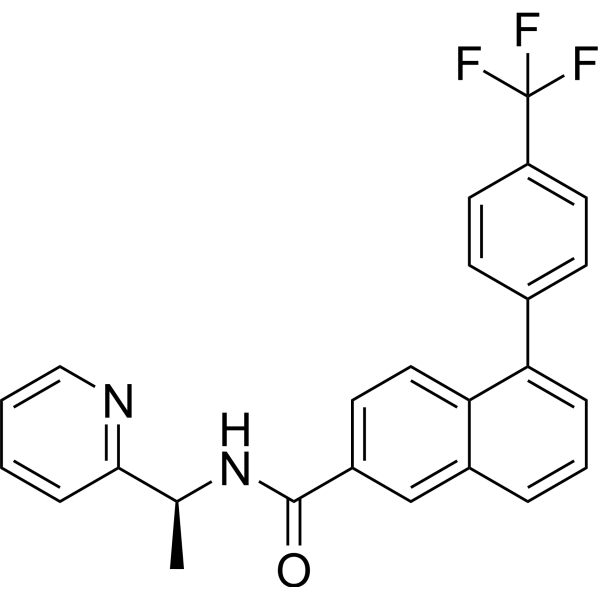
VT104 is a potent and orally active YAP/TAZ inhibitor. VT104 prevents palmitoylation of endogenous TEAD1 and TEAD3 proteins. VT104 can be used in research of cancer .
loading...
    loading...
2
2 Cited Publications
Cat. No.: HY-147135
CAS No.: 2416418-11-4
Purity:  98.48%
Synonyms: TEAD-IN-3
Target:  

YAP Apoptosis

Research Areas:  

Cancer

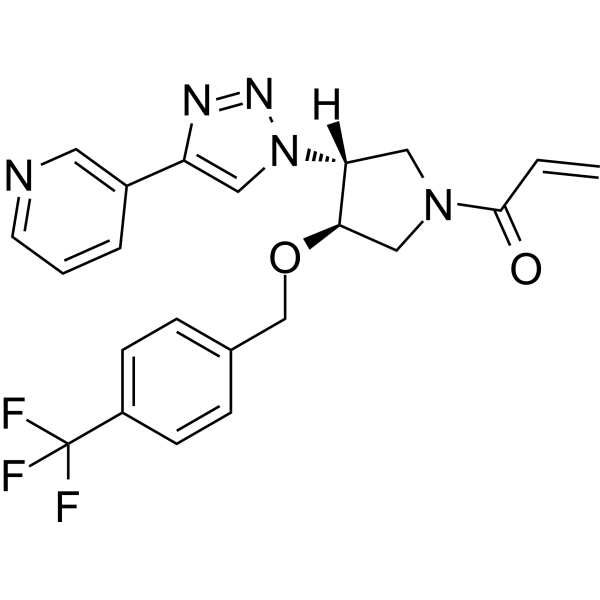
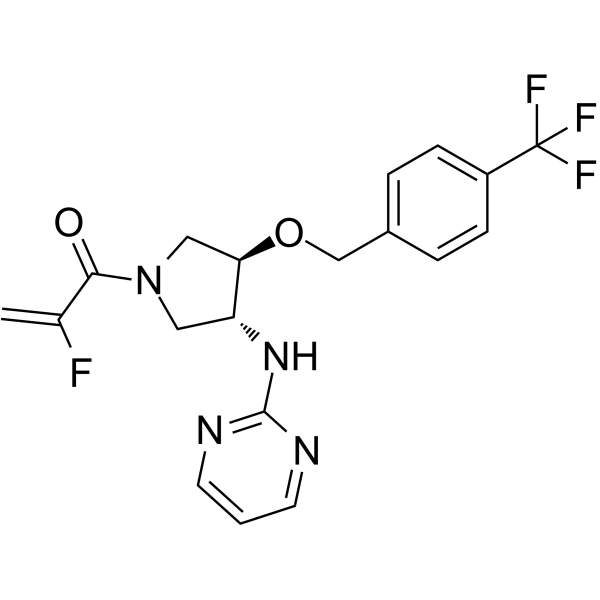
MYF-03-69 (TEAD-IN-3) is a covalent and irreversible TEAD inhibitor with IC50s of 385, 143, 558 and 173 nM for TEAD1, TEAD2, TEAD3 and TEAD4. MYF-03-69 disrupts YAP-TEAD association, suppresses TEAD transcriptional activity (IC50 = 56 nM) and up-regulates apoptosis gene BMF. MYF-03-69 selectively inhibits mesothelioma cancer cells with defective Hippo signaling. MYF-03-69 can be used for the study of malignant pleural mesothelioma (MPM) .
loading...
    loading...
2
2 Cited Publications
Cat. No.: HY-P2244
CAS No.: 1659305-78-8
Target:  

YAP

Research Areas:  

Cancer

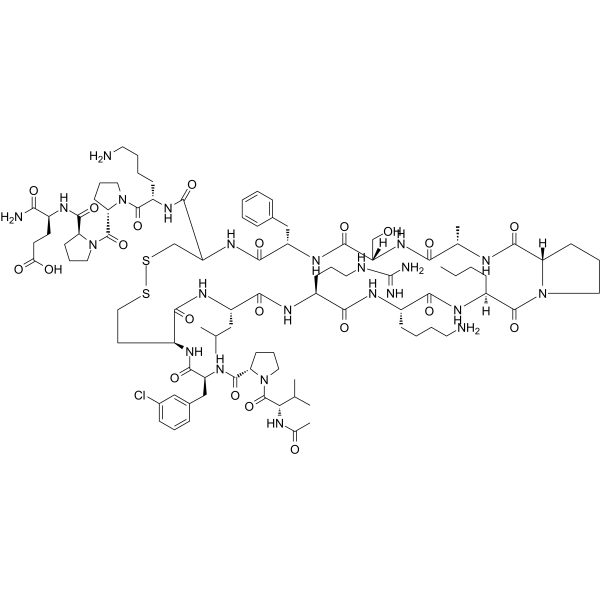
YAP-TEAD-IN-1 is a potent and competitive inhibitor of?YAP–TEAD interaction (IC50=25 nM). YAP-TEAD-IN-1 is a 17mer peptide and shows a higher the binding affinity to TEAD1 (Kd=15 nM) than YAP (50-171) (Kd=40 nM) .
loading...
    loading...
2
2 Cited Publications
Cat. No.: HY-P2244A
CAS No.: 1659305-79-9
Target:  

YAP

Research Areas:  

Cancer

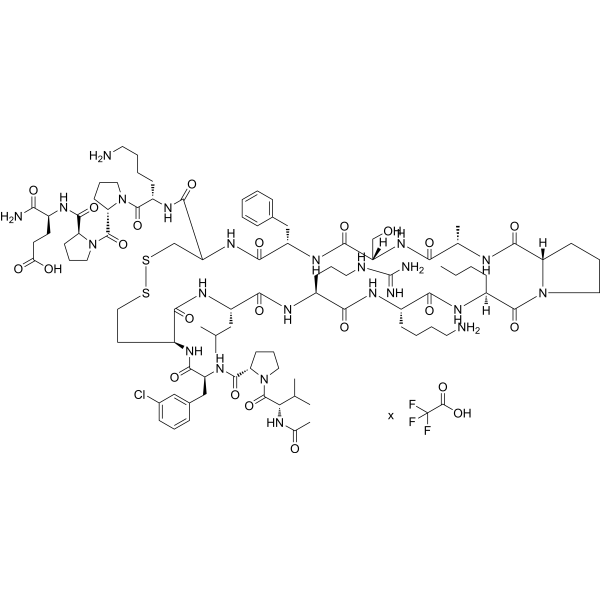
YAP-TEAD-IN-1 TFA is a potent and competitive peptide inhibitor of YAP-TEAD interaction (IC50=25 nM). YAP-TEAD-IN-1 TFA is a 17mer peptide and shows a higher the binding affinity to TEAD1 (Kd=15 nM) than YAP (50-171) (Kd= 40 nM) .
loading...
    loading...
1
1 Cited Publications
Cat. No.: HY-147136
CAS No.: 2857937-59-6
Purity:  99.52%
Target:  

YAP

Research Areas:  

Cancer

MYF-03-176 is an orally active inhibitor of TEAD, and suppresses TEAD transcriptional activity with an IC50 of 11 nM. The IC50 values of MYF-03-176 for TEAD1, TEAD3, and TEAD4 are 47, 32, and 71 nM, respectively. MYF-03-176 inhibits hippo signaling defective malignant pleural mesothelioma (MPM) cells. MYF-03-176 shows strong antitumor efficacy in MPM mouse xenograft model .
loading...
    loading...
Cat. No.: HY-174275
CAS No.: 2762619-63-4
Target:  

YAP

Research Areas:  

Inflammation/Immunology Cancer

TEAD1/3/4-IN-1 is an orally active inhibitor of TEAD1/3/4. TEAD1/3/4-IN-1 inhibits the YAP/TAZ-TEAD interaction, with its EC50 being 2 nM. TEAD1/3/4-IN-1 has anti-proliferative activity against NCI-H226 cells. TEAD1/3/4-IN-1 can be used in the research of lung squamous cell carcinoma .
loading...
    loading...
Cat. No.: HY-147208
CAS No.: 2738542-58-8
Purity:  99.87%
Target:  

YAP

Research Areas:  

Cancer

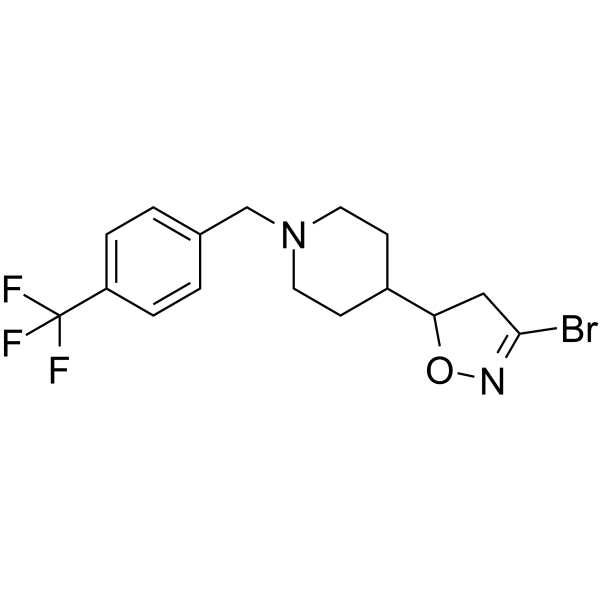
MSC-4106 is an orally active and potent inhibitor of YAP/TAZ-TEAD. MSC-4106 inhibits TEAD1 or TEAD3 auto-palmitoylation and shows inhibitory effect on NCI-H226 tumor xenograft model .
loading...
    loading...
Cat. No.: HY-161569
CAS No.: 3032196-88-3
Target:  

YAP

Research Areas:  

Cancer

TEAD-IN-11 (compound 38) has a good inhibitory effect on TEAD1 (IC50=8.7 nM), TEAD2 (IC50=3.4 nM), TEAD3 (IC50=5.6 nnM). TEAD-IN-11 has good selective activity against TEAD1-3 as a covalent inhibitor. TEAD-IN-11 can be used for cancer research .
loading...
    loading...
Cat. No.: HY-147088
CAS No.: 2563849-97-6
Purity:  98.14%
Target:  

YAP

Research Areas:  

Cancer

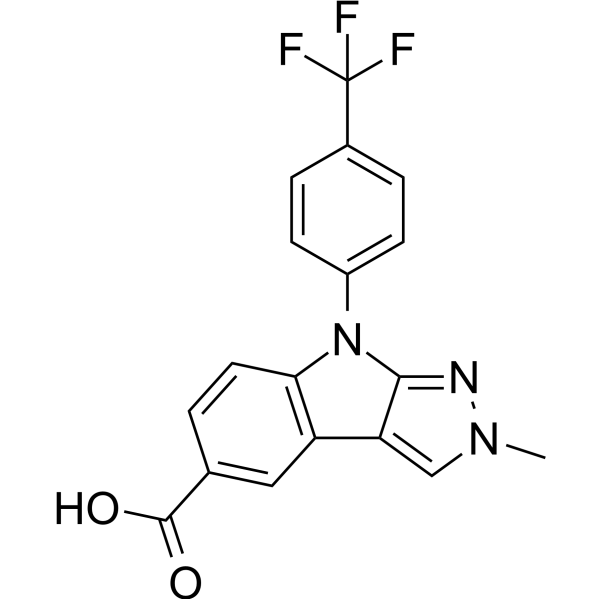
TEAD-IN-2 is a novel, orally active inhibitor of transcriptional enhancer associate domain (TEAD) and modulates TEAD by ubiquitination and/or degradation by compounds. TEAD-IN-2 can be used for the research of a variety of diseases, disorders or conditions associated with TEAD .
loading...
    loading...
Cat. No.: HY-161443
Target:  

YAP

Research Areas:  

Cancer

TEAD-IN-9 (compound 17) is a TEAD1 inhibitor with an IC50 of 0.29 μM. TEAD-IN-9 targets the palmitoyl pocket of TEAD, thereby effectively inhibiting the binding of YAP-TEAD and blocking the transcriptional function of YAP-TEAD .
loading...
    loading...
Cat. No.: HY-168506
Target:  

YAP

Research Areas:  

Cancer

MSC-1254 is a reversible, selective and covalent TEAD1 inhibitor. MSC-1254 can be used for the study of cancer .
loading...
    loading...
Cat. No.: HY-161568
CAS No.: 3032196-65-6
Target:  

YAP

Research Areas:  

Cancer

TEAD-IN-10 (compound 15) has good selective activity and inhibitory effect on TEAD1 (IC50=14 nM), TEAD2 (IC50=179 nM) and TEAD3 (IC50=4 nnM) as a covalent inhibitor. TEAD-IN-10 can be used for cancer research .
loading...
    loading...
Cat. No.: HY-170764
CAS No.: 2738550-24-6
Target:  

YAP

Research Areas:  

Cancer

M3686 (Compound 29) is a potent, selective TEAD1 inhibitor with an IC50 value of 51 nM. M3686 also shows weaker binding activity on TEAD3. M3686 potently inhibits cell viability against YAP-dependent NCI-H226 cell line with an IC50 value of 0.06 uM. M3686 shows strong anti-tumor effects in the NCI-H226 xenograft model .
loading...
    loading...
Cat. No.: HY-168505
Target:  

YAP

Research Areas:  

Cancer

MSC-5046 is a selective TEAD1 inhibitor .
loading...
    loading...
Cat. No.: HY-169316
Target:  

YAP

Research Areas:  

Cancer

YAP/TAZ inhibitor-4 (Compound 45) is an inhibitor of YAP/TAZ, exhibiting TEAD transcriptional activation inhibitory activity by suppressing the binding of YAP or TAZ to TEAD .
loading...
    loading...
Cat. No.: HY-173139
Target:  

YAP

Research Areas:  

Cancer

TEAD-IN-19 (Compound 1l) is a transcriptional inhibitor of TEAD, exhibiting inhibition rates of 38.5%, 36.2%, 57.8%, and 71.3% against TEAD1, TEAD2, TEAD3, and TEAD4, respectively, at a concentration of 10 μM. TEAD-IN-19 shows potent anti-proliferative and anti-migratory activities in prostate cancer cell lines and significantly reduces the expression of TEAD-regulated downstream genes. TEAD-IN-19 holds promise for research in the field of cancer therapy .
loading...
    loading...
Cat. No.: HY-181590
Target:  

PROTACs SNIPERs YAP IAP

Research Areas:  

Cancer

PROTAC TEAD1/IAP degrader-3 is a TEAD1/IAP PROTAC degrader. PROTAC TEAD1/IAP degrader-3 recruits the cIAP1 and XIAP E3 ligases to form a ternary complex, drives proteasomal degradation of TEAD1, and triggers autoubiquitination and proteasomal degradation of cIAP1. PROTAC TEAD1/IAP degrader-3 inhibits cell proliferation. PROTAC TEAD1/IAP degrader-3 regulates Hippo pathway activity by downregulating CTGF gene expression in a TEAD-dependent manner. PROTAC TEAD1/IAP degrader-3 is applicable to the research of mesothelioma .
loading...
    loading...
Cat. No.: HY-181537
Target:  

PROTACs SNIPERs YAP IAP

Research Areas:  

Cancer

PROTAC TEAD1/IAP degrader-2 is an IAP-harnessing TEAD1 PROTAC degrader, with a DC50 of 170 nM against TEAD1 in NCI-H2052 cells. PROTAC TEAD1/IAP degrader-2 exhibits moderate antiproliferative activity in Hippo pathway-dependent mesothelioma cells. PROTAC TEAD1/IAP degrader-2 inhibits the expression of CTGF, but with a weaker effect than the TEAD inhibitor VT-107 (HY-134957). PROTAC TEAD1/IAP degrader-2 can be used in mesothelioma-related research .
loading...
    loading...
Cat. No.: HY-147209
Target:  

YAP

Research Areas:  

Metabolic Disease

DC-TEAD3in03 is a subtype-selective and covalent TEAD3 inhibitor with an IC50 of 0.16 μM. DC-TEAD3in03 exhibits the inhibitory activity on TEAD1/2/4 reduced by more than 100 times. DC-TEAD3in03 has the IC50 for TEAD3 of 1.15 μM in the GAL4-TEAD reporter gene experiment in cells, and it does not interfere with the β-catenin pathway. DC-TEAD3in03 reduces the growth rate of the zebrafish tail fin. DC-TEAD3in03 can be used to study the proportional growth of appendages in vertebrates .
loading...
    loading...

