24 Results for "

Vesicular stomatitis virus

" in MedChemExpress (MCE) Product Catalog:
Products (24)

24 Results for "Vesicular stomatitis virus" in MCE Product Catalog:

  • Targets Recommended:
12
12 Publications Verification
Cat. No.: HY-15273
CAS No.: 1255580-76-7
Purity:  99.48%
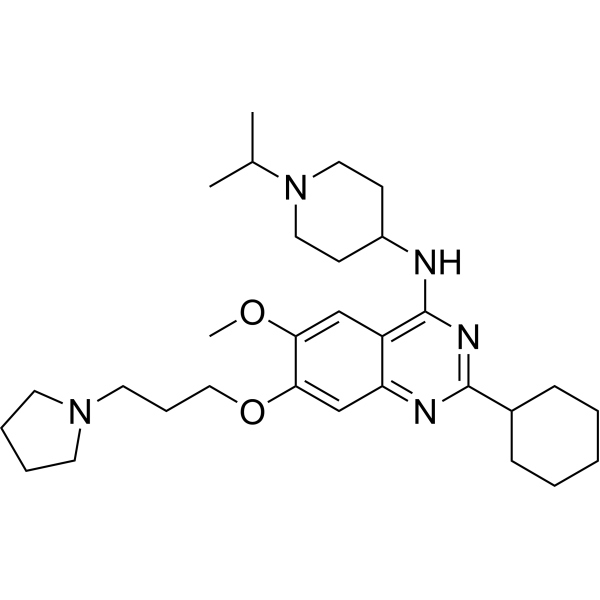
UNC0638, a chemical probe, selectively inhibits G9a and GLP histone methyltransferases with IC50 of 15 nM and 19 nM, respectively. UNC0638 inhibits TNBC cell invasion and migration in vitro. UNC0638 is also an inhibitor of EHMT1/2 and induces fetal hemoglobin (HbF) expression in human erythroid progenitor cell culture. In addition, UNC0638 has anti-FMDV (foot-and-mouth disease virus) and anti-VSV (vesicular stomatitis virus) activities, with excellent potency and selectivity against multiple epigenetic and non-epigenetic targets .
loading...
    loading...
4
4 Cited Publications
Cat. No.: HY-N2011
CAS No.: 1034-01-1
Synonyms: n-Octyl gallate; Stabilizer GA 8
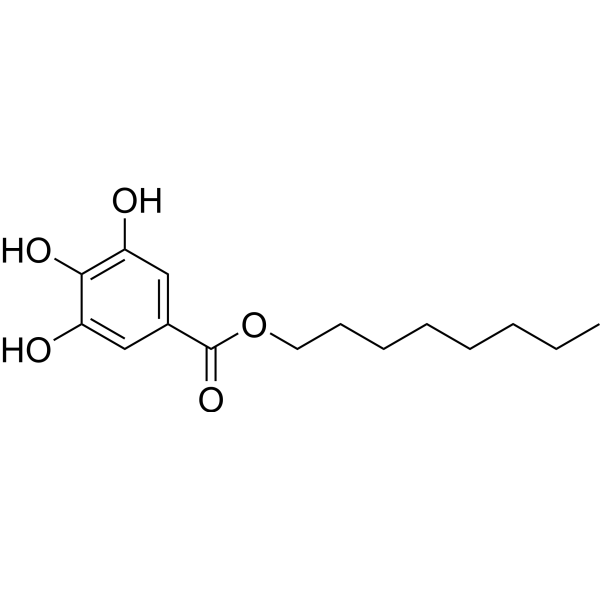
Octyl gallate (Progallin O) is widely used as a food additive, with antimicrobial and antioxidant activity . Octyl gallate (Progallin O) shows selective and sensitive fluorescent property . Octyl gallate shows a marked antiviral effect against HSV-1, vesicular stomatitis virus (VSV) and poliovirus .
loading...
    loading...
1
1 Cited Publications
Cat. No.: HY-P990680
Anti-Mouse CD40 Antibody (FGK4.5/FGK45) is an agonistic rat-derived IgG2a monoclonal antibody targeting mouse CD40. Anti-Mouse CD40 Antibody (FGK4.5/FGK45) enhances T cells responses, dendritic cells maturation and NK cells activation. Anti-Mouse CD40 Antibody (FGK4.5/FGK45) can be used for the researches of cancer, infection, inflammation and immunology, such as CT26 tumor, vesicular stomatitis virus (VSV) infection and transplantation .
loading...
    loading...
1
1 Cited Publications
Cat. No.: HY-W073074
CAS No.: 68938-72-7
Mesoporphyrin IX (dihydrochloride) is a photosensitizer that can be used to modify liposomes. Mesoporphyrin IX (dihydrochloride) can insert into lipid vesicles and disrupt the viral membrane structure in vesicular stomatitis virus (VSV), inducing cross-linking of VSV glycoproteins, thereby inhibiting viral activity .
loading...
    loading...
Cat. No.: HY-169798
CAS No.: 23481-50-7
Target:  

Fluorescent Dye VSV

Research Areas:  

Infection

1,9-Dimethylmethylene blue is a photosensitizer, virus inactivator and hemoglobin oxidant derived from methylene blue. When activated, 1,9-Dimethylmethylene blue generates reactive oxygen species including singlet oxygen, and acts as a metachromatic dye. When activated in monomeric or dimeric form, 1,9-Dimethylmethylene blue induces photoinactivation of R17 phage and vesicular stomatitis virus and oxidizes hemoglobin via non-singlet oxygen reactive oxygen species or singlet oxygen-mediated pathways, respectively. The monomeric form, with higher nucleic acid affinity, achieves virus inactivation under specific conditions without forming methemoglobin. 1,9-Dimethylmethylene blue binds to substances such as glycosaminoglycans to produce color changes. Although it is susceptible to interference from non-glycosaminoglycan components in urine, it is still applicable to spectrophotometric analysis for glycosaminoglycan quantification. With these unique photochemical and binding properties, 1,9-Dimethylmethylene blue is widely used in studies of viral infections and related biochemical analyses .
loading...
    loading...
Cat. No.: HY-173189
CAS No.: 65954-93-0
Synonyms: 2′,5′-ApApA; 2′,5′-trioligoadenylate; 5'-O-Triphosphoryladenylyl-(2'→5')-adenylyl-(2'→5')-adenosine
Target:  

RSV DNA/RNA Synthesis

2-5A (2′,5′-ApApA) is a 5'-triphosphorylated (2',5') oligoadenylate. When covalently linked to an antisense molecule complementary to the target sequence, 2-5A activates RNase L, which subsequently degrades the target RNA bound to the 2-5A chimera. 2-5A can be used in research related to respiratory syncytial virus infection, colorectal adenocarcinoma and melanoma .
loading...
    loading...
Cat. No.: HY-173189A
Synonyms: 2′,5′-ApApA pentasodium; 2′,5′-trioligoadenylate pentasodium; 5'-O-Triphosphoryladenylyl-(2'→5')-adenylyl-(2'→5')-adenosine pentasodium
Target:  

RSV DNA/RNA Synthesis

2-5A pentasodium solution (100 mM) (2′,5′-ApApA pentasodium solution (100 mM)) is a 5'-triphosphorylated (2',5') oligoadenylate. When covalently linked to an antisense molecule complementary to the target sequence, 2-5A pentasodium solution (100 mM) activates RNase L, which subsequently degrades the target RNA bound to the 2-5A pentasodium solution (100 mM) chimera. 2-5A pentasodium solution (100 mM) can be used in research related to respiratory syncytial virus infection, colorectal adenocarcinoma and melanoma .
loading...
    loading...
Cat. No.: HY-173679
CAS No.: 2569517-30-0
Research Areas:  

Infection Cancer

RBN012811 is a highly selective PROTAC-based PARP14 degrader. RBN012811 forms a ternary complex with cereblon by binding to the NAD + site of PARP14, and mediates the specific degradation of PARP14 via the ubiquitin-proteasome pathway (IC50=10 nM). RBN012811 effectively depletes endogenous PARP14 in various cell lines and primary human macrophages, thereby downregulating IL-10 production and IFN-β mRNA levels, increasing phosphorylated STAT1 levels to enhance inflammatory signaling, and inhibiting interferon-induced ADPr condensate formation. RBN012811 also modulates viral replication, exhibiting increased HSV1 replication while reducing VSV replication. RBN012811 has important application value in research related to cancer and viral infections .
loading...
    loading...
Cat. No.: HY-N2011R
CAS No.: 1034-01-1
Synonyms: n-Octyl gallate (Standard); Stabilizer GA 8 (Standard)
Octyl gallate (Standard) is the analytical standard of Octyl gallate. This product is intended for research and analytical applications. Octyl gallate (Progallin O) is widely used as a food additive, with antimicrobial and antioxidant activity . Octyl gallate (Progallin O) shows selective and sensitive fluorescent property . Octyl gallate shows a marked antiviral effect against HSV-1, vesicular stomatitis virus (VSV) and poliovirus .
loading...
    loading...
Cat. No.: HY-134090
CAS No.: 51867-94-8
Synonyms: Antibiotic TS 885; NSC 248958
Target:  

Bacterial VSV

Research Areas:  

Infection

9-Methylstreptimidone is a microbial metabolite originally isolated from Streptomyces sp. S-885 that has antifungal and antiviral activities. It is active against several fungi, including S. sake, S. fragilis, R. rubra, T. rubra, and C. albidus (MICs=4-20 μg/mL) and has antiviral activity against poliovirus, vesicular stomatitis virus (VSV), and Newcastle disease virus (NDV) in vitro (MIC=0.02 μg/mL for all). 9-Methylstreptimidone increases survival in mouse models of infection with influenza A2 (H2N2) or C. albicans when administered prior to infection.
loading...
    loading...
Cat. No.: HY-161844
CAS No.: 1794091-10-3
Target:  

SARS-CoV Dengue Virus

Research Areas:  

Infection

Virapinib is a macropinocytosis inhibitor with antiviral activity. Virapinib exhibits broad-spectrum antiviral activity against SARS-CoV-2, monkeypox virus, tick-borne encephalitis virus, and Ebola pseudotyped vesicular stomatitis virus, and it enhances Dengue Virus infection. Virapinib blocks viral entry by inhibiting macropinocytosis, reduces syncytium formation in SARS-CoV-2-infected cells, and impairs cellular entry of SARS-CoV-2 variants. Virapinib upregulates the expression of genes related to sterol biosynthesis. Virapinib can be used in studies related to COVID-19, monkeypox, tick-borne encephalitis, and Ebola virus infection .
loading...
    loading...
Cat. No.: HY-134922
CAS No.: 181373-35-3
Synonyms: REDD1 inducer-1
Target:  

Influenza Virus mTOR

Research Areas:  

Infection

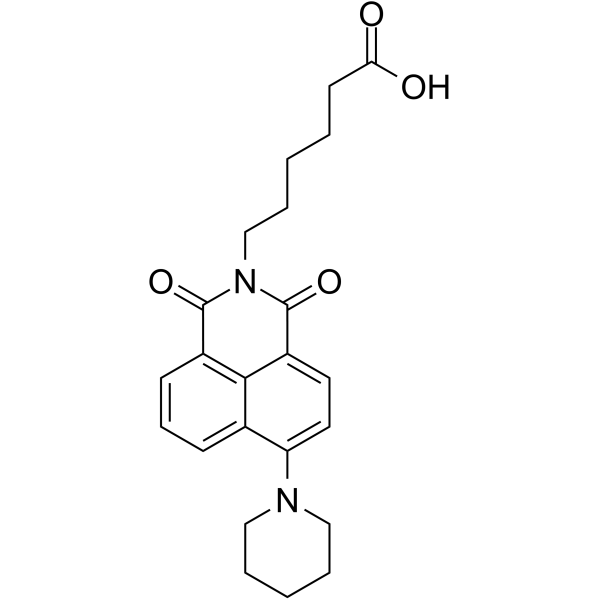
NS1-IN-1 (REDD1 inducer-1) is a naphthalimide compound and an NS1 inhibitor. NS1-IN-1 antagonizes influenza A virus NS1-mediated inhibition of host gene expression and induces REDD1 expression. NS1-IN-1 suppresses the mTORC1 signaling pathway via a TSC1-TSC2 dependent mechanism. NS1-IN-1 exhibits broad antiviral activity against influenza virus and vesicular stomatitis virus (VSV), with low toxicity .
loading...
    loading...
Cat. No.: HY-173189B
CAS No.: 72351-33-8
Synonyms: 2′,5′-ApApA TEA; 2′,5′-trioligoadenylate TEA; 5'-O-Triphosphoryladenylyl-(2'→5')-adenylyl-(2'→5')-adenosine TEA
Target:  

RSV DNA/RNA Synthesis

Research Areas:  

Infection Cancer

2-5A TEA (2′,5′-ApApA TEA) is a 5'-triphosphorylated (2',5') oligoadenylate. When covalently linked to an antisense molecule complementary to the target sequence, 2-5A TEA activates RNase L, which subsequently degrades the target RNA bound to the 2-5A TEA chimera. 2-5A TEA can be used in research related to respiratory syncytial virus infection, colorectal adenocarcinoma and melanoma .
loading...
    loading...
Cat. No.: HY-186018
Target:  

Clathrin VSV

Research Areas:  

Infection

Pitstop 2d is a clathrin (Clathrin) terminal domain (TD) inhibitor with an IC50 of 1.7 μM. Pitstop 2d occupies the Clathrin box binding site within the clathrin TD, blocking the binding of endocytic protein ligands such as Epsin to clathrin. Pitstop 2d inhibits clathrin-mediated endocytosis (Endocytosis) and the cellular entry of vesicular stomatitis virus (VSV). Pitstop 2d has low cytotoxicity, does not disrupt the nuclear permeability barrier, and does not inhibit clathrin-independent endocytosis. Pitstop 2d can be used in studies related to endocytosis and vesicular stomatitis virus infection .
loading...
    loading...
Cat. No.: HY-112543
CAS No.: 443639-96-1
Purity:  99.73%
Target:  

Influenza Virus

Research Areas:  

Infection

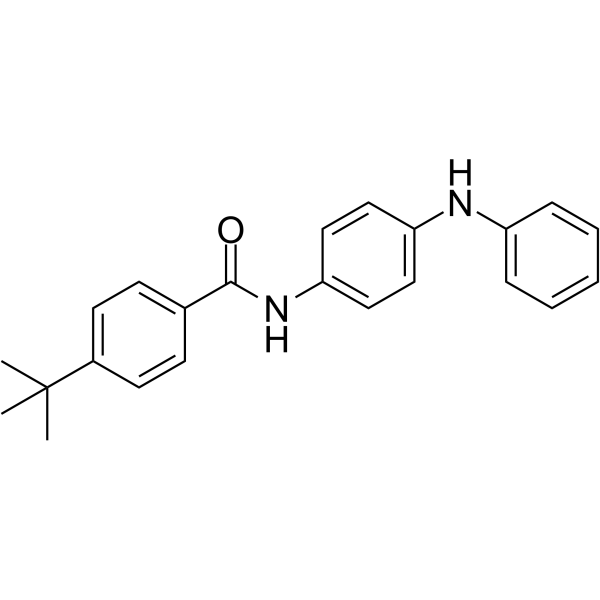
S119-8 is a broad spectrum inhibitor of influenza A and B viruses, showing activity against multiple influenza B viruses and an oseltamivir-resistant influenza A virus, but does not inhibit a non-influenza virus, vesicular stomatitis nirus (VSV) .
loading...
    loading...
Cat. No.: HY-175769
Target:  

VSV

Research Areas:  

Infection

SMU-V18 is a vesicular stomatitis virus (VSV) inhibitor, with an EC50 of 6.2 μM. SMU-V18 inhibits VSV-GFP fluorescence intensity, viral mRNA/protein expression, and progeny virus replication. SMU-V18 interferes with early viral infection stages, also effective against wild-type VSV (VSV-WT). SMU-V18 inhibits VSV-GFP in mouse tissues and prolongs survival. SMU-V18 can be used for the study of vesicular stomatitis virus (VSV) infection .
loading...
    loading...
Cat. No.: HY-N11056
CAS No.: 17803-12-2
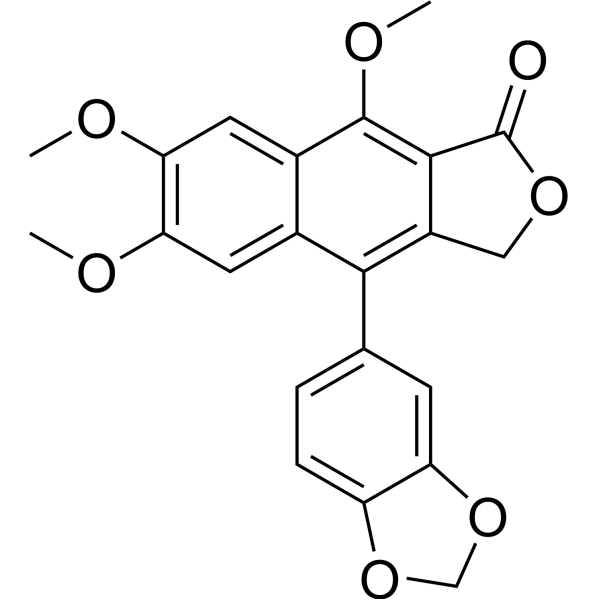
Justicidin C is an antiviral lignan. Justicidin C shows strong antiviral activity against vesicular stomatitis virus and low cytotoxicity against rabbit lung cells (RL-33) .
loading...
    loading...
Cat. No.: HY-188062
CAS No.: 138751-31-2
Target:  

VSV CMV VZV

Research Areas:  

Infection

2-Fluoroneplanocin A is an Antiviral agent. 2-Fluoroneplanocin A inhibits rabbit Adenosylhomocysteine hydrolase with an IC50 of 0.20 μg/mL. 2-Fluoroneplanocin A exhibits antiviral activity against vaccinia virus, vesicular stomatitis virus, parainfluenza virus, reovirus, Junín virus, Tacaribe virus, cytomegalovirus, measles virus, mumps virus, and thymidine kinase-deficient varicella-zoster virus; it shows no antiviral activity against herpes simplex virus, coxsackievirus B4, poliovirus type 1, Semliki Forest virus, or HIV at subtoxic concentrations. 2-Fluoroneplanocin A can be used in research related to vaccinia virus infection, vesicular stomatitis virus infection, parainfluenza virus infection, reovirus infection, Junín virus infection, Tacaribe virus infection, human cytomegalovirus infection, measles virus infection, mumps virus infection, and varicella-zoster virus infection .
loading...
    loading...
Cat. No.: HY-110093
CAS No.: 1255517-77-1
UNC0638 hydrate selectively inhibits G9a and GLP histone methyltransferases with IC50 of 15 nM and 19 nM, respectively. UNC0638 hydrate inhibits TNBC cell invasion and migration in vitro. UNC0638 hydrate is also an inhibitor of EHMT1/2 and induces fetal hemoglobin (HbF) expression in human erythroid progenitor cell culture. In addition, UNC0638 hydrate has anti-FMDV (foot-and-mouth disease virus) and anti-VSV (vesicular stomatitis virus) activities, with excellent potency and selectivity against multiple epigenetic and non-epigenetic targets .
loading...
    loading...
Cat. No.: HY-107009
CAS No.: 149754-11-0
Target:  

VZV HSV VSV

Research Areas:  

Infection

CTC 96 is an antiviral agent, showing inhibitory effects particularly on herpes viruses and adenoviruses. CTC 96 directly blocks the fusion process between the viral envelope and the cell membrane, preventing the entry of viral nucleic acids and proteins into the cells. CTC 96 can completely block the penetration and intercellular transmission of HSV-1, preventing the synthesis of viral proteins and mRNA. CTC 96 exhibits significant anti-adenovirus activity in rabbit eye models. CTC 96 is also effective against varicella-zoster virus (VZV) and vesicular stomatitis virus (VSV). CTC 96 can be used for broad-spectrum antiviral research .
loading...
    loading...

