1. Search Result
Search Result
Results for "

agricultural pest control

" in MedChemExpress (MCE) Product Catalog:

26

Inhibitors & Agonists

3

Natural
Products

5

Isotope-Labeled Compounds

Cat. No. Product Name Target Research Areas Chemical Structure
  • HY-118504
    Sulfoxaflor
    1 Publications Verification

    Environmental Pollutants nAChR Neurological Disease
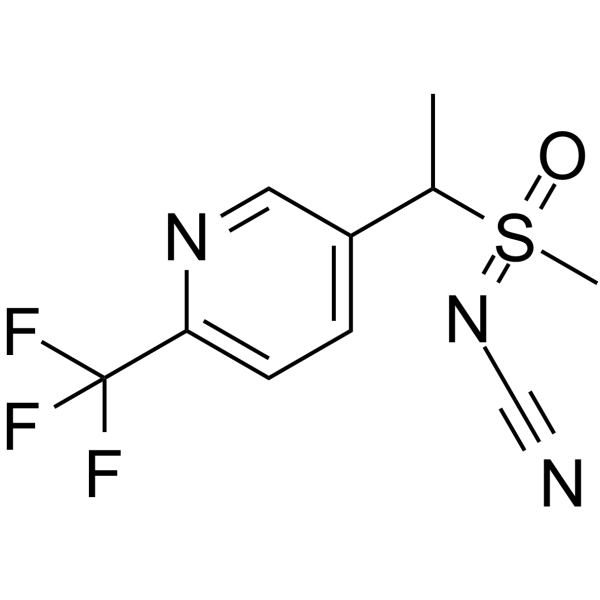
    Sulfoxaflor is an orally active full agonist of insect nicotinic acetylcholine receptors (nAChRs), targeting the α-bungarotoxin-insensitive nAChR1 and nAChR2 subtypes. Sulfoxaflor binding to nACh is not inhibited by d-Tubocurarine (HY-125901), but is partially inhibited by Mecamylamine (HY-B1395A). Sulfoxaflor induces inward currents by activating nAChRs, leading to insect neurotoxicity. Sulfoxaflor can be used in the research of agricultural pest control, pesticide toxicology, insect neural receptor pharmacology, etc .
    Sulfoxaflor
  • HY-B0827
    Dinotefuran
    4 Publications Verification

    MTI-446

    Environmental Pollutants Parasite nAChR Infection Cardiovascular Disease
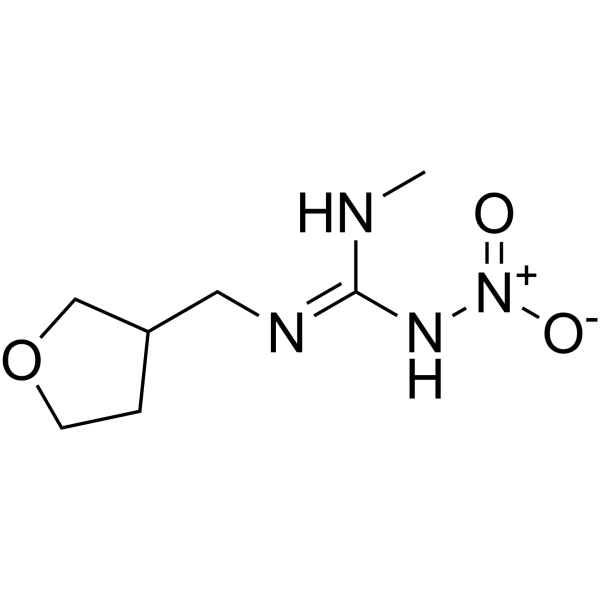
    Dinotefuran is an orally active and competitive inhibitor and insecticide targeting insect nicotinic acetylcholine receptors (nAChRs). Dinotefuran blocks neural signaling and induces neural dysfunction in insects. Dinotefuran binds to [ 3H]epibatidine in the neural cord membrane of American cockroach with an IC50 of 890 nM and to [ 3H]α-bungarotoxin with an IC50 of 36.1 μM. Dinotefuran exhibits knockdown activity (KD50=0.351 nmol/g) and lethal activity (LD50=0.173 nmol/g) against German cockroach. Dinotefuran is mainly used for agricultural pest control, such as field control of piercing-sucking and chewing insects (e.g., aphids, planthoppers), while its environmental toxicological effects (e.g., oxidative stress and reproductive neurotoxicity on earthworms) are also a research focus to assess ecological risks .
    Dinotefuran
  • HY-B1072A

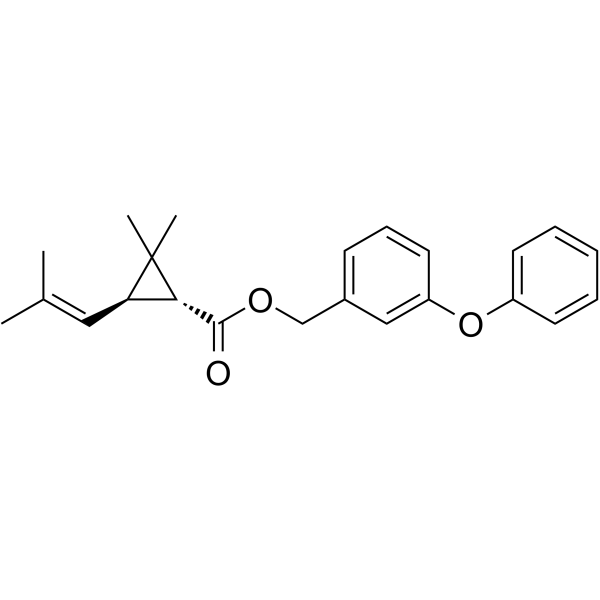
    (-)-trans-Phenothrin

    Parasite Infection
    D-Phenothrin ((-)-trans-Phenothrin), an orally active Type II synthetic pyrethroid, is widely used to kill insects, mosquitoes, and human lice. D-Phenothrin is also used in veterinary medicine to control insect pests on animals and protect agricultural crops .
    D-Phenothrin
  • HY-B1953
    Thiacloprid
    1 Publications Verification

    Environmental Pollutants Insecticide nAChR Infection
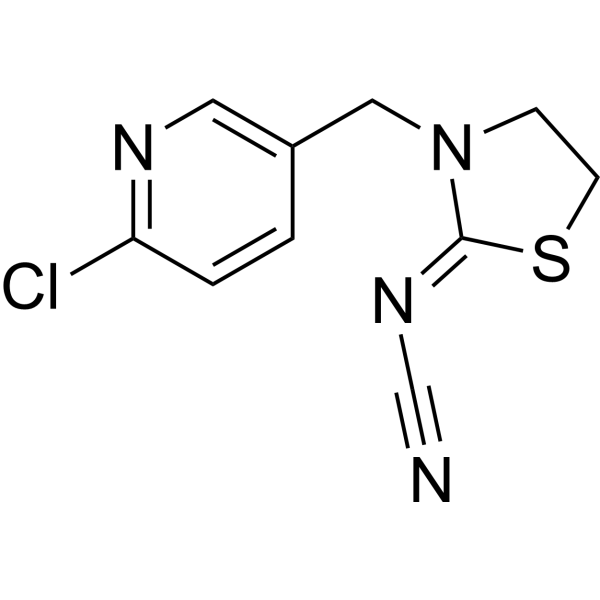
    Thiacloprid is an orally active neurotoxic insecticide and also a nAChR agonist. Thiacloprid reduces the viability of healthy cells, depletes reduced glutathione, and increases MDA levels, thereby inducing cytotoxicity and oxidative stress damage. In practical applications, Thiacloprid has lower acute toxicity to honeybees than other compounds of the same class such as Imidacloprid (HY-B0838), but it still significantly impairs the learning and memory function, immune capacity and survival status of honeybees. Thiacloprid induces intestinal microbial dysbiosis and reduces survival rate in middle-aged honeybees, increases the risk of premature collapse in bumblebee colonies, and significantly decreases the final colony weight and reproductive output. Thiacloprid is used in broad-spectrum agricultural pest control, often alone or in combination with Deltamethrin (HY-B1971), and meets the pest management needs of various crops including potatoes, cabbages, various fruits and vegetables, and nuts .
    Thiacloprid
  • HY-B0816

    Environmental Pollutants Insecticide Others Cancer
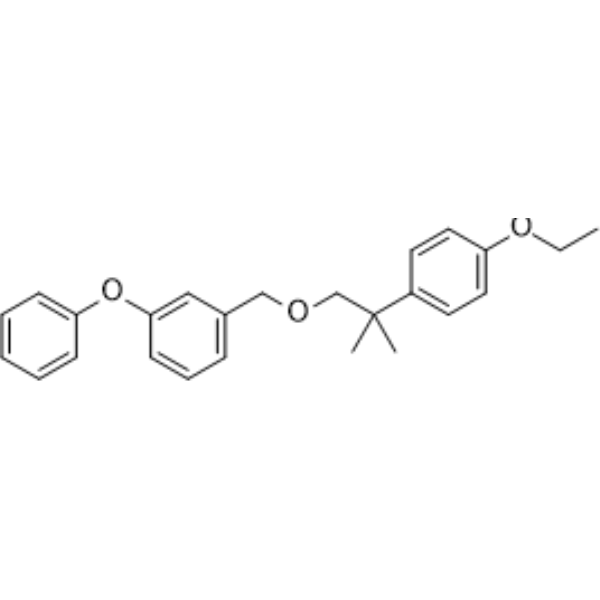
    Etofenprox is an orally active non-ester pyrethroid insecticide. Etofenprox induces toxicity against many pest insects, including Diptera rather than mammalian and fish. Etofenprox has a liver tumor-promoting activity in rats accompanied with microsomal ROS production increase. Etofenprox can be used in agricultural pest control and malaria research .
    Etofenprox
  • HY-B1072

    Environmental Pollutants Parasite Insecticide Infection
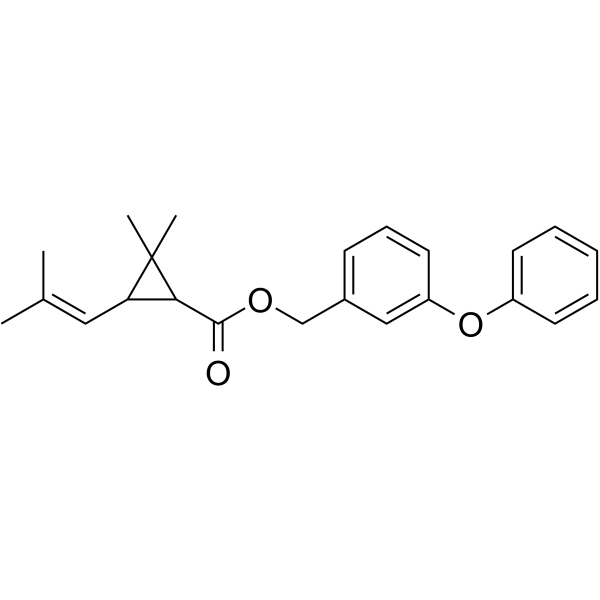
    Phenothrin is a Type I pyrethroid insecticide. Phenothrin induces dose-dependent DNA damage in human peripheral blood lymphocytes and hepatocytes, and exhibits definite genotoxic potential. Phenothrin acts as an insecticide for pest control in agriculture, households and public health, as well as for the elimination of human head lice infestations .
    Phenothrin
  • HY-122062
    Fenoxycarb
    1 Publications Verification

    Environmental Pollutants Insecticide Others
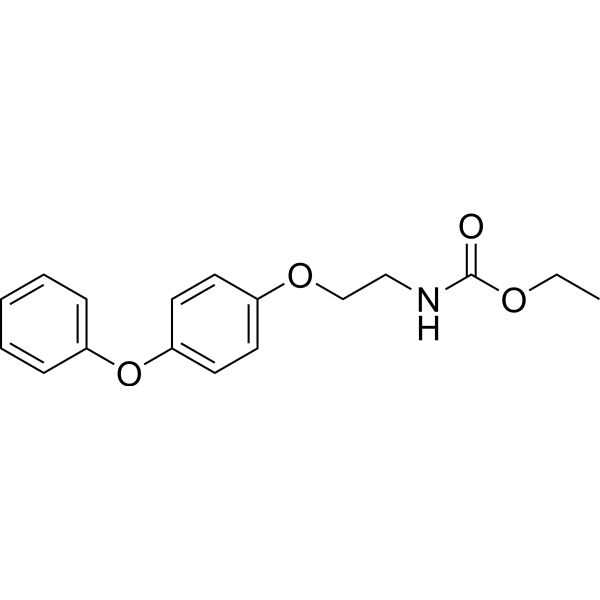
    Fenoxycarb, a juvenile hormone, is an insecticide and can be used for agricultural pest control .
    Fenoxycarb
  • HY-B1970

    2,4'-DDT

    Insecticide Estrogen Receptor/ERR Endocrinology
    o,p'-DDT (2,4'-DDT) is a chlorinated organic pesticide with estrogenic activity. o,p'-DDT is persistent in the environment, can accumulate in organisms and disrupt the endocrine system. o,p'-DDT is used in agriculture as a pesticide, especially for controlling insect pests. The use of o,p'-DDT has led to toxic effects in organisms, raising widespread concern about its environmental and health effects. o,p'-DDT has also led to research into its long-term effects in ecosystems .
    o,p'-DDT
  • HY-163776

    Parasite Others
    Insecticidal agent 13 (compound A15) is a phenylpyrazole derivative with insecticidal and acaricidal activities, which can be used in the research of agricultural pest control .
    Insecticidal agent 13
  • HY-N16475

    nAChR Infection
    Spinosyn L is a selective nicotinic acetylcholine receptors (nAChR) agonist. Spinosyn L causes sustained neural excitation and paralysis in insects. Spinosyn L is promising for research of pesticides for controlling Lepidoptera, Diptera, and other agricultural pests .
    Spinosyn L
  • HY-B1953R

    Reference Standards nAChR Insecticide Infection
    Thiacloprid (Standard) is the analytical standard of Thiacloprid. This product is intended for research and analytical applications. Thiacloprid is an orally active neurotoxic insecticide and also a nAChR agonist. Thiacloprid reduces the viability of healthy cells, depletes reduced glutathione, and increases MDA levels, thereby inducing cytotoxicity and oxidative stress damage. In practical applications, Thiacloprid has lower acute toxicity to honeybees than other compounds of the same class such as Imidacloprid (HY-B0838), but it still significantly impairs the learning and memory function, immune capacity and survival status of honeybees. Thiacloprid induces intestinal microbial dysbiosis and reduces survival rate in middle-aged honeybees, increases the risk of premature collapse in bumblebee colonies, and significantly decreases the final colony weight and reproductive output. Thiacloprid is used in broad-spectrum agricultural pest control, often alone or in combination with Deltamethrin (HY-B1971), and meets the pest management needs of various crops including potatoes, cabbages, various fruits and vegetables, and nuts .
    Thiacloprid (Standard)
  • HY-126772

    Insecticide Infection
    Tralomethrin is a pyrethroid insecticide used to control a wide range of pests in agriculture and public health .
    Tralomethrin
  • HY-W706237

    Isotope-Labeled Compounds Insecticide Infection
    Tralomethrin-d5 is the deuterium labeled Tralomethrin (HY-126772). Tralomethrin is a pyrethroid insecticide used to control a wide range of pests in agriculture and public health .
    Tralomethrin-d5
  • HY-W488109

    Insecticide
    Genite is a highly effective pesticide with strong insecticidal activity. Genite can effectively control the number of various pests and is widely used in agricultural production. The use of Genite can significantly increase the yield and quality of crops.
    Genite
  • HY-B0816R

    Insecticide Reference Standards Others
    Etofenprox (Standard) is the analytical standard of Etofenprox. This product is intended for research and analytical applications. Etofenprox is an orally active non-ester pyrethroid insecticide. Etofenprox induces toxicity against many pest insects, including Diptera rather than mammalian and fish. Etofenprox has a liver tumor-promoting activity in rats accompanied with microsomal ROS production increase. Etofenprox can be used in agricultural pest control and malaria research .
    Etofenprox (Standard)
  • HY-W718786

    Isotope-Labeled Compounds Insecticide Cancer
    Etofenprox-phenol-d5 is the deuterium labeled Etofenprox (HY-B0816). Etofenprox is an orally active non-ester pyrethroid insecticide. Etofenprox induces toxicity against many pest insects, including Diptera rather than mammalian and fish. Etofenprox has a liver tumor-promoting activity in rats accompanied with microsomal ROS production increase. Etofenprox can be used in agricultural pest control and malaria research .
    Etofenprox-phenol-d5
  • HY-174441

    Chloride Channel Others
    Molluscicidal agent-2 (Compound 16) is a molluscicide with an LC50 of 0.58 mg/mL against Monacha cartusiana snails. Molluscicidal agent-2 exerts its effect through a dual mode of action: gastrointestinal toxicity and GABAA-GluCl channel antagonism. Molluscicidal agent-2 can be used in research on agricultural pest control .
    Molluscicidal agent-2
  • HY-B1072R

    Reference Standards Parasite Environmental Pollutants Insecticide Infection
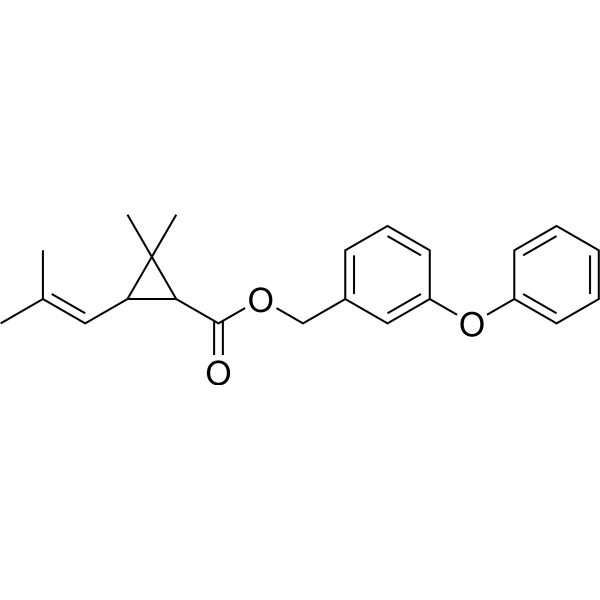
    Phenothrin (Standard) is the analytical standard of Phenothrin (HY-B1072). This product is intended for research and analytical applications. Phenothrin is a Type I pyrethroid insecticide. Phenothrin induces dose-dependent DNA damage in human peripheral blood lymphocytes and hepatocytes, and exhibits definite genotoxic potential. Phenothrin acts as an insecticide for pest control in agriculture, households and public health, as well as for the elimination of human head lice infestations.
    Phenothrin (Standard)
  • HY-118504S

    Isotope-Labeled Compounds nAChR Neurological Disease
    Sulfoxaflor-d3 is the deuterium labeled Sulfoxaflor (HY-118504). Sulfoxaflor is an orally active full agonist of insect nicotinic acetylcholine receptors (nAChRs), targeting the α-bungarotoxin-insensitive nAChR1 and nAChR2 subtypes. Sulfoxaflor binding to nACh is not inhibited by d-Tubocurarine (HY-125901), but is partially inhibited by Mecamylamine (HY-B1395A). Sulfoxaflor induces inward currents by activating nAChRs, leading to insect neurotoxicity. Sulfoxaflor can be used in the research of agricultural pest control, pesticide toxicology, insect neural receptor pharmacology, etc .
    Sulfoxaflor-d3
  • HY-B1953S

    nAChR Insecticide Infection
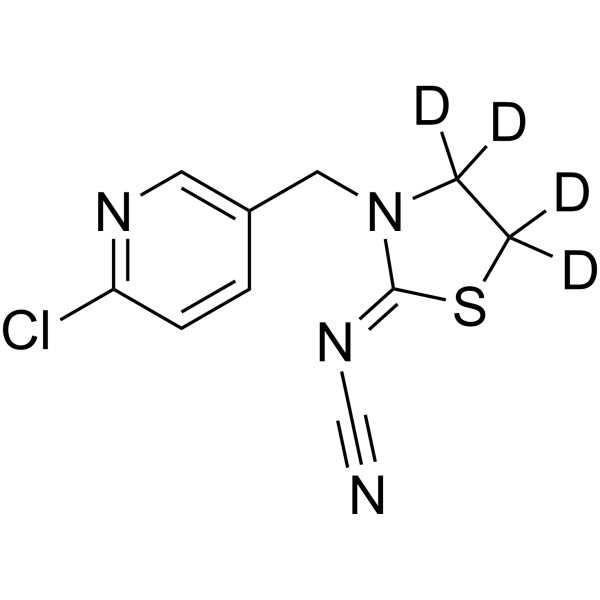
    Thiacloprid-d4 is the deuterium labeled Thiacloprid. Thiacloprid is an orally active neurotoxic insecticide and also a nAChR agonist. Thiacloprid reduces the viability of healthy cells, depletes reduced glutathione, and increases MDA levels, thereby inducing cytotoxicity and oxidative stress damage. In practical applications, Thiacloprid has lower acute toxicity to honeybees than other compounds of the same class such as Imidacloprid (HY-B0838), but it still significantly impairs the learning and memory function, immune capacity and survival status of honeybees. Thiacloprid induces intestinal microbial dysbiosis and reduces survival rate in middle-aged honeybees, increases the risk of premature collapse in bumblebee colonies, and significantly decreases the final colony weight and reproductive output. Thiacloprid is used in broad-spectrum agricultural pest control, often alone or in combination with Deltamethrin (HY-B1971), and meets the pest management needs of various crops including potatoes, cabbages, various fruits and vegetables, and nuts .
    Thiacloprid-d4
  • HY-W747609

    Parasite Infection
    Butoxycarboxim is an organophosphate insecticide/acaricide mainly used in agriculture to control a variety of pests.
    Butoxycarboxim
  • HY-W747601

    Cholinesterase (ChE) SOD Reactive Oxygen Species (ROS) Bcl-2 Family MDM-2/p53 Apoptosis Insecticide Infection
    Chlorphoxim is a broad-spectrum and highly efficient insecticide. Chlorphoxim kills pests by inhibiting AChE. Chlorphoxim inhibits the activities of SOD and CAT in zebrafish embryos. Chlorphoxim induces oxidative stress in zebrafish embryos by activating ROS. Chlorphoxim induces apoptosis by upregulating the expression levels of Bax, Bcl2 and p53 in zebrafish embryos. Chlorphoxim exhibits neurotoxicity and developmental toxicity. Chlorphoxim is used in agricultural research for the control of various pests .
    Chlorphoxim
  • HY-N16837

    Insecticide Infection
    6''-O-β-D-Apiofuranosylastragalin (compound 1) is a flavonoid glycoside that can be naturally extracted from the methanol extract of fresh leaves of Solidago altissima L. (a plant of the genus Solidago in the Asteraceae family). The related methanol extract exhibits antifeedant activity against Thrips palmi and can be used in the research of natural antifeedants for agricultural pest control .
    6''-O-β-D-Apiofuranosylastragalin
  • HY-124920

    Mercaptodimethur

    Insecticide SOD Glutathione Peroxidase Reactive Oxygen Species (ROS) Cholinesterase (ChE) Infection Inflammation/Immunology
    Methiocarb (Mercaptodimethur) is an orally active carbamate insecticide. Methiocarb exerts dose-dependent toxic effects on onions. In addition to inhibiting acetylcholinesterase to induce cholinergic excitation, Methiocarb can induce lipid peroxidation in liver, kidney, brain and testicular tissues and alter reduced glutathione levels by generating ROS. Methiocarb can be used for agricultural pest control and research on oxidative stress-related cellular damage in mammals .
    Methiocarb
  • HY-N18288

    Insecticide Infection
    6''-O-(3'''-Hydroxy-3'''-methylglutaryl) vitexin is an orally active flavonoid glycoside and insecticide that can be isolated from the twigs of Eleusine coracana. 6''-O-(3'''-Hydroxy-3'''-methylglutaryl) vitexin exhibits distinct antifeedant activity against Nilaparvata lugens (brown planthopper) nymphs and effectively inhibits their feeding behavior. 6''-O-(3'''-Hydroxy-3'''-methylglutaryl) vitexin can serve as a plant-derived natural defense substance for regulating pest behavior and investigating potential control mechanisms of agricultural pests .
    6''-O-(3'''-Hydroxy-3'''-methylglutaryl) vitexin
  • HY-124920S

    Mercaptodimethur-d3

    Isotope-Labeled Compounds Infection Inflammation/Immunology
    Methiocarb-d3 is the deuterium labeled Methiocarb (HY-124920). Methiocarb (Mercaptodimethur) is an orally active carbamate insecticide. Methiocarb exerts dose-dependent toxic effects on onions. In addition to inhibiting acetylcholinesterase to induce cholinergic excitation, Methiocarb can induce lipid peroxidation in liver, kidney, brain and testicular tissues and alter reduced glutathione levels by generating ROS. Methiocarb can be used for agricultural pest control and research on oxidative stress-related cellular damage in mammals .
    Methiocarb-d3

Inquiry Online

Your information is safe with us. * Required Fields.

Salutation


Country or Region *

Applicant Name *


Organization Name *

Department *


Email Address *


Product Name *

Cat. No.


Requested quantity *

Phone Number *


Remarks

Inquiry Online

Inquiry Information

Product Name:
Cat. No.:
Quantity:
MCE Japan Authorized Agent:

