



26002-80-2
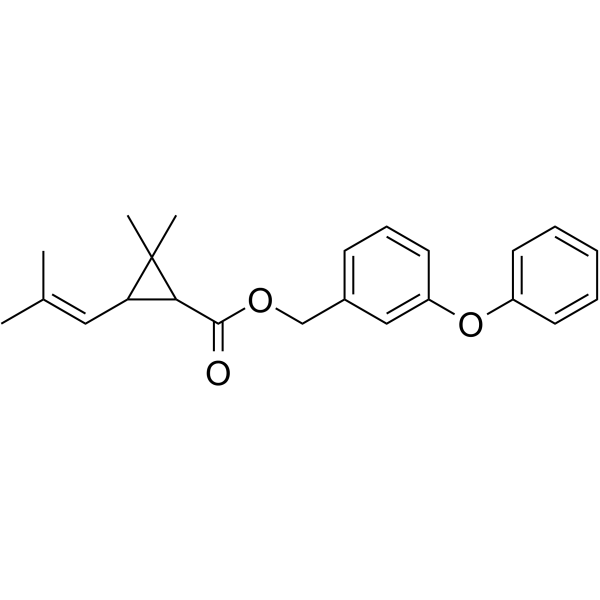
Chemical Structure
Phenothrin
- No. CAS: 26002-80-2
- Formula:C23H26O3
- Molecular Weight:350.45
IUPAC Name: 3-phenoxybenzyl 2,2-dimethyl-3-(2-methylprop-1-en-1-yl)cyclopropane-1-carboxylate
InChIKey: SBNFWQZLDJGRLK-UHFFFAOYSA-N
SMILES: O=C(C1C(C)(C)C1/C=C(C)\C)OCC2=CC=CC(OC3=CC=CC=C3)=C2
Biological Activity: Phenothrin is a voltage-gated sodium channel modulator. Phenothrin mainly acts on sodium channels in the closed resting state, slows their opening and closing, increases the steady-state sodium current, and prolongs the sodium current through slowly decaying tail currents. Phenothrin induces dose-dependent DNA damage and oxidative DNA damage in human peripheral blood lymphocytes and human hepatocytes. Phenothrin is used as an insecticide for agricultural, household, and public health insect control and for eliminating human lice infestations[1][2][3].
| Referencia número | Nombre del producto | Pureza | Descripciòn | Pricing | |||||||||||||||||||
|---|---|---|---|---|---|---|---|---|---|---|---|---|---|---|---|---|---|---|---|---|---|---|---|
|
|
Phenothrin | 99.06% | Phenothrin is a voltage-gated sodium channel modulator. Phenothrin mainly acts on sodium channels in the closed resting state, slows their opening and closing, increases the steady-state sodium current, and prolongs the sodium current through slowly decaying tail currents. Phenothrin induces dose-dependent DNA damage and oxidative DNA damage in human peripheral blood lymphocytes and human hepatocytes. Phenothrin is used as an insecticide for agricultural, household, and public health insect control and for eliminating human lice infestations. | ||||||||||||||||||||
|
loading...
/
|
|||||||||||||||||||||||
|
|
Phenothrin (Standard) | ≥98% | Phenothrin (Standard) is the analytical standard of Phenothrin (HY-B1072). This product is intended for research and analytical applications. Phenothrin is a voltage-gated sodium channel modulator. Phenothrin mainly acts on sodium channels in the closed resting state, slows their opening and closing, increases the steady-state sodium current, and prolongs the sodium current through slowly decaying tail currents. Phenothrin induces dose-dependent DNA damage and oxidative DNA damage in human peripheral blood lymphocytes and human hepatocytes. Phenothrin is used as an insecticide for agricultural, household, and public health insect control and for eliminating human lice infestations. | ||||||||||||||||||||
|
loading...
/
|
|||||||||||||||||||||||
-
Similarity Score 1.00
 HY-118839trans-Phenothrin
-
Similarity Score 1.00
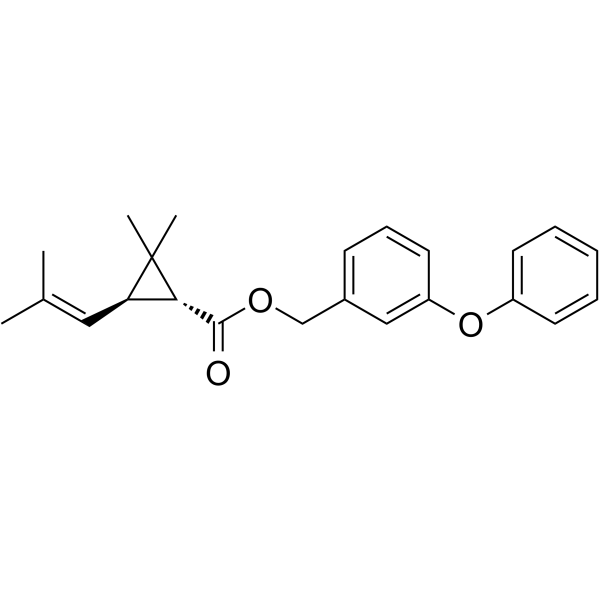 HY-B1072AD-Phenothrin
-
Similarity Score 0.86
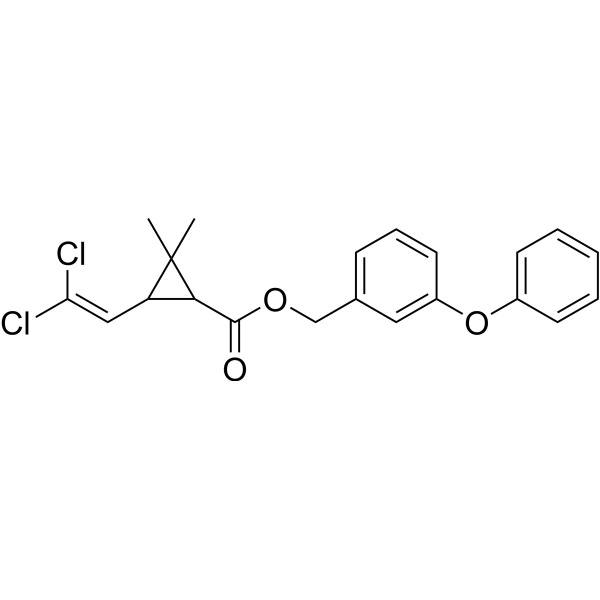 HY-B0887Permethrin
-
Similarity Score 0.86
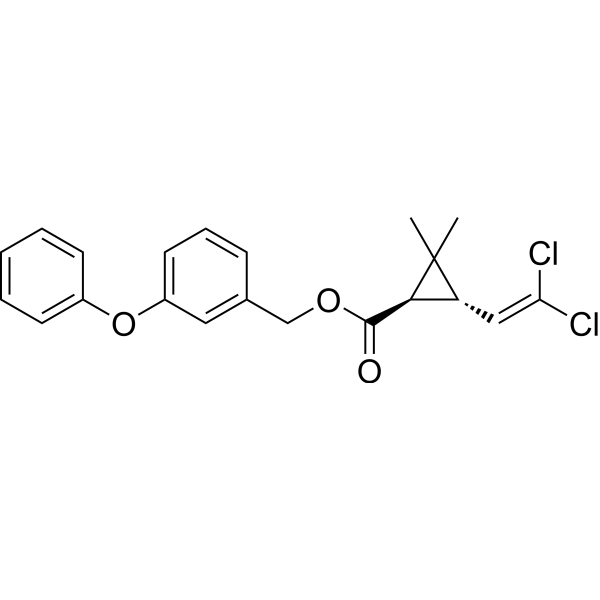 HY-B0887A(+)-trans-Permethrin
-
Similarity Score 0.86
 HY-B0887BR(-)-trans-Permethrin (Standard)
-
Similarity Score 0.86
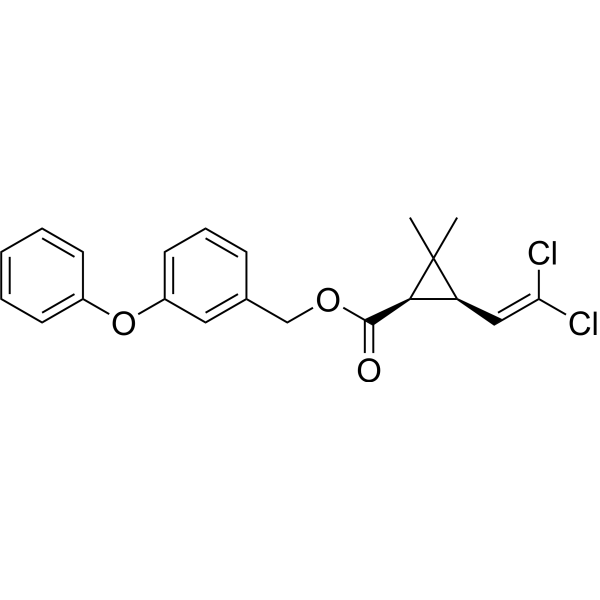 HY-B0887C1R-cis-Permethrin
-
Similarity Score 0.86
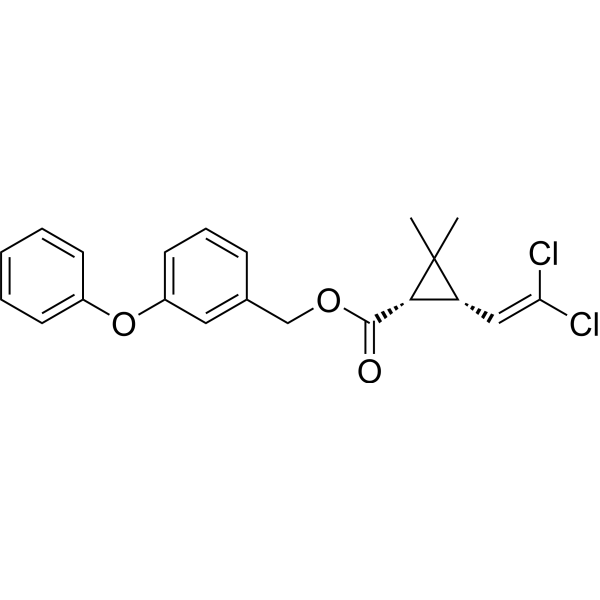 HY-B0887D(-)-cis-Permethrin
-
Similarity Score 0.86
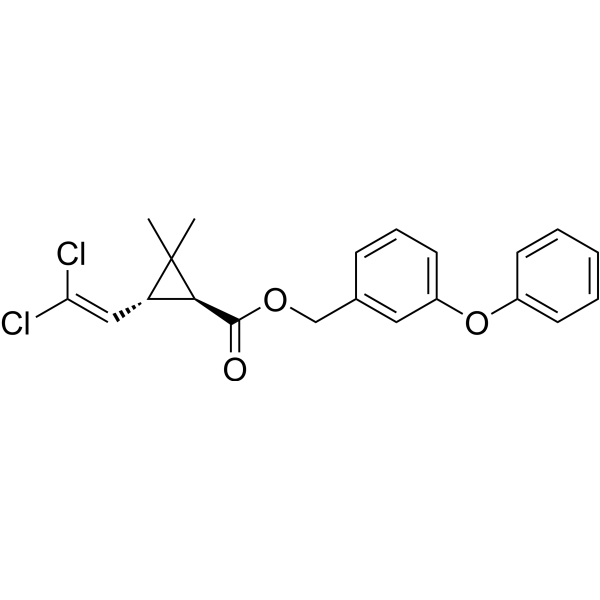 HY-W588212trans-Permethrin
-
Similarity Score 0.77
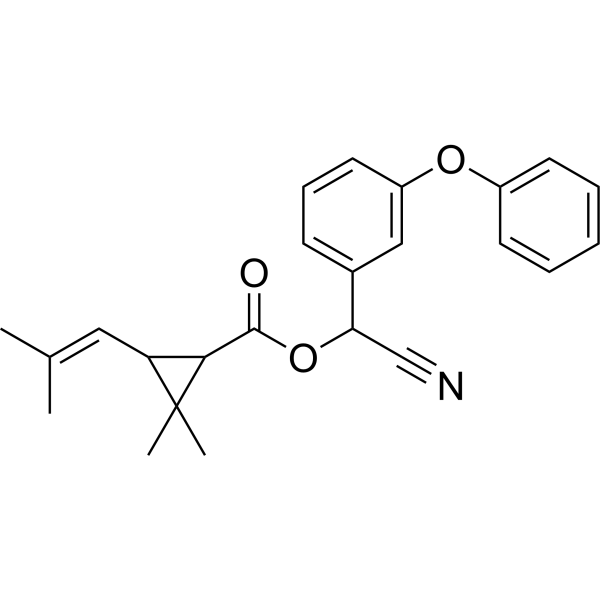 HY-119335Cyphenothrin
-

Explore the MedChemAI to find more analogs


References
- [1]. Nagy K, et al. Evaluation of the genotoxicity of the pyrethroid insecticide phenothrin. Mutat Res Genet Toxicol Environ Mutagen. 2014;770:1-5. [Content Brief]
- [2]. de Weille JR, et al. Interactions of pyrethroids and octylguanidine with sodium channels of squid giant axons. Brain research. 1988 Mar 29;445(1):1-11. [Content Brief]
- [3]. Ruigt GS, et al. Increase of sodium current after pyrethroid insecticides in mouse neuroblastoma cells. Brain research. 1987 Dec 29;437(2):309-22. [Content Brief]



