Search Result
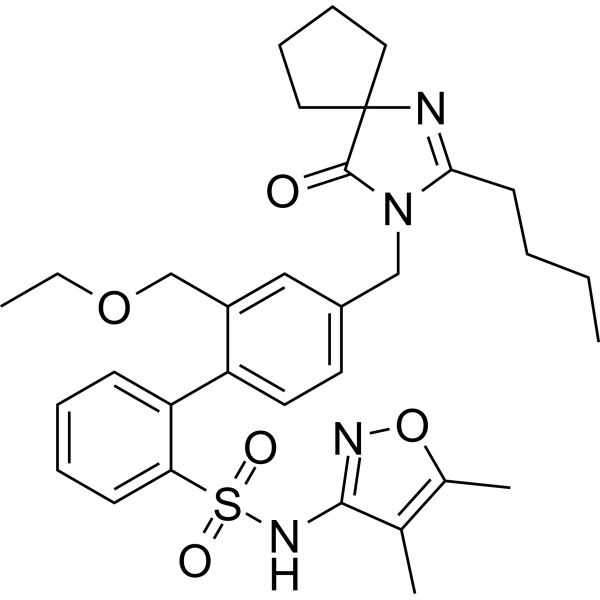
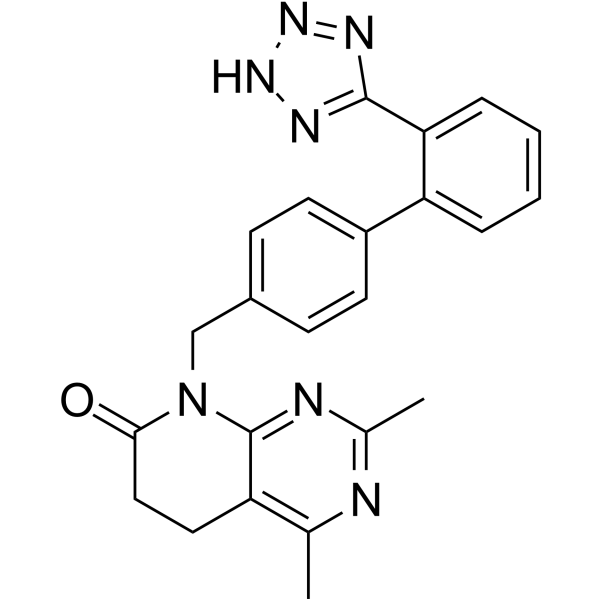
Results for "
angiotensin II receptor antagonist
" in MedChemExpress (MCE) Product Catalog:
29
Isotope-Labeled Compounds
| Art. -Nr. |
Produktname |
Target |
Forschungsgebiete |
Chemical Structure |
-
- HY-17512
-
-
-
- HY-17512A
-
-
-
- HY-18204
-
-
-
- HY-13955
-
-
-
- HY-17004
-
-
-
- HY-17621
-
-
-
- HY-117743
-
|
SKF-108566J free base
|
Angiotensin Receptor
|
Cardiovascular Disease
|
|
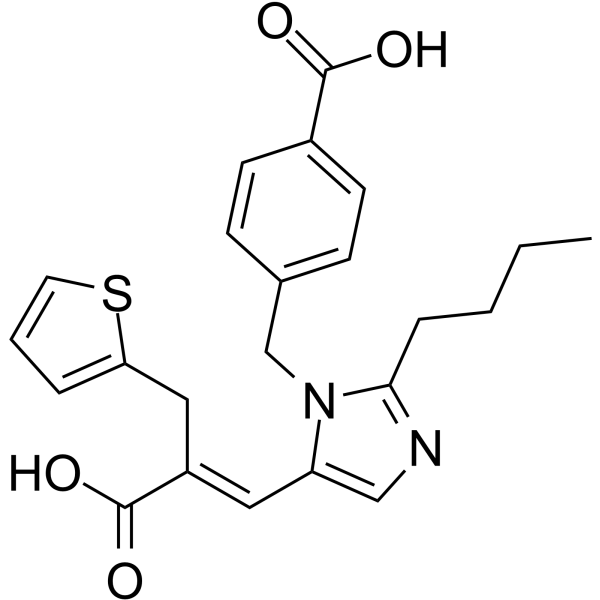
Eprosartan (SKF-108566J free base) is a selective, competitive, nonpeptid and orally active angiotensin II receptor antagonist, used as an antihypertensive. Eprosartan binds angiotensin II receptor with IC50s of 9.2 nM and 3.9 nM in rat and human adrenal cortical membranes, respectively .
|
-
-
- HY-15834A
-
|
SKF-108566J
|
Angiotensin Receptor
|
Cardiovascular Disease
Endocrinology
|
|
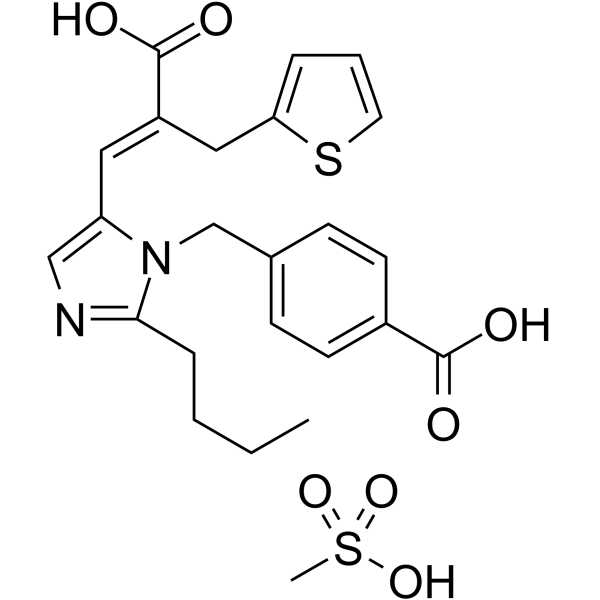
Eprosartan mesylate (SKF-108566J) is a selective, competitive, nonpeptid and orally active angiotensin II receptor antagonist, used as an antihypertensive. Eprosartan mesylate binds angiotensin II receptor with IC50s of 9.2 nM and 3.9 nM in rat and human adrenal cortical membranes, respectively .
|
-
-
- HY-160187
-
|
|
Orphan GPCR
Angiotensin Receptor
|
Cardiovascular Disease
|
|
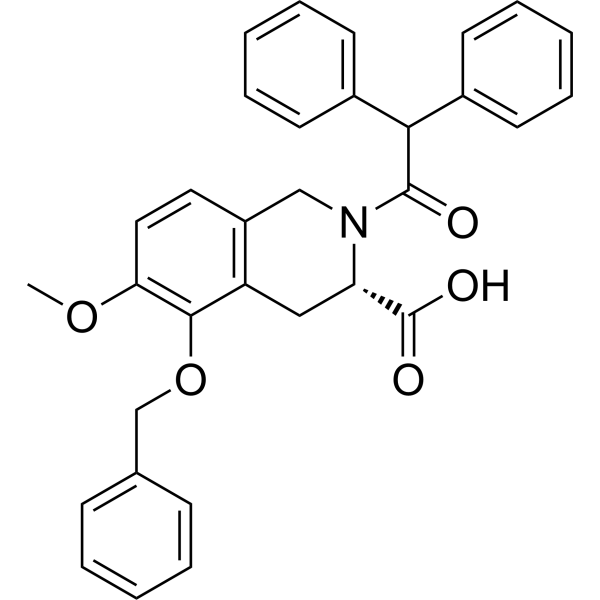
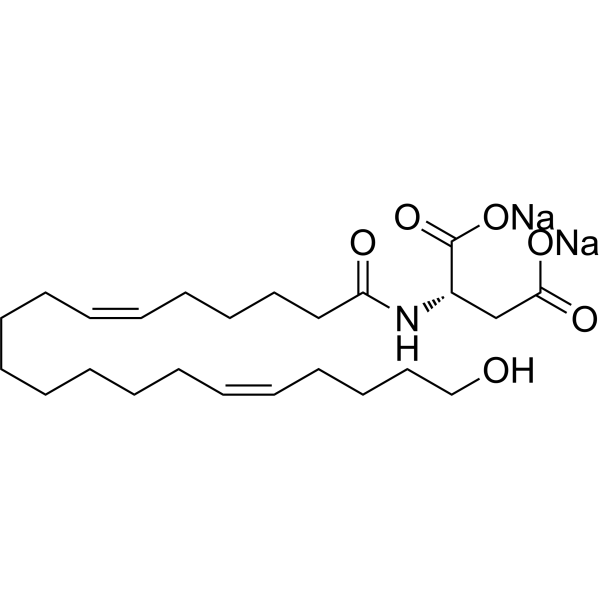
AAA is an orally active 20-HETE receptor antagonist. AAA exerts antihypertensive and organoprotective effects. AAA blocks 20-HETE prohypertensive actions, suppresses intrarenal and circulating angiotensin II levels, and interferes with renin-angiotensin system interactions. AAA attenuates development of, and reverses established, ANG II (HY-13948)-dependent malignant hypertension. AAA reduces albuminuria, glomerulosclerosis, and cardiac hypertrophy linked to malignant hypertension. AAA can be used for the research of malignant hypertension .
|
-
-
- HY-12765
-
|
E-3174; EXP-3174
|
Drug Metabolite
Angiotensin Receptor
|
Cardiovascular Disease
|
|
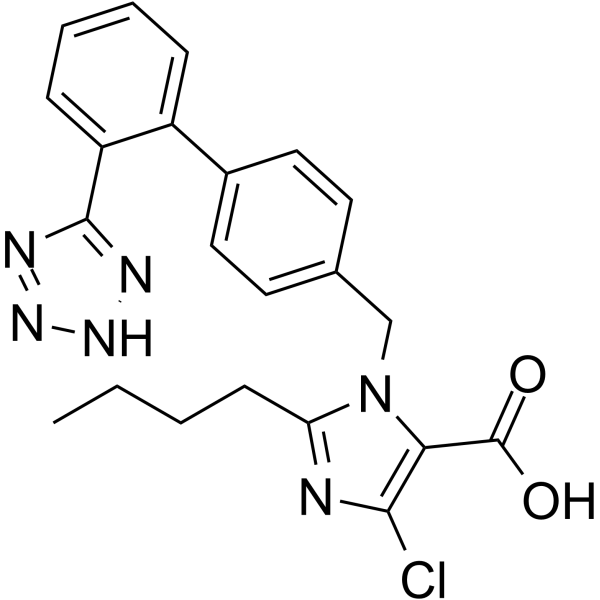
Losartan Carboxylic Acid (E-3174), an active carboxylic acid metabolite of Losartan, is an angiotensin II receptor type 1 (AT1) antagonist. The Ki values are 0.97, 0.57, 0.67 nM for rat AT1B/AT1A and human AT1, respectively. Losartan Carboxylic Acid blocks the angiotensin II-induced responses in vascular smoothmuscle cells (VSMC). Losartan Carboxylic Acid elevates plasma renin activities and reduces mean arterial pressure .
|
-
-
- HY-A0250
-
-
-
- HY-10259A
-
-
-
- HY-P0205
-
|
[Sar1,Ala8] angiotensin II
|
Angiotensin Receptor
|
Cardiovascular Disease
Inflammation/Immunology
|
|
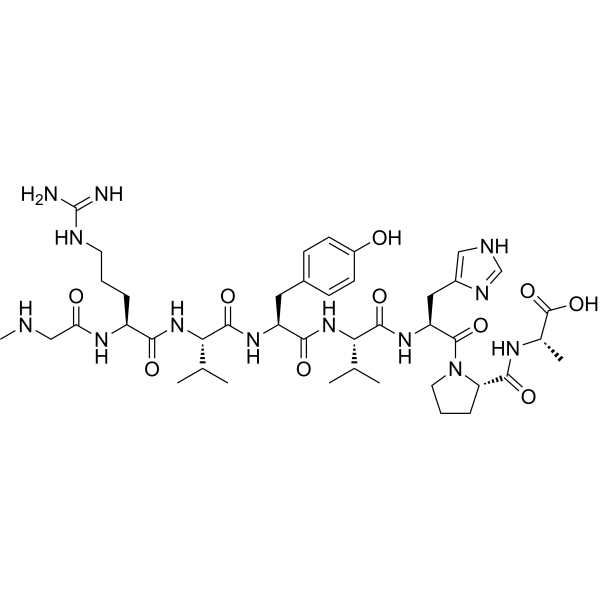
Saralasin ([Sar1,Ala8] Angiotensin II) is an octapeptide analog of angiotensin II. Saralasin is a competitive angiotensin II receptor antagonist with a Ki value of 0.32 nM for 74% of the binding sites, and has partial agonist activity as well. Saralasin can be used for the research of renovascular hypertension, renin-dependent (angiotensinogenic) hypertension .
|
-
-
- HY-14736
-
-
-
- HY-17458
-
|
Azilsartan kamedoxomil; TAK 491 monopotassium
|
Angiotensin Receptor
|
Cardiovascular Disease
Metabolic Disease
Cancer
|
|
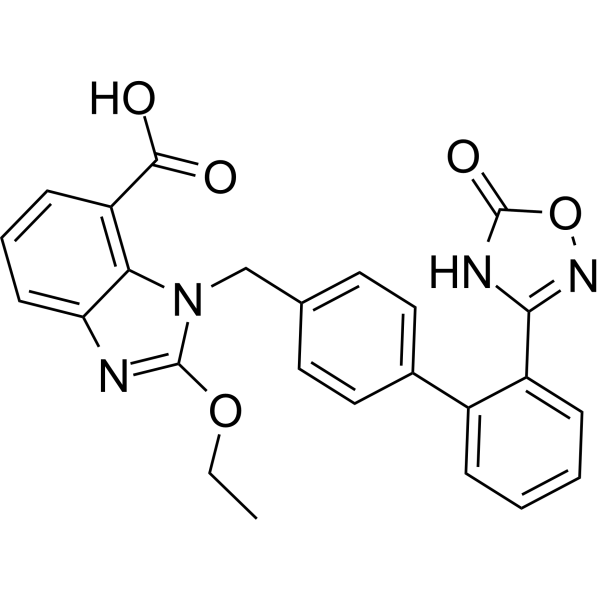
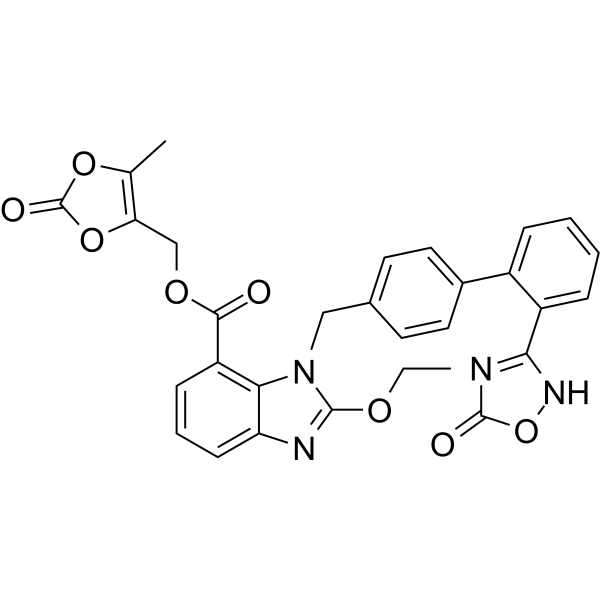
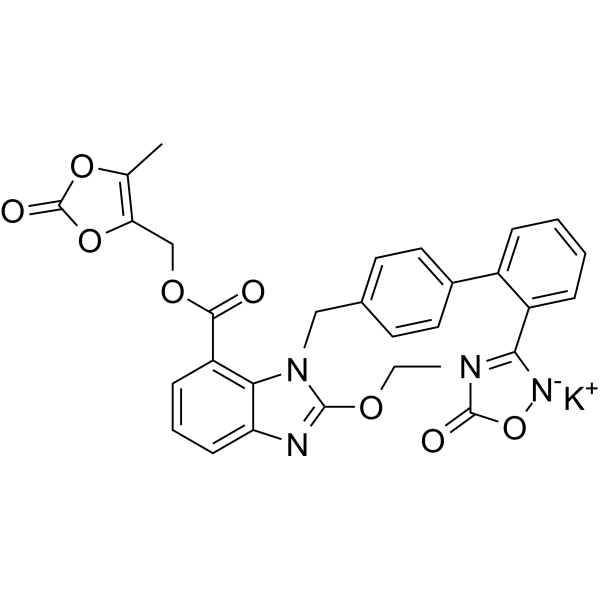
Azilsartan medoxomil (TAK 491) monopotassium, a prodrug form of Azilsartan (HY-14914), is an orally active angiotensin II receptor type 1 antagonist. Azilsartan medoxomil monopotassium can be used for the study of essential hypertension .
|
-
-
- HY-P0205B
-
|
[Sar1,Ala8] angiotensin II TFA
|
Angiotensin Receptor
|
Cardiovascular Disease
Inflammation/Immunology
|
|
Saralasin ([Sar1,Ala8] Angiotensin II) TFA is an octapeptide analog of angiotensin II. Saralasin TFA is a competitive angiotensin II receptor antagonist with a Ki value of 0.32 nM for 74% of the binding sites, and has partial agonist activity as well. Saralasin TFA can be used for the research of renovascular hypertension, renin-dependent (angiotensinogenic) hypertension .
|
-
-
- HY-102093
-
-
-
- HY-17512S
-
-
-
- HY-17512AR
-
|
DuP-753 potassium (Standard)
|
Reference Standards
Angiotensin Receptor
|
Cardiovascular Disease
Endocrinology
Cancer
|
|
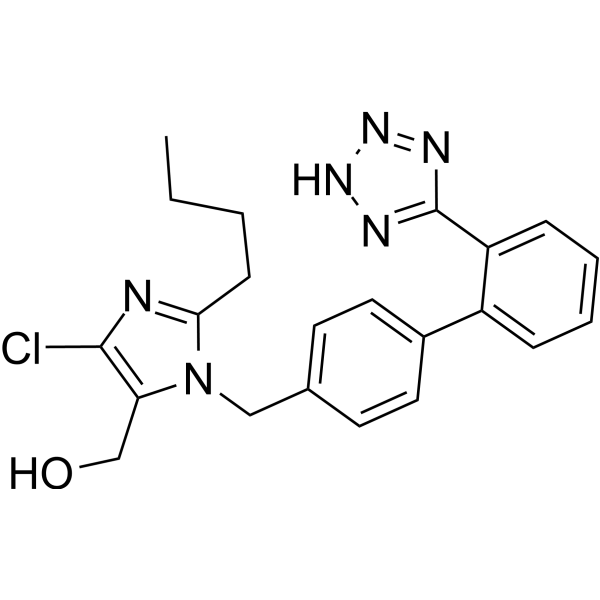
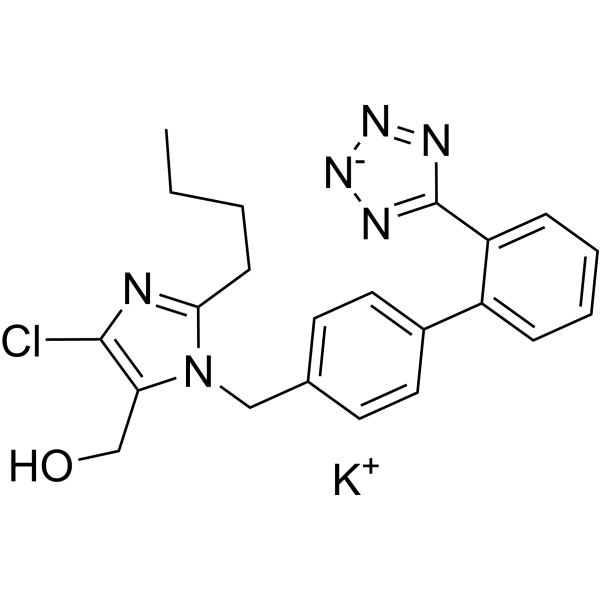
Losartan (potassium) (Standard) is the analytical standard of Losartan (potassium). This product is intended for research and analytical applications. Losartan potassium (DuP-753 potassium) is an angiotensin II receptor type 1 (AT1) antagonist, competing with the binding of angiotensin II to AT1 with an IC50 of 20 nM.
|
-
-
- HY-121767
-
-
-
- HY-135363
-
-
-
- HY-17004S1
-
-
-
- HY-14914S
-
|
TAK-536-d5
|
Angiotensin Receptor
|
Others
|
|
Azilsartan-d5 is the deuterium labeled Azilsartan(TAK-536), which is a specific and potent angiotensin II type 1 receptor antagonist.
|
-
-
- HY-W098792
-
|
|
Angiotensin Receptor
|
Cardiovascular Disease
|
|
Candesartan methyl ester (compound 14) is an antagonist for angiotensin II (AII) receptor with an IC50 of 66 nM. Candesartan methyl ester exhibits blood pressure lowering activity in rats models .
|
-
-
- HY-B0202S1
-
-
-
- HY-18204S2
-
-
-
- HY-P10933
-
|
|
Renin
|
Cardiovascular Disease
|
|
PRO20 is a specific and competitive (pro)renin receptor (PRR) antagonist. PRO20 inhibits Prorenin-induced calcium influx with an IC50 value of 81 nmol/L. PRO20 exerts antihypertensive activity by blocking the binding of prorenin to the PRR, inhibiting the activation of the renin-angiotensin system (RAS), and reducing the production of angiotensin II (Ang II). PRO20 is promising for research of antihypertensive agents .
|
-
-
- HY-101574
-
-
-
- HY-10259
-
-
-
- HY-B0205S1
-
-
-
- HY-18204S
-
-
-
- HY-18204S1
-
|
CGP 48933-d3
|
Angiotensin Receptor
|
Cardiovascular Disease
|
|
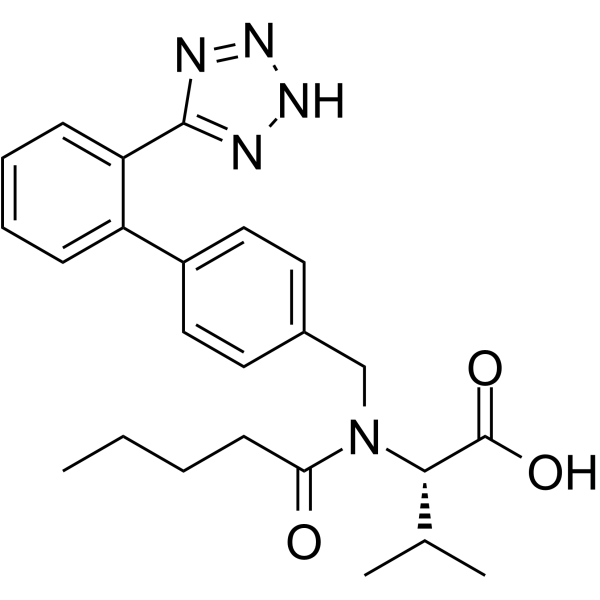
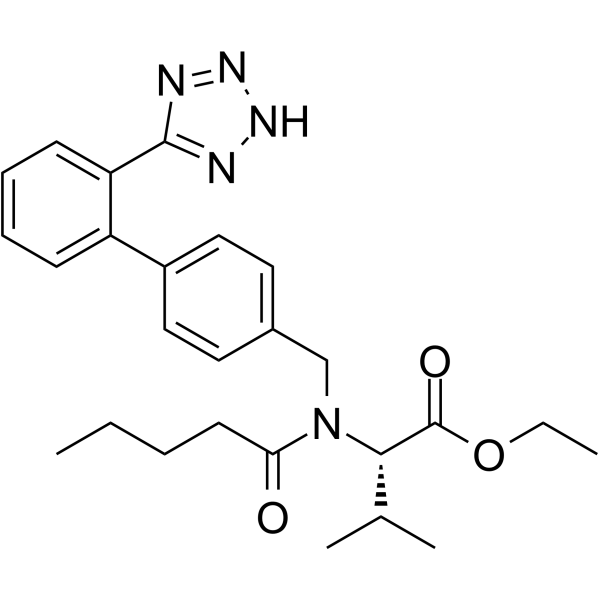
Valsartan-d3 is the deuterium labeled Valsartan . Valsartan (CGP 48933) is an angiotensin II receptor antagonist and has the potential for high blood pressure and heart failure research .
|
-
-
- HY-17004S
-
|
RNH-6270-d4
|
Angiotensin Receptor
|
Others
|
|
Olmesartan-d4 (RNH-6270-d4) is the deuterium labeled Olmesartan (HY-17004). Olmesartan is an angiotensin II receptor (AT1R) antagonist used to treat high blood pressure.
|
-
-
- HY-13955S2
-
-
-
- HY-17512S3
-
|
DuP-753-d2
|
Angiotensin Receptor
|
Others
|
|
Losartan-d2 is the deuterium labeled Losartan . Losartan is an angiotensin II receptor antagonist, competing with the binding of angiotensin II to AT1 receptors with IC50 of 20 nM.
|
-
-
- HY-19165
-
|
|
Angiotensin Receptor
|
Cardiovascular Disease
|
|
CI-996 is a potent, selective, orally active angiotensin II (Ang II) type 1 (AT1) receptor antagonist. In rat liver membranes CI-996 displaces specifically bind [ 125I]Ang II with an IC50 of 0.8 nM. CI-996 has blood pressure-lowering activity .
|
-
-
- HY-13955S
-
-
-
- HY-13955S3
-
-
-
- HY-P11389
-
|
|
Angiotensin Receptor
|
Neurological Disease
|
|
(Sar1,Gly8)-Angiotensin II is an AT1 angiotensin II receptor subtype selective antagonist (Ki: 52 nM for AT2 receptor in rat adrenal). (Sar1,Gly8)-Angiotensin II potently antagonizes dipsogenic responses to intracerebroventricularly administered Ang II .
|
-
-
- HY-119544
-
|
UP-2696
|
Angiotensin Receptor
|
Cardiovascular Disease
|
|
Ripisartan (UP-2696) is an angiotensin II receptor antagonist. Ripisartan is orally available. Ripisartan binds to angiotensin II receptors, dilates blood vessels, and lowers blood pressure .
|
-
-
- HY-105453
-
-
-
- HY-P0205A
-
|
[Sar1,Ala8] angiotensin II acetate hydrate
|
Angiotensin Receptor
|
Cardiovascular Disease
Inflammation/Immunology
|
|
Saralasin ([Sar1,Ala8] Angiotensin II) acetate hydrate is an octapeptide analog of angiotensin II. Saralasin acetate hydrate is a competitive angiotensin II receptor antagonist with a Ki value of 0.32 nM for 74% of the binding sites, and has partial agonist activity as well. Saralasin acetate hydrate can be used for the research of renovascular hypertension, renin-dependent (angiotensinogenic) hypertension .
|
-
-
- HY-10382
-
|
|
Angiotensin Receptor
|
Cardiovascular Disease
|
|
EXP-6803 is a specific nonpeptide angiotensin II receptor antagonist with antihypertensive activity. EXP-6803 inhibits the contractile response to angiotensin II with a pA2 value of 7.20. EXP-6803 effectively blocks responses to angiotensin I and II while not affecting responses to bradykinin or acetylcholine in guinea pig ileum. EXP-6803 can be used for hypertension research .
|
-
-
- HY-108120
-
|
|
Angiotensin Receptor
|
Cardiovascular Disease
|
|
L-162537 is a competitive human angiotensin II receptor 1 (AT1) and receptor 2 (AT2) antagonist with an IC50=1.7 nM for AT1. L-162537 inhibits Ang II-mediated vasoconstriction, blood pressure elevation and related pathological signaling pathways. L-162537 is promising for research of angiotensin II-related cardiovascular diseases such as hypertension .
|
-
-
- HY-131277
-
-
-
- HY-105010
-
-
-
- HY-Z0061
-
|
|
Drug Intermediate
|
Others
|
|
Valsartan benzyl ester is an intermediate of Valsartan (HY-18204). Valsartan is an angiotensin II receptor antagonist and has the potential for high blood pressure and heart failure research .
|
-
-
- HY-131276
-
|
|
Angiotensin Receptor
|
Cardiovascular Disease
|
|
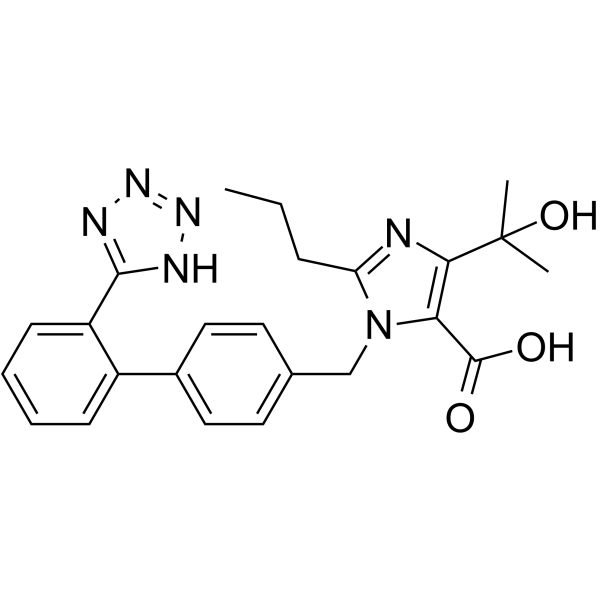
Olmesartan lactone impurity is a cyclic ester impurity of Olmesartan. Olmesartan is an angiotensin II receptor (AT1R) antagonist and has the potential for high blood pressure study .
|
-
-
- HY-105506
-
|
|
Angiotensin Receptor
|
Cardiovascular Disease
|
|
EXP-7711 is a non peptide angiotensin II (Ang II) AT1 receptor antagonist. EXP-7711’s affinity for wild-type AT1 receptor (Ki =180 nM) is lower than peptide antagonists, but higher than losartan (Ki = 12 nM). EXP-7711 can be used for research on cardiovascular conditions .
|
-
-
- HY-117858
-
-
- HY-A0224
-
|
SC-52458
|
Angiotensin Receptor
|
Cardiovascular Disease
|
|
Forasartan is an nonpeptide angiotensin AT1 receptor antagonist with an IC50 of 2.9 nM. Forasartan is also an anti-hypertension agent. Forasartan significantly inhibits preganglionic stimulation in a dose-dependent manner in vivo. Forasartan can inhibit the heart rate increase induced by angiotensin II .
|
-
- HY-18204R
-
-
- HY-17621S
-
-
- HY-105011A
-
|
|
Angiotensin Receptor
|
Cardiovascular Disease
|
|
YM-358 hydrate potassium is an orally active angiotensin II type 1 (AT1)-receptor antagonist. YM-358 hydrate potassium can decrease cardiac volume overload. YM-358 hydrate potassium can be used for the research of cardiovascular disease, such as hypertension .
|
-
- HY-13955R
-
|
BIBR 277 (Standard)
|
Reference Standards
Angiotensin Receptor
Autophagy
|
Cardiovascular Disease
Endocrinology
|
|
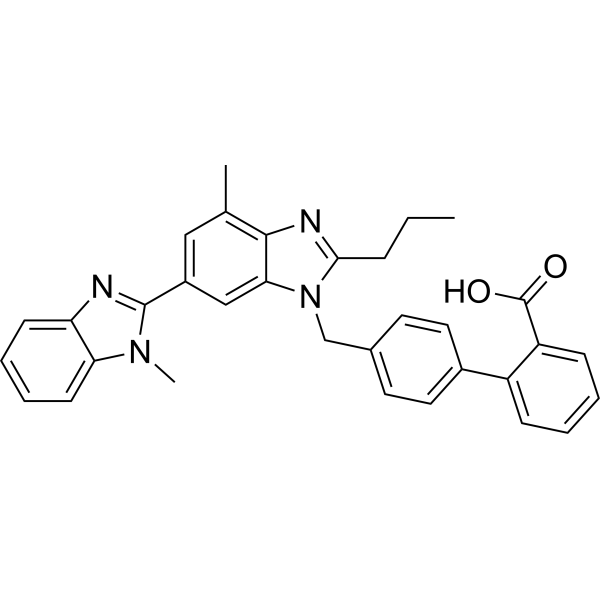
Telmisartan (Standard) is the analytical standard of Telmisartan. This product is intended for research and analytical applications. Telmisartan is a potent, long lasting antagonist of angiotensin II type 1 receptor (AT1), selectively inhibiting the binding of 125I-AngII to AT1 receptors with IC50 of 9.2 nM.
|
-
- HY-114284
-
|
|
Angiotensin Receptor
|
Cardiovascular Disease
|
|
L-163958 is an efficient, orally active, balanced angiotensin II receptor (AII receptor) antagonist. L-163958 has balanced high affinity for AT1 and AT2, with its IC50 values being 0.16, 0.12, 0.50, and 0.64 nM in rabbit aorta (AT1), rat midbrain (AT2), human adrenal gland (AT1), and human adrenal gland (AT2), respectively. L-163958 has a strong inhibitory effect on the pressor activity in rats. L-163958 can be used for the study of hypertension and related cardiovascular diseases .
|
-
- HY-I1208
-
|
|
Drug Derivative
|
Others
|
|
D-Valsartan is an impurity of Valsartan (HY-18204). Valsartan is an angiotensin II (angiotensin II) receptor antagonist .
|
-
- HY-145611
-
-
- HY-17512S1
-
-
- HY-17512S4
-
|
DuP-753-d9
|
Angiotensin Receptor
|
Others
|
|
Losartan-d9 is the deuterium labeled Losartan . Losartan is an angiotensin II receptor antagonist, competing with the binding of angiotensin II to AT1 receptors with IC50 of 20 nM.
|
-
- HY-U00202
-
-
- HY-145610
-
-
- HY-17512R
-
-
- HY-145553
-
-
- HY-101706
-
-
- HY-17512AS
-
-
- HY-19191
-
-
- HY-78168
-
-
- HY-106123
-
|
|
Angiotensin Receptor
|
Cardiovascular Disease
|
|
Pomisartan is an orally active angiotensin II receptor type AT1 antagonist (IC50=0.26 μM). Pomisartan works by inhibiting the binding of angiotensin II to the AT1 receptor, thereby blocking the vasoconstriction and aldosterone release caused by this interaction. Pomisartan results in a blood pressure-lowering effect .
|
-
- HY-114283
-
|
|
Angiotensin Receptor
|
Cardiovascular Disease
|
|
L-163017 is a potent, orally active and nonpeptide angiotensin II receptor (AT) antagonist. L-163017 can inhibit prevent the pressor response to angiotensin II and reduce blood pressure. L-163017 can be used for the research of cardiovascular disease, such as hypertension .
|
-
- HY-A0250R
-
-
- HY-105440
-
-
- HY-103247B
-
|
|
Angiotensin Receptor
|
Cardiovascular Disease
|
|
EMD-66684 potassium salt is a non-peptide angiotensin II receptor antagonist that demonstrates significant antihypertensive effects in spontaneously hypertensive rats. EMD-66684 potassium salt exhibits nanomolar affinity for angiotensin II receptors, comparable to losartan in potency. EMD-66684 potassium salt shows increased activity when modified with acetamides, leading to superior blood pressure reduction.
|
-
- HY-117743S
-
|
|
Isotope-Labeled Compounds
Angiotensin Receptor
|
Cardiovascular Disease
|
|
Eprosartan-d3 is the deuterium labeled Eprosartan. Eprosartan (SKF-108566J free base) is a selective, competitive, nonpeptid and orally active angiotensin II receptor antagonist, used as an antihypertensive. Eprosartan binds angiotensin II receptor with IC50s of 9.2 nM and 3.9 nM in rat and human adrenal cortical membranes, respectively .
|
-
- HY-19214
-
-
- HY-15834AR
-
|
SKF-108566J (Standard)
|
Reference Standards
Angiotensin Receptor
|
Cardiovascular Disease
Endocrinology
|
|
Eprosartan (mesylate) (Standard) is the analytical standard of Eprosartan (mesylate). This product is intended for research and analytical applications. Eprosartan mesylate (SKF-108566J) is a selective, competitive, nonpeptid and orally active angiotensin II receptor antagonist, used as an antihypertensive. Eprosartan mesylate binds angiotensin II receptor with IC50s of 9.2 nM and 3.9 nM in rat and human adrenal cortical membranes, respectively .
|
-
- HY-102093R
-
-
- HY-117743S1
-
|
SKF-108566J free base-d6
|
Angiotensin Receptor
Isotope-Labeled Compounds
|
Cardiovascular Disease
|
|
Eprosartan-d6 is deuterated labeled Eprosartan (HY-117743). Eprosartan (SKF-108566J free base) is a selective, competitive, nonpeptid and orally active angiotensin II receptor antagonist, used as an antihypertensive. Eprosartan binds angiotensin II receptor with IC50s of 9.2 nM and 3.9 nM in rat and human adrenal cortical membranes, respectively .
|
-
- HY-117743R
-
|
SKF-108566J free base (Standard)
|
Reference Standards
Angiotensin Receptor
|
Cardiovascular Disease
|
|
Eprosartan (Standard) is the analytical standard of Eprosartan. This product is intended for research and analytical applications. Eprosartan (SKF-108566J free base) is a selective, competitive, nonpeptid and orally active angiotensin II receptor antagonist, used as an antihypertensive. Eprosartan binds angiotensin II receptor with IC50s of 9.2 nM and 3.9 nM in rat and human adrenal cortical membranes, respectively .
|
-
- HY-103247
-
|
|
Angiotensin Receptor
|
Cardiovascular Disease
|
|
EMD 66684 is an antagonist of Angiotensin II Type 1 (AT1) receptor. EMD 66684 shows potent binding affinities for the AT1 subtype Ang II receptor with an IC50 value of 0.7 nM. EMD 66684 also serves as an antiischemic cytoprotectant - .
|
-
- HY-167886
-
|
|
Angiotensin Receptor
|
Cardiovascular Disease
|
|
GA 0113 is a potent and orally active angiotensin II (Ang II) AT1-receptor antagonist. GA 0113 inhibits the Ang II (HY-13948)-induced pressor response with ID50 of 0.032 mg/kg and dose-dependently increases plasma renin activity for 48 h .
|
-
- HY-133775
-
-
- HY-131279
-
|
|
Drug Metabolite
|
Cardiovascular Disease
Others
|
|
Olmesartan ethyl ester (compound 11) is an Olmesartan impurity. Olmesartan (RNH-6270) is an angiotensin II receptor (AT1R) antagonist used to in the high blood pressure study .
|
-
- HY-123226
-
-
- HY-117805
-
-
- HY-18204S3
-
-
- HY-N14205
-
|
|
Angiotensin Receptor
|
Others
|
|
Cytosporin A is a hexahydrobenzopyran derivative and an angiotensin II receptor antagonist. Cytosporin A has IC50 values of 25-30 μM and 1.5-3 μM for AT1 and AT2, respectively .
|
-
- HY-114953
-
|
|
Angiotensin Receptor
Endothelin Receptor
|
Cardiovascular Disease
|
|
BMS-248360 is a potent and orally active dual antagonist of both angiotensin II receptor (AT1) and endothelin A (ETA) receptor, with Kis of 10 nM and 1.9 nM for hAT1 and hETA receptor, respectively. BMS-248360 displays hypertensive effects .
|
-
- HY-17004R
-
|
RNH-6270 (Standard)
|
Reference Standards
Angiotensin Receptor
|
Cardiovascular Disease
|
|
Olmesartan (Standard) is the analytical standard of Olmesartan. This product is intended for research and analytical applications. Olmesartan (RNH-6270) is an angiotensin II receptor (AT1R) antagonist used to treat high blood pressure .
|
-
- HY-19155A
-
|
ZD-8731
|
Angiotensin Receptor
|
Cardiovascular Disease
|
|
ICI-D 8731 (compound 5g) is a angiotensin II receptor antagonist with the IC50 of 0.031 μM. ICI-D 8731 shows a rapid and sustained lowering of blood pressure in a renal hypertensive rat model .
|
-
- HY-114412A
-
-
- HY-13955S1
-
-
- HY-114412
-
-
- HY-119379
-
|
HOE-720 free acid
|
Angiotensin Receptor
|
Cardiovascular Disease
|
|
Fonsartan (HOE-720) free acid is an orally active angiotensin II receptor (AT1R) antagonist with an IC50 value of 0.48 nM, exhibiting potent antihypertensive activity. Fonsartan free acid dose-dependently inhibits angiotensin II-induced pressor response in rats (ID50 = 0.11 mg/kg) and shows significant long-lasting blood pressure-lowering effects in high-renin animal models. Fonsartan free acid is primarily used in research on hypertension and cardiovascular diseases .
|
-
- HY-120134
-
|
|
Angiotensin Receptor
|
Cardiovascular Disease
|
|
BMS 183920 is a diacidic and potent angiotensin II receptor antagonist, with a Ki value of 2.9 nM in the rat adrenal cortex binding assay and a KB value of 0.061 nM in the rabbit aorta functional assay. BMS 183920 can be used for research of antihypertensive .
|
-
- HY-117627
-
|
|
Angiotensin Receptor
|
Cardiovascular Disease
|
|
L 158338 is an angiotensin II receptor antagonist. L 158338 alleviates acidosis and increases coronary blood flow during the ischemic period and increases coronary blood flow during the reperfusion period. L 158338 can be used to study myocardial injury during ischemia and reperfusion .
|
-
- HY-120776
-
|
|
Angiotensin Receptor
|
Cardiovascular Disease
|
|
SC-51316 is an oral active angiotensin II receptor antagonist with the IC50 values of 3.6 and 5.1 nM in rat adrenal cortical and rat uterine membrane, respectively. SC-51316 shows antihypertensive activity in vivo and in vitro .
|
-
- HY-155041
-
|
|
Angiotensin Receptor
|
Cardiovascular Disease
|
|
Antihypertensive agent 2 (Compound 4g) is an antihypertensive agent. Antihypertensive agent 2 has effective antagonistic activities against angiotensin II receptor 1. Antihypertensive agent 2 reduces the blood pressure with equal or more potency compared to Losartan (HY-17512) .
|
-
- HY-131276R
-
|
|
Reference Standards
Angiotensin Receptor
|
Cardiovascular Disease
|
|
Olmesartan lactone impurity (Standard) is the analytical standard of Olmesartan lactone impurity. This product is intended for research and analytical applications. Olmesartan lactone impurity is a cyclic ester impurity of Olmesartan. Olmesartan is an angiotensin II receptor (AT1R) antagonist and has the potential for high blood pressure study .
|
-
- HY-10259AR
-
-
- HY-159090
-
|
|
Calcium Channel
Angiotensin Receptor
|
Cardiovascular Disease
|
|
AT1R antagonist 3 (Compound 1) is an antagonist for angiotensin II type 1 receptor (AT1R) and an inhibitor for calcium channel type-L CaV1.2 (IC50=0.57 μM). AT1R antagonist 3 exhibits vasodilation efficacy in solated rat aorta (10 μM, 88.7%) and antihypertensive efficacy in rat models .
|
-
- HY-19732
-
|
|
Angiotensin Receptor
|
Cardiovascular Disease
|
|
BIBS 39 is a non-peptide angiotensin II receptor antagonist with antihypertensive activity, with higher affinity for the AT1 receptor than for the AT2 receptor. BIBS 39 competitively blocks AT1-mediated vasoconstriction and pressor responses, and effectively inhibits the activity of the renin-angiotensin-aldosterone system. BIBS 39 reduces diastolic blood pressure and induces mild, transient reflex tachycardia, with no off-target functional activity on the norepinephrine, K +/Cl − or vasopressin pathways. BIBS 39 can be used in research related to hypertension and renal hypertension [1][2 ][3].
|
-
- HY-146410
-
|
|
Angiotensin Receptor
|
Others
|
|
AT2R antagonist 1 (compound 21) is a potent and high selective AT2R (angiotensin II AT2 receptor) ligand. AT2R antagonist 1 exhibits a fair AT2R affinity, with a Ki of 29 nM. AT2R antagonist 1 also inhibits common agent-metabolizing CYP enzymes. AT2R antagonist 1 shows high stability in human, rat and mouse liver microsomes .
|
-
- HY-106890
-
|
57G709
|
Angiotensin Receptor
PDGFR
|
Cardiovascular Disease
|
|
E4177 (57G709) is an orally active angiotensin II receptor antagonist. E4177 can inhibit the growth of vascular smooth muscle cells (HASMC) and the increase of cell surface area. In addition, E4177 can also increase the expression of platelet-derived growth factor (PDGF) receptor. E4177 can be used in the study of vascular diseases .
|
-
- HY-14914
-
-
- HY-101823A
-
|
Abbott 81282
|
Angiotensin Receptor
|
Cardiovascular Disease
|
|
A-81282 (Abbott 81282) is an antagonist of angiotensin II's AT1 receptor, with a pA2 value of 9.64 at the AT1 receptor in rabbit aorta. A-81282 also demonstrates significant inhibitory action on the binding of [125i]_Sar1_lle8_Angiotensin_ll to rat liver membranes, with a pKI value of 8.505. A-81282 has antihypertensive activity and can effectively lower blood pressure in renal artery-ligated rats .
|
-
- HY-121550
-
|
|
Angiotensin-converting Enzyme (ACE)
|
Cardiovascular Disease
|
|
ME3221 is an angiotensin AT1 receptor antagonist that effectively antagonizes the pressor response to angiotensin II in rats and marmosets without affecting the hypotensive response to bradykinin. It demonstrates potent antihypertensive effects in renal hypertensive rats and spontaneously hypertensive rats (SHR). ME3221's repeated administration in SHR results in sustained and stable hypotensive effects without affecting heart rate, indicating its potential for studying both renal and essential hypertension .
|
-
- HY-12765S1
-
|
|
Isotope-Labeled Compounds
Angiotensin Receptor
|
Cardiovascular Disease
|
|
Losartan carboxylic acid-d4 (hydrochloride) is deuterium labeled Losartan Carboxylic Acid. Losartan Carboxylic Acid (E-3174), an active carboxylic acid metabolite of Losartan, is an angiotensin II receptor type 1 (AT1) antagonist. The Ki values are 0.97, 0.57, 0.67 nM for rat AT1B/AT1A and human AT1, respectively. Losartan Carboxylic Acid blocks the angiotensin II-induced responses in vascular smoothmuscle cells (VSMC). Losartan Carboxylic Acid elevates plasma renin activities and reduces mean arterial pressure .
|
-
- HY-12765R
-
|
E-3174 (Standard); EXP-3174 (Standard)
|
Drug Metabolite
Reference Standards
Angiotensin Receptor
|
Cardiovascular Disease
|
|
Losartan Carboxylic Acid (Standard) is the analytical standard of Losartan Carboxylic Acid. This product is intended for research and analytical applications. Losartan Carboxylic Acid (E-3174), an active carboxylic acid metabolite of Losartan, is an angiotensin II receptor type 1 (AT1) antagonist. The Ki values are 0.97, 0.57, 0.67 nM for rat AT1B/AT1A and human AT1, respectively. Losartan Carboxylic Acid blocks the angiotensin II-induced responses in vascular smoothmuscle cells (VSMC). Losartan Carboxylic Acid elevates plasma renin activities and reduces mean arterial pressure [4].
|
-
- HY-107867
-
|
|
P2Y Receptor
|
Cardiovascular Disease
Inflammation/Immunology
|
|
(±)-Clopidogrel bisulfate is a platelet P2Y12 receptor inhibitor and an adenosine diphosphate (ADP) receptor antagonist. (±)-Clopidogrel bisulfate inhibits the binding of ADP to its receptors on the membranes of platelet cells, and blocks ADP-mediated activation of the glycoprotein GPIIb/IIIa complex. (±)-Clopidogrel bisulfate reduces vascular inflammation and angiotensin II induced-abdominal aortic aneurysm progression. (±)-Clopidogrel bisulfate has anti-inflammatory effects .
|
-
- HY-12765S
-
|
E-3174 d4; EXP-3174 d4
|
Angiotensin Receptor
|
Cardiovascular Disease
Endocrinology
Cancer
|
|
Losartan-d4 carboxylic acid (E-3174-d4) is the deuterium labeled Losartan Carboxylic Acid (HY-12765). Losartan Carboxylic Acid (E-3174), an active carboxylic acid metabolite of Losartan, is an angiotensin II receptor type 1 (AT1) antagonist. The Ki values are 0.97, 0.57, 0.67 nM for rat AT1B/AT1A and human AT1, respectively. Losartan Carboxylic Acid blocks the angiotensin II-induced responses in vascular smoothmuscle cells (VSMC). Losartan Carboxylic Acid elevates plasma renin activities and reduces mean arterial pressure.
|
-
- HY-180401
-
|
|
Angiotensin Receptor
|
Cardiovascular Disease
|
|
DMP 811 is a potent, orally active and selective angiotensin II subtype receptor AT1 antagonist. DMP 811 exhibits selectivity for AT1 (IC50 = 6 nM) over AT2 (IC50 >10 μM). DMP 811 exhibits potent antihypertensive activity in rats and dogs. DMP 811 can be used for the research of hypertension .
|
-
- HY-14736R
-
|
TAK-491 (Standard)
|
Reference Standards
Angiotensin Receptor
|
Cardiovascular Disease
Metabolic Disease
|
|
Azilsartan medoxomil (Standard) is the analytical standard of Azilsartan medoxomil (HY-14736). This product is intended for research and analytical applications. Azilsartan medoxomil (TAK 491), a prodrug form of Azilsartan (HY-14914), is an orally active angiotensin II receptor type 1 antagonist. Azilsartan medoxomil can be used for the study of essential hypertension .
|
-
- HY-145552A
-
|
QR-01019K
|
Angiotensin Receptor
|
Cardiovascular Disease
Metabolic Disease
|
|
Azilsartan mepixetil potassium (QR-01019K) is the antagonist of angiotensin II receptor. Azilsartan mepixetil potassium has stronger and longer blood pressure effect, more abvious and longer lasting heart rate lowering effect and high safety. Azilsartan mepixetil potassium has the potential for the research of hypertension, chronic heart failure and diabetic nephropathy (extracted from patent CN107400122A) .
|
-
- HY-14914S1
-
|
TAK-536-d4
|
Apoptosis
Angiotensin Receptor
Reactive Oxygen Species (ROS)
|
Cancer
|
|
Azilsartan-d4 is the deuterium labeled Azilsartan . Azilsartan is an orally active, potent, selective and specific angiotensin II type 1 receptor (AT1) antagonist. Azilsartan induces ROS formation and apoptosis in HepG2 cells. Azilsartan shows neuroprotective and anticancer activity. Azilsartan can be used for hypertension and stroke research .
|
-
- HY-15283AS1
-
|
(±)-Clopidogrelum-d4
|
Isotope-Labeled Compounds
P2Y Receptor
|
Cardiovascular Disease
Inflammation/Immunology
|
|
(±)-Clopidogrel-d4 ((±)-Clopidogrelum-d4) is the deuterium labeled (±)-Clopidogrel (HY-107867). (±)-Clopidogrel is a platelet P2Y12 receptor inhibitor and an adenosine diphosphate (ADP) receptor antagonist. (±)-Clopidogrel inhibits the binding of ADP to its receptors on the membranes of platelet cells, and blocks ADP-mediated activation of the glycoprotein GPIIb/IIIa complex. (±)-Clopidogrel reduces vascular inflammation and angiotensin II induced-abdominal aortic aneurysm progression. (±)-Clopidogrel has anti-inflammatory effects .
|
-
- HY-145552
-
|
QR-01019
|
Angiotensin Receptor
|
Cardiovascular Disease
|
|
Azilsartan mepixetil is the antagonist of angiotensin II receptor. Azilsartan mepixetil has stronger and longer blood pressure effect, more abvious and longer lasting heart rate lowering effect and high safety. Azilsartan mepixetil achieves ideal protective effect for heart and kidney functions. Azilsartan mepixetil has the potential for the research of hypertension, chronic heart failure and diabetic nephropathy (extracted from patent CN107400122A) .
|
-
- HY-14914R
-
-
- HY-17458R
-
|
Azilsartan kamedoxomil (Standard); TAK 491 monopotassium (Standard)
|
Reference Standards
Angiotensin Receptor
|
Cardiovascular Disease
Metabolic Disease
|
|
Azilsartan medoxomil monopotassium (Standard) is the analytical standard of Azilsartan medoxomil monopotassium (HY-17458V). This product is intended for research and analytical applications. Azilsartan medoxomil (TAK 491) monopotassium, a prodrug form of Azilsartan (HY-14914), is an orally active angiotensin II receptor type 1 antagonist. Azilsartan medoxomil monopotassium can be used for the study of essential hypertension .
|
-
- HY-122282
-
|
|
Angiotensin Receptor
|
Cardiovascular Disease
|
|
AZ11657312 is a P2X7 receptor antagonist with activity to restore stress natriuresis. AZ11657312 significantly increased renal medullary perfusion, only in mice treated with angiotensin II. AZ11657312 improves tissue oxygenation by blocking P2X7R, especially in areas of the kidney that are underoxygenated. Administration of AZ11657312 increased sodium excretion up to sixfold while normalizing blood pressure .
|
-
- HY-107867S1
-
|
|
Isotope-Labeled Compounds
P2Y Receptor
|
Inflammation/Immunology
|
|
(Rac)-Clopidogrel hydrogen-d9 sulfate is the deuterium labeled (±)-Clopidogrel (bisulfate) (HY-107867). (±)-Clopidogrel bisulfate is a platelet P2Y12 receptor inhibitor and an adenosine diphosphate (ADP) receptor antagonist. (±)-Clopidogrel bisulfate inhibits the binding of ADP to its receptors on the membranes of platelet cells, and blocks ADP-mediated activation of the glycoprotein GPIIb/IIIa complex. (±)-Clopidogrel bisulfate reduces vascular inflammation and angiotensin II induced-abdominal aortic aneurysm progression. (±)-Clopidogrel bisulfate has anti-inflammatory effects .
|
-
- HY-B0561
-
|
SC9420
|
Mineralocorticoid Receptor
Androgen Receptor
Autophagy
Calcium Channel
|
Cardiovascular Disease
Metabolic Disease
Endocrinology
Cancer
|
|
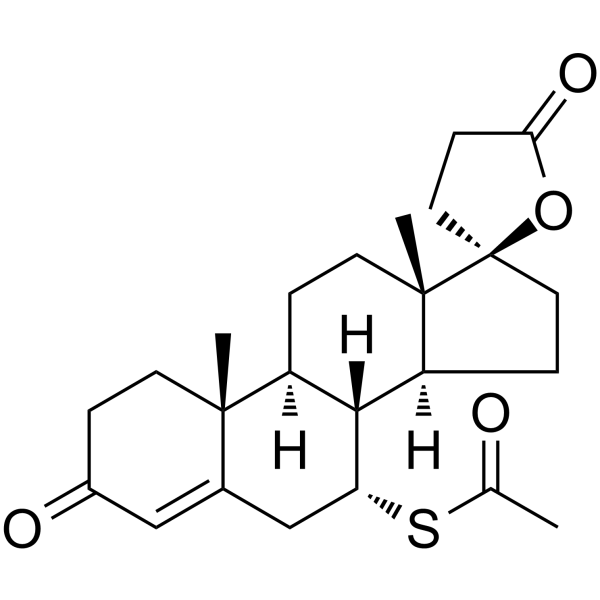
Spironolactone is an aldosterone antagonist that acts on the aldosterone mineralocorticoid receptor (IC50=24 nM) and androgen receptor (IC50=77 nM), promotes podocyte autophagy and regulates pain. Spironolactone improves hypertension-related vascular hypertrophy and remodeling by reducing angiotensin II (Ang II)-induced inflammation, reduces aldosterone-induced vascular and soft tissue calcification through PIT1-dependent signaling, and alleviates vascular dysfunction in type II diabetic mice by reducing oxidative stress and restoring NO/GC signaling; at low concentrations, it and its metabolites can interfere with aldosterone biosynthesis in the adrenal cortex and inhibit voltage-dependent Ca 2+ channels to exert antihypertensive effects .
|
-
- HY-107867S2
-
|
|
Isotope-Labeled Compounds
P2Y Receptor
|
Cardiovascular Disease
|
|
Clopidogrel- 13C,d3 sulfate is the deuterium and 13C-labeled (±)-Clopidogrel (bisulfate) (HY-107867). (±)-Clopidogrel bisulfate is a platelet P2Y12 receptor inhibitor and an adenosine diphosphate (ADP) receptor antagonist. (±)-Clopidogrel bisulfate inhibits the binding of ADP to its receptors on the membranes of platelet cells, and blocks ADP-mediated activation of the glycoprotein GPIIb/IIIa complex. (±)-Clopidogrel bisulfate reduces vascular inflammation and angiotensin II induced-abdominal aortic aneurysm progression. (±)-Clopidogrel bisulfate has anti-inflammatory effects .
|
-
- HY-125094
-
|
|
Angiotensin Receptor
|
Cardiovascular Disease
|
|
L-162782 is a high affinity AT1 receptor ligand for rat and human wild-type AT1 with IC50 values of 28.5 and 24.6 nM, respectively. L-162782 acts as a partial agonist (EC50 ≈ 30 nM) and insurmountable antagonist (IC50 = 6.5 μM) on wild-type rat AT1 receptors in COS-7 cells. L-162782 reduces Angiotensin II (HY-13948)-induced phosphatidylinositol turnover. L-162782 can be used for hypertension research .
|
-
- HY-13106A
-
|
EMA401 sodium; PD-126055 sodium
|
Angiotensin Receptor
|
Neurological Disease
Endocrinology
|
|
Olodanrigan (EMA401) sodium is a highly selective, orally active, peripherally restricted angiotensin II type 2 receptor (AT2R) antagonist. Olodanrigan sodium is under development as a neuropathic pain therapeutic agent. Olodanrigan sodium analgesic action appears to involve inhibition of augmented AngII/AT2R induced p38 and p42/p44 MAPK activation, and hence inhibition of DRG neuron hyperexcitability and sprouting of DRG neurons .
|
-
- HY-N9520
-
|
|
Angiotensin Receptor
|
Cardiovascular Disease
Endocrinology
|
|
Methyl-2-[(6Z,9Z)-6,9-pentadecadienyl]-4(1H)-quinolone9 is an antagonist of angiotensin II receptor (IC50=48.2 μM). Methyl-2-[(6Z,9Z)-6,9-pentadecadienyl]-4(1H)-quinolone9 is a quinolone alkaloid from Evodia rutaecarpa .
|
-
- HY-13106
-
|
EMA401; PD-126055; (S)-EMA400
|
Angiotensin Receptor
|
Cardiovascular Disease
Neurological Disease
Endocrinology
|
|
Olodanrigan (EMA401) is a highly selective, orally active, peripherally restricted angiotensin II type 2 receptor (AT2R) antagonist. It is under development as a neuropathic pain therapeutic agent. Olodanrigan (EMA401) analgesic action appears to involve inhibition of augmented AngII/AT2R induced p38 and p42/p44 MAPK activation, and hence inhibition of DRG neuron hyperexcitability and sprouting of DRG neurons .
|
-
- HY-B0561S4
-
|
|
Isotope-Labeled Compounds
Mineralocorticoid Receptor
Androgen Receptor
Autophagy
Calcium Channel
|
Cardiovascular Disease
Metabolic Disease
Cancer
|
|
Spironolactone-d6-1 is the deuterium labeled Spironolactone (HY-B0561). Spironolactone is an aldosterone antagonist that acts on the aldosterone mineralocorticoid receptor (IC50=24 nM) and androgen receptor (IC50=77 nM), promotes podocyte autophagy and regulates pain. Spironolactone improves hypertension-related vascular hypertrophy and remodeling by reducing angiotensin II (Ang II)-induced inflammation, reduces aldosterone-induced vascular and soft tissue calcification through PIT1-dependent signaling, and alleviates vascular dysfunction in type II diabetic mice by reducing oxidative stress and restoring NO/GC signaling; at low concentrations, it and its metabolites can interfere with aldosterone biosynthesis in the adrenal cortex and inhibit voltage-dependent Ca 2+ channels to exert antihypertensive effects .
|
-
- HY-145552S
-
|
QR-01019-d-d5
|
Isotope-Labeled Compounds
Angiotensin Receptor
|
Cardiovascular Disease
|
|
Azilsartan mepixetil-d5 (QR-01019-d5) is deuterium labeled Azilsartan mepixetil. Azilsartan mepixetil is the antagonist of angiotensin II receptor. Azilsartan mepixetil has stronger and longer blood pressure effect, more abvious and longer lasting heart rate lowering effect and high safety. Azilsartan mepixetil achieves ideal protective effect for heart and kidney functions. Azilsartan mepixetil has the potential for the research of hypertension, chronic heart failure and diabetic nephropathy (extracted from patent CN107400122A) .
|
-
| Art. -Nr. |
Produktname |
Target |
Research Area |
-
- HY-P0205
-
|
[Sar1,Ala8] angiotensin II
|
Angiotensin Receptor
|
Cardiovascular Disease
Inflammation/Immunology
|
|
Saralasin ([Sar1,Ala8] Angiotensin II) is an octapeptide analog of angiotensin II. Saralasin is a competitive angiotensin II receptor antagonist with a Ki value of 0.32 nM for 74% of the binding sites, and has partial agonist activity as well. Saralasin can be used for the research of renovascular hypertension, renin-dependent (angiotensinogenic) hypertension .
|
-
- HY-P0205B
-
|
[Sar1,Ala8] angiotensin II TFA
|
Angiotensin Receptor
|
Cardiovascular Disease
Inflammation/Immunology
|
|
Saralasin ([Sar1,Ala8] Angiotensin II) TFA is an octapeptide analog of angiotensin II. Saralasin TFA is a competitive angiotensin II receptor antagonist with a Ki value of 0.32 nM for 74% of the binding sites, and has partial agonist activity as well. Saralasin TFA can be used for the research of renovascular hypertension, renin-dependent (angiotensinogenic) hypertension .
|
-
- HY-P10933
-
|
|
Renin
|
Cardiovascular Disease
|
|
PRO20 is a specific and competitive (pro)renin receptor (PRR) antagonist. PRO20 inhibits Prorenin-induced calcium influx with an IC50 value of 81 nmol/L. PRO20 exerts antihypertensive activity by blocking the binding of prorenin to the PRR, inhibiting the activation of the renin-angiotensin system (RAS), and reducing the production of angiotensin II (Ang II). PRO20 is promising for research of antihypertensive agents .
|
-
- HY-P11389
-
|
|
Angiotensin Receptor
|
Neurological Disease
|
|
(Sar1,Gly8)-Angiotensin II is an AT1 angiotensin II receptor subtype selective antagonist (Ki: 52 nM for AT2 receptor in rat adrenal). (Sar1,Gly8)-Angiotensin II potently antagonizes dipsogenic responses to intracerebroventricularly administered Ang II .
|
-
- HY-P0205A
-
|
[Sar1,Ala8] angiotensin II acetate hydrate
|
Angiotensin Receptor
|
Cardiovascular Disease
Inflammation/Immunology
|
|
Saralasin ([Sar1,Ala8] Angiotensin II) acetate hydrate is an octapeptide analog of angiotensin II. Saralasin acetate hydrate is a competitive angiotensin II receptor antagonist with a Ki value of 0.32 nM for 74% of the binding sites, and has partial agonist activity as well. Saralasin acetate hydrate can be used for the research of renovascular hypertension, renin-dependent (angiotensinogenic) hypertension .
|
| Art. -Nr. |
Produktname |
Category |
Target |
Chemical Structure |
| Art. -Nr. |
Produktname |
Chemical Structure |
-
- HY-17512S
-
|
|
|
Losartan-d4 is the deuterium labeled Losartan. Losartan is an angiotensin II receptor antagonist, competing with the binding of angiotensin II to AT1 receptors with IC50 of 20 nM.
|
-
-
- HY-17004S1
-
|
|
|
Olmesartan-d6 (RNH-6270-d6) is the deuterium labeled Olmesartan. Olmesartan (RNH-6270) is an angiotensin II receptor (AT1R) antagonist used to treat high blood pressure .
|
-
-
- HY-12765S
-
|
|
|
Losartan-d4 carboxylic acid (E-3174-d4) is the deuterium labeled Losartan Carboxylic Acid (HY-12765). Losartan Carboxylic Acid (E-3174), an active carboxylic acid metabolite of Losartan, is an angiotensin II receptor type 1 (AT1) antagonist. The Ki values are 0.97, 0.57, 0.67 nM for rat AT1B/AT1A and human AT1, respectively. Losartan Carboxylic Acid blocks the angiotensin II-induced responses in vascular smoothmuscle cells (VSMC). Losartan Carboxylic Acid elevates plasma renin activities and reduces mean arterial pressure.
|
-
-
- HY-14914S
-
|
|
|
Azilsartan-d5 is the deuterium labeled Azilsartan(TAK-536), which is a specific and potent angiotensin II type 1 receptor antagonist.
|
-
-
- HY-B0202S1
-
|
|
|
Irbesartan-d6 is the deuterium labeled Irbesartan. Irbesartan is a highly potent and specific angiotensin II type 1 (AT1) receptor antagonist with IC50 of 1.3 nM.
|
-
-
- HY-18204S2
-
|
|
|
Valsartan-d8 is the deuterium labeled Valsartan. Valsartan (CGP 48933) is an angiotensin II receptor antagonist and has the potential for high blood pressure and heart failure research .
|
-
-
- HY-B0205S1
-
|
|
|
Candesartan-d5 is the deuterium labeled Candesartan. Candesartan is an angiotensin II receptor antagonist with IC50 of 0.26 nM.
|
-
-
- HY-18204S
-
|
|
|
Valsartan-d9 is deuterium labeled valsartan. Valsartan is an angiotensin II receptor antagonist and has the potential for high blood pressure and heart failure research .
|
-
-
- HY-18204S1
-
|
|
|
Valsartan-d3 is the deuterium labeled Valsartan . Valsartan (CGP 48933) is an angiotensin II receptor antagonist and has the potential for high blood pressure and heart failure research .
|
-
-
- HY-17004S
-
|
|
|
Olmesartan-d4 (RNH-6270-d4) is the deuterium labeled Olmesartan (HY-17004). Olmesartan is an angiotensin II receptor (AT1R) antagonist used to treat high blood pressure.
|
-
-
- HY-13955S2
-
|
|
|
Telmisartan- 13C,d3 is the 13C- and deuterium labeled Telmisartan. Telmisartan is a potent, long lasting antagonist of angiotensin II type 1 receptor (AT1), selectively inhibiting the binding of 125I-AngII to AT1 receptors with IC50 of 9.2 nM.
|
-
-
- HY-17512S3
-
|
|
|
Losartan-d2 is the deuterium labeled Losartan . Losartan is an angiotensin II receptor antagonist, competing with the binding of angiotensin II to AT1 receptors with IC50 of 20 nM.
|
-
-
- HY-13955S
-
|
|
|
Telmisartan-d3 is the deuterium labeled Telmisartan. Telmisartan is a potent, long lasting antagonist of angiotensin II type 1 receptor (AT1), selectively inhibiting the binding of 125I-AngII to AT1 receptors with IC50 of 9.2 nM .
|
-
-
- HY-13955S3
-
|
|
|
Telmisartan-d7 (BIBR 277-d7) is a deuterium labeled Telmisartan (HY-13955). Telmisartan is a potent, long lasting antagonist of angiotensin II type 1 receptor (AT1), selectively inhibiting the binding of 125I-AngII to AT1 receptors with IC50 of 9.2 nM.
|
-
-
- HY-17621S
-
|
|
|
Sparsentan-d5 is deuterium labeled Sparsentan. Sparsentan (RE-021) is a highly potent dual angiotensin II and endothelin A receptor antagonist with Kis of 0.8 and 9.3 nM, respectively .
|
-
-
- HY-14914S1
-
|
|
|
Azilsartan-d4 is the deuterium labeled Azilsartan . Azilsartan is an orally active, potent, selective and specific angiotensin II type 1 receptor (AT1) antagonist. Azilsartan induces ROS formation and apoptosis in HepG2 cells. Azilsartan shows neuroprotective and anticancer activity. Azilsartan can be used for hypertension and stroke research .
|
-
-
- HY-B0561S4
-
|
|
|
Spironolactone-d6-1 is the deuterium labeled Spironolactone (HY-B0561). Spironolactone is an aldosterone antagonist that acts on the aldosterone mineralocorticoid receptor (IC50=24 nM) and androgen receptor (IC50=77 nM), promotes podocyte autophagy and regulates pain. Spironolactone improves hypertension-related vascular hypertrophy and remodeling by reducing angiotensin II (Ang II)-induced inflammation, reduces aldosterone-induced vascular and soft tissue calcification through PIT1-dependent signaling, and alleviates vascular dysfunction in type II diabetic mice by reducing oxidative stress and restoring NO/GC signaling; at low concentrations, it and its metabolites can interfere with aldosterone biosynthesis in the adrenal cortex and inhibit voltage-dependent Ca 2+ channels to exert antihypertensive effects .
|
-
-
- HY-17512S1
-
|
|
|
Losartan-d3 Carboxylic Acid is the deuterium labeled Losartan. Losartan is an angiotensin II receptor antagonist, competing with the binding of angiotensin II to AT1 receptors with IC50 of 20 nM.
|
-
-
- HY-17512S4
-
|
|
|
Losartan-d9 is the deuterium labeled Losartan . Losartan is an angiotensin II receptor antagonist, competing with the binding of angiotensin II to AT1 receptors with IC50 of 20 nM.
|
-
-
- HY-17512AS
-
|
|
|
Losartan-d6 hydrochloride is deuterated labeled Losartan potassium (HY-17512A). Losartan potassium (DuP-753 potassium) is an angiotensin II receptor type 1 (AT1) antagonist, competing with the binding of angiotensin II to AT1 with an IC50 of 20 nM.
|
-
-
- HY-117743S
-
|
|
|
Eprosartan-d3 is the deuterium labeled Eprosartan. Eprosartan (SKF-108566J free base) is a selective, competitive, nonpeptid and orally active angiotensin II receptor antagonist, used as an antihypertensive. Eprosartan binds angiotensin II receptor with IC50s of 9.2 nM and 3.9 nM in rat and human adrenal cortical membranes, respectively .
|
-
-
- HY-117743S1
-
|
|
|
Eprosartan-d6 is deuterated labeled Eprosartan (HY-117743). Eprosartan (SKF-108566J free base) is a selective, competitive, nonpeptid and orally active angiotensin II receptor antagonist, used as an antihypertensive. Eprosartan binds angiotensin II receptor with IC50s of 9.2 nM and 3.9 nM in rat and human adrenal cortical membranes, respectively .
|
-
-
- HY-18204S3
-
|
|
|
(Rac)-Valsartan-d9 is deuterium labeled Valsartan. Valsartan (CGP 48933) is an angiotensin II receptor antagonist and has the potential for high blood pressure and heart failure research .
|
-
-
- HY-13955S1
-
|
|
|
Telmisartan-d4 is the deuterium labeled Telmisartan. Telmisartan is a potent, long lasting antagonist of angiotensin II type 1 receptor (AT1), selectively inhibiting the binding of 125I-AngII to AT1 receptors with IC50 of 9.2 nM .
|
-
-
- HY-12765S1
-
|
|
|
Losartan carboxylic acid-d4 (hydrochloride) is deuterium labeled Losartan Carboxylic Acid. Losartan Carboxylic Acid (E-3174), an active carboxylic acid metabolite of Losartan, is an angiotensin II receptor type 1 (AT1) antagonist. The Ki values are 0.97, 0.57, 0.67 nM for rat AT1B/AT1A and human AT1, respectively. Losartan Carboxylic Acid blocks the angiotensin II-induced responses in vascular smoothmuscle cells (VSMC). Losartan Carboxylic Acid elevates plasma renin activities and reduces mean arterial pressure .
|
-
-
- HY-107867S1
-
|
|
|
(Rac)-Clopidogrel hydrogen-d9 sulfate is the deuterium labeled (±)-Clopidogrel (bisulfate) (HY-107867). (±)-Clopidogrel bisulfate is a platelet P2Y12 receptor inhibitor and an adenosine diphosphate (ADP) receptor antagonist. (±)-Clopidogrel bisulfate inhibits the binding of ADP to its receptors on the membranes of platelet cells, and blocks ADP-mediated activation of the glycoprotein GPIIb/IIIa complex. (±)-Clopidogrel bisulfate reduces vascular inflammation and angiotensin II induced-abdominal aortic aneurysm progression. (±)-Clopidogrel bisulfate has anti-inflammatory effects .
|
-
-
- HY-107867S2
-
|
|
|
Clopidogrel- 13C,d3 sulfate is the deuterium and 13C-labeled (±)-Clopidogrel (bisulfate) (HY-107867). (±)-Clopidogrel bisulfate is a platelet P2Y12 receptor inhibitor and an adenosine diphosphate (ADP) receptor antagonist. (±)-Clopidogrel bisulfate inhibits the binding of ADP to its receptors on the membranes of platelet cells, and blocks ADP-mediated activation of the glycoprotein GPIIb/IIIa complex. (±)-Clopidogrel bisulfate reduces vascular inflammation and angiotensin II induced-abdominal aortic aneurysm progression. (±)-Clopidogrel bisulfate has anti-inflammatory effects .
|
-
-
- HY-145552S
-
|
|
|
Azilsartan mepixetil-d5 (QR-01019-d5) is deuterium labeled Azilsartan mepixetil. Azilsartan mepixetil is the antagonist of angiotensin II receptor. Azilsartan mepixetil has stronger and longer blood pressure effect, more abvious and longer lasting heart rate lowering effect and high safety. Azilsartan mepixetil achieves ideal protective effect for heart and kidney functions. Azilsartan mepixetil has the potential for the research of hypertension, chronic heart failure and diabetic nephropathy (extracted from patent CN107400122A) .
|
-
-
- HY-15283AS1
-
|
|
|
(±)-Clopidogrel-d4 ((±)-Clopidogrelum-d4) is the deuterium labeled (±)-Clopidogrel (HY-107867). (±)-Clopidogrel is a platelet P2Y12 receptor inhibitor and an adenosine diphosphate (ADP) receptor antagonist. (±)-Clopidogrel inhibits the binding of ADP to its receptors on the membranes of platelet cells, and blocks ADP-mediated activation of the glycoprotein GPIIb/IIIa complex. (±)-Clopidogrel reduces vascular inflammation and angiotensin II induced-abdominal aortic aneurysm progression. (±)-Clopidogrel has anti-inflammatory effects .
|
-
Your information is safe with us. * Required Fields.
Inquiry Information
- Produktname:
- Art. -Nr.:
- Menge:
- MCE Japan Authorized Agent:

