Search Result
Results for "
anions
" in MedChemExpress (MCE) Product Catalog:
35
Biochemical Assay Reagents
9
Isotope-Labeled Compounds
| Cat. No. |
Product Name |
Target |
Research Areas |
Chemical Structure |
-
- HY-129122
-
|
|
VDAC
|
Cardiovascular Disease
Neurological Disease
|
|
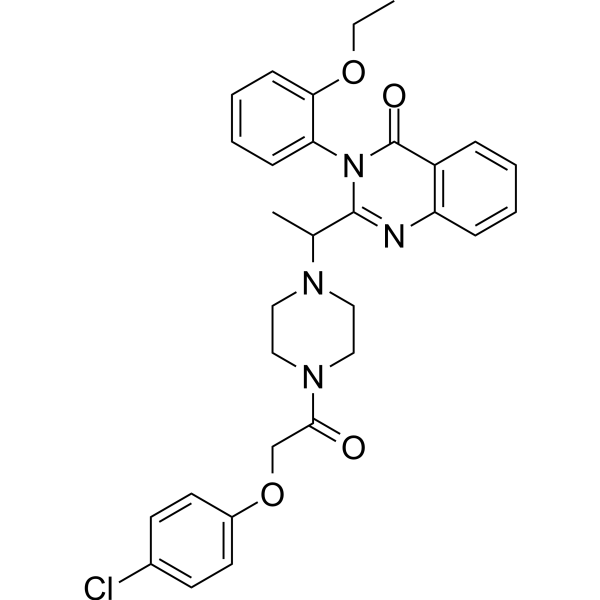
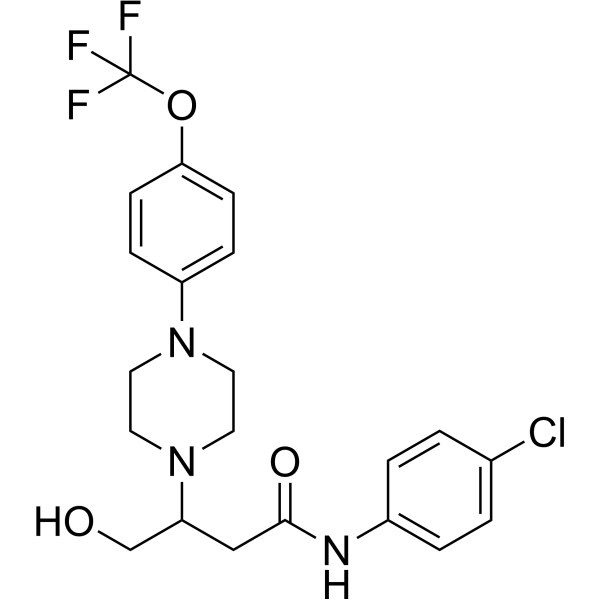
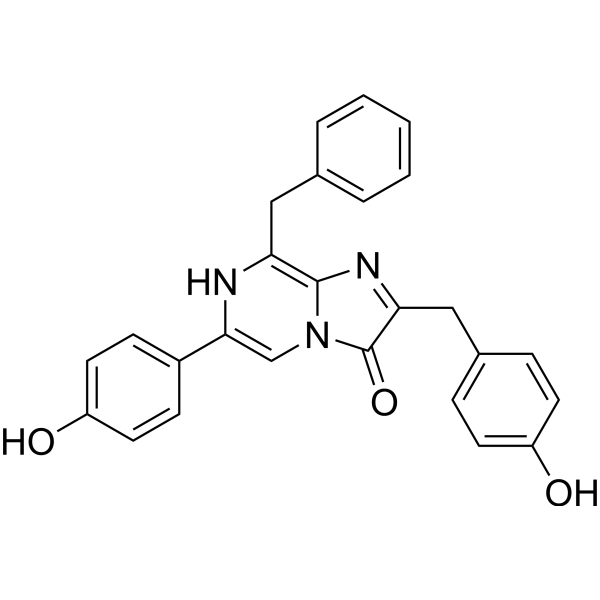
VBIT-4 is an inhibitor of voltage-dependent anion channel 1 (VDAC1) oligomerization with a binding affinity (Kd) of 17 μM. VBIT-4, as an apoptosis inhibitor, can be used for therapeutic purposes in apoptosis-associated disorders, such as neurodegenerative and cardiovascular diseases .
|
-
-
- HY-D0086
-
|
MDL101114ZA
|
VDAC
RAD51
|
Cancer
|
|
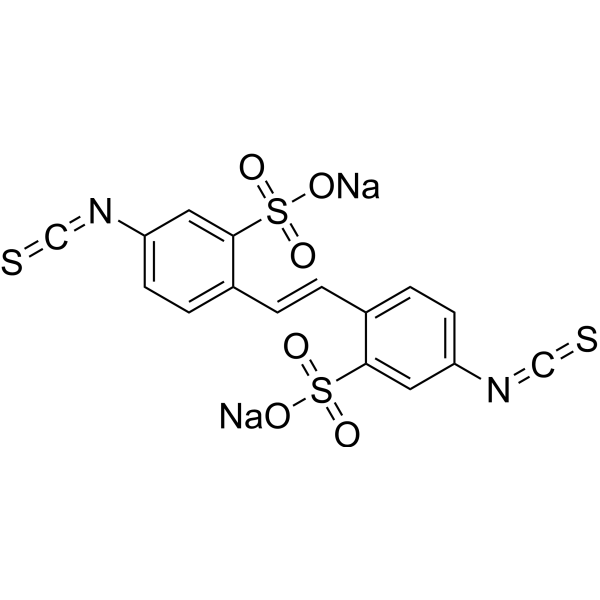
DIDS sodium salt (MDL101114ZA) is a dual inhibitor of ABCA1 and VDAC1. DIDS also inhibits RAD51, inhibiting RAD51-mediated homologous pairing and strand exchange reactions. DIDS inhibits anion exchange and binding to red blood cell membranes, inhibits the activation of caspase-3 and -9, and can be used in cancer research .
|
-
-
- HY-N1579
-
|
|
Endogenous Metabolite
Fungal
Apoptosis
|
Infection
|
|
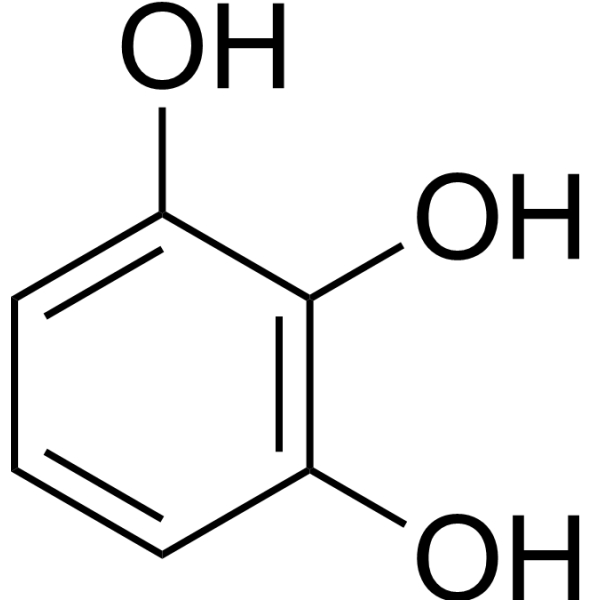
Pyrogallol is a polyphenol compound, which has anti-fungal and anti-psoriatic properties. Pyrogallol is a reductant that is able to generate free radicals, in particular superoxide anions.
|
-
-
- HY-D0720
-
|
NSC-151912; L-6868
|
Fluorescent Dye
Reactive Oxygen Species (ROS)
|
Others
|
|
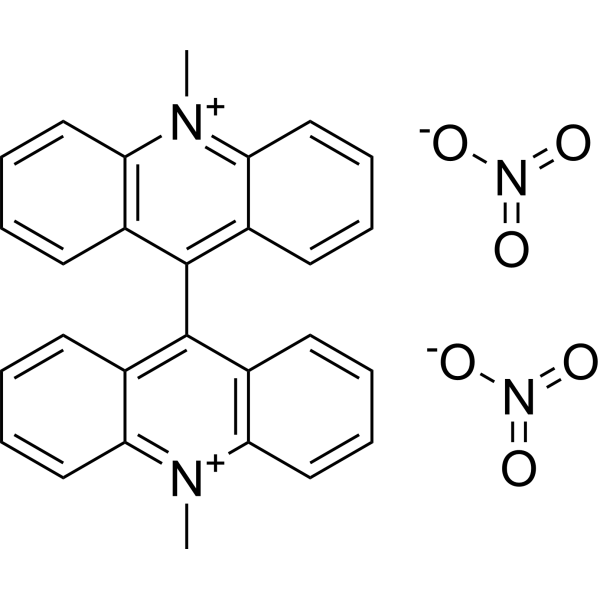
Lucigenin is a chemiluminescence probe. Lucigenin can be used to detect the production of endogenous superoxide anion radical (O 2-). Lucigenin is extremely sensitive to chloride ions, while it combined with chloride ions, the fluorescence will be quenched. Lucigenin also can be used as a chloride indicator. Ex/Em=455/505 nm .
|
-
-
- HY-121137
-
BMPO
1 Publications Verification
BocMPO
|
Reactive Oxygen Species (ROS)
|
Others
|
|
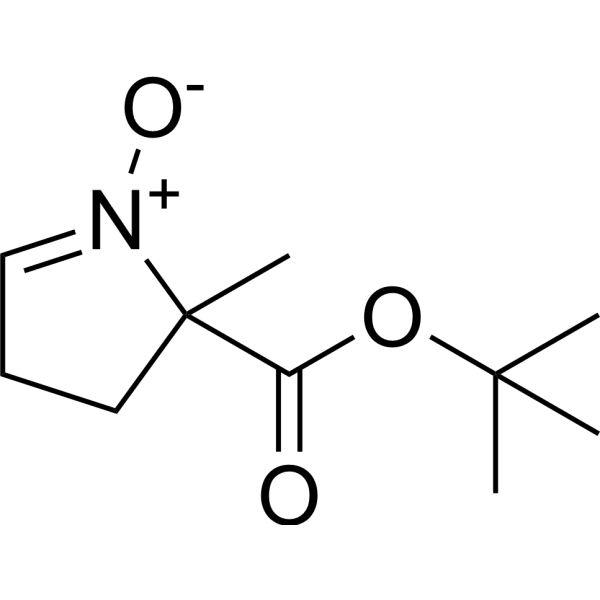
BMPO (BocMPO) is a cell-permeable superior spin trap with favorable chemical and spectroscopic features. BMPO (BocMPO) can be used for detecting thiyl radicals, hydroxyl radicals, superoxide anions and glutathiyl radicals .
|
-
-
- HY-A0080
-
|
Sodium p-aminohippurate; p-Aminohippuric acid sodium salt
|
Biochemical Assay Reagents
|
|
|
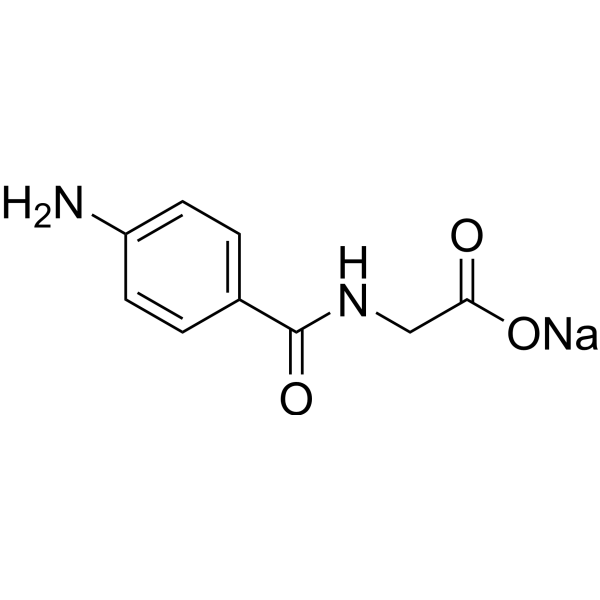
Aminohippurate sodium is a renal tubular transport inhibitor and a substrate for organic anion transporters. Aminohippurate sodium inhibits renal tubular reabsorption of phosphate and promotes increased urinary phosphate excretion. Aminohippurate sodium inhibits renal tubular reabsorption of vitamin C as well as the transport of glucose .
|
-
-
- HY-105917
-
|
Endovion; NS3728
|
Chloride Channel
|
Others
|
|
Endovion is a pharmacological anion channel inhibitor (like chloride channel) and the specific VRAC/VSOAC blocker. Endovion (NS3728) is also an Anoctamin-1 (ANO 1) channel inhibitor .
|
-
-
- HY-W011819
-
|
|
Endogenous Metabolite
|
Metabolic Disease
|
|
Tetradecanedioic acid is an endogenous metabolite and belongs to the class of organic compounds known as long-chain fatty acids. Tetradecanedioic acid is an endogenous biomarker for assessing the activity of organic anion transporting polypeptides (OATPs) .
|
-
-
- HY-122009
-
|
Indoxyl-β-D-glucoside
|
P-glycoprotein
OAT
Fluorescent Dye
|
Others
|
|
Indican (Indoxyl-β-D-glucoside), a glycoside of indoxyl, is a precursor of the dyesindigo and indirubin. Indican has a major metabolite, indoxyl sulfate (IS). IS, an uremic toxin, is a substrate/inhibitor of organic anion transporter (OAT) 1, OAT 3 and multidrug resistance-associated protein (MRP) 4 .
|
-
-
- HY-W115727B
-
|
PAM,Anion,Mw 18 million
|
Biochemical Assay Reagents
|
Others
|
|
Polyacrylamide,Anion,Mw 18 million (PAM,Anion,Mw 18 million) is a multifunctional high molecular weight anionic polyacrylamide copolymer. The anionic properties of Polyacrylamide,Anion,Mw 18 million enable it to be used as a flocculant to achieve charge neutralization and aggregation, while its high molecular weight properties provide viscoelastic properties for fluid applications. Polyacrylamide series materials can maintain enzyme activity in enzyme immobilization, act as drug carriers to achieve controlled release, serve as smart materials responding to temperature/pH stimuli, and be used for in vitro toxin adsorption and soft tissue filling through mechanisms such as physical entrapment, covalent binding or chemical crosslinking. Polyacrylamide finds applications in biomedical engineering, environmental management and industrial applications .
|
-
-
- HY-Y0651
-
|
|
Environmental Pollutants
Biochemical Assay Reagents
|
Infection
Inflammation/Immunology
|
|
Sodium sulfite is an inorganic salt used as an antioxidant and preservative. Sodium sulfite is also used in sulfonation and sulfomethylation reactions. Sodium sulfite can also be used as a bleaching agent, desulfurizer, and dechlorinator. Sodium sulfite inhibits hepatocyte proliferation, promotes hepatocyte apoptosis and necrosis, and impairs mitochondrial integrity. Sodium sulfite induces superoxide anion production, primes neutrophils for enhanced superoxide anion generation, and induces neutrophil gene expression. Sodium sulfite can be used in studies related to pulmonary inflammation and gastric tissue injury .
|
-
-
- HY-112939
-
|
MCI-196; Colestimide
|
Biochemical Assay Reagents
|
Metabolic Disease
|
|
Colestilan (MCI-196) is a non-absorbed, non-calcium-based phosphate binder and is also a non-metallic, anion exchange resin. Colestilan is orally active and can be used for hypercholesterolaemia research .
|
-
-
- HY-D0217
-
|
Bromosulfophthalein disodium salt
|
Fluorescent Dye
|
Metabolic Disease
|
|
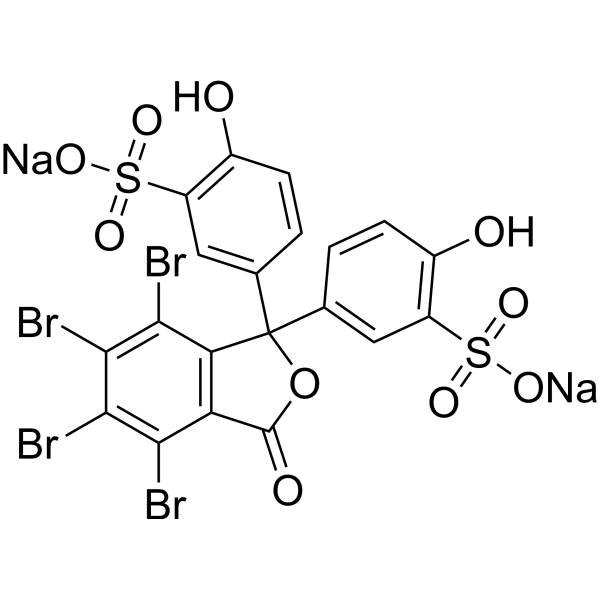
Sulfobromophthalein (Bromosulfophthalein) disodium salt is an organic anion dye used in the study of a variety of membrane carriers expressed in animal tissues and involved in transport of agents and metabolites .
|
-
-
- HY-Y0286
-
|
Hartshorn salt, 99%
|
Environmental Pollutants
Biochemical Assay Reagents
|
Others
|
|
Ammonium carbonate (Ammonium carbonate), 99% is a solid amino compound that functions as a buffer, pH regulator, pore-forming agent, and electrocatalytic oxidation substrate. Ammonium carbonate, 99% is a GRAS-grade direct food additive with no restricted daily intake specified by FAO/WHO, and it shows no acute skin toxicity, clinical signs of toxicity, or effects on body weight in rats. Ammonium carbonate, 99% undergoes electrocatalytic oxidation in alkaline solutions with a Pt/C catalyst (carbonate adsorption interferes with activity). Ammonium carbonate, 99% can serve as a fuel for low-temperature polymer fuel cells and anion exchange membrane fuel cells (with performance superior to pure ammonia), and can also form pores in the carrier-free Pt cathode catalyst layer after low-temperature decomposition, thereby enhancing catalyst activity under low-humidity conditions and the performance of proton exchange membrane fuel cells .
|
-
-
- HY-130015
-
|
|
Reactive Oxygen Species (ROS)
|
Others
|
|
HKSOX-1 (5/6-mixture) is a fluorescent probe which is used for imaging and detection of endogenous superoxide in live cells and in vivo. HKSOX-1 (5/6-mixture) exhibits excellent selectivity and sensitivity towards superoxide anion radical (Ex/Em = 509/534 nm) .
|
-
-
- HY-130017
-
|
|
Reactive Oxygen Species (ROS)
|
Others
|
|
HKSOX-1r (5/6-mixture) is a fluorescent probe which is used for imaging and detection of endogenous superoxide in live cells and in vivo. HKSOX-1r (5/6-mixture) exhibits excellent selectivity and sensitivity towards superoxide anion radical .
|
-
-
- HY-121693
-
|
MDL101114ZA free base
|
VDAC
RAD51
|
Cancer
|
|
DIDS is a dual inhibitor of ABCA1 and VDAC1. DIDS also inhibits RAD51, inhibiting RAD51-mediated homologous pairing and strand exchange reactions. DIDS inhibits anion exchange and binding to red blood cell membranes, inhibits the activation of caspase-3 and -9, and can be used in cancer research .
|
-
-
- HY-W046325
-
|
Diethylaminoethyl cellulose
|
Biochemical Assay Reagents
|
Others
|
|
DEAE-Cellulose (Diethylaminoethyl cellulose), a common biopolymer derivative. DEAE-Cellulose is a weakly basic cellulose anion exchanger .
|
-
-
- HY-D0876
-
|
|
Biochemical Assay Reagents
|
Others
|
|
POPSO is a zwitterionic buffer, increases osmolality and shows marked inhibition of anion uniport. POPSO inhibits chloride uniport with an IC50 value of 24 mM. POPSO enhances copper uptake and toxicity in alga, impairs mitochondrial inner membrane. The working pH range of POPSO sesquisodium salt is 7.2-8.5 .
|
-
-
- HY-137148
-
|
|
Chloride Channel
|
Cancer
|
|
DIOA is a potent acid-sensitive outwardly rectifying (ASOR) anion channel antagonist .
|
-
-
- HY-149276
-
|
|
GLUT
|
Metabolic Disease
|
|
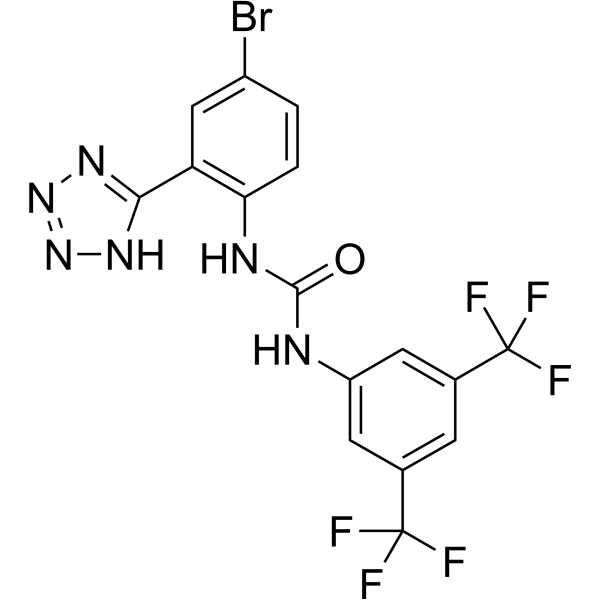
SLC26A3-IN-2 is an orally active inhibitor of anion exchanger protein SLC26A3 (IC50=360 nM). SLC26A3 belongs to solute carrier (SLC) proteins, and the SLC26 family. SLC26 family has broad anion specificity for chloride, bicarbonate, sulfate and oxalate. SLC26A3 down-regulates in adenoma, DRA, involves in in intestinal absorption of chloride and oxalate. The loss of SLC26A3 function mutations is associated with chloride-losing diarrhea .
|
-
-
- HY-132132
-
|
|
Elastase
|
Inflammation/Immunology
|
|
Neutrophil elastase inhibitor 3 (compound 13), a benzoxazinone analog, shows effects on superoxide anion generation and exhibits as a neutrophil elastase (NE) inhibitor, with an IC50 of 80.8 nM for NE release .
|
-
-
- HY-N1579R
-
|
|
Reference Standards
Endogenous Metabolite
Fungal
Apoptosis
|
Infection
|
|
Pyrogallol (Standard) is the analytical standard of Pyrogallol. This product is intended for research and analytical applications. Pyrogallol is a polyphenol compound, which has anti-fungal and anti-psoriatic properties. Pyrogallol is a reductant that is able to generate free radicals, in particular superoxide anions.
|
-
-
- HY-N10450
-
-
-
- HY-154912
-
|
|
Chloride Channel
|
Inflammation/Immunology
|
|
PAT1inh-B01 is a selective SLC26A6 inhibitor. PAT1inh-B01 inhibits PAT1 (a Cl -/HCO3 - exchanger)-mediated anion exchange (IC50: 350 nM). PAT1inh-B01 blocks fluid absorption in small intestine. PAT1inh-B01 can be used for research of small intestinal hyposecretory disorders .
|
-
-
- HY-148682
-
|
Glycyrrhetic acid 3-O-hydrogen sulfate
|
OAT
11β-HSD
Drug Metabolite
|
Metabolic Disease
Inflammation/Immunology
|
|
18β-Glycyrrhetyl-3-O-sulfate (Glycyrrhetic acid 3-O-(hydrogen sulfate)) is a potent type 2 11β-hydroxysteroid dehydrogenase (11β-HSD2) inhibitor with an IC50 of 0.10 µM using rat kidney microsome. 18β-Glycyrrhetyl-3-O-sulfate is the major metabolite of Glycyrrhetinic acid (GA). 18β-Glycyrrhetyl-3-O-sulfate is the substrate of organic anion transporter (OAT) 1 and OAT3. 18β-Glycyrrhetyl-3-O-sulfate has anti-inflammatory effects and has the potential for pseudohyperaldosteronism research .
|
-
-
- HY-100244
-
-
-
- HY-W802239
-
|
|
Drug Derivative
|
Cardiovascular Disease
Metabolic Disease
|
|
Asparaginate calcium is a calcium 2+ salt of asparaginate and anion/zwitterion form of aspartic acid. Asparaginate calcium is a calcium supplement and an antiarrhythmic active substance. Asparaginate calcium can be used for the research of arrhythmia .
|
-
-
- HY-N4096
-
|
|
Others
|
Inflammation/Immunology
|
|
Tsugaric acid A can significantly inhibit superoxide anion formation. Tsugaric acid A also protects human keratinocytes against damage induced by ultraviolet B (UV B) light. Tsugaric acid A can protect keratinocytes from photodamage.
|
-
-
- HY-P1118
-
-
-
- HY-N2412
-
|
|
Chloride Channel
|
Neurological Disease
Cancer
|
|
Irisolidone is a major isoflavone found in Pueraria lobata flowers. Irisolidone exhibits potent hepatoprotective activity. Irisolidone shows the high efficacy for volume-regulated anion channels (VRAC) blockade (IC50=9.8 μM) .
|
-
-
- HY-N3388
-
|
|
Stearoyl-CoA Desaturase (SCD)
|
Infection
Inflammation/Immunology
Cancer
|
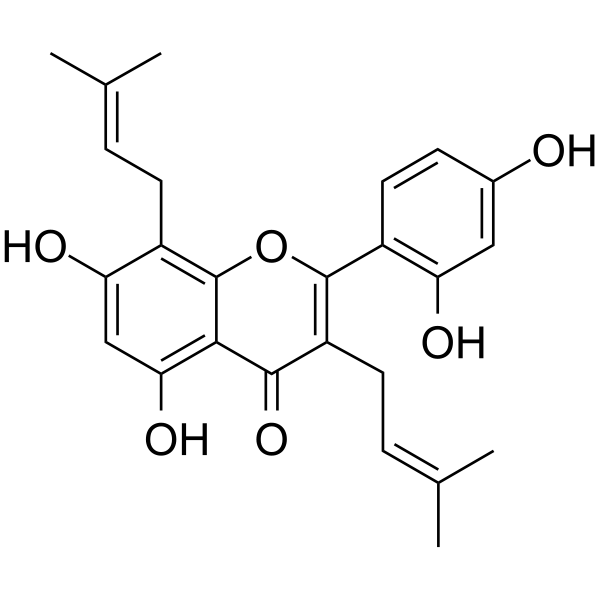
Licoisoflavone B is an orally active flavonoid found in licorice. Licoisoflavone B alleviates psoriasis via SCD1-targeted lipid metabolism reprogramming and suppression of Th17/IL-17-mediated inflammation. Licoisoflavone B inhiibits superoxide anion generation and superoxide anion-induced lipid peroxidation. Licoisoflavone B binds tightly to Lassa virus nucleoprotein and can be used as a nucleoprotein antagonist of Lassa virus. Licoisoflavone B exhibits anti-mutagenic activity against carcinogenic mutagen, by preventing DNA damage. Licoisoflavone B can be used for the research of psoriasis, Lassa fever, inflammation and cancer .
|
-
-
- HY-154912A
-
|
|
Chloride Channel
|
Inflammation/Immunology
|
|
PAT1inh-B01 hydrocholide is a selective SLC26A6 inhibitor. PAT1inh-B01 hydrocholide inhibits PAT1 (a Cl -/HCO3 - exchanger)-mediated anion exchange (IC50: 350 nM). PAT1inh-B01 hydrocholide blocks fluid absorption in small intestine. PAT1inh-B01 hydrocholide can be used for research of small intestinal hyposecretory disorders .
|
-
-
- HY-W127701
-
|
1-Butyl-1-methylpiperidinium bis(trifluoromethylsulfonyl)imide
|
Biochemical Assay Reagents
|
Others
|
|
[Bmpip][NTf2] is composed of 1-butyl-1-methylimidazolium cation and bis(trifluoromethylsulfonyl)imide anion.
|
-
-
- HY-129064B
-
|
|
SOD
|
Metabolic Disease
|
|
Superoxide dismutase PEG (EC 1.15.1.1) is a mimetic of superoxide dismutase (SOD) and powerful free radical scavenger acts by reducing superoxide anions .
|
-
-
- HY-N9447
-
-
-
- HY-N9895
-
|
|
Others
|
Infection
Inflammation/Immunology
|
|
3,5-Dicaffeoyl-epi-quinic acid can be extracted from Chrysanthemum morifolium. 3,5-Dicaffeoyl-epi-quinic acid has antioxidant activities. 3,5-Dicaffeoyl-epi-quinic acid can scavenge DPPH radical and superoxide anion radical, with IC50s of 5.6 and 2.9 μg/mL respectively .
|
-
-
- HY-141490
-
|
|
Drug Derivative
|
Others
|
|
Beta-D-Glucopyranosyl nitromethane, as a salt of a strongly basic anion exchanger in the OH cycle, is a glycosyl derivative of nitromethane .
|
-
-
- HY-Y0569H
-
|
|
Biochemical Assay Reagents
|
Others
|
|
Magnesium D-gluconate hydrate, 98% is a strong chelating agent that chelates calcium, iron, aluminum, copper, and other heavy metal anions.
|
-
-
- HY-109987
-
|
|
Parasite
|
Infection
|
|
ISPA-28 is a specific plasmodial surface anion channel (PSAC) antagonist. ISPA-28 binds directly and reversibly to CLAG3 .
|
-
-
- HY-W773294
-
|
Tetramethylammonium silicate, 16-20% in water
|
Biochemical Assay Reagents
|
Others
|
|
Tetramethylammonium silicate solution is a salt solution formed by tetramethylammonium cations and silicate anions. Tetramethylammonium silicate solution can be used to prepare high-quality silicon dioxide films on substrates .
|
-
-
- HY-165407
-
|
|
Elastase
CFTR
|
Inflammation/Immunology
|
|
Neltenexine, a mucolytic agent, is an Elastase inhibitor. Neltenexine diminishes anion secretion in in bronchial epithelial cells by inhibiting the Cl− and HCO3- uptake via Na/K/2Cl++− and Na+/HCO3- cotransporter without blockade of the CFTR channel, and also diminishes anion secretion via stimulation of Cl−/HCO3- exchanger. Neltenexine significantly prevents pulmonary emphysema with a reduction of alveolar deformation in rat models induced by Elastase. Neltenexine can be used for lung diseases such as chronic obstructive pulmonary disease (COPD) research .
|
-
-
- HY-Y1132
-
|
6-Chloroanthranilic acid
|
Biochemical Assay Reagents
|
Others
|
|
2-Amino-6-chlorobenzoic acid is an autocoupling diazotization reagent used for spectrophotometric detection of nitrite ions in water. 2-Amino-6-chlorobenzoic acid exhibits good tolerance to various anions under acidic conditions. 2-Amino-6-chlorobenzoic acid is commonly used as a reagent in organic synthesis and analytical chemistry .
|
-
-
- HY-179028
-
|
exo-16,17-Dihydro-gibberellin A5-13-acetate
|
Phytohormone
|
Others
|
|
DHGA5 (exo-16,17-Dihydro-gibberellin A5-13-acetate) is a GA3β-hydroxylase (OsGA3ox2) inhibitor. DHGA5 inhibits Arabidopsis root growth with an IC50 of 97 μM. DHGA5 also suppresses the elongation of rice second leaf sheath. DHGA5 can alleviate oxidative damage to Arabidopsis seedlings under NaCl salt stress and reduce the accumulation of superoxide anion .
|
-
-
- HY-D3002
-
|
|
Fluorescent Dye
|
Metabolic Disease
|
|
ONOO-/O2- tracker probe is a dual-responsive near-infrared fluorescent probe. ONOO-/O2- tracker probe will only emit a strong fluorescence signal when both peroxynitrite (ONOO⁻) and superoxide anion (O₂•⁻), the two key reactive oxygen/nitrogen species, are present simultaneously. ONOO-/O2- tracker probe can be used as a biomarker detection tool for drug-induced liver injury (DILI) .
|
-
-
- HY-157236
-
|
|
Biochemical Assay Reagents
|
Others
|
|
AEX Anion-exchange resin 1 is a strong anion exchange chromatography resin, based on monodisperse polystyrene/divinylbenzene (PS-DVB), with a particle size of 50 μm and an ionic ligand of –CH2N + (CH3)3. AEX Anion-exchange resin 1 can be used for the separation and purification of biological macromolecules such as proteins, antibodies, and viral vaccines.
|
-
-
- HY-142655
-
-
-
- HY-107959
-
|
|
Biochemical Assay Reagents
|
|
|
Colestipol hydrochloride, a hypocholesterolemic bile acid‐binding anion‐exchange polymer, is used in the study of hypercholesterolaemia .
|
-
-
- HY-156468
-
-
-
- HY-W007489
-
|
|
Biochemical Assay Reagents
|
Others
|
|
5-Methylthiazole can be used to generate mobile ionic liquids through alkylation with n-butyl bromide and anion exchange of Br - for BF4 - .
|
-
- HY-N12914
-
|
(+)-Tanzawaic acid B; GS-1302-1; 10-Deoxytanzawaic acid E
|
Reactive Oxygen Species (ROS)
|
Others
|
|
Tanzawaic acid B ((+)-Tanzawaic acid B; GS-1302-1; 10-Deoxytanzawaic acid E) is a superoxide anion production inhibitor and can be isolated from Penicillium citrinum .
|
-
- HY-W740244
-
|
|
OAT
|
Metabolic Disease
|
|
4’-hydroxy Trazodone is a metabolite of the antidepressant and sedative trazodone. It is an inhibitor of organic anion transporter 3 (OAT3; Ki=16.9 μM) and is selective for OAT3 over OAT1 (Ki=>200 μM).
|
-
- HY-174148
-
|
|
Anion Exchangers
Ferroptosis
|
Cancer
|
|
Anion transporter-4 (Compound 6) is a small-molecule anion transporter, which induces tubulin degradation and mitochondrial dysfunction. Anion transporter-4 can increase intracellular anion levels such as chloride ions by disrupting microtubule dynamics, promoting lipid peroxidation, and impairing mitochondrial function. Anion transporter-4 triggers ferroptosis to exert anticancer activity. Anion transporter-4 is promising for research of cancers .
|
-
- HY-N11895
-
-
- HY-W042301R
-
|
|
NKCC
Reference Standards
|
Cardiovascular Disease
|
|
Xipamide (Standard) is the analytical standard of Xipamide. This product is intended for research and analytical applications. Xipamide is a sulfonamide-based diuretic. Xipamide is an antihypertensive agent able to selectively inhibit the anion exchanger (AE) .
|
-
- HY-N9095
-
|
|
Others
|
Neurological Disease
|
|
Curculigoside C is a phenolic glucoside with potent antioxidative and neuroprotective activities. Curculigoside C shows IC50 values of 0.25 mM and 0.88 mM for hydroxyl radicals and superoxide anion radicals, respectively .
|
-
- HY-149422
-
|
|
Fluorescent Dye
|
Neurological Disease
|
|
NIR-FP is a near-infrared fluorescent probe with high sensitivity and selectivity for superoxide anion O 2-. O 2- is the main precursor of ROS, and ferroptosis-mediated epilepsy models can be dynamically tracked by detecting O 2-. Ferroptosis-mediated epilepsy models include: kainic acid (HY-N2309)-induced chronic epilepsy model, Pentylenetetrazole-induced acute epilepsy model, and pilocarpine (HY-B0726A)-induced epilepsy model .
|
-
- HY-157239
-
|
|
Biochemical Assay Reagents
|
Cancer
|
|
AEX HQ Anion-exchange resin (POROS 50HQ) is AEX commonly used filler. AEX HQ Anion-exchange resin is HQ strong anion exchange resin and can purify targeting protein .
|
-
- HY-157238
-
|
|
Biochemical Assay Reagents
|
Others
|
|
AEX anion-exchange resin 2 is a AEX commonly used filler and is a strong anion exchange medium, Particle size: ~90μm. AEX anion-exchange resin 2 can be used in Ion exchange chromatography
|
-
- HY-N8217
-
-
- HY-168804
-
-
- HY-U00005
-
-
- HY-W155121
-
-
- HY-N7576
-
|
|
Others
|
Cardiovascular Disease
|
|
Anemarrhenasaponin Ia is a steroidal saponin that can be isolated from the rhizomes of Anemarrhena asphodeloides Bunge. Anemarrhenasaponin Ia inhibits platelet aggregation. Anemarrhenasaponin Ia induces mild concentration-dependent hemolysis. Anemarrhenasaponin Ia inhibits fMLP- and AA-induced superoxide anion production, while enhancing PMA-induced superoxide anion production. Anemarrhenasaponin Ia can be used in studies related to thrombosis .
|
-
- HY-N11564
-
|
|
Elastase
|
Inflammation/Immunology
|
|
Aristololactam IIIa exhibits significant inhibitory effects on superoxide anion generation and elastase release with IC50 values of 0.12 and 0.20 μg/mL, respectively .
|
-
- HY-N8447
-
|
|
Others
|
Others
|
|
3'-O-Methylmurraol is a coumarinthat can be found in Cnidium monnieri. 3'-O-Methylmurraol inhibits superoxide radical anion generation and elastase release .
|
-
- HY-161502
-
|
|
Fluorescent Dye
|
Others
|
|
DHX-SP is a fluorescent probe, which visualizes superoxide anion (O2 ·–) and peroxynitrite (ONOO –) during ferroptosis of PC12 cells and in the Parkinson’s disease model .
|
-
- HY-149802
-
|
|
GLUT
|
Metabolic Disease
|
|
SLC26A3-IN-1 is an inhibitor of anion exchanger protein SLC26A3 (IC50=340 nM). SLC26A3 belongs to solute carrier (SLC) proteins, and the SLC26 family. SLC26 family has broad anion specificity for chloride, bicarbonate, sulfate and oxalate. SLC26A3 down-regulates in adenoma, DRA, involves in in intestinal absorption of chloride and oxalate. The loss of SLC26A3 function mutations is associated with chloride-losing diarrhea .
|
-
- HY-100322
-
|
|
Chloride Channel
|
Cardiovascular Disease
|
|
H100 is a Cl - transport inhibitor, with partial effects against both the NaK2Cl cotransporter and the Band 3 anion exchanger, but no effect against KCl cotransporter, in human erythrocytes.
|
-
- HY-118489
-
|
|
iGluR
|
Neurological Disease
Inflammation/Immunology
|
|
L644711 is an anion transport inhibitor that reduces cell swelling by inhibiting potassium-activated D-aspartate release in astrocytes. L644711 can be used in the study of brain injury and neuroprotection .
|
-
- HY-168524
-
|
|
Na+/HCO3- Cotransporter
|
Cancer
|
|
SOAT-IN-1 (compound 40) is a potent and selective sodium-dependent organic anion transporter (SOAT) inhibitor with IC50 values of 1.6, 14.3 µM for SOAT, NTCP, respectively .
|
-
- HY-138142
-
|
|
OAT
|
Metabolic Disease
|
|
Euphol acetate is a triterpene that can be isolated from Euphorbia broteri. Euphol acetate is an inhibitor of hepatic transport proteins organic anion-transporting polypeptide 1/3 (OATP1B1/3) .
|
-
- HY-P1118A
-
-
- HY-176403
-
-
- HY-N3464
-
|
|
Phosphodiesterase (PDE)
|
Metabolic Disease
|
|
Isopedicin potently and concentration-dependently inhibits superoxide anion (O2 U?) production in formyl-L-methionyl-L-leucyl-L-phenylalanine (FMLP)-activated cells. Isopedicin increases cAMP formation and PKA activity in FMLP-activated cells by inhibiting phosphodiesterase (PDE) activity .
|
-
- HY-153540
-
|
|
PKG
|
Others
|
|
AP-C4 is an inhibitor of guanosine 3′,5′-cyclic monophosphate (cGMP)-dependent protein kinase II (cGKII) with a pIC50 of 5.2. AP-C3 does not inhibit cGKII-dependent anion secretion .
|
-
- HY-135571
-
|
|
VDAC
|
Cardiovascular Disease
Neurological Disease
|
|
VBIT-3 is an inhibitor of voltage-dependent anion channel 1 (VDAC1) oligomerization with a binding affinity (Kd) of 31.3 μM. VBIT-3, as an apoptosis inhibitor, can be used for therapeutic purposes in apoptosis-associated disorders, such as neurodegenerative and cardiovascular diseases .
|
-
- HY-116730
-
|
|
Reactive Oxygen Species (ROS)
|
Others
|
|
CHS-111 is a benzyl indazole inhibitor of superoxide anion O 2- generation. CHS-111 inhibits the cell migration, and reduces the formyl-Met-Leu-Phe- but not phorbol ester-stimulated phospholipase D activity, with the IC50 of 3.9 μM .
|
-
- HY-W011819R
-
|
|
Reference Standards
Endogenous Metabolite
|
Metabolic Disease
|
|
Tetradecanedioic acid (Standard) is the analytical standard of Tetradecanedioic acid. This product is intended for research and analytical applications. Tetradecanedioic acid is an endogenous metabolite and belongs to the class of organic compounds known as long-chain fatty acids. Tetradecanedioic acid is an endogenous biomarker for assessing the activity of organic anion transporting polypeptides (OATPs) .
|
-
- HY-153541
-
|
|
PKG
|
Others
|
|
AP-C7 is an inhibitor of guanosine 3′,5′-cyclic monophosphate (cGMP)-dependent protein kinase II (cGKII) with a pIC50 of 5.0. AP-C7 only weakly inhibits cGKII-dependent anion secretion .
|
-
- HY-153539
-
|
|
PKG
|
Others
|
|
AP-C3 is a potent inhibitor of guanosine 3′,5′-cyclic monophosphate (cGMP)-dependent protein kinase II (cGKII) with a pIC50 of 6.3. AP-C3 only weakly inhibits cGKII-dependent anion secretion .
|
-
- HY-N18241
-
|
|
Others
|
Inflammation/Immunology
|
|
Hibiscolactone A is a 2H-naphtho[2,3-b]furan-2-one derivative and a superoxide anion generation inhibitor, which can be isolated from the stems of Pachira aquatica. The IC50 value of Hibiscolactone A against fMLP (HY-P0224)-induced human neutrophil activity (inhibiting superoxide anion generation) is 63.22 μM .
|
-
- HY-179316
-
|
|
Biochemical Assay Reagents
|
Others
|
|
4-Phosphonooxy-tempo is an anionic nitroxide spin probe. 4-Phosphonooxy-tempo can be transported by a band 3 protein to permeate the membrane and then react with reductants contained in cytosol. 4-Phosphonooxy-tempo can be used as biomembrane anion channel functional probe .
|
-
- HY-179025
-
|
|
Phytohormone
|
Others
|
|
GA3ox-IN-1 (Compound 10e) is a GA3β-hydroxylase (GA3ox) inhibitor. GA3ox-IN-1 inhibits Arabidopsis root growth with an IC50 of 90 μM. GA3ox-IN-1 also suppresses the elongation of rice second leaf sheath. GA3ox-IN-1 can alleviate oxidative damage to Arabidopsis seedlings under NaCl salt stress and reduce the accumulation of superoxide anion .
|
-
- HY-N17833
-
|
Kaempferol 3-O-2,4'''-acetylrhamninoside
|
Reactive Oxygen Species (ROS)
|
Cardiovascular Disease
|
|
Actinoside E (Kaempferol 3-O-2,4'''-acetylrhamninoside) is a flavonoid triglycoside with antioxidant activity. Actinoside E scavenges DPPH, superoxide anion and hydroxyl radicals, and inhibits lipid peroxidation in mouse liver homogenate. Actinoside E can be used in studies related to myocardial ischemia .
|
-
- HY-N19660
-
|
|
Elastase
|
Inflammation/Immunology
|
|
(1'S,2'S)-1'-O-Methylvaginol, a coumarin found in the fruits of Cnidium monnieri, is an elastase inhibitor. (1'S,2'S)-1'-O-Methylvaginol exhibits 11.99% inhibition of superoxide anion generation and 6.42% inhibition of elastase release by human neutrophils at 10 µg/mL. (1'S,2'S)-1'-O-Methylvaginol can be used for research on inflammatory diseases .
|
-
- HY-182919
-
|
|
Cuproptosis
Reactive Oxygen Species (ROS)
|
Cancer
|
|
Antitumor photosensitizer-10 is an antitumor photosensitizer. Upon near-infrared irradiation, Antitumor photosensitizer-10 generates superoxide anions, reduces the copper-binding capacity of glutathione, releases copper ions, and thereby induces cuproptosis in tumor cells (cuproptosis). Antitumor photosensitizer-10 can be used in breast cancer-related research .
|
-
- HY-W150770
-
|
Isophthalic acid diamide
|
Drug Intermediate
|
Others
|
|
Isophthalamide (Isophthalic acid diamide) is a widely used chemical scaffold for the design of high-performance fluorescent chemosensors.Isophthalamide, with its inherent hydrogen-bond-donating properties and tunable chelating cavity, enables highly selective recognition and detection of various analytes ranging from inorganic ions to complex organic molecules.Isophthalamide can be incorporated with various fluorophores to develop sensors displaying “turn-on” or “turn-off” signal responses.Isophthalamide-based sensors are thus capable of detecting diverse analytes including metal ions, anions, neutral molecules, pharmaceuticals, and explosives .
|
-
- HY-182542
-
|
|
OAT
|
Cancer
|
|
SOAT-IN-3 is a selective inhibitor of sodium-dependent organic anion transporter (SOAT/SLC10A6). SOAT-IN-3 reduces intracellular estradiol synthesis, the process of dehydroepiandrosterone (DHEA) production from DHEAS, and DHEAS-induced cancer cell proliferation. SOAT-IN-3 shows no cytotoxicity against breast cancer cells at the tested concentrations. SOAT-IN-3 can be used in the research of breast cancer .
|
-
- HY-182767
-
|
|
Na+/HCO3- Cotransporter
|
Cancer
|
|
SOAT-IN-2 is a selective sodium-dependent organic anion transporter (SOAT, SLC10A6) inhibitor. SOAT-IN-2 blocks sodium-dependent cellular uptake of sulfated steroid Dehydroepiandrosterone sulfate (DHEAS, HY-113416). SOAT-IN-2 reduces intracellular estradiol synthesis, DHEA (HY-14650) formation, and DHEAS-stimulated cancer cell proliferation without inducing cytotoxicity. SOAT-IN-2 can be used for the research of breast cancer .
|
-
- HY-N19297
-
|
Prieurianin
|
Elastase
|
Inflammation/Immunology
Cancer
|
|
Endosidin1 (Prieurianin) is a Prieurianin with cleaved A and B rings. Endosidin1 is isolated from the roots of Aphanamixis polystachya. Endosidin1 inhibits superoxide anion production and Elastase release in neutrophils, with an IC50 >10 μg/mL. Endosidin1 exhibits mild cytotoxic activity against laryngeal cancer cells in vitro. Endosidin1 shows anti-inflammatory activity. Endosidin1 can be used in studies related to laryngeal cancer .\n
|
-
- HY-172388A
-
-
- HY-172388
-
-
- HY-141483
-
-
- HY-N11737
-
|
|
Drug Derivative
|
Inflammation/Immunology
|
|
Monasfluore A is an azaphenanthrenone derivative with antioxidant activity. Monasfluore A inhibits LPS-induced nitric oxide production. Monasfluore A scavenges DPPH and superoxide anion free radicals. Monasfluore A exerts cellular antioxidant activity in oxidatively damaged colon adenocarcinoma cells. Monasfluore A shows no antiproliferative effect on human laryngeal cancer cells and colon adenocarcinoma cells .
|
-
- HY-N13470
-
|
|
Drug Isomer
|
Inflammation/Immunology
|
|
meso-Astaxanthin is a natural stereoisomer of astaxanthin with antioxidant activity and is found in a variety of aquatic animals. meso-Astaxanthin binds to human serum albumin in a monomeric form at a stoichiometric ratio; at low ligand-to-protein ratios, human serum albumin acts as a chiral template for supramolecular assembly at higher ratios. meso-Astaxanthin directly scavenges superoxide anions. meso-Astaxanthin can be used in the research of myocardial ischemia-reperfusion injury .
|
-
- HY-183570
-
|
|
Photosensitizer
Reactive Oxygen Species (ROS)
|
Cancer
|
|
Antitumor photosensitizer-11 is a type-I carbazole/benzindolium photosensitizer with antitumor activity. Antitumor photosensitizer-11 induces ROS generation via a type-I pathway, forming superoxide anions and hydroxyl radicals. Antitumor photosensitizer-11 triggers immunogenic cell death in cancer cells via enhanced oxidative stress. Antitumor photosensitizer-11 exhibits antiproliferative activity in normoxic and hypoxic environments, inhibits breast cancer tumor growth in vivo, and promotes dendritic cell maturation and T cell infiltration. Antitumor photosensitizer-11 can be used for the research of cancer, such as breast cancer .
|
-
- HY-N17982
-
|
|
HIV Integrase
|
Infection
|
|
Vanillic acid 4-O-β-D-glucopyranoside is a vanillic acid glycoside with moderate antioxidant activity. Vanillic acid 4-O-β-D-glucopyranoside scavenges DPPH free radicals and superoxide anion radicals, and inhibits AAPH-induced lipid peroxidation in the linoleic acid system. The IC50 value of Vanillic acid 4-O-β-D-glucopyranoside against HIV-1 integrase is >100 μg/mL, indicating that it is not an effective HIV-1 integrase inhibitor. Vanillic acid 4-O-β-D-glucopyranoside is isolable from the ethyl acetate extract of Gardeniae Fructus.
|
-
- HY-W042301S
-
-
- HY-100244R
-
|
|
Chloride Channel
Reference Standards
|
Neurological Disease
|
|
NS1652 (Standard) is the analytical standard of NS1652 (HY-100244). This product is intended for research and analytical applications. NS1652 is a reversible anion conductance inhibitor, blocks chloride channel, with an IC50 of 1.6 μM in human and mouse red blood cells.
|
-
- HY-153537
-
|
|
PKG
|
Others
|
|
AP-C1 is a potent inhibitor of guanosine 3′,5′-cyclic monophosphate (cGMP)-dependent protein kinase II (cGKII) with a pIC50 of 6.5. AP-C1 only weakly inhibits cGKII-dependent anion secretion .
|
-
- HY-W011819S
-
|
|
Endogenous Metabolite
|
Metabolic Disease
|
|
Tetradecanedioic acid-d24 is the deuterium labeled Tetradecanedioic acid . Tetradecanedioic acid is an endogenous metabolite and belongs to the class of organic compounds known as long-chain fatty acids. Tetradecanedioic acid can act as a candidate biomarker for organic anion-transporting polypeptide mediated agent-agent interactions .
|
-
- HY-P2490
-
|
|
Thrombin
|
Metabolic Disease
|
|
Acetyl-Hirudin (54-65) (sulfated) is a acetyl-fragment of Hirudin which binds directly to thrombin-rHCII(L444R) and disrupts interactions between the N-terminal acidic domain of rHCII and anion-binding exosite I of thrombin that serves to stabilize the complex .
|
-
- HY-W011052
-
|
|
Biochemical Assay Reagents
|
Others
|
|
Tetrapentylammonium bromide is a quaternary ammonium salt consisting of a positively charged tetrapentylammonium cation and a negatively charged bromide anion. This compound is commonly used as a phase transfer catalyst in organic synthesis reactions to facilitate the transfer of reactants between immiscible phases. It is also used in the production of surfactants, detergents and the synthesis of pharmaceuticals.
|
-
- HY-N3513
-
|
Kuwanon C
|
OAT
|
Cardiovascular Disease
|
|
Mulberrin is a strong inhibitor of organic anion-transporting polypeptide 2B1 (OATP2B1)-mediated estrone-3-sulfate (E3S) uptake with an IC50 value being 1.8?±1.5 μM.
|
-
- HY-133966
-
|
5α-Cholestane-3β,6α-diol
|
Reactive Oxygen Species (ROS)
|
Others
|
|
6α-Hydroxy-5α-cholestane (5α-Cholestane-3β,6α-diol) is an oxysterol that promotes the production of superoxide anions in SK-N-BE cells at concentrations of 50 μM and 100 μM .
|
-
- HY-W115727A
-
|
PAM,Anion,Mw 14-16 million
|
Biochemical Assay Reagents
|
Others
|
|
Polyacrylamide, Anion, Mw 14-16 million is a multifunctional high molecular weight anionic polyacrylamide copolymer. The anionic properties of Polyacrylamide, Anion, Mw 14-16 million enable it to be used as a flocculant to achieve charge neutralization and aggregation, while its high molecular weight properties provide viscoelastic properties for fluid applications. Polyacrylamide series materials can maintain enzyme activity in enzyme immobilization, achieve controlled release as a drug carrier, respond to temperature/pH stimulation as a smart material, and can also be used for in vitro toxin adsorption and soft tissue filling through mechanisms such as physical embedding, covalent bonding or chemical cross-linking. Polyacrylamide can be used in biomedical engineering, environmental management and industrial applications .
|
-
- HY-B0804
-
Nadolol
5 Publications Verification
SQ-11725
|
Adrenergic Receptor
|
Cardiovascular Disease
|
|
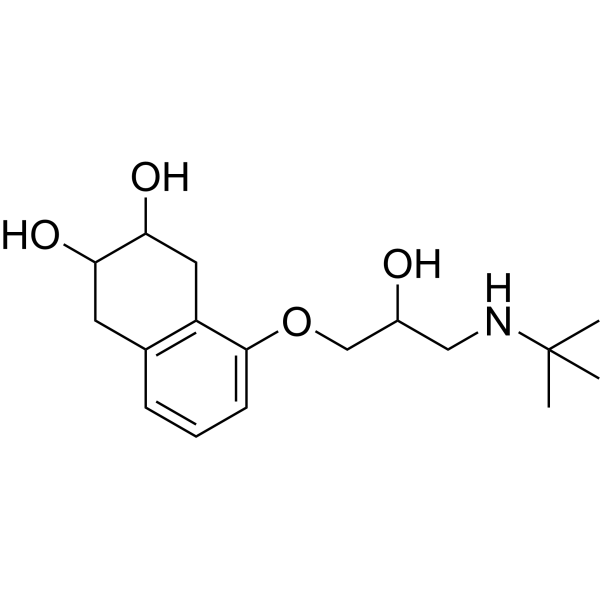
Nadolol (SQ-11725) is a non-selective and orally active β-adrenergic receptors blocker and is a substrate of organic anion transporting polypeptide 1A2 (OATP1A2). Nadolol has the the potential for high blood pressure, angina pectoris and vascular headaches research .
|
-
- HY-105917R
-
|
Endovion (Standard); NS3728 (Standard)
|
Reference Standards
Chloride Channel
|
Others
|
|
Emidurdar (Standard) is the analytical standard of Emidurdar (HY-105917). This product is intended for research and analytical applications. Endovion is a pharmacological anion channel inhibitor (like chloride channel) and the specific VRAC/VSOAC blocker. Endovion (NS3728) is also an Anoctamin-1 (ANO 1) channel inhibitor .
|
-
- HY-N7935
-
|
|
Reactive Oxygen Species (ROS)
|
Cardiovascular Disease
Infection
Cancer
|
|
Procyanidin B5 is an antioxidant with a IC50 of 0.1 mM in lipid peroxidation assays using mouse liver homogenates. Procyanidin B5 scavenges superoxide anions and hydroxyl radicals, and inhibits lipid peroxidation. Procyanidin B5 can be used in research related to cardiovascular diseases, cancer, and malaria .
|
-
- HY-129064
-
|
SOD
|
SOD
|
Inflammation/Immunology
Cancer
|
|
Superoxide dismutase, Porcine erythrocytes (SOD) is the only antioxidant enzyme that scavenges the superoxide anion by converting this free radical to oxygen and hydrogen peroxide, thus preventing peroxynitrite production and further damage. Superoxide dismutase, Porcine erythrocytes is extensively researched and used in anti-inflammatory, antitumor, radiation protection, and antisenility applications .
|
-
- HY-111345
-
|
UR-1102; URC-102
|
OAT
URAT1
|
Metabolic Disease
Inflammation/Immunology
|
|
Epaminurad (UR-1102) is an orally active, potent and selective URAT1 (urate transporter 1) inhibitor, with a Ki of 0.057 μM. Epaminurad quite modestly inhibits OAT1 and OAT3 (organic anion transporter). Epaminurad is a uricosuric agent. Epaminurad can be used for gout and hyperuricemia research .
|
-
- HY-111345A
-
|
UR-1102 hydrochloride; URC-102 hydrochloride
|
OAT
URAT1
|
Metabolic Disease
Inflammation/Immunology
|
|
Epaminurad (UR-1102) hydrochloride is an orally active, potent and selective URAT1 (urate transporter 1) inhibitor, with a Ki of 0.057 μM. Epaminurad hydrochloride quite modestly inhibits OAT1 and OAT3 (organic anion transporter). Epaminurad hydrochloride is a uricosuric agent. Epaminurad hydrochloride can be used for gout and hyperuricemia research .
|
-
- HY-111217
-
|
|
VDAC
Mitochondrial Metabolism
|
Neurological Disease
Cancer
|
|
AKOS-22 is a potent mitochondrial protein VDAC1 (voltage-dependent anion channel 1) inhibitor (Kd=15.4 μM). AKOS-22 interacts with VDAC1 and inhibiting both VDAC1 oligomerization and apoptosis. AKOS-22 protects against mitochondrial dysfunction .
|
-
- HY-156241
-
|
|
NO Synthase
Fungal
|
Infection
Inflammation/Immunology
|
|
Meliadubin B is a natural triterpenoid with significant inflammatory inhibition effect toward superoxide anion generation in human neutrophils (EC50 of 5.54 μM). Meliadubin B inhibits inducible nitric oxide synthase. Meliadubin B shows remarkable inhibition against the rice pathogenic fungus Magnaporthe oryzae with IC50 of 182.50 μM.
|
-
- HY-N7885
-
|
(-)-(25R)-Spirost-4-ene-3,12-dione
|
Others
|
Inflammation/Immunology
|
|
(25R)-Spirost-4-ene-3,12-dione ((-)-(25R)-Spirost-4-ene-3,12-dione) is a natural product that has an inhibitory effect on neutrophil superoxide anion production and histamine release from mast cells .
|
-
- HY-161169A
-
|
|
MMP
|
Cancer
|
|
TP0628103 (Compound 18) TFA is a selective inhibitor of MMP-7, with the IC50 value of 0.17 nM that plays an important role in cancer and fibrosis .
|
-
- HY-161169
-
|
|
MMP
|
Cancer
|
|
TP0628103 (compound 18) is a selective inhibitor of MMP-7, with the IC50 value of 0.17 nM that plays an important role in cancer and fibrosis .
|
-
- HY-129064D
-
|
|
SOD
|
Metabolic Disease
|
|
Superoxide Dismutase, Roxburgh (EC 1.15.1.1) catalyzes the dismutation of superoxide radicals to hydrogen peroxide and molecular oxygen. Superoxide Dismutase plays a critical role in the defense of cells against the toxic effects of oxygen radicals. Superoxide Dismutase competes with nitric oxide (NO) for superoxide anion (which reacts with NO to form peroxynitrite), thereby Superoxide Dismutase promotes the activity of NO.
|
-
- HY-129064C
-
|
|
SOD
|
Metabolic Disease
|
|
Superoxide Dismutase, Bovine (EC 1.15.1.1) catalyzes the dismutation of superoxide radicals to hydrogen peroxide and molecular oxygen. Superoxide Dismutase plays a critical role in the defense of cells against the toxic effects of oxygen radicals. Superoxide Dismutase competes with nitric oxide (NO) for superoxide anion (which reacts with NO to form peroxynitrite), thereby Superoxide Dismutase promotes the activity of NO.
|
-
- HY-W011087
-
|
|
Environmental Pollutants
Biochemical Assay Reagents
|
Others
|
|
Benzyldimethyltetradecylammonium chloride is a quaternary ammonium salt consisting of a positively charged N-benzyl-N,N-dimethyltetradecyl-1-amine cation and a negatively charged chloride anion. The compound is commonly used as a surfactant and emulsifier in a variety of applications including detergents, fabric softeners and personal care products. It also has antimicrobial properties and is used as a disinfectant or antiseptic in some products.
|
-
- HY-103703
-
|
|
Anion Exchangers
|
Metabolic Disease
Inflammation/Immunology
|
|
DEAE Cross-linked dextran A 25 is a weak anion exchange chromatography packing material. DEAE Cross-linked dextran A 25 can be used for the analysis of trace metal humic acid complexes in river water and the purification of biomacromolecules. DEAE Cross-linked dextran A 25 can also be used for research on diseases related to abnormal AVP levels .
|
-
- HY-129064H
-
|
|
Endogenous Metabolite
|
Metabolic Disease
|
|
Superoxide dismutase, Horseradish (EC 1.15.1.1), catalyzes the dismutation of superoxide radicals into hydrogen peroxide and molecular oxygen. Superoxide dismutase (SOD) plays a crucial role in cellular defense against the toxic effects of oxygen free radicals. Superoxide dismutase competes with nitric oxide (NO) for superoxide anions (which react with NO to form peroxynitrite), thereby promoting NO activity.
|
-
- HY-E70944
-
|
|
SOD
|
Metabolic Disease
|
|
Soy Superoxide Dismutase (EC 1.15.1.1) catalyzes the dismutation of superoxide radicals to hydrogen peroxide and molecular oxygen. Superoxide Dismutase plays a critical role in the defense of cells against the toxic effects of oxygen radicals. Superoxide Dismutase competes with nitric oxide (NO) for superoxide anion (which reacts with NO to form peroxynitrite), thereby Superoxide Dismutase promotes the activity of NO.
|
-
- HY-W014408
-
|
TEA bromide
|
Biochemical Assay Reagents
|
Others
|
|
Tetraethylammonium bromide is a quaternary ammonium salt consisting of a positively charged tetraethylammonium cation and a negatively charged bromide anion. This compound is commonly used as a phase transfer catalyst in organic chemical reactions, facilitating the transfer of reactants between immiscible phases. It can also be used as a reagent for the synthesis of various organic compounds, an electrolyte in electrochemical experiments, and a source of tetraethylammonium ions in biochemical and pharmacological research.
|
-
- HY-W011122
-
|
|
Biochemical Assay Reagents
|
Others
|
|
Tributylbenzylammonium bromide is a quaternary ammonium salt composed of a positively charged N-benzyl-N,N-dibutylbutan-1-amine cation and a negatively charged bromide anion composition. The compound is commonly used as a surfactant and emulsifier in a variety of applications including detergents, fabric softeners and personal care products. It also has antimicrobial properties and is used as a disinfectant or antiseptic in some products.
|
-
- HY-W012450
-
|
Phenyltrimethylammonium bromide
|
Biochemical Assay Reagents
|
Others
|
|
Trimethylphenylammonium bromide is a quaternary ammonium salt consisting of a positively charged N,N,N-trimethylanilinium cation and a negatively charged bromide anion. This compound is commonly used as a phase transfer catalyst in organic chemical reactions, facilitating the transfer of reactants between immiscible phases. It can also be used as a reagent in the synthesis of various organic compounds and in some applications as a surfactant or corrosion inhibitor.
|
-
- HY-E70518
-
|
|
Bacterial
|
Infection
|
|
Oxalate decarboxylase, Microorganism (EC 4.1.1.2), a stress-response enzyme in certain soil bacteria, is a Mn-dependent enzyme in the cupin superfamily and is found in fungi and soil bacteria. Oxalate decarboxylase catalyzes the decarboxylation of the oxalate mono-anion in the soil bacterium Bacillus subtilis. Enzymatic activity of OxDC is strongly pH dependent, with a maximum at around pH 4.0 .
|
-
- HY-163146
-
|
|
Fluorescent Dye
|
Cancer
|
|
TME-HYM (PH Probe) is a novel fluorescent probe based on acidic tumor microenvironment (TME) activation and organic anion transporting polypeptide (OATPs, overexpressed on cancer cells), and can be selective uptaken. TME-HYM (PH Probe) can selectively lit up cancer cells and tumor tissues, offering dual tumor selectivity for precise visualization of tumor mass .
|
-
- HY-78162
-
|
|
ASCT
|
Cancer
|
|
cis-L-3-Hydroxyproline is an Alanine-Serine-Cysteine transporter 2 (ASCT2, SLC1A5) substrate that can induces inwardly-directed anion current, and forms key interactions with ASCT2 binding site residues including Asn471.cis-L-3-Hydroxyproline can be used for the research of melanoma .
|
-
- HY-18743
-
|
|
Reactive Oxygen Species (ROS)
|
Cancer
|
|
Coelenterazine is a luminescent enzyme substrate for apoaequorin and Renilla luciferase. Renilla luciferase and substrate coelenterazine has been used as the bioluminescence donor in bioluminescence resonance energy transfer (BRET) to detect protein-protein interactions. Coelenterazine is a superoxide anion-sensitive chemiluminescent probe and it can also be used in chemiluminescent detection of peroxynitrite (Ex/Em = 429/466 nm) .
|
-
- HY-W014106
-
|
N,N,N-Triethylethanaminium tetrafluoroborate
|
Biochemical Assay Reagents
|
Others
|
|
Tetraethylammonium tetrafluoroborate is a quaternary ammonium salt consisting of a positively charged tetraethylammonium cation and a negatively charged tetrafluoroborate anion. This compound is commonly used as a phase transfer catalyst in organic chemical reactions, facilitating the transfer of reactants between immiscible phases. It can also be used as a reagent for the synthesis of various organic compounds, an electrolyte in electrochemical experiments, and a source of tetraethylammonium ions in biochemical and pharmacological research.
|
-
- HY-129064E
-
|
|
Endogenous Metabolite
|
Metabolic Disease
|
|
Superoxide Dismutase, Escherichia coli (EC 1.15.1.1), catalyzes the dismutation of superoxide radicals into hydrogen peroxide and molecular oxygen. Superoxide dismutase (SOD) plays a crucial role in cellular defense against the toxic effects of oxygen free radicals. Superoxide dismutase competes with nitric oxide (NO) for superoxide anions (which react with NO to form peroxynitrite), thereby promoting NO activity.
|
-
- HY-N3513R
-
|
Kuwanon C (Standard)
|
Reference Standards
Others
|
Cardiovascular Disease
|
|
Mulberrin (Standard) is the analytical standard of Mulberrin. This product is intended for research and analytical applications. Mulberrin is a strong inhibitor of organic anion-transporting polypeptide 2B1 (OATP2B1)-mediated estrone-3-sulfate (E3S) uptake with an IC50 value being 1.8 ±1.5 μM.
|
-
- HY-B0804R
-
|
SQ-11725 (Standard)
|
Reference Standards
Adrenergic Receptor
|
Cardiovascular Disease
|
|
Nadolol (Standard) is the analytical standard of Nadolol. This product is intended for research and analytical applications. Nadolol (SQ-11725) is a non-selective and orally active β-adrenergic receptors blocker and is a substrate of organic anion transporting polypeptide 1A2 (OATP1A2). Nadolol has the the potential for high blood pressure, angina pectoris and vascular headaches research .
|
-
- HY-W001189
-
|
|
Bacterial
|
Infection
|
|
1,3-Dithiane is a protected formaldehyde anion equivalent and a sulfur-containing Maillard reaction product. 1,3-Dithiane is found in cooked beef extracts. 1,3-Dithiane is a potent mutagenic agent against S. typhimurium TA98 and TA100. 1,3-Dithiane can be used as a useful marker synthon .
|
-
- HY-W127676
-
|
N,N,N-Triethylethanaminium perchlorate
|
Biochemical Assay Reagents
|
Others
|
|
Tetraethylammonium perchlorate is an organic compound containing ammonium ions and perchlorate ions. It is commonly used as an electrolyte in electrochemistry and as a source of perchlorate anion in analytical chemistry. Due to its high ionic conductivity and stability under extreme conditions, tetraethylammonium perchlorate has a variety of applications in the production of batteries, fuel cells and electronic components. In addition, it can be used as a reference standard in analytical methods such as ion chromatography.
|
-
- HY-W127680
-
|
Tetra-n-butylammonium perchlorate
|
Biochemical Assay Reagents
|
Others
|
|
Tetrabutylammonium perchlorate is an organic compound containing ammonium ions and perchlorate ions. It is commonly used as an electrolyte in electrochemistry and as a source of perchlorate anion in analytical chemistry. Tetrabutylammonium perchlorate has a variety of applications in the production of batteries, fuel cells and electronic components due to its high ionic conductivity and stability under extreme conditions. In addition, it can be used as a reference standard in analytical methods such as ion chromatography.
|
-
- HY-N7308
-
-
- HY-N17881
-
|
|
Elastase
|
Inflammation/Immunology
|
|
Phochinenin K is a 9,10-dihydrophenanthrene derivative present in the rhizomes of Bletilla formosana. Phochinenin K exhibits anti-inflammatory activity and can be used in the study of inflammatory diseases .
|
-
- HY-155668
-
|
|
HMG-CoA Reductase (HMGCR)
|
Metabolic Disease
|
|
HMG-CoA Reductase-IN-1 is a HMG-CoA reductase inhibitor. HMG-CoA Reductase-IN-1has high HMGR inhibitory activity and OATP1B1 affinity with pIC50 and pKm values of 8.54 and 1.98, respectively. HMG-CoA Reductase-IN-1 can be used for the research of hypercholesterolemia .
|
-
- HY-136372
-
-
- HY-W011972
-
|
|
Biochemical Assay Reagents
|
Others
|
|
2-Bromo-N,N,N-trimethylethanaminium bromide is a quaternary ammonium salt consisting of a positively charged 2-bromo-N,N,N-trimethylethylamine cation and a negatively charged bromide anion. This compound is commonly used as a phase transfer catalyst in organic chemical reactions, facilitating the transfer of reactants between immiscible phases. It can also be used as a halogenating agent, for example in the bromination of olefins.
|
-
- HY-122984
-
-
- HY-W005148
-
|
|
Biochemical Assay Reagents
|
Others
|
|
3-Amino-2-naphthoic acid is a derivative of naphthalene and can be used to synthesize other compounds. 3-Amino-2-naphthoic acid is commonly used as the base material for synthesizing various dyes and pigments. 3-Amino-2-naphthoic acid has been developed as a "turn-on" fluorescence probe for the specific detection of the cyanate anion (CNO -) .
|
-
- HY-117971
-
|
|
CXCR
Formyl Peptide Receptor (FPR)
|
Others
|
|
BVT173187 is a selective inhibitor of the neutrophil formyl peptide receptor FPR1, with activity that inhibits FPR1 activation. BVT173187 inhibits FPR1 agonist-induced activation in neutrophils, reduces adhesion molecule mobilization and superoxide anion production, and has inhibitory activity on FPR1 similar to that of earlier described peptide antagonists, but also has effects on C5aR and CXCR signaling.
|
-
- HY-N9295
-
|
|
Others
|
Metabolic Disease
|
|
3, 4-seco-4 (23),20(29) -Lupadiene-3,28-dioic acid
(Compound 5) is a triterpenoid compound. 3, 4-seco-4 (23),20(29)
-Lupadiene-3,28-dioic acid has a strong inhibitory effect on the production of
superoxide anions, and the inhibitory rate is 86.9±2.8% at 1 μM
.
|
-
- HY-W010947
-
|
|
Fluorescent Dye
|
Inflammation/Immunology
|
|
4-Methylumbelliferyl palmitate is an excellent fluorophore for measuring acid lipase in human leukocytes. Acidity and solvent have important influence on its fluorescence. 4-Methylumbelliferyl palmitate exists mainly as neutral molecular form which can be produced strong fluorescence at 445 nm in near neutral aqueous solutions, and exist mainly as anion form which can be produced stronger fluorescence at 445 nm in weak alkaline solutions .
|
-
- HY-W013231
-
|
Benzyltriethylammonium iodide
|
Biochemical Assay Reagents
|
Others
|
|
N-Benzyl-N,N-diethylethanaminium iodide is a quaternary ammonium salt consisting of a positively charged N-benzyl-N,N-diethylethylamine cation and a negatively charged iodide anion. This compound is commonly used as a phase transfer catalyst in organic chemical reactions, facilitating the transfer of reactants between immiscible phases. It can also be used as a reagent for the synthesis of various organic compounds, and as a surfactant or emulsifier in industrial and personal care products.
|
-
- HY-10466
-
|
BMS-790052; EBP 883
|
HCV
|
Infection
|
|
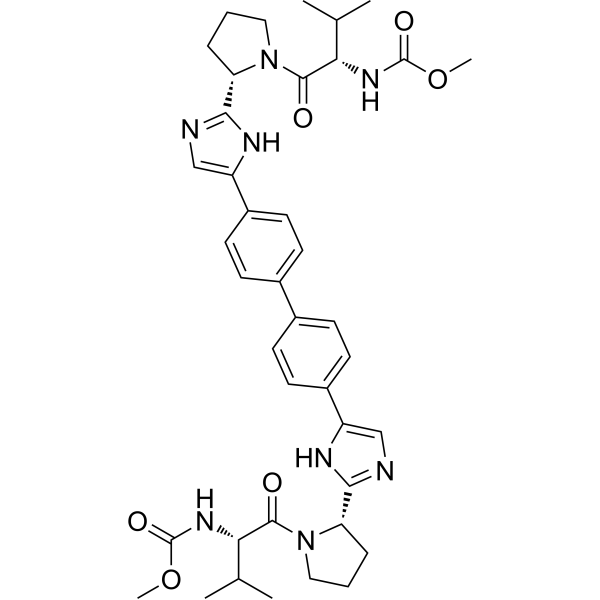
Daclatasvir (BMS-790052) is a potent and orally active HCV NS5A protein inhibitor with EC50s range of 9-146 pM for multiple HCV replicon genotypes. Daclatasvir is also a organic anion transporting polypeptide 1B (OATP1B) and OATP1B3 inhibitor with IC50s of 1.5 µM and 3.27 µM, respectively .
|
-
- HY-W011087R
-
|
|
Biochemical Assay Reagents
Reference Standards
|
Others
|
|
Benzyldimethyltetradecylammonium (chloride) (Standard) is the analytical standard of Benzyldimethyltetradecylammonium (chloride). This product is intended for research and analytical applications. Benzyldimethyltetradecylammonium chloride is a quaternary ammonium salt consisting of a positively charged N-benzyl-N,N-dimethyltetradecyl-1-amine cation and a negatively charged chloride anion. The compound is commonly used as a surfactant and emulsifier in a variety of applications including detergents, fabric softeners and personal care products. It also has antimicrobial properties and is used as a disinfectant or antiseptic in some products.
|
-
- HY-10465
-
|
BMS-790052 dihydrochloride; EBP 883 dihydrochloride
|
HCV
|
Infection
|
|
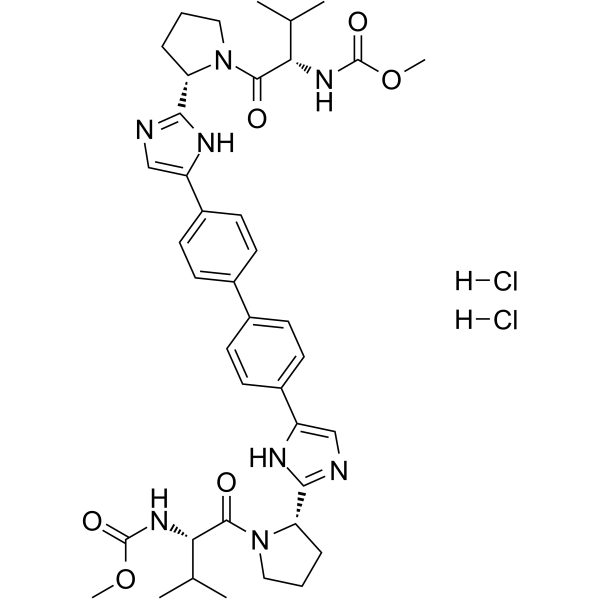
Daclatasvir dihydrochloride (BMS-790052 dihydrochloride) is a potent and orally active HCV NS5A protein inhibitor with EC50s range of 9-146 pM for multiple HCV replicon genotypes. Daclatasvir dihydrochloride is also an organic anion transporting polypeptide 1B (OATP1B) and OATP1B3 inhibitor with IC50s of 1.5 μM and 3.27 μM, respectively .
|
-
- HY-158991
-
|
|
CFTR
|
Inflammation/Immunology
|
|
I1421 is an activator of the cystic fibrosis transmembrane conductance regulator (CFTR) with an EC50 of 64 nM for WT CFTR currents. I1421 also allosterically activates multiple mutants causing cystic fibrosis (CF) with good in vivo potency, with an oral bioavailability of 60% in mice corresponding to a half-life of 75 min. I1421 synergizes with Elexacaftor (HY-111772) to enhance CFTR currents .
|
-
- HY-N18011
-
|
|
Others
|
Inflammation/Immunology
|
|
Opuntioside I is a glycoside found in the fresh stems of Opuntia dillenii. Opuntioside I shows weak radicals scavenging activity .
|
-
- HY-W196368
-
|
|
COX
SARS-CoV
|
Infection
Inflammation/Immunology
Cancer
|
|
Thymohydroquinone is a COX-2 inhibitor and anti-SARS-CoV-2 agent that induces cytotoxicity, antiproliferative effects and inhibits tumor growth. Thymohydroquinone cannot scavenge superoxide radicals via σ (hydrogen atom transfer) and π-π attacks with superoxide anions. Thymohydroquinone can be used in research related to squamous cell carcinoma, fibrosarcoma and coronavirus disease 2019 (SARS-CoV-2 infection) .
|
-
- HY-W018574
-
|
|
Biochemical Assay Reagents
|
Others
|
|
Tetraoctylammonium bromide (TOAB) is a quaternary ammonium salt consisting of a positively charged tetraoctylammonium cation and a negatively charged bromide anion. This compound is commonly used as a phase transfer catalyst in organic chemical reactions, facilitating the transfer of reactants between immiscible phases. It is also used as a surfactant and dispersant in various industrial applications, for example in the production of coatings, adhesives and polymers. Additionally, Tetraoctylammonium bromide has been investigated for potential applications in energy storage devices and as an antimicrobial agent.
|
-
- HY-10466S
-
|
BMS-790052-d6; EBP 883-d6
|
Isotope-Labeled Compounds
HCV
|
Infection
|
|
Daclatasvir-d6 is deuterium labeled Daclatasvir. Daclatasvir (BMS-790052) is a potent and orally active HCV NS5A protein inhibitor with EC50s range of 9-146 pM for multiple HCV replicon genotypes. Daclatasvir is also a organic anion transporting polypeptide 1B (OATP1B) and OATP1B3 inhibitor with IC50s of 1.5 μM and 3.27 μM, respectively .
|
-
- HY-N18053
-
|
|
Drug Derivative
Bacterial
NF-κB
NO Synthase
|
Infection
|
|
Anabsinthin is a dimeric sesquiterpene lactone. Anabsinthin can be found in Artemisia absinthium L. (wormwood). Anabsinthin modulates intracellular calcium levels, mediates anti-inflammatory and antioxidant effects. Anabsinthin inhibits Phorbol 12-myristate 13-acetate (HY-18739)-induced superoxide anion production, increased iNOS and MUC5AC protein expression, and IL-1β transcription upregulation. Anabsinthin can be used for the research of citrus canker .
|
-
- HY-176223
-
|
|
Parasite
|
Infection
|
|
Antimalarial agent 51 (Compound 2) is an orally active antimalarial compound. Antimalarial agent 51 blocks nutrient uptake by Plasmodium by inhibiting the plasmodium surface anion channel (PSAC). Antimalarial agent 51 significantly inhibits the growth of Plasmodium under nutrient-restricted conditions. Combination of antimalarial agent 51 with the residual transport inhibitor PRT-2 can enhance the antimalarial effect. Antimalarial agent 51 can be used in the study of malaria targeting the PSAC channel .
|
-
- HY-116945
-
|
|
Endogenous Metabolite
|
Others
|
|
Diphenamid is a chemical compound that exhibits herbicide activity. Diphenamid acts by inhibiting the enzyme acetyl-CoA carboxylase. Diphenamid has shown resistance as a model for mimicking organic pollutants in wastewater treatment processes, especially in the presence of multiple anions. The degradation of diphenamid is significantly affected by certain inorganic ions, such as chromium (VI) and nitrogen oxides. Diphenamid shows changes in toxicity with longer treatment times, and the results of toxicity tests on selected algae indicate higher toxicity at 240 minutes of treatment .
|
-
- HY-101283
-
HCH6-1
5 Publications Verification
|
Formyl Peptide Receptor (FPR)
|
Inflammation/Immunology
|
|
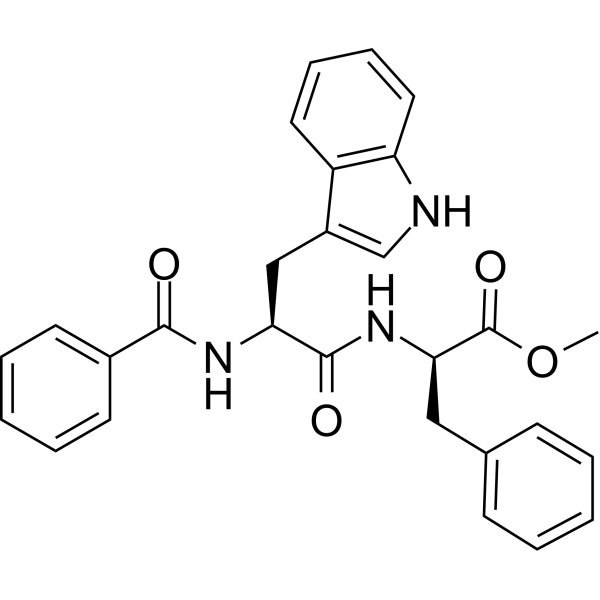
HCH6-1 is a potent and competitive dipeptide antagonist of Formyl peptide receptor 1 (FPR1). HCH6-1 inhibits chemotaxis, superoxide anion generation, and elastase release in human neutrophils specifically activated by fMLF (an FPR1 agonist). HCH6-1 has protective effects against acute lung injury (ALI) in vivo and can be used for the research of FPR1-involved inflammatory lung diseases .
|
-
- HY-125859E
-
|
|
Glutathione Peroxidase
Bacterial
|
Infection
Inflammation/Immunology
|
|
Myeloperoxidase, Human Neutrophil is a peroxidase. Myeloperoxidase, Human Neutrophil is a potent antibacterial agent by catalyzing the H2O2-dependent oxidation of chloride anion to generate hypochlorous acid. Myeloperoxidase, Human Neutrophil catalyzes the degradation of N-retinyl-idene-N-retinylethanolamine, a toxic form of retinal lipofuscin. Myeloperoxidase, Human Neutrophil also triggers lysosomal stress and cell death. Myeloperoxidase, Human Neutrophil can be used for the researches of inflammation and infection .
|
-
- HY-W699318
-
|
|
Reactive Oxygen Species (ROS)
|
Others
|
|
1-Oleoyl-2-palmitoylglycerol is a diacylglycerol in which an oleic acid and a palmitic acid are attached to sn-1 and sn-2 position. 1-Oleoyl-2-palmitoylglycerol enhances the inhibition of superoxide anion production induced by fMLF/cytochalasin B (CB) in human neutrophils. 1-Oleoyl-2-palmitoylglycerol can be used in research about lipid metabolism, membrane fluidity, or the distribution and function of lipids in cells .
|
-
- HY-137846A
-
|
|
Acetyl-CoA Carboxylase
OAT
|
Metabolic Disease
Inflammation/Immunology
|
|
PF-05221304 tromethamine is an orally active, liver-directed and dual ACC1/ACC2 inhibitor with IC50s of 7.5 nM for rat ACC1, 8.2 nM for rat ACC2. PF-05221304 tromethamine is a substrate for organic anion transport polypeptides. PF-05221304 tromethamine directly improves a variety of non-alcoholic fatty liver (NAFL) and non-alcoholic steatohepatitis (NASH) pathogenic factors .
|
-
- HY-10466S2
-
|
BMS-790052-d16; EBP 883-d16
|
Isotope-Labeled Compounds
HCV
|
Infection
|
|
Daclatasvir-d16 is deuterium labeled Daclatasvir. Daclatasvir (BMS-790052) is a potent and orally active HCV NS5A protein inhibitor with EC50s range of 9-146 pM for multiple HCV replicon genotypes. Daclatasvir is also a organic anion transporting polypeptide 1B (OATP1B) and OATP1B3 inhibitor with IC50s of 1.5 μM and 3.27 μM, respectively .
|
-
- HY-N12008
-
|
|
OAT
|
Metabolic Disease
|
|
OAT1/3-IN-2 (compound 8) is a dual inhibitor of OAT1 and OAT3. OAT1/3-IN-2 can reverse the toxicity of Cys-Hg on HEK-OAT1 cells (10 μM) and has a potential protective effect on the kidneys. OAT1/3-IN-2 can be used to study mercury-induced kidney damage .
|
-
- HY-N12007
-
|
|
OAT
|
Metabolic Disease
|
|
OAT1/3-IN-1 (compound 7) is a dual inhibitor of OAT1 and OAT3. OAT1/3-IN-1 can reverse the toxicity of Cys-Hg on HEK-OAT1 cells (10 μM) and has a potential protective effect on the kidneys. OAT1/3-IN-1 can be used to study mercury-induced kidney damage .
|
-
- HY-10466R
-
|
BMS-790052 (Standard); EBP 883 (Standard)
|
Reference Standards
HCV
|
Infection
|
|
Daclatasvir (Standard) is the analytical standard of Daclatasvir. This product is intended for research and analytical applications. Daclatasvir (BMS-790052) is a potent and orally active HCV NS5A protein inhibitor with EC50s range of 9-146 pM for multiple HCV replicon genotypes. Daclatasvir is also a organic anion transporting polypeptide 1B (OATP1B) and OATP1B3 inhibitor with IC50s of 1.5 µM and 3.27 µM, respectively .
|
-
- HY-W758421
-
-
- HY-175524
-
|
|
Monoamine Oxidase
Cholinesterase (ChE)
|
Neurological Disease
|
|
BChE/MAO-B-IN-2 is a dual inhibitor of BChE (IC50 = 0.05 μM, Ki = 0.01 μM) and MAO-B (IC50 = 0.45 μM, Ki = 0.08 μM) with good blood-brain barrier permeability. BChE/MAO-B-IN-2 exhibits antioxidant activity, including DPPH radical scavenging, CUPRAC copper ion reduction, and superoxide anion scavenging. BChE/MAO-B-IN-2 can be used for the study of Alzheimer's disease (AD) .
|
-
- HY-136372R
-
|
|
Herbicide
Reference Standards
|
Others
|
|
Diquat (dibromide hydrate) (Standard) is the analytical standard of Diquat (dibromide hydrate). This product is intended for research and analytical applications. Diquat dibromide hydrate is a comprehensive herbicide. Diquat dibromide hydrate increases the production of ROS and triggers mitophagy. Diquat dibromide hydrate generates free radicals such as superoxide anions through redox cycles, which induce oxidative stress. Diquat dibromide hydrate is cytotoxic, reproductive, and neurotoxic. Diquat dibromide hydrate is used in cotton, soybean, and other crops to combat noxious weeds .
|
-
- HY-W001189S
-
|
|
Isotope-Labeled Compounds
Bacterial
|
Infection
|
|
1,3-Dithiane-d2 is the deuterium labeled 1,3-Dithiane (HY-W001189). 1,3-Dithiane is a protected formaldehyde anion equivalent and a sulfur-containing Maillard reaction product. 1,3-Dithiane is found in cooked beef extracts. 1,3-Dithiane is a potent mutagenic agent against S. typhimurium TA98 and TA100. 1,3-Dithiane can be used as a useful marker synthon .
|
-
- HY-D3222
-
|
|
Fluorescent Dye
|
Neurological Disease
|
|
NIR-PN1 is a blood-brain barrier-permeable near-infrared fluorescent indicator targeting peroxynitrite anion (ONOO −) (Ex/Em = 510 nm/670 nm). NIR-PN1 reacts with ONOO − to trigger a strong near-infrared fluorescence enhancement, enabling the detection of ONOO − flux. NIR-PN1 allows the imaging of ONOO − flux in various Parkinson's disease models. NIR-PN1 is applicable to Parkinson's disease-related research .
|
-
- HY-183870
-
|
|
Sirtuin
Apoptosis
Caspase
Atg8/LC3
Autophagy
Mitochondrial Metabolism
|
Cancer
|
|
NCO-90 is a selective SIRT2 inhibitor with an IC50 of 1.0 μM. NCO-90 induces Apoptosis via Caspase activation and mitochondrial superoxide anion production, and also induces Autophagic cell death by increasing LC3-II levels and autophagosome accumulation. NCO-90 exhibits anticancer activity against leukemia. NCO-90 can be used in research related to acute lymphoblastic leukemia and acute myeloid leukemia .
|
-
- HY-122984S1
-
-
- HY-W724370
-
|
TEA bromide-d20
|
Isotope-Labeled Compounds
Biochemical Assay Reagents
|
Others
|
|
Tetraethylammonium bromide-d20 (TEA bromide-d20) is the deuterium labeled Tetraethylammonium bromide (HY-W014408). Tetraethylammonium bromide is a quaternary ammonium salt consisting of a positively charged tetraethylammonium cation and a negatively charged bromide anion. This compound is commonly used as a phase transfer catalyst in organic chemical reactions, facilitating the transfer of reactants between immiscible phases. It can also be used as a reagent for the synthesis of various organic compounds, an electrolyte in electrochemical experiments, and a source of tetraethylammonium ions in biochemical and pharmacological research.
|
-
- HY-176212
-
|
|
Ferroptosis
VDAC
Reactive Oxygen Species (ROS)
|
Inflammation/Immunology
|
|
Ferroptosis-IN-20 (Compound 34a) is a Ferroptosis inhibitor (EC50: 24.2 nM) targeting voltage-dependent anion channel (VDAC). Ferroptosis-IN-20 inhibits VDAC oligomerization and lipid peroxidation. Ferroptosis-IN-20 reduces content of ROS, attenuates TFR1-mediated iron uptake, inhibits Fe 2+ level and restores glutathione (GSH) level. Ferroptosis-IN-20 alleviates Folic acid (HY-16637)-induced acute kidney injury (AKI) .
|
-
- HY-10465R
-
|
BMS-790052 dihydrochloride (Standard); EBP 883 dihydrochloride (Standard)
|
Reference Standards
HCV
|
Infection
|
|
Daclatasvir (dihydrochloride) (Standard) is the analytical standard of Daclatasvir (dihydrochloride). This product is intended for research and analytical applications. Daclatasvir dihydrochloride (BMS-790052 dihydrochloride) is a potent and orally active HCV NS5A protein inhibitor with EC50s range of 9-146 pM for multiple HCV replicon genotypes. Daclatasvir dihydrochloride is also an organic anion transporting polypeptide 1B (OATP1B) and OATP1B3 inhibitor with IC50s of 1.5 µM and 3.27 µM, respectively .
|
-
- HY-103371
-
|
|
Chloride Channel
Potassium Channel
|
Neurological Disease
|
|
DCPIB is a selective, reversible and potent inhibitor of volume-regulated anion channels (VRAC). DCPIB voltage-dependently activates potassium channels TREK1 and TRAAK, and inhibits TRESK, TASK1 and TASK3 (IC50s: 0.14, 0.95, 50.72 μM, respectively). DCPIB is also a selective blocker of swelling-induced chloride current (ICl,swell), with an IC50 of 4.1 μM. DCPIB is a useful tool for investigating structure-function studies of K2P channels .
|
-
- HY-D0961
-
|
|
Fluorescent Dye
Wnt
β-catenin
|
Neurological Disease
Inflammation/Immunology
Cancer
|
|
Gallocyanine chloride is a synthetic blue dyestuff that can be used as a potential agent for the research of Alzheimer's disease and related neurodegenerative tauopathies. Gallocyanine chloride inhibits DKK1/LRP6 interaction (IC50=6.38 μM), activates Wnt signaling pathway, and causes β-catenin accumulation. Gallocyanine chloride exhibits anti-metastasis, anti-inflammatory and anti-fibrosis activities. Gallocyanine chloride can be used as a fluorescent probe for detection of superoxide anion radicals .
|
-
- HY-W014536
-
|
Trimethyl-n-octylammonium Chloride
|
Biochemical Assay Reagents
|
Others
|
|
N,N,N-Trimethyloctan-1-aminium chloride is a quaternary ammonium salt consisting of a positively charged N,N,N-trimethyloctan-1-aminium cation and a negatively charged chloride anion. The compound is commonly used as a surfactant and emulsifier in a variety of applications including detergents, fabric softeners and personal care products. It can also be used as a phase transfer catalyst in organic chemical reactions, facilitating the transfer of reactants between immiscible phases. Additionally, it has antimicrobial properties and is used as a disinfectant or antiseptic in some products.
|
-
- HY-148682R
-
|
Glycyrrhetic acid 3-O-hydrogen sulfate (Standard)
|
OAT
Reference Standards
11β-HSD
Drug Metabolite
|
Metabolic Disease
Inflammation/Immunology
|
|
(Z)-Methyl icos-11-enoate (Standard) is the analytical standard of (Z)-Methyl icos-11-enoate. This product is intended for research and analytical applications. (Z)-Methyl icos-11-enoate is a biochemical reagent that can be used as a biological material or organic compound for life science related research.
|
-
- HY-N17409
-
|
|
Drug Derivative
|
Others
|
|
Eupatobenzofuran is a dihydrobenzofuran derivative that can be found in the aerial part of Eupatorium cannabinum subsp. asiaticum. Eupatobenzofuran inhibits fMLP/CB-induced elastase release by human neutrophils with an IC50 value of 11.3 μM .
|
-
- HY-W001189R
-
|
|
Reference Standards
Bacterial
|
Infection
|
|
1,3-Dithiane (Standard) is an analytical standard of 1,3-Dithiane (HY-W001189). This product is intended for research and analytical applications. 1,3-Dithiane is a protected formaldehyde anion equivalent and a sulfur-containing Maillard reaction product. 1,3-Dithiane is found in cooked beef extracts. 1,3-Dithiane is a potent mutagenic agent against S. typhimurium TA98 and TA100. 1,3-Dithiane can be used as a useful marker synthon .
|
-
- HY-172604
-
|
|
TNF Receptor
Reactive Oxygen Species (ROS)
|
Neurological Disease
Inflammation/Immunology
|
|
Neuroprotective agent 10 (Compound 11c) is a brain-penetrant neuroprotective agent. Neuroprotective agent 10 scavenges ABTS radicals (scavenging IC50: 9.20 μM), DPPH radicals (scavenging IC50: 7.09 μM) and superoxide anion radicals (inhibition percentage: 48.4%). Neuroprotective agent 10 also alleviates H2O2-induced oxidative damage and LPS-induced neuroinflammation with antiepileptic activity. Neuroprotective agent 10 is promising for research of epilepsy and neuroprotection .
|
-
- HY-15592A
-
|
GSK-1265744 sodium; S/GSK1265744 sodium
|
OAT
HIV
HIV Integrase
|
Infection
|
|
Cabotegravir (GSK-1265744) sodium is a orally active and long-acting HIV integrase strand transfer inhibitor and organic anion transporter 1/3 (OAT1/OAT3) inhibitor with IC50 values of 2.5 nM, 0.41 μM and 0.81 μM for HIVADA, OAT3 and OAT1, respectively. Cabotegravir sodium is primarily metabolized by uridine diphosphate glucuronosyltransferase (UGT) 1A1, with low potential to interact with other antiretroviral agents (ARVs). Cabotegravir sodium can be used to research AIDS .
|
-
- HY-15592
-
|
GSK-1265744; S/GSK1265744
|
OAT
HIV
HIV Integrase
|
Infection
|
|
Cabotegravir (GSK-1265744) is a orally active and long-acting HIV integrase strand transfer inhibitor and organic anion transporter 1/3 (OAT1/OAT3) inhibitor with IC50 values of 2.5 nM, 0.41 μM and 0.81 μM for HIVADA, OAT3 and OAT1, respectively. Cabotegravir is primarily metabolized by uridine diphosphate glucuronosyltransferase (UGT) 1A1, with low potential to interact with other antiretroviral agents (ARVs). Cabotegravir can be used to research AIDS .
|
-
- HY-155085
-
|
|
Monoamine Oxidase
Amyloid-β
Cholinesterase (ChE)
|
Neurological Disease
|
|
hAChE-IN-3 (compounds 5c) is a potent and blood-brain barrier permeable AChE, BuChE, MAO-B-IN-1 and BACE-1 inhibitor, with IC50 values of 0.44, 0.08, 5.15 and 0.38 μM, respectively. hAChE-IN-3 has antioxidant activity and metal chelating ability. In addition, hAChE-IN-3 can bind to peripheral anion sites, and affect β amyloid and reduce Alzheimer's-associated neurodegeneration. hAChE-IN-3 has the potential for the research of Alzheimer's disease .
|
-
- HY-113493
-
|
|
Endogenous Metabolite
|
Metabolic Disease
|
|
4-Pyridoxic acid is an endogenous substrate of renal organic anion transporters (OAT1/3) and a catabolite of vitamin B6. 4-Pyridoxic acid is excreted through OAT1/3-mediated tubular active secretion, which can reflect OAT1/3 activity. Elevated plasma concentrations of 4-Pyridoxic acid are associated with decreased OAT1/3 activity in chronic kidney disease (CKD) and can be used as a biomarker to reflect the severity of knee osteoarthritis (KOA) and lumbar spondylosis (LS) .
|
-
- HY-121586
-
|
Bay g 6575
|
Lipoxygenase
|
Cardiovascular Disease
|
|
Nafazatrom (Bay g 6575) is an orally active cardioprotective agent that protects against ischemic damage. Nafazatrom dose-dependently inhibits neutrophil aggregation, superoxide anion generation, arachidonic acid metabolism, and to a lesser extent the release of β-glucosidase, platelet aggregation or arachidonic acid in vitro. Acid metabolism has no significant effect. In a dog ischemia-reperfusion model, Nafazatrom (10 mg/kg; po) reduced infarct size and the occurrence of arrhythmias and rescued ischemic myocardial function without affecting any hemodynamic changes. The basis of Nafazatrom's cardioprotection may be inhibition of neutrophil function and cellular infiltration in vitro .
|
-
- HY-15592R
-
|
GSK-1265744 (Standard); S/GSK1265744 (Standard)
|
OAT
Reference Standards
HIV
HIV Integrase
|
Infection
|
|
Cabotegravir (Standard) is the analytical standard of Cabotegravir. This product is intended for research and analytical applications. Cabotegravir (GSK-1265744) is a orally active and long-acting HIV integrase strand transfer inhibitor and organic anion transporter 1/3 (OAT1/OAT3) inhibitor with IC50 values of 2.5 nM, 0.41 μM and 0.81 μM for HIVADA, OAT3 and OAT1, respectively. Cabotegravir is primarily metabolized by uridine diphosphate glucuronosyltransferase (UGT) 1A1, with low potential to interact with other antiretroviral agents (ARVs). Cabotegravir can be used to research AIDS .
|
-
- HY-W018143
-
|
|
Bacterial
Fungal
|
Infection
|
|
1-Methyl-4-nitroimidazole is an antibacterial agent. 1-Methyl-4-nitroimidazole is reduced by bacterial nitroreductases to form toxic derivatives, which cause DNA damage, inhibit bacterial nucleic acid synthesis, generate toxic superoxides through futile cycling of reduced radical anions, and induce bacterial cell death. 1-Methyl-4-nitroimidazole exhibits moderate in vitro activity against bacteria and fungal. 1-Methyl-4-nitroimidazole can be used in the research of skin infections, purulent infections and urinary tract infections .
|
-
- HY-103371R
-
|
|
Reference Standards
Chloride Channel
Potassium Channel
|
Neurological Disease
|
|
DCPIB (Standard) is the analytical standard of DCPIB (HY-103371). This product is intended for research and analytical applications. DCPIB is a selective, reversible and potent inhibitor of volume-regulated anion channels (VRAC). DCPIB voltage-dependently activates potassium channels TREK1 and TRAAK, and inhibits TRESK, TASK1 and TASK3 (IC50s: 0.14, 0.95, 50.72 μM, respectively). DCPIB is also a selective blocker of swelling-induced chloride current (ICl,swell), with an IC50 of 4.1 μM. DCPIB is a useful tool for investigating structure-function studies of K2P channels .
|
-
- HY-N17365
-
|
|
Drug Derivative
|
Others
|
|
2-Hydroxy-2,6-dimethyl-3-benzofuranone (compound 4) is a benzofuranone derivative that can be found in the aerial part of Eupatorium cannabinum subsp. asiaticum .
|
-
- HY-101283R
-
|
|
Formyl Peptide Receptor (FPR)
Reference Standards
|
Inflammation/Immunology
|
|
HCH6-1 (Standard) is the analytical standard of HCH6-1 (HY-101283). This product is intended for research and analytical applications. HCH6-1 is a potent and competitive dipeptide antagonist of Formyl peptide receptor 1 (FPR1). HCH6-1 inhibits chemotaxis, superoxide anion generation, and elastase release in human neutrophils specifically activated by fMLF (an FPR1 agonist). HCH6-1 has protective effects against acute lung injury (ALI) in vivo and can be used for the research of FPR1-involved inflammatory lung diseases .
|
-
- HY-175523
-
|
|
Monoamine Oxidase
Cholinesterase (ChE)
Amyloid-β
|
Neurological Disease
|
|
MAO-B-IN-48 is a selective MAO-B inhibitor (IC50 = 0.09 μM, Ki = 0.02 μM).
MAO-B-IN-48 exhibits inhibitory activity against hBChE (IC50 = 1.10 μM, Ki = 0.43 μM) and AChE (IC50 = 0.56 μM, Ki = 0.14 μM). MAO-B-IN-48 suppresses self-induced aggregation of toxic β-amyloid peptides and exerts antioxidant activity, including DPPH radical scavenging, CUPRAC copper ion reduction, and superoxide anion scavenging. MAO-B-IN-48 can be used for the study of Alzheimer's disease (AD) .
|
-
- HY-119038
-
|
|
Endogenous Metabolite
|
Cardiovascular Disease
|
|
ML-7 is a myosin light chain kinase inhibitor with the activity to inhibit superoxide anion (O(2)(-)) release in human neutrophils. ML-7 can affect the activity of neutrophils independently of myosin light chain kinase. ML-7 inhibits the extracellular O(2)(-) release of stimulated cells, but has no effect on the intracellular O(2)(-) production. ML-7 also strongly inhibits the binding of the intracellular compartment of oxide production to the cell membrane, indicating that it plays a key role in stimulated neutrophils. At the same time, ML-7 protects cardiac function from ischemia/reperfusion injury .
|
-
- HY-10466S1
-
|
BMS-790052-13C2,d6; EBP 883-13C2,d6
|
Isotope-Labeled Compounds
HCV
|
Infection
|
|
Daclatasvir- 13C2,d6 (BMS-790052- 13C2,d6) is 13C and deuterium labeled Daclatasvir. Daclatasvir (BMS-790052) is a potent and orally active HCV NS5A protein inhibitor with EC50s range of 9-146 pM for multiple HCV replicon genotypes. Daclatasvir is also a organic anion transporting polypeptide 1B (OATP1B) and OATP1B3 inhibitor with IC50s of 1.5 μM and 3.27 μM, respectively .
|
-
- HY-W016638
-
|
1-Butyl-1-methylpyrrolidin-1-ium chloride
|
Biochemical Assay Reagents
|
Others
|
|
1-Butyl-1-methylpyrrolidin-1-ium chloride, also known as BMIM chloride, belongs to the class of ionic liquids and consists of a positively charged pyrrolidine cation and a negatively charged chloride anion. This compound is commonly used as a solvent for various chemical reactions, especially those involving organic compounds and metals. Its unique physical and chemical properties, such as low volatility, high thermal stability, and tunable solubility, make it useful in a range of applications in catalysis, electrochemistry, and separation science. Furthermore, 1-butyl-1-methylpyrrolidin-1-ium chloride may have potential applications as a green solvent in energy storage devices and various industrial processes.
|
-
- HY-W745090
-
|
|
Formyl Peptide Receptor (FPR)
Src
ERK
Akt
p38 MAPK
|
Others
|
|
Isomaltulose monohydrate is a fMLP inhibitor and also inhibits Src kinase, ERK1/2, p38 and AKT phosphorylation signals in immune regulation. Isomaltulose monohydrate can interfere with the interaction between the βγ subunit of the fMLP receptor Gi protein and its downstream molecules, thereby inhibiting fMLP-induced respiratory burst. Isomaltulose monohydrate inhibits fMLP (0.1 μM)-induced superoxide anion production (IC50: 1.98 μM) , cathepsin G release (IC< sub>50: 2.76 μM) and chemotaxis. Isomaltulose monohydrate can improve excessive activation of neutrophils and reduce inflammation or tissue damage. A series of derivatives of Isomaltulose monohydrate are found to have inhibitory effects on FSGS-related TRPC6 functional mutants .
|
-
- HY-W160358
-
|
|
SARS-CoV
Virus Protease
Fungal
Apoptosis
Reactive Oxygen Species (ROS)
ATP Synthase
Glutathione Peroxidase
SOD
p38 MAPK
|
Infection
Cancer
|
|
2,5-Dimethylcyclohexanol, a volatile organic compound, is a fatty acid that can be isolated from Amphora sp.. 2,5-Dimethylcyclohexanol has significant antineoplastic and antiviral activities with inhibition of SARS-CoV-2 Mpro. 2,5-Dimethylcyclohexanol also has potent antifungal activity against Pseudogymnoascus destructans. 2,5-Dimethylcyclohexanol compromises cell wall and membrane integrity while perturbing energy metabolism, increases the levels of ROS, ATP, Superoxide anion and GSH, and decreases CAT and SOD activities. And 2,5-Dimethylcyclohexanol alters virulence ribosomal genes expression, and disrupts the MAPK signaling pathways, inducing fungal cell apoptosis .
|
-
- HY-113324
-
NADPH
Maximum Cited Publications
18 Publications Verification
|
Endogenous Metabolite
|
Cancer
|
|
NADPH is a coenzyme of glutathione reductase (GR), thioredoxin reductase (TrxR) and NADPH oxidase (NOX), and participates in redox reactions as a hydrogen donor. NADPH has the characteristic of selectively participating in the regulation of cellular redox homeostasis. NADPH exerts antioxidant activity and resists reactive oxygen species (ROS) damage by providing reducing equivalents for the regeneration of glutathione (GSH) and thioredoxin (Trx); at the same time, it acts as a substrate of NOX to generate superoxide anions, mediating oxidative stress and immune response. NADPH participates in maintaining the intracellular reducing environment, biosynthesis and regulating gene expression (such as the Nrf2 pathway), and is mainly used in the study of oxidative stress-related diseases (such as cardiovascular diseases, neurodegenerative diseases, cancer) and immune regulation mechanisms .
|
-
- HY-W753779
-
|
8-OHG
|
Reactive Oxygen Species (ROS)
NO Synthase
|
Others
|
|
8-Hydroxygenistein (8-OHG) is an antioxidant that can effectively scavenge nitric oxide (NO) and superoxide anion (O₂⁻). 8-Hydroxygenistein belongs to ortho-dihydroxy isoflavones (ODI) and is abundantly present in dark soy sauce and light soy sauce. Its antioxidant activity is stronger than that of its parent compound genistein (HY-14596). The content of 8-Hydroxygenistein is positively correlated with the antioxidant capacity of soy sauce (r = 0.959), and it remains highly stable even after being heated in boiling water for 60 minutes. During the brewing and storage of soy sauce, 8-Hydroxygenistein effectively prevents oxidative damage, making it promising for use in food antioxidant research.
|
-
- HY-15763
-
Erastin
Maximum Cited Publications
805 Publications Verification
|
VDAC
Ferroptosis
Disulfidptosis
|
Cancer
|
|
Erastin is a ferroptosis inducer. Erastin exhibits the mechanism of ferroptosis induction related to ROS and iron-dependent signaling. Erastin inhibits voltage-dependent anion channels (VDAC2/VDAC3) and accelerates oxidation, leading to the accumulation of endogenous reactive oxygen species. Erastin also disrupts mitochondrial permeability transition pore (mPTP) with anti-tumor activity. Furthermore, Erastin can block the uptake of cystine mediated by SLC7A11 and also spares UMRC6-EV and -C91A cells from disulfidptosis under glucose starvation .
|
-
- HY-W744699
-
|
(+)-Larixol
|
Src
ERK
Akt
|
Inflammation/Immunology
|
|
Larixol is an fMLP inhibitor and also inhibits Src kinase, ERK1/2, p38 and AKT phosphorylation signals in immune regulation. Larixol can interfere with the interaction between the βγ subunit of the fMLP receptor Gi protein and its downstream molecules, thereby inhibiting fMLP-induced respiratory burst. Larixol inhibits fMLP (0.1 μM)-induced superoxide anion production (IC50: 1.98 μM), cathepsin G release (IC50: 2.76 μM), and chemotaxis. Larixol improves neutrophil hyperactivation and reduces inflammation or tissue damage. A series of Larixol derivatives were found to have inhibitory effects on FSGS-related TRPC6 functional mutants .
|
-
- HY-D3207
-
|
|
Fluorescent Dye
|
Neurological Disease
|
|
DHUCu-1 is a lysosome-targeted NIR divalent copper ion probe with high water solubility. DHUCu-1 serves as a tool for investigating the physiological functions of Cu 2+ and related diseases, such as Menke syndrome, Wilson's disease, and Alzheimer's disease .
|
-
- HY-W042301
-
|
|
Anion Exchangers
Carbonic Anhydrase
Endothelin Receptor
|
Cardiovascular Disease
|
|
Xipamide is an orally active carbonic anhydrase (CA) inhibitor and Na +/Cl --potassium transporter inhibitor with diuretic and antihypertensive effects. Xipamide reduces NaCl reabsorption by inhibiting the Cl -/NaCO3 - anion exchanger, and increases calcium reabsorption while promoting potassium and magnesium excretion. Xipamide is mainly cleared via the renal pathway and causes a temporary decrease in glomerular filtration rate under specific conditions. Xipamide does not affect Ca 2+ signaling induced by endothelin-1 and other factors, nor does it inhibit various ion cotransport or pump activities in red blood cells. Xipamide can be used in researches related to cardiovascular diseases, hypertension (especially with left ventricular hypertrophy), advanced renal failure, and liver cirrhosis with ascites .
|
-
- HY-B2132
-
|
3-(2-Aminoethyl)indole~2-(3-Indolyl)ethylamine
|
Endogenous Metabolite
5-HT Receptor
Aryl Hydrocarbon Receptor
|
Neurological Disease
Metabolic Disease
|
|
Tryptamine is a selective, blood-brain-penetrating 5-HT4 receptor agonist (EC50=1-3 mM) and an endogenous ligand of the aryl hydrocarbon receptor (AHR) (Kd=10-50 nM). Tryptamine promotes intestinal anion secretion and fluid transport by activating G protein-coupled receptors (GPCRs) and accelerates gastrointestinal motility. Tryptamine regulates Th17/Treg balance to inhibit neuroinflammation, competitively binds to 5-HT receptors to regulate central nervous system activity, and participates in temperature regulation and spinal reflex regulation as a neuromodulator. Tryptamine can be used to study intestinal motility disorders such as functional constipation, and has shown significant efficacy in multiple sclerosis models .
|
-
- HY-130743
-
|
Bis-eugenol; Dehydrodieugenol
|
Parasite
|
Infection
|
|
Dieugenol is a neolignan that has been found in N. leucantha and has antioxidative and antiprotozoal activities. It inhibits the formation of thiobarbituric acid reactive substances (TBARS) and scavenges superoxide anions, but not hydroxyl radicals, in cell-free assays. It has anti-trypanosomal activity against T. cruzi amastigotes and trypomastigotes (IC50s=15.1 and 11.5 μM, respectively) but is cytotoxic to NCTC L-929 fibroblasts with a 50% cytotoxic concentration (CC50) value of 58.2 μM.2 Dieugenol (15 μM) disrupts the integrity of the T. cruzi trypomastigote plasma membrane but does not induce the production of reactive oxygen species (ROS) in trypomastigotes or LPS-stimulated and unstimulated isolated mouse peritoneal macrophages.
|
-
- HY-W014861
-
|
Tetramethyl-ammoniuiodide
|
Biochemical Assay Reagents
|
Others
|
|
Tetramethylammonium iodide (Tetramethyl-ammoniuiodide) is a capillary active agent and weakly capillary active quasi-simple salt. Tetramethylammonium iodide decreases aqueous solution surface tension with increasing concentration and exhibits surface accumulation of constituent ions at liquid-vapor interfaces .
|
-
- HY-W353102
-
|
|
Endogenous Metabolite
P-glycoprotein
|
Metabolic Disease
|
|
Estradiol 17-(β-D-Glucuronide) is a D-ring glucuronide metabolite of natural estrogen formed in the liver. Estradiol 17-(β-D-Glucuronide) is a substrate of the organic anion-transporting polypeptide family (Oatp) and multidrug resistance-associated protein 2 (Mrp2). Estradiol 17-(β-D-Glucuronide) regulates MRP8-mediated transport processes and inhibits MRP8-mediated transport of dehydroepiandrosterone 3-sulfate and taurocholic acid. Estradiol 17-(β-D-Glucuronide) induces immediate, reversible reduction of bile flow and acute intrahepatic cholestasis in female rats without altering the bile acid composition in bile. Estradiol 17-(β-D-Glucuronide) can be used in studies related to intrahepatic cholestasis .
|
-
- HY-182243
-
|
|
Hexokinase
VDAC
Apoptosis
AMPK
Bcl-2 Family
|
Cancer
|
|
HK2-IN-4 is a selective hexokinase 2 (HK2) inhibitor with an IC50 value of 0.79 μM and a Kd value of 0.41 μM. HK2-IN-4 blocks the interaction between HK2 and voltage-dependent anion channel 1 (VDAC1). HK2-IN-4 reduces lactate and ATP levels in cancer cells. HK2-IN-4 induces the production of apoptosis (apoptosis) markers in cancer cells, including increased p-AMPK/AMPK ratio and Bax levels, as well as decreased Bcl2 levels. HK2-IN-4 inhibits the proliferation of cancer cells with high HK2 expression. HK2-IN-4 can be used in research related to colorectal cancer and non-small cell lung cancer .
|
-
- HY-N3847
-
|
Eriodictyol 7-O-β-D-glucoside
|
Keap1-Nrf2
|
Neurological Disease
|
|
Eriodictyol-7-O-glucoside (Eriodictyol 7-O-β-D-glucoside), a flavonoid, is an Nrf2 activator. Eriodictyol-7-O-glucoside exhibits significant scavenging effects on both hydroxyl radicals and superoxide anions, with IC50 values of 0.28 mM and 0.30 mM, respectively. Eriodictyol-7-O-glucoside increases the nuclear localization of Nrf2 and induces the expression of the Nrf2/ARE-dependent genes. Eriodictyol-7-O-glucoside provides protection against oxygen and glucose deprivation (OGD)-induced oxidative insult. Eriodictyol-7-O-glucoside demonstrates neuroprotective efficacy in a rat model of focal cerebral ischemia (MCAO). Eriodictyol-7-O-glucoside can be used for the study of stroke .
|
-
- HY-129987
-
|
|
Endogenous Metabolite
P-glycoprotein
|
Metabolic Disease
|
|
Estradiol 17-(β-D-Glucuronide) sodium is a D-ring glucuronide metabolite of natural estrogen formed in the liver. Estradiol 17-(β-D-Glucuronide) sodium is a substrate of the organic anion-transporting polypeptide family (Oatp) and multidrug resistance-associated protein 2 (Mrp2). Estradiol 17-(β-D-Glucuronide) sodium regulates MRP8-mediated transport processes and inhibits MRP8-mediated transport of dehydroepiandrosterone 3-sulfate and taurocholic acid. Estradiol 17-(β-D-Glucuronide) sodium induces immediate, reversible reduction of bile flow and acute intrahepatic cholestasis in female rats without altering the bile acid composition in bile. Estradiol 17-(β-D-Glucuronide) sodium can be used in studies related to intrahepatic cholestasis .
|
-
- HY-150175
-
|
|
Fluorescent Dye
|
Inflammation/Immunology
|
|
HKSOX-1 and its derivatives (HKSOX-1r and HKSOX-1m) are novel fluorescent probes designed for highly sensitive and selective detection of the superoxide anion radical (O2 •−) in cellular environments. These probes utilize an aryl trifluoromethanesulfonate group that undergoes O2 •−-mediated cleavage, releasing a free phenol and emitting fluorescence. They demonstrate excellent specificity and sensitivity across various pH ranges, withstand interference from strong oxidants and reductants typical in cellular contexts. HKSOX-1r, optimized for cellular retention, has been effectively employed in diverse assays including confocal imaging, flow cytometry, and zebrafish embryo studies, highlighting its utility in investigating O2 •− roles in inflammation, mitochondrial stress, and other physiological processes .
|
-
- HY-136855
-
|
|
Sirtuin
AMPK
PGC-1α
Apoptosis
Reactive Oxygen Species (ROS)
|
Metabolic Disease
|
|
MitoPBN is a AMPK/SIRT3/PGC-1α axis modulator, reactive oxygen species scavenger and mitochondrial function enhancer. MitoPBN increases the phosphorylation level of AMPK, restores SIRT3 expression and reverses the down-regulation of PGC-1α, thereby promoting mitochondrial biogenesis. MitoPBN regulates glucose metabolism, reduces blood glucose by inhibiting hepatic gluconeogenesis and increasing hepatic glucose uptake, while scavenging mitochondrial superoxide anion/hydrogen peroxide, maintaining membrane potential and increasing ATP production. MitoPBN also reduces cell apoptosis, improves sperm motility, survival rate and membrane integrity, but may induce reductive stress in cryopreserved sperm at high concentrations. MitoPBN is widely applicable to research related to diabetes and type 2 diabetes .
|
-
- HY-W115721
-
|
Sodium rhodizonate dibasic
|
Reactive Oxygen Species (ROS)
DNA/RNA Synthesis
|
Others
|
|
Rhodizonic acid disodium (Sodium rhodizonate dibasic) is a transition metal-dependent pro-oxidant and lead detection agent that induces reactive oxygen species generation, DNA damage, and inhibits Aconitase activity. Rhodizonic acid disodium generates superoxide anion radicals in an iron (II)-dependent manner, leading to aconitase inactivation. Rhodizonic acid disodium also triggers hydroxyl radical-mediated DNA strand breaks and 8-OHdG formation via copper ion reduction. Rhodizonic acid disodium reacts with lead to form a scarlet precipitate, with the color intensity proportional to lead content, enabling qualitative or quantitative analysis of lead. Rhodizonic acid disodium can also be used for real-time visualization of the dynamic process of lead sequestration in the plant rhizosphere and evaluation of the effects of environmental factors such as soil type on the stability of lead-sequestering structures .
|
-
- HY-N0627
-
|
|
LDLR
|
Others
|
|
Kaempferol-7-O-β-D-glucopyranoside is a flavonoid glycoside. Kaempferol-7-O-β-D-glucopyranoside exists in the root bark of Cudrania tricuspidata. Kaempferol-7-O-β-D-glucopyranoside inhibits Cu 2+-induced lipid peroxidation of low-density lipoprotein. Kaempferol-7-O-β-D-glucopyranoside possesses antioxidant activity and scavenges DPPH free radicals .
|
-
- HY-P10724
-
|
|
Formyl Peptide Receptor (FPR)
Bacterial
|
Infection
|
|
fMIFL is a formyl tetrapeptide derived from Staphylococcus aureus, and also an agonist of mouse formyl peptide receptor 1 (mFPR1). It exhibits nanomolar activity against mFPR1 and micromolar activity against mFPR2. fMIFL is applicable to studies related to bacterial infections .
|
-
- HY-N17997
-
|
|
Others
|
Infection
|
|
Pilosulyne D is a polyyne found in the roots of Codonopsis pilosula .
|
-
- HY-P1636
-
|
|
Thrombin
YAP
Calcium Channel
|
Metabolic Disease
|
|
Hirudin (54-65) is a thrombin antagonist and YAP suppressor with anticoagulatory properties.Hirudin (54-65) blocks thrombin's anion binding site, acts on soluble and thrombus-bound thrombin.Hirudin (54-65) suppresses thrombin-induced profibrotic YAP activity, reduces YAP expression, nuclear translocation, and downstream effector signaling in vascular endothelial cells.Hirudin (54-65) ameliorates obstructive cholestasis, attenuates liver fibrosis symptoms, fibrosis-associated angiogenesis, and endothelial-to-mesenchymal transition.Hirudin (54-65) reduces liver inflammation and tissue hypoxia.Hirudin (54-65) promotes extracellular calcium influx through L-type calcium channels in canine coronary artery smooth muscle, mediates contraction.Hirudin (54-65) induces endothelium-independent contraction of canine coronary arterial segments; this response is not affected by indomethacin pretreatment.Hirudin (54-65) can be used for the research of liver obstructive cholestasis, liver fibrosis .
|
-
- HY-172086
-
|
|
TrxR
Apoptosis
Reactive Oxygen Species (ROS)
|
Cancer
|
|
TrxR-IN-7 is a thioredoxin reductase (TrxR) inhibitor with an IC50 of 3.5 μM. TrxR-IN-7 induces reactive oxygen species (ROS) generation and apoptosis in tumor cells. TrxR-IN-7 can be used for the research of liver cancer and breast cancer .
|
-
- HY-N13250
-
|
|
Apoptosis
AMPK
Elastase
Bcl-2 Family
Interleukin Related
Caspase
PI3K
Akt
SOD
|
Cardiovascular Disease
|
|
Hawthorn Extract is an orally active hawthorn extract. Hawthorn Extract decreases Bax expression and increases Bcl-2 expression in the aorta. Hawthorn Extract regulates the AMPK signaling pathway, induces apoptosis, enhances the hepatic antioxidant system, and ameliorates symptoms of liver injury, inflammation and cancer. Hawthorn Extract reduces plasma levels of pro-inflammatory factors, increases plasma levels of anti-inflammatory adiponectin, and alleviates atherosclerotic plaque lesions in the aorta. Hawthorn Extract improves symptoms associated with chronic heart failure . Hawthorn Extract inhibits FMLP-induced superoxide anion production, Elastase release, ILB4 generation and calcium signaling in neutrophils, and also reduces LPS-induced cytokine production in neutrophils. Hawthorn Extract induces autophagy and inhibits the proliferation of intestinal stem cells. Hawthorn Extract can be used in research related to atherosclerosis, hepatitis, alcoholic liver disease, non-alcoholic fatty liver disease, hepatocellular carcinoma, chronic heart failure and hypotension .
|
-
- HY-W002438
-
|
|
Biochemical Assay Reagents
Endogenous Metabolite
OAT
Ferroptosis
|
Neurological Disease
Metabolic Disease
|
|
6-Hydroxyindole is an orally active, endogenous long-acting OATP1B1 inhibitor. 6-Hydroxyindole does not alter the cell surface expression or subcellular localization of OATP1B1. 6-Hydroxyindole protects cells against Ferroptosis. 6-Hydroxyindole possesses intrinsic radical-trapping antioxidant activity. 6-Hydroxyindole serves as a component of oxidative hair dyes. 6-Hydroxyindole can be used in research related to renal failure and neurodegenerative diseases .
|
-
- HY-W404916
-
-
- HY-W040255
-
|
PGPC
|
Ferroptosis
FABP
Caspase
Interleukin Related
Apoptosis
|
Inflammation/Immunology
|
|
1-Palmitoyl-2-glutaryl-sn-glycero-3-phosphocholine is an oxidized phospholipid. 1-Palmitoyl-2-glutaryl-sn-glycero-3-phosphocholine reduces the viability of HUVECs, increases the levels of ferrous ions and lipid peroxidation, promotes the production of superoxide anions, and decreases the levels of glutathione and GPX4 in cells. 1-Palmitoyl-2-glutaryl-sn-glycero-3-phosphocholine upregulates the mRNA and protein levels of FABP3 in HUVECs, impairs mitochondrial membrane potential, and induces ferroptosis-related changes as well as mitochondrial dysfunction and damage. 1-Palmitoyl-2-glutaryl-sn-glycero-3-phosphocholine activates caspase-11 and promotes the continuous release of IL-1β from macrophages and dendritic cells. 1-Palmitoyl-2-glutaryl-sn-glycero-3-phosphocholine inhibits the proliferation of aortic smooth muscle cells and induces apoptosis in these cells. 1-Palmitoyl-2-glutaryl-sn-glycero-3-phosphocholine is applicable to relevant research on atherosclerosis .
|
-
- HY-B2162B
-
|
Chondroitin polysulfate sodium (from bovine)
|
Reactive Oxygen Species (ROS)
Endogenous Metabolite
|
Inflammation/Immunology
|
|
Chondroitin sulfate (Chondroitin polysulfate) sodium (from bovine)) is a sulfated linear polysaccharide extracted from bovine sources, belonging to glycosaminoglycans. Chondroitin sulfate sodium (from bovine) inhibits osteoclast-mediated bone resorption and exhibits antioxidant activity, which is negatively correlated with molecular weight. Chondroitin sulfate sodium (from bovine) can be used in studies related to osteoarthritis .
|
-
| Cat. No. |
Product Name |
Type |
-
- HY-18743
-
|
|
Fluorescent Dye
|
|
Coelenterazine is a luminescent enzyme substrate for apoaequorin and Renilla luciferase. Renilla luciferase and substrate coelenterazine has been used as the bioluminescence donor in bioluminescence resonance energy transfer (BRET) to detect protein-protein interactions. Coelenterazine is a superoxide anion-sensitive chemiluminescent probe and it can also be used in chemiluminescent detection of peroxynitrite (Ex/Em = 429/466 nm) .
|
-
- HY-D0086
-
|
MDL101114ZA
|
Fluorescent Dye
|
|
DIDS sodium salt (MDL101114ZA) is a dual inhibitor of ABCA1 and VDAC1. DIDS also inhibits RAD51, inhibiting RAD51-mediated homologous pairing and strand exchange reactions. DIDS inhibits anion exchange and binding to red blood cell membranes, inhibits the activation of caspase-3 and -9, and can be used in cancer research .
|
-
- HY-D0720
-
|
NSC-151912; L-6868
|
Fluorescent Dye
|
|
Lucigenin is a chemiluminescence probe. Lucigenin can be used to detect the production of endogenous superoxide anion radical (O 2-). Lucigenin is extremely sensitive to chloride ions, while it combined with chloride ions, the fluorescence will be quenched. Lucigenin also can be used as a chloride indicator. Ex/Em=455/505 nm .
|
-
- HY-D0217
-
|
Bromosulfophthalein disodium salt
|
Fluorescent Dye
|
|
Sulfobromophthalein (Bromosulfophthalein) disodium salt is an organic anion dye used in the study of a variety of membrane carriers expressed in animal tissues and involved in transport of agents and metabolites .
|
-
- HY-130015
-
|
|
Fluorescent Dye
|
|
HKSOX-1 (5/6-mixture) is a fluorescent probe which is used for imaging and detection of endogenous superoxide in live cells and in vivo. HKSOX-1 (5/6-mixture) exhibits excellent selectivity and sensitivity towards superoxide anion radical (Ex/Em = 509/534 nm) .
|
-
- HY-130017
-
|
|
Fluorescent Dye
|
|
HKSOX-1r (5/6-mixture) is a fluorescent probe which is used for imaging and detection of endogenous superoxide in live cells and in vivo. HKSOX-1r (5/6-mixture) exhibits excellent selectivity and sensitivity towards superoxide anion radical .
|
-
- HY-W010947
-
|
|
Fluorescent Dye
|
|
4-Methylumbelliferyl palmitate is an excellent fluorophore for measuring acid lipase in human leukocytes. Acidity and solvent have important influence on its fluorescence. 4-Methylumbelliferyl palmitate exists mainly as neutral molecular form which can be produced strong fluorescence at 445 nm in near neutral aqueous solutions, and exist mainly as anion form which can be produced stronger fluorescence at 445 nm in weak alkaline solutions .
|
-
- HY-D3002
-
|
|
Fluorescent Dye
|
|
ONOO-/O2- tracker probe is a dual-responsive near-infrared fluorescent probe. ONOO-/O2- tracker probe will only emit a strong fluorescence signal when both peroxynitrite (ONOO⁻) and superoxide anion (O₂•⁻), the two key reactive oxygen/nitrogen species, are present simultaneously. ONOO-/O2- tracker probe can be used as a biomarker detection tool for drug-induced liver injury (DILI) .
|
-
- HY-D3222
-
|
|
Fluorescent Dye
|
|
NIR-PN1 is a blood-brain barrier-permeable near-infrared fluorescent indicator targeting peroxynitrite anion (ONOO −) (Ex/Em = 510 nm/670 nm). NIR-PN1 reacts with ONOO − to trigger a strong near-infrared fluorescence enhancement, enabling the detection of ONOO − flux. NIR-PN1 allows the imaging of ONOO − flux in various Parkinson's disease models. NIR-PN1 is applicable to Parkinson's disease-related research .
|
-
- HY-D3207
-
|
|
Fluorescent Dye
|
|
DHUCu-1 is a lysosome-targeted NIR divalent copper ion probe with high water solubility. DHUCu-1 serves as a tool for investigating the physiological functions of Cu 2+ and related diseases, such as Menke syndrome, Wilson's disease, and Alzheimer's disease .
|
| Cat. No. |
Product Name |
Type |
-
- HY-W115727B
-
|
PAM,Anion,Mw 18 million
|
Biochemical Assay Reagents
|
|
Polyacrylamide,Anion,Mw 18 million (PAM,Anion,Mw 18 million) is a multifunctional high molecular weight anionic polyacrylamide copolymer. The anionic properties of Polyacrylamide,Anion,Mw 18 million enable it to be used as a flocculant to achieve charge neutralization and aggregation, while its high molecular weight properties provide viscoelastic properties for fluid applications. Polyacrylamide series materials can maintain enzyme activity in enzyme immobilization, act as drug carriers to achieve controlled release, serve as smart materials responding to temperature/pH stimuli, and be used for in vitro toxin adsorption and soft tissue filling through mechanisms such as physical entrapment, covalent binding or chemical crosslinking. Polyacrylamide finds applications in biomedical engineering, environmental management and industrial applications .
|
-
- HY-Y0651
-
|
|
Biochemical Assay Reagents
|
|
Sodium sulfite is an inorganic salt used as an antioxidant and preservative. Sodium sulfite is also used in sulfonation and sulfomethylation reactions. Sodium sulfite can also be used as a bleaching agent, desulfurizer, and dechlorinator. Sodium sulfite inhibits hepatocyte proliferation, promotes hepatocyte apoptosis and necrosis, and impairs mitochondrial integrity. Sodium sulfite induces superoxide anion production, primes neutrophils for enhanced superoxide anion generation, and induces neutrophil gene expression. Sodium sulfite can be used in studies related to pulmonary inflammation and gastric tissue injury .
|
-
- HY-Y0286
-
|
Hartshorn salt, 99%
|
Biochemical Assay Reagents
|
|
Ammonium carbonate (Ammonium carbonate), 99% is a solid amino compound that functions as a buffer, pH regulator, pore-forming agent, and electrocatalytic oxidation substrate. Ammonium carbonate, 99% is a GRAS-grade direct food additive with no restricted daily intake specified by FAO/WHO, and it shows no acute skin toxicity, clinical signs of toxicity, or effects on body weight in rats. Ammonium carbonate, 99% undergoes electrocatalytic oxidation in alkaline solutions with a Pt/C catalyst (carbonate adsorption interferes with activity). Ammonium carbonate, 99% can serve as a fuel for low-temperature polymer fuel cells and anion exchange membrane fuel cells (with performance superior to pure ammonia), and can also form pores in the carrier-free Pt cathode catalyst layer after low-temperature decomposition, thereby enhancing catalyst activity under low-humidity conditions and the performance of proton exchange membrane fuel cells .
|
-
- HY-W115727A
-
|
PAM,Anion,Mw 14-16 million
|
Biochemical Assay Reagents
|
|
Polyacrylamide, Anion, Mw 14-16 million is a multifunctional high molecular weight anionic polyacrylamide copolymer. The anionic properties of Polyacrylamide, Anion, Mw 14-16 million enable it to be used as a flocculant to achieve charge neutralization and aggregation, while its high molecular weight properties provide viscoelastic properties for fluid applications. Polyacrylamide series materials can maintain enzyme activity in enzyme immobilization, achieve controlled release as a drug carrier, respond to temperature/pH stimulation as a smart material, and can also be used for in vitro toxin adsorption and soft tissue filling through mechanisms such as physical embedding, covalent bonding or chemical cross-linking. Polyacrylamide can be used in biomedical engineering, environmental management and industrial applications .
|
-
- HY-W115721
-
|
Sodium rhodizonate dibasic
|
Biochemical Assay Reagents
|
|
Rhodizonic acid disodium (Sodium rhodizonate dibasic) is a transition metal-dependent pro-oxidant and lead detection agent that induces reactive oxygen species generation, DNA damage, and inhibits Aconitase activity. Rhodizonic acid disodium generates superoxide anion radicals in an iron (II)-dependent manner, leading to aconitase inactivation. Rhodizonic acid disodium also triggers hydroxyl radical-mediated DNA strand breaks and 8-OHdG formation via copper ion reduction. Rhodizonic acid disodium reacts with lead to form a scarlet precipitate, with the color intensity proportional to lead content, enabling qualitative or quantitative analysis of lead. Rhodizonic acid disodium can also be used for real-time visualization of the dynamic process of lead sequestration in the plant rhizosphere and evaluation of the effects of environmental factors such as soil type on the stability of lead-sequestering structures .
|
-
- HY-B2162B
-
|
Chondroitin polysulfate sodium (from bovine)
|
Biochemical Assay Reagents
|
|
Chondroitin sulfate (Chondroitin polysulfate) sodium (from bovine)) is a sulfated linear polysaccharide extracted from bovine sources, belonging to glycosaminoglycans. Chondroitin sulfate sodium (from bovine) inhibits osteoclast-mediated bone resorption and exhibits antioxidant activity, which is negatively correlated with molecular weight. Chondroitin sulfate sodium (from bovine) can be used in studies related to osteoarthritis .
|
-
- HY-W046325
-
|
Diethylaminoethyl cellulose
|
Biochemical Assay Reagents
|
|
DEAE-Cellulose (Diethylaminoethyl cellulose), a common biopolymer derivative. DEAE-Cellulose is a weakly basic cellulose anion exchanger .
|
-
- HY-W018574
-
|
|
Biochemical Assay Reagents
|
|
Tetraoctylammonium bromide (TOAB) is a quaternary ammonium salt consisting of a positively charged tetraoctylammonium cation and a negatively charged bromide anion. This compound is commonly used as a phase transfer catalyst in organic chemical reactions, facilitating the transfer of reactants between immiscible phases. It is also used as a surfactant and dispersant in various industrial applications, for example in the production of coatings, adhesives and polymers. Additionally, Tetraoctylammonium bromide has been investigated for potential applications in energy storage devices and as an antimicrobial agent.
|
-
- HY-W040255
-
|
PGPC
|
Biochemical Assay Reagents
|
|
1-Palmitoyl-2-glutaryl-sn-glycero-3-phosphocholine is an oxidized phospholipid. 1-Palmitoyl-2-glutaryl-sn-glycero-3-phosphocholine reduces the viability of HUVECs, increases the levels of ferrous ions and lipid peroxidation, promotes the production of superoxide anions, and decreases the levels of glutathione and GPX4 in cells. 1-Palmitoyl-2-glutaryl-sn-glycero-3-phosphocholine upregulates the mRNA and protein levels of FABP3 in HUVECs, impairs mitochondrial membrane potential, and induces ferroptosis-related changes as well as mitochondrial dysfunction and damage. 1-Palmitoyl-2-glutaryl-sn-glycero-3-phosphocholine activates caspase-11 and promotes the continuous release of IL-1β from macrophages and dendritic cells. 1-Palmitoyl-2-glutaryl-sn-glycero-3-phosphocholine inhibits the proliferation of aortic smooth muscle cells and induces apoptosis in these cells. 1-Palmitoyl-2-glutaryl-sn-glycero-3-phosphocholine is applicable to relevant research on atherosclerosis .
|
-
- HY-D0876
-
|
|
Biochemical Assay Reagents
|
|
POPSO is a zwitterionic buffer, increases osmolality and shows marked inhibition of anion uniport. POPSO inhibits chloride uniport with an IC50 value of 24 mM. POPSO enhances copper uptake and toxicity in alga, impairs mitochondrial inner membrane. The working pH range of POPSO sesquisodium salt is 7.2-8.5 .
|
-
- HY-W011087
-
|
|
Biochemical Assay Reagents
|
|
Benzyldimethyltetradecylammonium chloride is a quaternary ammonium salt consisting of a positively charged N-benzyl-N,N-dimethyltetradecyl-1-amine cation and a negatively charged chloride anion. The compound is commonly used as a surfactant and emulsifier in a variety of applications including detergents, fabric softeners and personal care products. It also has antimicrobial properties and is used as a disinfectant or antiseptic in some products.
|
-
- HY-W014408
-
|
TEA bromide
|
Biochemical Assay Reagents
|
|
Tetraethylammonium bromide is a quaternary ammonium salt consisting of a positively charged tetraethylammonium cation and a negatively charged bromide anion. This compound is commonly used as a phase transfer catalyst in organic chemical reactions, facilitating the transfer of reactants between immiscible phases. It can also be used as a reagent for the synthesis of various organic compounds, an electrolyte in electrochemical experiments, and a source of tetraethylammonium ions in biochemical and pharmacological research.
|
-
- HY-W014106
-
|
N,N,N-Triethylethanaminium tetrafluoroborate
|
Biochemical Assay Reagents
|
|
Tetraethylammonium tetrafluoroborate is a quaternary ammonium salt consisting of a positively charged tetraethylammonium cation and a negatively charged tetrafluoroborate anion. This compound is commonly used as a phase transfer catalyst in organic chemical reactions, facilitating the transfer of reactants between immiscible phases. It can also be used as a reagent for the synthesis of various organic compounds, an electrolyte in electrochemical experiments, and a source of tetraethylammonium ions in biochemical and pharmacological research.
|
-
- HY-W127680
-
|
Tetra-n-butylammonium perchlorate
|
Biochemical Assay Reagents
|
|
Tetrabutylammonium perchlorate is an organic compound containing ammonium ions and perchlorate ions. It is commonly used as an electrolyte in electrochemistry and as a source of perchlorate anion in analytical chemistry. Tetrabutylammonium perchlorate has a variety of applications in the production of batteries, fuel cells and electronic components due to its high ionic conductivity and stability under extreme conditions. In addition, it can be used as a reference standard in analytical methods such as ion chromatography.
|
-
- HY-W005148
-
|
|
Biochemical Assay Reagents
|
|
3-Amino-2-naphthoic acid is a derivative of naphthalene and can be used to synthesize other compounds. 3-Amino-2-naphthoic acid is commonly used as the base material for synthesizing various dyes and pigments. 3-Amino-2-naphthoic acid has been developed as a "turn-on" fluorescence probe for the specific detection of the cyanate anion (CNO -) .
|
-
- HY-W012450
-
|
Phenyltrimethylammonium bromide
|
Biochemical Assay Reagents
|
|
Trimethylphenylammonium bromide is a quaternary ammonium salt consisting of a positively charged N,N,N-trimethylanilinium cation and a negatively charged bromide anion. This compound is commonly used as a phase transfer catalyst in organic chemical reactions, facilitating the transfer of reactants between immiscible phases. It can also be used as a reagent in the synthesis of various organic compounds and in some applications as a surfactant or corrosion inhibitor.
|
-
- HY-W127676
-
|
N,N,N-Triethylethanaminium perchlorate
|
Biochemical Assay Reagents
|
|
Tetraethylammonium perchlorate is an organic compound containing ammonium ions and perchlorate ions. It is commonly used as an electrolyte in electrochemistry and as a source of perchlorate anion in analytical chemistry. Due to its high ionic conductivity and stability under extreme conditions, tetraethylammonium perchlorate has a variety of applications in the production of batteries, fuel cells and electronic components. In addition, it can be used as a reference standard in analytical methods such as ion chromatography.
|
-
- HY-W014861
-
|
Tetramethyl-ammoniuiodide
|
Biochemical Assay Reagents
|
|
Tetramethylammonium iodide (Tetramethyl-ammoniuiodide) is a capillary active agent and weakly capillary active quasi-simple salt. Tetramethylammonium iodide decreases aqueous solution surface tension with increasing concentration and exhibits surface accumulation of constituent ions at liquid-vapor interfaces .
|
-
- HY-W002438
-
|
|
Biochemical Assay Reagents
|
|
6-Hydroxyindole is an orally active, endogenous long-acting OATP1B1 inhibitor. 6-Hydroxyindole does not alter the cell surface expression or subcellular localization of OATP1B1. 6-Hydroxyindole protects cells against Ferroptosis. 6-Hydroxyindole possesses intrinsic radical-trapping antioxidant activity. 6-Hydroxyindole serves as a component of oxidative hair dyes. 6-Hydroxyindole can be used in research related to renal failure and neurodegenerative diseases .
|
-
- HY-W127701
-
|
1-Butyl-1-methylpiperidinium bis(trifluoromethylsulfonyl)imide
|
Biochemical Assay Reagents
|
|
[Bmpip][NTf2] is composed of 1-butyl-1-methylimidazolium cation and bis(trifluoromethylsulfonyl)imide anion.
|
-
- HY-W011052
-
|
|
Biochemical Assay Reagents
|
|
Tetrapentylammonium bromide is a quaternary ammonium salt consisting of a positively charged tetrapentylammonium cation and a negatively charged bromide anion. This compound is commonly used as a phase transfer catalyst in organic synthesis reactions to facilitate the transfer of reactants between immiscible phases. It is also used in the production of surfactants, detergents and the synthesis of pharmaceuticals.
|
-
- HY-W011972
-
|
|
Biochemical Assay Reagents
|
|
2-Bromo-N,N,N-trimethylethanaminium bromide is a quaternary ammonium salt consisting of a positively charged 2-bromo-N,N,N-trimethylethylamine cation and a negatively charged bromide anion. This compound is commonly used as a phase transfer catalyst in organic chemical reactions, facilitating the transfer of reactants between immiscible phases. It can also be used as a halogenating agent, for example in the bromination of olefins.
|
-
- HY-W013231
-
|
Benzyltriethylammonium iodide
|
Biochemical Assay Reagents
|
|
N-Benzyl-N,N-diethylethanaminium iodide is a quaternary ammonium salt consisting of a positively charged N-benzyl-N,N-diethylethylamine cation and a negatively charged iodide anion. This compound is commonly used as a phase transfer catalyst in organic chemical reactions, facilitating the transfer of reactants between immiscible phases. It can also be used as a reagent for the synthesis of various organic compounds, and as a surfactant or emulsifier in industrial and personal care products.
|
-
- HY-W016638
-
|
1-Butyl-1-methylpyrrolidin-1-ium chloride
|
Biochemical Assay Reagents
|
|
1-Butyl-1-methylpyrrolidin-1-ium chloride, also known as BMIM chloride, belongs to the class of ionic liquids and consists of a positively charged pyrrolidine cation and a negatively charged chloride anion. This compound is commonly used as a solvent for various chemical reactions, especially those involving organic compounds and metals. Its unique physical and chemical properties, such as low volatility, high thermal stability, and tunable solubility, make it useful in a range of applications in catalysis, electrochemistry, and separation science. Furthermore, 1-butyl-1-methylpyrrolidin-1-ium chloride may have potential applications as a green solvent in energy storage devices and various industrial processes.
|
-
- HY-Y0569H
-
|
|
Biochemical Assay Reagents
|
|
Magnesium D-gluconate hydrate, 98% is a strong chelating agent that chelates calcium, iron, aluminum, copper, and other heavy metal anions.
|
-
- HY-W773294
-
|
Tetramethylammonium silicate, 16-20% in water
|
Biochemical Assay Reagents
|
|
Tetramethylammonium silicate solution is a salt solution formed by tetramethylammonium cations and silicate anions. Tetramethylammonium silicate solution can be used to prepare high-quality silicon dioxide films on substrates .
|
-
- HY-Y1132
-
|
6-Chloroanthranilic acid
|
Biochemical Assay Reagents
|
|
2-Amino-6-chlorobenzoic acid is an autocoupling diazotization reagent used for spectrophotometric detection of nitrite ions in water. 2-Amino-6-chlorobenzoic acid exhibits good tolerance to various anions under acidic conditions. 2-Amino-6-chlorobenzoic acid is commonly used as a reagent in organic synthesis and analytical chemistry .
|
-
- HY-W011122
-
|
|
Biochemical Assay Reagents
|
|
Tributylbenzylammonium bromide is a quaternary ammonium salt composed of a positively charged N-benzyl-N,N-dibutylbutan-1-amine cation and a negatively charged bromide anion composition. The compound is commonly used as a surfactant and emulsifier in a variety of applications including detergents, fabric softeners and personal care products. It also has antimicrobial properties and is used as a disinfectant or antiseptic in some products.
|
-
- HY-W014536
-
|
Trimethyl-n-octylammonium Chloride
|
Biochemical Assay Reagents
|
|
N,N,N-Trimethyloctan-1-aminium chloride is a quaternary ammonium salt consisting of a positively charged N,N,N-trimethyloctan-1-aminium cation and a negatively charged chloride anion. The compound is commonly used as a surfactant and emulsifier in a variety of applications including detergents, fabric softeners and personal care products. It can also be used as a phase transfer catalyst in organic chemical reactions, facilitating the transfer of reactants between immiscible phases. Additionally, it has antimicrobial properties and is used as a disinfectant or antiseptic in some products.
|
-
- HY-W155121
-
-
- HY-W011087R
-
|
|
Biochemical Assay Reagents
|
|
Benzyldimethyltetradecylammonium (chloride) (Standard) is the analytical standard of Benzyldimethyltetradecylammonium (chloride). This product is intended for research and analytical applications. Benzyldimethyltetradecylammonium chloride is a quaternary ammonium salt consisting of a positively charged N-benzyl-N,N-dimethyltetradecyl-1-amine cation and a negatively charged chloride anion. The compound is commonly used as a surfactant and emulsifier in a variety of applications including detergents, fabric softeners and personal care products. It also has antimicrobial properties and is used as a disinfectant or antiseptic in some products.
|
-
- HY-W745090
-
|
|
Biochemical Assay Reagents
|
|
Isomaltulose monohydrate is a fMLP inhibitor and also inhibits Src kinase, ERK1/2, p38 and AKT phosphorylation signals in immune regulation. Isomaltulose monohydrate can interfere with the interaction between the βγ subunit of the fMLP receptor Gi protein and its downstream molecules, thereby inhibiting fMLP-induced respiratory burst. Isomaltulose monohydrate inhibits fMLP (0.1 μM)-induced superoxide anion production (IC50: 1.98 μM) , cathepsin G release (IC< sub>50: 2.76 μM) and chemotaxis. Isomaltulose monohydrate can improve excessive activation of neutrophils and reduce inflammation or tissue damage. A series of derivatives of Isomaltulose monohydrate are found to have inhibitory effects on FSGS-related TRPC6 functional mutants .
|
-
- HY-172388A
-
-
- HY-172388
-
-
- HY-141483
-
| Cat. No. |
Product Name |
Target |
Research Area |
-
- HY-P10724
-
|
|
Formyl Peptide Receptor (FPR)
Bacterial
|
Infection
|
|
fMIFL is a formyl tetrapeptide derived from Staphylococcus aureus, and also an agonist of mouse formyl peptide receptor 1 (mFPR1). It exhibits nanomolar activity against mFPR1 and micromolar activity against mFPR2. fMIFL is applicable to studies related to bacterial infections .
|
-
- HY-P1636
-
|
|
Thrombin
YAP
Calcium Channel
|
Metabolic Disease
|
|
Hirudin (54-65) is a thrombin antagonist and YAP suppressor with anticoagulatory properties.Hirudin (54-65) blocks thrombin's anion binding site, acts on soluble and thrombus-bound thrombin.Hirudin (54-65) suppresses thrombin-induced profibrotic YAP activity, reduces YAP expression, nuclear translocation, and downstream effector signaling in vascular endothelial cells.Hirudin (54-65) ameliorates obstructive cholestasis, attenuates liver fibrosis symptoms, fibrosis-associated angiogenesis, and endothelial-to-mesenchymal transition.Hirudin (54-65) reduces liver inflammation and tissue hypoxia.Hirudin (54-65) promotes extracellular calcium influx through L-type calcium channels in canine coronary artery smooth muscle, mediates contraction.Hirudin (54-65) induces endothelium-independent contraction of canine coronary arterial segments; this response is not affected by indomethacin pretreatment.Hirudin (54-65) can be used for the research of liver obstructive cholestasis, liver fibrosis .
|
-
- HY-P1118
-
-
- HY-P1118A
-
-
- HY-P2490
-
|
|
Thrombin
|
Metabolic Disease
|
|
Acetyl-Hirudin (54-65) (sulfated) is a acetyl-fragment of Hirudin which binds directly to thrombin-rHCII(L444R) and disrupts interactions between the N-terminal acidic domain of rHCII and anion-binding exosite I of thrombin that serves to stabilize the complex .
|
-
- HY-K0262
-
|
|
|
MCE DEAE Agarose HP is a high-resolution weak anion exchanger formed by covalently coupling diethylaminoethyl (DEAE) groups to agarose. This medium offers high binding capacity, high specificity, and excellent ligand stability, making it suitable for both laboratory-scale and large-scale industrial purification applications.
|
-
- HY-K0263
-
|
|
|
MCE Q Agarose HP is a high-resolution strong anion exchanger formed by covalently coupling quaternary ammonium (Q) groups to agarose. This medium offers high binding capacity, high specificity, and excellent ligand stability, making it suitable for both laboratory-scale and large-scale industrial purification applications.
|
| Cat. No. |
Product Name |
Category |
Target |
Chemical Structure |
-
- HY-18743
-
-
-
- HY-113324
-
NADPH
Maximum Cited Publications
18 Publications Verification
|
Human Gut Microbiota Metabolites
Microorganisms
Ketones, Aldehydes, Acids
Endogenous metabolite
Source Classification
|
Endogenous Metabolite
|
|
NADPH is a coenzyme of glutathione reductase (GR), thioredoxin reductase (TrxR) and NADPH oxidase (NOX), and participates in redox reactions as a hydrogen donor. NADPH has the characteristic of selectively participating in the regulation of cellular redox homeostasis. NADPH exerts antioxidant activity and resists reactive oxygen species (ROS) damage by providing reducing equivalents for the regeneration of glutathione (GSH) and thioredoxin (Trx); at the same time, it acts as a substrate of NOX to generate superoxide anions, mediating oxidative stress and immune response. NADPH participates in maintaining the intracellular reducing environment, biosynthesis and regulating gene expression (such as the Nrf2 pathway), and is mainly used in the study of oxidative stress-related diseases (such as cardiovascular diseases, neurodegenerative diseases, cancer) and immune regulation mechanisms .
|
-
-
- HY-B2132
-
|
3-(2-Aminoethyl)indole~2-(3-Indolyl)ethylamine
|
Alkaloids
Microorganisms
Classification of Application Fields
Other Diseases
Endogenous metabolite
Disease Research Fields
Indole Alkaloids
|
Endogenous Metabolite
5-HT Receptor
Aryl Hydrocarbon Receptor
|
|
Tryptamine is a selective, blood-brain-penetrating 5-HT4 receptor agonist (EC50=1-3 mM) and an endogenous ligand of the aryl hydrocarbon receptor (AHR) (Kd=10-50 nM). Tryptamine promotes intestinal anion secretion and fluid transport by activating G protein-coupled receptors (GPCRs) and accelerates gastrointestinal motility. Tryptamine regulates Th17/Treg balance to inhibit neuroinflammation, competitively binds to 5-HT receptors to regulate central nervous system activity, and participates in temperature regulation and spinal reflex regulation as a neuromodulator. Tryptamine can be used to study intestinal motility disorders such as functional constipation, and has shown significant efficacy in multiple sclerosis models .
|
-
-
- HY-N1579
-
-
-
- HY-N3513
-
-
-
- HY-W011819
-
-
-
- HY-122009
-
-
-
- HY-113493
-
-
-
- HY-N0627
-
-
-
- HY-W353102
-
-
-
- HY-N3847
-
|
Eriodictyol 7-O-β-D-glucoside
|
Flavonoids
Classification of Application Fields
Labiatae
Flavonones
Phenols
Polyphenols
Metabolic Disease
Plants
Disease Research Fields
Petalostemun purpureum
Source Classification
|
Keap1-Nrf2
|
|
Eriodictyol-7-O-glucoside (Eriodictyol 7-O-β-D-glucoside), a flavonoid, is an Nrf2 activator. Eriodictyol-7-O-glucoside exhibits significant scavenging effects on both hydroxyl radicals and superoxide anions, with IC50 values of 0.28 mM and 0.30 mM, respectively. Eriodictyol-7-O-glucoside increases the nuclear localization of Nrf2 and induces the expression of the Nrf2/ARE-dependent genes. Eriodictyol-7-O-glucoside provides protection against oxygen and glucose deprivation (OGD)-induced oxidative insult. Eriodictyol-7-O-glucoside demonstrates neuroprotective efficacy in a rat model of focal cerebral ischemia (MCAO). Eriodictyol-7-O-glucoside can be used for the study of stroke .
|
-
-
- HY-129987
-
-
-
- HY-N13250
-
|
|
Cardiovascular Disease
Classification of Application Fields
Rosaceae
Plants
Disease Research Fields
Source Classification
|
Apoptosis
AMPK
Elastase
Bcl-2 Family
Interleukin Related
Caspase
PI3K
Akt
SOD
|
|
Hawthorn Extract is an orally active hawthorn extract. Hawthorn Extract decreases Bax expression and increases Bcl-2 expression in the aorta. Hawthorn Extract regulates the AMPK signaling pathway, induces apoptosis, enhances the hepatic antioxidant system, and ameliorates symptoms of liver injury, inflammation and cancer. Hawthorn Extract reduces plasma levels of pro-inflammatory factors, increases plasma levels of anti-inflammatory adiponectin, and alleviates atherosclerotic plaque lesions in the aorta. Hawthorn Extract improves symptoms associated with chronic heart failure . Hawthorn Extract inhibits FMLP-induced superoxide anion production, Elastase release, ILB4 generation and calcium signaling in neutrophils, and also reduces LPS-induced cytokine production in neutrophils. Hawthorn Extract induces autophagy and inhibits the proliferation of intestinal stem cells. Hawthorn Extract can be used in research related to atherosclerosis, hepatitis, alcoholic liver disease, non-alcoholic fatty liver disease, hepatocellular carcinoma, chronic heart failure and hypotension .
|
-
-
- HY-N1579R
-
-
-
- HY-W196368
-
-
-
- HY-N10450
-
-
-
- HY-N4096
-
-
-
- HY-N2412
-
-
-
- HY-N3388
-
-
-
- HY-N7935
-
-
-
- HY-W001189
-
-
-
- HY-W002438
-
-
-
- HY-N9447
-
-
-
- HY-N7885
-
-
-
- HY-N9895
-
-
-
- HY-N12914
-
-
-
- HY-W744699
-
|
(+)-Larixol
|
Larix decidua Miller
Natural Products
Pinaceae
Plants
Source Classification
|
Src
ERK
Akt
|
|
Larixol is an fMLP inhibitor and also inhibits Src kinase, ERK1/2, p38 and AKT phosphorylation signals in immune regulation. Larixol can interfere with the interaction between the βγ subunit of the fMLP receptor Gi protein and its downstream molecules, thereby inhibiting fMLP-induced respiratory burst. Larixol inhibits fMLP (0.1 μM)-induced superoxide anion production (IC50: 1.98 μM), cathepsin G release (IC50: 2.76 μM), and chemotaxis. Larixol improves neutrophil hyperactivation and reduces inflammation or tissue damage. A series of Larixol derivatives were found to have inhibitory effects on FSGS-related TRPC6 functional mutants .
|
-
-
- HY-N11895
-
-
-
- HY-N9095
-
-
-
- HY-N8217
-
-
-
- HY-N7576
-
-
-
- HY-N11564
-
-
-
- HY-N8447
-
-
-
- HY-138142
-
-
-
- HY-N3464
-
-
-
- HY-W011819R
-
-
-
- HY-156241
-
-
-
- HY-N3513R
-
-
-
- HY-N9295
-
-
-
- HY-N12008
-
-
-
- HY-N12007
-
-
-
- HY-W001189R
-
-
-
- HY-W160358
-
|
|
Structural Classification
Natural Products
Cyperus esculentus L.
Cyperaceae
Plants
Source Classification
|
SARS-CoV
Virus Protease
Fungal
Apoptosis
Reactive Oxygen Species (ROS)
ATP Synthase
Glutathione Peroxidase
SOD
p38 MAPK
|
|
2,5-Dimethylcyclohexanol, a volatile organic compound, is a fatty acid that can be isolated from Amphora sp.. 2,5-Dimethylcyclohexanol has significant antineoplastic and antiviral activities with inhibition of SARS-CoV-2 Mpro. 2,5-Dimethylcyclohexanol also has potent antifungal activity against Pseudogymnoascus destructans. 2,5-Dimethylcyclohexanol compromises cell wall and membrane integrity while perturbing energy metabolism, increases the levels of ROS, ATP, Superoxide anion and GSH, and decreases CAT and SOD activities. And 2,5-Dimethylcyclohexanol alters virulence ribosomal genes expression, and disrupts the MAPK signaling pathways, inducing fungal cell apoptosis .
|
-
-
- HY-W753779
-
|
8-OHG
|
Flavonoids
Flavones
Leguminosae
Glycine max (L.) merr
Plants
Source Classification
|
Reactive Oxygen Species (ROS)
NO Synthase
|
|
8-Hydroxygenistein (8-OHG) is an antioxidant that can effectively scavenge nitric oxide (NO) and superoxide anion (O₂⁻). 8-Hydroxygenistein belongs to ortho-dihydroxy isoflavones (ODI) and is abundantly present in dark soy sauce and light soy sauce. Its antioxidant activity is stronger than that of its parent compound genistein (HY-14596). The content of 8-Hydroxygenistein is positively correlated with the antioxidant capacity of soy sauce (r = 0.959), and it remains highly stable even after being heated in boiling water for 60 minutes. During the brewing and storage of soy sauce, 8-Hydroxygenistein effectively prevents oxidative damage, making it promising for use in food antioxidant research.
|
-
-
- HY-N18241
-
-
-
- HY-N17833
-
-
-
- HY-N19660
-
-
-
- HY-N19297
-
-
-
- HY-N11737
-
|
|
Structural Classification
Natural Products
Microorganisms
Source Classification
|
Drug Derivative
|
|
Monasfluore A is an azaphenanthrenone derivative with antioxidant activity. Monasfluore A inhibits LPS-induced nitric oxide production. Monasfluore A scavenges DPPH and superoxide anion free radicals. Monasfluore A exerts cellular antioxidant activity in oxidatively damaged colon adenocarcinoma cells. Monasfluore A shows no antiproliferative effect on human laryngeal cancer cells and colon adenocarcinoma cells .
|
-
-
- HY-N13470
-
|
|
Other Terpenoids
Structural Classification
Natural Products
Animals
Terpenoids
Source Classification
|
Drug Isomer
|
|
meso-Astaxanthin is a natural stereoisomer of astaxanthin with antioxidant activity and is found in a variety of aquatic animals. meso-Astaxanthin binds to human serum albumin in a monomeric form at a stoichiometric ratio; at low ligand-to-protein ratios, human serum albumin acts as a chiral template for supramolecular assembly at higher ratios. meso-Astaxanthin directly scavenges superoxide anions. meso-Astaxanthin can be used in the research of myocardial ischemia-reperfusion injury .
|
-
- HY-N17982
-
-
- HY-78162
-
-
- HY-N7308
-
-
- HY-N17881
-
-
- HY-N18011
-
-
- HY-N18053
-
-
- HY-N17409
-
-
- HY-N17365
-
-
- HY-N17997
-
-
| Cat. No. |
Product Name |
Chemical Structure |
-
- HY-W011819S
-
|
|
|
Tetradecanedioic acid-d24 is the deuterium labeled Tetradecanedioic acid . Tetradecanedioic acid is an endogenous metabolite and belongs to the class of organic compounds known as long-chain fatty acids. Tetradecanedioic acid can act as a candidate biomarker for organic anion-transporting polypeptide mediated agent-agent interactions .
|
-
-
- HY-10466S
-
|
|
|
Daclatasvir-d6 is deuterium labeled Daclatasvir. Daclatasvir (BMS-790052) is a potent and orally active HCV NS5A protein inhibitor with EC50s range of 9-146 pM for multiple HCV replicon genotypes. Daclatasvir is also a organic anion transporting polypeptide 1B (OATP1B) and OATP1B3 inhibitor with IC50s of 1.5 μM and 3.27 μM, respectively .
|
-
-
- HY-10466S2
-
|
|
|
Daclatasvir-d16 is deuterium labeled Daclatasvir. Daclatasvir (BMS-790052) is a potent and orally active HCV NS5A protein inhibitor with EC50s range of 9-146 pM for multiple HCV replicon genotypes. Daclatasvir is also a organic anion transporting polypeptide 1B (OATP1B) and OATP1B3 inhibitor with IC50s of 1.5 μM and 3.27 μM, respectively .
|
-
-
- HY-W758421
-
|
|
|
Diquat-d8 dibromide is a deuterium labeled Diquat dibromide (HY-122984). Diquat dibromide is a comprehensive herbicide. Diquat dibromide increases the production of ROS and triggers mitochondrial Autophagy. Diquat dibromide generates free radicals such as superoxide anions through redox cycles, which induce oxidative stress. Diquat dibromide is cytotoxic, reproductive, and neurotoxic. Diquat dibromide is used in cotton, soybean, and other crops to combat noxious weeds .
|
-
-
- HY-W001189S
-
|
|
|
1,3-Dithiane-d2 is the deuterium labeled 1,3-Dithiane (HY-W001189). 1,3-Dithiane is a protected formaldehyde anion equivalent and a sulfur-containing Maillard reaction product. 1,3-Dithiane is found in cooked beef extracts. 1,3-Dithiane is a potent mutagenic agent against S. typhimurium TA98 and TA100. 1,3-Dithiane can be used as a useful marker synthon .
|
-
-
- HY-W724370
-
|
|
|
Tetraethylammonium bromide-d20 (TEA bromide-d20) is the deuterium labeled Tetraethylammonium bromide (HY-W014408). Tetraethylammonium bromide is a quaternary ammonium salt consisting of a positively charged tetraethylammonium cation and a negatively charged bromide anion. This compound is commonly used as a phase transfer catalyst in organic chemical reactions, facilitating the transfer of reactants between immiscible phases. It can also be used as a reagent for the synthesis of various organic compounds, an electrolyte in electrochemical experiments, and a source of tetraethylammonium ions in biochemical and pharmacological research.
|
-
-
- HY-10466S1
-
|
|
|
Daclatasvir- 13C2,d6 (BMS-790052- 13C2,d6) is 13C and deuterium labeled Daclatasvir. Daclatasvir (BMS-790052) is a potent and orally active HCV NS5A protein inhibitor with EC50s range of 9-146 pM for multiple HCV replicon genotypes. Daclatasvir is also a organic anion transporting polypeptide 1B (OATP1B) and OATP1B3 inhibitor with IC50s of 1.5 μM and 3.27 μM, respectively .
|
-
-
- HY-W042301S
-
|
|
|
Xipamide-d6 is the deuterium labeled Xipamide. Xipamide is a sulfonamide-based diuretic. Xipamide is an antihypertensive agent able to selectively inhibit the anion exchanger (AE) .
|
-
-
- HY-122984S1
-
|
|
|
Diquat-d12 dibromide 1 is the deuterium labeled Diquat dibromide (HY-122984). Diquat dibromide is a comprehensive herbicide. Diquat dibromide increases the production of ROS and triggers mitochondrial Autophagy. Diquat dibromide generates free radicals such as superoxide anions through redox cycles, which induce oxidative stress. Diquat dibromide is cytotoxic, reproductive, and neurotoxic. Diquat dibromide is used in cotton, soybean, and other crops to combat noxious weeds .
|
-
| Cat. No. |
Product Name |
|
Classification |
-
- HY-175524
-
|
|
|
Alkynes
|
|
BChE/MAO-B-IN-2 is a dual inhibitor of BChE (IC50 = 0.05 μM, Ki = 0.01 μM) and MAO-B (IC50 = 0.45 μM, Ki = 0.08 μM) with good blood-brain barrier permeability. BChE/MAO-B-IN-2 exhibits antioxidant activity, including DPPH radical scavenging, CUPRAC copper ion reduction, and superoxide anion scavenging. BChE/MAO-B-IN-2 can be used for the study of Alzheimer's disease (AD) .
|
| Cat. No. |
Product Name |
|
Classification |
-
- HY-W010947
-
|
|
|
Fluorescent Lipids
|
|
4-Methylumbelliferyl palmitate is an excellent fluorophore for measuring acid lipase in human leukocytes. Acidity and solvent have important influence on its fluorescence. 4-Methylumbelliferyl palmitate exists mainly as neutral molecular form which can be produced strong fluorescence at 445 nm in near neutral aqueous solutions, and exist mainly as anion form which can be produced stronger fluorescence at 445 nm in weak alkaline solutions .
|
Your information is safe with us. * Required Fields.
Inquiry Information
- Product Name:
- Cat. No.:
- Quantity:
- MCE Japan Authorized Agent:

