
1. Search Result
Search Result
Results for "

aromatic-L-amino

" in MedChemExpress (MCE) Product Catalog:

49

Inhibitors & Agonists

17

Peptides

1

Inhibitory Antibodies

14

Natural
Products

5

Recombinant Proteins

13

Isotope-Labeled Compounds

1

Antibodies

Cat. No. Product Name Target Research Areas Chemical Structure
  • HY-N0384

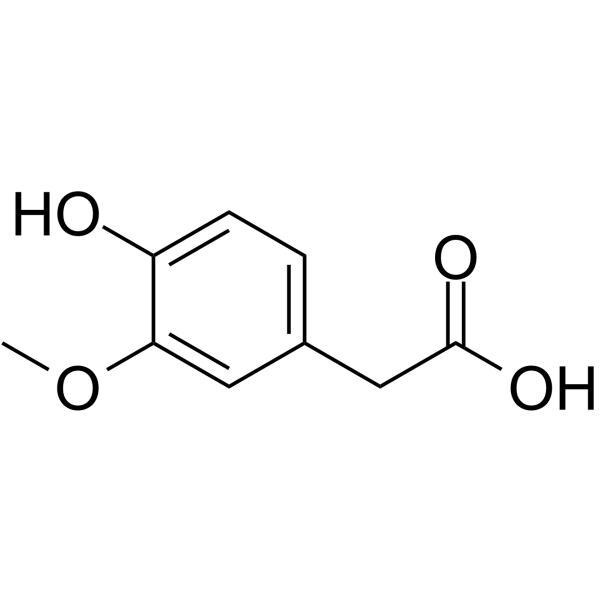
    Vanilacetic acid

    Drug Metabolite Endogenous Metabolite Autophagy Metabolic Disease
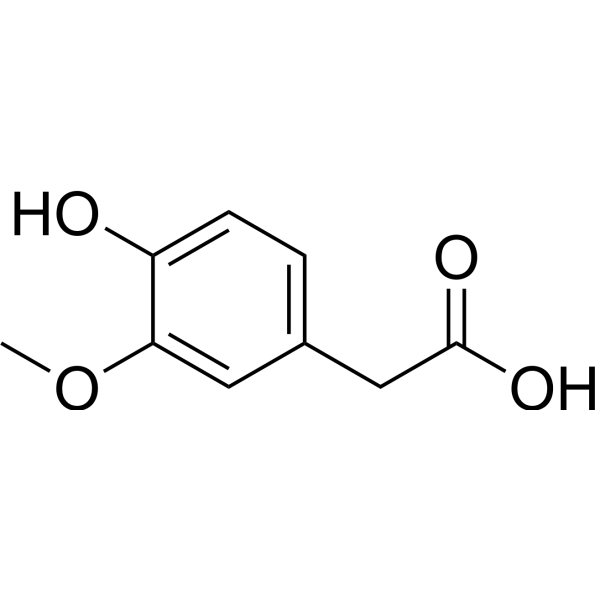
    Homovanillic acid (Vanilacetic acid) is a dopamine metabolite found to be associated with aromatic L-amino acid decarboxylase deficiency, celiac disease, growth hormone deficiency, and sepiapterin reductase deficiency .
    Homovanillic acid
  • HY-B0404A
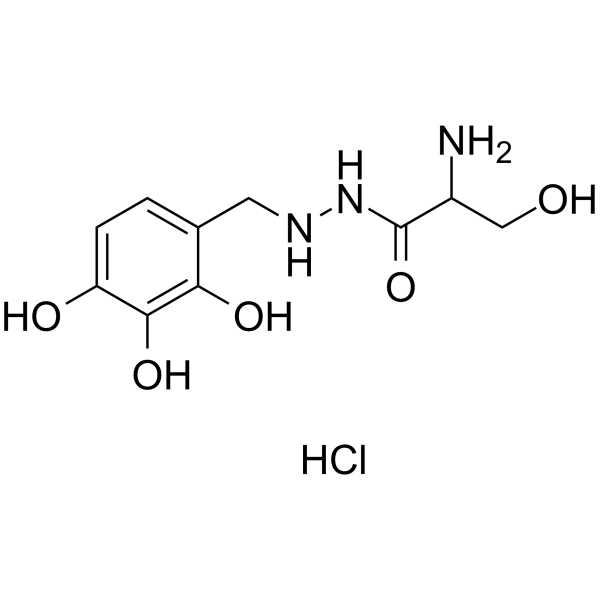
    Benserazide hydrochloride
    Maximum Cited Publications
    7 Publications Verification

    Ro 4-4602 hydrochloride

    Pyruvate Kinase Neurological Disease Cancer
    Benserazide hydrochloride (Serazide) is an aromatic L-amino acid decarboxylase (AADC) and L-DOPA decarboxylase inhibitor. Benserazide hydrochloride is also a PKM2 inhibitor. Benserazide hydrochloride directly binds to and blocks PKM2 enzyme activity, leading to inhibition of aerobic glycolysis concurrent up-regulation of OXPHOS. Benserazide hydrochloride can be used for the study of Parkinson's disease and melanoma .
    Benserazide hydrochloride
  • HY-W011727A
    Pyridoxal 5'-​phosphate monohydrate
    4 Publications Verification

    Pyridoxal phosphate monohydrate

    Endogenous Metabolite Amyloid-β ERK Neurological Disease Metabolic Disease Cancer
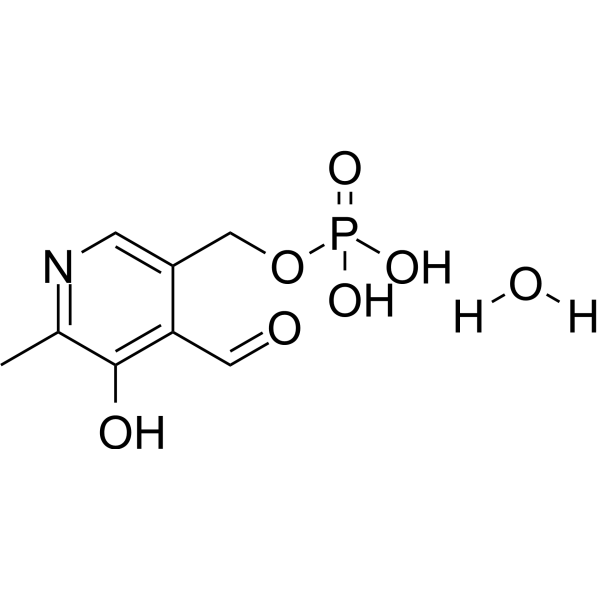
    Pyridoxal 5'-phosphate monohydrate, the active form of vitamin B6, is an essential cofactor for multiple enzymes, including aromatic l-amino acid decarboxylase that catalyzes the final stage in the production of the neurotransmitters dopamine and serotonin. Pyridoxal 5'-phosphate monohydrate is the most important coenzyme variant in the process of vitamin B6 intracellular phosphorylation and is interconvertible with other variants, including pyridoxine 5′‐phosphate (PNP) and pyridoxamine 5′‐phosphate (PMP) .
    Pyridoxal 5'-​phosphate monohydrate
  • HY-P4070

    Insulin Receptor Metabolic Disease
    Insulin icodec is an Insulin (HY-P0035) analog that strongly but reversibly binds to albumin. Insulin icodec has long plasma half-life. Insulin icodec modulates insulin receptor activity, controls blood glucose levels, reduces HbA1c levels, and binds reversibly to human serum albumin. Insulin icodec can be used for the research of type 2 diabetes mellitus .
    Insulin icodec
  • HY-121275
    Benserazide
    Maximum Cited Publications
    7 Publications Verification

    Ro 4-4602

    Pyruvate Kinase Neurological Disease Cancer
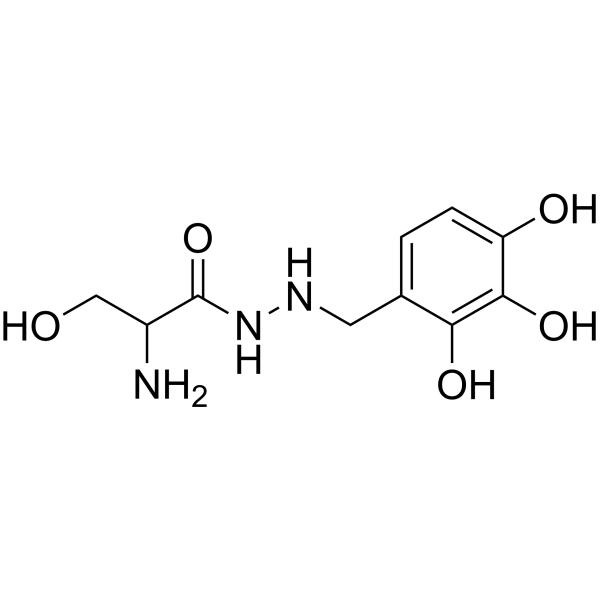
    Benserazide is an aromatic L-amino acid decarboxylase (AADC) and L-DOPA decarboxylase inhibitor. Benserazide is also a PKM2 inhibitor. Benserazide directly binds to and blocks PKM2 enzyme activity, leading to inhibition of aerobic glycolysis concurrent up-regulation of OXPHOS. Benserazide can be used for the study of Parkinson's disease and melanoma .
    Benserazide
  • HY-W011727S

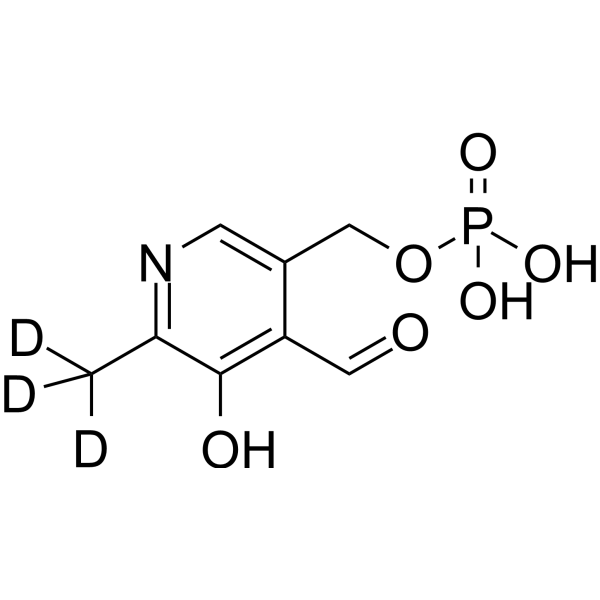
    Pyridoxal 5'-phosphate-d3

    Endogenous Metabolite Amyloid-β ERK Neurological Disease Metabolic Disease Cancer
    Pyridoxal Phosphate-d3 is the deuterium labeled Pyridoxal 5'-phosphate. Pyridoxal 5'-phosphate, the active form of vitamin B6, is an essential cofactor for multiple enzymes, including aromatic l-amino acid decarboxylase that catalyzes the final stage in the production of the neurotransmitters dopamine and serotonin. Pyridoxal 5'-phosphate is the most important coenzyme variant in the process of vitamin B6 intracellular phosphorylation and is interconvertible with other variants, including pyridoxine 5′‐phosphate (PNP) and pyridoxamine 5′-phosphate (PMP) .
    Pyridoxal Phosphate-d3
  • HY-W019599

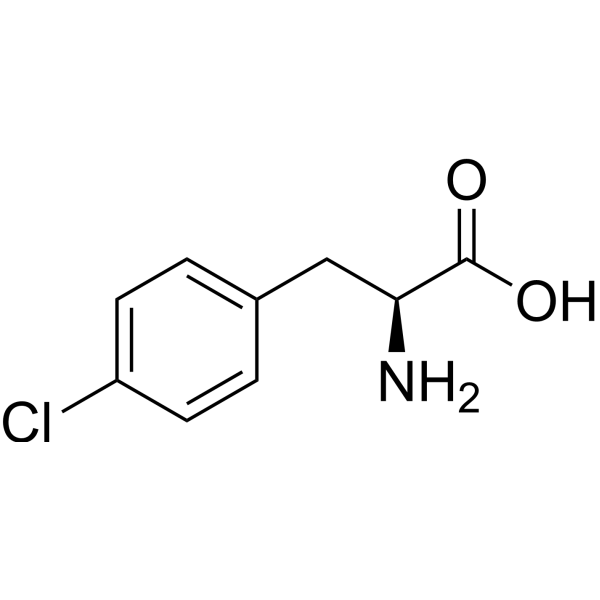
    L-PCPA

    5-HT Receptor Tryptophan Hydroxylase Neurological Disease
    4-Chloro-L-phenylalanine (L-PCPA) is a tryptophan hydroxylase inhibitor targeting TPH1 and TPH2, with the activity of blocking serotonin biosynthesis. 4-Chloro-L-phenylalanine reduces the levels of serotonin and its metabolites in the brain without impairing the survival of serotonergic neurons. 4-Chloro-L-phenylalanine enhances anhedonic, depression-like and anxiety-like behaviors in mice with depleted noradrenergic and dopaminergic neurons. 4-Chloro-L-phenylalanine acts as a decarboxylation substrate for aromatic L-amino acid decarboxylase from Bacillus atrophaeus. 4-Chloro-L-phenylalanine can be used in studies related to Parkinson's disease .
    4-Chloro-L-phenylalanine
  • HY-W011727
    Pyridoxal 5'-phosphate hydrate
    4 Publications Verification

    Pyridoxal phosphate hydrate

    Endogenous Metabolite Amyloid-β ERK Neurological Disease Metabolic Disease Cancer
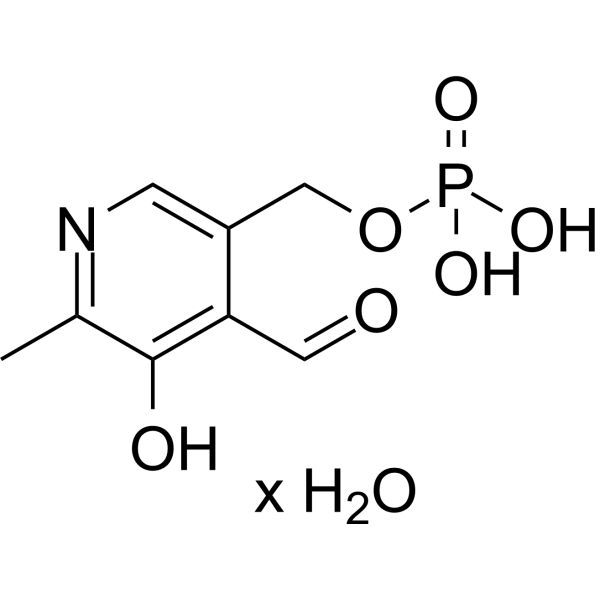
    Pyridoxal 5'-phosphate hydrate, the active form of vitamin B6, is an essential cofactor for multiple enzymes, including aromatic l-amino acid decarboxylase that catalyzes the final stage in the production of the neurotransmitters dopamine and serotonin. Pyridoxal 5'-phosphate hydrate is the most important coenzyme variant in the process of vitamin B6 intracellular phosphorylation and is interconvertible with other variants, including pyridoxine 5′‐phosphate (PNP) and pyridoxamine 5′-phosphate (PMP) .
    Pyridoxal 5'-phosphate hydrate
  • HY-113468

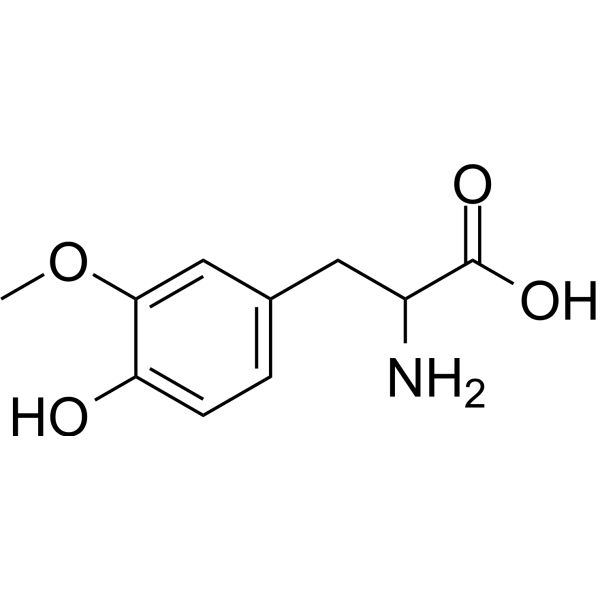
    3-Methoxytyrosine

    Endogenous Metabolite Neurological Disease
    3-O-Methyl-DL-DOPA is an endogenous metabolite present in Cerebrospinal_Fluid that can be used for the research of Epilepsy, Purine Nucleoside Phosphorylase Deficiency and Aromatic L Amino Acid Decarboxylase Deficiency .
    3-O-Methyl-DL-DOPA
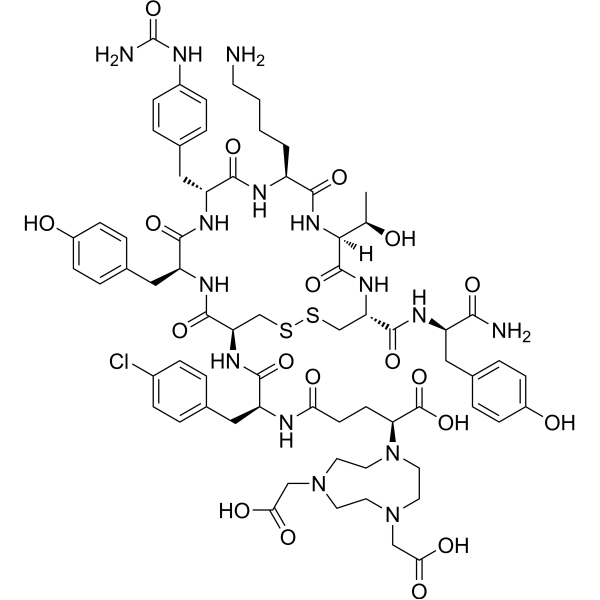
  • HY-P5362

    Radionuclide-Drug Conjugates (RDCs) Somatostatin Receptor Neurological Disease Cancer
    NODAGA-LM3 is a ligand that can cross the blood-brain barrier and targets somatostatin receptor SSTR2 with high affinity (IC50 = 1.3 nM). NODAGA-LM3 does not trigger the internalization of SSTR2 and can inhibit agonist-induced internalization processes. NODAGA-LM3 shows low uptake in normal tissues such as the liver and spleen, but high uptake in the lungs and blood pool. 68Ga-labeled NODAGA-LM3 can serve as a PET imaging agent for well-differentiated neuroendocrine tumors, and is applied in studies related to small cell lung cancer and well-differentiated neuroendocrine tumors .
    NODAGA-LM3
  • HY-109131

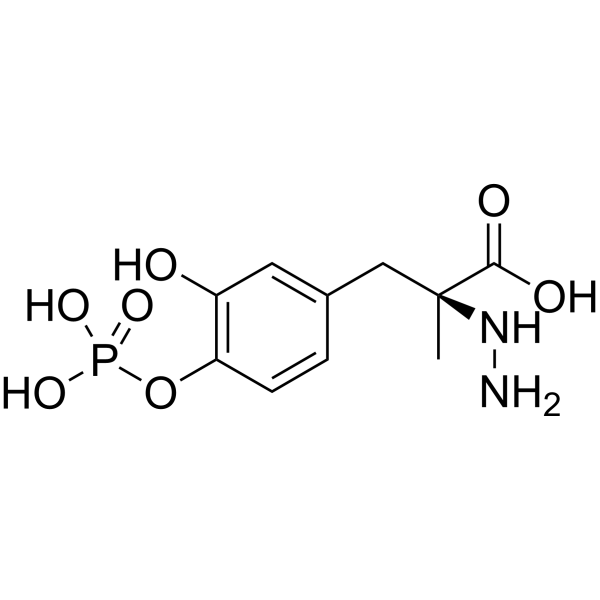
    ABBV-951; Carbidopa 4′-monophosphate

    Aryl Hydrocarbon Receptor Drug Metabolite Neurological Disease
    Foscarbidopa (ABBV-951; Carbidopa 4′-monophosphate) is an inhibitory prodrug targeting peripheral aromatic L-amino acid decarboxylase. Foscarbidopa is hydrolyzed into Carbidopa (HY-B0311) by phosphatases in vivo to suppress peripheral metabolism of levodopa and elevate brain delivery of levodopa. Foscarbidopa can be used for the research of Parkinson’s disease and advanced Parkinson’s disease .
    Foscarbidopa
  • HY-W003445

    Endogenous Metabolite Neurological Disease
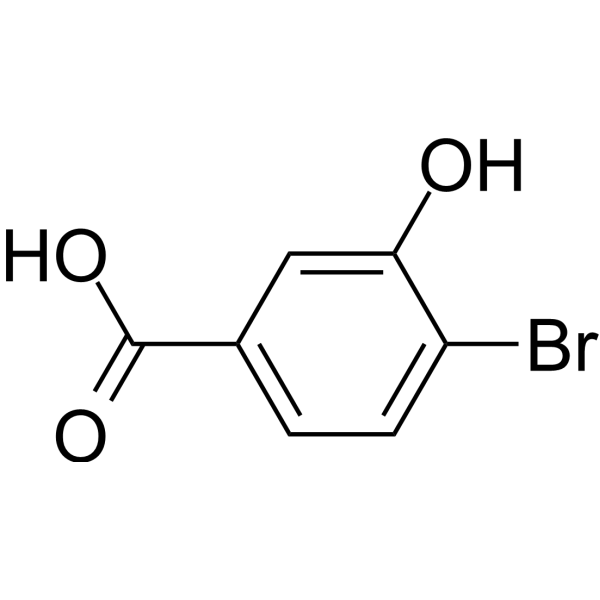
    4-Bromo-3-hydroxybenzoic acid is a metabolite of Brocresine and a histidine decarboxylase (HDC) inhibitor with IC50s of 1 mM for both rat fetal and rat gastric HDC. 4-Bromo-3-hydroxybenzoic acid also inhibits aromatic-L-amino acid decarboxylase from hog kidney and rat gastric mucosa in vitro with IC50s of 1 mM for both enzymes .
    4-Bromo-3-hydroxybenzoic acid
  • HY-P2336A
    CCZ01048 TFA
    3 Publications Verification

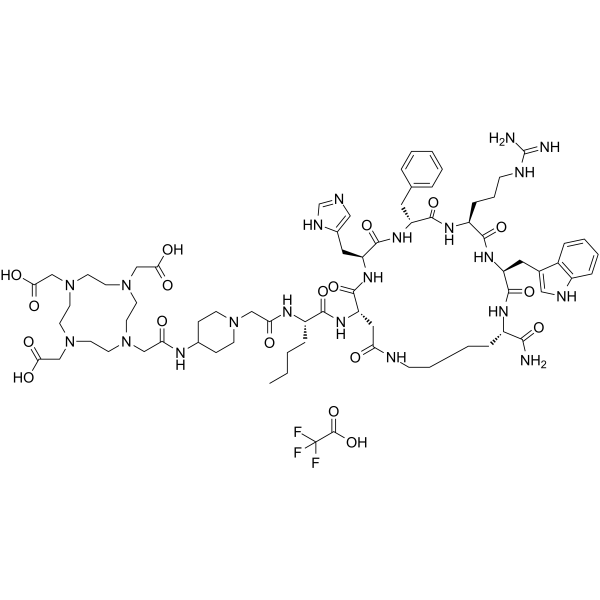
    Melanocortin Receptor Cancer
    CCZ01048 TFA, a α-MSH analogue, exhibits high binding affinity to melanocortin 1 receptor (MC1R) with a Ki of 0.31 nM. CCZ01048 TFA shows rapid internalization into B16F10 melanoma cells and high in vivo stability. CCZ01048 TFA is a promising candidate for PET imaging of malignant melanoma .
    CCZ01048 TFA
  • HY-Y0123

    Drug Derivative Infection Neurological Disease
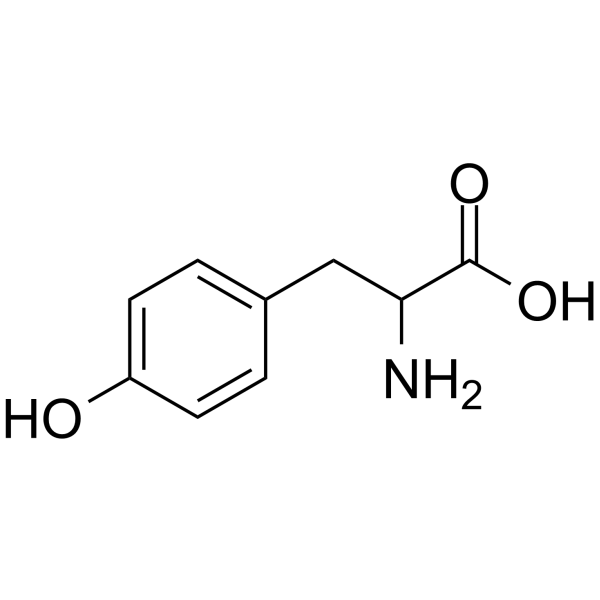
    DL-Tyrosine is an aromatic nonessential amino acid synthesized from the essential amino acid phenylalanine. DL-Tyrosine is a precursor for several important neurotransmitters (epinephrine, norepinephrine, dopamine) .
    DL-Tyrosine
  • HY-N0384S2

    Vanilacetic acid-d5

    Isotope-Labeled Compounds Autophagy Endogenous Metabolite Drug Metabolite Neurological Disease Metabolic Disease
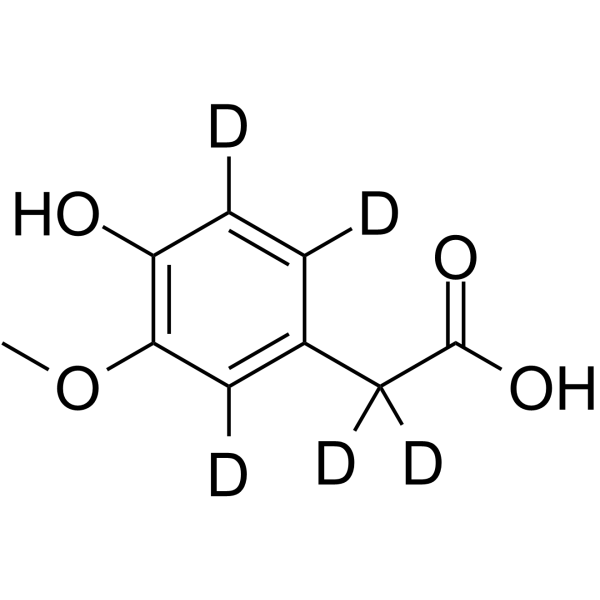
    Homovanillic acid-d5 (Vanilacetic acid-d5) is the deuterium labeled Homovanillic acid (HY-N0384). Homovanillic acid (Vanilacetic acid) is a dopamine metabolite found to be associated with aromatic L-amino acid decarboxylase deficiency, celiac disease, growth hormone deficiency, and sepiapterin reductase deficiency .
    Homovanillic acid-d5
  • HY-N0384R

    Vanilacetic acid (Standard)

    Reference Standards Autophagy Endogenous Metabolite Drug Metabolite Neurological Disease Metabolic Disease
    Homovanillic acid (Standard) (Vanilacetic acid (Standard)) is the analytical standard of Homovanillic acid (HY-N0384). This product is intended for research and analytical applications. Homovanillic acid (Vanilacetic acid) is a dopamine metabolite found to be associated with aromatic L-amino acid decarboxylase deficiency, celiac disease, growth hormone deficiency, and sepiapterin reductase deficiency .
    Homovanillic acid (Standard)
  • HY-P10341

    GCGR Metabolic Disease
    ZP3022 is a dual agonist of glucagon-like peptide-1 (GLP-1) and gastrin that has the ability to sustainably improve glycemic control. Additionally, ZP3022 can effectively increase β-cell mass, promote β-cell proliferation, and enhance the function of pancreatic islets. ZP3022 can be used in anti-diabetic research .
    ZP3022
  • HY-Y0123S

    Isotope-Labeled Compounds Neurological Disease
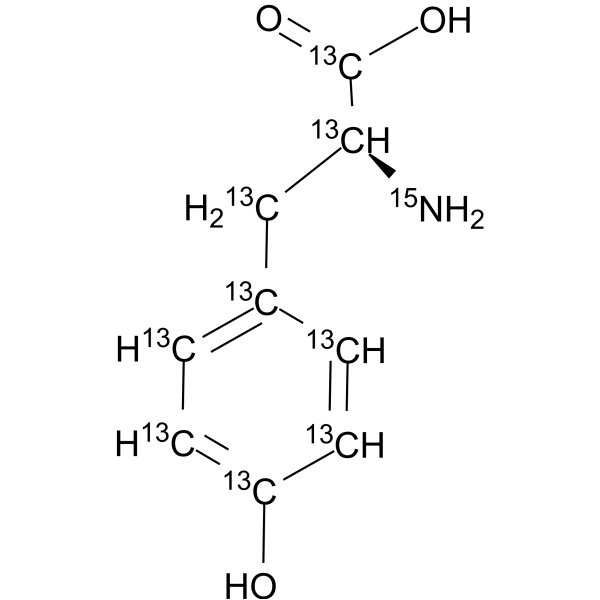
    L-Tyrosine- 13C9, 15N is the 13C- and 15N-labeled L-Tyrosine. L-Tyrosine is an aromatic nonessential amino acid synthesized from the essential amino acid phenylalanine. L-Tyrosine is a precursor for several important neurotransmitters (epinephrine, norepinephrine, dopamine) .
    L-Tyrosine-13C9,15N
  • HY-N0384S

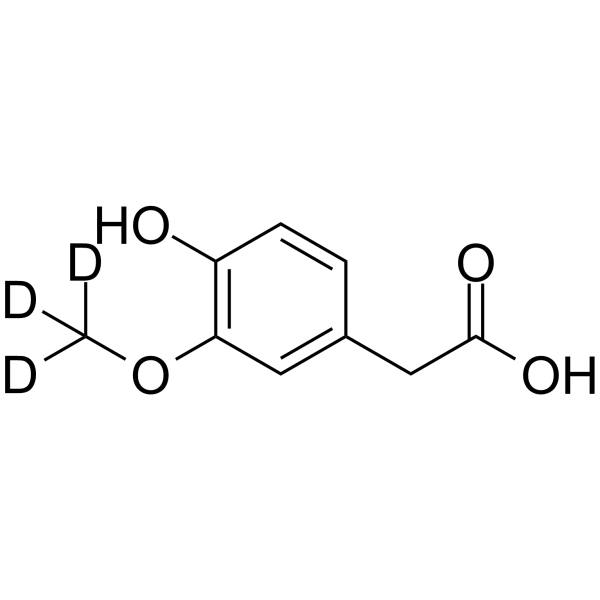
    Vanilacetic acid-d3

    Isotope-Labeled Compounds Autophagy Endogenous Metabolite Drug Metabolite Neurological Disease Metabolic Disease
    Homovanillic acid-d3 (Vanilacetic acid-d3) is the deuterium labeled Homovanillic acid (HY-N0384). Homovanillic acid (Vanilacetic acid) is a dopamine metabolite found to be associated with aromatic L-amino acid decarboxylase deficiency, celiac disease, growth hormone deficiency, and sepiapterin reductase deficiency .
    Homovanillic acid-d3
  • HY-113468R

    3-Methoxytyrosine (Standard)

    Endogenous Metabolite Reference Standards Neurological Disease
    3-O-Methyl-DL-DOPA (Standard) is the analytical standard of 3-O-Methyl-DL-DOPA. This product is intended for research and analytical applications. 3-O-Methyl-DL-DOPA is an endogenous metabolite present in Cerebrospinal_Fluid that can be used for the research of Epilepsy, Purine Nucleoside Phosphorylase Deficiency and Aromatic L Amino Acid Decarboxylase Deficiency [4].
    3-O-Methyl-DL-DOPA (Standard)
  • HY-B0404AR

    Ro 4-4602 hydrochloride (Standard)

    Reference Standards Pyruvate Kinase Neurological Disease Cancer
    Benserazide hydrochloride (Standard) (Serazide (Standard)) is the analytical standard of Benserazide hydrochloride (HY-B0404A). This product is intended for research and analytical applications. Benserazide hydrochloride (Serazide) is an aromatic L-amino acid decarboxylase (AADC) and L-DOPA decarboxylase inhibitor. Benserazide hydrochloride is also a PKM2 inhibitor. Benserazide hydrochloride directly binds to and blocks PKM2 enzyme activity, leading to inhibition of aerobic glycolysis concurrent up-regulation of OXPHOS. Benserazide hydrochloride can be used for the study of Parkinson's disease and melanoma .
    Benserazide hydrochloride (Standard)
  • HY-N0384S1

    Vanilacetic acid-d2

    Isotope-Labeled Compounds Autophagy Endogenous Metabolite Drug Metabolite Neurological Disease Metabolic Disease
    Homovanillic acid-d2 (Vanilacetic acid-d2) is the deuterium labeled Homovanillic acid (HY-N0384). Homovanillic acid (Vanilacetic acid) is a dopamine metabolite found to be associated with aromatic L-amino acid decarboxylase deficiency, celiac disease, growth hormone deficiency, and sepiapterin reductase deficiency .
    Homovanillic acid-d2
  • HY-B0404AS

    Ro 4-4602-d3 hydrochloride

    Isotope-Labeled Compounds Pyruvate Kinase Neurological Disease Cancer
    Benserazide-d3 (hydrochloride) is the deuterium labeled Benserazide hydrochloride (HY-B0404A). Benserazide hydrochloride (Serazide) is an aromatic L-amino acid decarboxylase (AADC) and L-DOPA decarboxylase inhibitor. Benserazide hydrochloride is also a PKM2 inhibitor. Benserazide hydrochloride directly binds to and blocks PKM2 enzyme activity, leading to inhibition of aerobic glycolysis concurrent up-regulation of OXPHOS. Benserazide hydrochloride can be used for the study of Parkinson's disease and melanoma .
    Benserazide-d3 hydrochloride
  • HY-113154

    VLA

    Endogenous Metabolite Others
    Vanillactic acid (VLA) is a relevant biomarker associated with Aromatic L-amino acid decarboxylase (AADC) deficiency. AADC deficiency is a primary neurotransmitter defect of the biosynthesis of catecholamines and serotonin .
    Vanillactic acid
  • HY-P11004

    Bacterial Antibiotic Infection
    A3-APO is an antimicrobial peptide. A3-APO has a significant antimicrobial activity by a dual mode of action with both membrane disintegration and intracellular target inhibition. A3-APO can deactivate bacterial toxins and increase the expression of anti-inflammatory cytokines (such as IL-4 and IL-10), without antimicrobial resistance. A3-APO accelerates burn wounds healing in mice infection model of Acinetobacter baumannii and Staphylococcus aureus .
    A3-APO
  • HY-P10472

    GnRH Receptor Endocrinology
    Azaline B is an antagonist for gonadotropin-releasing hormone (GnRH) with IC50 of 1.37 nM, Azaline B can be used in research of sex hormone-related pathological states, ovulation induction and male contraception .
    Azaline B
  • HY-P4757

    Parasite Others
    N1-Glutathionyl-spermidine disulfide is a substrate of trypanothione reductase .
    N1-Glutathionyl-spermidine disulfide
  • HY-P11243

    Ephrin Receptor Neurological Disease
    EphA4 agonist compound 23 is a novel EphA4 agonist peptide mimic. EphA4 agonist compound 23 exhibits high affinity, high selectivity, and significant receptor activation ability. EphA4 agonist compound 23 is commonly used in the study of neurodegenerative diseases .
    EphA4 agonist compound 23
  • HY-P2434

    Somatostatin Receptor Neurological Disease Metabolic Disease Cancer
    AP102 is a dual SSTR2/SSTR5-specific somatostatin analog (SSA). AP102 is a disulfide-bridged octapeptide SSA containing synthetic iodinated amino acids. AP102 binds with subnanomolar affinity to SSTR2 and SSTR5 (IC50: 0.63 and 0.65 nM, respectively). AP102 does not bind to SSTR1 or SSTR3. AP102 can be used for acromegaly and neuroendocrine tumors research .
    AP102
  • HY-P5362A

    Radionuclide-Drug Conjugates (RDCs) Somatostatin Receptor Cancer
    NODAGA-LM3 TFA is a ligand that can cross the blood-brain barrier and targets somatostatin receptor SSTR2 with high affinity (IC50 = 1.3 nM). NODAGA-LM3 TFA does not trigger the internalization of SSTR2 and can inhibit agonist-induced internalization processes. NODAGA-LM3 TFA shows low uptake in normal tissues such as the liver and spleen, but high uptake in the lungs and blood pool. 68Ga-labeled NODAGA-LM3 TFA can serve as a PET imaging agent for well-differentiated neuroendocrine tumors, and is applied in studies related to small cell lung cancer and well-differentiated neuroendocrine tumors .
    NODAGA-LM3 TFA
  • HY-105168

    Endothelin Receptor Cardiovascular Disease
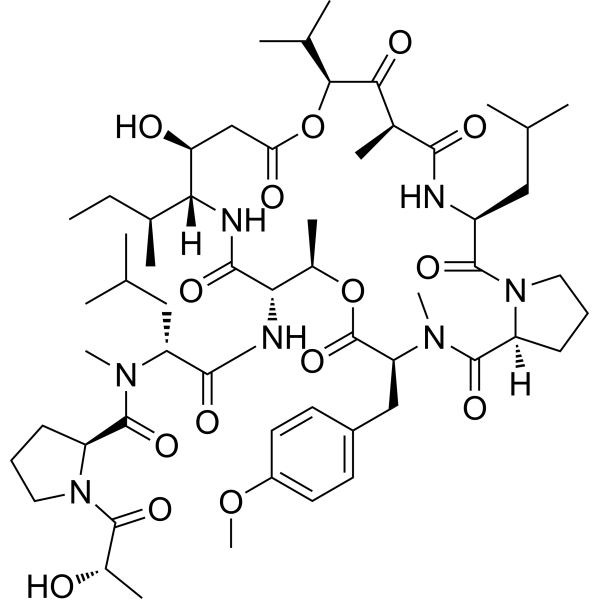
    TAK 044 is an antagonist of Endothelin Receptor. TAK 044 strongly inhibits ET-induced deterioration in various animal models. TAK 044 can be used in study ET-related diseases such as acute myocardial infarction,acute renal failure, acute hepatic malfunction, and subarachnoid hemorrhage .
    TAK 044
  • HY-N3548

    NF-κB Inflammation/Immunology
    Catalpalactone has anti-inflammatory effect. Catalpalactone inhibits LPS-induced NO production and iNOS expression in RAW264.7 cells, and also inhibits IRF3, NF-κB, and IFN-β/STAT-1 activation. Catalpalactone also inhibits dopamine biosynthesis by reducing tyrosine hydroxylase (TH) and aromatic-l-amino acid decarboxylase (AADC) activities .
    Catalpalactone
  • HY-W777477

    Vanilacetic acid-13C6

    Isotope-Labeled Compounds Autophagy Drug Metabolite Endogenous Metabolite Metabolic Disease
    Homovanillic Acid- 13C6 (Vanilacetic acid- 13C6) is the 13C-labeled Homovanillic acid (HY-N0384). Homovanillic acid is a dopamine metabolite found to be associated with aromatic L-amino acid decarboxylase deficiency, celiac disease, growth hormone deficiency, and sepiapterin reductase deficiency.
    Homovanillic Acid-13C6
  • HY-N0384S4

    Vanilacetic acid-d3-1

    Isotope-Labeled Compounds Autophagy Endogenous Metabolite Drug Metabolite Neurological Disease Metabolic Disease
    Homovanillic acid-d3-1 (Vanilacetic acid-d3-1) is deuterated labeled Homovanillic acid (HY-N0384). Homovanillic acid (Vanilacetic acid) is a dopamine metabolite found to be associated with aromatic L-amino acid decarboxylase deficiency, celiac disease, growth hormone deficiency, and sepiapterin reductase deficiency .
    Homovanillic acid-d3-1
  • HY-N0384S3

    Vanilacetic acid-13C6,18O

    Isotope-Labeled Compounds Autophagy Endogenous Metabolite Drug Metabolite Neurological Disease Metabolic Disease
    Homovanillic acid- 13C6, 18O (Vanilacetic acid- 13C6, 18O) is the 13C- and 18O-labeled Homovanillic acid (HY-N0384). Homovanillic acid (Vanilacetic acid) is a dopamine metabolite found to be associated with aromatic L-amino acid decarboxylase deficiency, celiac disease, growth hormone deficiency, and sepiapterin reductase deficiency .
    Homovanillic acid-13C6,18O
  • HY-N0384S5

    Vanilacetic acid-13C,d3

    Isotope-Labeled Compounds Autophagy Endogenous Metabolite Drug Metabolite Neurological Disease Metabolic Disease
    Homovanillic acid- 13C,d3 (Vanilacetic acid- 13C,d3) is 13C and deuterium labeled Homovanillic acid (HY-N0384). Homovanillic acid (Vanilacetic acid) is a dopamine metabolite found to be associated with aromatic L-amino acid decarboxylase deficiency, celiac disease, growth hormone deficiency, and sepiapterin reductase deficiency .
    Homovanillic acid-13C,d3
  • HY-W011727AR

    Pyridoxal phosphate monohydrate (Standard)

    Reference Standards Endogenous Metabolite Amyloid-β ERK Neurological Disease Metabolic Disease Cancer
    Pyridoxal 5'-​phosphate (monohydrate) (Standard) is the analytical standard of Pyridoxal 5'-​phosphate (monohydrate). This product is intended for research and analytical applications. Pyridoxal 5'-phosphate monohydrate, the active form of vitamin B6, is an essential cofactor for multiple enzymes, including aromatic l-amino acid decarboxylase that catalyzes the final stage in the production of the neurotransmitters dopamine and serotonin. Pyridoxal 5'-phosphate monohydrate is the most important coenzyme variant in the process of vitamin B6 intracellular phosphorylation and is interconvertible with other variants, including pyridoxine 5′‐phosphate (PNP) and pyridoxamine 5′-phosphate (PMP) .
    Pyridoxal 5'-?phosphate monohydrate (Standard)
  • HY-P2075

    Renin Endocrinology
    EMD 55068 is a renin antagonist. EMD 55068 inhibits the uptake of taurocholate .
    EMD 55068
  • HY-P10876

    Amyloid-β Neurological Disease
    mcK6A1 is an inhibitor for the aggregation of amyloid-β (), that selectively binds to the 16KLVFFA21 segment of Aβ42, forms an extended β-folded structure, and inhibits the formation of Aβ42 oligomers. mcK6A1 can be used in research of Alzheimer's disease and other amyloid-related diseases .
    mcK6A1
  • HY-W003445R

    Endogenous Metabolite Reference Standards Neurological Disease
    4-Bromo-3-hydroxybenzoic acid (Standard) is the analytical standard of 4-Bromo-3-hydroxybenzoic acid (HY-W003445). This product is intended for research and analytical applications. 4-Bromo-3-hydroxybenzoic acid is a metabolite of Brocresine and a histidine decarboxylase (HDC) inhibitor with IC50s of 1 mM for both rat fetal and rat gastric HDC. 4-Bromo-3-hydroxybenzoic acid also inhibits aromatic-L-amino acid decarboxylase from hog kidney and rat gastric mucosa in vitro with IC50s of 1 mM for both enzymes .
    4-Bromo-3-hydroxybenzoic acid (Standard)
  • HY-Y0123S2

    Isotope-Labeled Compounds Neurological Disease
    DL-Tyrosine-d2 is the deuterium labeled DL-Tyrosine. DL-Tyrosine is an aromatic nonessential amino acid synthesized from the essential amino acid phenylalanine. DL-Tyrosine is a precursor for several important neurotransmitters (epinephrine, norepinephrine, dopamine) .
    DL-Tyrosine-d2
  • HY-Y0123S3

    Isotope-Labeled Compounds Neurological Disease
    DL-Tyrosine-d3 is the deuterium labeled DL-Tyrosine. DL-Tyrosine is an aromatic nonessential amino acid synthesized from the essential amino acid phenylalanine. DL-Tyrosine is a precursor for several important neurotransmitters (epinephrine, norepinephrine, dopamine) .
    DL-Tyrosine-d3
  • HY-Y0123S1

    Isotope-Labeled Compounds Neurological Disease
    DL-Tyrosine-d7 is the deuterium labeled DL-Tyrosine. DL-Tyrosine is an aromatic nonessential amino acid synthesized from the essential amino acid phenylalanine. DL-Tyrosine is a precursor for several important neurotransmitters (epinephrine, norepinephrine, dopamine) .
    DL-Tyrosine-d7
  • HY-182727

    Monoamine Oxidase Drug Metabolite Metabolic Disease
    MDL 72392 is a selective irreversible monoamine oxidase A (MAO-A) inhibitor. MDL 72392 inhibits MAO-A. MDL 72392 is formed by decarboxylation of the bioprecursor amino acid MDL 72394 via aromatic L-amino acid decarboxylase. MDL 72392 can be used in melatonin biosynthesis research .
    MDL 72392
  • HY-Y0123R

    Drug Derivative Reference Standards Infection Neurological Disease
    DL-Tyrosine (Standard) is the analytical standard of DL-Tyrosine (HY-Y0123). This product is intended for research and analytical applications. DL-Tyrosine is an aromatic nonessential amino acid synthesized from the essential amino acid phenylalanine. DL-Tyrosine is a precursor for several important neurotransmitters (epinephrine, norepinephrine, dopamine) .
    DL-Tyrosine (Standard)
  • HY-W011727R

    Pyridoxal phosphate hydrate (Standard)

    Endogenous Metabolite Reference Standards Amyloid-β ERK Neurological Disease Metabolic Disease Cancer
    Pyridoxal 5'-phosphate (hydrate) (Standard) is the analytical standard of Pyridoxal 5'-phosphate (hydrate) (HY-W011727). This product is intended for research and analytical applications. Pyridoxal 5'-phosphate hydrate, the active form of vitamin B6, is an essential cofactor for multiple enzymes, including aromatic l-amino acid decarboxylase that catalyzes the final stage in the production of the neurotransmitters dopamine and serotonin. Pyridoxal 5'-phosphate hydrate is the most important coenzyme variant in the process of vitamin B6 intracellular phosphorylation and is interconvertible with other variants, including pyridoxine 5′‐phosphate (PNP) and pyridoxamine 5′-phosphate (PMP) .
    Pyridoxal 5'-phosphate hydrate (Standard)
  • HY-P992360

    GABA Receptor Neurological Disease Cancer
    GT-002 is a partial positive allosteric modulator targeting the α3 subtype of GABAA receptors, as well as a specific binder of tumor-associated TF-glycosylated LYPD3. GT-002 mildly enhances GABA-induced chloride currents by binding to the benzodiazepine site of GABAA receptors, thereby alleviating prefrontal hypofunction and improving cognitive, memory and social interaction abilities. GT-002 can be used in research related to schizophrenia spectrum disorders, various squamous cell carcinomas, colorectal cancer, non-small cell lung cancer, and aromatic L-amino acid decarboxylase deficiency .
    GT-002
  • HY-P11488

    Radionuclide-Drug Conjugates (RDCs) Somatostatin Receptor PSMA Cancer
    JR11-PEG3-DOTA-PSMA-03 (Compound 2) is an RDC-related compound containing the chelating agent DOTA (HY-W053583), the JR11 peptide (SSTR2 antagonist), and the PSMA ligand. JR11-PEG3-DOTA-PSMA-03 shows SSTR2-binding affinities and PSMA-binding affinities, with IC50 s of 94.0 nM, 81.8 nM, respectively. JR11-PEG3-DOTA-PSMA-03 can be radiolabeled with [ 68Ga]. [ 68Ga] radiolabeled JR11-PEG3-DOTA-PSMA-03 can be used in diagnostic studies of neuroendocrine differentiated prostate cancer .
    JR11-PEG3-DOTA-PSMA-03
  • HY-P11485

    Radionuclide-Drug Conjugates (RDCs) Somatostatin Receptor PSMA Cancer
    JR11-PEG3-HBED-CC-PSMA-03 (Compound 1) is an RDC-related compound containing the chelating agent HBED-CC, the JR11 peptide (SSTR2 antagonist), and the PSMA ligand. JR11-PEG3-HBED-CC-PSMA-03 shows SSTR2-binding affinities and PSMA-binding affinities, with IC50 s of 59.2 nM, 57.0 nM, respectively. JR11-PEG3-HBED-CC-PSMA-03 can be radiolabeled with [ 68Ga]. [ 68Ga] radiolabeled JR11-PEG3-HBED-CC-PSMA-03 can be used in diagnostic studies of neuroendocrine differentiated prostate cancer .
    JR11-PEG3-HBED-CC-PSMA-03

Inquiry Online

Your information is safe with us. * Required Fields.

Salutation


Country or Region *

Applicant Name *


Organization Name *

Department *


Email Address *


Product Name *

Cat. No.


Requested quantity *

Phone Number *


Remarks

Inquiry Online

Inquiry Information

Product Name:
Cat. No.:
Quantity:
MCE Japan Authorized Agent:

