
1. Search Result
Search Result
Results for "

aspartate aminotransferase

" in MedChemExpress (MCE) Product Catalog:

20

Inhibitors & Agonists

1

Biochemical Assay Reagents

1

Peptides

5

Natural
Products

1

Isotope-Labeled Compounds

3

Antibodies

1

Click Chemistry

1

Oligonucleotides

Cat. No. Product Name Target Research Areas Chemical Structure
  • HY-154629
    Sesame Oil
    2 Publications Verification

    Environmental Pollutants Biochemical Assay Reagents Interleukin Related NO Synthase Aminotransferases (Transaminases) NF-κB Neurological Disease Metabolic Disease Inflammation/Immunology Cancer
    Sesame Oil is a vegetable oil. Sesame Oil can be extracted from the seeds of Sesamum indicum L. Sesame Oil decreases NF-κB, aspartate aminotransferase, alanine aminotransferase, IL-1β, IL-4 and nitric oxide. Sesame Oil has antitumor activity against malignant melanoma. Sesame Oil has protective effects against liver damage caused by various agents such as Cisplatin (HY-17394) and Acetaminophen (HY-66005). Sesame Oil shows antinociceptive and anti-inflammatory activities .
    Sesame Oil
  • HY-P3016A

    EC 2.6.1.1, porcine heart; GOT, porcine heart; AST, porcine heart

    Aminotransferases (Transaminases) Cardiovascular Disease
    Aspartate aminotransferase (EC 2.6.1.1), porcine heart is a metabolic regulator with the highest activity in the heart, liver and skeletal muscle. Aspartate aminotransferase, porcine heart comprises two isozymes: the cytoplasmic form (AST1) and the mitochondrial form (AST2). By catalyzing reversible transamination reactions between oxaloacetate, L-glutamate and other substances, it is deeply involved in key physiological processes such as amino acid metabolism, the tricarboxylic acid cycle and neurotransmitter synthesis. Aspartate aminotransferase, porcine heart also provides substrate support for the synthesis of urea and purines/pyrimidines. Aspartate aminotransferase, porcine heart is a serum marker reflecting cardiac and hepatic injury, and its abnormal levels are also closely associated with myocardial infarction, cardiovascular diseases and various cancers .
    Aspartate aminotransferase, porcine heart
  • HY-P3016

    EC 2.6.1.1; GOT; AST

    Aminotransferases (Transaminases) Cardiovascular Disease
    Aspartate aminotransferase (EC 2.6.1.1), Genetically engineered bacteria is a metabolic regulator with the highest activity in the heart, liver and skeletal muscle. Aspartate aminotransferase, Genetically engineered bacteria comprises two isozymes: the cytoplasmic form (AST1) and the mitochondrial form (AST2). By catalyzing reversible transamination reactions between oxaloacetate, L-glutamate and other substances, it is deeply involved in key physiological processes such as amino acid metabolism, the tricarboxylic acid cycle and neurotransmitter synthesis. Aspartate aminotransferase, Genetically engineered bacteria also provides substrate support for the synthesis of urea and purines/pyrimidines. Aspartate aminotransferase, Genetically engineered bacteria is a serum marker reflecting cardiac and hepatic injury, and its abnormal levels are also closely associated with myocardial infarction, cardiovascular diseases and various cancers .
    Aspartate aminotransferase, Genetically engineered bacteria
  • HY-N5092

    Reactive Oxygen Species (ROS) Cytochrome P450 Metabolic Disease
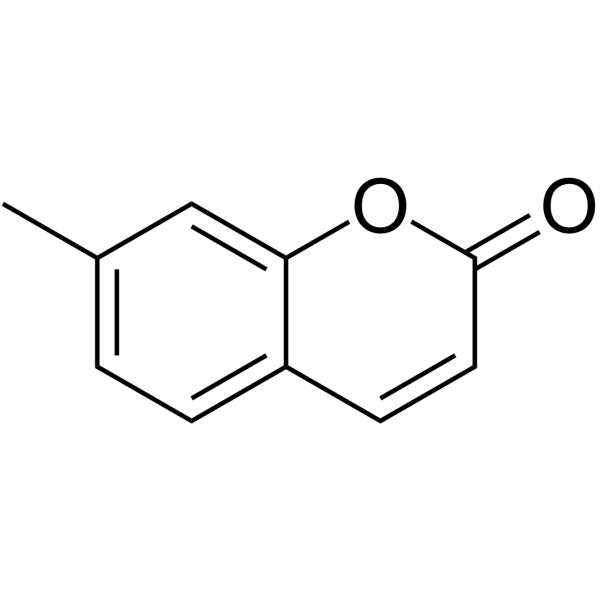
    7-Methylcoumarin is a coumarin derivative with potent hepatoprotective and antioxidant properties. 7-Methylcoumarin is a mechanism-based inhibitor for CYP2A6. 7-Methylcoumarin significantly decreases alanine aminotransferase (ALT), aspartate aminotransferase (AST), and serum bilirubin (TB) in rats with CCl4-induced liver damage, whilst restoring total protein (TP) and albumin (TA) levels in serum as well as preventing oxidative stress. 7-Methylcoumarin can decline mitotic activity of A. sativum promeristem .
    7-Methylcoumarin
  • HY-Y0284
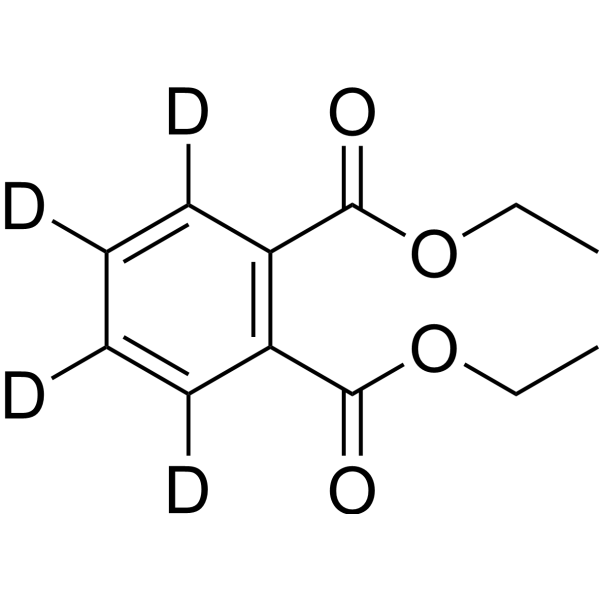
    Diethyl phthalate
    2 Publications Verification

    Environmental Pollutants Biochemical Assay Reagents Apoptosis Aminotransferases (Transaminases) Phosphatase Endocrinology
    Diethyl phthalate is an orally active plasticizer and detergent base. Diethyl phthalate increases the activities of ACP, ALP, SDH, and ALT in liver, muscle, or both tissues. Diethyl phthalate induces dose-dependent mortality and sluggish behavior in freshwater fish. Diethyl phthalate may induce male reproductive toxicity. Diethyl phthalate is added to plastic polymers to help maintain their flexibility .
    Diethyl phthalate
  • HY-124825

    Aminotransferases (Transaminases) Cancer
    iGOT1-01 is a potent aspartate aminotransferase 1 (glutamate oxaloacetate transaminase 1; GOT1) inhibitor. iGOT1-01 has IC50s of 85 μM and 11.3 μM in MDH coupled GOT1 enzymatic assay and GOT1/GLOX/HRP assay, respectively. iGOT1-01 has anti-cancer activity .
    iGOT1-01
  • HY-N0854
    Alisol F
    1 Publications Verification

    HBV ERK JNK p38 MAPK STAT NF-κB TNF Receptor Interleukin Related NO Synthase COX Metabolic Disease Cancer
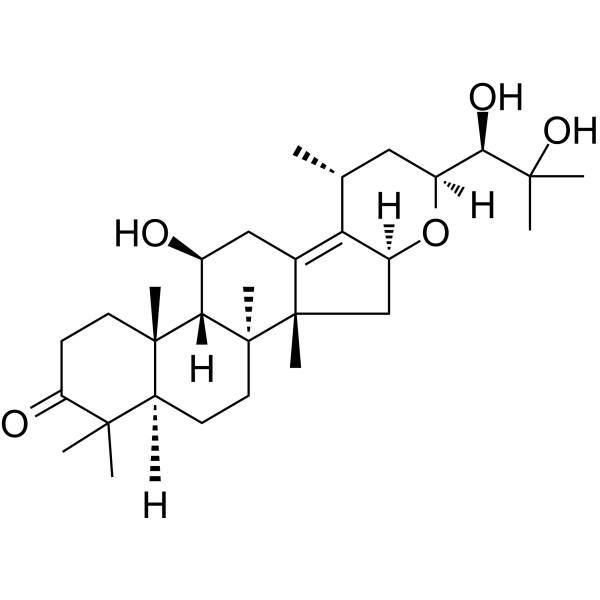
    Alisol F is a protostane-type triterpenoid with anti-inflammatory and anti-hepatitis B virus activities. Alisol F inhibits LPS (HY-D1056)-induced phosphorylation of ERK, JNK, p38, STAT3 and NF-κB (p65), suppresses the production of NO, IL-6, TNF-α and IL-1β, and also downregulates the levels of iNOS and COX-2. Alisol F reduces the serum alanine aminotransferase and aspartate aminotransferase levels in mice with acute liver injury and ameliorates their liver pathological damage .
    Alisol F
  • HY-P3016B

    EC 2.6.1.1, Human liver; GOT, Human liver; AST, Human liver

    Aminotransferases (Transaminases) Cardiovascular Disease
    Aspartate aminotransferase (EC 2.6.1.1), Human liver is a metabolic regulator with the highest activity in the heart, liver and skeletal muscle. Aspartate aminotransferase, Human liver comprises two isozymes: the cytoplasmic form (AST1) and the mitochondrial form (AST2). By catalyzing reversible transamination reactions between oxaloacetate, L-glutamate and other substances, it is deeply involved in key physiological processes such as amino acid metabolism, the tricarboxylic acid cycle and neurotransmitter synthesis. Aspartate aminotransferase, Human liver also provides substrate support for the synthesis of urea and purines/pyrimidines. Aspartate aminotransferase, Human liver is a serum marker reflecting cardiac and hepatic injury, and its abnormal levels are also closely associated with myocardial infarction, cardiovascular diseases and various cancers .
    Aspartate aminotransferase, Human liver
  • HY-176192

    Toll-like Receptor (TLR) NF-κB p38 MAPK ERK IKK TNF Receptor Interleukin Related Inflammation/Immunology
    SMU-14a is a selective Toll-like receptor 3 (TLR3) inhibitor wirh an IC50 of 0.18 μM. SMU-14a reduces phosphorylation of p65, ERK, and TBK1 via NF-κB, MAPK, and IRF3 signaling pathways. SMU-14a inhibits IL-6 secretion in mouse peritoneal macrophages, downregulates TNF-α in human peripheral blood monocytes and decreases serum alanine aminotransferase (ALT) and aspartate aminotransferase (AST) levels. SMU-14a can be used for the research of acute hepatitis .
    SMU-14a
  • HY-131921

    Biochemical Assay Reagents Endocrinology
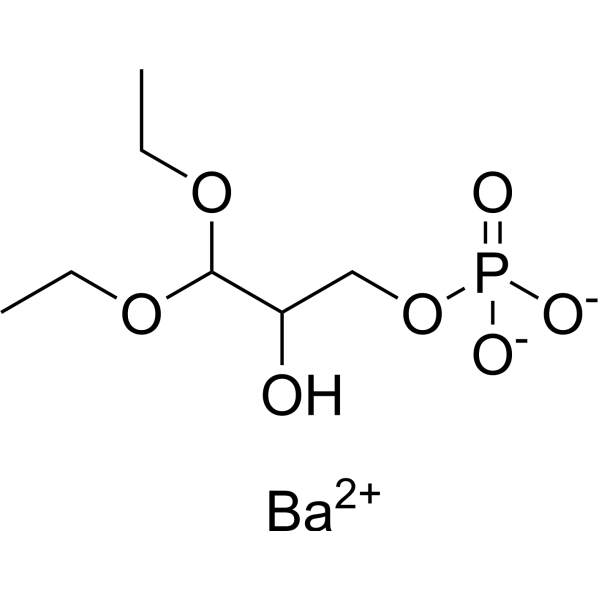
    DL-Glyceraldehyde 3-phosphate diethyl acetal barium is an Aspartate Aminotransferase isozyme inhibitor .
    DL-Glyceraldehyde 3-phosphate diethyl acetal barium
  • HY-E70327

    Endogenous Metabolite Others
    Aspartate Aminotransferase, Human is a biocatalyst and a key enzyme in new biocatalyst technology. Enzyme engineering focuses on enhancing enzyme reaction kinetics, substrate selectivity, and activity under harsh conditions such as low or high pH. By introducing stimulus responsiveness to these enzyme modifications, dynamic control of activity is also possible .
    Aspartate Aminotransferase, Human
  • HY-P2891A

    PoxB, Aerococcus viridans

    Endogenous Metabolite Others
    Pyruvate oxidase, Aerococcus viridans (PoxB) is a thiamine pyrophosphate-dependent oxidase that catalyzes the oxidative decarboxylation of pyruvate to produce acetyl phosphate, carbon dioxide, and water. Pyruvate oxidase, Aerococcus viridans is an important enzyme in bacterial metabolism and can enhance ATP production. Additionally, Pyruvate oxidase, Aerococcus viridans can be used for the determination of aspartate aminotransferase and alanine aminotransferase activities .
    Pyruvate oxidase, Aerococcus viridans
  • HY-P1887

    HSP Infection
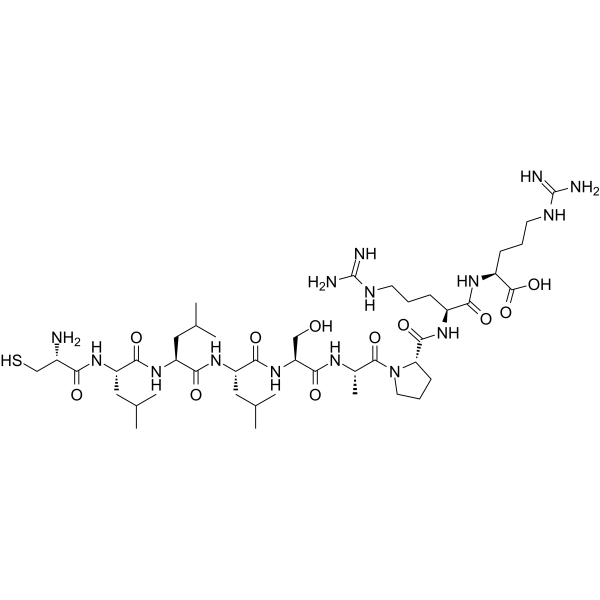
    p5 Ligand for Dnak and DnaJ is a nonapeptide, which corresponds to the main binding site for the 23-residue part of the presequence of mitochondrial aspartate aminotransferase. p5 Ligand for Dnak and DnaJ is a high-affinity ligand for DnaK and DnaJ .
    p5 Ligand for Dnak and DnaJ
  • HY-N15587

    Gostatine

    Aminotransferases (Transaminases) Metabolic Disease
    Gostatin is an inhibitor of aspartate aminotransferase (GOT). Gostatin is found in Streptomyces sumanensis nov. sp. NK-23. Gostatin has a strong inhibitory effect on pig heart GOT, a weak inhibitory effect on wheat germ GOT and GPT, and no significant effect on glutamate dehydrogenase and glutamine synthetase. The inhibitory mechanism of gostatin is similar to substrate competitive inhibition, and aspartate has a protective effect on its inhibitory effect. Gostatin can be used to study the catalytic mechanism of GOT and its role in nitrogen metabolism .
    Gostatin
  • HY-N5092R

    Reference Standards Reactive Oxygen Species (ROS) Cytochrome P450 Metabolic Disease
    7-Methylcoumarin (Standard) is the analytical standard of 7-Methylcoumarin. This product is intended for research and analytical applications. 7-Methylcoumarin is a coumarin derivative with potent hepatoprotective and antioxidant properties. 7-Methylcoumarin is a mechanism-based inhibitor for CYP2A6. 7-Methylcoumarin significantly decreases alanine aminotransferase (ALT), aspartate aminotransferase (AST), and serum bilirubin (TB) in rats with CCl4-induced liver damage, whilst restoring total protein (TP) and albumin (TA) levels in serum as well as preventing oxidative stress. 7-Methylcoumarin can decline mitotic activity of A. sativum promeristem .
    7-Methylcoumarin (Standard)
  • HY-W008440S

    Isotope-Labeled Compounds Aminotransferases (Transaminases) Monoamine Oxidase Neurological Disease Inflammation/Immunology
    DL-Cycloserine- 15N,d3 is the deuterium labeled DL-Cycloserine (HY-W008440). DL-Cycloserine is an orally active aminotransferase inhibitor. DL-Cycloserine exhibits completely opposite effects on the activity of monoamine oxidase in different tissues. DL-Cycloserine can be used for the research of pulmonary tuberculosis, psychosomatic diseases, and depressive states .
    DL-Cycloserine-15N,d3
  • HY-P3016C

    EC 2.6.1.1, Human (HEK293); GOT, Human (HEK293); AST, Human (HEK293)

    Aminotransferases (Transaminases) Cardiovascular Disease
    Aspartate aminotransferase (EC 2.6.1.1), Human (HEK293) is a metabolic regulator with the highest activity in the heart, liver and skeletal muscle. Aspartate aminotransferase, Human (HEK293) comprises two isozymes: the cytoplasmic form (AST1) and the mitochondrial form (AST2). By catalyzing reversible transamination reactions between oxaloacetate, L-glutamate and other substances, it is deeply involved in key physiological processes such as amino acid metabolism, the tricarboxylic acid cycle and neurotransmitter synthesis. Aspartate aminotransferase, Human (HEK293) also provides substrate support for the synthesis of urea and purines/pyrimidines. Aspartate aminotransferase, Human (HEK293) is a serum marker reflecting cardiac and hepatic injury, and its abnormal levels are also closely associated with myocardial infarction, cardiovascular diseases and various cancers .
    Aspartate aminotransferase, Human (HEK293)
  • HY-N17495

    Others Metabolic Disease
    Luteolin 7-O-(6-O-malonyl-β-D-glucoside) is an orally active flavonoid free radical scavenger. Luteolin 7-O-(6-O-malonyl-β-D-glucoside) scavenges free radicals, inhibits the activity elevation of aspartate aminotransferase and alanine aminotransferase in mouse plasma, as well as the elevation of liver lipid hydroperoxide content. Luteolin 7-O-(6-O-malonyl-β-D-glucoside) is applicable for liver injury research .
    Luteolin 7-O-(6-O-malonyl-β-D-glucoside)
  • HY-W008440

    Aminotransferases (Transaminases) Monoamine Oxidase Neurological Disease Inflammation/Immunology
    DL-Cycloserine is an orally active aminotransferase inhibitor. DL-Cycloserine exhibits completely opposite effects on the activity of monoamine oxidase in different tissues. DL-Cycloserine can be used for the research of pulmonary tuberculosis, psychosomatic diseases, and depressive states .
    DL-Cycloserine
  • HY-119578

    Cytochrome P450 Cancer
    Imiprothrin is an inducer that induces CYP1A2 and metallothionein 1a, with significant genotoxicity and cytotoxicity. In rat hepatocytes, Imiprothrin initiates detoxification responses by triggering the overexpression of these two genes. Imiprothrin induces chromosomal aberrations and micronucleus formation in rat bone marrow cells, and causes DNA damage in hepatocytes. Imiprothrin triggers oxidative stress in rats, leading to lipid peroxidation, excessive reactive oxygen species production and redox imbalance, which in turn impairs liver and kidney functions and causes tissue damage. Imiprothrin inhibits weight gain in mice, and even causes high mortality in female mice at high doses. However, it shows no carcinogenicity in rat experiments; among relevant indicators, aspartate aminotransferase and total protein are identified as sensitive toxicity biomarkers .
    Imiprothrin

Inquiry Online

Your information is safe with us. * Required Fields.

Salutation


Country or Region *

Applicant Name *


Organization Name *

Department *


Email Address *


Product Name *

Cat. No.


Requested quantity *

Phone Number *


Remarks

Inquiry Online

Inquiry Information

Product Name:
Cat. No.:
Quantity:
MCE Japan Authorized Agent:

