1. Search Result
Search Result
Results for "

aspartate receptor

" in MedChemExpress (MCE) Product Catalog:

118

Inhibitors & Agonists

9

Peptides

15

Natural
Products

28

Isotope-Labeled Compounds

Cat. No. Product Name Target Research Areas Chemical Structure
  • HY-100807
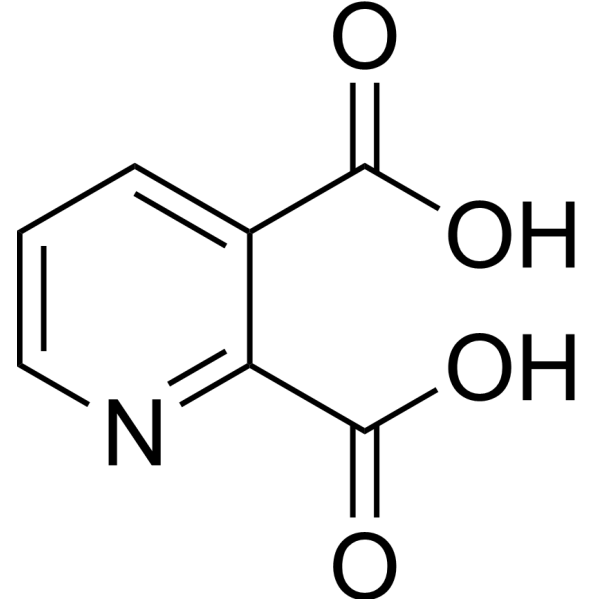
    Quinolinic acid
    5+ Cited Publications

    MOFs iGluR Endogenous Metabolite Reactive Oxygen Species (ROS) NO Synthase Apoptosis Neurological Disease Inflammation/Immunology
    Quinolinic acid, an endogenous metabolite of tryptophan, is a N-methyl-D-aspartate receptor (NMDA receptor) agonist. Quinolinic acid increases glutamate efflux, induces the generation of ROS, activates nitric oxide synthase, produces excessive NO, leading to calcium ion influx and neuronal apoptosis .
    Quinolinic acid
  • HY-N0215
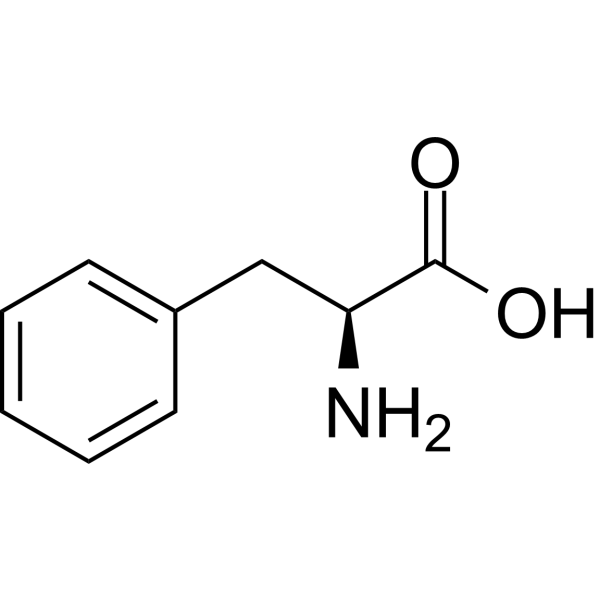
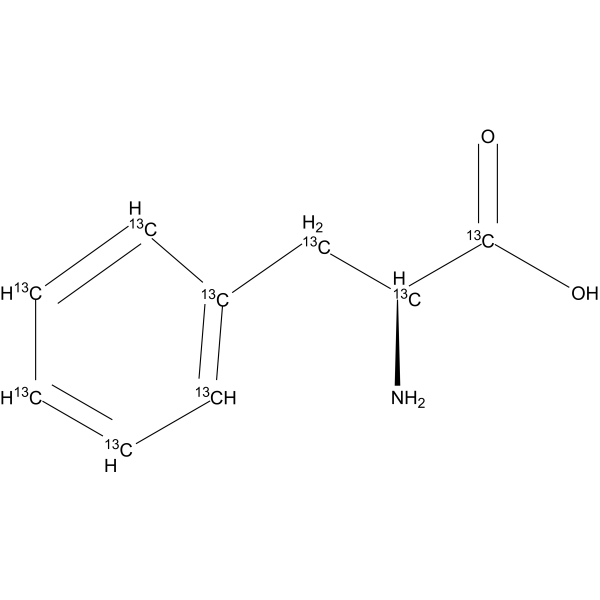
    L-Phenylalanine
    Maximum Cited Publications
    8 Publications Verification

    (S)-2-Amino-3-phenylpropionic acid

    Calcium Channel iGluR Endogenous Metabolite Ligands for E3 Ligase Metabolic Disease Cancer
    L-Phenylalanine ((S)-2-Amino-3-phenylpropionic acid) is an essential amino acid isolated from Escherichia coli. L-Phenylalanine is a α2δ subunit of voltage-dependent Ca + channels antagonist with a Ki of 980 nM. L-phenylalanine is a competitive antagonist for the glycine- and glutamate-binding sites of N-methyl-D-aspartate receptors (NMDARs) (KB of 573 μM ) and non-NMDARs, respectively. L-Phenylalanine is widely used in the production of food flavors and pharmaceuticals .
    L-Phenylalanine
  • HY-B0591
    Memantine
    Maximum Cited Publications
    10 Publications Verification

    iGluR Neurological Disease
    Memantine is an orally active, noncompetitive N-methyl-D-aspartate receptor (NMDAR) antagonist. Memantine can be used for the research of moderate-to-severe Alzheimer's disease (AD) .
    Memantine
  • HY-100714
    DL-AP5
    3 Publications Verification

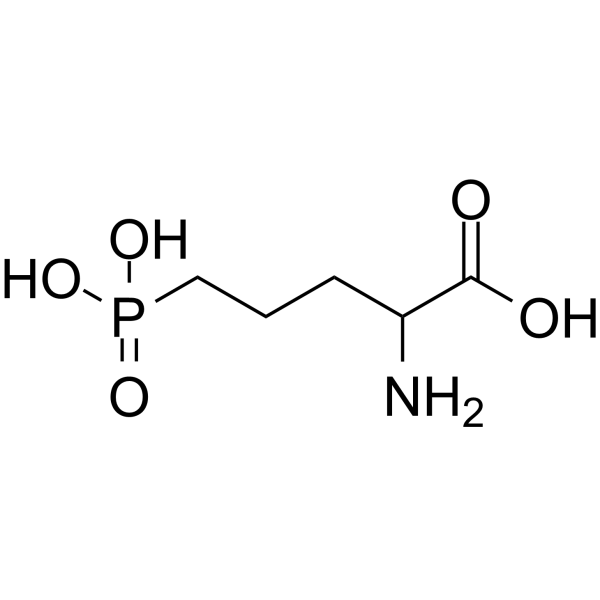
    2-APV; DL-2-Amino-5-phosphonovaleric acid

    iGluR Neurological Disease Inflammation/Immunology
    DL-AP5 (2-APV) is a competitive NMDA (N-methyl-D-aspartate) receptor antagonist. DL-AP5 shows significantly antinociceptive activity. DL-AP5 specifically blocks on channels in the rabbit retina .
    DL-AP5
  • HY-101037
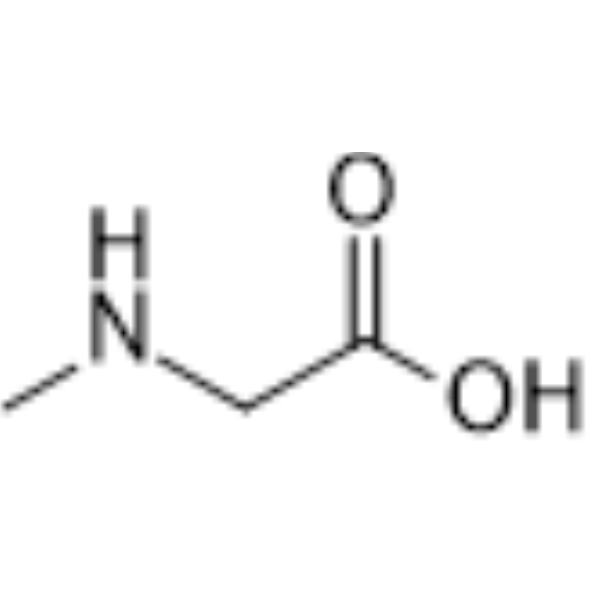
    Sarcosine
    3 Publications Verification

    N-Methylglycine; Sarcosin

    Endogenous Metabolite GlyT Cancer
    Sarcosine (N-Methylglycine), an endogenous amino acid, is a competitive glycine transporter type I (GlyT1) inhibitor and N-methyl-D-aspartate (NMDA) receptor co-agonist. Sarcosine increases the glycine concentration, resulting in an indirect potentiation of the NMDA receptor. Sarcosine is commonly used for the research of schizophrenia .
    Sarcosine
  • HY-N2311
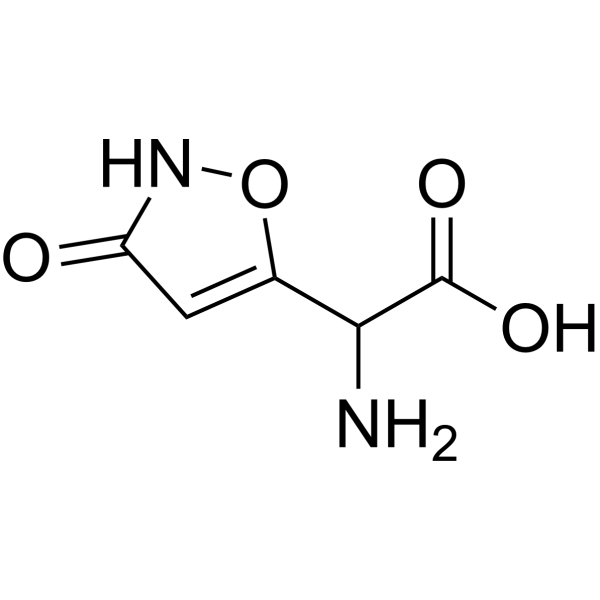
    Ibotenic acid
    5+ Cited Publications

    (RS)-Ibotenic acid; DL-Ibotenic acid

    iGluR Neurological Disease
    Ibotenic acid has agonist activity at both the N-methyl-D-aspartate (NMDA) and trans-ACPD or metabolotropic quisqualate (Qm) receptor sites.
    Ibotenic acid
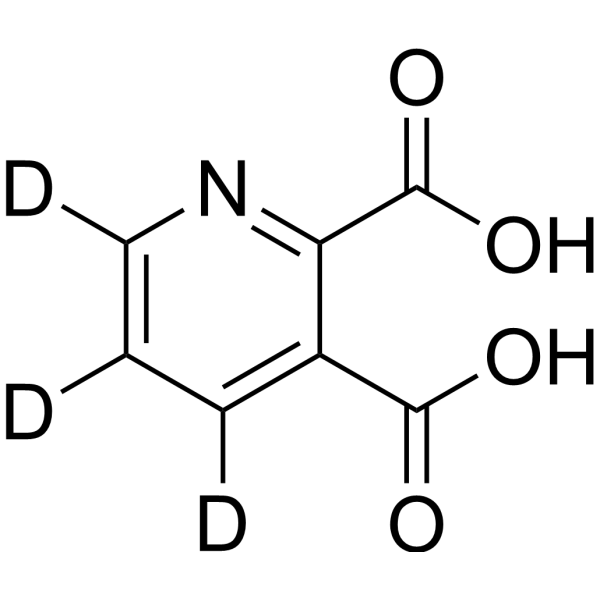
  • HY-100807S
    Quinolinic acid-d3
    2 Publications Verification

    Isotope-Labeled Compounds iGluR Endogenous Metabolite Reactive Oxygen Species (ROS) NO Synthase Apoptosis Neurological Disease Inflammation/Immunology
    Quinolinic acid-d3 is the deuterium labeled Quinolinic acid. Quinolinic acid, an endogenous metabolite of tryptophan, is a N-methyl-D-aspartate receptor (NMDA receptor) agonist. Quinolinic acid increases glutamate efflux, induces the generation of ROS, activates nitric oxide synthase, produces excessive NO, leading to calcium ion influx and neuronal apoptosis.
    Quinolinic acid-d3
  • HY-G0021

    Norclozapine; Desmethylclozapine; Normethylclozapine

    mAChR Opioid Receptor Drug Metabolite Virus Protease Infection
    N-Desmethylclozapine is a major active metabolite of the atypical antipsychotic agent Clozapine. N-Desmethylclozapine is a potent, allosteric and partial M1 receptors agonist (EC50=115 nM) and is able to potentiate hippocampal N-methyl-d-aspartate (NMDA) receptor currents through M1 receptor activation. N-Desmethylclozapine is also a δ-opioid agonist .
    N-Desmethylclozapine
  • HY-B1487

    Tricyclamol hydrochloride; (±)-Procyclidine hydrochloride

    iGluR mAChR Neurological Disease
    Procyclidine (Tricyclamol, (±)-Procyclidine) hydrochloride , an anticholinergic agent, is a muscarinic receptor antagonist that also has the properties of an N-methyl-D-aspartate (NMDA) antagonist. Procyclidine hydrochloride can be used in studies of Parkinson's disease and related psychiatric disorders such as Soman-induced epilepsy .
    Procyclidine hydrochloride
  • HY-B0340

    DM9384; DZL-221

    nAChR iGluR mGluR PKC GABA Receptor Calcium Channel Neurological Disease
    Nefiracetam is a cognition-enhancing agent. Nefiracetam is an activator of nAChR, N-methyl-D-aspartate receptor (NMDAR), mGluR5, PKC, gamma-aminobutyric acid (GABA), and N/L-type Ca 2+ channels. Nefiracetam promotes neuroplasticity and enhances neuroprotection. Nefiracetam can be used in Alzheimer's disease, epilepsy, and cerebral ischemia research .
    Nefiracetam
  • HY-17387
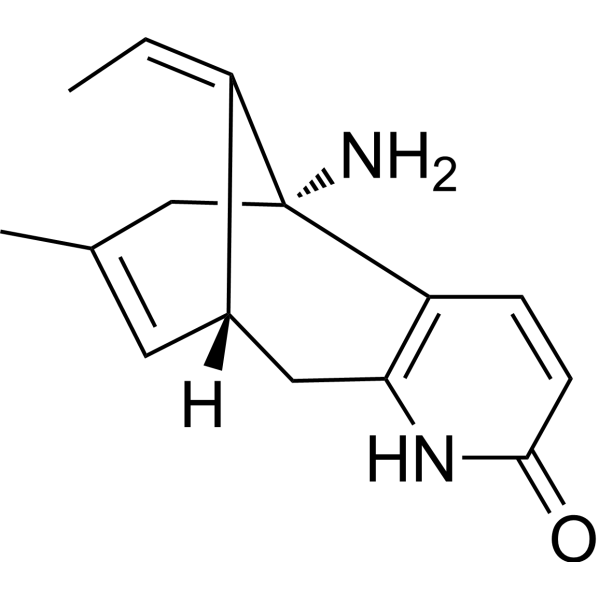
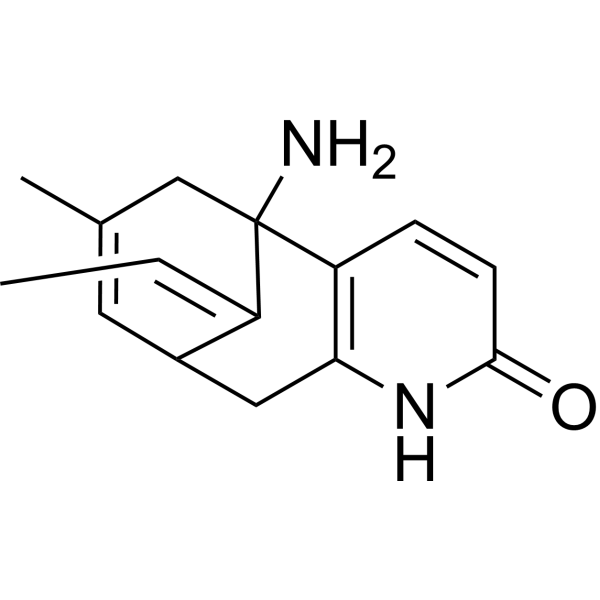
    (-)-Huperzine A
    5+ Cited Publications

    Huperzine A

    Cholinesterase (ChE) iGluR Infection Neurological Disease Inflammation/Immunology
    (-)-Huperzine A (Huperzine A) is an alkaloid isolated from Huperzia serrata, with neuroprotective activity. (-)-Huperzine A is a potent, highly specific, reversible and blood-brain barrier penetrant inhibitor of acetylcholinesterase (AChE), with an IC50 of 82 nM. (-)-Huperzine A also is non-competitive antagonist of N-methyl-D-aspartate glutamate (NMDA) receptor. (-)-Huperzine A is developed for the research of neurodegenerative diseases, including Alzheimer’s disease .
    (-)-Huperzine A
  • HY-109164

    AGN-241751; GATE-251

    iGluR Neurological Disease
    Zelquistinel (AGN-241751) is the orally active N-methyl-D-aspartate (NMDA) receptor partial agonist used for the research of depression, anxiety and other related psychiatric disorders .
    Zelquistinel
  • HY-100811
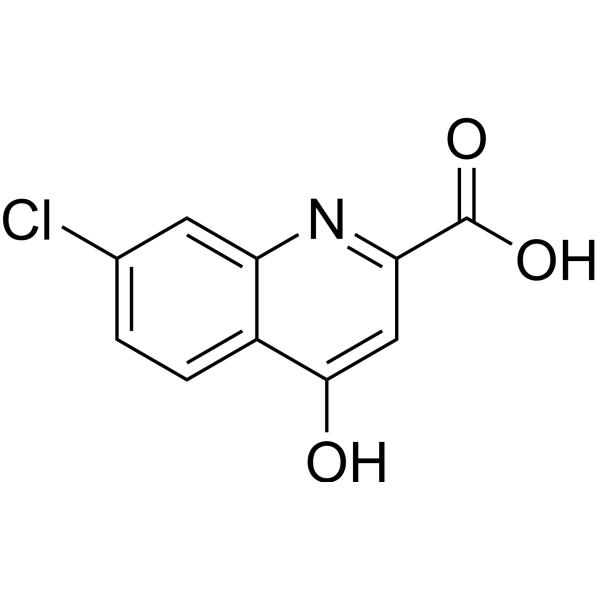
    7-Chlorokynurenic acid
    4 Publications Verification

    7-CKA

    iGluR Neurological Disease
    7-Chlorokynurenic acid (7-CKA) is a potent and selective antagonist of the glycine B coagonist site of the N-methyl-D-aspartate (NMDA) receptor (IC50=0.56 μM). 7-Chlorokynurenic acid is also a potent inhibitor of the reuptake of glutamate into synaptic vesicles with a Ki of 0.59 μM. 7-Chlorokynurenic acid has potent antinociceptive actions after neuraxial delivery .
    7-Chlorokynurenic acid
  • HY-100811A
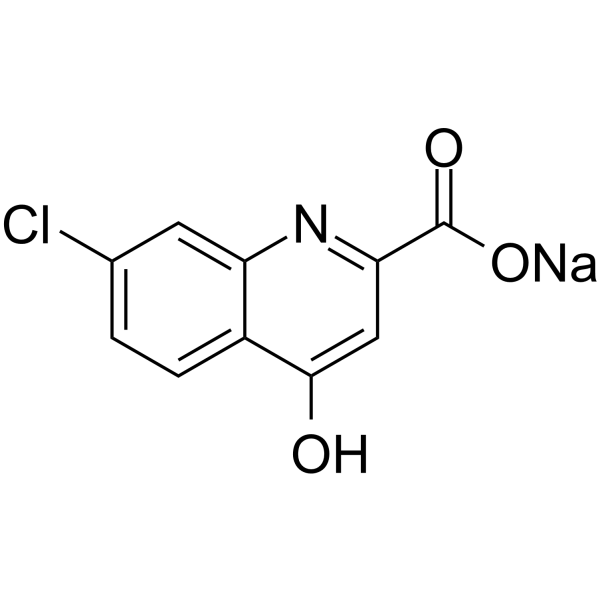
    7-Chlorokynurenic acid sodium salt
    4 Publications Verification

    7-CKA sodium salt

    iGluR Neurological Disease
    7-Chlorokynurenic acid sodium salt (7-CKA sodium salt) is a potent and selective antagonist of the glycine B coagonist site of the N-methyl-D-aspartate (NMDA) receptor (IC50=0.56 μM). 7-Chlorokynurenic acid sodium salt is also a potent inhibitor of the reuptake of glutamate into synaptic vesicles with a Ki of 0.59 μM. 7-Chlorokynurenic acid sodium salt has potent antinociceptive actions after neuraxial delivery .
    7-Chlorokynurenic acid sodium salt
  • HY-139580

    CAD-9303

    iGluR Neurological Disease
    Plazinemdor (CAD-9303) is a positive allosteric modulator of N-methyl-D-aspartate (NMDA) receptors, which is used in the research of neurological diseases .
    Plazinemdor
  • HY-15084A

    (-)-MK-801 maleate

    iGluR Neurological Disease
    (-)-Dizocilpine maleate ((-)-MK-801 maleate) is a less active (-)-enantiomer of Dizocilpine. (-)-Dizocilpine maleate is a selective and non-competitive N-methyl-D-aspartate (NMDA) receptor antagonist with a Ki of 211.7 nM. (-)-Dizocilpine maleate has antidepressant effects .
    (-)-Dizocilpine maleate
  • HY-106441A

    MK-0657; CERC-301

    iGluR Neurological Disease
    Rislenemdaz (CERC-301) is an orally bioavailable and selective N-methyl-D-aspartate (NMDA) receptor subunit 2B (GluN2B) antagonist with Ki and IC 50 of 8.1 nM and 3.6 nM, respectively.
    Rislenemdaz
  • HY-100807R
    Quinolinic acid (Standard)
    5+ Cited Publications

    Reference Standards iGluR Endogenous Metabolite Reactive Oxygen Species (ROS) NO Synthase Apoptosis Neurological Disease Inflammation/Immunology
    Quinolinic acid (Standard) is the analytical standard of Quinolinic acid. This product is intended for research and analytical applications. Quinolinic acid, an endogenous metabolite of tryptophan, is a N-methyl-D-aspartate receptor (NMDA receptor) agonist. Quinolinic acid increases glutamate efflux, induces the generation of ROS, activates nitric oxide synthase, produces excessive NO, leading to calcium ion influx and neuronal apoptosis.
    Quinolinic acid (Standard)
  • HY-17388
    (±)-Huperzine A
    1 Publications Verification

    Drug Isomer Cholinesterase (ChE) iGluR Neurological Disease
    (±)-Huperzine A is the racemate of (-)-Huperzine A (HY-17387). (-)-Huperzine A is an alkaloid isolated from Huperzia serrata, with neuroprotective activity. (-)-Huperzine A is a potent, highly specific, reversible and blood-brain barrier penetrant inhibitor of acetylcholinesterase (AChE), with an IC50 of 82 nM. (-)-Huperzine A also is non-competitive antagonist of N-methyl-D-aspartate glutamate (NMDA) receptor. (-)-Huperzine A is developed for the research of neurodegenerative diseases, including Alzheimer’s disease .
    (±)-Huperzine A
  • HY-101178

    iGluR Neurological Disease
    L-689560 is a potent N-methyl-D-aspartate (NMDA) receptor antagonist at the GluN1 glycine binding site. L-689560 is widely used as a radiolabeled ligand in binding studies and used for study the roles of NMDA receptors in normal neurological processes as well as in diseases .
    L-689560
  • HY-101037S1

    N-Methylglycine-d3; Sarcosin-d3

    Isotope-Labeled Compounds Endogenous Metabolite GlyT Cancer
    Sarcosine-d3 is the deuterium labeled Sarcosine. Sarcosine (N-Methylglycine), an endogenous amino acid, is a competitive glycine transporter type I (GlyT1) inhibitor and N-methyl-D-aspartate (NMDA) receptor co-agonist. Sarcosine increases the glycine concentration, resulting in an indirect potentiation of the NMDA receptor. Sarcosine is commonly used for the research of schizophrenia .
    Sarcosine-d3
  • HY-41239

    Drug Intermediate Others
    1-Bromo-3,5-dimethyladamantane is an intermediate for Memantine (HY-B0591). Memantine is an orally active, noncompetitive N-methyl-D-aspartate receptor (NMDAR) antagonist. Memantine can be used for the research of moderate-to-severe Alzheimer's disease (AD).
    1-Bromo-3,5-dimethyladamantane
  • HY-109097

    SP-8203

    MMP iGluR Neurological Disease Inflammation/Immunology Cancer
    Otaplimastat (SP-8203), a matrix metalloproteinase (MMP) inhibitor, blocks N-methyl-D-aspartate (NMDA) receptor-mediated excitotoxicity in a competitive manner. Otaplimastat also exhibits anti-oxidant activity. Otaplimastat can be used for the research of brain ischemic injury .
    Otaplimastat
  • HY-136299
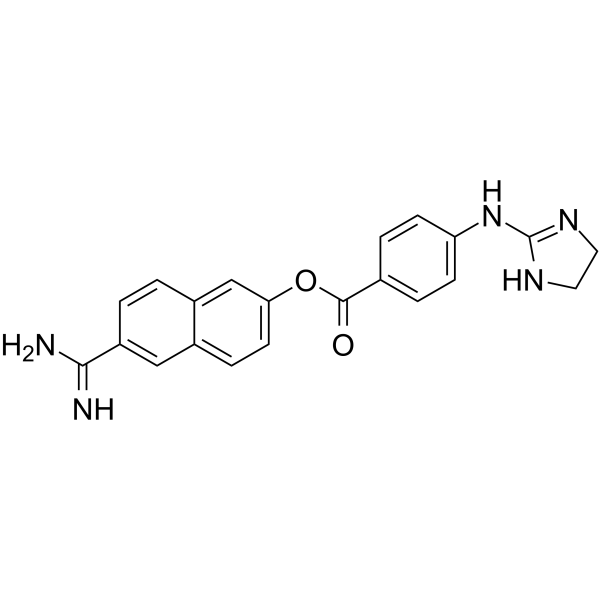
    Sepimostat
    2 Publications Verification

    FUT-187 free base

    iGluR Neurological Disease
    Sepimostat (FUT-187 free base) exhibits neuroprotective activity via NR2B N-methyl-D-aspartate receptor antagonism at the Ifenprodil-binding site of the NR2B subunit. Sepimostat inhibits the Ifenprodil binding with a Ki value of 27.7?μM .
    Sepimostat
  • HY-N0368S
    Linalool-d3
    1 Publications Verification

    Apoptosis iGluR Endogenous Metabolite Cancer
    Linalool-d3 is the deuterium labeled Linalool . Linalool is natural monoterpene in essential olis of coriander, acts as a competitive antagonist of Nmethyl d-aspartate (NMDA) receptor, with anti-tumor, anti-cardiotoxicity activity .Linalool is a PPARα ligand that reduces plasma TG levels and rewires the hepatic transcriptome and plasma metabolome .
    Linalool-d3
  • HY-117483

    iGluR Neurological Disease
    Gly-Pro-Glu is a neuroactive peptide with a potent action on acetylcholine release. Gly-Pro-Glu is the N-terminal tripeptide of insulin-like growth factor-I. Gly-Pro-Glu inhibits glutamate binds to N-methyl-D-aspartate (NMDA) receptor with an IC50 value of 14.7 μM. Gly-Pro-Glu can be used for the research of neuroprotection .
    Gly-Pro-Glu
  • HY-79136
    Pasireotide L-aspartate salt
    5+ Cited Publications

    SOM230 L-aspartate

    Somatostatin Receptor Endocrinology Cancer
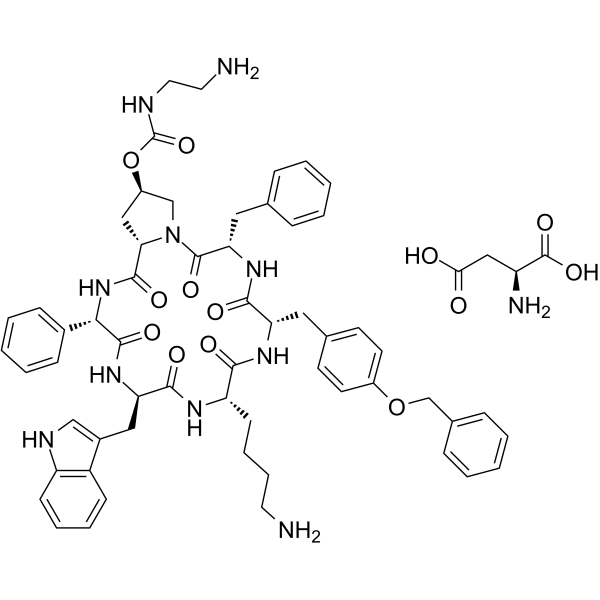
    Pasireotide (SOM230) L-aspartate salt, a long-acting cyclohexapeptide somatostatin analogue, can improve agonist activity at somatostatin receptors (subtypes sst1/2/3/4/5, pKi=8.2/9.0/9.1/<7.0/9.9, respectively). Pasireotide L-aspartate salt exhibits antisecretory, antiproliferative, and proapoptotic activity .
    Pasireotide L-aspartate salt
  • HY-153129

    Prostaglandin Receptor Endocrinology
    EP2 receptor antagonist-2 (CID891729) is an antagonist of EP2 receptor. EP2 receptor antagonist-2 inhibits the EP2 receptor activation induced by PGE2. EP2 receptor antagonist-2 also suppresses lactate dehydrogenase (LDH) release induced by N-methyl-D-aspartate (NMDA) .
    EP2 receptor antagonist-2
  • HY-139048

    iGluR Neurological Disease
    Fluoroethylnormemantine, a derivative of Memantine, is an antagonist of the N-methyl-D-aspartate (NMDA) receptor. [ 18F]-Fluoroethylnormemantine can be used as a positron emission tomography (PET) tracer. Fluoroethylnormemantine exhibits anti-amnesic, neuroprotective, antidepressant-like and fear-attenuating effects .
    Fluoroethylnormemantine
  • HY-100714C
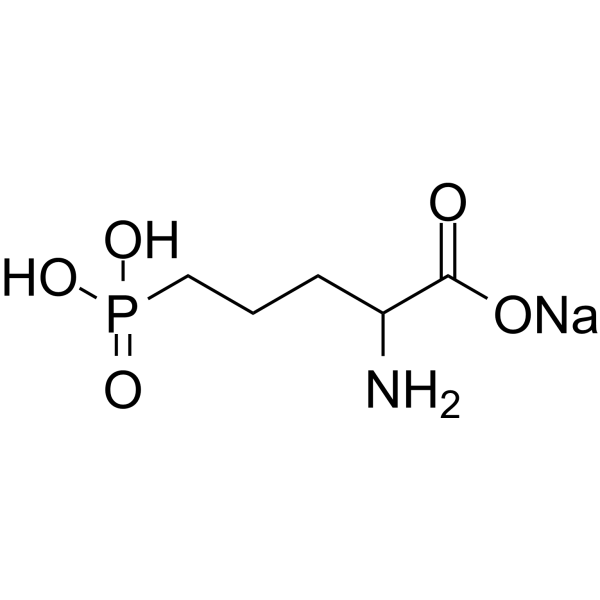
    DL-AP5 sodium
    3 Publications Verification

    2-APV sodium; DL-2-Amino-5-phosphonovaleric acid sodium

    iGluR Neurological Disease Inflammation/Immunology
    DL-AP5 (2-APV) sodium is a competitive NMDA (N-methyl-D-aspartate) receptor antagonist. DL-AP5 sodium shows significantly antinociceptive activity. DL-AP5 sodium specifically blocks on channels in the rabbit retina .
    DL-AP5 sodium
  • HY-100807S2

    Isotope-Labeled Compounds iGluR Endogenous Metabolite Reactive Oxygen Species (ROS) NO Synthase Apoptosis Neurological Disease Inflammation/Immunology
    Quinolinic acid-13C4, 15N is an isotopic labeled Quinolinic acid (HY-100807). Quinolinic acid, an endogenous metabolite of tryptophan, is a N-methyl-D-aspartate receptor (NMDA receptor) agonist. Quinolinic acid increases glutamate efflux, induces the generation of ROS, activates nitric oxide synthase, produces excessive NO, leading to calcium ion influx and neuronal apoptosis.
    Quinolinic acid-13C4,15N
  • HY-P5911

    iGluR Inflammation/Immunology
    GluN1 (359-378) is an anti-N-methyl-D-aspartate receptor (NMDAR) peptide. GluN1 (359-378) can cross the blood-brain barrier. GluN1 (359-378) can be used to study anti-NMDAR encephalitis therapy targeting the immune system .
    GluN1(359-378)
  • HY-100822

    (+)-HA-966

    iGluR Neurological Disease
    (R)-(+)-HA-966 ((+)-HA-966) is a partial agonist/antagonist of glycine site of the N-methyl-D-aspartate (NMDA) receptor complex. (R)-(+)-HA-966 selectively blocks the activation of the mesolimbic dopamine system by amphetamine . (R)-(+)-HA-966 can cross the blood-brain barrier and has the potential for neuropathic and acute pain .
    (R)-(+)-HA-966
  • HY-148825

    iGluR Histamine Receptor Potassium Channel Cytochrome P450 Adrenergic Receptor Metabolic Disease Inflammation/Immunology Cancer
    NP10679 is a selective, pH dependent GluN2B subunit-specific N-methyl-D-aspartate (NMDA) receptor inhibitor with high oral bioavailability and good brain penetration. NP10679 inhibits GluN2B with IC50s of 23 and 142 nM at pH 6.9 and 7.6, respectively. NP10679 is a histamine H1 antagonist and a hERG channel inhibitor with IC50s of 73 and 620 nM, respectively. NP10679 is a reversible inhibitor of human liver CYP enzymes .
    NP10679
  • HY-10711A

    (R)-NFPS hydrochloride

    GlyT Neurological Disease
    ALX-5407 ((R)-NFPS) hydrochloride is a selective and orally active glycine transporter GlyT1 inhibitor with an IC50 value of 3 nM. ALX-5407 hydrochloride can be used the research of N-methyl-D-aspartate-receptor function and schizophrenia .
    ALX-5407 hydrochloride
  • HY-W654331

    2,3-Pyridinedicarboxylic Acid-13C3,15N

    Isotope-Labeled Compounds iGluR Endogenous Metabolite Inflammation/Immunology
    Quinolinic acid- 13C3, 15N (2,3-Pyridinedicarboxylic Acid- 13C3, 15N) is the 13C- and 15N-labeled Quinolinic acid (HY-100807). Quinolinic acid is an endogenous N-methyl-D-aspartate (NMDA) receptor agonist synthesized from L-tryptophan via the kynurenine pathway and thereby has the potential of mediating N-methyl-D-aspartate neuronal damage and dysfunction .
    Quinolinic acid-13C3, 15N
  • HY-15086

    CGS 19755

    iGluR Neurological Disease
    Selfotel (CGS 19755) is a selective and competitive antagonist at N-methyl-D-aspartate (NMDA)-preferring receptor. CGS 19755 inhibits the binding of [3H]-3-(2-carboxypiperazin-4-yl)propyl-1-phosphonic acid to NMDA-type receptors with an IC50 of 50 nM .
    Selfotel
  • HY-101037R

    N-Methylglycine (Standard); Sarcosin (Standard)

    Reference Standards Endogenous Metabolite GlyT Cancer
    Sarcosine (Standard) is the analytical standard of Sarcosine. This product is intended for research and analytical applications. Sarcosine (N-Methylglycine), an endogenous amino acid, is a competitive glycine transporter type I (GlyT1) inhibitor and N-methyl-D-aspartate (NMDA) receptor co-agonist. Sarcosine increases the glycine concentration, resulting in an indirect potentiation of the NMDA receptor. Sarcosine is commonly used for the research of schizophrenia .
    Sarcosine (Standard)
  • HY-N0368R
    Linalool (Standard)
    4 Publications Verification

    Reference Standards iGluR Apoptosis Endogenous Metabolite Cardiovascular Disease Cancer
    Linalool (Standard) is the analytical standard of Linalool. This product is intended for research and analytical applications. Linalool is natural monoterpene in essential olis of coriander, acts as a competitive antagonist of Nmethyl d-aspartate (NMDA) receptor, with anti-tumor, anti-cardiotoxicity activity .Linalool is a PPARα ligand that reduces plasma TG levels and rewires the hepatic transcriptome and plasma metabolome .
    Linalool (Standard)
  • HY-100807S1

    Isotope-Labeled Compounds iGluR Endogenous Metabolite Reactive Oxygen Species (ROS) NO Synthase Apoptosis Neurological Disease
    Quinolinic acid- 13C7 is the 13C labeled Quinolinic acid (HY-100807). Quinolinic acid, an endogenous metabolite of tryptophan, is a N-methyl-D-aspartate receptor (NMDA receptor) agonist. Quinolinic acid increases glutamate efflux, induces the generation of ROS, activates nitric oxide synthase, produces excessive NO, leading to calcium ion influx and neuronal apoptosis.
    Quinolinic acid-13C7
  • HY-101037S

    N-Methylglycine-15N; Sarcosin-15N

    Endogenous Metabolite GlyT Cancer
    Sarcosine- 15N is the 15N-labeled Sarcosine. Sarcosine (N-Methylglycine), an endogenous amino acid, is a competitive glycine transporter type I (GlyT1) inhibitor and N-methyl-D-aspartate (NMDA) receptor co-agonist. Sarcosine increases the glycine concentration, resulting in an indirect potentiation of the NMDA receptor. Sarcosine is commonly used for the research of schizophrenia .
    Sarcosine-15N
  • HY-177127

    iGluR Neurological Disease
    Satoprodil (example 2) is a potent N-methyl-D-aspartate (NMDA) receptor negative allosteric modulator with an IC50 value of 123 nM for NR2B .
    Satoprodil
  • HY-W835175

    iGluR Neurological Disease
    Neramexane hydrochloride is an oral N-methyl-D-aspartate (NMDA) receptor antagonist, as a potential neuroprotectant for various central nervous system disorders, including Alzheimer's disease, and for the potential study of drug and alcohol dependence, and pain.
    Neramexane hydrochloride
  • HY-N11061

    iGluR Neurological Disease
    Withaphysalin D is a selective antagonist against the N-methyl-D-aspartate receptor (NMDAR) containing GluN2B. Withaphysalin D can be isolated from water lilies and has neuroprotective properties. Withaphysalin D is able to cross the blood-brain barrier .
    Withaphysalin D
  • HY-G0021S1

    Norclozapine-d8 hydrochloride; Desmethylclozapine-d8 hydrochloride; Normethylclozapine-d8 hydrochloride

    mAChR Opioid Receptor Drug Metabolite Virus Protease Infection
    N-Desmethylclozapine-d8 (hydrochloride) is the deuterium labeled N-Desmethylclozapine hydrochloride. N-Desmethylclozapine hydrochloride is a major active metabolite of the atypical antipsychotic agent Clozapine. N-Desmethylclozapine hydrochloride is a potent, allosteric and partial M1 receptors agonist (EC50=115 nM) and is able to potentiate hippocampal N-methyl-d-aspartate (NMDA) receptor currents through M1 receptor activation. N-Desmethylclozapine hydrochloride is also a δ-opioid agonist .
    N-Desmethylclozapine-d8 hydrochloride
  • HY-B1487R

    Tricyclamol hydrochloride (Standard); (±)-Procyclidine hydrochloride (Standard)

    Reference Standards iGluR mAChR Neurological Disease
    Procyclidine (hydrochloride) (Standard) is the analytical standard of Procyclidine (hydrochloride). This product is intended for research and analytical applications. Procyclidine (Tricyclamol, (±)-Procyclidine) hydrochloride , an anticholinergic agent, is a muscarinic receptor antagonist that also has the properties of an N-methyl-D-aspartate (NMDA) antagonist. Procyclidine hydrochloride can be used in studies of Parkinson's disease and related psychiatric disorders such as Soman-induced epilepsy .
    Procyclidine hydrochloride (Standard)
  • HY-P1287

    iGluR Neurological Disease
    Conantokin-T is a γ-carboxyglutamate-containing, N-methyl-D-aspartate (NMDA) antagonist peptidewith an IC50 value of 2 μM. Conantokin-T inhibits NMDA receptor-mediated calcium influx in central nervous system neurons. Conantokin-T can be purified from the venom of the fish-hunting cone snail, Conus tulipa .
    Conantokin-T
  • HY-10711

    (R)-NFPS

    GlyT Neurological Disease
    ALX-5407 ((R)-NFPS) is a selective and orally active glycine transporter GlyT1 inhibitor with an IC50 value of 3 nM. ALX-5407 can be used the research of N-methyl-D-aspartate-receptor function and schizophrenia .
    ALX-5407
  • HY-114550

    iGluR Neurological Disease
    LY339434 is a potent and selective agonist for the hydrochloride receptor GluR5. LY339434 affects the rapid death of neurons through n-methyl-D-aspartate (NMDA) receptors .
    LY339434
  • HY-100667
    UBP608
    1 Publications Verification

    iGluR Neurological Disease
    UBP608 is a potent N-Methyl-D-aspartate receptors (NMDARs) negative allosteric modulator. UBP608 has the potential for the research of neurological disorders .
    UBP608

Inquiry Online

Your information is safe with us. * Required Fields.

Salutation


Country or Region *

Applicant Name *


Organization Name *

Department *


Email Address *


Product Name *

Cat. No.


Requested quantity *

Phone Number *


Remarks

Inquiry Online

Inquiry Information

Product Name:
Cat. No.:
Quantity:
MCE Japan Authorized Agent:

