15 Results for "

benzoylphenylurea

" in MedChemExpress (MCE) Product Catalog:
Products (15)

15 Results for "benzoylphenylurea" in MCE Product Catalog:

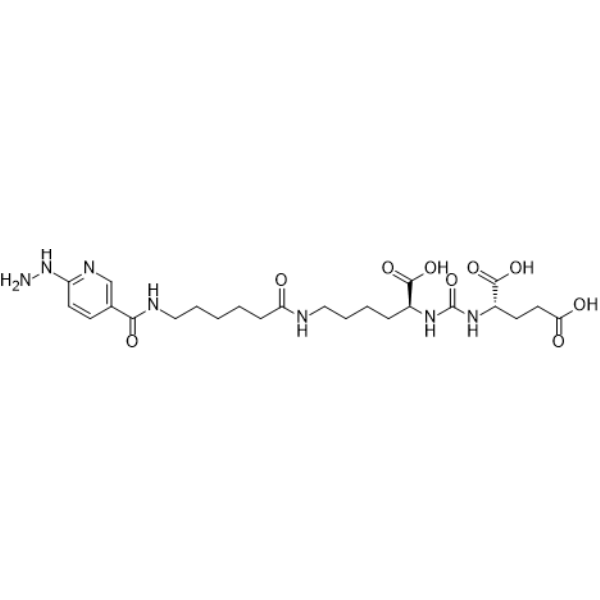
Cat. No.: HY-P5290
CAS No.: 2213408-17-2
Research Areas:  

Cancer

HYNIC-PSMA is a ligand for molecular imaging of tumors. Hynic-psma consists of two components: HYNIC (6-hydrazinonicotinamide) and PSMA (Prostate-Specific Membrane Antigen). HYNIC is a compound used to attach radioactive isotopes to targeted molecules, such as 188Re-HYNIC-PSMA. PSMA is a membrane antigen that is specifically expressed on the surface of prostate cancer cells. HYNIC-PSMA can be used in prostate cancer research . HYNIC-PSMA can be used for the synthesis/research of Radionuclide-Drug Conjugates (RDCs).
loading...
    loading...
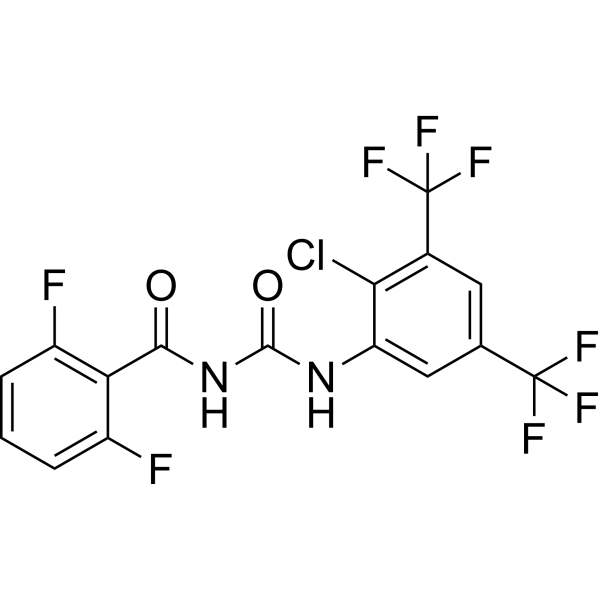
Cat. No.: HY-119902
CAS No.: 201593-84-2
Purity:  99.38%
Target:  

Insecticide

Research Areas:  

Infection

Bistrifluron is a benzoylphenylurea compound and orally active insecticide with activity against termites. At a concentration of 5,000 ppm, Bistrifluron acts as a bait toxicant against workers of the Formosan subterranean termite (Coptotermes formosanus), and also inhibits the grooming behavior of termites and impairs their motor ability prematurely .
loading...
    loading...
Cat. No.: HY-P5292A
CAS No.: 2375849-11-7
Research Areas:  

Cancer

HYNIC-iPSMA TFA is a PSMA-targeted ligand for tumor molecular imaging, with a Ki value of 3.11 nM. HYNIC-iPSMA TFA consists of two components: HYNIC (6-hydrazinonicotinamide) and iPSMA (Inhibitor of Prostate-Specific Membrane Antigen). HYNIC serves as a chelating moiety to link radionuclides to the targeting molecule; iPSMA is a specific inhibitor that targets Prostate-Specific Membrane Antigen (PSMA). 68Ga-labeled iPSMA is used for prostate cancer detection via PET imaging, while the further developed 99mTc-EDDA/HYNIC-iPSMA TFA exhibits excellent specificity and sensitivity. HYNIC-iPSMA TFA can be used for the synthesis and research of radionuclide-conjugated drugs (RDC) .
loading...
    loading...
Cat. No.: HY-P10563
CAS No.: 2580150-96-3
Synonyms: BHV-1100
Target:  

CD38 IFNAR

Research Areas:  

Cancer

Noraramtide (BHV-1100) is an antibody-recruiting molecule. Noraramtide binds to CD38 and recruits natural killer (NK) cells to mediate antibody-dependent cellular cytotoxicity. Noraramtide enhances the capacity of autologous cytokine-induced memory-like (CIML) NK cells to produce IFNγ and CD107a, thereby improving their cytotoxicity against multiple myeloma cells. Noraramtide can be used in the research of multiple myeloma .
loading...
    loading...
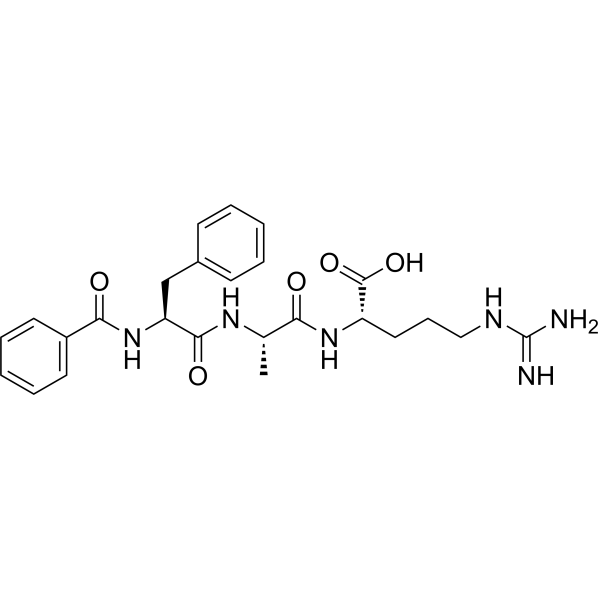
Cat. No.: HY-P3556
CAS No.: 89020-38-2
Target:  

Inhibitory Antibodies

Research Areas:  

Others

Benzoyl-Phe-Ala-Arg is a peptide.
loading...
    loading...
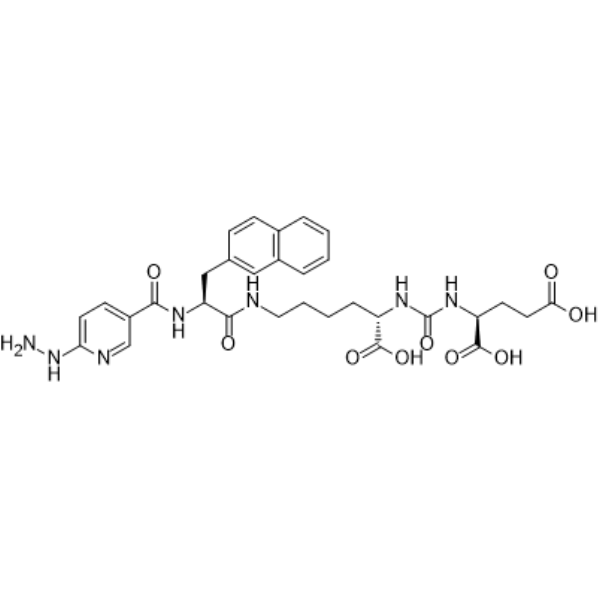
Cat. No.: HY-P5292
CAS No.: 2192215-74-8
Research Areas:  

Cancer

HYNIC-iPSMA is a PSMA-targeted ligand for tumor molecular imaging, with a Ki value of 3.11 nM. HYNIC-iPSMA consists of two components: HYNIC (6-hydrazinonicotinamide) and iPSMA (Inhibitor of Prostate-Specific Membrane Antigen). HYNIC acts as a chelating moiety to link radionuclides to the targeting molecule; iPSMA is a specific inhibitor that targets Prostate-Specific Membrane Antigen (PSMA). 68Ga-labeled iPSMA is used for prostate cancer detection via PET imaging, while the further developed 99mTc-EDDA/HYNIC-iPSMA TFA exhibits excellent specificity and sensitivity. HYNIC-iPSMA can be used for the synthesis and research of radionuclide-conjugated drugs (RDC) .
loading...
    loading...
Cat. No.: HY-P3350
CAS No.: 2892148-58-0
Target:  

Bacterial

Research Areas:  

Infection

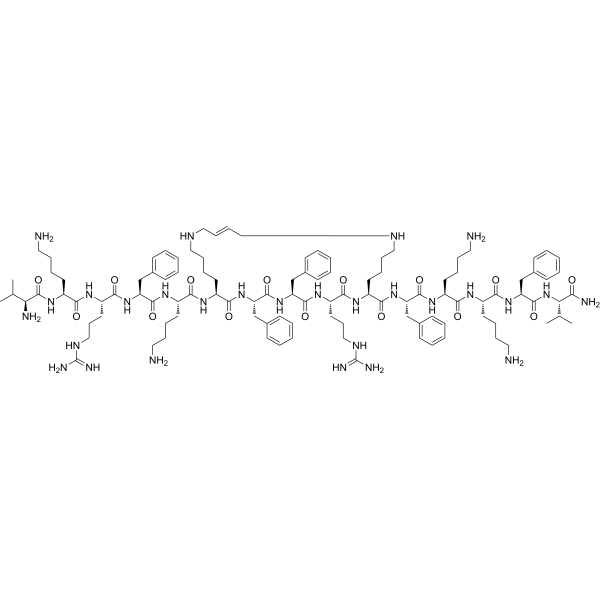
LS-BF1 is a stable and low toxic cationic antimicrobial peptide. LS-BF1 displays broad spectrum of antibacterial activity, including the challenging ESKAPE pathogens, by cell membrane disruptive mechanism. LS-BF1 shows good in vivo efficacy for elimination of bacteria in a mouse infection model[1].
loading...
    loading...
Cat. No.: HY-106825
CAS No.: 51213-99-1
Purity:  99.53%
Target:  

Microtubule/Tubulin

Research Areas:  

Cancer

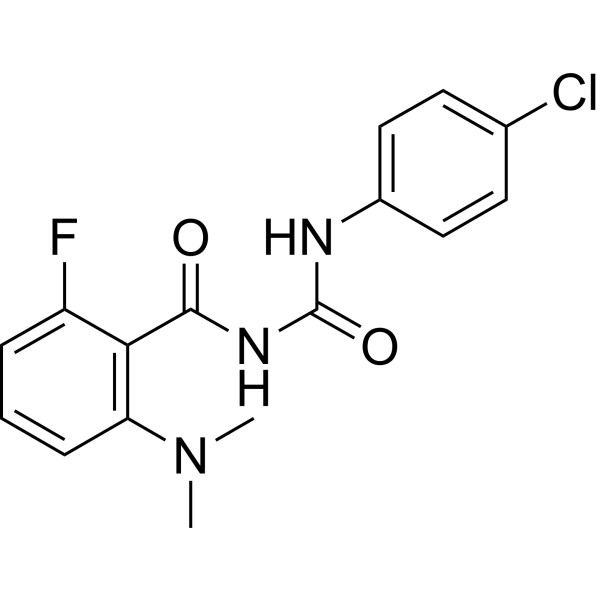
Clanfenur is a substituted benzoylphenylurea, an analogue of the pesticide fenfluramide, with potential antineoplastic activity. Clanfenur can bind to the colchicine-binding site on β-tubulin, inhibit microtubule polymerization, and thus prevent tumor cell replication .
loading...
    loading...
Cat. No.: HY-105168
CAS No.: 157380-72-8
Target:  

Endothelin Receptor

Research Areas:  

Cardiovascular Disease

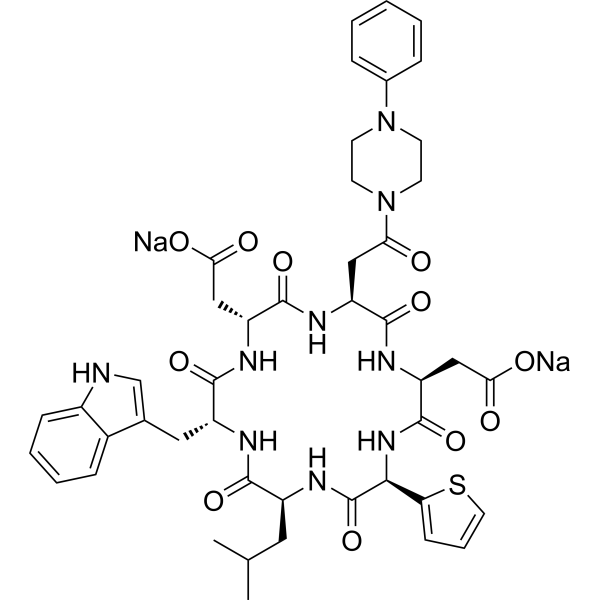
TAK 044 is an antagonist of Endothelin Receptor. TAK 044 strongly inhibits ET-induced deterioration in various animal models. TAK 044 can be used in study ET-related diseases such as acute myocardial infarction,acute renal failure, acute hepatic malfunction, and subarachnoid hemorrhage .
loading...
    loading...
Cat. No.: HY-106787
CAS No.: 105128-93-6
Target:  

DNA/RNA Synthesis

Research Areas:  

Cancer

HO 221 is an orally active benzoylphenylurea derivative with antitumor activity. HO 221 can inhibit the activity of mammalian DNA polymerase alpha. HO 221 can induce G1 phase arrest. HO 221 can be used for the research of cancer, such as leukemia .
loading...
    loading...
Cat. No.: HY-117481
CAS No.: 134742-19-1
Target:  

Apoptosis

Research Areas:  

Cancer

NSC-639829 is a Benzoylphenylurea (BPU) analogue which has antitumor activity. NSC-639829 is promising for research of refractory metastatic cancer .
loading...
    loading...
Cat. No.: HY-119902R
CAS No.: 201593-84-2
Research Areas:  

Infection

Bistrifluron (Standard) is the analytical standard of Bistrifluron. This product is intended for research and analytical applications. Bistrifluron is a benzoylphenylurea compound and orally active insecticide with activity against termites. At a concentration of 5,000 ppm, Bistrifluron acts as a bait toxicant against workers of the Formosan subterranean termite (Coptotermes formosanus), and also inhibits the grooming behavior of termites and impairs their motor ability prematurely .
loading...
    loading...
Cat. No.: HY-P1981
CAS No.: 157381-54-9
Target:  

HIV Protease

Research Areas:  

Infection Inflammation/Immunology

Rpi-856 A is a competitive inhibitor of HIV-1 protease and HTLV-I protease, with an IC50 of 37 nM against HIV-1 protease and an IC50 of 27 nM against HTLV-I protease. Rpi-856 A inhibits Pepsin with an IC50 of 1.9 μM . Rpi-856 A does not inhibit chymosin, trypsin, chymotrypsin, papain, bromelain, thermolysin, prolyl endopeptidase, carboxypeptidase A or carboxypeptidase B. Rpi-856 A can be used in the research of acquired immunodeficiency syndrome (AIDS) and related diseases, as well as HIV infection .
loading...
    loading...
Cat. No.: HY-P1982
CAS No.: 157381-55-0
Rpi-856 C is an Aspartic protease inhibitor, with an IC50 of 5.5 nM against HIV-1 protease, 9.2 nM against HTLV-I protease, 2.0 μM against Cathepsin D, and 4.8 μM against Pepsin. Rpi-856 C is produced by the Streptomyces strain AL-322. Rpi-856 C does not inhibit chymosin, trypsin, chymotrypsin, papain, bromelain, thermolysin, prolyl endopeptidase, carboxypeptidase A or carboxypeptidase B. Rpi-856 C can be used in the research of acquired immunodeficiency syndrome (AIDS) and related diseases, as well as HIV infection .
loading...
    loading...
Cat. No.: HY-P4948
CAS No.: 1926163-49-6
Research Areas:  

Others

Coumarin-phalloidin is a kind of phalloidin labeled with Coumarin (HY-N0709). Coumarin-phalloidin is a new type of actin probe that can be used for triple immunofluorescence microscopic observation of the cell skeleton .
loading...
    loading...
  • 1

