8 Results for "

chronic liver disorder

" in MedChemExpress (MCE) Product Catalog:
Products (8)

8 Results for "chronic liver disorder" in MCE Product Catalog:

2
2 Cited Publications
Cat. No.: HY-N0576
CAS No.: 13190-97-1
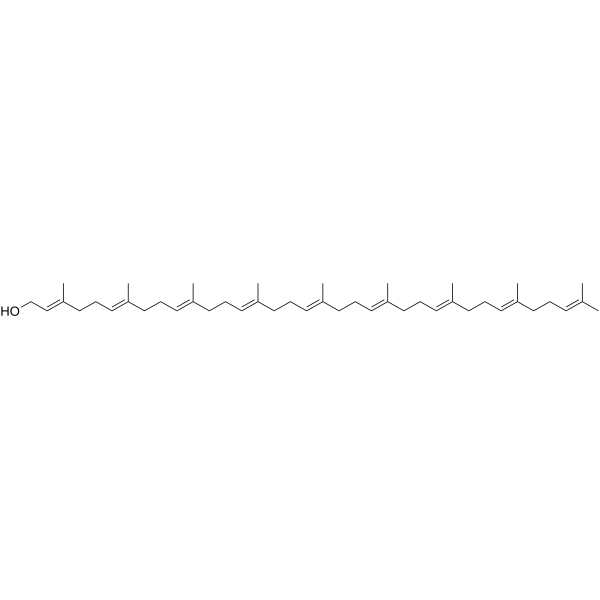
Solanesol is an orally active aliphatic terpene alcohol. Solanesol is mainly found in tobacco and other Solanaceae plants. Solanesol induces HO-1 and Hsp70 expression, activates p38 and Akt signaling pathways, and inhibits Apoptosis (reduces caspase-3 and PARP cleavage). Solanesol has antioxidant, anti-inflammatory, and neuroprotective activities. Solanesol can be used in the research of Huntington's disease, alcoholic liver disease, chronic inflammatory pain, anxiety, Alzheimer's disease, and bipolar disorder .
loading...
    loading...
Cat. No.: HY-N0444
CAS No.: 117-02-2
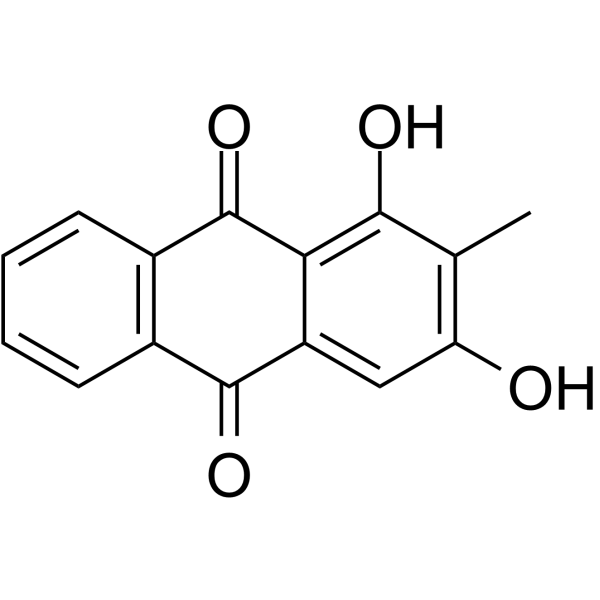
Rubiadin is an orally active free radical scavenger that inhibits the activation of the NF-κB pathway. Rubiadin inhibits osteoclast formation, bone resorption, lipid peroxidation, HBV DNA replication and cancer cell proliferation; reduces pro-inflammatory cytokine levels; induces cancer cell apoptosis; and possesses antifungal, antimalarial, antibacterial and anticonvulsant activities. Rubiadin can be used in the research of osteoporosis, acute inflammation, chronic inflammation, carbon tetrachloride-induced liver injury, Alzheimer's disease, breast cancer, iron overload disorders, hepatitis B virus infection, colon cancer, liver cancer, T-lymphocytic leukemia, cervical cancer, diabetic nephropathy, epileptic seizures, fungal infections, malaria and bacterial infections .
loading...
    loading...
Cat. No.: HY-172157
CAS No.: 2919766-97-3
Target:  

HDAC AMPK

Research Areas:  

Metabolic Disease

HDAC11-IN-2 (compound B6) is a high selective Histone Deacetylase 11 (HDAC11) inhibitor. HDAC11-IN-2 inhibits HDAC11 and HDAC8 with IC50s of 51.1 ×10 -3 μM and 5 μM, respectively. HDAC11-IN-2 inhibits denovolipogenesis (DNL) and promotes fatty acid oxidation, thus mitigating hepaticlipid accumulation and pathological symptoms in MASLD mice. HDAC11-IN-2 enhances the phosphorylation of AMPKα1 at Thr172 through the inhibition of HDAC11, consequently modulating DNL and fatty acid oxidation in the liver .
loading...
    loading...
Cat. No.: HY-N0444R
CAS No.: 117-02-2
Rubiadin (Standard) is the analytical standard of Rubiadin (HY-N0444). This product is intended for research and analytical applications. Rubiadin is an orally active free radical scavenger that inhibits the activation of the NF-κB pathway. Rubiadin inhibits osteoclast formation, bone resorption, lipid peroxidation, HBV DNA replication and cancer cell proliferation; reduces pro-inflammatory cytokine levels; induces cancer cell apoptosis; and possesses antifungal, antimalarial, antibacterial and anticonvulsant activities. Rubiadin can be used in the research of osteoporosis, acute inflammation, chronic inflammation, carbon tetrachloride-induced liver injury, Alzheimer's disease, breast cancer, iron overload disorders, hepatitis B virus infection, colon cancer, liver cancer, T-lymphocytic leukemia, cervical cancer, diabetic nephropathy, epileptic seizures, fungal infections, malaria and bacterial infections.
loading...
    loading...
Cat. No.: HY-N0576R
CAS No.: 13190-97-1
Solanesol (Standard) is the analytical standard of Solanesol (HY-N0576). This product is intended for research and analytical applications. Solanesol is an orally active aliphatic terpene alcohol. Solanesol is mainly found in tobacco and other Solanaceae plants. Solanesol induces HO-1 and Hsp70 expression, activates p38 and Akt signaling pathways, and inhibits Apoptosis (reduces caspase-3 and PARP cleavage). Solanesol has antioxidant, anti-inflammatory, and neuroprotective activities. Solanesol can be used in the research of Huntington's disease, alcoholic liver disease, chronic inflammatory pain, anxiety, Alzheimer's disease, and bipolar disorder .
loading...
    loading...
Cat. No.: HY-153993
CAS No.: 4918-96-1
Target:  

Bacterial

Research Areas:  

Endocrinology

Pyrocatechol sulfate is a dietary phenolic metabolite and uremic toxin. Pyrocatechol sulfate can be derived from diet and gut Bacterial metabolism. Plasma levels of Pyrocatechol sulfate are sensitive to alcohol exposure and withdrawal, and are negatively correlated with anxiety, depression, and craving for alcohol in severe alcohol use disorder. Pyrocatechol sulfate can be used in studies related to chronic kidney disease and severe alcohol use disorder .
loading...
    loading...
Cat. No.: HY-L087
3,741 compounds

Obesity is widely recognized as the largest and fastest growing public health problem and is associated with numerous chronic disorders including osteoarthritis, obstructive sleep apnea, gallstones, fatty liver disease, reproductive and gastrointestinal cancers, dyslipidemia, hypertension, type 2 diabetes, heart failure, coronary artery disease, stroke, etc. Although obesity has long been associated with serious health issues, it has only recently been regarded as a disease in the sense of being a specific target for medical therapy. Obesity may be viewed as the dysregulation of two physiological functions, appetite regulation and energy metabolism, which combine to create disordered energy balance. Consequently, developing obesity treatments that target novel pathways is a growing focus for both biopharmaceutical industries.

MCE Anti-Obesity Compound Library owns a unique collection of 3,741 compounds, which mainly target signaling pathway of controlling appetite, fatty acid metabolism and energy expenditure, etc. This library is a useful tool for discovery anti-obesity drugs.

Cat. No.: HY-153993A
Target:  

Bacterial

Research Areas:  

Endocrinology

Pyrocatechol sulfate TEA is a dietary phenolic metabolite and uremic toxin. Pyrocatechol sulfate TEA can be derived from diet and gut Bacterial metabolism. Plasma levels of Pyrocatechol sulfate TEA are sensitive to alcohol exposure and withdrawal, and are negatively correlated with anxiety, depression, and craving for alcohol in severe alcohol use disorder. Pyrocatechol sulfate TEA can be used in studies related to chronic kidney disease and severe alcohol use disorder .
loading...
    loading...

