15 Results for "

cutaneous leishmaniasis

" in MedChemExpress (MCE) Product Catalog:
Products (15)

15 Results for "cutaneous leishmaniasis" in MCE Product Catalog:

1
1 Cited Publications
Cat. No.: HY-P1181A
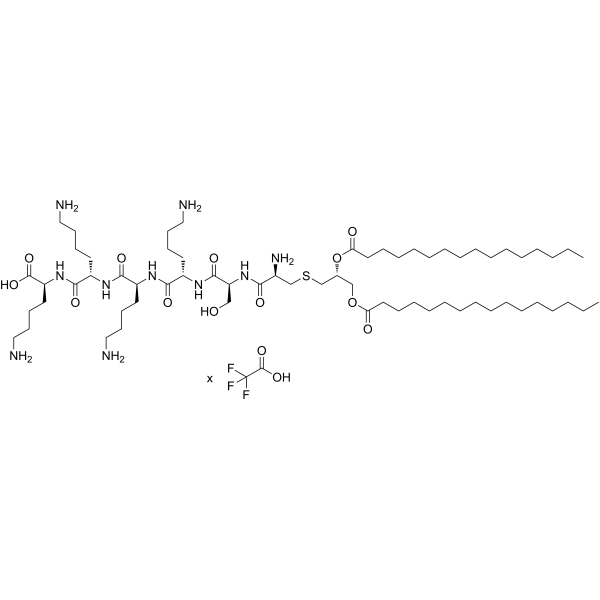
Pam2CSK4 TFA is a TLR2 agonist. Pam2CSK4 TFA induces the expression of iNOS and NO in macrophage cell lines via TBK1 and MyD88 molecules. Pam2CSK4 TFA activates the NF-κB and Bruton's tyrosine kinase signaling pathways in platelets, and promotes platelet-endothelial cell interactions. TLR2 activation triggered by Pam2CSK4 TFA expands myeloid-derived suppressor cells (MDSCs) and suppresses anti-tumor immune responses in the tumor microenvironment. Pam2CSK4 TFA acts as a Th2-polarizing adjuvant in mouse vaccine models against Leishmania major and Brugia malayi. Pam2CSK4 TFA can be used in the research of various diseases, including thromboinflammatory diseases, sepsis, atherosclerosis, heart failure, influenza, lymphoma, melanoma, cutaneous leishmaniasis and lymphatic filariasis .
loading...
    loading...
Cat. No.: HY-P1181
CAS No.: 868247-72-7
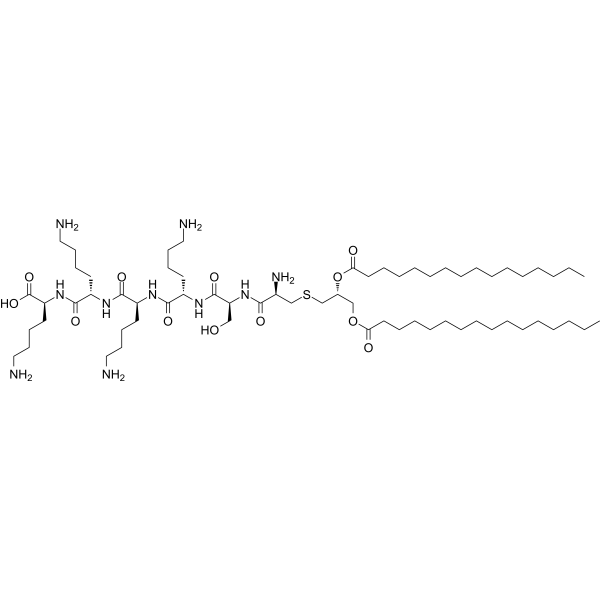
Pam2CSK4 is a TLR2 agonist. Pam2CSK4 induces the expression of iNOS and NO in macrophage cell lines via TBK1 and MyD88 molecules. Pam2CSK4 activates the NF-κB and Bruton's tyrosine kinase signaling pathways in platelets, and promotes platelet-endothelial cell interactions. TLR2 activation triggered by Pam2CSK4 expands myeloid-derived suppressor cells (MDSCs) and suppresses anti-tumor immune responses in the tumor microenvironment. Pam2CSK4 acts as a Th2-polarizing adjuvant in mouse vaccine models against Leishmania major and Brugia malayi. Pam2CSK4 can be used in the research of various diseases, including thromboinflammatory diseases, sepsis, atherosclerosis, heart failure, influenza, lymphoma, melanoma, cutaneous leishmaniasis and lymphatic filariasis .
loading...
    loading...
Cat. No.: HY-U00128
CAS No.: 30189-85-6
Target:  

Parasite

Research Areas:  

Infection Inflammation/Immunology

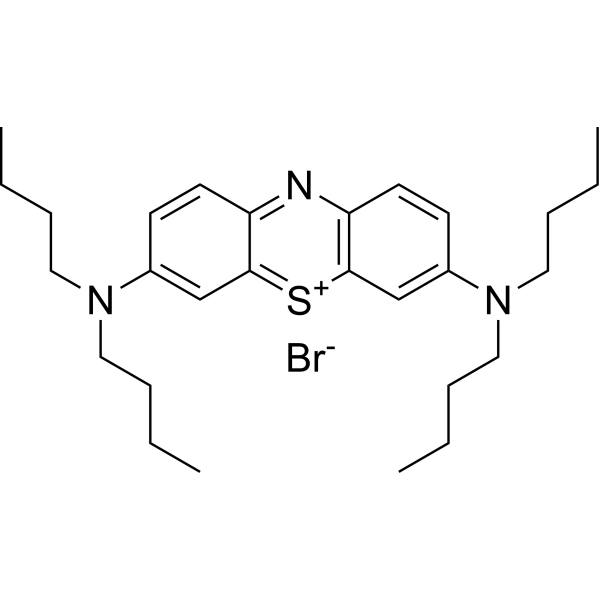
PPA-904 is a specific phenothiazine photosensitizer in photodynamic research (PDT) research, especially topical application for cutaneous leishmaniasis in vivo .
loading...
    loading...
Cat. No.: HY-162066
CAS No.: 2868298-43-3
Target:  

Parasite

Research Areas:  

Infection

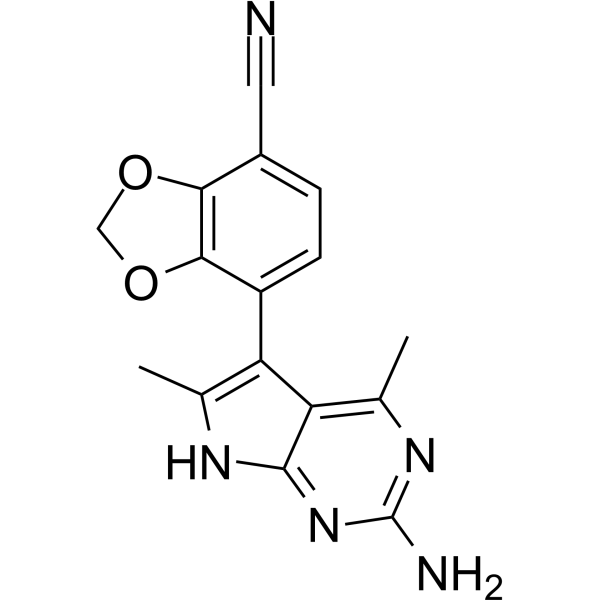
DNDI-6174 is an orally active Leishmania cytochrome b (Qi site of cytochrome bc1 complex/complex III) inhibitor. DNDI-6174 binds to the Qi site of Leishmania cytochrome b, inhibits cytochrome bc1 complex activity in the parasite's electron transport chain across promastigote and axenic amastigote stages. DNDI-6174 reduces parasite burden in rodent models, inhibits growth of various Leishmania species, drug-resistant clinical isolates, and Trypanosoma cruzi, with marginal activity against Trypanosoma brucei. DNDI-6174 can be used for the research of visceral leishmaniasis, cutaneous leishmaniasis .
loading...
    loading...
Cat. No.: HY-129959
CAS No.: 14154-42-8
Synonyms: AlClPc
Aluminum phthalocyanine chloride is a photosensitizer that effectively inhibits the parasite Leishmania amazonensis (the causative agent of cutaneous leishmaniasis) by light-mediated cytolysis. Aluminum phthalocyanine chloride causes parasite morphology and cytolysis of isolated amasilians, while higher photosensitizer concentrations and light intensities are required to induce lysis of mammalian cells. Aluminum phthalocyanine chloride lyses parasites within infected J774 macrophages and can be used to further investigate the study of leishmaniasis .
loading...
    loading...
Cat. No.: HY-130703
CAS No.: 23582-83-4
Purity:  92.36%
Target:  

Others

Research Areas:  

Infection

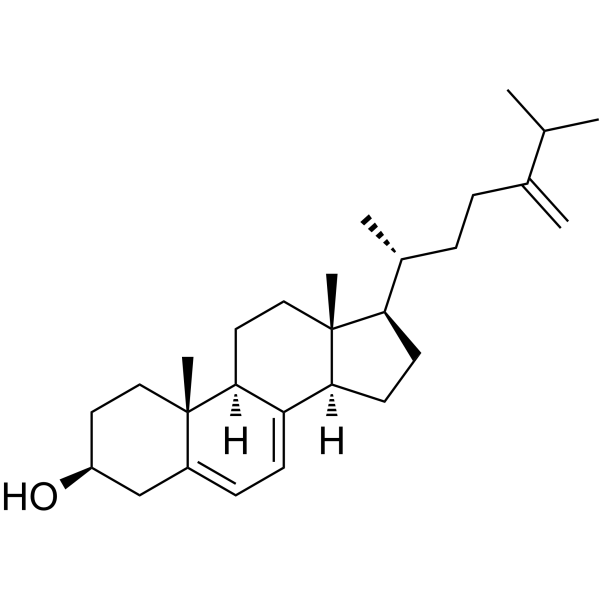
5-Dehydroepisterol is a C28 alkylated sterol based on ergostane, and serves as a major component of the sterol pool in Leishmania parasites. The content of 5-Dehydroepisterol in Leishmania promastigotes can be depleted by 22,26-Azasterol, Amiodarone (HY-14187) and Tomatine (HY-N2166). Among these agents, Amiodarone (HY-14187) inhibits the biosynthetic process of this sterol by disrupting the function of squalene epoxidase. 5-Dehydroepisterol can be used in the research of leishmaniasis and cutaneous leishmaniasis .
loading...
    loading...
Cat. No.: HY-N4267
CAS No.: 13060-14-5
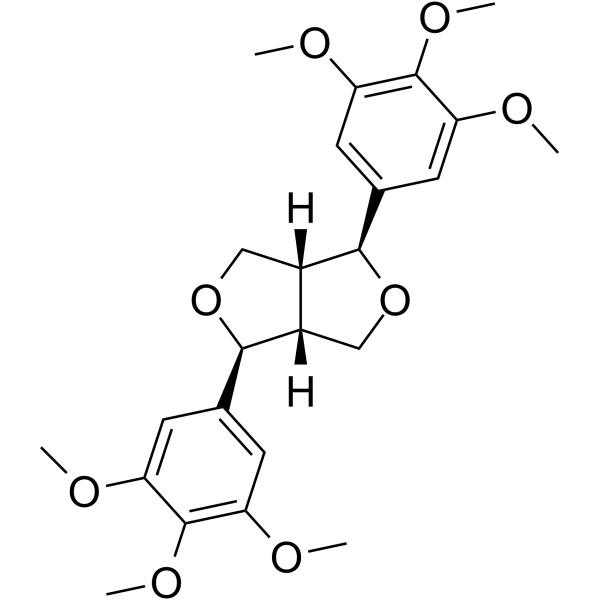
Yangambin is a PAF receptor antagonist and UGT1A1/UGT1A3 inhibitor, with an IC50 of 29.7 μM and a Ki of 17.1 μM against human UGT1A1, and an IC50 of 56.5 μM and a Ki of 66.8 μM against human UGT1A3. Yangambin blocks PAF-mediated responses, inhibits LTB4-mediated neutrophil infiltration, and suppresses inflammatory events and anaphylactic contraction. Yangambin acts as a central nervous system inhibitor to reduce spontaneous activity, and also exhibits analgesic, anticonvulsant, antileishmanial, vasodilatory and hypotensive effects. Yangambin blocks voltage-gated Ca 2+ channels, reduces the production of NO, TNF-α, IL-6 and PGE2 in cells, increases the production of IL-10, and exerts a protective effect against cardiovascular injury. Yangambin can be used in research related to allergies, cutaneous leishmaniasis, central nervous system diseases and cardiovascular diseases .
loading...
    loading...
Cat. No.: HY-156132
CAS No.: 2097881-13-3
Target:  

Parasite

Research Areas:  

Infection

DNDI-0690 is a potent orally active analogue of DNDI-VL-2098, exhibiting potent activity against cutaneous leishmaniasis (CL). DNDI-0690 shows potent in vitro activity against CL-causing Leishmania species (EC50 = 0.17 μM against visceral leishmaniasis (VL), and < 5 μM against CL-causing species). DNDI-0690 exerts effects in a mouse model of L. major CL. DNDI-0690 can be used for CL research .
loading...
    loading...
Cat. No.: HY-146166
CAS No.: 1280738-47-7
PT4 is a therapeutic agent against Cutaneous leishmaniasis (CL). PT4 is effective against both species of Leishmania, with IC50s of 125.18 and 233.18 μM for L. amazonensis and L. braziliensis, respectively. PT4 decreases of mitochondrial membrane potential and increases production of reactive oxygen species, which leads to parasite death. PT4 has a potent in vivo anti-inflammatory activity .
loading...
    loading...
Cat. No.: HY-173213
Target:  

Parasite

Research Areas:  

Infection Inflammation/Immunology

Antileishmanial agent-33 (4e), a hybrid compound of grandisin and machilin G, shows moderate activity on promastigotes (IC50 of 38.1 μM). Antileishmanial agent-33 (4e) shows potential as an antileishmanial agent for the research of cutaneous leishmaniasis (CL) .
loading...
    loading...
Cat. No.: HY-121363
CAS No.: 492-87-5
Julocrotine is a naturally derived, orally active glutarimide alkaloid. Julocrotine alleviates rotenone-induced climbing impairment in Drosophila melanogaster and elevation of malondialdehyde levels in brain tissues, and restores the elevated mRNA levels of superoxide dismutase and catalase to normal. Julocrotine inhibits the growth of Leishmania amazonensis, induces its ultrastructural changes and reduces the number of amastigotes. Julocrotine can be used in research related to Parkinson's disease and cutaneous leishmaniasis .
loading...
    loading...
Cat. No.: HY-W341759
CAS No.: 484-23-1
Target:  

Parasite

Research Areas:  

Infection

1,4-Dihydrazinylphthalazine (Compound 2) is an antiparasitic agent targeting Leishmania spp. 1,4-Dihydrazinylphthalazine is promising for research of tropical diseases, particularly cutaneous leishmaniasis .
loading...
    loading...
Cat. No.: HY-184205
CAS No.: 1554691-37-0
Target:  

Parasite

Research Areas:  

Infection

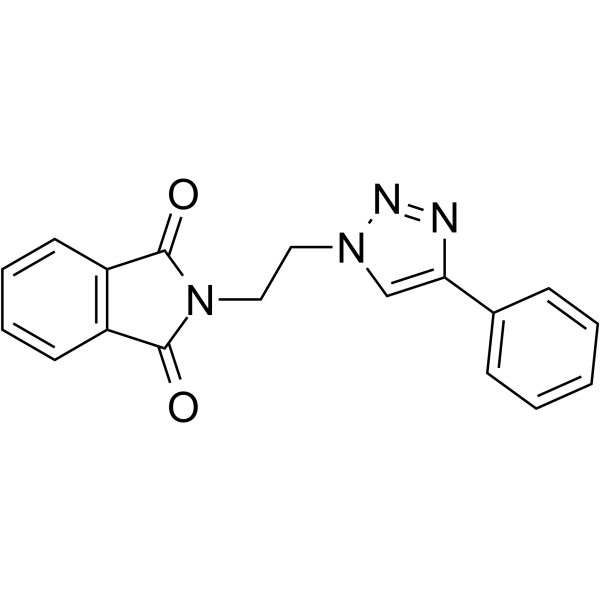
LASSBio-1736 is a Cysteine protease inhibitor and antimalarial agent. LASSBio-1736 targets the promastigote form of Leishmania major. LASSBio-1736 can be used in the research of leishmaniasis .
loading...
    loading...
Cat. No.: HY-106980
CAS No.: 308123-60-6
Synonyms: (-)-18-Methoxycoronaridine
18-Methoxycoronaridine ((-)-18-Methoxycoronaridine) is an orally active and selective α3β4 nicotinic acetylcholine receptor (nAChR) antagonist. 18-Methoxycoronaridine is an inhibitor of serotonin transporter (SERT) and norepinephrine transporter (NET), with IC50 values of 51.6 μM and 121 μM for SERT and NET, respectively. 18-Methoxycoronaridine inhibits the function of SERT and NET, promotes 5-HT3A receptor desensitization, blocks α3β4 nAChR, and modulates receptor signaling pathways associated with reinforcement. 18-Methoxycoronaridine also exhibits potent antiparasitic activity. 18-Methoxycoronaridine can be used in research related to depression, obesity, alcoholism, smoking addiction, and cutaneous leishmaniasis .
loading...
    loading...
Cat. No.: HY-106980A
CAS No.: 266686-77-5
Synonyms: (-)-18-Methoxycoronaridine hydrochloride
18-Methoxycoronaridine ((-)-18-Methoxycoronaridine) hydrochloride is an orally active and selective α3β4 nicotinic acetylcholine receptor (nAChR) antagonist. 18-Methoxycoronaridine hydrochloride is an inhibitor of serotonin transporter (SERT) and norepinephrine transporter (NET), with IC50 values of 51.6 μM and 121 μM for SERT and NET, respectively. 18-Methoxycoronaridine hydrochloride inhibits the function of SERT and NET, promotes 5-HT3A receptor desensitization, blocks α3β4 nAChR, and modulates receptor signaling pathways associated with reinforcement. 18-Methoxycoronaridine hydrochloride also exhibits potent antiparasitic activity. 18-Methoxycoronaridine hydrochloride can be used in research related to depression, obesity, alcoholism, smoking addiction, and cutaneous leishmaniasis .
loading...
    loading...
  • 1

