23 Results for "

dopaminergic receptor subtypes

" in MedChemExpress (MCE) Product Catalog:
Products (23)

23 Results for "dopaminergic receptor subtypes" in MCE Product Catalog:

16
16 Publications Verification
Cat. No.: HY-14608
CAS No.: 56-86-0
Purity:  99.81%
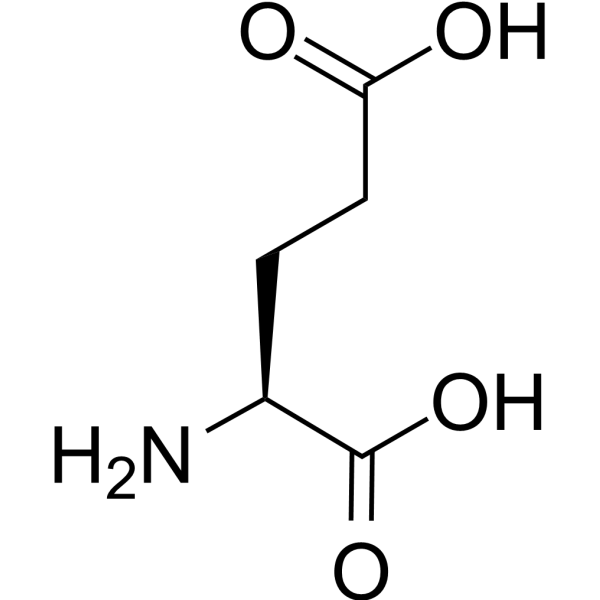
L-Glutamic acid is an excitatory amino acid neurotransmitter that acts as an agonist for all subtypes of glutamate receptors (metabolic rhodophylline, NMDA, and AMPA). L-Glutamic acid has an agonist effect on the release of DA from dopaminergic nerve endings. L-Glutamic acid can be used in the study of neurological diseases. L-Glutamic acid acts at ionotropic and metabotropic glutamate receptors .
loading...
    loading...
15
15 Cited Publications
Cat. No.: HY-14608A
CAS No.: 142-47-2
Purity:  ≥98.0%
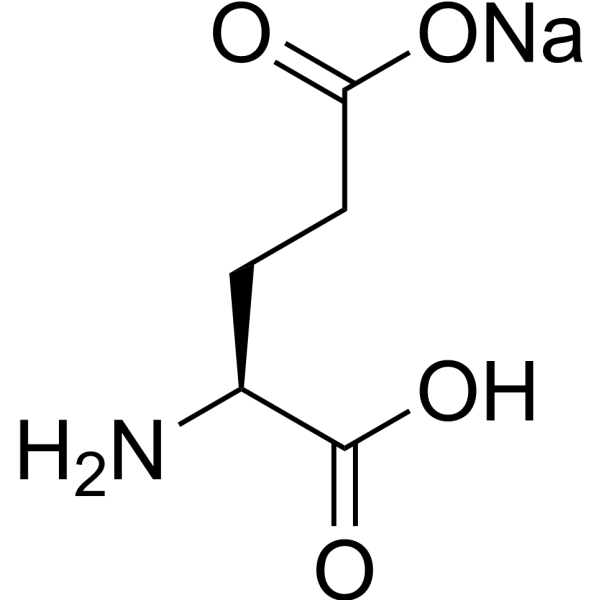
L-Glutamic acid monosodium salt is an excitatory amino acid neurotransmitter that acts as an agonist for all subtypes of glutamate receptors (metabolic rhodophylline, NMDA, and AMPA). L-Glutamic acid monosodium salt has an agonist effect on the release of DA from dopaminergic nerve endings. L-Glutamic acid monosodium salt can be used in the study of neurological diseases. L-Glutamic acid monosodium salt acts at ionotropic and metabotropic glutamate receptors .
loading...
    loading...
13
13 Cited Publications
Cat. No.: HY-W419700
CAS No.: 7558-63-6
L-Glutamic acid ammonium is an excitatory amino acid neurotransmitter that acts as an agonist for all subtypes of glutamate receptors (metabolic rhodophylline, NMDA, and AMPA). L-Glutamic acid ammonium has an agonist effect on the release of DA from dopaminergic nerve endings. L-Glutamic acid can be used in the study of neurological diseases. L-Glutamic acid ammonium acts at ionotropic and?metabotropic glutamate receptors .
loading...
    loading...
7
7 Cited Publications
Cat. No.: HY-12583
CAS No.: 1527503-11-2
Purity:  98.01%
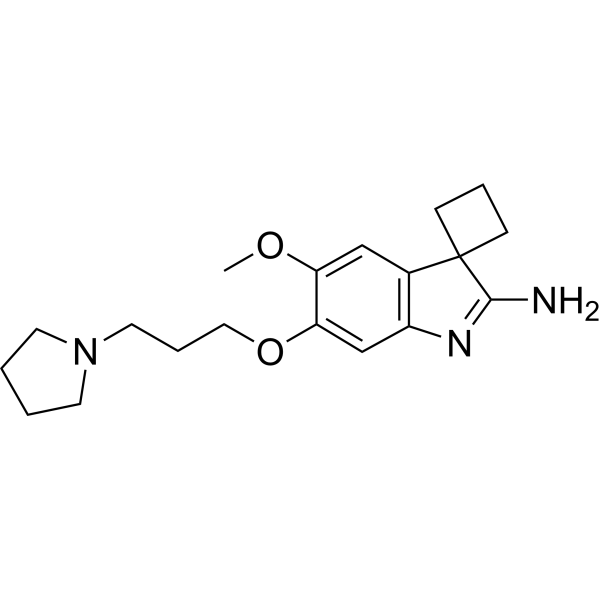
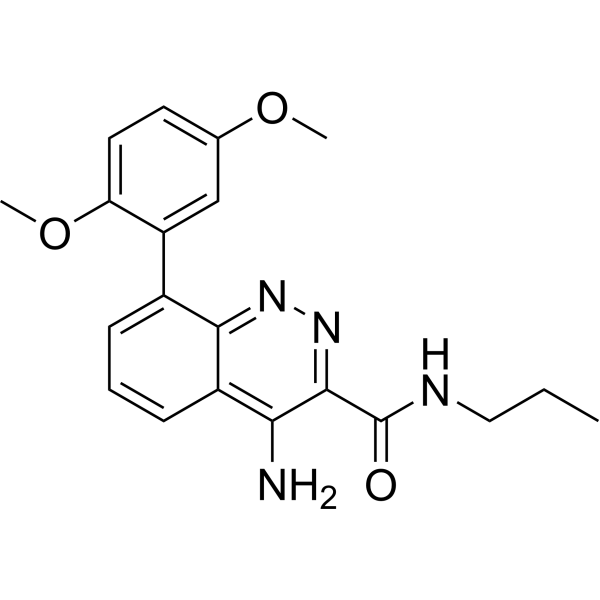
A-366, a chemical probe, is a potent, highly selective, peptide-competitive histone methyltransferase G9a inhibitor with IC50s of 3.3 and 38 nM for G9a and GLP (EHMT1), respectively. A-366 shows >1000-fold selectivity over 21 other methyltransferases. A-366 is also a potent, nanomolar inhibitor of the Spindlin1-H3K4me3-interaction (IC50=182.6 nM). A-366 displays high affinity at human histamine H3 receptor (Ki=17 nM) and shows subtype selectivity among subsets of the histaminergic and dopaminergic receptor families .
loading...
    loading...
1
1 Cited Publications
Cat. No.: HY-14608S5
CAS No.: 55443-55-5
Purity:  ≥98.0%
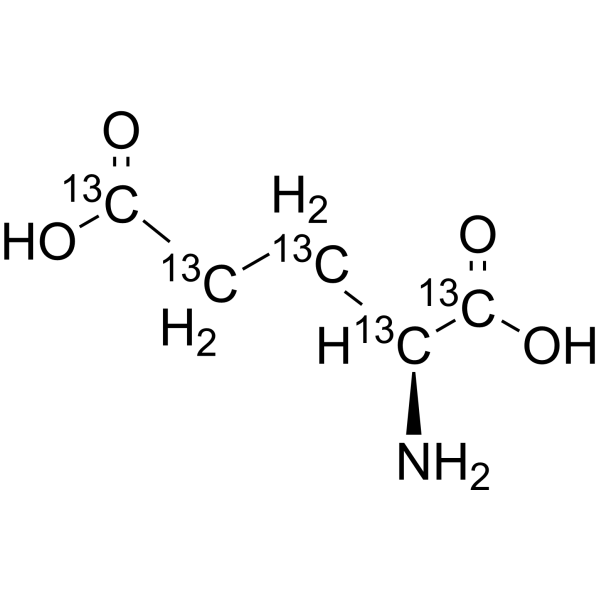
L-Glutamic acid- 13C5 is the 13C-labeled L-Glutamic acid. L-Glutamic acid acts as an excitatory transmitter and an agonist at all subtypes of glutamate receptors (metabotropic, kainate, NMDA, and AMPA). L-Glutamic acid shows a direct activating effect on the release of DA from dopaminergic terminals.
loading...
    loading...
1
1 Cited Publications
Cat. No.: HY-14608R
CAS No.: 56-86-0
L-Glutamic acid (Standard) is the analytical standard of L-Glutamic acid. This product is intended for research and analytical applications. L-Glutamic acid is an excitatory amino acid neurotransmitter that acts as an agonist for all subtypes of glutamate receptors (metabolic rhodophylline, NMDA, and AMPA). L-Glutamic acid has an agonist effect on the release of DA from dopaminergic nerve endings. L-Glutamic acid can be used in the study of neurological diseases . IC50 & Target:DA . In Vitro: L-Glutamic acid (120, 500, 750, 1000 mg/dL) can reduce the harmful effect of lithium on the embryonic development of Xenopus Xenopus .
L-Glutamic acid (2, 5, 10, 20 mM, 24-48 h) can induce neuroexcitotoxicity in neuroblastoma .
In Vivo: L-Glutamic acid (3 g/kg, subcutaneous injection) can promote excitotoxic degeneration of retinal ganglion cells in mice .
L-Glutamic acid (750 mg/kg, intraperitoneal injection) can reduce and inhibit oxidative stress induced by chlorpyrifos (CPF) in rats .
loading...
    loading...
Cat. No.: HY-14608S7
CAS No.: 2784-50-1
Purity:  99.8%
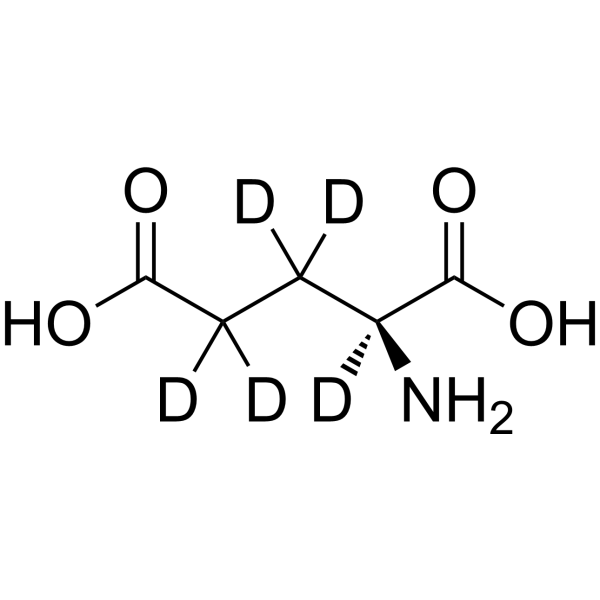
L-Glutamic acid-d5 is the deuterium labeled L-Glutamic acid. L-Glutamic acid acts as an excitatory transmitter and an agonist at all subtypes of glutamate receptors (metabotropic, kainate, NMDA, and AMPA). L-Glutamic acid shows a direct activating effect on the release of DA from dopaminergic terminals.
loading...
    loading...
Cat. No.: HY-14608S8
CAS No.: 203805-84-9
Purity:  98.00%
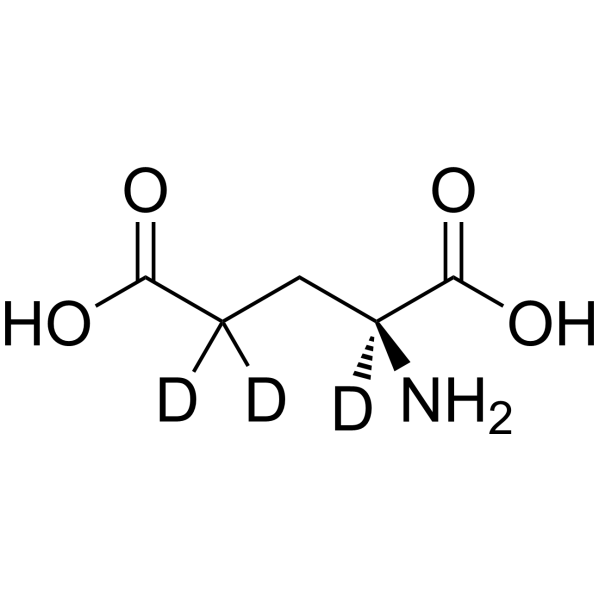
L-Glutamic acid-d3 is the deuterium labeled L-Glutamic acid. L-Glutamic acid acts as an excitatory transmitter and an agonist at all subtypes of glutamate receptors (metabotropic, kainate, NMDA, and AMPA). L-Glutamic acid shows a direct activating effect on the release of DA from dopaminergic terminals.
loading...
    loading...
Cat. No.: HY-14608S3
CAS No.: 202468-31-3
Purity:  99.9%
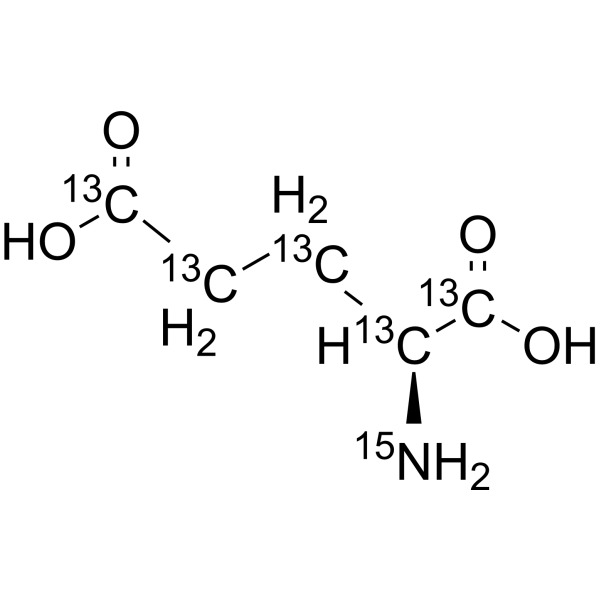
L-Glutamic acid- 13C5, 15N is the 13C- and 15N-labeled L-Glutamic acid. L-Glutamic acid acts as an excitatory transmitter and an agonist at all subtypes of glutamate receptors (metabotropic, kainate, NMDA, and AMPA). L-Glutamic acid shows a direct activating effect on the release of DA from dopaminergic terminals.
loading...
    loading...
Cat. No.: HY-14608S
CAS No.: 115473-51-3
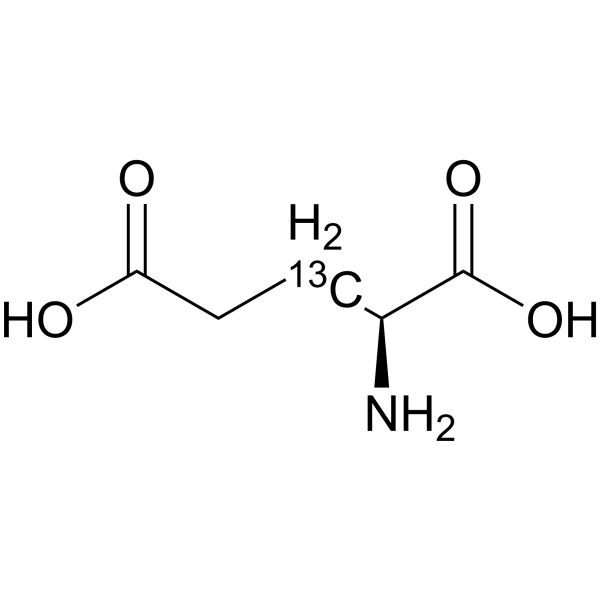
L-Glutamic acid- 13C is the 13C-labeled L-Glutamic acid. L-Glutamic acid acts as an excitatory transmitter and an agonist at all subtypes of glutamate receptors (metabotropic, kainate, NMDA, and AMPA). L-Glutamic acid shows a direct activating effect on the release of DA from dopaminergic terminals.
loading...
    loading...
Cat. No.: HY-W016145
CAS No.: 6106-04-3
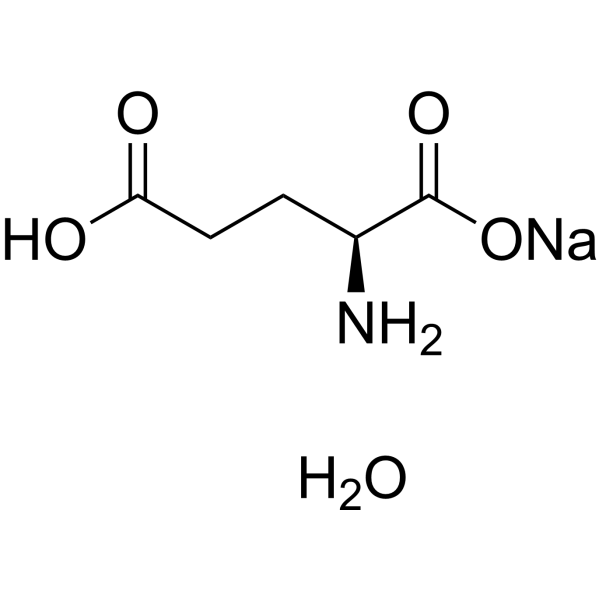
L-Glutamic acid monosodium hydrate is an excitatory amino acid neurotransmitter that acts as an agonist for all subtypes of glutamate receptors (metabolic rhodophylline, NMDA, and AMPA). L-Glutamic acid monosodium hydrate has an agonist effect on the release of DA from dopaminergic nerve endings. L-Glutamic acid monosodium hydrate can be used in the study of neurological diseases. L-Glutamic acid monosodium hydrate acts at ionotropic and?metabotropic glutamate receptors .
loading...
    loading...
Cat. No.: HY-14608S2
CAS No.: 21160-87-2
Purity:  ≥98.0%
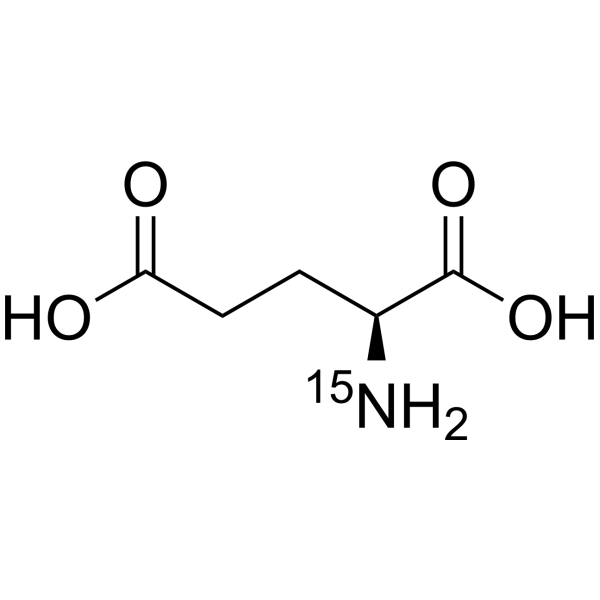
L-Glutamic acid- 15N is the 15N-labeled L-Glutamic acid. L-Glutamic acid acts as an excitatory transmitter and an agonist at all subtypes of glutamate receptors (metabotropic, kainate, NMDA, and AMPA). L-Glutamic acid shows a direct activating effect on the release of DA from dopaminergic terminals .
loading...
    loading...
Cat. No.: HY-14608S1
CAS No.: 81201-99-2
Purity:  ≥99.0%
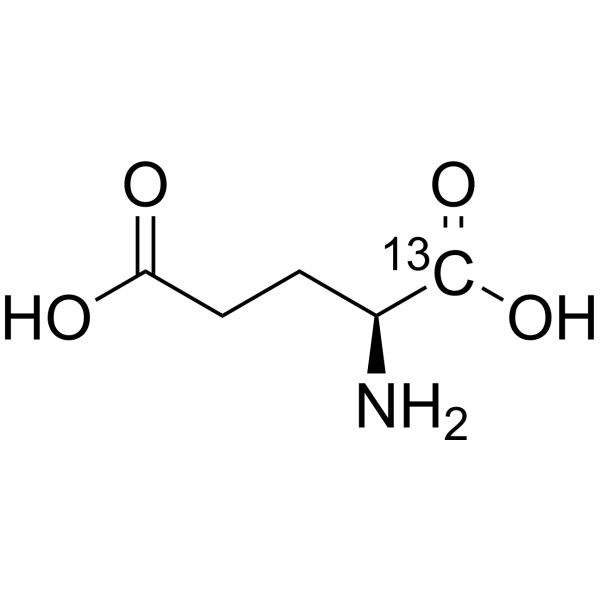
L-Glutamic acid-1- 13C is the 13C-labeled L-Glutamic acid. L-Glutamic acid acts as an excitatory transmitter and an agonist at all subtypes of glutamate receptors (metabotropic, kainate, NMDA, and AMPA). L-Glutamic acid shows a direct activating effect on the release of DA from dopaminergic terminals.
loading...
    loading...
Cat. No.: HY-14608S6
CAS No.: 81202-00-8
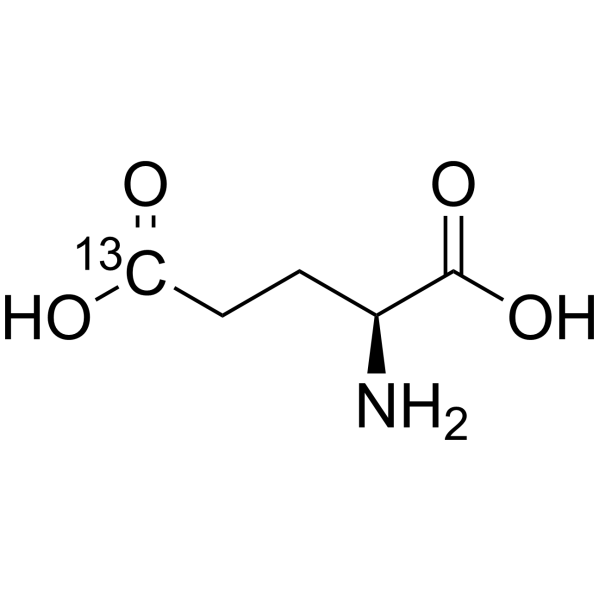
L-Glutamic acid-5- 13C is the 13C-labeled L-Glutamic acid. L-Glutamic acid acts as an excitatory transmitter and an agonist at all subtypes of glutamate receptors (metabotropic, kainate, NMDA, and AMPA). L-Glutamic acid shows a direct activating effect on the release of DA from dopaminergic terminals.
loading...
    loading...
Cat. No.: HY-19872
CAS No.: 942436-93-3
Target:  

GABA Receptor

Research Areas:  

Neurological Disease

AZD6280 is an orally active, blood-brain barrier-permeable GABAA receptor modulator, with Ki values of 21 nM, 31 nM and 1680 nM against human receptors containing α2, α3 and α5 subtypes, respectively, and subtype-specific Ki values of < 30 nM for α2 and α3 subtypes. AZD6280 selectively potentiates GABAA receptors containing α2/α3 subtypes with higher potency than α1/α5 subtypes, exerts no modulatory effect on receptors containing α1 subtypes, and regulates the tuberoinfundibular dopaminergic pathway. AZD6280 decreases peak saccadic velocity, increases serum and plasma prolactin levels, rescues dendritic abnormalities of cortical neurons induced by DISC1 knockdown. AZD6280 can be used in studies related to anxiety disorders .
loading...
    loading...
Cat. No.: HY-14608S4
CAS No.: 1420815-74-2
Purity:  ≥99.0%
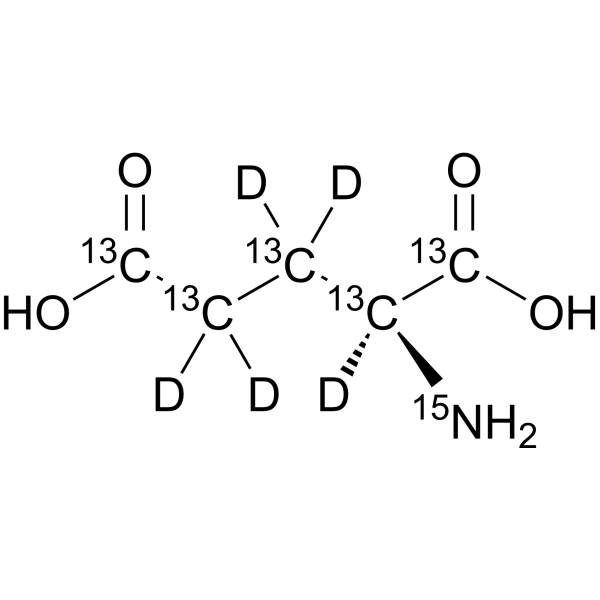
L-Glutamic acid- 13C5, 15N,d5 is the deuterium, 13C-, and 15-labeled L-Glutamic acid. L-Glutamic acid acts as an excitatory transmitter and an agonist at all subtypes of glutamate receptors (metabotropic, kainate, NMDA, and AMPA). L-Glutamic acid shows a direct activating effect on the release of DA from dopaminergic terminals.
loading...
    loading...
Cat. No.: HY-14608S10
CAS No.: 115473-56-8
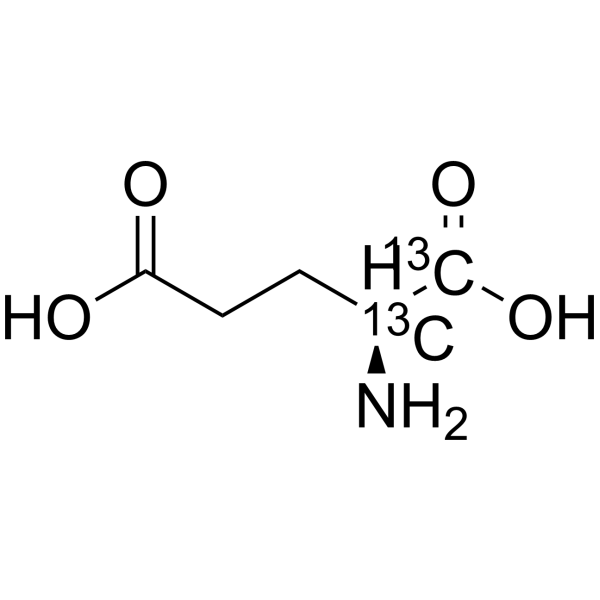
L-Glutamic acid- 13C2 is the 13C labeled L-Glutamic acid . L-Glutamic acid acts as an excitatory transmitter and an agonist at all subtypes of glutamate receptors (metabotropic, kainate, NMDA, and AMPA). L-Glutamic acid shows a direct activating effect on the release of DA from dopaminergic terminals .
loading...
    loading...
Cat. No.: HY-14608AR
CAS No.: 142-47-2
L-Glutamic acid (monosodium salt) (Standard) is the analytical standard of L-Glutamic acid (monosodium salt). This product is intended for research and analytical applications. L-Glutamic acid monosodium salt is an excitatory amino acid neurotransmitter that acts as an agonist for all subtypes of glutamate receptors (metabolic rhodophylline, NMDA, and AMPA). L-Glutamic acid monosodium salt has an agonist effect on the release of DA from dopaminergic nerve endings. L-Glutamic acid monosodium salt can be used in the study of neurological diseases .
loading...
    loading...
Cat. No.: HY-105903
CAS No.: 78541-97-6
Synonyms: Ro 22-​1319
Target:  

Dopamine Receptor

Research Areas:  

Neurological Disease

Piquindone (Ro 22-1319) is a potent antipsychotic agent. Piquindone binds to a D2 dopaminergic receptor subtype in a sodium-dependent manner. Piquindone can be used in the research of schizophrenia .
loading...
    loading...
Cat. No.: HY-14608S9
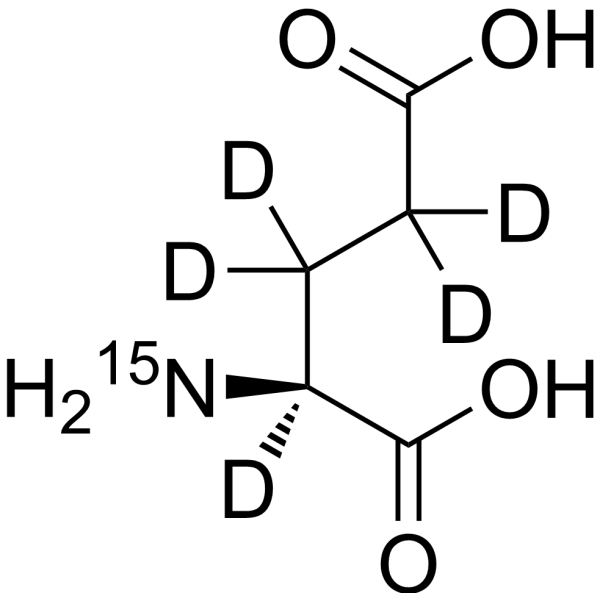
L-Glutamic acid- 15N,d5 is the deuterium and 15N-labeled L-Glutamic acid. L-Glutamic acid acts as an excitatory transmitter and an agonist at all subtypes of glutamate receptors (metabotropic, kainate, NMDA, and AMPA). L-Glutamic acid shows a direct activating effect on the release of DA from dopaminergic terminals.
loading...
    loading...

