16 Results for "

ergosterol synthesis

" in MedChemExpress (MCE) Product Catalog:
Products (16)

16 Results for "ergosterol synthesis" in MCE Product Catalog:

2
2 Cited Publications
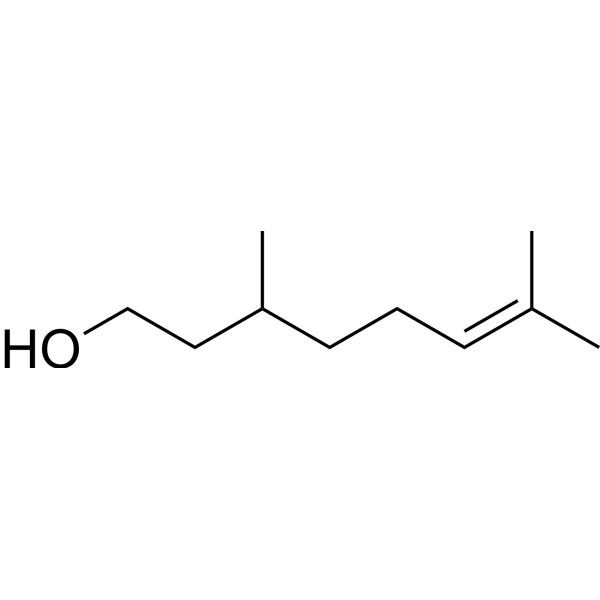
Cat. No.: HY-W010201
CAS No.: 106-22-9
Synonyms: (±)-Citronellol; (±)-β-Citronellol
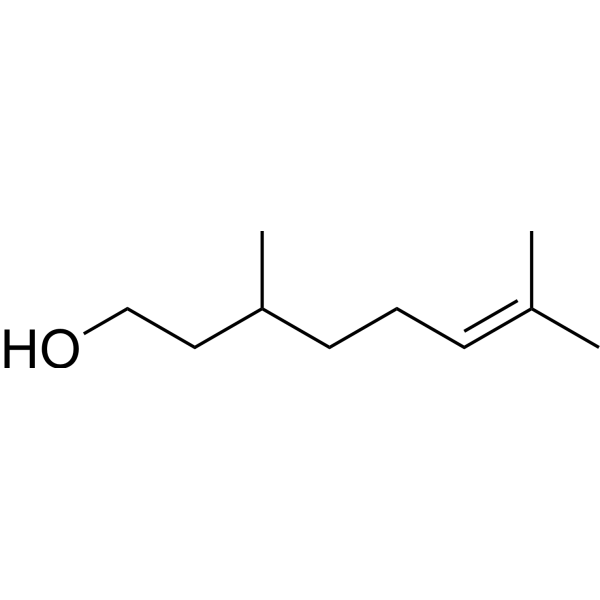
Citronellol ((±)-Citronellol) is an orally active inducer of apoptosis. Citronellol can prevent oxidative stress, mitochondrial dysfunction, and apoptosis in the SH-SY5Y cell Parkinson's disease model induced by 6-OHDA by regulating the ROS-NO, MAPK/ERK, and PI3K/Akt signaling pathways. Citronellol can induce necroptosis in human lung cancer cells through the TNF-α pathway and accumulation of ROS. Citronellol can reduce the levels of LC-3 and p62 to regulate the autophagy pathway, inhibit oxidative stress and neuroinflammation, and thus have neuroprotective effects on Parkinson's rats. Citronellol exhibits anti-fungal activity against Trichophyton rubrum by inhibiting ergosterol synthesis .
loading...
    loading...
Cat. No.: HY-109040
CAS No.: 1340593-70-5
Purity:  98.98%
Synonyms: VT-1129
Target:  

Fungal Cytochrome P450

Research Areas:  

Infection Inflammation/Immunology

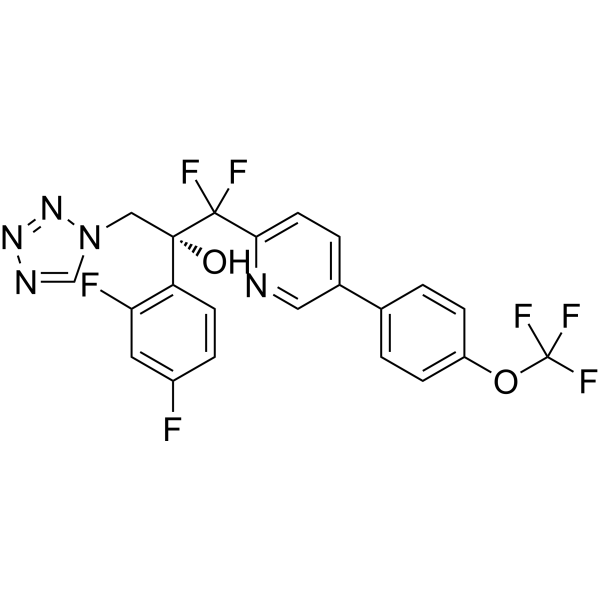
Quilseconazole (VT-1129) is an orally active, highly selective fungal cytochrome P450 enzyme Cyp51 inhibitor that can cross the blood-brain barrier. Quilseconazole prevents the synthesis of ergosterol, an important component of the fungal cell membrane, by inhibiting Cyp51. Quilseconazole has minimal effects on human CYP enzymes. Quilseconazole has antifungal activity and can be used in the study of cryptococcal meningitis and other diseases .
loading...
    loading...
Cat. No.: HY-128033
CAS No.: 67564-91-4
Purity:  98.70%
Research Areas:  

Infection

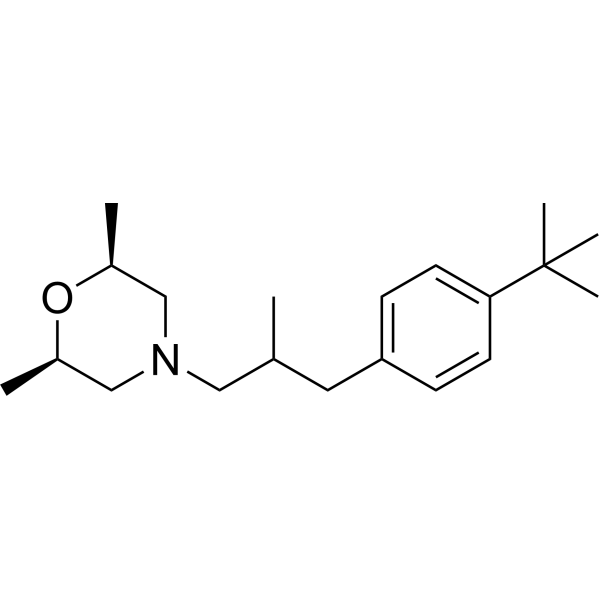
Fenpropimorph is a fungicide that inhibits the sterol pathway. Fenpropimorph inhibits δ8-δ7-sterol isomerase in yeast at low concentrations, with δ14-sterol reductase being blocked at higher levels, preventing the biosynthesis of ergosterol. Fenpropimorph also inhibits sterol synthesis in certain plants and mammalian cells .
loading...
    loading...
Cat. No.: HY-117089
CAS No.: 112281-77-3
Purity:  96.98%
Research Areas:  

Infection

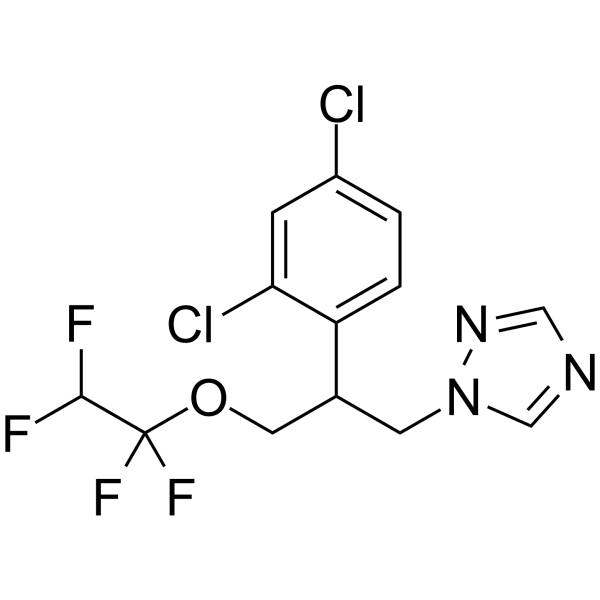
Tetraconazole is a selective irreversible inhibitor of 14-α-sterol demethylase (CYP51) with antifungal activity. Tetraconazole competitively binds to the enzyme to block fungal ergosterol synthesis, resulting in cell membrane damage. The EC50 of tetraconazole against wheat pathogens is 0.382-0.802 mg/L, and the EC50 against onion root tip meristem cell growth is 6.7 mg/L, and (R)-(+)-Tetraconazole is 1.49-1.98 times more active than (S)-(-)-Tetraconazole. Tetraconazole can also induce oxidative stress and chromosomal aberrations in plant cells .
loading...
    loading...
Cat. No.: HY-W010201R
CAS No.: 106-22-9
Synonyms: (±)-Citronellol (Standard); (±)-β-Citronellol (Standard)
Citronellol (Standard) is the analytical standard of Citronellol. Citronellol (Standard) is an orally active inducer of apoptosis. Citronellol (Standard) can prevent oxidative stress, mitochondrial dysfunction, and apoptosis in the SH-SY5Y cell Parkinson's disease model induced by 6-OHDA by regulating the ROS-NO, MAPK/ERK, and PI3K/Akt signaling pathways. Citronellol (Standard) can induce necroptosis in human lung cancer cells through the TNF-α pathway and accumulation of ROS. Citronellol (Standard) can reduce the levels of LC-3 and p62 to regulate the autophagy pathway, inhibit oxidative stress and neuroinflammation, and thus have neuroprotective effects on Parkinson's rats. Citronellol (Standard) exhibits anti-fungal activity against Trichophyton rubrum by inhibiting ergosterol synthesis .
loading...
    loading...
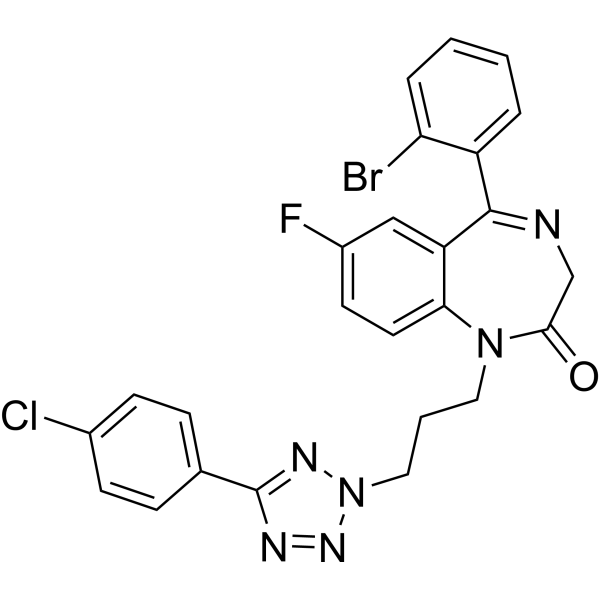
Cat. No.: HY-143335
CAS No.: 2901064-06-8
Target:  

Fungal

Research Areas:  

Infection

Antifungal agent 52 (compound 6c) is a tetrazole derivative. Antifungal agent 52 inhibits the synthesis of Ergosterol (HY-N0181). Antifungal agent 52 exhibit a significant antifungal activity against Candida albicans. Antifungal agent 52 affects C. albicans sessile cell membrane permeabilization .
loading...
    loading...
Cat. No.: HY-128033R
CAS No.: 67564-91-4
Research Areas:  

Infection

Fenpropimorph (Standard) is the analytical standard of Fenpropimorph. This product is intended for research and analytical applications. Fenpropimorph is a fungicide that inhibits the sterol pathway. Fenpropimorph inhibits δ8-δ7-sterol isomerase in yeast at low concentrations, with δ14-sterol reductase being blocked at higher levels, preventing the biosynthesis of ergosterol. Fenpropimorph also inhibits sterol synthesis in certain plants and mammalian cells .
loading...
    loading...
Cat. No.: HY-W749520
CAS No.: 27192-37-6
Research Areas:  

Metabolic Disease

Zymosterone is converted into zymosterol, an intermediate in cholesterol synthesis, through the action of the enzyme hydroxysteroid (17β) dehydrogenase 7 (HSD17B7), and this transformation, catalyzed by 3-keto sterol reductase (ERG27), plays a crucial role in the biosynthesis of ergosterol in yeast.
loading...
    loading...
Cat. No.: HY-123457
CAS No.: 258871-59-9
Target:  

Fungal

Research Areas:  

Infection

PF-1163A is an antifungal agent that inhibits Ergosterol (HY-N0181) synthesis (IC50 = 12 ng/mL), which is found in a fermentation broth of Penicillium sp. PF-1163A also inhibits C-4 sterol methyl oxidase with an MIC value of 12.5 µg/mL .
loading...
    loading...
Cat. No.: HY-W422288
CAS No.: 79156-75-5
Synonyms: (Rac)-Ketoconazol; (Rac)-R 41400
Target:  

Fungal Cytochrome P450

Research Areas:  

Infection

(Rac)-Ketoconazole ((Rac)-R 41400) is an antifungal imidazole compound with oral activity. (Rac)-Ketoconazole interferes with ergosterol synthesis by inhibiting cytochrome P450-dependent 14α-sterol demethylase (CYP51), a key enzyme on the fungal cell membrane, leading to membrane dysfunction and ultimately inhibition of fungal growth and reproduction. (Rac)-Ketoconazole is indicated for studies of fungal infections .
loading...
    loading...
Cat. No.: HY-174394S
CYP51-IN-25 is a orally active broad spectrum antifungal agent with the MIC80 of 0.00625-0.05 μg/mL. is a CYP51-IN-25 is a deuterated compound with antibiotic properties. CYP51-IN-25 can inhibit the fungal CYP51 enzyme, block ergosterol synthesis, and disrupt cell membrane integrity. CYP51-IN-25 can be used for research on fungal infections.
loading...
    loading...
Cat. No.: HY-109040R
CAS No.: 1340593-70-5
Synonyms: VT-1129 (Standard)
Quilseconazole (Standard) is the analytical standard of Quilseconazole (HY-109040). This product is intended for research and analytical applications. Quilseconazole (VT-1129) is an orally active, highly selective fungal cytochrome P450 enzyme Cyp51 inhibitor that can cross the blood-brain barrier. Quilseconazole prevents the synthesis of ergosterol, an important component of the fungal cell membrane, by inhibiting Cyp51. Quilseconazole has minimal effects on human CYP enzymes. Quilseconazole has antifungal activity and can be used in the study of cryptococcal meningitis and other diseases .
loading...
    loading...
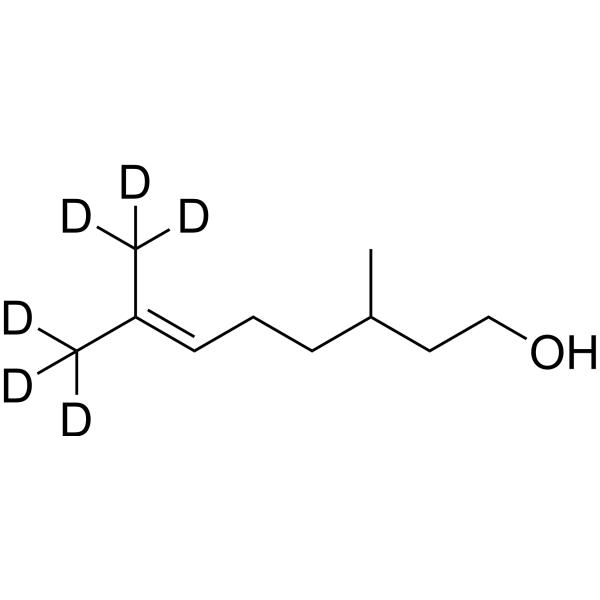
Cat. No.: HY-W010201S
CAS No.: 220687-53-6
Synonyms: (±)-Citronellol-d6; (±)-β-Citronellol-d6
Citronellol-d6 is deuterated labeled Citronellol (HY-W010201). Citronellol ((±)-Citronellol) is an orally active inducer of apoptosis. Citronellol can prevent oxidative stress, mitochondrial dysfunction, and apoptosis in the SH-SY5Y cell Parkinson's disease model induced by 6-OHDA by regulating the ROS-NO, MAPK/ERK, and PI3K/Akt signaling pathways. Citronellol can induce necroptosis in human lung cancer cells through the TNF-α pathway and accumulation of ROS. Citronellol can reduce the levels of LC-3 and p62 to regulate the autophagy pathway, inhibit oxidative stress and neuroinflammation, and thus have neuroprotective effects on Parkinson's rats. Citronellol exhibits anti-fungal activity against Trichophyton rubrum by inhibiting ergosterol synthesis .
loading...
    loading...
Cat. No.: HY-167081
CAS No.: 70161-09-0
Target:  

Fungal Cytochrome P450

Research Areas:  

Infection

Democonazole is an imidazole antifungal agent that blocks ergosterol synthesis by inhibiting CYP450 14α-lanosterol demethylase (CYP51), thereby disrupting the integrity and fluidity of fungal cell membranes. Democonazole is lipophilic, which enhances its ability to penetrate fungal cell membranes and inhibit ergosterol synthesis. Democonazole can be used in studies related to fungal infections .
loading...
    loading...
Cat. No.: HY-184314
CAS No.: 3122934-62-4
Target:  

Fungal

Research Areas:  

Infection

Antifungal agent-166 is an antifungal agent. The combination of Antifungal agent-166 and Fluconazole exerts synergistic bacteriostatic effects against fluconazole-resistant Candida albicans. Antifungal agent-166 exhibits bacteriostatic activity against both Candida glabrata and Cryptococcus neoformans. Antifungal agent-166 reverses the fluconazole resistance of strains by downregulating ergosterol synthesis-related genes, drug resistance-related genes and virulence-related genes. Antifungal agent-166 can enhance the efficacy of Fluconazole in Galleria mellonella and mouse candidiasis models, reduce fungal load and improve survival rate. Antifungal agent-166 can be used in the research of fungal infections .
loading...
    loading...
Cat. No.: HY-W010201S1
Synonyms: (±)-Citronelloll-d3; (±)-β-Citronelloll-d3
Citronellol-d3 ( (±)-Citronelloll-d3) is the deuterium labeled Citronellol (HY-W010201). Citronellol ((±)-Citronellol) is an orally active inducer of apoptosis. Citronellol can prevent oxidative stress, mitochondrial dysfunction, and apoptosis in the SH-SY5Y cell Parkinson's disease model induced by 6-OHDA by regulating the ROS-NO, MAPK/ERK, and PI3K/Akt signaling pathways. Citronellol can induce necroptosis in human lung cancer cells through the TNF-α pathway and accumulation of ROS. Citronellol can reduce the levels of LC-3 and p62 to regulate the autophagy pathway, inhibit oxidative stress and neuroinflammation, and thus have neuroprotective effects on Parkinson's rats. Citronellol exhibits anti-fungal activity against Trichophyton rubrum by inhibiting ergosterol synthesis .
loading...
    loading...
  • 1

