1. Search Result
Search Result
Results for "

fluorescent ligands

" in MedChemExpress (MCE) Product Catalog:

64

Inhibitors & Agonists

28

Fluorescent Dyes

7

Biochemical Assay Reagents

3

Peptides

2

Click Chemistry

Cat. No. 상품명 Target 연구분야 Chemical Structure
  • HY-D2270
    Halo tag TMR
    2 Publications Verification

    Fluorescent Dye Others
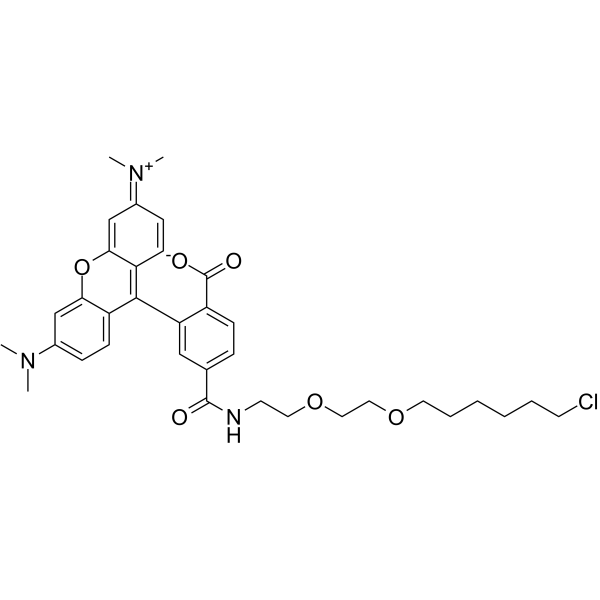
    Halo tag TMR is a red fluorescent dye composed of Halo tag ligand molecules and TMR (TAMRA). Halo tag can quickly and stably covalently bind to Halo protein with high specificity and affinity (Ex/Em = 550/576 nm) .
    Halo tag TMR
  • HY-D1736

    Fluorescent Dye Others
    BODIPY FL-C16 is a BODIPY-labeled analog of Palmitic acid (HY-N0830), which serves as a fluorescent lipid tracer. BODIPY FL-C16 also acts as a ligand for liver fatty acid-binding protein (L-FABP) and intestinal fatty acid-binding protein (I-FABP) , with Kd values of 270 nM and 330 nM, respectively. BODIPY FL-C16 is rapidly taken up by cells, and after metabolic conversion to phospholipids, it is incorporated into the membrane structures of intracellular organelles and extracellular vesicles .
    BODIPY FL-C16
  • HY-D1464
    CH1055
    1 Publications Verification

    Fluorescent Dye Cancer
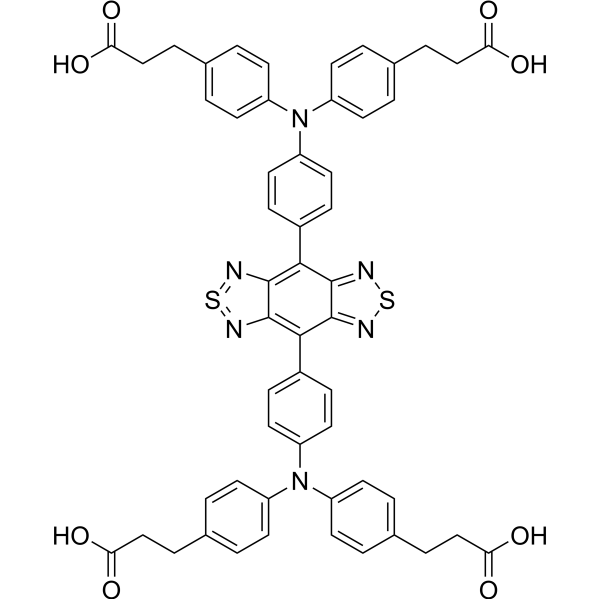
    CH1055 is a near-infrared II (NIR-II) fluorescent dye that can be used as a fluorescent probe for in vivo imaging. CH1055 can be conjugated with antibodies or ligands for specific imaging (for example the tumor imaging) .
    CH1055
  • HY-136277
    DFHO
    1 Publications Verification

    Fluorescent Dye Others
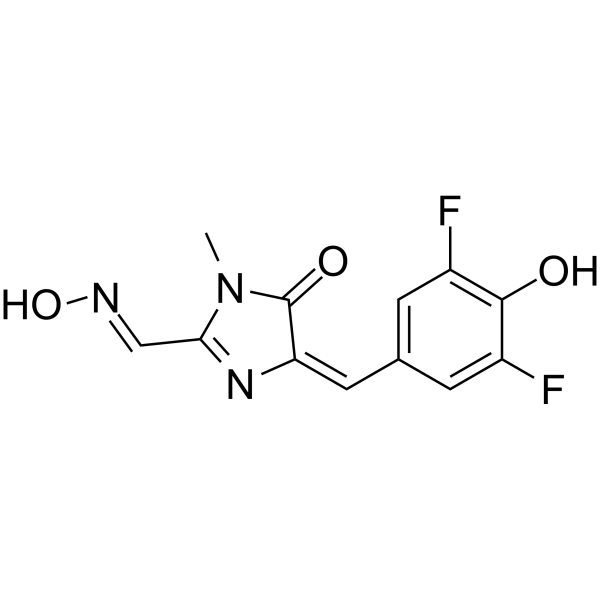
    DFHO is a fluorogenic ligand of Corn fluorogenic aptamer. The RNA aptamer, Corn binds DFHO with a Kd value of 70 nM and converts it to a fluorescent form, enabling RNA imaging in cells .
    DFHO
  • HY-D1605
    BODIPY FL L-Cystine
    1 Publications Verification

    Fluorescent Dye Others
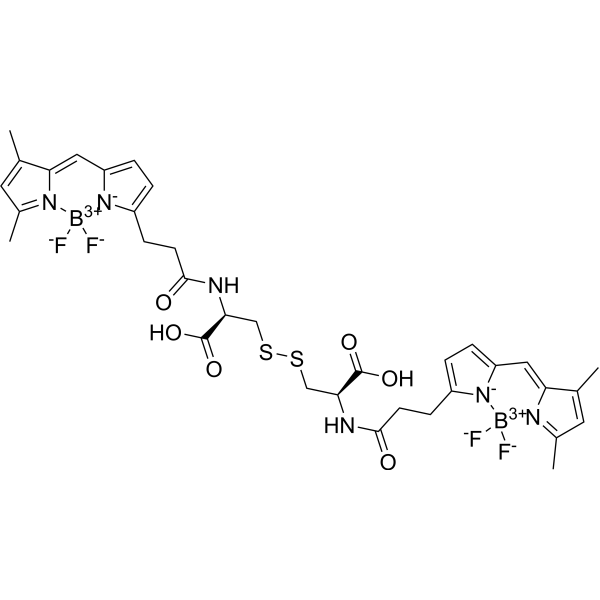
    BODIPY FL L-Cystine is a thiol-reactive, green-fluorescent dye. BODIPY FL L-Cystine can be the labeling of membrane proteins, proteins with hydrophobic binding sites, or hydrophobic ligands. (λex=504 nm, λem=511 nm) .
    BODIPY FL L-Cystine
  • HY-P2267
    LDV
    1 Publications Verification

    Integrin Others
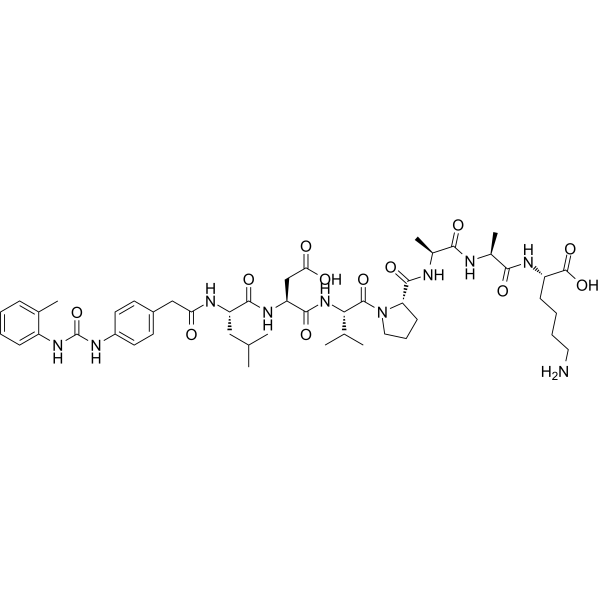
    LDV is a non-fluorescent analog of LDV-FITC. LDV is a α4β1 integrin (VLA-4) ligand, and binds α4β1 integrin in leukemia cells .
    LDV
  • HY-34515

    TMPhen; 3,4,7,8-Tetramethyl-1,10-phenanthroline

    Biochemical Assay Reagents Others
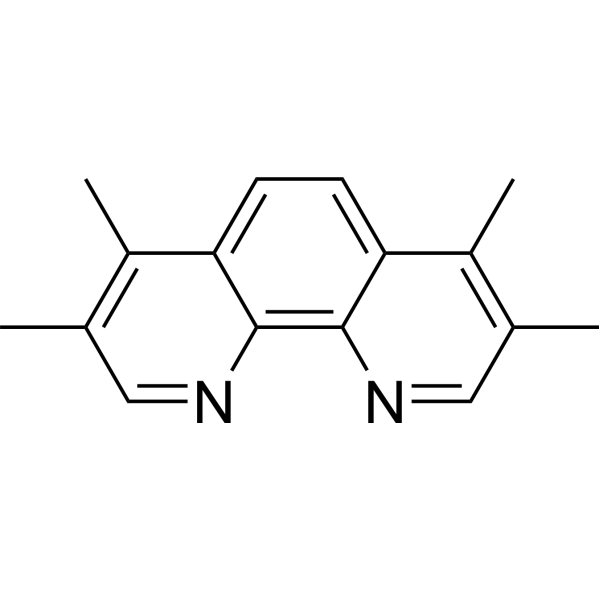
    3,4,7,8-Tetramethyl-1,10-phenanthroline (TMPhen) is an organic molecule commonly used as a ligand or catalyst. It has a wide range of applications in different fields, such as organometallic chemical reactions, electrochemical detection, and organic optoelectronic devices. Due to its excellent performance in fluorescent probes, biosensors and photocatalytic reactions, it has been widely used in research in the fields of chemistry and life sciences.
    3,4,7,8-Tetramethyl-1,10-phenanthroline
  • HY-152231

    Fluorescent Dye Ligands for E3 Ligase Others
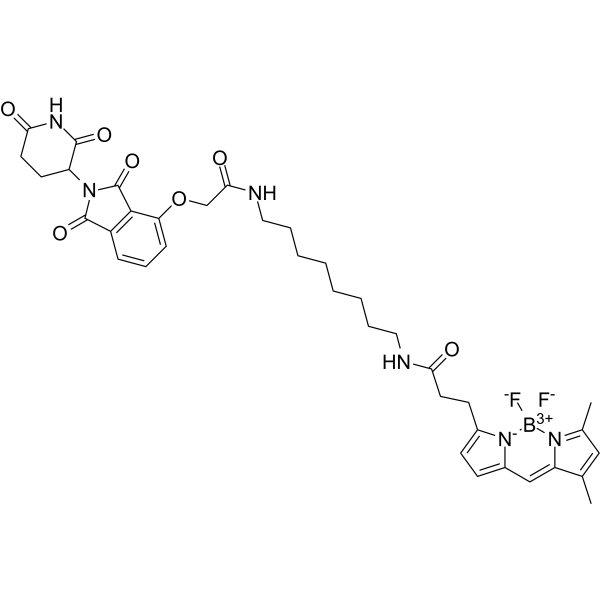
    BODIPY FL thalidomide is a high-affinity and selective human cereblon (CRBN)-targeting fluorescent probe with a Kd of 3.6 nM. BODIPY FL thalidomide enables use as a probe in time-resolved fluorescence resonance energy transfer (TR-FRET) binding assays for cereblon ligands. BODIPY FL thalidomide supports development of highly sensitive, selective, stable cereblon TR-FRET binding assays (Ex/Em = 502/510 nm) .
    BODIPY FL thalidomide
  • HY-D0006

    Fluorescent Dye Others
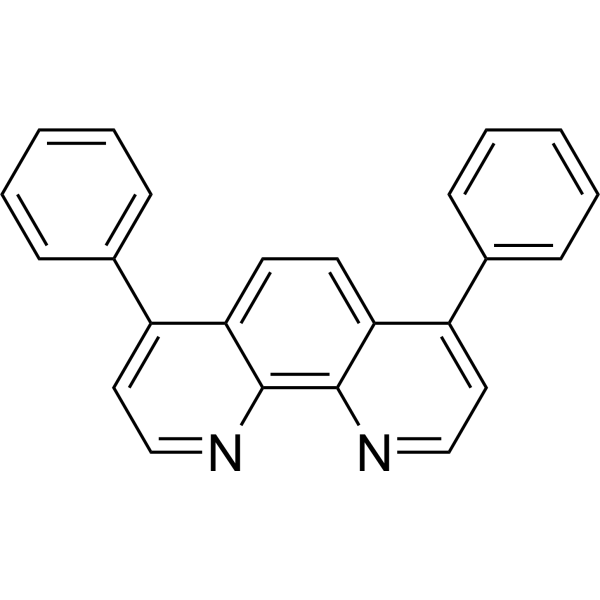
    Bathophenanthroline is a nitrogen-containing organic ligand that can form stable complexes with transition metal ions such as Ru 2+. In proteomics, Bathophenanthroline is often used for in-gel protein staining. The negatively charged sulfonic acid groups of Bathophenanthroline interact electrostatically with the positively charged amino acid residues of proteins, thereby achieving specific binding to proteins and enhancing the fluorescent signal of detection. Bathophenanthroline can be used for protein separation and detection in SDS-PAGE gels in the field of proteomics, as well as other fluorescence studies[1]. Ex/Em=532 nm/610 nm[1].
    Bathophenanthroline
  • HY-131028

    JF646 TFA

    Fluorescent Dye Others
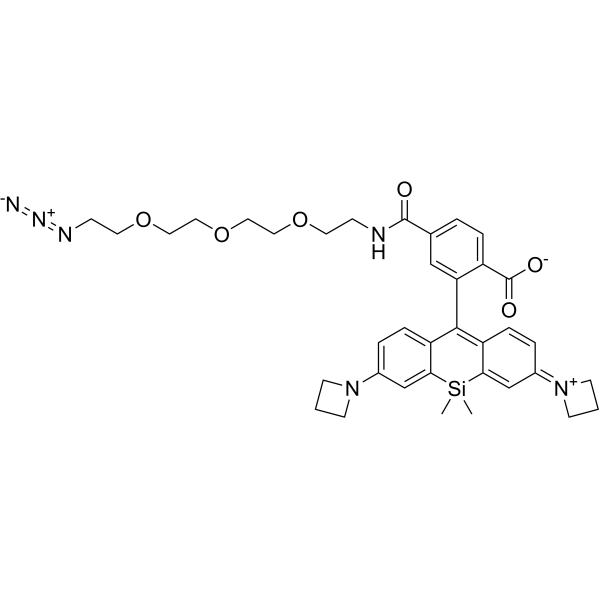
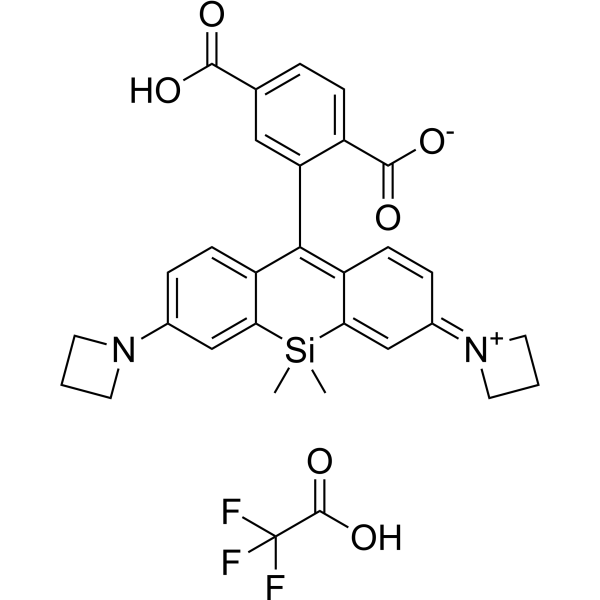
    Janelia Fluor 646 TFA (JF646 TFA), a red fluorogenic fluorescent dye, can be used in the synthesis of Janelia Fluor 646 HaloTag and SNAP-Tag ligands. JF646 TFA is used in live cell imaging experiments . Janelia Fluor products are licensed under U.S. Pat. Nos. 9,933,417, 10,018,624 and 10,161,932 and other patents from Howard Hughes Medical Institute.
    Janelia Fluor® 646 TFA
  • HY-131029

    JF646, Maleimide

    Fluorescent Dye Others
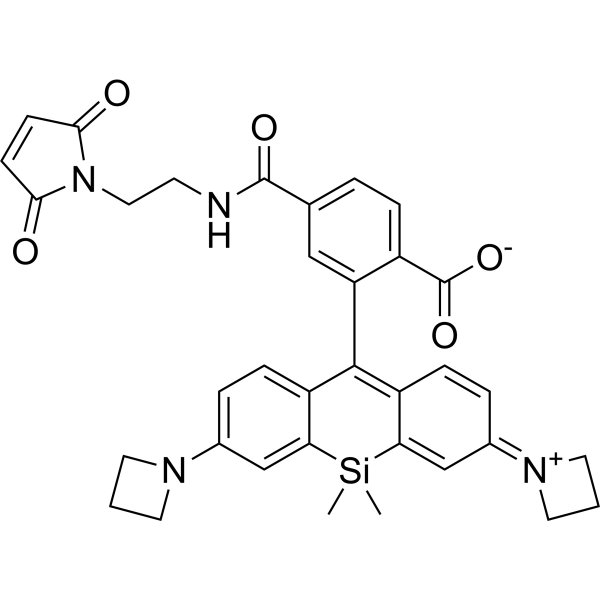
    Janelia Fluor® 646, Maleimide (JF646, Maleimide) is a red fluorescent dye that contains a maleimide group. JF646, Maleimide can be used in cellular imaging . Janelia Fluor® products are licensed under U.S. Pat. Nos. 9,933,417, 10,018,624 and 10,161,932 and other patents from Howard Hughes Medical Institute.
    Janelia Fluor® 646, Maleimide
  • HY-D2426

    Fluorescent Dye Transferrin Receptor Cardiovascular Disease
    Cy3-Transferrin is a fluorescent labeling reagent that combines Cy3 (HY-D0822) fluorescent dye and Transferrin (HY-P3267). The Cy3 fluorophore is commonly used in applications such as immunolabeling, nucleic acid labeling, fluorescence microscopy, and flow cytometry. Cy3 has an emission maximum around 562-570 nm. Transferrin, a blood-plasma glycoprotein, is a target ligand for transferrin receptor. Transferrin can bind to and mediate the transport of iron .
    Cy3-Transferrin
  • HY-D1092

    Fluorescent Dye Neurological Disease
    DiBaC4(5) is a fluorescent voltage-sensitive dye that can be used to monitor the transmembrane potentials when Papain-dissociated retinal cells from adult zebrafish were exposed to GABAergic ligands. DiBaC4(5) is a potential-sensitive fluorescence dye .
    DiBAC4(5)
  • HY-W879007

    Fluorescent Dye Others
    ICG-azide, a near infrared (NIR) fluorescent dye, is a copper (I)-catalyzed azide-alkyne cycloaddition (CuAAC) reagent. ICG-azide can be readily incorporated into dye-stabilized nanoemulsions and facilitate the attachment of targeting ligands via click-chemistry in a simple, scalable, and reproducible reaction .
    ICG-azide
  • HY-D0142

    Fluorescent Dye Others
    Pyrene-1,3,6,8-tetrasulfonic acid tetrasodium is a fluorescent dye and pH indicator, also as a ligand of multifunctional metal-organic framework. Pyrene-1,3,6,8-tetrasulfonic acid tetrasodium has been used to detect CO2 release. Pyrene-1,3,6,8-tetrasulfonic acid tetrasodium acts as a water-soluble fluorescent dye for fluorescence quenching assays monitoring gramicidin ion-channel activity .
    Pyrene-1,3,6,8-tetrasulfonic acid tetrasodium
  • HY-D1606

    Adrenergic Receptor Metabolic Disease
    BODIPY FL prazosin is a fluorescent α1-adrenergic antagonist with Ki values of 14.5, 43.3 nM for α1a-AR and α1b-AR, respectively. BODIPY FL prazosin also is a fluorescent ligand with the excitation and emission wavelengths are 485 and 535 nm, respectively. BODIPY FL prazosin can be used for study the differences in the subcellular localization of α1-adrenoceptor subtypes .
    BODIPY FL prazosin
  • HY-D2413

    BODIPY FL PEG4-VH032

    Fluorescent Dye Others
    BODIPY FL VH032 is a high-affinity VHL fluorescent probe with a Kd value of 3.01 nM. BODIPY FL VH032 consists of von Hippel-Lindau (VHL) ligand VH032 (HY-120217) and BODIPY FL (HY-43520). BODIPY FL VH032 can be used for time-resolved fluorescence resonance energy transfer (TR-FRET) detection for high-throughput identification and characterization of VHL ligands with maximum excitation emission wavelength: 504/520 nm .
    BODIPY FL VH032
  • HY-131030

    JF669, SE; JF669, NHS

    Fluorescent Dye Others
    Janelia Fluor 669, SE (JF669, SE), a red fluorescent dye, can be directly reacted with the available thiol-containing HaloTag ligand under mild conditions (DIEA, DMF) to afford a JF669HaloTag ligand in a single step (Ex = 669 nm; Em = 682 nm) . Janelia Fluor products are licensed under U.S. Pat. Nos. 9,933,417, 10,018,624 and 10,161,932 and other patents from Howard Hughes Medical Institute.
    Janelia Fluor® 669, SE
  • HY-137115

    Smo Cancer
    BODIPY-Cyclopamine is a fluorescently labeled ligand for the Smoothened (SMO) receptor. The activation of SMO is regulated by Patch protein, and over-activated SMO signaling pathways are associated with tumorigenesis. The NanoBRET (Nanofluorescein bioluminescence resonance energy transfer) technique used in the study can sensitively detect the resonance energy transfer between SMO and BODIPY-Cyclopamine, which can be used for high-throughput screening and kinetic analysis. Studying the binding site of BODIPY-Cyclopamine on SMO can also further explore SMO-targeted drugs .
    BODIPY-Cyclopamine
  • HY-130736

    JF549, SE; JF549, NHS

    Fluorescent Dye Others
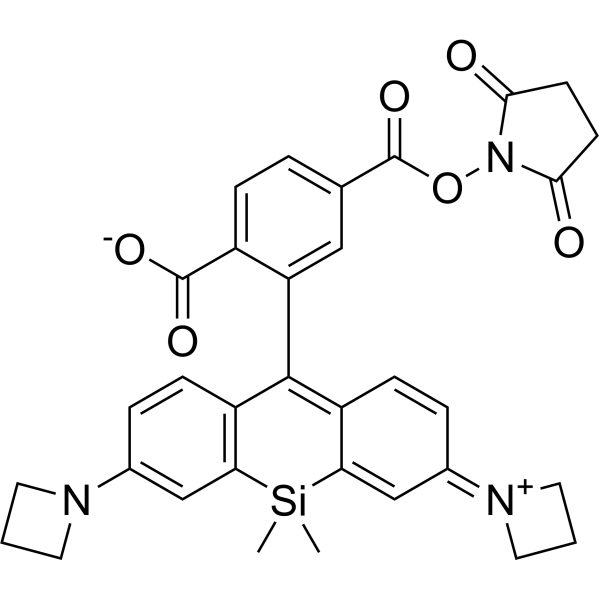
    Janelia Fluor® 549, SE (JF549, SE) is a cell-permeable fluorescent dye with an NHS ester (succinimidyl ester (SE)) reactive group. NHS esters react with primary amines and are commonly used to conjugate dyes to proteins, antibodies, amine-modified oligonucleotides, and other molecules. Janelia Fluor® 549, SE also acts as a ligand for self-labeling tags such as HaloTag and SNAP-tag, and can be used in live-cell imaging studies (Ex/Em = 549 nm/571 nm) .\n


    Janelia Fluor® 549, SE
  • HY-D1464A
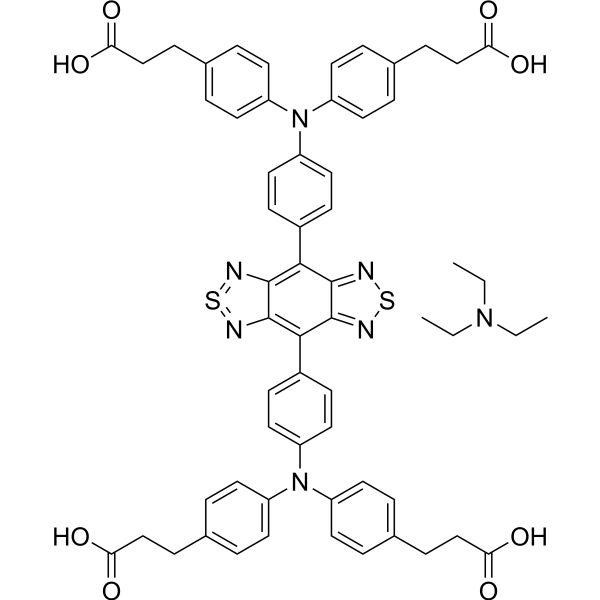
    CH1055 triethylamine
    1 Publications Verification

    Fluorescent Dye Cancer
    CH1055 triethylamine is a near-infrared II (NIR-II) fluorescent dye that can be used as a fluorescent probe for in vivo imaging. CH1055 triethylamine can be conjugated with antibodies or ligands for specific imaging (for example the tumor imaging) .
    CH1055 triethylamine
  • HY-125385

    Endogenous Metabolite Metabolic Disease
    Sulforhodamine 101 DHPE is a fluorescent probe made from the conjugation of the phospholipid 1,2-dipalmitoyl-sn-glycero-3-PE to sulforhodamine 101, a red fluorescent dye that displays excitation/emission spectra of 586/605 nm, respectively. It integrates into phospholipid bilayers and has been used for imaging of solid supported lipid bilayers, detection of protein-ligand binding on bilayers, and to monitor colocalization of lipid probes in liposomes via resonance energy transfer (RET).
    Sulforhodamine 101 DHPE
  • HY-150087

    Fluorescent Dye Others
    Ctrl-CF4-S2 is a chemically modified control probe of the copper probe Copper Fluor-4 (CF4, HY-150086), in which two of the four thioether ligands in CF4 (HY-150086) are replaced with methylene groups. CF4 (HY-150086) is a fluorescent probe used for detecting the presence and distribution of copper ions, whereas Ctrl-CF4-S2 does not respond to copper ions. This allows it to eliminate background signals from copper, thereby helping to determine whether the signals from CF4 (HY-150086) accurately reflect the dynamic changes of copper ions in biological systems
    Ctrl-CF4-S2
  • HY-151801

    mAChR Others
    DIBA-Cy5 is a fluorescent DIBA antagonist made up be DIBA-alkyne binding Cyanine5 fluorophores (Cy5) and polyethylene glycol (PEG) biomolecules. DIBA-Cy5 can serve as a fluorescent ligand, suitable for probe attachment through click chemistry. DIBA-Cy5 exerts a high binding affinity to type-2 mAChR (M2R) with the Kd value of 1.80 nM, can directly stain M2R receptors in the sinoatrial node of a mouse heart .
    DIBA-Cy5
  • HY-D2923

    Fluorescent Dye Others
    PA-JF549-Halo ligand is a covalently linked conjugate comprising the photoactivatable fluorescent dye PA-JF549 and a ligand for the HaloTag protein. PA-JF549-Halo ligand exhibts inherent structural properties and predispose it to localize within mitochondria. PA-JF549-Halo ligand combines the exceptional brightness, photostability, and cell permeability of the JF549 dye with photoactivation capabilities and the high specificity characteristic of HaloTag protein labeling technology. PA-JF549-Halo ligand enables high-quality single-molecule imaging and super-resolution imaging of specific proteins within live cells .
    PA-JF549-Halo ligand
  • HY-W004617

    4,4',4''-(1,3,5-Triazine-2,4,6-triyl)tribenzoic acid

    MOFs Others
    2,4,6-Tris(4-carboxyphenyl)-1,3,5-triazine (4,4',4''-(1,3,5-Triazine-2,4,6-triyl) tribenzoic acid) is a metal-organic framework. 2,4,6-Tris(4-carboxyphenyl)-1,3,5-triazine is a C3-symmetric organic ligand with temperature-sensitive ratioluminescent properties. Complexes derived from 2,4,6-Tris(4-carboxyphenyl)-1,3,5-triazine exhibit strong emissivity and can be used for highly sensitive ratiometric fluorescent temperature sensing .
    2,4,6-Tris(4-carboxyphenyl)-1,3,5-triazine
  • HY-168757

    PSMA Cancer
    PSMA precursor-1 is a precursor in the synthesis of prostate-specific membrane antigen (PSMA) ligands and fluorescent probes that have been used in the detection of PSMA in LNCaP and PC3 cells .
    PSMA  precursor-1
  • HY-103336

    T1117

    GPR55 Cannabinoid Receptor Cardiovascular Disease
    Tocrifluor 1117 (T1117), a fluorescent form of the cannabinoid CB1 receptor antagonist AM251 (HY-15443), is a selective fluorescent GPR55 ligand. Tocrifluor 1117 is a potent tool for identifying the cellular location of cannabinoid receptors (including GPR55 in living tissues) (Ex/Em=543/590 nm) .
    Tocrifluor 1117
  • HY-D1441

    Fluorescent Dye Others
    Zinquin AM ester is an AM ester form of Zinquin. Zinquin, a fluorescent dye, is a commonly used sensor for cellular Zn 2+ status .
    Zinquin AM ester
  • HY-162084

    Autophagy Apoptosis Cancer
    BKN-1 is a bifunctional ligand that can not only track the formation of mtG4s (G-quadruplexes, four-stranded DNA structures containing Hoogsteen bonds) through far-red emission, but can also induce mitochondrial dysfunction. BKN-1 has anti-tumor activity and may cause mtDNA loss, damage mitochondrial integrity, reduce ATP levels, and trigger ROS imbalance, leading to apoptosis and autophagy .
    BKN-1
  • HY-W242709

    Biochemical Assay Reagents Others
    4-Chloroquinolin-8-ol (compound 1) is an Alq3-derived aluminum ligand. Alq3 is an organometallic molecule widely used as electron transport layer and light-emitting layer in organic LEDs, and also as a host for fluorescent and phosphorescent dyes .
    4-Chloroquinolin-8-ol
  • HY-174870

    PROTACs Estrogen Receptor/ERR Apoptosis Fluorescent Dye Cancer
    PROTAC ERα Degrader-11 is a selective and intrinsically fluorescent (Ex: 366 nm, Em: 440 nm) ERα PROTAC degrader. PROTAC ERα Degrader-11 shows good antiproliferative activity, selective ERα degradation and imaging capabilities in MCF-7 breast cancer cell lines. PROTAC ERα Degrader-11 induces G2/M phase arrest and induces apoptosis in MCF-7 cells. PROTAC ERα Degrader-11 is well-tolerated up to a dose of 500 mg/ kg with no acute toxicity in athymic nude mice. PROTAC ERα Degrader-11 can be used for the study of breast cancer.(Pink: ERα ligand (HY-167701), Blue: CRBN Ligand (HY-150831), Black: Linker, E3 ligase ligand-linker conjugate (HY-174880)) .
    PROTAC ERα Degrader-11
  • HY-119782

    Fluorescent Dye Others
    L-Argininamide is a hydrophilic amino acid derivative and can be used as a compound for ligand binding DNA aptamers. L-Argininamide has the potential for fluorescent aptasensors development .
    L-Argininamide
  • HY-162796

    Apoptosis G-quadruplex c-Myc Cancer
    TS-2 is a fluorescent ligand of c-Myc G4 with anticancer activity. TS-2 inhibits the growth of cancer cells and induces apoptosis of cancer cells by targeting the c-MYC oncogene promoter G4, causing transcriptional repression of the c-Myc oncogene .
    TS-2
  • HY-142521

    Leukotriene Receptor Metabolic Disease
    BLT2 probe 1 (compound 13) is a fluorescent probe based on the synthetic BLT2 agonist CAY10583. BLT2 is a promising target for diabetic wound healing and gastrointestinal lesions. BLT2 probe 1 is suitable to investigate the pharmacology of BLT2 receptor ligands in a variety of assay systems .
    BLT2 probe 1
  • HY-170603

    Fluorescent Dye Histone Methyltransferase Apoptosis Cancer
    PRMT5-targeted fluorescent ligand-1 (Compound 7) is a PRMT5-targeted fluorescent ligand, that inhibits PRMT5 with an IC50 of 29.39 nM. PRMT5-targeted fluorescent ligand-1 exhibits cell imaging activity, that exhibits good fluorescence signal in MCF-7 with an IC50 of 29 nM. PRMT5-targeted fluorescent ligand-1 induces apoptosis. PRMT5-targeted fluorescent ligand-1 exhibits a maximal excitation wavelength of 438 nm and a maximal emission wavelength of 550 nm .
    PRMT5-targeted fluorescent ligand-1
  • HY-155698

    Fluorescent Dye CXCR Others
    Mz438 is high-affinity and selective fluorescent CXCR2 ligand. Mz438 is a small-molecule-based fluorescent probe targeting the IABS of CXCR2 .
    Mz438
  • HY-163761

    CCR Others
    LT166 is a fluorescent ligand for CC chemokine receptor 1 (CCR1) with a KD of 1.90 μM .
    LT166
  • HY-170814

    G-quadruplex Cancer
    G-quadruplex ligand 3 (Compound 16) is a G-quadruplex ligand with anticancer effects that chelate iron. G-quadruplex ligand 3 stabilizes G-quadruplexes in human leukemia Jurkat cells. G-quadruplex ligand 3 localizes in the cell nucleus, serving as a fluorescent nuclear tracer for the labile iron pool .
    G-quadruplex ligand 3
  • HY-162075

    Biochemical Assay Reagents Others
    RF16 is a fluorescent macromolecular material. RF16 precisely retains in cells to track IRE1-Halo protein with the HaloTag ligand .
    RF16
  • HY-120421

    Sigma Receptor Cancer
    SW116 free base is a selective fluorescent ligand for sigma-2 receptor with a Ki of 14 nM. SW116 free base exhibits in methanol a maximal excitation wavelength of 333 nM, and a maximal emission wavelength of 506 nM. SW116 free base can be internalized into MDA-MB-435 cells, and reach 50% maximum fluorescent intensity in 24 minutes. SW116 free base can be as a fluorescent probe used in cancer research .
    SW116 free base
  • HY-D1398

    nAChR Neurological Disease
    LtIA-F, a novel fluorescent analogue of LtIA, provides a wealth of pharmacological tools to explore the structure–function relationship, distribution, and ligand binding domain of the α3β2 nAChR subtype.
    LtIA-F
  • HY-164055

    Fluorescent Dye Cancer
    HL1 is a Schiff base ligand. HL1 exhibits chelation-enhanced fluorescence effect when forming complexes and can be used as a fluorescent probe for metal ions. HL1 can be used for the research of cancer .
    HL1
  • HY-D2266

    Fluorescent Dye Neurological Disease
    FluoBar1 is an imaging fluorescence probe modified by a barbiturate ligand with fluorescent coumarin. FluoBar1 can monitor L-type voltage-gated calcium channels (LTCC) in living cells in real time for the study of neurological diseases .
    FluoBar1
  • HY-150352

    Biochemical Assay Reagents Others
    Dextran-COOH is a dextran derivative with carboxyl (–COOH) functional groups introduced into the molecular chain. Dextran-COOH can be covalently coupled with a variety of bioactive molecules, drugs, small molecule ligands, fluorescent probes and other functional materials .
    Dextran-COOH (MW 40kDa)
  • HY-147532

    Cannabinoid Receptor Cancer
    CB2R probe 1 is a safe and green CB2R (cannabinoid 2 receptor) fluorescent probe with an Ki of 130 nM. CB2R probe 1 shows low cytotoxicity in cancer cells .
    CB2R probe 1
  • HY-147541

    Adenosine Receptor Inflammation/Immunology
    A2A/A3 AR antagonist-1 (compound 23) is a dual A2A/A3 adenosine receptor (AR) fluorescent ligand, with Kis of 90 nM and 31.8 nM for hA2A AR and hA3 AR, respectively .
    A2A/A3 AR antagonist-1
  • HY-138658

    JF526, SE; JF526, NHS

    Fluorescent Dye Others
    Janelia Fluor 526, SE (JF526,SE) is a fluorogenic yellow fluorescent dye that contains NHS ester group. JF526 is a versatile scaffold for fluorogenic ligands, including labels for genetically encoded self-labeling protein tags and stains for endogenous structures . Janelia Fluor products are licensed under U.S. Pat. Nos. 9,933,417, 10,018,624 and 10,161,932 and other patents from Howard Hughes Medical Institute.
    Janelia Fluor® 526, SE
  • HY-121364

    Histamine Receptor Fluorescent Dye Others
    Bodilisant is a histamine H3 receptor (hH3R) ligand and imaging/labeling agent, with a Ki value of 6.51 nM for hH3R. Bodilisant binds to hH3R to produce strong green fluorescence, localizes to the extracellular membrane without internalization, and generates clear, displaceable fluorescent labeling of hH3R in native human brain tissues. Bodilisant serves as a pharmacological tool to visualize the distribution of hH3R via fluorescence confocal laser scanning microscopy .
    Bodilisant
  • HY-D1236

    Parasite Deubiquitinase PARP Cancer
    Fluorescent brightener 71 (FB71) is an inhibitor targeting deubiquitinases UCHL5 and USP14, as well as a CD40 ligand. Fluorescent brightener 71 blocks enzymatic activity, induces apoptosis, inhibits cell growth and triggers reactive oxygen species production. Meanwhile, Fluorescent brightener 71 upregulates the expression of oxidative stress-related genes gpx-4 and sod-4, and reversibly increases the protein levels of UCHL5 and USP14 through a feedback response. Fluorescent brightener 71 inhibits the growth, movement and reproductive capacity of Caenorhabditis elegans, and also exhibits concentration-dependent toxic effects. Fluorescent brightener 71 can be applied to scientific research in related fields such as breast cancer .
    Fluorescent brightener 71

온라인 문의

Your information is safe with us. * Required Fields.

호칭


Country or Region *

고객명 *


회사명 *

Department *


메일주소 *


상품명 *

Cat. No.


Requested quantity *

전화번호 *


비고

온라인 문의

Inquiry Information

상품명:
Cat. No.:
수량:
MCE Japan Authorized Agent:

