1. Search Result
Search Result
Pathways Recommended: Membrane Transporter/Ion Channel
Results for "

fungal plasma membranes

" in MedChemExpress (MCE) Product Catalog:

8

Inhibitors & Agonists

1

Peptides

4

Natural
Products

Targets Recommended:
Cat. No. Product Name Target Research Areas Chemical Structure
  • HY-B0133
    Natamycin
    5+ Cited Publications

    Pimaricin

    Environmental Pollutants Antibiotic Endogenous Metabolite Fungal Bacterial Infection
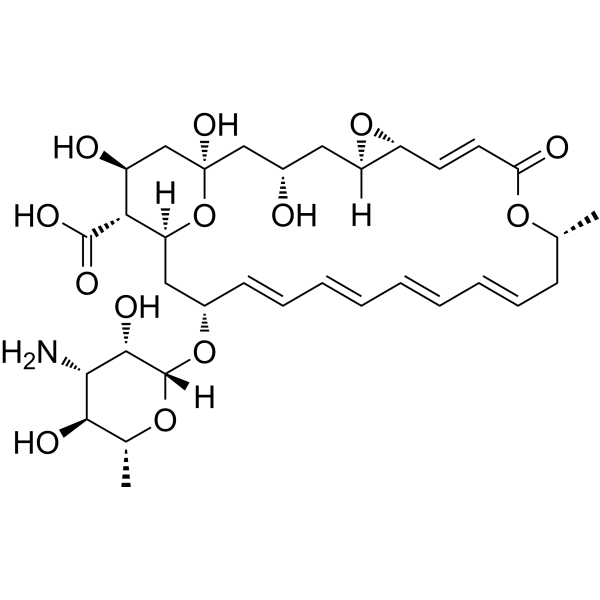
    Natamycin (Pimaricin) is a macrolide antibiotic agent produced by several Streptomyces strains. Natamycin inhibits the growth of fungi via inhibition of amino acid and glucose transport across the plasma membrane. Natamycin is a food preservative, an antifungal agent in agriculture, and is widely used for fungal keratitis research .
    Natamycin
  • HY-163462

    Fungal Infection
    Poacic Acid is a plant-derived stilbenoid with an antifungal activity. Poacic Acid localizes to the yeast cell wall and disrupts the production and assembly of β-1,3-glucan in the fungal cell walls. Poacic Acid exhibits fungicidal activity to Saccharomyces cerevisiae and plasma membrane-compromised Candida albicans mutants .
    Poacic acid
  • HY-B0133R

    Pimaricin (Standard)

    Reference Standards Fungal Endogenous Metabolite Antibiotic Bacterial Infection
    Natamycin (Standard) is the analytical standard of Natamycin. This product is intended for research and analytical applications. Natamycin (Pimaricin) is a macrolide antibiotic agent produced by several Streptomyces strains. Natamycin inhibits the growth of fungi via inhibition of amino acid and glucose transport across the plasma membrane. Natamycin is a food preservative, an antifungal agent in agriculture, and is widely used for fungal keratitis research .
    Natamycin (Standard)
  • HY-P5640

    Bacterial Parasite Infection
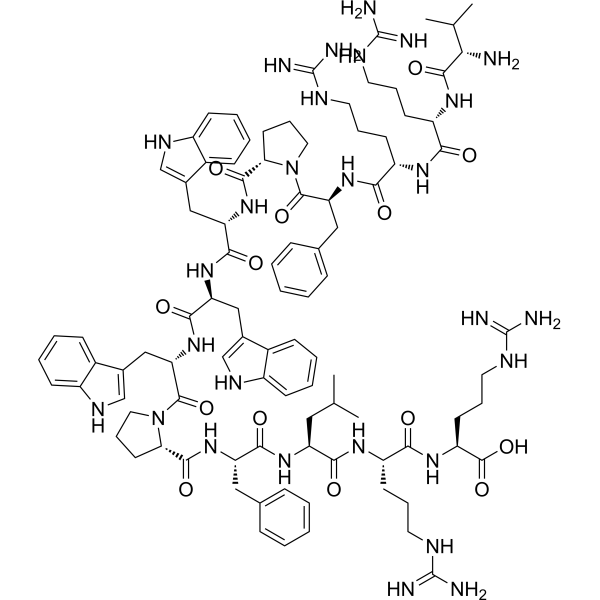
    Tritrpticin is a porcine-derived antimicrobial peptide with properties such as membrane disruption and hemolysis. Tritrpticin disrupts the cell membranes of bacteria, fungi and Jurkat T cell leukemia cells and induces their death. Tritrpticin also enhances the efficacy of Metronidazole (HY-B0318) against *Trichomonas vaginalis*, reduces plasma endotoxin and inflammatory cytokine levels, restricts bacterial growth in blood and visceral tissues, decreases the mortality rate of septic shock in rats and enhances the therapeutic effect of ertapenem. Tritrpticin exhibits selective cytotoxicity against Jurkat T cell leukemia cells, while showing low toxicity to normal peripheral blood mononuclear cells and red blood cells, and can serve as a template for antimicrobial peptide design. Tritrpticin can be applied to research related to bacterial infections, fungal infections, trichomoniasis, septic shock and leukemia .
    Tritrpticin
  • HY-N11506

    Fungal Bacterial Infection Cancer
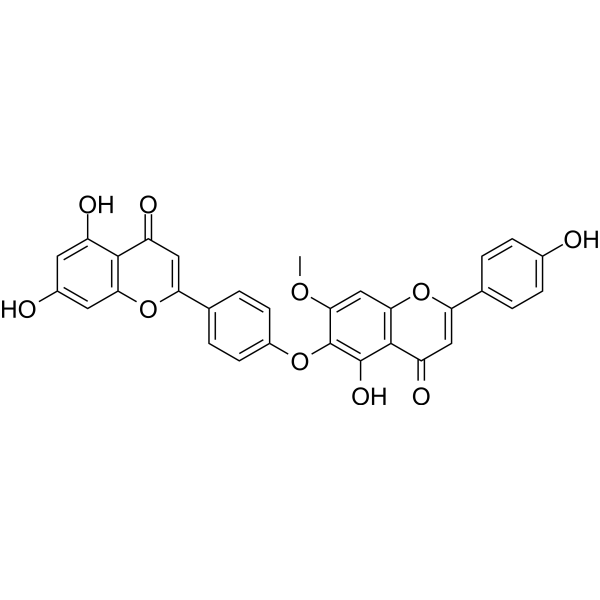
    lsocryptomerin is a membrane-active antifungal compound that can be isolated from Selaginella tamariscina. lsocryptomerin can depolarize fungal plasma membrane. lsocryptomerin also shows anticancer and antibacterial activities .
    lsocryptomerin
  • HY-181492

    Fungal Infection Inflammation/Immunology
    Antifungal agent 155 hydrochloride is an antifungal agent. Antifungal agent 155 hydrochloride induces bent, twisted, abnormally swollen hyphae, compromises fungal hyphal plasma membrane integrity, and triggers fungal cell death. Antifungal agent 155 hydrochloride can be used for the research of fusarium keratitis .
    Antifungal agent 155 hydrochloride
  • HY-183295

    Fungal Reactive Oxygen Species (ROS) Infection
    Antifungal agent 160 is a cytochrome bc1 complex inhibitor with activity against Alternaria solani, Gibberella zeae, Colletotrichum gloeosporioides, and Fusarium oxysporum f. sp. melonis. Antifungal agent 160 impairs ATP synthesis, suppresses ATPase activity, induces ROS bursts, compromises plasma membrane integrity, and suppresses fungal growth. Antifungal agent 160 can be used for the research of fungal infection .
    Antifungal agent 160
  • HY-N9464

    Drug Intermediate Fungal Infection
    Episterol is an Ergosterol (HY-N0181) biosynthetic intermediate. Episterol replaces Ergosterol as the major sterol in Saccharomyces cerevisiae Δerg3 mutants, confers resistance to combined lethal and vacuole-disruptive actions of Amphotericin B (HY-B0221) and MC12 (HY-175024) .
    Episterol

Inquiry Online

Your information is safe with us. * Required Fields.

Salutation


Country or Region *

Applicant Name *


Organization Name *

Department *


Email Address *


Product Name *

Cat. No.


Requested quantity *

Phone Number *


Remarks

Inquiry Online

Inquiry Information

Product Name:
Cat. No.:
Quantity:
MCE Japan Authorized Agent:

