
1. Search Result
Search Result
Results for "

gastric toxicity

" in MedChemExpress (MCE) Product Catalog:

23

Inhibitors & Agonists

2

Fluorescent Dyes

2

Peptides

1

Inhibitory Antibodies

3

Natural
Products

1

Isotope-Labeled Compounds

Cat. No. Product Name Target Research Areas Chemical Structure
  • HY-141598
    Datopotamab deruxtecan (solution)
    2 Publications Verification

    DS-1062 (solution); Dato-DXd (solution)

    TROP2 Antibody-Drug Conjugates (ADCs) Topoisomerase Cancer
    Datopotamab deruxtecan (DS-1062) solution is a TROP2-targeted antibody-drug conjugate (ADC) with human TROP2 Kd of 0.74 nmol/L. Datopotamab deruxtecan solution consists of the antibody Datopotamab (HY-P99843) and the toxic molecule-linker conjugate Deruxtecan (HY-13631E). Datopotamab deruxtecan solution binds TROP2, triggers internalization and lysosomal trafficking and releases DXd topoisomerase I inhibitor payload. Datopotamab deruxtecan solution disrupts DNA function, induces DNA damage, apoptosis, and bystander killing of tumor microenvironment cells. Datopotamab deruxtecan solution can be used in research related to triple-negative breast cancer, gastric cancer, and non-small cell lung cancer .
    Datopotamab deruxtecan (solution)
  • HY-105174

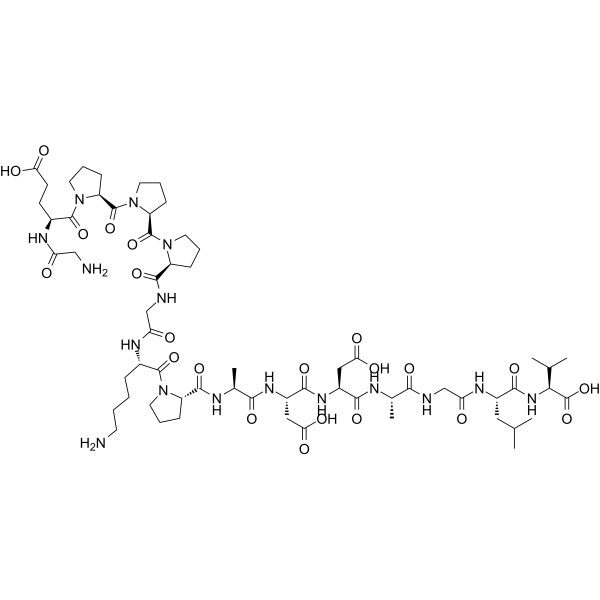
    JAK FAK Inflammation/Immunology
    BPC 157 is the 15-amino acide fragment of gastric peptide BPC. BPC 157 exhibits wound healing promoting and neuroprotective activity. BPC 157 maintains the integrity of the gastrointestinal mucosa without significant toxicity. BPC 157 acetate counteracts NSAIDs/insulin overdose/copper-induced toxicity. BPC 157 ameliorates specific (over)stimulated/damaged neurotransmitter systems-induced behavioral disorders through serotonergic and dopaminergic systems .
    BPC 157
  • HY-108292

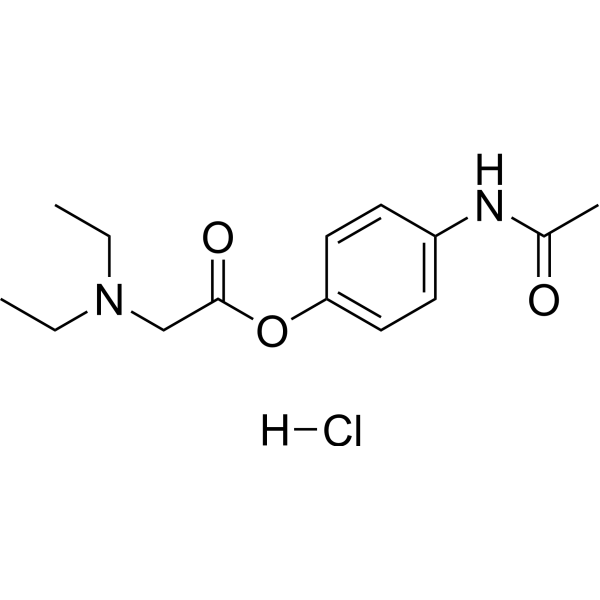
    NF-κB Neurological Disease Cancer
    Propacetamol hydrochloride is an orally active prodrug of paracetamol and an inducer of acute liver injury models, with multiple properties including antinociception, antioxidation and gastroprotection. Propacetamol hydrochloride potentiates Tramadol and attenuates Aspirin (HY-14654)-induced gastric mucosal damage and lipid peroxidation. Under specific conditions, Propacetamol hydrochloride also acts as a hepatotoxic inducer, triggering acute liver injury, oxidative stress and apoptosis, with strain differences in toxicity sensitivity. Propacetamol hydrochloride can be used in the research of acute liver injury, drug-induced hepatotoxicity and gastric mucosal damage .
    Propacetamol hydrochloride
  • HY-12758

    BCRP Cancer
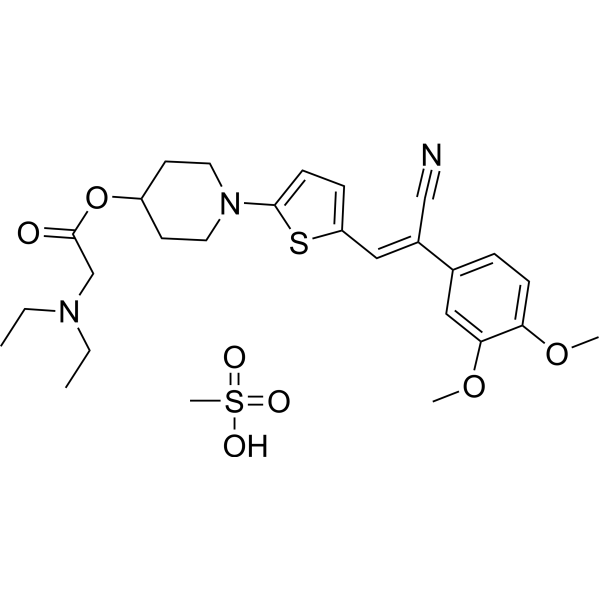
    YHO-13351 is an orally active ABCG2 inhibitor . YHO-13351 modulates the function of ABCG2, blocks BCRP-mediated compound efflux, downregulates the expression of breast cancer resistance protein at the post-transcriptional level, and reverses ABCG2-associated tolerance. YHO-13351 restores the toxicity of SN-38 to SN-38-resistant cancer cells and sensitizes cancer cells to Irinotecan. YHO-13351 is a water-soluble prodrug that is rapidly converted to YHO-13177 (HY-12757) in mice. YHO-13351 prolongs the median survival time of mice bearing cancer cell xenografts when combined with IMMU-132. YHO-13351 extends the survival time of tumor-bearing mice and inhibits the growth of xenograft tumors when combined with Irinotecan. YHO-13351 can be used for the research of breast cancer, gastric cancer, BCRP-mediated drug-resistant cancers, and cervical cancer .
    YHO-13351
  • HY-B0653A
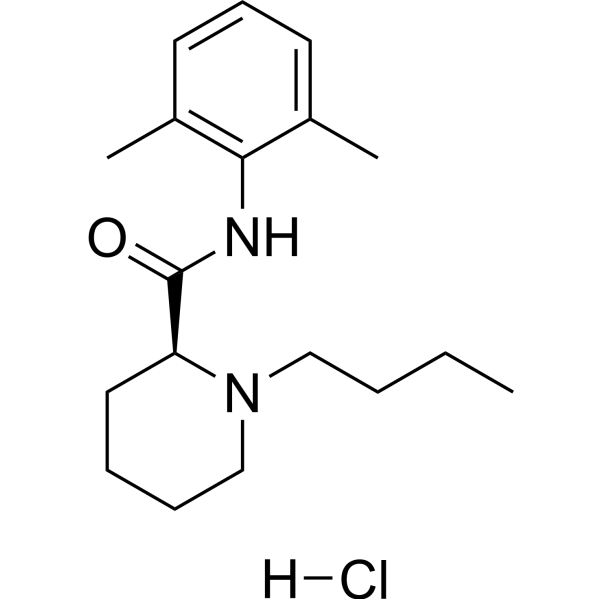
    Levobupivacaine hydrochloride
    2 Publications Verification

    (S)-(-)-Bupivacaine monohydrochloride

    Sodium Channel Ferroptosis Cardiovascular Disease Neurological Disease Cancer
    Levobupivacaine hydrochloride ((S)-(-)-Bupivacaine monohydrochloride) is a long-acting amide local agent that can suppress or relieve pain. Levobupivacaine hydrochloride exerts agent that can suppress or relieve pain. and analgesic effects through reversible blockade of neuronal sodium channel. Levobupivacaine hydrochloride can inhibit impulse transmission and conduction in cardiovascular and other tissues, possessing certain cardiac and CNS toxicity. Levobupivacaine hydrochloride is metabolized by hepatic cytochrome P450 (CYP450) enzymes in vivo. Levobupivacaine hydrochloride can also induce ferroptosis by miR-489-3p/SLC7A11 signaling in gastric cancer .
    Levobupivacaine hydrochloride
  • HY-P990690

    MEDI-5752

    PD-1/PD-L1 CTLA-4 Cancer
    Volrustomig (MEDI-5752) is a human IgG1 κ monoclonal antibody targeting CTLA4/PD1. The isotype control for Volrustomig is Human IgG1 kappa, Isotype Control (HY-P99001). Volrustomig anchors to the surface of T cells by binding PD-1, induces PD-1 internalization and degradation, and preferentially inhibits CTLA-4 on activated PD-1 + T cells. Volrustomig binds to tumor-infiltrating lymphocytes and a subset of PD-1 + B cells, enhances T cell function and IFNγ secretion. Volrustomig reduces the activation of non-tumor-infiltrating lymphocytes and exhibits manageable toxicity. Volrustomig can be used in research on various cancers, such as non-small cell lung cancer, gastric cancer, hepatobiliary cancer, and cervical cancer .
    Volrustomig
  • HY-N5058

    Apoptosis Cancer
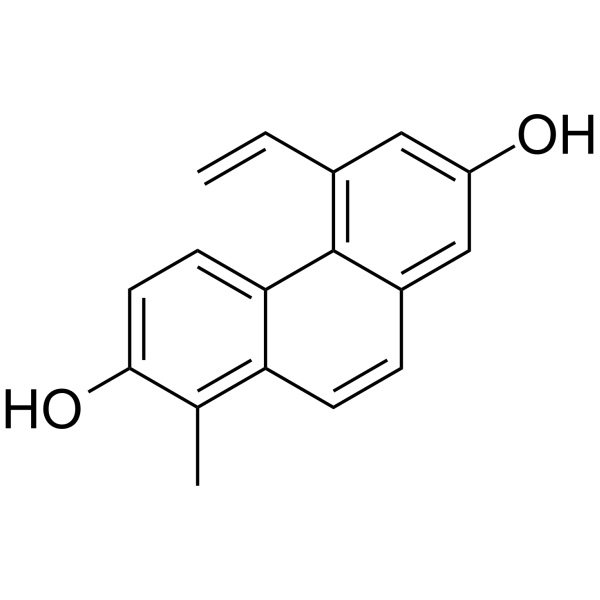
    Dehydroeffusol is a phenanthrene from medicinal herb Juncus effuses. Dehydroeffusol inhibits gastric cancer cell growth and tumorigenicity by selectively inducing tumor-suppressive endoplasmic reticulum stress and a moderate apoptosis. It shows very low toxicity .
    Dehydroeffusol
  • HY-106588

    SKI 2053R

    DNA Alkylator/Crosslinker Cancer
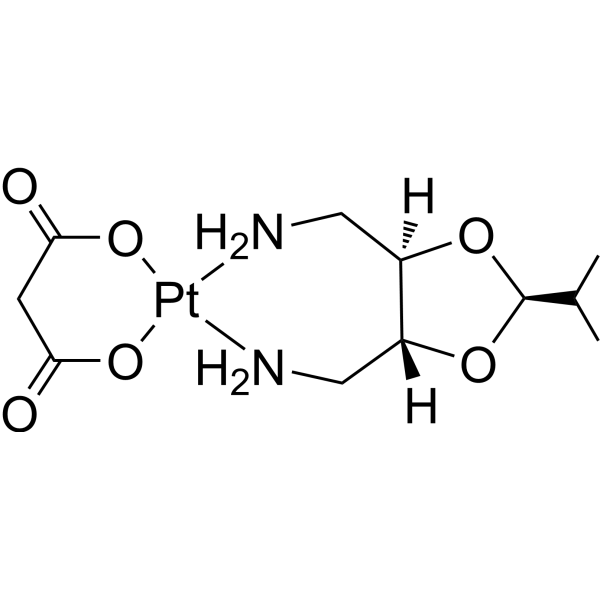
    Heptaplatin (SKI 2053R) is a platinum derivative with anticancer activity against various cancer cell lines, including cisplatin-resistant tumor cell lines. SKI-2053R is active in the research of gastric adenocarcinoma and has favorable toxicity profiles .
    Heptaplatin
  • HY-B0653
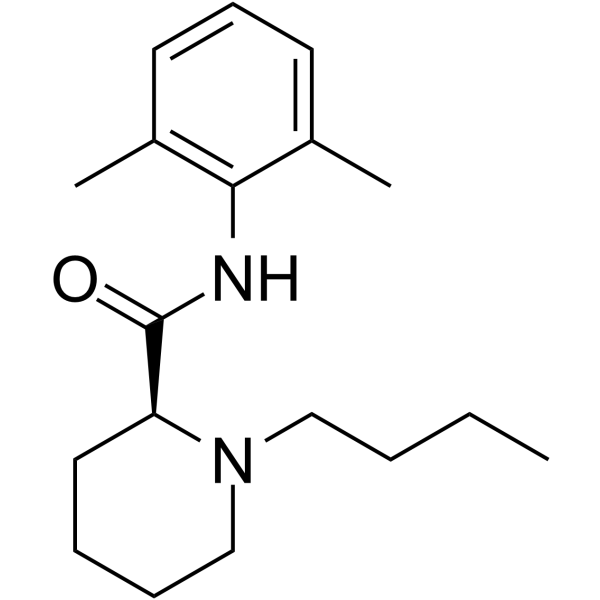
    Levobupivacaine
    2 Publications Verification

    (S)-(-)-Bupivacaine

    Sodium Channel Ferroptosis Neurological Disease Cancer
    Levobupivacaine ((S)-(-)-Bupivacaine) is a long-acting amide local agent that can suppress or relieve pain. Levobupivacaine exerts agent that can suppress or relieve pain. and analgesic effects through reversible blockade of neuronal sodium channel. Levobupivacaine can inhibit impulse transmission and conduction in cardiovascular and other tissues, possessing certain cardiac and CNS toxicity. Levobupivacaine is metabolized by hepatic cytochrome P450 (CYP450) enzymes in vivo. Levobupivacaine can also induce ferroptosis by miR-489-3p/SLC7A11 signaling in gastric cancer .
    Levobupivacaine
  • HY-171747

    Antibody-Drug Conjugates (ADCs) EGFR Topoisomerase Apoptosis Cancer
    AMT-562 is an antibody-drug conjugate (ADC) consisting of a novel anti-HER3 antibody Ab562 (HY-P991505) conjugated to the linker MC-VA-PAB and the topoisomerase I inhibitor Exatecan (HY-13631). The ADC toxic molecule and linker portion are MC-VA-PAB-Exatecan (HY-147270). AMT-562 can induce apoptosis and has antitumor activity against pancreatic, esophageal, and gastric cancers .
    AMT-562
  • HY-W741940

    Others Cardiovascular Disease Cancer
    Evomonoside is a type of cardiac glycoside compound. Evomonoside exhibits significant in vitro anticancer activity, especially having nanomolar inhibitory concentrations against gastric cancer cell lines. Evomonoside has typical cardiac toxicity risks, including arrhythmias and conduction abnormalities. Evomonoside can be used for research on gastric cancer .
    Evomonoside
  • HY-119960

    COX Inflammation/Immunology
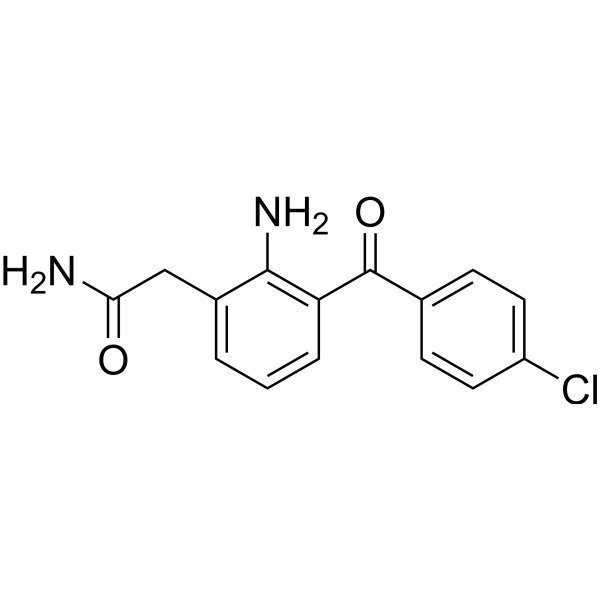
    AHR-10037 is a non-steroidal anti-inflammatory agent with low gastric toxicity. AHR-10037 is a prodrug converted in vivo to a cyclooxygenase inhibitor .
    AHR-10037
  • HY-146384

    CRM1 Cancer
    CRM1 degrader 1 (1l) is a low toxic chromosome region maintenance 1 (CRM1) degrader. CRM1 is the sole nuclear exporter of several tumor suppressor, a growth regulatory protein as an attractive cancer agent target. CRM1 degrader 1 induces the apoptosis in gastric carcinoma and selectively inhibits proliferation of gastric cancer .
    CRM1 degrader 1
  • HY-153219

    Potassium Channel Endocrinology
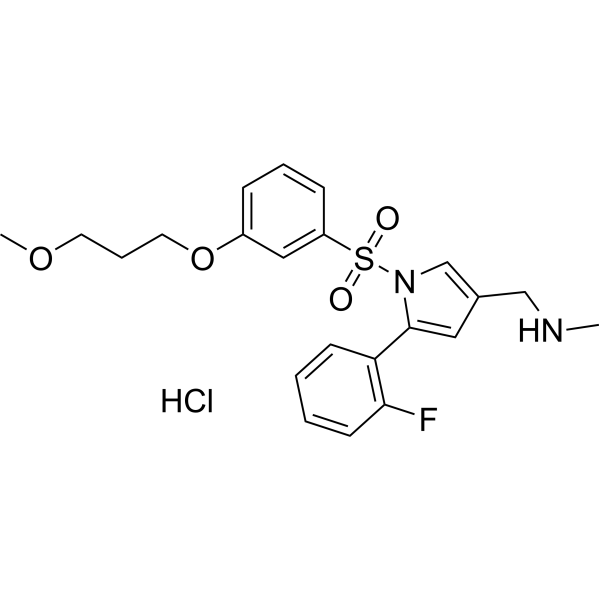
    P-CAB agent 2 hydrochloride is a potent and orally active potassium-competitive acid blocker and a gastric acid secretion inhibitor. P-CAB agent 2 hydrochloride inhibits H +/K +-ATPase activity with an IC50 value of <100 nM. P-CAB agent 2 hydrochloride inhibits the hERG potassium channel with an IC50 value of 18.69 M. P-CAB agent 2 hydrochloride shows no acute toxicity and inhibits histamine (HY-B1204)-induced gastric acid secretion .
    P-CAB agent 2 hydrochloride
  • HY-153219A

    Potassium Channel Endocrinology
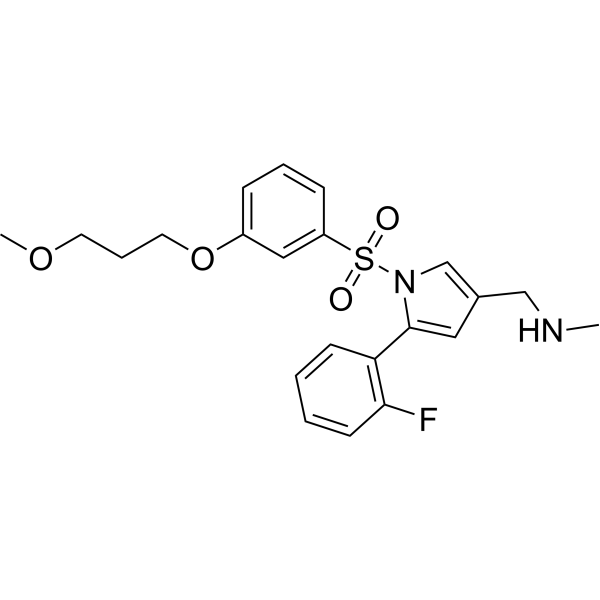
    P-CAB agent 2 is a potent and orally active potassium-competitive acid blocker and a gastric acid secretion inhibitor. P-CAB agent 2 inhibits H +/K +-ATPase activity with an IC50 value of <100 nM. P-CAB agent 2 inhibits the hERG potassium channel with an IC50 value of 18.69 M. P-CAB agent 2 shows no acute toxicity and inhibits histamine (HY-B1204)-induced gastric acid secretion .
    P-CAB agent 2
  • HY-155133

    COX Inflammation/Immunology
    COX-2-IN-34 (compound 8a) is a selective and orally active inhibitor of COX-2 , with an IC50 of 0.42 μM. COX-2-IN-34 has no gastric ulcer toxicity but has anti-inflammatory effects .
    COX-2-IN-34
  • HY-163923

    Apoptosis Cancer
    Apoptosis inducer 24 (Compound 4) inhibits the proliferation of gastric cancer cells with IC50 of 1.2-4.8 μM. Apoptosis inducer 24 arrests cell cycle at G2/M phase, induces apoptosis in cell BGC-823, and causes mitochondrial dysfunction. Apoptosis inducer 24 exhibits antitumor efficacy in mice, without significant toxicity (LD50 is 91.2 mg/kg) .
    Apoptosis inducer 24
  • HY-144099

    E1/E2/E3 Enzyme Apoptosis Cancer
    Keap1-Nrf2-IN-4 is a potent neddylation inhibitor. Keap1-Nrf2-IN-4 exhibits potent anti-proliferation activity against MGC-803 cells (IC50=2.55 µM). Keap1-Nrf2-IN-4 blocks the migration ability and induces apoptosis of gastric cancer cells. Keap1-Nrf2-IN-4 inhibits tumor growth without obvious toxicity .
    Keap1-Nrf2-IN-4
  • HY-B0653AS

    (S)-(–)-Bupivacaie-d9hydrochloride

    Isotope-Labeled Compounds Ferroptosis Sodium Channel Cardiovascular Disease Neurological Disease Cancer
    Levobupivacaine-d9 ((S)-(–)-Bupivacaie-d9) hydrochloride is deuterium labeled Levobupivacaine hydrochloride (HY-B0653A). Levobupivacaine hydrochloride ((S)-(-)-Bupivacaine monohydrochloride) is a long-acting amide local agent that can suppress or relieve pain. Levobupivacaine hydrochloride exerts agent that can suppress or relieve pain. and analgesic effects through reversible blockade of neuronal sodium channel. Levobupivacaine hydrochloride can inhibit impulse transmission and conduction in cardiovascular and other tissues, possessing certain cardiac and CNS toxicity. Levobupivacaine hydrochloride is metabolized by hepatic cytochrome P450 (CYP450) enzymes in vivo. Levobupivacaine hydrochloride can also induce ferroptosis by miR-489-3p/SLC7A11 signaling in gastric cancer .
    Levobupivacaine-d9 hydrochloride
  • HY-105174AR

    Reference Standards JAK FAK Neurological Disease Metabolic Disease
    BPC 157 acetate (Standard) is the analytical standard of BPC 157 acetate (HY-105174A). This product is intended for research and analytical applications. BPC 157 acetate is the acetate salt form of BPC 157 (HY-105174). BPC 157 acetate is the 15-amino acide fragment of gastric peptide BPC. BPC 157 acetate exhibits wound healing promoting and neuroprotective activity. BPC 157 acetate maintains the integrity of the gastrointestinal mucosa without significant toxicity. BPC 157 acetate counteracts NSAIDs/insulin overdose/copper-induced toxicity. BPC 157 acetate ameliorates specific (over)stimulated/damaged neurotransmitter systems-induced behavioral disorders through serotonergic and dopaminergic systems .
    BPC 157 acetate (Standard)
  • HY-179501

    PDK-1 Reactive Oxygen Species (ROS) Apoptosis Oxidative Phosphorylation Cancer
    PDK1-IN-5 is a selective PDK1 inhibitor. PDK1-IN-5 activaties PDH by diminishing phosphorylation level via PDK1 inhibition. PDK1-IN-5 effectively reverses the Warburg effect and shifts cellular energy metabolism from glycolysis toward oxidative phosphorylation by increased acetyl-CoA, reduced lactate, elevated mitochondrial ROS, and subsequent induction of apoptosis. PDK1-IN-5 robustly inhibits tumor growth in vivo without inducing systemic toxicity. PDK1-IN-5 can be used for lung adenocarcinoma, human non-small cell lung adenocarcinoma and gastric colorectal .
    PDK1-IN-5
  • HY-182760

    DNA Alkylator/Crosslinker Bcl-2 Family Caspase Apoptosis Topoisomerase Cancer
    MN33-63 is a Bcl-2 inhibitor, caspase-3 activator and DNA crosslinker with broad-spectrum anticancer activity. MN33-63 improves the water solubility of SN-38 (HY-13704), inhibits tumor growth and proliferation in a dose-dependent manner, and causes no obvious toxicity. MN33-63 relieves the inhibition of the mitochondrial apoptotic pathway, initiates the apoptosis program, inhibits Topo I activity, and promotes its degradation via the ubiquitin-proteasome and autophagy-lysosome pathways. MN33-63 induces DNA crosslinking, G2/M cell cycle arrest, inhibition of cancer cell migration, and cancer cell apoptosis through the mitochondrial pathway. MN33-63 can be used in the research of colorectal cancer, cervical cancer, hepatocellular carcinoma, lung adenocarcinoma and gastric cancer .
    MN33-63
  • HY-182759

    DNA Alkylator/Crosslinker Topoisomerase Caspase Bcl-2 Family Apoptosis Cancer
    MN33-47 is a multi-target anti-tumor compound with broad-spectrum anti-proliferative activity. MN33-47 relieves the inhibition of the mitochondrial apoptosis pathway by downregulating the anti-apoptotic protein Bcl-2, while activating caspase-3 and inhibiting Topoisomerase I activity, thereby promoting its degradation through the ubiquitin-proteasome and autophagy-lysosome pathways. MN33-47 can also induce DNA cross-linking and G2/M cell cycle arrest, inhibit cancer cell migration and activate the mitochondrial apoptosis pathway, thus exerting potent anti-tumor effects. MN33-47 can improve the water solubility of SN-38 (HY-13704), and exhibits dose-dependent tumor growth inhibition effects in CT26 tumor-bearing mouse models without obvious toxic and side effects. MN33-47 can be used in related studies on colorectal adenocarcinoma, cervical adenocarcinoma, hepatocellular carcinoma, alveolar basal epithelial adenocarcinoma, gastric cancer and colon cancer .
    MN33-47

Inquiry Online

Your information is safe with us. * Required Fields.

Salutation


Country or Region *

Applicant Name *


Organization Name *

Department *


Email Address *


Product Name *

Cat. No.


Requested quantity *

Phone Number *


Remarks

Inquiry Online

Inquiry Information

Product Name:
Cat. No.:
Quantity:
MCE Japan Authorized Agent:

