


1. Search Result
Search Result
Results for "

green fluorescence protein

" in MedChemExpress (MCE) Product Catalog:

35

Inhibitors & Agonists

22

Fluorescent Dyes

2

Biochemical Assay Reagents

1

Peptides

1

Click Chemistry

6

Oligonucleotides

Cat. No. Product Name Target Research Areas Chemical Structure
  • HY-66019
    FITC
    Maximum Cited Publications
    92 Publications Verification

    Fluorescein 5-isothiocyanate

    Fluorescent Dye Inflammation/Immunology
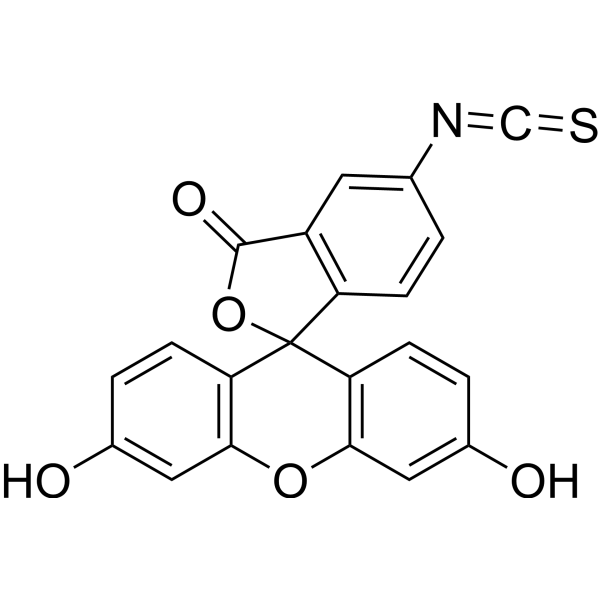
    FITC (Fluorescein Isothiocyanate), is one of the green fluorescein derivatives widely used in biology. FITC has the characteristics of high absorptivity and excellent fluorescence quantum yield. The isothiocyanate group of FITC can be combined with amino, sulfhydryl, imidazole, tyrosyl, carbonyl and other groups on the protein, so as to achieve protein labeling including antibodies and lectins. In addition to its use as a protein marker, FITC can also be used as a fluorescent protein tracer to rapidly identify pathogens by labeling antibodies, or for microsequencing of proteins and peptides (HPLC). The maximum excitation wavelength of FITC is 494 nm. Once excited, it fluoresces yellow-green at a maximum emission wavelength of 520 nm. In addition, FITC is also a hapten that can induce contact hypersensitivity (CHS) and induce an atopic dermatitis model .
    FITC
  • HY-D1817
    Vari Fluor 488-Phalloidin
    2 Publications Verification

    Fluorescent Dye Others
    Vari Fluor 488-Phalloidin is a fluorescent derivative of Phalloidin that specifically labels myofilament proteins and exhibits green fluorescence when labeled, allowing for fluorescence imaging using FITC channels (Ex/Em=488 nm/513 nm) .
    Vari Fluor 488-Phalloidin
  • HY-153079

    mRNA Others
    eGFP mRNA (N1-Me-Pseudo UTP) will express green fluorescent protein, originally isolated from the jellyfish, Aequorea victoria. The eGFP is a commonly used direct detection reporter in mammalian cell culture, yielding bright green fluorescence. The substitution with N1-Me-Pseudo UTP (m1Ψ) improves protein expression and reduces innate immune response.
    eGFP mRNA (N1-Me-Pseudo UTP)
  • HY-174497

    mRNA Others
    eGFP mRNA expresses green fluorescent protein derived from the jellyfish Aequorea victoria. eGFP is a commonly used direct-detection reporter gene in mammalian cell culture, which produces bright green fluorescence. This product is synthesized without modified nucleosides, with a Cap1 version cap analog at the 5' end and a 100nt PolyA tail at the 3' end. It can be used as a positive reference for IVT (in vitro transcription) or LNP delivery systems.
    eGFP mRNA
  • HY-P11329

    Fluorescent Dye Others
    GFP11 is a protein fusion tag consisting of 16 amino acids. When GFP11 and GFP1-10 are sufficiently close in physical space, they undergo spontaneous, irreversible complementation to reassemble into an intact, functional GFP protein that emits green fluorescence. GFP11 can be used to form a split GFP system for high-throughput biotechnology and flow cytometry applications .
    GFP11
  • HY-DY1007

    Fluorescent Dye Inflammation/Immunology
    FITC (Fluorescein Isothiocyanate) (solution) , is one of the green fluorescein derivatives widely used in biology. FITC has the characteristics of high absorptivity and excellent fluorescence quantum yield. The isothiocyanate group of FITC can be combined with amino, sulfhydryl, imidazole, tyrosyl, carbonyl and other groups on the protein, so as to achieve protein labeling including antibodies and lectins. In addition to its use as a protein marker, FITC can also be used as a fluorescent protein tracer to rapidly identify pathogens by labeling antibodies, or for microsequencing of proteins and peptides (HPLC). The maximum excitation wavelength of FITC is 494 nm. Once excited, it fluoresces yellow-green at a maximum emission wavelength of 520 nm. In addition, FITC is also a hapten that can induce contact hypersensitivity (CHS) and induce an atopic dermatitis model .
    Solvent and concentration: DMSO: 20 mM
    The 1 mL volume is defined as the base specification. All larger sizes correspond to incremental volumes of this base.
    FITC (solution)
  • HY-153845

    Biochemical Assay Reagents Others
    RNA Aptamer Broccoli sodium is a 49-nucleotide nucleic acid aptamer that is much shorter than Spinach and Spinach2. It exhibits bright green fluorescence when binding to DFHBI or DFHBI-1T (a soluble analog of the green fluorescent protein label). RNA Aptamer Broccoli sodium can be used for RNA expression or localization in living cells .
    RNA Aptamer Broccoli sodium
  • HY-D0077

    Oregon green 488

    Fluorescent Dye Others
    2',7'-Difluorofluorescein (Oregon green 488) is a fluorescein derivative and a pH-sensitive fluorescent probe (pKa ~4.7). Upon excitation at 488 nm, 2',7'-Difluorofluorescein exhibits pH-sensitive fluorescence intensity through the formation of dianions, while its pH sensitivity decreases under excitation at 450 nm, allowing its use in ratiometric pH analysis. 2',7'-Difluorofluorescein can be used for the quantitative analysis of pH values in the range of 2-7 in submicron aerosol particles. 2',7'-Difluorofluorescein undergoes buffer-mediated and buffer-free excited-state proton transfer between different protonated forms, and its cationic form undergoes rapid excited-state deprotonation. 2',7'-Difluorofluorescein is resistant to photodegradation, maintains stable absorption and fluorescence properties within the physiological pH range, and serves as a fluorescent protein label, a component of Ca 2+ indicators, a fluorescent imaging agent, and an anisotropy probe .
    2',7'-Difluorofluorescein
  • HY-153232

    Fluorescent Dye Liposome Others
    eGFP circRNA-LNP is a lipid nanoparticle (LNP) containing eGFP circRNA, suitable for assays of RNA delivery, translation efficiency, cell viability, etc. eGFP circRNA carries Enhanced Green Fluorescent Protein (Enhanced Green Fluorescent Protein) eGFP, which will express green fluorescent protein after entering the cell. eGFP is commonly used as a reporter gene detectable by fluorescence microscopy or flow cytometry .
    eGFP circRNA-LNP
  • HY-D1590

    Fluorescent Dye Others
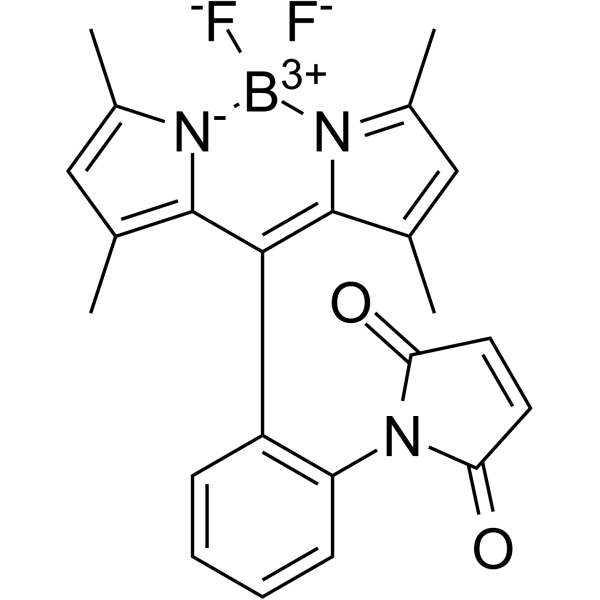
    ODIPY Green 8-P2M is a novel thiol-reactive fluorescence probe based on the BODIPY fluorophore, the fluorescence is strongly quenched by d-PeT and then can be restored after reaction with thiol, resulting in an extremely high signal-to-noise ratio. ODIPY Green 8-P2M can be useful for detecting extremely low concentrations of protein in the gel after SDS-PAGE .
    BODIPY Green 8-P2M
  • HY-153081

    Fluorescent Dye Others
    The eGFP circRNA will express green fluorescent protein, originally isolated from the jellyfish, Aequorea victoria. The eGFP is a commonly used direct detection reporter in mammalian cell culture, yielding bright green fluorescence with an emission peak at 509 nm. The eGFP circRNA is therefore ideal for monitoring and optimizing transfection efficiency and is recommended as a positive control for circular RNA transfections.
    eGFP circRNA
  • HY-D1871

    Fluorescent Dye Others
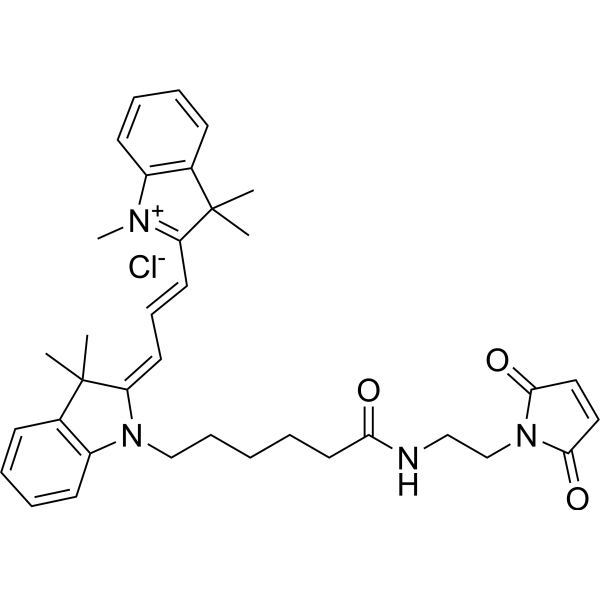
    Cy3 maleimide chloride is a dye derivative of Cyanine 3 (Cy3) (HY-D0822) containing maleimide functional groups. Cy3 is a fluorescent dye with a fluorescence spectrum typically in the green to orange wavelength range. The alkyne functional group of Cy3 maleimide chloride can undergo a "thiol-acrylamide" reaction with molecules containing sulfur-oxygen functional groups to form covalent bonds. Cy3 maleimide chloride can bind to biological molecules such as proteins and antibodies to track their location and dynamic changes in biological samples.
    Cy3 maleimide chloride
  • HY-D1261
    Naph-EA-mal
    1 Publications Verification

    Thiol-green 1

    Fluorescent Dye Others
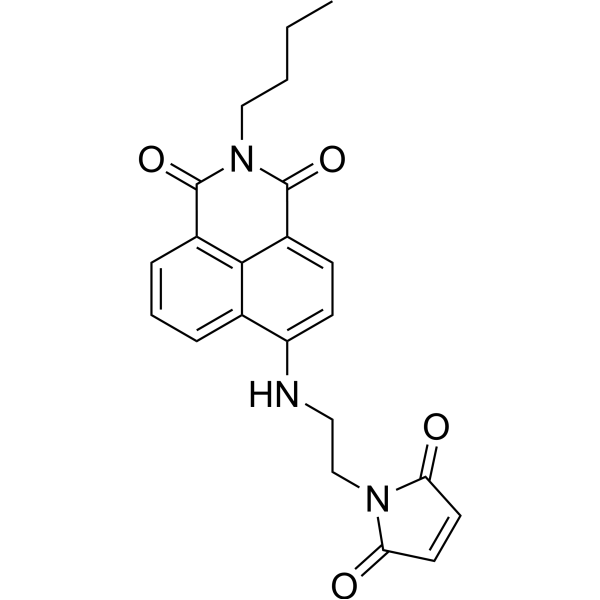
    Naph-EA-mal (Thiol-green 1) is a rapid detect and ultrafast turn-on thiol fluorescence probe for protein labeling and bioimaging. Naph-EA-mal (Thiol-green 1) can be used to detect thiols in living cells, label the protein thiols, quantify the concentration of total thiols in cell lysate, and determine the reversible protein thiols oxidation in fixed cells . Ex: 488 nM; Em: 540 nM.
    Naph-EA-mal
  • HY-153231A

    Fluorescent Dye Liposome Others
    eGFP mRNA-LNP (500 ng/μL) is a lipid nanoparticle (LNP) containing eGFP mRNA. eGFP mRNA-LNP carries Enhanced Green Fluorescent Protein (eGFP), which will express green fluorescent protein after entering the cell. eGFP is commonly used as a reporter gene detectable by fluorescence microscopy or flow cytometry (excitation wavelength = 488 nm; emission wavelength = 535/40 bandpass). eGFP mRNA-LNP can be used for RNA delivery, translation efficiency and cell viability .
    eGFP mRNA-LNP (500 ng/μL)
  • HY-175397

    DFHBI-thalidomide

    PROTACs NF-κB Early 2 Factor (E2F) Bcl-2 Family VEGFR Cancer
    Dth (DFHBI-thalidomide) is an RNA aptamer-based PROTAC degrader. Dth can degrade a variety of endogenous proteins (such as mCherry, p50, p65 and E2F1) by replacing the 3′ module on the RNA scaffold with the RNA aptamer corresponding to the target protein. Dth upregulates IκB-α and Bax, and downregulates Bcl-2 and VEGF. Dth generates green fluorescence upon binding to the Broccoli RNA aptamer, enabling the tracing of RNA scaffolds. Dth can be used in cancer-related research .
    Dth
  • HY-168929

    SHP1 Fluorescent Dye Phosphatase STAT Apoptosis Cancer
    SHP1 activator 1 (Compound 3n) is an activator for src homology-2 domain-containing protein tyrosine phosphatase 1(SHP1) with an EC50 of 17.66 μM. SHP1 activator 1 inhibits the proliferation of ABC-DLBCL cells, induces apoptosis by inhibiting STAT3 signaling pathway. SHP1 activator 1 emitts blue and green fluorescence signalis in MDA-MB-231 cell, and can be used as a cell imaging agent .
    SHP1 activator 1
  • HY-D1272

    Sulfo-Cyanine3 amine

    Fluorescent Dye Others
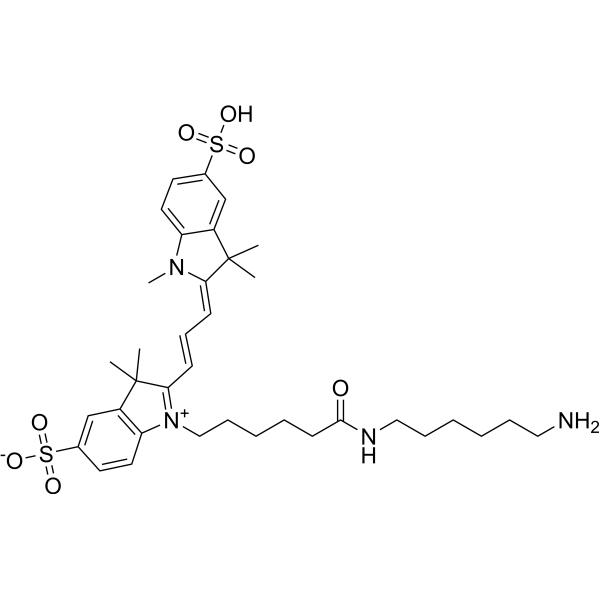
    Sulfo-Cy3 amine is a dye derivative of Cyanine 3 (Cy3) (HY-D0822) bearing an amine group. The sulfonate ion increases the water solubility of the compound, making it suitable for use in aqueous solutions. Cy3 is a fluorescent dye with a fluorescence spectrum typically in the green to orange wavelength range. The amine functionality of Sulfo-Cy3 amine can react with carboxyl groups to form covalent bonds. Sulfo-Cy3 amine can bind to biological molecules such as proteins and antibodies to track their location and dynamic changes in biological samples.
    Sulfo-Cy3 amine
  • HY-174496

    mRNA Others
    eGFP mRNA (5moU) expresses a green fluorescent protein, originally isolated from the jellyfish, Aequorea victoria. EGFP is a commonly used direct detection reporter in mammalian cell culture, yielding bright green fluorescence. The substitution with 5’-Methoxyuridine (5moU) improves protein expression and reduces innate immune response.
    eGFP mRNA (5moU)
  • HY-D2610

    Fluorescent Dye Others
    ICG PEG2000 DSPE is a PEG phospholipid with Indocyanine green (ICG) (HY-D0711) dye used in protein/nucelic acid labeling and fluorescence microscopy. ICG PEG2000 DSPE can self-assemble in aqueous solution to form micelles/lipid bilayer and used to prepare liposomes or nanoparticles for nutrients delivery such as mRNA or DNA vaccine (Ex/Em=785/813 nm).
    ICG PEG2000 DSPE
  • HY-D1607

    Fluorescent Dye Others
    BODIPY FL SSE is a potent fluorescent dye. BODIPY FL SSE is used to label the primary amines (R-NH2) of proteins, amine-modified oligonucleotides, and other amine-containing molecules. BODIPY FL SSE can reactive with primary amines on biomolecules to emit green fluorescence. (λex=502 nm, λem=511 nm) .
    BODIPY FL SSE
  • HY-D1860

    Fluorescent Dye Others
    Cy3 alkyne chloride is a dye derivative of Cyanine 3 (Cy3) (HY-D0822) containing a sulfonate ion and an alkyne functional group. Cy3 is a fluorescent dye with a fluorescence spectrum typically in the green to orange wavelength range. The alkyne functional group of Cy3 alkyne chloride can react with molecules containing the azide functional group to form covalent bonds. Cy3 alkyne chloride can bind to biological molecules such as proteins and antibodies to track their location and dynamic changes in biological samples.
    Cy3 alkyne chloride
  • HY-139976

    Biochemical Assay Reagents Others
    1-SG is an organogelator that consists of a solvatofluorochromic green fluorescence protein (GFP) chromophore and a sugar gelator (SG) .
    1-SG
  • HY-D1259

    VDP-green (NEP)

    Fluorescent Dye Neurological Disease
    NEP (VDP-green (NEP)) is a turn-on fluorescent probe based on the intramolecular charge transfer (ICT) mechanism for sensing vicinal dithiol-containing proteins (VDPs). NEP exhibits high selectivity toward VDPs in live cells and in vivo and displays a strong green fluorescence signal (λexem=430/535 nm). NEP has the potential for parkinsonism .
    NEP
  • HY-130916

    5(6)-CarboxyrhodaMine 6G, succinimidyl ester

    Biochemical Assay Reagents Others
    5(6)-CR6G,SE (5(6)-CarboxyrhodaMine 6G) is a trace fluorescent labeling reagent for fluorescence imaging of protein crystallization. 5(6)-CR6G,SE can efficiently bind to proteins to produce characteristic fluorescence under specific excitation conditions. 5(6)-CR6G,SE shows a peak absorption wavelength of approximately 525 nm and exhibits a peak fluorescence emission wavelength of around 550 nm when excited by a 530 nm green LED .
    5(6)-CR6G,SE
  • HY-114352

    Fluorescent Dye Others
    BODIPY FL-X is a green-fluorescent dye. BODIPY FL-X has the succinimidyl ester covalently coupled to proteins. BODIPY FL-X has high fluorescence quantum yield and is relatively insensitive to pH change. (λex=504 nm, λem=510 nm) .
    BODIPY FL-X
  • HY-D2609

    Fluorescent Dye Others
    ICG PEG1000 DSPE is a PEG phospholipid with Indocyanine green (ICG) (HY-D0711) dye used in protein/nucelic acid labeling and fluorescence microscopy. ICG PEG1000 DSPE can self-assemble in aqueous solution to form micelles/lipid bilayer and used to prepare liposomes or nanoparticles for nutrients delivery such as mRNA or DNA vaccine (Ex/Em=785/813 nm).
    ICG PEG1000 DSPE
  • HY-D2611

    Fluorescent Dye Others
    ICG PEG3400 DSPE is a PEG phospholipid with Indocyanine green (ICG) (HY-D0711) dye used in protein/nucelic acid labeling and fluorescence microscopy. ICG PEG3400 DSPE can self-assemble in aqueous solution to form micelles/lipid bilayer and used to prepare liposomes or nanoparticles for nutrients delivery such as mRNA or DNA vaccine (Ex/Em=785/813 nm).
    ICG PEG3400 DSPE
  • HY-D2613

    Fluorescent Dye Others
    ICG PEG10000 DSPE is a PEG phospholipid with Indocyanine green (ICG) (HY-D0711) dye used in protein/nucelic acid labeling and fluorescence microscopy. ICG PEG10000 DSPE can self-assemble in aqueous solution to form micelles/lipid bilayer and used to prepare liposomes or nanoparticles for nutrients delivery such as mRNA or DNA vaccine (Ex/Em=785/813 nm).
    ICG PEG10000 DSPE
  • HY-D1852

    Fluorescent Dye Others
    Cy3B amine chloride is a dye derivative of Cyanine 3 (Cy3) (HY-D0822) bearing an amine group. Cy3 is a fluorescent dye with a fluorescence spectrum typically in the green to orange wavelength range. The amine functionality of Sulfo-Cy3 amine can react with carboxyl groups to form covalent bonds. Sulfo-Cy3 amine can bind to biological molecules such as proteins and antibodies to track their location and dynamic changes in biological samples.
    Cy3B amine chloride
  • HY-D1868

    Fluorescent Dye Others
    Cy3 azide plus is a Cyanine 3 (Cy3) (HY-D0822) dye derivative with an azide functional group. Cy3 is a fluorescent dye with a fluorescence spectrum typically in the green to orange wavelength range. The azide group of Cy3 azide plus can react chemically with molecules containing alkyne functionality, such as alkyne or cyclooctyne, to form covalent bonds. Therefore, Cy3 azide plus can bind to biomolecules such as proteins and antibodies to track their location and dynamic changes in biological samples.
    Cy3 azide plus
  • HY-D1851

    Fluorescent Dye Others
    Cy3B amine chloride is a dye derivative of Cyanine 3 (Cy3) (HY-D0822) bearing an amine group in the disodium salt form. Cy3 is a fluorescent dye with a fluorescence spectrum typically in the green to orange wavelength range. The amine functionality of Sulfo-Cy3 amine can react with carboxyl groups to form covalent bonds. Sulfo-Cy3 amine can bind to biological molecules such as proteins and antibodies to track their location and dynamic changes in biological samples.
    Trisulfo-Cy3 amine disodium
  • HY-D1861

    Fluorescent Dye Others
    Sulfo-Cy3 hydrazide is a Cyanine 3 (Cy3) (HY-D0822) dye derivative with hydrazine functionality. The sulfonate ion increases the water solubility of the compound, making it suitable for use in aqueous solutions. Cy3 is a fluorescent dye with a fluorescence spectrum typically in the green to orange wavelength range. The hydrazide group of Sulfo-Cy3 hydrazide can form hydrazinone coupling with molecules containing aldehydes or ketones to form covalent bonds. Therefore, Cy3 azide plus can bind to biomolecules such as proteins and antibodies to track their location and dynamic changes in biological samples.
    Sulfo-Cy3 hydrazide
  • HY-D2773

    Fluorescent Dye Others
    5-Carboxyrhodamine 110 NHS Ester is the nonsulfonated analog of the BP Fluor 488 dye. The amine-reactive 5(6)-Carboxyrhodamine 110 NHS Ester can be used to create bright and photostable green-fluorescent bioconjugates with excitation/emission maxima ~502/527 nm. For many applications, the dye is preferred over 5-(6)-carboxyfluorescein NHS ester or FITC because of its exceptional photostability and fluorescence insensitivity to pH (4-9). Although the mixed isomers of Carboxyrhodamine 110 NHS Ester preferred, routinely used fluorescent dye for labeling proteins, peptides and nucleotides, purification of peptide and nucleotides labeled with 5(6) isomers might be troublesome due to significant signal broadening in HPLC purification. Peptides and nucleotides labeled with a single isomer usually give better resolution in HPLC purification that is often required in the conjugation processes.
    5-Carboxyrhodamine 110 NHS ester
  • HY-D2282

    Fluorescent Dye Others
    DFHBI-BI is a mimic of the green fluorescence protein chromophore. DFHBI-BI can be bound and activated by Broccoli ( a fluorogenic RNA aptamer) with higher affinity. DFHBI-BI prevents thermal unfolding of Broccoli at 37°C in mammalian cells, subsequently forming more fluorescent Broccoli-BI complexes. The fluorescence wavelength is 559/635 nm .
    DFHBI-BI
  • HY-D2612

    Fluorescent Dye Others
    ICG PEG5000 DSPE is a PEG phospholipid with Indocyanine green (ICG) (HY-D0711) dye used in protein/nucelic acid labeling and fluorescence microscopy. ICG PEG5000 DSPE can self-assemble in aqueous solution to form micelles/lipid bilayer and used to prepare liposomes or nanoparticles for nutrients delivery such as mRNA or DNA vaccine (Ex/Em=785/813 nm).
    ICG PEG5000 DSPE

Inquiry Online

Your information is safe with us. * Required Fields.

Salutation


Country or Region *

Applicant Name *


Organization Name *

Department *


Email Address *


Product Name *

Cat. No.


Requested quantity *

Phone Number *


Remarks

Inquiry Online

Inquiry Information

Product Name:
Cat. No.:
Quantity:
MCE Japan Authorized Agent:

